Secret Database Used to Screen Out Union Members and Activists
More than 3,200 workers in the United Kingdom were placed on a covert blacklist maintained by an organization called The Consulting Association. The database, which was used by over 40 leading employers to vet potential job recruits, contained surveillance files on political activists, union shop stewards, health and safety representatives, and journalists. Companies paid subscription fees to access the names and determine whether a prospective hire was considered a troublemaker.
The scandal first came to public attention in 2008 when media investigations revealed the scope of the operation. Police subsequently seized the database, and Ian Kerr, the founder of The Consulting Association, was fined approximately $7,500 — a penalty many considered negligible relative to the scale of the violation. Invoices showed that 44 companies had paid to access the blacklist.
Decades of Surveillance and Career Destruction
As affected workers began pursuing legal action, the full extent of the material in the database became clear. Some files stretched back decades, documenting not just union membership but political activities, safety complaints, and personal details.
Mick Abbott, a 74-year-old former scaffolder, discovered that his file dated back to 1964. The final entry recorded his involvement in a 2006 campaign for justice related to the Shrewsbury picketers case. “This nearly ruined my marriage and it meant that my children were on free meals at school,” Abbott stated. “They have been watching me all these years and passing this information around, blighting my life over four decades.”
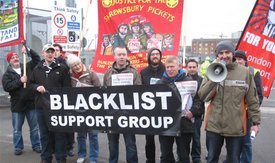
Steve Kelly, an electrician and spokesperson for the Blacklist Support Group, was blacklisted for union membership and for raising safety concerns. In 2007, he was dismissed from a barracks construction project after just two days for refusing to work on a moving platform without proper training — the exact protocol he had been instructed to follow during site induction. That dismissal was recorded in his blacklist file. Kelly described years of severe financial strain, halved wages, and eventually a nervous breakdown resulting from the sustained inability to find steady work.
Calls for Government Investigation
The human rights organization Liberty escalated pressure on the UK government by threatening legal action to force an investigation. Corinna Ferguson, Liberty’s legal officer, compared the blacklisting operation to the national press phone-hacking scandal in terms of severity.
“Contracting out the blacklisting of innocent workers, politicians and journalists is no better than farming out phone hacking to private detectives and the consequences for our democracy are just as grave,” Ferguson stated. “If we cannot persuade the Commissioner to discharge his public duty, we will consider seeking assistance from the courts.”
Liberty specifically criticized the Information Commissioner’s Office for its inaction on what the organization characterized as a widespread human rights violation of significant public interest.
Demands for Accountability
Affected workers and their advocates called for measures beyond financial penalties. The Blacklist Support Group demanded that companies found to have used the blacklist be required to pay compensation for lost years of employment, be barred from receiving government contracts unless they employed blacklisted workers, and issue public apologies both in national media and directly to the individuals whose careers and lives had been damaged.
The case raised fundamental questions about the power of corporations to conduct secret surveillance on workers and the adequacy of regulatory responses when such systems are exposed. For the thousands of workers whose careers were quietly derailed by entries in a database they never knew existed, the legal and political battles that followed represented a long-overdue reckoning.