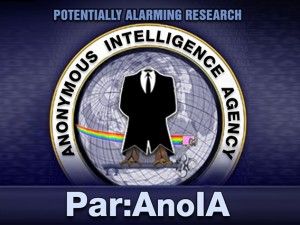
Paranoia can be paralyzing — unless you are a whistleblower searching for a secure, neutral outlet. In that case, a healthy dose of suspicion might be exactly what keeps you safe.
What Is Par:AnoIA and Why Does It Matter?
Par:AnoIA — short for Potentially Alarming Research: Anonymous Intelligence Agency — emerged as a disclosure platform designed to collect leaked documents, enable collaborative analysis among project participants, and publish findings in ways that capture public attention. At its peak, the site’s releases section featured 1.9 gigabytes of internal data from American intelligence corporation Innodata.
The project launched in March after approximately 18 months of development, building on the foundation of Anonleaks.ch, an earlier Anonymous-affiliated leaks site. Par:AnoIA inherited existing archives, including the widely publicized HBGary documents, and expanded operations from there.
Filling the Void Left by WikiLeaks and OpenLeaks
Par:AnoIA’s creation was driven partly by necessity. WikiLeaks’ anonymous submission system had been offline for roughly a year. OpenLeaks, a much-anticipated rival platform founded by former WikiLeaks associates, never materialized. And Cryptome, the veteran disclosure site operated by John Young, maintained its distinctive approach of publishing documents without editorial curation or public marketing.
The positioning was deliberate: if WikiLeaks functioned as a public relations agency for leaked documents and Cryptome served as a raw dissemination channel, Par:AnoIA aimed to combine the strengths of both approaches — editorial presentation with the transparency of unredacted publication.
A Publishing Group, Not a Hacking Collective
Members of Par:AnoIA drew a clear distinction between their operations and those of hacking groups. They explicitly stated that Par:AnoIA was a publishing organization that would not create its own leaks through intrusion or exploitation. The site accepted submissions from anyone, though its primary sources came through existing networks within the Anonymous ecosystem.
The group relied on volunteer labor. Members read every document that came through their submission pipeline. While they did not edit documents and would not guarantee publication of every submission, they maintained a philosophy of transparency that aligned them more closely with Cryptome’s document-first approach than WikiLeaks’ more controlled editorial model.
Notable Releases and Operations
Following a profile in Wired’s Threat Level blog in July, Par:AnoIA gained significant visibility as one of the most active disclosure sites still operational. Among its notable publications were the personal information of 3,900 members of the International Pharmaceutical Federation and a cache of documents related to the Cambodian government, released as part of an action dubbed Operation The Pirate Bay.
The first major internal project Par:AnoIA developed was an Arrest Tracker — a wiki-style database correlating arrests of Anonymous-affiliated individuals worldwide. Built in a traditional wiki format with thorough annotations and links to newspaper coverage of court appearances and hearing schedules, the tracker was originally created for internal operational awareness rather than media purposes. Real names were only included when they had already been disclosed in public media reports, and every entry required a verifiable source.
Tensions Within the Disclosure Community
Despite surface-level collegiality, the leak and disclosure community harbored significant internal rivalries. WikiLeaks supporters publicly challenged Par:AnoIA over its choice of top-level domain registrar, Neustar, which had been described as a preferred data surveillance provider for law enforcement agencies. Par:AnoIA dismissed the criticism as a distraction from substantive work.
More seriously, WikiLeaks reportedly accused Par:AnoIA of operating as a front for the FBI — a particularly sensitive allegation given the arrest and cooperation of former hacker Hector “Sabu” Monsegur with federal authorities. Par:AnoIA members described themselves as indifferent to WikiLeaks but pushed back firmly against any suggestion that their platform served as a law enforcement honeypot.
Cryptome founder John Young had also taken steps to publicly distance himself from WikiLeaks, on whose board he had originally served, reflecting broader fractures within the global transparency movement.
Philosophy on Redaction and Document Integrity
Par:AnoIA’s approach to document handling reflected a fundamental archival philosophy. The group prioritized the integrity of documents themselves over potential concerns about public impact — a stance shared with Cryptome but opposed to WikiLeaks’ practice of coordinated redaction through media partnerships.
When pressed on whether they would withhold a document that could change the world in an undesirable way, members reached consensus that nuclear launch codes represented the only category of information they would refuse to publish. Their operating principle held that public information in open hands was inherently preferable to information held secretly by a select few.
Operational Structure and Funding
Unlike most Anonymous projects, Par:AnoIA solicited donations in Bitcoin — the decentralized cryptocurrency favored for its difficulty to trace. The funds were directed toward server costs, which could reasonably be estimated at less than $50 per month based on comparable operations like Cryptome, whose higher-traffic infrastructure ran approximately $100 monthly.
All labor was donated. Members contributed their time without compensation, driven by ideological commitment to transparency and accountability. They explicitly stated they had no plans to monetize their content or create media partnerships to control the flow of information.
Goals and Motivations
Par:AnoIA’s ambitions extended beyond simple document publication. Members expressed interest in targeting private security and intelligence corporations similar to HBGary, whose internal communications had been exposed in one of Anonymous’s most high-profile operations.
The group described their research capabilities as a growing operational vector, with expanding networks of contacts providing a steady pipeline of potential submissions. Their stated belief was that somewhere, on some server, a document existed that could fundamentally expose systemic corruption — and that accumulating enough leaks would eventually surface it.
The project represented a particular moment in the evolution of digital transparency activism: decentralized, volunteer-driven, philosophically committed to open access, and operating in the spaces left vacant by the internal contradictions and operational failures of earlier disclosure platforms.