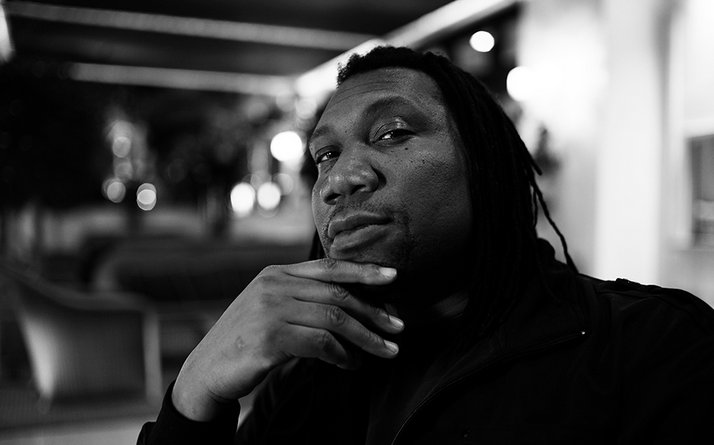
 Lawrence Krisna Parker (born August 20, 1965), better known by his stage names KRS-One, and Teacha, is an American rapper from The Bronx, New York City, New York. KRS-One rose to prominence as part of the group Boogie Down Productions, which he formed with DJ Scott La Rock in the late 1980s. Following the release of the group’s debut album, Criminal Minded, La Rock was shot dead, but KRS-One continued the group, effectively as a solo project. He began releasing records under his own name in 1993.
KRS-One is noted to be a politically active musician having started the Stop the Violence Movement, after the death of Scott La Rock, and the Temple of Hip Hop, as well as addressing political issues in his music.
In a candid reflection on activism and systemic change, veteran rapper and cultural figure KRS-One articulates a nuanced perspective that challenges conventional approaches to protest. While acknowledging widespread concerns surrounding 9/11—a topic he notes has both correctly and incorrectly quoted him—he broadens his focus to the dynamics of “world trade” and the very nature of movements. For KRS-One, the critical question for activists isn’t merely about expressing passion, but understanding the long-term trajectory of their efforts.
He posits a striking warning: movements risk becoming precisely what they protest against. This transformation, he argues, occurs when activism is anchored to tangible elements like events, people, land, property, or money. Such tangible foundations, he states, are inherently “temporary” and susceptible to being co-opted. Instead, KRS-One champions a movement rooted in “principles”—intangible ideals that cannot be easily touched, diluted, or absorbed by existing power structures. He challenges those concerned with events like 9/11 to identify its underlying principles: what lessons were learned, what must never be repeated, and what new actions must be initiated.
Drawing a sharp distinction, KRS-One differentiates between passive “concern” and active engagement. Being “concerned” about societal issues, he illustrates with examples like breast cancer or leukemia, doesn’t equate to being a “real activist” actively working to dismantle or transform the root causes. He points to historical precedents, noting how protestors of the Vietnam War and the Civil Rights movement, once fervent in their opposition, eventually became figures within major corporations or political establishments, even citing Bill and Hillary Clinton. This, he asserts, is because “revolution only works for those that participate.”
KRS-One’s strategic advice is stark: don’t argue with the system or protest against its actions, because such efforts are “pointless.” Instead, he advocates for a revolutionary spirit that aims to “take their institutions from them.” This involves occupying positions of power and leadership, changing the rules from within, rather than merely opposing from the outside. He provocatively suggests that America, despite its flaws, is uniquely suited for this approach, implying that institutions like Homeland Security could eventually be “ours” if activists strategically engage and reshape them over time. His vision is not about tearing down entirely, but about a gradual, yet fundamental, re-engineering of power structures.