A Career in Planetary Robotics
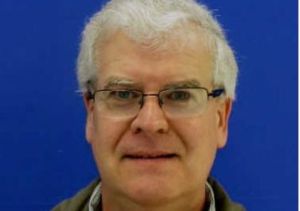
Alberto Behar was a 47-year-old robotics expert who worked at NASA’s Jet Propulsion Laboratory (JPL) in Pasadena, California. Over the course of his career, he contributed to two Mars missions and spent years developing robots capable of operating in extreme environments, including volcanic regions and deep underwater settings.
As part of the NASA team operating the Curiosity rover on Mars, Behar was responsible for a key instrument that detected hydrogen on the Martian surface as the rover traversed the planet’s terrain. His work contributed directly to one of the most significant findings in planetary science: confirming that water had once existed on Mars.
Fatal Plane Crash in Los Angeles
On January 9, 2015, Behar was killed when his single-engine plane crashed shortly after takeoff from Van Nuys Airport in Los Angeles, California. According to reports, the aircraft nosedived almost immediately after becoming airborne. Behar died instantly in the crash.
The National Transportation Safety Board investigated the incident. The circumstances of the crash, a sudden loss of altitude immediately after takeoff, are consistent with several known aviation failure modes including engine failure, pilot incapacitation, or mechanical malfunction. Small single-engine aircraft crashes during takeoff, while uncommon, are among the most documented types of general aviation accidents.
Behar’s Scientific Contributions
Beyond his Mars-related work, Behar’s research into robotics for extreme environments had broad applications. His development of systems capable of functioning in conditions too dangerous for human researchers advanced the field of autonomous exploration technology. This work had implications not only for space exploration but also for terrestrial applications in volcanology, deep-sea research, and disaster response scenarios.
His contributions to the Curiosity mission in particular helped expand scientific understanding of Mars’s geological history and the potential for past habitable conditions on the planet. The hydrogen detection instrument he worked on provided data that supported the growing body of evidence that Mars once had liquid water on its surface, a finding with profound implications for the search for extraterrestrial life.
A Loss to the Scientific Community
Behar’s death represented a significant loss to NASA’s robotics and planetary science programs. Colleagues described him as a dedicated researcher whose expertise in building machines for hostile environments was difficult to replace. His work continues to influence the design of instruments used in ongoing and planned Mars missions.