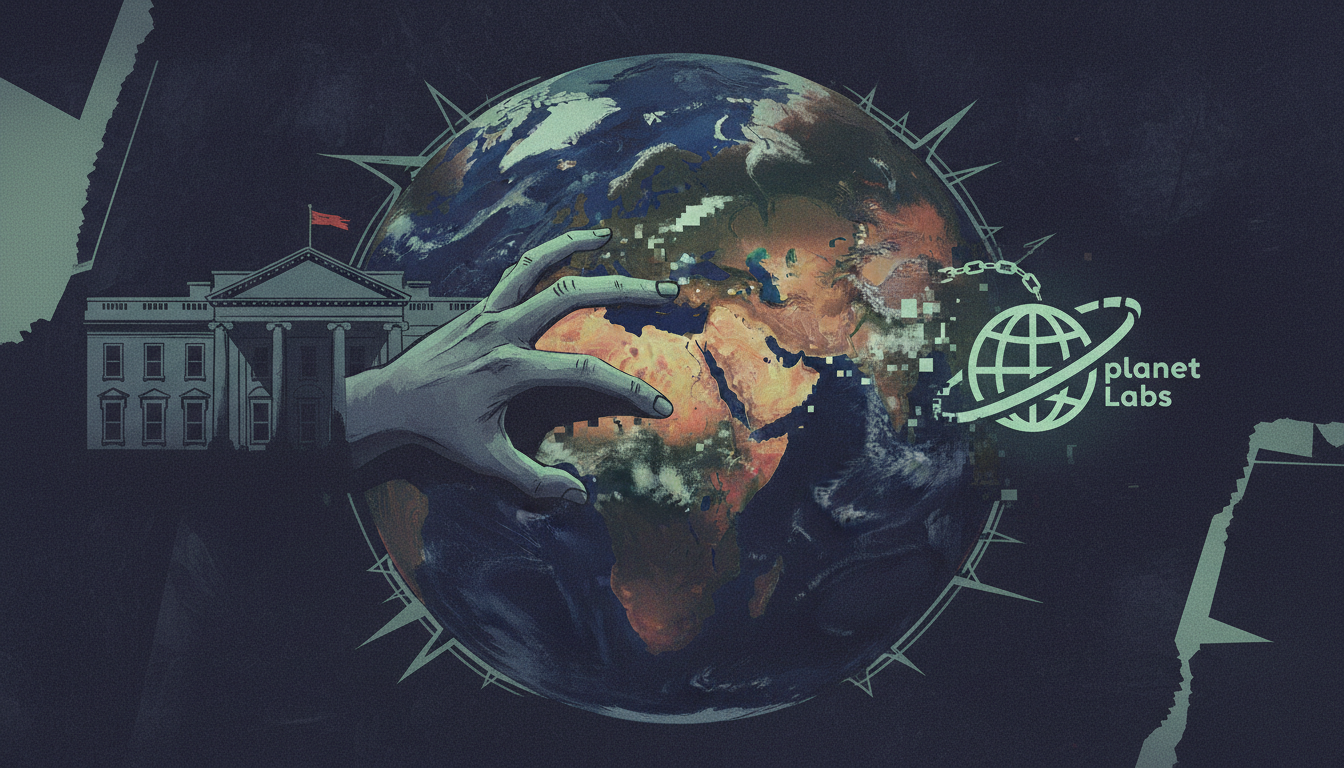
The US government has successfully pressured commercial satellite imaging company Planet Labs to implement an indefinite embargo on Middle East imagery, marking an unprecedented expansion of wartime information control into the private sector.
Corporate Compliance with Government Demands
Planet Labs, a San Francisco-based satellite imaging firm, announced it would implement an “indefinite withhold of imagery” for pictures captured from March 9 onward, citing a White House request. The company’s customers were informed of this policy shift via email last week, with the restriction lasting at least until the US-Israeli conflict with Iran ends.
The proprietary imagery had been widely used by journalists and open-source intelligence analysts to verify strikes and damage on both sides of the conflict. These images included critical sites such as Prince Sultan Air Base in Saudi Arabia, used by US forces, and Tehran’s Mehrabad International Airport.
Escalating Restrictions on Information Access
This represents a significant escalation from Planet Labs’ earlier restrictions. Initially, the company introduced a 96-hour delay before releasing Middle East images during the conflict, later extending that delay to 14 days, purportedly to limit potential military use. Under the new system, the company states it may still release select images only in cases deemed to serve the public interest.
The company operates a large network of micro-satellites and maintains contracts with several US government agencies outside the defense sector, creating potential leverage points for government influence despite claims that no formal order was issued.
Information Warfare Extends Beyond Traditional Media
The satellite imagery restrictions coincide with broader information control measures implemented during the conflict. Iran has plummeted toward total digital isolation, with internet monitoring service Filter Watch observing “a volatile new phase” where Iranian authorities are blocking even privileged “White SIM card” connections typically exempted from crackdowns.
According to the International Organization Development Association, connectivity in Iran has narrowed to just a trickle of activity, indicating a “stealth internet blackout” where selective filtering allows only certain individuals to maintain digital access. Iranian researchers have documented multiple shutdown tactics, including DNS poisoning, HTTP filtering, and TLS resets that make traditional VPN circumvention methods ineffective.
Journalism Under Siege
The information restrictions are compounding challenges for journalists trying to cover the conflict. Reporters Without Borders reports that Iranian media professionals are now working under hostile air strikes while facing intensified repression from the Iranian regime. “No independent journalist is allowed to work,” reported a Tehran-based journalist who requested anonymity due to fear of reprisals.
The Iranian state television channel has announced that any activity deemed “advantageous to the enemy” would be severely punished. Even reporters who visited explosion-affected areas with government permission were sometimes briefly detained and had their photos deleted.
Industry-Wide Implications
It remains unclear whether other major commercial satellite firms will implement similar restrictions. Companies like Vantor (formerly Maxar Technologies) and BlackSky Technology have not yet announced comparable policies, though both maintain significant federal contracts that could create similar pressure points.
The Washington Post reported that these leading spatial intelligence companies claim they were not formally ordered by any government to restrict image access, though the Pentagon declined to comment on the matter. This distinction between formal orders and informal pressure represents a gray area in government-corporate cooperation during wartime.
Broader Context of Satellite Censorship
Commercial satellite image censorship is not unprecedented, though typically applied to specific sensitive locations rather than entire regions. Historically, companies like Google have blurred potential terrorism targets and military installations at government request. However, the comprehensive geographic and temporal scope of the current restrictions marks a significant expansion of such practices.
The conflict risks further escalation, with President Trump warning of large-scale attacks targeting Iranian power plants and civilian infrastructure unless Tehran complies with US demands regarding navigation through the Strait of Hormuz. Iranian officials have signaled defiance, insisting any resolution depends on opposing forces withdrawing and providing compensation.
Economic and Strategic Implications
Beyond immediate wartime applications, the restrictions highlight the growing strategic importance of commercial satellite imagery in conflict verification and public accountability. The blocked imagery had enabled independent verification of military strikes and damage assessments, providing crucial information for journalists, researchers, and the international community.
The war is already triggering global economic consequences, with disruptions to oil and liquefied natural gas flows from the Persian Gulf driving up energy prices. Supply chains for key goods, including fertilizers and microchips, have been disrupted, amplifying the conflict’s reach beyond the immediate theater of operations.
This corporate compliance with government information restrictions during active conflict raises fundamental questions about the balance between national security concerns and public access to information that enables independent verification of wartime activities.
This article draws on reporting from RT, The Washington Post, Tech Policy Press, and Reporters Without Borders.