Whether you view Barrett Brown as a folk hero or a reckless provocateur, most observers agreed on one thing in late 2012: the statements that led to his arrest and federal indictment were profoundly unwise. His detractors felt vindication, while his supporters rallied around free speech principles and pointed to what Brown described as sustained FBI harassment, including alleged threats to arrest his mother despite her having no involvement in his Anonymous-affiliated hacktivism or his crowdsourced journalism initiative, ProjectPM.
The Context Behind Brown’s Outbursts
Government power and the legal apparatus inherently favor those who wield authority, and history demonstrates how easily that power becomes corrupted. Before dismissing Brown’s erratic behavior outright, it is worth acknowledging his claims: that FBI Agent Robert Smith was acting corruptly, that the Zetas drug cartel posed a genuine threat to his safety, and that the FBI was somehow entangled in that threat. Brown asserted that if armed individuals stormed his home, he would reasonably assume it was a cartel assassination coordinated with federal agents.
Compounding these fears, Brown openly admitted to heroin addiction and was suffering Suboxone withdrawal at the time of his most inflammatory statements. To the government’s credit, a mental competence hearing was granted before the trial could proceed, a concession that constitutional advocates should appreciate given that the criminal evidence largely consisted of speech, both arguably and unquestionably protected by the First Amendment.
The Conspiracy Charge That Relied on a Google Search
Perhaps the most eyebrow-raising element of the case was the conspiracy allegation. Brown had solicited others to locate restricted personal information about Agent Robert Smith. The supposed conspiracy materialized when an associate attempted to find this information using nothing more than an internet search engine. The notion that a standard web query constitutes the kind of conspiratorial act typically associated with unauthorized access to classified federal databases raises serious questions about prosecutorial overreach.
For those who have not examined the federal indictment against Barrett Lancaster Brown, doing so is worthwhile. What follows is a First Amendment analysis of why the prosecution’s approach should concern every citizen who values the right to speak freely.
Count 1: Interstate Threat Communications (18 USC Section 875(c))
Brown made several conditional and vague statements directed at various individuals, including Twitter users @AsherahResearch and @_Dantalion. However, the indictment focused exclusively on threats directed at FBI agents, specifically Robert Smith.
Several items cited in the indictment fail to support the charge. A conditional statement directed at @_Dantalion warned that Brown would defend himself if anyone approached his Texas home, an act explicitly legal under state law. When checked, @_Dantalion publicly stated they were not an FBI agent. Another vague remark directed at @AsherahResearch amounted to little more than a warning about discussing his mother, hardly language that implies intent to injure a federal officer.
A fundamental legal principle applies throughout: a threat that lacks imminence does not constitute assault. Under civil tort law, assault requires intent to cause imminent harm or apprehension of imminent harm. None of Brown’s statements met this threshold.
The Infamous Final Video
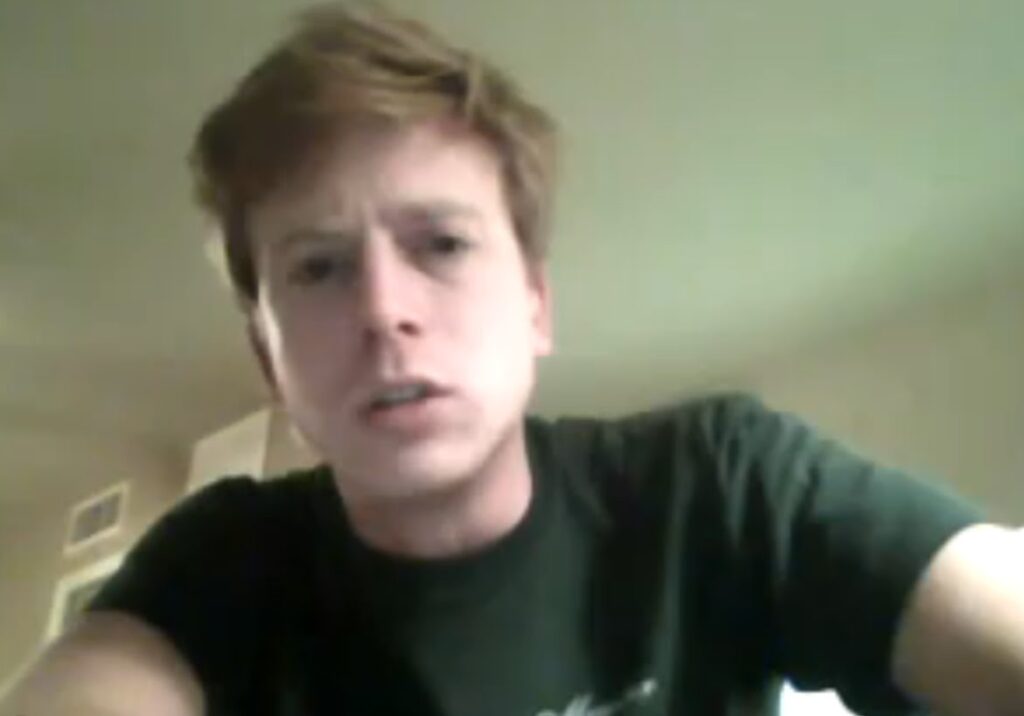
Where Brown genuinely exposed himself to legal jeopardy was in his widely circulated final video, recorded while visibly distressed and in withdrawal. Key statements included claims that Robert Smith’s life was over, intentions to investigate Smith’s children, and conditional threats to shoot FBI agents if they raided his home.
Threatening a federal law enforcement agent is codified in federal statute and does not require imminence to be prosecutable, provided the threat relates to the agent performing official duties. However, a defense remained available. Brown’s statements about Smith and his family were not threats of physical injury. He explicitly clarified he did not mean killing when he spoke of ruining someone’s life. As for the conditional threat to shoot FBI agents, the operative word in the statute is “knowingly.” Brown’s threat was contingent on a raid occurring. He did not know whether the FBI was coming. At the time of the video, the FBI had held his seized computers for months without filing charges, making a raid far from certain.
Additional defenses included mental and emotional instability, documented paranoia, Suboxone withdrawal symptoms, and potentially diminished capacity arguments that could lower thresholds for an insanity defense, particularly when the alleged criminal conduct consisted entirely of speech.
Count 2: Conspiracy to Publicize Restricted Information (18 USC Sections 371 and 119)
This charge required proving that Brown knowingly conspired to make restricted personal information about an FBI agent publicly available with intent to threaten, intimidate, and incite violence against that agent. The prosecution could reasonably demonstrate solicitation that merged into conspiracy, involvement of immediate family members, and intent to threaten and intimidate. The critical failure point was the final element: inciting violence.
A thorough reading of the indictment reveals no instance where Brown threatened or suggested committing violence against Smith specifically. The prosecution attempted to build a violence-inciting profile by aggregating numerous non-criminal tweets, a tactic that should alarm anyone who values free expression.
Multiple tweets demonstrated Brown was seeking to gather and publicize information, not to commit violence. No evidence in the indictment indicated Brown actually succeeded in obtaining any restricted information about Smith.
Protected Speech Masquerading as Criminal Evidence
The indictment included a remarkable collection of constitutionally protected expression presented as evidence of criminal intent. Among the highlights:
A tweet about learning to shoot linked to a video of Brown doing shotgun target practice in an open field. This appeared to reference conspiracy theories about government overreach and was fundamentally a Second Amendment expression with no specific target identified.
A satirical tweet about overthrowing the government linked not to revolutionary material but to a Blondie music video for Rapture, a piece of political satire about media zombification. The humorous tone and pop music link rendered any interpretation of genuine violent incitement absurd.
Other cited statements included calls to retaliate through unspecified means, which Brown clarified meant courts, media, and investigative journalism, and abstract references to challenging every government one encounters, where the target was an institution rather than any human being.
Cyber-focused statements about internet-based activism and references to the Panther Moderns, a fictional hacking group from William Gibson’s novel Neuromancer, were also included as evidence of criminal intent.
Legal Precedent Against Using Speech as Criminal Evidence
A relevant criminal law precedent involved a drunk driving case where the defendant was acquitted on appeal because prosecutors had used pro-drinking bumper stickers as evidence of intent. The court found that protected speech could not be used to bolster intent for unrelated criminal behavior.
More directly applicable was People v. Huss (241 Cal.App.2d 361), a California appellate decision that found using protest sign slogans as evidence for conspiracy to incite a riot was unconstitutional. That ruling drew its reasoning from the U.S. Supreme Court decision in Terminiello v. City of Chicago (337 U.S. 1), establishing federal precedent against conflating protected dissent with criminal conspiracy.
Count 3: Threatening a Federal Officer (18 USC Sections 115(a)(1)(B) and (b)(4))
This charge required proving Brown knowingly and willfully threatened to assault a federal law enforcement officer with intent to impede official duties and retaliate against the performance of those duties. The knowledge requirement again provided a defense: Brown did not know the FBI would raid him, and his threat was entirely conditional on a raid that he himself considered unlikely given the FBI’s prolonged inaction.
The diminished capacity defense applied with particular force here. Brown’s most damaging statements coincided with his admission of heroin addiction and active Suboxone withdrawal. His belief that he was entitled to the return of his computers, seized months earlier with no resulting charges, and his demand for an apology suggested grandiosity and possible delusional thinking.
Why This Indictment Should Concern Everyone
An indictment packed with constitutionally protected speech suggests that federal prosecutors and the FBI sought to place anti-government dissent on trial. The message was unmistakable: be careful what you say when speculating about government corruption, advocating for Second Amendment rights in the context of protecting against institutional overreach, or engaging in investigative journalism that makes powerful agencies uncomfortable.
The chilling effect extends beyond one erratic activist. It reaches independent journalists, political dissidents, civil liberties organizations, and ordinary citizens who believe accountability should flow in both directions between the governed and their government.
As developments in related cases demonstrated, the government’s handling of seized property and digital rights was itself coming under increasing legal scrutiny, lending at least partial credibility to Brown’s grievances about his computers being held indefinitely without charges.
Barrett Brown may have been his own worst enemy in those final desperate hours on camera. But an indictment that treats music videos, literary references, and political satire as evidence of violent criminal conspiracy reveals far more about prosecutorial overreach than it does about any genuine threat to national security.