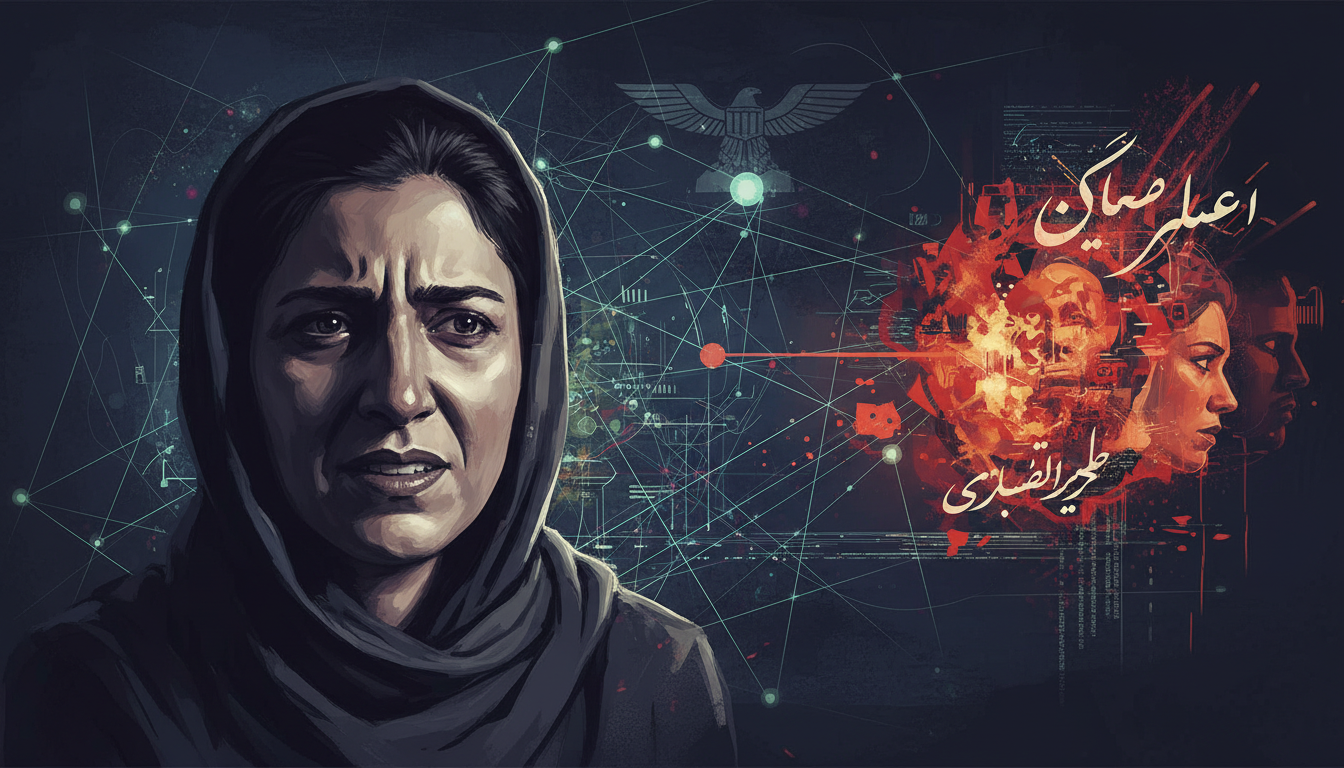
A BBC senior reporter’s inflammatory article containing an anonymous quote calling for Iran to be “nuked” has drawn scrutiny not only for its extreme content but also for the author’s undisclosed connections to CIA-founded propaganda networks and Iranian regime change organizations.
Ghoncheh Habibiazad, a 27-year-old BBC Persian Senior Reporter, published an article on April 6, 2026, that initially featured an extraordinary quote allegedly from a young Iranian: “About them hitting energy infrastructure, using an atomic bomb, or leveling Iran, my honest reaction is that I’m okay with all of these.” After social media outcry, the quote vanished from the article three hours later with no formal correction.
Career Built on Opposition Networks
Despite requiring “a minimum of 8-10 years of experience in journalism” according to BBC job listings, Habibiazad achieved her senior position after just four years in the field. Her rapid rise becomes more understandable when examining her professional background and affiliations.
After graduating from the University of Tehran in 2020, Habibiazad immediately began working with organizations aligned against the Iranian government. In October 2021, she joined Radio Free Europe/Radio Liberty (RFE/RL) as an intern, working from their Prague studio. RFE/RL is a CIA propaganda project originally founded by notorious spymaster Allen Dulles, which only nominally separated from the Agency in the 1970s.
During her tenure at RFE/RL, Habibiazad worked for Radio Farda, an RFE/RL subdivision serving as Washington’s official Persian-language broadcasting arm to Iran. Her LinkedIn profile indicates she conducted investigations including “an article on ‘hidden disabilities’” while working remotely for the network.
Pro-Monarchy Media Connections
Simultaneously with her RFE/RL internship, Habibiazad joined Marjan TV in October 2021, spending a year and half developing social media content for the outlet and its subsidiary, Manoto TV. According to Iranian academic Shahab Esfandiary, Manoto TV operates as “a pro-monarchy network with the mission of glorifying the Pahlavi dynasty, one of the worst dictatorships of the 20th century.”
A review of Manoto’s YouTube channel reveals extensive content featuring Reza Pahlavi, the would-be king who openly seeks the overthrow of Iran’s current government. This connection raises questions about potential conflicts of interest in Habibiazad’s current role covering Iranian affairs for the BBC.
Editorial Standards Under Question
The silent removal of the inflammatory quote after social media backlash has raised serious concerns about BBC’s editorial processes. Critics noted that no formal correction was issued, despite the significant nature of the change. The original quote explicitly endorsed nuclear attacks on Iran, a position so extreme it prompted widespread condemnation when it briefly appeared.
Social media users pointed to Habibiazad’s background with pro-monarchy networks and accused her of either fabricating the quote or sanitizing extreme views to shape public opinion. The controversy intensified when critics alleged that Habibiazad blocked users who questioned the article, potentially violating BBC social media policies.
Broader Media Bias Concerns
This incident occurs within a broader context of criticism regarding Western media coverage of conflicts involving Iran. Analysis by media monitoring organizations has revealed significant disparities in how terms like “war crimes” are applied, with accusations overwhelmingly directed toward U.S. allies’ opponents rather than examining all parties’ actions equally.
The controversy also highlights ongoing concerns about the BBC’s impartiality in Middle Eastern coverage, with critics arguing that undisclosed connections between reporters and political organizations compromise journalistic objectivity.
Questions of Transparency
The revelation of Habibiazad’s professional history raises fundamental questions about transparency in journalism. Her connections to CIA-founded networks and regime change organizations were not disclosed in her BBC reporting on Iranian affairs, potentially misleading audiences about potential biases or conflicts of interest.
The incident underscores the importance of understanding journalists’ backgrounds and affiliations, particularly when covering politically sensitive topics. News organizations increasingly face scrutiny over whether reporters with strong political connections can provide objective coverage of related issues.
As media literacy becomes more critical in the digital age, readers are demanding greater transparency about journalists’ backgrounds and potential influences on their reporting. The Habibiazad case serves as a stark reminder that understanding who shapes the news can be as important as understanding the news itself.
This article draws on reporting from Activist Post and TRT World.