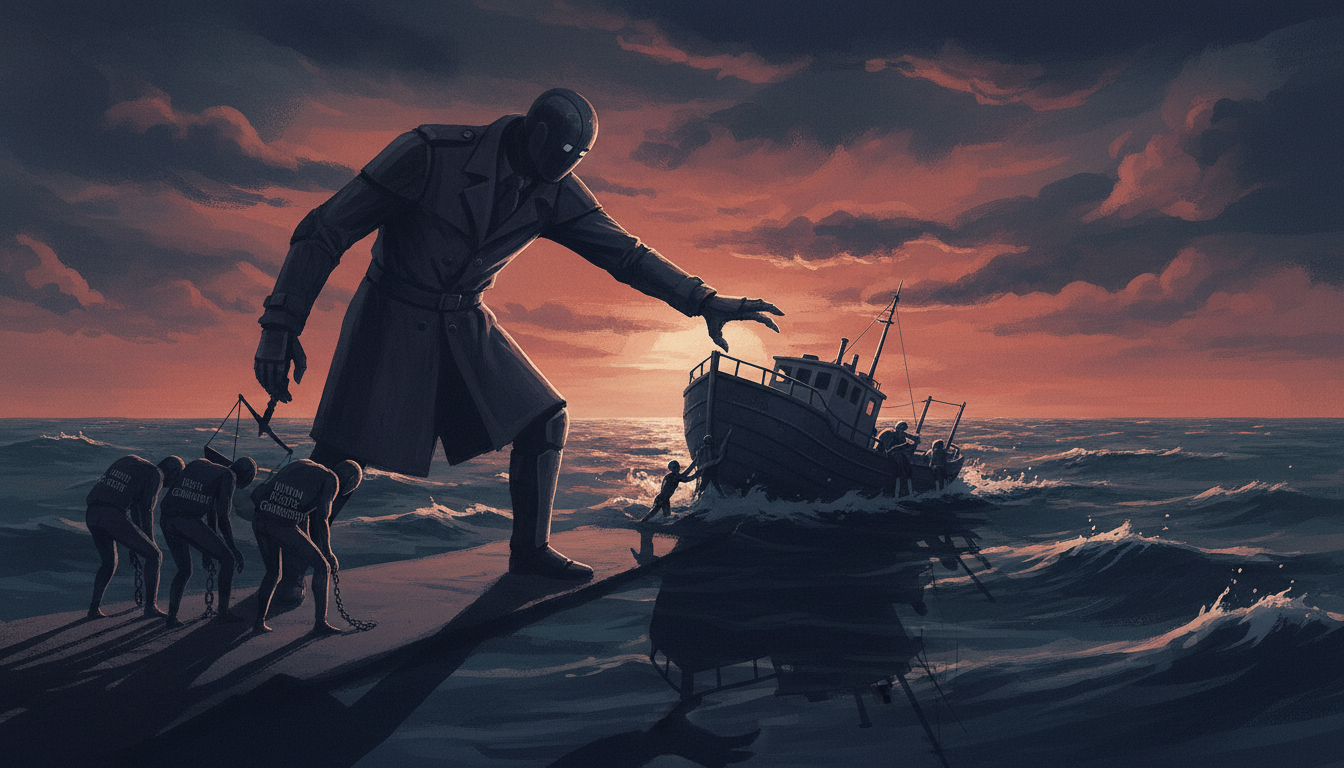
The United States is mounting an unprecedented pressure campaign against the Inter-American Commission on Human Rights to prevent investigation into a seven-month military operation that has killed 168 civilians in international waters. Internal documents and meeting records reveal how the State Department is leveraging America’s financial influence over the organization to suppress accountability for what experts call systematic extrajudicial executions.
The Caribbean Campaign of Lethal Force
Since September 2025, the Trump administration has authorized 26 military strikes against civilian boats in the Caribbean Sea and Pacific Ocean under Operation Southern Spear. The attacks, conducted without Congressional authorization, have resulted in 168 confirmed deaths, including three missing and presumed dead, with investigations revealing that some victims were fishermen attempting to earn a living for their families.
The strikes represent a dramatic escalation in counter-narcotics operations, with the U.S. military redefining civilian vessels as legitimate military targets based on suspected drug trafficking activities. This approach marks a fundamental departure from established legal frameworks governing the use of force in international waters.
Historic Human Rights Hearing Draws State Department Rebuke
On March 13, 2026, the IACHR held its first hearing examining the legality of the boat strikes in Guatemala City. The American Civil Liberties Union, Center for Constitutional Rights, International Crisis Group, and UN Special Rapporteur on Counter-Terrorism presented evidence that the operations violate both domestic and international law.
Jamil Dakwar, director of the ACLU’s Human Rights Program, testified that the attacks were conducted without Congressional authorization and “in violation of international law on the use of force.” Ben Saul, the UN special rapporteur and University of Sydney professor of international law, accused the United States of “responding with lawless violence that flagrantly violates human rights” in what he termed a “phony war on so-called narco-terrorism.”
The hearing drew immediate condemnation from State Department representatives present at the meeting. Legal adviser Carl Anderson rebuked the commission for holding the hearing and questioned its competence to review the legal claims.
Financial Leverage as Political Weapon
Following the hearing, the State Department escalated its response beyond diplomatic criticism. State Department spokesperson Tommy Pigott issued a statement declaring that the commission “strayed far outside its mandate” and was being manipulated by civil rights organizations. More significantly, Pigott instructed the commission to focus on decades-old petitions rather than the ongoing boat strike campaign.
The pressure campaign exploits a critical vulnerability: the United States serves as the largest financial contributor to the Organization of American States, the IACHR’s parent organization. A former IACHR president, speaking anonymously, suggested the organization may fear the “wrath” of the United States if it proceeds with a formal investigation.
Secret Legal Justifications Under Legal Challenge
The boat strike campaign operates under a classified Justice Department Office of Legal Counsel memo that reportedly justifies the killings by claiming the United States is engaged in an “armed conflict” with unspecified drug cartels. This legal framework allegedly provides advance immunity to federal officials conducting the strikes, effectively pre-authorizing what would otherwise constitute murder under both domestic and international law.
The ACLU, Center for Constitutional Rights, and New York Civil Liberties Union have filed a Freedom of Information Act lawsuit demanding release of the OLC opinion and related documents. Legal experts across the political spectrum have challenged the administration’s claims, noting that the United States is not in an armed conflict with any Latin American entity, making the targeted individuals civilians protected under international law.
Pattern of Institutional Intimidation
The State Department’s intervention with the IACHR follows a broader pattern of the Trump administration suppressing oversight of the boat strike program. The administration has refused to release full, unedited videos of the strikes, despite families of victims filing wrongful death lawsuits against the U.S. government. Congressional requests for transparency have been similarly rebuffed.
This institutional pressure campaign extends beyond diplomatic channels. The administration has characterized criticism from human rights organizations as foreign manipulation, despite the involvement of established American civil liberties groups and international legal experts.
International Law vs. Executive Power
The confrontation between the State Department and the IACHR represents a fundamental clash over the limits of executive power in conducting military operations. Under established international law, civilians suspected of crimes cannot be summarily executed, regardless of the nature of their alleged activities. The prohibition against extrajudicial killings applies even in counter-narcotics operations.
The administration’s attempt to reframe drug trafficking as an armed conflict requiring military response challenges decades of international legal precedent. This legal reinterpretation, if accepted, would provide a blueprint for other nations to justify similar operations against their own civilian populations.
Accountability Mechanisms Under Attack
The IACHR represents one of the few remaining international mechanisms capable of investigating U.S. human rights violations in the Western Hemisphere. The commission’s mandate includes reviewing petitions alleging violations by member states, including the United States, and issuing binding recommendations for remedial action.
By pressuring the IACHR to abandon its investigation, the State Department is effectively attempting to eliminate external oversight of military operations that have resulted in nearly 200 civilian casualties. This strategy, if successful, would establish a precedent allowing future administrations to conduct similar operations without meaningful accountability.
The boat strike controversy illuminates how financial leverage can be weaponized to suppress human rights investigations. As the death toll continues to mount in international waters, the question remains whether international institutions can maintain their independence when confronted with economic pressure from their largest donors.
This article draws on reporting from The Intercept, ACLU, and public military operation records.