The Privatization of Intelligence: How Defense Contractors Gained Access to State Secrets
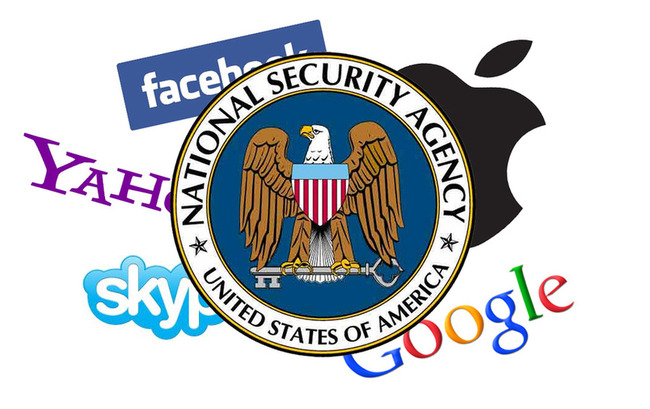
The 2013 revelations by Edward Snowden about the National Security Agency’s PRISM surveillance program exposed not only the scope of government data collection but also the extraordinary extent to which private contractors had gained access to the nation’s most closely held secrets. The story of how nearly half a million private sector employees came to hold top secret security clearances begins with the September 11 attacks and leads through a web of corporate relationships connecting intelligence agencies, private equity firms, and some of the most powerful political figures of the past half century.
The Post-9/11 Intelligence Outsourcing Boom
After the September 11 attacks, intelligence budgets expanded dramatically as the government scrambled to improve its capacity to monitor potential threats. Rather than building this capacity within federal agencies, much of the expansion was outsourced to private contractors.
“After 9/11, intelligence budgets were increased, new people needed to be hired,” explained an industry analyst. “It was a lot easier to go to the private sector and get people off the shelf.” This approach aligned with congressional preference for limiting the size of federal agencies, but critics argued it merely shifted work to private employers while reducing transparency and accountability.
The numbers tell the story of this transformation. Of the 4.9 million people holding clearance to access “confidential and secret” government information, 1.1 million, or 21 percent, worked for outside contractors. Among the 1.4 million individuals with the higher “top secret” access level, 483,000, or 34 percent, were private sector employees. Because security clearances could take months or years to obtain, contractors routinely recruited workers who already held them, creating a self-sustaining market for cleared personnel.
Booz Allen Hamilton: The Intelligence Contractor
At the center of the Snowden controversy was Booz Allen Hamilton, one of the largest and most established intelligence contractors in the United States. Founded in 1914 and serving the US government since 1940, when it helped the Navy prepare for World War II, Booz Allen had become deeply embedded in the intelligence infrastructure.
Snowden, who reported earning $200,000 annually, accessed and downloaded NSA surveillance program documents while working in a Booz Allen office in Hawaii. But the broader issue was not one individual’s access but rather the systemic arrangement that placed hundreds of thousands of private contractor employees in positions where they handled the nation’s most sensitive information.
Booz Allen’s public disclosures reflected the inherent tension in a publicly traded company whose primary business was classified. In its annual report, the company warned investors: “Because we are limited in our ability to provide information about these contracts and services, you may not have important information concerning our business, which will limit your insight into a substantial portion of our business.”
As Bloomberg journalist Jonathan Weil observed, this arrangement represented a paradox: a publicly traded company that was not only permitted but legally required to keep its investors uninformed about the nature and details of its work.
The Carlyle Group Connection
The ownership structure of Booz Allen Hamilton added another dimension to the story. In May 2008, the Carlyle Group, a Washington-based private equity firm, acquired Booz Allen’s US government consulting business for $2.54 billion. This was Carlyle’s largest buyout since the credit market collapse of July 2007, executed at a time when most firms were retreating from deal-making.
When Booz Allen went public in November 2010, the Carlyle Group retained approximately two-thirds of the company’s shares, maintaining majority control of a firm with more than 18,000 employees whose clients included branches of the US military, the Department of Homeland Security, and the World Bank.
The Carlyle Group itself managed $170 billion in assets and had cultivated an extraordinary network of political connections spanning multiple administrations and continents. Its senior advisers and associates included:
Political Figures Associated with Carlyle
Former President George H.W. Bush served as Senior Advisor to Carlyle’s Asia Advisory Board from 1998 to 2003. Former Secretary of State James Baker III served as Carlyle Senior Counselor from 1993 to 2005. Former Secretary of Defense Frank Carlucci served as Carlyle Chairman and Chairman Emeritus from 1989 to 2005.
Additional political figures included former Office of Management and Budget Director Richard Darman, former SEC Chairman Arthur Levitt, former FCC Chairman William Kennard, former White House Chief of Staff Mack McLarty, former Under Secretary of the Treasury Randal Quarles, former British Prime Minister John Major, former Thai Prime Ministers Anand Panyarachun and Thaksin Shinawatra, and former Philippine President Fidel Ramos.
On the Booz Allen side, R. James Woolsey, who led the CIA from 1993 to 1995, was a company executive. Mike McConnell, the US Director of National Intelligence, was a former senior vice president.
Business Leaders in the Network
The Carlyle network extended into major corporations. Affiliates included Daniel Akerson, CEO of General Motors and a Carlyle managing director; Laurent Beaudoin, CEO of Bombardier; Paul Desmarais, Chairman of Power Corporation of Canada; David Moffett, CEO of Freddie Mac; Karl Otto Pohl, former President of the German Bundesbank; and Olivier Sarkozy, half-brother of former French President Nicolas Sarkozy, who served as co-head of Carlyle’s global financial services division.
Norman Pearlstine, former editor-in-chief of Time magazine, served as senior advisor to Carlyle’s telecommunications and media group.
The Bin Laden Family Investment
Perhaps the most controversial connection involved the bin Laden family of Saudi Arabia. As reported by the Wall Street Journal in September 2001, the bin Laden family was an investor in a Carlyle fund, creating a situation where increased US defense spending following the September 11 attacks could indirectly benefit the family of the accused perpetrator.
A Carlyle executive confirmed that the bin Laden family had committed $2 million through a London investment arm in 1995 to Carlyle Partners II Fund, which raised $1.3 billion overall. However, a foreign financier with ties to the family described the $2 million as merely an initial contribution, suggesting the total investment was considerably larger.
Through this investment and its ties to Saudi royalty, the bin Laden family had become acquainted with prominent Republican figures. Former President Bush, former Secretary of State Baker, and former Secretary of Defense Carlucci had all visited the bin Laden family’s headquarters in Jeddah, Saudi Arabia. Baker had traveled on a family plane during one visit.
The Saudi Binladin Group, the family’s $5 billion construction business, was described as one of the companies most closely connected to the US presence in Saudi Arabia. Carlyle itself had sold a minority interest to Mubadala Development Company, an investment fund affiliated with the government of Abu Dhabi.
The Structural Question
The convergence of these relationships raised a fundamental structural question about the privatization of intelligence. When a single private equity firm maintains majority ownership of one of the largest intelligence contractors, counts former presidents, prime ministers, CIA directors, and defense secretaries among its advisers, manages $170 billion in assets across global markets, and operates behind the same veil of secrecy that protects its subsidiary’s government contracts, the traditional boundaries between public accountability and private interest become difficult to locate.
Any of the 1.4 million people with top secret clearance could potentially leak classified information, whether employed by a contractor or the government directly. But the concentration of intelligence access within a corporate structure owned by a private equity firm with extensive political connections created a different kind of vulnerability: not the risk of unauthorized disclosure, but the possibility that the most sensitive government information was accessible to an organization whose primary obligation was not to the public but to its investors and partners.
As one analyst summarized the situation: “It’s very difficult to know what contractors are doing and what they are billing for the work, or even whether they should be performing the work at all.” The question of what information flowed between Booz Allen, its majority owner Carlyle, and the network of current and former government officials associated with both entities remained officially unanswered.
Bloomberg’s Jonathan Weil offered the most concise assessment: “There’s no easy solution here, aside from the obvious point that the government keeps way too many secrets.”