The National Atomic Testing Museum Launches an Area 51 Exhibit
In April 2012, the National Atomic Testing Museum in Las Vegas opened what was described as the world’s first official museum exhibit dedicated to Area 51. The exhibit arrived after more than three years of development and interviews with former personnel who had worked at the classified installation.
The timing was significant. The CIA had only recently declassified the name “Area 51” itself, creating the first formal acknowledgment that opened the door for a public presentation. The actual Groom Lake facility in the Nevada desert remained heavily secured with motion sensors, armed guards, and restricted airspace, but the museum aimed to bring visitors as close to the experience as possible without crossing any classified boundaries.
An Interactive Experience With Declassified History
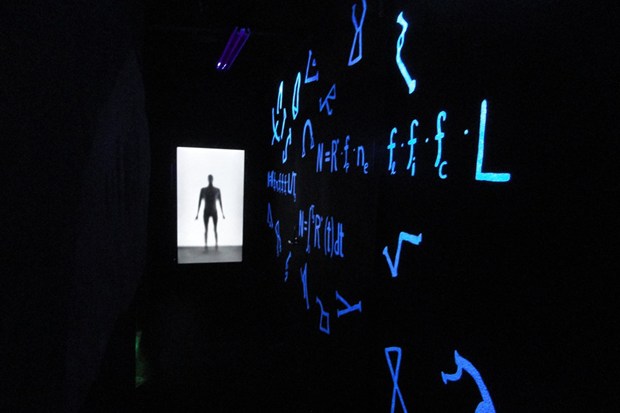
Museum curator Karen Green described the exhibit as an immersive experience rather than a static display. Visitors were met by camouflaged personnel and escorted into a simulated mission room, with questions posed throughout to encourage them to weigh the myths against documented realities. The exhibit included firsthand accounts from former Area 51 workers, original UFO photographs from the Bigelow Aerospace Archives, and artifacts from a reported crash in the Soviet Union obtained by investigative journalist George Knapp.
The installation was originally built for nuclear weapons development and testing in the surrounding desert. Over the decades it expanded dramatically, eventually featuring what was reputed to be the longest runway in the world at an estimated 9.7 kilometers. For years, the military declined to confirm the facility even existed, and employees were flown in daily on unmarked private aircraft — known as “Janet” flights — from nearby McCarran Airport.
George Knapp and the History of Area 51 Reporting
Investigative journalist George Knapp, based in Las Vegas, played a central role in both the public history of Area 51 and the construction of the museum exhibit. In the late 1980s, Knapp broke the story of Bob Lazar, who claimed to have worked on reverse-engineering extraterrestrial technology at a facility near Groom Lake. Whether or not Lazar’s claims were credible, the reporting transformed Area 51 from a little-known military installation into a globally recognized symbol of government secrecy and UFO culture.
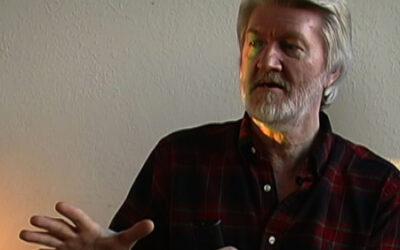
Knapp provided the museum with detailed history covering the origin of the UFO stories associated with the site, Lazar’s background, accounts from other witnesses and former employees, and the post-UFO cultural history that made Area 51 famous worldwide. He also shared information from what he described as secret studies by U.S. and Russian military agencies, along with artifacts from trips to the former Soviet Union.
What Area 51 Likely Houses Today
Knapp acknowledged that the site’s immense public profile had almost certainly made it impractical for storing anything as dramatic as recovered extraterrestrial craft. He noted that members of Congress and major news organizations had all attempted to investigate the facility over the years. According to Knapp, a congressional staffer with high-level security clearances once told him that if the UFO stories proved true, it would mean military and intelligence agencies had been deceiving both the public and Congress while diverting funds from legitimate national security programs — conduct that, if proven, could warrant criminal prosecution.
Based on his ongoing sources, Knapp reported that the base was primarily focused on unmanned aerial vehicle technology in 2012, ranging from pilotless combat aircraft and stealth platforms to advanced micro-drones the size of insects. The facility’s role had apparently shifted from nuclear weapons testing and exotic aircraft development to next-generation autonomous systems — still highly classified, but perhaps less fantastical than the alien technology narratives that had made it famous.
Area 51 as Cultural Phenomenon
Decades of secrecy, speculation, and popular culture had transformed Area 51 into what the military itself might describe as its “worst kept secret.” The underground tunnels, the rumors of reptilian aliens, the folklore about recovered flying saucers — all had become so deeply embedded in conspiracy culture that they overshadowed the facility’s documented history as a test site for some of the most advanced conventional aircraft ever built, including the U-2 spy plane and the SR-71 Blackbird.
The museum exhibit represented an attempt to present that documented history alongside the mythology, allowing visitors to evaluate both on their own terms rather than dismissing either entirely.