The September 11, 2012 attack on American facilities in Benghazi, Libya, which killed four Americans including Ambassador Chris Stevens, became one of the most contentious national security controversies of the Obama era. Beyond the initial debate over what triggered the attack, a more explosive allegation emerged: that a US general was relieved of command after defying orders to stand down during the assault.
The Stand-Down Order Allegations
As the official narrative around Benghazi shifted repeatedly in the weeks following the attack, sources within multiple government agencies began providing accounts that contradicted the administration’s public statements. According to these accounts, operational commanders had access to live audio and video feeds from surveillance drones overhead and intelligence personnel on the ground throughout the attack.
The critical claim was that requests for military assistance were denied. CIA operatives reportedly asked twice for permission to respond to the attack on the diplomatic compound and were told to stand down. Secretary of Defense Leon Panetta later stated publicly that commanders decided not to deploy forces because they lacked sufficient real-time information about conditions on the ground — a characterization that conflicted with reports of extensive surveillance coverage.
General Carter Ham’s Alleged Defiance
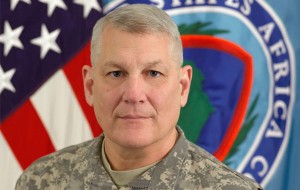
The most dramatic element of the emerging counter-narrative involved General Carter Ham, then commanding officer of US Africa Command (AFRICOM). According to accounts that circulated through military and intelligence channels, General Ham received the same communications requesting help that reached the White House during the attack. He reportedly prepared a rapid response unit for immediate deployment and communicated his readiness to the Pentagon.
When the order came to stand down, Ham allegedly refused to comply, making the decision to deploy forces to assist the besieged Americans. Within minutes of this decision, according to the accounts, his second-in-command intervened, relieved Ham of his command, and halted the deployment.
The Command Structure Question
The incident raised fundamental questions about military chain of command during crisis situations. If the accounts were accurate, they described a scenario in which a commanding general’s operational judgment to protect American personnel was overridden by political considerations at higher levels — and where the general’s attempt to act independently resulted in his immediate removal.
General Ham’s departure from AFRICOM was officially announced shortly after the Benghazi attack, though the Pentagon characterized it as a routine transition rather than a disciplinary action. The timing, however, reinforced suspicions among critics that his removal was connected to the events of September 11, 2012.
The Accountability Deficit
The Benghazi episode exposed a troubling asymmetry in how accountability was applied. A military commander who reportedly attempted to rescue Americans under fire faced career consequences, while the decision-makers who ordered forces to stand down — and who subsequently offered evolving and contradictory explanations to the public — faced no comparable repercussions.
Multiple congressional investigations examined the Benghazi attack over several years, producing thousands of pages of testimony and documents. Yet the specific question of whether General Ham was relieved for defying a stand-down order remained one of the most disputed and least definitively resolved elements of the entire affair.