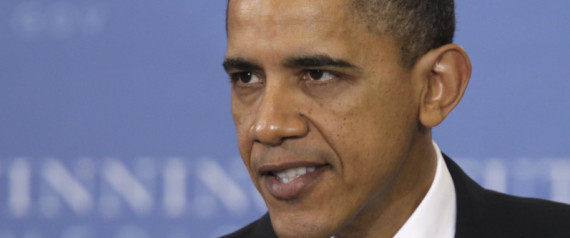
In late March 2011, multiple government sources confirmed that President Barack Obama had signed a classified presidential directive authorizing covert CIA support for rebel forces fighting to remove Libyan leader Muammar Gaddafi from power. The order, known as a presidential “finding,” was signed two to three weeks before the disclosure, according to four U.S. officials familiar with the matter.
What a Presidential Finding Authorizes
A presidential finding is the principal legal mechanism used to authorize secret operations conducted by the Central Intelligence Agency. These directives are typically drafted to provide broad authorization for a range of potential government actions in support of a particular covert objective, rather than specifying individual operations.
For specific activities to proceed under such an authorization, such as delivering cash or weapons to anti-Gaddafi forces, the White House must grant additional permission. Former intelligence officials described these follow-up authorizations as “‘Mother may I’ findings” within the intelligence community.
This was not the first such directive of the Obama presidency. In 2009, Obama had signed a similar authorization expanding covert CIA counter-terrorism operations in Yemen. The White House does not typically confirm when such orders have been issued.
The Military Situation in Libya
The authorization came as the United States participated in a NATO-led coalition conducting airstrikes on Libyan government forces under a United Nations mandate to protect civilians opposing Gaddafi. Saudi Arabia and Qatar, whose leaders had strong antipathy toward the Libyan leader, had separately indicated willingness to supply weapons to the rebel forces.
In television interviews, Obama stated that the objective was for Gaddafi to “ultimately step down” from power, describing a strategy of applying “steady pressure, not only militarily but also through these other means.” When asked about providing military hardware to rebels, he told ABC News: “It’s fair to say that if we wanted to get weapons into Libya, we probably could. We’re looking at all our options at this point.”
However, U.S. officials monitoring the conflict assessed that neither Gaddafi’s forces nor the rebel opposition appeared capable of achieving decisive military gains. While allied airstrikes had seriously degraded Gaddafi’s military capabilities and disrupted his command structure, the rebel forces remained disorganized and unable to fully capitalize on western military support.
Concerns About Rebel Identity and Blowback
A significant obstacle to direct military support was the limited intelligence about who the rebel forces actually were. Bruce Riedel, a former senior CIA Middle East analyst who had advised the Obama White House, identified the fundamental challenge: “The whole issue on training and equipment requires knowing who the rebels are.”
Riedel argued that helping the rebels organize themselves and training them in effective weapons use would be more urgent than simply shipping arms. Because U.S. and allied intelligence agencies still had numerous unanswered questions about the identities and leadership structures within the anti-Gaddafi movement, any covert activities were expected to proceed cautiously.
Members of Congress expressed pointed concerns, with some drawing parallels to the 1980s Afghan mujahedeen program. In that case, weapons supplied by the United States and Saudi Arabia to fighters resisting Soviet occupation ultimately ended up in the hands of anti-American militant groups. The chairman of the House Intelligence Committee, Representative Mike Rogers, publicly opposed arming the Libyan rebels “at this time,” stating: “We need to understand more about the opposition before I would support passing out guns and advanced weapons to them.”
The Scope of Covert Action
According to the Voice of America’s intelligence correspondent, a covert action is defined as “any U.S. government effort to change the economic, military, or political situation overseas in a hidden way.” Such actions can encompass propaganda, covert funding, electoral manipulation, arming and training insurgents, and even encouraging coups.
The broad language of the presidential finding meant the authorization could potentially cover a wide spectrum of activities, from intelligence gathering and communications support to direct weapons transfers and training programs for rebel fighters.
Key Developments on the Ground
As the covert authorization became public, several significant developments unfolded in rapid succession. Anti-Gaddafi fighters in Misurata reported that 28 people had died in the city over a three-day period. The wife of former Libyan Foreign Minister Moussa Koussa, who had defected while visiting England, was reportedly seized by Gaddafi’s internal security forces amid what witnesses described as the fiercest gunfight yet seen in central Tripoli.
Meanwhile, the U.S. military announced it would cease flying combat missions over Libya beginning April 2, 2011, transitioning to support-only missions including reconnaissance operations. This shift placed greater operational burden on NATO allies, particularly France and the United Kingdom.
Libya’s former Prime Minister Abdul Ati al-Obeidi made overtures toward negotiation, telling journalists: “We are trying to talk to the British, the French and the Americans to stop the killing of people. We are trying to find a mutual solution.” These efforts at dialogue occurred against a backdrop of continued military operations by both sides.
Congressional Authorization Questions
Debate erupted over whether Obama had proper congressional authorization for military action in Libya. While numerous lawmakers complained that the president had deployed military forces without explicit congressional approval, records showed that the U.S. Senate had in fact voted on March 1, 2011, to support imposing a no-fly zone to protect Libyan civilians.
The resolution, approved by unanimous consent with no recorded vote, “strongly condemn[ed] the gross and systematic violations of human rights in Libya” and urged the U.N. Security Council to take action “including the possible imposition of a no-fly zone over Libyan territory.” However, critics argued that a non-binding resolution approved by unanimous consent fell short of the explicit authorization required for sustained military operations.
The Precedent and Its Consequences
The Libya intervention represented a significant case study in the use of covert presidential authority alongside overt military operations. The combination of a classified finding authorizing CIA activities, a NATO military campaign operating under U.N. authorization, and limited congressional oversight raised fundamental questions about the executive branch’s war-making powers and the mechanisms of accountability for covert foreign interventions.
The concerns raised by intelligence committee members about the identity and intentions of rebel recipients of American support would prove prescient, as the post-Gaddafi era in Libya was characterized by political fragmentation, militia warfare, and the proliferation of weapons across North Africa and the Sahel region.