No one wants to be average but by definition most people fall into that category. Break out of the mold and do work that separates you from the rest of the pack through these five strategies.
1. Retrain Your Brain
As long as you as an individual… can convince yourself that in order to move forward as best you can you have to be optimistic, you can be described as ‘one of the faithful,’ one of those people who can say, ‘Well, look, something’s going to happen! Let’s just keep trying. Let’s not give up. — Tom Hanks
The power of belief is staggering. That can be both good and bad. If you believe you’re average you will inevitably remain average. However, if you believe you can be great, doors will start to open. Put some effort into convincing yourself that you’re not just another average person. Convince yourself that being average is a limit you impose on yourself, and keep reminding yourself that you are limitless. The next thing you should do to be more than average is…
2. Attract What You Want
What you seek is seeking you. ― Rumi
The best case scenario is for what you’re after to come to you. Success is extremely attractive, so one of the best ways to attract what you want is by demonstrating your success. Prove to anyone who meets you that you fall in the “above average” category. If you want someone to consider you for your dream job, make it a point to show them why you’re that person’s dream employee. The smartest, simplest way to do that is to always put in your best effort. So you should…
3. Really Do The Work
Laziness may appear attractive, but work gives satisfaction. — Anne Frank
Being average can often equate to being, well, lazy. If you know you can accomplish more but choose not to exert real effort and rise above your peers, the shoe most definitely fits. You may not get fired from your job, but you sure aren’t getting that big promotion. If you’re only making a minimal effort, you’ll only find minimal success. To get further in life you need to really put in the work. If you decide things are “good enough” you will quickly find yourself becoming stagnant. If you keep telling yourself that you can do better, you will become better. But there are other people trying to become more than average, too, so you have to work…
4. Harder, Better, Faster, Stronger
You have to learn the rules of the game. And then you have to play better than anyone else. — Albert Einstein
Be better than your peers by being engaged in what you’re doing. Eliminate all distractions by finding a calm environment. Carve out a place for yourself that is free from the regular demands of your daily life so you can just do the work. The best thing you can do is find somewhere quiet, but even if you are working in a chaotic chaotic you can tune everything out with a pair of headphones and the right music.
5. Don’t Be Forgotten
My biggest fear in life is to be forgotten. — Evita Peron
Average can also mean invisible. If you only do what is asked of you, there’s no reason for people not to forget you. People will remember you if what you do is memorable, so produce work of such a high quality that there’s no way it or you can be forgotten. One trick is to make sure what you offer is distinct from what anybody else does. Find a way to produce things that are truly unique. You can’t be average if you’re original.
Anonymous Hacktivists: ‘Bigger and Stronger Than Ever’
NSA’s Marching Orders to Congress: Deceive the Public, Praise NSA Effusively
Next generation of airport scanners will scan every single molecule in your body
Review: Cypherpunks: Freedom and the Future of the Internet by Julian Assange with Jacob Appelbaum, Andy Müller-Maguhn and Jérémie Zimmermann. OR Books, New York, 2012, 186 pages, Paper.
Sentry System Combines a Human Brain with Computer Vision
TSA chief will be a ‘no show’ at congressional hearing
West Bank and East Jerusalem buses are already segregated
In a bizarre parasitic death sentence, a fungus turns carpenter ants into the walking dead and gets them to die in a spot that’s perfect for the fungus to grow and reproduce.
Scientists have no clue how the fungus takes control of the brains of ants so effectively. But a new study in the September issue of the American Naturalist reveals an incredible set of strategies that ensue.
The carpenter ants nest high in the canopy of a forest in Thailand, and they trek to the forest floor to forage. The fungus, Ophiocordyceps unilateralis, prefers to end up on the undersides leaves sprouting from the northwest side of plants that grow on the forest floor, the new study showed. That’s where temperature, humidity and sunlight are ideal for the fungus to grow and reproduce and infect more ants.
Once infected by the fungus, an ant is compelled to climb down from the canopy to the low leaves, where it clamps down with its mandibles just before it dies.
“The fungus accurately manipulates the infected ants into dying where the parasite prefers to be, by making the ants travel a long way during the last hours of their lives,” said study leader David P. Hughes of Harvard University.
After the ant dies, the fungus continues to grow inside it. By dissecting victims, Hughes and colleagues found that the parasite converts the ant’s innards into sugars that help the fungus grow. But it leaves the muscles controlling the mandibles intact to make sure the ant keeps its death grip on the leaf.
The fungus also preserves the ant’s outer shell, growing into cracks and crevices to reinforce weak spots, thereby fashioning a protective coating that keeps microbes and other fungi out.
“The fungus has evolved a suite of novel strategies to retain possession of its precious resource,” Hughes said.
After a week or two, spores from the fungus fall to the forest floor, where other ants can be infected.
Making nests in the forest canopy might be an evolved ant strategy to avoid infection, Hughes figures. The ants also seem to avoid foraging under infected areas. This too might be an adaptive strategy to avoid infection, but more study is needed to confirm it, he said.
How the fungus controls ant behavior remains unknown. “That is another research area we are actively pursuing right now,” Hughes said.
Complex, nonlinear math appears to explain a primary dolphin hunting technique.
The math involves addition, subtraction, multiplication and ratio comparisons.
It is possible that dolphins possess remarkable inborn math skills.
Dolphins may use complex nonlinear mathematics when hunting, according to a new study that suggests these brainy marine mammals could be far more skilled at math than was ever thought possible before.
Inspiration for the new study, published in the latest Proceedings of the Royal Society A, came after lead author Tim Leighton watched an episode of the Discovery Channel’s “Blue Planet” series and saw dolphins blowing multiple tiny bubbles around prey as they hunted.
“I immediately got hooked, because I knew that no man-made sonar would be able to operate in such bubble water,” explained Leighton, a professor of ultrasonics and underwater acoustics at the University of Southampton, where he is also an associate dean.
“These dolphins were either ‘blinding’ their most spectacular sensory apparatus when hunting — which would be odd, though they still have sight to reply on — or they have a sonar that can do what human sonar cannot…Perhaps they have something amazing,” he added.
Leighton and colleagues Paul White and student Gim Hwa Chua set out to determine what the amazing ability might be. They started by modeling the types of echolocation pulses that dolphins emit. The researchers processed them using nonlinear mathematics instead of the standard way of processing sonar returns. The technique worked, and could explain how dolphins achieve hunting success with bubbles.
The math involved is complex. Essentially it relies upon sending out pulses that vary in amplitude. The first may have a value of 1 while the second is 1/3 that amplitude.
“So, provided the dolphin remembers what the ratios of the two pulses were, and can multiply the second echo by that and add the echoes together, it can make the fish ‘visible’ to its sonar,” Leighton told Discovery News. “This is detection enhancement.”
But that’s not all. There must be a second stage to the hunt.
“Bubbles cause false alarms because they scatter strongly and a dolphin cannot afford to waste its energy chasing false alarms while the real fish escape,” Leighton explained.
The second stage then involves subtracting the echoes from one another, ensuring the echo of the second pulse is first multiplied by three. The process, in short, therefore first entails making the fish visible to sonar by addition. The fish is then made invisible by subtraction to confirm it is a true target.
In order to confirm that dolphins use such nonlinear mathematical processing, some questions must still be answered. For example, for this technique to work, dolphins would have to use a frequency when they enter bubbly water that is sufficiently low, permitting them to hear frequencies that are twice as high in pitch.
“Until measurements are taken of wild dolphin sonar as they hunt in bubbly water, these questions will remain unanswered,” Leighton said. “What we have shown is that it is not impossible to distinguish targets in bubbly water using the same sort of pulses that dolphins use.”
If replicated, the sonar model may prove to be a huge benefit to humans. It might be able to detect covert circuitry, such as bugging devices hidden in walls, stones or foliage. It could also dramatically improve detection of sea mines.
“Currently, the navy uses dolphins or divers feeling with their hands in such difficult conditions as near shore bubbly water, for example in the Gulf,” he said.
In terms of dolphin math skills, prior studies conducted by the Dolphin Research Cetner in Florida have already determined that dolphins grasp various numerical concepts, such as recognizing and representing numerical values on an ordinal scale. Marine biologist Laela Sayigh of the Woods Hole Oceanographic Institution said, “In the wild, it would be very useful (for dolphins) to keep track of which areas were richer food sources.”
While dolphins are among the animal kingdom’s most intelligent animals, they are not likely the only math champs.
Parrots, chimpanzees and even pigeons have been shown to have an advanced understanding of numerical concepts. The studies together indicate that math ability is inborn in many species, with number sense, mathematical skills and verbal ability perhaps being separate talents in humans that we later learn to combine.
If you like to express yourself through painting, writing, or any other form of artistic action, scientists now say that you must be suffering from a mental illness of some kind. In a new display of how truly insane the mainstream medical health paradigm has become, mainstream media outlets are now regurgitating the words of ‘experts’ who say that those who are creative are actually, more often than not, mentally ill.
After all, more than 50% of the United States is, by definition of the psychiatrists of the nation, mentally ill. Even questioning the government is considered a mental disorder. It should come as no surprise to know that upwards of 70% of the psychiatrists who write the conditions are — of course — on the payroll of those who produce the drugs to ‘treat’ the conditions. It should also therefore come as no surprise to note that the DSM (the Diagnostic and Statistical Manual of Mental Disorders, which is the foundation of the entire diagnosis system) now contains over 900 pages of bogus disorders.
And perhaps creativity may soon be added to the massive textbook, which labels people who are shy, eccentric, or have unconventional romantic lives as mentally ill.
Is it any wonder that the 4th edition of the manual, which added hundreds of new ways to diagnose patients, led to a 40 times increase in bipolar disorder diagnoses. Even the lead editor of the DSM-IV Allen Frances, MD, has stated the book is utter nonsense:
There is no definition of a mental disorder. It’s bull****. I mean, you just can’t define it, he said.
Real information like this is what has led the mainstream news to re-title their pieces regarding the new classification of creativity as a mental illness, changing the headlines to more ‘ginger’ ways of linking the two together. Meanwhile, the writers of the study claiming that creativity is part of a mental illness are quite clear in stating that creativity is literally a mental illness. The extent in which you wish to ‘treat’ your creativity, however, is apparently up to you and your doctor.
Be of caution, however, as you have to decide at ‘what cost’ you will allow your creativity to exist. As the study writer stated:
If one takes the view that certain phenomena associated with the patient’s illness are beneficial, it opens the way for a new approach to treatment. In that case, the doctor and patient must come to an agreement on what is to be treated, and at what cost.
As expected the way to ‘treat’ your creativity is of course to take pharmaceutical drugs in the form of anti-depressants or hardcore psychotropic drugs. The same drugs that virtually all suicidal massacre shooters have taken before or during their rampages.
As virtually everything we think and do is classified as a symptom of a mental disorder, the mainstream psychiatric paradigm will continue to grow like a massive parasite alongside the pharmaceutical industry that profits off of the absolute laughable diagnoses of regular adults, children, and even toddlers. Until we realize that we need to shift into a new health paradigm that is centered around personal health freedom and shed corporate science as a whole, we will continue to see insane headlines classifying thought and emotion as mental illness.
Did you know that Aspartame has been proven to cause brain damage by leaving traces of Methanol in the blood? It makes you wonder why Aspartame has been approved as “safe” and is found in thousands of food products. Currently more than 90 countries have given the artificial sweetener the “OK” to be used in foods.
“Multiple Sclerosis is often misdiagnosed, and that it could be aspartame poisoning” – Montel Williams
Given that Aspartame is 200 times sweeter than sugar, manufacturers are able to produce their sweet foods and market them as “low calorie” so they can market and appeal to millions of people on “diets.” There is no doubt that the less sugar you have in your diet, the better. But replacing sugar with aspartame is not the solution, and in fact is likely to be even worse for your health.
In my personal experience, Aspartame has always made my head feel very odd when I consumed it. Headaches, light headedness and overall nausea, are all symptoms I personally feel from consuming Aspartame. But that isn’t even the bad part when you look at what all of the research is suggesting. So I question, and everyone should be asking the same: With all of the research about Aspartame and its dangerous effects, even in small quantities, why is it still approved by the FDA and other health agencies as being safe for human consumption?
Let’s take a look at some research.
What is this lovely substance (Aspartame) made of?
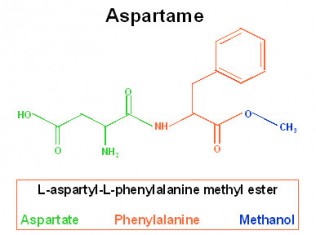
An Aspartame molecule is essentially made up of 3 different substances. 90% of it is made of two natural amino acids, 1 being aspartic acid and the other being phenylalanine. The other 10% of the molecule is made up of a methyl ester bond (includes Methanol). The methanol is released from the aspartame within hours of consumption and begins traveling through the body via the blood. Once the methyl ester bond is broken, is separtes into methyl alcohol and methanol (wood alcohol). The big problem with methanol is that it easily passes into your blood-brain barrier and once there, is converted into formaldehyde. Formaldehyde is what is causing the brain damage. While animals are able to detoxify methanol in the body, humans do not have this capability. It doesn’t really take a rocket scientist to realize that accumulating formaldehyde in the brain is not a good thing.
What’s the deal with Methanol?
As mentioned above, Methanol is the key issue here as it is what converts into formaldehyde. While it is often believed that formic acid is the issue with Aspartame, it is actually formaldehyde. Formaldehyde is a serious neurotoxin and carcinogen. According to the EPA, Methanol is considered a cumulative poison which means is accumulates in the body and very little is excreted each time it is consumed.
Methanol is a toxin that destroys the myelin tissue in your body, which is the insulating material around your nerves that allows nerve signals to travel properly. Once injured, one can have what are called demyelinating symptoms that are commonly seen in diseases like MS and also migraines that can include bizarre and inconsistent visual field disruptions.
But it must be safe in small doses!
While having NO methanol in the body makes most sense, the EPA has accepted that a limit of consumption of 7.8 mg/day is still OK. Why we accept even small amounts of toxic stuff in our body is beyond me, but some feel we can still consume this stuff in small doses. According to Woodrow Monte, Ph.D, R.D., director of the Food Science and Nutrition Laboratory at Arizona State University:
“When diet sodas and soft drinks, sweetened with aspartame, are used to replace fluid loss during exercise and physical exertion in hot climates, the intake of methanol can exceed 250 mg/day or 32 times the Environmental Protection Agency’s recommended limit of consumption for this cumulative toxin.”
Further, he states that due to the lack of a couple of key enzymes, humans are many times more sensitive to the toxic effects of methanol than animals. Therefore, tests of aspartame or methanol on animals do not accurately reflect the danger for humans.
“There are no human or mammalian studies to evaluate the possible mutagenic, teratogenic, or carcinogenic effects of chronic administration of methyl alcohol,” he said.
How can you know you are getting too much Methanol? You may experience headaches, ear buzzing, dizziness, nausea, gastrointestinal disturbances, weakness, vertigo, chills, memory lapses, numbness and shooting pains in the extremities, behavioral disturbances, and neuritis. Another very well known sign of methanol poisoning is vision problems.
Adding to the problem, one of the amino acids in aspartame, aspartic acid is capable of crossing your blood-brain barrier. There it attacks your brain cells, creating a form of cellular overstimulation called excitotoxicity, which can lead to cell death.
Your blood-brain barrier, which normally protects your brain from excess aspartate, as well as toxins, is not able to adequately protect you against the effects of aspartame consumption because it:
Is not fully developed during childhood
Does not fully protect all areas of the brain
Is damaged by numerous chronic and acute conditions
Allows seepage of excess aspartate into the brain even when intact
That excess aspartate slowly begins to destroy neurons, and the large majority (75 percent or more) of neural cells in a particular area of the brain are killed before any clinical symptoms of a chronic illness are noticed. Then, when they do occur, they may or may not be associated with aspartame consumption, even though examples of chronic illnesses that are made worse by long-term exposure to excitatory amino acid damage include: Multiple sclerosis (MS), ALS, hormonal problems, memory loss, epilepsy, hearing loss, Alzheimers, dementia, brain lesions, and Neuroendocrine disorders.
It can be easy for us to make the argument that this stuff is OK in small doses, and it hasn’t killed us yet so it can’t be that bad. But it almost seems there is something more to it why we use this reasoning. Are we just addicted to these substances? Afraid to admit we have been poisoning ourselves? Unable to accept that the FDA and health agencies have lied to us? Like to brush these truths off as conspiracies? No matter what the reason is, there comes a point where we must see what is staring us in the face and start looking at how we can begin making new choices. Returning to something that is healthier and more in line with our bodies. We are really damaging ourselves here and becoming quite numb to life. It is susbstances like Aspartame and Fluoridethat are causing these issues and the difference it makes to avoid these substances is monumental for our quality of life and consciousness.
Update: One thing I really wanted to add to this article is geared towards really looking at ourselves when it comes to not just aspartame but food, beverage, cosmetics, etc. We all at some point consumed or used products that are not all that great for our bodies. Most of the everyday products we use contain very toxic chemicals, it’s just that we spend a lot of time seeing ad’s about them, using them and looking at the nice labels that look all happy so we don’t realize how bad this stuff really is for us. You may want to check THIS ARTICLE out for more info. The question I want to raise here is, why is it that when information is presented about chemicals and toxic products do we get in a rage about the information and want to justify the continuation of its use in our bodies, on our bodies and on the planet? Even if something like Aspartame was only half as bad as it really is, why would we even want that? Why is the connection we have to our bodies so lost that we want to subject it to toxins, carcinogens, chemicals and other products that 1. are not remotely natural and 2. are not something that should be near our bodies to begin with. It just seems as though the bigger issue here is that we have become very disconnected from not only our bodies but the planet as well. It has become about convenience, money, temporary happiness, filling emotional voids and staying stagnant. When this info is presented all of those buttons get pushed at once and next thing we know we are defending the use of something that should have never been brought into existence in the first place. To look at it further, even the amount of sugar and type of sugar we use in the products we use aspartame in as an alternative, is terrible as well. Any product that currently contains aspartame shouldn’t be consumed by humans to begin with. What is wrong with fruit? Vegetables? Nuts? Seeds? Why do we always need these artificially flavored and chemically enhanced products that are terrible for our health? Aspartame or no aspartame, the real thing to observe here is our disconnection from our bodies, life and the planet.
Vitamin B12, or rather a lack thereof, has been called the “canary in the coalmine” for your future brain health, and recent research has bolstered the importance of this vitamin in keeping your mind sharp as you age.
According to the latest research, people with high levels of markers for vitamin B12 deficiency were more likely to score lower on cognitive tests, as well as have a smaller total brain volume, which suggests a lack of the vitamin may lead to brain shrinkage.
This issue is of paramount importance for many of you reading this for two reasons:
Vitamin B12 deficiency is very widespread
Your blood level of vitamin B12 is not an adequate marker of whether or not you’re deficient, making vitamin B12 deficiency easy to miss
What is Vitamin B12?
Vitamin B12 is a powerhouse micronutrient often known as the “energy vitamin” because it assists in energy production.
Your body relies on the efficient conversion of carbohydrates to glucose — your body’s source of fuel — to run smoothly, and vitamin B12 plays a major role in that conversion. B12 also enables your body to convert fatty acids into energy. Further, your B12 level impacts a number of very important functions in your body, including:
Carbohydrate and fat metabolism
Healthy nervous system function
Promotion of normal nerve growth and development
Help with regulation of the formation of red blood cells
Cell formation and longevity
Proper circulation
Adrenal hormone production
Healthy immune system function
Support of female reproductive health and pregnancy
Feelings of well-being and mood regulation
Mental clarity, concentration, memory function
Physical, emotional and mental energy
Problems with Memory, Brain Function Top Signs of Vitamin B12 Deficiency
Mental fogginess and problems with memory are two of the top warning signs that you have vitamin B12 deficiency, and this is indicative of its importance for your brain health.
In addition to the latest Neurology study, which found more signs of shrinkage of brain tissue among those with low vitamin B12, a Finnish study published in Neurology last year found that people who consume foods rich in B12 may reduce their risk of Alzheimer’s in their later years. For each unit increase in the marker of vitamin B12 (holotranscobalamin) the risk of developing Alzheimer’s was reduced by 2 percent. Research also shows that supplementing with B vitamins, including B12, helps to slow brain atrophy in elderly people with mild cognitive impairment (brain atrophy is a well-established characteristic of Alzheimer’s disease).
What Causes B12 Deficiency?
Vitamin B12 is the largest vitamin that we know of. Because of its large size, it is not easily absorbed passively like most supplements. Because of this, many, if not most oral B12 supplements are worthless and do NOT work. Vitamin B12 requires a complex system in your body involving intrinsic factor to bind to it so it can be actively absorbed in the end of your small intestine (terminal ileum). As you grow older the ability to produce intrinsic factor decreases and cause a deficiency state.
Studies from the U.S. Framingham trial show one in four adults are deficient in vitamin B12, and nearly half the population has suboptimal blood levels. If you eat an all vegetarian or vegan diet, vitamin B12 is one of the nutrients your body is most likely deficient in, as it is naturally present in foods that come from animals, including meat, fish, eggs, milk and milk products. However, there are many other causes of B12 deficiency as well, including:
Food-Cobalamin Malabsorption Syndrome:This condition results when your stomach lining loses its ability to produce intrinsic factor, a protein that binds to vitamin B12 and allows your body to absorb it into your bloodstream at the furthest point of your small intestine.Intrinsic factor is a protein made by your stomach. It grabs onto the B12 molecule and together they move through your stomach to your small intestine. When they reach the end of your small intestine, the intrinsic factor is absorbed first, pulling the B12 with it into the cells of your large intestine, where they are absorbed for use by the rest of your body.
Increasing Age: Intrinsic factor diminishes as you age, and this means it’s virtually impossible to get B12 from your diet. This also means the older you get, the more likely you will need to supplement B12.
Use of the drug metformin for Type 2 diabetes: Use of metformin (brand names include Glucophage, Glucophage XR, Fortamet, Riomet, and Glumetza) may inhibit your B12 absorption, especially at higher doses.
Coffee consumption: Four or more cups of coffee a day can reduce your B vitamin stores by as much as 15 percent.
Use of antacids: The use of antacids or anti-ulcer drugs will lower your stomach acid secretion and decrease your ability to absorb vitamin B12. Stomach acid (hydrochloric acid) is a crucial ingredient in your body’s ability to absorb B12. If you’re taking a medication specifically designed to reduce the amount of stomach acid you produce, your body’s ability to use vitamin B12 from the food you eat or the supplements you take will be significantly compromised.
Gastric bypass surgery
Exposure to nitrous oxide (laughing gas)
Why a Blood Test May Not be Enough to Detect Deficiency
Blood tests for vitamin B12 deficiency aren’t as clear cut or helpful as they are for other nutritional deficiencies. Standard tests to assess vitamin B12 concentrations are limited because the clinical severity of vitamin B12 deficiency is unrelated to vitamin B12 concentrations. As researchers concluded in Neurology:
“Concentrations of all vitamin B12-related markers, but not serum vitamin B12 itself, were associated with global cognitive function and with total brain volume.”
So generally speaking, you can use the following recommendations to screen for vitamin B12 deficiency:
If your vitamin B12 concentration is less than 150 pmol/L, you are considered B12 deficient and you and your health care practitioner should take steps to determine the underlying cause(s) and treatment.
If your B12 concentration is between 150 and 200 pmol/L, your serum MMA (Methylmalonic Acid) level should be determined to identify whether your situation requires more investigation and treatment. Research suggests elevated levels of MMA (a natural compound found in your body) are an indicator for vitamin B12 deficiency.
However, if you suspect or are concerned you are vitamin B12 deficient, a more practical option may be to simply supplement your diet with B12 and see if your symptoms improve.
B12 is available in its natural form only in animal food sources. These include seafood, beef, chicken, pork, milk, eggs. If you don’t consume enough of these animal products (and I don’t recommend consuming seafood unless you know it is from a pure water source) to get an adequate supply of B12, or if your body’s ability to absorb the vitamin from food is compromised, vitamin B12 supplementation is completely non-toxic and inexpensive, especially when compared to the cost of laboratory testing.
In fact, the first treatment most doctors and other health care experts will suggest upon receiving B12 deficiency lab test results is supplementation with vitamin B12. I recommend either an under-the-tongue fine mist spray, as this technology helps you absorb it into the fine capillaries under your tongue. This delivery system bypasses the intrinsic factor problem and is much easier, safer and less painful than having your doctor inject you with a vitamin B12 shot.
Signs and Symptoms to Watch For
Besides the above-mentioned mental fogginess and memory problems, there are actually a wide range of symptoms of vitamin B12 deficiency, from mild to severe, which can affect your body, mind and mood. In general, the signs are:
Fatigue, lack of energy, muscle weakness, tingling in your extremities
Mental fogginess or problems with your memory, trouble sleeping
Mood swings, especially feelings of apathy or lack of motivation
Depression
Dementia and Alzheimer’s
Anemia
Neurological and Neuropsychiatric conditions
Female fertility and childbearing problems
Heart disease and cancer
Other symptoms of long-term, chronic B12 deficiency are included in the chart above. Even though vitamin B12 is water-soluble, it doesn’t exit your body quickly like other water-soluble vitamins. B12 is stored in your liver, kidneys and other body tissues, and as a result, a deficiency may not show itself for a number of years until you finally run out of this naturally stored internal source of the vitamin.
This time lag in seeing symptoms of a B12 deficiency is a serious concern, because after about seven years of deficiency, irreversible brain damage can potentially result. So if you are suffering from any of the symptoms above it makes sense to take steps to increase your levels to protect your long-term brain, and overall, health.
IMPORTANT B12 Summary: Please Remember…
If you believe you need a vitamin B12 supplement, don’t hesitate to take one. They are very safe and there are virtually no known side effects. However, avoid oral B12 supplements as they will not be easily absorbed. You can take an injection or do a far easier sublingual (under your tongue) spray that allows the large B12 structure to bypass your intestine and be absorbed directly into your blood stream, allowing you to benefit immediately.
On 28 November 1953, at 2 am, a man crashed through a closed window and fell to his death from the 10th floor of the Statler Hotel in New York City. He was identified as Frank Olson, a bacteriologist with the US Army Research Center at Fort Detrick, Maryland. He had fallen from a room he shared with another scientist, Robert Lashbrook. It was ruled a suicide.
Twenty-two years later, in 1975, William Colby, then CIA director, declassified documents that changed the complexion of the case. It was revealed that Olson had actually been an undercover CIA operative at Fort Detrick, and that one week prior to his death, he had been drinking Cointreau at a high-level meeting with scientists at Deep Creek Lodge in rural Maryland. The Cointreau was laced with a large dose of LSD administered by his CIA boss, Sidney Gottlieb. He was then sent to New York with Lashbrook, also with the CIA, to see a psychiatrist because the LSD had induced a psychosis.
It was also revealed that Olson had been part of the top secret CIA program that was known as Project MK-ULTRA, exploring the use of chemicals and drugs for purposes of mind control, and bacteriological agents for covert assassination. Olson had been working on ways to deliver anthrax in aerosol form, for use as a weapon. New evidence that came to light, through the persistent efforts of Olson’s son Eric, made the suicide ruling highly suspect.
It turned out that Olson had been labelled a security risk by British intelligence after getting upset witnessing human experimentation on a trip to Frankfurt, Germany the previous summer. Eric Olson now believes that his father was drugged and then murdered to make sure that he didn’t reveal the secrets of the MK-ULTRA project. Following the 1975 revelations, the government must have felt more than a little guilt about the affair because Olson’s family was given a 17 minute audience with US President Ford, who apologised to them, and they were awarded damages in the amount of $750,000.
Controlling Human Behaviour
The MK-ULTRA program was instituted on 13 April 1953 by CIA Director Allen Dulles, ostensibly to counter the brainwashing techniques of American prisoners being held by the North Koreans during the Korean War, and to duplicate those techniques on enemy prisoners, i.e. the creation of “Manchurian Candidates.” This was the claim used to obtain funding for the project. However, the Prisoner of War brainwashing program was just the tip of the iceberg, and the CIA-sponsored experiments ventured far and wide into areas of Mind Control under the aegis of MK-ULTRA that had little or nothing to do with methods of interrogation.
The Colby revelations were part of a sweeping investigation of the CIA in January 1975 by the “Commission on CIA Activities Within the United States,” chaired by Vice-President Nelson Rockefeller. The subsequent June 1975 Report to the President said: “The drug program was part of a much larger CIA program to study possible means for controlling human behaviour. Other studies explored the effects of radiation, electric-shock, psychology, psychiatry, sociology and harassment substances.
Even though the program got off to a rocky start with the Olson affair, it recovered quickly and became an umbrella project with 149 sub-projects. The overall guiding principal was succinctly stated in an internal CIA memo dated January 1952: “Can we get control of an individual to the point where he will do our bidding against his will and even against fundamental laws of nature such as self-preservation?”
The drug program came under the aegis of the Chemical Division of the Technical Services Staff headed up by Sidney Gottlieb from 1951 to 1956. Gottlieb was a highly intelligent eccentric who drank goat’s milk, enjoyed folk-dancing, and raised Christmas trees on his farm outside Washington.
The Agency funded LSD research programs at major medical centres and universities including Boston Psychopathic, Mt. Sinai Hospital at Columbia University, University of Illinois Medical School, University of Oklahoma and others. The funding was carried out secretly through the Josiah Macy Foundation, and the Geschickter Fund for Medical Research in Washington, D.C. The CIA claimed the secrecy was necessary to keep it from the Russians, but we have already seen that it was part of much larger project to learn how to control human behaviour in general, so this is not credible.
Gottlieb told Dr. Harold Abramson at Mt. Sinai (who just happened to be the psychiatrist that Olson was supposed to see!) that he wanted “operationally pertinent materials [about]: a. Disturbance of Memory; b. Discrediting by Aberrant Behaviour; c. Alteration of Sex Patterns; d. Eliciting of Information; e. Suggestibility; f. Creation of Dependence.” That sounds like pretty deep stuff for the spy game. They were really afraid of public reaction and congressional condemnation, especially since the CIA charter did not allow domestic operations, and certainly prohibited experimentation on US citizens.
The callousness of the research is best exemplified by the CIA-funded work of Dr. Harris Isbell, the Director of the Addiction Research Center in Lexington, Kentucky. The drug addict hospital inmates, who were mostly black, were encouraged to volunteer for LSD research in return for hard drugs of their choice or time off their sentences. In most cases, they were given pure morphine or heroin. At one point Isbell kept seven men on LSD for 77 straight days. Many others were on it for up to 42 days.
Concerning extended LSD usage, John Marks in his landmark book The Search for the Manchurian Candidate: The CIA and Mind Control says about writer Hunter S. Thompson (recently deceased) that he “frightened his readers with accounts of drug (LSD) binges lasting a few days, during which Thompson felt his brain boiling away in the sun, his nerves wrapping around enormous barbed wire forts, and his remaining faculties reduced to their reptilian antecedents.” The recent movie The Rum Diary, starring Johnny Depp, based on the autobiographical book by Hunter S. Thompson, presents an imaginative re-enactment of his LSD adventures.
The CIA Turns On the Counter-Culture
Not satisfied with university research, Gottlieb recruited New York narcotics agent George White to distribute LSD surreptitiously to the “borderline underworld.” Operating through safe houses in Greenwich Village, Haight-Ashbury and Marin County, White gave doses to prostitutes, pimps, drug addicts and other “marginal people” and then observed the results and reported to Gottlieb.
John Marks says they were people “who would be powerless to seek any sort of revenge if they ever found out what the CIA had done to them. In addition to their being unlikely whistle-blowers, such people lived in a world where an unwitting dose of some drug… was an occupational hazard anyway.”
Eventually, White started using it randomly all over New York and San Francisco. Regarding the results, Marks says, “The MKULTRA scientists reaped little but disaster, mischief, and disappointment from their efforts to use LSD as a miracle weapon against the minds of their opponents.” Yet, they continued this program for 10 years until 1963.
Ironically, since the CIA had pretty much cornered the market on LSD internationally, buying up all the product of Sandoz and Eli Lilly, the spread of the drug to the counter-culture was through the Agency. Timothy Leary, Ken Kesey, Allen Ginsburg and Tom Wolfe were first “turned on” thanks to the CIA, and that’s how the “flower children” became psychedelic.
But, the LSD experiments may have been more successful than Marks realised. They were carefully noting the precise effects on brain chemistry, and in the six areas that Gottlieb was concerned with: memory disturbance, aberrant behaviour, altered sexual patterns, eliciting information, suggestibility and creation of dependence. This became evident when they started using LSD as an adjunct in hypnotic and electronic experiments.
Re-Patterning the Brain
Perhaps the most notorious and nefarious MK-ULTRA sub-project was carried out at the Allan Memorial Institute in Montreal, Canada under the directorship of Dr. Donald Ewen Cameron, an American from Albany, New York. Cameron had trained at the Royal Mental Hospital in Glasgow, Scotland, under eugenicist Sir David Henderson, and founded the Canadian branch of the World Federation for Mental Health. At various times, he was elected president of the Canadian, American, and World psychiatric associations. In other words, Cameron was no renegade but had the full faith and endorsement of the world psychiatric establishment.
The CIA wanted Cameron to “depattern” the contents of the brain to make it receptive to new patterning. David Remnick in a Washington Post article on 28 July 1985 said, “The…. heart of the laboratory was the Grid Room…. The subject was strapped into a chair involuntarily, by force, his head bristling with electrodes and transducers. Any resistance was met with a paralysing dose of curare. The subject’s brainwaves were beamed to a nearby reception room crammed with voice analysers, a wire recorder and radio receivers cobbled together… The systematic annihilation or ‘depatterning’ of a subject’s mind and memory was accomplished with overdoses of LSD, barbiturate sleep for 65 days at a stretch and ECT shocks at 75 times the recommended dosage. Psychic driving, the repetition of a recorded message for 16 hours a day, programmed the empty mind. Fragile patients referred to Allan Memorial for help were thus turned into carbuncular jellyfish.”
Anton Chaitkin in his essay, ‘British Psychiatry: From Eugenics to Assassination’, says: “Patients lost all or part of their memories, and some lost the ability to control their bodily functions and to speak. At least one patient was reduced almost to a vegetable; then Cameron had the cognitive centres of her brain surgically cut apart, while keeping her alive. Some subjects were deposited permanently in institutions for the hopelessly insane.”
The CIA funded these horrors through a front called “The Society for the Investigation of Human Ecology.” Other supporters of the Allan Institute were the Rockefeller Foundation, the Geschickter Foundation, and the Canadian government.
About Cameron’s work, Wikipedia says: “Naomi Klein states, in her book The Shock Doctrine, that Cameron’s research and his contribution to the MKUltra project was actually not about mind control and brainwashing, but ‘to design a scientifically based system for extracting information from “resistant sources.” In other words, torture’. And citing a book from Alfred W. McCoy it further says that ‘Stripped of its bizarre excesses, Cameron’s experiments, building upon Donald O. Hebb’s earlier breakthrough, laid the scientific foundation for the CIA’s two-stage psychological torture method’.” This method was codified in the infamous “KUBARK Counterintelligence Interrogation Manual” published by the CIA in July 1963, and in the Human Resources Exploitation Training Manual – 1983 that was used in CIA training courses in Latin American countries up until 1987. These manuals describe methods of psychological torture, far more potent than physical torture, to elicit information from “resistant sources.”
An Orwellian Nightmare
As one would expect, the technologies now available to the mind-controllers have zoomed off the chart to the point where George Orwell’s world of omni-surveillance now seems almost quaint. Of course, it is true that 1984 was 28 years ago. But even as far back as 1970, US congressman James Scheur was able to say, “As a result of spinoffs from medical, military aerospace and industrial research, we are now in the process of developing devices and products capable of controlling violent mobs without injury. We can tranquillise, impede, immobilise, harass, shock, upset, stupefy, nauseate, chill, temporarily blind, deafen or just plain scare the wits out of anyone the police have a proper need to control and restrain.”
A brief survey of some of the scariest products known to be in the arsenal of the secretive alphabet agencies arrayed against John Q. Public are such devices as the Neurophone, patented by Dr. Patrick Flanagan in 1968. It converts sound to electrical impulses which can be delivered from satellites. When aimed at individuals, the impulses travel directly to the brain where the sounds are re-assembled and appear to be voices inside the head, which can be perceived as coming from God, or telepathic aliens, or whatever. Or the sounds can come out of a turned-off TV or radio. Through software, the device can mimic anyone’s voice and translate into any language.
It is believed that the CIA, DIA, NSA et al use the Neurophone to deliver threats and propaganda to selected targets, or just to torment someone they don’t like. One can imagine the possibilities. Could this explain some of the killings by “psychopaths” who say they were instructed by God, such as Mark David Chapman, David Berkowitz, or Sirhan Sirhan? If they had been previously evaluated through sophisticated personality assessments and groomed by LSD or hypnosis, such voices could easily tip the balance and convince them to kill.
We’ve all heard about the “Thought Police” and laughed because it seemed so implausible. Well, the joke is on us. Brain scanning technology is now well-advanced. In 1974, Lawrence Pinneo, a neurophysiologist and electronic engineer with the Stanford Research Institute succeeded in correlating brain wave patterns from EEGs with specific words. In 1994, the brain wave patterns of 40 subjects were officially correlated with both spoken words and silent thought at the University of Missouri. It is believed that US intelligence agencies now have a brain wave vocabulary of over 60,000 words in most common languages.
Brain waves constitute a magnetic field around the head (the aura), each person having a unique, identifiable electromagnetic signature which becomes visible through Kirlian photography, and these fields can be monitored by satellites. The translated results are then fed back to ground-side super computers at speeds of up to 20 gigabytes/second. Neurophone messages can then be beamed to selected individuals based on their thoughts. It is believed that about one million people around the globe are now monitored on a regular basis. As these numbers increase, as they certainly will, to include most educated and important people in the world, the New World Order will definitely have arrived.
As Australian writer Paul Baird has observed, “no-one will ever be able to even think about expressing an opinion contrary to those forced on us by the New World Order. There will literally be no intellectual property that cannot be stolen, no writing that cannot be censored, no thought that cannot be suppressed (by the most oppressive/invasive means).” Baird also claims that ex-military/intelligence whistle-blowers have reported that experiments in controlling voters with these techniques have been tried in several foreign countries. So much for democracy.
Other technologies, such as microwave bombardment to confuse and disorient field personnel, microchip implantation, silently delivered acoustical subliminal messages, widespread population control through psychiatric drugs, and extreme close-up satellite-based viewing able to read documents indoors, are all well-developed and in use by military and intelligence agencies. This doesn’t even address the monitoring of overt spoken and written material. Under Project ECHELON, the NSA monitors every call, fax, e-mail and computer data message in and out of the US, Canada and several other countries. Their computers then search for key words and phrases. Anything or anyone of interest draws the attention of agency operatives, who can then commence surveillance operations by the NSA or other intelligence agencies.
Novel Capabilities
We conclude with a chilling vision of the future from the US Air Force Scientific Advisory Board. It is from New World Vistas of Air and Space Power for the 21st Century.
“Prior to the mid-21st century, there will be a virtual explosion of knowledge in the field of neuroscience. We will have achieved a clear understanding of how the human brain works, how it really controls the various functions of the body, and how it can be manipulated (both positively and negatively). One can envision the development of electromagnetic energy sources, the output of which can be pulsed, shaped, and focused, that can couple with the human body in a fashion that will allow one to prevent voluntary muscular movements, control emotions (and thus actions), produce sleep, transmit suggestions, interfere with both short-term and long-term memory, produce an experience set, and delete an experience set. This will open the door for the development of some novel capabilities that can be used in armed conflict, in terrorist/hostage situations, and in training…”
And based on the past clandestine abuses of MK-ULTRA reviewed above, one can predict with relative certainty that these capabilities will be used on civilians, with or without their knowledge or acquiescence.
NEW YORK, June 21, 2011 /PRNewswire-USNewswire/ — “The prolonged ingestion of fluoride may cause significant damage to health and particularly to the nervous system,” concludes a review of studies by researchers Valdez-Jimenez, et al. published in Neurologia(June 2011), reports New York State Coalition Opposed to Fluoridation, Inc. (NYSCOF).
The research team reports, “It is important to be aware of this serious problem and avoid the use of toothpaste and items that contain fluoride, particularly in children as they are more susceptible to the toxic effects of fluoride.” (1)
“Fluoride can be toxic by ingesting one part per million (ppm), and the effects are not immediate, as they can take 20 years or more to become evident,” they write.
Most fluoridating U.S. public drinking water suppliers add fluoride chemicals to deliver 1 ppm fluoride (equal to about 1 milligram per quart) intending to benefit teeth and not to purify the water.
“Fluoridation clearly jeopardizes our children and must be stopped,” says attorney Paul Beeber, President, NYSCOF. “We can actually see how fluoride has damaged children’s teeth with dental fluorosis; but we can’t see the harm it’s doing to their brains and other organs. No U.S. researcher is even looking,” says Beeber.
Valdez-Jimenez, et al. describe studies that show fluoride induces changes in the brain’s physical structure and biochemistry which affects the neurological and mental development of individuals including cognitive processes, such as learning and memory.
“Fluoride is capable of crossing the blood-brain barrier, which may cause biochemical and functional changes in the nervous system during pregnancy, since the fluoride accumulates in brain tissue before birth,” they write.*
Animal studies show fluoride’s toxic brain effects include classic brain abnormalities found in patients with Alzheimer’s disease, Valdez-Jimenez’s team reports.
A different research team (Tang et al.) reported in 2008 that “A qualitative review of the studies found a consistent and strong association between the exposure to fluoride and low IQ.” (Biological Trace Element Research) (2)
In 2006, the U.S. National Research Council’s (NRC) expert fluoride panel reviewed fluoride toxicology and concluded, “It’s apparent that fluorides have the ability to interfere with the functions of the brain.” And, “Fluorides also increase the production of free radicals in the brain through several different biological pathways. These changes have a bearing on the possibility that fluorides act to increase the risk of developing Alzheimer’s disease.” (3)
On April 12, 2010, Time magazine listed fluoride as one of the “Top Ten Common Household Toxins” and described fluoride as both “neurotoxic and potentially tumorigenic if swallowed.” (4)
Phyllis Mullenix, Ph.D., was the first U.S. scientist to find evidence that fluoride damages the brain. She published her animal study in a respected peer-reviewed scientific journal in 1995 (5) and then was fired for doing so.(6)
Vyvyan Howard, M.D., Ph.D., a prominent fetal toxicologist and past-President of the International Society of Doctors for the Environment, said that current brain/fluoride research convinces him that we should stop water fluoridation.
Many communities have stopped or rejected fluoridation in the past several years – the most recent is Fairbanks, Alaska. This year, seven New York City Council Members co-sponsored legislation to stop fluoridation in NYC.
There is a lot to learn about the body and how it works, as well as how its different systems interact to create a larger system. Here are 49 interesting YouTube videos that can help you learn about the human body:
Brain
Your brain directs the rest of the body’s functions. It is also one of the most mysterious parts of the body, with science only just beginning to unlock some of its secrets.
Psychologist Pearsall had a personal experience with “energy cardiology” when he had hip cancer. His logical, directing brain struggled over his disease and what it meant to him with his sensitive, more accepting heart. He began to study the heart and learned about its “L energy” and how to recognize its warnings. He went on to study heart transplants and how the background of a new heart could affect its recipient; for example, one man began to yearn for spicy foods and to study Spanish before he knew that his donor had been Hispanic. Documenting the stories he tells with medical and psychological literature, Pearsall states that we have been too brain-focused and have not listened to all the heart has to offer. We should learn to be patient, connected with others, pleasant, humble, and gentle, Pearsall says, and for those who want to find out whether they are cardiosensitive, he presents a personal inventory. Although hardly a work of completely hard science, Pearsall’s effort has much to offer thoughtful readers.
It took eight years and nine experiments with more 1,000 participants, but the results offer evidence that humans have some ability to anticipate the future.
“Of the various forms of ESP or psi, as we call it, precognition has always most intrigued me because it’s the most magical,” said Daryl Bem, professor of psychology emeritus, whose study will be published in the American Psychological Association’s Journal of Personality and Social Psychology sometime next year.
“It most violates our notion of how the physical world works. The phenomena of modern quantum physics are just as mind-boggling, but they are so technical that most non-physicists don’t know about them,” said Bem, who studied physics before becoming a psychologist.
Incognito: The Secret Lives of the Brain
By David Eagleman
Hardover, 304 pages
Pantheon
List price: $26.95
Chapter 1: There’s Someone In My Head, But It’s Not Me
Take a close look at yourself in the mirror. Beneath your dashing good looks churns a hidden universe of networked machinery. The machinery includes a sophisticated scaffolding of interlocking bones, a netting of sinewy muscles, a good deal of specialized fluid, and a collaboration of internal organs chugging away in darkness to keep you alive. A sheet of high-tech self-healing sensory material that we call skin seamlessly covers your machinery in a pleasing package.
And then there’s your brain. Three pounds of the most complex material we’ve discovered in the universe. This is the mission control center that drives the whole operation, gathering dispatches through small portals in the armored bunker of the skull.