Feb 25, 2015 | 2020 Relevant, Abuses of Power, News
Palm Beach County, Florida – Journalists at the DC Post were looking through message boards that are frequented by law enforcement officers, when they found a post where one officer was causally talking about planting evidence on “mouthy drivers” and “street lawyers.”
The Post then contacted the officer and conducted an anonymous interview with him where he revealed his disturbing perspective.
The officer revealed the illegal and unethical actions that he is proud of taking on the job. The DC Post has also said that they have verified the officer’s position with the Palm Beach County Sheriff’s Office, and they have verified many of the claims that he has made.
The original post was titled “Tricks of the trade – let’s exchange!” and featured the following message:
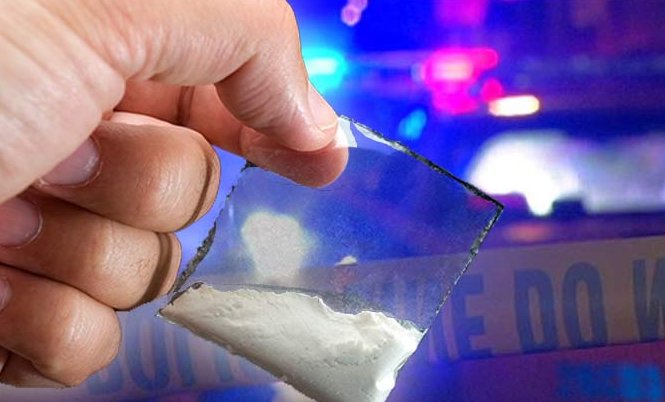
“I have a method for getting people off the street that should not be there. Mouthy drivers, street lawyers, assholes and just anyone else trying to make my job difficult. Under my floor mat, I keep a small plastic dime baggie with Cocaine in residue. Since it’s just residue, if it is ever found during a search of my car like during an inspection, it’s easy enough to explain. It must have stuck to my foot while walking through San Castle. Anyways, no one’s going to question an empty baggie. The residue is the key because you can fully charge some asshole with possession of cocaine, heroin, or whatever just with the residue. How to get it done? “I asked Mr. DOE for his identification. And he pulled out his wallet, I observed a small plastic baggie fall out of his pocket…” You get the idea. easy, right? Best part is, those baggies can be found lots of places so you can always be ready. Don’t forget to wipe the baggie on the person’s skin after you arrest them because you want their DNA on the bag if they say you planted it or fight it in court.”
Other officers on the board responded by sharing similar stories about how they falsely arrest people who don’t adequately bow to their authority.
Later in the interview, when the officer was asked if planting evidence happened regularly within his department, he responded by saying,
“Um, yes it does, on a regular basis. Probably every day in my shift. I work nights on the Road Patrol in a rough, um, mostly black neighborhood. Planting evidence and lying in your reports are just part of the game.
Then straight from the horses mouth, the officer said that this crooked behavior was actually encouraged by the drug war. Continuing his discussion about planting evidence, the officer said,
“Yes, all the time. It is something I see a lot of, whether it was from deputies, supervisors or undercovers and even investigators. It’s almost like you have no emotion with it, that they attach the bodies to it, they’re going to be out of jail tomorrow anyway; nothing is going to happen to them anyway. One of the consequences of the war on drugs is that police officers are pressured to make large numbers of arrests, and it’s easy for some of the less honest cops to plant evidence on innocent people. The drug war inevitably leads to crooked policing — and quotas further incentivize such practices. It doesn’t help that your higherups all did the same thing when they were on the road. It’s like a neverending cycle. Like how molested children accept that as okay behavior and begin molesting children themselves.”
When asked if he would get in trouble with the police department for framing people, the officer laughed and said that this type of behavior was actually encouraged.
“Our top boss, Sheriff Ric Bradshaw, supports this behavior and has for his entire career. As with anything, it depends on who you know in our agency. Last year, we had three deputies on the TAC unit, Kevin Drummond and Jarrod Foster, get caught falsifying information for a warrant. They got a pat on the back for a job well done. Just recently, we had a deputy, I think his name was Booth. He was caught completely lying on a car crash. Back a few more years, our Sheriff was involved a massive coverup of the death of two black deputies. He hid the report for years. This is only the beginning. The Sheriff has been involved in falsification of documents and his underling, Chief Deputy Michael Gauger, has been personally involved in an overtime scandal to steal money from the Sheriff’s Office. Does our Sheriff know about this behavior? Of course he does. We have even had a judge outright accuse my agency of committing fraud upon the court in a public hearing. She was one of the ones who saw through all the lying and covering up our department does to get away with the internal crime committed by deputies on a regular basis,” he said.
Palm Beach County Sheriff’s Office is no special police department, and this officer is not just a bad apple. The problems that are discussed in this interview are systematic, and they occur in every town across the country.
Just this week, we exposed a police department in Missouri whose officers were forced to make arrests or faced losing their job. This leads to otherwise innocent people being charged on a regular basis.
Also this week, the Free Thought Project conducted a report to show what happens to cops who try to expose this corruption. Several officers within the Chicago police department were threatened with “going home in a casket” for exposing this same vile practice within their ranks.
via FreeThoughtProject
Sep 28, 2014 | 2020 Relevant, Abuses of Power, News

Remember that time the Supreme Court ruled that our DNA is basically just like our fingerprints, and cops can snatch it from us subsequent to arrest? Remember the giant biometrics project the FBI has been spending at least a billion dollars of our money building (with many of the details kept secret), called ‘Next Generation Identification’? With those powers and monies combined, the FBI this week announced its plans “to accelerate the collection of DNA profiles for the government’s massive new biometric identification database.” Like with other biometrics collection schemes, the FBI aims to get local police to do the groundwork.
What could go wrong?
NextGov:
Various FBI divisions “are collaborating to develop and implement foundational efforts to streamline and automate law enforcement’s DNA collection processes” including at arrest, booking and conviction, according to an Aug. 19 notice about the industry briefing. The ongoing groundwork is expected to facilitate the “integration of Rapid DNA Analysis into the FBI’s Combined DNA Index (CODIS) and Next Generation Identification (NGI) systems from the booking environment.”
CODIS is the government’s central DNA database.
Rapid DNA analysis can be performed by cops in less than two hours, rather than by technicians at a scientific lab over several days. The benefit for law enforcement is that an officer can run a cheek swab on the spot or while an arrestee is in temporary custody. If there is a database match, they can then move to lock up the suspect immediately.
While current law requires DNA sent to CODIS to be examined in an accredited lab, FBI officials are looking for a “legislative tweak” to enable local law enforcement to skip that step, and send arrestees’ DNA straight to the FBI’s national database. In 2011, one out of every 25 Americans was arrested.
EFF’s Jennifer Lynch, one of the nation’s foremost experts on FBI biometrics programs, explains why the bureau’s DNA plans pose a serious threat to civil liberties.
“If you leave something behind, let’s say your trash on the sidewalk out in front of your house, then you’ve abandoned any kind of privacy interest in the trash,” she explained. “And so the cops can search through that trash without a warrant. That reasoning has been extended to DNA — if you leave your DNA behind, then the cops could get it without a warrant and test it.”
“If you consider DNA to be a form of ID, and the Supreme Court has already upheld state laws that allow officers to stop someone and ask for their ID, then this is the logical next step,” she added.
Everyone in the United States knows who gets stopped by police the most: young black and brown people. It’s therefore not hard to imagine whose DNA is going to disproportionately fill up this national database, says Lynch.
“If the cops are stopping more African Americans or Latinos and they have the ability to collect their DNA just at a stop, then it means that the DNA database is going to be even more heavily weighted with DNA from immigrant communities and different ethnic minorities,” Lynch told NextGov.
Concerned about your local police department obtaining a rapid DNA device, or sending your DNA to the FBI just because you were arrested at a protest, or for a bench warrant? Take up the matter at the local level. Tell your city government you don’t want your city or town participating in this dragnet DNA sweep.
via PrivacySOS
Oct 24, 2012 | Abuses of Power

About 300 people have been wrongfully convicted and exonerated in the U.S. thanks to DNA evidence. But overlooked in those stories are the accounts of jurors who unwittingly played a role in the injustice.
One of those stories is playing out in Washington, D.C., where two jurors who helped convict a teenager of murder in 1981 are now persuaded that they were wrong. They’re dealing with their sense of responsibility by leading the fight to declare him legally innocent.
Santae Tribble, now 51, is already out of prison, but he’s asking a judge to sign a certificate of actual innocence that would help him get compensation for more than 25 years he spent behind bars.
Bad Evidence And Faulty Facts
In January 1981, a jury took only a few hours to convict Tribble for shooting a cabbie dead in a botched robbery. There was only one witness, the cabbie’s wife, who couldn’t make a positive identification. The key evidence was a woman’s stocking, which the murderer wore over his face. That stocking contained hair the FBI said it had matched to Tribble.
“They admitted that they didn’t know with certainty, but the numbers they threw out were so steep as to make it virtually certain that it was his hair,” juror Susan Dankoff said.
In fact, prosecutors told the jury in the closing argument there was only a 1 in 10 million chance it could be someone else’s hair.
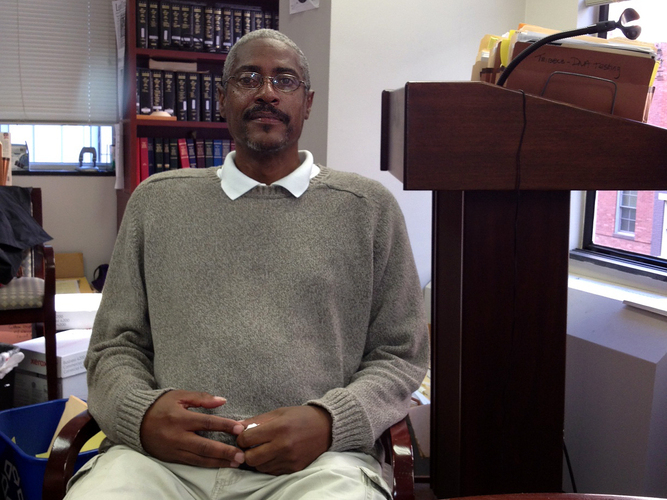
EnlargeCarrie Johnson/NPRJuror Anita Woodruff is haunted by her decision to help convict Santae Tribble of murder.
But Tribble, his family members and his girlfriend all testified that he was home, sleeping at his mother’s apartment in Maryland at the time of the murder.
Dankoff remembers she considered the alibi — and rejected it.
“Then you start to think, OK, maybe they’re covering for him. And I think that that was really what it came down to,” she said.
So the jury voted to convict — except that the hair analysis that proved so persuasive has been completely discredited. Even the Justice Department says Santae Tribble didn’t do it. Dankoff said she got a call from Tribble’s lawyer not too long ago letting her know.
“And that really, really left a mark,” she said. “I was just devastated. I think I walked around feeling numb for a week after hearing that.”
Anita Woodruff also served on that jury. She said she went home and cried after voting to convict. The case never really left her. So when Tribble’s lawyer Sandra Levick, of the Public Defender Service, called to say new DNA tests on that hair did not match, Woodruff recalled, “I was like, ‘Oh my God.’ I said, ‘He spent all that time in jail, for nothing.’ ”
Starting Over After Decades In Prison
Woodruff was only 20 years old at the time of the trial, close in age and experience to Tribble. She said she started thinking about how their lives diverged.
“You know, and I’m thinking about all the things that … I did,” Woodruff said. “I got married, you know, got a divorce, but I had kids, you get to raise your kids, and I did see them get their license and go to proms and high school graduations.”
Santae Tribble had none of that.
“I did have a son that was born soon after I was incarcerated,” Tribble said. “I missed his entire life growing up.”
Tribble said he understands the jury and the justice system made a mistake. But now, he said, is the time to make amends.
“Like, they went the extra mile to, when the pieces didn’t fit, to make them fit,” Tribble said. “Now that it’s clear that the pieces don’t fit, make it right.”
Under the law, Tribble can collect as much as $50,000 a year for each year he was wrongfully incarcerated, if a judge signs off and formally declares him innocent.
The two jurors from his trial so long ago have written to urge the court to support that idea. They say they’re haunted by Tribble’s circumstances. He has no job, no money and no real home. He’s living with his older brother. No big dreams, but maybe a landscaping business, he says, since he spent too many years indoors.
“Well, in landscaping they call it beautification,” Tribble said. “You know, to make it pretty, the flowers and arranging the grass and stuff like that.”
He says he only wants a chance, another chance, at a normal life.
May 25, 2012 | Events & Assassinations
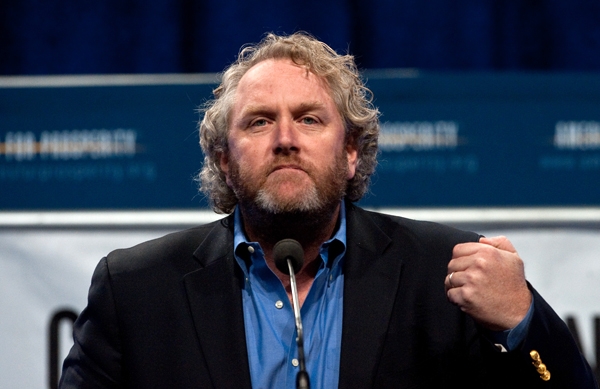
Veteran Los Angeles coroner forensic technican Michael Cormier had died, apparently due to arsenic poisoning. The 61 year old Cormier was discovered dead on April 20th – the same day the city officials had released their preliminary autopsy report on the death of conservative media powerhouse Andrew Breitbart.
According to early reports, Michael Cormier was “seemingly healthy,” yet “suddenly stricken” with a fatal condition – just like Andrew Breitbart.
It’s the latest twist in the case of Andrew Breitbart’s untimely death that will surely fuel increased speculation into possible foul play – in both cases.
The sluggish release of the Breitbart autopsy follows the unorthodox, rushed announcement by city authorities at the time of Breitbart’s death that he had died of ‘natural causes’ on March 1, 2012 at the age of 43.
The timing of Breitbart’s death came on the eve of a few highly anticipated events. Firstly, he had announced that he would be releasing rare ‘game changing’, rather damning video footage of President Obama allegedly cavorting with communist activists years earlier. Some footage was released in the days after his death, but it is not believed to be material that would change the corse of the 2012 election as Breitbart had indicated beforehand. He was also due to reveal his new Breitbart.com format, and had met only one before his death with Sheriff Joe Arpaio’s Cold Case Posse team in Phoenix in relation to Obama’s forged PDF birth certificate and forged US Selective Service registration card.
The LA County Coroner’s office announced in their preliminary report that Breitbart had died of heart failure, and that a negligible amount of alcohol was found in his system. No prescription or illicit drugs were discovered at any point during the autopsy. The final, definitive medical explaination on Breitbart’s death has yet to be made public.
Coroner Michael Cormier’s mysterious death was first reported by KTLA TV reporter Elizabeth Espinosa explaining how city detectives were investigating a possible ‘arsenic poisoning’ in the case. This report was later picked up and reported in an LA Times Local blog:
“The sources, who spoke on the condition of anonymity, said that finding the presence of poison does not necessarily mean the death was a homicide, because the substance could have accidentally entered his system.”
“At this point we haven’t ruled out foul play,” said Lt. Alan Hamilton of the Los Angeles Police Department. “It is one of the things being considered. We are waiting for the coroner’s results.”
A toxicology report is expected to be released sometime between May 25th and June 1st.
WND also recounted Breitbart’s early career, by summarizing:
Matt Drudge paid tribute to his colleague and friend with a posting on the Drudge Report: “In the first decade of the DRUDGEREPORT Andrew Breitbart was a constant source of energy, passion and commitment. We shared a love of headlines, a love of the news, an excitement about what’s happening. I don’t think there was a single day during that time when we did not flash each other or laugh with each other, or challenge each other. I still see him in my mind’s eye in Venice Beach, the sunny day I met him. He was in his mid 20′s. It was all there. He had a wonderful, loving family and we all feel great sadness for them today.”
Patrick Henningsen
Infowars.com
April 30, 2012