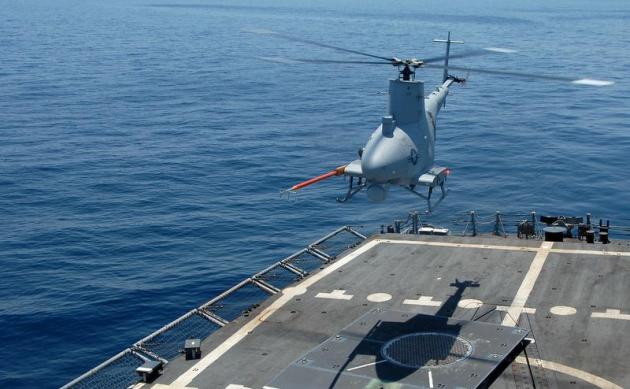
The history of pilotless aircraft in the United States military stretches back to the days of the Wright brothers. It’s difficult to describe any good that emerges from warfare, but many modern technological advancements — computers, zippers, microwaves — can be traced back to conflicts of a bygone era. Today unmanned aerial vehicles are being used by a whole slew of people, the U.S. Department of Defense being just one primary example. While drones have been used routinely to support or undertake lethal force abroad for over a decade, their domestic applications are just now being given more serious consideration. The capabilities and contributions of UAVs have, up until recently, been propelled more or less exclusively by the defense community. UAV technology may currently be associated with what some would consider secretive and nefarious militarism, but in examining the range of practical, commercial applications we can only hope that drone technology will begin to move away from the dark side.
President Obama’s approach to counterterrorism has been marked by his embrace of drone technology to target terrorist operatives. But they’ve come a long way since their first strike operations: drone backpacks are now used by soldiers, and Predator drones come equipped with even more powerful warheads. U.S. DOD spending on drones increased from $284M in 2000 to $3.3B in October of 2012. Small surveillance drones, called Cicadas, are now being released from balloons to collect data on the ground in Iraq. In short, the military has a seemingly infinite range of uses for unmanned aerial vehicles, large and small. And the scope of drone missions only continues to expand, as the technology necessary to program and operate them becomes at once more commonplace and versatile. Over the next decade, the Pentagon anticipates that the number of “multirole” UAVs (those capable of both spying and striking) will nearly quadruple.
As of October 2013, the Federal Aviation Administration had issued 285 clearance certificates for drones inside the United States. Under pressure from the Unmanned Systems Caucus (or drone lobby) the Department of Homeland Security has accepted eight Predator drones for use along the U.S.-Canada and U.S.-Mexico borders. The FAA is set to further open skies to commercial drones by 2015, allowing civilians to finally explore and expand upon the uses of UAV technology. But even with the law by their side, can civilian companies ever hope to utilize drones to the extent in which they are employed by the military? Many recognize the civil potential of flying robots, but recognize that with certain valuable contributions also comes the possibility of tighter law enforcement and increased government surveillance.
The dualistic nature of drones is being explored by hobbyists and venture capitalists alike. Mark Zuckerberg of Facebook is even developing a program that will employ drones and satellite internet to deliver internet to disenfranchised communities throughout the world. While this probably speaks to Zuckerberg’s opportunism (and his desire to compete in the marketplace against Google’s Loon Project and HughesNet Internet) that isn’t to say that people in underserved communities don’t stand to benefit. The U.S. government already uses drones to protect endangered wildlife species, like the sandhill crane, and researchers in Indonesia and Malaysia are also using unmanned aerial devices to monitor the activity of similarly threatened orangutan populations. UAV systems are emerging as key tools in agricultural innovation and the monitoring of natural resources. Search and rescue missions, 3-D mapping and surveying projects, and hurricane tracking projects are also being carried out by UAVs. With unmanned aircraft, it seems the sky’s the limit for civil and commercial usage.
But the business of drones still comes with plenty of risks. The American Civil Liberties Union has warned of a “dystopian future” in which “mass, suspicionless searches of the general population” are the norm. Given the history of drones as advanced tools of the government and military, this doesn’t seem like an empty threat. And for now, the law still stands in the way of any real development on the commercial end. Despite the fact that many ideas for drones, from the delivery of Amazon parcels to Domino’s pizzas, have been suggested, the military still holds the key to their innovation from an American standpoint. Their function as a militaristic tool remains at the forefront of their continued growth, resulting in large spending increases for advanced cameras, sensors, and systems with attack capabilities. But the integration of drone technology into domestic airspace by law enforcement — and later, by corporations — seems inevitable. As technological improvements continue to catapult the UAV industry into the future, the true beneficiaries of these developments remain to be seen.
Today EFF posted several thousand pages of new drone license records and a new map that tracks the location of drone flights across the United States.
These records, received as a result of EFF’s Freedom of Information Act (FOIA) lawsuit against the Federal Aviation Administration (FAA), come from state and local law enforcement agencies, universities and—for the first time—three branches of the U.S. military: the Air Force, Marine Corps, and DARPA (Defense Advanced Research Projects Agency).
While the U.S. military doesn’t need an FAA license to fly drones over its own military bases (these are considered “restricted airspace”), it does need a license to fly in the national airspace (which is almost everywhere else in the US). And, as we’ve learned from these records, the Air Force and Marine Corps regularly fly both large and small drones in the national airspace all around the country. This is problematic, given a recent New York Times report that the Air Force’s drone operators sometimes practice surveillance missions by tracking civilian cars along the highway adjacent to the base.
The records show that the Air Force has been testing out a bunch of different drone types, from the smaller, hand-launched Raven, Puma and Wasp drones designed by Aerovironment in Southern California, to the much larger Predator and Reaper drones responsible for civilian and foreign military deaths abroad. The Marine Corps is also testing drones, though it chose to redact so much of the text from its records that we still don’t know much about its programs.
As well as thanking God for his success, CEO Chris Hyman is a Pentecostal Christian who has released a gospel album in America and fasts every Tuesday. Coincidentally he was in the World Trade Centre on 9/11 on the 47th floor addressing shareholders.
Serco run navy patrol boats for the ADF, as well as search and salvage operations through their partnership with P&O which form Maritime Defence Services.
Serco run two Australian Jails already, Acacia in WA and Borallon in Queensland
They’re one of the biggest companies In the UK for running electronic tagging of offenders under house arrest or parole.
Serco are in one of the two favoured bid consortiums for the new Sydney metro rail line.
Here are some amazing corporate videos from Serco, we fully recommend both if you’re a fan of Verhoeven-esque corporate propaganda. You can watch the video here:
Serco Group plc is a British government services company based in Hook, North Hampshire in the United Kingdom. It is listed on the London Stock Exchange and is a constituent of the FTSE 100 Index. Among its operations are public and private transport and traffic control, aviation, military and nuclear weapons contracts, detention centres and prisons, and schools.
Serco was founded in 1929 as a United Kingdom division of the Radio Corporation of America and initially provided services to the cinema industry.[3] It changed its name to Serco in 1987[3] and has been a London Stock Exchange listed company since 1988.[3]
On 29 December 2008, Serco completed its acquisition of SI International.[4]
Operations
The Guardian has called Serco “probably the biggest company you’ve never heard of”.[5]
Serco operates in various sectors:
Home Affairs: Serco operates the National Border Targeting Centre for the UK Border Agency and provides the Carrier Gateway – the interface between carriers and the Agency.[6]
Detention: Serco supplies electronic tagging devices for offenders and asylum seekers.[22] In Britain, Serco runs four prisons, a Young Offenders Institution and a Secure Training Centre.[23] It also operates two Immigration Removal Centres.[24][25] Serco is also responsible for the contracted-out court escort services in the south-east area (formerly a role undertaken by HM Prison Service).[26] In addition, Serco runs partly privatised Hünfeld Prison in Hesse, Germany.[27] In Australia Serco runs Acacia Prison in Western Australia[28] and Borallon Correctional Facility in Queensland[29] as well as the national contract for immigration detention centres, including Christmas Island and the Villawood detention centre in Sydney.[30][31] In Auckland, New Zealand Serco runs the Mt Eden remand prison[32] and in March 2012 was awarded the contract to build an operate a 960 bed prison at Wiri.[33]
Aviation: Serco provides air traffic control services at international airports in the United Arab Emirates[42] and at some smaller airports in the USA and Canada.[43][44] Since 2004 Serco have also had £5m a year from the US government to manage airports in Iraq.[45] Serco also operate Scatsta Airport on Shetland.[46] In June 2010 Serco signed a £4million contract to operate all air traffic control services for Coventry Airport.[47]
Education: Serco holds a 10 year contract with Bradford City Council to manage and operate the local education authority,[53] providing education support services to the City’s schools, and similarly manages and operates Walsall[54] and Stoke-on-Trent local education authorities.[55] Serco is one of Ofsted‘s three Regional Inspection Service Providers, responsible for school inspections in the English Midlands.[56] Serco is also the provider of a Student information system, Facility, used in schools and colleges in several countries.[57]
Drivers’ licensing: Serco, through a purpose-made division Serco DES, holds a 10 year, $114 million contract with the Province of Ontario to operate the province’s DriveTest driver examination centres. These tests include vision, road, and knowledge tests for all persons seeking to become a licensed automobile driver in the province.[43]
Serco publishes a magazine, Ethos Journal, to stimulate thought and provoke reaction to the big issues shaping the world of public services. Ethos is aimed at public sector leaders, politicians, academics and policy specialists debating the future of public services today.[62]
Serco operates waste collection services for local councils.[63]
Serco operates in Continental Europe, the Middle East, the Asia Pacific region and North America, but the majority of its turnover still comes from the UK.

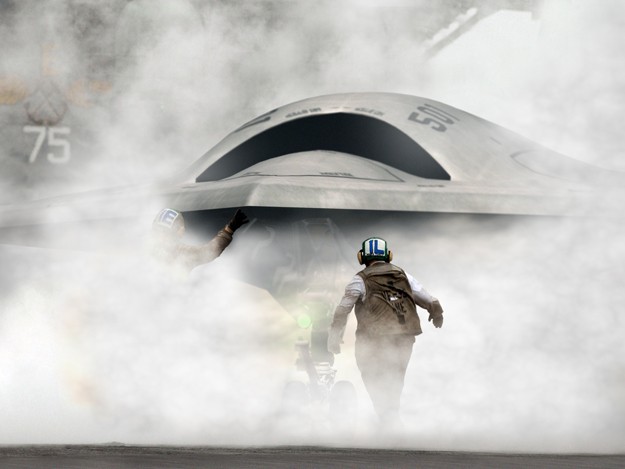
 The history of pilotless aircraft in the United States military stretches back to the days of the Wright brothers. It’s difficult to describe any good that emerges from warfare, but many modern technological advancements — computers, zippers, microwaves — can be traced back to conflicts of a bygone era. Today unmanned aerial vehicles are being used by a whole slew of people, the U.S. Department of Defense being just one primary example. While drones have been used routinely to support or undertake lethal force abroad for over a decade, their domestic applications are just now being given more serious consideration. The capabilities and contributions of UAVs have, up until recently, been propelled more or less exclusively by the defense community. UAV technology may currently be associated with what some would consider secretive and nefarious militarism, but in examining the range of practical, commercial applications we can only hope that drone technology will begin to move away from the dark side.