Jan 10, 2015 | Scientists Re-Booted
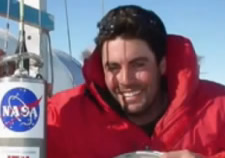
Robotics expert, NASA at the JPL.
Alberto Behar Mr Behar died instantly when his single-engine plane nosedived shortly after takeoff Friday from Van Nuys Airport He worked on two Mars missions and spent years researching how robots work in harsh environments like volcanoes and underwater As part of the NASA team exploring Mars with the Curiosity rover, Behar was responsible for a device that detected hydrogen on the planet’s surface as the rover moved.
47-year old NASA Scientist Alberto Behar helped to prove that there had once been water on Mars according to the sad Daily Mail story published to announce his recent death in a plane crash that happened on Friday in LA, California. While plane crashes do happen and scientists do die, Behar’s name has now been added to a very long list of scientists and astronomers who have met their untimely ends prematurely, leading us to ask, did Behar know something that ‘they’ don’t want the rest of society to find out?
Robotics expert, NASA at the JPL.
Alberto Behar Mr Behar died instantly when his single-engine plane nosedived shortly after takeoff Friday from Van Nuys Airport He worked on two Mars missions and spent years researching how robots work in harsh environments like volcanoes and underwater As part of the NASA team exploring Mars with the Curiosity rover, Behar was responsible for a device that detected hydrogen on the planet’s surface as the rover moved.
47-year old NASA Scientist Alberto Behar helped to prove that there had once been water on Mars according to the sad Daily Mail story published to announce his recent death in a plane crash that happened on Friday in LA, California. While plane crashes do happen and scientists do die, Behar’s name has now been added to a very long list of scientists and astronomers who have met their untimely ends prematurely, leading us to ask, did Behar know something that ‘they’ don’t want the rest of society to find out?

Jun 21, 2011 | Scientists Re-Booted
 Andrei Tropinov, Sergei Rizhov, Gennadi Benyok, Nicolai Tronov and Valery Lyalin died in a Russian plane crash. The five scientists were employed at the Hydropress factory, a member of Russia’s state nuclear corporation and had assisted in the development of Iran’s nuclear plant. They worked at the Bushehr nuclear power plant and helped to complete construction. Officially Russian investigators say that human error and technical malfunction caused the deadly crash, which killed 45 and left 8 passengers surviving.
May 8, 2005 | Scientists Re-Booted
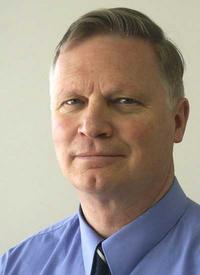
 David Banks, age 55, died on May 8, 2005. Banks, based in North Queensland, died in an airplane crash, along with 14 others. He was known as an Agro Genius inventing the mosquito trap used for cattle. Banks was the principal scientist with quarantine authority, Biosecurity Australia, and heavily involved in protecting Australians from unwanted diseases and pests. Most of Dr Banks’ work involved preventing potentially devastating diseases making their way into Australia. He had been through Indonesia looking at the potential for foot and mouth disease to spread through the archipelago and into Australia. Other diseases he had fought to keep out of Australian livestock herds and fruit orchards include classical swine fever, Nipah virus and Japanese encephalitis.
Jun 27, 2004 | Scientists Re-Booted
 Dr. Paul Norman, age 52, died on June 27, 2004. He was from Salisbury Wiltshire and killed when the single-engine Cessna 206 he was piloting crashed in Devon. He was an expert in chemical and biological weapons. He traveled the world lecturing on defending against the scourge of weapons of mass destruction. He was married with a 14-year-old son and a 20-year-old daughter, and was the chief scientist for chemical and biological defense at the Ministry of Defense’s laboratory at Porton Down, Wiltshire. The crash site was examined by officials from the Air Accidents Investigation Branch and the wreckage of the aircraft was removed from the site to the AAIB base at Farnborough.
