There is often times a trade-off between security and convenience. With Home Hacks the more easily you can access your personal data, the easier someone else can too, making anything that you put online a potential target for hackers. A growing source of concern for many people is their home security and home automation systems.
Home automation is just starting to come into its own, with more home appliances having the capability to be networked, monitored, and controlled from your computer, phone, or other device. The collection of networked devices is commonly referred to as “the Internet of things” since we’re able to sync almost anything we’d like to the internet and, thus, each other. While home automation is not a new idea, it is only more recently that it has become mainstream and available to the masses while also having a more affordable price. This means you could be able to control many different aspects of your home from anywhere at any time. You can set your own schedules and preferences for things like lights, temperature, door locks, or a home security system.
However, along with the convenience of having all this control and information at your fingertips, there are vulnerabilities to worry about. Once your data is online, it becomes a potential target for hackers and malware. And now it isn’t just personal data there is also the threat of hackers being able to remotely shut down your home security system, or detect when you are not at home. Forbes recently reported on a series of incidents where Insteon smart home systems were installed with no password protection, allowing anyone to easily gain control of a complete stranger’s home.
Another security flaw with some of these devices, like the Mi Casa Verde MIOS VeraLite, is that once connected to a WiFi network, the device assumes anyone is an authorized user. So potential hackers need only connect to someone’s WiFi network (something even a novice could do) to gain control of the house.
These stories highlight the need to take security more seriously, both on the part of manufacturers developing more robust security features, and users taking advantage of these features. For those questioning the security of your home automation, it is important to make sure that any home automation devices are password protected (with 128-bit encryption if possible), and that your home WiFi network and router are also securely behind strong passwords. There are some companies like ADT that monitor these things for you, but if you’re using a build as you go, DIY type system like Wink, you’ll need to pay special attention to this. Make sure any firmware or software updates are installed promptly when security flaws are found and patched. Never use a default password. In fact, it is good practice to periodically change your passwords. With a bit of care, you can safely enjoy the convenience of an automated home.
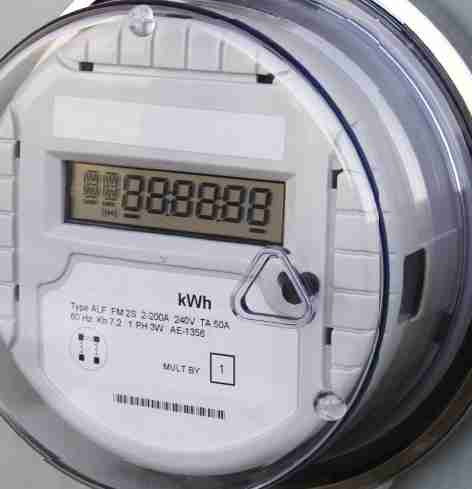
Tying into the concept of a hyper-connected home, like Home Hacks, and bring some of the same concerns, is the growing technology behind smart grids and smart meters. The so-called smart meter lets consumers see how much power is being used in their homes on an hourly basis. These meters are connected to the smart grid, which allows power companies to adjust prices based on demand and supply, while the added information lets consumers adjust their consumption habits. But there are privacy concerns about utility companies collecting massive amounts of data about their customers and their habits. Similar to hacking a home automation system, if hackers obtained data from a smart meter they could potentially gather personal information as well, determine things like when the house is empty, or even run up fake charges shut down the power.
In May of 2014, the White House released a report called “Big Data: Seizing Opportunities, Preserving Values” which recognized the dangers of all this data being collected, and the need to protect privacy. Currently, the major federal legislation regarding smart grids is the Energy Independence and Security Act of 2007, which created various committees and councils to establish standards and protocols for upgrading to smart grids. Several states have passed their own laws to encourage smart grid development, including California, Maryland, and Illinois.
While smart meters have been touted as a way for consumers to save money on energy bills while helping the energy system as a whole run more efficiently, the two way communication the smart meters permit, the health risks they present, and the lack of demonstrated savings or efficiency increases for many who are using them, have some commentators speculating that smart meters are more trouble than they’re worth. On top of this there are no laws against keeping the government or utilities companies away from personal data obtained through these devices (not that laws would stop them from doing so anyway), and thus no protection for citizens. Home Hacks.
Since they’re inherently controlled by the utilities, smart meters seem highly unlikely to be a secure solution for the average homeowner. Your best bet to get the most out of a smart home and both understand and reduce your energy costs is to stay away from smart meters altogether, and use a home automation system to help control your energy usage – just make sure that it’s a system that you can harden against outside intrusion.
IF you have ever wondered if your smart meter is being used to spy on you, well now there is proof that governments and private organisations are using data collected from smart meters to spy on you.
Information about power usage, which can be used to identify when a home is being occupied, is being shared with third parties of which includes government agencies, private organisations and off-shore data processing centres.
This unethical breach of privacy was discovered on the website of one of Australia’s largest electricity retailer, Origin Energy.
Electricity customers, who sign up for an online service that provides the account holder with detailed information about their electricity usage, are unwillingly agreeing to share their private information with third parties.
A 496 word Privacy/Consent policy form explicitly states that customers who wish to sign up for the service that provides them with information about their electricity usage, must agree that the following organisations have access to their private data:
Government authorities
Electricity installers
Mail houses
Data processing analysts
IT service providers
Smart energy technology providers
Debt collection agencies
Credit reporting agencies
A spokesperson for the electricity company (Origin Energy) responsible for this revelation was recently quoted as saying “the additional information requested about each household adds to the richness of the Origin Smart experience” (Source: The Age).
One private organisation that is being given personal information of Origin Energy customers is Tendril, a self-described consumer engagement application and services provider and an organisation that believes smart grids can help fight climate change.
Alarmingly, Tendril’s own website doesn’t explicitly state how it uses data gathered by its clients and for what purposes the data can and cannot be used for.
What implication this has for Australian residents is unknown.
There has been an overwhelming opposition to the roll-out and installation of smart meters around the world.
Smart Meter opt-out coalitions are present in almost all major municipalities that have smart meters present. Unfortunately, in many municipalities an opt-put option is not available.
The author (Andrew Puhanic) was forced to have a smart meter installed on his property, with the only notice given about the installation being a letter informing the ‘month’ that the smart meter would be installed.
The greatest concern with smart meter data being shared with third parties is the fact that the third-party organisation could easily identify (over time) a pattern of when you do and do not use electricity.
This information could fall into the wrong hands and could be used to determine when your home is un-occupied.
In Australia, the erosion of privacy was escalated further by a new proposal to force internet and telephone companies to retain customer records for more than two years. For more information about this proposal, click here.
Households that are forced to have smart meters installed must be assured that the information their electricity company collects is not shared with third parties.
Ultimately, smart meters are designed to collect information about household electricity usage and now there is proof that electricity companies are openly sharing information collected by smart meters.
The first thing is to know what to expect before hand. While people think about the dollar dropping to nothing, or an Obama re-election, you need to consider the most pressing signs of a pending martial law.
How pending?
About 15 minutes or less away from being put into a bus.
Now there are people who would look forward to 3 hots and a cot. And there are some who would actively encourage you to go to the camps. There was an article that said that social services folks are encourage self-sufficient people to use food stamps, and that the self-sufficient mentality was preventing more people from being on food stamps.
But we aren’t those people. We are the kinds that enjoy freedom.
So what do we look for?
Using the backbone of a military operation, you must make the enemy (that would be you) deaf, dumb, and blind.
What does that mean? It means you must be blind: Not knowing what to expect, how many men are in the operation, and what your final destination will be. This means that the operation will most likely take place in the middle of the night. When they roll up, mega watt lights will be shone onto the neighbourhood. This disorientates you as well as illuminate your home for movement. This also means the power to your block will be secured. Depending on the size of the town, perhaps several blocks at once. That would be a good thing. Read on…
Deaf means that you won’t know what is going on. Loud noises, such as bullhorns shouting orders, diesel engines running, and people yelling at you to go here or there. It also means you won’t be able to receive texts or cell phone service.
Dumb, or mute, means you won’t be able to call anyone, tweet, post a Facebook update, send an email of warning. Imagine if the events took place in Chicago. How quick would such a warning get spread all over Facebook or Twitter. It would “trends” quickly and the element of surprise would be gone.
Making you deaf and dumb is as simple as securing the internet with the Internet Kill Switch. That ends Facebook, Twitter, and Email.
And all you have to do to secure the cell phone or land-line service is to have the US military show up at the local phone office and have them secure all lines in the place. Turning the power off would be as effective as cutting lines, but once power is restored you could have normal service. Infrastructure would be maintained.
Your neighbourhood is now deaf, dumb, and blind.
You need to buy yourself some time. Not much time, but just enough time.
And you have about 5 minutes to do it in. Maybe less.
What do you need?
You need to make an alert when you lose power. This is from my site:
“I took a small wall wart that is rated at 12 volts and about 100 mA. I attached it to the power and ground part of a small 12v relay I bought from radio shack. I then took a 9v battery connector and a piezeo alarm and put it on the connectors of the relay that if there is no power to the relay – will allow current to flow. The way you find that is to put the red wire of the connector to the relay, and one of the leads from the alarm to the opposite side of the relay. Connect the black wire and the other alarm wire together.
Provided you have a 9v battery on the connector you should hear a sound. If not, change to a different spot on the relay. So when you apply power by plugging in the wall wart, the sound goes off. Remove the wart or turn off the power, you get an alarm sound. “
When I was in the Navy, any time we lost power we went into an immediate Security Alert. And you should too. When that alarm sounds (Put it in your bedroom as close to the bed as possible), after you pull the alarm out of the socket, get up and hide the children,
And that means you have to have pre-arranged hiding spots.
A window seat is a great way to start. Make a bench, bolt it to the wall under the bedroom window, and make small doors for the child to hide in. You can do the same for your room. Tell the children just to go if they are ever told, and to stay very quiet until you tell them to come out. And only you. Pretend to be someone else and see if they come to them. Soldiers may be very sneaky and say, “Your parents told me to get you. Come on, let’s go to them!”
Practice this frequently so they are aware of what needs to be done, and to be done in the dark, and to be done without question.
If you can’t make a window bench, then fill your closet up with “boxes”. These boxes are “stacked” to make it look like a storage area, but it’s just a shell. If you are in a manufactured home or a single story home, go to the closet and cut open a hatch to the crawl space. Have a black blanket so you can hide under the blanket to stay concealed. USE YOUR IMAGINATION!
The idea is that soldiers don’t have much time to search each home. They have to keep moving onto the next house. Once they leave and the power goes back on – DON’T CHANGE ANYTHING. If the bathroom light was on, leave it on. The smart meters will detect and record ANY changes and it will alert someone that there are people within the home!
Drones will be used to monitor communities and neighbourhoods. Going out after dark is the same as going out during the day.
If you go out at night, take a night vision capable video camera. Put black plastic around the IR lamp that is usually beneath the camera’s lens. This will prevent the drone from seeing the IR light, but you’ll be able to see the IR lights on the drone in the dark.
If you feel froggy, shoot down the drone AS IT LEAVES! The flight will be level and of constant speed, enough for you to get a bead on it. It’s difficult to tell where the shot came from, and you’ll get some satisfaction of taking one down. These thing are expensive and if they have to redirect one away from another area, that means someone else is getting a break.
If you have to move from one place to another, do so during a rain or thunderstorm. These conditions make drone flying very difficult and seeing anything of value VERY difficult. Yes, it is horrible conditions for you, but at least you will be free.
If, during the day, you see people wandering through your town, ignore them and hide. They may be “spies” looking for the last holdouts. As a rule of thumb, 8 to 80, blind, crippled, or crazy, means anyone may be a threat. Don’t kill them, just let them pass through. Watch them to see if they use a radio. IF they do use one, listen for codes such as, “Secure”, “Subjects”, “Natives”, or “SitRep (Situation Report)”
Such phrases would mean that they are looking for you as wolves in sheep’s clothing. DO NOTHING towards them. Get their photos if you can but remain hidden.
Satellites may detect heat from fireplaces, so use the covert cooking methods like solar cooking, Hay Box cooking or Creveche. If you can, light a match in the sewers to eliminate any flammable gasses, and cook down there. The streets should hide the heat signature well enough, especially in the day. Solar cooking using the back of a pickup may be a good decision as it may imitate the accumulated heat of a canopy.
You will be on your own. You will be the deciding factor if you live free or die free.
But it’s your decision. No one else makes it for you.
SANTA CRUZ, CA—Just as PG&E enters the final phase of its deployment of wireless “smart” meters in California, the largest of the state’s Investor Owned Utilities (IOU’s) has reversed course, quietly beginning to replace the ‘smart’ meters of those reporting health impacts with the old trusty analog version. Consumer rights and health groups immediately seized on the news, demanding that millions of Californians unhappy with their new wireless meters get their analogs returned immediately at no cost.
‘Smart’ meters are new wireless utility meters being installed as part of the “smart” grid initiative, spearheaded by technology firms and backed by the Obama administration and the Department of Energy. Promises ranging from lower utility bills to enhanced renewable generation capacity have failed to materialize, with widespread reports of higher bills, privacy violations, fires and explosions, and commonly reported health impacts such as headaches, nausea, tinnitus, and heart problems associated with powerful wireless transmissions. Widely disparate political groups- from members of the Green Party to the Tea Party and Occupy protesters have attacked the program, and dozens of grassroots organizations have sprouted up over the past several months to fight what they call an undemocratic, unconstitutional and dangerous assault on people in their own homes and neighborhoods. Dozens of people have been detained or arrested for peaceful civil disobedience and even simply speaking out against deployments.
In California, more than 47 cities and counties have demanded a halt to installation, and a dozen local governments have passed laws prohibiting the controversial technology. [2]The ‘smart’ meter issue has further angered a public already seething at the utilities over repeated gas explosions, safety breaches at nuclear reactors, and an increasingly extortionate rate structure. Word of California’s ‘smart’ meter nightmare has spread across the country and around the world, prompting some utilities to place smart meter plans on hold, and recently Nevada’s PUC to call for investigations into the health effects and other smart meter problems.
Now in a dramatic turnaround that could signal the beginning of a widespread recall of wireless ‘smart’ meters, on October 28th PG&E re-installed a classic spinning disc analog meter on the home of Santa Cruz, CA resident Caitlin Phillips, who had been suffering headaches and other symptoms from her ‘smart’ meter. The move comes in response to verbal directives from the California Public Utilities Commission President Michael Peevey, who recently told members of the public that the utility “will provide for you to go back to the analog meter if that’s your choice.” The CPUC has been slow to respond to thousands of ordinary citizens reporting health effects from the new meters.
When a Wellington Energy installer (contracted with PG&E) came to install a smart meter at her home, Caitlin asked the installer to get off her property and not install, because of what a neighbor had told her about possible health damage and privacy violations. “When I returned home later, I discovered a smart meter on my house. That night I awoke to severe anxiety, headache, and buzzing in my teeth, and realized the new smart meter was on the other side of the wall from my bed.” Caitlin reported her experience to PG&E and the CPUC, who both declined to rectify the situation. When the symptoms persisted, Caitlin sought the assistance of the Scotts Valley based group Stop Smart Meters! who provided an analog meter and referred her to a professional who could help her remove her ‘smart’ meter. As soon as the analog was installed, Caitlin’s symptoms disappeared.
Frustrated and outraged about her treatment by the utility and the PUC, Caitlin travelled to San Francisco to speak at a commission meeting on Oct. 20th. About a week later, PG&E crews were at her house replacing her temporary analog meter with a brand new official PG&E analog meter. This is believed to be the first time PG&E have willingly replaced an analog meter on the home of someone suffering from health effects.
An “opt-out” proceeding overseen by an Administrative Law Judge is underway at the CA Public Utilities Commission, yet those suffering (in some cases severe) health impacts have been stuck in limbo as utilities refuse to remove the harmful meters upon request- until now.
“There are hundreds of thousands- if not millions- of people suffering in their homes from forced ‘smart’ meter radiation,” said Joshua Hart, Director of the grassroots organization Stop Smart Meters! “The utilities and PUC’s must respond promptly to all requests that analogs be returned. The alternative is that people will increasingly turn to independent professionals to remove unwanted ‘smart’ meters from their homes, a reasonable action we assert is within our legal rights. Protecting your family’s health is not tampering.”
PG&E and other utilities have also been responding to health complaints by replacing wireless ‘smart’ meters with digital meters that are “wireless-ready.” These digital meters have been associated with health problems from “dirty electricity” frequencies that pass into a home via the electrical wiring. These “trojan horse” meters have been roundly rejected by those who report continuing health impacts after installation. Susan Brinchman, Director of San Diego based Center for Electrosmog Prevention. said “At this point, the burden of responsibility is on the utilities to demonstrate that any new meter they want to install on our homes is safe. Communities have the right to retain analog meters at no extra charge. Period.”
Smart Meters Are Surveillance Devices That Monitor The Behavior In Your Home Every Single Minute Of Every Single Day
Have you heard about the new “smart meters” that are being installed in homes all across America? Under the guise of “reducing greenhouse gas emissions” and “reducing energy bills”, utility companies all over the United States are forcing tens of millions of American families to accept sophisticated surveillance devices in their homes. Currently, approximately 9 percent of all electric meters in the U.S. have been converted over to smart meters. It is being projected that by 2012, the number of smart meters in use will rise to 52 million, and the federal government is spending a lot of money to help get these installed everywhere. Eventually the goal is to have these smart meters in all of our homes and if that ever happened there would essentially be no more privacy. Once installed, a smart meter monitors your home every single minute of every single day and it transmits very sophisticated data about your personal behavior back to the utility company.