A man with Ebola in Dallas was initially sent home from the hospital with antibiotics after seeking treatment for an unknown illness, officials said.
The man, whose name wasn’t released, is the first case of the deadly viral infection to be diagnosed outside of Africa. He traveled from Liberia and arrived in the U.S. on Sept. 20, the Centers for Disease Control and Prevention said yesterday.
The man is being kept in isolation in an intensive care unit. He had no symptoms when he left Liberia and began to show signs of the disease on Sept. 24, the CDC said. He sought care on Sept. 26, was hospitalized two days later at Texas Health Presbyterian Hospital and is critically ill, said CDC Director Thomas Frieden. The agency is working to identify anybody who had contact with the man and track them down, he said.
Medical officials in the United States announced on Tuesday the first case of Ebola to be diagnosed outside Africa during the latest outbreak, which has killed more than 3,000 people this year.
The patient, who has not yet been identified, is being treated in Dallas, Texas.
The Centers for Disease Control (CDC) said the patient left Liberia in west Africa on 19 September, but did not develop symptoms until a few days after arriving in the US. He was admitted to the Texas Health Presbyterian hospital in Dallas on Sunday.
Thomas Frieden, the director of the CDC, said the patient was being treated in strict isolation, and that all measures would be taken to ensure that the disease would not spread in the US
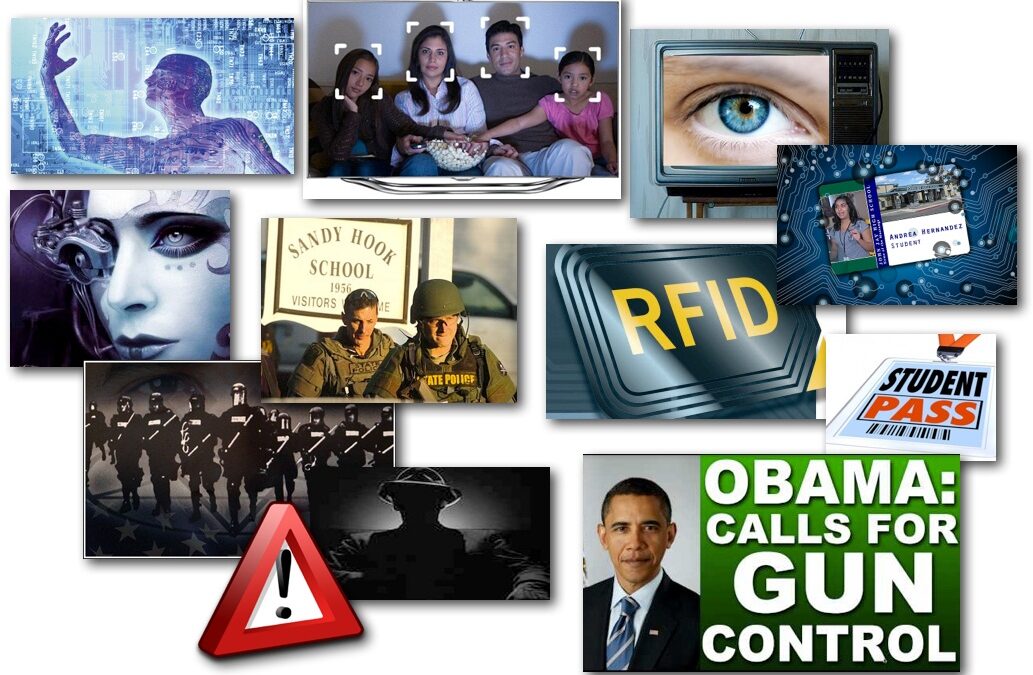
A school district in Texas came under fire earlier this year when it announced that it would require students to wear microchip-embedded ID cards at all times. Now students who refuse to be monitored say they are feeling the repercussions.
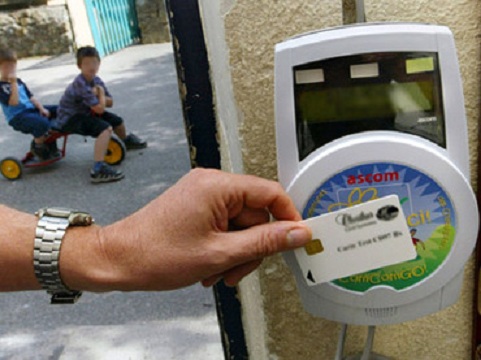
Since October 1, students at John Jay High School and Anson Jones Middle School in San Antonia, Texas have been asked to attend class clasping onto photo ID cards equipped with radio-frequency identification chips to keep track of each and every pupil’s personal location. Educators insist that the endeavor is being rolled out in Texas to relax the rampant truancy rates devastating the state’s school and the subsequent funding they are failing to receive as a result, and pending the program’s success the RFID chips could soon come to 112 schools in all and affect nearly 100,000 students.
Some pupils say they are already seeing the impact, though, and it’s not one they are very anxious to experience. Students who refuse to walk the schoolhouse halls with a location-sensitive sensor in their pocket or around their neck are being tormented by instructors and being barred from participating in certain school-wide functions, with some saying they are even being turned away from common areas like cafeterias and libraries.
Andrea Hernandez, a sophomore at John Jay, says educators have ignored her pleas to have her privacy respected and have told her she can’t participate in school elections if she doesn’t submit to the tracking program.
To Salon, Hernandez says subjecting herself to constant monitoring by way of wearing a RFID chip is comparable to clothing herself in the “mark of the beast.” When she reached out to WND.com to reveal the school’s response, though, she told them that she was threatened with exclusion from picking a homecoming king and queen for not adhering to the rules.
“I had a teacher tell me I would not be allowed to vote because I did not have the proper voter ID,” Hernandez told WND. “I had my old student ID card which they originally told us would be good for the entire four years we were in school. He said I needed the new ID with the chip in order to vote.”
Even after Hernandez politely refused to wear an RFID chip, Deputy Superintendent Ray Galindo offered a statement that suggests that both the student’s religious and civil liberty-anchored arguments will only allow her some leeway for so long.
“We are simply asking your daughter to wear an ID badge as every other student and adult on the Jay campus is asked to do,” Galindo wrote to the girl’s parents, WND reports. If she is allowed to forego the tracking now, he continued, it could only be a matter of time before the school signs off on making location-monitoring mandatory and the repercussions will be more than just revoking voting rights for homecoming contests.
“I urge you to accept this solution so that your child’s instructional program will not be affected. As we discussed, there will be consequences for refusal to wear an ID card as we begin to move forward with full implementation,” Galindo continued.
The girl’s father, Steve Hernandez, tells WND that the school has been somewhat willing to work with the daughter’s demands, but insists that her family “would have to agree to stop criticizing the program” and start publically supporting it.
“I told him that was unacceptable because it would imply an endorsement of the district’s policy and my daughter and I should not have to give up our constitutional rights to speak out against a program that we feel is wrong,” Mr. Hernandez responded.
By reversing the poor attendance figures, the Northside Independent School District is expected to collect upwards of $2 million in state funding, with the program itself costing around one-quarter of that to roll out and another $136,005 annually to keep it up and running. The savings the school stands to make in the long run won’t necessarily negate the other damages that could arise: Heather Fazio, of Texans for Accountable Government tells WND that for $30 she filed a Freedom of Information Act request and received the names and addresses of every student in the school district.
“Using this information along with an RFID reader means a predator could use this information to determine if the student is at home and then track them wherever they go. These chips are always broadcasting so anyone with a reader can track them anywhere,” she says.
Kirsten Bokenkamp of the ACLU told the San Antonio Express-News earlier this year that her organization was expecting to challenge the board’s decision this to roll out the tracking system, but the school has since gone ahead anyway. Steve Hernandez tells WND that he approached the ACLU for possible representation in his daughter’s case, but Rebecca Robertson of a local branch of the organization said, “the ACLU of Texas will not be able to represent you or your daughter in this matter,” saying his daughter’s case in particular fails to meet the criteria they use to pick and choose civil liberties cases to take on.
It looks like somebody is going to have to update the Waco Siege page on Wikipedia. Apparently the whitewashed history that former President Bill Clinton would like us to believe regarding the 1993 federal assault on the Branch Davidian compound in Waco, Texas, is missing important details regarding his own personal involvement.
In response to Bill Clinton’s highly publicized linking of the Tea Party movement to the 1995 Oklahoma City bombing in an op-ed piece for the New York Times, former Clinton adviser Dick Morris disclosed on Monday that it was Clinton himself, and not Attorney General Janet Reno, as Americans have been led to believe for the past 17 years, who called the shots during the 1993 botched invasion that led to the death of seventy-six people.
Speaking on the Hannity program on the Fox News Network, Morris criticized Clinton for his Oklahoma City comments: “Let’s understand what was Timothy McVeigh’s motivation …he himself had said that it was the reaction to the Waco takeover. Bill Clinton orchestrated that takeover.”
Morris went on to say, “Clinton in fact was so ashamed about what he did in Waco that he was not going to appoint Janet Reno to a second four-year term. She told him in a meeting right before the inauguration day … ‘If you don’t appoint me I’m going to tell the truth about Waco.’ And that forced Clinton’s hand … It’s never been said (publicly) before.”
For years, Clinton has been criticized for his leadership of the federal government during the Waco crisis, but he has managed to escape personal responsibility for the tragedy. With Morris’s statements, it appears this may no longer be possible. It would seem that Clinton was far more intimately involved with the government response at Waco than previously reported.
While there may be a link between Clinton and the Oklahoma City bombing, I would hardly blame the actions of a psychopath on any one individual or political party.
However, for Clinton to associate such a horrible act of violence with freedom loving Americans, especially given the fact that he must be fully aware that it was his decisions that led to the Waco catastrophe which in turn inspired Timothy McVeigh, is remarkably shameless.
Fred Dardick is the owner and operator of a medical staffing company based in Chicago. Prior to the business world, he worked as a biological researcher at Northwestern University and The University of Chicago. He has BS and MS degrees in biology and maintains a blog at conservativespotlight.com.
In August 2012, Wikileaks revealed details about a system known as Trapwire that uses facial recognition and other techniques to track and monitor individuals captured on countless different closed-circuit cameras operated by cities and other insititutions. The software is billed as a method by which to prevent terrorism, but can of course also be used to provide unprecedented surveillance and data-mining capabilities to governments, corporations, and other insitutions, including many with a history of using new technologies to violate the rights of citizens. Trapwire is already used in New York, Los Angeles, Las Vegas, Texas, DC, London, and other locales.
The ex-CIA agents who help run the firm are old friends of Stratfor vice president Fred Burton, whom they’ve briefed on their own capabilities in e-mails obtained by Anonymous hackers and provided to Wikileaks. Stratfor has engaged in at least several surveillance operations against activists, such as those advocating for victims of the Bhopal disaster, on behalf of large U.S. corporatons; Burton himelf was revealed to have advocated “bankrupting” and “ruining the life” of activists like Julian Assange in e-mails to other friends.
Trapwire can be extremely expensive to maintain, and is usually done so at taxpayer expense; Los Angeles county spent over $1.4 million dollars on the software’s use in a single three-month period of 2007.
Although most of the regions in which Trapwire operates don’t share information with each other, all of this is set to change; as Abraxas Applications president Dan Botsch told Burton via e-mail, “I think over time the different networks will begin to unite,” noting that several networks had already begun discussions on merging their information. Abraxas itself has always had the ability to “cross-network matches” from every region at their own office. By June 2011, Washington D.C. police were engaged in a pilot project under the Departent of Homeland Security that’s likely to lead to more cities using Trapwire on a more integrated basis.
Abraxas, the firm whose spin-off Abraxas Applications developed Trapwire in 2007, has long been involved in a lesser-known practice known as persona management, which involves the use of fake online “people” to gather intelligence and/or disseminate disinformation. The firm Ntrepid, created by Abraxas owner Cubic Corporation, won a 2010 CENTCOM contract to provide such capabilities for use in foreign countries; several board members of Ntrepid also sit on Abraxas.
TrapWire®
TrapWire is a unique, predictive software system designed to detect patterns indicative of terrorist attacks or criminal operations. Utilizing a proprietary, rules-based engine, TrapWire detects, analyzes and alerts on suspicious events as they are collected over periods of time and across multiple locations. Through the systematic capture of these pre-attack indicators, terrorist or criminal surveillance and pre-attack planning operations can be identified — and appropriate law enforcement counter measures employed ahead of the attack. As such, our clients are provided with the ability to prevent the terrorist or criminal event, rather than simply mitigate damage or loss of life.
Former senior intelligence officials have created a detailed surveillance system more accurate than modern facial recognition technology — and have installed it across the US under the radar of most Americans, according to emails hacked by Anonymous.
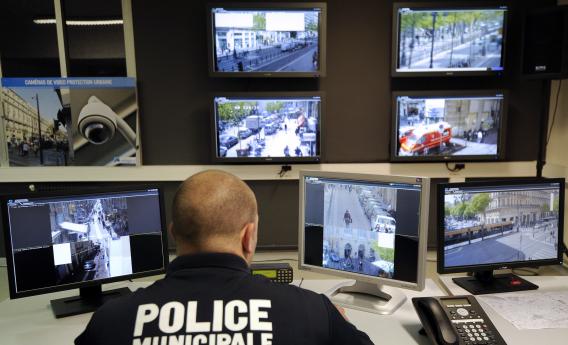
Every few seconds, data picked up at surveillance points in major cities and landmarks across the United States are recorded digitally on the spot, then encrypted and instantaneously delivered to a fortified central database center at an undisclosed location to be aggregated with other intelligence. It’s part of a program called TrapWire and it’s the brainchild of the Abraxas, a Northern Virginia company staffed with elite from America’s intelligence community. The employee roster at Arbaxas reads like a who’s who of agents once with the Pentagon, CIA and other government entities according to their public LinkedIn profiles, and the corporation’s ties are assumed to go deeper than even documented.
The details on Abraxas and, to an even greater extent TrapWire, are scarce, however, and not without reason. For a program touted as a tool to thwart terrorism and monitor activity meant to be under wraps, its understandable that Abraxas would want the program’s public presence to be relatively limited. But thanks to last year’s hack of the Strategic Forecasting intelligence agency, or Stratfor, all of that is quickly changing.
Hacktivists aligned with the loose-knit Anonymous collective took credit for hacking Stratfor on Christmas Eve, 2011, in turn collecting what they claimed to be more than five million emails from within the company. WikiLeaks began releasing those emails as the Global Intelligence Files (GIF) earlier this year and, of those, several discussing the implementing of TrapWire in public spaces across the country were circulated on the Web this week after security researcher Justin Ferguson brought attention to the matter. At the same time, however, WikiLeaks was relentlessly assaulted by a barrage of distributed denial-of-service (DDoS) attacks, crippling the whistleblower site and its mirrors, significantly cutting short the number of people who would otherwise have unfettered access to the emails.
On Wednesday, an administrator for the WikiLeaks Twitter account wrote that the site suspected that the motivation for the attacks could be that particularly sensitive Stratfor emails were about to be exposed. A hacker group called AntiLeaks soon after took credit for the assaults on WikiLeaks and mirrors of their content, equating the offensive as a protest against editor Julian Assange, “the head of a new breed of terrorist.” As those Stratfor files on TrapWire make their rounds online, though, talk of terrorism is only just beginning.
Mr. Ferguson and others have mirrored what are believed to be most recently-released Global Intelligence Files on external sites, but the original documents uploaded to WikiLeaks have been at times unavailable this week due to the continuing DDoS attacks. Late Thursday and early Friday this week, the GIF mirrors continues to go offline due to what is presumably more DDoS assaults. Australian activist Asher Wolf wrote on Twitter that the DDoS attacks flooding the WikiLeaks server were reported to be dropping upwards of 40 gigabytes of traffic per second on the site.
According to a press release (pdf) dated June 6, 2012, TrapWire is “designed to provide a simple yet powerful means of collecting and recording suspicious activity reports.” A system of interconnected nodes spot anything considered suspect and then input it into the system to be “analyzed and compared with data entered from other areas within a network for the purpose of identifying patterns of behavior that are indicative of pre-attack planning.”
In a 2009 email included in the Anonymous leak, Stratfor Vice President for Intelligence Fred Burton is alleged to write, “TrapWire is a technology solution predicated upon behavior patterns in red zones to identify surveillance. It helps you connect the dots over time and distance.” Burton formerly served with the US Diplomatic Security Service, and Abraxas’ staff includes other security experts with experience in and out of the Armed Forces.
What is believed to be a partnering agreement included in the Stratfor files from August 13, 2009 indicates that they signed a contract with Abraxas to provide them with analysis and reports of their TrapWire system (pdf).
“Suspicious activity reports from all facilities on the TrapWire network are aggregated in a central database and run through a rules engine that searches for patterns indicative of terrorist surveillance operations and other attack preparations,” Crime and Justice International magazine explains in a 2006 article on the program, one of the few publically circulated on the Abraxas product (pdf). “Any patterns detected – links among individuals, vehicles or activities – will be reported back to each affected facility. This information can also be shared with law enforcement organizations, enabling them to begin investigations into the suspected surveillance cell.”
In a 2005 interview with The Entrepreneur Center, Abraxas founder Richard “Hollis” Helms said his signature product:
“can collect information about people and vehicles that is more accurate than facial recognition, draw patterns, and do threat assessments of areas that may be under observation from terrorists.” He calls it “a proprietary technology designed to protect critical national infrastructure from a terrorist attack by detecting the pre-attack activities of the terrorist and enabling law enforcement to investigate and engage the terrorist long before an attack is executed,” and that, “The beauty of it is that we can protect an infinite number of facilities just as efficiently as we can one and we push information out to local law authorities automatically.”
An internal email from early 2011 included in the Global Intelligence Files has Stratfor’s Burton allegedly saying the program can be used to “[walk] back and track the suspects from the get go w/facial recognition software.”
Since its inception, TrapWire has been implemented in most major American cities at selected high value targets (HVTs) and has appeared abroad as well. The iWatch monitoring system adopted by the Los Angeles Police Department (pdf) works in conjunction with TrapWire, as does the District of Columbia and the “See Something, Say Something” program conducted by law enforcement in New York City, which had 500 surveillance cameras linked to the system in 2010. Private properties including Las Vegas, Nevada casinos have subscribed to the system. The State of Texas reportedly spent half a million dollars with an additional annual licensing fee of $150,000 to employ TrapWire, and the Pentagon and other military facilities have allegedly signed on as well.
In one email from 2010 leaked by Anonymous, Stratfor’s Fred Burton allegedly writes, “God Bless America. Now they have EVERY major HVT in CONUS, the UK, Canada, Vegas, Los Angeles, NYC as clients.” Files on USASpending.gov reveal that the US Department of Homeland Security and Department of Defense together awarded Abraxas and TrapWire more than one million dollars in only the past eleven months.
News of the widespread and largely secretive installation of TrapWire comes amidst a federal witch-hunt to crack down on leaks escaping Washington and at attempt to prosecute whistleblowers. Thomas Drake, a former agent with the NSA, has recently spoken openly about the government’s Trailblazer Project that was used to monitor private communication, and was charged under the Espionage Act for coming forth. Separately, former NSA tech director William Binney and others once with the agency have made claims in recent weeks that the feds have dossiers on every American, an allegation NSA Chief Keith Alexander dismissed during a speech at Def-Con last month in Vegas.


 September 30th, 2014