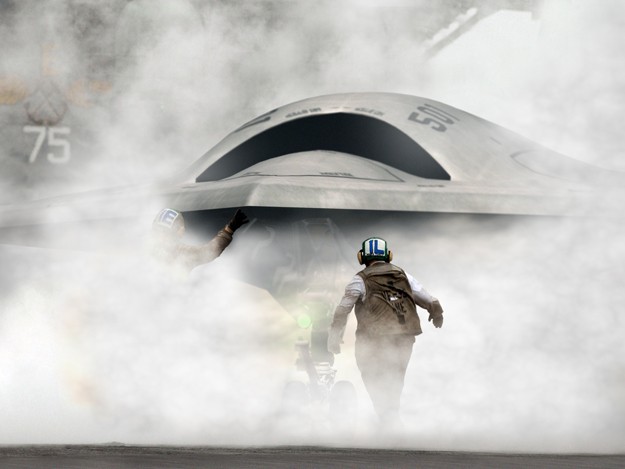
The history of pilotless aircraft in the United States military stretches back to the days of the Wright brothers. It’s difficult to describe any good that emerges from warfare, but many modern technological advancements — computers, zippers, microwaves — can be traced back to conflicts of a bygone era. Today unmanned aerial vehicles are being used by a whole slew of people, the U.S. Department of Defense being just one primary example. While drones have been used routinely to support or undertake lethal force abroad for over a decade, their domestic applications are just now being given more serious consideration. The capabilities and contributions of UAVs have, up until recently, been propelled more or less exclusively by the defense community. UAV technology may currently be associated with what some would consider secretive and nefarious militarism, but in examining the range of practical, commercial applications we can only hope that drone technology will begin to move away from the dark side.
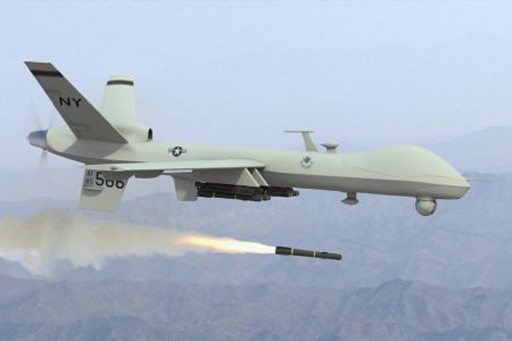
President Obama’s approach to counterterrorism has been marked by his embrace of drone technology to target terrorist operatives. But they’ve come a long way since their first strike operations: drone backpacks are now used by soldiers, and Predator drones come equipped with even more powerful warheads. U.S. DOD spending on drones increased from $284M in 2000 to $3.3B in October of 2012. Small surveillance drones, called Cicadas, are now being released from balloons to collect data on the ground in Iraq. In short, the military has a seemingly infinite range of uses for unmanned aerial vehicles, large and small. And the scope of drone missions only continues to expand, as the technology necessary to program and operate them becomes at once more commonplace and versatile. Over the next decade, the Pentagon anticipates that the number of “multirole” UAVs (those capable of both spying and striking) will nearly quadruple.
As of October 2013, the Federal Aviation Administration had issued 285 clearance certificates for drones inside the United States. Under pressure from the Unmanned Systems Caucus (or drone lobby) the Department of Homeland Security has accepted eight Predator drones for use along the U.S.-Canada and U.S.-Mexico borders. The FAA is set to further open skies to commercial drones by 2015, allowing civilians to finally explore and expand upon the uses of UAV technology. But even with the law by their side, can civilian companies ever hope to utilize drones to the extent in which they are employed by the military? Many recognize the civil potential of flying robots, but recognize that with certain valuable contributions also comes the possibility of tighter law enforcement and increased government surveillance.
The dualistic nature of drones is being explored by hobbyists and venture capitalists alike. Mark Zuckerberg of Facebook is even developing a program that will employ drones and satellite internet to deliver internet to disenfranchised communities throughout the world. While this probably speaks to Zuckerberg’s opportunism (and his desire to compete in the marketplace against Google’s Loon Project and HughesNet Internet) that isn’t to say that people in underserved communities don’t stand to benefit. The U.S. government already uses drones to protect endangered wildlife species, like the sandhill crane, and researchers in Indonesia and Malaysia are also using unmanned aerial devices to monitor the activity of similarly threatened orangutan populations. UAV systems are emerging as key tools in agricultural innovation and the monitoring of natural resources. Search and rescue missions, 3-D mapping and surveying projects, and hurricane tracking projects are also being carried out by UAVs. With unmanned aircraft, it seems the sky’s the limit for civil and commercial usage.
But the business of drones still comes with plenty of risks. The American Civil Liberties Union has warned of a “dystopian future” in which “mass, suspicionless searches of the general population” are the norm. Given the history of drones as advanced tools of the government and military, this doesn’t seem like an empty threat. And for now, the law still stands in the way of any real development on the commercial end. Despite the fact that many ideas for drones, from the delivery of Amazon parcels to Domino’s pizzas, have been suggested, the military still holds the key to their innovation from an American standpoint. Their function as a militaristic tool remains at the forefront of their continued growth, resulting in large spending increases for advanced cameras, sensors, and systems with attack capabilities. But the integration of drone technology into domestic airspace by law enforcement — and later, by corporations — seems inevitable. As technological improvements continue to catapult the UAV industry into the future, the true beneficiaries of these developments remain to be seen.
IAI (Israel)Northrop Grumman (US)Elbit Systems (Israel)IAI (Israel)IAI (Israel)
Italy
RQ-1B Predator
6
Air Force
General Atomics (US)
Jordan
Seeker SB7L
6
Air Force
Seabird Aviation (Jordan)
Malaysia
Aludra
?
Air Force
UST (Malaysia)
Mexico
Hermes 450
2
Air Force
Elbit Systems (Israel)
Morocco
R4E – 50 Skyeye
?
Army
DS Inc (now BAE Systems) (US)
Netherlands
Sperwer
14
Army
SAGEM (France)
Philippines
Blue Horizon 2
2
Air Force
EMIT (Israel)
Singapore
Searcher Mk2Hermes 450Heron
42
?
1
Air Force
Air Force
Air Force
IAI (Israel)Elbit Systems (Israel)IAI (Israel)
South Africa
Seeker 2
?
Air Force
Denel (South Africa)
South Korea
Night IntruderSearcher
?
3
Air Force
Air Force
KAI (South Korea)IAI (Israel)
Spain
Searcher MK2
4
Army
IAI (Israel)
Sri Lanka
SeekerBlue Horizon 2Searcher Mk2
1
?
2
Army
Air Force
Air Force
Denel (South Africa)EMIT (Israel)IAI (Israel)
Sweden
Sperwer
3
Army
SAGEM (France)
Switzerland
ADS-95
4
Army
RUAG Aviation (Swiss) & IAI (Israel)
Thailand
Searcher
?
Army
IAI (Israel)
Turkey
Gnat 750Heron
18
10
Air Force
Air Force
General Atomics (US)IAI (Israel)
UK
Hermes 450Watchkeeper[6]MQ-9 Reaper[7]
?
?
5
Army
Army
Air Force
Elbit Systems (Israel)Thales (UK) & Elbit (Israel)General Atomics (US)
USA
I-GnatRQ-5 HunterGrey Eagle[8]MQ-8 Fire ScoutGlobal Hawk[9]MQ-1 PredatorMQ-9 Reaper[10]RQ-170 Sentinel
3
45
4
6
30
175
65
?
Army
Army
Army
Navy
Navy
Air Force
Air Force
Air Force
General Atomics (US)Northrop Grumman (US)General Atomics (US)Northrop Grumman (US)Northrop Grumman (US)General Atomics (US)General Atomics (US)Lockheed Martin (US)
Info Sources:The Military Balance 2011,IISS; Jane’s Unmanned Aerial Vehicles and Targets 2011; US Unmanned Aerial Systems, Congressional Research Service, 2012; Various press reports.
[1] Class 2 and 3 drones only. Small/Micro/Mini drones not included. Also does not include large drones in service with police, border patrol, National Guard or CIA. Given secretive nature of military list is almost certainly not complete.
[2] It is difficult to be certain if China’s drones are in development or in service
[3] Euro Hawk, based on Global Hawk is just coming into service. German has ordered five.
[4] India has expressed a requirement for up to 50 Heron UAVs
[5] It is possible that Israel has other unknown drones in their inventory
[6] UK plans to acquire 54 Watchkeeper UAVs
[7] UK plans to acquire 10 Reapers
[8] US plans to acquire 152 Grey Eagle
[9] Estimate – US plans to acquire up to 50 Global Hawks
[10] US plans to acquire 400 Reapers
Estimated 170 crew members required to keep a Predator drone airborne for 24 hours.
Many more are required to plan, oversee and debrief a drone-directed attack by multiple gunships. Civilian contractors are often on-site participants.
An excellent 2,200-page investigative report of drone-directed attack on civilians was published by CENTCOM which describes staffing and procedures of a drone-attack operation:
That the U.S. is routinely killing innocent civilians in multiple Muslim countries is one of the great taboos in establishment media discourse. A film that documents the horrors and Terror brought by the U.S. to innocent people — and the way in which that behavior constantly strengthens the Terrorists, thus eternally perpetuating its own justification — threatens to subvert that taboo. So this filmmaker is simply kept out of the country, in Pakistan, where he can do little harm to U.S. propaganda (as usual, U.S. government claims of secrecy based on national security are primarily geared toward ensuring effective propagnada — of the American citizenry). Isn’t it time for another Hillary Clinton lecture to the world on the need for openness and transparency? “Those societies that believe they can be closed to change, to ideas, cultures, and beliefs that are different from theirs, will find quickly that in our internet world they will be left behind,” she so inspirationally intoned last month. – Glenn Greenwald
Drones: As military Use Expands, Civil Use Being Developed
Meanwhile preparations aimed at enabling the use of unmanned drones to fly in civil airspace continues at a brisk pace both in the US and the UK.
Yesterday the US Federal Aviation Administration (FAA) announced that it had met the deadline for the first changes demanded by the new FAA Act aimed at allowing drones to fly in US civil airspace by September 2015. The Act mandated that the FAA must streamline the process for government agencies to gain Certificates of Authorization (COA) to fly drones within US civil airspace within 90 days.
According to The Engineer, BAE has fitted an “autonomous navigation system” on a Jetstream 31 passenger aircraft to enable it to fly without a pilot – although a pilot was on board in case of problems.
When the 2012 national Know Drones Tour comes to Baltimore on Thursday, May 3, it will challenge Congressperson C.A. “Dutch” Ruppersberger, a member of the House Unmanned Systems (Drone) Caucus, to reallocate $190,000 in campaign contributions[1] that he has received from drone makers and related businesses to benefit children in US drone strike zones and to the Baltimore City Schools.
“The Congress has done no effective oversight of US drone warfare and has opened US skies to drones carrying weapons and to drone surveillance of the US public,” said Nick Mottern, director of the Know Drones Tour. “Congressman Ruppersberger, as a member of the House Armed Services Committee and the House Permanent Committee on Intelligence, has direct responsibilities related to drone war and drone surveillance,” Mottern continued, “and he can avoid any appearance of conflict of interest by sending his drone industry campaign contributions to kids who are being harmed by the US infatuation with drones and by resigning from the drone caucus, a lobbying group for the drone industry within the Congress.”
Max Obuszewski, a long-time advocate for peace and justice made this observation: “It is shocking that the Obama administration has used drone strikes to murder U.S. citizens. This horrible affront to due process suggests that the Bill of Rights is being shredded.”
The tour, endorsed by Baltimore Pledge of Resistance, the National Campaign for Nonviolent Resistance, Code Pink, War Resisters League and others (below), uses 8’ long replicas of the MQ-9 Reaper drone to do sidewalk education on the legal, ethical and civil liberties concerns raised by the surge in US drone warfare and drone surveillance.
The Know Drones Tour is endorsed by: American Civil Liberties Union (Philadelphia),American Friends Service Committee, Brandywine Peace Committee, Bryn Mawr Peace Coalition, Brooklyn For Peace, Bryn Mawr Peace Coalition, Catholic Peace Fellowship (Philadelphia), Coalition for Peace and Justice (Southern New Jersey), Code Pink, Interfaith Peace Network of Western New York, Granny Peace Brigade (Philadelphia), International Action Center,Occupy Wall Street – Anti-War, National Campaign for Nonviolent Resistance, Pakistan Solidarity Network, Pax Christi – Greensburg, PA, Peace Action New York, Peace Center of Delaware County (PA), Pledge of Resistance-Baltimore, United National Antiwar Coalition (UNAC), Upstate NY Coalition to Ground the Drones & End the Wars, Veterans for Peace, Chapter #128 (Buffalo, NY), Veterans for Peace (Philadelphia), Voices for Creative Non-Violence, War Resisters League, WESPAC Foundation, Western New York Peace Center, Women’s International League for Peace and Freedom (Philadelphia), World Can’t Wait.
August 6, 2012 – DCMX Radio: Another Mass Shooting, Related News, Drones, Surveillance & Skynet Artificial Intelligence, Do it Yourself Hobby & Research Benefits
Drones & Skynet: Global Surveillance State and the reality of weaponized ‘Eagle Eye’ Artificial Intelligence, The Dangers to Privacy & the Violation of inherent Constitutional Rights, Do-it-Yourself Remote Control Drones for Hobby & Research, Beneficial Uses Explained
A few months back, I reposted here an article that I wrote 10 years ago, before the invasion of Iraq: a fictional scenario of how the Terror War would play out on the ground of the target nations — and in the minds of those sent to wage these campaigns. I was reminded of that piece by a story in the latest Rolling Stone.
The RS story, by Michael Hastings, depicts the drone mentality now consuming the US military-security apparatus, a process which makes the endless slaughter of the endless Terror War cheaper, easier, quieter. I didn’t anticipate the development in my proleptic piece; the first reported “kill” by American drones, in Yemen, had taken place just a few weeks before my article appeared in the Moscow Times.
(One of the victims of this historic first drawing of blood was an American citizen, by the way. Thus from the very beginning, the drone war — presented as noble shield to defend American citizens from harm — has been killing American citizens, along with the hundreds and hundreds and hundreds and hundreds of innocent men and women around the world being murdered without warning — and without any chance to defend themselves or take shelter — by cowards sitting in padded seats behind computer consoles thousands of miles away, following orders from the even greater cowards who strut around the Pentagon, CIA headquarters and the White House.)
But what brought my earlier piece to mind was a brief mention of the “military slang” now being used to designate the victims of the drones. Below are a few snippets from my 2002 post, a fictional email by an occupation soldier to a friend:
Yo, Ed! I’m looking out the window of Watchtower 19 in Force Zone Seven. They’re loading up the dead wagon. Three friendlies, two uncardeds, the usual collateral – and one bug. We zapped the market before the bug got his hard-on – another one of those Czech AK-47 knock-offs that our friendly neighborhood warlord keeps bringing in. He says he doesn’t know how the bugs get hold of them – they drop down from heaven, I guess …
… I’d just come off night patrol in Deep-City Zone, hardcore bugland, backing up some Special Ops doing a Guantanamo run on terrorperp suspects. Banging down doors, barrel in the face of some shrieking bug-woman in her black bag, children scuttling in the dark like rats, the perp calling down an airstrike from Allah on our heads. You know the drill. You know the jangle. Not even the new meds can keep you blanked out completely. So there’s always the overstep somewhere. Woman’s cheekbone cracking from a backhand, some kid stomped or booted out of the way. Some perp putting his hand in one of those damned dresses they wear, going for who knows what – Koran? Mosquito bite? Scimitar? Czech special? – and you open up. More shrieking, more screaming – and then the splatter on the wall.
In the new Rolling Stone story, Hastings tells us how America’s brave drone warriors view their victims:
For a new generation of young guns, the experience of piloting a drone is not unlike the video games they grew up on. Unlike traditional pilots, who physically fly their payloads to a target, drone operators kill at the touch of a button, without ever leaving their base – a remove that only serves to further desensitize the taking of human life. (The military slang for a man killed by a drone strike is “bug splat,” since viewing the body through a grainy-green video image gives the sense of an insect being crushed.)
“Bugs” being “splattered.” This is what Barack Obama — who has expanded the drone death squads beyond the imaginings of George W. Bush — and all of his brave button pushers and joystick riders think of the defenseless human beings they are killing (including 174 children by last count).
This has been the attitude underlying the Terror War since its beginnings. When I wrote my piece with its “bug” imagery, I was only reflecting what was already obvious and pervasive, both in the military-security war machine and in much of the general public. Anyone designated by those in power as an “enemy” — for any reason, known or unknown, or for no reason at all — is considered a subhuman, an insect, whose destruction is meaningless, without moral content, like swatting a fly on the wall. (As, for example, in this 2008 piece about a figure much lauded by progressives at the time: “Crushing the Ants.”)
There is not only a tolerance for this official program of state murder; there is an absolute enthusiasm for it. Our rulers heartily enjoy ordering people to be killed. (And to be tortured, as we noted here last week.) It makes them feel good. It makes them feel “hard,” in every sense of the word. As Hastings notes:
From the moment Obama took office, according to Washington insiders, the new commander in chief evinced a “love” of drones. “The drone program is something the executive branch is paying a lot of attention to,” says Ken Gude, vice president of the Center for American Progress. “These weapons systems have become central to Obama.” In the early days of the administration, then-chief of staff Rahm Emanuel would routinely arrive at the White House and demand, “Who did we get today?”
Here are some examples of what Rahm and his then-boss, the Nobel Peace Prize Laureate, were “getting” with their flying deaths squads:
But for every “high-value” target killed by drones, there’s a civilian or other innocent victim who has paid the price. The first major success of drones – the 2002 strike that took out the leader of Al Qaeda in Yemen – also resulted in the death of a U.S. citizen. More recently, a drone strike by U.S. forces in Afghanistan in 2010 targeted the wrong individual – killing a well-known human rights advocate named Zabet Amanullah who actually supported the U.S.-backed government. The U.S. military, it turned out, had tracked the wrong cellphone for months, mistaking Amanullah for a senior Taliban leader. A year earlier, a drone strike killed Baitullah Mehsud, the head of the Pakistani Taliban, while he was visiting his father-in-law; his wife was vaporized along with him. But the U.S. had already tried four times to assassinate Mehsud with drones, killing dozens of civilians in the failed attempts. One of the missed strikes, according to a human rights group, killed 35 people, including nine civilians, with reports that flying shrapnel killed an eight-year-old boy while he was sleeping. Another blown strike, in June 2009, took out 45 civilians, according to credible press reports.
And of course there is this, the follow-up to the “extrajudicial killing” of U.S. citizen Anwar al-Awlaki. After killing al-Awlaki — without ever charging him with a single crime — the Obama administration then murdered his 16-year-old son (as we noted here last year). Hastings writes:
In the days following the killing, Nasser and his wife received a call from Anwar’s 16-year-old son, Abdulrahman al-Awlaki, who had run away from home a few weeks earlier to try to find his now-deceased father in Yemen. “He called us and gave us his condolences,” Nasser recalls. “We told him to come back, and he promised he would. We really pressed him, me and his grandmother.”
The teenage boy never made it home. Two weeks after that final conversation, his grandparents got another phone call from a relative. Abdulrahman had been killed in a drone strike in the southern part of Yemen, his family’s tribal homeland. The boy, who had no known role in Al Qaeda or any other terrorist operation, appears to have been another victim of Obama’s drone war: Abdulrahman had been accompanying a cousin when a drone obliterated him and seven others. The suspected target of the killing – a member of Al Qaeda in the Arabian Peninsula – is reportedly still alive; it’s unclear whether he was even there when the strike took place.
The news devastated the family. “My wife weeps every day and every morning for her grandson,” says Nasser, a former high-ranking member of the Yemenite government. “He was a nice, gentle boy who liked to swim a lot. This is a boy who did nothing against America or against anything else. A boy. He is a citizen of the United States, and there are no reasons to kill him except that he is Anwar’s son.”
The boy was probably killed in a “signature strike,” where bold and brave CIA analysts sit back in their chairs and observe people going about their business in a foreign country far away. If their activities look “suspicious” according to some arbitrary, secret criteria, then they can be slaughtered instantly by a drone missile — even if the attackers have no idea whatsoever who the targets are or what they are actually doing. Plotting terrorism, or praying? Organizing jihad, or holding a wedding? Building bombs, or having lunch? The attackers don’t know — and can’t know. They simply put down their Cheetohs and fire the missile. Who cares? It’s just “bug splatter.”
And the fact is, no one does care. As Hastings notes, this hideous program of murder and terror has been fully embraced by the political elite and by society at large. And our rulers are now bringing it back home with a vengeance, putting more and more Americans under the unsleeping eye of government drones watching their every move, looking for the “signature” of “suspicious” behaviour. Hastings notes:
In the end, it appears, the administration has little reason to worry about any backlash from its decision to kill an American citizen – one who had not even been charged with a crime. A recent poll shows that most Democrats overwhelmingly support the drone program, and Congress passed a law in February that calls for the Federal Aviation Administration to “accelerate the integration of unmanned aerial systems” in the skies over America. Drones, which are already used to fight wildfires out West and keep an eye on the Mexican border, may soon be used to spy on U.S. citizens at home: Police in Miami and Houston have reportedly tested them for domestic use, and their counterparts in New York are also eager to deploy them.
History affords few if any examples of a free people — in such a powerful country, under no existential threat, undergoing no invasion, no armed insurrection, no natural disaster or epidemic or societal collapse — giving up their own freedoms so meekly, so mutely. Most Americans like to boast of their love of freedom, their rock-ribbed independence and their fiercely-held moral principles: yet they are happy to see the government claim — and use — the power to murder innocent people whenever it pleases while imposing an ever-spreading police state regimen on their lives and liberties. Sheep doped with Rohypnol would put up a stronger fight than these doughty patriots.
Hasting’s story should be read in full. In its straightforward marshalling of facts and refusal to simply parrot the spin of the powerful (something we used to call “journalism,” kids; ask your grandparents about it, they might remember), it lays out the hideous reality of our times. I am tempted to call it an important story — but I know that it will sink with scarcely a ripple into the abyss of our toxic self-regard. A few will read it and be horrified; the rest will stay riveted on the oh-so-exciting and oh-so-important race to see who will get to perpetuate this vile and murderous system for the next four years.
WRITTEN BY CHRIS FLOYD
WEDNESDAY, 18 APRIL 2012 08:37
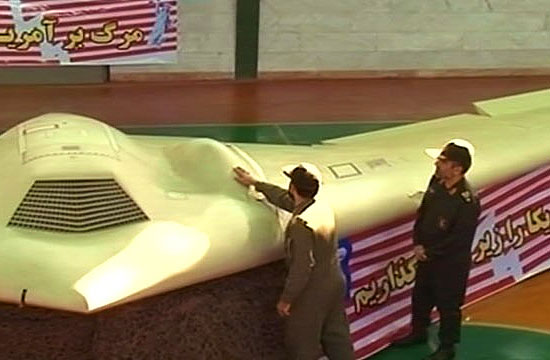
TEHRAN (FNA)- Senior Iranian military officials announced that the country’s experts have decoded the intelligence gathering system and memory hard discs of the United States’ highly advanced RQ-170 Sentinel stealth aircraft that was downed by Iran in December after violating the country’s airspace.
Speaking to FNA, Commander of the Islamic Revolution Guards Corps (IRGC) Aerospace Forces Brigadier General Amir Ali Hajizadeh revealed some data taken from the aircraft’s intelligence system to discourage his counterparts in Pentagon who had alleged that Iranians would not succeed in decoding the spy drone’s memory and intelligence devices.
“This plane is seen as a national capital for us and our words should not disclose all the information that we have very easily.”
“Yet, I provide four cues in here to let the Americans know how deep we could penetrate into (the intelligence systems and devices of) this drone,” he added.
Hajizadeh stated that the drone parts had been transferred to California for technical works in October 2010, adding that the drone was later transferred to Kandahar, Afghanistan in November 2010 and had a flight in there.
The commander said that the drone had experienced some technical flaws in its Kandahar flight in November, but the US experts failed resolve the problems at the time.
Hajizadeh added that the RQ-170 was then sent back to an airfield near Los Angeles in December 2010 for tests on its censors and parts, adding that the drone had a number of test flights in there.
As a forth cue to prove Iran’s access to the drone’s hidden memory, the commander mentioned that the spy drone’s memory device has revealed that it had flown over Al-Qaeda Leader Osama bin Laden’s hideout in Pakistan two weeks before his death.
“Had we not accessed the plane’s soft wares and hard discs, we wouldn’t have been able to achieve these facts,” Hajizadeh said, reiterating that Iran’s military experts are in full command of the drone intel and hold a good knowledge of the drone parts and programs.
The unmanned surveillance plane lost by the United States in Iran was a stealth aircraft being used for secret missions by the CIA.
The aircraft is among the highly sensitive surveillance platform in the CIA’s fleet that was shaped and designed to evade enemy defenses.
The drone is the first such loss by the US.
The RQ-170 has special coatings and a batwing shape designed to help it penetrate other nations’ air defenses undetected. The existence of the aircraft, which is made by Lockheed Martin, has been known since 2009, when a model was photographed at the main US airfield in Kandahar, Afghanistan.
The revelation came after Russia and China asked Tehran to provide them with information on the capture US drone.
Ahmad Karimpour, an adviser to Iran’s defense minister, said on Friday that Tehran has received requests from many countries for information on the RQ-170 Sentinel, but Moscow and Beijing have been most aggressive in their pursuit of details on the drone.

 The history of pilotless aircraft in the United States military stretches back to the days of the Wright brothers. It’s difficult to describe any good that emerges from warfare, but many modern technological advancements — computers, zippers, microwaves — can be traced back to conflicts of a bygone era. Today unmanned aerial vehicles are being used by a whole slew of people, the U.S. Department of Defense being just one primary example. While drones have been used routinely to support or undertake lethal force abroad for over a decade, their domestic applications are just now being given more serious consideration. The capabilities and contributions of UAVs have, up until recently, been propelled more or less exclusively by the defense community. UAV technology may currently be associated with what some would consider secretive and nefarious militarism, but in examining the range of practical, commercial applications we can only hope that drone technology will begin to move away from the dark side.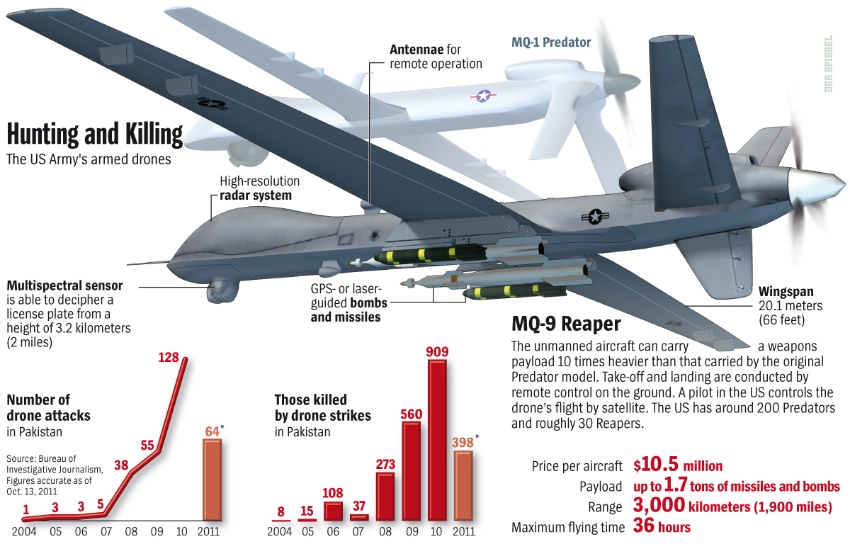



 TEHRAN (FNA)- Senior Iranian military officials announced that the country’s experts have decoded the intelligence gathering system and memory hard discs of the United States’ highly advanced RQ-170 Sentinel stealth aircraft that was downed by Iran in December after violating the country’s airspace.