Conversations about police misconduct often hit the same wall: disbelief. People who have never had a negative encounter with law enforcement struggle to accept that officers can operate with so few constraints. For anyone working in criminal defense, though, that incredulity is itself a privilege — a luxury afforded by race, class, or simple luck.
The reality is that American police operate within a legal framework that grants them extraordinary latitude. Many of the most controversial tactics are not only tolerated but explicitly sanctioned by courts and legislatures.
Three historical forces converge to explain how we arrived here: the war on drugs, which provided a ready-made blueprint for racially targeted social control; the post-September 11 security apparatus, which expanded surveillance and incarceration powers under the banner of counterterrorism; and widespread public indifference, which allowed these tools to migrate from targeted populations to the general public with minimal resistance.
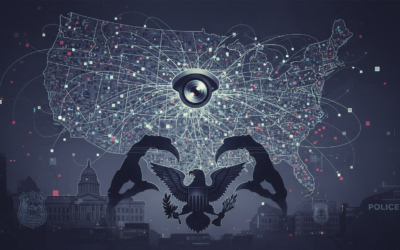
Mass Surveillance and Infiltration of Communities
The NYPD’s Demographics Unit conducted one of the most extensive domestic surveillance operations in recent memory, monitoring Muslim communities across the entire Northeast without regard for jurisdictional boundaries. Investigative reporting by the Associated Press, which earned multiple awards, revealed that this sprawling intelligence-gathering apparatus produced zero actionable terrorism leads.
A 1971 federal case known as Handschu had established guidelines barring the NYPD from collecting intelligence on political speech unless connected to potential terrorism. Yet legal analysts warned that privacy protections had eroded to the point where individuals subjected to unlawful surveillance might have no meaningful path to legal relief. Civil liberties attorney Donna Lieberman observed in late 2011 that it was no longer clear whether people had any recourse after being improperly surveilled.
The NYPD’s surveillance operations extended well beyond Muslim communities. Investigative reports documented police infiltration of liberal advocacy groups and protest movements. Cases involving activist entrapment — including incidents surrounding the NATO summit and Occupy-related protests — raised additional concerns about law enforcement overreach.
Warrantless Video Recording Inside Private Homes
The boundaries of lawful surveillance took another hit when the Ninth Circuit Court of Appeals determined that federal agents could enter a private residence and record video without a warrant. In the case of United States v. Wahchumwah, involving a U.S. Fish and Wildlife undercover agent, the court characterized the warrantless recording as a “voluntary” interaction.
Digital rights advocates at the Electronic Frontier Foundation pointed out the troubling implications: as surveillance technology becomes cheaper and more pervasive, the concept of “voluntary” exposure increasingly means nothing more than existing in a modern society where monitoring is ubiquitous.
Other courts reached similar conclusions. In Wisconsin, a federal judge determined that Drug Enforcement Administration agents acted reasonably when they entered rural property without permission or a warrant to install hidden digital surveillance cameras while investigating suspected marijuana cultivation.
Preemptive Arrests and Intimidation Before Protests
Law enforcement agencies have adopted a pattern of visiting and arresting activists in advance of planned demonstrations. On the eve of May Day 2012, New York City police appeared at the apartments of multiple activists before the scheduled day of action. Chicago police conducted similar preemptive raids ahead of NATO summit protests. In 2008, the so-called RNC 8 were arrested before the Republican National Convention under a similar preemptive strategy.
The pattern suggests that police departments increasingly view protest activity itself as something to be neutralized before it occurs, rather than managed as a constitutional exercise.
Harvesting Cell Phone Data From Crime Victims
When New Yorkers reported stolen phones to the NYPD, the department used those reports as a gateway to far broader data collection. Police routinely subpoenaed call records from the date of the theft onward, ostensibly to locate the missing device. However, this process also captured calls made by the victim on the day of the theft, and potentially records from a new phone if the victim retained the same number.
All of this information flowed into the Enterprise Case Management System, a database where phone numbers were hyperlinked for cross-referencing. According to reporting by the New York Times, the call logs — obtained without court orders and frequently without the victim’s knowledge — could be repurposed for any investigative purpose. Victims seeking help recovering a stolen phone unwittingly provided police with a surveillance tool.
The Illusion of Consensual Police Encounters
One of the most effective tools in law enforcement’s arsenal is the “consent search” — a request phrased as a question that most people instinctively treat as a command. When an officer asks to look inside a bag, the vast majority of Americans do not realize they have the legal right to refuse.
Officers understand the psychological dynamics at work. A person confronted by an armed authority figure is unlikely to assert their Fourth Amendment rights, particularly if they are unaware those rights exist. Once a person agrees to a search, any evidence discovered becomes admissible. This technique was refined during the early 1980s as the Reagan administration escalated drug enforcement.
Legal commentators have questioned whether any encounter initiated by police can genuinely be called consensual. As one analyst noted, officers understand that most people do not feel empowered to decline a conversation with a police officer. A common variation involves officers telling a motorist or pedestrian they are being let off with a warning, then continuing to ask probing questions — even though the person is technically free to leave at any point.
Stop-and-Frisk and Racial Disparities in Policing
New York City’s stop-and-frisk program operated for years with minimal media scrutiny despite staggering numbers. Data released by the New York Civil Liberties Union for 2011 revealed that the NYPD stopped more young men of color than the total number of young men of color residing in the city — a statistic that underscored how aggressively the program targeted specific demographics.
The practice served as a close cousin of consent searches, applying similar psychological pressure in a street-level context and raising identical questions about whether the encounters could meaningfully be called voluntary.
Pretext Traffic Stops and Operation Pipeline
The U.S. Supreme Court has repeatedly affirmed that police may use minor traffic infractions as a pretext to stop motorists they suspect of drug activity. Once a vehicle is pulled over, officers deploy consent-search techniques — asking drivers to step out and empty their pockets — to conduct broader investigations without probable cause.
In its ruling in Ohio v. Robinette, the Court determined that officers have no obligation to inform motorists they are free to leave before requesting permission to search the vehicle. Legal scholar Michelle Alexander, in her influential book The New Jim Crow, characterized the decision as effectively removing any meaningful Fourth Amendment constraints on police conduct in drug enforcement.
In the mid-1980s, the Drug Enforcement Administration formalized these practices through Operation Pipeline, a federal training program that taught local police to convert routine traffic stops into drug searches. The inherently discretionary nature of these encounters produced widespread racial profiling. Officials later acknowledged that the federal government’s own drug war policies were a primary driver of racial profiling as a nationwide phenomenon.
Drug-Sniffing Dogs and the Problem of False Alerts
When a person declines a consensual search, officers at traffic stops or airports can summon drug-detection dogs. If a dog signals an alert, that response constitutes probable cause for a warrantless search. The Supreme Court has ruled that walking a dog around a vehicle or luggage does not qualify as a “search” under the Fourth Amendment and therefore requires no judicial oversight.
However, the reliability of canine alerts has been called into serious question. Research has demonstrated that drug dogs frequently produce false positives after picking up on subtle cues from their handlers rather than detecting actual contraband. Dogs are bred to please humans and are highly attuned to body language — meaning a handler’s suspicion can unconsciously trigger an alert.
This phenomenon, known as the “Clever Hans effect,” takes its name from a famous early twentieth-century horse that appeared to perform arithmetic by tapping his hoof. In reality, the animal was reading imperceptible shifts in his owner’s posture to determine when to stop tapping. Drug dogs, critics argue, operate on a remarkably similar principle.
The Rise of Domestic Surveillance Drones
The domestic drone market was projected to reach billions of dollars within a decade, and law enforcement agencies moved aggressively to adopt the technology. Unmanned aerial vehicles already patrolled the U.S.-Mexico border, and cities including Seattle began exploring drone-based surveillance programs. In a landmark 2012 ruling, a North Dakota court upheld the legality of the first known drone-assisted arrest of an American citizen.
The trajectory pointed toward an environment where aerial surveillance would become routine, with political leaders and their campaign donors justifying each new intrusion on privacy as a necessary security measure. The once-absurd notion that innocent people have nothing to fear from total surveillance was rapidly becoming an operating assumption of American governance.
Private Prison Companies Conducting Law Enforcement
The blurring of lines between public law enforcement and private profit reached a disturbing milestone when police in Arizona enlisted the Corrections Corporation of America — a for-profit prison operator — to conduct drug sweeps at a public high school.
Criminal justice reform advocates reacted with alarm. Caroline Isaacs, program director at the American Friends Service Committee’s Tucson office, called the arrangement one of the most explicit manifestations of the school-to-prison pipeline she had encountered: a company that generates revenue from incarceration was directly participating in the process of arresting students.
The incident illustrates a broader pattern in which traditionally public functions — from education to policing — are being transferred to private entities whose financial incentives may run counter to the public interest.
The Erosion of Constitutional Protections
Taken together, these tactics represent a systematic erosion of the rights guaranteed by the Bill of Rights. At both federal and local levels, the constraints on police, intelligence agencies, and private security contractors have been dramatically weakened. The discretionary nature of many of these practices amplifies existing biases — both conscious and unconscious — along lines of race and class, ensuring that the burden of expanded police power falls disproportionately on those least equipped to resist it.
This article is based on reporting originally published by AlterNet. All factual claims are attributed to the sources cited.