Journalists Targeted After Investigating Pentagon Contractors
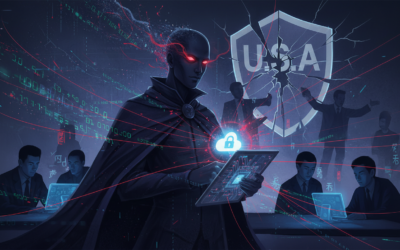
In 2012, two USA Today employees became the targets of a coordinated online disinformation and harassment campaign shortly after making inquiries to intelligence contractors with ties to the U.S. military. The episode highlighted the risks journalists face when investigating the growing ecosystem of private firms hired by the Pentagon to conduct “information operations” — and the minimal consequences those firms face when caught.
Senior reporter Tom Vanden Brook and editor Ray Locker had been investigating Pentagon propaganda contractors when fake websites, fabricated dossiers, and smear campaigns appeared targeting them online. The attacks came immediately after their reporting inquiries, strongly suggesting that one or more of the firms they were investigating had turned its professional disinformation capabilities against the journalists themselves.
The Team Themis Precedent
The USA Today incident was not the first time military-linked contractors had been caught planning operations against domestic journalists and activists. In early 2011, four firms with extensive government ties — HBGary Federal, Palantir, Berico, and Endgame Systems — combined their capabilities to form a private information warfare unit called Team Themis.
The consortium was approached by Bank of America to develop a covert campaign against WikiLeaks. Their proposal went beyond targeting the organization itself. The team explored the possibility of going after Glenn Greenwald, a journalist and prominent WikiLeaks supporter, on the theory that established professionals with “a liberal bent” would ultimately “choose professional preservation over cause” if sufficiently pressured.
The scheme was exposed when the hacking collective Anonymous breached HBGary Federal’s systems and published the internal communications. HBGary Federal CEO Aaron Barr resigned with a severance package and was hired by another government contractor within weeks.
Minimal Consequences for the Firms Involved
The aftermath of the Team Themis exposure illustrated how little accountability existed for such conduct. Berico simply severed its relationship with HBGary Federal. Endgame Systems, whose executives had explicitly noted in internal emails that their government clients did not want the company’s name appearing in press releases, escaped media scrutiny almost entirely — until a subsequent investigation revealed the firm possessed the capability to conduct cyberattacks against critical infrastructure, including Western European airports.
Palantir, which had received seed funding from the CIA’s venture capital arm In-Q-Tel and shared founders with PayPal, issued a public apology claiming the plotting did not reflect company values. One involved employee, Matthew Steckman, was placed on leave but quietly brought back once media attention faded. Another employee, Eli Bingham, who was also heavily involved, faced no visible consequences. Palantir’s annual conference continued to attract keynote speakers such as former Department of Homeland Security Secretary Michael Chertoff.
The “Persona Management” Industry
The broader context made the targeting of journalists predictable. U.S. Central Command had contracted with firms to develop software enabling 50 information warfare operators to manage 500 entirely fictitious online personas. Multiple contractors, including HBGary Federal, had bid on the project.
These “persona management” capabilities — designed to create convincing fake identities that could populate social media and online forums — represented a natural toolkit for anyone looking to discredit a target through clandestine means. The same capabilities built for overseas influence operations could be redirected at domestic journalists, activists, or anyone else a client wished to undermine.
The pattern was clear: private intelligence contractors faced negligible consequences for planning or executing disinformation campaigns against journalists, creating an environment where such operations could be expected to continue with increasing sophistication.