NZ Judge: Raid on Megaupload’s Kim Dotcom Illegal, Search Warrants Unlawful

NZ Judge: Raid on Megaupload’s Kim Dotcom Illegal, Search Warrants Unlawful

Published: 28 June, 2012, 10:15

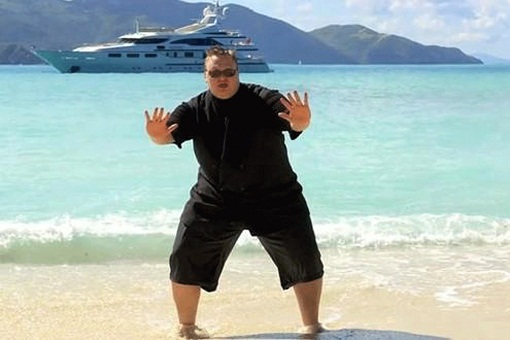
The High Court of New Zealand has ruled that the police raid on Kim Dotcom’s mansion was unlawful along with seizure of the hard drives that were later cloned and illegally taken from New Zealand to the US by the FBI.

­The warrants issued to search Dotcom’s mansion were general and did not clearly describe the offences they stipulated, ruled Justice Helen Winkelmann.

“They were general warrants, and as such, are invalid,” she explained.

The New Zealand police force is currently holding talks with the Crown Law on the next course of action and has refrained from commenting on the judgment.

The ruling released on Thursday by Justice Helen Winkelmann insists the warrants were too vague concerning the scope of the search and the items authorized to be seized by police.

SOURCE: RT.com

UK intelligence collusion with Muammar Gaddafi’s Libya ‘exposed’

UK intelligence collusion with Muammar Gaddafi’s Libya ‘exposed’

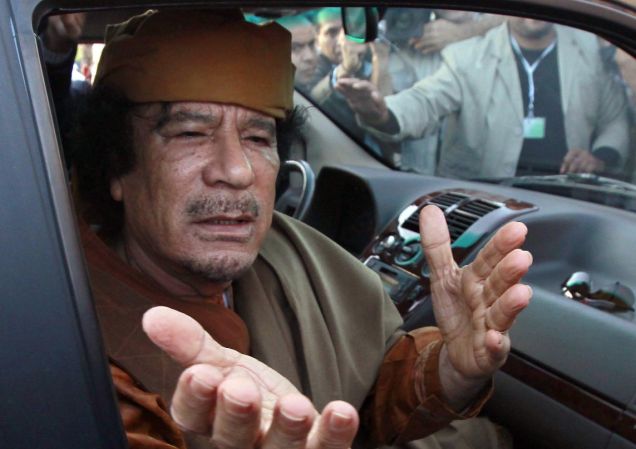
The UK’s intelligence-sharing relationship with Muammar Gaddafi’s Libyan regime before its collapse last year has come under new scrutiny amid claims MI5 handed on defectors’ details and MI6 colluded in an operation to ensnare Islamic extremists.

According to the Mail on Sunday, agents for the British Secret Service supplied confidential information to their Libyan counterparts about people who had fled Gaddafi.

And the Sunday Telegraph claims that MI6 worked in conjunction with Libya to set up a radical mosque in a western European city to lure in al-Qaida terrorists.

Both stories are the result of previously unreleased classified documents in Libyan archives being disclosed by the new government in Tripoli.

The Home Office said it would ‘take seriously’ any allegations against the security services.

Image: Abdel Hakim Belhadj is taking legal action over his alleged illegal rendition (Picture: AP)

A spokeswoman told the BBC that parliament’s Intelligence and Security Committee was already evaluating the government’s relationship with Libya and would ‘take account of any allegations raised’.

‘We do not know the full details of this case, but we take such claims seriously,’ she said.

Last week it was revealed a former Libyan rebel who helped overthrow Gaddafi was taking legal action against former foreign secretary Jack Straw over his alleged illegal rendition.

Lawyers for Abdel Hakim Belhadj claim Mr Straw personally permitted his rendition to Libya when the former rebel sought asylum in the UK in 2004.

Source: http://www.metro.co.uk/news/896912-uk-intelligence-collusion-with-muammar-gaddafis-libya-exposed

Shane Todd

Shane Todd

Shane-ToddShane Todd, 31, Ph.D. in electrical engineering with expertise with GaN (Gallium Nitride). Mystery: Dr. Todd felt increasingly uncomfortable with the work he was doing with the Chinese company Huawei, to the point Shane told his family that he was being asked to compromise US security and he feared for his life. Shane was working on a “one of a kind” machine, with a dual use in commercial and in military application, requiring expertise in the area of GaN (Gallium Nitride). Shane refused to do what he was being asked to do and turned in his sixty day notice at IME. Shane found a good job with a company in Virginia, and bought a ticket to fly back to the US on July 1, 2012. Shane was killed late June 22nd, or 23rd, right after his last day of work. Shane’s death was so unusual that CBS 48 Hours did a show on it.

48 Hours: Did a son die protecting American secrets? A family’s quest for the truth

http://www.cbsnews.com/news/48-hours-did-a-son-die-protecting-american-secrets-a-familys-quest-for-the-truth/http://www.justice4shanetodd.com/

The Warlord and the Basketball Star: A Story of Congo’s Corrupt Gold Trade

The Warlord and the Basketball Star: A Story of Congo’s Corrupt Gold Trade

When an athlete-turned-humanitarian and an energy executive tried to buy gold in Kenya, they found themselves mired in Congo’s dangerous world of conflict minerals — and totally outmatched.

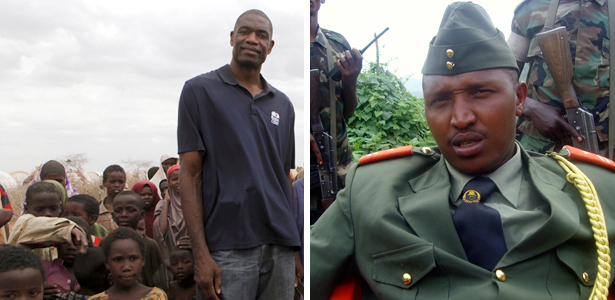
 Former NBA player Dikembe Mutombo, left, on a humanitarian trip to Kenya. Right, warlord Bosco Ntaganda speaking to reporters in eastern Congo. / Reuters

In 18 seasons in the National Basketball Association, Congo-born Dikembe Mutombo was a relentless defender, an 8-time all-star who accumulated the second-most blocked shots in the league’s history and averaged a double-double in rebounds and points in each of his first 11 seasons. Mutombo became a star — even during the NBA’s Michael Jordan-Patrick Ewing-Karl Malone golden age — because of his ability to intimidate. The 7-foot center owned the most feared and arguably most dangerous elbows in the league, and after every blocked shot, Mutombo would wave a taunting index figure at whatever hapless small forward or shooting guard had attempted to drive the lane against him.

But off the court, Mutombo was the kind of genuine role model that the decadent, late-90s NBA mostly lacked. In a time when players routinely skipped college for the pros, Mutombo finished a linguistics and diplomacy double major at Georgetown. An ugly labor dispute in 1998 convinced even many dedicated basketball fans that their favorite players were selfish and overpaid. But Mutombo, whose playing career overlapped with a horrific war that devastated his home country, dedicated himself to humanitarian pursuits. The Dikembe Mutomobo Foundation built a hospital in a poor area of Kinshasa, and Mutombo has worked with philanthropic heavyweights like the Clinton Global Initiative and the Bill and Melinda Gates Foundation.

“Dkembe’s heart is enormous, and his bond to the people of his beloved DRC defines him, and clearly motivates his humanitarian work,” says Caryl Stern, CEO of the U.S. Fund for UNICEF, in an email. Mutombo’s charitable work wasn’t aimed at drawing attention to himself, writes Stern. “Dikembe has proven himself to be someone who will put in the hours behind-the-scenes, away from the cameras.”

“They said ‘the general wants to see you.'”

Mutombo may be a renowned basketball player and humanitarian. But as a UN Group of Experts reportpublished last December makes clear, he’s not much of a businessman. Mutombo had linked up with Houston-based oil executive Kase Lawal, a respected businessman whom President Barack Obama had appointed to the Federal Trade Commission’s Advisory Committee for Trade Policy and Negotiation. According to the UN document (and as first reported by The Houston Chronicle), the two attempted to purchase what they thought was $30 million worth of gold from dealers in Kenya — only to find out that the gold (most of which was probably counterfeit) was in the possession of a notorious Congolese warlord, who ended up profiting handsomely off of Mutombo and Lawal’s blind enthusiasm and almost total lack of due diligence.

The incident provides a glimpse into the complex situation in the eastern Congo, where gold traders attempt to make quick money off of the area’s conflict-tainted mineral resources — and end up exacerbating the region’s long-standing misery. It’s a reminder that the Congo gold trade is so dirty — and so pervasive — that even these prominent Americans ended up handing millions of dollars to a warlord who is widely considered to be one of the most brutal and dangerous men in Central Africa.

•   •   •   •   •
On December 2, 2010, Mutombo gathered a small group of men in a New York City hotel. He told them of an opportunity that could earn up to $20 million in a matter of weeks. His main audience was Kase Lawal, the CEO of Houston-based energy company CAMAC, and Carlos St. Mary, a former West Point football player and a trader in West African diamonds. Mutombo asked them to put together $10 million to buy, from dealers in Kenya, an unusually large amount of gold: 4.5 tons. That haul could be worth three times as much if Mutombo, Lawal, and St. Mary could arrange for it to be transported out of Africa and re-sold on the international market.

Mutumbo, though a humanitarian, presented this purely as an investment. The retired basketball star is also the titular CEO of the Mutombo International Group, a small outfit that mostly invested in retail around Atlanta. The gold must have seemed like an irresistible opportunity.

It should also have seemed too good to be true. “Immediately when you say you’ve got 4.5 tons, you pull back from the table,” recalls St. Mary, who frequently buys diamonds in countries such as Liberia and Sierra Leone. “I work in places where if people have 10 grams of gold they run down to my office front so that they can sell that. I couldn’t fathom 100 kilos, 10 kilos, let alone 4,000 kilos.”

Still, with so much money to be made, St. Mary kept listening. The story was compelling. According to the Powerpoint Mutombo presented, which St. Mary has shared with The Atlantic and can be viewed here, the retired basketball player claimed that the gold was held in a village in Kenya. He said he knew exactly where the cache was, and he implied it would be easy to buy and move.

“Mr. David [Kapuadi] and Mr. Stephane Kapuadi brought to us a time sensitive yet lucrative deal,” reads one slide of the Powerpoint. David and Stephane, who are from the family of Mutombo’s wife, were in the room for the New York meeting. The Powerpoint simply stated that the “gold is safely stored in Nairobi where Mr. David and partners are seeking a buyer.” According to the presentation, David and Stephane had personally verified that the gold was real and would be able to hand it over to any buyers immediately.

Mutombo’s presentation must have sounded promising at the time. But, reading it now, knowing how badly the deal would go, his omissions can seem glaring. He suggested that his in-laws had access to the gold, but didn’t say who actually owned it. He referred to “partners” who had some unspecified control over the gold, but didn’t say who they were or what they wanted.

When The Atlantic tried to reach Mutombo through his foundation, a representative said that neither the former basketball star nor his charitable foundation would be commenting. Kawal’s company, CAMAC, responded to similar requests with this statement: “CAMAC is a law-abiding company and we disagree with the representations made in the UN report. We have already answered questions on this and see no reason to address it further.”

St. Mary admits that he didn’t press for details during the meeting. As a family friend of Lawal’s and a longtime acquaintance of Mutombo’s, he says, he didn’t want to get pushy with either. “I probably should have looked at things a little closer,” he says, “but when you put the pedigrees of those people together there’s stuff you overlook.”

Lawal agreed to fully finance the $10 million deal and to give Mutombo and St. Mary, who would supervise the transaction, a cut of the eventual profits. Lawal immediately sent St. Mary to Nairobi on a private jet, where David Kapuadi introduced him to the mysterious “partners” from Motumbo’s PowerPoint presentation: Eddy Michel Malonga, who was named as the gold’s owner on a Kenyan export form, and a man who introduced himself only as “Benoit.” According to the UN report, Malonga is part of a Kenya-based counterfeit gold ring active throughout central Africa. “Benoit,” according to both St. Mary and the UN panel, was most likely Yusuf Omar, a counterfeit gold smuggler.

For the moment, the gold appeared to be legitimate — Malonga took St. Mary to a refinery to show him purified samples. But the sellers insisted the deal couldn’t be completed in Nairobi, according to St. Mary. The majority of the gold, they admitted, wasn’t even in Kenya. The sellers demanded a $5 million dollar deposit, then gave Lawal the choice of picking up the gold sometime later in Kampala, Uganda, or getting it immediately at Goma, the capital of long-troubled North Kivu province in the eastern Democratic Republic of Congo.

If Lawal had had any idea just how costly and ethically murky this transaction was going to become, he might have backed out. But it’s understandable why he wanted to keep going. St. Mary had just handed $5 million of his money to a pair of shady gold dealers about whom they knew very little, and they still had nothing to show for it. But, with $5 million sunk already, Lawal’s enthusiasm for the deal still hadn’t dimmed.

Looking at his company’s performance that year, it’s easy to see why he would be so eager to believe things would work out. CAMAC’s stock hovered at a little over $2 a share by mid-December, down from $5.07 that April. And while CAMAC controlled over $400 million in assets, it had just $22 million on hand in November of 2010, according to public filings, only a little more than the projected $20 million Lawal thought he could make off of the gold. The company reported nearly $188 million in losses for 2010, leaving Lawal in need of an easy payday. He had an office in Kinshasa and expected that a deal in the DRC would be seamless.

According to St. Mary, Lawal didn’t think the exchange — the remaining $5 million for more than four tons of gold, which everyone still assumed was real — would take longer than a single afternoon.

Fred Robarts, an author of the UN experts report, told me that the sudden change in venue, along with the exchange of large amounts of money in Nairobi, should have been a tipoff that Lawal and Mutombo were likely being scammed. “These guys have an international network,” Robarts says of the Kenyan-based smuggling and counterfeiting ring that Omar and Malonga were a part of. “And they use quite elaborate means to convince their buyers. They have a network of people within the region who play various roles — customs officers, and so on. They can probably get a hold of fairly convincing documentation as well.”

Which they did. Before St. Mary left New York for Kenya, Reagan Mutombo, Dikembe Mutombo’s nephew, and David Kapuadi provided him with Congolese export forms authorizing the transfer of 73 grams of gold to Kenya. These forms confirmed that the gold had legally crossed an international border, and could therefore be bought and sold, in the opinion of both the Kenyan and Congolese governments.

According to the forms, the gold came from the conflict-torn Goma region of eastern Congo. In September of 2010, DRC President Joseph Kabila had imposed a domestic ban on mineral exports from the Congo’s eastern provinces, the point of origin for so-called “conflict minerals,” natural resources extracted from squalid mines whose mineral yields fund militia activity in the region. Kapuadi’s “partners” might have gotten around the ban by claiming they were re-importing gold that originated in Kenya. It is also possible that Mutombo and Lawal either didn’t know about the ban, or knew about the ban and simply didn’t care. And it’s possible that all the documentation, which also included a Kenyan “certificate of ownership” establishing Malonga as the gold’s true owner, was simply forged. “Every damn thing they had was fake,” St. Mary claims. “But it looked official.”

St. Mary: “Give me just one reason to trust any of you in this room.”
Ntaganda: “We didn’t kill you this morning.”

That the gold (or what Lawal, Mutombo, and St. Mary believed to be gold) might have originated in Goma, and was apparently still in the Eastern Congo, should have been a glaring red flag, a sign that either the gold or its owners were somehow involved in the illicit mineral trade. Twenty million dollars in potential profit was enough to convince Lawal and Mutombo to overlook the possibility that they were getting themselves into something risky and possibly unethical. Instead, Reagan Mutombo went to Goma to oversee his uncle’s side of the deal. A few days later, on February 4, 2011, Lawal sent St. Mary to Goma on a leased Gulfstream jet, along with several CAMAC employees and nearly $5 million in cash.

It wasn’t until the plane landed in Goma that St. Mary realized just how deeply involved the Congolese army was in the transaction. “When we got there they came on the plane and took our passports,” says St. Mary. “They said ‘the general wants to see you.’ We said, ‘general who?’ At that point nobody had even told us. They said ‘Bosco wants to speak to you now.'”

SOURCE:
http://www.theatlantic.com/international/archive/2012/03/the-warlord-and-the-basketball-star-a-story-of-congos-corrupt-gold-trade/253813/

By: Armin Rosen, March 1, 2012

The Bush Family’s Project HAMMER

The Bush Family’s Project HAMMER

Hammering the USSR’s Economy

In 1989 President George H. W. Bush began the multi-billion dollar Project Hammer program using an investment strategy to bring about the economic destruction of the Soviet Union including the theft of the Soviet treasury, the destabilization of the ruble, funding a KGB coup against Gorbachev in August 1991 and the seizure of major energy and munitions industries in the Soviet Union. Those resources would subsequently be turned over to international bankers and corporations. On November 1, 2001, the second operative in the Bush regime, President George W. Bush, issued Executive Order 13233 on the basis of “national security” and concealed the records of past presidents, especially his father’s spurious activities during 1990 and 1991. Consequently, those records are no longer accessible to the public. [1] The Russian coup plot was discussed in June 1991 when Yeltsin visited with Bush in conjunction with his visit to the United States. On that same visit, Yeltsin met discreetly with Gerald Corrigan, the chairman of the New York Federal Reserve. [2]

Because of numerous Presidential Executive Orders, the ethically questionable Project Hammer was deemed legal. Of course, even Hitler’s acts were “lawful,” as he had manipulated the laws to accommodate his actions. Many of Reagan’s executive orders were actually authored by Vice President Bush or his legal associates, and it is possible that Project Hammer was created by Reagan’s CIA Director, William Casey, who had directed OSS operations through Alan Dulles in Europe during World War II. Prior to his OSS affiliation, Casey worked for the Board of Economic Warfare which allegedly targeted “Hitler’s economic jugular.” [3] Allen Dulles, brother of John Foster Dulles, was the Director of the CIA from 1953 to 1961. He was a senior partner at the Wall Street firm of Sullivan and Cromwell, which represented the Rockefeller Empire and other mammoth trusts, corporations and cartels.

Project Hammer was staffed with CIA operatives and others associated with the National Security apparatus. Covert channels were already in place as a result of other illegal Bush activities. Thus, it was a given (1) that the project would use secret, illegal funds for unapproved covert operations, and (2) that the American public and Congress would not be informed about the illegal actions perpetrated in foreign countries. The first objective was allegedly to crush Communism, a growing political philosophy and social movement that was initially funded by the usual group of international bankers who now supported their demise. To this end, the “Vulcans,” under George H. W. Bush, waged war against the Soviet Union. [4]

The Return of the Vulcans

In their reincarnation in the administration of George W. Bush, the Vulcans functioned as a supposedly benign group, led by Council of Foreign Relations (CFR) member Condoleezza Rice, who attempted to augment and compensate for the Bush’s lack of experience and education concerning foreign policy during his presidential campaign. Rice had been President George H. W. Bush’s Soviet and East European Affairs Advisor in the National Security Council during the Soviet Union’s dissolution and during the German reunification (July 1, 1990). The resurrected Vulcan group included Richard Armitage, Robert Blackwill, Stephen Hadley, Richard Perle, Rabbi Dov S. Zakheim, Robert Zoellick and Paul Wolfowitz. Other key campaign figures included Dick Cheney, George P. Shultz and Colin Powell, all influential but not actually a part of the Vulcan Group. All of these people, associated with the George H. W. Bush administration, returned to powerful, strategic positions in George W. Bush’s administration.

Richard Perle and Paul Wolfowitz have been accused of being agents for the Israeli government. Investigations by Congress and the FBI have substantiated those allegations. Zakheim and his family were heavily involved in Yeshivat Sha’alvim, an educational organization in which students are taught to render absolute commitment to the State of Israel. [5]

Many of these individuals were also members of the Project for a New American Century (PNAC) which was established in the spring of 1997 with the intention of promoting American Global leadership at any cost. The chairman and co-founder was William Kristol, son of Irving Kristol (CFR), considered the godfather of neo-conservatism which promotes the ideas of Max Shachtman and Leo Strauss, a noted Zionist and professor of political science at the University of Chicago. Kristol’s co-founder was Robert W. Kagan (CFR). Kristol is also the editor and co-founder, along with John Podhoretz, of the Weekly Standard Magazine, established September 17, 1995 and owned by Rupert Murdoch until August 2009. This “conservative” magazine is edited by William Kristol and Fred Barnes and promotes Middle East warfare and a huge military budget, a mentality that infects the most popular “conservative” talk show radio hosts. Kristol is a trustee for the Manhattan Institute which was founded by CIA Director William Casey and was staffed with former CIA officers.

The Vulcans had almost limitless financing from a cache known by several names — the Black Eagle Trust, the Marcos gold, Yamashita’s Gold, the Golden Lily Treasure, or the Durham Trust. Japan, under Emperor Hirohito, appointed a brother, Prince Chichibu, to head Golden Lily, established in November 1937 before Japan’s infamous Rape of Nanking, to accompany and follow the military. The Golden Lily operation carried out massive plunder throughout Asia and included an army of jewelers, financial experts and smelters. [6] While the Nazis also engaged in plundering the countries they invaded, they were not as organized and methodical as the Japanese. After the Allied blockade, Golden Lily headquarters were moved from Singapore to Manila where 175 storage sites were built by slave laborers and POWs. Billions of dollars worth of gold and other plundered treasures were stockpiled in these underground caverns, some of which were discovered by the notorious Cold Warrior, Edward G. Lansdale who directed the recovery of some of the vaults. Truman and subsequent presidents, without congressional knowledge, have used those resources to finance the CIA’s chaotic clandestine activities throughout the world. Much of the Middle East chaos is financed by those pillaged funds. A tiny portion of that treasure was the source of Ferdinand Marcos’ vast wealth. Marcos worked with the CIA for decades using Golden Lily funds to bribe nations to support the Vietnam War. In return, Marcos was allowed to sell over $1 trillion in gold through Australian brokers. [7]

In July 1944, the leaders of forty-four nations met at Bretton Woods, New Hampshire to plan the post-war economy and to discuss organizing a global political action fund which would use the Black Eagle Trust ostensibly to fight communism, bribe political leaders, enhance the treasuries of U.S. allies, and manipulate elections in foreign countries and other unconstitutional covert operations. Certainly, those politicos who managed the funds also received financial benefits. This trust was headed by Secretary of War Henry Stimson, assisted by John J. McCloy (later head of the World Bank) and Robert Lovett (later Secretary of Defense) and consultant Robert B. Anderson (later Secretary of the Treasury). [8] Anderson later operated the Commercial Exchange Bank of Anguilla in the British West Indies and was convicted of running illegal offshore banking operations and tax evasion. Investors lost about $4.4 million. Consequently, he was sent to prison for a token amount of time, one month. He was also under house arrest for five years. He could have received a ten-year sentence but Judge Palmieri considered Anderson’s “distinguished service” to the country in the “top levels of Government.” [9]

Between 1945 and 1947 huge quantities of gold and platinum were deposited in prominent banks throughout the world. These deposits came to be known as the Black Eagle Trust. Swiss banks, because of their neutrality, were pivotal in maintaining these funds. These funds were allocated to fighting communism and paying bribes and fixing elections in places like Italy, Greece, and Japan. [10] Stimson and McCloy, both retired from government service, continued their involvement in the management of the Black Eagle Trust. Robert B. Anderson, who toured the treasure sites with Douglas MacArthur, set up the Black Eagle Trust and later became a member of Eisenhower’s cabinet. [11] In order to maintain secrecy about the Trust, Washington officials insisted that the Japanese did not plunder the countries they invaded. Japanese officials who wanted to divulge the facts were imprisoned or murdered in a way that made it look like suicide, a common CIA tactic. [12] The Germans paid reparations to thousands of victims while the Japanese paid next to nothing. Military leaders who opposed foreign policies that embraced exploitation of third world countries were suicided or died from mysterious causes, which includes individuals such as George S. Patton, Smedley D. Butler and James V. Forrestal.

The Vulcan’s effort to crush Communism and end the Cold War was largely funded by that Japanese plunder. The Vulcans were resurrected when George W. Bush was installed as president in 2000, facilitated by election maneuvers, probably lots of payoffs, and Jeb Bush’s purge of Florida voters. They conducted other illegal operations, like securities fraud and money laundering. This entailed murder and false imprisonment to prevent penitent participants from divulging the activities of the group. During the process of accomplishing the main objective of destroying the Soviet Union, the operatives made massive profits. In September 1991, George H. W. Bush and Alan Greenspan, both Pilgrims Society members, financed $240 billion in illegal bonds to economically decimate the Soviet Union and bring Soviet oil and gas resources under the control of Western investors, backed by the Black Eagle Trust and supported later by Putin who for the right price purged certain oligarchs. The $240 billion in illegal bonds were apparently replaced with Treasury notes backed by U.S. taxpayers. [13] To conceal the clearance of $240 billion in securities, the Federal Reserve, within two months, increased the money supply to pre-9/11 numbers which resulted in the American taxpayer refinancing the $240 billion. [14]

The Takeover of Russia’s Oil Industry

BP Amoco became the largest foreign direct investor in Russia in 1997 when it paid a half-billion dollars to buy a 10 percent stake in the Russian oil conglomerate Sidanko. Then in 1999, Tyumen Oil bought Sidanko’s prize unit, Chernogorneft which allegedly made BP Amoco’s investment worthless. Tyumen offered to cooperate with BP Amoco on the development of Chernogorneft but BP Amoco was not interested. [15] In October 1998, Halliburton Energy Services had entered into an agreement with Moscow-based Tyumen Oil Company (TNK). Their efforts were focused on the four western Siberia fields, the first one being the Samotlorskoye field. [16] TNK has proven oil reserves of 4.3 billion barrels and possibly as many as 6.1 billion barrels, with crude oil production and refining capabilities of 420,000 barrels/day and 230,000 barrels/day, respectively. TNK markets gasoline through 400 retail outlets. [17] In 2002 Halliburton and Sibneft, Russia’s fifth largest crude oil producer, signed an agreement. Sibneft will use Halliburton’s new technologies to improve well construction and processing while Halliburton directs all project management. [18]

Tyumenskaya Neftyanaya Kompaniya (Tyumen Oil Company) was established in 1995 by government decree. It is now TNK-BP, the leading Russian oil company and ranks among the top ten privately owned oil companies worldwide in terms of crude oil production. The company, formed in 2003, resulted from the merger of BP’s Russian oil and gas assets and the oil and gas assets of Alfa, Access/Renova group (AAR). BP and AAR each own fifty percent of TNK-BP. The shareholders of TNK-BP own almost fifty percent of Slavneft, a vertically integrated Russian oil company. [19] This transaction was the biggest in Russian corporate history and was managed by Vladimir Lechtman, the Moscow partner for Jones Day, a global law firm with thirty offices and 2,200 lawyers worldwide. TNK-BP, Russia’s second-largest oil company employs almost 100,000 people and operates in Samotlor. [20]

Putin was financially rewarded by the collaborators and was happy to purge some annoying industrialists who stood in the way. Mikhail Khodorkovsky was the manager of Yukos, the company that he built into Russia’s second-largest oil company after acquiring it for $168 million when his Bank MENATEP, the first privately owned but notoriously corrupt bank since 1917 and wiped out in August 1998, purchased it through a controversial government privatization auction in 1995. MENATEP was named as a defendant in the Avisma lawsuit which was filed on August 19, 1999. [21] The bank may have facilitated the large-scale theft of Soviet Treasury funds before and following the USSR’s collapse in 1991. [22] His company had borrowed hundreds of millions of dollars from western banks. [23] He was arrested on October 25, 2003 and sentenced in June 2005 to eight years on fraud and tax evasion charges. He was allegedly targeted as a political enemy by President Vladimir Putin who went after other big business owners who apparently made money by acquiring states assets. Yukos was sold piecemeal to pay off $28 billion in back tax charges. Yukos was seized and given to Rosneft. [24]

When Khodorkovsky was arrested, his secretive business arrangement with the Rothschild family was exposed as Jacob Rothschild assumed Khodorkovsky’s 26% control of Yukos while Khodorkovsky’s directorial seat on the Yukos board went to Edgar Ortiz, a former Halliburton vice president during Dick Cheney’s reign as CEO at Halliburton. Cheney, as President and CEO of Halliburton, automatically had an association with the State Oil Company of Azerbaijan Republic (SOCAR). [25] In November 1997, Dick Chaney, in anticipation of imminent events, had appointed Edgar Ortiz as president of Halliburton Energy Services, their global division. [26]

The Yukos Oil Company merged with the smaller Sibneft Oil Company on October 3, 2003 which created Russia’s largest oil and gas business and the world’s fourth-largest private oil company. [27] On May 11, 2007 Halliburton announced they had made an agreement with the Tyumen State Oil and Gas University to open a new employee-training center in Russia to grow their business in that country and in the surrounding region. They are currently training students from five countries, Kazakhstan, the Netherlands, Norway, Russia and the United Kingdom. [28] Halliburton was awarded a $33 million contract by TNK-BP to provide oil field services to develop the Ust-Vakh field in Western Siberia. [29]

September 11 — Black Op Cover-up

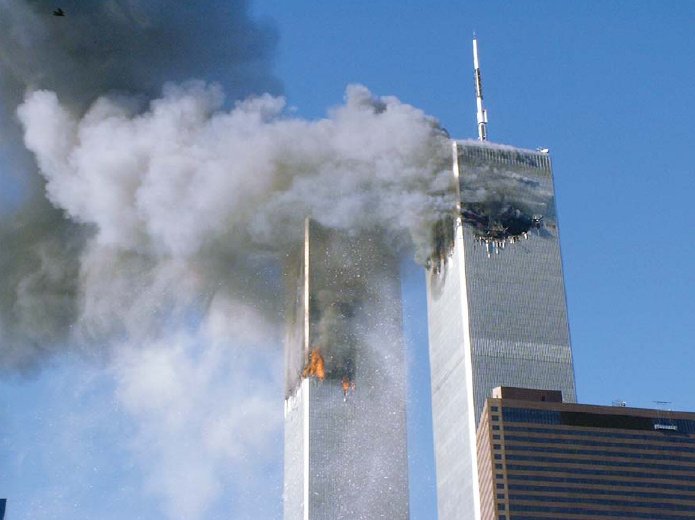
Three top securities brokers had offices in the World Trade Center, Cantor Fitzgerald, Euro Brokers and Garbon Inter Capital. Flight 11 struck just under the floors where Cantor Fitzgerald was located. Cantor Fitzgerald, with possible connections to the U.S. Intelligence apparatus, was America’s biggest securities broker and apparently the main target. Within minutes, an explosion in the North Tower’s vacant 23rd floor, right under the offices of the FBI and Garbon Inter Capital on the 25th floor caused a huge fire from the 22nd through the 25th floors. At the same time, there was an explosion in the basement of the North Tower. [30] A vault in the North Tower basement held less than $1 billion in gold, much of which was reportedly moved before 9/11. However, the government had hundreds of billions of dollars of securities which were summarily destroyed. The Federal Reserve, untouched by the crisis at its downtown offices (as they had everything backed up to a remote location), assumed emergency powers that afternoon. The $240 billion in securities were electronically cleared. [31] Then, at 9:03, Flight 175 slammed into the 78th floor of the South Tower just below the 84th floor where Euro Brokers were located. [32] Brian Clark, the manager at Euro Brokers, heard numerous explosions, apparently unrelated to what he referred to as the oxygen-starved fire caused by the plane crash.

The September 11 attacks related to the financial improprieties during the preceding ten years which spurred at least nine federal investigations which were initiated in 1997-1998, about the same time that Osama bin Laden, after twenty years as a CIA asset, announced a fatwa against the U.S. The records of many of those investigations were held in the Buildings Six and Seven and on the 23rd floor of the North Tower. Those investigations were sure to reveal the black Eagle Trust shenanigans. [33] Building Seven, not hit by a plane, collapsed at 5:20:33 p.m. but was vacated as early as 9:00 when evacuees claimed to see dead bodies and sporadic fires within the building.

By 2008 and even earlier the covert securities were worth trillions. The securities used to decimate the Soviets and end the Cold War were stored in certain broker’s vaults in the World Trade Center where they were destroyed on September 11, 2001. They would have come due for settlement and clearing on September 12, 2001. [34] The federal agency investigating these bonds, the Office of Naval Intelligence was in the section of the Pentagon that was destroyed on September 11. Renovations at the Pentagon were due to be completed on September 16, 2001. However, the Office of Naval Intelligence (ONI), the entity that often monitors war games, was hurriedly moved. If they were monitoring the simultaneous war games that morning, they would have realized that the games were used as a distraction from the actual assault. Whatever hit the pentagon struck the Navy Command Center and the offices of the Chief of Naval Operations Intelligence Plot (CNO-IP). [35] There were 125 fatalities in the Pentagon; thirty-one percent of them were people who worked in the Naval Command Center, the location of the Office of Naval Intelligence. Thirty-nine of the forty people who worked in the Office of Naval Intelligence died. [36]

On September 10, 2001 Rumsfeld announced that the Pentagon couldn’t account for $2.3 trillion, “We are, as they say, tangled in our anchor chain. Our financial systems are decades old. According to some estimates, we cannot track $2.3 trillion in transactions. We cannot share information from floor to floor in this building because it’s stored on dozens of technological systems that are inaccessible or incompatible.” [37] It was forgotten the following morning. Accountants, bookkeepers and budget analysts who were in the section of the Pentagon being renovated met their unexpected deaths. The destruction of accounting facts and figures will prevent discovery of where that money went. I am quite certain someone knows where it is. Certainly this is not merely gross incompetence but private seizure of public funds. [38] At the time Rabbi Dov Zakheim was chief-financial officer for the Department of Defense. [39] In 1993, Zakheim worked for SPS International, part of System Planning Corporation, a defense contractor. His firm’s subsidiary, Tridata Corporation directed the investigation of the first “terrorist” attack on the World Trade Center in 1993. [40]

Certain National Security officials who had participated in the Cold War victory in 1991 thus comprised the collateral damage of the Cold War. They, along with hundreds of innocent people were in the World Trade Center towers and the Pentagon. Their deaths were presumably required to conceal the existence of the Black Eagle Trust, along with the numerous illegal activities it had funded for over 50 years. This massive destruction, and the lost lives, constitutes a massive cover-up and continued lawlessness by the brotherhood of death, Skull and Bones, and their accomplices, the Enterprise. [41] The Enterprise was established in the 1980s as a covert fascist Cold Warriors faction working with other groups like Halliburton’s private security forces and the Moonies. Citibank is connected to the Enterprise, along with all the CIA front banks, Nugen Hand and BCCI.

Double Dipping

Alvin B. “Buzzy” Krongard was elected Chief Executive Officer of Alexander Brown and Sons in 1991 and Chairman of the Board in 1994. Bankers Trust purchased Alexander Brown and Sons in 1997 to form BT Alex Brown. Krongard relinquished his investments in Alex Brown to Banker’s Trust as part of the merger. He became Vice Chairman of Banker’s Trust where he personally interacted with wealthy clients who were intimately linked to drug money laundering. After a year of possible networking, Krongard joined (or as Michael Ruppert suggests, rejoined) the CIA in 1998 where his friend, Director George Tenet, concentrated his skills on private banking ventures within the elite moneyed community. Senate investigations verify that private banking firms frequently engage in money laundering from illicit drugs and corporate crime operations. [42] On January 28, 2000 the Reginald Howe and GATA Lawsuit was filed which accused certain U.S. bullion banks of illegally dumping U.S. Treasury gold on the market. The lawsuit named Deutsche bank Alex Brown, the U.S. Treasury, Alan Greenspan, the Federal Reserve, and Citibank, Chase, as defendants. Gerald Corrigan was accused of having private knowledge of the scheme. [43] Krongard became the Executive Director of the CIA, essentially the Chief Operating Officer, and the number three man on March 16, 2001. Krongard, while at the CIA, arranged for Blackwater’s Erik Prince to get his first contract with the U.S. government, and later joined its board.

Richard Wagner, a data retrieval expert, estimated that more than $100 million in illegal transactions appeared to have rushed through the WTC computers before and during the disaster on September 11, 2001. A Deutsche Bank employee verified that approximately five minutes before the first plane hit the tower that the Deutsche Bank computer system in their WTC office was seized by an outside, unknown entity. Every single file was swiftly uploaded to an unidentified locality. This employee escaped from the building, but lost many of his friends. He knew, from his position in the company, that Alex Brown, the Deutsche Bank subsidiary participated in insider trading. Senator Carl Levin claimed that Alex Brown was just one of twenty prominent U.S. banks associated with money laundering. [44]

Andreas von Bülow, a Social Democratic Party member of the German parliament (1969-1994), was on the parliamentary committee on intelligence services, a group that has access to classified information. Von Bülow was also a member of the Schalck-Golodkowski investigation committee which investigates white-collar crime. He has estimated that inside trader profits surrounding 9/11 totaled approximately $15 billion. Von Bülow told The Daily Telegraph “If what I say is right, the whole US government should end up behind bars.” Further, he said, “They have hidden behind a veil of secrecy and destroyed the evidence…they invented the story of 19 Muslims working within Osama bin Laden’s al Qaeda in order to hide the truth of their own covert operation.” He also said, “I’m convinced that the US apparatus must have played a role and my theory is backed up by the [Washington] government’s refusal to present any proof whatsoever of what happened.” [45]

On September 26, CBS reported that the amount was more than $100 million and that seven countries were investigating the irregular trades. Two newspapers, Reuters and the New York Times, and other mainstream media reported that the CIA regularly monitors extraordinary trades and economic irregularities to ascertain possible criminal activities or financial assaults. In fact, the CIA uses specialized software, PROMIS, to scrutinize trades. [46]

Numerous researchers believe, with justification, that the transactions in the financial markets are indicative of foreknowledge of the events of 9/11, the attacks on the twin towers and the pentagon. One of the trades, for $2.5 million, a pittance compared to the total, went unclaimed. Alex Brown, once managed by Krongard, was the firm that placed the put options on United Airlines stock. President Bush awarded Krongard by appointing him as CIA Executive Director in 2004. [47]

Between September 6 and 7, 2001, the Chicago Board Options Exchange received purchases of 4,744 put options on United Airlines and only 396 call options. If 4,000 of those options were purchased by people with foreknowledge, they would have accrued about $5 million. On September 10, the Chicago exchange received 4,516 put options on American Airlines compared to 748 calls. The implications are that some insiders might profit by about $4 million. These two incidents were wholly irregular and at least six times higher than normal. [48]

Morgan Stanley Dean Witter & Company, who occupied floors 43-46, 56, 59-74 of the World Trade Center, Tower 2, saw 2,157 of its October $45 put options bought in the three trading days before Black Tuesday. This compares to an average of 27 contracts per day before September 6. Morgan Stanley’s share price fell from $48.90 to $42.50 in the aftermath of the attacks. Assuming that 2,000 of these options contracts were bought based upon knowledge of the approaching attacks, their purchasers could have profited by at least $1.2 million. The U.S. government never again mentioned the trade irregularities after October 12, 2001. [49] Catastrophic events serve two purposes for the top criminal element in society — the perpetrators seize resources while their legislative accomplices impose burdensome restrictions on the citizens to make them more submissive and silent.

NOTES:

[1]  Collateral Damage: U.S. Covert Operations and the Terrorist Attacks on September 11, 2001 by E.P. Heidner, pp. 4-5


[2]  Ibid, p. 20


[3]  Ibid, pp. 4-5


[4]  Ibid


[5]  September 11 Commission Report by E. P. Heidner, 2008, p. 108


[6]  Gold Warriors, America’s Secret Recovery of Yamashita’s Gold by Sterling and Peggy Seagrave, Verso Publishing, 2003, pp. 32-43


[7]  Ibid, pp. 318


[8]  Ibid, pp. 14-15


[9]  Ex-Treasury Chief Gets 1-Month Term in Bank Fraud Case by Frank J. Prial, New York Times, June 28, 1987


[10]  Gold Warriors, America’s Secret Recovery of Yamashita’s Gold by Sterling and Peggy Seagrave, Verso Publishing, 2003, p. 5


[11]  Ibid, p. 98


[12]  Ibid, p. 102


[13]  Collateral Damage: U.S. Covert Operations and the Terrorist Attacks on September 11, 2001 by E.P. Heidner, pp. 4-6


[14]  Ibid, p. 29


[15]  Tyumen Oil of Russia Seeks Links to Old Foes After Winning Fight By Neela Banerjee, New York Times, December 2, 1999


[16]  Halliburton Energy Services Enters Into Alliance Agreement With Tyumen Oil Company, Press Release, October 15, 1998, http://www.halliburton.com/news/archive/1998/hesnws_101598.jsp


[17]  Ibid


[18]  Halliburton Press Release, Halliburton And Russian Oil Company Sibneft Sign Framework Agreement, February 7, 2002, http://www.halliburton.com/news/archive/2002/corpnws_020702.jsp


[19]  TNK-BP, Our company, http://www.tnk-bp.com/company/


[20]  Russia’s largest field is far from depleted By Jerome R. Corsi, Word Net Daily, November 04, 2005, http://www.worldnetdaily.com/news/article.asp?ARTICLE_ID=47219


[21]  Collateral Damage: U.S. Covert Operations and the Terrorist Attacks on September 11, 2001 by E.P. Heidner, p. 28


[22]  Mikhail B. Khodorkovsky, Source Watch, http://www.sourcewatch.org/index.php?title=Mikhail_B._Khodorkovsky


[23]  Russia’s Ruling Robbers by Mark Ames, Consortium News, March 11, 1999, http://www.consortiumnews.com/1999/c031199a.html


[24]  “Sovest” Group Campaign for Granting Political Prisoner Status to Mikhail Khodorkovsky, February 7, 2008


[25]  Halliburton Man to Sub for Khodorkovsky, Simon Ostrovsky, Moscow Times, April 30, 2004 as noted in the September 11 Commission Report, p. 233; See also Arrested Oil Tycoon Passed Shares to Banker, Washington Times, November 2, 2003


[26]  Halliburton Press Release, Ortiz Named President Of Halliburton Energy Services, November 19, 1997, http://www.halliburton.com/news/archive/1997/hesnws_111997.jsp


[27]  Russia: Yukos-Sibneft union forms world’s No. 4 oil producer, Global Finance, Jun 2003, http://mikhail_khodorkovsky_society.blogspot.com/


[28]  Halliburton Opens Russia Training Center, International Business Times, May 11, 2007, http://www.ibtimes.com/articles/20070511/halliburton-training.htm


[29]  Halliburton gets Russia work, Oil Daily, January 26, 2006, http://goliath.ecnext.com/coms2/summary_0199-5579583_ITM


[30]  Collateral Damage: U.S. Covert Operations and the Terrorist Attacks on September 11, 2001 by E.P. Heidner, p. 2


[31]  Ibid, p. 29


[32]  Ibid, pp. 2


[33]  Ibid, p. 28-29


[34]  “Sioux City, Iowa, July 25, 2005 TomFlocco.com , According to leaked documents from an intelligence file obtained through a military source in the Office of Naval Intelligence (ONI), on or about September 12, 1991 non-performing and unauthorized gold-backed debt instruments were used to purchase ten-year “Brady” bonds. The bonds in turn were illegally employed as collateral to borrow $240 billion — 120 in Japanese Yen and 120 in Deutsch Marks — exchanged for U.S. currency under false pretenses; or counterfeit and unlawful conversion of collateral against which an unlimited amount of money could be created in derivatives and debt instruments…” from Cash payoffs, bonds and murder linked to White House 9/11 finance, Tom Flocco, tomflocco.com


[35]  Collateral Damage: U.S. Covert Operations and the Terrorist Attacks on September 11, 2001 by E.P. Heidner, p. 45


[36]  Ibid, p. 2


[37]  Rumsfeld’s comments were on the Department of defense web site but have been understandably removed, http://www.defenselink.mil/speeches/2001/s20010910-secdef.ht


[38]  The War On Waste Defense Department Cannot Account For 25% Of Funds — $2.3 Trillion, http://www.cbsnews.com/stories/2002/01/29/eveningnews/main325985.shtml


[39]  September 11 Commission Report by E. P. Heidner, 2008, p. 108


[40]  Following Zakheim and Pentagon Trillions to Israel and 9-11By Jerry Mazza, July 31, 2006, http://www.rense.com/general75/latest.htm


[41]  Collateral Damage: U.S. Covert Operations and the Terrorist Attacks on September 11, 2001 by E.P. Heidner, p. 6


[42]  Crossing the Rubicon, the Decline of the American Empire at the End of the Age of Oil by Michael C. Ruppert, New Society Publishers, Canada, 2004, p. 56


[43]  Collateral Damage: U.S. Covert Operations and the Terrorist Attacks on September 11, 2001 by E.P. Heidner, p. 28


[44]  Crossing the Rubicon, the Decline of the American Empire at the End of the Age of Oil by Michael C. Ruppert, New Society Publishers, Canada, 2004, pp. 243-247


[45]  USA staged 9/11 Attacks, German best-seller by Kate Connolly, National Post & London Telegraph, November 20, 2003


[46]  Crossing the Rubicon, the Decline of the American Empire at the End of the Age of Oil by Michael C. Ruppert, New Society Publishers, Canada, 2004, pp. 243-247


[47]  Ibid, pp. 243-247


[48]  Ibid, pp. 243-247


[49]  Ibid, pp. 243-247

By Deanna Spingola

SOURCE: http://www.renewamerica.com/columns/spingola/100208

9/11: Reality and the Beliefs of the Military and Clandestine Community

9/11: Reality and the Beliefs of the Military and Clandestine Community

Romney’s close relationship with Orit Gadiesh and Israeli military intelligence is the real reason he is the chosen candidate of the Zionist establishment. Romney is being supported by high-level Zionists, Israeli military intelligence, and their controlled media network.


First of all, to the idiots who monitor all our communications, internet, telephone, who knows how far they have gone or are going, do not think there aren’t lists of those who oppose this illegal effort and will see to it you are indicted.  If  you believe the current form of government is going to be superseded by a corporate plutocracy as in the Canadian TV shown “Continuum,”  (find it) you are mistaken. 

The old power bases are gone, too many have been burned.  Playing spy as though you think the courts still support FISA will get you some GITMO time, don’t take my word for it, “times are a changin.’”

Homeland Security (DHS) is strangling the efforts of several older institutions.  This is beyond just “turf war” and is becoming an embarrassment.

The machinery put together during Bush II is entirely dysfunctional, control of the Justice Department is gone, in fact, under Holder, we aren’t sure it exists anymore.  Only Homeland Security is still around and will be held accountable, not for passenger searches but for childish plots.  Go ahead, bug the Pentagon, you won’ t like it.

Here is where things stand on 9/11 today:

  • The official accepted belief on the towers is that the two were destroyed by 4 small nuclear devices, two in the basement, two on upper floors, that produced over a million degrees of heat that dissolved the building, put out minor radiation for a short distance and kept fires burning for months.  It vaporized enough steel to build 3 huge aircraft carriers and huge beams hundreds of yards away show more damage than anything in Hiroshima.  This is the official opinion of DARPA and the US Army.   This is highly classified but I am printing it anyway. 
  • Building 7 is said to have been destroyed with conventional explosives.
  • No official secret finding has been reached on the Pentagon attack other than that wreckage from a Columbia crash in 1995 was dumped on the lawn and the site was altered during the day to simulate an air crash.  I have not been given access to anything beyond this and choose not to make something up.
  • The official finding as to rationale for the 9/11 attacks was to cheat insurance companies out of billions.  Those who have examined US policy said that there were other simpler possibilities for bringing the US to war other than the 9/11 action against the US.  (for those who don’t catch the connection, it has been accepted that 9/11 was an “inside job”)
  • Many Israeli teams were involved in 9/11 and the twin tower attack was entirely an Israeli action with our military and intelligence services denying involvement.  This is not my opinion, this is official.
  • Several Israeli teams were arrested on 9/11, one after the George Washington Bridge explosion.  There were other attacks on 9/11 thwarted by police, one on the Lincoln Tunnel.  There is no evidence of an attack on the Verrazano Bridge or Brooklyn Bridge.  Arrests were made of the Israeli’s at the GWB, hard proof exists but the arrests at the Lincoln Tunnel, two Israeli citizens, van of explosives and weapons is only backed by limited police testimony and they are scared to death.  An authoritative source on the scene says the terrorists, Israelis, were turned over to Bernie Kerik, Police Commissioner and never heard from again.

Thousands of cancer victims, hundreds, maybe thousands dead of “radiation poisoning” already are attributed to use of fire hoses directly on the moulton nuclear “ground zero” which put radiated water vapor into the air which was unintended.  These nuclear heat chambers below the twin towers put out massive heat for 64 days under a flood of continual cold water although there is no official attribution to their heat source.  Perhaps it was burning asbestos and insurance policies?

An outrageously false cover story about a “toxic stew” involving “dry wall” was part of the “official record.”  By that standard, every firefighter, drywaller or person who has lived in a building with drywall is actually dead but not yet informed.

Thousands of New Yorkers are dying of radiation poisoning from 9/11 and being “monitored” or being offered payments from a several billion dollar fund that mysterious appeared to buy their silence.

Other groups have evidence regarding the aircraft, crews, passengers, “theoretical phone calls and text messages” with much of it in FBI files.  Some of that information is evidence worthy and some is not but there is much that can be introduced in court.

Many people who are potential witnesses have disappeared, thousands have been threatened.  The numbers are so large that they in themselves have been used by some as proof there was a massive coverup conspiracy.  “Why or how could so many people be controlled or killed and what kind of person would do this?”

Do you really want that question answered?  You think the million plus dead on Rwanda was an accident?  You never heard of the uncounted dead in Guatemala, Mexico and where  you have heard, you have been lulled into immunity.

VITAL INTERESTS

There technically was no “9/11″ and thus, any defense of American interests through military occupation, stimulation of insurrection, emplacement of puppet governments and theft of resources, no matter how profitable for the gang inside the Beltway, is not sustainable.

America has no vital interests in Central Asia nor is there any potential threat to oil supplies in a nation that has the choice of becoming oil independent in less than 3 years.  (Can prove this is court).

Even Iran would sell us all their oil at deep discount and take payment in new Jeeps and Fords if we wanted, were we not run by crazy people.   Want me to prove it to you?

ROMNEY, MASTER CRIMINAL AND SPY OR SIMPLY A “WANNABEE ANTI-CHRIST?”  (Thanks to Tex Marrs and Christopher Bollyn)

Orit Gadiesh (Hebrew: אורית גדיש‎) is an Israeli-American corporate strategist and chairwoman of management consulting firm Bain & Company. Source-Wikipedia

We are now holding strong proof that Romney and “Bain Capital” are agents of the State of Israel who is attempting to rig an American election on behalf of a group of European entities unfriendly to the continued freedoms left to the American people.

Mitt Romney is, in fact, a clear and present danger to the United States.  Chris Bollyn has stated the following, and I find Chris a credible source:

ROMNEY’S ISRAELI HANDLER – Orit Gadiesh, former “War Room” assistant to Ezer Weizman and Moshe Dayan, is the daughter of Israeli Brigadier General Falk Gadiesh (born Falk Gruenfeld, Berlin, 1921) and his Ukrainian-born wife. Gadiesh is chairman of the management consulting firm Bain & Company, the parent company of Bain Capital, and was the company’s managing director under CEO Mitt Romney in 1992. “She’s like a Jewish mother figure to many of the people at Bain,” ex-Bainie Dan Quinn told Fortune magazine in 1996.

Bain Capital owns Clear Channel, the largest radio station group owner in the United States. Clear Channel owns the networks which air the most popular radio talk shows, including The Rush Limbaugh Show, The Glenn Beck Program, The Sean Hannity Show, America Now with Andy Dean, Coast to Coast AM, The Savage Nation, The Mark Levin Show, and The Dave Ramsey Show. (Graphic: “Rush Limbaugh Spills the Beans on the Jewish Conspiracy” by Pat Healy)

Mitt Romney was a co-founder of Bain Capital along with Bill Bain, seen here. Bain was ousted in 1991 and Romney served as CEO of Bain & Company in 1991-1992. In May 1991, while Romney was CEO, Gadiesh was named chairman of the company’s Policy Committee, which set the company’s business strategy and policy. In 1992, under Romney, she became managing director. Orit Gadiesh, who has worked at Bain & Co. since 1977, became chairman of Bain & Co. in 1993.

 Orit Gadiesh, born in Israel in 1951, has worked closely with Mitt Romney since at least 1991, and probably much longer since she joined Bain & Company in 1977, when she was 26. Romney appointed Gadiesh to his transition team when he became governor of Massachusetts in November 2002. Gadiesh is the daughter of Falk Gadiesh, an Israeli brigadier general and former member of the general staff who reorganized the Israeli army in the early 1950s after a stint at the Massachusetts Institute of Technology (MIT).

Falk’s daughter Orit was chosen to serve in Israeli military intelligence. Her first position in the Israeli military was as assistant to Ezer Weizman, the deputy chief of staff who later became president of Israel. During the early 1970s, she worked in the war room, a bunker where Gen. Moshe Dayan was in charge. As a war room assistant to Weizman, Orit provided military leaders with documents and correspondence.

Prior to joining Bain & Company, Gadiesh served in the office of the Deputy Chief of Staff of the Israeli Army. Currently, she is on the board of directors of the Peres Center for Peace, an organization headed by a former chief of staff of the Israeli military, Lt. General Amnon Lipkin-Shahak. The high-level Mossadnik Avner Azulay, managing director of the Marc Rich Foundation, is also on the executive board of the Peres Center.

ROMNEY’S INTELLIGENCE CHIEF AND CAMPAIGN ADVISER – Mitt Romney named Michael Chertoff, the Israeli agent who supervised the destruction of the crucial evidence of 9/11, co-chair of his counterterrorism and intelligence advisory committee in October 2011. The 9/11 cover-up continues.

Mitt Romney attended the Mossad’s “Herzliya Conference on Israeli Security” in 2007. Romney and the current Israeli prime minister Benjamin Netanyahu worked together as consultants at the Boston Consulting Group early in their careers.

Romney’s close relationship with Orit Gadiesh and Israeli military intelligence is the real reason he is the chosen candidate of the Zionist establishment. Romney is being supported by high-level Zionists, Israeli military intelligence, and their controlled media network. This relationship between the Israeli military and Mitt Romney, a presidential candidate, should be of great concern to all Americans because this is how the Israeli military plans to drag the United States into a war with Iran.

RON PAUL

If it is not clear it should be.  Ron Paul won the Republican nomination for president.  He could have won the Democratic nomination just as easily.  The only reason we are seeing Romney is that he is a foreign agent who represents an attempt at further overthrowing American freedoms and has absolutely no right to represent himself as a candidate from the Republican Party.

The nominating process, which has yet to conclude, has been wrought with vote rigging, millions in bribes and violations of every kind.

Ron Paul won and Romney is a foreign spy, a demagogue, a dangerous fanatic and has spent his life as part of an organized crime syndicate.  Most elections, priaries, caucuses were rigged, almost all show clear criminal activity and there is no effort to correct this because the election for president of the United States is being managed from Tel Aviv (read Moscow).

He makes Obama look good.  Does America need a president put in office by another rigged election, this one with 4 wives (only a rumor from people near him) and over 10000 illegal Swiss bank accounts.  Bain Capital, according to reliable sources is one of the biggest sources of terrorist funding on earth, biggest traders in conflict diamonds, and deeply involved in human trafficking.

Did Romney learn this as a Mormon Bishop?

CANADA

Last week, Canada’s banking system crashed, something kept out of their papers.  America sent Canada $131 billion dollars to underwrite their currency or Canada would be gone.  Canada has prided itself at being independent, at being free, at being a model nation.

Want some unpleasant truth?

Israeli spies run Canadas’ government and economic system through blackmail, bribery and intimidation.

Canada has smuggled more nuclear technology and refined uranium than any other country on earth and are a greater danger than even Germany and North Korea, the biggest exporters of WMD technologies.

If one were to want to find an evil empire, the “secret society” ruling sectors of both Canada and Germany, whose citizens are kept in absolute ignorance, are the real world axis of evil or as close as we have now.  A few decades ago, one could have made a list including East Germany, South Africa, Libya, Germany (even then), Czechoslovakia.

I love Canada, my family helped found it but watchfulness and strength are needed more in Canada than petty socialism, political correctness and stifling the truth, which is Canada’s greatest skill as yet.   Let me look in the drawer here, I think I still have charters awarding us everything from Windsor and Amherstburg to well past Toronto.  Now, if I want to repossess Southern Ontario, I have to negotiate with Timothy Geithner who seems to be holding the mortgage on Canada.

What  kind of nation would accept a secret bailout with counterfeit money? (For my Canadian friends, ask about the $131 billion, where did it go and who authorized it?)

CONCLUSION

These are the hard facts and accepted theories by the real experts, without any of the speculation of activists or “conspiracy theory” folks.  There is more, much more, but how much anger is allowed?

What we can’t do is walk away from our political system when we have one party of foreign controlled traitors, the GOP and another of petty mobsters and incompetents, the Democrats.  We have what we deserved.  When we were offered the candidate we dreamed of, perhaps not the charisma of Bobby Kennedy but Ron Paul, once free of the “bought and paid for” congress, could and is likely to begin restoring America.

Let us first jail those who created this upcoming election and do it quickly, ridding ourselves of Mr. Romney, Mr. Adelson, Mr. Netanyahu, Ms. “Ferkel” Merkel of Germany and the pack of thieves who have taken control of Canada.

Maybe an early place to look for our Israeli friends is Wisconsin.

SOURCE: http://www.veteranstoday.com/2012/06/09/911-a-decade-later-a-whole-new-ballgame/

Five ‘Stand Your Ground’ Cases You Should Know About

Five ‘Stand Your Ground’ Cases You Should Know About

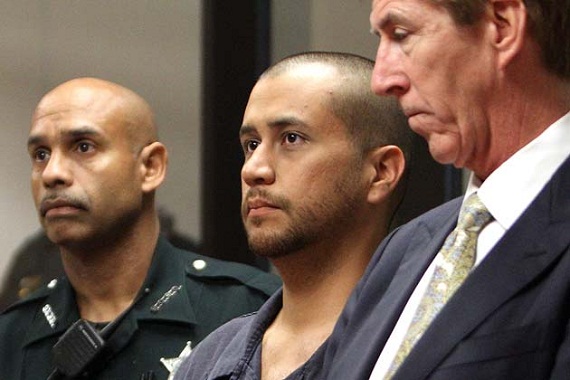
George Zimmerman, appears for a bond hearing with his attorney Mark O'Mara (R) at the John E. Polk Correctional Facility, Apr. 12, 2012 in Sanford, Fla. Zimmerman was charged with second degree murder in the fatal shooting of 17-year-old Trayvon Martin. (Photo by Gary Green/The Orlando Sentinel-Pool/Getty Images)

The Stand Your Ground law is most widely associated with the Feb. 26 shooting death of Trayvon Martin, an unarmed 17-year-old killed in Florida by George Zimmerman, a neighborhood watch captain who claimed he was acting in self-defense.

But as a recent Tampa Bay Times investigation indicates, the Martin incident is far from the only example of the law’s reach in Florida. The paper identified nearly 200 instances since 2005 where the state’s Stand Your Ground law has played a factor in prosecutors’ decisions, jury acquittals or a judge’s call to throw out the charges. (Not all the cases involved killings. Some involved assaults where the person didn’t die.)

The law removes a person’s duty to retreat before using deadly force against another in any place he has the legal right to be – so long as he reasonably believed he or someone else faced imminent death or great bodily harm. Among the Stand Your Ground cases identified by the paper, defendants went free nearly 70 percent of the time.

Although Florida was the first to enact a Stand Your Ground law, 24 other states enforce similar versions. Using the Tampa Bay findings and others, we’ve highlighted some of the most notable cases where a version of the Stand Your Ground law has led to freedom from criminal prosecution:


· In November 2007, a Houston-area man pulled out a shotgun and killed two men whom he suspected of burglarizing his neighbor’s home. Joe Horn, a 61-year-old retiree, called 911 and urged the operator to “ ‘Catch these guys, will you? Cause, I ain’t going to let them go.’ ” Despite being warned to remain inside his home, Horn stated he would shoot, telling the operator, “ ‘I have a right to protect myself too, sir. The laws have been changed in this country since September the first, and you know it.’ ”

Two months earlier, the Texas Legislature passed a Stand Your Ground law removing a citizen’s duty to retreat while in public places before using deadly force. In July 2008, a Harris County grand jury declined to indict Horn of any criminal charges.


· In Louisiana early this year, a grand jury cleared 21-year-old Byron Thomas after he fired into an SUV filled with teenagers after an alleged marijuana transaction went sour. One of the bullets struck and killed 15-year-old Jamonta Miles. Although the SUV was allegedly driving away when Thomas opened fire, Lafourche Parish Sheriff Craig Webre said to local media that as far as Thomas knew, someone could have jumped out of the vehicle with a gun. Thomas, said the sheriff, had “decided to stand his ground.”

Louisiana’s Stand Your Ground law was enacted just a year after Florida introduced its law.


· In March 2012, Bo Morrison was shot and killed by a homeowner in Wisconsin who discovered the unarmed 20-year-old on his porch early one morning. According to friends, Morrison was trying to evade police responding to a noise complaint at a neighboring underage drinking party. The homeowner, thinking Morrison was a burglar, was not charged by the local district attorney.

While Wisconsin doesn’t have a Stand Your Ground law that extends to public spaces, Gov. Scott Walker signed an “intruders bill” in December 2011 that presumes somebody who uses deadly force against a trespasser in their home, business or vehicle acted reasonably, whether or not the intruder was armed. Before the law was enacted, homeowners could only use deadly force if their own lives were at risk.


· In April, 22-year-old Cordell Jude shot and killed Daniel Adkins Jr., a pedestrian who walked in front of Jude’s car just as Jude was pulling up to the window of a Taco Bell drive-thru in Arizona. Jude claimed Adkins had waved his arms in the air, wielding what Judge thought was a metal pipe – it was actually a dog leash. Jude shot the 29-year-old Adkins, who was mentally disabled, once in the chest. As of May, an arrest had not been made in the April 3 shooting. Arizona passed a Stand Your Ground law in 2010.


· In January, a judge in Miami tossed out a second-degree murder charge against Greyston Garcia after he chased a suspected burglar for more than a block and stabbed him to death. The judge decided the stabbing was justified because the burglar had swung a bag of stolen car radios at Garcia – an object that a medical examiner at a hearing testified could cause “serious harm or death.” The judge found Garcia was “well within his rights to pursue the victim and demand the return of his property.”


SOURCE: http://www.propublica.org/article/five-stand-your-ground-cases-you-should-know-about

CORRUPTION: Recommended Researching Extended List

CORRUPTION: Recommended Researching Extended List

Willing participants who have ultimately sold their souls to make a buck. Little regard for the future of humanity, they support a system that enslaves 95+% of the global population, through debt, famine, drugs, conflict, destruction,with some organizations even using advance engineered weapons exceeding human comprehension.


NAMES:
Aaron Barr
Abe Foxman
Abdul Fatah Younis
Abdul Hafiz Ghoga
Abdullah Senussi
Abdulzhelil Abdulkerimov
Abdurrahim El-Keib
Abraham H. Foxman
AbuBakr Yunis Jabr
Abu Bakr Yunis Jabr
Abu-Bakr Yunis Jabr
Abu Mazen
Abdul Hakim Belhadj
Adrian Chen
Adrian Lamo
Ahmed Chalabi
Aisha Gaddafi
Al-Waleed bin Talal
Alan Greenspan
Alan Phillip Gross
Alberto Gonzales
Aleksandr Lukašenko
Aleksandr Lukashenko
Alexander Litvinenko
Ali Tarhouni
Alisher Usmanov
Altaf Nazerali
Alvin Bernard “Buzzy” Krongard
Amira Haas
Amira Hass
Anastasios “Tommy” Belisis
Anders Behring Breivik
Anders Fogh Rasmussen
Andreas Bogk
Andrei Lugovoi
Andrew Bolt
Andrew Cuomo
Andrew Fastow
Angela Merkel
Anke Domscheit-Berg
Anna Ardin
Anne Carine Tanum
Anwar Al-Awlaki
Ariel Sharon
Armanda Nuria Pinero Sierra
Artur Rasizade
Asif Ali Zardari
Avigdor Lieberman
Barack Obama
Barrie Walkley
Bashar Al-Assad
Benazir Bhutto
Benjamin Netanyahu
bibi
Bibi Chesterfield
Bill Clinton
Bill Kristol
Bill Ludwig
Bill Shorten
Bill Zeliff
Binyamin Netanyahu
Bob Clement
Bob Dudley
Bob Livingston
Bob Overby
Bob Woodward
Boiko Borisov
Boris Berezovsky
Boyko Borissov
Carl Bernstein
Carl Bildt
Carlos Mata Figueroa
Carlos Salinas
Carlos Slim
Caroline Gluck
Charles Dolan
Charles Koch
Chris Christie
Christopher Gibson-Smith
Chuck Schumer
Condoleeza Rice
Craig Murray
Daniel Boyer
Daniel Domscheit-Berg
Dave Willis
David Addington
David Feeney
David Koch
David M House
David Petraeus
David Viniar
Denny Hastert
Dick Armey
Dick Cheney
Dmitri Medvedev
Dmitri Rogozin
Don Farrell
Donald Rumsfeld
Douglas Feith
Dr Barron Lerner
Dragan Zivanovic
Edward M. Liddy
Ehud Barak
Elena Baturina
Erik Prince
Etienne Tshisekedi
Evan Bayh
Francev
Francis Fukuyama
Friedman
Gary Aguirre
Gary Bauer
Gennady Zyuganov
George Economou
George Friedman
George H.W. Bush
George Herbert Walker IV
George Papandreou
George Stephanopolous
George Soros
George Tenet
George W. Bush
Gideon Levy
Giorgio Napolitano
Glenn Greenwald
Golan Cipel
Gurbanguly Berdimuhamedow
Guy Fawkes
Hamad Al-Khalifa
Hamad El-Khalifa
Hamad Khalifa
Hamad bin Jassim bin Jaber Al Thani
Hamad bin Khalifa Al Thani
Harald Norberg
Hassan Nasrallah
Hazim Aldosary
Henry Kissinger
Henryk Stanislas Kurpi
Hillary Clinton
Hosni Mubarak
Hugo Chavez
Humberto Loya-Castro
Ileana Ros-Lehtinen
Ilham Aliyev
Islam Karimov
Ivan Marovic
Jalal Talabani
James Dolan
James Packer
Jamie Dimon
Jamie Leigh Jones
Janet Napolitano
Jason Katz
Jeffrey B. Kindler
Jeffrey Skilling
Jerry Brown input/output.
Jerry del Missier
Jesus Vicente Zambada-Niebla
Jesus Vicente Zambada Niebla
Jim Balsillie
Jim Gauthier
Jim McGreevey
Jimmy Caine
Joe Biden
Joe Lieberman
John Henderson
John Howard
John Woods
John Yoo
Jon Corzine
Jon Stewart
Jonathan Pollard
Joseph Cassano
Joseph Kabila
Judd Gregg
Julia Gillard
Julian Assange
Karim Hijazi
Karl Bildt
Karl Rove
Karolos Papoulias
Kenneth Lay
Kent Ekeroth
Kerstin Lundell
Kevin Poulsen
Kevin Schatzle
Khaled Al-Masri
Khaled El-Masri
Khaled Masri
Khalid Al-Khalifa
Khalid El-Khalifa
Khalid Khalifa
Kim Zetter
Knut Anders Opstad
Kurmanbek Bakiyev
Kyungu
Lewis Libby
Lloyd Blankfein
Lt. Col. Paul Alonzo
Lucas Papademos
Luis Acosta Carlez
Mahmoud Abbas
Mahmoud Ahmadinejad
Mahmoud Jabril
Margareta Sandstedt
Mario Monti
Mark Arbib
Mark Felt
Martin Sullivan
Mary Pat Christie
Mary Schapiro
Maurice Greenberg
Michael Bloomberg
Michael Chertoff
Michael Hayden
Michael Kopper
Michael Mukasey
Mike Keebaugh
Mike Lazaridis
Mikhail Khodorkovsky
Mikhail Prokorov
Mikhail Saakashvili
Miranda Devine
Mordechai Vanunu
Mr. John Thomas
Muammar Gaddafi
Mustafa Abdul Jalil
Munyamariba
Nawaz Sharif
Nick Minchin
Nicolas Sarkozy
Nursultan Nazarbayev
Osama Bin Laden
Pamela Geller
Patrice Lumumba
Patrick Byrne
Paul Howes
Peiter “Mudge” Zatko
Pervez Musharraf
Peter J. Grossman
Peter J. Kahn
Porter Goss
Princess Amira al-Taweel
Puru Saxena
Rafik Hariri
Ramzan Kadyrov
Randy Scheunemann
Rashid Nurgaliev
Rashid Nurgaliyev
Raul Castro
Raul Salinas de Gortari
Ray Kelly
Recep Tayyip Erdogan
Ricardo Alarcon
Ricardo Alarcón
Rich Ricci
Richard Ashcroft
Richard Fuld
Richard Helms
Richard Mahoney
Richard Parsons
Richard Perle
Robert B. Willumstad
Robert Benmosche
Robert McClelland
Robert Mueller
Robert Mugabe
Robert S. Miller
Roman Abramovich
Rune Bjerke
Rudi Dekkers
Rupert Murdoch
Saad Hariri
Saddam Hussein
Sapamurat Niyazov
Sergey Sobyanin
Sibel Edmonds
Silvio Berlusconi
Sir Win Bischoff
Slobodan Milosevic
Solly Forell
Srdja Popovic
Stanley McChrystal
Stephen Colbert
Stephen Harper
Steven A. Cohen
Steve Forbes
Sylvain Seninga Ntamukunzi
Tamim bin Hamad Al Thani
Ted Ekeroth
Thomas Ryan
Todd Christie
Tommy Vietor
Tony Abbott
Tony Blair
Tony Hayward
Tzipi Livni
Tzipi Livni
Vagit Alekperov
Vikram Pandit
Viktor Bout
Viktor Yanukovich
Vladimir Putin
Vladimir Resin
Wesley Clark
William C. Weldon
William Jefferson Clinton
William Kristol
Xavier R. Rolet
Yelena Baturina
Yossi Sarid
Yulia Tymoshenko
Yuri Luzhkov
Zalmay Khalilzad
Zine El Abidine Ben Ali
US FEDERAL LEADERSHIP TEAM:
Kay Kapoor
Craig Cornelius
John Goodman
John Matchette
ISDA-International Swaps and Derivatives Association Officers/Directors:
Stephen O’Connor
Michele Faissola
Gay Huey Evans
Diane Genova
Guillaume Amblard
Brian Archer
R. Martin Chavez
Bill De Leon
Thibaut de Roux
Nitin Gulabani
Harry Harrison
Alan Haywood
Peter Healey
Jonathan Hunter
TJ Lim
Eric Litvack
Ted MacDonald
Yutaka Nakajima
Robert Pickel
Gerhard Seebacher
Yasuhiro Shibata
Eraj Shirvani
Stuart Spodek
Emmanuel Vercoustre
Conrad Voldstad
Lili Wang
GOLDMAN SACHS INTERNATIONAL ADVISORS:
ADVISORY DIRECTORS:
Alan A. Shuch
Carlos A. Cordeiro
Eric S. Dobkin
Hsuch-Ming Wang
John J. Powers
Jonathan I. Cohen
Maykin Ho
Michael A. Troy
Michael S. Wishart
Patrick J. Ward
Paul S. Efron
Peter D. Sutherland KCMG
Philip S. Hylander
R. Douglas Henderson
Ravi Sinha
Robert E. Higgins
Robert J. Markwick
Thomas J. Kenny
Timothy G. Freshwater
Tracy R. Wolstencroft
SENIOR DIRECTORS:
David M. Silfen
Donald R. Gant
Eugene Mercy Jr.
Eugene V. Fife
George E. Doty
George M. Ross
H. Frederick Krimendahl II
James P. Gorter
John C. Whitehead
John R. Farmer
Mark O. Winkelman
Peter G. Sachs
Peter M. Sacerdote
Richard I. Menschel
Robert B. Menschel
Robert E. Mnuchin
Robert Hurst
Robert J. Katz
Robert M. Conway
Robert N. Downey
Robert S. Kaplan
Robin Neustein
Roy J. Zuckerberg
Stephen B. Kay
Thomas B. Walker Jr.
Willard J. Overlock Jr.
BOARD OF INTERNATIONAL ADVISORS:
Charles Curran A.C.
Charles de Croisset
Claudio Aguirre
Dr. Axel May
Dr. Ludolf v. Wartenberg
Enrico Vitali
Guillermo de la Dehesa
Ian Macfarlane A.C.
Kazimierz Marcinkiewicz
Keki Dadiseth
Lord Griffiths of Fforestfach
Mario Monti
Professor Otmar Issing
Professor Victor Halberstadt
Tito T. Mboweni
Vladimir Dlouhy
Walter W. Driver Jr.
JP Morgan Chase Executive Committee:
ACHILLES O. MACRIS
ANTHONY J. HORAN
BARRY L. ZUBROW
BARRY SOMMERS
BLYTHE S. MASTERS
CARLOS M. HERNANDEZ
CATHERINE M. KEATING
CLIVE S. BROWN
DANIEL E. PINTO
DINKAR JETLEY
DONALD H. MCCREE  III
DOUGLAS B. PETNO
DOUGLAS L. BRAUNSTEIN
DOUGLAS WURTH
DR. JACOB A. FRENKEL
EILEEN M. SERRA
EMILIO SARACHO
FRANK J. BISIGNANO
GABY A. ABDELNOUR
GLENN TILTON
GORDON A. SMITH
GREGORY L. GUYETT
GUY CHIARELLO
INA R. DREW
IRENE TSE
JACK M. STEPHENSON
JAMES B. LEE, JR.
JAMES DIMON
JAMES E. STALEY
JAY MANDELBAUM
JEFFREY J. URWIN
JOHN J. HOGAN
JOHN L. DONNELLY
JOSEPH M. EVANGELISTI
KEVIN D. WILLSEY
KEVIN P. WATTERS
KIMBERLY B. DAVIS
KLAUS DIEDERICHS
LAUREN M. TYLER
LOUIS RAUCHENBERGER
MARC SHEINBAUM
MARTHA J. GALLO
MARY CALLAHAN ERDOES
MATTHEW E. ZAMES
MEL R. MARTINEZ
MICHAEL J. CAVANAGH
MICHAEL J. CLEARY
MICHAEL O’BRIEN
NICOLAS AGUZIN
PAUL T. BATEMAN
PETER J. BOCIAN
PETER K. BARKER
PETER L. SCHER
PHIL DI IORIO
PHILIP F. BLESER
PHYLLIS J. CAMPBELL
RICHARD M. CASHIN
RICHARD SABO
ROBERT C. HOLMES
RYAN MCINERNEY
S. TODD MACLIN
SCOTT E. POWELL
SCOTT GELLER
SHANNON S. WARREN
STEPHANIE B. MUDICK
STEPHEN M. CUTLER
WALTER A. GUBERT
WILLIAM S. WALLACE
James A. Bell
Crandall C. Bowles
Stephen B. Burke
David M. Cote
James S. Crown
James Dimon
Ellen V. Futter
William H. Gray, III
Laban P. Jackson, Jr.
David C. Novak
Lee R. Raymond
William C. Weldon
AIG MANAGEMENT LEADERSHIP:
Bruce Abrams
Michael Akers
Robert H. Benmosche
Henri Courpron
Michael R. Cowan
Robert Dickie
William Dooley
John Q. Doyle
Jeffrey M. Farber
Mary Jane Fortin
Jana Greer
Peter D. Hancock
Jeffrey Hayman
David Herzog
Jeffrey Hurd
Peter Juhas
Monika Machon
R. Eric Martinez, Jr.
Kristian P. Moor
Paulette E. Mullings Bradnock
Christina Pretto
Thomas Russo
Sid Sankaran
Robert Schimek
Brian Schreiber
Charlie Shamieh
Nicholas C. Walsh
Elizabeth A. Werner
Jay Wintrob
W. Don Cornwell
John H. Fitzpatrick
Laurette T. Koellner
Donald H. Layton
Christopher S. Lynch
Arthur C. Martinez
George L. Miles, Jr.
Henry S. Miller
Robert S. Miller
Suzanne Nora Johnson
Morris W. Offit
Ronald A. Rittenmeyer
Douglas M. Steenland
Bank of America Corporate Board:
Charles O. Holliday, Jr.
Mukesh D. Ambani
Susan S. Bies
Frank P. Bramble, Sr.
Virgis W. Colbert
Charles K. Gifford
D. Paul Jones, Jr.
Monica C. Lozano
Thomas J. May
Brian T. Moynihan
Donald E. Powell
Charles O. Rossotti
Robert W. Scully
Citigroup Corporate Leadership:
Alain J.P. Belda
Timothy C. Collins
Robert L. Joss, Ph.D.
Michael E. O’Neill
Vikram Pandit
Richard D. Parsons
Lawrence R. Ricciardi
Judith Rodin
Robert L. Ryan
Anthony M. Santomero
Diana L. Taylor
William S. Thompson, Jr.
Ernesto Zedillo
Francisco Aristeguieta
Javier Arrigunaga
Hami
Stephen Bird
Don Callahan
Michael L. Corbat
Sanjiv Das
James A. Forese
John C. Gerspach
John Havens
Michael Helfer
Brian Leach
Jud Linville
Mark Mason
Paul McKinnonH
Gene McQuade
Manuel Medina-Mora
William J. Mills
Vikram Pandit
Edward Skyler
Cece Stewart
Francesco Vanni d’Archirafi
Paco Ybarra
Zubaid Ahmad
Shirish Apte
Alberto Cribiore
Thomas M. Flexner
James A. Forese
Jane Fraser
Carlos Gutierrez
John Havens
Lewis B. Kaden
Leon Kalvaria
Edward J. Kelly, III
Alan S. MacDonald
Raymond J. McGuire
Gene McQuade
Manuel Medina-Mora
Alasdair Morrison
James O’Donnell
Peter Orszag
Michael M. Roberts
Alberto J. Verme
Stephen Volk
James D. Wolfensohn, K.B.E., AO
Shengman Zhang
Bill Rhodes
Terri Dial
Yobie Benjamin (check HBGary emails for him too)
UBS (United Bank of Switzerland) Corporate Leadership:
Kaspar Villiger
Michel Demaré
David Sidwell
Rainer-Marc Frey
Bruno Gehrig
Ann F. Godbehere
Axel P. Lehmann
Wolfgang Mayrhuber
Helmut Panke
William G. Parrett
Joseph Yam
Sergio P. Ermotti
John Bradley
Markus U. Diethelm
John A. Fraser
Lukas Gähwiler
Steve Hottiger
Philip J. Lofts
Michael Willi
Alexander Wilmot-Sitwell
Chi-Won Yoon
Carsten Kengeter
Ulrich Körner
Philip J. Lofts
Robert J. McCann
Tom Naratil
Jürg Zeltner
BLACKWATER EXECUTIVE BOARD:
Erik Prince
Joseph Yorio
Danielle Esposito
Fred Roitz
Todd Shaw
Mike Taylor
Jim Dehart
Karen Jones
Bryan Salek
John Altizer
Tony Valusek
David Hammond
Melinda Redman
Richard Pere
Carol Bruce
Chris Burgess
Hugh Middleton
Victor Esposito
Jim Sierawski
John LaDelta
Bobby Ray Inman
Jack Quinn
Red McCombs
LUKOIL EXECUTIVE BOARD:
Vagit Alekperov
Sergei Kukura
Ravil Maganov
Vladimir Nekrasov
Anatoly Barkov
Vadim Vorobyev
Sergei Malyukov
Ivan Masliaev
Alexander Matytsyn
Anatoly Moskalenko
Vladimir Mulyak
Valery Subbotin
Gennady Fedotov
Leonid Fedun
Evgeny Khavkin
Lyubov Khoba
CORPORATIONS:
ABC
Accenture
AIG
Academi
Agip Petroli S.p.A
Al-Waleed Bin Talal Foundation
American General Financial Services
Apple
Archimedes Global
Area SpA
Arthur Andersen
Assicurazioni Generali
Atakas
Atakas
BAE
BNY Mellon
BP
Bain Capital
Bank of America
Bank of China
Bank of New York Mellon Corp
Barclays
Barclays Capital
Barrick Goldstrike
Bell Pottinger
Beltransgaz
Berico
Berico Technologies
Bin Laden Group
BlackRock
Blackwater
Bluecoat
Boeing
Booz Allen Hamilton
Cablevision Systems
Cantor Fitzgerald
Carlyle Group
CBS
Cemex
Cerberus Capital Management
Chartis
Chase
Chertoff Group
Citibank
Citigroup
Clark Lytle Geduldig & Cranford
Clear Channel
Clearing House Association, LLC
Clearing House Interbank Payments System
Combined Tactical Systems
Computer Sciences Corporation
Conde Nast
Co-operative Group Ltd
Corrections Corporation of America
Countrywide
Covington & Burling
CSC
DNB ASA
Daoud & Partners
D. E. SHAW GROUP
Delta Risk
Development Alternatives Inc
DIM
DISIP
Dragados
ECOS
Endgame Systems
Eni S.p.A
EnQuest
Enron {
  Chewco
  JEDI
  LJM
  LJM Cayman
  LJM2 Co-Investment
  Whitewing
}
European Coalition on Oil in Sudan
Exxon
Fannie Mae
FCX
Freddie Mac
Freeport McMoRan
G2
G4S
Gazprom
Gazpromneft
General Atomics
General Counterintelligence Office
General Dynamics
General Electric
Getty
Glitnir
Global Crossing
Goldman Sachs
Heckler & Koch
HBGary
HSBC
Halliburton {
  Breswater Marine Contracting B.V.
  DII Industries
  Easy Well Solutions AS
  Hobbymarkt Delft BV
  Kellogg Energy Services
  Landmark Graphics Corporation
  Oilfield Telecommunications
}
Hudson City Savings Bank
Hunton & Williams
Hypo
Investment Management Advisory Group Inc.
IN-Q-TEL
IndyMac Bancorp
JP Morgan
John Thomas Financial
KBR, Inc
KMart
Kaupthing
KazMunayGas
Kellogg Brown & Root
Ketchum
Kilpatrick Townsend & Stockton LLP
Kingdom Holding Company
L3C
Landsbanki
Lehman Brothers
Lloyds Banking Group
Lockheed Martin
London Stock Exchange Group
Loreley Companies
LukArco
Lukoil {
   Tsentrnefteproduct
   Astrakhanenergo
   Kaliningradmorneft
   Komi
   Nizhnevolzhskneft
   Nizhnevolzhsknefteprodukt
   LUKOIL Overseas Holding Ltd.
   Nizhegorodnefteorgsintez
   Perm
   Permnefteorgsintez
   Permnefteprodukt
   Severozapadnefteproduct
   Uralnefteprodukt
   PII LUKOIL-Ukraina
   Ukhtaneftepererabotka
   Volganefteproduct
   Volgogradenergo
   West Siberia
   Yugnefteproduct
   LITASCO SA
   LUKOIL Americas Corporation
   LUKOIL Serbia PLC
   I.C.S. LUKOIL-Moldova S.R.L.
   IP LUKOIL-Belorussia
   LLK International B.V. lubricants.com
   LUKOIL Belgium N.V.
   BULGARIA EOOD
   Makedonia DOOEL Ckopje
   Marine Lubricants Ltd lukoilmarine
   MONTENEGRO DOO, Podgorica
   Neftochim Bourgas AD neftochim
   OAO Arkhangelskgeoldobycha agddiamond
   OAO Inter-Kard licard
   OAO RITEK
   Inginiring engineering
   AERO
   Ecoenergo Ekoenergo
   ENERGOENGINEERING ee
   LUKOIL-INFORM
   Kambarskaya neftebasa lukknb
   KNT
   kubanenergo
   rostovenergo
   Trans lukoil-trans
   TsUR pscc
   TTK
   TD Energoservis tdes
   TD
   PAO Odessky NPZ
   S.C.
   UAB Baltija
}
Lund & Co.
Lundin Oil
MERS
MERSCORP
MF Global
MMF
MMK
Magnitogorsk Iron and Steel Works
Mantech
Milestone One Holding
Mitsubishi
Mizuho Securities
Mortgage Electronic Registration Systems
Narus
NatWest
National Westminster Bank Plc
NBC
NCAA
News Corporation
Nomura Securities
Norilsk Nickel
Northern Rock
Northrop Grumman
NSHEAB
Orascom
OzenMunaiGas
Palantir
Paravant LLC
Pareto Group
Petrobras
Petrofac
Petroliam Nasional Berhad
PETRONAS
Petronas Carigali
Purneftegaz
PBS
Point Lookout Capital Partners
Qatar Gas
Qorvis
RBS
Rapiscanner
Raytheon
Rosneft
Royal Bank of Scotland
Russlavbank
SAIC
SAMA
Samarus Co LTD
Saudi Bin Laden Group
Securicor
Securitas
SEBIN
Serco
Shell
Sibneft
Spear, Leeds & Kellogg
Strategic Forecasting, Inc
Starr Companies
Talisman Energy
The Livingston Group
TNK-BP
TRSS
Telecom Italia
Tengizchevroil
Tepco
Terra-Gruppen AS  {
 Terra Securities ASA
 Terra Markets AS
}
Tony Blair Associates
Total Intelligence Solutions LLC
Triple Canopy
UK Financial Investments Limited
US Chamber of Commerce
United Technologies
Unveillance
Verizon
Victoria’s Secret
Wackenhut
Walmart
Washington Mutual
Wells Fargo
WorldCom
Xe
Yukos
Intel Firms:
Aegis
Control Risks Group
Diligence
GK Sierra
GPW
Hakluyt
Kroll
MEMRI
SITE
ORGANIZATIONS:
BIS
CANVAS
DTCC
FED
IMF
INSA
ISDA
International Swaps and Derivatives Association
Otpor
RSA
SIMO
NATO
ISAF {
Regional Command
Regional Command Capital
Brig. Gen. M. Druart
Regional Command East
Maj. Gen. J. Schloesser
Regional Command North
Brig. Gen. J.   Vollmer
Regional Command South
Major General Mart de Kruif
Regional Command West
Brig. Gen. R. Castellano
}
PROGRAMS/OPERATIONS:
ADVISE
Cast Lead
Carnivore
COIN
Conplan 3502
CONPLAN 3501
CONPLAN 3400
GOLOS
Gun Runner
Fast and Furious
Magic Lantern
Northwoods
PROMIS
Stuxnet
THERMCON
TPAJAX
DRUG WAR:
Names:
Adler Berriman Seal
Adnan Khashoggi
Ahmed Wali Karzai
Anne Patterson
Baz Mohammed
Brian Terry
David Disiere
Eric Holder
Fazle Haq
Hamid Gul
Hank Asher
Hazrat Ali
Héctor Luis Palma Salazar
Heriberto Lazcano
Humberto Loya
Ismael Zambada Garcia
Jaime González Durán
Jan Mohammed Khan
Jesus Vicente Zambada-Niebla
Jose Antonio Torres Marrufo
Luis Rodriguez Olivera
Mario Donadi
Michael Brassington
Pedro Alfonso Alatorre
Perez Khan
Rudi Dekkers
Wallace “Wally” Hilliard
Organizations:
Alcohol Tobacco and Firearms
Bank of Credit and Commerce International
Bonanno crime family
Cártel del Golfo
Cartel del Golfo
Colombo Crime Family
Contras
Cosa Nostra
Center for Research and National Security
Cheyenne Air LLC
DeCavalcante crime family
Donna Blue Aircraft
Drug Enforcement Agency
Gambino Crime Family
Genovese Crime Family
Guzmán-Loera Organization
Guzman-Loera Organization
Huffman Aviation
Juarez Cartel
Kandahar Strike Force
Los Zetas
Lucchese Crime Family
MS-13
‘Ndrangheta
Northern Alliance
Shurat HaDin
Sinaloa Cartel
SkyWay Aircraft
Taliban
Tijuana Cartel
Organizations:
ARUTZ
ARUTZ 7
ARUTZ SHEVA
AERO CONTRACTORS
ASSEMBLY POINT AVIATION
BAYARD FOREIGN MARKETING
BOSTON RED SOX
CROWN CASINO
CROWN MELBOURNE LTD
DONNA BLUE AIRCRAFT
DYNCORP
FIDH
JEPPESEN INTERNATIONAL TRIP PLANNING
KEELER TATE MANAGEMENT
LDH
NATIONAL AIRCRAFT LEASING OF GREENVILLE
RICHMORE AVIATION
SPECIAL ACTIVITIES DIVISION
SPORTSFLIGHT AIRWAYS
WILMINGTON TRUST COMPANY
United States Training Center
Blackwater  Target Systems
Blackwater Security Consulting
Blackwater K-9
Blackwater Airships, LLC
Blackwater Armored vehicle
Blackwater Maritime Security Services
Raven Development Group
Aviation Worldwide Services
Greystone Limited
Track Influence of Money by Bills, States or Congresspeople

Track Influence of Money by Bills, States or Congresspeople

Telling people that the men and women in Congress sometimes vote with special interests in mind is like telling people that pro wrestling is staged. We all know it happens but it’s just an inevitable part of the process. While there are sources to see who gives money to your representatives, there’s not an immediate and easy way to see which side they take with voting. A relatively new Web site aims to give you that power.

Sopatrack was started back in December of last year to let citizens know where their congressional representatives stood on SOPA. It also gave them a venue to contact their members of Congress through phone or social media. After SOPA was killed though, the creator of the site, Randy Meech, only had one thing left to do – apply his site to all bills currently going through Congress.

This is where the current Sopatrack comes in. It allows concerned citizens to see the bills that have recently been passed by Congress to see whether their members of Congress voted with or against the money for that bill. It also allows citizens to see the percentage of which their members of Congress vote with or against the money.

Sopatrack is built using the Maplight and SunlightLabs APIs. Both Web sites seek to make Congress more open by tracking the influence of money on politics or making government more transparent through technology.

To give an example, let’s take a lot at my home state of Kentucky. By clicking the red button on the top right corner, you can find your local congresspeople immediately. It then brings up a list of your local senators and representatives to see where they stand. Unsurprisingly, Senator Mitch McConnell and Senator Rand Paul both vote with the money most of the time at 75 and 91 percent respectively. Our single representative – Ben Chandler – votes with the money 53 percent of the time.

The home page is by far the most interesting though. It lists the top 10 states that vote with the money alongside the top 10 states voting against the money. It does the same thing with congresspeople. The top 10 congresspeople voting with the money are all Republican except for Senator Joseph Lieberman who is an Independent. The top 10 congresspeople voting against the money are Democrats but their lowest statistic is at voting with the money only 46 percent of the time. Take the information as you will, the point is that money still plays a major role in politics regardless of party affiliation.

The home page also lists the 10 most recent bills alongside the top fundraising bills. It then lists whether the bill’s passing or rejection was with or against the money. To use its namesake, the rejection of SOPA was voting against the money.

As a final note, the majority of Congress as of right now is voting with the money at 73 percent. That shouldn’t be too big of a surprise though. That number will be updated throughout the year as congresspeople vote for and against bills. If you want to keep tabs on your representatives,check out Sopatrack and become informed.

Source: http://www.webpronews.com/sopatrack-when-does-congress-vote-with-the-money-2012-04

Black Ops and Blood Money – Raymond Davis, Agent In Pakistan

Black Ops and Blood Money – Raymond Davis, Agent In Pakistan

When a CIA operation in Pakistan went bad, leaving three men dead, the episode offered a rare glimpse inside a shadowy world of espionage. It also jeopardized America’s most critical outpost in the war against terrorism.

Raymond Davis’s car now sits inside a police compound in Lahore. But the five bullet holes in the windshield tell the tale of that day in January. Photograph by Matthew Teague

Hearing the American’s name whispered in his ear, the chief of police in Lahore, Pakistan, turns from his desk and nods toward a nondescript side door in his office. His desk sits surrounded by concentric rings of chairs, occupied by visitors hoping for a moment of Chief Aslam Tareen’s time. Lahore is a city of 10 million people, and justice demands constant attention. But before he’ll discuss the American — perhaps the most notorious American in Pakistan’s history — Tareen needs privacy. He leaves his desk and slips through the side door into a smaller, more secluded office. A bed is in the corner, along with a television, and an attendant brings a pair of slippers and sets them before the chief’s leather recliner. In Pakistan the truth is like a woman; it stays veiled in public, only fully revealing itself behind closed doors. And this particular subject is a treacherous one.

“Raymond Davis,” Tareen says, settling into his chair. “Spy.”

Davis, in Pakistan, being escorted to court. (“I don’t know who they were,” he says of the men who drew guns on him and whom he shot.) Photograph by Hamza Ahmed/AP Photo


Davis operated in the darkest shadows of the war against terrorism. He worked for the CIA as an independent contractor, gathering information on the jihadist group behind some of the most cruel and spectacular attacks in recent years. The intelligence operation collapsed violently in January when two Pakistani men accosted Davis on a crowded street and he shot them both dead with a skill rarely seen outside spy novels. A botched attempt to rescue him in the -aftermath left a third man dead and Davis under arrest.

The episode inflamed the Pakistani people and set up a tricky showdown between two governments. It also pierced the cloak covering a clandestine world, exposing a realm of surveillance and countersurveillance, suspicion and political exploitation. For the United States, the consequences were profound: Pakistan is the CIA’s most important arena, a hiding spot for Al Qaeda and home of a dangerous, rising terrorist militia called Lashkar-e-Taiba. But Davis’s eventual release cost America much more than the money that was paid to compensate victims’ families: Backroom deals have forced the withdrawal of CIA operatives from the heartland of terrorism.

In the days after the incident, Police Chief Tareen announced to an outraged public that the American had murdered young Pakistani men “in cold blood.” But now, in his private chamber, Tareen can’t disguise a tone of professional admiration.

He had questioned Davis himself, but “from day one to day 14, he would not talk,” he says. Two weeks of silence. And then?

“He was in solitary,” Tareen says. “He said he wanted something to read.” They gave him magazines.

“He was very well trained,” says the chief. “Very calm.”

But what about the incident, I ask — the one that brought on the greatest intelligence crisis in America’s history with Pakistan? What about the shooting?

Tareen smiles.

“The shooting was expert.”

Spying works like this: The CIA sets up an office within the American embassy in Paris, for instance, or Nairobi. An agency case officer works undercover as a passport-pushing, visa-stamping bureaucrat. Meanwhile, he or she runs agents — that is, finds and grooms local players to gather information for the case officer, who then sends it home for analysts to examine. These local agents are valuable because they have connections in a world where American officers don’t. They can look the part, speak the language, move freely, ask more questions.

The problem is that in a country like Pakistan — a fractured, duplicitous place that may be an ally or may be an enemy or both — the CIA can’t just set up shop in the embassy and let case officers work in the usual way. Places like Pakistan require a different sort of person altogether. A person like Raymond Davis.

Some particulars of the 36-year-old’s work remain cloaked in classification, but a search for answers in Pakistan and the U.S. — and eventually, a brief interview with Davis himself — give a good sense of who he is and what happened to him. He likely worked alongside the CIA’s Special Activities Division, the agency’s paramilitary wing. The SAD works in hostile environments — the ones where running agents is risky, if not impossible — gleaning intelligence through covert means. That can include anything from tapping wires to snatching suspects to influencing politicians through propaganda. Davis’s particular role focused on operational security. Whether it was a clandestine meeting between a case officer and a source or an eavesdropping or other black op, his job would be to work closely — but not too closely — with the case officer, in case the scene shifted in some perilous way. During a meeting in a hotel lobby, for instance, an operator like Davis would try to remain far enough away from the exchange to not draw attention, but near enough to watch for hostile movement. If someone were to attack, protocol calls for two essential actions: Shoot any attackers until they’re down for good, and clear out immediately, along with any other Americans and agents.

In Pakistan, Davis’s near-translucent official cover was as a “technical consultant” to the American consul general. But in reality he and his CIA team sought to do something difficult and dangerous: to surveil and report on the terrorist group Lashkar-e-Taiba.

Like so many extremist groups, Lashkar-e-Taiba, or LeT, first sprouted in the fertile soil of Afghanistan in the 1980s, planted and tended by the CIA and its Pakistani counterpart, the Directorate for Inter-Services Intelligence, or ISI. The two spy agencies fought together against the Soviet Union in Afghanistan’s mountains, and in the course of that fight, the Pakistani government quietly created a group of militant Islamists, radical jihadists fine-tuned to battle godless Communism. They called the group Lashkar-e-Taiba. The Army of the Pure.

Eventually, the Soviet Union crumbled and the spies of America and Pakistan parted ways, but Lashkar-e-Taiba carried on. The Pakistani government refocused on the highlands of Kashmir, where it wielded LeT as a low-profile proxy military against the nation’s old nemesis, India. With time Lashkar distinguished itself even among terrorist groups for the ruthlessness of its attacks; in 1998, LeT members killed 23 Kashmiri villagers in their homes, including four children, shooting a one-year-old 18 times.

Lashkar first caught the West’s full attention in November 2008, when 10 LeT operatives arrived on India’s coastline in rubber speedboats. They injected themselves periodically with a mix of cocaine and LSD calibrated to keep them energized and awake for what lay ahead: a three-day, nonstop stream of gunfire and explosions that shook Mumbai. The young men had trained for the operation months in advance in an LeT camp and had been supported, in part at least, by Pakistani authorities. They attacked, shot, blew up, burned, tortured, and finally killed almost 200 people of 10 nationalities.

At first Pakistan’s government denied any involvement by its citizens. But faced with a mass of evidence — phone calls, e-mails, the confession of the lone surviving attacker — Pakistan relented and made a few half-hearted arrests of low-level terrorist associates. Otherwise, LeT remained untouched and largely unknown. It hardly went underground, though; to this day, it maintains a massive headquarters in the Lahori suburbs with almost 200 acres that includes a mosque, a madrassa, and a farm.

In the days after the Mumbai bombings, investigators from the U.S. and India sprinted along the electronic trail left by the bombers and found LeT’s list of potential targets. Mumbai was one of more than 300, not just in India but scattered throughout the Western world. Authorities never released the target list, but arrests in Denmark and Spain appeared to be linked. The investigation illustrated how far apart the ideologies of America’s and Pakistan’s security services had drifted. Former allies against the Soviets had become something murkier. And now Lashkar-e-Taiba, it turned out, had global ambitions.

Raymond Davis first arrived in Pakistan, authorities believe, within a month of the Mumbai bombings. But his career had started far away, geographically and figuratively, from the intrigues and illusions of Central Asian spooks.

In the hills of southwest Virginia, the state cinches up like a topographical coin purse, with West Virginia, Kentucky, Tennessee, and North Carolina all drawing close. In the center stands a lump of rock called Stone Mountain, in which a small white-water river has cut a big stone gap. Where the river surges out of the gap, there’s a town: Big Stone Gap.

It’s a nice old town, built with long-vanished coal-mining money. On the road up and out of town, there’s a smaller place yet, called Strawberry Patch, which is a collection of farms on the mountainside, high enough that on most days the sheep disappear into the clouds. And higher yet there is what locals call Wampler Holler, a curving valley that features two homesteads. On one side is the relatively grand home of Mr. Wampler himself. On the other, there’s a bare spot where, years ago, a small clapboard house once stood. That’s where Raymond Allen Davis came of age.

David Wampler, a retired farmer, has spent his entire life in the hollow and says there’s little to do but hunt and shoot. “It’s what young people do. Heck, I reckon my daughter can outshoot most any man.”

Davis was the son of a bricklayer and a cook, and the family was poor. Raymond, like his older brother and sister, inherited broad shoulders and a bearish, shuffling gait. “They didn’t have much,” says Brian Collins, a childhood friend from Strawberry Patch. “God, was he nice, though.”

In school Davis dominated his weight class as a wrestler and played both offense and defense in football, as a guard and defensive tackle. He steadily grew thicker and stronger than his classmates, even while he developed a reputation for humble deference. Shawn Eldridge works for the Big Stone Gap fire department now, but in high school he weighed just 119 pounds. To this day, he remembers how Davis stood up to bullies on his behalf.

Davis’s own hardship at home kept him humble, friends say. Every year at school, for instance, the football coach would hand each player a sack containing a few T-shirts and sweatpants, to wear at practice through the season. “That largely made up Raymond’s wardrobe. He just didn’t have much else to wear,” Collins, his old friend, remembers. “But he never complained about it. He just kept his head down and kept working hard.”

Davis’s future, it seemed at the time, was in bricklaying. He made a small stir, locally, when he won a national bricklaying competition. “He wanted to follow his father in the mason work,” Collins says. He looks at his feet and fidgets with a piece of gravel. “Guess things don’t always work out.” Midway through high school, Raymond’s father died. All these years later, Collins remembers the blow his young friend sustained. “Hard, hard,” he says. “But Raymond was quiet. He kept his feelings to himself.”

Typical Raymond, he says. Always so calm.

I ask if he felt surprised to find out his friend from Wampler Holler, outside Strawberry Patch, outside Big Stone Gap, had gone on to work undercover for the CIA on the other side of the world.

“No,” he says.

Davis joined the Army after high school, did basic training in Georgia, then served six months in Macedonia with a United Nations peacekeeping force. Eventually, he joined the Army’s Special Forces, or Green Berets, based at Fort Bragg, North Carolina. Special Forces work in teams of a dozen or so elite soldiers, prepared to fight anywhere in the world on short notice. Davis was his team’s weapons specialist.

After 10 years in the Army, Davis formed his own company, Hyperion Protective Services, which offered “risk and loss management” services and through which he worked as a private-security contractor. For a short time he did jobs for the CIA through the now-infamous Blackwater Worldwide, but after abuses by the company surfaced in Iraq, Davis left it to contract directly with the CIA in Pakistan, making $200,000 per year.

He worked in some of the most difficult terrain in the world, stationed in Peshawar, near the Pakistan-Afghanistan border, where the countryside is largely controlled by various factions of the Taliban. Between his arrival in late 2008 and his eventual arrest, he traveled back to the United States — he had married and moved to Colorado by then — nine times.

Davis’s latest assignment found him stationed in Lahore, a city near the eastern border with India that’s often called the “heart of Pakistan.” It’s much different than the high country on the Afghan border and treacherous for any American working around the edges of the terrorism scene. There’s a rough east-west divide among Pakistan’s extremist groups: Western groups are often factions of the Taliban and to a large extent composed of foreign fighters hiding in the mountainous country on the Afghan border. For years the ISI — Pakistan’s security service — has tolerated the CIA’s unmanned Predator drone strikes on western extremists because those outfits are uncontrollable and, thus,  less useful to Pakistani state interests. To the east, though, extremist outfits tend to be more closely tied — or even fostered by — the Pakistani state and the ISI. Outfits like Lashkar-e-Taiba.

According to Pakistani authorities, Davis made his most recent return to Lahore on January 20. He flew into Allama Iqbal International Airport and went directly to the Scotch Corner neighborhood, to a safe house used by the U.S. consulate. Later that day, five more American civilians showed up at the same address.

The next day Davis made his way to the U.S. consulate, driving away in a black Land Cruiser. A few days later, on January 24, he returned and switched to a white, late-model Honda Civic. In the course of the week, he met with locals, switched safe houses, and exchanged about $300 for Pakistani rupees at a bank. He was likely preparing for a job — a meeting, a drop, a wiretap — with his team.

On January 27, Davis loaded his car with equipment — a ski mask, a GPS unit, a Glock handgun, ammunition, first aid supplies, a small telescope — and set to work. He carried a camera full of photographs he had taken of sensitive sites, including shots of several military installations on the Indian border, and a mobile phone that contained contacts for apparent sources within terrorist groups from across Pakistan.

About 2:15 that afternoon, he drove alone along a busy street, Jail Road, in a rough part of the city. Maybe he was running an operation; maybe he was simply getting to know the neighborhood. But at some point he realized he was being shadowed by two men on a black Honda motorcycle. Both young and both armed with pistols.

It’s impossible to know who employed Faizan Haider and Faheem Shamshad or what motivated them. The options were limited, though: religion, nationalism, money.

They lived near each other on the outskirts of Lahore, beyond the warren of streets and alleys, in a poor but placid cluster of houses surrounded by fields of green hay. They were both in their 20s, and both had a vague work history, as described by family and neighbors, that included selling mobile phones and vending fruit.

“They did nothing wrong,” says Ijaz Ahmed, Haider’s cousin. Ahmed is a weaver who lives in his shop and likes to sip tea while he thinks. “Never in trouble.”

What brought them alongside Raymond Davis’s car on January 27? Ahmed shrugs.

Were they robbers? “No, no, no.”

Later, Pakistani authorities would declare that Shamshad and Haider were employed in some capacity by the ISI. Then, in unison, those same authorities changed their story to describe the two men not as agents of any sort but as “youths” and “innocent boys.” But other than claiming they were “never in trouble,” no one seems able to say what exactly Shamshad and Haider did do for a living. So their purpose remains unclear. They could have been robbers. They could have been hired muscle for LeT. Or they could have been spies.

Ahmed takes another sip of tea and gives a beneficent smile. “They were illiterate,” he says. “How could they be ISI?”

Davis didn’t have time to ponder their motives. The intersection of Jail and Ferozepur roads was packed with cars, bicycles, rickshaws, and pedestrians; the motorcycle pulled around his car and stopped just ahead of it. Shamshad, on the back of the bike, turned. He raised his pistol. He cocked it.

There is a switch inside the minds of men who work as Special Forces soldiers. It toggles between the perception of another person as “friend” or “enemy.” In one setting, it inspires a fierce and even noble protectiveness. But the moment the switch is flipped to “enemy,” vision narrows and everything but the target fades away.

Shamshad’s gun cocked, and Davis’s switch flipped.

In an instant he raised his own pistol, a semiautomatic Glock, and fired a series of five rounds straight through his windshield. The bullets punched neat holes through it, leaving only a sprinkling of green glass cubes and trapezoids on Davis’s dashboard.

He shot Shamshad in the stomach, behind his right ear, in the back, in the left arm, and in the left thigh. Shamshad fell onto the motorcycle and dropped his weapon. Haider ran toward the intersection and made it about 50 feet to a brick-and-grass island in the road. Davis opened his door, stepped from his car, and shot him five times, including twice in the back, as Haider ran. It was an unbelievable feat of marksmanship.

Anwar Khan, the manager of a restaurant on the intersection, was washing his hands in the men’s room when he heard the first shots. They sounded strange. Muffled. “I thought it was a customer firing,” he says. He ran into the restaurant as more shots barked from the street. These sounded sharper. Khan watched, amazed, as Davis walked back to his car, retrieved a camera, and then walked to each of the bodies. He photographed them with the calm of a scholar documenting some historical artifact. No hurry. No tremor.

“He was so confident,” Khan says, shaking his head.

As a crowd formed, Davis radioed his team for backup. He waited for them in his car, but the crowd became a mob and smashed out his rear window, raining glass onto the backseat. Davis couldn’t wait any longer. He dropped the car into gear, cranked the steering wheel, and somehow maneuvered away from the crowd and the intersection.

Khan, the restaurateur, stood astonished as the white Honda revved, leaping and gunning its way through dense traffic. “It did not feel real,” he says. “It was like an American movie.”

He was still standing at his restaurant’s window a few minutes later when he heard the approach of a second hard-revving vehicle. A Land Cruiser charged into view, just a few feet in front of the restaurant, which meant it was on the wrong side of the road. And behind it came a wave of people on foot, running and shouting. Only later would he find out why.

A few minutes earlier and about a quarter mile down Jail Road, Zahid Chaudhry, a car salesman, had stepped outside his small dealership and noticed the Land Cruiser. Traffic was backed up, heading toward the big intersection to his right. The Land Cruiser, stuck in the unmoving mass, lurched sideways and climbed over the foot-tall cement traffic divider. The driver — a foreigner, he could see — then turned upstream against oncoming traffic, swerving and surging toward the intersection.

“Look at him!” Chaudhry told a colleague. “He must have killed someone.”

Then, as though to prove him right, the Land Cruiser smashed head-on into a motorcycle. In a sliver of a moment, its rider, a young man named Ibad-ur Rehman, hit head-first into the hood of the Land Cruiser, buckling it.

The Land Cruiser stopped, as everyone on the street watched. Its driver backed up but couldn’t dislodge the bike or its rider. They were both stuck to the grill. So, facing a sickening dilemma, the driver decided to continue forward, racing once more toward the intersection. After a hundred yards or so, Rehman and his motorcycle came loose, and when bystanders ran to his side, they found him dead. They turned — a hundred or more people now — and ran after the Land Cruiser, calling for police and memorizing its license plate number, which turned out to be counterfeit.

When the vehicle arrived at the intersection where Davis had fled minutes earlier, it stopped a moment as the driver and a passenger scanned the scene for Davis. A man approached the Land Cruiser and pulled open the driver’s door. The driver, according to people who witnessed it, swung up a weapon — some said a compact assault rifle of some sort, others said a large pistol — and pressed its muzzle to the man’s head. The man backed away, and the Land Cruiser tore ahead, swinging right at the intersection and toward the American consulate.

Along the way, police said, the vehicle’s occupants jettisoned a bizarre sort of litter: bullets, batteries, a pair of gloves, a baton, and a scrap of cloth bearing an American flag.

The Land Cruiser disappeared behind the walls of the consulate, and the two men inside were spirited back to the U.S. before Pakistani authorities could get their hands on them.

Davis fared worse. Peering around the cluster of bullet holes obscuring his view, he wove through more than a mile of heavy traffic, crunching broken glass and shell casings as he worked the pedals. He was, according to Police Chief Tareen, “a very good driver,” with keen evasive skills. But along the way, he overturned a rickshaw and knocked into a motorcyclist. In minutes the whole city seemed to converge on him; a traffic warden saw the chaos and, along with a gathering crowd on the street, blocked his escape. Police showed up before the crowd could tear Davis apart and took him to a nearby station and into a room for questioning. Someone — Davis or an arresting officer — turned on a camera and recorded part of his interrogation, which leaked to local media. In the video, the police question Davis while he shows them a series of identification cards on a lanyard around his neck. Davis remains outwardly calm, but there’s an undercurrent of desperation:

Davis: I need to tell the embassy where I’m at.
Police, examining Davis’s ID: You’re from America?
Davis: Yes.
Police: You belong to American embassy?
Davis: Yes, but my passport —
Police: Raymond?
Davis: — at the site, I showed the police officer. It’s somewhere. It’s lost.

The room erupts in Urdu, and there’s another round of examination of the laminated cards around his neck.

Police: You are now working at the consul general? In Lahore?
Davis: Yes.
Police: As a…?
Davis: I just work as a consultant there.

Then a senior officer walks in, and the whole discussion restarts with a renewed interest in Davis’s ID cards.

The haphazard interrogation started Davis’s sojourn in the Pakistani legal system. He was taken to a courtroom — a small cement room with fluorescent lights — where a judge handed him over to a prison called Kot Lakhpat. It’s a vast brick monolith outside the city, run by a warden named Malik Mushtaq. He sat in his office recently, looking swollen and sullen, a uniformed toad.

“I will not talk about Raymond Davis,” he says, toying with his oversize watch. Then he carries on talking about Raymond Davis. “We kept him in a place for terrorists.”

They placed him in a cell alone so that he couldn’t harm another prisoner and set video cameras to record him around the clock.

Then again, they thought, maybe it was Davis who was in the most danger. Thousands of people had taken to the streets of Lahore calling for his head, and also in Karachi, Islamabad, Hyderabad, and elsewhere. They printed posters of Davis wearing a noose and hung banners that demanded police turn him over to the public for execution. They hung him in effigy, burned him in effigy, and sometimes simultaneously hung and burned his effigy. The outrage only escalated when Shamshad’s widow, Shumaila, swallowed insecticides in protest. As she lay dying at the hospital, a television camera — there is nothing more lurid than Pakistani television news — zoomed in on her young face as she declared her reasoning shortly before her death: “The killer is being treated as a guest at the police station. I need justice and blood for the blood of my husband.”

Religious extremists seized the moment, preaching sermons about Davis’s role in a magnificent American-Indo-Zionist conspiracy. A conspiracy, they said, to steal Pakistan’s nuclear warheads and sneak them to Al Qaeda, then await the inevitable mushroom cloud. All this, they pronounced without irony, would be a pretext for the Americans to invade Pakistan.

Perhaps worse, the Pakistani public had long ago grown tired of the CIA drone strikes in the tribal areas to the west. The strikes had decimated villages there. Increasingly, the newspapers had covered their front pages with photos of the destruction. That wasn’t lost on the CIA; after a steady rate of three to four strikes per week, the drone attacks suddenly stopped as soon as Raymond Davis disappeared into the corridors of Kot Lakhpat. The CIA knew that Davis had come to embody the agency’s presence in the country and didn’t want to provoke the public any further.

So Davis’s jailers emptied a section of the prison and put him in it, where even his fellow prisoners could not reach him.

But what about the prison staff? On several occasions in the past, guards had killed prisoners at Kot Lakhpat. Now any man who murdered the American in his cell would be a civic and religious hero. So administrators took away the weapons of guards in Davis’s section as a precaution.

The CIA, of course, was also a concern. Who could be more eager than the agency to see Davis fall forever silent? Jailers worried the CIA might try to poison him in some stealthy way, so they prevented any personal contact with anyone who might potentially be a CIA officer. When U.S. officials arrived to see Davis, prison staff put up a special pane of glass to separate them. They formed a committee to oversee preparation of his meals.

Then again, committees can be infiltrated. So dogs tasted the American’s food first, to make sure.

When two men on a motorcycle — whether spies or robbers — accosted Raymond Davis on a Thursday afternoon, the encounter set in motion all of Pakistan’s many factions, all angling to use him as a lever for power or money or prestige. The ISI wanted to keep Davis as a bargaining chip with their U.S. counterparts. Religious extremists wanted the spectacle of an execution. The government’s opposition parties wanted to parade Davis as evidence of President Asif Ali Zardari’s acquiescence to CIA meddling. And the government itself needed to shuffle Davis back to his homeland without causing a popular uprising like the ones in Egypt, Libya, and elsewhere. No government official wanted to make that decision.

At first American authorities asserted that Davis was a diplomat and enjoyed immunity under the 1961 Vienna Convention on Diplomatic Relations. President Obama himself cited the convention in an address, calling Davis “our diplomat.” But the notion of Davis, who was clearly a spy, skipping away because of diplomatic niceties only further inflamed Pakistani anger. Back in Virginia, Davis’s sister, Michelle, watched the news unfold on television, and it looked bad. The Internet looked worse. “This is my little brother,” she told me. “I just had to turn it off and stop watching. I prayed instead.”

Negotiators from both sides faced what seemed to be an impossible set of requirements. They needed a solution that would simultaneously allow Davis to go free, preserve a sense of sovereignty for Pakistan, rescue politicians from any painful decisions, and undercut the mullahs’ ability to whip up anger in the streets. Little light shone through a forest of frightening potential outcomes. Then Husain Haqqani, Pakistan’s ambassador to the U.S. and an Islamic legal expert, offered U.S. politicians an idea so brilliantly counterintuitive that it just might solve all their problems at once: Invoke shari’a, he said. He suggested that the Americans appeal to Islamic law, which provides an opportunity for the accused to pay diyah, or blood money, to the families of his victims, who can in turn forgive the transgression in court.

Meanwhile, privately — in phone calls and in a meeting at a luxury hotel in Oman — the top soldiers and spies of each country hammered out a deal of their own. The CIA wanted its man back in America. The Pakistani military wanted him gone too. In fact, the Pakistanis wanted all CIA contractors back on American soil and for the CIA to sharply draw down its personnel and plans in Pakistan altogether. Pakistan said the CIA can simply route any future human intelligence gathering through the ISI, instead of acting on its own. The question, of course, is how much the CIA can trust the ISI. In the days following Davis’s arrest — and the confiscation of his mobile phone — Pakistani newspapers ran reports of militant groups rounding up and assassinating several locals for “cooperating with the CIA.”

On March 16 representatives from both countries, along with a judge and 18 relatives of Shamshad and Haider, as well as those of Rehman, met at Kot Lakhpat prison. The families told the judge that they had accepted diyah — about three quarters of a million dollars per family —and they forgave Davis. The judge fined him $235 for carrying an unregistered firearm, and called the case closed. Davis left the prison and went directly to the airport, where a jet waited to wing him to an American air base in Afghanistan, then on to the U.S.

“I’m just relieved,” his wife, Rebecca, told me over the phone from their home in Colorado. “I just kept telling myself it was like any other assignment and that he’d come home again. And he did.”

Initially family members felt that Davis wouldn’t want to talk to the media about the episode. Rebecca herself hadn’t asked him questions, because “he wants to put it behind him.” But eventually, after some time at home, Davis agreed to address a few critical points by phone, the first time he’d talked to the press.

A former CIA case officer had told me that the whole operation in Lahore fell apart — from a tactical perspective — when Davis failed to leave immediately after shooting the two men. If he had, everything that followed might have been averted. So I asked Davis why he spent so much time at the scene photographing, radioing, waiting, instead of fleeing right away into the embrace of the American consulate. The truth, Davis told me, had less to do with John le Carré than John Q. Public.

“Traffic,” Davis said. “I just couldn’t move. Traffic was packed into the intersection, and it took me forever to find my way out.”

The other question central to the affair: Who were the men Davis shot? Were they robbers? Spies? Something between? “I don’t know who they were,” he told me. “I just don’t know.”

The Pakistani press, police, and public based their case for murder largely on the claim that Davis shot Haider as he tried to run away. Why hadDavis done that?

“It didn’t happen that…” he started. He sighed. “It didn’t happen how they portrayed it. I want so badly to talk about this in detail.”

But he can’t, for now. During negotiations for his release, the U.S. Department of Justice vowed to the Pakistanis that it would open its own examination of the shooting. “Let’s wait until the investigation finishes,” Davis told me.

There is evidence in Haider’s autopsy report, though, that Haider wasn’t merely running away. It shows one shot entering his chest. Another grazed him on the front thigh.

As he waits for the results of the investigations, Davis has other concerns. “I just hope I can find work.”

Back in pakistan, the balance of influence between American spies and their targets — particularly the quasi-official Lashkar-e-Taiba — shifts every moment now further toward the terrorists.

According to the New York Times, the U.S. agreed to the demands of the ISI, packing up more than 330 CIA and Special Operations personnel in order to win back Davis. There’s no way to know what percentage of CIA staff that includes, but it does involve all contractors as well as case officers whose missions were unclear to the Pakistani government. It’s a crippling blow and leaves the agency dependent on intelligence gathered from drones and satellites. One former CIA case officer told me the entire Davis debacle — the posturing by the government, the outrage of the leading clerics, all of it — was simply a bit of opportunistic stagecraft by the ISI. “It was a pretext to shut down the CIA,” he said. The Pakistanis had grown weary of the drone attacks and now had a bit of leverage against the Americans.

And what did the terrorists make of the whole fiasco? Through an intermediary, I contacted Yahya Mujahid, one of the most vocal leaders of Lashkar-e-Taiba. He agreed to leave the group’s sprawling suburban acreage to meet at a Pakistani-owned hotel in the city.

He spoke with grand confidence about LeT’s charity through a front organization called Jamaat-ud-Dawa. It is building hospitals, schools, providing relief for Pakistani victims of last year’s horrific floods. It runs an enormous fleet of ambulances, he said. It develops programs for the country’s illiterate, often-jobless young men —young men like Shamshad and Haider.

All those efforts make the group palatable to a public that isn’t being adequately served by its government. I spoke with one middle-aged, middle-class Lahori who said he wouldn’t mind if the radical Islamists took over Pakistan if they could just stop the criminals.

Mujahid, the LeT man, held up dismissive hands when I asked about the American maneuvers to spring Davis from prison. “This is shari’a,” he said. One man’s release seemed trifling to him, unimportant compared with what it had cost the Americans. After all, he said, there was a new matter to protest that night. A new outrage to preach: A very important American figure in the state of Florida, he said, had burned a copy of the Koran.

In Pakistan, anger, like the sun, rises every day and fills the public square. And two days after Davis’s release, following six weeks of silence in the sky, the Predator drone strikes began again.

SOURCE:
http://www.mensjournal.com/black-ops-and-blood-money

By: Matthew Teague, June 1, 2011

How NSA access was built into Windows

How NSA access was built into Windows

Careless mistake reveals subversion of Windows by NSA?

A CARELESS mistake by Microsoft programmers has revealed that special access codes prepared by the US National Security Agency have been secretly built into Windows. The NSA access system is built into every version of the Windows operating system now in use, except early releases of Windows 95 (and its predecessors). The discovery comes close on the heels of the revelations earlier this year that another US software giant, Lotus, had built an NSA “help information” trapdoor into its Notes system, and that security functions on other software systems had been deliberately crippled.

The first discovery of the new NSA access system was made two years ago by British researcher Dr Nicko van Someren. But it was only a few weeks ago when a second researcher rediscovered the access system. With it, he found the evidence linking it to NSA.

(more…)

JFK Assassination Linked to Bush Crime Family

JFK Assassination Linked to Bush Crime Family

Short Version: For those too busy to follow this all the way through….  George HW Bush is ultimately responsible for the planning & execution of JFK, as sanctioned by his masters – The Federal Reserve families.  This explains his subsequent rise in power, from novice CIA spook, to CIA Director, Presidential Cabinet, Vice President, President…. to 33 Degree Iluminati Freemason..? Details to prove this conclusively are best conveyed by John Hankey. The connections back to GW Bush are absolutely astounding, and numerous enough for one to lose count.      -DCMX

ABOUT THIS DOCUMENTARY

Relying exclusively on government documents, statements from the best witnesses available, and the words from the mouths of the killers themselves, Dark Legacy produces a thoroughly substantiated criminal indictment of George Herbert Walker Bush, establishing beyond a reasonable doubt his guilt as a CIA supervisor in the conspiracy to assassinate John F. Kennedy. If we could present this evidence to a jury in Texas, he would pay with his life.

Part one presents the overwhelming mountain of evidence that President Kennedy was hit by bullets from the front and rear. Every witness in the Dallas emergency room attests, on camera, to the fact that a bullet from the right front blew a fist-sized whole in the back of the President’s head. The New York Times carried these statements on the day of the murder; and has covered them up ever since.

*************

Part two presents the on-camera testimony of the witnesses who actually handled the President’s body, the FBI report, and the photographic evidence all proving unequivocally that the President’s body was stolen from the Secret Service and the wounds altered, before the body was delivered to Bethesda Naval hospital for the autopsy. Jackie Kennedy accompanied an empty casket on the plane flight home. Who had the power to do all this without attracting public attention? It’s a short list.

************

Part three presents the Nazi-connections of the Bush family, which prompted the FBI to seize their assets during WW II, as Nazi assets. It presents the suppressed fact that Watergate burglar and CIA operative E. Howard Hunt was found by a jury to have been in Dallas and involved in the conspiracy to kill Kennedy. Hunt was a supervisor of the misguided CIA-led anti-Castro Cubans who broke into the Watergate. He is not only connected to Bush through Watergate; and through Bush’s father, Prescott; but five days after the assassination, the head of the FBI, J. Edgar Hoover, wrote a memo, titled “Assassination of President John Fitzgerald Kennedy” in which he named “George Bush of the Central Intelligence Agency” as the supervisor of what Hoover himself called the “misguided anti-Castro Cuban” killers of the President. Bush has said he doesn’t remember the events of that day, but FBI documents place him in Dallas.


It is difficult to assess the stature and significance of someone who has been dead as long as John Kennedy. His killers have also been his detractors, actively desecrating his memory, as they did his body. The movie begins with a short presentation of some of his most powerful and important speeches; including a stunning speech to the UN in which Kennedy calls for the complete abolition of the military industrial complex. These same men the military industrial complex, ripped him from us, and the darkest features of our history since that time are all directly the result of his murder.


*******  JFK ASSASSINATION EXPLAINED *******

I don’t think we are much encouraged to see History as science. Quite the opposite, actually. And of course, that’s all politics. The winners write history, and the truth be damned. Even science can have trouble trying to act like science when political issues are involved, as we see with evolution, tobacco-and-cancer, and global warming. But I think History does have a lot in common with physical science. For example, I can remember when “Continental Drift”, the idea that Africa and America were once stuck together, was very much considered “just a theory”; ridiculed by some, and regarded with amusement by many, and promulgated as likely by a tiny minority. But as time goes by, the evidence accumulates; and the meaning of old evidence begins to settle in; and ideas that were once considered outrageous gradually get worn in and start to be regarded as obvious common sense. Part of this process is the continual accumulation of new evidence. New pieces are added to the puzzle and the picture becomes more clear. And sometimes the hidden meaning of old evidence, that has been lying around for years, suddenly jumps out. Evidence of the fossils and minerals that can be found on the east coast of Africa, and on the west coast of Brazil, may have been lying around for years, before someone decided to look and see if they matched, and found that they did; and proved conclusively that west Africa and Brazil were once attached.

With regard to George HW Bush and the murder of John Kennedy, Joseph McBride found this memo in 1988.

FBI director J. Edgar Hoover wrote this memo 5 days after the assassination, naming George Bush as a CIA officer.

The last, and most crucial paragraph, is very hard to read. The following is a transcription:

“The substance of the forgoing information was orally furnished to Mr. George Bush of the Central Intelligence Agency and Captain William Edwards of the Defense Intelligence Agency on November 23, 1963, by Mr. V.T. Forsyth of this Bureau.”

When it was first released in 1978, George Bush was an obscure bureaucrat, a virtual unknown. So when the best researchers on the planet saw this memo in 1978, they didn’t pay much attention to it. When Bush became vice president two years later, no one was able to connect his now well-known name to this obscure memo. But when Joseph McBride was messing around in 1988, Bush was running for president; and when McBride saw the memo, he jumped up and shouted “Hey, this memo is about Bush! It says he was in the CIA, way back in 1963!”

And for the longest time, the focus was on this simple isolated fact: that Hoover said Bush was in the CIA in ’63. Bush said the memo must be referring to another “George Bush,” because he wasn’t in the CIA at that time. But over the years, people were able to assemble the facts from Bush’s personal life, showing his deep involvement with the CIA at that time, and with the CIA’s anti-Castro Cubans (in the memo, Hoover calls them “misguided anti-Castro Cubans”). And over time, it has become undeniable; that Hoover was referring, in his memo, to none other than George Herbert Walker Bush. And for a while, that was it. End of story.

But the title of this Hoover memo is, “Assassination of President John Fitzgerald Kennedy”. Isn’t that important? Well, you’d think so. But for the longest time, no one made much out it. Besides, Hoover scarcely mentions the assassination in the memo, instead focusing on these “misguided anti-Castro Cubans.” The body of the memo does not appear, at first, to be in any way related to the title of the memo “the assassination of President John F Kennedy”. But then Mark Lane, in his book Rush to Judgment, did the fabulous work of demonstrating, and in fact persuading a jury, that E. Howard Hunt, a major lieutenant in the CIA’s “misguided anti-Castro Cuban” program, was in Dallas and involved in the assassination. With this background, with this framework to guide the researcher, it was then possible to assemble the considerable evidence linking Bush to Hunt.

People might have taken some notice before that Bush made the unusual request, as Nixon’s ambassador to the UN, to be given an office in the White House. They may have noticed that Hunt, although he was not being paid by anyone in the White House, or answering to anyone that we know of in the White House, also had a White House office. But with the Hoover memo in hand, establishing Bush as a supervisor of the CIA’s “misguided anti-Castro Cuban” operation, it is possible to connect Bush to Hunt at the Bay of Pigs. With this memo in hand, it is possible to connect Bush and Hunt as two CIA operatives with offices inside the White House. With this memo in hand, it is possible to answer who it was that Hunt answered to inside the White House; and how he got the office in the first place. And with all that, it is possible to connect Bush to Hunt, and therefore to Dallas, to Hunt in Dallas, and to the “misguided anti-Castro Cuban” assassins of John Kennedy. Which is what Hoover did for us when he wrote the title of the memo. Little by little, the pieces start to fall into place. And pieces that in isolation meant nothing, become key parts of a whole picture.

But even so, this is not a rock-solid connection: Hunt was directly involved in the murder of JFK. And Bush supervised Hunt. But Bush probably supervised a lot of CIA people, not all of whom were directly involved in the assassination. A high-ranking officer may be connected to all of the acts of all of his troops, by reason of his being their commander. But it’s not a direct connection. It doesn’t establish that the officer knew about, or approved of, or was involved in, all the actions of those troops.

Enter FBI memo # 2:

It will come up again in a minute, so please read the first line carefully. Bush identifies himself to the FBI as an independent oil man from Houston.

This memo establishes that sort of direct connection between Bush and Hunt, in Dallas, on the day of the assassination. This memo records Bush’s phone call to the FBI, precisely an hour and fifteen minutes after the assassination. When I first encountered this memo, and when I first put it into my movie, JFK II, I simply called it “weird”. I saw it only in isolation, a weird, isolated connection between Bush and the assassination. It took me years to see it in context. That is, to see that this phone call demonstrates, clearly, that George Bush, was on duty that day.

He was staying at the Dallas Sheraton because his duty assignment was in Dallas. His phone call to the FBI cannot have been random. This James Parrott worked for Bush as a sign-painter; he was not an assassin; this phone call is not what it purports to be; Bush was fulfilling some obscure under-cover function in making this call. So the phone call has to be seen as part of his CIA assignment; which was clearly connected to the assassination. This memo then establishes that Bush was in the Dallas area, and on duty; and that his duty assignment was connected to the assassination. And if his men were in Dallas shooting the President, as they were, he was certainly on duty supervising them. If he were not supposed to be supervising them, his bosses would have assigned him to be at his home office in Houston, Texas; or on his oil rigs in the Caribbean.

But, even in context, this memo and the phone call it describes is still weird, no? I mean, how could Bush have been so stupid as to make this insanely incriminating phone call? Without this FBI memo, recording this phone call, we don’t know, or even have a good clue as to where Bush was, or what he was doing the day of the assassination. Do we? Bush has, until recently, simply said that he did not remember what he was doing the day of the assassination. But with this memo, Bush tells us where he was and what he was doing — he hands us his head on a silver platter. What could possibly have motivated him to make such a stupid error as making this phone call to the FBI? It’s a valid question. It’s not an essential question. We can still value this memo, and extract a great deal of important content from it without answering the question of why, but the question remains.

And we can make a stab at answering it. Russ Baker in his fine book, Family of Secrets suggests that Bush was attempting to establish an alibi. Now, by making this phone call, he, in fact, establishes that he was in the Dallas area, and that he was on duty, related to the assassination. So if he’s trying to establish an alibi to cover-up where he actually was and what he was actually doing, what he is trying to cover up must be some pretty bad stuff, some pretty incriminating stuff, if it’s worse than what he gives us with this alibi.

And what could be worse than what he gives us? Well, obviously, he must have actually been in Dallas. In fact, I think, this situation suggests he must have actually been in Dealey Plaza. I mean seriously. Think about it. He’s so panicked about the truth coming out, that he puts his head in a noose and hands it to us. It makes me think he must have been in Dealey Plaza, he must have been in the company of the shooters, and he must have felt that there would be evidence to prove that.

We’re just speculating at the moment. We’ll get to the evidence right now, but I’m trying to set the scene. If a guilty party is in a panic, trying to cover evidence connecting them to a crime, they may invent an explanation, or an alibi, that seems like a good idea at the time; but that in fact constitutes a very damaging admission. Anyway, stew on that while you consider this photo:

You see this tall thin man in a suit, with a receding hair line. Many people claim this is Bush, standing in front of the Texas School Book Depository. And it might be. It might be a lot of people. And perhaps, when he called the FBI and incriminated himself, Bush was concerned that he might show up in a better picture than this, where he was positively recognizable, looking towards the camera.

Personally, I don’t think this photo looks much like Bush; and in fact, I didn’t think he’d be stupid enough to just be hanging around the murder scene. I thought he was sufficiently high ranking that he’d leave such on-scene stuff to his underlings. Right? At least in my mind, if you’re an officer like Bush, you’re the coach. You plan, you train and prepare your people, and then you stand back and watch it happen. Or so I thought. Fletcher Prouty was certain that he saw pictures of Ed Lansdale, a military operative of the highest rank, signaling to the “tramps” arrested behind the grassy knoll to “be cool,” that everything was alright. Hunt was a high-ranking CIA officer, chief of the CIA’s Mexico station; and his son says he is one of the “tramps” who show up in several photos of men who were arrested behind the grassy knoll. So, some of the highest ranking members of the killers’ operation were apparently there, on the front line, to make sure that when things went wrong, as they inevitably do, these high ranking officers could be there to fix whatever the problem was. So, given that high- and low- ranking CIA officers were present, this photo of this thin man in a suit might, indeed, be Bush. It’s possible.

And now, look at this picture of the Dal-Tex building. The Dal-Tex building is across the street from the Book Depository, and many leading researchers into the assassination, including Jim Garrison, say there was certainly a team of shooters in this building:


[click for larger]

And as you can see, some imaginative individual has added some color to indicate three men in this window. Very creative, very imaginative; and at least plausible. Still, it takes way too much imagination and effort, to see Bush’s face. But now observe this link: http://www.ratical.com/ratville/JFK/WTKaP.html


Actually, You don’t have to stop and read it, because I’ll quote the relevant part. It’s a statement from Roger Craig, winner of the deputy of the year award for Dallas in 1960, and one of the most honest men working that day in Dallas. He’s an amazing and heroic fellow, worthy of all the time you could take looking into his background and character. And here, in the following passage, he is describing a conversation he had with Jim Garrison, and he says,


“Jim also asked me about the arrests made in Dealey Plaza that day. I told him I knew of twelve arrests, one in particular made by R. E. Vaughn of the Dallas Police Department. The man Vaughn arrested was coming from the Dal-Tex Building across from the Texas School Book Depository. The only thing which Vaughn knew about him was that he was an independent oil operator from Houston, Texas. The prisoner was taken from Vaughn by Dallas Police detectives and that was the last that he saw or heard of the suspect.” (emphasis added)


Holy Moe Lee! Please notice that, in speaking to Jim Garrison, Craig says “in particular”. Apparently he and Vaughn thought this was the most significant arrest made that day; pretty amazing given that E.Howard Hunt was arrested in the rail yard behind the grassy knoll. And the only thing Craig knew about this “particular” arrestee was that he had exactly the same singular CIA-cover, “an independent oil operator from Houston, Texas”, that George Bush had used that same day in his contact with the FBI.


Now. There are a very limited number of possible explanations for who this “independent oil operator” was. Let’s look at them.


It is conceivable that the CIA had two men in Dallas area that day, supervising the shooters, who both had the designated cover of being an “independent oil operator from Houston.” Bush was one, as the evidence above clearly shows; and perhaps there was another who was with the shooters in the Dal-Tex building, supervising them directly. But unless the CIA overlords were trying to set Bush up, they would not have told anyone else to use Bush’s CIA cover to identify themselves to the police. If another man was involved in the crime, and was arrested for it, and he told the cops he was an “independent oil operator from Houston,” this would tend to throw suspicion in Bush’s direction. Bush’s association with the CIA’s Cubans was already widely known. Fletcher Prouty knew and wrote of it. Fabian Escalante, the head of Cuban counter intelligence, knew and has written about it. James Files, who claims very credibly, to have been a driver for the Mafia shooters in Dallas, has spoken on-camera about it. And FBI director J. Edgar Hoover, knew about it and wrote about it in his memo. So Bush was already a suspect in Hoover’s eyes. The CIA planners, then, would not have told anyone else, “in case you get arrested, tell the cops you’re an independent oil man from Houston”. Right? They would not have done this, since it would tend to incriminate Bush, who was already in a highly visible, highly suspicious position.


Another unlikely possibility is that this “independent oil operator from Houston” was just some innocent oil operator, who somehow managed to attract suspicion, and was arrested. Do you think it’s possible that another oil man from Houston just happened to be in that corner of Dealey Plaza? I hope you think it’s possible. Because, as unlikely as it seems, if you think it was possible, then certainly Bush would have been reasonable in thinking that, as he was being arrested, there were other independent oil operators in the crowd who witnessed his arrest. You see, Bush spoke to a group of oil men in Dallas the night before the assassination*2. If it were possible that some of them were in Dealey Plaza, he would need to be terrified of the possibility that some of them might actually have seen the arrest, and would have been able to identify him as the object of that arrest.


No wonder, then, that Bush freaked out, and made this stupid incriminating phone call to the FBI. Even if it showed that he was not in Houston, or in the Caribbean, but in Dallas, at least it suggested that he was not in police custody for the murder of the President, in Dealey Plaza.


But now stop and think a minute: why was he arrested? What was he doing that drew this cop’s attention at all? What could he possibly have been doing to make this cop think that he needed to arrest Bush? Perhaps walking out of a building without attracting attention is harder than it sounds; and it reasonable to suppose that the crowd outside the Dal-Tex building had heard the shots, had heard that the President had been wounded, and they were carefully scrutinizing anyone who came out of the building. But this story shows clearly that Bush was not the sort of cold-blooded killer who could take part in the murder of a man, and then act and look like nothing was going on as he tried to leave the scene of the crime. And it turns out that as an old man, Bush continues to suffer from this character trait, of being unable to hide feelings that need to be kept secret. As you can see in this link, http://www.youtube.com/watch?v=ft3eGWZd7LE , at Gerry Ford’s funeral, Bush suddenly breaks into a wide grin while speaking of the Kennedy assassination. This is not a Mona Lisa smile. This is face-wrenching spasm of glee.


In a minute we’ll take up the question of why Bush would grin at his recollection of watching John Kennedy’s brains splatter; the point for us now is that he apparently had a similarly inappropriate, show-stopping expression on his face as he attempted to exit the Dal-Tex building; he had the look of a murderer in his eye, so clearly that it could not be missed; as this funereal-grin could not be missed. And the guilt plastered all over Bush’s face drew people’s attention. And this cop, Vaughn, arrested him.


Now remember, Roger Craig tells this story in the context of his discussions with New Orleans District Attorney Jim Garrison about the suspects who were arrested that day and who then evaporated without leaving a mugshot, interview, fingerprint, or name. Garrison spoke not only to Roger Craig, but he no-doubt spoke to Vaughn, who made the arrest. And Garrison adds the following:


“At least one man arrested immediately after the shooting had come running out of the Dal-Tex Building and offered no explanation for his presence there. Local authorities hardly could avoid arresting him because of the clamor of the onlookers. He was taken to the Sheriff’s office, where he was held for questioning. However, the Sheriff’s office made no record of the questions asked this suspect, if any were asked; nor did it have a record of his name. Later two uniformed police officers escorted him out of the building to the jeers of the waiting crowd. They put him in a police car, and he was driven away. Apparently this was his farewell to Dallas, for he simply disappeared forever.”

— On the Trail of the Assassins, p. 238 —


This vision of the panicked Bush being arrested, no-doubt terrified as he was taken to the police station, and possibly even booked (though the record of any such booking has been destroyed) provides a context that explains a number of Bush’s otherwise-mysterious actions. Certainly Bush was freaked out and panic-stricken! An angry crowd clamored for his arrest, and jeered his release.


Being a newbie in these dark affairs, Bush didn’t have confidence in the ability of the old devils at CIA to make water run uphill, to make time run backwards, to silence the witnesses, to destroy the records, and make it all go away. And so he panicked; he acted on his own, stupidly; he called the FBI, thinking that he was “cleverly” providing evidence that it wasn’t him who was arrested in front of the Dal-Tex building that day. In his panic-stricken state, this seemed like a good idea. He was unable to see that he was actually creating a permanent absolutely-positive record of his involvement.


We can now also explain the grin. He grins ridiculously at Gerry Ford’s funeral, at the mention of John Kennedy’s murder, not because he is such a ghoul that he thinks splattering the contents of Kenney’s head all over Jackie Kennedy was funny; but because mentioning the assassination causes him to recall the comedy of errors that produced his own ridiculous panic, arrest, more panic, and so on.


Garrison wrote his paragraph about Bush’s arrest in 1988. Deputy Craig’s article was written in 1971 and posted in 1992. But the significance of these paragraphs was discovered last week. There hardly was an internet in 1992 when Craig’s article was posted. And for 19 years, no one noticed that this phrase, “independent oil man from Houston”, is a very unique description of Bush. No one noticed until last month, when one of the moderators of JFKMurderSolved showed it to me. And I wrote about it to some friends, and one of them suggested I read what Jim Garrison had to say.


So the pieces continue to fall into place. Little by little, the picture is filled in, the questions get answered. And the conclusions become more incontrovertible. This is just the sort thing that happened with the theory of Evolution and the Big Bang theory; and the theory of continental drift. And someday they may start to teach history, as a science, based on evidence, in the universities. Really! It could happen! At which point, Bush’s involvement in JFK’s murder will be taught, like evolution, as the only plausible explanation of the available reliable evidence.


Final note: Until recently, Bush had nothing more to say about his whereabouts the day of the assassination than that he doesn’t remember where he was. That in itself is extraordinarily incriminating. Everyone who was alive at the time remembers where they were on 9-11, and on the day Kennedy was murdered. But, saying that he doesn’t remember, however improbable, is at least consistent with Bush’s autobiography, which mentions nothing.


Lately, however, perhaps at least partly in response to my work, Bush and Co. have concocted a story that he was speaking in Tyler, Texas to the Rotary Club. The vice-president of the Rotary Club, Aubrey Irby, says that Bush was speaking when the bellhop came over and told him, that Kennedy was dead*1. Mr. Irby passed the information on to Mr. Wendell Cherry, who passed it on to Bush; who stopped his speech. Irby says that Bush explained that he thought a political speech, under the circumstances, was inappropriate; and then he sat down. As a would-be alibi proving Bush’s innocence, there are at least three huge problems with this story.


The first is that it is inconceivable that Bush would not have remembered such an event; or that he would have left it out of his autobiography, since it shows what a fine and respectful fellow he is. If he didn’t remember it sooner, or include it in his autobiography, it’s clearly because it never happened.


The second huge problem with this story is that it couldn’t possibly have happened; that is, it is made impossible by Bush’s original alibi, his phone call to the FBI, as you’ll see:

The witness who tells this story, Aubrey Irby, says that Bush excused himself and sat down. It doesn’t say that he rushed out of the room in a frantic search for a phone. The problem is that Walter Cronkite’s announcement to the world that Kennedy was dead came at 1:38 (http://www.youtube.com/watch?v=76gl3NZAdxo). Certainly, no one was listening to Walter Cronkite in the same room in which Bush was speaking. Therefore we can be sure that this bellhop, who told Irby that Kennedy was dead, was in another room. The bellhop had to make the decision that he had heard enough of the news to leave off listening to the news. This is no small point. Texas governor Connally was severely wounded. Lyndon Johnson was reportedly wounded. There was much other news to be confirmed. At some point, then, the bellhop decided to stop listening and go make an announcement. There’s no reason to think Irby would be the first person he would tell. But at some point he went to the room where Bush was speaking and informed Mr. Irby that the president was dead. This walk to find Irby took time, of course. Mr. Irby had to receive the information, and then he had to decide to inform Mr. Wendell Cherry, the president of the Kiwanis. Mr. Cherry had to decide that he should interrupt Bush’s speech; Mr. Cherry had to then walk over to Bush and tell him the news.


Bush had to decide what to say; and he had to say it. And, according to the only witness, Mr. Irby, Bush “then sat down”. Somehow, when he was finished sitting, without attracting Mr. Irby’s attention, Bush had to seek and find a phone. This would have been a hotel phone, so he would likely have had to go through the hotel switchboard to get an outside line. Do you suppose the switchboard was busy after the announcement of the President’s death? It’s a good guess. In Washington D.C. so many people rushed to make a phone call that the phone system went down. In any case, once he got through to the hotel operator and got an outside line, Bush then had to call information and get the number of the FBI. After getting through to information, and getting the number, he then had to call the FBI; and penetrate their switchboard, which was, no doubt, very busy; and he had to locate an agent, on what must have been the busiest day in the history of the Dallas bureau. How many minutes do you suppose that would take? Twenty seems a fair guess, though it seems implausible that a civilian could even get through, given all the official police business going on at the time. We know that the Dallas FBI was all over the murder scene, confiscating camera film and intimidating witnesses; so it’s hard to imagine how Bush, an hour after the shooting, was able to reach an agent at all. Given the “sitting” that Mr. Irby observed Bush doing, for all this to have transpired in 45 minutes would be tidy work. But Bush had to do all of this, as the FBI memo states, by 1:45, seven minutes after the news of Kennedy’s death first went out; which is blatantly impossible.


The third problem is this question of why Bush would feel that it was necessary to concoct such a story at all? Why does he have to tell us this lie? Why does he have to get others, like Irby, to lie for him? The irony is that the harder he tries to make himself appear innocent, by lying, the more evidence he gives us of his guilt.


*1 Kitty Kelley, The Family: the Real Story of the Bush Dynasty, p.213; cited by Russ Baker in Family of Secrets, p.54

*2

There are some people who manage to point to this and say “ahah! That’s why Bush was in Dallas! Not to kill the President, but to speak to the other oilmen!” But as the Hoover memo shows, being an oilman was just a cover for Bush’s real occupation as a CIA supervisor of trained killers. He needed an excuse for being in Dallas. This speaking engagement provided him with one.

———————-

FROM THE DIRECTOR

George Bush killed Kennedy. Or was it the Mafia? Maybe Castro did it. Who cares? It was 40 years ago. What difference does it make?

It matters.

The day he died we lost an invaluable treasure. This video documents that we lost a man of peace, who tried to cool off the cold war, and to get the American people to see their Russian enemies, not as despicable inhuman monsters, but as people like us.

On November 22, 1963, you lost the man who saved your life on October 17, 1962. At the height of the missile crisis, Kennedy’s generals and advisors were urging him to launch a first strike attack against Cuba. They assured Kennedy that the Russian missiles in Cuba were not nuclear and were not ready; but that he and they should quietly slip away to the safety of bomb shelters anyway, just to be safe; and then launch an attack, leaving the rest of us out to die. Kennedy thought about it. And then he told them that nobody was going anywhere. If anyone died, they would be the first to go, sitting as they were in the Whitehouse, the prime target of those Russian missiles. Together they then figured out a safer plan. Robert McNamara, Secretary of Defense at the time, recently learned from the Russians that the missiles were armed, were ready, were nuclear, and that their commanders were authorized to use them in case of an attack. If you live in the northern hemisphere, the lives of your parents, and your future, were certainly saved by John Kennedy on that day. It matters that his killers be exposed.

In his farewell address, President Eisenhower had warned Kennedy, and the rest of us, of the threat posed to democracy by what Eisenhower called “the military industrial complex.” And while Kennedy famously went after the CIA, and refused to commit troops to Vietnam, I always wondered why he didn’t more openly attack this military industrial complex. And then I stumbled upon a speech he gave at the United Nations. As you will see in the video, he called upon the Russians, and United Nations, to help him to take on this military industrial complex, in order to “abolish all armies and all weapons.” But he was swept away. And in the years since, millions have died in needless wars, trillions of dollars have been wasted on “defense”, and millions more people have lived and died needlessly in poverty. It matters that we lost him.

In 2007, Bruce Willis told Vanity Fair magazine, “They still haven’t caught the guy that killed Kennedy. I’ll get killed for saying this, but I’m pretty sure those guys are still in power, in some form. The entire government of the United States was co-opted.”

Now Willis probably would not mind my suggesting that he’s no genius. At best, his observation is common sense. 80% of the American people agree with him. Indeed, this video, proving that Kennedy was brought down by the most powerful men in the world and their hired thugs, is not based on secret documents. It is all information that has merely been suppressed. Oswald allegedly shot Kennedy from behind. But the day he died, the NY Times carried the story, told by the doctors in Dallas, that Kennedy had an entrance wound in his throat, another in his right temple, and a large gaping exit wound in the back of his head. After talking to the emergency room doctors, Kennedy’s press secretary described, to the assembled press, a shot to the right temple from the right front that went “right through the head.” All of the witnesses near the right front, the grassy knoll, described hearing shots from that direction, and dozens of witnesses raced up the knoll in pursuit of the shooters. These witnesses talked to the press. But all of this information has been suppressed for the last 50 years. By whom? Who could?

You will also see in this video the overwhelming best evidence, from the best witnesses, proving beyond a reasonable dispute, that Kennedy’s body was stolen from Air Force One, and the wound to his right temple was mutilated, before the autopsy. Jackie Kennedy kept watch over an empty casket on the flight from Dallas to Bethesda Naval Hospital. Then the body was quietly taken to Bethesda for the autopsy, arriving 20 minutes before Jackie and the empty casket. Who had the power to arrange this? Who HAS the power today to suppress all this evidence?, and to continue to bombard us with ridiculous lies about a lone gunman? It’s a short list, isn’t it? It doesn’t include the mafia, or the Russians, or Castro. It does include the Bush family – or rather their masters in Big Oil; the banking elite; the backbone of the military industrial complex. These men, and their successors, carried out the attacks of 9-11. It matters.


NEW DOWNLOADABLE EXTRAS!

To compliment the DVD, here are four audio extras with increased appreciation for the events described in the film:

An In-Depth Look at Oswald

LBJ Part One – Hunt’s Deathbed Confession

LBJ Part Two – Evidence of Innocence

LBJ part Three – More Evidence of Innocence

It Never Ends – More Evidence of Bush in Dallas


How the CIA Operates the International Drug Trade and keeps Drugs Illegal in the US

How the CIA Operates the International Drug Trade and keeps Drugs Illegal in the US

What keeps the drug industry going is its huge profit margins. Processed cocaine is available in Colombia for $1500 dollars per kilo and sold on the streets of America for as much as $66,000 a kilo (retail). Heroin costs $2,600/kilo in Pakistan, but can be sold on the streets of America for $130,000/kilo (retail).


Drugs and Guns are the two most profitable industries in the world, so as long as we operate under the same rules of capitalism and materialism like we have been for so many years, nothing can or will ever change the status quo.


If the Illicit Drug Industry is the second largest industry in the world, the Anti-Drug Industry, or DEA, is the next largest. It is sometimes difficult to distinguish where one ends and the other begins.

“In my 30 year history in DEA, the major targets of my investigations almost invariably turned out to be working for the CIA.” – Dennis Dayle, Chief of an elite DEA unit in Central America.

The CIA has control of the global drug trade. Just as the British Empire was in part financed by their control of the opium trade through the British East India Company, so too has the CIA been found time after time to be at the heart of the modern international drug trade. From its very inception, the CIA has been embroiled in the murky underworld of drug trafficking.


There are billions of dollars per year to be made in keeping the drug trade going, and it has long been established that Wall Street and the major American banks rely on drug money as a ready source of liquid capital. With those kinds of funds at stake, it is unsurprising to see a media-government-banking nexus develop around the status quo of a never-ending war on drugs – aided, abetted and facilitated by the modern-day British East India Company, the CIA.

The CIA has been involved in drug trafficking long before former President George H.W. Bush served as the CIA Director, but it was while he was in charge that CIA drug trafficking was first exposed and 47 members the Reagan Staff were convicted and imprisoned.

This is our EyeOpener Report by James Corbett presenting the history, documented facts, and cases on the CIA’s involvement and operations in the underworld of drug trafficking, from the Corsican Mafia in the 1940s through the 1980s Contras to the recent Zambada Niebla Case today.


Now it’s not just the United States being bombarded with drugs. Today Russia, the CIS Countries (the Commonwealth of Independent States is a regional organization whose participating countries are former Soviet Republics, formed during the breakup of the Soviet Union) and all of Europe are under covert assault by the CIA, Mossad, and Drugs Inc.


It appears that the cold war has gone into a new and deadly direction. Currently Russia, the CIS countries as well as the rest of Europe are suffering from a new drug epidemic from the vast quantities of cheap, high quality heroin from Afghanistan. Since the US occupation, the Opium production in Afghanistan has increased one hundred thousand fold.


It is well documented that US soldiers and private contractors are both protecting the poppy fields and safeguarding the cultivation. And with the occupation of Afghanistan, the US controls the source of this cheap high quality heroin, managed by the CIA, being is responsible for this plague upon the people of the Eastern Asia and Europe, not to mention the vast quantities of the drug which make it back to the United States.


To see how the CIA organizes the international drug trade, we must only look as far as former CIA officer, John Millis, who served for thirteen years as a case officer supplying covert CIA aid to the heroin-trafficking guerrillas in AfghanistanÑan analogous and contemporary alliance between the CIA and known drug-traffickers (New York Times, 6/6/00). At least one of the airlines involved in the Afghan support operation, Global International Airways, was also named in connection with the Iran-Contra scandal (Los Angeles Times, 2/20/97).


During the same time as the Contras, the CIA was arming and advising heroin-trafficking guerrillas in Afghanistan. Its leader, Gulbuddin Hekmatyar, became one of the leading heroin suppliers of the world. During the last few years, the CIA has helped promote the KLA (Kosovo Liberation Army), whose leaders and arms had been financed by Kosovar drug-traffickers. Indeed, the CIA’s practice of recruiting drug-financed armies is an on-going, never-ending affair. Using Laotians, whose sole cash crop was opium, the CIA recruited an army numbering in the tens of thousands.


It is easy to see how these practices by the CIA have greatly contributed to the drug crisis worldwide, including the United States. When the first established contact was made with heroin-trafficking Afghan guerrillas in 1979, no Afghan-Pakistan heroin was known to have ever reached the United States. By 1984, according to the Reagan Administration, 54 percent of the heroin reaching this country came from the Afghan-Pakistan border. Today, it is estimated that well over 90% of the world’s heroin comes from Afghanistan!


In a typical year, Afghan farmers sell around 7,000 tons of opium, which converts into around 1,000 tons of heroin. That comes out to roughly $900 million in annual revenues for the farmers, $1.6 billion for the local traffickers within Afghanistan, and another $1.5 billion for those who smuggle heroin out of the country. You do the math.


The CIA is more or less responsible for providing the contacts, protection, transportation and required chemicals to process raw opium into heroin. Without these elements the whole multi-billion dollar operation would not be possible. Again, you do the math.


The United States Department of Agriculture is even providing agricultural advice (at US taxpayer expense), to increase the yield per acre of opium poppies. The USA is sponsoring this chemical attack upon the Russian people and their allies.


Of course, the Afghanistan heroin operation is just one of many CIA dug trafficking fronts. The same thing they are doing there with heroin they are doing in Columbia, Chile and Peru with cocaine and in Mexico, Central and South America with Marijuana (read my article, The Great American Marijuana Conspiracy and/or get The Emperor Wears no Clothes FREE marijuana conspiracy ebook, just for signing up for the FREE Conspiracy Watch Newsletter).
The proceeds of CIA drug sales now buys elected officials, judges and entire police departments and law enforcement agencies around the globe. The corruption goes from the US and Mexico, to Europe, Eurasia and even Southeast Asia. Wherever people have power, the CIA will buy them and their influence.
The US government has no desire to stop the drug epidemic in America, much less anywhere else, as too many American politicians and businessmen are getting very wealthy from both domestic and international illegal drug problems.
I will be bringing you more on the phony War on Drugs, here on Conspiracy Watch, as I continue to track government conspirators across the globe.


For now, I would appreciate your feedback, as you let Conspiracy Watch readers know how you feel about The War on Drugs and our government official’s involvement in keeping millions of people addicted or locked up for their own profit.

Written By: Tom Retterbuh


VETERAN: We didn’t “serve our country”; We serve the interests of Capital

VETERAN: We didn’t “serve our country”; We serve the interests of Capital

“I’ve seen a ton on the facebooks about “thanking veterans for their service.” As a veteran let me just be very straightforward and honest with you. We didn’t “serve our country”; we don’t actually serve our brothers/sisters or our neighbors. We serve the interests of Capital. We never risked our lives or spent months on deployment away from our family and friends so they can have this abstract concept called “freedom”. We served big oil; big coal; Coca-Cola; Kellogg, Brown, and Root and all the other big Capital interests who don’t know a fucking thing about sacrifice. These people will never have to deal with the loss of a loved one or the physical and/or psychological scars that those who “serve”, and their families, have to deal with for the rest of their lives. The most patriotic thing someone can do is to tell truth to power and dedicate yourself to building power to overthrow these sociopathic assholes. I served with some of the most real and genuine people I’ve ever met. You’ll never see solidarity like the kind of solidarity you experience when your life depends on the person next to you. But most of us didn’t join for that; we joined because we were fucking poor and didn’t have many other options.” -Anonymous

Terrorists for the FBI: Inside the Bureau’s Secret Network that Surveils and Entraps Americans

Terrorists for the FBI: Inside the Bureau’s Secret Network that Surveils and Entraps Americans


Profiles in Terror

Click on an image to view information about each terrorism defendant, or browse the whole database.

  • Profile Photo
  • Profile Photo
  • Profile Photo
  • Profile Photo
  • Profile Photo
  • Profile Photo
  • Profile Photo
  • Profile Photo
  • Profile Photo
  • Profile Photo
  • Profile Photo
  • Profile Photo
  • Profile Photo
  • Profile Photo
  • Profile Photo
  • Profile Photo
  • Profile Photo
  • Profile Photo
  • Profile Photo
  • Profile Photo
  • Profile Photo
  • Profile Photo
  • Profile Photo
  • Profile Photo

WATCH VIDEO

How did a trio of cornflake thieves end up on the feds’ terrorism list?

Terrorism Cases State By State

Forty-three in Wisconsin? Three in Alaska? Click the map for details on terror cases in your state or click here for the rest of the charts.

Califonia Oregon Washington Alaska Arizona Montana Colorado Texas Oklahoma Wisconsin Iowa Tennessee South Carolina Maine Minnesota Michigan Pennsylvania Florida District of Columbia Indiana Kentucky Georgia Alabama Mississippi Arkansas Missouri Louisiana Illinois Connecticut Ohio Delaware North Carolina Virgina Massachusetts New York Maryland New Jersey

out of 508 defendants...

48% 31% 10%


The Serial Snitch

Six defendants, two cases, one smooth operator: A sample from our terror trial database

FBI Web of Informants

DRONES: Everything You Need To Know About Small UAVs to Hunter Killer Skynet Robots

DRONES: Everything You Need To Know About Small UAVs to Hunter Killer Skynet Robots


now UNCLASSIFIED: 

Unmanned Aircraft Systems Present & Future Capabilities PDF [October 2009]

PDF Table of Contents:

  1. Why Unmanned Aircraft
  2. Evolution of Capabilities
  3. Growing Demand
  4. Emerging Missions
  5. Challenges
  6. Vision


WHO  IS DEVELOPING THESE THINGS?  WHO IS TESTING THEM?  WHO IS KILLING INNOCENT CIVILIANS ANONYMOUSLY WITH THEM?

Vanguard | Boeing | Lockheed | Northrup Grumman | Advanced Defense Systems

CIA | Israel | US Navy | UA Systems | USAF | Marines | Royal Airforce | US Customs | DoD

and pretty much anyone  else with a Multimillion Dollar War/Research Budget

flying_the_drone_18top_secret_uav_droneprogramming_the_drone_22drone_24customs_border_patrol_drone
 

MORE: Drone UAV Flight Programming Pictures


Large Military Drones in Service[1]


Country

UAV

Number

Operated by

Manufacturing Company/Country

Australia Heron

8

Army

IAI (Israel)
Belgium RQ-5 Hunter

13

Air Force

Northrop Grumman (US)
Canada Heron

5

Air Force

IAI (Israel)
China[2] CASC CH-3CAC Wing-LoongCASIC WJ-600ASN 200(variants)

?

?

?

?

?

?

?

?

CASC (China)CAC (China)CASIC (China)ASN (China)
Ecuador Searcher Mk2Heron

4

2

Navy

Navy

IAI (Israel)IAI (Israel)
Egypt R4E – 50 SkyeyeScarab

20

29

Air Force

Air Force

DS Inc (now BAE Systems) (US)Northrop Grumman (US)
Finland ADS-95 Ranger

6

Army

RUAG Aviation (Swiss) & IAI (Israel)
France SperwerHarfang

20

3

Army

Air Force

SAGEM (France)EADS (Europe) & IAI (Israel)
Germany KZOLunaHeronEuro Hawk[3]

6

6

3

1

Army

Army

Air Force

Air Force

Rheinmetall (Germany)EMT Penzberg (Germany)IAI (Israel)Northrop Grumman (US) & EADS (Eu’pe)
Greece Sperwer

2

Army

SAGEM (France)
India NishantSearcher MK2Heron[4]

14

20

16

Army

Navy/Army/AF

Air Force

ADE (India)IAI (Israel)IAI (Israel)
Iran Mohajer 4

?

Army

Ghods [Quods] Aviation (Iran)
Israel[5] Searcher Mk2RQ-5A HunterHermes 450HeronHeron 2

22

?

?

?

?

Air Force

Air Force

Air Force

Air Force

Air Force

IAI (Israel)Northrop Grumman (US)Elbit Systems (Israel)IAI (Israel)IAI (Israel)
Italy RQ-1B Predator

6

Air Force

General Atomics (US)
Jordan Seeker SB7L

6

Air Force

Seabird Aviation (Jordan)
Malaysia Aludra

?

Air Force

UST (Malaysia)
Mexico Hermes 450

2

Air Force

Elbit Systems (Israel)
Morocco R4E – 50 Skyeye

?

Army

DS Inc (now BAE Systems) (US)
Netherlands Sperwer

14

Army

SAGEM (France)
Philippines Blue Horizon 2

2

Air Force

EMIT (Israel)
Singapore Searcher Mk2Hermes 450Heron

42

?

1

Air Force

Air Force

Air Force

IAI (Israel)Elbit Systems (Israel)IAI (Israel)
South Africa Seeker 2

?

Air Force

Denel (South Africa)
South Korea Night IntruderSearcher

?

3

Air Force

Air Force

KAI (South Korea)IAI (Israel)
Spain Searcher MK2

4

Army

IAI (Israel)
Sri Lanka SeekerBlue Horizon 2Searcher Mk2

1

?

2

Army

Air Force

Air Force

Denel (South Africa)EMIT (Israel)IAI (Israel)
Sweden Sperwer

3

Army

SAGEM (France)
Switzerland ADS-95

4

Army

RUAG Aviation (Swiss) & IAI (Israel)
Thailand Searcher

?

Army

IAI (Israel)
Turkey Gnat 750Heron

18

10

Air Force

Air Force

General Atomics (US)IAI (Israel)
UK Hermes 450Watchkeeper[6]MQ-9 Reaper[7]

?

?

5

Army

Army

Air Force

Elbit Systems (Israel)Thales (UK) & Elbit (Israel)General Atomics (US)
USA I-GnatRQ-5 HunterGrey Eagle[8]MQ-8 Fire ScoutGlobal Hawk[9]MQ-1 PredatorMQ-9 Reaper[10]RQ-170 Sentinel

3

45

4

6

30

175

65

?

Army

Army

Army

Navy

Navy

Air Force

Air Force

Air Force

General Atomics (US)Northrop Grumman (US)General Atomics (US)Northrop Grumman (US)Northrop Grumman (US)General Atomics (US)General Atomics (US)Lockheed Martin (US)

Info Sources:  The Military Balance 2011,IISS; Jane’s Unmanned Aerial Vehicles and Targets 2011; US Unmanned Aerial Systems, Congressional Research Service, 2012; Various press reports.


[1] Class 2 and 3 drones only.  Small/Micro/Mini drones not included. Also does not include large drones in service with police, border patrol, National Guard or CIA.  Given secretive nature of military list is almost certainly not complete.

 [2] It is difficult to be certain  if China’s drones are in development  or in service

[3] Euro Hawk, based on Global Hawk is just coming into service.  German has ordered five.

[4] India has expressed a requirement for up to 50 Heron UAVs

[5] It is possible that Israel has other unknown drones in their inventory

[6] UK plans to acquire 54 Watchkeeper UAVs

[7]  UK plans to acquire 10 Reapers

[8] US plans to acquire 152 Grey Eagle

[9] Estimate – US plans to acquire up to 50 Global Hawks

[10] US plans to acquire 400 Reapers


Estimated 170 crew members required to keep a Predator drone airborne for 24 hours.

http://boingboing.net/2012/01/17/crew-of-170-people-needed-to-k.html


Many more are required to plan, oversee and debrief a drone-directed attack by multiple gunships. Civilian contractors are often on-site participants.

An excellent 2,200-page investigative report of drone-directed attack on civilians was published by CENTCOM which describes staffing and procedures of a drone-attack operation:

http://www2.centcom.mil/sites/foia/rr/centcom%20regulation%20ccr%2025210/forms/allitems.aspx?
RootFolder=%2Fsites%2Ffoia%2Frr%2FCENTCOM%20Regulation%20CCR%2025210%2FAfghanistan&
FolderCTID=0x012000BDB53322B36BD84DA24AF0C8F8BCD011&View={7AED4B57-43F2-4B7D-A38E
-4BDDC5BB9BD6}

Drone filmmaker denied visa

A Pakistani student is unable to accept his film festival award because he is denied the right to enter the U.S.

http://www.salon.com/2012/05/18/drone_filmmaker_denied_visa/singleton/

That the U.S. is routinely killing innocent civilians in multiple Muslim countries is one of the great taboos in establishment media discourse. A film that documents the horrors and Terror brought by the U.S. to innocent people — and the way in which that behavior constantly strengthens the Terrorists, thus eternally perpetuating its own justification — threatens to subvert that taboo. So this filmmaker is simply kept out of the country, in Pakistan, where he can do little harm to U.S. propaganda (as usual, U.S. government claims of secrecy based on national security are primarily geared toward ensuring effective propagnada — of the American citizenry). Isn’t it time for another Hillary Clinton lecture to the world on the need for openness and transparency? “Those societies that believe they can be closed to change, to ideas, cultures, and beliefs that are different from theirs, will find quickly that in our internet world they will be left behind,” she so inspirationally intoned last month. – Glenn Greenwald


Drones: As military Use Expands, Civil Use Being Developed

Just a few days after a senior US counter-terrorism expert warned  that US drone strikes were turning Yemen into the “Arabian equivalent of Waziristan”, US drone strikes yesterday aped the tactic of ‘follow up’ strikes used by the US in Pakistan.

According to CNN, a strike in which seven  suspected Al-Qaeda militants were killed was followed by a strike on local residents rushing to the scene to help the injured.  Local sources said that between eight and twelve civilians were killed in the second, follow-up strike.  A Yemeni security officials expressed regret for the civilian casualties and injuries. “The targets of the raids were not the civilians, and we give our condolences to the families of those who lost a loved one.”

Over the past few weeks US drone strikes and other military activity has been ratcheted up in Yemen as the White House has given ‘greater leeway’ to the CIA and JSOC to launch attacks.  Micah Zenko at the US Council on Foreign Relations estimates there will be more US strikes this month in Yemen than there has ever been in a single month in Pakistan.  For details see the Bureau of Investigative Journalism’s excellent database of US covert activity in Yemen.

Drone strikes continue in Pakistan of course and no doubt in Afghanistan although almost no details of these are released.  Last week the US apologised after a strike killed a mother and her five children in Afghanistan but it was not revealed if the strikes was from a drone or a manned aircraft.

Drone fatalities continue to spread around the globe.  As we reported last year, US drones from Iraq were moved to Turkey to help the Turkish military “monitor” Kurdish separatists.  Today (16 May) it was revealed by the Wall Street Journal that information from one of these drones led directly to a Turkish military attack in which 38 civilians were killed last December.   Last week an engineer  working for an Austrian company was killed and two others injured when a drone they were demonstrating to the South Korean military crashed.

Meanwhile preparations aimed at  enabling the use of unmanned drones to fly  in civil airspace continues at a brisk pace both in the US and the UK.

Yesterday the US Federal Aviation Administration (FAA) announced that it had met the deadline for the first changes demanded by the new FAA Act aimed at allowing drones to fly in US civil airspace by September 2015.  The Act mandated that the FAA must streamline the process for government agencies to gain Certificates of Authorization (COA) to fly drones  within US civil airspace within 90 days.

Meanwhile in the UK BAE Systems has begun a series of flight tests over the Irish Sea as part of a programme aimed at allowing  unmanned drones to fly within UK civil airspace. BAE Systems is one of a number of military aerospace companies funding the ASTRAEA (Autonomous Systems Technology Related Airborne Evaluation & Assessment) programme.  According to the  ASTRAEA website it is “a UK industry-led consortium focusing on the technologies, systems, facilities, procedures and regulations that will allow autonomous vehicles to operate safely and routinely in civil airspace over the United Kingdom.”

According to The Engineer, BAE has fitted an “autonomous navigation system” on a Jetstream 31 passenger aircraft to enable it to fly without a pilot – although a pilot was on board in case of problems.

A BAE spokesperson told the Guardian that the tests “will demonstrate to regulators such as the Civil Aviation Authority and air traffic control service providers the progress made towards achieving safe routine use of UAVs [unmanned air vehicle] in UK airspace.”  Further flights  will take place over the next three months  testing infra-red systems as well as ‘sense-and-avoid’ systems.

UPPERSBERGER TO BE CHALLENGED ON CONFLICT OF INTEREST IN CAMPAIGN FUNDING BY DRONE-MAKERS

By davidswanson – Posted on 03 May 2012

  When the 2012 national Know Drones Tour comes to Baltimore on Thursday, May 3, it will challenge Congressperson C.A. “Dutch” Ruppersberger, a member of the House Unmanned Systems (Drone) Caucus, to reallocate $190,000 in campaign contributions[1] that he has received from drone makers and related businesses to benefit children in US drone strike zones and to the Baltimore City Schools.

“The Congress has done no effective oversight of US drone warfare and has opened US skies to drones carrying weapons and to drone surveillance of the US public,” said Nick Mottern, director of the Know Drones Tour.  “Congressman Ruppersberger, as a member of the House Armed Services Committee and the House Permanent Committee on Intelligence, has direct responsibilities related to drone war and drone surveillance,” Mottern continued, “and he can avoid any appearance of conflict of interest by sending his drone industry campaign contributions to kids who are being harmed by the US infatuation with drones and by resigning from the drone caucus, a lobbying group for the drone industry within the Congress.”

Max Obuszewski, a long-time advocate for peace and justice made this observation: “It is shocking that the Obama administration has used drone strikes to murder U.S. citizens.  This horrible affront to due process suggests that the Bill of Rights is being shredded.”

The tour, endorsed by Baltimore Pledge of Resistance, the National Campaign for Nonviolent Resistance, Code Pink, War Resisters League and others (below), uses 8’ long replicas of the MQ-9 Reaper drone to do sidewalk education on the legal, ethical and civil liberties concerns raised by the surge in US drone warfare and drone surveillance.

 The Know Drones Tour is endorsed by: American Civil Liberties Union (Philadelphia),American Friends Service Committee, Brandywine Peace Committee, Bryn Mawr Peace Coalition, Brooklyn For Peace, Bryn Mawr Peace Coalition, Catholic Peace Fellowship (Philadelphia), Coalition for Peace and Justice (Southern New Jersey), Code Pink, Interfaith Peace Network of Western New York, Granny Peace Brigade (Philadelphia), International Action Center,Occupy Wall Street – Anti-War, National Campaign for Nonviolent Resistance, Pakistan Solidarity Network, Pax Christi – Greensburg, PA, Peace Action New York, Peace Center of Delaware County (PA), Pledge of Resistance-Baltimore, United National Antiwar Coalition (UNAC), Upstate NY Coalition to Ground the Drones & End the Wars, Veterans for Peace, Chapter #128 (Buffalo, NY), Veterans for Peace (Philadelphia), Voices for Creative Non-Violence, War Resisters League, WESPAC Foundation, Western New York Peace Center, Women’s International League for Peace and Freedom (Philadelphia), World Can’t Wait.


August 6, 2012 – DCMX Radio: Another Mass Shooting, Related News, Drones, Surveillance & Skynet Artificial Intelligence, Do it Yourself Hobby & Research Benefits

Drones & Skynet: Global Surveillance State and the reality of weaponized ‘Eagle Eye’ Artificial Intelligence, The Dangers to Privacy & the Violation of inherent Constitutional Rights, Do-it-Yourself Remote Control Drones for Hobby & Research, Beneficial Uses Explained

CAMELOT WHISTLEBLOWER DEAD: Ed Laughrin – Kennedy Ballistics & Space Shuttle Challenger Facts Revealed

CAMELOT WHISTLEBLOWER DEAD: Ed Laughrin – Kennedy Ballistics & Space Shuttle Challenger Facts Revealed

http://youtu.be/-xa1zduo4cg

I am very sorry to report that the Camelot witness, Ed Laughrin has died suddenly of a heart attack.  Apparently, he died on May 3rd.  This has been reported to me tonight from Stew Webb who was in fairly regular communication with him.

He was contacted by Ed’s wife who said that Ed had received a threat over the phone, threatening him and his wife. and shortly after that had a massive heart attack.  She called Stew tonight to give him the news.

Stew is looking into the situation.  He said that Ed’s wife is not staying at the house at this time as she does not feel safe there.

Please join me in sending loving energy and thanks to this brave man, who toward the end of his life came forward to give evidence on the ballistics of the Kennedy assassination and was also investigating other situations that he found suspicious.

Ed was a profoundly principled man and an American patriot who dedicated his life to his country.  He had a great admiration for John Kennedy and wanted to see the truth come out about the assassination as well as many other matters.

ed laughrin

For those that would like to listen to the interview here is the link.

Thank you Ed for your service to humanity.

I will post updates to this story as they are received.

Thursday, 17 May 2012 21:43
Written by Kerry Cassidy

Ed Laughrin is a retired ex-Navy/intelligence specialist with a background in ballistics who in his spare time has thoroughly investigated the Kennedy assassination. In this recorded phone call he describes the exact trajectory of the bullets fired during the event.

This audio interview was recorded without pretense or preparation due to an impending operation Ed was about to undergo where he wanted to make sure that his testimony was taken by someone who would document for the public the areas of his research.

From that point we moved onto the Challenger disaster because as it happens, he was onboard the first Navy vessel to encounter the downed capsule when it hit the water after the crash. What he reveals here is clear evidence of supreme negligence on the part of NASA which leads to the possible conclusion that there was malice and intent in this lack of action to save our astronauts.

This testimony brings into sharp relief evidence of a organization working toward a particular agenda that does not safeguard the well being of Americans and specifically our astronauts under circumstances whereby the agenda they are working with takes precendence. This is unconscionable.

Prior evidence of the hidden mission behind NASA is well documented by Richard C. Hoagland and Mike Bara in their groundbreaking book Dark Mission. Highly recommended.

Given the rough quality of this impromptu testimony with regard to the Challenger disaster evidence of negligence obviously requires a great deal more investigation. I encourage researchers to take this testimony and investigate further. There must be others out there who were on board the Navy vessel and witnessed the events causing their ship to be turned away from attempting to rescue the astronauts at that critical juncture.

As we move into the future whistleblowers from within the Matrix who have witnessed events where the agenda of the PTB swings into play and alters the world from that point forward should begin to surface. History was made but it was also witnessed. Those witnesses are everywhere. They are your brothers, sisters, mothers, fathers… As awareness grows they will begin to come forward and the real truth behind the curtain of secrecy will be revealed provided they have the courage to realize that they have nothing to fear but fear itself.

Link to video of Challenger disaster

Kerry Cassidy
Project Camelot
November 6, 2011


Ed Laughrin – Audio Interview

Kennedy Ballistics and the Challenger Crash
October 9, 2011


Ed Laughrin (Ed): …[over] this… material, and use your own judgment, because I don’t want to put you or anybody associated with you, in trouble, [in] any danger. And also too, I was sort of taken back with your audio [interview] with Gordon Novel, because he knew a lot about this.

Kerry Cassidy (Kerry):  Right.

Ed:  And he said it was a perfect operation. Well, you might say, yes. But I would never laugh or joke about the seriousness of this. I remember when I was 11 years old, and… when it happened, and I grew up in the Mahoning Valley. And, well, in 1960, I was just a wee little kid, eight years old. And I sat on my dad’s shoulders and there’s quite a turnout in Youngstown, and we listened to John F. Kennedy’s speech. So, I was close enough that I saw him. I looked at him. I heard him loud and clear, and I was cheering like everybody else. But, anyhow, maybe that should be up to your own personal discretion. ____

Kerry:  Okay. Well, at this moment, because we are recording and because you’ve come to me, this is… what I’d like to do, is just qualify this recording and say this is Sunday, October 9th, 2011.

Ed:  Okay. [Correct.]

Kerry:  And your name… Are you coming out under your name? Do you want your name on the material or not?

Ed:  Yeah. Might as well take credit for it. And I’ve already been threatened. People know who I am. [But who…]

Kerry:  Please state your name.

Ed:  It’s Edward Gerard Laughrin.

Kerry:  Okay. And if you give a slight background as to who you are and how you got involved, before you explain what the information is.

Ed:  Well, I’m [a] retired civil service and I’m a former United States Navy sailor. And I’ve been around the world quite a bit. And I was engaged in two special operational groups, during my time in the United States Navy. Prior to that, I was involved with aviation, general aviation. And I enjoyed flying and I was into that, and I did a little stint as a skydiver. And my educational background — I hold a bachelor’s degree in human relations. Okay? And… [I got started…]

Kerry:  And how did you get involved in this… in investigating this material?

Ed:  Well, my father was a World War II Navy veteran. And he was one of the first ‘Seabees,’ and he and some of his veteran friends, on the 22nd of November, when this took place in 1953… As a kid, I’d hang out with him. I’d go places with my dad, naturally I would. And [heed] me up [when] it was a topic of conversation. And a lot of World War II veterans view the Zapruder film. And they noticed that the President, when he was hit [by] the fatal gunshot, that his head recoiled back. And any of them that were in combat and witnessed or had to take actions against our enemies through World War II… And even our G.I.s — a head shot to the front, always there’s a recoil back. It will snap your head back.

And that result is a mystery. Lee Harvey Oswald was always… was he really the one, the shooter? Because the sniper’s nest didn’t really make a lot of sense in the Texas School Book Depository. There’s a question that should be asked about that. When President Kennedy came up Houston Street, to the intersection of the Elm, that was a perfect shot, from the Texas School Book Depository — straight down, unimpeded, clear shot on Houston Street.

Another opportunity to take the shot would have been right at the intersection turn onto Elm Street. No shot was taken. There were credible witnesses that knew that Lee Harvey Oswald was standing on the corner of Houston and Elm Street. And then, after the presidential limousine passed by, he went up to the second floor break room. Now, it’s my opinion that the Texas School Book Depository was an observational platform. And… because it’s located where it could coordinate a sniper team.

So, [sighs] what I have come up with, is based on Dr. Crenshaw’s work, ‘Conspiracy of Silence,’ in my review of that book and thoroughly going over it. And also in the book, ‘Conspiracy of Silence,’ there are morgue pictures, post-mortem of President John F. Kennedy, and there are untainted. They are actual. And they denote a wound in the neck. And then also, fragments on the back of the neck in the upper shoulder midline. And also a small dime-sized entrance point above the right eyebrow, just below the hairline, on the right side. And then the catastrophic exit wound. So, that is obviously… you have gunshots in the front. Now, the wound in the front of the neck, it so happens to be a tracheotomy, because they opened that wound up, to ventilate the President. [coughs] Excuse me. [clears throat]

But I’ve worked everything out from an aerial picture. And part of my education is, I think of all the [firings in it], to give ballistic analysis, because I was trained in the Navy, and I went through course studies as an intelligence specialist, which dealt with aerial pictures. So, what I did, I blew this aerial picture up, scaled it, and worked the problem, based on [morgue] pictures from Parkland Hospital. Now, the sequence of shots are as follows. And I think I’m relatively pretty accurate on this.

When the presidential limousine came up to, up Houston and made a left-hand [a tree’s yard] turn onto Elm Street, the first shot that was fired, was from an upper floor area on the rooftop of the building, which is right adjacent on the same side of the street, on Elm Street. That bullet flew down the centerline with good elevation, good angle, unimpeded, clear line of shot, intentionally trying to hit the President in the back of the head. It missed. It passed over President Kennedy’s right shoulder and it struck Governor Connally. That’s bullet number one.

Bullet number two was fired directly in front of the limousine, and there’s a triple highway underpass bypass, and there’s railroad tracks there, right down on the center line in front of the limousine, with good elevation, clear line of shot. That’s the second bullet that was fired. It struck President Kennedy in the neck. [That’s number two.] Okay. President Kennedy raised his arms, and he looked in the direction of Mrs. Kennedy. And Mrs. Kennedy leaned in.

The third shot was fired, but it was pulled. Direct miss. Because the sniper on the grassy knoll did not want to penetrate President Kennedy’s right side of his head and have the bullet pass into Mrs. Kennedy. It missed. It struck the curb. And you can denote… you can go put your finger on the… on the nick on the curb. It corresponds.

Okay. Bullet number four penetrated to the right. [Pfizer.] And you can see it if you run it frame-by-frame, and the [Pfizer] is in the upright, right above a Secret Service agent in the limousine. Okay, that’s bullet number four.

Bullet number five is the kill shot. It strikes John F. Kennedy above the right eye, below the hairline. Those are the ballistics. Those are facts. That’s what happened. And there you have it. One, two, three, four, [and] five.

Kerry:  Okay. But, what I… if… correct me if I’m wrong here, but basically, you are telling me where you think the bullets went. You’re not telling me who shot them.

Ed:  Who shot them? I gave you positions, which just automatically, this should be strong evidence to clear the name of Lee Harvey Oswald, that he is not the sniper. Absolutely not. Now, I can’t prove this one way or another, but in my research and going over a lot of material, there’s a guy by the name of Sarti, and that’s on the internet, and he was a Corsican Sicilian. And then also, I talked to an individual. I’m not going to give you his name. And he’s 85 years old. And like your friend, Command Master Sergeant Bob Dean, he also was a command master sergeant in the United States Army. And he’s been there, and he went over this material with me. And he confirms the location of the kill shot, because he’s been there when he was in the Army, in Army Intelligence. And he’s 85, and he’s a resident of Florida. I spent three hours with him. And then also, I have, I know an individual who’s a Navy SEAL, who has gone over this material, and he agrees with it, based on ward pictures from Parkland Hospital, thanks to Dr. Crenshaw.

So, it’s pretty tight-knit here. I mean, there’s no room for sloth. But the blowback on this material and this work, is that it… I’m sorry to say this, but I absolutely cannot agree with the Warren Commission or Arlen Specter and the single-bullet [theory]. It’s just not factual. It just didn’t happen that way. Based on the entrance and the exit wounds on President Kennedy. And it was a horrific, horrific event. It’s absolute treason, even to this day, to murder a president, the President of the United States of America. But I understand, through a lot of my other work and everything… Well, this is basically my work — ballistics.

But all the factors, Kerry, that have come into play, all the enemies that John F. Kennedy happened to accumulate during his time in the White House, all came down on him, all at once. And that was in the Dealey Plaza on 22nd of November, 1963. And you can see today, currently, right now, that the American people are getting quite fed up with the Powers That Be. And basically, I think it’s time for people to try and get their country back by peaceful protest. And this, in and of itself, should be a motivator too, to bring back what our Founding Fathers intended for all of us, as Americans.

So, do you have any questions Kerry, for me, in addition to this? ___ [of mine. Go ahead.]

Kerry:  Well, first of all, are you familiar with the work of Robert Morningstar?

Ed:  The name’s familiar, but I can’t stay I’m really familiar with any of his work. No, I’m not. _____

Kerry:  Okay. Well, I did an interview with him quite some time ago. We talked in brief about the Kennedy assassination. He’s been investigating it for years and has also written books about them. There… I believe that you may have some information that might be useful to some other researchers, but to tell you the truth, you don’t really have anything, that I can tell, that is more over-the-top than what is generally known at this point. No one believes there was a lone gunman, unless they’re just part of the mainstream and they’re just so programmed, they really can’t see straight.

Ed:  Yeah. You’re right there. Yeah.

Kerry:  So, at this moment, there’s no doubt that it was a conspiracy. There’s no doubt that there was a number of individuals and organizations involved. Certainly the CIA, certainly the mob at the time. And…

Ed:  Yeah.

Kerry:  And from what I understand, there could be some other elements including the Israelis. But at this moment, what you were telling me doesn’t really constitute anything too [radical]. So, if you keep it quiet, it’s when they bother you. It’s when they’re trying to intimidate you, just to get you to shut up or just to mess with you, because they’ve got nothing better to do with themselves.

Ed:  Well, _______. The one thing that concerns me, I agree with your good advice that you’re giving me. But Phil Schneider — why in the world did they knock him off? I mean, I’ve listened to him, and I… about deep military underground bases [so on and so forth].

Kerry:  Right.

Ed:  And then [they turned around]. And then I found out that Phil Schneider was left-handed. And he died from a gunshot wound of the right temple, Kerry. And there’s no possible way that he shot himself if you’re left-handed in the right temple. It’s quite awkward.

Kerry:  I mean, look. If you’re a ballistics expert of sorts… I’m not sure if that’s…

Ed:  Of sorts. Of sorts. I’ve studied it.

Kerry:  That can be very useful at looking at evidence across the board. There are many, many people that have been suicided in various ways. And so, I… Why don’t you start a YouTube channel and start going over all the cases out there, not just the Kennedy assassination, from the point of view of ballistics.

Ed:  That would give me something to do. That would give me something to do, to pass my time as a retired civil servant. [laughs] ___________

Kerry:  Well, yeah. If you have expertise like that, it can be valuable to the mainstream.

Ed:  Well, I have a knack for things. I have a way of cutting down and being… can discern and unravel things. And look for the truth, like you do. But we all do it in a different way.

Kerry:  Sure.

Ed:  Yeah. Yeah, we do. But, anyhow, I’ve given you complete ballistics. And I have talked to the Federal Bureau of Investigation about this, and they have all this material. But if… And then the individual that I talked to, I don’t feel comfortable telling you his complete name. But…

Kerry:  That’s fine.

Ed:  He said that they were picked up, this Sarti… Lucien Sarti. He was involved with [coverup].

Kerry:  Yes. I’m familiar with the name Sarti. I’m familiar with this.

Ed:  You’re familiar with him? Okay. But, they were picked up by the Dallas Police. And there are other witnesses that saw a man in front of the limousine coming down off that highway underpass/overpass and then the railroad tracks looped around. They loop around from… in front there. And then they go past the grassy knoll onward. But I have [came across] E. Howard Hunt for his deathbed confession. This was known, according to him, as ;Operation 40,’ the Big Event. And he considers himself a benchwarmer. And, from what I understand, from the internet, which is in public domain, there were like 27 individuals involved in it. And then also, another one that’s very, very dirty, is Lyndon Baines Johnson. And that’s from testimony from his mistress, that she came out with all that.

Kerry:  Yes.

Ed:  But, they were murdering people left and right over this thing. _________

Kerry:  Right. And, I mean, you’re asking why they killed Phil Schneider. I mean, Phil Schneider came forward at a time with key information. Had he come forward at this time, when the information was already out there en masse, maybe he wouldn’t have been knocked off.

Ed:  Yeah.

Kerry:  But obviously, he came forward at a certain juncture. We’re at a different time right now, and there’s the knowledge about the things he talked about, are well known in part because of him. And so, they do knock off people. They kind of pick and choose, I guess, who they decide to do that to. I like to think that they’re not doing that quite as much anymore, because they really have little to lose, because it’s becoming pretty obvious, what’s going on.

Ed:  Right. Yeah.

Kerry:  In some ways, they are still threatening people, because I’ve been threatened, and other people I know agree, but there’s a lot more leeway at this time. And especially with regard to past events. So, in the sense of what you’re talking [about], we can put this out, as it is, as an audio recording. It’s going to be fairly rough, but it is…

Ed:  Well, what I’d like to do, I’d really like to get through this ordeal, because I’m overwhelmed with what I have to go through, to get myself back in shape. It’s not going to be very pleasant, but I’m just going to have to just do this. But I’m going to wait later on. Once I get back up to feeling right, and then I can pursue this and maybe get some help from others that are far more computer-savvy in my area than I am.

Kerry:  Okay.

Ed:  But I think maybe you should just take this raw, the way it is, because I gave you the sequence of shots, and you won’t… I’ve never heard the sequence of shots, and I have studied this and pondered it, and laid awake at night. I’ve gotten up in the middle of the night and worked on it, and gone over everything. And it’s all because that I was eight years old, I sat on my dad’s shoulders at a rally for John F. Kennedy in Youngstown, Ohio. And… I was for Kennedy. And I think that was horrific the way he just got himself destroyed in Dallas. And my opinion is, that it’s high treason and there’s no statute for the limitations on treason.

Kerry:  [laughs]

Ed:  Absolutely, yeah.

Kerry:  Okay. I hear you. All right. Well, well said. Let me say this. As far as your ballistics background, can you go into more detail as to why you’re… why you think you’re sort of a semi-expert in this field. In other words what was your exact training?

Ed:  Well, when I went in the United States Navy, I had a choice. I went through a horrific de force process, because I was a fool and an idiot to get married at the age of 22. What was I thinking? But, I… It just didn’t work out. And after a nine-year period, I was getting a little on the hot… upper end. And it all just fell apart. So, I was there alone in my apartment one night, feeling sorry for myself. And I got to thinking, there’s gotta be some adventure for me. And my first thoughts were, ‘Hey, you know the French Foreign Legion might be a good way to go. You know, on second thought, I don’t speak French, so I’d be at a disadvantage. I’d have to be an extremely fast learner.’

And my second choice, actually, was the United States Navy, because my dad always used to tell me, when I was kid growing up, and my [father] used to call me ‘Edward.’ And he said, ‘Edward, if you’re ever at loose ends, just take time out and join the Navy. Be a fleet sailor and see the world.’ So, I did. And I was 30 years old when I went in, and absolutely out of shape. And I went through Great Lakes [Navy Station]. And I was in… the ‘state flags and sailors.’ You wouldn’t know what that means. And then we had ‘Triple Threat’ with us. And I sort of represented the State of Maryland. And we were like a parade unit. We were pretty fancy-looking recruits.

But I transitioned from that and graduated from boot camp. And to my great surprise, I was in extremely good physical shape and completely focused on the Navy, completely committed. And there was our division officer. There were two of us that were selected. And there was another sailor and myself. They wanted us to go to BUD School. Are you familiar with that term, ‘BUD School,’ Kerry?

Kerry:  [chuckles] No.

Ed:  Well, they wanted to transform me into a United States Navy SEAL. Well, it so happened, before I got on the bus to leave for boot camp, I [came across] Jimmy. He’s a retired Navy SEAL. And, well anyhow, he… It was too adventurous, as far as my mother was concerned, because she was a cousin to his mother, and really worried his parents quite a bit, what Jimmy was doing, especially during the Vietnam War. Because he used to take [reaper eaters] [24:59] and go in and recon the Hai Phong harbor, and things of that nature. And I promised my mother — but I thought it was a real long shot. Why would they want me to be a Navy Seal? Really. Well, for some odd reason, they thought they… They pick you. You don’t pick them, more or less. You could put a request in for it. But I was one of these characters that was getting picked on. So I declined it.

And then I went through Gunner’s Mate ‘A’ School and did quite well in that. And then I was assigned my ship. And it was the U.S.S. Aubrey Fitch (FFG-34). And I was a member of Destroyer Squadron 8 in Mayport, Florida. And our claim-to-fame was, we were the first Navy vessel to go on-scene when the Challenger exploded. And we picked up debris down there. And we all have [night] certificates and I still have mine. Presidential commendation from Ronald Reagan. But I’ve been to El Salvador… special operations, Operation Blue Light. I’ve been involved in the Persian Gulf. And I’m a Blue Nose. I’ve been up over the Arctic Ocean or Arctic Circle, rather. And I’m also a Shellback. I’ve crossed the Equator and I sailed down through the Suez Canal. And I’ve been to Karachi, and I don’t recommend it. We were there for R&R for a week. And you have to be very careful. And you be very careful when you’re in India. The Karachi’s a heck of a lot worse, let me tell you. This [is the way it is] today.

So, as I went along, I requested another additional school in the Navy. And it was intelligence specialist. So, I went through that. And… well, anyhow, the reason why I really didn’t make a career out of the United States Navy [is] my mother, we discovered she had Parkinson’s Disease. And she really wanted me to come home, because I only got two weeks’ leave out of the year, so I carried a lot of leave. We get thirty days a year. And I went… I was a member of the Naval Reserve. And then I met my second wife. And things are fine and I settled down in… here in Warren, Pennsylvania. [chuckles, clears his throat] So, that’s my background.

Kerry:  Okay…

Ed:  But I also hold a Federal Fire Arms License too, and I’m a… I do instruct as a fire arms instructor. So, I’m familiar with weapons. I’m familiar with a variety of handguns, rifles and [because I was] in the Navy, I’m very familiar with assault weapons. ______

Kerry:  Okay. It sounds like maybe you’re a little modest in terms of calling yourself a possible expert. It sounds like you are an expert.

Ed:  Well, I’ll tell you what. With the new modern technology and everything, you can’t really miss a target with some of the advanced weapons that we have today. And computers. It’s not like old school. And… it’s just absolutely amazing, how they’ve advanced on a lot of stuff. I was watching a YouTube video the other day about this new camouflage that they have, special forces, our guys. And it actually refracts light, someway, somehow. Must be nano or something, but it actually is sort of similar to… oh, you’ve seen the Arnold Schwarzenegger movie, ‘Terminator.’ Or no, it’s not. Yeah. The first… not actually ‘Terminator.’ I’ve got my movies mixed up. ‘Predator,’ with the alien that could cause himself to be relatively invisible.

Kerry:  Right, yes. Yes.

Ed:  You have that [fight there] in Central America. And Jesse Ventura got zapped in the chest with a laser. [laughs] But it’s similar to that, but the technology is so advanced, all the way around. I mean, completely, and weaponry. And then I know another individual who states that our military now has the capability to shoot somebody with ultraviolet laser. And what that does is, it causes your heart to stop. And you’re done. And you never see it. So… And I have to take issue with a lot of this stuff. I have a problem with a lot of this weapons technology. I mean, we should only use and get involved in wars — it’s my personal belief — is if we’re really threatened, our way of life. And for defensive purposes only. We should never be out running around, looking for a war. But there again, that’s the military industrial complex.

Kerry:  Right.

Ed:  Because peace is cheaper… or not cheaper, more expensive. Excuse me. Peace is more expensive than war.

Kerry:  Yes.

Ed:  For some unknown, crazy reason.

Kerry:  Okay. So…

Ed:  [sighs]

Kerry:  Let’s get back to this… to some of the things that you’ve done. One of the questions I have is the Challenger explosion.

Ed:  Okay.

Kerry:  You said you got a piece of it. And I wonder if you ever tried to investigate whether that was a natural occurrence.

Ed:  Well, I didn’t really get a piece of the Challenger. We got quite a bit of it. It was spread out. And what we were doing on that day, we were coming up, we were on an exercise, our squadron. And other Navy ships. And we go down there, what’s called a ‘PACFIRE’ in the Caribbean. And we did a missile shoot. And at that time, we had a Mark 13 missile launcher, so we fired it, at target drones. And anti-submarine warfare. That was roughly about a week’s worth. It was a work-up of exercises and drills. And we were coming up the coast. And right at the time, we were right off of the Kennedy Space Center. And we went on-deck and we tracked the ascension of the Challenger on our surface search radar. And all of a sudden, it blew up. I mean, and that was it. And then, you have the booster rockets were out of control, but they can detonate them from the ground, to destroy them.

So we tracked all the debris, and it took us twenty minutes to pull up on the crew compartment. And we had them on our surface search. And it floated for about ten minutes. And when we pulled up on it, where we were at, the ocean was relatively pretty clear and we could see the windows in the front, because it was sinking stern-first, or the back of the compartment. And we had a couple divers on-board, and we weren’t allowed to put them over the side. But the depth there on our fathometer was 90 feet. And we pulled up on the crew compartment. They submerged about 40. And then, through the grapevine in the Navy, after they waited forty-some days and pulled the bodies out, they couldn’t bail out of that thing. And there were a couple of survivors, as we found out later from Navy divers. Because there’s a grapevine. We know. I mean, there’s like, whatever. Like… ___________

Kerry:  Okay. What are you saying? You’re saying that the seven people who died, some of them survived?

Ed:  They survived the initial impact, because the… we got the aspect. When it reached terminal velocity, when it came out, I was… its ordinance dropped. It was blown free, because that’s the compartment where the crew is at, is extremely strong. It’s like a diving bell, more or less. And it fell and it hit on the left side. And the door was sprung, but they tried to jettison the door. From what we did understand, and we did see movement when we pulled up on-scene. There was movement, because the windows were pointed up and it was sinking. The back end was going under, and then we were pinging them with sonar, to get their location. And we had a medium range sonar on my ship. And they were definitely at forty feet. And they were decompressing. We could see air escaping.

But… then we were ordered off because there was an AGI, and what an AGI is, it was Russian. And it looks like a fishing trawler, but they’re intelligence-gathering ships. And we had to an intercept on the AGI, keep them out of that restricted area. Because there was quite a lot of debris that was thrown free. And you’re talking manuals. Some… There were several manuals. And one of the gloves we picked up, that they use on their suits, when they go outside into the space environment. And we would pick up debris and we also recovered a lot of assemblies, because it’s made out of titanium. And it was amazing, because we actually recovered the right landing gear assembly. And then we would run it into the cape, and they’d offload it, photograph everything. And then we’d go back out. But the USS Aubrey Fitch (FFG‑34) was the first ship and that was the ship I served on, that was first on-scene during the Challenger accident.

Kerry:  Okay. But, there seems to be some confusion as to whether or not, what the astronauts actually died of, and also, from John Lear…

Ed:  [coughs]

Kerry:  …I recall that the Challenger situation was actually, that there is some unknown information out there about it, possibly some intended effects of actions that were taken on the ground, before the thing took off.

Ed:  Well, the thing…

Kerry:  Do you know anything about what, why the astronauts were not rescued?

Ed:  They were written off, as far as we could determine. And it was poor judgment by Mr. Truly. ______

Kerry:  Okay. They were written off by us?

Ed:  Yeah. They gave up on them. They assumed, because of the catastrophic explosion, they were dead. And then we desperately, my commanding officer, gave them all the information. ‘We think there are survivors.’ And then we were ordered off. And then a lot of the guys… ________

Kerry:  So, you were there first on… wait, wait, wait. You were there first on the scene.

Ed:  Correct.

Kerry:  In theory, you could have helped recover the bodies or help get people to safety, but you were ordered off.

Ed:  Yes, ma’am. Yeah, we were. Yeah. That’s the way it was.

Kerry:  So why, as an investigator, have you never, like, gone down this road at all?

Ed:  Well, because… I mean, you can’t really take on an error that NASA made. And that was their big blunder, because they didn’t have a real picture of the situation out there and they weren’t paying attention to a United States Navy ship.

Kerry:  Why would they not do that, though? I mean, in other words, I’m Project Camelot, right? So, I’m looking for conspiracies everywhere I turn. Some would say that’s foolish and others would say that you’d be foolish not to look for that, at this point in this juncture of our history. So, what I’m asking you is, if your ship was there, if you were first on the scene, if you were on the crew, didn’t something strike you as being wrong, and not just because of human error or foolhardy judgments, because you’ve got people in NASA who are… they’re sending astronauts out into space. They have to have good judgment to even get their jobs. So…

Ed:  I understand that, Kerry. But they didn’t have any good judgment. Their judgment flew out the window that morning at 11:35[am], roughly, or whenever. [Plus, the actual…]

Kerry:  Okay. Is it possible they were under orders? They were under orders to tell you to leave the scene?

Ed:  Well, I can only tell you how it was and we had to go chase after an AGI, a Russian trawler, and we were told to pull back. However, I have heard stories, we’ll call them, that they had an in-… an on-board computer. They do have black boxes. And the Challenger had one. And it was reported that they were actually, saw us, [some part of our] ship pulling up, and they were quite excited about rescue. And they heard us, because we did a back-down, and what that is, we threw our propeller… It’s like an umbrella. And you can shift the blades — it’s hydraulic — and you get cavitation… when you’re on forward momentum, and then you reverse the propeller, and it bites backwards. It will… [the thing] turns inside-out. All hydraulic. And you cavitate the ship, and it will vibrate.

On their flight recorders in the Challenger, they heard our cavitation. And all that stuff we sealed up and put away. But I’m getting my certificate out, and I’ll just briefly read this to you. And it… manned flight awareness certificate of appreciation is what it is for NASA, presented to Edward G. Laughrin. ‘The appreciation of your dedication to the critical task you performed in support of presidential commission investigating the Space Shuttle Challenger accident. Your valuable contribution assisted in identifying the actions required to return the national space transportation system to flight status.’ And… there you have it. They…

Kerry:  Okay. But in reality, that’s… that sounds like a ticket to be quiet.

Ed:  A ticket to be quiet? Eh, maybe, I guess. [laughs]

Kerry:  Okay. [chuckles] Uh-huh.

Ed:  I don’t…

Kerry:  No, I mean, Look, I have a commendation from some work I did as a contractor over at JPL. So, I understand how they dole these kind of things out. Look, in terms of what goes on with your being there, you said that there was an ‘AGI.’ Is that how you termed it? A Russian trawler?

Ed:  A Russian trawler. AGI. Correct.

Kerry:  Now, what was the role of the Russian trawler. Were they trying to help? Why were they there?

Ed:  No. Not at all. What they do, they would monitor our activities here at the Cape. They did have real special interest in filming the… anything that NASA would launch, from shuttles to satellites to whatever they do, whatever launch, launches they happen to have. And they were always trailing us. When we go out on deployment, we’d go out as individual ships and then we’d form up into a battle group. And they would follow us around. [laughs]

Kerry:  Okay. So, but at this point, you’re the first ship on the scene, and then there’s a Russian trawler, and you’re told to leave the scene. Does the Russian trawler follow you, or do they stay on the scene?

Ed:  We backed them off. We forced them out of the area. They were warned off. ‘Leave.’

Kerry:  So, you guys left. Who went in, when you left?

Ed:  Well, there was like a lull right there, because they had to gather their resources. And our _____

Kerry:  Why would they do that? I mean, that’s not… it doesn’t sound intelligent, if you’ve got a…

Ed:  They’re not prepared for accidents. They were caught flat-footed on this thing.

Kerry:  Right. But you were there. You were there and able to assist, but you were turned away. Why were you turned away? Did you ever not report that there was something very suspicious about… If I’m in a distressful situation, I see a ship in the vicinity, and that ship turns away and goes away, I’m going to be extremely upset.

Ed:  Well, the deal was, in the Navy, we have to follow orders.

Kerry:  Sure.

Ed:  And it’s a chain of command.

Kerry:  But you are able to question an order that is illegal or…

Ed:  Not really. Well, if you can really prove it’s illegal, you have the Unified Code of Military Justice, but you have to have witnesses. But by and large, you have to follow an order. You don’t ask why _________

Kerry:  Okay. But you were… How many people were on your ship?

Ed:  My frigate… we had roughly about 185. ______

Kerry:  So, 185 people were witnesses, right?

Ed:  Correct. Not of all them. Some of them down in the engine room are the cooks and store keepers.

Kerry:  Okay.

Ed:  They weren’t really privy, but everybody, all hands on deck, when we were recovering wreckage and debris. So everybody basically chipped in and they were aware…

Kerry:  I see.

Ed:  …after the event. _____

Kerry:  I mean, is there some danger that your ship posed to the survivors of the Challenger?

Ed:  No. None at all. No. Negative. No. Not at all.

Kerry:  Okay. So then, I don’t understand, in good conscience, if I’m captain of a ship and I… and the Challenger with these very famous astronauts is in danger, how in good conscience, do I turn my ship around and leave?

Ed:  You follow orders. Now, [that’s] orders.

Kerry:  And never question, never question, never investigate further?

Ed:  No. You don’t. You follow orders. And that’s your primary objective, serving in the armed forces. And I was an enlisted man. So, my thoughts belong to me. But… _________.

Kerry:  Okay. What about among your crewmates? Did you guys ever discuss the idea that possibly the… and the fact that you guys were turned away, that that was the last chance that those people had, to stay alive?

Ed:  Well, we’re human beings, too. And you’re correct. We did discuss it. And it was disturbing to us.

Kerry:  Wow.

Ed:  It was. It bothered a lot of us. I mean, all of us. It bothered us. It was horrific.

Kerry:  That’s incredible.

Ed:  Yes, it was. Well, you see, our Navy, the admiral up there in Mayport, turned us over to NASA, to take our orders from them. But then, our duty was to protect the scene. And there’s the North Atlantic drift, and a lot of material was drifting up from… up towards the Northeast. It started to spread out. And… I mean, it was just… I mean, the sea was just littered with debris. And then the heavier objects sunk down to 90 feet, because that was the depth on our fathometer we were pinging off the sea bed.

Kerry:  Right.

Ed:  And you know, and I don’t know if you, being from California there, you’d probably… Have you ever done scuba diving? If you have, you know you can go to 90 feet. You just have to be careful on your decompression up. ________

Kerry:  So are you saying… Maybe I don’t understand, because I have done scuba diving, but I’m… I don’t know much about it. I only tried it once, I think.

Ed:  Yeah.

Kerry:  But at any rate, not here in California. Are you saying that the Challenger landed in water that was 90 feet deep?

Ed:  Yeah, which is… They landed short of the continental drop-off…

Kerry:  Right.

Ed:  …that runs out [clears throat]. Yeah. Because we, they could not have… Well, they could have recovered them, but they was in relatively shallow water, 90 feet.

Kerry:  Well then… Okay. So… Even here again… So, there had to be some pretty significant evidence that they were able to recover, right?

Ed:  Well, we took our orders. And then they… we did what we did. We followed orders. We were [all]… Well, I’ll be honest with you. It was sort of an assumption that they were gonna, they had a search-and-rescue operation within their capability at NASA. Now, it turns out, Kerry, they do not. They did not. They had nothing going for them. They had to rely on the Navy and the Coast Guard. They had no capability, at all. Their only way was to… like, if something went snafu through the vehicle, to turn around and land. [laughs] And… ________

Kerry:  Well, I guess I’m not understanding… Maybe I just don’t get what you’re talking about. Are you saying NASA or the space shuttle itself had no capability to deal with a crashed… craft?

Ed:  Of that catastrophic event… there’s no way. I mean, they were done. I mean, they had no wings. They were blown apart except for the crew compartment, which you have an upper tier and a lower tier. I mean, that was it, in a nutshell. And they dropped and they hit the water. And they… it was the left side where the hatch apparently was at, and we had them on radar. I mean, we actually painted them, plotted them, had them right on the button. And it was through our CIC. And we were relating all this information. We were in… It’s like it was too much for them. They went into like a vapor lock. The Powers That Be, their managers and the ones… because it was a shock factor. Naturally, it caught them off-guard.

But let’s roll this back a little bit. As to what I understand, being in the United States Navy, what caused the accident? What caused the accident, from what we understood in the Navy afterwards, was that they were had a boom, and you have the external tank. Then you have the forward strut attachment point, where the Challenger attached to the forward… Well, forward strut on the external tank. They had a boom that got away from, some way, somehow. And it punctured that tank. And they did a repair job. I mean, they patched it. Whatever.

And then that morning, it was very, very cold, because we had some relatively warm jackets on, that morning. The ones that were on the rev watch. And I believe the story where the O-rings on the solid fuel rockets. I mean, they were frozen, so they contracted. It wasn’t proper seal. So on the ascension, that patch let loose, and you can see a flame if you watch the video, where it ignited and a flame shot out of the one side of the one rocket booster, igniting in a blue flame. Look for a blue flame. And it travels all the way up, right behind the front attachment point of the Challenger to the external fuel tank. And then a split-second later, you have a catastrophic explosion. And that’s how… [it wiped out].

Kerry:  Okay. Well… I’m actually on the internet, as your speaking, looking up fatal events involving NASA astronauts. And what you said was, they were unprepared, as if they had no idea that such a thing could happen. And we are saying this happened in the year 1986.

Ed:  Correct.

Kerry:  Okay? January 28th.

Ed:  Correct. _____

Kerry:  So, NASA had been operation for what? Twenty, at least twenty years at that point?

Ed:  Well, quite a while, but… _____

Kerry:  [chuckles] You know, I don’t buy it. I’m sorry. I appreciate…

Ed:  They’re all type-A personalities. [laughs]

Kerry:  Yeah. I appreciate that. But I don’t buy it. I have to say that, they have to prepared for anything and everything, under their circumstances of what they do for a living. And I…

Ed:  Well, you might be a little biased, because you worked for the… for those folks.

Kerry:  That’s right.

Ed:  So, I understand where you’re coming from. And I appreciate that. And I respect you. But, however, this event, psychologically, this was a mind-blowing experience.

Kerry:  [laughs]

Ed:  My goodness [the] shockwave… _______

Kerry:  Even so, but if… Let’s put yourself in that situation of a mind-blowing experience, and you’ve got people in NASA who are on, I guess, on the floor or on the board, whatever you call that, watching events. And at the same time, in connection, in communication with your ship, and telling your ship to back away. See, there is something very, very profound going on there. I don’t understand. As far as I’m concerned — and I know we started talking about the Kennedy assassination — but this is just one more…

Ed:  This is really transitioned, hasn’t it, Kerry? It’s a big transition. Yes, it is. Well, I’ll be… I’m being as honest and straight-up with you as I possibly could be. But you might say we critiqued NASA. I mean, we most definitely did. And… I mean, we’re trained for disasters. We look awful cute in our crackerjacks. You’ve seen sailors. I’m sure you have. Aren’t we cute. However, our business is warfare at sea. To destroy. To sink. To smash submarines. That was the mission of my ship. And that’s what we were trained to do. And we see the world differently.

And if it was a Navy operation from the get-go, you probably would have had a different end result, because NASA is actually civilians. Sure, they’re rolled into the federal government. Whatever. But they don’t have mind-set of… of the military. And I can’t really speak for the other branches, because I don’t know that much about them. But I do feel comfortable about addressing what it was like to be a member of the United States Navy. And… I don’t know why they dropped the ball.

Kerry:  Okay.

Ed:  I can only speculate. Really… I mean, it would have been a little different outcome, I think. And I guess what _______

Kerry:  Right. But dropping the ball. I’m sorry to interrupt you here, but dropping the ball and sending a rescue vessel away. And not having that investigated further. I don’t know that it’s ever been investigated. I don’t know if there are books written, investigating suspicious aspects of this event or not. I haven’t really gone down that road. It doesn’t sound as though you have either.

Ed:  Well, we’re compartmentalized. I mean, the Navy, we did our thing. We were… we would have done more, if called upon to do. And we stayed there. We finished the mission. And we finished our mission. And then we were released after several days, to go back up to Mayport and Liberty Hall, Liberty Hall. And while the married the fellas wanted to get home to their wives and their kids. And then we go about our business. What’s the next agenda for us to do? What’s our next deployment? And then we prepare for that and do our work-ups. And we’re a tight group on a Navy ship. It might be steel, aluminum, brass wires, but the soul of a ship is her crew. And… we did what we did, and we followed our orders.

And it’s actually amazing that we got into this subject, because I had no idea I was going to go over this. None whatsoever. I thought we were just going to talk about my ballistics with Jack Kennedy. But anyhow, you’re getting a bonus here. [laughs]

Kerry:  [laughs]

Ed:  [laughs]

Kerry:  Okay. Well, I appreciate that. At this time, what I would suggest is that we wrap this up. It’s been going for a while. I think that I will just put it out with the Kennedy information and that the… the sort of questions that are now raised about the Challenger. I know there will be investigators out there. I am doing a quick search on the net, to see if there are other people who have started to investigate it. And it looks like there are some. And possibly this will sort of pique some interest out there, and you may get some feedback. Do you want to give out an email address or anything like that, so people can reach you, if they have more information about either subject?

Ed:  Well… I don’t know how I’m going to be feeling, after I go through all this business I have to go through medically. And… I can give you my email address at a later date, if that’s okay with you.

Kerry:  No problem. So, if people are interested in this subject, and they want to talk to Ed Laughrin, why don’t you write to me, [email protected], and then I will forward the emails along to Ed. And then he can answer them, if and when he gets a chance.

Ed:  Yeah. The last name’s pronounced… It’s very Scotch-Irish, Kerry. I go all the way back to [Aries] Loch, and that’s 50 A.D. in Scotland.

Kerry:  Okay.

Ed:  I had… I mean, one of my cousins and then an aunt and several other ones, kept track of the family record. And it’s pronounced ‘lock,’ like the lock on your car, lock on your door. And the ‘rin’ is Irish, because we had to evacuate, along Hadrian’s Wall, because we weren’t doing very good against the Romans. And they made a tactical withdrawal to the Isle of Man in Northern Ireland. So, that’s my lineage. And ‘Aries,’ by the way, means Mars. So, what does that mean? [laughs] We can get into a whole new topic, couldn’t we? Very easily, yeah.

Kerry:  Sure. Absolutely. Okay, at this point, I’d like to wish you good luck. If you haven’t already read Richard Hoagland’s book about NASA, I highly recommend it, which is called ‘Dark Mission.’

Ed:  Oh yeah. Yeah, yeah. I’m a little bit familiar through you…

Kerry:  Uh-huh.

Ed:  …you and Project Camelot about it, and I’ve thoroughly found these very educational. And I really enjoy Bob Dean. I’ve never met him, but you… give him my respects from a former fleet sailor. [laughs]

Kerry:  Okay.

Ed:  And… Yeah. He’s pretty remarkable, but he… I’m really amazed that a retired command master sergeant has such a fantastic pigtail. How far down does that actually go down his back? Pretty darn far. But, anyhow…

Kerry:  [chuckles]

Ed:  I appreciate this. And the reason why I never really went public on any of this business about the Challenger, is because respect for the families and also, too, what used to gall us, was that they were blown to bits, on the media and national news. ‘Oh, they were blown to bits.’ And then speculation — ‘They must have been blown to bits.’ Well, they weren’t blown to bits. The fallen astronauts, the seven, were laid to rest in coffins. They were in… they had their toes and their fingers.

Kerry:  Right.

Ed:  The ones on the bottom deck, they suffered shrapnel. But Judy used up all her air, and she was on zero and she had a dry head. And… if you go on the internet, you might be able to get that up. But that was all what we heard through the grapevine in the United States Navy at that time. So, [sighs] again, I want to thank you and thank you for Project Camelot. And give my respects to Bill Ryan, who, by the way, did an interview with — you could him a friend of mine — and that is Paul Hellyer, former Minister of Defense. I know Paul. I helped him a little bit with his book, ‘Light at the End of the Tunnel,’ and I set up the interview that he did with Travis Walton. And I also know Travis.

And I’ve had the same type of experience but not so profound, back in March of ’75 with a crescent-shaped vehicle. And we have quite a bit in common, and there were… if there’s ever points where he gets down a little bit, I try to cheer him up about it, such as, ‘Well, Travis, they didn’t eat us.’ [laughs] So, I know Travis and Paul.

Kerry:  Okay.

Ed:  Yeah. So, yeah.

Kerry:  All right. Well, listen, Ed. Thank you very much for your testimony at this point. And possibly we can continue this when you return and you feel better.

Ed:  Okay.

Kerry:  And I would appreciate it, if you possibly would consider looking further into the Challenger information, if it interests you at all, simply because, if you were a ship on the scene, and you were turned away, and these astronauts could have been rescued, and some could have survived, then we have a whole different ballgame happening. And it’s just more of this sort of kind of conspiracy that has been plaguing NASA since the beginning, and that there are other very, very strong elements, even happening now. And you can… I’ll give you free access to my — if I haven’t already — to my ‘Awake and Aware Conference.’

Ed:  Okay. Thank you.

Kerry:  So you can listen. And I advise you to listen to Richard Hoagland’s presentation on Elenin and other matters, because you can see, in following his train of investigation, that there is a lot of evasion going on by NASA on a constant basis, and obviously, it didn’t start yesterday. It started many, many years ago. And this involves the secret space program, etc., etc. So, the rabbit hole goes very deep.

Ed:  Yes, it does.

Kerry:  And I appreciate the level that which you’re trying to investigate, but I think that you could go a lot farther.

Ed:  Well, thank you for that. And also, too, you did an interview with Andrew Basiago. [pronounces it BA-sa-go]

Kerry:  Basiago. [pronounces it ba-SAJ-yo]

Ed:  Basiago. ___________

Kerry:  Basiago. Yeah, we have not interviewed him. We did interview him in a TV show that is handled by truTV, and we are waiting for the release of that TV show. It is sitting on the shelf right now. They’ve gone outside of their contract and have not shown it yet. And we are still waiting for an air date.

Ed:  Well, I don’t get along with him. I’ve had conversations with him, and I have problems with the ethics, human rights violations. I… we talked about timelines — and I’ll be straight with you, Kerry — he accused of me of… a possible individual to interfere with the timeline. Now, that’s… We got into a little argument over the phone. And he vented on me pretty good. But personally, I don’t hold anything against him, but we don’t see eye-to-eye on Pegasus. And certain…

Kerry:  That’s all good. I’m sure that we could cover that at another date. I mean, it’s very important for people to compare notes and to cross-correlate information. So, if you have a different information, we’re happy to listen to it.

Ed:  Okay. yeah.

Kerry:  Whatever.

Ed:  But I believe in our autonomy as human beings. I believe that we shouldn’t be modified and we should not be enslaved. Absolutely not.

Kerry:  Right.

Ed:  And that’s my point of view. I’m very pro-human and pro-planet. And that’s just the way I’m put together. And Andy seemed to be a little obtuse. A little impersonal. And me, I take it very seriously, especially the business out there. It… what do you call it, Dulce, human experiments, bio-genetic stuff is outrageous.

Kerry:  Right.

Ed:  Yeah. It’s absolutely an abomination, in my opinion. And I’m very pro-human. And I’m going to be that way for the rest of my life. And we are royalty — I’m convinced of that — in the universe. We are very unique, our species. We’re special. [laughs]

Kerry:  I hear you, and I agree with you, Ed. Okay. Well, thank you very much. Like I said, I’m going to wrap this up, and I hope the recording came out, so it’s audible and understandable. Let’s reconvene at some point in the near future. I’ll be in India for about a little over two weeks. And I’m sure you’ll be recovering. Good luck with your surgery. If… I highly recommend natural healers rather than going through the medical establishment, if you could avoid it, but I assume you’re following your own… inner dictate[s].

Ed:  Yeah. I did have a very sore chest. So, I’m going to have to have a very good pillow if I cough.

Kerry:  Okay.

Ed:  [laughs]

Kerry:  All right. Well, you hang in there, all right?

Ed:  I’ll do that, Kerry, and you have a very safe trip.

Kerry:  Thank you very much


SOURCE: http://www.projectcamelot.org/

10 Reasons Why Reality Is A Collective Dream

10 Reasons Why Reality Is A Collective Dream

 The government beast to the people: sleep now, little child. Everything is going to be alright. Mommy and I are not going to let anyone hurt you.

1. The Western media is keeping mainstream Western consciousness in a state of sleep. It is doing this in order to suppress public awareness of massive crimes against humanity by financial, media, and political leaders in the U.S., England, and Israel.

2. Time is speeding up, and leaving little time for reflection and thinking. The world is changing at a pace that exceeds our ability to grasp what the changes mean for us as individuals and for our collective destiny as a species. The overwhelming sense of lost time is too much to bear for a lot of people, so they get depressed, disengage from the real world, and escape into their fantasy worlds.

3. Everything we are led to believe about official reality and official history by society’s institutions is a lie. A sense of meaning to our lives has been lost, and we are desperately looking for answers. Some of us get trapped in the maze of information, and give up our personal quest for understanding. And some of us continue to slog on through the darkness, night in, night out, because we are never satisfied with our current level of knowledge.

4. On 9/11, we witnessed the Orwellian leaders of the U.S. and Israel destroy reality and reason, and replace them with illusion and irrationality. Their political use of terrorism to mentally condition the people of the West into believing that the threat of terrorism demands their vigilance and sacrifice to the state has created societies of sheep that instinctively react against truth-telling and anti-conformist speech.

5. The politicization of news has created a culture of disinformation, distraction, and deception. 24-hour “News” is the most dangerous and lethal thing in the world. Television is a cancer on the mind. Since 9/11, television has been utilized as an instrument of psychological warfare against the people in America, Canada, and other Western countries.

6. Esoteric-minded individuals in government, media, secret societies, and Hollywood are pursuing a secret political and religious agenda. Deception and secrecy are instrumental to their demonic mission. Their commitment to suppressing historical facts and objective reality is total and absolute.

7. Movies are more than entertainment, they are a subversive and successful form of mass programming. Hollywood is a dream factory, and its dreams become reference points for people, media, and politicians. On 9/11, responders and survivors said that they felt like they were in a movie. There are so many more examples of this social, cultural, and psychological phenomenon.

8. Seeing life as a dream is a trick of the mind. For the criminals of the world, especially those who control governments and financial companies, being separated from reality allows them to engage in illegal activities with an exaggerated sense of confidence. The state terrorists who did 9/11 feel untouchable because their absurd lie has been mindlessly accepted as an objective fact by the majority of the world, rather than as an evil deception. They are the masters of reality, and they know it, which is why they are not afraid to stage another false flag event in the West to justify another criminal war.

9. Consensus reality under a system of dictatorship is reached at through the use of terror and systematic propaganda. How do we arrive at a consensus on public policy and government spending programs in a democracy? Idealistically, through intense debate, political dialogue, public education, and public discussion. But that is not what happened in the days and weeks after 9/11.

Western nations arrived at a consensus about the threat of terrorism after the shadow governments of the United States and Israel committed the biggest act of terror in history. The consensus reality we have lived under since 9/11 is a collective spell, and a long nightmare. The social fruits of this collective spell are death, poverty, and misery.

The propagandists who work for Washington, London, and Tel Aviv are masters at devising an “international consensus” on political and military objectives, whether in Afghanistan, Iraq, Palestine, Libya, Syria, or Iran. But they don’t use logic and reason to win over the world, instead, they use big lies and false flag terrorism to intimidate nations into accepting their twisted version of reality.

10. Regimes of terror and fraud create a collective dream state to limit the consciousness of the people so they do not wake up and realize the magnitude of the crimes that have been committed against them while they slept. The propagandists of totalitarian regimes of terror are constantly engaged in a war on collective memory. Their target is the collective psyche of the society. And they use all kinds of psychological, military, and scientific techniques to realize their goal of creating a dispirited, unconscious, ignorant, fearful, and psychologically traumatized population.

But there is a way out of our collective nightmare. We can reject the terror-based consensus reality that has been constructed by the tricksters behind the 9/11 events. We can dream a new dream.

SOURCE: http://disquietreservations.blogspot.com/2012/05/10-reasons-why-reality-is-collective.html

Dr. Richard Crowe

Dr. Richard Crowe

Richard-CroweProfessor Dr. Richard Crowe, 60, died May 27 in an off-road accident in Arizona. Dr. Crowe came to UH Hilo 25 years ago and helped launch the University’s undergraduate astronomy program with his numerous publications and co-authored works which added significantly to the body of astronomical literature. He regularly trained UHH student observers with the UH 24-inch telescope on Mauna Kea, and conducted many research programs on that telescope. In 2005, he won the AstroDay Excellence in Teaching Award for his efforts. In 1991, Dr. Crowe was selected as a Fujio Matsuda Research Fellow for his scholarly work on pulsating variable stars. Crowe was also active in the community. He was a longtime member of the Rotary Club of Hilo Bay.

Trail of Death: Breitbart Coroner Turns Up Dead, Arsenic Poisoning Suspected

Trail of Death: Breitbart Coroner Turns Up Dead, Arsenic Poisoning Suspected

Veteran Los Angeles coroner forensic technican Michael Cormier had died, apparently due to arsenic poisoning. The 61 year old Cormier was discovered dead on April 20th – the same day the city officials had released their preliminary autopsy report on the death of conservative media powerhouse Andrew Breitbart.
According to early reports, Michael Cormier was “seemingly healthy,” yet “suddenly stricken” with a fatal condition – just like Andrew Breitbart.

It’s the latest twist in the case of Andrew Breitbart’s untimely death that will surely fuel increased speculation into possible foul play – in both cases. 

The sluggish release of the Breitbart autopsy follows the unorthodox, rushed announcement by city authorities at the time of Breitbart’s death that he had died of ‘natural causes’ on March 1, 2012 at the age of 43.

The timing of Breitbart’s death came on the eve of a few highly anticipated events. Firstly, he had announced that he would be releasing rare ‘game changing’, rather damning video footage of President Obama allegedly cavorting with communist activists years earlier. Some footage was released in the days after his death, but it is not believed to be material that would change the corse of the 2012 election as Breitbart had indicated beforehand. He was also due to reveal his new Breitbart.com format, and had met only one before his death with Sheriff Joe Arpaio’s Cold Case Posse team in Phoenix in relation to Obama’s forged PDF birth certificate and forged US Selective Service registration card.

The LA County Coroner’s office announced in their preliminary report that Breitbart had died of heart failure, and that a negligible amount of alcohol was found in his system. No prescription or illicit drugs were discovered at any point during the autopsy. The final, definitive medical explaination on Breitbart’s death has yet to be made public.

Coroner Michael Cormier’s mysterious death was first reported by KTLA TV reporter Elizabeth Espinosa explaining how city detectives were investigating a possible ‘arsenic poisoning’ in the case. This report was later picked up and reported in an LA Times Local blog:

“The sources, who spoke on the condition of anonymity, said that finding the presence of poison does not necessarily mean the death was a homicide, because the substance could have accidentally entered his system.”

“At this point we haven’t ruled out foul play,” said Lt. Alan Hamilton of the Los Angeles Police Department. “It is one of the things being considered. We are waiting for the coroner’s results.”

A toxicology report is expected to be released sometime between May 25th and June 1st.

WND also recounted Breitbart’s early career, by summarizing:

Matt Drudge paid tribute to his colleague and friend with a posting on the Drudge Report: “In the first decade of the DRUDGEREPORT Andrew Breitbart was a constant source of energy, passion and commitment. We shared a love of headlines, a love of the news, an excitement about what’s happening. I don’t think there was a single day during that time when we did not flash each other or laugh with each other, or challenge each other. I still see him in my mind’s eye in Venice Beach, the sunny day I met him. He was in his mid 20′s. It was all there. He had a wonderful, loving family and we all feel great sadness for them today.”


Patrick Henningsen
Infowars.com
April 30, 2012

RFK Assassination Witness Tells CNN: There Was a Second Shooter

RFK Assassination Witness Tells CNN: There Was a Second Shooter

Los Angeles (CNN) — As a federal court prepares to rule on a challenge to Sirhan Sirhan’s conviction in the Robert F. Kennedy assassination, a long overlooked witness to the murder is telling her story: She heard two guns firing during the 1968 shooting and authorities altered her account of the crime.

Nina Rhodes-Hughes wants the world to know that, despite what history says, Sirhan was not the only gunman firing shots when Kennedy was murdered a few feet away from her at a Los Angeles hotel.

“What has to come out is that there was another shooter to my right,” Rhodes-Hughes said in an exclusive interview with CNN. “The truth has got to be told. No more cover-ups.”

Her voice at times becoming emotional, Rhodes-Hughes described for CNN various details of the assassination, her long frustration with the official reporting of her account and her reasons for speaking out: “I think to assist me in healing — although you’re never 100% healed from that. But more important to bring justice.

YOU MAY ALSO LIKE… 
JFK Assassination Linked to Bush Crime Family


Nina Rhodes-Hughes: Two RFK shooters
2009: New evidence: Prusynski recording
RFK assassination witness speaks out

“For me it’s hopeful and sad that it’s only coming out now instead of before — but at least now instead of never,” Rhodes-Hughes told CNN by phone from her home near Vancouver, British Columbia.

Sirhan, the only person arrested, tried and convicted in the shooting of Kennedy and five other people, is serving a life sentence at Pleasant Valley State Prison in Coalinga, California.

The U.S. District Court in Los Angeles is set to rule on a request by the 68-year-old Sirhan that he be released, retried or granted a hearing on new evidence, including Rhodes-Hughes’ firsthand account.

At his 1969 trial, Sirhan’s original defense team never contested the prosecution’s case that Sirhan was the one and only shooter in Kennedy’s assassination. Sirhan testified at his trial that he had killed Kennedy “with 20 years of malice aforethought,” and he was convicted and sentenced to death, which was reduced to life in prison in 1972.

After the trial, Sirhan recanted his courtroom confession.

In the recent federal court filings, state prosecutors led by California Attorney General Kamala Harris argue that even if there were a second gunman involved in the Kennedy shooting, Sirhan hasn’t proven his innocence and he’s still guilty of murder under California’s vicarious liability law.

Sirhan’s new legal team disputes Harris’ assertion about that state statute.

Their current battle has prosecutors and Sirhan’s new lawyers engaging directly the merits of new evidence — as well as witness recollections such as Rhodes-Hughes’ account — never argued before a judge.

Prosecutors under the attorney general are contending that Rhodes-Hughes heard no more than eight gunshots during the assassination. In court papers filed in February, Harris and prosecutors argue that Rhodes-Hughes was among several witnesses reporting “that only eight shots were fired and that all these shots came from the same direction.”

Sirhan’s lawyers are challenging those assertions.

In a response also filed in federal court in Los Angeles, the defense team led by New York attorney William Pepper contends that the FBI misrepresented Rhodes-Hughes’ eyewitness account and that she actually had heard a total of 12 to 14 shots fired.

“She identified fifteen errors including the FBI alteration which quoted her as hearing only eight shots, which she explicitly denied was what she had told them,” Sirhan’s lawyers argued in February, citing a previously published statement from Rhodes-Hughes.

In this NBC photo taken in December 1965, TV actress Nina Roman, today known as Nina Rhodes-Hughes, left, and her \" border=
In this NBC photo taken in December 1965, TV actress Nina Roman, today known as Nina Rhodes-Hughes, left, and her “Morning Star” co-star Elizabeth Perry, right, meet Robert F. Kennedy at NBC’s Burbank studios. Two and a half years later, Rhodes-Hughes witnessed Kennedy’s assassination.

The FBI and the California attorney general’s office both declined to comment to CNN on the controversy over Rhodes-Hughes’ witness account since the matter is now being reviewed by a federal judge.

Rhodes-Hughes was a television actress in 1968 who worked as a volunteer fundraiser for Kennedy’s presidential campaign.

The FBI report indicates that Rhodes-Hughes was indeed inside the kitchen service pantry of the Ambassador Hotel during the crucial moments of the Kennedy shooting, but she contends the bureau got details of her story wrong, including her assertions about the number of shots fired and where the shots were fired from.

Rhodes-Hughes, now 78, tells CNN she informed authorities in 1968 that the number of gunshots she counted in the kitchen pantry exceeded eight — which would have been more than the maximum Sirhan could have fired — and that some of the shots came from a location in the pantry other than Sirhan’s position.

Robert Kennedy was the most seriously wounded of the six people shot inside the hotel pantry on June 5, 1968, only moments after the New York senator had claimed victory in California’s Democratic primary election. The presidential candidate died the next day; the other victims survived.

The Los Angeles County coroner determined that three bullets struck Kennedy’s body and a fourth passed harmlessly through his clothing. Police and prosecutors declared the four bullets were among eight fired by Sirhan acting alone.

Rhodes-Hughes tells CNN the FBI’s eight-shot claim is “completely false.” She says the bureau “twisted” things she told two FBI agents when they interviewed her as an assassination witness in 1968, and she says Harris and her prosecutors are simply “parroting” the bureau’s report.

“I never said eight shots. I never, never said it,” Rhodes-Hughes told CNN. “But if the attorney general is saying it then she’s going according to what the FBI chose to put into their report.”

“There were more than eight shots,” Rhodes-Hughes said by phone. She says that during the FBI interview in her Los Angeles home, one month after the assassination, she told the agents that she’d heard 12 to 14 shots. “There were at least 12, maybe 14. And I know there were because I heard the rhythm in my head,” Rhodes-Hughes said. She says she believes senior FBI officials altered statements she made to the agents to “conform with what they wanted the public to believe, period.”

“When they say only eight shots, the anger within me is so great that I practically — I get very emotional because it is so untrue. It is so untrue,” she said.

Contacted by CNN for comment, Sirhan lead attorney William Pepper called the alleged FBI alteration of Rhodes-Hughes’ story “deplorable” and “criminal” and said it “mirrors the experience of other witnesses.”

Other witnesses also mentioned more than eight shots

Law enforcement investigators have always maintained that only eight shots were fired in the RFK assassination, all of them by Sirhan. His small-caliber handgun could hold no more than eight bullets.

But released witness interview summaries show at least four other people told authorities in 1968 that they heard what could have been more than eight shots. The following four witness accounts appear not in FBI reports but in Los Angeles Police Department summaries:

— Jesse Unruh, who was speaker of the California Assembly at the time, told police that he was within 20 to 30 feet behind Kennedy when suddenly he heard a “crackle” of what he initially thought were exploding firecrackers. “I don’t really quite remember how many reports there were,” Unruh told the LAPD. “It sounded to me like somewhere between 5 and 10.”

— Frank Mankiewicz, who had been Kennedy’s campaign press secretary, told police that he was trying to catch up to the senator when he suddenly heard sounds that also seemed to him to be “a popping of firecrackers.” When an LAPD detective asked Mankiewicz how many of the sounds he’d heard, he answered: “It seemed to me I heard a lot. If indeed it had turned out to have been firecrackers, I probably would have said 10. But I’m sure it was less than that.”

— Estelyn Duffy LaHive, who had been a Kennedy supporter, told police that she was standing just outside the kitchen pantry’s west entrance when the shooting erupted. “I thought I heard at least about 10 shots,” she told the LAPD.

— Booker Griffin, another Kennedy supporter, told police that he had just entered the pantry through its east entrance and suddenly heard “two quick” shots followed by a slight pause and then what “sounded like it could have been 10 or 12” additional shots.

An analysis of a recently uncovered tape recording of the shooting detected at least 13 shot sounds erupting over a period of less than six seconds. The audiotape was recorded at the Ambassador Hotel by free-lance newspaper reporter Stanislaw Pruszynski and is the only known soundtrack of the assassination.

Audio expert Philip Van Praag told CNN that his analysis establishes the Pruszynski recording as authentic and the 13 sounds electronically detected on the recording as gunshots.

“The gunshots are established by virtue of my computer analysis of waveform patterns, which clearly distinguishes gunshots from other phenomena,” he said in an e-mail. “This would include phenomena that to human hearing are often perceived as exploding firecrackers, popping camera flashbulbs or bursting balloons.”

Van Praag’s Pruszynski recording findings are now a major point of controversy among new evidence being argued between the two sides in the Sirhan federal court case. Harris contends that his findings amount to an “interpretation or opinion” that is not universally accepted by acoustic experts.

CNN initially reported on Van Praag’s audio analysis in 2008 and then with additional details in a BackStory segment in 2009.

Shots fired from two different locations

California prosecutors have argued that witnesses heard shots coming from only one location, but Rhodes-Hughes tells CNN that while the first two or three shots she heard came from Sirhan’s position several feet in front of her, she also heard gunshots “to my right where Robert Kennedy was.”

According to the autopsy report, the coroner concluded that the senator’s body and clothing were struck from behind, at right rear, by four bullets fired at upward angles and at point-blank range. Yet witnesses said Sirhan fired somewhat downward, almost horizontally, from several feet in front of Kennedy, and witnesses did not report the senator’s back as ever being exposed to Sirhan or his gun.

In his analysis of the Pruszynski sound recording, Philip Van Praag found that five of the gunshots captured in the tape were fired opposite the direction of Sirhan’s eight shots. Van Praag also concluded that those five shots — the third, fifth, eighth, 10th and 12th gunshots within a 13-shot sequence — displayed an acoustical “frequency anomaly” indicating that the alleged second gun’s make and model were different from Sirhan’s weapon.

A chance meeting with Robert Kennedy

The path that eventually led Nina Rhodes-Hughes to the Ambassador Hotel kitchen pantry began 2½ years earlier during a chance meeting with Robert Kennedy at NBC-TV studios in Burbank, California. She was being made up for her co-starring role in the daytime drama “Morning Star” when Kennedy suddenly entered the makeup room. The actress was starstruck. “I saw Robert Kennedy and everything else disappeared from view,” she said. “There was an aura about him that was very captivating. He kind of pulled you in. His eyes were very deep set and they were very blue. And when you looked at him, you got very drawn in to him.”

As Rhodes-Hughes remembers it, the senator had arrived to pre-record an interview on “Meet the Press” and the two discussed political issues while awaiting their separate TV appearances. “Here I am, just an actress in a soap opera, and he took the time to have an in-depth conversation with me,” said Rhodes-Hughes, who was then known professionally by her screen name Nina Roman.

As impressed as Rhodes-Hughes was with Robert Kennedy, she says the senator indicated that he himself was impressed with her ability to quickly memorize many pages of TV script. She says he confided to her that he had no such talent himself but that his older brother, the assassinated President John F. Kennedy, had possessed similar skills.

“Our conversation basically was the clincher for me,” Rhodes-Hughes told CNN. “I said to him, ‘You know, I have followed your career in politics and I really believe in you and I love all the things that you did — and are trying to do, and propose to do — and so if ever you declare yourself a candidate for the presidency, I will work for you, heart and soul.’ And he smiled and said, ‘Well, I don’t know if that’s going to happen.’ And he was very humble and very sweet.”

Rhodes-Hughes says that later, in the spring of 1968, shortly after Kennedy announced his candidacy for the presidency, she helped form a campaign support group in Los Angeles called “Young Professionals for Kennedy” and assisted in raising funds for the California phase of the senator’s White House bid.

Weeks later, as he claimed victory in the California primary, addressing hundreds of supporters in the Ambassador Hotel’s Embassy Room shortly after midnight on June 5, Kennedy paid tribute to the many volunteers, like Rhodes-Hughes, who had assisted his campaign. Referring to his own role during his brother’s successful run for the presidency in 1960, Kennedy told them, “I was a campaign manager eight years ago. I know what a difference that kind of an effort and that kind of a commitment makes.”

Trying to keep Kennedy from heading to the pantry

For Rhodes-Hughes there was one more commitment to keep. She had promised Kennedy aide Pierre Salinger that following the candidate’s victory speech she would try to meet the senator as he exited the ballroom and usher him to a backstage area where Salinger had been keeping abreast of the California primary returns. She says although she and another campaign volunteer made sure to carefully position themselves to greet the candidate, the opportunity never came. According to Rhodes-Hughes, shortly after Kennedy completed his remarks in the Embassy Room, he was whisked away by others down a corridor and toward the kitchen pantry while she scurried to catch up.

“No, no, that’s the wrong way!” Rhodes-Hughes tells CNN she shouted to the senator and his escorts as she chased after them in an unsuccessful effort to turn them around. “It’s this way! Come back! You’re going the wrong way!”

Kennedy and Sirhan almost face-to-face

Rhodes-Hughes says that after she entered the kitchen pantry’s west entrance, she could see Kennedy in left profile, “greeting” well-wishers a few feet ahead of her. She says a moment later she was looking at the back of the senator’s head, as he continued onward, when suddenly the first two or three shots were fired.

“I saw his left profile. And then, very, very quickly, he was through greeting, and he turned and went into the original direction that he was being ushered to,” Rhodes-Hughes told CNN. “At that point, I saw the back of his head and part of his shoulders and back.”

“My eyes were totally on him, and all of a sudden I started hearing popping sounds, which I thought at first were flashbulbs from a camera,” she said. It was Rhodes-Hughes’ account of Kennedy’s movements in the pantry that Sirhan’s lawyer Pepper focused on in particular when CNN asked him to comment on Rhodes-Hughes’ account of the shooting.

“This observation is vital,” said Pepper. “Her clear recollection of being some short distance behind the Senator and seeing his left profile and then seeing him quickly turning so that the back of his head was in her sight at the time the shooting began — this reveals that the Senator was almost directly facing Sirhan just before he took three shots, from behind, in his back, and behind his right ear at powder burn range, making it impossible for Sirhan to have been Robert Kennedy’s shooter,” the defense attorney said in an e-mail to CNN. “It clearly evidences the existence of a second gunman who fired from below and upward at the Senator.”

Rhodes-Hughes says that while she was behind Senator Kennedy, looking at the back of his head and hearing the first two or three gunshots, Kennedy did not appear to be struck by bullets at that point.

Still believing the first shots were merely flashbulbs, she says she then took her eyes off the senator, while turning leftward, and caught her first glimpse of Sirhan standing in front of Kennedy and to the candidate’s left.

She told CNN that the 5-foot-5-inch tall Sirhan was propped up on a steam table, several feet ahead of her and slightly to her own left. Rhodes-Hughes says part of her view of Sirhan was obstructed and she could not see the gun in his hand but she says that, as soon as she caught sight of Sirhan, she then heard more shots coming from somewhere past her right side and near Kennedy. She told CNN that at that point she was hearing “much more rapid fire” than she initially had heard.

In his recent analysis of the Pruszynski recording, Philip Van Praag found that some of the tape’s 13 captured shot sounds were fired too rapidly, at intervals too close together, for all of the gunshots in the pantry to have come from Sirhan’s Iver Johnson revolver alone.

Sirhan’s lawyers report in their federal court papers that gunshot echoes have been ruled out as the cause of the Pruszynski recording’s “double shots.” Ricochets also are ruled out according to Pasadena, California, forensic audio engineers who verified Van Praag’s Pruszynski findings for the 2007 Investigation Discovery Channel television documentary “Conspiracy Test: The RFK Assassination.”

‘They’ve killed him! They’ve killed him!’

Rhodes-Hughes told CNN she heard gunshots coming from some place not far from her right side even while Sirhan was being subdued several feet in front of her. “During all of that time, there are shots coming to my right,” she said. “People are falling around me. I see a man sliding down a wall. Then I see Senator Kennedy lying on the floor on his back, bleeding. And I remember screaming, ‘Oh no! Oh, my God, no!’ And the next thing I know, I’m ducking but also in complete shock as to what’s going on.

“And then I passed out,” she said.

Rhodes-Hughes says that, moments later, while she was regaining consciousness from having fainted to the floor, she noticed that her dress was wet and that she was missing a belt and one of her shoes. It was clear to her that she had been trampled, but she was unhurt.

She then looked across the room and saw Kennedy once again, lying on the floor and bleeding, this time with his wife Ethel kneeling and trying to comfort him. Rhodes-Hughes says the sight horrified her, sending her screaming out of the pantry and back through the corridor, where she was attended to by her then-husband, the late television producer Michael Rhodes.

“I’m running out of the pantry and I’m yelling, ‘They’ve killed him! They’ve killed him! Oh, my God, he’s dead! They’ve killed him!'” Rhodes-Hughes told CNN. “Now, the reason I said, ‘they’ is because I knew there was more than one shooter involved.”

Little more than 25 hours later, Kennedy was pronounced dead at Good Samaritan Hospital in Los Angeles.

Rhodes-Hughes describes the events of early June 1968 as “the most iconoclastic experience” of her life.

“Although it was 44 years ago, I will swear that this is exactly what happened. I remember it like it was almost yesterday, because you don’t forget something like that when it totally changes your life forever,” she said. “It took a great toll on me. For a while, even the backfiring of a car would send me into tears.”

Never called to testify

Despite the fact her FBI interview summary indicates Nina Rhodes-Hughes was inside the kitchen pantry during the assassination, she was never called to testify at Sirhan’s 1969 trial or at any subsequent inquiry over the years. Rhodes-Hughes says she made a point of telling two FBI agents in 1968 that she would be willing to make herself available to appear as a witness anywhere at anytime and to testify “that there were more shots.”

“They never wrote that down,” she says of the FBI agents who conducted the interview in her Los Angeles home. She also says that when the pair of agents departed following their visit, they forgot to take along their attaché case and, minutes later, had to return to her residence and retrieve it.

Rhodes-Hughes says that, in the months following the June 5, 1968 assassination, she and some others who had been at the Ambassador Hotel refused news media interviews so as to avoid interfering with preparations for Sirhan’s trial. It wasn’t until the 1990s that Rhodes-Hughes was asked whether she would ever be willing to testify under oath — an invitation coming not from a prosecutor or law enforcement official but from author Philip H. Melanson, a chancellor professor of policy studies at the University of Massachusetts Dartmouth.

At Melanson’s request, Rhodes-Hughes reviewed her 1968 FBI interview summary for the first time and found it contained more than a dozen inaccuracies. She provided Melanson with a statement, but the professor died some years later and Rhodes-Hughes once again missed her opportunity to testify. Before his death, Melanson published Rhodes-Hughes’ statement in “Shadow Play,” a book he co-authored with William Klaber in 1997 and one of several Melanson wrote on the Robert Kennedy assassination.

Rhodes-Hughes recounted the Kennedy shooting and her initial contact with Melanson in a 1992 interview on “Contact,” a local TV program carried at the time in Vancouver by Rogers Cable.

Defense attorney William Pepper calls Rhodes-Hughes’ recollections “significant verification” of new assassination evidence that the Sirhan legal team is currently presenting. “It provides further verification of a dozen or more gunshots and mirrors the experience of other witnesses which confirms the existence of the cover-up efforts,” he told CNN.

“Along with all of the other evidence we have provided, one wonders why it has taken so long for this innocent man to be set free, a new trial to be ordered or, at least, a full investigatory hearing to be scheduled,” Pepper said. “Nothing less than the credibility and integrity of the American criminal justice system is at stake in this case.”

Sirhan Sirhan’s current legal team is doing something his original lawyers never did. They are asserting that Sirhan did not shoot Kennedy.

Sirhan’s original defenders had decided at the outset that Sirhan was the lone shooter. Because Sirhan’s initial lawyers presented a diminished capacity case in 1969, they never pursued available defenses. Evidentiary conflicts, and issues such as a possible second gun, simply were not addressed at Sirhan’s 1969 trial. Most of the original prosecution’s evidence was stipulated by the original defense team, which agreed that Sirhan had killed the presidential candidate.

Nina Rhodes-Hughes opposes freedom for Sirhan Sirhan, whom she regards as one of two gunmen firing shots inside the Ambassador Hotel kitchen pantry. “To me, he was absolutely there,” she said. “I don’t feel he should be exonerated.”

Rhodes-Hughes insists the full truth of Robert Kennedy’s murder has been suppressed for decades, and says she hopes that it will now finally come out and that the alleged second shooter will be identified and brought to justice.

“There definitely was another shooter,” said Rhodes-Hughes. “The constant cover-ups, the constant lies — this has got to stop.”

SOURCE: http://edition.cnn.com/2012/04/28/justice/california-rfk-second-gun/index.html

Election 2012: The Koch Brothers, Super PACs, and Bundlers

Election 2012: The Koch Brothers, Super PACs, and Bundlers

ProPublica rounds up the best investigative reporting on campaign finance.

This week, we’re exposing the world of campaign finance post-Citizens United, the 2010 Supreme Court case that opened the door to super PACs. The stories fall into three categories: donor profiles, pieces on super PACs, and scandals (though as Michael Kinsley said, “The scandal in Washington isn’t what’s illegal; it’s what’s legal”).

This roundup focuses on national stories, but you can find more under our Campaign Finance tag on MuckReads. Did we miss any? Email [email protected]


The Donors


Covert
Operations, The New Yorker, August 2010
This 2011 National Magazine Award finalist profiles the billionaire Koch brothers, who are using their money to try to promote libertarian ideals. The resulting “ideological network” of foundations, think tanks, and political movements has become so sprawling that in political circles it’s known as the “Kochtopus.”

Advertisement

Is Gingrich’s Hard Line on Palestine Paid for by Sheldon Adelson?, Daily Beast,January 2012
Sheldon Adelson is the seventhrichestman in the United States, and the largest donor to the pro-Gingrich super PAC Winning Our Future. As this 2008 New Yorker profile shows, he also opposes a two-state solution to the Israeli-Palestinian conflict and wields enormous political influence in Israel. Some wonder if his views affected Gingrich’s “hard-line” stance on Palestine.

TheOperator, New Republic, April 2012
Harold Simmons is the 2012 campaign’s biggest donor. So what does he want from all his political giving?
Contributed by @Jake_Bernstein

TheAttackDog, The New Yorker, February 2012
Larry McCarthy, the media consultant who helps run the pro-Romney super PAC Restore Our Future, is Washington’s go-to guy for negative ads. He rose to prominence for the racially charged Willie Horton ad that helped George H.W. Bush get elected in 1988.

Super PACs


Firm
Gives $1 Millionto ProRomneyGroup, ThenDissolves, MSNBC, August 2011  Need a good example of the secret money fueling the 2012 election? This mystery company donated $1 million to the pro-Romney super PAC Restore Our Future—and then promptly dissolved. At the time, it was one of the biggest contributions of the election cycle.
Contributed by @SteveEngelberg

The Super PAC Steamroller: Coming to a Town Near You!, Mother Jones, April 2012
Super PACs are popping up on a state level, where elections are cheaper and disclosure requirements aren’t as tight as those for federal super PACs.
Mother Jones
contributed by @alexandraduszak

MostIndependentAdsfor 2012 ElectionAreFromGroupsThatDontDiscloseDonors, Washington Post, April 2012
You can thank anonymous donors for 90 percent of the total spent on advertising so far in the 2012 presidential election. The funds are funneled through social welfare nonprofits, also known as 501(c)4s, that do not have disclose their donors.

The 2012 MoneyRace: CompareTheCandidates, New York Times
If you want to track super PAC money, we’re going to point you to PACTrack. But when it comes to candidates’ fundraising, the New York Times’ news app is pretty sweet.

AdministrationOfficialsDoubleasObamaCampaignSpeakers, Los Angeles Times, November 2011
Barack Obama’s Cabinet members and key aides can raise cash for his re-election, but only if they tap-dance around federal laws in their speeches.
Contributed by @C_A_JONEStechno

Scandal


Bundlers
OntheInside
, iWatch/ABC News, September 2011
Several of Obama’s top political supporters went to work within the Energy Department as it pumped stimulus money into alternative energy firms. Some supporters were also investors in companies that applied for government loans. (Part of a series on the stimulus-backed, and now bankrupt, Solyndra.)
Contributed by @paulkiel

DoubtsRaisedonDonationstoComptroller, New York Times, October 2011
New York City comptroller John C. Liu was considered a contender to succeed Mayor Michael Bloomberg, thanks in part to his robust fundraising machine. But when the New York Times canvassed nearly 100 homes and workplaces of donors listed in Mr. Liu’s campaign finance reports, they found several irregularities, including some that raised questions about whether some donors actually existed. Liu’s campaign is now under federal investigation.
Contributed by @srubenfeld

HouseFreshmenPushBillsthatBenefitBigDonors, USA Today, August 2011
Despite promises to change Washington, several House freshmen began their terms by pushing legislation that benefited some of their biggest donors.
Contributed by @rlocker12

via Slate

TRUTH IN COMEDY – THIS IS EXACTLY HOW IT WORKS

(how politicians are ‘purchased’ by powerful men with an agenda)

The official trailer for ‘The Campaign’ starring Will Ferrell and Zach Galifianakis as political rivals in a race for Congress in a North Carolina district. Ferrell plays incumbent congressman Cam Brady who makes a major public goof that forces a bunch of wealthy CEOs to put up a rival for his seat in Congress in the form of Galifianakis’ Marty Huggins, the director of the local Tourism Center.


Propaganda Firm Leonie Owner Admits Targeting Journalists

Propaganda Firm Leonie Owner Admits Targeting Journalists

WASHINGTON – The co-owner of a major Pentagon propaganda contractor publicly admitted Thursday that he was behind a series of websites used to discredit two USA TODAY journalists who had reported on the contractor.

Camille Chidiac, a minority owner of Leonie Industries, says he acted independently of the company when he created web sites and social media accounts in an effort to discredit two USA TODAY journalists.

  • Screengrab from home page of leoniegroup.comCamille Chidiac, a minority owner of Leonie Industries, says he acted independently of the company when he created web sites and social media accounts in an effort to discredit two USA TODAY journalists.

Camille Chidiac, a minority owner of Leonie Industries, says he acted independently of the company when he created web sites and social media accounts in an effort to discredit two USA TODAY journalists.

The online “misinformation campaign,” first reported last month, has raised questions about whether the Pentagon or its contractors had turned its propaganda operations against U.S. citizens. But Camille Chidiac, the minority owner of Leonie Industries and its former president, said he was responsible for the online activity and was operating independent of the company or the Pentagon.

“I take full responsibility for having some of the discussion forums opened and reproducing their previously published USA TODAY articles on them,” he said a statement released by his attorney, Lin Wood, of Atlanta.

“I recognize and deeply regret that my actions have caused concerns for Leonie and the U.S. military. This was never my intention. As an immediate corrective action, I am in the process of completely divesting my remaining minority ownership from Leonie,” Chidiac said.

Chidiac, who stepped down as president of Leonie in 2008, said he used only personal funds to create the websites using proxy services to hide his involvement. Although Chidiac has continued to represent Leonie at various conferences, the company said any involvement was “informal and unofficial.”

The Pentagon said Defense Secretary Leon Panetta was aware of the statement and “has directed the department to review this matter and to take appropriate action.”

“We were deeply disappointed to read this disclosure from Leonie Industries. Smear campaigns — online or anywhere else — are intolerable, and we reject this kind of behavior,” said Pentagon press secretary George Little.

In February, USA TODAY reported on the Pentagon’s “information operations” program, which was coming under criticism even within the Pentagon for spending hundreds of millions for poorly monitored marketing campaigns in Iraq and Afghanistan.

Leonie, which was founded by Chidiac and his sister, Rema DuPont, has received at least $120 million in Pentagon contracts since 2009. DuPont owns 51% of the company; Chidiac 49%. The pair had $4 million in liens for unpaid federal income taxes, although federal records show those tax liens have since been paid off.

Even before the stories ran, USA TODAY Pentagon reporter Tom Vanden Brook noticed that someone registered the site tomvandenbrook.com. Twitter and Facebook accounts were also registered in his name, and a Wikipedia entry and discussion group postings misrepresented his reporting on the West Virginia Sago Mine disaster.

Chidiac said he clearly labeled the websites as “fan sites” of Vanden Brook and his editor, Ray Locker, but said comments on the websites “quickly degenerated from legitimate criticism to immature and irrelevant rhetoric by unknown users.”

Chidiac’s attorney said the Twitter and Wikipedia entries were created by someone else with “absolutely no relationship or connection with Leonie Industries,” whom he did not name.

One online reputation expert, Andy Beal, said the effort appeared to be coordinated and called it a “sophisticated reputation attack.”

The distribution of federally funded propaganda for domestic targets could be a violation of a federal law prohibiting the Defense Department from spending money for “propaganda purposes within the United States.” The company said no federal funds were used.

“Mr. Chidiac does not have access to Leonie’s bank accounts and other financial resources, derived from government contracts or otherwise, and he used non-Leonie funds to participate in the online activity,” said a statement from Gar Smith, Leonie’s director of marketing and communications. “This was the act of an individual, not the company.”

Smith said Chidiac was in the process of divesting himself of his 49% stake, but that the terms of that deal were a matter between DuPont and Chidiac.

Leonie said it’s “in the process of informing government officials of the situation,” though it’s unclear whether the episode will affect Leonie’s Pentagon contracts.

In March, the Pentagon’s inspector general told members of Congress that the Defense Criminal Investigative Service had launched an investigation into issues raised by the USA TODAY report. Last week, a House committee voted to cut the Pentagon’s “information operations” budget by one-third.

Rep. Hank Johnson, D-Ga., a critic of the information operations program, called for congressional hearings on the matter.

“Now we know the truth about these online smear campaigns,” he said. “There must be zero tolerance for attacks on the press.”

Chidiac’s attorney said Chidiac was “personally offended” by USA TODAY’s reporting on his tax troubles, which he felt were unfairly characterized. “I do not believe the previous reporting has properly recognized the excellent work that has been performed by the employees of Leonie in support of U.S. military efforts over the past several years,” Wood said.

Susan Weiss, executive editor of USA TODAY, said the newspaper would continue reporting on the information operations industry. “I am glad to see that we now know who was responsible for these false attacks on Tom Vanden Brook, Ray Locker and USA TODAY. We stand behind our reporters and our stories,” she said.

SOURCE: http://www.usatoday.com/news/military/story/2012-05-24/Leonie-usa-today-propaganda-pentagon/55190450/1

Secrets of the CIA: Full Documentary

Secrets of the CIA: Full Documentary

http://youtu.be/4RXPJmqkxmI

This  documentary explains how CIA pioneered, developed, manipulated prisoner abuse, sold drugs, changed regimes and killed millions of people worldwide

Secrets of the CIA documents exactly what the title suggests it would.  With $50 Billion budget and over 25,000 people working for it, the CIA has more money and power than most developing countries and uses it to support genocidal dictators, shelter drug trafficking and cause much unnecessary bloodshed. Watch this documentary to get a good idea of what CIA does and supports. The Secrets of the CIA is based solidly on verifiable facts so you can be assured that everything the video reveals is true.

Narrated by Danny Wallace