Barrett Brown is an American journalist, essayist and satirist. He is often referred to as an unofficial spokesperson for the hacktivist collective Anonymous, a label he disputes. He is credited with the creation of Project PM, a research outfit and information collective determined to expose agents of the corporate military spying apparatus. Brown’s large vocabulary and quick wit often make his thoughts a joy to read.
The seven guys with whom I recently spent two months living in a small room at the Kaufman County Jail while awaiting transfer were in the distressing habit of compulsively watching local TV news, which is the lowest form of news. They would even watch more than one network’s evening news program in succession, presumably so as to get differing perspectives on the day’s suburban house fires and rush-hour lane closings rather than having to view these events through a single ideological prism.
One day, there was a report about a spate of bank robberies by a fellow the media was dubbing the Lunch Money Bandit after his habit of always striking around noon, when tellers were breaking for lunch. Later that week, there was another report on the suspect, accompanied by surveillance footage — and then, shortly afterward, he was actually brought in to our cell, having just been captured when the cops received a tip from a former accomplice who’d been picked up on unrelated charges.
Lunch Money was an affable twentysomething guy from New Orleans who’d lost his two front teeth fighting off a couple of assailants who’d tried to rob his family’s motel room after Katrina and had already done four years in federal prison for other bank robberies. He would have gladly taken a real job if he’d been able to find one, he said. Still, he conceded, “I just love robbing banks.” I couldn’t imagine what there is to love about such a career; this isn’t the old days when a bank robbery entailed brandishing a Tommy gun, dynamiting a safe, and tearing off in a stolen Model T roadster with your hard-drinking flapper girlfriend and a dozen cloth sacks adorned with dollar sign symbols. These guys today just sort of walk up to the teller and hand over a note to the effect that they have a gun (which they don’t — going armed carries a more serious charge, and there’s no point in bringing a gun to a bank that’s federally insured, even in Texas).
Drug dealers find bank robbers to be fascinating eccentrics and tend to pepper them with questions. One cocaine entrepreneur asked Lunch Money, “What if, like, when you handed her the note, the bitch just laughed in your face?”
“Man, that’d be fucked up,” he replied thoughtfully, visibly shaken by this potential revolution in human affairs.
One night, as we all lay in our bunks discussing the wicked world, Lunch Money proclaimed that Magic Johnson had never actually had HIV and that the whole thing had merely been a plot by the CIA, which had paid him handsomely to fake it so that he could later pretend to “recover” and the U.S. medical establishment could take credit for having developed such effective HIV treatments. As evidence, he noted that Johnson was inexplicably worth over a billion dollars. I debated with him about this for an hour. I’m not too bothered by my five-year prison sentence, as it will be neat to get out when it’s over and see to what extent video game graphics have improved while I was away, but I sure would like to get back the hour I spent arguing about Magic Johnson’s HIV status with the fucking Lunch Money Bandit.
***
The other day I was woken up at 4:30 am, escorted to a small, bare room, strip-searched, put in handcuffs and leg shackles, had a heavy chain wrapped around my midsection, and placed in the back of a dark and cage-lined van that looked like something from one of those Saw movies. But this was good news. It meant that, having recently gotten my ludicrous sentence, I’d now been “designated.” A crack team of specially trained federal prison picker-outers had chosen a facility for me. I was now to begin the multi-stage pilgrimage to the particular compound where I’ll be spending the next one to two years, depending on whether I get into any further trouble (so, two years).
For the majority of federal defendants, this Prisoner’s Progress, as I’m pleased to call it, entails “catching chain,” or being put on the weekly prison bus and taken to the federal inmate processing facility in Oklahoma, where the federal government has been sending its victims since the Trail of Tears. They’ll spend a week or so there before being shipped in turn to their designated prison. Prisons being far more humane than the amusingly horrid little detention centers where most inmates facing charges are kept until they inevitably give in and plea to a crime, this journey is viewed with fond anticipation by federal prisoners, who thus constitute the only population in human history among which it is common to be excited about the prospect of going to Oklahoma.
As for me, I’d rather rip off my own balls and mail them to Stratfor as restitution than set foot in a third-rate state like Oklahoma, regardless of what wonders may lie at the end of that particular rainbow, so it’s a fine thing that I was just going down the road to the Fort Worth Federal Correctional Institution, which will be my home for the next, er, two years. I know little of Fort Worth other than that it’s a lawless haven for half-caste Indian fighters and shiftless part-time cowhands looking to blow their greenbacks and Comanche scalps at one of the town’s countless Chinese-run opium dens, nor am I bothered by the possibility that what little I do know about the town may be 130 years out of date and racist. But I specifically requested that I be sent to this benighted city’s federal prison. For one thing, I’d already “toured the campus,” as it were, shortly after my arrest, when I spent two months at FCI Fort Worth’s jail unit so that the resident psychologists could subject me to a competency evaluation. (Based on their report, Judge Sam Lindsay declared me competent to participate in a trial, which is more than I can say for Judge Sam Lindsay.)
Fort Worth is also the only federal prison aside from FCI Seagoville that’s located near Dallas, and I’m pretty sure I’m still banned from that one, as noted in a prior column, and naturally I want to be close to my parents so that they can visit me with some regularity. My mom, a writer and editor and former flight attendant and South Texas beauty queen who once took me on a vacation to see a swimming pig at a place called Aquarena Springs, is a valuable fountainhead of media gossip, including which outlets are currently going down in flames (The New Republic, as it turns out), and always makes sure to let me know whether and to what extent my haircut is inadequate. Sometimes, if I happen to have a pimple, she insists on popping it right then and there in the visiting room, right in front of the other criminals. Note that I am 33 years old and, arguably, a hardened convict.
Likewise, my dad is my chief source of information regarding plot developments in what I gather to be a popular television program called The Blacklist, new episodes of which he details to me at great length at every opportunity, although I have never asked him for these reports or expressed any interest in the show whatsoever. Incidentally, when I was a kid, he took me on five different occasions to see a film called Hard Target in which the protagonist, ably portrayed by Jean Claude van Damme, finds himself hunted for sport by a wealthy fellow and his mercenary squad of professional trackers, all of whom he ends up killing in turn. My dad also gave me a promotional poster for this movie and, for years afterward, would turn to me and solemnly proclaim the film’s tagline, “Don’t hunt what you can’t kill,” which I suppose is as good advice as any.
Last time he came for a visit, he began to relate to me, apropos of nothing, the nature and potential killing power of some sort of subterranean supervolcano located at Yellowstone and the general circumstances under which it will someday explode and kill a great majority of North Americans, an event which he prophesied with obvious relish. It’s not that he’s one of those ecological mystics who despise humanity and long to see Mother Earth fight back against the ravages of industrial sentience or some such irritating thing. Quite the contrary. In my younger days, he would often drag me around East Texas and command me to assassinate deer and wild boars with rifles he would supply for the purpose, even though I had no ideological differences with any of these animals, and one time, when I was 17, he took me to East Africa to help him exploit the resident natural resources alongside a group of ex-military adventurers with whom we had somehow managed to attach ourselves (this expedition failed rather spectacularly), and lately he seems to have gotten involved in fracking. So he’s certainly no partisan of Nature. It’s just that he’s fond of power in its rawest forms, and if he smiles at the prospect of 400 million deaths, it is only because he feels that man is insufficiently reverent of this particular supervolcano, this god-made-manifest, which therefore has no choice but to lash out against us as punishment. He’s also a longtime pillar of the Dallas Safari Club and on at least one occasion of which I am aware was literally almost eaten by a lion. I could go on and on. Thankfully my parents are divorced, and so I usually only have to deal with these hyperactive Southern Gothic archetypes one at a time these days. Occasionally, though, they set aside their differences in order to come harass me together, and I eventually emerge from the visitation room looking haunted.
I wasn’t taken straight to Fort Worth from Kaufman County, as that would be too quick and easy and cost effective, the prison being less than a half-hour’s drive away; rather, I was taken to the federal courthouse in downtown Dallas to wait for another ride to the Mansfield jail, where I’d already spent much of 2013, and from which I’d eventually be taken to Fort Worth next time a U.S. Marshal happened to be going in that general direction. At the end of the day’s no doubt majestic federal court proceedings, I was placed back in the chew-your-arm-off-and-only-then-shall-I-give-you-the-key van for the ride over to Mansfield. In the rusty cage next to mine were two girls, shackled like I was, who had been to court that afternoon. One had been crying; she’d just been sentenced to eight years for conspiracy to distribute marijuana despite having originally been given reason to expect considerably less time, as she’d cooperated with the FBI. The agents had clearly found her testimony helpful, as they’d met with her a second time, but nonetheless they’d neglected to ask the judge for the sentence reduction they’d promised her in exchange. Like most drug dealers, this girl was in the habit of making and keeping bargains on the strength of her word and expected others to do likewise, but then she’d never dealt with the FBI before.
Just as she finished sobbing out her story, something rather incredible happened: the U.S. Marshal who was driving us back to the jail, having been listening to this account, apparently decided that he was sick of serving as another cog in a fascist system that literally places females in chains and ruins their lives over consensual non-crimes like selling marijuana, because he pulled over, stepped out of the van, came around the back, unlocked the girl’s cage, removed her chains and leg irons and handcuffs, gave her all the cash he had on him, kissed her on the forehead, and advised her to hitchhike to Mexico and then catch a flight to Europe, where she’d have another chance at life, far away from the all-seeing state that had sought to deprive her of her youth and freedom.
Just kidding. Actually he drove us to the jail while the girl cried in her cage.
***
Quote of the Day:
“Truth does not often escape from palaces.” —William Durant
***
Editor’s note: Barrett Brown has been incarcerated since September 2012. Go here to read earlier installments of “The Barrett Brown Review of Arts and Letters and Jail.” If you’d like to send him a book, here’s his Amazon wish list.
Barrett Brown #45047-177 FCI Fort Worth P.O. Box 15330 Fort Worth, TX 76119
Real or imagined- reasonable or grandiose, I think we can all agree that things that Barrett Brown has recently said leading to his recent arrest and indictment were on the solid side of stupid. People who hate him figured it was about time they nailed him on something, and people who… don’t hate him as much… have defended him under the banner of “Freedom of Speech” and pointed to his claims of being harassed and goaded by the FBI and alleged informants, which, according to Brown, have included the Feds threatening to arrest his mother who he said has had nothing to do with his Anonymous hactivism and crowd-source-style-journalism ProjectPM activities.
As I mentioned in my previous post about the Kelly Thomas killing, the functions and execution of government powers and the legal system are by default biased heavily in favor of the powers that be and such powers have great potential to be, and many times have proven to be, corrupt as hell. That said, before we all collectively tell Barrett Brown to shut up regardless of whether such a pleading would tip a hat to his right to free speech, I think it is fair to acknowledge that Brown’s paranoid ramblings and associated “threats” may have been his only recourse to defend himself from the fears he professed were true: Agent Robert Smith is corrupt; the FBI is corrupt; the Zetas are out to get him; the FBI is in on it with the Zetas; and if armed men charged in on his home, Brown would feel justified in assuming it was a Zeta assassination attempt coordinated in conjunction with the FBI.
…THAT said, and in addition to Brown’s own confession of heroin addiction and issues with Suboxone withdrawal at and around the time of the “threats” and other tweets listed in the indictment, I think we can at least give the government credit for allowing a mental competence hearing for Brown before the trial against him proceeds. This should especially be appreciated by Constitution enthusiasts as the evidence of actus reus of Brown’s alleged crimes primarily revolves around a combination of arguably- and absolutely- protected speech.
As for that “conspiracy” charge? Well, look at the indictment: he was soliciting others to find “Restricted” information on Agent Robert Smith, which has been dubbed a “conspiracy” due to another’s attempt to find such “RESTRICTED” information with what is only described as an “Internet search”. Because you know, when I want to get down and dirty on a Federal Agent’s RESTRICED information, forget unauthorized access to a security clearance-protected Federal Database, I’m all about the old-fashioned Google stalk. For this charge, maybe we should give the FBI a mental competency hearing while we’re at it….
If you haven’t taken a peek at the Federal indictment against Barrett Lancaster Brown, I implore you to do so. Then, I invite you on a First Amendment adventure where I explain to you why we should all be offended and worried by the United States’ Prosecutor’s attack on our Right to Speech. The tale I shall tell will not necessarily defend Brown completely or successfully, but it will point out the fallacy of this indictment against him, which is supposed to contain “essential facts of the case”, but really just reveals the Government’s fear of our right to voice dissent and grievance against them.
Join me…
Count 1: Knowingly and Willfully transmitting in interstate commerce communications containing threats to injure the person of another. 18 USC Section 875(c).
While Brown does make vague and conditional threats against others such as @AsherahResearch and @_Dantalion, the indictment count doesn’t seem to care much about them, citing only “threatening to shoot and injure agents of the FBI” – specifically Robert Smith.
So let’s take a look at the first few useless items in this indictment:
Item 5) f. is a conditional threat made on Brown’s twitter against twitter user @_Dantalion in which Brown warns he will shoot if @_Dantalion comes near Brown’s home in Texas. Brown adds that such an act of self-defense of self and property is legal. Which it is. When I went to check @_Dantalion’s profile on October 5, 2012, on of the first tweets I came across was @_Dantalion explaining to another twitter user, “I am not an FBI agent”. So Brown made a conditional threat, the condition being an act that would trigger a legal right to defend oneself, against someone who is not an FBI agent. This cited evidence in the indictment does not lend to Count 1. At all.
Something I will say now that will apply across all of my arguments is that my belief, which may or may not be held up in a criminal law context in court, is that a threat that is not imminent does not constitute Assault. I base this on my understanding of the civil Tort offense of Assault which defines the intent behind Assault as an intention to cause imminent harm or apprehension of imminent harm. The above conditional threat Brown made to @_Dantalion does not detail imminence, and, as you will see as this story unravels, NONE of the threats made by Brown were imminent. Moving on…
Item 8) c. Is a vague, conditional threat toward renowned Anonymous foe, @AsherahResearch. Talk about my momma again and “see what happens”. So… what’s gonna happen? And what is it about this tweet that implies or infers the requisite intent for a threat against an FBI agent?
More importantly, why doesn’t Count 1 even mention that people who were not FBI agents were also “threatened”? Poor Dantalion and Asherah.
Where Brown is in trouble on Count 1, albeit with room for a defense, are items 12) c. and d.
The Greatest Incriminating Hits from the infamous “last video” by a disheveled, suboxone-withdrawn Brown include “Robert Smith’s life is over”, “I’m gonna look into his kids”, and “I will shoot and kill [the FBI] if they come.”
This is where we should all yell a hearty “Shut up, Barrett Brown” in the general direction of Texas. Don’t threaten a federal law enforcement agent, you guys. It’s enumerated in a Federal statute and is one of the few types of threats out there that does not need to be imminent to be illegal. It is contingent upon whether the threat is made in regards to LE carrying out their official duties.
But there is still a defense. Maybe. The “threats” regarding Robert Smith and his kids aren’t threats of injury. Brown even states “By ruin his life, I don’t mean kill him”. As for shooting and killing the FBI? I point to the “knowingly” sub-element of intent for this particular statute. The threat is conditional on whether or not the FBI comes. Brown never indicates that he knows the FBI is coming. He says in the item 12. video that the FBI has held onto his seized computers for months and has yet to allege Brown of a crime based on the evidence from a previous raid. In fact, as the worst evidence against Brown is this singular video, the FBI probably didn’t even know whether or not they were going to raid Brown at the time that this conditional threat was made. Admittedly, this is a tight defense to make, but I will come back to it for Count 3.
Further defense? Mental and emotional instability: persisting paranoia issues plus suboxone withdrawal. Although a finding of Brown’s allegation of FBI corruption would probably not happen, there is a question of self-defense. And if there was no real reason for self-defense, see: delusions of grandeur, delusions of persecutions, paranoid psychosis. In other words, possible insanity defense (and the thresholds for the insanity defense may be lowered when there was no action taken beyond speech).
Count 2: knowingly and willfully combine, conspire, confederate, and agree with other persons known and unknown to Grand Jury … to make restricted personal information about an FBI agent and immediately family publicly available with intent to threaten and intimidate the agent and to incite commission of violence against the agent. 18 USC Section 371 and 18 USC Section 119.
…How much more element-loaded can a charge get?
The “with intent” and the all-elements-must-be-fulfilled-indicative “and” ‘s of the latter part of this Statute combo are hard for the Government to corroborate with the facts of this indictment. They’re doing pretty good up to “incite commission of violence against” Robert Smith. We’ve got solicitation which, upon the cited agreement Brown made with another to gather Smith’s personal information, merges into conspiracy. We have immediate family members. We have intent to threaten and intimidate. But incite violence? That’s where the prosecution stretches it. Look through the indictment closely, and there is never a threat or suggestion of committing violence against Smith. Only the hypothetical FBI raiders, generally.
But I think this Count specifically is why the indictment tries to pancake all of Brown’s tweets together. Actually, the majority of this indictment is an attempt to build a criminal, violence-inciting profile of Brown out of several non-criminal tweets. This compilation is why I say we should be afraid for our Right to Speech.
It is clear in several tweets, that Brown is soliciting and possibly conspiring to gather restricted information on Robert Smith for the purpose of publicly releasing it. None of these tweets suggest violence toward Smith.
Non-exhaustively: 6) a. 8) a., 11, and 13. Although it legally doesn’t matter for conspiracy, it should be noted that no evidence is listed in the indictment that Brown succeeded in obtaining the sought restricted information on Smith.
One memorable case from my Criminal Law class (at the moment I cannot find the case, but will likely come back to revise this paragraph when I find it) is a case where a drunk driver was acquitted on appeal because evidence levied against him included, basically, pro-drinking propaganda bumper stickers the driver had. These bumper stickers were used as evidence toward the defendant’s intent. It simply didn’t work. Pro-drinking speech didn’t help the prosecutors in adding to the defendant’s intent for criminal drunken behavior. Similarly to this decision, I argue anti-government speech not directly associated with the accused behavior for the alleged crime of conspiracy shouldn’t lend to intent for the conspiracy.
In fact, this is nearly exactly what was held in California State Appellate courts in People v. Huss regarding the instruction of including picketing sign slogans as evidence for conspiracy to incite a riot as being an invalid, unconstitutional instruction. 241. Cal.App.2d 361. Although a California Appellate court decision doesn’t serve as precedent over the Federal District Court that Brown will face trial in, Huss borrows its reasoning from Federal Supreme Court case Terminiello v. City of Chicago. 337 U.S. 1. (How do you like them apples?)
…which should also hold for the next count…
Count 3: knowingly and willfully threaten to assault a federal law enforcement officer with intent to impede, intimidate, and interfere with such federal law enforcement while engaged in the performance of official duties and with the intent to retaliate against such federal law enforcement officers on account of performance of official duties. 18 USC Sections 115 (a)(1)(B) and (b)(4).
…and some of my favorite highlights of the Free Speech-protected tweets that shouldn’t lend to the intent of Counts 2 and 3 are…
2) c. “Do you know how to shoot? You have five years to learn. Maybe less.” Links to a short video of Brown doing some shotgun practice in an open field.
My assumption for this tweet is that in saying “You have five years to learn” how to shoot is a reference to a conspiracy such as FEMA camps where conspiracy theorists believe the government will raid us all and send us to “FEMA concentration camps”. Or something like that. But isn’t self-defense against a corrupt government the heart and soul of the Second Amendment? Otherwise, there is no specific (or even general) mentioned target for the suggested self-defense nor is there an imminence of the assumed threat posed by Brown’s pro-arms propaganda.
3) a. “Kids! Overthrow your government lol” Link? Get this- the link is to a Blondie music video, “Rapture”. A political satire on how the government and media has zombified us all. OH NOES! DISSENT AND GRIEVANCE!
The tweet itself reeks of satire. See: “Kids!” and “lol”. Before heading to the music video link, I thought maybe the link would lead me to something that would really rile me up with a fervent violent fire if I were susceptible to do so. Maybe a conspiracy theory that pulled at revolutionary heart strings? Maybe excerpts from the Anarchists’ Cookbook?
No. It’s a Blondie music video. Not exactly speaking to an incitement of violence nor an intent to retaliate against a raid.
Similar anti-government, pro-self-defense-against-a-corrupt-government comments include “Don’t Wait. Retaliate.” and 10) b.’s vague threat by Brown that he will use “other means at [his] disposal” to ‘wipe out the government’… the “wiping out” he promises to do includes more specific, non-violent threats of using courts, media, and his investigative journalism at ProjectPM.
And 2) e. “Have a plan to kill every government you meet.” in which there is no specific or general threat to any human being, but an abstract entity and with such an abstract entity being the object of the threat, “kill” could be interpreted as a non-violent version of the verb such as “stop” or “get rid of”.
Moving on…
The not-physical, non-injurious, cyber threats….
5) a. “…the net will give us revenge.”
5) c. “Nothing restrains me from my real work. #ProjectPM”
5) e. “Help #ProjectPM plan, execute further attacks … #PantherModerns”
For the record, the Panther Moderns are a FICTIONAL hacking group from the work “Neuromancer” who simulated a CYBER terrorist attack on a media conglomerate called “Sense/Net”
The ReTweeted threat that is actually a threat to himself:
7) “A dead man can’t leak stuff… Illegally shoot the son of a bitch.” Brown is comparing himself to the object and victim of this retweeted threat, Julian Assange. The presumed subject of the tweet instructed to “illegally shoot the son of a bitch” would be a LE officer who should act as a due process-depriving judge jury and executioner for Assange (comparatively, Brown).
Well, at least they’re giving Brown due process so far…
Not even threats and I don’t even know why they were included in the indictment:
2) a. “Don’t be a pussy. Call up every fascist and tell them you’re watching.” Links to a weird music remix featuring harmless sound clips that include Brown.
5) b.: “Fuck you.” -directed at the feds for apparently depriving Brown of his opiates, somehow.
5) d. “Journalists allow the guilty to escape. #ProjectPM ensures the guilty will be known to their children as they are, forever.
10) a. “This is part two of why I’m so fucking angry.” BB mad.
Here, I’ll repeat my defense for Brown’s intent. Knowledge is requisite for Count 3. Brown did not know that the FBI would raid him and his threat was contingent on a raid that he wasn’t even certain would occur based on a lack of the FBI’s ability to charge him with anything from the first raid of Brown.
And once again: insanity or diminished mental capacity due to Suboxone withdrawal. The worst and most incriminating of Brown’s threats from item 12 were coupled with Brown’s admission that he was a Heroin addict and hadn’t taken his Suboxone. In addition, Brown thinks he’s entitled to get his stuff back from the first raid months ago where the FBI took and held his computers. (Non-exhaustively: Items 8) b and 2, 10) b.) He also thinks he deserves an apology [10) b.]. Grandiose and possibly delusional. I almost wonder why the FBI didn’t go for a discrediting involuntary psych ward hold.
Or you know, just give him his stuff back, which as we are learning from recent developments in the PayPal 14 case, he may have very well had the right to after 60 days of the FBI holding it. (But I think feeling entitled to an apology is still a bit delusional.)
In Conclusion…
With and indictment riddled with constitutionally-protected speech, my fear is that the US Prosecutors and FBI wanted to put an attack on anti-government dissent and critique at the forefront of this issue. They wanted to scare us all into shutting up and watching what we say when it comes to speculating government conspiracies and suggesting we consider the possibility of an increasingly corrupt government and promote the intention behind the Second Amendment which is to protect ourselves from a worst-case scenario resulting from such corruption.
Watch your televisions. Click on those targeted advertisements tailored by our tracking of your Google searches. Did somebody tell you that non-violent protesters were beat and shot at by Riot Cops? Don’t worry. We did it for National Security reasons. And don’t mind the surveillance cameras in every retail store and on every street corner. They’re just livestreaming and storing your every move for TrapWire.
As a lawyer not particularly immersed in the technology world, Jay Leiderman first became interested in the hacker collective Anonymous around December 2010. That was when Anonymous activists launched distributed denial of service attacks (DDoS) against Mastercard and PayPal, who stopped processing donations to WikiLeaks.
Since then, he has represented a number of high-profile hackers, including Commander X, who is on the run from the FBI for a DDoS attack on a county website in Santa Cruz, California, to protest a ban on public sleeping, and Raynaldo Rivera, a suspected hacker from LulzSec who is accused of stealing information from Sony computer systems. Both Commander X and Rivera could face up to 15 years in prison.
Leiderman, who represents many of his hacker clients pro bono, argues that the law should be changed on DDoS. In an interview I conducted with Leiderman recently, he told me why slapping teenaged hackers with harsh prison sentences is counterproductive.
How did you first become involved with representing Anonymous?
The politics of it spoke to me and the fact that it was a newly emerging area of law really spoke to me. My partner and I do a lot of medical marijuana law. Primary among the reasons that we do that are that it’s new and emerging so we can help shape the way that the law ultimately fits society. And because we believe in the politics behind it. And it’s the exact same with Anonymous.
We have an opportunity here to make the courts, as these cases wind their way up, understand privacy issues, emerging tech issues, against the backdrop of civil rights and through the prism of free information. And that was something that was just an amazing opportunity for me and something that still engages me as I continue to take on these cases.
You’ve said about DDoS attacks that “they are the equivalent of occupying the Woolworth’s lunch counter during the civil rights movement,” but under U.S. law DDoS attacks are illegal. Do you think the law should be changed?
Oh, absolutely. Keep in mind that I didn’t say that in an unqualified manner about DDoS. If you were knocking someone’s front page offline to ultimately rape their servers and take credit-card information and things like that, that’s not speech in the classic sense. When you look at Commander X’s DDoS, what he was accused of in Santa Cruz, or with [the] PayPal [protests], these are really perfect examples. And very rarely in law do we have perfect examples.
Take PayPal for example, just like Woolworth’s, people went to PayPal and said, I want to give a donation to WikiLeaks. In Woolworth’s they said, all I want to do is buy lunch, pay for my lunch, and then I’ll leave. People said I want to give a donation to WikiLeaks, I’ll take up my bandwidth to do that, then I’ll leave, you’ll make money, I’ll feel fulfilled, everyone’s fulfilled. PayPal will take donations for the Ku Klux Klan, other racists and questionable organizations, but they won’t process donations for WikiLeaks. All the PayPal protesters did was take up some bandwidth. In that sense, DDoS is absolutely speech, it should absolutely be recognized as such, protected as such, and the law should be changed.
But say that I had a rival law practice across town from you and I was perhaps a bigger more powerful rival with more money and perhaps I wanted to down your website every single day. Isn’t that just the equivalent of me just going outside and spray painting and taking down your sign every day and preventing customers from coming to you?
But both of those actions would be illegal in the abstract. Taking down my sign or vandalizing it would be a graffiti or vandalism type charge whereas repeatedly DDoSing my site would be similar in method and manner to that. It’s why you have to be careful with the speech. What you have with PayPal, it’s a pure form of speech — it was a limited and qualified thing like Woolworth’s. African-Americans went into Woolworth’s and said, I want lunch, feed me lunch, I will eat it, pay for it, and leave. Same with PayPal.
Santa Cruz perhaps provides a more compelling case on that because Santa Cruz was about literally petitioning the government for a redress of grievances. Santa Cruz wanted to essentially criminalize — or did criminalize — homeless people sleeping in public without qualification. And the city council wouldn’t listen, the police wouldn’t listen, no one would listen. People regularly die from exposure, because they can’t find safe and secure places to sleep in the community. Therefore getting your government’s attention in that manner should not be something that the U.S. government is interested in criminalizing and spending resources to prosecute. So in those regards, it’s different from the examples you gave, where I would be under perpetual DDoS.
So you’re not saying decriminalize DDoS per se, but perhaps it’s the way that DDoS is used and other legal factors would come into play there.
Here’s what we conceived in terms of the DDoS. The government and people who write about tech tend to call it a “DDoS attack” but in certain circumstances it’s not a DDoS attack, but a DDoS protest. So the law should be narrowly drawn and what needs to be excised from that are the legitimate protests. It’s really easy to tell legitimate protests, I think, and we should be broadly defining legitimate protests. The example you gave of the rival law firms, that’s not protest activities or traditional free speech activities.
The argument has been made that the problem with some of the sentences for Anonymous/LulzSec members is that a lot of them are really just foot soldiers, naive, young, vulnerable kids, who perhaps get into something over their heads. And they’re not skilled hackers who are trying to bring down the U.S. government and they don’t deserve long jail terms . Would you agree with that?
Absolutely, that’s probably one of the most often-repeated and truest things about a lot of these Anonymous members is that they’re not these ill-intentioned, misanthropes that really need to have the weight of the law come down on them. I agree with that 100 percent.
Who should the weight of the law come down on then? Should the weight of the law come down on the ringleaders who are behind these people?
Sabu‘s cooperation [aside], he would be a good example of someone who’s cruising for one of these eye-popping over-the-top sentences. He was a bit older, he had been involved in the hacking world for 10 or 15 years; he had a lot of prior Internet misdeeds. He was very skilled, or at least reasonably skilled, he had special skills. He was involved in other criminal activity, he was selling pounds of marijuana, which they didn’t charge him with. They dismissed those charges as part of his cooperation.
He was using his skills to commit credit-card fraud, without ideology, without politics behind it, without anything. He was literally stealing from people — this was not a big, nameless, faceless corporation…There was no ideology behind him stealing credit-card numbers from Mr. and Mrs. Smith…. He was recruiting people actively into LulzSec. One of the allegations in the case I’m handling [Raynaldo Rivera] is that Sabu recruited my client based upon my client’s skill, through another member of LulzSec, an intermediary.
Sabu was unquestionably the leader of LulzSec. When you read through the reports, as I have, it’s very clear that Sabu was giving orders, pressuring people to “get their hands dirty.” … It was Sony Pictures and the databases were organized via movie sweepstakes — names and password that were ultimately dumped on the Internet — and Sabu made individual people go in there and do individual databases so everyone had their hands dirty so that he could exert more control and get them to do more. He had importuned them to criminality.
… He’s looking at 124 years so that’s obviously beyond ludicrous. But if Sabu were to get a decade or something, that [could be] a sentence for someone like him with a really malignant heart. But for someone like Rivera and the typical member of Anonymous, no, those sentences simply don’t fit and for the most part I don’t believe they should be going to jail. A lot of these kids — and most of them are kids — don’t understand the criminal consequences here and could be rehabilitated; scared straight without a jail sentence. There are other things that we could do to them to make them understand that this is in fact illegal and not the way to express yourselves politically.
If we are not talking about harsh prison sentences, how should society respond to rehabilitate those hackers?
I really think this is a situation where a lot of these people are really scared of the consequences once they understand them. Usually someone like that, a criminal conviction in and of itself is a terrible black mark on someone’s record now. It becomes difficult to get a job. If you’re a person with computer skills, it becomes difficult to get computer clearances to be able to work your way up in a lot of these areas. So simply the conviction alone gets the message across, a probationary period where they’re being monitored or checked in on, some community-type service, working with the community in a productive manner. All sorts of creative punishments like those that are available and at the government’s disposal.
Do you think denying them access to the Internet is useful?
In some cases it might be useful and appropriate. You really have to look at the offense and the offender. If someone’s really unhealthy in their Internet use, it may not be a bad thing to look at them and say, a year, 18 months, two years, let’s see how you do without Internet in your life except work and school. That may well be a very good and healthy thing for some people, but you have to look at the offense and the offender before saying we should just yank this person’s Internet privileges.
You don’t think there’s a purpose to passing harsh prison sentences in that it sends a message and acts as a deterrent to any potential offenders?
I don’t necessarily think that message gets received by this population which are exclusively naive, not legally savvy, fairly young first-time offenders. That’s not a population who can really understand in a practical sense that if you do this, you’re going to get a harsh prison sentence. In some of their minds, it almost may be worse, to take away Internet use or modify their behavior in some ways as it so violently changes how their life ordinarily progresses.
Are there any Anons you wouldn’t represent?
It depends. I’ve been asked that question before and I struggle with it and here’s why. I don’t have to like or agree with the people that I represent to represent them. I have represented neo-Nazis and I’m Jewish. I’ve been assigned them when I was a public defender and it never really occurred to me until someone asked me, how do you feel about representing this skinhead and I said, you know, I didn’t think about it.
Everyone is entitled to a defense and the more reprehensible they are and maybe the more guilty they seem at the beginning of the case makes them more entitled to a vigorous and hard-hitting defense. So I don’t necessarily know that there’s someone I wouldn’t represent based upon what they did or based upon their politics. I wouldn’t go ahead and represent someone whose views I didn’t agree with pro bono. I’m not going to spend my time and energy that way. … Certainly there are many people I wouldn’t represent pro bono.
Would you represent Sabu pro bono?
No. The damage he did by turning so completely on people he used to call his brother [was considerable]. People who cooperate, throw someone else into harm’s way so they can soften the blow on themselves, I tend not to represent. For those reasons, I wouldn’t represent Sabu at all. […] He hurt a lot of people and he did it to save his own skin and he hurt a lot of people worse than they would otherwise be hurt.
It is hard for me to express how much I appreciate your letter, which is the first I have received here, along with the support I’ve reportedly gotten from others so far. Before I forget, let me request that you also send a tweet of support to Jenna, @ElviraXMontana on Twitter; as my girlfriend, she had to watch as the FBI crushed my ribs (which I believe will be healed in time even if I’ve had trouble acquiring medical attention due to me under Geneva; put in formal request for X-ray last night here at Mansfield, whereas last week at Lew Sterrett I was sent to medic by an officer Tamer before being instead re-directed to what is intended as a temporary holding cell for those about to be released on bond, this change of plan being instigated by an officer Roeun (sic?) whom I have since reported to the proper authorities. Despite my having explained her mistake politely twice over the course of the next seven hours, and despite my condition having been serious enough to have prompted other inmates to suggest I check for internal bleeding, I was screamed at and then later simply ordered to lay down, all of which was witnessed by two other inmates, one of whom promised to inform Tim Rogers of D Magazine that I was potentially dying and needed intervention ASAP as soon as he himself was released a few minutes hence (again, this was the temporary outgoing holding cell, not meant for housing inmates for anything longer than an hour or so as their bond is processed; as such, I was not fed, either, much less given my medication, suboxone. Note that none of the treatment I received at Lou Sterrit had anything to do with who I am or what I am accused of, – it is simply the natural result of the inhumane and degenerate mentality found within the Texas “corrections” system, something I first described in a 2005 article for Towards Freedom. It is something we will have to address more firmly over the coming years, just as we have addressed North Africa and the intelligence contracting industry since late 2010. And I note all of this not merely to complain—although to complain is among the few vices I have been left aside from bragging to my fellow inmates – but to illustrate the fundamental problem that so many of us have sacrificed or risked to combat. This problem, which even Richard Nixon recognized and spoke about on that famed evening at the Lincoln Memorial, is that a republic built with the blood of giants has since become a “wild animal.” – one that now feeds upon us all.
I try to avoid metaphors, which can illuminate but in practice are too often used to obscure. Like many aspects of language, the false metaphor kills and enslaves. And at any rate, there will be time to discuss these broader issues later. For now, I must ask you to publish this on pastebin, Anonpaste, piratepad.de, and all other available venues, and that you also send it to some of the journalists that have been kind enough to follow my work as well as the consequences thereof, particularly my friend Michael Hastings, Barry Eisler, Michael Riley (Bloomberg), Ryan Gallagher (Guardian), and Josh at Daily Caller (forgot his last name) – plus the former editor of The Yemen Times who’s now at Global Times or some such and who, along with a certain Washington Times correspondent known to Gregg Housh, plus one or two others that I know of, who are now looking into Romas/COIN due in part to my release of the NYT e-mails earlier this month. Along with others in both the mainstream and independent media, these are most likely to report accurately on this matter. Having been mischaracterized at least a hundred times by “professional” journalists since I first appeared on Fox News in January 2009 to denounce Obama’s association with the goofy fascist Rick Warren – and was introduced as being spokesman for the non-existent “American Atheist Society” rather than GAMPAC. This would be a good time to note, particularly for the benefit of certain journalists, that I am not and never have been the spokesman for Anonymous, nor its “public face” or, worse, “self-proclaimed” “face” or “spokesperson” or “leader” (as the CIA-funded Radio Free Europe called me last year when I felt compelled to “quit” the non-group that I’d never technically joined in the first place, but rather gradually attached myself to as Wikileaks and Tunisia went down in December of 2010). Anyone who cares to learn what happens to a person who decides to help deal with such issues at the request and with the knowledge of active Anons can search my name in conjunction with those terms, and then see the article “Barrett Brown is Anonymous” from April 2011 in which I explain clearly, as I have countless times since, that no one has the authority to designate me as such. It is known to some of those who worked out of Anonops or were otherwise particularly active in the beginning of 2011 that I wrote or edited a number of the press releases of that time, and that the al-Jazeera article written in the first few days of January and which appeared later that month under the title “Anonymous and the Global Correction” was also my work – something I revealed privately to the brilliant cyberpunk essayist Bruce Sterling after he openly speculated as to the author’s background in Wired, noting the sentiments to be that of a true revolutionary. Among those who now agree with him are the FBI, which has since responded accordingly – and unethically.
Contrary to the countless claims to the effect that I hold some official role in Anonymous, I can think of only one occasion in which any Anon has come close to actually deeming me as such, that being the day on which HBGary was hacked in retaliation for HBGary Federal CEO Aaron Baar’s claim – shown to be entirely false – that he had identified Anon’s “lieutenants” and “co-founder” and that he had been contacted by the FBI about this. In fact, he had conflated three different people including a professional gardener and, as shown in the notes Anon released along with the e-mails taken from HBGary Federal, had made a huge number of additional mistakes – something since confirmed by everyone concerned including Barr himself. (That the Financial Times writer who had bought Barr’s self-promotion would again essay to write about Anonymous months later, this time taking the claims of a Dutch kid at face value in the course of “reporting” various negative things about how the movement operates, is only one of numerous bizarre and depressing twists to this story; I myself would later encounter him on Canada television as a panelist during a discussion in which he accused Anon of being particularly anti-“American interest”, to which I responded that it is difficult to avoid stepping on the empire’s toes when one assists North Africans in fighting off dictatorships that the US has supported for years.) (Oh snap!) On that day, as recorded on pastebin from the discussion on the #OPHBGary channel at Anonops, I was referred to in passing as “our public face” to a journalist. I was on the phone to HBGary President Penny Hoglund at the time, apologizing that HBGary’s e-mails had been seized by Sabu in addition to HBGary Federal’s, instructing her on how to get on IRC in order to make her case directly to the hackers, and promising to remove the link I had put up to the 70,000 e-mails acquired in the operation, a link I had placed upon a Daily Kos post put up to explain the situation to the great many who would miss the “makeover” done to HBGary.com. Had I known that Penny was lying to me about what she and husband Greg Hoglund had known about Barr’s irresponsible attempt to save his own career at the expense of the innocent and heroic alike, I would have simply hung up. Instead, I was polite – but I recorded the call, just as I recorded the next call with Barr, the next call with HBGary exec Jim Butterworth, and finally the drunken call I received months later from Greg Hoglund himself. “Trust but verify,” as Reagan said in the context of a different set of villains.
With the exception of the ten minute convo I released between myself and Aaron Barr, all of the other recordings – and plenty of others – are in the possession of the FBI, which raided my apartment as well as my mother’s home on March 6th. For more on those events, as well as the criminal conspiracy to which I have been subjected by elements of the FBI, HBGary, and paid informant/contractor Jennifer Emick (among other parties both known and undiscovered), please see the last 3 videos I uploaded to my YouTube account, as well as documents I linked to on my Twitter account @BarrettBrownLOL in the final days before my most recent (and dramatic!) arrest. Not everything is released; I was interrupted by armed, mediocre federal agents and DPD officers (“No complicity in assassination of a chief executive since 1963!”) before I could finish making my case, which was to be done over several days before the entirety would be sent to the FBI and the judge who signed my March search warrant. This was to be followed by the instigation of a civil suit against HBGary and other parties to be named in the next 2 months. My plan has been disrupted – plans often are, as history tells us – but it has not been rendered obsolete. It will evolve, just as ProjectPM itself has evolved steadily since 2009, when this war became evident to me, when I first realized that my future as a political satirist would have to be abandoned in favor of this dirty, grueling struggle.
But why was I arrested this time? I would love to tell you. But the prosecution wouldn’t like that. I, and everyone else in the court room, were ordered to refrain from discussing the complaint, affidavits, and warrant, all of which are sealed at the request of the author, one FBI special agent whom I shall not name lest I give him cause for fright (or pretend fright – I am allegedly a danger to one especially skittish special agent whom I shall be careful not to name again until such time as I am prepared to list him in the civil suit I’ve been preparing for weeks now). Frankly, I do not blame this other special agent for requesting that the document be sealed – if I had written something of such low quality and demonstrable untruth, I would burn it and ask forgiveness of every deity invented by man and the higher apes/dolphins/whales. Likewise, if I were the US attorney who signed the Motion for Detention dated September 13 2012 – the document that, after having been approved by Judge Paul D. Stickney, ensured I would not only be prevented from discussing what I’m being accused of but also made a prisoner of the state until such time as a trial or some such can be concocted out of the jurisprudential magick I struggle to follow, in my innocence. Apparently I am not just a danger to the fragile FBI agents who have taken to threatening my mother and fracturing my ribs in the course of heavily-armed raids on my uptown Dallas apartment, but must be prevented from explaining to my associates, followers, and even enemies why I have again been subjected to violence and indignity.
I explained the first raid against me (March 6th, 6:30 a.m. CST) and the second against my mother (about six hours later) in several pastebin messages at that time. It was not until 2 months ago that I learned how a judge had been tricked into permitting this raid on me – how the disgraced contracting firm HBGary hired the paid FBI informant Jennifer Emick to, in their words, “find something to get [me] picked up on,” even as this bizarre former Anon made public accusations against me under both her real name and her adopted contractor persona: “FakeGreggHoush” on Twitter (now “AsherahResearch”) and Asherah on IRC – particularly the 2600 server where she frequented the #jester channel alongside various ex-military men and current “security’ contractors who all found themselves inclined to associate with the admitted criminal hacker th3J35T3R, one of several parties who have taken credit for DoS attacks on Wikileaks. I should not have to remind anyone that 40 U.S. homes were raided in January 2011 due to a similar but less effective series of DDoS attacks on Visa, MasterCard, PayPal, and Amazon which were clearly an act of protest against an unprecedented economic blockade ordered by the U.S. regime. 14 of the “criminals” in question are being charged such that they face up to 15 years in prison. Thanks largely to Jay Leiderman the California attorney and John Penley the NYC activist and veteran, many of them are being represented for free. Likewise, I will seek and accept only pro bono assistance from this point on, though with the stipulation that I will pay any such lawyers what I can from the defense funds that have been set up for me thus far by well-wishers. As of this writing I dismiss Tom Mills, whom I retained for $3,500 after receiving bad advice from a well-meaning person. I will also expect that money returned within 60 days of the publication of this missive online (ProjectPM participants, please ensure that he receives this message, which I have also delivered through my mother – whom he falsely claimed to be representing on the matter of the FBI threats against her despite having been paid by me, not her). And as I had noted both publicly and privately earlier this month, I am still seeking additional attorneys with skill in civil litigation to pursue at least two suits I’ll be filing by the end of the year. Those interested may write to me at my new home, Some Jail in Texas. I am able to arrange for phone conversations with any applicants (or anyone else who is either especially interesting or who is able to accept a collect call or contribute $5 to my commissary/phone fund, that being the cost of a 15-minute call instigated by me). Anyone who writes me without us having been formerly introduced, I will guarantee a response if you send self-addressed stamped envelope. Also I believe that only mail with a return address will be delivered to me, though I’m not sure.
I hate that I have spent so much time in conflict over the past two years, and that so much of this has involved my fellow American citizens rather than the Middle Eastern dictators that I got involved in this to combat. I feel sorrow at the lost opportunities, and as for the way it has changed me as a person… I like to think that I am wiser and less naïve than I was, but I know too well how foolish and unsophisticated I was to begin with. I cannot excuse the mistakes I myself have made on both the strategic and tactical levels in my short career. I shudder when I look back on some of the things I wrote or said when I got my first real taste of power at the dawn of 2011, and I continue to bring shame upon myself and upon my family and work by some of the things I say even lately. In particular I have made comments about the U.S. military that I do not mean and which are obviously not entirely accurate. Along with other nonsense I have said, felt, written throughout my life, many of these things originate from my own fears and weaknesses. I am humiliated at not being able to protect my own mother from the FBI, or to shield my own girlfriend from watching heavily-armed men step on my spine as I scream in pain. I cannot forget how my mom cried on March 6th after the FBI had left with my equipment and hers, and how she whispered through tears that she wanted to be able to protect me from prison but couldn’t; I will never forget the look on Jenna’s face as the federal thugs swept through my efficiency apartment with guns drawn and safeties off, in search of hidden assailants and non-existent weapons. That these things are unjust and increasingly insane does not change the fact that they are the result of my own behavior, my own miscalculations, my own choices.
Having said that, I regret nothing. For the last week I was denied opiates and thus forced to feel not just rage, hatred, all the primal things, but forced to endure them while sicker than most humans can imagine and in a jail that is overcrowded and filled with common criminals. I have gained something extraordinary in that process, which ended this morning when I was given the first of 30 days of suboxone. I will personally thank everyone on the outside who has helped me and this movement particularly at this critical time, when I have regained the freedom that I did nothing to lose. For now, and until that time, it is war, on paper as always, but war.
Barrett Brown Founder ProjectPM Prisoner #35047177 Mansfield Law Enforcement Center 1601 Heritage Parkway Mansfield, TX 76063
Postscript-
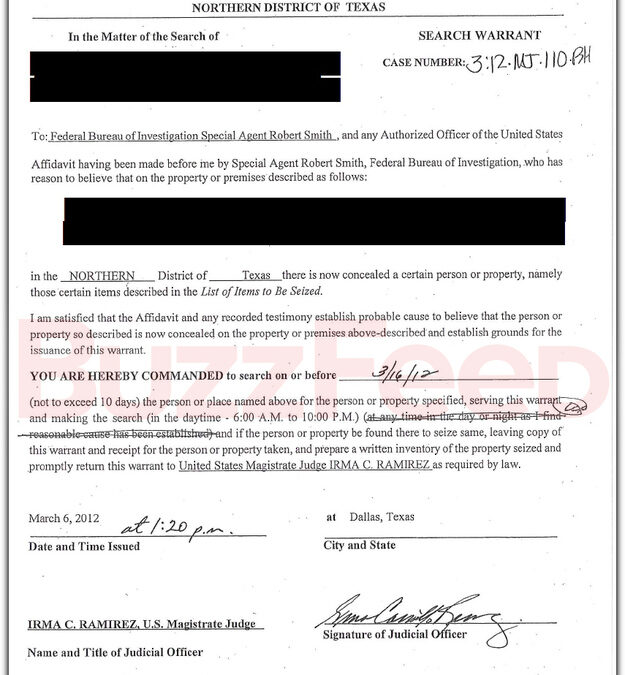
[redacted], if you are able to relay this message to the Anons, my ProjectPM people, journalists, etc, you will have done me a finer deed than most men ever have occasion to do for another. I am transmitting a copy of this to another individual to ensure that the FBI does not manage to silence me on this (incidentally, the local jail here in Mansfield has proven to be run by honorable, trustworthy, even friendly people, but it is nonetheless subject to the Yankee boot (no offense)). Tell journalists, etc that they may contact [redacted]. My future and that of ProjectPM depends on you and a handful of others. Thank you for your loyalty at this time. Finally, please include this PS when forwarding and ask people to see my original search warrant as published on Buzzfeed a few months back. Echelon2.org is part of the key to this affair, but not all. More to be revealed when all is prepared. Good luck to you.
For the second time this year, self-proclaimed Anonymous spokesman Barrett Brown was raided by the FBI.
The latest dramatic incident occurred late Wednesday evening while Brown and another woman identified by some as his girlfriend were participating in an online chat on TinyChat with other individuals.
Two minutes into the recorded chat session, loud voices could be heard in the background of Brown’s residence in Texas while the woman in the room with him was in front of the computer screen. She quickly closed the computer screen, but the audio continued to capture events in the room as the FBI appeared to strong-arm Brown to put handcuffs on him. Brown could be heard yelling in the background.
A spokeswoman in the Dallas County sherriff’s office confirmed to Wired that Brown was raided last night and was booked into the county jail around 11 p.m. She said the FBI removed him from the jail this morning to take him to a different facility, but she did not know where he was headed.
California attorney Jay Leiderman, a member of Brown’s legal team, told Wired that Brown was scheduled to be arraigned today in Texas on making threats to a federal agent.
Asked if the FBI agents were aware that Brown was online at the time of their raid, Leiderman said, “They problaby would have preferred to raid him when he was not online.” He noted that the audio from the raid was “certainly less than flattering when they’re marching through these doors dropping F-bombs…. I imagine they would not want to have that captured if they could help it.”
A transcript of the TinyChat session has been posted online. Just moments before the arrest, there were jokes about whether one of the chat participants was real or just an animated GIF. Moments later, the chat participants faced a different conundrum: trying to figure out whether they’d just witnessed an FBI raid.
A voice that appeared to come from one of the arresting agents was heard saying something to the effect: “You’re going down! Get your hands down!”
Right as the noise began, another participant in the chat room showed up in a video window with a white handkerchief covering his lower face. “Is Barrett Browm getting fuckin’ raided by the FBI?” he appeared to say. “Holy shit!”
Brown’s latest raid came after he posted a long and rambling YouTube video in which he talked about taking drugs (though not today, he noted) and about retaliating against an FBI Agent named Robert Smith after he learned that his mother might be hit with obstruction of justice charges. The threat of charges was apparently related to a laptop of Brown’s that he apparently hid.
“So that’s why Robert Smith’s life is over,” Brown said in the video (beginning around minute 9:40). “When I say his life is over, I’m not saying I’m going to kill him, but I am going to ruin his life and look into his fucking kids. Because Aaron Barr did the same thing and he didn’t get raided for it. How do you like them apples?” he said, smiling.
The video, titled “Why I’m Going to Destroy FBI Agent Robert Smith Part Three: Revenge of the Lithe” was accompanied by a note apparently posted by Brown that reads: “Send all info on Agent Robert Smith to [email protected] so FBI can watch me look up his kids. It’s all legal, folks, Palantir chief counsel Matt Long already signed off on it when Themis planned worse.”
Brown also talked about being a target of the Zeta drug cartel and mentioned that he was heavily armed and was concerned that the cartel would come after him posed as federal officers.
“Any armed official of the U.S. government, particularly the FBI, will be regarded as potential Zeta assassin squads,” he said in the video. “As FBI knows … they know that I’m armed and I come from a military family and I was taught to shoot by a Vietnam veteran … and I will shoot all of them and kill them if they come and do anything…. I have reason to fear for my life.”
He signed off the video saying: “Frankly, it was pretty obvious I was going to be dead before I was 40 or so, so I wouldn’t mind going out with two FBI sidearms like a fucking Egyptian pharaoh. Adios.”
Asked about Brown’s comments, Leiderman said that he hadn’t seen the full video and wasn’t aware of everything Brown had said, but he noted that his client had a reputation for hyperbole and joking around, and that things he said might appear to be a threat when they weren’t really intended to be that way.
“It’s hard to understand the context [of what he said], Leiderman said. “But this is speech, so ordinarily we go to a First Amendment defense, but obviously there are lines that can be crossed where you can lose your First Amendment protection.”
An FBI spokeswoman had no comment to make on Brown’s arrest.
The Conspiracy driving Private Contractors, Private Security, and Privatized CyberSecurity. Major Players trying to remain Name-less. Government influence on outsourcing, etc.
The Feds raid the home of unofficial Anonymous spokesperson Barrett Brown.
They’re after his Twitter records, chat logs, IRC conversations, his computer, and apparently everything else, according to the search warrant obtained by BuzzFeed.
Last month, the FBI raided the Dallas home of Barrett Brown, the journalist and unofficial spokesperson for the Internet hacktivist group Anonymous.
According to the search warrant, the agents were after any information from Brown involving a “conspiracy to access without authorization computers,” one of three serious charges listed in the document.
The Feds seized Brown’s computer and cellphone, searched his parent’s home as well, and demanded his Twitter records, chat logs, IRC conversations, Pastebin info, all his Internet browsing activity, and almost any form of electronic communications Brown conducted.
The warrant, exclusively obtained by BuzzFeed, suggests the government is primarily after information related to Anonymous and the hacking group Lulzec.
The authorities also appear to be interested in info on two private intelligence contracting firms, HBGary and EndGame Systems, two companies Brown has frequently clashed with and criticized on a website he founded called Echelon2.
Brown, a 30 year old journalist who has written for Vanity Fair and the Guardian, is perhaps the most high profile target thus far in the FBI’s investigation into a series of hacks that have shaken the corporate and defense establishment.
Brown, currently at work on a book about Anonymous, believes he’s being wrongly investigated. “I haven’t been charged with anything at this point, although there’s a sealed affidavit to which neither I nor my attorney have access,” he emailed BuzzFeed. “I suspect that the FBI is working off of incorrect information.”
(Left) Tom Vanden Brook (on C-Span in 2010), a senior reporter for USA Today apparently targeted by a cyber-attack of misinformation and harassment. Photograph: guardiannews.com
In the case that the guilty party is found, and does indeed turn out to be one of the private firms that the Pentagon has hired to provide “information operations” for use in Afghanistan, what are the consequences likely to be?
To judge from the last known incident in which several government contractors were actually caught planning a far more sophisticated campaign of intimidation against yet another journalist, the consequences will not be so bad as to prevent others from doing the same thing. It’s easy enough, especially for those firms that are encouraged by their government clients to produce new and better ways by which to lie and discredit. And there’s money in it.
Early in 2011, four contracting firms with strong government ties – HBGary Federal, Palantir, Berico and Endgame Systems – decided to combine their capabilities and set up a high-end private info warfare unit called Team Themis. Bank of America asked them to write a proposal for a covert campaign against WikiLeaks. Aside from hacking the group’s European servers, the team raised the possibility of going after Salon contributor Glenn Greenwald, a prominent WikiLeaks supporter. “These are established professionals that have a liberal bent, but ultimately most of them if pushed will choose professional preservation over cause, such is the mentality of most business professionals,” wrote HBGary Federal CEO Aaron Barr. He resigned with a severance package a few weeks after the affair was exposed by Anonymous; soon afterwards, he got a new job with another government contractor.
What of the others? Berico simply broke ties with HBGary Federal, as if it were merely a bad influence. Endgame Systems, whose execs explicitly noted in internal emails that their government clients didn’t want its name appearing in a press release, was barely noted by the press at all – until, a few months later, Business Week discovered that their shyness may stem from the fact that they have the capability to take out West European airports via cyber attacks (if you’ve got a couple of million dollars to pay for that).
Palantir, which received seed money from the CIA’s investment arm, In-Q-Tel, and shares founders with PayPal, made a public apology to the effect that the cyber-plotting did not reflect the company’s values, and put one of the employees involved, Matthew Steckman, on leave. A few months later, when the press had lost interest, Palantir brought him back on. Nothing at all seems to have happened to another employee, Eli Bingham, who was also heavily involved. When Palantir throws its annual convention, it still attracts keynote speakers like former DHS Secretary Michael Chertoff – who happens to be on the board of another huge contractor, BAE Systems, which, in turn, happened to have done some business with HBGary Federal, as well.
To be fair, these sorts of companies provide valuable services to the US and its allies. For instance, when US Central Command (CentCom)needed software that would allow 50 of its information warfare people to pretend to be 500 entirely fake people who don’t exist outside the internet, it had the USAF put out a call for bids. A number of contractors were up for the job – including the ethically challenged HBGary Federal – but only one of them could actually win.
Perhaps the others can provide this sort of “persona management” capability to other, private clients with a need to discredit their enemies in a clandestine fashion. I can think of about a dozen journalists they might want to go after. The rest won’t be a problem.
Endgame Systems (founded 2008) has been of interest to this investigation due to the firm’s close association with corrupt HBGary CEO Aaron Barr, their stated intent to avoid public attention towards its work with the federal government, its longtime collaboration with Palantir employee Matthew Steckman (whom Palantir fired in the wake of the Team Themis affair, quite improbably claiming that Steckman had acted on his own), and its creation of a report on Wikileaks and Anonymous which was provided to Team Themis for use in its campaign against both entities. In July of 2011, an investigation by Business Week revealed the probable reasons for the firm’s secrecy:
People who have seen the company pitch its technology—and who asked not to be named because the presentations were private—say Endgame executives will bring up maps of airports, parliament buildings, and corporate offices. The executives then create a list of the computers running inside the facilities, including what software the computers run, and a menu of attacks that could work against those particular systems. Endgame weaponry comes customized by region—the Middle East, Russia, Latin America, and China—with manuals, testing software, and “demo instructions.” There are even target packs for democratic countries in Europe and other U.S. allies. Maui (product names tend toward alluring warm-weather locales) is a package of 25 zero-day exploits that runs clients $2.5 million a year. The Cayman botnet-analytics package gets you access to a database of Internet addresses, organization names, and worm types for hundreds of millions of infected computers, and costs $1.5 million. A government or other entity could launch sophisticated attacks against just about any adversary anywhere in the world for a grand total of $6 million…
Endgame’s price list may be the most important document in the collection. If the company were offering those products only to American military and intelligence agencies, such a list would be classified and would never have shown up in the HBGary e-mails, according to security experts. The fact that a nonclassified list exists at all—as well as an Endgame statement in the uncovered e-mails that it will not provide vulnerability maps of the U.S.—suggests that the company is pitching governments or other entities outside the U.S. Endgame declined to discuss the specifics of any part of the e-mails, including who its clients might be. Richard A. Clarke, former Assistant Secretary of State and special adviser to President George W. Bush on network security, calls the price list “disturbing” and says Endgame would be “insane” to sell to enemies of the U.S.
Endgame bills itself thusly:
Endgame Systems provides innovative software solutions to meet customers security needs in cyberspace. Our products include real-time IP reputation data, protection of customers’ critical information, proactive data analysis, and cutting edge vulnerability research. Endgame’s highly skilled workforce provides a full range of engineering services and solutions that raise awareness of emerging threats, and help prevent and respond to those threats globally. The company was founded by a proven leadership team with a record of success in the information security industry and is headquartered in Atlanta, GA.
Endgame works directly for a number of U.S. intelligence agencies and has a subsidiary called ipTrust. Beyond a presence at Shmoocon 2012, little has been heard from the company publicly since they deleted their website in summer 2011 following the release of this text.
Endgame is intent on remaining under the radar and otherwise seeks to avoid public attention, as show by the e-mail excerpts below:
Aaron Barr to Brian Masterson of Xetron: “But they are awfully cagey about their data. They keep telling me that if their name gets out in the press they are done. Why?”
CEO Chris Rouland to employee John Farrell: “Please let HBgary know we don’t ever want to see our name in a press release.”
John Farrell to Aaron Barr: “Chris wanted me to pass this along. We’ve been very careful NOT to have public face on our company. Please ensure Palantir and your other partners understand we’re purposefully trying to maintain a very low profile. Chris is very cautious based on feedback we’ve received from our government clients. If you want to reconsider working with us based on this, we fully understand.”
Aaron Barr to John Farrell: “I will make sure your [sic] a ‘silent’ partner and will ensure we are careful about such sensitivities going forward.”
Note: The following was written before Business Week’s July article, which provides additional context and is linked and excerpted above.
Although little info has been obtained regarding the specifics of Endgame’s operations, e-mails taken from the small firm Unveillance indicate similarities in at least one capacity to another firm called LookingGlass. In one e-mail, the CEO of Unveillance is told, “One thing I could have said is that your data is the main feeder for LookingGlass and Endgame.” Earlier in the same exchange, more clues appear when the following statement by a “friend/contractor in the pentagon [sic]” is presented: “They [Unveillance] were discussed yesterday at a meeting about the CSFI project on Syria. Frankly, I wasn’t all that blown away. Not sure what makes them better than LookingGlass or Endgame.”
Other clues are available in the same e-mail set, there being discussion of a potential purchase by Endgame of a troubled firm called Defintel, from which the CEO of Unveillance proposes to “‘cherry pick’ the talent” in order “to run the sinkhole/data creation component of our firm.”
From another e-mail exchange:
14 Apr 2011 16:53:54 -0400
From: Wayne Teeple <[email protected]>
To:"[email protected]" <[email protected]>

Hi again Karim,

I was able to meet with Keith today, not much to say other than business as
usual. He was very reserved, but open enough, but not  enough if you know what I
mean. He did confirm that Chris Davis has sold himself to Endgame along with his
datafeed, and that Morrigan  Research Inc is dissolved - see attached.  Hence, I
believe he sold his "IP" directly as an individual because Morrigan is
dissolved as oppose to shares acquired by Endgame.

Keith had nothing real to contribute other he is staying out of everything and
just focusing on Defintel biz, he did state that he  does not require the
datafeed at all to execute the Nemesis cloud service, and that he has a
"non-compete" with you, Endgame, and  Morrigan.  Also, he is in touch with
Davis, and I get the impression that Davis may recommend Endgame acquiring
Defintel for Nemesis  code - although that could be Davis blowing smoke up
Keith's you know what!!  Keith did state that he is light on technical support.

Finally, we both agreed that Ginley is a lone wolf and a gun for hire by anyone.

All and all, I am very concerned about presenting this solution any further to
my clients, nor did I get a complete warm and fuzzy  that he was completely on
the up and up.

Cheers
wayne
Compare the above statements on Morrigan and DefIntel to this tweet from Chris Davis.
Brian Masterson of Xetron worked with Endgame for quite a while and made a number of references to the firm to Barr:
“They told me that they did 10M last year. Said they were working for NSA, Navy, and USAF. Also mentioned another customer who we do work with. While I was at their place getting briefed by Chris, Gen. Patraeus’ exec called three times to set a follow-up meeting.”
“EndGame did offer up a cut of their US data.”
“Doing the botnet is not that difficult but doing it to the degree that EndGame says that they have is what is impressive.”
Barr himself had long sought to include Endgame in his proposed “consortium” of firms, which itself would provide intelligence capabilities to clients (and which eventually came about in the person of Team Themis, made up of HBGary, Palantir and Berico, with Endgame having provided the team an unusually accurate report on Wikileaks and Anonymous. E-mail excerpts from Barr:
“I know we are going to talk to some senior folks in Maryland in a few weeks and would very much like to take a combined Endgame/Palantir/HBGary product.”
“I think I had mentioned the idea of a cyber consortium to you when we had lunch. That idea is coming together. We will start with cyber intelligence then when we have the capabilities fused build in the hooks for cybersecurity. Need the information before you can act.
here are the companies on board and their area of expertise. Application – HBGary Host – Splunk Network – Netwitness External – EndGame Systems Social/Link – Palantir”
John Farrell of Endgame Systems to Aaron Barr, 2/8/10:
“for now, let’s focus on:
1. OSI RFP response – dan ingevaldson and I will work with you on this
2. EGS/Palantir integration – we talked to Matt Steckman last week and we’re looking into next steps on this
3. customer briefings and new business opportunities like ARSTRAT, etc.”
A June 2010 e-mail sent from Ted Vera to fellow HBGary employees after a phone meeting with Endgame provides additional data:
I tried to keep notes during the call — my chicken scratch follows: EndGames is tracking 60-65 botnets at this time. They have a ton of conflicker data, they’re plugged in and pull millions of related IPs daily. Their data is generally described in their tech docs. They are pulling in data from IDS sensors, rolling in geolocation information, and anonymous proxies / surfing next Quarter. EndGames does not do any active scanning — all passive. They intercept botnet messages and collect / log to their database. The “SPAM” category is a generic filter that indicates the IP has been used to pass SPAM. Higher chance for false positives with SPAM filter. They try to correlate SPAM activities to known botnets, if they cannot correlate, then the event gets a generic SPAM label. Confidence %: Documented in technical docs. Primarily time-based. Looking at the overall length of infection for a given IP. Looking at half-life / decay of infections on specific IPs. The algorithm is currently very simple and time is the highest weighted factor, although the nature of the event is also weighted, ie conficker has higher weight than SPAM event. Plan to start discriminating between end-user nodes with dynamic IPs vs Enterprise / static IPs. Static IPs would decay slower than dynamic. EndGames gets malware data from various sources and REs it to pull out C2 and other traits that can be used for signature / correlation. They have Sinkholes for Conficker A and B which collect IPs of infected hosts.Cannot provide samples because they do not collect samples from specific IPs. They are ID’ing based on their observations of IPs, taking advantage of their hooks into various botnets. That said, they could probably gest us some samples and or manual tests for Conficker A and B which we could use to verify / eliminate false positives or negatives.
April 5, 2010 – John Farrell tells Aaron Barr he will no longer be accessible @ Endgame
October 2010 – Raised 29 million USD from Bessemer Ventures, Columbia Capital, Kleiner Perkins Caufield & Byers (KPCB), and TechOperators, for web-based malware detection services: iPTrust.
October 28, 2010 – Endgame announces the launch of ipTrust, “the industry’s first cloud-based botnet and malware detection service … that collects and distills security data into a reputation engine.”
February 2011 – Endgame announces partnerships with HP and IBM to use their IP Reputation Intelligence service within HP’s TippingPoint Digital Vaccine service and IBM’s managed services offerings.
Mr. Christopher Rouland, CEO and Co-Founder of Endgame Systems has over 20 years of experience in the field of information security. Mr. Rouland previously held the position of CTO and Distinguished Engineer of IBM Internet Security Systems after IBM purchased Internet Security Systems, Inc. in 2006. Prior to the IBM acquisition of ISS, Chris held the position of CTO of ISS where he was responsible for the overall technical direction of the ISS product and services portfolio. Prior to his executive roles at IBM and ISS, Chris was the original Director of the famed X-Force vulnerability research team which was responsible for the discovery of hundreds of security vulnerabilities.
Mr. Daniel Ingevaldson, SVP of Product Management and Co-Founder of Endgame Systems was previously the Director of Technology Strategy with IBM Internet Security Systems. Prior to the acquisition of ISS by IBM in 2006, Mr. Ingevaldson held various positions within the ISS Professional Services organization where he lead the X-Force Penetration Testing consulting practice, and as Director of X-Force R&D where he helped expand the research capacity of the X-Force zero-day vulnerability identification and disclosure program.
Mr. Raymond Gazaway, Senior Vice President and Co-Founder of Endgame Systems was previously the Vice President of Worldwide Professional Security Services with IBM Internet Security Systems. Ray joins Endgame Systems with over 30 years of government and commercial services experience and executive management positions with IBM, Internet Security Systems and Dun and Bradstreet.
Mr. David Miles, Vice President of Research & Development and Co-Founder of Endgame Systems, brings nearly 10 years of experience in information security and was previously the Director of R&D within ISS Professional Security Services managing strategic security research engagements, designing and delivering custom cyber security products and solutions, as well as assisting in emergency response services and forensic investigations. Prior to that, in X-Force, he designed and implemented processes and procedures for delivery of hundreds of security content updates for the entire ISS product portfolio.
Mr. Mark Snell, Chief Financial Officer of Endgame Systems, oversees all aspects of Finance and Administration including financial planning, reporting and analysis, investor relations, human resources, information technology and office management. Prior to Endgame Systems, he was Corporate Controller at Suniva, a solar cell manufacturer based in Atlanta, Georgia. At Suniva, he helped to develop the financial infrastructure and systems to manage a business that would quickly become recognized as one of the fastest growing private companies in the Southeast. Earlier in his career, Mark served as Corporate Controller of Servigistics, a software developer in the service lifecycle space and in various positions of financial management for IBM and Internet Security Systems. Mark holds an MBA from Georgia State University and a Bachelor of Arts from the University of Virginia. Mark is a Certified Public Accountant in the State of Georgia.
Rick Wescott, Senior Vice President of Worldwide Sales and Marketing, brings over 20 years of technology sales and management experience to Endgame Systems. Before joining Endgame Systems, Rick served as Vice President & General Manager of Federal Operations for ArcSight (acquired by HP for $1.5 billion in late 2010), which he joined pre-revenue in 2002 and was instrumental in identifying and closing key foundational sales. Rick helped to manage and grow the company’s revenues to $170 million and saw the company through its Initial Public Offering (IPO) in 2008 and $1.5 billion acquisition by HP in 2010. Prior to his tenure with ArcSight, Rick lead sales efforts at several leading industry firms including VeriSign, Entrust, Sybase and IBM.
Tom Noonan is the former chairman, president and chief executive officer of Internet Security Systems , Inc. , which was recently acquired by IBM for $1.3B, at which time Noonan became GM of IBM Internet Security Systems. Noonan is responsible for the strategic direction, growth and integration of ISS products, services and research into IBM’s overall security offering. Tom Noonan and Chris Klaus launched ISS in 1994 to commercialize and develop a premier network security management company. Under Noonan’s leadership, ISS revenue soared from startup in 1994 to nearly $300 million dollars in its first decade. The company has grown to more than 1,200 employees today, with operations in more than 26 countries
You can take a person out of X-Force, but you can’t take X-Force out of the person. A group of former ISS X-Force veterans at Endgame Systems has been very busy doing security research of consequence for the federal space since 2008. Via a new division called ipTrust, it plans to take some of its botnet and IP reputation capabilities to drive value into the commercial space. Similar to Umbra Data, ipTrust is delivering this value with a ‘zero touch’ modality – requiring no on-premises or capex appliance. However, rather than licensing an intelligence feed like Umbra Data, ipTrust has opted to share its research via an API, which may make it more accessible for new use cases. As we were writing up this report, news broke that parent company Endgame Systems closed a series A round of $29m. With no appliances or heavy back-end capex requirements, this stands out as an oddly large round, and has, therefore, piqued our curiosity.
As we recently noted with Umbra Data, there is high concern over botnets, but the demand for solutions is greater than the appetites for buying a dedicated appliance to augment the blind spots in traditional AV and other legacy tools. Well beyond script kiddies, attacks like Stuxnet, Zeus, BredoLab and Vecebot have people concerned – and those are all publically known ones. Adaptive persistent adversaries employ a number of techniques to avoid detection by mainstream adopted countermeasures. Several CISOs have told us they want the capabilities of anti-botnet and command-and-control identification to be delivered via their existing security investments or in other opex-consumption models. Perhaps both Umbra Data and ipTrust are hearing the same. By delivering intelligence via an API, ipTrust may find itself called out to by all sorts of Web applications to inform how trustworthy an endpoint is and adjust the interactions accordingly. We see this as an interesting delivery model, and are encouraged by the embrace of modern Web-scale technologies. Given that, the large series A funding is a bit odd. We will have to watch carefully how that is leveraged – with our first thought being: Which acquisition target would fit within that budget?
IpTrust is a new division of Atlanta-based Endgame Systems. While the 32-person Endgame Systems was more focused on federal and cyber security clientele, ipTrust aims to leverage its experience, research and platforms for commercial consumption. Endgame Systems was founded in 2008 by several Internet Security Systems (ISS) X-Force Alumni with the research chops to tackle emerging threats. Cofounders include former ISS CTO Christopher Rouland as CEO, Daniel Ingevaldson as COO, Raymond Gazaway as SVP, and David Miles as VP of engineering. Former ISS CEO Tom Noonan serves as chairman. Coinciding with the reveal of ipTrust, Endgame Systems just closed a series A round for $29m, involving Bessemer Venture Partners, Columbia Capital, Kleiner Perkins Caufield & Byers, and Noonan’s own TechOperators. The round adds two new board seats for Bessemer Venture’s David Cowan and Columbia Capital’s Arun Gupta.
IpTrust is a new commercial division of Endgame Systems; it leverages a lot of the back-end technology and methods that have fueled Endgame’s federal offerings since 2008. The enabling technology has three basic pieces: a collection method for identifying botnet-compromised end nodes, a scoring system to generate a confidence rating for the implicated IP address and the exposition of the results of the analysis to clients via an API.
Since the bulk of botnets use DNS to find their command and control servers, ipTrust’s primary collection method for identifying compromised systems is to preregister or work with registrars to create sinkholes to redirect network traffic. From the vantage point of its many sinkholes, ipTrust can find new infected systems ‘phoning home’ for the first time or other reasons. The sinkholes tracked by ipTrust are a combination of its own and those from third parties. It is important to note that not all botnets communicate through DNS command and controls. Some use peer-to-peer, some use covert channels and some have one or more alternative command-and-control channels in case some are blocked or detected. We fear that this sinkhole method may miss existing infected systems that phoned home initially, but are participating on more dynamically assigned servers. While this is true, ipTrust pointed out that many samples are pretty chatty and do end up talking back to default phone-home targets in the current samples. Beyond the sinkhole method of harvesting compromised IPs, ipTrust studies the malware and spam data for clues, as well as employing honeypots and honeynets. Although attribution is nearly impossible, ipTrust also captures Geolocation information as well as proxy and satellite link details when available.
IpTrust claims its collection methods net massive amounts of data – so it needed modern, cloud-based Web-scale technologies to analyze it all. Some of the vital stats it claimed included scoring 255 million IP addresses for risk. The company claims to have 75TB of stored security events – adding more than 1TB of malicious events per week. To scale all of this data, it leverages (and contributes to) Hypertable, an open source clone (GPLv2) implementation of Google’s BigTable leveraging the Hadoop Distributed File System (HDFS). Through high-performance map reduction in the colocation hosted infrastructure, ipTrust is able to apply its reputation engine’s scoring algorithms in a continuous fashion. A floating-point integer confidence rating is assigned per IP, along with myriad other data, such as domain, company, country code, and security events involving known botnets and variants. Given the fleeting and transient nature of the Internet, this confidence score continually degrades unless preservation is merited by the analysis. As such, consumers of the IP reputation score can make graduated nonbinary decisions on how to contextually handle trust associated with that IP.
Finally, the reputation confidence score can be exposed via an XML-RPC/REST-based API. IpTrust touts a sub 100ms response time and more than 3,000 queries per second. Supported output formats include XML, JSON and CSV. As an API, developers of applications could make Web ‘look-aside’ calls to determine how risky a transaction may be with a specific endpoint and either terminate or place limits on the interaction. For example, a questionable reputation may lead a banking application to deny funds – or perhaps to cap the maximum transaction amount via some predetermined policy.
IpTrust offers three levels of product: ipTrust Web, ipTrust Web Premium and ipTrust Professional. IpTrust Web Premium is not yet released. IpTrust Web is free service, capped at up to 1024 IP addresses for 24/7 monitoring. When available, ipTrust Web Premium will allow for unlimited IPs and will tentatively be priced by IP per month, we’re told.
IpTrust Professional allows full access to the reputation engine via the aforementioned API, with bulk IP submission for current and historical scoring as well as the supported output formats. At the moment, the API currently shares the compromised IP, but not the details about the command-and-control channel. IpTrust claims it is planning to add more actionable information in the future, such as port information and user-agent strings in HTML, which may assist other security tools in spotting or stopping command and control. Pricing for ipTrust Professional has plans starting at $1,000 per year – or less than $0.01 per query. IpTrust claims it is already working with a hosting provider and a financial services firm – with betas getting underway in healthcare, large enterprise, managed security services providers (MSSPs) and early stage security OEMs.
IpTrust plans to go to market with a mix of direct sales and a series of strategic partners. Primary targets to consume its ipTrust intelligence include hosting providers, MSSPs, VARs, and specific technology partnerships. The 451 Group has covered such power alliances, with Fidelis Security Systems XPS leveraging Cyveillance intelligence feeds.
As an API, ipTrust may also be able to tap into systems integrators and application-development communities. Within the context of a specific application, contextual risk decisions can be made in the natural flow of the transaction. This may be of value to SaaS and PaaS players trying to differentiate themselves.
IpTrust may not be apples-to-apples competition with anyone; it will likely compete for limited budget within a few pockets. Most users seeking anti-botnet capabilities are currently looking at Atlanta-based Damballa or FireEye. FireEye uses virtualization to spot new unknown malware with botnet participation. Umbra Data is fresh out of stealth, offering an XML intelligence feed alternative to appliance purchases. Service providers, MSSPs, and security OEMs may choose more than one intelligence feed or API.
Traditional antivirus players continue to leverage their incumbency (and sometimes stall with it), so people may simply deal with Symantec, McAfee (soon to be a division of Intel) Trend Micro, Sophos, Kaspersky Lab and others. Commtouch touts being well plugged-in to the internet backbones to give its Web and mail security offerings visibility into botnets and compromised systems. Most Web and mail security gateways, like Cisco (both ScanSafe and IronPort), M86 Security, Websense, Blue Coat Systems, Barracuda Networks (and Purewire), Zscaler’s hosted Web proxy, etc., leverage one or more reputation and open source intelligence feeds to operate. This fact make them both more likely to take limited wallet share, but also more likely to benefit from ipTrust’s APIs. The same could be true for enriching the value of other security appliances and products. The classic example we shared was with data loss prevention. We see sensitive content leaving the network – should we block it? Imagine now adding knowledge about whether the source or destination is a known compromised system.
Strengths
The former ISS/X-Force heavy hitters are no strangers to advanced threats, and have been cutting their teeth with federal clients since 2008. It is also aggressively embracing disruptive, cloud-scale IT innovations – while many others have been resistant.
Weaknesses
While there is value in anti-botnet and IP reputation, the spending climate is unfriendly to noncheckbox-compliance products and services. We’re also surprised by the size of the recent series A round without a stated use for it.
Opportunities
In addition to ipTrust’s stated strategy, we believe the API could find ESIM uptake. It would take effort, but it could gain traction with SIs, and SaaS and PaaS players.
Threats
The market may perceive that it is already receiving similar capabilities from incumbents. Customers may also simply resist adding new vendor relationships to manage.
The purpose of Project PM’s wiki is to provide a centralized, actionable data set regarding the intelligence contracting industry, the PR industry’s interface with totalitarian regimes, the mushrooming infosec/”cybersecurity” industry, and other issues constituting threats to human rights, civic transparency, individual privacy, and the health of democratic institutions.
This is a crowdsourced investigation focused on research and analysis. If you care that the surveillance state is expanding in capabilities and intent without being effectively opposed by the population of the West, you can assist in making this an actionable resource for journalists, activists, and other interested parties. Consider doing a bit of research on the companies and government agencies listed on this wiki, or even adding new topic for investigation by our participants. The best place to start is the Community Portal. We also need help adding much more to Media Reports.
Do not editorialize when contributing; simply add pertinent facts and link to source material. Employ the same writing style one finds at Wikipedia. If you’d like to contribute information to our data set without editing the wiki yourself, you may do so by sending the info to us at [email protected] (more secure means of communication can be arranged if you care to send an anonymous e-mail to that account). If you have personal knowledge about this topic for any reason, please consider letting us know via that e-mail address. Better yet, you can download an IRC client and join us at ircs://project-pm.org:6697 (If you’re not familiar with IRC, you can use this Mibbit, weblink to connect to our IRC chat server) Those interested in starting groups similar to Project PM should see our Guide to Pursuants.
Editing the Wiki
Public editing has returned to the wiki, feel free to contribute research to this project. Only registered accounts may edit, and you may need to recreate your account if you had one previously.
To browse through the complete list of pages on this site, click here. Some important pages are listed below. For a list of terms used in these articles, you can check the Glossary and Acronyms





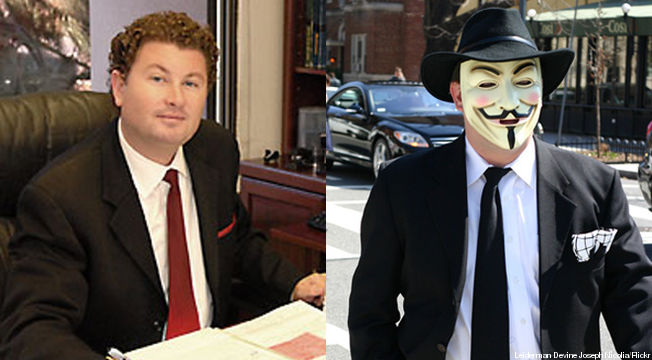

 But both of those actions would be illegal in the abstract. Taking down my sign or vandalizing it would be a graffiti or vandalism type charge whereas repeatedly DDoSing my site would be similar in method and manner to that. It’s why you have to be careful with the speech. What you have with PayPal, it’s a pure form of speech — it was a limited and qualified thing like Woolworth’s. African-Americans went into Woolworth’s and said, I want lunch, feed me lunch, I will eat it, pay for it, and leave. Same with PayPal.