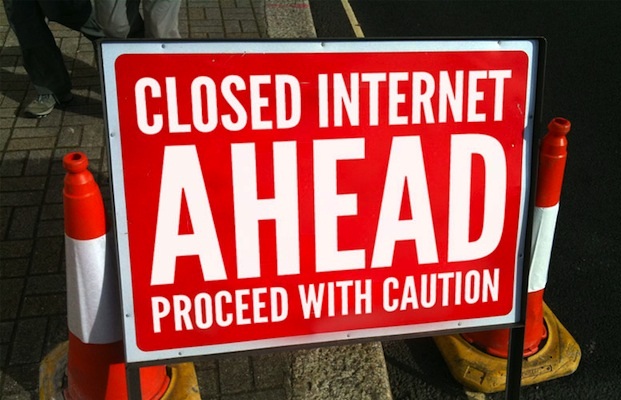
The recent, rapid growth of digital technologies has produced a vast new appetite for electrical power.Internet data centers, which function as the “factories” of the digital economy, are largely responsible for this demand. Today, the Internet’s electricity demand would rank sixth in the world if it were to be considered its own country. Moreover, according to a new report by Greenpeace, Internet electricity demand will grow by half a trillion kWH a year by 2017 – much of it from streaming videos and on-demand music. Factoring in these trends alongside the ever-present warning of climate change, Internet companies must immediately begin to move away from dirty energy sources and monopoly utilities.
To have Internet infrastructure powered by “clean” energy signifies a commitment to a future based on sustainable energy from scalable sources such as solar and wind rather than the finite supplies of fossil fuels that still sit beneath the Earth’s crust. Xoom Energy has reported that the energy sector contributes about 31 percent of all greenhouse gas emissions in the United States – but the construction of new data centers means a fresh opportunity to rely on renewables from the start. The door is open to large technology companies to rapidly develop the innovative tech needed to break our dependency on oil. Time will tell who chooses to walk through it.
According toEcoWatch, Apple is now working with its Chinese suppliers to produce an eventual 2.2 GW of power for manufacturing from wind, solar and hydroelectric sources. One of Apple’s manufacturing partner, Foxconn is pledging to supply 400 MW of solar power by 2018, as much energy as its Zhengzhou factory uses to make iPhones. 40 MW of completed solar projects in Sichuan province now produce more electricity than all of Apple’s offices and retail stores in China. Apple’s Chinese operations would otherwise use electricity from coal burning plants that emit greenhouse gases into the atmosphere contributing to toxic air pollution locally, and polar ice melting, raised sea levels, and extreme weather globally.
Apple claims to use “100 percent renewable energy” to power their cloud, with large solar farms deployed in North Carolina, California, Nevada, and Arizona. Likewise, they have purchased wind power for their California and Oregon data centers as well as a micro-hydroelectric facility near their Oregon data center, and are working with the Nevada utility to power their future data center with geothermal and solar energy.
Google has kept up with Apple’s drive into building or buying renewable energy where state energy policies have permitted and has embarked on a more complicated quilt of investment, procurement, and policy advocacy elsewhere, even where it has no data centers.
Large Internet companies may declare their intentions of using 100 percent renewable energy, but the reality of their data center electrical needs is more complicated, and clean energy for Internet services and products is not uniformly within easy reach. Large data centers are located in technology friendly locations like North and South Carolina, Georgia, Taiwan, and Singapore that also are home to dirty energy monopoly utilities. Internet companies will have to engage in government policy debates to change this.
One possibility is to tie the establishment of new data centers to the availability of renewable clean energy sources. US state legislatures are aware of the conflict, and may be willing to re-examine those outdated monopolistic energy policies.
Internet companies are, by in large, agile and future-oriented in their approach to electricity and the future of power, displaying a concern for the ecological issues that matter to coming generations. But there is a lot of work ahead for the next wave of tech employees, who will be tasked with the challenge of innovation under serious carbon constraint. Internet companies would do well to push for legislative reform, and utilize their impact to in turn positively change the Earth’s environmental destiny.
The history of pilotless aircraft in the United States military stretches back to the days of the Wright brothers. It’s difficult to describe any good that emerges from warfare, but many modern technological advancements — computers, zippers, microwaves — can be traced back to conflicts of a bygone era. Today unmanned aerial vehicles are being used by a whole slew of people, the U.S. Department of Defense being just one primary example. While drones have been used routinely to support or undertake lethal force abroad for over a decade, their domestic applications are just now being given more serious consideration. The capabilities and contributions of UAVs have, up until recently, been propelled more or less exclusively by the defense community. UAV technology may currently be associated with what some would consider secretive and nefarious militarism, but in examining the range of practical, commercial applications we can only hope that drone technology will begin to move away from the dark side.
President Obama’s approach to counterterrorism has been marked by his embrace of drone technology to target terrorist operatives. But they’ve come a long way since their first strike operations: drone backpacks are now used by soldiers, and Predator drones come equipped with even more powerful warheads. U.S. DOD spending on drones increased from $284M in 2000 to $3.3B in October of 2012. Small surveillance drones, called Cicadas, are now being released from balloons to collect data on the ground in Iraq. In short, the military has a seemingly infinite range of uses for unmanned aerial vehicles, large and small. And the scope of drone missions only continues to expand, as the technology necessary to program and operate them becomes at once more commonplace and versatile. Over the next decade, the Pentagon anticipates that the number of “multirole” UAVs (those capable of both spying and striking) will nearly quadruple.
As of October 2013, the Federal Aviation Administration had issued 285 clearance certificates for drones inside the United States. Under pressure from the Unmanned Systems Caucus (or drone lobby) the Department of Homeland Security has accepted eight Predator drones for use along the U.S.-Canada and U.S.-Mexico borders. The FAA is set to further open skies to commercial drones by 2015, allowing civilians to finally explore and expand upon the uses of UAV technology. But even with the law by their side, can civilian companies ever hope to utilize drones to the extent in which they are employed by the military? Many recognize the civil potential of flying robots, but recognize that with certain valuable contributions also comes the possibility of tighter law enforcement and increased government surveillance.
The dualistic nature of drones is being explored by hobbyists and venture capitalists alike. Mark Zuckerberg of Facebook is even developing a program that will employ drones and satellite internet to deliver internet to disenfranchised communities throughout the world. While this probably speaks to Zuckerberg’s opportunism (and his desire to compete in the marketplace against Google’s Loon Project and HughesNet Internet) that isn’t to say that people in underserved communities don’t stand to benefit. The U.S. government already uses drones to protect endangered wildlife species, like the sandhill crane, and researchers in Indonesia and Malaysia are also using unmanned aerial devices to monitor the activity of similarly threatened orangutan populations. UAV systems are emerging as key tools in agricultural innovation and the monitoring of natural resources. Search and rescue missions, 3-D mapping and surveying projects, and hurricane tracking projects are also being carried out by UAVs. With unmanned aircraft, it seems the sky’s the limit for civil and commercial usage.
But the business of drones still comes with plenty of risks. The American Civil Liberties Union has warned of a “dystopian future” in which “mass, suspicionless searches of the general population” are the norm. Given the history of drones as advanced tools of the government and military, this doesn’t seem like an empty threat. And for now, the law still stands in the way of any real development on the commercial end. Despite the fact that many ideas for drones, from the delivery of Amazon parcels to Domino’s pizzas, have been suggested, the military still holds the key to their innovation from an American standpoint. Their function as a militaristic tool remains at the forefront of their continued growth, resulting in large spending increases for advanced cameras, sensors, and systems with attack capabilities. But the integration of drone technology into domestic airspace by law enforcement — and later, by corporations — seems inevitable. As technological improvements continue to catapult the UAV industry into the future, the true beneficiaries of these developments remain to be seen.
I am a former Google employee and I am writing this to leak information to the public of what I
witnessed and took part in while being an employee. My position was to deal with AdSense accounts,
more specifically the accounts of publishers (not advertisers). I was employed at Google for a period of
several years in this capacity.
Having signed many documents such as NDA’s and non-competes, there are many repercussions for me,
especially in the form of legal retribution from Google. I have carefully planned this leak to coincide with
certain factors in Google such as waiting for the appropriate employee turn around so that my identity
could not be discovered.
To sum it up for everyone, I took part in what I (and many others) would consider theft of money from
the publishers by Google, and from direct orders of management. There were many AdSense employees
involved, and it spanned many years, and I hear it still is happening today except on a much wider scale.
No one on the outside knows it, if they did, the FBI and possibly IRS would immediately launch an
investigation, because what they are doing is so inherently illegal and they are flying completely under
the radar.
It began in 2009. Everything was perfectly fine prior to 2009, and in fact it couldn’t be more perfect from
an AdSense employees perspective, but something changed.
Google Bans and Ban Criteria
Before December 2012:
In the first quarter of 2009 there was a “sit-down” from the AdSense division higher ups to talk about
new emerging issues and the role we (the employees in the AdSense division needed to play. It was a
very long meeting, and it was very detailed and intense. What it boiled down to was that Google had
suffered some very serious losses in the financial department several months earlier. They kept saying
how we “needed to tighten the belts” and they didn’t want it to come from Google employees pockets.
So they were going to (in their words) “carry out extreme quality control on AdSense publishers”. When
one of my fellow co-workers asked what they meant by that. Their response was that AdSense itself
hands out too many checks each month to publishers, and that the checks were too large and that
needed to end right away. Many of the employees were not pleased about this (like myself). But they
were successful in scaring the rest into thinking it would be their jobs and their money that would be on
the line if they didn’t participate. The meeting left many confused as to how this was going to happen.
What did they mean by extreme quality control? A few other smaller meetings occur with certain key
people in the AdSense division that furthered the idea and procedure they planned on implementing.
There were lots of rumors and quiet talking amongst the employees, there was lots of speculations,
some came true and some didn’t. But the word was that they were planning to cut off a large portion of
publisher’s payments.
After that point there was a running gag amongst fellow co-workers where we would walk by each other
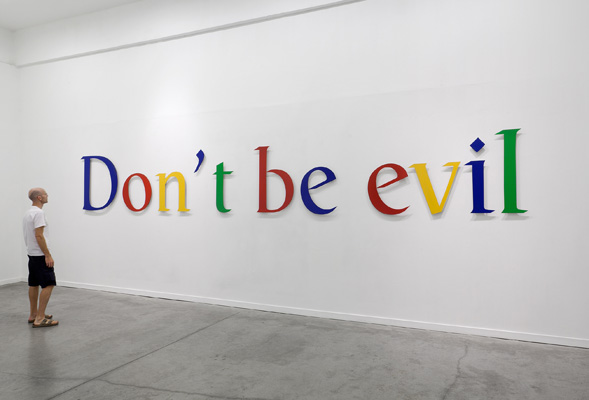
and whisper “Don’t be evil, pft!” and roll our eyes.
What happened afterwards became much worse. Their “quality control” came into full effect. Managers
pushed for wide scale account bans, and the first big batch of bans happened in March of 2009. The
main reason, the publishers made too much money. But something quite devious happened. We were
told to begin banning accounts that were close to their payout period (which is why account bans never
occur immediately after a payout). The purpose was to get that money owed to publishers back to
Google AdSense, while having already served up the ads to the public.
This way the advertiser’s couldn’t claim we did not do our part in delivering their ads and ask for money
back. So in a sense, we had thousands upon thousands of publishers deliver ads we knew they were
never going to get paid for.
Google reaped both sides of the coin, got money from the advertisers, used the publishers, and didn’t
have to pay them a single penny. We were told to go and look into the publishers accounts, and if any
publisher had accumulated earnings exceeding $5000 and was near a payout or in the process of a
payout, we were to ban the account right away and reverse the earnings back. They kept saying it was
needed for the company, and that most of these publishers were ripping Google off anyways, and that
their gravy train needed to end. Many employees were not happy about this. A few resigned over it.
I did not. I stayed because I had a family to support, and secondly I wanted to see how far they would
go.
From 2009 to 2012 there were many more big batches of bans. The biggest of all the banning sessions
occurred in April of 2012. The AdSense division had enormous pressure from the company to make up
for financial losses, and for Google’s lack of reaching certain internal financial goals for the quarter prior.
So the push was on. The employees felt really uneasy about the whole thing, but we were threatened
with job losses if we didn’t enforce the company’s wishes. Those who voiced concerned or issue were
basically ridiculed with “not having the company’s best interest in mind” and not being “team players”.
Morale in the division was at an all-time low. The mood of the whole place changed quite rapidly. It no
longer was a fun place to work.
The bans of April 2012 came fast and furious. Absolutely none of them were investigated, nor were they
justified in any way. We were told to get rid of as many of the accounts with the largest
checks/payouts/earnings waiting to happen. No reason, just do it, and don’t question it. It was heart
wrenching seeing all that money people had earned all get stolen from them. And that’s what I saw it as,
it was a robbery of the AdSense publishers. Many launched appeals, complaints, but it was futile
because absolutely no one actually took the time to review the appeals or complaints. Most were simply
erased without even being opened, the rest were deposited into the database, never to be touched
again.
Several publishers launched legal actions which were settled, but Google had come up with a new policy
to deal with situations such as that because it was perceived as a serious problem to be avoided.
So they came up with a new policy.
After December 2012: The New Policy
The new policy; “shelter the possible problem makers, and fuck the rest” (those words were actually
said by a Google AdSense exec) when he spoke about the new procedure and policy for “Account
Quality Control”.
The new policy was officially called AdSense Quality Control Color Codes (commonly called AQ3C by
employees). What it basically was a categorization of publisher accounts. Those publisher’s that could
do the most damage by having their account banned were placed in a VIP group that was to be left
alone. The rest of the publishers would be placed into other groupings accordingly.
The new AQ3C also implemented “quality control” quotas for the account auditors, so if you didn’t meet
the “quality control” target (aka account bans) you would be called in for a performance review.
There were four “groups” publishers could fall into if they reached certain milestones.
They were:
Red Group: Urgent Attention Required
Any AdSense account that reaches the $10,000/month mark is immediately flagged (unless they are part
of the Green Group).
– In the beginning there were many in this category, and most were seen as problematic and were seen
as abusing the system by Google. So every effort was taken to bring their numbers down.
– They are placed in what employees termed “The Eagle Eye”, where the “AdSense Eagle Eye Team”
would actively and constantly audit their accounts and look for any absolute reason for a ban. Even if
the reason was far-fetched, or unsubstantiated, and unprovable, the ban would occur. The “Eagle Eye
Team” referred to a group of internal account auditors whose main role was to constantly monitor
publisher’s accounts and sites.
– A reason has to be internally attached to the account ban. The problem was that notifying the
publisher for the reason is not a requirement, even if the publisher asks. The exception: The exact
reason must be provided if a legal representative contacts Google on behalf of the account holder.
– But again, if a ban is to occur, it must occur as close to a payout period as possible with the most
amount of money accrued/earned. Yellow Group: Serious Attention Required
Any AdSense account that reaches the $5,000/month mark is flagged for review (unless they are part of
the Green Group).
– All of the publisher’s site(s)/account will be placed in queue for an audit.
– Most of the time the queue is quite full so most are delayed their audit in a timely fashion.
– The second highest amount of bans occur at this level.
– A reason has to be internally attached to the account ban. Notifiying the publisher for the reason is not
a requirement, even if the publisher asks. The exception: The exact reason must be provided if a legal
representative contacts Google on behalf of the account holder.
– But again, if a ban is to occur, it must occur as close to a payout period as possible with the most
amount of money accrued/earned. Blue Group: Moderate Attention Required
Any AdSense account that reaches the $1,000/month mark is flagged for possible review (unless they
are part of the Green Group).
– Only the main site and account will be place in queue for what is called a quick audit.
– Most bans that occur happen at this level. Main reason is that a reason doesn’t have to be attached to
the ban, so the employees use these bans to fill their monthly quotas. So many are simply a random pick
and click.
– A reason does not have to be internally attached to the account ban. Notifying the publisher for the
reason is not a requirement, even if the publisher asks.
– But again, if a ban is to occur, it must occur as close to a payout period as possible with the most
amount of money accrued. Green Group: VIP Status (what employees refer to as the “untouchables”)
Any AdSense account associated with an incorporated entity or individual that can inflict serious
damage onto Google by negative media information, rallying large amounts of anti-AdSense support, or
cause mass loss of AdSense publisher support.
– Google employees wanting to use AdSense on their websites were automatically placed in the Green
group. So the database contained many Google insiders and their family members. If you work or
worked for Google and were placed in the category, you stayed in it, even if you left Google. So it
included many former employees. Employees simply had to submit a form with site specific details and
their account info.
– Sites in the Green Group were basically given “carte blanche” to do anything they wanted, even if they
flagrantly went against the AdSense TOS and Policies. That is why you will encounter sites with AdSense,
but yet have and do things completely against AdSense rules.
– Extra care is taken not to interrupt or disrupt these accounts.
– If an employee makes a mistake with a Green Level account they can lose their job. Since it seen as
very grievous mistake. New Policy 2012 Part 2:
Internal changes to the policy were constant. They wanted to make it more efficient and streamlined.
They saw its current process as having too much human involvement and oversight. They wanted it
more automated and less involved.
So the other part of the new policy change was to incorporate other Google services into assisting the
“quality control” program. What they came up with will anger many users when they find out. It
involved skewing data in Google Analytics. They decided it was a good idea to alter the statistical data
shown for websites. It first began with just altering data reports for Analytics account holders that also
had an AdSense account, but they ran into too many issues and decided it would be simpler just to skew
the report data across the board to remain consistent and implement features globally.
So what this means is that the statistical data for a website using Google Analytics is not even close to
being accurate. The numbers are incredibly deflated. The reasoning behind their decision is that if an
individual links their AdSense account and their Analytics account, the Analytics account can be used to
deflate the earnings automatically without any human intervention. They discovered that if an individual
had an AdSense account then they were also likely to use Google Analytics. So Google used it to their
advantage.
This led to many publishers to actively display ads, without earning any money at all (even to this day).
Even if their actual website traffic was high, and had high click-throughs the data would be automatically
skewed in favor of Google, and at a total loss of publishers. This successfully made it almost impossible
for anyone to earn amounts even remotely close what individuals with similar sites were earning prior
to 2012, and most definitely nowhere near pre-2009 earnings.
Other policy changes also included how to deal with appeals, which still to this day, the large majority
are completely ignored, and why you will rarely get an actual answer as to why your account was
banned and absolutely no way to resolve it.
—- The BIG Problem (which Google is aware of)
There is an enormous problem that existed for a long time in Google’s AdSense accounts. Many of the
upper management are aware of this problem but do not want to acknowledge or attempt to come up
with a solution to the problem.
It is regarding false clicks on ads. Many accounts get banned for “invalid clicks” on ads. In the past this
was caused by a publisher trying to self inflate click-throughs by clicking on the ads featured on their
website. The servers automatically detect self-clicking with comparison to IP addresses and other such
information, and the persons account would get banned for invalid clicking.
But there was something forming under the surface. A competitor or malicious person would actively go
to their competitor’s website(s) or pick a random website running AdSense and begin multiple-clicking
and overclicking ads, which they would do over and over again. Of course this would trigger an invalid
clicking related ban, mainly because it could not be proven if the publisher was actually behind the
clicking. This was internally referred to as “Click-Bombing”. Many innocent publishers would get caught
up in bans for invalid clicks which they were not involved in and were never told about.
This issue has been in the awareness of Google for a very long time but nothing was done to rectify the
issue and probably never will be. Thus if someone wants to ruin a Google AdSense publishers account,
all you would have to do is go to their website, and start click-bombing their Google Ads over and over
again, it will lead the servers to detect invalid clicks and poof, they get banned. The publisher would be
completely innocent and unaware of the occurrence but be blamed for it anyways.
—-
Their BIG Fear
The biggest fear that Google has about these AdSense procedures and policies is that it will be publicly
discovered by their former publishers who were banned, and that those publishers unite together and
launch an class-action lawsuit.
They also fear those whose primary monthly earnings are from AdSense, because in many countries if a
person claims the monthly amount to their tax agency and they state the monthly amount and that they
are earning money from Google on a monthly basis, in certain nations technically Google can be seen as
an employer. Thus, an employer who withholds payment of earnings, can be heavily fined by
government bodies dealing with labor and employment. And if these government bodies dealing with
labor and employment decide to go after Google, then it would get very ugly, very quickly ….. that is on
top of a class-action lawsuit.
In a somewhat disturbing case of life imitating art, it seems that real world turmoil is catching up with classic science fiction projections of a dystopian future as envisioned by writers like George Orwell and Ray Bradbury — a world where the general populace is under constant surveillance, and the technology that we’ve become overly dependent on has become our greatest liability.
If the recent NSA debacle wasn’t alarming enough for you, Google recently acquired Nest, the smart device firm and home automation pioneer. Home automation, of course, means having multiple devices (kitchen appliances, thermostats, locks and security cameras, etc.) equipped with wireless capability and controllable through an app on a smart device. Your phone, in essence, becomes a remote control for your entire house. Some systems, like the one which Samsung recently premiered at CES 2014, will only enable the company’s own products to interact with one another, and the more glitzy products like the ADT home security systems allow homeowners to control their thermostats and other electronics (regardless of brand) with their smart phone.
If it sounds too good to be true…that’s because it potentially is, as this article from Trend Labs explains. The IP configuration on the devices is simple and the security options are quite limited, leaving them easily penetrable by hackers and thieves. Part of the risk, of course, is that if you have a home security system that can be entirely disabled through a smartphone, a thief could hack into your accounts, deactivate your entire security system with the push of a mere button, and enter your home freely. All of your data becomes more accessible to hackers, and now Google will have even more comprehensive data to sell to third party candidates who can market products even more aggressively to you.
Orwell and Bradbury basically called the whole thing…
One of the great things about science-fiction is that, whatever paranoid projections it makes about future global conditions, it’s always very much a product of its own time.This news raises all sorts of issues for an overly imaginative person.
The situation is like George Orwell’s 1984, where the general public can’t even so much as think in privacy. Everyone is under constant surveillance, and the entire system is under the pretense that this is somehow what’s best for society.
The citizens of Orwell’s fictional Oceania all have “telescreens” in their apartments, which enables Big Brother (whether that’s merely a governmental agency monitoring the public or one chief observer is never entirely clear) to supervise every given moment of everyone’s lives, and to possess an absurd level of intel on every given person under the jurisdiction of their central government. Replace telescreens with tablets, and Big Brother with Facebook and Google, and ask yourself how much of a deviation this setup is from life as we know it today.
It also calls to mind a particularly eerie story penned by Ray Bradbury 1950 entitled August 2026: There Will Come Soft Rains. The story focuses on “a-day-in-the-life” of a fully automated home after the extinction of the human race. The house prepares meals, recites important dates and reminders through an intercom system with a pre-recorded voice. We come to learn, throughout the course of the story, that the family who owned the house have been wiped out. We hear about silhouettes permanently fixed unto the side of the homes, in a manner that evoked the victims of Hiroshima and Nagasaki who were vaporized in an atomic blast.
So Bradbury’s grim musings couldn’t have been more fitting for his time, and they are startlingly relevant now. Just as humans channel their ingenuity and creativity into constructive things, or things which enhance life for humanity (all of the advancements in home technology, for instance) the misapplication of that creativity — and the misapplication of technology itself– can have dire, even catastrophic, consequences on humanity.
Is it really as bad as all of that?
Only time will tell, but it does seem more and more likely that whatever minor conveniences the technology yields will hardly justify the potential security risks.
You would hope that, in some cases, paranoid science-fiction literature would help prevent future atrocities from occurring by anticipating them. It’s sort of comforting that we’ve not yet reached the place anticipated by Arthur C. Clarke, where computers have superior intellect to humans and can function, not only with autonomy, but willfully against people. It’s pretty disconcerting, however, that we seem to be drawing nearer and nearer to those imagined realities, not merely a novel thought and fodder for pop literature, but a grim facet of our day to day lives.
The short but profitable tale of how 483,000 private individual have “top secret” access to the nation’s most non-public information begins in 2001. “After 9/11, intelligence budgets were increased, new people needed to be hired, it was a lot easier to go to the private sector and get people off the shelf,” and sure enough firms like Booz Allen Hamilton – still two-thirds owned by the deeply-tied-to-international-governments investment firm The Carlyle Group – took full advantage of Congress’ desire to shrink federal agencies and their budgets by enabling outside consultants(already primed with their $4,000 cost ‘security clearances’) to fulfill the needs of an ever-more-encroaching-on-privacy administration.
Booz Allen (and other security consultant providing firms) trade publicly with a cloak of admitted opacity due to the secrecy of their government contracts (“you may not have important information concerning our business, which will limit your insight into a substantial portion of our business”) but the actions of Diane Feinstein who promptly denounced “treasonous” Edward Snowden, “have muddied the waters,” for the stunning 1.1 million (or 21% of the total) private consultants with access to “confidential and secret” government information.
Perhaps the situation of gross government over-spend and under-oversight is summed up best, “it’s very difficult to know what contractors are doing and what they are billing for the work — or even whether they should be performing the work at all.”
First, Diane Feinstein’s take on it all…
“I don’t look at this as being a whistleblower. I think it’s an act of treason,” the chairwoman of the Senate Intelligence Committee told reporters. The California lawmaker went on to say that Snowden had violated his oath to defend the Constitution. “He violated the oath, he violated the law. It’s treason.”
The reliance on contractors for intelligence work ballooned after the 9/11 attacks. The government scrambled to improve and expand its ability to monitor the communication and movement of people who might threaten another attack.
“After 9/11, intelligence budgets were increased, new people needed to be hired,” Augustyn said. “It was a lot easier to go to the private sector and get people off the shelf.”
The reliance on the private sector has grown since then, in part because of Congress’ efforts to limit the size of federal agencies and shrink the budget.
Which has led to what appears to be major problems.
But critics say reliance on contractors hasn’t reduced the amount the government spends on defense, intelligence or other programs.
Rather, they say it’s just shifted work to private employers and reduced transparency. It becomes harder to track the work of those employees and determine whether they should all have access to government secrets.
“It’s very difficult to know what contractors are doing and what they are billing for the work — or even whether they should be performing the work at all,”
… And to the current PRISMgate whistleblowing situation:
Of the 4.9 million people with clearance to access “confidential and secret” government information, 1.1 million, or 21 percent, work for outside contractors, according to a report from Clapper’s office.
Of the 1.4 million who have the higher “top secret” access, 483,000, or 34 percent, work for contractors.
…
Because clearances can take months or even years to acquire, government contractors often recruit workers who already have them.
Why not – it’s lucrative!!
Snowden says he accessed and downloaded the last of the documents that detailed the NSA surveillance program while working in an NSA office in Hawaii for Booz Allen, where he says he was earning $200,000 a year.
Analysts caution that any of the 1.4 million people with access to the nation’s top secrets could have leaked information about the program – whether they worked for a contractor or the government.
For individuals and firms alike.
Booz Allen has long navigated those waters well.
The firm was founded in 1914 and began serving the U.S. government in 1940, helping the Navy prepare for World War II. In 2008, it spun off the part of the firm that worked with private companies and abroad. That firm, called Booz & Co., is held privately.
Booz Allen was then acquired by the Carlyle Group, an investment firm with its own deep ties to the government. In November 2010, Booz Allen went public. The Carlyle Group still owns two-thirds of the company’s shares.
Or, a full-majority stake.
Curiously once public, The Booz Allens of the world still operate like a psuedo-private company, with extensive confidential cloaks preventing the full disclosure of financial data. But don’t worry – we should just trust them. Via Bloomberg’s Jonathan Weil.
Psst, here’s a stock tip for you. There’s a company near Washington with strong ties to the U.S. intelligence community that has been around for almost a century and has secret ways of making money — so secret that the company can’t tell you what they are. Investors who buy just need to have faith.
To skeptics, this might seem like a pitch for an investment scam. But as anyone who has been paying attention to the news might have guessed, the company is Booz Allen Hamilton Holding Corp.
…
“Because we are limited in our ability to provide information about these contracts and services,” the company said in its latest annual report, “you may not have important information concerning our business, which will limit your insight into a substantial portion of our business, and therefore may be less able to fully evaluate the risks related to that portion of our business.”
This seems like it would be a dream arrangement for some corporations: Not only is Booz Allen allowed to keep investors uninformed, it’s required to. I suppose we should give the company credit for being transparent about how opaque it is.
And while the media and popular attention is currently focused on who, if anyone else, may be the next Snowden struck by a sudden pang of conscience, perhaps a better question is what PE behemoth Carlyle, with a gargantuan $170 billion in AUM, knows, and why it rushed to purchase Booz Allen in the months after the Bear Stearns collapse, just when everyone else was batting down the hatches ahead of the biggest financial crash in modern history.
Carlyle Group, the private-equity firm run by David Rubenstein, agreed to acquire Booz Allen Hamilton Inc.’s U.S. government-consulting business for $2.54 billion, its biggest buyout since the credit markets collapsed in July.
The purchase would be Carlyle’s biggest since it agreed to buy nursing-home operator Manor Care Inc. last July for $6.3 billion. Deal-making may be rebounding from a 68 percent decline in the first quarter as investment banks begin writing new commitments for private-equity transactions. Buyouts ground to a halt last year because of a global credit freeze triggered by record U.S. subprime-mortgage defaults.
The Booz Allen government-consulting unit has more than 18,000 employees and annual sales of more than $2.7 billion. Its clients include branches of the U.S. military, the Department of Homeland Security and the World Bank.
Carlyle, based in Washington, manages $81.1 billion in assets [ZH: that was 5 years ago – the firm now boasts $170 billion in AUM]. Rubenstein founded the firm in 1987 with William Conway and Daniel D’Aniello. The trio initially focused on deals tied to government and defense.
Carlyle and closely held Booz Allen have attracted high-level officials from the government. Carlyle’s senior advisers have included former President George H.W. Bush, former British Prime Minister John Major, and Arthur Levitt, the ex-chairman of the U.S. Securities and Exchange Commission.
R. James Woolsey, who led the U.S. Central Intelligence Agency from 1993 to 1995, is a Booz Allen executive. Mike McConnell, the U.S. director of national intelligence, is a former senior vice president with the company.
…
Carlyle last year sold a minority interest in itself to Mubadala Development Co., an investment fund affiliated with the government of Abu Dhabi, capital of the United Arab Emirates.
And in addition to the UAE, who can possibly forget Carlyle’s Saudi connection. From the WSJ circa 2001:
If the U.S. boosts defense spending in its quest to stop Osama bin Laden’s alleged terrorist activities, there may be one unexpected beneficiary: Mr. bin Laden’s family.
Among its far-flung business interests, the well-heeled Saudi Arabian clan — which says it is estranged from Osama — is an investor in a fund established by Carlyle Group, a well-connected Washington merchant bank specializing in buyouts of defense and aerospace companies.
Through this investment and its ties to Saudi royalty, the bin Laden family has become acquainted with some of the biggest names in the Republican Party. In recent years, former President Bush, ex-Secretary of State James Baker and ex-Secretary of Defense Frank Carlucci have made the pilgrimage to the bin Laden family’s headquarters in Jeddah, Saudi Arabia. Mr. Bush makes speeches on behalf of Carlyle Group and is senior adviser to its Asian Partners fund, while Mr. Baker is its senior counselor. Mr. Carlucci is the group’s chairman.
Osama is one of more than 50 children of Mohammed bin Laden, who built the family’s $5 billion business, Saudi Binladin Group, largely with construction contracts from the Saudi government. Osama worked briefly in the business and is believed to have inherited as much as $50 million from his father in cash and stock, although he doesn’t have access to the shares, a family spokesman says. Because his Saudi citizenship was revoked in 1994, Mr. bin Laden is ineligible to own assets in the kingdom, the spokesman added.
…
People familiar with the family’s finances say the bin Ladens do much of their banking with National Commercial Bank in Saudi Arabia and with the London branch of Deutsche Bank AG. They also use Citigroup Inc. and ABN Amro, the people said.
“If there were ever any company closely connected to the U.S. and its presence in Saudi Arabia, it’s the Saudi Binladin Group,” says Charles Freeman, president of the Middle East Policy Council, a Washington nonprofit concern that receives tens of thousands of dollars a year from the bin Laden family. “They’re the establishment that Osama’s trying to overthrow.”
…
A Carlyle executive said the bin Laden family committed $2 million through a London investment arm in 1995 in Carlyle Partners II Fund, which raised $1.3 billion overall. The fund has purchased several aerospace companies among 29 deals. So far, the family has received $1.3 million back in completed investments and should ultimately realize a 40% annualized rate of return, the Carlyle executive said. But a foreign financier with ties to the bin Laden family says the family’s overall investment with Carlyle is considerably larger. He called the $2 million merely an initial contribution. “It’s like plowing a field,” this person said. “You seed it once. You plow it, and then you reseed it again.”
The Carlyle executive added that he would think twice before accepting any future investments by the bin Ladens. “The situation’s changed now,” he said. “I don’t want to spend my life talking to reporters.”
We can clearly see why. We can also clearly see why nobody has mentioned Carlyle so far into the Booz Allen fiasco.
A U.S. inquiry into bin Laden family business dealings could brush against some big names associated with the U.S. government. Former President Bush said through his chief of staff, Jean Becker, that he recalled only one meeting with the bin Laden family, which took place in November1998. Ms. Becker confirmed that there was a second meeting in January 2000, after being read the ex-president’s subsequent thank-you note. “President Bush does not have a relationship with the bin Laden family,” says Ms. Becker. “He’s met them twice.”
Mr. Baker visited the bin Laden family in both 1998 and 1999, according to people close to the family. In the second trip, he traveled on a family plane. Mr. Baker declined comment, as did Mr. Carlucci, a past chairman of Nortel Networks Corp., which has partnered with Saudi Binladin Group on telecommunications ventures.
As one can imagine the rabbit hole just gets deeper and deeper the more one digs. For now, we will let readers do their own diligence. We promise the results are fascinating.
Going back to the topic at hand, we will however ask just how much and what kind of confidential, classified, and or Top Secret information is shared “behind Chinese walls” between a Carlyle still majority-owned company and the private equity behemoth’s employees and advisors, among which are some of the most prominent political and business luminaries currently alive. The following is a list of both current and former employees and advisors. We have used Wiki but anyone wishing to comb through the firm’s full blown roster of over 1,000 employees and advisors, is welcome to do so at the firm’s website.
Olivier Sarkozy (half-brother of Nicolas Sarkozy, former President of France) – co-head and managing director of its recently launched global financial services division, since March 2008.
Luis Téllez Kuenzler, Mexican economist, former Secretary of Communications and Transportation under the Felipe Calderón administration and former Secretary of Energy under the Zedillo administration.
Anand Panyarachun, former Prime Minister of Thailand (twice), former member of the Carlyle Asia Advisory Board until the board was disbanded in 2004
Fidel V. Ramos, former president of the Philippines, Carlyle Asia Advisor Board Member until the board was disbanded in 2004
Peter Chung, former associate at Carlyle Group Korea, who resigned in 2001 after 2 weeks on the job after an inappropriate e-mail to friends was circulated around the world
Thaksin Shinawatra, former Prime Minister of Thailand (twice), former member of the Carlyle Asia Advisory Board until 2001 when he resigned upon being elected Prime Minister.
Media
Norman Pearlstine – editor-in-chief of Time magazine from (1995–2005), senior advisor telecommunications and media group 2006-
Perhaps Bloomberg’s Jonathan Weil sums it up best:
There’s no easy solution here, aside from the obvious point that the government keeps way too many secrets.
So what happens when one corporation, owned and controlled by the same government’s former (and in some cases current) top power brokers, potentially has access to all of the same government’s secrets?
Ok, I relent. Everyone wants to know why I left and answering individually isn’t scaling so here it is, laid out in its long form. Read a little (I get to the punch line in the 3rd paragraph) or read it all. But a warning in advance: there is no drama here, no tell-all, no former colleagues bashed and nothing more than you couldn’t already surmise from what’s happening in the press these days surrounding Google and its attitudes toward user privacy and software developers. This is simply a more personal telling.
It wasn’t an easy decision to leave Google. During my time there I became fairly passionate about the company. I keynoted four Google Developer Day events, two Google Test Automation Conferences and was a prolific contributor to the Google testing blog. Recruiters often asked me to help sell high priority candidates on the company. No one had to ask me twice to promote Google and no one was more surprised than me when I could no longer do so. In fact, my last three months working for Google was a whirlwind of desperation, trying in vain to get my passion back.
The Google I was passionate about was a technology company that empowered its employees to innovate. The Google I left was an advertising company with a single corporate-mandated focus.
Technically I suppose Google has always been an advertising company, but for the better part of the last three years, it didn’t feel like one. Google was an ad company only in the sense that a good TV show is an ad company: having great content attracts advertisers.
Under Eric Schmidt ads were always in the background. Google was run like an innovation factory, empowering employees to be entrepreneurial through founder’s awards, peer bonuses and 20% time. Our advertising revenue gave us the headroom to think, innovate and create. Forums like App Engine, Google Labs and open source served as staging grounds for our inventions. The fact that all this was paid for by a cash machine stuffed full of advertising loot was lost on most of us. Maybe the engineers who actually worked on ads felt it, but the rest of us were convinced that Google was a technology company first and foremost; a company that hired smart people and placed a big bet on their ability to innovate.
From this innovation machine came strategically important products like Gmail and Chrome, products that were the result of entrepreneurship at the lowest levels of the company. Of course, such runaway innovative spirit creates some duds, and Google has had their share of those, but Google has always known how to fail fast and learn from it.
In such an environment you don’t have to be part of some executive’s inner circle to succeed. You don’t have to get lucky and land on a sexy project to have a great career. Anyone with ideas or the skills to contribute could get involved. I had any number of opportunities to leave Google during this period, but it was hard to imagine a better place to work.
But that was then, as the saying goes, and this is now.
It turns out that there was one place where the Google innovation machine faltered and that one place mattered a lot: competing with Facebook. Informal efforts produced a couple of antisocial dogs in Wave and Buzz. Orkut never caught on outside Brazil. Like the proverbial hare confident enough in its lead to risk a brief nap, Google awoke from its social dreaming to find its front runner status in ads threatened.
Google could still put ads in front of more people than Facebook, but Facebook knows so much more about those people. Advertisers and publishers cherish this kind of personal information, so much so that they are willing to put the Facebook brand before their own. Exhibit A: www.facebook.com/nike, a company with the power and clout of Nike putting their own brand after Facebook’s? No company has ever done that for Google and Google took it personally.
Larry Page himself assumed command to right this wrong. Social became state-owned, a corporate mandate called Google+. It was an ominous name invoking the feeling that Google alone wasn’t enough. Search had to be social. Android had to be social. You Tube, once joyous in their independence, had to be … well, you get the point. Even worse was that innovation had to be social. Ideas that failed to put Google+ at the center of the universe were a distraction.
Suddenly, 20% meant half-assed. Google Labs was shut down. App Engine fees were raised. APIs that had been free for years were deprecated or provided for a fee. As the trappings of entrepreneurship were dismantled, derisive talk of the “old Google” and its feeble attempts at competing with Facebook surfaced to justify a “new Google” that promised “more wood behind fewer arrows.”
The days of old Google hiring smart people and empowering them to invent the future was gone. The new Google knew beyond doubt what the future should look like. Employees had gotten it wrong and corporate intervention would set it right again.
Officially, Google declared that “sharing is broken on the web” and nothing but the full force of our collective minds around Google+ could fix it. You have to admire a company willing to sacrifice sacred cows and rally its talent behind a threat to its business. Had Google been right, the effort would have been heroic and clearly many of us wanted to be part of that outcome. I bought into it. I worked on Google+ as a development director and shipped a bunch of code. But the world never changed; sharing never changed. It’s arguable that we made Facebook better, but all I had to show for it was higher review scores.
As it turned out, sharing was not broken. Sharing was working fine and dandy, Google just wasn’t part of it. People were sharing all around us and seemed quite happy. A user exodus from Facebook never materialized. I couldn’t even get my own teenage daughter to look at Google+ twice, “social isn’t a product,” she told me after I gave her a demo, “social is people and the people are on Facebook.” Google was the rich kid who, after having discovered he wasn’t invited to the party, built his own party in retaliation. The fact that no one came to Google’s party became the elephant in the room.
Google+ and me, we were simply never meant to be. Truth is I’ve never been much on advertising. I don’t click on ads. When Gmail displays ads based on things I type into my email message it creeps me out. I don’t want my search results to contain the rants of Google+ posters (or Facebook’s or Twitter’s for that matter). When I search for “London pub walks” I want better than the sponsored suggestion to “Buy a London pub walk at Wal-Mart.”
The old Google made a fortune on ads because they had good content. It was like TV used to be: make the best show and you get the most ad revenue from commercials. The new Google seems more focused on the commercials themselves.
Perhaps Google is right. Perhaps the future lies in learning as much about people’s personal lives as possible. Perhaps Google is a better judge of when I should call my mom and that my life would be better if I shopped that Nordstrom sale. Perhaps if they nag me enough about all that open time on my calendar I’ll work out more often. Perhaps if they offer an ad for a divorce lawyer because I am writing an email about my 14 year old son breaking up with his girlfriend I’ll appreciate that ad enough to end my own marriage. Or perhaps I’ll figure all this stuff out on my own.
The old Google was a great place to work. The new one?
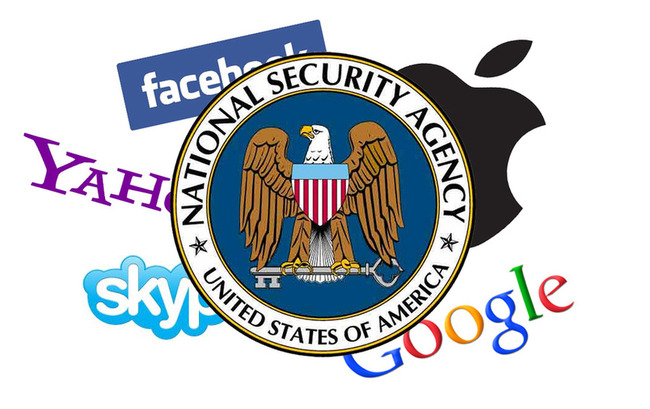
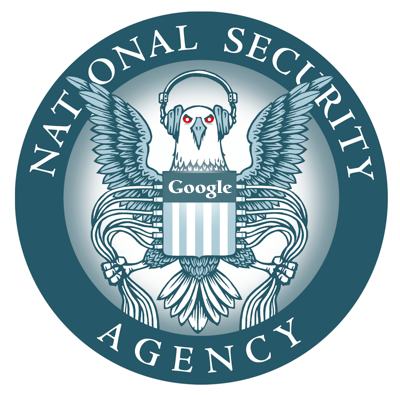
In his first television interview since he resigned from the National Security Agency over its domestic surveillance program, William Binney discusses the NSA’s massive power to spy on Americans and why the FBI raided his home after he became a whistleblower. Binney was a key source for investigative journalist James Bamford’s recent exposé in Wired Magazine about how the NSA is quietly building the largest spy center in the country in Bluffdale, Utah. The Utah spy center will contain near-bottomless databases to store all forms of communication collected by the agency, including private emails, cell phone calls, Google searches and other personal data.
Binney served in the NSA for over 30 years, including a time as technical director of the NSA’s World Geopolitical and Military Analysis Reporting Group. Since retiring from the NSA in 2001, he has warned that the NSA’s data-mining program has become so vast that it could “create an Orwellian state.” Today marks the first time Binney has spoken on national television about NSA surveillance. This interview is part of a 5-part special on state surveillance. Click here to see segment 2, 3, 4 and 5. [includes rush transcript]
Why do I hate Android? It’s definitely one of the questions I get asked most often these days. And most of those that don’t ask probably assume it’s because I’m an iPhone guy. People see negative take after negative take about the operating system and label me as “unreasonable” or “biased” or worse.
I should probably explain.
Believe it or not, I actually don’t hate Android. That is to say, I don’t hate the concept of Android — in fact, at one point, I loved it. What I hate is what Android has become. And more specifically, what Google has done with Android.
Let’s turn back the clock. In 2006, the mobile landscape in the United States was almost unfathomably shitty. Motorola’s RAZR had been the top-selling device for something ridiculous like five straight years — and the only thing that didn’t suck about it was its physical size. The carriers completely controlled the industry. This cannot be overstated.
Then on January 9, 2007 — exactly 5 years ago today — Steve Jobs took the stage at Macworld to unveil the iPhone. Six months later it was released. While some laughed it off at the time, the mobile landscape completely changed.
Apple and Google were great allies at the time. They united over a common enemy: Microsoft. Then-Google CEO Eric Schmidt was even on Apple’s board of directors. Google was a huge part of original iPhone OS (before it was called iOS): Google Maps, YouTube, Google Search, etc. Apple could have launched the iPhone without Google, but it wouldn’t have been as good. And if they had to do something like build their own maps from scratch, it would have taken longer.
A few months later, on November 5, 2007, Google teamed up with many of the big players in the mobile/telecom space to announce the Open Handset Alliance. At the time it sounded promising, but perhaps it should have been the first warning sign. The first product of this partnership: Android. A beta was released, but it would take almost another year before the software was actually ready to go.
The initial Android prototypes looked a lot like BlackBerry devices (both in hardware and software). But the first device (the G1) and OS actually released was more of a cross between a T-Mobile Sidekick (which Android head Andy Rubin helped create while still a co-founder at Danger) and the iPhone OS.
In hindsight, Steve Jobs was clearly not happy about this and the subsequent iPhone-ification of Android. But great artists steal, etc, etc. The only thing I didn’t like about Android at the time was that it was a shitty copy of the iPhone. It was something you couldn’t pay me to use. And most people seemed to feel the same way.
Jobs probably didn’t say much at the time because he didn’t have to. The market was saying it.
Time went on and it was pretty clear that despite the major players involved in the OHA, Android wasn’t getting a lot of traction. Meanwhile, the iPhone, after a price-cut and addition of 3G technology, was soaring. So Google did the logical thing, they went to see Verizon, the largest U.S. carrier, and struck a deal.
Remember, Apple still had an agreement with AT&T for exclusive iPhone rights in the U.S. at the time. Verizon and Google needed each other. But Google clearly needed Verizon more. This was the first real problem. A deal with the devil was struck.
Let’s back up for a second.
Even before Android’s launch, Google clearly had big dreams for the mobile space. “Your mobile phone should be free,” Eric Schmidt told Reuters in late 2006. He envisioned a world in which consumers didn’t have to pay for their mobile phones — advertising (served by Google, naturally) would subsidize the cost. And we’re not talking “free” with a two-year carrier contract. We’re talking free free.
In the pre-iPhone world this may have sounded like crazy-talk. But remember, as an Apple board member and having purchased Android for Google in 2005, Schmidt knew what was coming down the pipe. He absolutely intended to disrupt the mobile market.
But again, the initial releases of Android simply didn’t have the traction needed to come close to fulfilling Schmidt’s (and Google’s) dream. So deals with the carriers had to be made.
Still, Google hung on to the hope of a free phone. That phone was called the Nexus One.
At an event in January of 2010, Google unveiled their plan for Nexus One — the first real “Google Phone” as it were. While they were cautious and cagey with some details, the goal seemed clear: Google intended to blow up the carrier market (in the U.S. first) by moving phone distribution online, flattening it in the process. The idea was that you’d go to a website and pick the phone you wanted, then pick the carrier you wanted, pay, and you’d be done.
Think about this for a second. Instead of going to the store of a single carrier and having a dozen shitty phones shoved in your face by salespeople that made commission, you’d be in total control of the process. The end result of consumers getting to choose their carriers (and phones and plans) was clear: major competition and subsequently a rush of better deals from said carriers to ensure customer activation and retention.
Or, you could buy whatever phone you wanted unlocked. Eventually, pay-as-you-go SIM cards would pop up in the U.S. as a result.
What should have been obvious at the time but for whatever reason wasn’t (maybe because carrier representatives were at the event), the carriers hated this plan. And for good reason — it was going to turn them into dumb pipes that competed on price. There was no way they were going to let this fly, and they didn’t. Within a few months, citing weak sales of the Nexus One, Google scrapped their ambitious website and instead got fully in bed with the carriers.
But there was more.
What no one knew at the time, and I only heard months later, was Google’s original vision for the Nexus One. Google intended to sell it for $99 without a contract and unlocked. Yes, a $99 unlocked phone, subsidized by Google ads.
But the plan had one little problem: Google didn’t operate their own cellular network. They needed Verizon or AT&T or Sprint or T-Mobile to help them out. Google probably thought their open spectrum deal “win” in early 2008 gave them the leverage they needed here. Sadly, it did not.
All of the carriers laughed in Google’s face when presented with the ambitious Nexus One plan. And given that Google had just signed the all-important deal with Verizon, it was never going to happen.
So instead, at the Nexus One launch we got a website where you could indeed buy an unlocked Android phone — for $529. Nonstarter.
Better yet, while they said they were committed at the time, Verizon and Sprint never even got around to supporting the Nexus One at all. That’s how much they were behind the project.
To complicate matters further, behind the scenes, Verizon and Google were arguing over Net Neutrality rules. Verizon was opposed, Google was in favor. Then a funny thing happened. Google started supporting Verizon’s viewpoint on the matter! If you’re looking for the first post where I’m really, truly, pissed off at Google, look no further.
A few months later, guess what happened? Thanks to the Google/Verizon alliance on the matter, the FCC decided the compromised vision of Net Neutrality was just fine also. To be clear: Net Neutrality was thrown out in the wireless space because Google sided with Verizon’s ridiculous and horribly conflicted stance on the matter.
The open spectrum enemy, turned Net Neutrality enemy, became Google’s bedmate thanks to a business deal. Straight up. Greed, for lack of a better word, is good.
We got all of this thanks to Google’s desire for Android to take over the world. I commented earlier that they signed a deal with the devil — I wasn’t being facetious. They actually did! And they got away with it!
I think about these things everyday that I see positive news about Android. It’s so wonderful that the platform which helped cripple Net Neutrality and is keeping the evil carriers in control is taking off. Make no mistake: Android is now the carriers’ best friend.
Because Google sloppily decided to do the Motorola deal (driven by the full-on patent war, for which Apple and Microsoft, and not Google, are largely to blame), and because the model isn’t great for all but the biggest player, now the OEMs may be our best hope against the carrier/Android alliance.
Eventually, many of them will try to do their own thing (perhaps even using Android as a base) because they’re not idiots, they see where the real money is: controlling the entire experience. Like Apple.
All of this backstory knowledge fuels my rage. When I see Google talk about how “open” the platform is, setting it up as the foil to the “closed” (and framed as “evil”) iPhone, I want to scream and rip someone’s head off. It’s not only the most extreme example of being disingenuous that I can ever recall seeing — it’s nuclear bullshit.
Apple, for all the shit they get for being “closed” and “evil”, has actually done far more to wrestle control back from the carriers and put it into the hands of consumers. Google set off to help in this goal, then stabbed us all in the back and went the complete other way, to the side of the carriers. And because they smiled the entire time they were doing it and fed us this “open” bullshit, we thanked them for it. We’re still thanking them for it!
When you think about it in the context of this election season we’re entering, it’s a brilliant political maneuver that Google has pulled off with Android. They’ve taken something they’ve done that’s actually bad for us and spun it in such a way that most people actually buy into it being good for us.
And for the carriers, Android is the best thing ever because it’s the new “opiate for the masses”. Everything shitty they’re doing is great because they’re doing it with Android — at least it’s not iOS. What a load of horseshit.
I realize that the Android team at Google has a lot of good people doing great work. I know some of them. I respect them. But I cannot respect their decision to continue to work on this platform that perpetuates our imprisonment. I have to believe most simply chose not to think about these things. But they should. They really should.
There’s no denying that there are upsides to open — a lot of them. But in the case of Android, “open” has been hijacked and wildly contorted so as to mask the shady side of what’s really been going on. And it’s working.
So that, ladies and gentleman, is why I hate Android. It has nothing to do with the actual product (which continues to improve every year and is quite good now). It has to do with a promise that was broken and swept under the rug.
As crazy as it may sound to some of you, beyond a full OEM revolt (which could ultimately benefit the carriers as well), our hope now lies with Apple and Microsoft.
Apple, because they put the consumer first and have proven time and time again that they will not bend to carrier bullshit and will often work against them behind the scenes. And they control the all-important Apple stores for distribution (and, of course, the App Store).
Microsoft, because they have a model (many handsets on all carriers) that can potentially scale better than Apple’s can while still giving control (mostly) to the users. And they have Nokia on board with their plan. And they have intersections with products like Xbox. (Though it may be too late in the U.S.)
Perhaps more people will relate to this: I hate Android for the same reason that Severus Snape hates Harry Potter — the very sight reminds me of something so beautiful, that was taken. Except it’s worse. It’s as if Harry Potter has grown up to become Voldemort.