Full Spectrum Dominance: Totalitarian Democracy in the New World Order

Full Spectrum Dominance: Totalitarian Democracy in the New World Order

Book Description
Publication Date: May 12, 2009
For the faction controlling the Pentagon, the military industry, and the oil industry, the Cold War never ended. They engineered an incredible plan to grab total control of the planet, of land, sea, air, space, outer space and cyberspace. Continuing ‘below the radar,’ they created a global network of military bases and conflicts to advance the long-term goal of Full Spectrum Dominance. Methods included control of propaganda, use of NGOs for regime change, Color Revolutions to advance NATO eastwards, and a vast array of psychological and economic warfare techniques. They even used ‘save the gorilla’ organizations in Africa to secretly run arms in to create wars for raw materials. It was all part of a Revolution in Military Affairs, as they termed it. The events of September 11, 2001 would allow an American President to declare a worldwide War on Terror, on an enemy who was everywhere, and nowhere. 9/11 justified the Patriot Act, the very act that destroyed Americans’ Constitutional freedoms in the name of security. This book gives a disturbing look at the strategy of Full Spectrum Dominance, at what is behind a strategy that could lead us into a horrific nuclear war in the very near future, and at the very least, to a world at continuous war.
Seeds of Destruction: The Hidden Agenda of… by William F. Engdahl
4.3 out of 5 stars (28)
$16.47
A Century of War: : Anglo-American Oil Poli… by F. William Engdahl
5.0 out of 5 stars (1)
$24.95
Gods of Money: Wall Street and the Death of... by F. William Engdahl
5.0 out of 5 stars (1)
$21.33
They Own It All (Including You)!: By Means o… by Ronald MacDonald
4.8 out of 5 stars (38)
$14.96 Next
——————————————————————————–

Editorial Reviews
About the Author
F. William Engdahl is author of the international best-selling book on oil and geopolitics, A Century of War: Anglo-American Politics and the New World Order. He is a widely discussed analyst of current political and economic developments whose articles have appeared in numerous newspapers and magazines and well-known international websites. His book, ‘Seeds of Destruction: The Hidden Agenda Behind Genetic Manipulation,’ deals with agribusiness and the attempt to control world food supply and thereby populations. He may be reached at his website, www.engdahl.oilgeopolitics.net –This text refers to an alternate Paperback edition.

——————————————————————————–
Product Details
Paperback: 268 pages
Publisher: Third Millennium Press (May 12, 2009)
Language: English
ISBN-10: 0979560861
ISBN-13: 978-0979560866
Product Dimensions: 8.9 x 5.9 x 0.6 inches
Shipping Weight: 5.6 ounces
Average Customer Review: 4.7 out of 5 stars See all reviews (15 customer reviews)
Amazon Best Sellers Rank: #1,109,639 in Books (See Top 100 in Books)
5.0 out of 5 stars Urgent and Essential Reading, June 21, 2009
By Margot L. White “M. Lachlan White”
(REAL NAME) This review is from: Full Spectrum Dominance: Totalitarian Democracy in the New World Order (Paperback)
FULL SPECTRUM DOMINANCE is a rare and essential book — one that orients readers quickly and deeply to the world we live in, and how we arrived here. William Engdahl presents the historical background of policy making and decision analysis that explains how the United States arrived at its present “mission” in the world. The value of Engdahl’s brilliant book is not only that it familiarizes American readers with a history that is not usually revealed to us, but it also guides us through the many overt and covert tactics employed by the US for regime change– primarily via the Pentagon and its nefarious weapons contractors, but also through various think tanks and foundations with innocuous names disingenuously referring to “democracy” and “freedom.” The “full spectrum” of tactics and deceptions and tricks — both violent and non-violent — is revealed here. Needless to say, this book falls within the honorable tradition of political histories that blow the cover off America’s much vaunted pretense and propaganda about serving the cause of “freedom” and “democracy” around the world! It is the only book available today that covers ALL of this, with ample quotations and documents from the architects of US policies, in just 250 well written pages. FULL SPECTRUM DOMINANCE is unique in presenting the evolution of CIA tactics, ranging from its crude “coups” of yesteryear (as in Iran and Guatemala) to its current — and perhaps more insidious — use of “non-violent” electronically manipulated technological “crowd control” via cell phones and (as is currently evident on the streets of Tehran) Twitter. If Americans are woefully ignorant of the full range and dangerous extremes of American violence around the world, of American interventions into and manipulations of other countries’ elections and environments and economics, then there is no longer any excuse for such ignorance. FULL SPECTRUM DOMINANCE is a “must read.” To understand pipeline politics, the critical importance of Eurasia to US defense contractors, read this book. To understand how and why America has become such a rapacious and violent empire with bases all over the world and tens of thousands of agents provocateurs doing its dirty work from Tibet to Tehran, manipulating elections, staging phony “revolutions” to surround Russia with hostile Made-in-USA regimes, propping up American-trained puppets or fomenting chaos from Myanmar to Congo and from Ukraine to Iran — read this book! Help other customers find the most helpful reviews
Was this review helpful to you? Yes No Report abuse | Permalink
Comment Comment (1)
5.0 out of 5 stars Essential reading, June 1, 2009
By Lori “The Rogue Reader Mom” (Arizona) This review is from: Full Spectrum Dominance: Totalitarian Democracy in the New World Order (Paperback)
F W Engdahl has succeeded again at the difficult task of explaining the complexities of how our world really works and how we got to this frightful point in world affairs.
An exacting researcher, Mr. Engdahl, with his latest book, has taken on the task of sorting out the USA’s real intentions as it pertains to the rest of the world. In connecting the dots he takes us on a journey of clarity and comprehension regarding the aggressive path our nation is on as it builds the American Empire.
To follow Mr. Engdahl’s logical explanations of why we do what we do to the rest of the world is to come to the realization that the US may not be the ‘good guys’ we think we are and the rest of the world may have plenty of reasons to be wary of the US.
A sobering examination of our real past and current policies towards Russia, China, Europe, the Middle East and the rest of world community, ‘full spectrum dominance’, as the Pentagon calls it, is a strong-arm policy of control over the rest of the world that is leading us down a disastrous path towards a possible world war. We can’t solve our world’s problems until we properly identify them. Mr. Engdahl has done that in superb fashion.
5.0 out of 5 stars A book everyone needs to read!, July 1, 2009
By William Fetty “Kamakazi” (Sweden)
(REAL NAME) This review is from: Full Spectrum Dominance: Totalitarian Democracy in the New World Order (Paperback)
Engdahl’s books are at the very top of my list of books I recommend to people who want to know what is happening geopolitically in the world, but more importantly WHY things are happening!
Engdahl, though an academic scholar and very well educated with years of experince has once again written a book that anyone can understand and which reads like a great documentary film, much due to the fact that Engdahl is also a journalist, historian and economic researcher!
Full Spectrum Dominance picks up where his first book on the subject “A Century Of War:Anglo-American oil politics and the new world order” ends.
Engdahl once again leads us through the matrix of anglo-american foreign policy and their century old agenda of literal world domination through brute force and covert non-violent means. The evil and criminal actions of the anglo-american empire throughout the 20th century which has now spilled over in to the new millenium are presented in great detail and just like Engdahls previous books makes for a page turner. Once again I cannot recommend this book enough! Read it!

http://www.amazon.com/exec/obidos/ASIN/0979560861/ref=nosim/cryptogoncom-20

SERCO: The Biggest Company You’ve Never Heard Of

SERCO: The Biggest Company You’ve Never Heard Of


As well as thanking God for his success, CEO Chris Hyman is a Pentecostal Christian who has released a gospel album in America and fasts every Tuesday. Coincidentally he was in the World Trade Centre on 9/11 on the 47th floor addressing shareholders.

Serco run navy patrol boats for the ADF, as well as search and salvage operations through their partnership with P&O which form Maritime Defence Services.

Serco run two Australian Jails already, Acacia in WA and Borallon in Queensland

They’re one of the biggest companies In the UK for running electronic tagging of offenders under house arrest or parole.

Serco are in one of the two favoured bid consortiums for the new Sydney metro rail line.

Here are some amazing corporate videos from Serco, we fully recommend both if you’re a fan of Verhoeven-esque corporate propaganda. You can watch the video here:

http://www.youtube.com/watch?v=jo4_dF_Z1q0
—-

Original Story Here:

http://hungrybeast.abc.net.au/stories/serco-running-nukes-and-prisons-profit

Guardian Story (referenced in video):

http://www.guardian.co.uk/business/2006/feb/24/columnists.guardiancolumnists


Serco Group

From Wikipedia, the free encyclopedia
Jump to: navigation, search
Serco Group plc
Serco logo.svg
Type Public company
Traded as LSESRP
Industry Government Services
Founded 1929
Headquarters Hook, England, UK
Key people Alastair Lyons, Chairman
Christopher Hyman, CEO
Revenue £4,646.4 million (2011)[1]
Operating income £266.2 million (2011)[1]
Net income £175.2 million (2011)[1]
Employees 100,000 (2011)[2]
Website www.serco.com

Serco Group plc is a British government services company based in Hook, North Hampshire in the United Kingdom. It is listed on the London Stock Exchange and is a constituent of the FTSE 100 Index. Among its operations are public and private transport and traffic control, aviation, military and nuclear weapons contracts, detention centres and prisons, and schools.

Contents

History

Serco was founded in 1929 as a United Kingdom division of the Radio Corporation of America and initially provided services to the cinema industry.[3] It changed its name to Serco in 1987[3] and has been a London Stock Exchange listed company since 1988.[3]

On 29 December 2008, Serco completed its acquisition of SI International.[4]

Operations

The Guardian has called Serco “probably the biggest company you’ve never heard of”.[5]

Serco operates in various sectors:

  • Home Affairs: Serco operates the National Border Targeting Centre for the UK Border Agency and provides the Carrier Gateway – the interface between carriers and the Agency.[6]
  • Aviation: Serco provides air traffic control services at international airports in the United Arab Emirates[42] and at some smaller airports in the USA and Canada.[43][44] Since 2004 Serco have also had £5m a year from the US government to manage airports in Iraq.[45] Serco also operate Scatsta Airport on Shetland.[46] In June 2010 Serco signed a £4million contract to operate all air traffic control services for Coventry Airport.[47]
  • Education: Serco holds a 10 year contract with Bradford City Council to manage and operate the local education authority,[53] providing education support services to the City’s schools, and similarly manages and operates Walsall[54] and Stoke-on-Trent local education authorities.[55] Serco is one of Ofsted‘s three Regional Inspection Service Providers, responsible for school inspections in the English Midlands.[56] Serco is also the provider of a Student information system, Facility, used in schools and colleges in several countries.[57]
  • Drivers’ licensing: Serco, through a purpose-made division Serco DES, holds a 10 year, $114 million contract with the Province of Ontario to operate the province’s DriveTest driver examination centres. These tests include vision, road, and knowledge tests for all persons seeking to become a licensed automobile driver in the province.[43]
  • Serco also administers a number of publicly funded websites in the UK, including the Business Link website.[59]
  • Serco publishes a magazine, Ethos Journal, to stimulate thought and provoke reaction to the big issues shaping the world of public services. Ethos is aimed at public sector leaders, politicians, academics and policy specialists debating the future of public services today.[62]
  • Serco operates waste collection services for local councils.[63]

Serco operates in Continental Europe, the Middle East, the Asia Pacific region and North America, but the majority of its turnover still comes from the UK.

See also

Notes

  1. ^ a b c “Preliminary Results 2011” (PDF). Retrieved 26 March 2012.
  2. ^ Serco: At a glance
  3. ^ a b c “History”. Serco. 14 May 2010. Retrieved 18 July 2010.
  4. ^ Hubler, David (30 December 2008). “Serco wraps up SI International buy”. Washingtontechnology.com. Retrieved 18 July 2010.
  5. ^ ‘Happy, Touchy Feely and Driven by God’, Jane Martinson, The Guardian, 24/02/06
  6. ^ Government snared in fight over scrapped £742m e-Borders contract
  7. ^ “Transport for London: Franchise”. Tfl.gov.uk. Retrieved 18 July 2010.
  8. ^ Serco to operate Woolwich Ferry Services[dead link]
  9. ^ Hill, Dave (12 August 2009). “Boris Johnson bike hire scheme: and the winner is”. Guardian (UK). Retrieved 18 July 2010.
  10. ^ “Serco confirmed as Northern Isles ferry operator”. BBC News (UK). 29 May 2012. Retrieved 24 July 2012.
  11. ^ Australia’s Great Train Journeys
  12. ^ The Ghan – Australia on line
  13. ^ “Department for Transport: Serco NedRailways announced as Preferred Bidder”. Retrieved 18 July 2010.
  14. ^ Serco preferred bidder for Dubai metro operations contract[dead link], Railway Gazette International 2007-06-19. Retrieved 2008-03-15.
  15. ^ Milanese run København Metro[dead link], Railway Gazette International 2008-01-08. Retrieved 2008-03-15.
  16. ^ “Serco website – rail operations”. Serco.com. 25 April 2010. Retrieved 18 July 2010.
  17. ^ Shah, Saeed (21 February 2001). “Serco to run Britain’s first traffic control unit”. The Independent (UK). Retrieved 18 July 2010.
  18. ^ “Managing NPL”. Npl.co.uk. Retrieved 18 July 2010.
  19. ^ “National Physical Laboratory”. EthosJournal.com. Retrieved 11 February 2011.
  20. ^ Contract News Update
  21. ^ New management team takes over at National Nuclear Lab
  22. ^ Home Office: Electronic tagging
  23. ^ Paterson, Craig. “Virtual Private Prisons”. Corporate Watch. Retrieved 18 July 2010.
  24. ^ “Home Office: Yarls Wood”. Ukba.homeoffice.gov.uk. Retrieved 18 July 2010.
  25. ^ “Home Office: Colnbrook”. Ukba.homeoffice.gov.uk. Retrieved 18 July 2010.
  26. ^ “Wackenhut Corrections wins prisoner escort contract”. Prnewswire.co.uk. Retrieved 18 July 2010.
  27. ^ “Prison Privatisation”. Strafvollzugsarchiv.de. Retrieved 18 July 2010.
  28. ^ “Department of Corrective Services: Acacia Prison Contract”. Correctiveservices.wa.gov.au. Retrieved 22 September 2010.
  29. ^ “Government of Australia: Criminal Justice System”. Aic.gov.au. 30 June 2009. Retrieved 18 July 2010.
  30. ^ Private contractor Serco to run detention centres Crikey, 1 July 2009
  31. ^ Companies Use Immigration Crackdown to Turn a Profit New York Times, 28 September 2011
  32. ^ “Serco says Mt Eden prison contract worth $300M”. NZ News UK. 1 February 2011. Retrieved 26 December 2011.
  33. ^ New private prison at Wiri given green light, New Zealand Herald, 8 March 2012
  34. ^ Terry Macalister (2 September 2004). “PFI deals help Serco to record order book of £10bn”. Guardian (UK). Retrieved 18 July 2010.
  35. ^ “Airport of Embarkation”. Raf.mod.uk. 18 March 2010. Retrieved 18 July 2010.
  36. ^ a b c “Serco Business Review Page 20” (PDF). Retrieved 18 July 2010.
  37. ^ Serco Sodexho and the real story about work choices
  38. ^ “Defence Academy”. Da.mod.uk. Retrieved 18 July 2010.
  39. ^ Harrison, Michael (21 June 2001). “BNFL consortium seeks 15 year extension to Aldermaston contract”. The Independent (UK). Retrieved 18 July 2010.
  40. ^ “Dstl Inspire Contract release”. Serco. Retrieved 2 November 2010.
  41. ^ “Marine Services”. Serco. Retrieved 20 February 2009.
  42. ^ Serco – Middle East
  43. ^ a b Serco – North America
  44. ^ Goose Bay Airport – Control Tower services
  45. ^ Terry Macalister (3 March 2004). “Serco wins Iraqi Air Traffic Deal”. Guardian (UK). Retrieved 18 July 2010.
  46. ^ “Scatsta Airport control tower not fit for purpose”. Shetland Times. 10 June 2011. Retrieved 1 July 2011.
  47. ^ Coventry Airport Gears Up For Business Coventry Airport, 15 June 2010
  48. ^ “Private Finance Initiative – Norfolk and Norwich University Hospital” (PDF). Retrieved 18 July 2010.
  49. ^ “Leicester Royal Infirmary: Hospital Cleaning”. Uhl-tr.nhs.uk. Retrieved 18 July 2010.
  50. ^ Krissy Storrar (25 February 2006). “So you thought it was Tony and Gordon in charge?”. Mirror.co.uk. Retrieved 18 July 2010.
  51. ^ “New company vows to clean up Derriford Hospital”. 3 June 2009. Retrieved 11 November 2011.
  52. ^ “Serco and Guy’s and St. Thomas’ NHS Foundation Trust sign pioneering pathology partnership”. 30 January 2009. Retrieved 5 April 2011.
  53. ^ Catcheside, Kim (10 November 2003). “Bradford: Concerns about education privatisation”. BBC News. Retrieved 18 July 2010.
  54. ^ “Chris Hyman: Can Serco take over the World?”. The Independent (UK). 2 September 2007. Retrieved 18 July 2010.
  55. ^ Best school in town and still they want to close it Ed Caesar The Sunday Times 11 November 2007
  56. ^ “New inspection contracts signed” (Press release). Ofsted. 25 March 2009.
  57. ^ “A window opens on pupils’ progress”. London: Education.guardian.co.uk. Retrieved 18 July 2010.
  58. ^ Thu, 9 Oct 2008 (9 October 2008). “Serco picks agency to help it beef up marketing”. Marketingweek.co.uk. Retrieved 18 July 2010.
  59. ^ “Enlightenlive”. Enlightenlive. Retrieved 18 July 2010.
  60. ^ “Southwark voluntary and community groups to receive PCs from serco”. Findarticles.com. 2007. Retrieved 18 July 2010.
  61. ^ “Serco Inc. Secures Two Contract Renewals from the City of Chicago”. Retrieved 23 February 2012.
  62. ^ “EthosJournal”. Serco. Retrieved 11 February 2011.
  63. ^ “Breckland contractors”. Breckland District Council. 07/09/2012.

External links

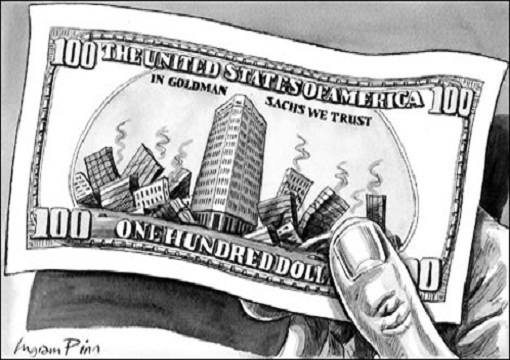
Goldman Sachs Bribed Senate To Pass Bailout Bill

Goldman Sachs Bribed Senate To Pass Bailout Bill


How much bribe money does it take to transfer $700 Billion taxpayer dollars to Wall Street’s elite?


GOLDMAN SACHS CONTRIBUTIONS:
Obama, Barack (D-IL) $691,930
Clinton, Hillary (D-NY) $468,200
Romney, Mitt (R) $229,675
McCain, John (R-AZ) $208,395
Himes, Jim (D-CT) $114,748
Giuliani, Rudolph W (R) $111,750
Dodd, Christopher J (D-CT) $105,400
Edwards, John (D) $66,450
Specter, Arlen (R-PA) $47,600
Emanuel, Rahm (D-IL) $32,950
Reed, Jack (D-RI) $30,100

How much money did your Represenative get from Big Bankers to look the other way and pass a bill that the American people clearly do not want?

HELP SPREAD THE WORD…
http://www.TakeBackWashington.com
http://www.WashingtonYoureFired.com

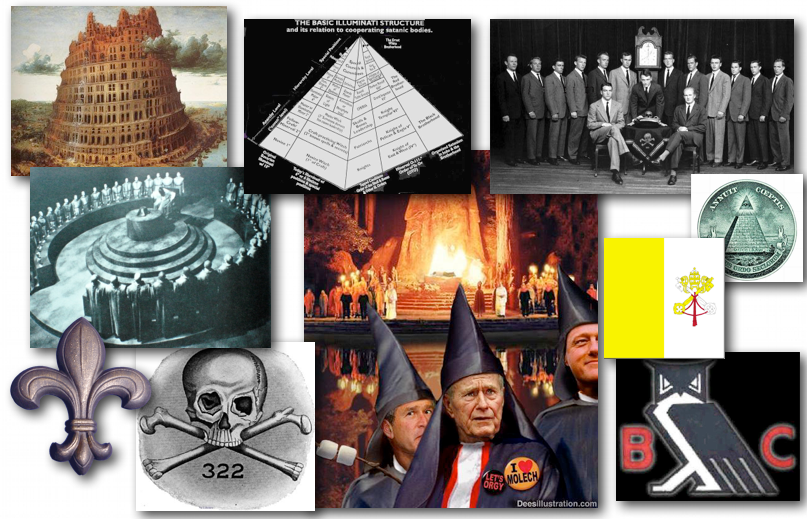
August 28, 2012 – DCMX Radio: Introduction to Secret Societies, Ancient Rituals, Hidden Symbolism, Occult ‘Gang Signs’, Links to Origins of Humanity

August 28, 2012 – DCMX Radio: Introduction to Secret Societies, Ancient Rituals, Hidden Symbolism, Occult ‘Gang Signs’, Links to Origins of Humanity

Secret Societies Decrypted: Exploring the all-seeing vertex which sits atop the Pyramid-of-Control. Understand the ‘known’ Power-Cults, Illuminati/NWO Control Groups – Bilderbergs, Freemasons, Knights Templar, Opus Dei, Orodo Templi Orientis, Club of Rome, Bohemian Club, and many many others. Dot Connecting Concepts & Origins of Altar Sacrifice, Worship of ‘Sacred’ Deities, Links to University ‘Frat/Sorority’ Programming & Hazing, Use of Greek Alphabet. Deep Connections to Babylon & Sumeria, thus possibly also, Origins of Humanity. Embedded Symbolism, ‘Globalist Gang Signs’, Evidence Scattered throughout Earth’s Timeline.


Every Week Night 12-1am EST (9-10pm PST)

– Click Image to Listen LIVE –

10 Foods with More Ammonia than Pink Slime

10 Foods with More Ammonia than Pink Slime

One of the most nausea-inducing qualities of “pink slime” (a.k.a. disinfected leftover beef trimmings, a.k.a. the contents of your fast food hamburger patty) is the fact that it’s doused with ammonia. But as it turns out, that’s not as uncommon as you might like to think.According to the University of Michigan Risk Science Center, a burger patty made with pink slime contains 0.02 grams of ammonia per 100 grams of meat — but bleu cheese contains almost seven times as much.

Here are 10 foods with more ammonia than your slimy, slimy burger:

  • Cheese. Oh my god, cheese is like an ammonia warehouse. Domestic bleu cheese topped the list with 0.138 grams of ammonia per 100 grams, but cheddar (0.11), beer cheese (0.092), American cheese (0.081), and a couple types I’ve never heard of all ranked.
  • Salami, 0.11 grams of ammonia per 100 grams.
  • Peanut butter, 0.049 grams per 100.
  • Mayonnaise, 0.041 grams per 100.
  • Ketchup, 0.035.
  • Gelatin, 0.034.
  • Onions, 0.027.
  • Potato chips, 0.024, though I imagine the brand and flavor would matter.
  • Brewer’s yeast, 0.022.
  • Margarine, 0.021

Now, to be fair this is based on a 1973 paper, so the ammonia content in some of these foods may have changed. But on the other hand, in 1973 the ammonia content in a burger patty was half what it is today. So those changes might not have been for the better.

It’s not totally clear whether you should be less freaked out by pink slime, or a hell of a lot more freaked out by everything else. But one thing is for certain: You may want to think twice about whether you’re going to eat that burger with mayo, onion, ketchup, and American cheese — or whether you’re just going to use it to clean your windows.

SOURCE:

Fault Lines: Controlling the Web – Mini Documentary by Al Jazeera

Fault Lines: Controlling the Web – Mini Documentary by Al Jazeera

In January 2012, two controversial pieces of legislation were making their way through the US Congress. SOPA, the Stop Online Piracy Act, and PIPA, the Protect Intellectual Property Act, were meant to crack down on the illegal sharing of digital media. The bills were drafted on request of the content industry, Hollywood studios and major record labels.

The online community rose up against the US government to speak out against SOPA, and the anti-online piracy bill was effectively killed off after the largest online protest in US history. But it was only one win in a long battle between US authorities and online users over internet regulation. SOPA and PIPA were just the latest in a long line of anti-piracy legislation US politicians have passed since the 1990s.

“One of the things we are seeing which is a by-product of the digital age is, frankly, it’s much easier to steal and to profit from the hard work of others,” says Michael O’Leary, the executive vice-president for global policy at the Motion Picture Association of America (MPAA).

The US government says it must be able to fight against piracy and cyber attacks. And that means imposing more restrictions online. But proposed legislation could seriously curb freedom of speech and privacy, threatening the internet as we know it.

Can and should the internet be controlled? Who gets that power? How far will the US government go to gain power over the web? And will this mean the end of a free and global internet?

Fault Lines looks at the fight for control of the web, life in the digital age and the threat to cyber freedom, asking if US authorities are increasingly trying to regulate user freedoms in the name of national and economic security.

Global Banks Are The Financial Services Wing of The Drug Cartels

Global Banks Are The Financial Services Wing of The Drug Cartels

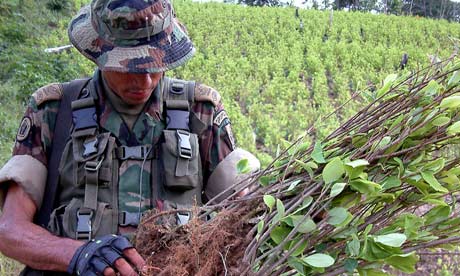
A Colombian soldier inspects the harvest of a 50-acre coca plantation: fines for laundering drugs money may seem huge, but banks pay them out of petty cash. Photograph: Efrain Patino/AP

“Steal a little,” wrote Bob Dylan, “they throw you in jail; steal a lot and they make you a king.” These days, he might recraft the line to read: deal a little dope, they throw you in jail; launder the narco billions, they’ll make you apologise to the US Senate.

Two months ago in Washington DC, a poor black man called Edward Dorsey Sr was convicted of peddling 5.5 grams of crack cocaine. Because he was charged before a recent relative amelioration in sentencing, he was given a mandatory 10 years in jail.

Last week, managers from Britain’s biggest bank, HSBC, lined up before the Senate’s permanent sub-committee on investigations – just across the Potomac river from the scene of Dorsey’s crime – to be asked questions such as: “It took three or four years to close a suspicious account. Is there any way that should be allowed to happen?”

The “suspicious account” was that of a “casa de cambio”, a currency exchange house operated in Mexico on behalf of the largest criminal syndicate in the world and one of the most savage, the Sinaloa drug-trafficking cartel. The dealings had been flagged up to HSBC bosses by an anti-money laundering officer, but to no avail – the dirty business continued. “No, senator,” came the reply from a bespectacled Brit called Paul Thurston, chief executive, retail banking and wealth management, HSBC Holdings plc.

The same casa de cambio, called Puebla, was known to be under investigation in another case involving the Wachovia bank during the time HSBC was entertaining its money. US authorities had seized $11m from Wachovia’s Miami office, on the way to securing the biggest settlement in banking history with Wachovia in March 2010, detailed in this newspaper last year.

Wachovia was fined $50m and made to surrender $110m in proven drug profits, but was shown to have inadequately monitored a staggering $376bn through the casa de cambio over four years, of which $10bn was in cash. The whistleblower in the case, an Englishman working as an anti-money laundering officer in the bank’s London office, Martin Woods, was disciplined for trying to alert his superiors, and won a settlement after bringing a claim for unfair dismissal.

No one from Wachovia went to jail – and, said Woods at the time of the settlement: “These are the proceeds of murder and misery in Mexico, and of drugs sold around the world. But no one goes to jail. What does the settlement do to fight the cartels? Nothing. It encourages the cartels and anyone who wants to make money by laundering their blood dollars.”

HSBC has been found to have handled $7bn in narco cash, “and this is the starter for 10”, Woods now says. “We’ll get the full picture over time. But what’s the sanction on these banks? What’s their risk? The cartels should renegotiate their charges with the banks. They’re being priced for a risk element that isn’t there.”

Wachovia was not the first, neither will HSBC be the last. Six years ago, a subsidiary of Barclays – Barclays Private Bank – was exposed as having been used to launder drug money from Colombia through five accounts linked to the infamous Medellín cartel. By an ironic twist, Barclays continued to entertain the funds after British police had become involved after a tip-off, from HSBC.

And the issue is wider than drug-money. It is about where banks, law enforcement officers and the regulators – and politics and society generally – want to draw the line between the criminal and supposed “legal” economies, if there is one.

Take the top-drawer bank to the elite and Her Majesty the Queen, Coutts, part of the bailed-out Royal Bank of Scotland. On 23 March, the UK Financial Services Authority issued a final notice to Coutts, fixing a penalty of £8.75m for breach of its money-laundering code.

The FSA reviewed 103 “high-risk customer files” and “identified deficiencies in 73 files”, showing “failure to conduct appropriate ongoing monitoring” over three years. In two cases, private bankers involved had “failed to identify serious criminal allegations against those customers”. Rory Tapner, chief executive of the wealth division of RBS said that “since concerns were first identified by the FSA, Coutts & Co has enhanced its client relationship management process”. The refrain was the same from HSBC last week, and every other bank after every other shameful revelation: we went awry, but we’ve fixed it.

Wouldn’t it be interesting, though, to know Coutts’s private view of Wachovia’s case – or, at least of people such as Woods who do root out criminal laundering?

As it happens, through a rare glimpse, we do. Last year, the Wachovia whistleblower was offered a job at Coutts. But the bank suddenly withdrew its job offer. An internal email sent by the interviewer to a director of Coutts’s wealth management programme explained the bank had “a very generic reason for our decision, citing the fact that we had become aware of an incident at Wachovia, one of Martin Woods’s previous employers, and that Coutts was keen to avoid any risk of reputational damage that might relate to the incident”.

The thought occurs to Woods, who is taking legal action against Coutts for mistreatment of a whistleblower, that he was too tenacious at Wachovia. Coutts declined to comment.

No one at Coutts was called to account for the FSA’s alarming findings. No one was sanctioned under criminal law last month when the ING bank was fined $619m for illegally moving billions of dollars into the US banking system, in breach of sanctions – as HSBC has done with money from North Korea and Iran. Neither were they in 2009, when Lloyds TSB – 43% owned by the British taxpayer – was fined $350m for whitewashing Iranian money into the US. The fines seem huge to us, but banks pay them from petty cash.

If there is a prosecution, it is always “deferred”, as with Wachovia, and a Californian bank called Sigue used by HSBC to receive the Mexican drug money. Be good for a year, and we’ll forget about it. Since when did the likes of Edward Dorsey of Washington enjoy that kind of leniency?

A foremost trainer of anti-money laundering officers in the US is Robert Mazur, who infiltrated the Medellín cartel during the prosecution and collapse of the BCCI bank in 1991, and who tells the Observer that “the only thing that will make the banks properly vigilant to what is happening is when they hear the rattle of handcuffs in the boardroom”.

It remains to be seen whether HSBC’s barons will, like Wachovia’s, avoid Dorsey’s fate.

“People don’t like to ask how close the banker’s finger is to the trigger of the killer’s gun,” says Woods.

But in this newspaper – when we revealed the original “cease and desist” order against HSBC – the former head of the UN Office on Drugs and Crime, Antonio Maria Costa, posited that four pillars of the international banking system are: drug-money laundering, sanctions busting, tax evasion and arms trafficking.

The response of politicians is to cower from any serious legal assault on this reality, for the simple reasons that the money is too big (plus consultancies to be had after leaving office). The British government recruits a former chairman of HSBC as trade secretary just as the drug-laundering scandal breaks.

Herein, along with Dylan’s dictum, lies the problem. We don’t think of those banking barons as the financial services wing of the Sinaloa cartel.

The stark truth is that the cartels’ best friends are those people in pin-stripes who, after a rap on the knuckles, return to their golf in Connecticut and drinks parties in Holland Park.

The notion of any dichotomy between the global criminal economy and the “legal” one is fantasy. Worse, it is a lie. They are seamless, mutually interdependent – one and the same.

SOURCE: Guardian.co.uk

Mammogram Propaganda Fraud: Scientists Blast ‘Komen for the Cure’ Over Agenda of Deception

Mammogram Propaganda Fraud: Scientists Blast ‘Komen for the Cure’ Over Agenda of Deception

It is time for the truth to be told about Susan G. Komen for the Cure. The organization is, flatly stated, engaged in fraud. Funded by drug companies and mammogram manufacturers, the organization preys upon women in order to grow its own financial power while feeding female victims into the conventional cancer industry grinder.

All across America, men and women participate in “run for the cure” events, raising tens of millions of dollars each year that go into the hands of Komen for the Cure. What these people don’t know is that much of that money is spent on “free” mammograms. Those mammograms, in turn, actually cause breast cancer because they subject women to high doses of ionizing radiation.

The Susan G. Komen scam, in essence, is to raise money that’s used to give women cancer and create a financial windfall for the very same companies that financially support Komen in the first place. “The Komen Foundation owns stock in General Electric, one of the largest makers of mammogram machines in the world. It also owns stock in several pharmaceutical companies, including AstraZeneca,” reports Tony Isaacs at NaturalNews (http://www.naturalnews.com/027307_cancer_breast_ACS.html).

“DuPont, another huge chemical company and major polluter, supplies much of the film used in mammography machines. Both DuPont and GE aggressively promote mammography screening of women in their 40s, despite the risk of its contributing to breast cancer in that age group. And while biotech giant Monsanto sponsors Breast Cancer Awareness Month’s high profile event, the Race for the Cure, it continues to profit from the production of many known carcinogens.” (http://www.tbyil.com/breast-cancer-deception.htm)

Komen’s corporate partners include General Mills, Zumba Fitness, Walgreens, The Republic of Tea, REMAX, New Balance, American Airlines, Bank of America, Ford Motor Company, Dell and many more (http://ww5.komen.org/corporatepartners.aspx).

The bottom line? Komen deceives women while powerful corporations rake in the profits. This isn’t merely my own opinion. Two prominent doctors, in an article published in the British Medical Journal, have sharply condemned Komen for the Cure for lying about the “benefits” of mammograms.

Komen ads are false, say scientists

“The world’s largest breast cancer charity used misleading statistics and deceptive statements about mammography to promote breast cancer awareness and screening,” stated scientists. (http://www.medpagetoday.com/HematologyOncology/BreastCancer/34030)

Their names? Steven Woloshin and Lisa Schwartz, directors of the Center for Medicine and the Media at Dartmouth Medical School in Hanover, New Hampshire.

They join a growing number of other doctors and medical professionals who now see Komen for the Cure as afundraising fraud and are going public with detailed accusations against Komen’s deceptions.

In the recently published BMJ article, Woloshin and Schwartz accused Komen of lying in its promotional propaganda for the 2011 Breast Cancer Awareness Month. In advertising, Komen falsely claimed the 5-year survival rate when breast cancer is caught early is 98%, while only 23% when not “caught early.” This is how Komen tricks women into getting more mammograms which cause more cancer — by claiming “early detection saves lives.” But it’s not science; it’s pure propaganda. (See below.)

According to study authors Woloshin and Schwartz, Komen willfully ignored “a growing and increasingly accepted body of evidence [showing] that although screening may reduce a woman’s chance of dying from breast cancer by a small amount, it also causes major harms.”

Here’s an image published by the British Medical Journal, detailing how Komen for the Cure is lying about mammography:
http://www.naturalnews.com/gallery/articles/Komen_Deception_BMJ.jpg

Here’s what the data actually say

Komen for the Cure is in the business of fear mongering. They want everyone to be scared out of their minds that breast cancer is going to strike down all the women in their life. And in order to deal with the fear, all you have to do is give more money to Komen.

It’s sort of like an old-school evangelical group that asks for donations and says you’ll be healed if you just “believe,” but instead of claiming to heal people with the power of faith, the Komen cult claims to heal women with the power of ionizing radiation.

In reality, the actual 10-year risk of a 50-year-old woman dying of breast cancer is about half a percent: 0.53% (http://www.medpagetoday.com/HematologyOncology/BreastCancer/34030).

With mammograms used to detect breast cancer tumors, that 10-year risk of dying from breast cancer moves ever so slightly downward to 0.46%.

In other words, the real risk reduction of dying from breast cancer by receiving mammograms is only 0.07% — seven women out of 10,000.

How mammograms kill women

Seven out of 10,000 is a far cry from the fear-mongering levels that Komen propagandizes. It’s not quite the cancer apocalypse that Komen makes it out to be, huh? And in the mean time, Woloshin and Schwartz explain that anywhere from 20% to 50% of women who receive mammograms for a decade of their lives will have at least one “false alarm.”

These false alarms often lead to women being treated with deadly chemotherapy cocktails. These expensive drugs enrich the very same drug companies that donate money to Komen for the Cure. This is all part of the cycle of fraud that exploits women’s bodies for profit, all while conducting this sick fraud with the message of “finding a cure,” emblazoned with pink ribbons. The magnitude of the deception in all this is pathological… even criminal.

“The Komen advertisement is deceptive in another way: it ignores the harms of screening,” say Woloshin and Schwartz. “Between 20% and 50% of women screened annually for a decade experience at least one false alarm requiring a biopsy. Most importantly, screening results in overdiagnosis. For every life saved by mammography, around two to 10 women are overdiagnosed. Women who are overdiagnosed cannot benefit from unnecessary chemotherapy, radiation, or surgery. All they do experience is harm,” they write.

That harm often comes in the form of unnecessary chemotherapy that poisons women but financially benefits the drug companies. Here’s another article on NaturalNews which also supports this conclusion:
http://www.naturalnews.com/020829.html

Also read my previous article, “10 Facts about the Breast Cancer Industry You’re Not Supposed to Know”
http://www.naturalnews.com/024536_cancer_women_breast.html

“Women need much more than marketing slogans about screening,” wrote Woloshin and Schwartz. “They need — and deserve — the facts. The Komen advertisement campaign failed to provide the facts. Worse, it undermined decision making by misusing statistics to generate false hope about the benefit of mammography screening. That kind of behavior is not very charitable.”

The article goes on to emphasize that mammograms are a wash, offering no net benefit to women’s health:

The benefits and harms [of mammography] are so evenly balanced that the National Breast Cancer Coalition, a major US network of patient and professional organizations, “believes there is insufficient evidence to recommend for or against universal mammography in any age group of women.” (http://www.knowbreastcancer.org/controversies/mammography-screening/)

But instead of telling women the truth, Komen lies to women, vastly exaggerating the “benefits” of screening:

“Komen’s public advertising campaign gives women no sense that screening is a close call. Instead it simply tells women to be screened, overstates the benefit of mammography, and ignores harms altogether,” write Woloshin and Schwartz.

Komen has even fooled doctors

Beyond fooling the public, Komen’s insidious disinformation campaign has even fooled most doctors. As Woloshin and Schwartz described how doctors are tricked by the “improved survival” statistics which mislead people into thinking that screening saves lives:

“In a recent survey we conducted with colleagues from the Max Planck Institute, most US primary care doctors mistakenly interpreted improved survival as evidence that screening saves lives.”
(Wegwarth O, Schwartz L, Woloshin S, Gaissmeier W, Gigerenzer G. Do physicians understand cancer screening statistics? A national survey of primary care physicians in the United States. Ann Intern Med 2012;156:340-49.)

Obscene executive salaries

“Susan G. Komen for the Cure is a multimillion-dollar company with assets totaling over $390 million . Only 20.9% of these funds were reportedly used in the 2009-2010 fiscal year for research “for the cure,” writes Emily Michele at Alternet (http://www.alternet.org/story/154010/i_will_not_be_pinkwashed%3A_kome…)

She goes on to explain, “I don’t know about you, but I would never expect directors of a charitable “non-profit” organization to make more than most doctors, lawyers, or even politicians. Their CEO and president, Hala G. Moddelmog, made $531,924, plus $26,683 in change. That’s more than President Obama makes.”

This is all revealed in Komen’s own IRS reporting forms:
http://ww5.komen.org/uploadedFiles/Content/AboutUs/Financial/Komen%20…

Komen spends about 39% of its money on “public health education,” which is just another way to say “pinkwashing.” This money is used to catapult the Komen propaganda so that future fundraising events can raise even more money, much of which is paid to Komen’s fat cat executives as cushy salaries.

Just remember: When you run for the cure, a significant portion of the money you raise is going straight into the pockets of wealthy Komen executives. None of the money is actually being used to promote vitamin D or cancer prevention. “Detection,” after all, is not prevention. It’s just a way to push the cancer industry’s agenda of treating more women with toxic chemotherapy chemicals (and more ionizing radiation).

Komen’s activities are crimes against humanity — and blacks in particular

Susan G. Komen for the Cure isn’t just a dishonest, deceptive non-profit that exploits women for its own power and prestige; it also engaged in crimes against humanity. The use of deceptive statistics, lying propaganda, and false and misleading fundraising events push a machine of death and destruction that sacrifices the lives of women upon the altar of Big Pharma profits.

Notably, Komen usually targets black women, focusing their mobile mammogram trucks — “mobile cancer stations” — on low-income neighborhoods in cities like Detroit where breast cancer among African American women is far more common than in white neighborhoods. The result of all this is increased rates of breast cancer due to the mammography itself. This, in turn, results in statistics which are cited by Komen itself to spread fear and alarm over the disease, justifying their very existence.

It is, at every level, an insidious scam conducted at the cost of innocent human lives. Far from “finding a cure” for cancer, Komen spreads cancer, incites fear, lies to women and then cites the very cancer that it causes as justification for its existence.

Susan G. Komen is a danger to the American public. It functions as a recruitment branch of Big Pharma, ensnaring women with a seductive message of hope and inspiration while delivering suffering and death.

If you donate money to Komen, you are financially supporting this insidious, destructive non-profit monstrosity that destroys lives and brutalizes women. Women who undergo chemotherapy should be called, “chemically battered women,” and Komen promotes this abuse of women through its reliance on false and deceptive propaganda.

The solution to all this? Boycott Komen. Refuse to raise money for this harmful organization that exploits women. Inform your friends about pinkwashing. Share this article. Help stop the exploitation of women by Komen and its lying propaganda.

Looking for a real way to prevent breast cancer? Take more Vitamin D. Komen won’t educate women about vitamin D — (surprised?) — but here at NaturalNews, we have a powerfully informative infographic that tells the story:

http://www.naturalnews.com/Infographic-The-Vitamin-D-Guide.html

We also have a highly informative vitamin D video that’s especially educational for Africa-Americans:
http://tv.naturalnews.com/v.asp?v=5A62FC73922FD51A88E62E42C5A0AD5E

Learn more about the Komen for Cure fraud at:

http://www.naturalnews.com/033783_Komen_for_the_Cure_pinkwashing.html
http://www.naturalnews.com/033837_Komen_for_the_Cure_BPA.html
http://www.naturalnews.com/034987_race_for_the_cure_breast_cancer_pin…
http://www.naturalnews.com/028631_Komen_for_the_cure_pinkwashing.html
http://www.naturalnews.com/Komen_for_the_cure.html

Sources for this story include:
How a charity oversells mammography
BMJ 2012;345:e5132
http://www.bmj.com/content/345/bmj.e5132

http://www.medpagetoday.com/HematologyOncology/BreastCancer/34030

Why I Left Google

Why I Left Google

Ok, I relent. Everyone wants to know why I left and answering individually isn’t scaling so here it is, laid out in its long form. Read a little (I get to the punch line in the 3rd paragraph) or read it all. But a warning in advance: there is no drama here, no tell-all, no former colleagues bashed and nothing more than you couldn’t already surmise from what’s happening in the press these days surrounding Google and its attitudes toward user privacy and software developers. This is simply a more personal telling.

It wasn’t an easy decision to leave Google. During my time there I became fairly passionate about the company. I keynoted four Google Developer Day events, two Google Test Automation Conferences and was a prolific contributor to the Google testing blog. Recruiters often asked me to help sell high priority candidates on the company. No one had to ask me twice to promote Google and no one was more surprised than me when I could no longer do so. In fact, my last three months working for Google was a whirlwind of desperation, trying in vain to get my passion back.

The Google I was passionate about was a technology company that empowered its employees to innovate. The Google I left was an advertising company with a single corporate-mandated focus.

Technically I suppose Google has always been an advertising company, but for the better part of the last three years, it didn’t feel like one. Google was an ad company only in the sense that a good TV show is an ad company: having great content attracts advertisers.

Under Eric Schmidt ads were always in the background. Google was run like an innovation factory, empowering employees to be entrepreneurial through founder’s awards, peer bonuses and 20% time. Our advertising revenue gave us the headroom to think, innovate and create. Forums like App Engine, Google Labs and open source served as staging grounds for our inventions. The fact that all this was paid for by a cash machine stuffed full of advertising loot was lost on most of us. Maybe the engineers who actually worked on ads felt it, but the rest of us were convinced that Google was a technology company first and foremost; a company that hired smart people and placed a big bet on their ability to innovate.

From this innovation machine came strategically important products like Gmail and Chrome, products that were the result of entrepreneurship at the lowest levels of the company. Of course, such runaway innovative spirit creates some duds, and Google has had their share of those, but Google has always known how to fail fast and learn from it.

In such an environment you don’t have to be part of some executive’s inner circle to succeed. You don’t have to get lucky and land on a sexy project to have a great career. Anyone with ideas or the skills to contribute could get involved. I had any number of opportunities to leave Google during this period, but it was hard to imagine a better place to work.

But that was then, as the saying goes, and this is now.

It turns out that there was one place where the Google innovation machine faltered and that one place mattered a lot: competing with Facebook. Informal efforts produced a couple of antisocial dogs in Wave and Buzz. Orkut never caught on outside Brazil. Like the proverbial hare confident enough in its lead to risk a brief nap, Google awoke from its social dreaming to find its front runner status in ads threatened.

Google could still put ads in front of more people than Facebook, but Facebook knows so much more about those people. Advertisers and publishers cherish this kind of personal information, so much so that they are willing to put the Facebook brand before their own. Exhibit A: www.facebook.com/nike, a company with the power and clout of Nike putting their own brand after Facebook’s? No company has ever done that for Google and Google took it personally.

Larry Page himself assumed command to right this wrong. Social became state-owned, a corporate mandate called Google+. It was an ominous name invoking the feeling that Google alone wasn’t enough. Search had to be social. Android had to be social. You Tube, once joyous in their independence, had to be … well, you get the point. Even worse was that innovation had to be social. Ideas that failed to put Google+ at the center of the universe were a distraction.

Suddenly, 20% meant half-assed. Google Labs was shut down. App Engine fees were raised. APIs that had been free for years were deprecated or provided for a fee. As the trappings of entrepreneurship were dismantled, derisive talk of the “old Google” and its feeble attempts at competing with Facebook surfaced to justify a “new Google” that promised “more wood behind fewer arrows.”

The days of old Google hiring smart people and empowering them to invent the future was gone. The new Google knew beyond doubt what the future should look like. Employees had gotten it wrong and corporate intervention would set it right again.

Officially, Google declared that “sharing is broken on the web” and nothing but the full force of our collective minds around Google+ could fix it. You have to admire a company willing to sacrifice sacred cows and rally its talent behind a threat to its business. Had Google been right, the effort would have been heroic and clearly many of us wanted to be part of that outcome. I bought into it. I worked on Google+ as a development director and shipped a bunch of code. But the world never changed; sharing never changed. It’s arguable that we made Facebook better, but all I had to show for it was higher review scores.

As it turned out, sharing was not broken. Sharing was working fine and dandy, Google just wasn’t part of it. People were sharing all around us and seemed quite happy. A user exodus from Facebook never materialized. I couldn’t even get my own teenage daughter to look at Google+ twice, “social isn’t a product,” she told me after I gave her a demo, “social is people and the people are on Facebook.” Google was the rich kid who, after having discovered he wasn’t invited to the party, built his own party in retaliation. The fact that no one came to Google’s party became the elephant in the room.

Google+ and me, we were simply never meant to be. Truth is I’ve never been much on advertising. I don’t click on ads. When Gmail displays ads based on things I type into my email message it creeps me out. I don’t want my search results to contain the rants of Google+ posters (or Facebook’s or Twitter’s for that matter). When I search for “London pub walks” I want better than the sponsored suggestion to “Buy a London pub walk at Wal-Mart.”

The old Google made a fortune on ads because they had good content. It was like TV used to be: make the best show and you get the most ad revenue from commercials. The new Google seems more focused on the commercials themselves.

Perhaps Google is right. Perhaps the future lies in learning as much about people’s personal lives as possible. Perhaps Google is a better judge of when I should call my mom and that my life would be better if I shopped that Nordstrom sale. Perhaps if they nag me enough about all that open time on my calendar I’ll work out more often. Perhaps if they offer an ad for a divorce lawyer because I am writing an email about my 14 year old son breaking up with his girlfriend I’ll appreciate that ad enough to end my own marriage. Or perhaps I’ll figure all this stuff out on my own.

The old Google was a great place to work. The new one?

SOURCE:
http://blogs.msdn.com/b/jw_on_tech/archive/2012/03/13/why-i-left-google.aspx

By: James Whittaker, March 13, 2012

Whistleblower: Mind Blowing Corruption Within JP Morgan

Whistleblower: Mind Blowing Corruption Within JP Morgan

Rampant silver manipulation?  Rampant gold manipulation?  Rampant LIBOR manipulation?  Hiding MF Global client assets?  These are all happening at JP Morgan according to an open letter reportedly written by an anonymous employee of the firm.  The whistleblower also warns of a “cascading credit event being triggered” by derivatives related to Greek government debt.  Unlike Greg Smith at Goldman Sachs, this whistleblower has chosen to remain anonymous for now.  According to the letter, the whistleblower is still an employee of JP Morgan and has not resigned.  But that does make it much more difficult to confirm what he is saying.  With Greg Smith, we know exactly who he is and what he was doing at Goldman.  As far as this anonymous whistleblower is concerned, all we have is this letter.  So we must take it with a grain of salt.  However, the information in this letter does agree with what whistleblowers such as Andrew Maguire have said in the past about silver manipulation by JP Morgan.  And this letter does mention Greg Smith’s resignation from Goldman, so we know that it must have been written in the past few days.  Hopefully this letter will cause authorities to take a much closer look at the crazy things that are going on over at JP Morgan and the other big Wall Street banks.

This anonymous letter was addressed to the CFTC, but unfortunately it looks like the CFTC has already chosen to ignore it.

The original letter from this anonymous whistleblower has already been taken down from the CFTC website. When you go there now, all you get is this message….

“The Comment Cannot Be Found. Please Return to the Previous Page and Try Again.”

Fortunately, there are many in the alternative media that copied this entire letter from the CFTC website.

The following is a copy of the original letter that the anonymous whistleblower from JP Morgan submitted to the CFTC….

———-

Dear CFTC Staff,

Hello, I am a current JPMorgan Chase employee. This is an open letter to all commissioners and regulators. I am emailing you today b/c I know of insider information that will be damning at best for JPMorgan Chase. I have decided to play the role of whistleblower b/c I no longer have faith and belief that what we are doing for society is bringing value to people. I am now under the opinion that we are actually putting hard working Americans unaware of what lays ahead at extreme market risk. This risk is unnecessary and will lead to wide-scale market collapse if not handled properly. With the release of Mr. Smith’s open letter to Goldman, I too would like to set the record straight for JPM as well. I have seen the disruptive behavior of superiors and no longer can say that I look up to employees at the ED/MD level here at JPM. Their smug exuberance and arrogance permeates the air just as pungently as rotting vegetables. They all know too well of the backdoor crony connections they share intimately with elected officials and with other institutions. It is apparent in everything they do, from the meager attempts to manipulate LIBOR, therefore controlling how almost all derivatives are priced to the inherit and fraudulent commodities manipulation. They too may have one day stood for something in the past in the client-employee relationship. Does anyone in today’s market really care about the protection of their client? From the ruthless and scandalous treatment of MF Global client asset funds to the excessive bonuses paid by companies with burgeoning liabilities. Yes, we at JPMorgan that are in the know are fearful of a cascading credit event being triggered in Greece as they have hidden derivatives in excess of $1 Trillion USD. We at JPMorgan own enough of these through counterparty risk and outright prop trading that our entire IB EDG space could be annihilated within a few short days. The last ten years has been market by inflexion point after inflexion point with the most notable coming in 2008 after the acquisition of Bear.

I wish to remain anonymous as of now as fear of termination mounts from what I am about to reveal. Robert Gottlieb is not my real name; however he is a trader that is involved in a lawsuit for manipulative trading while working with JPMorgan Chase. He was acquired during our Bear Stearns acquisition and is known to be the notorious person shorting in the silver future market from his trading space, along with Blythe Masters, his IB Global boss. However, with that said, we are manipulating the silver futures market and playing a smaller (but still massively manipulative) role in manipulating the gold futures market. We have a little over a 25% (give or take a percentage) position in the short market for silver futures and by your definition this denotes a larger position than for speculative purposes or for hedging and is beyond the line of manipulation.

On a side note, I do not work directly with accounts that would have been directly impacted by the MF Global fiasco but I have heard through other colleagues that we have involvement in the hiding of client assets from MF Global. This is another fraudulent effort on our part and constitutes theft. I urge you to forward that part of the investigation on to the respective authorities.

There is something else that you may find strange. During month-end December, we were all told by our managers that this was going to be a dismal year in terms of earnings and that we should not expect any bonuses or pay raises. Then come mid-late January it is made known that everyone received a pay raise and/or bonus, which is interesting b/c just a few weeks ago we were told that this was not likely and expected to be paid nothing in addition to base salary. January is right around the time we started increasing our short positions quite significantly again and this most recent crash in gold and silver during Bernanke’s speech on February 29th is of notable importance, as we along with 4 other major institutions, orchestrated the violent $100 drop in Gold and subsequent drops in silver.

As regulators of the free people of this country, I ask you to uphold the most important job in the world right now. That job is judge and overseer of all that is justice in the most sensitive of commodity markets. There are many middle-income people that invest in the physical assets of silver, gold, as well as mining stocks that are being financially impacted in a negative way b/c of our unscrupulous shorts in the precious metals commodity sector. If you read the COT with intent you will find that commercials (even though we have no business being in the commercial sector, which should be reserved for companies that truly produce the metal) are net short by a long shot in not only silver, but gold.

It is rather surprising that what should be well known liabilities on our balance sheet have not erupted into wider scale scrutinization. I call all honest and courageous JPMorgan employees to step up and fight the cronyism and wide-scale manipulation by reporting the truth. We are only helping reality come to light therefore allowing a real valuation of our banking industry which will give investors a chance to properly adjust without being totally wiped out. I will be contacting a lawyer shortly about this matter, as I believe no other whistleblower at JPMorgan has come forward yet. Our deepest secrets lie within the hands of honest employees and can be revealed through honest regulators that are willing to take a look inside one of America’s best kept secrets. Please do not allow this to turn into another Enron.

Kind Regards,
-The 1st Whistleblower of Many

———-

Another Enron?

If what this letter says is true, then the problems facing our financial system are more serious than most of us thought.

And the allegations of corruption at JP Morgan are absolutely shocking.

But this is not the first whistleblower to come forward to the CFTC with charges of rampant market manipulation by JP Morgan.

Back in 2010 I wrote about the stunning allegations that a former silver trader named Andrew Maguire presented to the CFTC.  The following is an extended excerpt from that article….

———-

Back in November 2009, Andrew Maguire, a former Goldman Sachs silver trader in Goldman’s London office, contacted the CFTC’s Enforcement Division and reported the illegal manipulation of the silver market by traders at JPMorgan Chase.

Maguire told the CFTC how silver traders at JPMorgan Chase openly bragged about their exploits – including how they sent a signal to the market in advance so that other traders could make a profit during price suppression episodes.

Traders would recognize these signals and would make money shorting precious metals alongside JPMorgan Chase.  Maguire explained to the CFTC how there would routinely be market manipulations at the time of option expiries, during non-farm payroll data releases, during commodities exchange contract rollovers, as well as at other times if it was deemed necessary.

On February 3rd, Maguire gave the CFTC a two day warning of a market manipulation event by email to Eliud Ramirez, who is a senior investigator for the CFTC’s Enforcement Division.

Maguire warned Ramirez that the price of precious metals would be suppressed upon the release of non-farm payroll data on February 5th.  As the manipulation of the precious metals markets was unfolding on February 5th, Maguire sent additional emails to Ramirez explaining exactly what was going on.

And it wasn’t just that Maguire predicted that the price would be forced down.  It was the level of precision that he was able to communicate to the CFTC that was the most stunning.  He warned the CFTC that the price of silver was to be taken down regardless of what happened to the employment numbers and that the price of silver would end up below $15 per ounce. Over the next couple of days, the price of silver was indeed taken down from $16.17 per ounce down to a low of $14.62 per ounce.

Because of Maguire’s warning, the CFTC was able to watch a crime unfold, right in front of their eyes, in real time.

So what did the CFTC do about it?

Nothing.

Absolutely nothing.

———-

You can read the rest of that article right here.

So will the CFTC do anything about all of this?

Based on past history, probably not.

Basically, the CFTC is a government agency that appears to do next to nothing.

Another scandal involving JP Morgan has come out in recent days as well.

This one involves their credit card division.  If you have a moments, you should really read the recent American Banker expose of credit card debt collection practices at JPMorgan Chase.  It exposes some things that will absolutely blow your mind.

Linda Almonte, a former executive at JPMorgan Chase’s Credit Card Litigation Support Group, has revealed some incredible stuff regarding the debt collection practices at the company.  Almonte says that she was shocked at what she saw when she began examining the details of a $200 million package of debt collection judgments to an outside debt collection agency….

Nearly half of the files her team sampled were missing proofs of judgment or other essential information, she wrote to colleagues. Even more worrisome, she alleged in her wrongful-termination suit, nearly a quarter of the files misstated how much the borrower owed.

In the “vast majority” of those instances, the actual debt was “lower that what Chase was representing,” her suit stated.

Almonte says that she warned that this sale of debt collection judgments must be stopped, but that a company executive told her that “she had better go along with the plan to sell the misrepresented asset“.

Almonte refused to go along, and she was fired on November 30th, 2009.

You are probably thinking that this sounds very much like the “robo-signing” foreclosure scandal and you would be right.

The more we dig into these giant financial companies the more corruption we find.

It really is shocking.

And remember, JPMorgan Chase is also the company that makes more money whenever the number of Americans on food stamps goes up.

JPMorgan Chase issues food stamp debit cards in 26 U.S. states and the District of Columbia, and they actually want more Americans to go on food stamps so that they can make bigger profits from the division that issues them.

So now are you starting to understand why so many Americans are upset about the corruption on Wall Street?

This isn’t a “conservative issue” or a “liberal issue” – it is an American issue and the outrageous behavior of these firms has brought our financial system once again to the edge of disaster.

Over the past six months, more than 350 prominent executives have resigned from major banks and financial institutions all over the globe.

Is this a sign that the rats are fleeing a sinking ship?

Do they know something that we don’t?

What we do know is that the financial crisis in Greece is far from over and the European financial system is getting closer to a complete meltdown with each passing day.

Very few of the things that caused the financial crisis of 2008 were ever corrected and our financial system is even more vulnerable today than it was back then.

In the end, this entire pyramid of debt, leverage and corruption is going to come crashing down really hard, and the consequences are going to be absolutely catastrophic.

Source: TheEconomicBlog

Zionist Origins & Symbolism:  Set, Isis, Osiris & Nephtys

Zionist Origins & Symbolism: Set, Isis, Osiris & Nephtys

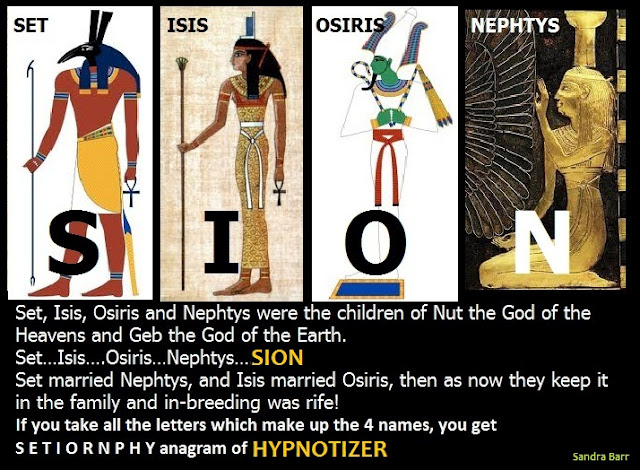
The 4 primary Egyptian deities were Set, Isis, Osiris and Nephthys. Their initials spell SION, and if you take all the letters that make up their collective names, without repeating letters, you get “Hypnotizer”.

One way or another the devotees of the ancient Gods and Goddess have strived to keep us all under a spell, hypnotised into believing what they want us to believe, and doing what they want us to do.

Organic Elite Surrenders to Monsanto: Whole Foods Oks Coexistence

Organic Elite Surrenders to Monsanto: Whole Foods Oks Coexistence

“The policy set for GE alfalfa will most likely guide policies for other GE crops as well. True coexistence is a must.”   –  Whole Foods Market, Jan. 21, 2011

In the wake of a 12-year battle to keep Monsanto’s Genetically Engineered (GE) crops from contaminating the nation’s 25,000 organic farms and ranches, America’s organic consumers and producers are facing betrayal. A self-appointed cabal of the Organic Elite, spearheaded by Whole Foods MarketOrganic Valley, andStonyfield Farm, has decided it’s time to surrender to Monsanto. Top executives from these companies have publicly admitted that they no longer oppose the mass commercialization of GE crops, such as Monsanto’s controversial Roundup Ready alfalfa, and are prepared to sit down and cut a deal for “coexistence” with Monsanto and USDA biotech cheerleader Tom Vilsack.

In a cleverly worded, but profoundly misleading email sent to its customers last week, Whole Foods Market, while proclaiming their support for organics and “seed purity,” gave the green light to USDA bureaucrats to approve the “conditional deregulation” of Monsanto’s genetically engineered, herbicide-resistant alfalfa.  Beyond the regulatory euphemism of “conditional deregulation,” this means that WFM and their colleagues are willing to go along with the massive planting of a chemical and energy-intensive GE perennial crop, alfalfa; guaranteed to spread its mutant genes and seeds across the nation; guaranteed to contaminate the alfalfa fed to organic animals; guaranteed to lead to massive poisoning of farm workers and destruction of the essential soil food web by the toxic herbicide, Roundup; and guaranteed to produce Roundup-resistant superweeds that will require even more deadly herbicides such as 2,4 D to be sprayed on millions of acres of alfalfa across the U.S.

In exchange for allowing Monsanto’s premeditated pollution of the alfalfa gene pool, WFM wants “compensation.” In exchange for a new assault on farmworkers and rural communities (a recent large-scale Swedish study found that spraying Roundup doubles farm workers’ and rural residents’ risk of getting cancer), WFM expects the pro-biotech USDA to begin to regulate rather than cheerlead for Monsanto. In payment for a new broad spectrum attack on the soil’s crucial ability to provide nutrition for food crops and to sequester dangerous greenhouse gases (recent studies show that Roundup devastates essential soil microorganisms that provide plant nutrition and sequester climate-destabilizing greenhouse gases), WFM wants the Biotech Bully of St. Louis to agree to pay “compensation” (i.e. hush money) to farmers “for any losses related to the contamination of his crop.”

In its email of Jan. 21, 2011 WFM calls for “public oversight by the USDA rather than reliance on the biotechnology industry,” even though WFM knows full well that federal regulations on Genetically Modified Organisms (GMOs) do not require pre-market safety testing, nor labeling; and that even federal judges have repeatedly ruled that so-called government “oversight” of Frankencrops such as Monsanto’s sugar beets and alfalfa is basically a farce. At the end of its email, WFM admits that its surrender to Monsanto is permanent: “The policy set for GE alfalfa will most likely guide policies for other GE crops as well  True coexistence is a must.”

Why Is Organic Inc. Surrendering?

According to informed sources, the CEOs of WFM and Stonyfield are personal friends of former Iowa governor, now USDA Secretary, Tom Vilsack, and in fact made financial contributions to Vilsack’s previous electoral campaigns. Vilsack was hailed as “Governor of the Year” in 2001 by the Biotechnology Industry Organization, and traveled in a Monsanto corporate jet on the campaign trail. Perhaps even more fundamental to Organic Inc.’s abject surrender is the fact that the organic elite has become more and more isolated from the concerns and passions of organic consumers and locavores.

The Organic Inc. CEOs are tired of activist pressure, boycotts, and petitions. Several of them have told me this to my face. They apparently believe that the battle against GMOs has been lost, and that it’s time to reach for the consolation prize.  The consolation prize they seek is a so-called “coexistence” between the biotech Behemoth and the organic community that will lull the public to sleep and greenwash the unpleasant fact that Monsanto’s unlabeled and unregulated genetically engineered crops are now spreading their toxic genes on 1/3 of U.S. (and 1/10 of global) crop land.

WFM and most of the largest organic companies have deliberately separated themselves from anti-GMO efforts and cut off all funding to campaigns working to label or ban GMOs. The so-called Non-GMO Project, funded by Whole Foods and giant wholesaler United Natural Foods (UNFI) is basically a greenwashing effort (although the 100% organic companies involved in this project seem to be operating in good faith) to show that certified organic foods are basically free from GMOs (we already know this since GMOs are banned in organic production), while failing to focus on so-called “natural” foods, which constitute most of WFM and UNFI’s sales and are routinely contaminated with GMOs.

From their “business as usual” perspective, successful lawsuits against GMOs filed by public interest groups such as the Center for Food Safety; or noisy attacks on Monsanto by groups like the Organic Consumers Association, create bad publicity, rattle their big customers such as Wal-Mart, Target, Kroger, Costco, Supervalu, Publix and Safeway; and remind consumers that organic crops and foods such as corn, soybeans, and canola are slowly but surely becoming contaminated by Monsanto’s GMOs.

Whole Foods’ Dirty Little Secret: Most of the So-Called “Natural” Processed Foods and Animal Products They Sell Are Contaminated with GMOs

The main reason, however, why Whole Foods is pleading for coexistence with Monsanto, Dow, Bayer, Syngenta, BASF and the rest of the biotech bullies, is that they desperately want the controversy surrounding genetically engineered foods and crops to go away. Why? Because they know, just as we do, that 2/3 of WFM’s $9 billion annual sales is derived from so-called “natural” processed foods and animal products that are contaminated with GMOs. We and our allies have tested their so-called “natural” products (no doubt WFM’s lab has too) containing non-organic corn and soy, and guess what: they’re all contaminated with GMOs, in contrast to their certified organic products, which are basically free of GMOs, or else contain barely detectable trace amounts.

Approximately 2/3 of the products sold by Whole Foods Market and their main distributor, United Natural Foods (UNFI) are not certified organic, but rather are conventional (chemical-intensive and GMO-tainted) foods and products disguised as “natural.”

Unprecedented wholesale and retail control of the organic marketplace by UNFI and Whole Foods, employing a business model of selling twice as much so-called “natural” food as certified organic food, coupled with the takeover of many organic companies by multinational food corporations such as Dean Foods, threatens the growth of the organic movement.

Covering Up GMO Contamination: Perpetrating “Natural” Fraud

Many well-meaning consumers are confused about the difference between conventional products marketed as “natural,” and those nutritionally/ environmentally superior and climate-friendly products that are “certified organic.”

Retail stores like WFM and wholesale distributors like UNFI have failed to educate their customers about the qualitative difference between natural and certified organic, conveniently glossing over the fact that nearly all of the processed “natural” foods and products they sell contain GMOs, or else come from a “natural” supply chain where animals are force-fed GMO grains in factory farms or Confined Animal Feeding Operations (CAFOs).

A troubling trend in organics today is the calculated shift on the part of certain large formerly organic brands from certified organic ingredients and products to so-called “natural” ingredients. With the exception of the “grass-fed and grass-finished” meat sector, most “natural” meat, dairy, and eggs are coming from animals reared on GMO grains and drugs, and confined, entirely, or for a good portion of their lives, in CAFOs.

Whole Foods and UNFI are maximizing their profits by selling quasi-natural products at premium organic prices. Organic consumers are increasingly left without certified organic choices while genuine organic farmers and ranchers continue to lose market share to “natural” imposters. It’s no wonder that less than 1% of American farmland is certified organic, while well-intentioned but misled consumers have boosted organic and “natural” purchases to $80 billion annually-approximately 12% of all grocery store sales.

The Solution: Truth-in-Labeling Will Enable Consumers to Drive So-Called “Natural” GMO and CAFO-Tainted Foods Off the Market

There can be no such thing as “coexistence” with a reckless industry that undermines public health, destroys biodiversity, damages the environment, tortures and poisons animals, destabilizes the climate, and economically devastates the world’s 1.5 billion seed-saving small farmers.

There is no such thing as coexistence between GMOs and organics in the European Union. Why? Because in the EU there are almost no GMO crops under cultivation, nor GM consumer food products on supermarket shelves. And why is this? Because under EU law, all foods containing GMOs or GMO ingredients must be labeled. Consumers have the freedom to choose or not to choose GMOs; while farmers, food processors, and retailers have (at least legally) the right to lace foods with GMOs, as long as they are safety-tested and labeled.

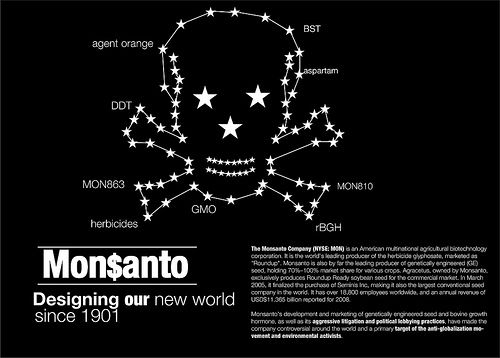
Of course the EU food industry understands that consumers, for the most part, do not want to purchase or consume GE foods. European farmers and food companies, even junk food purveyors like McDonald’s and Wal-Mart, understand quite well the concept expressed by a Monsanto executive when GMOs first came on the market: “If you put a label on genetically engineered food you might as well put a skull and crossbones on it.”

The biotech industry and Organic Inc. are supremely conscious of the fact that North American consumers, like their European counterparts, are wary and suspicious of GMO foods. Even without a PhD, consumers understand you don’t want your food safety or environmental sustainability decisions to be made by out-of-control chemical companies like Monsanto, Dow, or Dupont – the same people who brought you toxic pesticides, Agent Orange, PCBs, and now global warming.

Industry leaders are acutely aware of the fact that every single industry or government poll over the last 16 years has shown that 85-95% of American consumers want mandatory labels on GMO foods. Why? So that we can avoid buying them. GMO foods have absolutely no benefits for consumers or the environment, only hazards. This is why Monsanto and their friends in the Bush, Clinton, and Obama administrations have prevented consumer GMO truth-in-labeling laws from getting a public discussion in Congress.

Although Congressman Dennis Kucinich (Democrat, Ohio) recently introduced a bill in Congress calling for mandatory labeling and safety testing for GMOs, don’t hold your breath for Congress to take a stand for truth-in-labeling and consumers’ right to know what’s in their food. Especially since the 2010 Supreme Court decision in the so-called Citizens United case gave big corporations and billionaires the right to spend unlimited amounts of money (and remain anonymous, as they do so) to buy media coverage and elections, our chances of passing federal GMO labeling laws against the wishes of Monsanto and Food Inc. are all but non-existent.

Perfectly dramatizing the “Revolving Door” between Monsanto and the Federal Government, Supreme Court Justice Clarence Thomas, formerly chief counsel for Monsanto, delivered one of the decisive votes in the Citizens United case, in effect giving Monsanto and other biotech bullies the right to buy the votes it needs in the U.S. Congress.

With big money controlling Congress and the media, we have little choice but to shift our focus and go local. We’ve got to concentrate our forces where our leverage and power lie, in the marketplace, at the retail level; pressuring retail food stores to voluntarily label their products; while on the legislative front we must organize a broad coalition to pass mandatory GMO (and CAFO) labeling laws, at the city, county, and state levels.

The Organic Consumers Association, joined by our consumer, farmer, environmental, and labor allies, has just launched a nationwide Truth-in-Labeling campaign to stop Monsanto and the Biotech Bullies from force-feeding unlabeled GMOs to animals and humans.

Utilizing scientific data, legal precedent, and consumer power the OCA and our local coalitions will educate and mobilize at the grassroots level to pressure giant supermarket chains (Wal-Mart, Kroger, Costco, Safeway, Supervalu, and Publix) and natural food retailers such as Whole Foods and Trader Joe’s to voluntarily implement “truth-in-labeling” practices for GMOs and CAFO products; while simultaneously organizing a critical mass to pass mandatory local and state truth-in-labeling ordinances – similar to labeling laws already in effect for country of origin, irradiated food, allergens, and carcinogens.

If local and state government bodies refuse to take action, wherever possible we must attempt to gather sufficient petition signatures and place these truth-in-labeling initiatives directly on the ballot in 2011 or 2012.  If you’re interested in helping organize or coordinate a Millions Against Monsanto and Factory Farms Truth-in-Labeling campaign in your local community, sign up here:http://organicconsumers.org/oca-volunteer/

To pressure Whole Foods Market and the nation’s largest supermarket chains to voluntarily adopt truth-in-labeling practices sign here, and circulate this petition widely:http://www.organicconsumers.org/articles/article_22309.cfm

And please stay tuned to Organic Bytes for the latest developments in our campaigns.

Power to the People! Not the Corporations!

####

Jan. 28 Response by Whole Foods Market:

Many people have asked us why we endorsed the coexistence option rather than an outright ban on GE alfalfa. That was never an option in Washington!  The USDA presented the industry with only two options that they were considering– deregulation and deregulation with restrictions. Given the pervasive planting of GE crops in the U.S. – 93% of soy, 86% of corn, 93% of cotton and 93% of canola seed planted were genetically engineered in the U.S. in 2010 – the option of an outright ban was not on the table. Whole Foods Market — along with the National Cooperative Grocers Association, the National Organic Coalition, the Organic Trade Association, and other companies and groups — endorsed the path of deregulation with restrictions, or coexistence, not because it was a perfect path, but because it was a path to create meaningful change right now in the regulating of genetically engineered foods and the protection of non-GE foods. (Read the full response.)

SOURCE


The Sad Reality of the Milk & Dairy Industry

The Sad Reality of the Milk & Dairy Industry

You’ve got something that I want… and you won’t believe the things I’ll do to get it!

Website – www.oppressthis.com
Facebook – https://www.facebook.com/pages/oppressTHIS-Shell123ey/169801543075368?ref=ts
Twitter – http://twitter.com/#!/oppressTHIS

To put it simply..

There is a room, with a wall running down the middle, dividing it into two.

On one side of the room, there is a girl with a button… she pushes it a lot, because it’s always been there, and she sees no harm in it.

On the other side of the divide, is a girl in chains, and every time the button is pushed, she receives an electric shock through the chains.

It’s excruciating.

MY VIDEO SMASHES THE WALL BETWEEN THE TORTURER AND THE TORTURED.

And now the torturer can see what she’s been doing.

Her actions are connected to the consequences.

It’s now time for her to make INFORMED DECISIONS.

CONSUMER EMPOWERMENT, BABY!

Sanders Releases Explosive Bailout List

Sanders Releases Explosive Bailout List

More than $4 trillion in near zero-interest Federal Reserve loans and other financial assistance went to the banks and businesses of at least 18 current and former Federal Reserve regional bank directors in the aftermath of the 2008 financial collapse, according to Government Accountability Office records made public for the first time today by Sen. Bernie Sanders.

On the eve of Senate testimony by JPMorgan Chase CEO Jamie Dimon, Sanders (I-Vt.) released the detailed findings on Dimon and other Fed board members whose banks and businesses benefited from Fed actions.

A Sanders provision in the Dodd-Frank Wall Street Reform Act required the Government Accountability Office to investigate potential conflicts of interest. The Oct. 19, 2011 report by the non-partisan investigative arm of Congress laid out the findings, but did not name names. Sanders today released the names.


“This report reveals the inherent conflicts of interest that exist at the Federal Reserve.  At a time when small businesses could not get affordable loans to create jobs, the Fed was providing trillions in secret loans to some of the largest banks and corporations in America that were well represented on the boards of the Federal Reserve Banks.  These conflicts must end,” Sanders said.

The GAO study found that allowing members of the banking industry to both elect and serve on the Federal Reserve’s board of directors creates “an appearance of a conflict of interest” and poses “reputational risks” to the Federal Reserve System.

In Dimon’s case, JPMorgan received some $391 billion of the $4 trillion in emergency Fed funds at the same time his bank was used by the Fed as a clearinghouse for emergency lending programs. In March of 2008, the Fed provided JPMorgan with $29 billion in financing to acquire Bear Stearns. Dimon also got the Fed to provide JPMorgan Chase with an 18-month exemption from risk-based leverage and capital requirements. And he convinced the Fed to take risky mortgage-related assets off of Bear Stearns balance sheet before JP Morgan Chase acquired the troubled investment bank.

Another high-profile conflict involved Stephen Friedman, the former chairman of the New York Fed’s board of directors. Late in 2008, the New York Fed approved an application from Goldman Sachs to become a bank holding company giving it access to cheap loans from the Federal Reserve. During that period, Friedman sat on the Goldman Sachs board.  He also owned Goldman stock, something that was prohibited by Federal Reserve conflict of interest regulations. Although it was not publicly disclosed at the time, Friedman received a waiver from the Fed’s conflict of interest rules in late 2008. Unbeknownst to the Fed, Friedman continued to purchase shares in Goldman from November 2008 through January of 2009, according to the GAO.

In another case, General Electric CEO Jeffrey Immelt was a New York Fed board member at the same time GE helped create a Commercial Paper Funding Facility during the financial crisis. The Fed later provided $16 billion in financing to GE under this emergency lending program.

Sanders on May 22 introduced legislation to prohibit banking industry and business executives from serving as directors of the 12 Federal Reserve regional banks.

To read a report summarizing the new GAO information, click here.


Jamie Dimon Is Not Alone


During the financial crisis, at least 18 former and current directors from Federal Reserve Banks worked in banks and corporations that collectively received over $4 trillion in low-interest loans from the Federal Reserve.

US Senator Bernard Sanders (I-Vt.)
Washington, DC
June 12, 2012


    1. Jamie Dimon, the Chairman and CEO of JP Morgan Chase, has served on the Board of Directors at the Federal Reserve Bank of New York since 2007. During the financial crisis, the Fed provided JP Morgan Chase with $391 billion in total financial assistance. JP Morgan Chase was also used by the Fed as a clearinghouse for the Fed’s emergency lending programs.In March of 2008, the Fed provided JP Morgan Chase with $29 billion in financing to acquire Bear Stearns. During the financial crisis, the Fed provided JP Morgan Chase with an 18-month exemption from risk-based leverage and capital requirements. The Fed also agreed to take risky mortgage-related assets off of Bear Stearns balance sheet before JP Morgan Chase acquired this troubled investment bank.
    1. Jeffrey Immelt, the CEO of General Electric, served on the New York Fed’s Board of Directors from 2006-2011. General Electric received $16 billion in low-interest financing from the Federal Reserve’s Commercial Paper Funding Facility during this time period.
    1. Stephen Friedman. In 2008, the New York Fed approved an application from Goldman Sachs to become a bank holding company giving it access to cheap Fed loans. During the same period, Friedman, who was chairman of the New York Fed at the time, sat on the Goldman Sachs board of directors and owned Goldman stock, something the Fed’s rules prohibited. He received a waiver in late 2008 that was not made public. After Friedman received the waiver, he continued to purchase stock in Goldman from November 2008 through January of 2009 unbeknownst to the Fed, according to the GAO. During the financial crisis, Goldman Sachs received $814 billion in total financial assistance from the Fed.
    1. Sanford Weill, the former CEO of Citigroup, served on the Fed’s Board of Directors in New York in 2006. During the financial crisis, Citigroup received over $2.5 trillion in total financial assistance from the Fed.
    1. Richard Fuld, Jr, the former CEO of Lehman Brothers, served on the Fed’s Board of Directors in New York from 2006 to 2008. During the financial crisis, the Fed provided $183 billion in total financial assistance to Lehman before it collapsed.
    1. James M. Wells, the Chairman and CEO of SunTrust Banks, has served on the Board of Directors at the Federal Reserve Bank in Atlanta since 2008. During the financial crisis, SunTrust received $7.5 billion in total financial assistance from the Fed.
    1. Richard Carrion, the head of Popular Inc. in Puerto Rico, has served on the Board of Directors of the Federal Reserve Bank of New York since 2008. Popular received $1.2 billion in total financing from the Fed’s Term Auction Facility during the financial crisis.
    1. James Smith, the Chairman and CEO of Webster Bank, served on the Federal Reserve’s Board of Directors in Boston from 2008-2010. Webster Bank received $550 million in total financing from the Federal Reserve’s Term Auction Facility during the financial crisis.
    1. Ted Cecala, the former Chairman and CEO of Wilmington Trust, served on the Fed’s Board of Directors in Philadelphia from 2008-2010. Wilmington Trust received $3.2 billion in total financial assistance from the Federal Reserve during the financial crisis.
    1. Robert Jones, the President and CEO of Old National Bancorp, has served on the Fed’s Board of Directors in St. Louis since 2008. Old National Bancorp received a total of $550 million in low-interest loans from the Federal Reserve’s Term Auction Facility during the financial crisis.
    1. James Rohr, the Chairman and CEO of PNC Financial Services Group, served on the Fed’s Board of Directors in Cleveland from 2008-2010. PNC received $6.5 billion in low-interest loans from the Federal Reserve during the financial crisis.
    1. George Fisk, the CEO of LegacyTexas Group, was a director at the Dallas Federal Reserve in 2009. During the financial crisis, his firm received a $5 million low-interest loan from the Federal Reserve’s Term Auction Facility.
    1. Dennis Kuester, the former CEO of Marshall & Ilsley, served as a board director on the Chicago Federal Reserve from 2007-2008. During the financial crisis, his bank received over $21 billion in low-interest loans from the Fed.
    1. George Jones, Jr., the CEO of Texas Capital Bank, has served as a board director at the Dallas Federal Reserve since 2009. During the financial crisis, his bank received $2.3 billion in total financing from the Fed’s Term Auction Facility.
    1. Douglas Morrison, was the Chief Financial Officer at CitiBank in Sioux Falls, South Dakota, while he served as a board director at the Minneapolis Federal Reserve Bank in 2006. During the financial crisis, CitiBank in Sioux Falls, South Dakota received over $21 billion in total financing from the Federal Reserve.
    1. L. Phillip Humann, the former CEO of SunTrust Banks, served on the Board of Directors at the Federal Reserve Bank in Atlanta from 2006-2008. During the financial crisis, SunTrust received $7.5 billion in total financial assistance from the Fed.
    1. Henry Meyer, III, the former CEO of KeyCorp, served on the Board of Directors at the Federal Reserve Bank in Cleveland from 2006-2007. During the financial crisis, KeyBank (owned by KeyCorp) received over $40 billion in total financing from the Federal Reserve.
  1. Ronald Logue, the former CEO of State Street Corporation, served as a board member of the Boston Federal Reserve Bank from 2006-2007. During the financial crisis, State Street Corporation received a total of $42 billion in financing from the Federal Reserve.

SOURCE: ReaderSupportedNews.org

Iceland Dismantles Corrupt Gov’t Then Arrests All Rothschild Bankers

Iceland Dismantles Corrupt Gov’t Then Arrests All Rothschild Bankers

Since the 1900′s the vast majority of the American population has dreamed about saying “NO” to the Unconstitutional, corrupt, Rothschild/Rockefeller banking criminals, but no one has dared to do so. Why? If just half of our Nation, and the “1%”, who pay the majority of the taxes, just said NO MORE! Our Gov’t would literally change over night.

Why is it so hard, for some people to understand, that by simply NOT giving your money, to large Corporations, who then send jobs, Intellectual Property, etc. offshore and promote anti-Constitutional rights… You will accomplish more, than if you used violence. In other words… RESEARCH WHERE YOU ARE SENDING EVERY SINGLE PENNY!!! Is that so hard? The truth of the matter is… No other modern Nation on earth, except the Icelanders, have carried this out successfully. Not only have they been successful, at overthrowing the corrupt Gov’t, they’ve drafted a Constitution, that will stop this from happening ever again. That’s not the best part… The best part, is that they have arrested ALL Rothschild/Rockefeller banking puppets, responsible for the Country’s economic Chaos and meltdown. What does all this have to do with? The answer… AGENDA 21. If you’re not educated, about Agenda 21, please watch these short videos now: http://www.freedumbnation.com/?p=1130

Last week 9 people were arrested in London and Reykjavik for their possible responsibility for Iceland’s financial collapse in 2008, a deep crisis which developed into an unprecedented public reaction that is changing the country’s direction.

It has been a revolution without weapons in Iceland, the country that hosts the world’s oldest democracy (since 930), and whose citizens have managed to effect change by going on demonstrations and banging pots and pans. Why have the rest of the Western countries not even heard about it?

Pressure from Icelandic citizens’ has managed not only to bring down a government, but also begin the drafting of a new constitution (in process) and is seeking to put in jail those bankers responsible for the financial crisis in the country. As the saying goes, if you ask for things politely it is much easier to get them.

This quiet revolutionary process has its origins in 2008 when the Icelandic government decided to nationalise the three largest banks, Landsbanki, Kaupthing and Glitnir, whose clients were mainly British, and North and South American.

After the State took over, the official currency (krona) plummeted and the stock market suspended its activity after a 76% collapse. Iceland was becoming bankrupt and to save the situation, the International Monetary Fund (IMF) injected U.S. $ 2,100 million and the Nordic countries helped with another 2,500 million.

Great little victories of ordinary people

While banks and local and foreign authorities were desperately seeking economic solutions, the Icelandic people took to the streets and their persistent daily demonstrations outside parliament in Reykjavik prompted the resignation of the conservative Prime Minister Geir H. Haarde and his entire government.

Citizens demanded, in addition, to convene early elections, and they succeeded. In April a coalition government was elected, formed by the Social Democratic Alliance and the Left Green Movement, headed by a new Prime Minister, Jóhanna Sigurðardóttir.

Throughout 2009 the Icelandic economy continued to be in a precarious situation (at the end of the year the GDP had dropped by 7%) but, despite this, the Parliament proposed to repay the debt to Britain and the Netherlands with a payment of 3,500 million Euros, a sum to be paid every month by Icelandic families for 15 years at 5.5% interest.

The move sparked anger again in the Icelanders, who returned to the streets demanding that, at least, that decision was put to a referendum. Another big small victory for the street protests: in March 2010 that vote was held and an overwhelming 93% of the population refused to repay the debt, at least with those conditions.

This forced the creditors to rethink the deal and improve it, offering 3% interest and payment over 37 years. Not even that was enough. The current president, on seeing that Parliament approved the agreement by a narrow margin, decided last month not to approve it and to call on the Icelandic people to vote in a referendum so that they would have the last word.

The bankers are fleeing in fear

Returning to the tense situation in 2010, while the Icelanders were refusing to pay a debt incurred by financial sharks without consultation, the coalition government had launched an investigation to determine legal responsibilities for the fatal economic crisis and had already arrested several bankers and top executives closely linked to high risk operations.

Interpol, meanwhile, had issued an international arrest warrant against Sigurdur Einarsson, former president of one of the banks. This situation led scared bankers and executives to leave the country en masse.

In this context of crisis, an assembly was elected to draft a new constitution that would reflect the lessons learned and replace the current one, inspired by the Danish constitution.

To do this, instead of calling experts and politicians, Iceland decided to appeal directly to the people, after all they have sovereign power over the law. More than 500 Icelanders presented themselves as candidates to participate in this exercise in direct democracy and write a new constitution. 25 of them, without party affiliations, including lawyers, students, journalists, farmers and trade union representatives were elected.

Among other developments, this constitution will call for the protection, like no other, of freedom of information and expression in the so-called Icelandic Modern Media Initiative, in a bill that aims to make the country a safe haven for investigative journalism and freedom of information, where sources, journalists and Internet providers that host news reporting are protected.

The people, for once, will decide the future of the country while bankers and politicians witness the transformation of a nation from the sidelines.

SOURCE: http://www.freedumbnation.com/?p=2369

The Multiple Ways Monsanto is Putting Normal Seeds Out of Reach

The Multiple Ways Monsanto is Putting Normal Seeds Out of Reach

People say if farmers don’t want problems from Monsanto, just don’t buy their GMO seeds.

Not so simple. Where are farmers supposed to get normal seed these days? How are they supposed to avoid contamination of their fields from GM-crops? How are they supposed to stop Monsanto detectives from trespassing or Monsanto from using helicopters to fly over spying on them?

Monsanto contaminates the fields, trespasses onto the land taking samples and if they find any GMO plants growing there (or say they have), they then sue, saying they own the crop. It’s a way to make money since farmers can’t fight back and court and they settle because they have no choice.

And they have done and are doing a bucket load of things to keep farmers and everyone else from having any access at all to buying, collecting, and saving of NORMAL seeds.

1.  They’ve bought up the seed companies across the Midwest.

2.  They’ve written Monsanto seed laws and gotten legislators to put them through, that make cleaning, collecting and storing of seeds so onerous in terms of fees and paperwork and testing and tracking every variety and being subject to fines, that having normal seed becomes almost impossible (an NAIS approach to wiping out normal seeds). Does your state have such a seed law? Before they existed, farmers just collected the seeds and put them in sacks in the shed and used them the next year, sharing whatever they wished with friends and neighbors, selling some if they wanted. That’s been killed.

In Illinois, which has such a seed law, Madigan, the Speaker of the House, his staff is Monsanto lobbyists.

3.  Monsanto is pushing anti-democracy laws (Vilsack’s brainchild, actually) that remove community’ control over their own counties so farmers and citizens can’t block the planting of GMO crops even if they can contaminate other crops. So if you don’t want a GM-crop that grows industrial chemicals or drugs or a rice growing with human DNA in it, in your area and mixing with your crops, tough luck.

Check the map of just where the Monsanto/Vilsack laws are and see if your state is still a democracy or is Monsanto’s. A farmer in Illinois told me he heard that Bush had pushed through some regulation that made this true in every state. People need to check on that.

4.  For sure there are Monsanto regulations buried in the FDA right now that make a farmer’s seed cleaning equipment illegal (another way to leave nothing but GM-seeds) because it’s now considered a “source of seed contamination.” Farmer can still seed clean but the equipment now has to be certified and a farmer said it would require a million to a million and half dollar building and equipment … for EACH line of seed. Seed storage facilities are also listed (another million?) and harvesting and transport equipment. And manure. Something that can contaminate seed. Notice that chemical fertilizers and pesticides are not mentioned.

You could eat manure and be okay (a little grossed out but okay). Try that with pesticides and fertilizers. Indian farmers have. Their top choice for how to commit suicide to escape the debt they have been left in is to drink Monsanto pesticides.

5.  Monsanto is picking off seed cleaners across the Midwest. In Pilot Grove, Missouri, in Indiana (Maurice Parr), and now in southern Illinois (Steve Hixon). And they are using US marshals and state troopers and county police to show up in three cars to serve the poor farmers who had used Hixon as their seed cleaner, telling them that he or their neighbors turned them in, so across that 6 county areas, no one talking to neighbors and people are living in fear and those farming communities are falling apart from the suspicion Monsanto sowed. Hixon’s office got broken into and he thinks someone put a GPS tracking device on his equipment and that’s how Monsanto found between 200-400 customers in very scattered and remote areas, and threatened them all and destroyed his business within 2 days.

So, after demanding that seed cleaners somehow be able to tell one seed from another (or be sued to kingdom come) or corrupting legislatures to put in laws about labeling of seeds that are so onerous no one can cope with them, what is Monsanto’s attitude about labeling their own stuff? You guessed it – they’re out there pushing laws against ANY labeling of their own GM-food and animals and of any exports to other countries. Why?

We know and they know why.

As Norman Braksick, the president of Asgrow Seed Co. (now owned by Monsanto) predicted in the Kansas City Star (3/7/94) seven years ago, “If you put a label on a genetically engineered food, you might as well put a skull and crossbones on it.”

And they’ve sued dairy farmers for telling the truth about their milk being rBGH-free, though rBGH is associated with an increased risk of breast, colon and prostate cancers.

I just heard that some seed dealers urge farmers to buy the seed under the seed dealer’s name, telling the farmers it helps the dealer get a discount on seed to buy a lot under their own name. Then Monsanto sues the poor farmer for buying their seed without a contract and extorts huge sums from them.

Here’s a youtube video that is worth your time. Vandana Shiva is one of the leading anti-Monsanto people in the world. In this video, she says (and this video is old), Monsanto had sued 1500 farmers whose fields had simply been contaminated by GM-crops. Listen to all the ways Monsanto goes after farmers.

Do you know the story of Gandhi in India and how the British had salt laws that taxed salt? The British claimed it as theirs. Gandhi had what was called a Salt Satyagraha, in which people were asked to break the laws and march to the sea  and collect the salt without paying the British. A kind of Boston tea party, I guess.

Thousands of people marched 240 miles to the ocean where the British were waiting. As people moved forward to collect the salt, the British soldiers clubbed them but the people kept coming. The non-violent protest exposed the British behavior, which was so revolting to the world that it helped end British control in India.

Vandana Shiva has started a Seed Satyagraha – nonviolent non-cooperation around seed laws – has gotten millions of farmers to sign a pledge to break those laws.

American farmers and cattlemen might appreciate what Gandhi fought for and what Shiva is bringing back and how much it is about what we are all so angry about – loss of basic freedoms. [The highlighting is mine.]


The Seed Satyagraha is the name for the nonviolent, noncooperative movement that Dr. Shiva has organized to stand against seed monopolies. According to Dr. Shiva, the name was inspired by Gandhi’s famous walk to the Dandi Beach, where he picked up salt and said, “You can’t monopolize this which we need for life.” But it’s not just the noncooperation aspect of the movement that is influenced by Gandhi. The creative side saving seeds, trading seeds, farming without corporate dependence–without their chemicals, without their seed.

” All this is talked about in the language that Gandhi left us as a legacy. We work with three key concepts.”

” (One) Swadeshi…which means the capacity to do your own thing–produce your own food, produce your own goods….”

“(Two) Swaraj–to govern yourself. And we fight on three fronts–waterfood, and seed. JalSwaraj is water independence–water freedom and water sovereignty. Anna Swaraj is food freedom, food sovereignty. And Bija Swaraj is seed freedom and seed sovereignty. Swa means self–that which rises from the self and is very, very much a deep notion of freedom.

“I believe that these concepts, which are deep, deep, deep in Indian civilization, Gandhi resurrected them to fight for freedom. They are very important for today’s world because so far what we’ve had is centralized state rule, giving way now to centralized corporate control, and we need a third alternate. That third alternate is, in part, citizens being able to tell their state, ‘This is what your function is. This is what your obligations are,’ and being able to have their states act on corporations to say, ‘This is something you cannot do.’”

” (Three) Satyagraha, non-cooperation, basically saying, ‘We will do our thing and any law that tries to say that (our freedom) is illegal… we will have to not cooperate with it. We will defend our freedoms to have access to water, access to seed, access to food, access to medicine.’”

SOURCE: SurvivingTheMiddleClassCrash.com

Super Mega Bilderberg Infographic Flowchart of Connected Banks, Politicians, Corporations, Control Groups

Super Mega Bilderberg Infographic Flowchart of Connected Banks, Politicians, Corporations, Control Groups

Click to Enlarge


Bilderberg Group

From Wikipedia, the free encyclopedia
Formation 29 May 1954 (58 years ago)
Membership ~150 invitees, smaller core group
Chairman of the Steering Committee Henri de Castries
Website www.bilderbergmeetings.org

The Bilderberg Group, Bilderberg conference, or Bilderberg Club is an annual, unofficial, invitation-only conference of approximately 120 to 140 guests from North America and Western Europe, most of whom are people of influence.[1][2] About one-third are from government and politics, and two-thirds from finance, industry, labour, education and communications. Meetings are closed to the public.

Contents

Origin

The original conference was held at the Hotel de Bilderberg, near Arnhem in the Netherlands, from 29 to 31 May 1954. It was initiated by several people, including Polish politicians Józef Retinger and Andrew Nielsen, concerned about the growth of anti-Americanism in Western Europe, who proposed an international conference at which leaders from European countries and the United States would be brought together with the aim of promoting Atlanticism – better understanding between the cultures of the United States and Western Europe to foster cooperation on political, economic, and defense issues.[3] Retinger approached Prince Bernhard of the Netherlands who agreed to promote the idea, together with former Belgian Prime Minister Paul Van Zeeland, and the head of Unilever at that time, Dutchman Paul Rijkens. Bernhard in turn contacted Walter Bedell Smith, then head of the CIA, who asked Eisenhower adviser Charles Douglas Jackson to deal with the suggestion.[4] The guest list was to be drawn up by inviting two attendees from each nation, one of each to represent conservative and liberal points of view.[3] Fifty delegates from 11 countries in Western Europe attended the first conference, along with 11 Americans.[5]

The success of the meeting led the organizers to arrange an annual conference. A permanent Steering Committee was established, with Retinger appointed as permanent secretary. As well as organizing the conference, the steering committee also maintained a register of attendee names and contact details, with the aim of creating an informal network of individuals who could call upon one another in a private capacity.[citation needed] Conferences were held in France, Germany, and Denmark over the following three years. In 1957, the first US conference was held on St. Simons Island, Georgia, with $30,000 from the Ford Foundation. The foundation supplied further funding for the 1959 and 1963 conferences.[4]

Role

The role of the Bilderberg meetings in the flow of events since its founding in 1954 is a matter of debate among scholars and journalists, such as G. William Domhoff and Caroline Moorehead. In his 1980 essay The Bilderberg and the West, researcher Peter Thompson argues that the Bilderberg group is a meeting ground for top executives from the world’s leading multinational corporations and top national political figures to consider jointly the immediate and long-term problems facing the West. According to Thompson, Bilderberg itself is not an executive agency. However, when Bilderberg participants reach a form of consensus about what is to be done, they have at their disposal powerful transnational and national instruments for bringing about what it is they want to come to pass. That their consensus design is not always achieved is a reflection of the strength of competing resisting forces outside the capitalist ruling class and within it.[6]

Organizational structure

Meetings are organized by a steering committee with two members from each of approximately 18 nations.[7] Official posts, in addition to a chairman, include an Honorary Secretary General.[8] There is no such category in the group’s rules as a “member of the group”. The only category that exists is “member of the Steering Committee”.[9] In addition to the committee, there also exists a separate advisory group, though membership overlaps.[10]

Dutch economist Ernst van der Beugel became permanent secretary in 1960, upon Retinger’s death. Prince Bernhard continued to serve as the meeting’s chairman until 1976, the year of his involvement in the Lockheed affair. The position of Honorary American Secretary General has been held successively by Joseph E. Johnson of the Carnegie Endowment, William Bundy of Princeton, Theodore L. Eliot, Jr., former U.S. Ambassador to Afghanistan, and Casimir A. Yost of Georgetown’s Institute for the Study of Diplomacy.[11]

A 2008 press release from the ‘American Friends of Bilderberg’ stated that “Bilderberg’s only activity is its annual Conference. At the meetings, no resolutions are proposed, no votes taken, and no policy statements issued” and noted that the names of attendees were available to the press.[12] The Bilderberg group’s unofficial headquarters is the University of Leiden in the Netherlands.[13]

According to the ‘American Friends of Bilderberg’, the 2008 agenda dealt “mainly with a nuclear free world, cyber terrorism, Africa, Russia, finance, protectionism, US-EU relations, Afghanistan and Pakistan, Islam and Iran“.[12]

Chairmen of the Steering Committee

Participants

Federal Reserve Chairman Ben Bernanke leaving the 2008 Bilderberg Conference

Historically, attendee lists have been weighted towards bankers, politicians, and directors of large businesses.[16]

Heads of state, including Juan Carlos I of Spain and Queen Beatrix of the Netherlands, have attended meetings.[8][17] Prominent politicians from North America and Europe are past attendees. In past years, board members from many large publicly traded corporations have attended, including IBM, Xerox, Royal Dutch Shell, Nokia and Daimler.[8]

The 2009 meeting participants in Greece included: Greek prime minister Kostas Karamanlis; Finnish prime minister Matti Vanhanen;[18] Sweden foreign minister Carl Bildt; United States Deputy Secretary of State James Steinberg; U.S. Treasury Secretary Timothy Geithner; World Bank president Robert Zoellick; European Commission head José Manuel Barroso; Queen Sofia of Spain; and Queen Beatrix of the Netherlands.[19]

In 2009 the group hosted a dinner meeting at Castle of the Valley of the Duchess in Brussels on 12 November to promote the candidacy of Herman Van Rompuy for President of the European Council.[20]

The membership of the Bilderberg group is drawn largely from West European and North American countries.[21] Writing in 1980, policy analyst Holly Sklar noted that, from the 1950s, elites in the West became concerned that the United Nations was no longer controlled by Western powers, and that this concern was expressed in the participant selection process of the Bilderberg group.[21] Sklar also quoted observations from human rights journalist Caroline Moorehead in a 1977 article critical of the Bilderberg group’s membership, who in turn quoted an unnamed member of the group: “No invitations go out to representatives of the developing countries. ‘Otherwise you simply turn us into a mini-United-Nations,’ said one person. And, ‘we are looking for like-thinking people and compatible people. It would be worse to have a club of dopes.'”[16][21] In her article, Moorehead characterized the group as “heavily biased towards politics of moderate conservatism and big business” and claims that the “farthest left is represented by a scattering of central social democrats”.[16]

Recent meetings

Recent meetings:

Privacy

The meeting hotels are inaccessible for any other guest for the full period of the conferences and sentineled by private security staffs as well as by local police authorities. During the Bilderberg Meeting at Vouliagmeni (Greece) in 2009, for instance, the British Guardian reporter Charlie Skelton was arrested twice after having taken pictures of vehicles.[29]

Conspiratorial interpretations of Bilderberg Group activities

According to chairman Étienne Davignon, a major attraction of Bilderberg group meetings is that they provide an opportunity for participants to speak and debate candidly and to find out what major figures really think, without the risk of off-the-cuff comments becoming fodder for controversy in the media.[30] However, partly because of its working methods to ensure strict privacy, the Bilderberg group is accused of conspiracies.[30][31][32][33][34] This outlook has been popular on both extremes of the political spectrum, even if they disagree on what the group wants to do. Some on the left accuse the Bilderberg group of conspiring to impose capitalist domination,[35] while some on the right have accused the group of conspiring to impose a world government and planned economy.[36]

In 2001, Denis Healey, a Bilderberg group founder and, for 30 years, a steering committee member, said: “To say we were striving for a one-world government is exaggerated, but not wholly unfair. Those of us in Bilderberg felt we couldn’t go on forever fighting one another for nothing and killing people and rendering millions homeless. So we felt that a single community throughout the world would be a good thing.”[37] In 2005 Davignon discussed these accusations with the BBC: “It is unavoidable and it doesn’t matter. There will always be people who believe in conspiracies but things happen in a much more incoherent fashion… When people say this is a secret government of the world I say that if we were a secret government of the world we should be bloody ashamed of ourselves.”[34]

In a 1994 report Right Woos Left, published by the Political Research Associates, investigative journalist Chip Berlet argued that right-wing populist conspiracy theories about the Bilderberg group date back as early as 1964 and can be found in Schlafly’s self-published book A Choice, Not an Echo,[38] which promoted a conspiracy theory in which the Republican Party was secretly controlled by elitist intellectuals dominated by members of the Bilderberger group, whose internationalist policies would pave the way for world communism.[39] Also, in August 2010 former Cuban president Fidel Castro wrote an article for the Cuban Communist Party newspaper Granma in which he cited Daniel Estulin’s 2006 book The Secrets of the Bilderberg Club,[40] which, as quoted by Castro, describes “sinister cliques and the Bilderberg lobbyists” manipulating the public “to install a world government that knows no borders and is not accountable to anyone but its own self.”[35]

G. William Domhoff, a research professor in psychology and sociology who studies theories of power,[41] sees the role of international relations forums and social clubs such as the Bilderberg group as a place to share ideas, reach consensus, and create social cohesion within a power elite.[42] He adds that this understanding of forums and clubs such as the Bilderberg group fits with the perceptions of the members of the elite. Domhoff warns progressives against getting distracted by conspiracy theories which demonize and scapegoat such forums and clubs.[42] He argues that the opponents of progressivism in the United States are conservatives within the corporate elite and the Republican Party.[42] It is more or less the same people who belong to forums and clubs such as the Bilderberg group, but it puts them in their most important roles, as capitalists and political leaders, which are visible and therefore easier to fight.[42]

Politico journalist Kenneth P. Vogel reports that it is the “exclusive roster of globally influential figures that has captured the interest of an international network of conspiracists,” who for decades have seen the Bilderberg meetings as a “corporate-globalist scheme”, and are convinced powerful elites are moving the planet toward an oligarchic “new world order”.[43] He goes on to state that these conspiracist’s “populist paranoid worldview”, characterized by a suspicion of the ruling class rather than any prevailing partisan or ideological affiliation, is widely articulated on overnight AM radio shows and numerous Internet websites.[43]

Author James McConnachie comments that conspiracy theorists have a point, but that they fail to communicate it effectively.[44] He argues that the Bilderberg group acts in a manner consistent with a global conspiracy, but does so without the same “degree of nefariousness”, a difference not appreciated by conspiracy theorists, who “tend to see this cabal as outright evil.”[1] McConnachie concludes: “Occasionally you have to give credit to conspiracy theorists who raise issues that the mainstream press has ignored. It’s only recently that the media has picked up on the Bilderbergers. Would the media be running stories if there weren’t these wild allegations flying around?”[1]

Proponents of Bilderberg conspiracy theories in the United States include individuals and groups such as the John Birch Society,[36][45] political activist Phyllis Schlafly,[45] writer Jim Tucker,[46] political activist Lyndon LaRouche,[47] radio host Alex Jones,[1] and politician Jesse Ventura, who made the Bilderberg group a topic of a 2009 episode of his TruTV series Conspiracy Theory with Jesse Ventura.[48][original research?] Non-American proponents include Russian-Canadian writer Daniel Estulin.[49]

See also

References

  1. ^ a b c d BBC News (7 June 2011). Bilderberg mystery: Why do people believe in cabals?. Retrieved 14 June 2011.
  2. ^ “Japan–U.S. Relations—Past, Present and Future”. The Daily Yomiuri. 8 December 1991. “Rockefeller: The idea (of creating the Trilateral Commission) was incorporated in a speech that I made in the spring of 1972 for the benefit of some industrial forums that the Chase held in different cities around Europe,… Then Zbig (Zbig Brzezinski) and I both attended a meeting of the Bilderberg Group … and was shot down in flames. There was very little enthusiasm for the idea. I think they felt that they had a very congenial group, and they didn’t want to have it interfered with by another element that would—I don’t know what they thought, but in any case, they were not in favor.”
  3. ^ a b Hatch, Alden (1962). “The Hôtel de Bilderberg”. H.R.H.Prince Bernhard of the Netherlands: An authorized biography. London: Harrap. ISBN B0000CLLN4. “The idea was to get two people from each country who would give the conservative and liberal slant”
  4. ^ a b Valerie Aubourg (June 2003). Organizing Atlanticism: the Bilderberg Group and the Atlantic Institute 1952–63.
  5. ^ a b c Rockefeller, David (2002). Memoirs. Random House. p. 412. ISBN 0-679-40588-7.
  6. ^ Thompson, Peter (1980). “Bilderberg and the West”. In Sklar, Holly. Trilateralism: The Trilateral Commission and Elite Planning for World Management. South End Press. p. 158. ISBN 0-89608-103-6.
  7. ^ a b “Inside the secretive Bilderberg Group”. BBC News. 29 September 2005. Retrieved 5 August 2008.
  8. ^ a b c “Bilderberg Meeting of 1997 Assembles”. PR Newswire. 13 June 1997.
  9. ^ “Parliamentary questions: Answer given by Mr Prodi on behalf of the Commission”. European Parliament. 15 May 2003.
  10. ^ Entry for Conrad Black, The International Who’s Who. Europa Publications. 2000.
  11. ^ “Bilderberg: List of Invitees”. United States Department of Defense. 31 January 1996. Retrieved 6 June 2009.
  12. ^ a b c “Bilderberg Announces 2008 Conference”. businesswire.com. BusinessWire. 2008. Retrieved 7 June 2008.
  13. ^ Marcus Klöckner (17 May 2009). “Bilderberg meetings remain a mystery”. Stars and Stripes.
  14. ^ a b “Twenty-fifth Bilderberg meeting held in St joseph MO”. Facts on File World News Digest. 14 May 1977.
  15. ^ Who’s Who. 1999.
  16. ^ a b c Caroline Moorehead (18 April 1977). “An exclusive club, perhaps without power, but certainly with influence: The Bilderberg group”. The Times.
  17. ^ Mark Oliver (4 June 2004). “The Bilderberg group”. The Guardian (London).
  18. ^ “Prime Minister Vanhanen and Minister of Finance Katainen to attend Bilderberg Conference”. Finnish Government. 13 May 2009.
  19. ^ “Bilderberg Group Meets In Athens Amid Tight Security”. NASDAQ.
  20. ^ Bruno Waterfield (16 Nov 2009). “EU Presidency candidate Herman Van Rompuy calls for new taxes”. The Daily Telegraph (London). “during a secret dinner to promote his candidacy hosted by the elite Bilderberg Group.”
  21. ^ a b c Thompson, Peter (1980). “Bilderberg and the West”. In Sklar, Holly. Trilateralism: The Trilateral Commission and Elite Planning for World Management. South End Press. pp. 172, 178–180, 182. ISBN 0-89608-103-6.
  22. ^ “Asia Times Online :: Asian News, Business and Economy.”. Retrieved 22 August 2007.
  23. ^ Panetta, Alexander (2006). “Secretive Bilderbergers meet”. Toronto Star (Toronto Star Newspapers Limited). Retrieved 12 June 2006.
  24. ^ What was discussed at Bilderberg?, Turkish Daily News, 5 June 2007. Retrieved 18 August 2007.
  25. ^ “Balkenende to Meet Bush in Washington”. nisnews.nl. NIS News Bulletin. 2008. Retrieved 25 May 2008.
  26. ^ “The most powerful elite will meet in Athens”. GRReporter. 23 March 2009. “the club will organize its meeting in Athens between 14 and 16 May”
  27. ^ “Charlie Skelton’s Bilderberg files”. The Guardian (London). 15 May 2009. Retrieved 15 May 2009.
  28. ^ Skelton, Charlie (2 June 2010). “Bilderberg 2010: Plutocracy with palm trees”. The Guardian (London). Retrieved 2 June 2010.
  29. ^ Skelton, Skelton (18 May 2009). “Our man at Bilderberg: Six days to lost innocence”. The Guardian (London).
  30. ^ a b “A special report on global leaders”. The Economist: pp. 12–14. 22 January 2011.
  31. ^ Wilford, Hugh (September 2003). “CIA plot, socialist conspiracy, or new world order? the origins of the Bilderberg group, 1952–55”. Diplomacy & Statecraft 14 (3): 70–82. Retrieved 28 March 2011.
  32. ^ Madeleine Bunting (25 May 2001). “Weekend break for the global elite”. The Guardian (London).
  33. ^ Duffy, Jonathan (3 June 2004). “Bilderberg: The ultimate conspiracy theory”. BBC News.
  34. ^ a b Bill Hayton (29 September 2005). “Inside the secretive Bilderberg Group”. BBC News. Retrieved 19 March 2011.
  35. ^ a b Weissert, Will (10 August 2010). Fidel Castro fascinated by Bilderberg Club conspiracy theory. Retrieved 16 October 2010.
  36. ^ a b Wallechinsky, David; Wallace, Irving (1975). The People’s Almanac. Doubleday. ISBN 0-385-04060-1.[1]
  37. ^ Ronson, Jon (10 March 2001). “Who pulls the strings? (part 3)”. The Guardian (London). Retrieved 14 May 2009.
  38. ^ Phyllis Schlafly, A Choice Not An Echo: The Inside Story of How American Presidents Are Chosen (Pere Marquette Press, 1964) ISBN 0-686-11486-8
  39. ^ Chip Berlet (1994). “The New Right & The Secular Humanism Conspiracy Theory”.
  40. ^ Daniel Estulin, Los secretos del club Bilderberg (Ediciones del Bronce, 2006).
  41. ^ Domhoff, G. William (2005). Who Rules America? Power, Politics, and Social Change. McGraw-Hill Humanities/Social Sciences/Languages; 5 edition. ISBN 0-07-287625-5.
  42. ^ a b c d Berlet, Chip (September 2004). Interview: G. William Domhoff. Retrieved 1 October 2009.
  43. ^ a b Vogel, Kenneth P. (15 March 2009). Bilderbergers excite conspiracists. Retrieved 3 November 2010.
  44. ^ James McConnachie, Robin Tudge, The Rough Guide to Conspiracy Theories (London: Rough Guides Ltd, 2005) ISBN 978-1-84353-445-7
  45. ^ a b Berlet, Chip (2000). John Birch Society. Retrieved 6 October 2010.
  46. ^ Iain Hollingshead (4 June 2010). The Bilderberg Group: fact and fantasy. Retrieved 20 June 2011.
  47. ^ King, Dennis (1979). “NCLC’S Private Intelligence Agency”. Our Town (Manhattan: Our Town). Retrieved 14 May 2009.
  48. ^ “List of Season 1 episodes for Conspiracy Theory with Jesse Ventura”. truTV. 30 December 2009. Retrieved 11 January 2011.
  49. ^ Bruce Ramsey (30 July 2009). “That Bilderberg Book”. The Seattle Times. Retrieved 23 January 2011.

Further reading

The Bush Family’s Project HAMMER

The Bush Family’s Project HAMMER

Hammering the USSR’s Economy

In 1989 President George H. W. Bush began the multi-billion dollar Project Hammer program using an investment strategy to bring about the economic destruction of the Soviet Union including the theft of the Soviet treasury, the destabilization of the ruble, funding a KGB coup against Gorbachev in August 1991 and the seizure of major energy and munitions industries in the Soviet Union. Those resources would subsequently be turned over to international bankers and corporations. On November 1, 2001, the second operative in the Bush regime, President George W. Bush, issued Executive Order 13233 on the basis of “national security” and concealed the records of past presidents, especially his father’s spurious activities during 1990 and 1991. Consequently, those records are no longer accessible to the public. [1] The Russian coup plot was discussed in June 1991 when Yeltsin visited with Bush in conjunction with his visit to the United States. On that same visit, Yeltsin met discreetly with Gerald Corrigan, the chairman of the New York Federal Reserve. [2]

Because of numerous Presidential Executive Orders, the ethically questionable Project Hammer was deemed legal. Of course, even Hitler’s acts were “lawful,” as he had manipulated the laws to accommodate his actions. Many of Reagan’s executive orders were actually authored by Vice President Bush or his legal associates, and it is possible that Project Hammer was created by Reagan’s CIA Director, William Casey, who had directed OSS operations through Alan Dulles in Europe during World War II. Prior to his OSS affiliation, Casey worked for the Board of Economic Warfare which allegedly targeted “Hitler’s economic jugular.” [3] Allen Dulles, brother of John Foster Dulles, was the Director of the CIA from 1953 to 1961. He was a senior partner at the Wall Street firm of Sullivan and Cromwell, which represented the Rockefeller Empire and other mammoth trusts, corporations and cartels.

Project Hammer was staffed with CIA operatives and others associated with the National Security apparatus. Covert channels were already in place as a result of other illegal Bush activities. Thus, it was a given (1) that the project would use secret, illegal funds for unapproved covert operations, and (2) that the American public and Congress would not be informed about the illegal actions perpetrated in foreign countries. The first objective was allegedly to crush Communism, a growing political philosophy and social movement that was initially funded by the usual group of international bankers who now supported their demise. To this end, the “Vulcans,” under George H. W. Bush, waged war against the Soviet Union. [4]

The Return of the Vulcans

In their reincarnation in the administration of George W. Bush, the Vulcans functioned as a supposedly benign group, led by Council of Foreign Relations (CFR) member Condoleezza Rice, who attempted to augment and compensate for the Bush’s lack of experience and education concerning foreign policy during his presidential campaign. Rice had been President George H. W. Bush’s Soviet and East European Affairs Advisor in the National Security Council during the Soviet Union’s dissolution and during the German reunification (July 1, 1990). The resurrected Vulcan group included Richard Armitage, Robert Blackwill, Stephen Hadley, Richard Perle, Rabbi Dov S. Zakheim, Robert Zoellick and Paul Wolfowitz. Other key campaign figures included Dick Cheney, George P. Shultz and Colin Powell, all influential but not actually a part of the Vulcan Group. All of these people, associated with the George H. W. Bush administration, returned to powerful, strategic positions in George W. Bush’s administration.

Richard Perle and Paul Wolfowitz have been accused of being agents for the Israeli government. Investigations by Congress and the FBI have substantiated those allegations. Zakheim and his family were heavily involved in Yeshivat Sha’alvim, an educational organization in which students are taught to render absolute commitment to the State of Israel. [5]

Many of these individuals were also members of the Project for a New American Century (PNAC) which was established in the spring of 1997 with the intention of promoting American Global leadership at any cost. The chairman and co-founder was William Kristol, son of Irving Kristol (CFR), considered the godfather of neo-conservatism which promotes the ideas of Max Shachtman and Leo Strauss, a noted Zionist and professor of political science at the University of Chicago. Kristol’s co-founder was Robert W. Kagan (CFR). Kristol is also the editor and co-founder, along with John Podhoretz, of the Weekly Standard Magazine, established September 17, 1995 and owned by Rupert Murdoch until August 2009. This “conservative” magazine is edited by William Kristol and Fred Barnes and promotes Middle East warfare and a huge military budget, a mentality that infects the most popular “conservative” talk show radio hosts. Kristol is a trustee for the Manhattan Institute which was founded by CIA Director William Casey and was staffed with former CIA officers.

The Vulcans had almost limitless financing from a cache known by several names — the Black Eagle Trust, the Marcos gold, Yamashita’s Gold, the Golden Lily Treasure, or the Durham Trust. Japan, under Emperor Hirohito, appointed a brother, Prince Chichibu, to head Golden Lily, established in November 1937 before Japan’s infamous Rape of Nanking, to accompany and follow the military. The Golden Lily operation carried out massive plunder throughout Asia and included an army of jewelers, financial experts and smelters. [6] While the Nazis also engaged in plundering the countries they invaded, they were not as organized and methodical as the Japanese. After the Allied blockade, Golden Lily headquarters were moved from Singapore to Manila where 175 storage sites were built by slave laborers and POWs. Billions of dollars worth of gold and other plundered treasures were stockpiled in these underground caverns, some of which were discovered by the notorious Cold Warrior, Edward G. Lansdale who directed the recovery of some of the vaults. Truman and subsequent presidents, without congressional knowledge, have used those resources to finance the CIA’s chaotic clandestine activities throughout the world. Much of the Middle East chaos is financed by those pillaged funds. A tiny portion of that treasure was the source of Ferdinand Marcos’ vast wealth. Marcos worked with the CIA for decades using Golden Lily funds to bribe nations to support the Vietnam War. In return, Marcos was allowed to sell over $1 trillion in gold through Australian brokers. [7]

In July 1944, the leaders of forty-four nations met at Bretton Woods, New Hampshire to plan the post-war economy and to discuss organizing a global political action fund which would use the Black Eagle Trust ostensibly to fight communism, bribe political leaders, enhance the treasuries of U.S. allies, and manipulate elections in foreign countries and other unconstitutional covert operations. Certainly, those politicos who managed the funds also received financial benefits. This trust was headed by Secretary of War Henry Stimson, assisted by John J. McCloy (later head of the World Bank) and Robert Lovett (later Secretary of Defense) and consultant Robert B. Anderson (later Secretary of the Treasury). [8] Anderson later operated the Commercial Exchange Bank of Anguilla in the British West Indies and was convicted of running illegal offshore banking operations and tax evasion. Investors lost about $4.4 million. Consequently, he was sent to prison for a token amount of time, one month. He was also under house arrest for five years. He could have received a ten-year sentence but Judge Palmieri considered Anderson’s “distinguished service” to the country in the “top levels of Government.” [9]

Between 1945 and 1947 huge quantities of gold and platinum were deposited in prominent banks throughout the world. These deposits came to be known as the Black Eagle Trust. Swiss banks, because of their neutrality, were pivotal in maintaining these funds. These funds were allocated to fighting communism and paying bribes and fixing elections in places like Italy, Greece, and Japan. [10] Stimson and McCloy, both retired from government service, continued their involvement in the management of the Black Eagle Trust. Robert B. Anderson, who toured the treasure sites with Douglas MacArthur, set up the Black Eagle Trust and later became a member of Eisenhower’s cabinet. [11] In order to maintain secrecy about the Trust, Washington officials insisted that the Japanese did not plunder the countries they invaded. Japanese officials who wanted to divulge the facts were imprisoned or murdered in a way that made it look like suicide, a common CIA tactic. [12] The Germans paid reparations to thousands of victims while the Japanese paid next to nothing. Military leaders who opposed foreign policies that embraced exploitation of third world countries were suicided or died from mysterious causes, which includes individuals such as George S. Patton, Smedley D. Butler and James V. Forrestal.

The Vulcan’s effort to crush Communism and end the Cold War was largely funded by that Japanese plunder. The Vulcans were resurrected when George W. Bush was installed as president in 2000, facilitated by election maneuvers, probably lots of payoffs, and Jeb Bush’s purge of Florida voters. They conducted other illegal operations, like securities fraud and money laundering. This entailed murder and false imprisonment to prevent penitent participants from divulging the activities of the group. During the process of accomplishing the main objective of destroying the Soviet Union, the operatives made massive profits. In September 1991, George H. W. Bush and Alan Greenspan, both Pilgrims Society members, financed $240 billion in illegal bonds to economically decimate the Soviet Union and bring Soviet oil and gas resources under the control of Western investors, backed by the Black Eagle Trust and supported later by Putin who for the right price purged certain oligarchs. The $240 billion in illegal bonds were apparently replaced with Treasury notes backed by U.S. taxpayers. [13] To conceal the clearance of $240 billion in securities, the Federal Reserve, within two months, increased the money supply to pre-9/11 numbers which resulted in the American taxpayer refinancing the $240 billion. [14]

The Takeover of Russia’s Oil Industry

BP Amoco became the largest foreign direct investor in Russia in 1997 when it paid a half-billion dollars to buy a 10 percent stake in the Russian oil conglomerate Sidanko. Then in 1999, Tyumen Oil bought Sidanko’s prize unit, Chernogorneft which allegedly made BP Amoco’s investment worthless. Tyumen offered to cooperate with BP Amoco on the development of Chernogorneft but BP Amoco was not interested. [15] In October 1998, Halliburton Energy Services had entered into an agreement with Moscow-based Tyumen Oil Company (TNK). Their efforts were focused on the four western Siberia fields, the first one being the Samotlorskoye field. [16] TNK has proven oil reserves of 4.3 billion barrels and possibly as many as 6.1 billion barrels, with crude oil production and refining capabilities of 420,000 barrels/day and 230,000 barrels/day, respectively. TNK markets gasoline through 400 retail outlets. [17] In 2002 Halliburton and Sibneft, Russia’s fifth largest crude oil producer, signed an agreement. Sibneft will use Halliburton’s new technologies to improve well construction and processing while Halliburton directs all project management. [18]

Tyumenskaya Neftyanaya Kompaniya (Tyumen Oil Company) was established in 1995 by government decree. It is now TNK-BP, the leading Russian oil company and ranks among the top ten privately owned oil companies worldwide in terms of crude oil production. The company, formed in 2003, resulted from the merger of BP’s Russian oil and gas assets and the oil and gas assets of Alfa, Access/Renova group (AAR). BP and AAR each own fifty percent of TNK-BP. The shareholders of TNK-BP own almost fifty percent of Slavneft, a vertically integrated Russian oil company. [19] This transaction was the biggest in Russian corporate history and was managed by Vladimir Lechtman, the Moscow partner for Jones Day, a global law firm with thirty offices and 2,200 lawyers worldwide. TNK-BP, Russia’s second-largest oil company employs almost 100,000 people and operates in Samotlor. [20]

Putin was financially rewarded by the collaborators and was happy to purge some annoying industrialists who stood in the way. Mikhail Khodorkovsky was the manager of Yukos, the company that he built into Russia’s second-largest oil company after acquiring it for $168 million when his Bank MENATEP, the first privately owned but notoriously corrupt bank since 1917 and wiped out in August 1998, purchased it through a controversial government privatization auction in 1995. MENATEP was named as a defendant in the Avisma lawsuit which was filed on August 19, 1999. [21] The bank may have facilitated the large-scale theft of Soviet Treasury funds before and following the USSR’s collapse in 1991. [22] His company had borrowed hundreds of millions of dollars from western banks. [23] He was arrested on October 25, 2003 and sentenced in June 2005 to eight years on fraud and tax evasion charges. He was allegedly targeted as a political enemy by President Vladimir Putin who went after other big business owners who apparently made money by acquiring states assets. Yukos was sold piecemeal to pay off $28 billion in back tax charges. Yukos was seized and given to Rosneft. [24]

When Khodorkovsky was arrested, his secretive business arrangement with the Rothschild family was exposed as Jacob Rothschild assumed Khodorkovsky’s 26% control of Yukos while Khodorkovsky’s directorial seat on the Yukos board went to Edgar Ortiz, a former Halliburton vice president during Dick Cheney’s reign as CEO at Halliburton. Cheney, as President and CEO of Halliburton, automatically had an association with the State Oil Company of Azerbaijan Republic (SOCAR). [25] In November 1997, Dick Chaney, in anticipation of imminent events, had appointed Edgar Ortiz as president of Halliburton Energy Services, their global division. [26]

The Yukos Oil Company merged with the smaller Sibneft Oil Company on October 3, 2003 which created Russia’s largest oil and gas business and the world’s fourth-largest private oil company. [27] On May 11, 2007 Halliburton announced they had made an agreement with the Tyumen State Oil and Gas University to open a new employee-training center in Russia to grow their business in that country and in the surrounding region. They are currently training students from five countries, Kazakhstan, the Netherlands, Norway, Russia and the United Kingdom. [28] Halliburton was awarded a $33 million contract by TNK-BP to provide oil field services to develop the Ust-Vakh field in Western Siberia. [29]

September 11 — Black Op Cover-up

Three top securities brokers had offices in the World Trade Center, Cantor Fitzgerald, Euro Brokers and Garbon Inter Capital. Flight 11 struck just under the floors where Cantor Fitzgerald was located. Cantor Fitzgerald, with possible connections to the U.S. Intelligence apparatus, was America’s biggest securities broker and apparently the main target. Within minutes, an explosion in the North Tower’s vacant 23rd floor, right under the offices of the FBI and Garbon Inter Capital on the 25th floor caused a huge fire from the 22nd through the 25th floors. At the same time, there was an explosion in the basement of the North Tower. [30] A vault in the North Tower basement held less than $1 billion in gold, much of which was reportedly moved before 9/11. However, the government had hundreds of billions of dollars of securities which were summarily destroyed. The Federal Reserve, untouched by the crisis at its downtown offices (as they had everything backed up to a remote location), assumed emergency powers that afternoon. The $240 billion in securities were electronically cleared. [31] Then, at 9:03, Flight 175 slammed into the 78th floor of the South Tower just below the 84th floor where Euro Brokers were located. [32] Brian Clark, the manager at Euro Brokers, heard numerous explosions, apparently unrelated to what he referred to as the oxygen-starved fire caused by the plane crash.

The September 11 attacks related to the financial improprieties during the preceding ten years which spurred at least nine federal investigations which were initiated in 1997-1998, about the same time that Osama bin Laden, after twenty years as a CIA asset, announced a fatwa against the U.S. The records of many of those investigations were held in the Buildings Six and Seven and on the 23rd floor of the North Tower. Those investigations were sure to reveal the black Eagle Trust shenanigans. [33] Building Seven, not hit by a plane, collapsed at 5:20:33 p.m. but was vacated as early as 9:00 when evacuees claimed to see dead bodies and sporadic fires within the building.

By 2008 and even earlier the covert securities were worth trillions. The securities used to decimate the Soviets and end the Cold War were stored in certain broker’s vaults in the World Trade Center where they were destroyed on September 11, 2001. They would have come due for settlement and clearing on September 12, 2001. [34] The federal agency investigating these bonds, the Office of Naval Intelligence was in the section of the Pentagon that was destroyed on September 11. Renovations at the Pentagon were due to be completed on September 16, 2001. However, the Office of Naval Intelligence (ONI), the entity that often monitors war games, was hurriedly moved. If they were monitoring the simultaneous war games that morning, they would have realized that the games were used as a distraction from the actual assault. Whatever hit the pentagon struck the Navy Command Center and the offices of the Chief of Naval Operations Intelligence Plot (CNO-IP). [35] There were 125 fatalities in the Pentagon; thirty-one percent of them were people who worked in the Naval Command Center, the location of the Office of Naval Intelligence. Thirty-nine of the forty people who worked in the Office of Naval Intelligence died. [36]

On September 10, 2001 Rumsfeld announced that the Pentagon couldn’t account for $2.3 trillion, “We are, as they say, tangled in our anchor chain. Our financial systems are decades old. According to some estimates, we cannot track $2.3 trillion in transactions. We cannot share information from floor to floor in this building because it’s stored on dozens of technological systems that are inaccessible or incompatible.” [37] It was forgotten the following morning. Accountants, bookkeepers and budget analysts who were in the section of the Pentagon being renovated met their unexpected deaths. The destruction of accounting facts and figures will prevent discovery of where that money went. I am quite certain someone knows where it is. Certainly this is not merely gross incompetence but private seizure of public funds. [38] At the time Rabbi Dov Zakheim was chief-financial officer for the Department of Defense. [39] In 1993, Zakheim worked for SPS International, part of System Planning Corporation, a defense contractor. His firm’s subsidiary, Tridata Corporation directed the investigation of the first “terrorist” attack on the World Trade Center in 1993. [40]

Certain National Security officials who had participated in the Cold War victory in 1991 thus comprised the collateral damage of the Cold War. They, along with hundreds of innocent people were in the World Trade Center towers and the Pentagon. Their deaths were presumably required to conceal the existence of the Black Eagle Trust, along with the numerous illegal activities it had funded for over 50 years. This massive destruction, and the lost lives, constitutes a massive cover-up and continued lawlessness by the brotherhood of death, Skull and Bones, and their accomplices, the Enterprise. [41] The Enterprise was established in the 1980s as a covert fascist Cold Warriors faction working with other groups like Halliburton’s private security forces and the Moonies. Citibank is connected to the Enterprise, along with all the CIA front banks, Nugen Hand and BCCI.

Double Dipping

Alvin B. “Buzzy” Krongard was elected Chief Executive Officer of Alexander Brown and Sons in 1991 and Chairman of the Board in 1994. Bankers Trust purchased Alexander Brown and Sons in 1997 to form BT Alex Brown. Krongard relinquished his investments in Alex Brown to Banker’s Trust as part of the merger. He became Vice Chairman of Banker’s Trust where he personally interacted with wealthy clients who were intimately linked to drug money laundering. After a year of possible networking, Krongard joined (or as Michael Ruppert suggests, rejoined) the CIA in 1998 where his friend, Director George Tenet, concentrated his skills on private banking ventures within the elite moneyed community. Senate investigations verify that private banking firms frequently engage in money laundering from illicit drugs and corporate crime operations. [42] On January 28, 2000 the Reginald Howe and GATA Lawsuit was filed which accused certain U.S. bullion banks of illegally dumping U.S. Treasury gold on the market. The lawsuit named Deutsche bank Alex Brown, the U.S. Treasury, Alan Greenspan, the Federal Reserve, and Citibank, Chase, as defendants. Gerald Corrigan was accused of having private knowledge of the scheme. [43] Krongard became the Executive Director of the CIA, essentially the Chief Operating Officer, and the number three man on March 16, 2001. Krongard, while at the CIA, arranged for Blackwater’s Erik Prince to get his first contract with the U.S. government, and later joined its board.

Richard Wagner, a data retrieval expert, estimated that more than $100 million in illegal transactions appeared to have rushed through the WTC computers before and during the disaster on September 11, 2001. A Deutsche Bank employee verified that approximately five minutes before the first plane hit the tower that the Deutsche Bank computer system in their WTC office was seized by an outside, unknown entity. Every single file was swiftly uploaded to an unidentified locality. This employee escaped from the building, but lost many of his friends. He knew, from his position in the company, that Alex Brown, the Deutsche Bank subsidiary participated in insider trading. Senator Carl Levin claimed that Alex Brown was just one of twenty prominent U.S. banks associated with money laundering. [44]

Andreas von Bülow, a Social Democratic Party member of the German parliament (1969-1994), was on the parliamentary committee on intelligence services, a group that has access to classified information. Von Bülow was also a member of the Schalck-Golodkowski investigation committee which investigates white-collar crime. He has estimated that inside trader profits surrounding 9/11 totaled approximately $15 billion. Von Bülow told The Daily Telegraph “If what I say is right, the whole US government should end up behind bars.” Further, he said, “They have hidden behind a veil of secrecy and destroyed the evidence…they invented the story of 19 Muslims working within Osama bin Laden’s al Qaeda in order to hide the truth of their own covert operation.” He also said, “I’m convinced that the US apparatus must have played a role and my theory is backed up by the [Washington] government’s refusal to present any proof whatsoever of what happened.” [45]

On September 26, CBS reported that the amount was more than $100 million and that seven countries were investigating the irregular trades. Two newspapers, Reuters and the New York Times, and other mainstream media reported that the CIA regularly monitors extraordinary trades and economic irregularities to ascertain possible criminal activities or financial assaults. In fact, the CIA uses specialized software, PROMIS, to scrutinize trades. [46]

Numerous researchers believe, with justification, that the transactions in the financial markets are indicative of foreknowledge of the events of 9/11, the attacks on the twin towers and the pentagon. One of the trades, for $2.5 million, a pittance compared to the total, went unclaimed. Alex Brown, once managed by Krongard, was the firm that placed the put options on United Airlines stock. President Bush awarded Krongard by appointing him as CIA Executive Director in 2004. [47]

Between September 6 and 7, 2001, the Chicago Board Options Exchange received purchases of 4,744 put options on United Airlines and only 396 call options. If 4,000 of those options were purchased by people with foreknowledge, they would have accrued about $5 million. On September 10, the Chicago exchange received 4,516 put options on American Airlines compared to 748 calls. The implications are that some insiders might profit by about $4 million. These two incidents were wholly irregular and at least six times higher than normal. [48]

Morgan Stanley Dean Witter & Company, who occupied floors 43-46, 56, 59-74 of the World Trade Center, Tower 2, saw 2,157 of its October $45 put options bought in the three trading days before Black Tuesday. This compares to an average of 27 contracts per day before September 6. Morgan Stanley’s share price fell from $48.90 to $42.50 in the aftermath of the attacks. Assuming that 2,000 of these options contracts were bought based upon knowledge of the approaching attacks, their purchasers could have profited by at least $1.2 million. The U.S. government never again mentioned the trade irregularities after October 12, 2001. [49] Catastrophic events serve two purposes for the top criminal element in society — the perpetrators seize resources while their legislative accomplices impose burdensome restrictions on the citizens to make them more submissive and silent.

NOTES:

[1]  Collateral Damage: U.S. Covert Operations and the Terrorist Attacks on September 11, 2001 by E.P. Heidner, pp. 4-5


[2]  Ibid, p. 20


[3]  Ibid, pp. 4-5


[4]  Ibid


[5]  September 11 Commission Report by E. P. Heidner, 2008, p. 108


[6]  Gold Warriors, America’s Secret Recovery of Yamashita’s Gold by Sterling and Peggy Seagrave, Verso Publishing, 2003, pp. 32-43


[7]  Ibid, pp. 318


[8]  Ibid, pp. 14-15


[9]  Ex-Treasury Chief Gets 1-Month Term in Bank Fraud Case by Frank J. Prial, New York Times, June 28, 1987


[10]  Gold Warriors, America’s Secret Recovery of Yamashita’s Gold by Sterling and Peggy Seagrave, Verso Publishing, 2003, p. 5


[11]  Ibid, p. 98


[12]  Ibid, p. 102


[13]  Collateral Damage: U.S. Covert Operations and the Terrorist Attacks on September 11, 2001 by E.P. Heidner, pp. 4-6


[14]  Ibid, p. 29


[15]  Tyumen Oil of Russia Seeks Links to Old Foes After Winning Fight By Neela Banerjee, New York Times, December 2, 1999


[16]  Halliburton Energy Services Enters Into Alliance Agreement With Tyumen Oil Company, Press Release, October 15, 1998, http://www.halliburton.com/news/archive/1998/hesnws_101598.jsp


[17]  Ibid


[18]  Halliburton Press Release, Halliburton And Russian Oil Company Sibneft Sign Framework Agreement, February 7, 2002, http://www.halliburton.com/news/archive/2002/corpnws_020702.jsp


[19]  TNK-BP, Our company, http://www.tnk-bp.com/company/


[20]  Russia’s largest field is far from depleted By Jerome R. Corsi, Word Net Daily, November 04, 2005, http://www.worldnetdaily.com/news/article.asp?ARTICLE_ID=47219


[21]  Collateral Damage: U.S. Covert Operations and the Terrorist Attacks on September 11, 2001 by E.P. Heidner, p. 28


[22]  Mikhail B. Khodorkovsky, Source Watch, http://www.sourcewatch.org/index.php?title=Mikhail_B._Khodorkovsky


[23]  Russia’s Ruling Robbers by Mark Ames, Consortium News, March 11, 1999, http://www.consortiumnews.com/1999/c031199a.html


[24]  “Sovest” Group Campaign for Granting Political Prisoner Status to Mikhail Khodorkovsky, February 7, 2008


[25]  Halliburton Man to Sub for Khodorkovsky, Simon Ostrovsky, Moscow Times, April 30, 2004 as noted in the September 11 Commission Report, p. 233; See also Arrested Oil Tycoon Passed Shares to Banker, Washington Times, November 2, 2003


[26]  Halliburton Press Release, Ortiz Named President Of Halliburton Energy Services, November 19, 1997, http://www.halliburton.com/news/archive/1997/hesnws_111997.jsp


[27]  Russia: Yukos-Sibneft union forms world’s No. 4 oil producer, Global Finance, Jun 2003, http://mikhail_khodorkovsky_society.blogspot.com/


[28]  Halliburton Opens Russia Training Center, International Business Times, May 11, 2007, http://www.ibtimes.com/articles/20070511/halliburton-training.htm


[29]  Halliburton gets Russia work, Oil Daily, January 26, 2006, http://goliath.ecnext.com/coms2/summary_0199-5579583_ITM


[30]  Collateral Damage: U.S. Covert Operations and the Terrorist Attacks on September 11, 2001 by E.P. Heidner, p. 2


[31]  Ibid, p. 29


[32]  Ibid, pp. 2


[33]  Ibid, p. 28-29


[34]  “Sioux City, Iowa, July 25, 2005 TomFlocco.com , According to leaked documents from an intelligence file obtained through a military source in the Office of Naval Intelligence (ONI), on or about September 12, 1991 non-performing and unauthorized gold-backed debt instruments were used to purchase ten-year “Brady” bonds. The bonds in turn were illegally employed as collateral to borrow $240 billion — 120 in Japanese Yen and 120 in Deutsch Marks — exchanged for U.S. currency under false pretenses; or counterfeit and unlawful conversion of collateral against which an unlimited amount of money could be created in derivatives and debt instruments…” from Cash payoffs, bonds and murder linked to White House 9/11 finance, Tom Flocco, tomflocco.com


[35]  Collateral Damage: U.S. Covert Operations and the Terrorist Attacks on September 11, 2001 by E.P. Heidner, p. 45


[36]  Ibid, p. 2


[37]  Rumsfeld’s comments were on the Department of defense web site but have been understandably removed, http://www.defenselink.mil/speeches/2001/s20010910-secdef.ht


[38]  The War On Waste Defense Department Cannot Account For 25% Of Funds — $2.3 Trillion, http://www.cbsnews.com/stories/2002/01/29/eveningnews/main325985.shtml


[39]  September 11 Commission Report by E. P. Heidner, 2008, p. 108


[40]  Following Zakheim and Pentagon Trillions to Israel and 9-11By Jerry Mazza, July 31, 2006, http://www.rense.com/general75/latest.htm


[41]  Collateral Damage: U.S. Covert Operations and the Terrorist Attacks on September 11, 2001 by E.P. Heidner, p. 6


[42]  Crossing the Rubicon, the Decline of the American Empire at the End of the Age of Oil by Michael C. Ruppert, New Society Publishers, Canada, 2004, p. 56


[43]  Collateral Damage: U.S. Covert Operations and the Terrorist Attacks on September 11, 2001 by E.P. Heidner, p. 28


[44]  Crossing the Rubicon, the Decline of the American Empire at the End of the Age of Oil by Michael C. Ruppert, New Society Publishers, Canada, 2004, pp. 243-247


[45]  USA staged 9/11 Attacks, German best-seller by Kate Connolly, National Post & London Telegraph, November 20, 2003


[46]  Crossing the Rubicon, the Decline of the American Empire at the End of the Age of Oil by Michael C. Ruppert, New Society Publishers, Canada, 2004, pp. 243-247


[47]  Ibid, pp. 243-247


[48]  Ibid, pp. 243-247


[49]  Ibid, pp. 243-247

By Deanna Spingola

SOURCE: http://www.renewamerica.com/columns/spingola/100208

Next Step, Skynet: ‘Boeing Close to Choosing Carrier Drone Design’

Next Step, Skynet: ‘Boeing Close to Choosing Carrier Drone Design’

SAINT LOUIS, Mo. — Boeing is getting “very close  to having what we’d say is a very capable design” to pitch for the Navy’s Unmanned Carrier-launched Airborne Surveillance and Strike (UCLASS) program, Chris Chadwick, president of the company’s military aircraft division told DT at  Boeing’s Saint Louis, Mo., facilities yesterday. While he wouldn’t reveal much about the company’s UCLASS design, he did say that it definitely isn’t “a warmed-over X-45.”

The X-45, which has evolved into the Phantom Ray, was Boeing’s unsuccessful bid for the Navy’s Unmanned Combat Air Vehicle Demonstrator (UCAS-D) program that is using Northrop Grumman’s X-47B to test out how to conduct carrier ops with a large, stealthy UAV.

UCLASS is the Navy’s effort to field a fighter-size, stealthy drone capable of flying long distances to spy on and attack enemies by 2018. The Sea service considers it a follow-on effort to the UCAS-D program.

A couple months ago, we showed you the drawing of a mysterious aircraft (shown above) depicting what Boeing officials said was merely a concept image for UCLASS, not a final design, and that the company was still evaluating a half dozen or so different designs that it could pitch for the effort.

Chadwick said he isn’t concerned about Northrop having an advantage over Boeing in the UCLASS program, saying that all competitors into the contest will have access to the information learned from the UCAS-D program.

Northrop is likely to offer a version of its X-47B for the UCLASS contest while General Atomics is offering a version of its Predator C Avenger, called the Sea Avenger, that’s equipped to handle the strains of catapult launches and arrested landings as well as the salty sea air and Lockheed is apparently going to bid with a yet-to-be revealed design.

Monsanto Plans Massive Biotech Experiment in US

Monsanto Plans Massive Biotech Experiment in US

The US government has for the first time signed off on a large-scale experiment involving genetically modified crops, which will lead to biotech big shot Monsanto introducing an engineered corn seed across America from South Dakota to Texas.

The Monsanto Corporation has been given the go-ahead to test out a man-made corn variant that they claim can thrive in dry, unfavorable conditions. With much of the American south and southwest experiencing abnormally arid conditions, the freak-seed could revitalize a chunk of the nation’s agriculture.

More likely, however, is that a success will mean revitalization in terms of Monsanto’s profits and not much more.

The government has agreed to let Monsanto test out the biotech crop on farms owned by the company from the state of South Dakota down through Texas to see if the seed stands to be commercially viable; if so, it is expected to be made available for purchase in 2013. With America’s small-time agriculturists in danger — and already largely threatened by industry giant Monsanto — a success for the seed could see yet more farmers finding themselves unable to compete and forced to throw in the towel.

Monsanto has in recent years attracted criticism for questionable legal practices after it has introduced lawsuits against small-time farmers for the unauthorized use of genetically-modified crops patented by the corporation. In many instances, it is believed that the smaller farms in question only ended up with Monsanto seeds due to wind, rodents and other forces of nature bringing the crops across corporate farms and onto their own terrain. Unable to compete against Monsanto in court, however, the company has time-and-time-again bought out its competition and, as a result, made great strides as of late in terms of monopolizing the seed biz.

Last month Jim Gerritsen, president of the Organic Seed Growers and Trade Association, issued a statement saying he and others were serious about saving farms from being forced to close due to corporate muscling. “Monsanto’s threats and abuse of family farmers stops here,” said Gerritsen. “Monsanto’s genetic contamination of organic seed and organic crops ends now. Americans have the right to choice in the marketplace — to decide what kind of food they will feed their families — and we are taking this action on their behalf to protect that right to choose.”

Around 300,000 organic farmers are currently awaiting a court decision to see if a US District Court will hear a lawsuit against Monsanto that, if successful, will keep the company from continuing to sue small-time agriculturists. Between 1997 and 2010, Monsanto tackled 144 organic farms with lawsuits and investigated roughly 500 plantations annually during that span with their so-called “seed police.” Gerritsen and others want to see to it that Monsanto can’t do that anymore, but if they are denied a day in court and the new corn crop prevails, it could soon be the final curtain call for many of America’s independent farmers.

Governmental approval of the modified crop marks the first time that the US Department of Agriculture’s Animal and Plant Health Inspection Service has okayed a product that has been genetically engineered to resist a weather condition such as a drought, rather than a pest or herbicide. Acting on concerns that Washington has been overly encouraging to Monsanto as they force farms into foreclosure, US-based non-profit group Public Employees for Environmental Responsibility went after the White House recently for ignoring Freedom of Information Act requests. Members of PEER suspect that if they can come into possession of certain correspondence, they can link the Obama administration to key lobbyists for Monsanto.

Protesters with the Occupy Wall Street movement in the region Monsanto plans to test its new seed are holding a conference this weekend in St. Louis, dubbed Occupy Midwest. Members of the group say they intend on waging a demonstration against Monsanto, which has offices in the area.

SOURCE:
http://rt.com/usa/news/monsanto-biotech-us-seed-683/

How NSA access was built into Windows

How NSA access was built into Windows

Careless mistake reveals subversion of Windows by NSA?

A CARELESS mistake by Microsoft programmers has revealed that special access codes prepared by the US National Security Agency have been secretly built into Windows. The NSA access system is built into every version of the Windows operating system now in use, except early releases of Windows 95 (and its predecessors). The discovery comes close on the heels of the revelations earlier this year that another US software giant, Lotus, had built an NSA “help information” trapdoor into its Notes system, and that security functions on other software systems had been deliberately crippled.

The first discovery of the new NSA access system was made two years ago by British researcher Dr Nicko van Someren. But it was only a few weeks ago when a second researcher rediscovered the access system. With it, he found the evidence linking it to NSA.

(more…)

How a big US bank laundered billions from Mexico’s murderous drug gangs

How a big US bank laundered billions from Mexico’s murderous drug gangs

As the violence spread, billions of dollars of cartel cash began to seep into the global financial system. But a special investigation by the Observer reveals how the increasingly frantic warnings of one London whistleblower were ignored


A soldier guards marijuana that is being incinerated in Tijuana, Mexico. Photograph: Guillermo Arias/AP

On 10 April 2006, a DC-9 jet landed in the port city of Ciudad del Carmen, on the Gulf of Mexico, as the sun was setting. Mexican soldiers, waiting to intercept it, found 128 cases packed with 5.7 tons of cocaine, valued at $100m. But something else – more important and far-reaching – was discovered in the paper trail behind the purchase of the plane by the Sinaloa narco-trafficking cartel.

During a 22-month investigation by agents from the US Drug Enforcement Administration, the Internal Revenue Service and others, it emerged that the cocaine smugglers had bought the plane with money they had laundered through one of the biggest banks in the United States: Wachovia, now part of the giant Wells Fargo.

The authorities uncovered billions of dollars in wire transfers, traveller’s cheques and cash shipments through Mexican exchanges into Wachovia accounts. Wachovia was put under immediate investigation for failing to maintain an effective anti-money laundering programme. Of special significance was that the period concerned began in 2004, which coincided with the first escalation of violence along the US-Mexico border that ignited the current drugs war.

Criminal proceedings were brought against Wachovia, though not against any individual, but the case never came to court. In March 2010, Wachovia settled the biggest action brought under the US bank secrecy act, through the US district court in Miami. Now that the year’s “deferred prosecution” has expired, the bank is in effect in the clear. It paid federal authorities $110m in forfeiture, for allowing transactions later proved to be connected to drug smuggling, and incurred a $50m fine for failing to monitor cash used to ship 22 tons of cocaine.

More shocking, and more important, the bank was sanctioned for failing to apply the proper anti-laundering strictures to the transfer of $378.4bn – a sum equivalent to one-third of Mexico’s gross national product – into dollar accounts from so-called casas de cambio (CDCs) in Mexico, currency exchange houses with which the bank did business.

“Wachovia’s blatant disregard for our banking laws gave international cocaine cartels a virtual carte blanche to finance their operations,” said Jeffrey Sloman, the federal prosecutor. Yet the total fine was less than 2% of the bank’s $12.3bn profit for 2009. On 24 March 2010, Wells Fargo stock traded at $30.86 – up 1% on the week of the court settlement.

The conclusion to the case was only the tip of an iceberg, demonstrating the role of the “legal” banking sector in swilling hundreds of billions of dollars – the blood money from the murderous drug trade in Mexico and other places in the world – around their global operations, now bailed out by the taxpayer.

At the height of the 2008 banking crisis, Antonio Maria Costa, then head of the United Nations office on drugs and crime, said he had evidence to suggest the proceeds from drugs and crime were “the only liquid investment capital” available to banks on the brink of collapse. “Inter-bank loans were funded by money that originated from the drugs trade,” he said. “There were signs that some banks were rescued that way.”

Wachovia was acquired by Wells Fargo during the 2008 crash, just as Wells Fargo became a beneficiary of $25bn in taxpayers’ money. Wachovia’s prosecutors were clear, however, that there was no suggestion Wells Fargo had behaved improperly; it had co-operated fully with the investigation. Mexico is the US’s third largest international trading partner and Wachovia was understandably interested in this volume of legitimate trade.

José Luis Marmolejo, who prosecuted those running one of the casas de cambio at the Mexican end, said: “Wachovia handled all the transfers. They never reported any as suspicious.”

“As early as 2004, Wachovia understood the risk,” the bank admitted in the statement of settlement with the federal government, but, “despite these warnings, Wachovia remained in the business”. There is, of course, the legitimate use of CDCs as a way into the Hispanic market. In 2005 the World Bank said that Mexico was receiving $8.1bn in remittances.

During research into the Wachovia Mexican case, the Observer obtained documents previously provided to financial regulators. It emerged that the alarm that was ignored came from, among other places, London, as a result of the diligence of one of the most important whistleblowers of our time. A man who, in a series of interviews with the Observer, adds detail to the documents, laying bare the story of how Wachovia was at the centre of one of the world’s biggest money-laundering operations.

Martin Woods, a Liverpudlian in his mid-40s, joined the London office of Wachovia Bank in February 2005 as a senior anti-money laundering officer. He had previously served with the Metropolitan police drug squad. As a detective he joined the money-laundering investigation team of the National Crime Squad, where he worked on the British end of the Bank of New York money-laundering scandal in the late 1990s.

Woods talks like a police officer – in the best sense of the word: punctilious, exact, with a roguish humour, but moral at the core. He was an ideal appointment for any bank eager to operate a diligent and effective risk management policy against the lucrative scourge of high finance: laundering, knowing or otherwise, the vast proceeds of criminality, tax-evasion, and dealing in arms and drugs.

Woods had a police officer’s eye and a police officer’s instincts – not those of a banker. And this influenced not only his methods, but his mentality. “I think that a lot of things matter more than money – and that marks you out in a culture which appears to prevail in many of the banks in the world,” he says.

Woods was set apart by his modus operandi. His speciality, he explains, was his application of a “know your client”, or KYC, policing strategy to identifying dirty money. “KYC is a fundamental approach to anti-money laundering, going after tax evasion or counter-terrorist financing. Who are your clients? Is the documentation right? Good, responsible banking involved always knowing your customer and it still does.”

When he looked at Wachovia, the first thing Woods noticed was a deficiency in KYC information. And among his first reports to his superiors at the bank’s headquarters in Charlotte, North Carolina, were observations on a shortfall in KYC at Wachovia’s operation in London, which he set about correcting, while at the same time implementing what was known as an enhanced transaction monitoring programme, gathering more information on clients whose money came through the bank’s offices in the City, in sterling or euros. By August 2006, Woods had identified a number of suspicious transactions relating to casas de cambio customers in Mexico.

Primarily, these involved deposits of traveller’s cheques in euros. They had sequential numbers and deposited larger amounts of money than any innocent travelling person would need, with inadequate or no KYC information on them and what seemed to a trained eye to be dubious signatures. “It was basic work,” he says. “They didn’t answer the obvious questions: ‘Is the transaction real, or does it look synthetic? Does the traveller’s cheque meet the protocols? Is it all there, and if not, why not?'”

Woods discussed the matter with Wachovia’s global head of anti-money laundering for correspondent banking, who believed the cheques could signify tax evasion. He then undertook what banks call a “look back” at previous transactions and saw fit to submit a series of SARs, or suspicious activity reports, to the authorities in the UK and his superiors in Charlotte, urging the blocking of named parties and large series of sequentially numbered traveller’s cheques from Mexico. He issued a number of SARs in 2006, of which 50 related to the casas de cambio in Mexico. To his amazement, the response from Wachovia’s Miami office, the centre for Latin American business, was anything but supportive – he felt it was quite the reverse.

As it turned out, however, Woods was on the right track. Wachovia’s business in Mexico was coming under closer and closer scrutiny by US federal law enforcement. Wachovia was issued with a number of subpoenas for information on its Mexican operation. Woods has subsequently been informed that Wachovia had six or seven thousand subpoenas. He says this was “An absurd number. So at what point does someone at the highest level not get the feeling that something is very, very wrong?”

In April and May 2007, Wachovia – as a result of increasing interest and pressure from the US attorney’s office – began to close its relationship with some of the casas de cambio. But rather than launch an internal investigation into Woods’s alerts over Mexico, Woods claims Wachovia hung its own money-laundering expert out to dry. The records show that during 2007 Woods “continued to submit more SARs related to the casas de cambio“.

In July 2007, all of Wachovia’s remaining 10 Mexican casa de cambio clients operating through London suddenly stopped doing so. Later in 2007, after the investigation of Wachovia was reported in the US financial media, the bank decided to end its remaining relationships with the Mexican casas de cambio globally. By this time, Woods says, he found his personal situation within the bank untenable; while the bank acted on one level to protect itself from the federal investigation into its shortcomings, on another, it rounded on the man who had been among the first to spot them.

On 16 June Woods was told by Wachovia’s head of compliance that his latest SAR need not have been filed, that he had no legal requirement to investigate an overseas case and no right of access to documents held overseas from Britain, even if they were held by Wachovia.

Woods’s life went into freefall. He went to hospital with a prolapsed disc, reported sick and was told by the bank that he not done so in the appropriate manner, as directed by the employees’ handbook. He was off work for three weeks, returning in August 2007 to find a letter from the bank’s compliance managing director, which was unrelenting in its tone and words of warning.

The letter addressed itself to what the manager called “specific examples of your failure to perform at an acceptable standard”. Woods, on the edge of a breakdown, was put on sick leave by his GP; he was later given psychiatric treatment, enrolled on a stress management course and put on medication.

Late in 2007, Woods attended a function at Scotland Yard where colleagues from the US were being entertained. There, he sought out a representative of the Drug Enforcement Administration and told him about the casas de cambio, the SARs and his employer’s reaction. The Federal Reserve and officials of the office of comptroller of currency in Washington DC then “spent a lot of time examining the SARs” that had been sent by Woods to Charlotte from London.

“They got back in touch with me a while afterwards and we began to put the pieces of the jigsaw together,” says Woods. What they found was – as Costa says – the tip of the iceberg of what was happening to drug money in the banking industry, but at least it was visible and it had a name: Wachovia.

In June 2005, the DEA, the criminal division of the Internal Revenue Service and the US attorney’s office in southern Florida began investigating wire transfers from Mexico to the US. They were traced back to correspondent bank accounts held by casas de cambio at Wachovia. The CDC accounts were supervised and managed by a business unit of Wachovia in the bank’s Miami offices.

“Through CDCs,” said the court document, “persons in Mexico can use hard currency and … wire transfer the value of that currency to US bank accounts to purchase items in the United States or other countries. The nature of the CDC business allows money launderers the opportunity to move drug dollars that are in Mexico into CDCs and ultimately into the US banking system.

“On numerous occasions,” say the court papers, “monies were deposited into a CDC by a drug-trafficking organisation. Using false identities, the CDC then wired that money through its Wachovia correspondent bank accounts for the purchase of airplanes for drug-trafficking organisations.” The court settlement of 2010 would detail that “nearly $13m went through correspondent bank accounts at Wachovia for the purchase of aircraft to be used in the illegal narcotics trade. From these aircraft, more than 20,000kg of cocaine were seized.”

All this occurred despite the fact that Wachovia’s office was in Miami, designated by the US government as a “high-intensity money laundering and related financial crime area”, and a “high-intensity drug trafficking area”. Since the drug cartel war began in 2005, Mexico had been designated a high-risk source of money laundering.

“As early as 2004,” the court settlement would read, “Wachovia understood the risk that was associated with doing business with the Mexican CDCs. Wachovia was aware of the general industry warnings. As early as July 2005, Wachovia was aware that other large US banks were exiting the CDC business based on [anti-money laundering] concerns … despite these warnings, Wachovia remained in business.”

On 16 March 2010, Douglas Edwards, senior vice-president of Wachovia Bank, put his signature to page 10 of a 25-page settlement, in which the bank admitted its role as outlined by the prosecutors. On page 11, he signed again, as senior vice-president of Wells Fargo. The documents show Wachovia providing three services to 22 CDCs in Mexico: wire transfers, a “bulk cash service” and a “pouch deposit service”, to accept “deposit items drawn on US banks, eg cheques and traveller’s cheques”, as spotted by Woods.

“For the time period of 1 May 2004 through 31 May 2007, Wachovia processed at least $$373.6bn in CDCs, $4.7bn in bulk cash” – a total of more than $378.3bn, a sum that dwarfs the budgets debated by US state and UK local authorities to provide services to citizens.

The document gives a fascinating insight into how the laundering of drug money works. It details how investigators “found readily identifiable evidence of red flags of large-scale money laundering”. There were “structured wire transfers” whereby “it was commonplace in the CDC accounts for round-number wire transfers to be made on the same day or in close succession, by the same wire senders, for the … same account”.

Over two days, 10 wire transfers by four individuals “went though Wachovia for deposit into an aircraft broker’s account. All of the transfers were in round numbers. None of the individuals of business that wired money had any connection to the aircraft or the entity that allegedly owned the aircraft. The investigation has further revealed that the identities of the individuals who sent the money were false and that the business was a shell entity. That plane was subsequently seized with approximately 2,000kg of cocaine on board.”

Many of the sequentially numbered traveller’s cheques, of the kind dealt with by Woods, contained “unusual markings” or “lacked any legible signature”. Also, “many of the CDCs that used Wachovia’s bulk cash service sent significantly more cash to Wachovia than what Wachovia had expected. More specifically, many of the CDCs exceeded their monthly activity by at least 50%.”

Recognising these “red flags”, the US attorney’s office in Miami, the IRS and the DEA began investigating Wachovia, later joined by FinCEN, one of the US Treasury’s agencies to fight money laundering, while the office of the comptroller of the currency carried out a parallel investigation. The violations they found were, says the document, “serious and systemic and allowed certain Wachovia customers to launder millions of dollars of proceeds from the sale of illegal narcotics through Wachovia accounts over an extended time period. The investigation has identified that at least $110m in drug proceeds were funnelled through the CDC accounts held at Wachovia.”

The settlement concludes by discussing Wachovia’s “considerable co-operation and remedial actions” since the prosecution was initiated, after the bank was bought by Wells Fargo. “In consideration of Wachovia’s remedial actions,” concludes the prosecutor, “the United States shall recommend to the court … that prosecution of Wachovia on the information filed … be deferred for a period of 12 months.”

But while the federal prosecution proceeded, Woods had remained out in the cold. On Christmas Eve 2008, his lawyers filed tribunal proceedings against Wachovia for bullying and detrimental treatment of a whistleblower. The case was settled in May 2009, by which time Woods felt as though he was “the most toxic person in the bank”. Wachovia agreed to pay an undisclosed amount, in return for which Woods left the bank and said he would not make public the terms of the settlement.

After years of tribulation, Woods was finally formally vindicated, though not by Wachovia: a letter arrived from John Dugan, the comptroller of the currency in Washington DC, dated 19 March 2010 – three days after the settlement in Miami. Dugan said he was “writing to personally recognise and express my appreciation for the role you played in the actions brought against Wachovia Bank for violations of the bank secrecy act … Not only did the information that you provided facilitate our investigation, but you demonstrated great personal courage and integrity by speaking up. Without the efforts of individuals like you, actions such as the one taken against Wachovia would not be possible.”

The so-called “deferred prosecution” detailed in the Miami document is a form of probation whereby if the bank abides by the law for a year, charges are dropped. So this March the bank was in the clear. The week that the deferred prosecution expired, a spokeswoman for Wells Fargo said the parent bank had no comment to make on the documentation pertaining to Woods’s case, or his allegations. She added that there was no comment on Sloman’s remarks to the court; a provision in the settlement stipulated Wachovia was not allowed to issue public statements that contradicted it.

But the settlement leaves a sour taste in many mouths – and certainly in Woods’s. The deferred prosecution is part of this “cop-out all round”, he says. “The regulatory authorities do not have to spend any more time on it, and they don’t have to push it as far as a criminal trial. They just issue criminal proceedings, and settle. The law enforcement people do what they are supposed to do, but what’s the point? All those people dealing with all that money from drug-trafficking and murder, and no one goes to jail?”

One of the foremost figures in the training of anti-money laundering officers is Robert Mazur, lead infiltrator for US law enforcement of the Colombian Medellín cartel during the epic prosecution and collapse of the BCCI banking business in 1991 (his story was made famous by his memoir, The Infiltrator, which became a movie).

Mazur, whose firm Chase and Associates works closely with law enforcement agencies and trains officers for bank anti-money laundering, cast a keen eye over the case against Wachovia, and he says now that “the only thing that will make the banks properly vigilant to what is happening is when they hear the rattle of handcuffs in the boardroom”.

Mazur said that “a lot of the law enforcement people were disappointed to see a settlement” between the administration and Wachovia. “But I know there were external circumstances that worked to Wachovia’s benefit, not least that the US banking system was on the edge of collapse.”

What concerns Mazur is that what law enforcement agencies and politicians hope to achieve against the cartels is limited, and falls short of the obvious attack the US could make in its war on drugs: go after the money. “We’re thinking way too small,” Mazur says. “I train law enforcement officers, thousands of them every year, and they say to me that if they tried to do half of what I did, they’d be arrested. But I tell them: ‘You got to think big. The headlines you will be reading in seven years’ time will be the result of the work you begin now.’ With BCCI, we had to spend two years setting it up, two years doing undercover work, and another two years getting it to trial. If they want to do something big, like go after the money, that’s how long it takes.”

But Mazur warns: “If you look at the career ladders of law enforcement, there’s no incentive to go after the big money. People move every two to three years. The DEA is focused on drug trafficking rather than money laundering. You get a quicker result that way – they want to get the traffickers and seize their assets. But this is like treating a sick plant by cutting off a few branches – it just grows new ones. Going after the big money is cutting down the plant – it’s a harder door to knock on, it’s a longer haul, and it won’t get you the short-term riches.”


The office of the comptroller of the currency is still examining whether individuals in Wachovia are criminally liable. Sources at FinCEN say that a so-called “look-back” is in process, as directed by the settlement and agreed to by Wachovia, into the $378.4bn that was not directly associated with the aircraft purchases and cocaine hauls, but neither was it subject to the proper anti-laundering checks. A FinCEN source says that $20bn already examined appears to have “suspicious origins”. But this is just the beginning.

Antonio Maria Costa, who was executive director of the UN’s office on drugs and crime from May 2002 to August 2010, charts the history of the contamination of the global banking industry by drug and criminal money since his first initiatives to try to curb it from the European commission during the 1990s. “The connection between organised crime and financial institutions started in the late 1970s, early 1980s,” he says, “when the mafia became globalised.”

Until then, criminal money had circulated largely in cash, with the authorities making the occasional, spectacular “sting” or haul. During Costa’s time as director for economics and finance at the EC in Brussels, from 1987, inroads were made against penetration of banks by criminal laundering, and “criminal money started moving back to cash, out of the financial institutions and banks. Then two things happened: the financial crisis in Russia, after the emergence of the Russian mafia, and the crises of 2003 and 2007-08.

“With these crises,” says Costa, “the banking sector was short of liquidity, the banks exposed themselves to the criminal syndicates, who had cash in hand.”

Costa questions the readiness of governments and their regulatory structures to challenge this large-scale corruption of the global economy: “Government regulators showed what they were capable of when the issue suddenly changed to laundering money for terrorism – on that, they suddenly became serious and changed their attitude.”

Hardly surprising, then, that Wachovia does not appear to be the end of the line. In August 2010, it emerged in quarterly disclosures by HSBC that the US justice department was seeking to fine it for anti-money laundering compliance problems reported to include dealings with Mexico.


“Wachovia had my résumé, they knew who I was,” says Woods. “But they did not want to know – their attitude was, ‘Why are you doing this?’ They should have been on my side, because they were compliance people, not commercial people. But really they were commercial people all along. We’re talking about hundreds of millions of dollars. This is the biggest money-laundering scandal of our time.

“These are the proceeds of murder and misery in Mexico, and of drugs sold around the world,” he says. “All the law enforcement people wanted to see this come to trial. But no one goes to jail. “What does the settlement do to fight the cartels? Nothing – it doesn’t make the job of law enforcement easier and it encourages the cartels and anyone who wants to make money by laundering their blood dollars. Where’s the risk? There is none.

“Is it in the interest of the American people to encourage both the drug cartels and the banks in this way? Is it in the interest of the Mexican people? It’s simple: if you don’t see the correlation between the money laundering by banks and the 30,000 people killed in Mexico, you’re missing the point.”

Woods feels unable to rest on his laurels. He tours the world for a consultancy he now runs, Hermes Forensic Solutions, counselling and speaking to banks on the dangers of laundering criminal money, and how to spot and stop it. “New York and London,” says Woods, “have become the world’s two biggest laundries of criminal and drug money, and offshore tax havens. Not the Cayman Islands, not the Isle of Man or Jersey. The big laundering is right through the City of London and Wall Street.

“After the Wachovia case, no one in the regulatory community has sat down with me and asked, ‘What happened?’ or ‘What can we do to avoid this happening to other banks?’ They are not interested. They are the same people who attack the whistleblowers and this is a position the [British] Financial Services Authority at least has adopted on legal advice: it has been advised that the confidentiality of banking and bankers takes primacy over the public information disclosure act. That is how the priorities work: secrecy first, public interest second.

“Meanwhile, the drug industry has two products: money and suffering. On one hand, you have massive profits and enrichment. On the other, you have massive suffering, misery and death. You cannot separate one from the other.

“What happened at Wachovia was symptomatic of the failure of the entire regulatory system to apply the kind of proper governance and adequate risk management which would have prevented not just the laundering of blood money, but the global crisis.”

http://www.guardian.co.uk/world/2011/apr/03/us-bank-mexico-drug-gangs

FLASH PHOTO: Catholic Bishops Give NAZI Salute, Notice Pope Benedict at Center

FLASH PHOTO: Catholic Bishops Give NAZI Salute, Notice Pope Benedict at Center

Catholic Bishops giving the NAZI salute in honor of Hitler, future Pope Benedict in the Center brown suit NAZI

Pope Benedict XVI Wearing the NAZI Swastika As A Member Of The Hitler Youth

But where is the pope in the chain of command…?

The most comprehensive list of the Chain of Command leading and controlling Obama and his administration. See who really runs the show from the top to the bottom (Obama). Read their credentials and connections:

    Chain of Command

Adolfo Nicolas
30th Superior General, Society of Jesus
“The Black Pope”

Pope Benedict XVI
Vicar of Christ/Vicar of Horus
“The White Pope”

“The White Pope”
The Evil Emperor

“The Black Pope”
Darth Vader

Masters of “The Matrix”

James E. Grummer, S.J.
American Assistant to General Nicolas
Borgo di Santo Spirito #5, Rome
Master of US Jesuit Conference
Master of American Jesuit University Presidents
Master of 10 American Provincials
Master of New York Provincial

Thomas H. Smolich. S.J.
President, US Jesuit Conference
Former California Provincial
Former Master of Gov. Arnold Schwarzenegger
Conspirator: Present Chinese-Mexican Invasion
Conspirator: Future Sino-Soviet-Muslim Invasion

David S. Ciancimino, S.J.
New York Provincial
Overseer of Archbishop of New York City
Occult Overseer of New York City
Wall Street, Federal Reserve, NYSE

Joseph M. McShane, S.J.
President, Jesuit Fordham University
Bronx, New York
“Penholder for Cardinal Egan”
Notice: Equilateral Triangle Pendant
Masonic symbol for the Risen Horus
    THE COMING RISEN POPE/”The Beast”

Pope Benedict the XVI
Roman Papal Caesar
Egyptian Osiris
Vicar of Christ/Vicar of Horus

Edward Cardinal Egan
“Prince of the Pope’s Church”
Roman Papal Senator


Edward Cardinal Egan
Archbishop of New York City
“Archbishop of the Capital of the World”
“The American Pope”
Head: American Branch of the Knights of Malta
Head: Knights of Columbus

Occult Master of:
Supreme Council of the 33rd Degree
American Scottish-Rite Freemasonry
Council On Foreign Relations
B’nai B’rith/Anti-Defamation League
Central Intelligence Agency
National Security Agency
Federal Bureau of Investigation
Office of Naval Intelligence
The Pentagon

Joseph A. O’Hare, S.J.
President Emeritus, Jesuit Fordham University
Bronx, New York
Member: Knights of Malta
Presider: Council on Foreign Relations
Advisor to Knight of Malta David Rockefeller, CFR
Advisor to Knight of Malta Henry Kissinger, CFR
Advisor to Michael Bloomberg
Mayor, New York City
Papal Knight of the Vatican’s Revived
Latin Kingdom of Jerusalem“—Israel

John J. DeGioia
President Jesuit Georgetown University
Member: Knights of Malta
Member: Council On Foreign Relations
Adminstrator: “Latin Kingdom of Jerusalem“—Israel

Richard N. Haass
Chairman: Council on Foreign Relations
New York City
Servant of Edward Cardinal Egan
Overseer of AIPAC:
American Israel Public Affairs Committee
Freemasonic Jewish Labor Zionist
Court Jew for the Pope
Adminstrator: “Latin Kingdom of Jerusalem“—Israel

Zbigniew Brzezinski
Member: Knights of Malta
Member: Bilderberg Group
Member: Council On Foreign Relations
Member: Trilaterial Commission
Advisor: Jesuit Georgetown University
Polish Roman Catholic Socialist-Communist
Professor: Columbia University, New York
Recruiter of Barry Soetoro, 1981
Creator of “Barack Hussein Obama”

George Soros
Member: Council on Foreign Relations
Member: Carlyle Group
Multi-billionaire
Major Stockholder: Halliburton
Hungarian Jew: Socialist-Communist
Financial Backer of Barack Hussein Obama
Friend of Rupert Murdoch
Freemasonic Jewish Labor Zionist
“Court Jew for the Pope”

Rupert Murdoch
Member: Council on Foreign Relations
Member: Knights of St. Gregory
International Media Mogul
Owner: Fox News Network
Friend of George Soros
Occult Protector of Barack Hussein Obama
Bill O’Reilly – The O’Reilly Factor

Sean Hannity – Hannity & Combes

Joseph R. Biden
Papal Knight; Jesuit Temporal Coadjutor
Vice President: Rome’s “Holy Roman”
14th Amendment American Empire
Alter Ego: Jesuit Advisor to
President Barry Davis Obama
Promoter: Council on Foreign Relations
Honorary Degrees:
Jesuit University of Scranton, Scranton, PA
Jesuit St. Joseph’s University, Philadelphia, PA

Barry Davis
“Barack Hussein Obama”
32nd Degree Prince Hall Freemason
President of Rome’s “Holy Roman,”
14th Amendment American Empire
Sunni Moslem, Pretended Protestant Christian
Mulatto: Mulatto Father, White Mother
Father: Frank Marshall Davis, Jr.
Wife: Michelle, Member: Chicago CFR
Obama: CFR-Controlled and CFR Spokesperson
Obama: Promoted by the late William F. Buckley, Jr.
Buckley: Knight of Malta, Bonesman, Bilderberger, CFR Member
Buckley: Promoter of Reverse Discrimination against Whites
Buckley: Promoter of a Coming Black President
Obama: Trained in Romanism, Islam and Apostate Protestantism
Obama: “Nimrod”; Pretended Unifier of Whites and Blacks
Obama: Promoter of the Papal Crusade against Shia Islam
Obama: Promoter of Bush’s Papal Inquisition
Against Protestant American Liberties
Obama: Jesuit Temporal Coadjutor
Promotor of the Black Pope’s Counter-Reformation
Barry Davis: “Boy” of Pope Benedict XVI

SOURCE: http://www.vaticanassassins.org/white-papal-masters/