Why Didn’t Anyone Fight Back? Questions Linger Over James Holmes Batman Movie Theater Shooting

Why Didn’t Anyone Fight Back? Questions Linger Over James Holmes Batman Movie Theater Shooting

One of the most shocking realization emerging from the James Holmes Batman movie shooting rampage in Aurora, Colorado is the fact that nobody apparently tried to stop the shooter. This is absolutely baffling. Out of at least 70 moviegoers (and maybe more, as numbers remain sketchy at the moment), it appears that nobody tried to tackle him to the ground, shoot back with their own gun, or even fight back in any way whatsoever. The accounts of witnesses are those of people fleeing, ducking and screaming… but not fighting for their lives.

This story is in no way intended to blame those present at the theater for what was obviously a horrifying, shocking and probably very confusing event, but at the same time we must ask the question: Why did no one fight back?

See my previous story, by the way, which asks other questions about this shooting, such as where did Holmes get the training and the funds to build a complex maze of flammable booby-traps? That story is available at:
http://www.naturalnews.com/036536_James_Holmes_shooting_false_flag.ht…

“There were bullet [casings] just falling on my head. They were burning my forehead,” Jennifer Seeger told reporters in an LA Times article (http://latimesblogs.latimes.com/lanow/2012/07/colorado-shooting-suspe…). “Every few seconds it was just: Boom, boom, boom,” she said. “He would reload and shoot and anyone who would try to leave would just get killed.”

Another bizarre quote appears in the Daily Mail: (http://www.dailymail.co.uk/news/article-2176450/The-Dark-Knight-Rises…)

A baby was shot at point blank range, the family were gathered around screaming.

Huh?

If the baby was shot at point blank range, that means the shooter was right there beside them. Instead of gathering around and screaming, why didn’t the family tackle the shooter?

This is not any sort of insensitive attempt at satire or blaming anyone, by the way. This is purely an effort to ask a deeply disturbing question that has been bothering me ever since this whole thing went down:

How can a lone gunman fire off at least 100 rounds in a crowded theater full of people and have NOBODY fight back, shoot back or attempt to tackle him?

The guy literally walked in, tossed a couple of smoke bombs, started shooting everybody in sight, and for some reason that remains entire unexplained, they let him do it. When he finished, he walked out the door and calmly surrendered to police, mission accomplished. He was never shot at, stabbed, kicked, punched, tripped or attacked in any way whatsoever, apparently.

It would have taken at least two full minutes to carry out the attack

Importantly, this shooting had to have taken several minutes to carry out. To fire 100+ rounds of ammunition from any weapon requires multiple reloads, each of which takes several seconds to carry out. There would have been long pauses in the shooting. There has even been a report that the AR-15 rifle used by the shooter jammed, which would have created an even longer pause.

These pauses are opportunities to bum rush the guy, or shoot back, or throw something at him, or just punch him right in the jaw with everything you’ve got. Holding a gun does not make you invincible. If anything, it makes you very, very vulnerable to all sorts of attacks. As I learned in my own defensive training, often alongside peace officers:

• Nobody has eyes in the back of their head. Attacks from behind are very, very effective.

• A gun only points in one direction at a time. It cannot shoot backwards, behind the person holding it.

• A gas mask SEVERELY limits angle of perception of vision. Someone wearing a gas mask, as is reported in this incident, is ridiculously vulnerable to attacks from behind, from above, from the sides and from below.

• No man can ignore a deliberate knee to the groin (from the front), or a “kickball” kick to the groin from behind. Such moves are taught in martial arts such as Krav Maga, and they are very, very effective at bringing any man to his knees, either screaming or even vomiting in pain.

• At close range, guns are LESS dangerous than knives. A knife can cut along an entire geometric plane, but a gun can only fire at a single point in space. Guns jam, guns run out of ammo, guns need to be reloaded. A knife, on the other hand, has none of these limitations. Disarming someone with a gun is MUCH easier than disarming someone with a knife.

Something doesn’t add up

It is bewildering that during the several minutes it would have taken for Holmes to fire 100+ rounds into the crowd, nobody fought back.

Again, I’m not blaming the people there, I’m just bewildered that nobody fought back. It doesn’t make sense. Unless, of course, the very fabric of American culture is now so passive and afraid that people have forgotten how to take action in the face of fear.

I think I speak for a great many concealed carry permit holders when I say that if I had been in that theater, I would have been emptying magazines in the direction of the threat (i.e. putting sights on target and repeatedly pulling the trigger). Like many concealed carry weapon holders, I would have turned that scene into what we sometimes jokingly call a “two-way range.”

Like all other concealed carry holders, I am reluctant to ever draw a weapon on anyone, but I’m absolutely willing to do so in order to try to stop a massacre from taking place.

What I can’t understand is how apparently NOBODY in the entire theater had the training or the presence of mind to fight back. This is truly astonishing at every level. In America today, do people just lay down to die when there’s a gunman in the room? I’m not asking this to be insulting in any way, I’m simply bewildered by the lack of action. This is an honest question: WHY did no one act?

Shattering myths: Guys with guns can be physically assaulted, even if you’re unarmed

Here’s a news flash for those who have never trained in these scenarios: Guys wielding guns are very, very easy to disarm during reloads — far easier than trying to disarm someone with a knife, as mentioned earlier. “Weapon takeaways” are routinely taught in Krav Maga, for example, and they are fast and effect, usually breaking the bad guy’s trigger finger in the process.

Taking away a weapon from a gunman is surprisingly easy. Forcing him to the ground takes almost no effort at all. This shooter could have been easily disarmed and pummeled to the ground by a single person, not to mention two or three working together.

Instead, the only reports we get from this incident are those of people screaming and hiding, or sometimes fleeing. To my knowledge, there are no eyewitness accounts of anyone rushing the gunman, shooting back, or trying to even trip him to fall on the floor. And yet empty shell casings were literally falling right onto people within arms’ reach of the guy.

As the Daily Mail reports: (http://www.dailymail.co.uk/news/article-2176450/The-Dark-Knight-Rises…)

Twenty-five-year-old Jennifer Seeger, of Aurora, says she was in the second row, about four feet from the gunman. She says she ‘was just a deer in headlights’ and ducked to the ground.

Tactically speaking, there is absolutely no way that one person can shoot 70 people unless those 70 people just lay there and let it happen. To shoot 70 people, the guy must have pulled the trigger at least 100 times, probably a lot more, as accuracy in these situations is usually quite poor. Most likely we’re going to find up to 200 rounds expended, once a final forensic count is completed.

News reports say he used as 90-round ammo “drum” for the AR-15. These drums are notoriously bad at feeding ammo, making them useless on the battlefield, which is why soldiers never use them on their personal AR-15s (they use 30-round mags). According to reports, Holmes’ AR-15 drum jammed during the shooting (no surprise) and he had to abandon that weapon and start using something else. All this would have taken time for him to sort out, during which the shooter is completely vulnerable to all sorts of grappling attacks, punches, kicks to the groin, eye gouges, weapon takeaways, etc.

Yet, strangely, nobody rushed the guy. Nobody shot back. Nobody tried to punch him. I honestly don’t understand this.

A culture of passive victims

It occurs to me that maybe I’m different from most Americans today in the fact that I am willing to fight back. For some reason, that seems to be a rarity these days. Too many people have bought into learned helplessness, where they depend on the government to take care of them, keep them safe and solve all their problems.

Once you outsource your personal security to the government — usually by having no defense skills and hoping 911 will respond quickly — you make yourself an easy victim for violent criminals.

The true path to personal safety and security is to learn how to protect yourself and your loved ones. There are many ways to do that, from basic hand-to-hand combat and martial arts skills to learning proficiency in the “American martial art” of hand-gunning. I’ve personally trained with numerous instructors who could have taken Holmes out from 20 – 30 meters away with a single shot to the head, with about 90% accuracy even under pressure. There are lots of proficient firearms owners across America, and a great many of them are carrying those weapons into movie theaters, shopping malls, retail stores and even at the airport. Why was no one carrying a concealed weapon at the Batman movie theater in Aurora? I have no idea.

Again, it’s difficult to second guess what really went down there with all the confusion, the screaming, the smoke and so on. Maybe there were concealed carry weapon holders in the room but they couldn’t get a clear shot. One thing concealed carry holders are always taught is to never shoot at a bad guy if there are innocent civilians behind him. (You’re always trained to know what’s BEHIND your target.) This might have made target acquisition difficult, but given the reality of what was unfolding, it would seem logical to pull the trigger anyway, as allowing the shooter to stand would clearly result in a great number of additional deaths.

Also, there is the distinct possibility that perhaps someone did pull a gun on Holmes, but they got shot by him first. We don’t know the real story on this until more information is released by investigators. So perhaps there was someone who had the courage to fight back and we just haven’t learned about them yet.

What we do know, so far at least, is that no stories of attempted heroism have emerged. Not a single account that I’m aware of, and I’ve been scanning the stories. This is very, very strange. Something doesn’t add up yet again.

Is American culture now one of total surrender?

What I’m starting to think really happened is that the American culture is becoming one of total surrender to criminals. Why do people line up at the airports and allow the TSA go grope their genitals? Because they’re passive and they’ve surrendered instead of fighting back. Why do stay silent when runaway criminality is happening all around them in the form of armed raids on raw milk farmers (http://www.naturalnews.com/033220_Rawesome_Foods_armed_raids.html) and government hit squads trying to kill farmers’ ranch pigs in Michigan? (http://www.naturalnews.com/035585_Michigan_farms_raids.html) Because people are scared into silence.

Americans, it turns out, are easy to terrorize. They’re easy to freeze into a state of fear-based non-action. That fear can and will be used against them, again and again. Look at the post 9/11 effort to crush freedom and destroy the Bill of Rights. It succeeded because Americans were terrorized and willing to give up all their liberties for the false promise of a little security.

The police cannot protect you

This is concerning for lots of reasons beyond the Batman shooting. It means the population is just cannon fodder for armed gangs of looters when the next collapse comes, and the debt spending of the U.S. government absolutely guarantees a financial collapse is just around the corner. (It’s only a matter of time.)

It’s beginning to look more and more like only those of us who have the natural instinct to fight back — and who are willing to acquire fundamental skills of personal defense — will be left standing in the long run. Even those of us who have such skills will need to be both well practiced and, to some extent, lucky. But luck has a way of bending your way when you’re prepared, I’ve noticed.

I hope YOU, the readers, are among those of us who are survivors. We need more good people to survive and help lead our nation into a future of liberty, abundance and lasting health. We need more good people to survive social unrest, the aftermath of natural disasters, the coming economic collapse, food shortages, roving bands of armed gangs and so on. If anything, right now is a time for more people to go out and get trained on personal defense, whether that’s with martial arts, rape prevention classes, or even quality firearms training.

It should hopefully be obvious at this point that the police cannot protect you. Calling 911 is about as useless as crossing your fingers and hoping you won’t die. And that’s even if 911 answers, because 911 services are easily taken offline even by wind storms (as we saw recently in Washington D.C.). If you cannot protect yourself and your family, you’re not ready for what’s coming, I believe. Get prepared. Get some skills. Practice to the point of proficiency. Decide to survive rather than surrendering to violence.

Much of this, after all, is simply a mental decision. I have no idea why that mental decision did not take place inside the Batman movie theater, but I know that you and I can make that decision right now — the decision to SURVIVE — and we can move forward in life with the strength and power of sticking with that decision.

SOURCE: NaturalNews.com

Batman Shooting Foretold In 1986 “Dark Knight” Comic

Batman Shooting Foretold In 1986 “Dark Knight” Comic

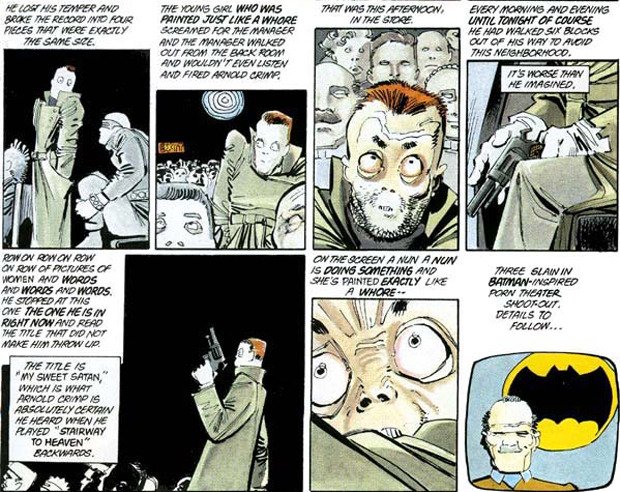
Here we go again. There’s going to be a lot of speculation regarding this Batman movie shooting. It fits too perfectly into their gun control agenda build up of late for it not to be staged but we’ll have to see. But already we’re seeing the same pattern of foreshadowing and predictive programming.

If you want a real hint, this report just showed up in the Washington Times of all things. They’re of course insinuating it was possibly the inspiration for the shooter. We’ll be learning more about him quickly but from his disturbed profile he sure seems to fit the usual mind control pattern.

What is strange is how prevalent this comic-type illustration predictive propaganda is with these false flag events.

Here’s the newspaper story:

The horrific shooting at the screening of The Dark Knight Rises in Colorado late last night bears eerie similarities to a scene in the 1986 comic Batman: The Dark Knight Returns. In the comic, a crazed, gun-toting loner walks into a movie theater and begins shooting it up, killing three in the process. The passage concludes with the media blaming Batman for inspiring the shooting, though he is not involved in the incident at all.

The 1986 comic, written and drawn by Frank Miller, was a key inspiration for the Chris Nolan Batman films. It helped to reimagine the character away from his Saturday morning cartoon image and into a dark, grim avenger. The point of this particular scene in the comic was to show just how far Gotham has fallen since Batman had retired.  Source

Predictive Programming

The Illuminati card game was invented way before any of the above depicted events. A strange phenomenon indeed. We don’t know what is behind these incredibly prescient depictions but it isn’t the only instance of these kinds of illustrations, apparently done or or inspired by insiders. (This is just a sampling, there are many more cards, a very interesting study.)

In 1990 an Illuminati Card Game was invented by Steven Jackson. The ’game’ he had created ruffled quite a few feathers as he was promptly visited by the Secret Service who tried to shut him down and prevent the cards from being released. You can read Jacksons own account of the raid Here.

  Apparently Jackson must have either had some type of insider knowledge or the foresight of Nostrodumus because the game he created has turned out to be very close to the real thing. Several of the cards depict events in modern history that either have, or soon will occur, including the attacks on the World Trade Center and Pentagon. Source


More At: ZenGardner.com

Colorado Batman Incident Facts: Lone Gunman or False Flag?

Colorado Batman Incident Facts: Lone Gunman or False Flag?

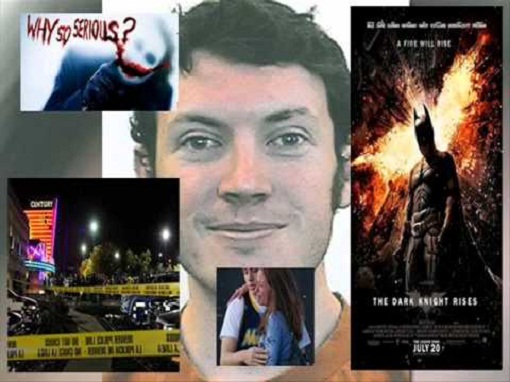
James Holmes, the Aurora, Colorado shooter who reportedly opened fire at a Batman movie premiere, was a medical student at the University of Colorado, pursuing a PhD in neuroscience, reports ABC News. (http://abcnews.go.com/US/mass-shooting-colorado-movie-theater-14-peop…)

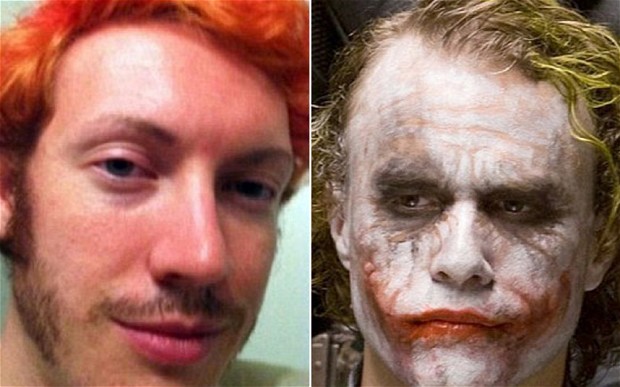
As part of the attack, Holmes painted his hair red and referred to himself as “The Joker,” one of the arch enemies in the DC Comics-inspired Batman movie series. (http://newyork.cbslocal.com/2012/07/20/police-14-dead-in-colorado-the…)

According to news reports, this sudden violent rampage was completely out of character for James Holmes, who was described as “shy.”

The New York Times is now reporting:
Billy Kromka, a pre-med student at the University of Colorado, Boulder, worked with Mr. Holmes for three months last summer as a research assistant in a lab of at the Anschutz Medical Campus. Mr. Kromka said he was surprised to learn Mr. Holmes was the shooting suspect. “It was just shocking, because there was no way I thought he could have the capacity to do commit an atrocity like this,” he said. (http://www.nytimes.com/2012/07/21/us/colorado-mall-shooting.html?page…)

“He spent much of his time immersed in the computer, often participating in role-playing online games…”

There is already conjecture that James Holmes may have been involved in mind-altering neuroscience research and ended up becoming involved at a depth he never anticipated. His actions clearly show a strange detachment from reality, indicating he was not in his right mind. That can only typically be accomplished through drugs, hypnosis or trauma (and sometimes all three).

His behavior doesn’t add up

His behavior already reveals stark inconsistencies that question the mainstream explanation of events. For example, he opened fire on innocent people but then calmly surrendered to police without resistance. This is not consistent with the idea of “killing everyone.”

Furthermore, he then admitted to police that his apartment was booby-trapped with explosives. If you were really an evil-minded Joker trying to kill people (including cops), why would you warn them about the booby trap in advance? It doesn’t add up.

“Holmes was taken into custody shortly after the shooting, police said, adding he didn’t resist when he was arrested,” reports a local CBS news affiliate (http://newyork.cbslocal.com/2012/07/20/police-14-dead-in-colorado-the…).

“After his arrest, Holmes told police about ‘possible explosives in his residence,’ Oates said. When police searched his apartment, they discovered it was booby-trapped and evacuated surrounding buildings, police said. Oates said bomb technicians are determining how to disarm flammable or explosive material in the third-floor apartment. He said police could be there some time.”

None of this checks out. If you’re a killer bent on causing mayhem, why tell the police about your surprise bomb waiting for them back at your apartment?

Holmes was clearly provided with exotic gear

Continuing from CBS:

“He said pictures from inside the apartment are fairly disturbing and the devices look to be sophisticated, adding the booby-traps were ‘something I’ve never seen.’ One rifle, two handguns, a knife, a bullet proof vest, a ballistic helmet, a gas device, a gas mask, military SWAT clothing and unidentified explosives were also found in Holmes’ car, a law enforcement source told CBS News. Oates said Holmes wore a gas mask, a ballistic helmet and vest as well as leg, groin and throat protectors during the shooting.”

In other words, this guy was equipped with exotic gear by someone with connections to military equipment. SWAT clothing, explosives, complex booby-traps… c’mon, this isn’t a “lone gunman.” This is somebody who was selected for a mission, given equipment to carry it out, then somehow brainwashed into getting it done.

“Aurora Police Chief Dan Oates said Holmes’ apartment is booby-trapped with a ‘sophisticated’ maze of flammable devices. It could take hours or days for authorities to disarm it,” reports Yahoo News (http://sg.sports.yahoo.com/blogs/lookout/suspect-neuroscience-phd-stu…).

UPDATE: (This section added to the story Saturday at 2:30 pm central, July 21, 2012). It is now being reported that exotic, advanced booby-traps have been disarmed at the apartment of James Holmes. The Denver affiliate of CBS News is now reporting: (http://denver.cbslocal.com/2012/07/21/officials-expect-explosions-as-…)

Officials say they have removed all major threats at the booby-trapped apartment of the Aurora movie theater shooting suspect on Saturday. They have used a robot to go inside James Holmes’ apartment. …They were able to disable a trip wire that was set to go off when the apartment door was opened. “This is some serious stuff that our team is dealing with…”

Shortly before noon crews were successful performing a controlled detonation… More controlled detonations were possible.

…there were multiple trip wires throughout the apartment. Investigators have also seen what appear to be mortars planted in the apartment — sort of the kind of mortars that might be seen in a commercial fireworks show. Up to a half dozen of them are scattered around.

…they have seen a number of inflated balloons in the apartment… with many appearing to be filled with a powder. Also linked together are bottles of liquid. …a strong smell of gasoline emanating from the apartment.

…several boxes on top of the refrigerator and there are lights flashing on the boxes.

…30 aerial shells (fireworks) commercially legally available for purchase. …the suspect may have filled them with smokeless powder. …entering the apartment would have caused a trip wire to trigger one liquid container to pour/mix with another. When the two mix together, they set off the main charge of the device which may be additional flammable liquids.

…an enormously dangerous mission. About 100 personnel are on scene.

And the BBC is now reporting: (http://www.bbc.co.uk/news/world-us-canada-18937726)

Technicians made a first attempt on Friday to disarm the traps, believed to include explosives, but withdrew when it became clear the property was too dangerous to enter. Sgt Carlson said the device was set up to detonate when the first person entered the flat. “We’ve defeated first threat. It was set up to kill, and that could have been police officers or anything,” she said.

FBI has a track record of staging similar assaults, then stopping them at the last minute

This is not your run-of-the-mill crime of passion. It was a carefully planned, heavily funded and technically advanced attack. Who might be behind all this? The FBI, of course, which has a long history of setting up and staging similar attacks, then stopping them right before they happen. See four documented stories on these facts:

http://www.naturalnews.com/035849_domestic_terror_plots_FBI.html
http://www.naturalnews.com/034325_FBI_entrapment_terror_plots.html
http://www.naturalnews.com/033751_FBI_terrorism.html
http://www.naturalnews.com/035757_FBI_terror_plots_false_flag.html

As you soak all this in, remember that the FBI had admitted to setting up terror plots, providing the weapons and gear, staging the location of the bombings and even driving the vehicles to pull it off! This is not a conspiracy theory, it’s been admitted by the FBI right out in the open. Even the New York Times openly reports all this in stories like this one:

NYT: Terrorist Plots, Hatched by the F.B.I. (http://www.nytimes.com/2012/04/29/opinion/sunday/terrorist-plots-help…)

THE United States has been narrowly saved from lethal terrorist plots in recent years — or so it has seemed. A would-be suicide bomber was intercepted on his way to the Capitol; a scheme to bomb synagogues and shoot Stinger missiles at military aircraft was developed by men in Newburgh, N.Y.; and a fanciful idea to fly explosive-laden model planes into the Pentagon and the Capitol was hatched in Massachusetts. But all these dramas were facilitated by the F.B.I., whose undercover agents and informers posed as terrorists offering a dummy missile, fake C-4 explosives, a disarmed suicide vest and rudimentary training. …the F.B.I. provided a van loaded with six 55-gallon drums of “inert material,” harmless blasting caps, a detonator cord and a gallon of diesel fuel to make the van smell flammable. An undercover F.B.I. agent even did the driving…

Mystery man Holmes has no background

On top of all this, Holmes apparently has no background. “He’s not on anybody’s radar screen — nothing,” said a peace officer in a NYT article. “This guy is somewhat of an enigma. Nobody knows anything about him.” (http://www.nytimes.com/2012/07/21/us/colorado-mall-shooting.html)

Mr. Holmes’s only criminal history is a traffic summons, the authorities said. He earned a bachelor’s degree with honors in neuroscience in 2010 from the University of California, Riverside, and was a graduate student in neurosciences at the University of Colorado at Denver’s Anschutz Medical Campus… He was currently collecting unemployment…

Question: How does an unemployed medical student afford $20,000 in weapons gear?

If you start to look at the really big picture here, the obvious question arises: How does an unemployed medical student afford all the complex weapons gear, bomb-making gear, “flammable” booby trap devices, ammunition, multiple magazines, bullet-proof vest, groin protection, ballistic helmet, SWAT uniform and all the rest of it?

A decent AR-15 rifle costs $1,000 or more all by itself. The shotgun and handgun might run another $800 total. Spare mags, sights, slings, and so on will run you at least another $1,000 across three firearms. The bullet-proof vest is easily another $800, and the cost of the bomb-making gear is anybody’s guess. With all the specialty body gear, ammunition, booby-trap devices and more, I’m guessing this is at least $20,000 in weapons and tactical gear, much of which is very difficult for civilians to get in the first place.

The mere manufacture of an explosive booby-trap device is, all by itself, a felony crime by the way. And remember: “Aurora Police Chief Dan Oates said Holmes’ apartment is booby-trapped with a ‘sophisticated’ maze of flammable devices. It could take hours or days for authorities to disarm it,” reported Yahoo News (http://sg.sports.yahoo.com/blogs/lookout/suspect-neuroscience-phd-stu…).

Question: Where does an unemployed, introverted medical school student get the training to deploy sophisticated booby traps, tactical body armor, weapons systems and more? Certainly not in graduate school!

All this leads to an obvious third party influence over all this. Someone else taught this guy these skills and funded the acquisition of the equipment.

Note: Some readers have questioned the $20,000 figure estimated here, saying this gear could have been acquired for only $10,000 or so. I doubt that, as all the extras that you need to effectively run these guns cost a lot of money: training courses, spare magazines, etc. Just a decent AR-15 battle sight (a holographic red dot sight) can run $1,000 – $2,000. Search “ACOG” if you don’t believe me. It is also reported that Holmes bought 6,000 rounds of ammo, which definitely isn’t cheap either. It’s clear this guy was spending big bucks. Whether it’s $10k or $20k isn’t really that much of a point.

Staged just in time for a vote on the UN small arms treaty?

More and more, this shooting is looking like a deliberate plot staged by the government itself much like Operation Fast and Furious pulled off by the ATF (http://www.naturalnews.com/032934_ATF_illegal_firearms.html) which helped smuggle tens of thousands of guns into Mexico for the purpose of causing “gun violence” in the USA, then blaming the Second Amendment for it.

All this looks like James Holmes completed a “mission” and then calmly ended that mission by surrendering to police and admitting everything. The mission, as we are now learning, was to cause as much terror and mayhem as possible, then to have that multiplied by the national media at exactly the right time leading up the UN vote next week on a global small arms treaty that could result in gun confiscation across America. (http://lewrockwell.com/eddlem/eddlem61.1.html)

Even Forbes.com wrote about this quite extensively, warning readers about the coming gun confiscation effort related to the UN treaty. The story was authored by Larry Bell (http://www.forbes.com/sites/larrybell/2011/06/07/u-n-agreement-should…) and says the UN treaty could “override our national sovereignty, and in the process, provide license for the federal government to assert preemptive powers over state regulatory powers guaranteed by the Tenth Amendment in addition to our Second Amendment rights.”

In other words, this has all the signs of Fast & Furious, Episode II. I wouldn’t be surprised to discover someone in Washington was behind it all. After all, there’s no quicker way to disarm a nation and take total control over the population than to stage violence, blame it on firearms, then call for leaders to “do something!” Such calls inevitably end up resulting in gun confiscation, and it’s never too long after that before government genocide really kicks in like we saw with Hitler, Stalin, Pol Pot, Mao and other tyrants.

Governments routinely murder millions

Here’s a short list of government mass murder carried out throughout history, almost always immediately following the disarmament of the public (and usually involving staged false flag events to justify the disarmament):

50+ million dead: Mao Ze-Dong (China, 1958-61 and 1966-69, Tibet 1949-50)
12+ million dead: Adolf Hitler (Germany, 1939-1945) – concentration camps, civilian deaths and dead Russian POWs
8+ million dead: Leopold II of Belgium (Congo, 1886-1908)
6+ million dead: Jozef Stalin (USSR, 1932-39)
5+ million dead: Hideki Tojo (Japan, 1941-44)
2+ million dead: Ismail Enver (Turkey, 1915-22)
1.7 million dead: Pol Pot (Cambodia, 1975-79)
1.6 million dead: Kim Il Sung (North Korea, 1948-94)
1.5 million dead: Menghistu (Ethiopia, 1975-78)
1 million dead: Yakubu Gowon (Biafra, 1967-1970)
900,000 dead: Leonid Brezhnev (Afghanistan, 1979-1982)
800,000 dead: Jean Kambanda (Rwanda, 1994)
See more at:
http://www.scaruffi.com/politics/dictat.html

Death by government:
http://www.hawaii.edu/powerkills/DBG.CHAP1.HTM
http://www.infowars.com/democide-government-killed-over-260-million-i…

A “monopoly of force” in government is far more dangerous than a crazed lone shooter

So yes, James Holmes and other crazed shooters kill a number of people each year in random acts of violence. It’s horrifying and wrong, but it’s nothing compared to the millions of lives that governments tend to destroy when they gain total power over the populace.

The most dangerous thing in the world, it turns out, is not a crazy person with a rifle; it’s a government with a “monopoly of force” over the entire population. And that’s exactly what the UN spells out as its goal for the world: Stripping all power from individual citizens and handing “monopolies of force” to the governments of the world, shoring up their positions as the only “legitimate” power on the planet.

See this document entitled, “Geneva Centre for the Democratic Control of Armed Forces (DCAF)” policy paper No. 24:
http://www.naturalnews.com/files/Revisiting-the-State-Monopoly-on-the…

As this document reveals, a table entitled “Governance solutions for reasserting the state monopoly on the use of force” lists the options available to governments to re-establish “monopolies of force” against their own people:

• (Re-)establish state monopoly
– Ownership of WMDs
– Safety Inspectorates

• Prohibit business activity
– Justice and Execution
– Deadly Force?

• Regulate/limit activities
– Private defense/security services
– Control of financial transfers
– Export controls
– Transport and infrastructure safety
– Environmental impact

Interestingly, that document also describes “terrorism” in a way that perfectly matches the Aurora, Colorado “Batman” movie theater shooter:

Terrorists aim to spread panic and fear in societies in order to achieve political goals, be they based on left- or right-wing, social-revolutionary, nationalistic or religious ideologies. They are organized in a clandestine way, most often in small groups and cells… Typical tactical means include kidnapping, hostage-taking, sabotage, murder, suicide attacks, vehicle bombs and improvised explosive devices.

A global monopoly of force

This document is a goldmine of information about the globalist agenda to disarm and enslave the population. Check out page 28, which reads:

The legitimate monopoly of force should not be limited to the nation-state but should be based on the local, national, regional and the global levels.

Global Security Governance and the Monopoly of Force

At the global level no monopoly of violence exists. The UN Security Council already has a monopoly power to authorize the use of force at the global level, although the UN was never given the necessary means to exercise this authority, such as the capacity to implement sanctions, a police force and armed forces…

This deficiency in global governance acts as a bottleneck and a barrier to the creation of the democratically legitimized monopoly of violence that is globally required.

This story gets deep, doesn’t it? Watch for more analysis here at NaturalNews.com, where we still fight for liberty and justice in a world that’s increasingly becoming enslaved.

UPDATE: Follow-up story now posted that asks the question: Why did not one fight back?

That story is available now at NaturalNews.com:
http://www.naturalnews.com/036537_James_Holmes_Batman_shooting.html

Video added: Answers to many questions raised by readers of this story

View it on YouTube at:

http://www.youtube.com/watch?v=TUCsNzzwCeY

SOURCE: NaturalNews.com

Inside Israel’s Secret Wars: Mossad’s Elite “Kidon Killers”

Inside Israel’s Secret Wars: Mossad’s Elite “Kidon Killers”

A new book reveals that a department known as Kidon within the Mossad has dispatched assassins into Iran in order to murder the nuclear scientists, thereby stunting the country’s nuclear energy program.

Authors Dan Raviv and Yossi Melman in their book Spies against Armageddon: Inside Israel’s Secret Wars state that the notorious spy agency has killed at least four Iranian nuclear scientists, including targeting them with operatives on motorcycles, an assassination technique used by the elite killers at Kidon.

The Kidon killers “excel at accurate shooting at any speed and staying steady to shoot and to place exquisitely shaped sticky bombs” and consider it their hallmark.

Kidon, known to be one of the world’s most efficient killing machines, is technically described as a little Mossad within Mossad.

Tasked with carrying out covert ops across the world, Kidon has embarked on a number of black ops and assassinations in different countries.

Those who kill for Kidon are selected either from within the Mossad spy agency or from among the natives of the countries where they plan to carry out assassinations.

For instance, in case of the nuclear assassinations conducted in Iran by Kidon, they basically hired people with Iranian or dual nationalities. One of the Mossad assassins was Majid Jamali Fashi who confessed he had cooperated with Mossad for financial reasons only.

Majid Jamali Fashi assassinated Massoud Ali-Mohammadi, a professor at Tehran University in January 2011 by blowing an explosive-laden motorbike via a remote-controlled device. He reportedly received training from Mossad inside Israel as well as $120,000 to assassinate the Iranian scientist. According to his confession, Jamali Fashi received forged documents in Azerbaijan’s Heydar Aliyev Airport to travel to Tel Aviv.

He confessed, “I woke up early in the morning and as we were trained I went to the warehouse. I had to prepare the box which contained the bomb. I took the motorbike out of the house and reached a location that I had to contact them. I went to the alley [where the professor resided]. It was vacant. No one was there. I brought the bike to the sidewalk and parked it in front of the house. They told me that the mission had been accomplished and that I had to discard my stuff.”

Jamali Fashi was executed under the Iranian judicial system on 15 May, 2012. Parenthetically, Azerbaijan has in recent years become an apparent haven for Mossad spies and assassins.

Another Mossad operative of Iranian nationality has been identified as Ja’far Khoshzaban, alias Javidan, who has been working under the auspices of Azeri security forces and who has been involved in nuclear assassinations. Iranian intelligence ministry has demanded the extradition of Mossad’s Iranian spy from Azerbaijan. Iran has reportedly obtained documents, suggesting that Azeri officials have aided and abetted Mossad and CIA agents in their targeted killings of Iranian nuclear scientists, namely Mostafa Ahmadi Roshan. As a matter of fact, CIA is constantly mentioned along with Mossad as the main elements in the nuclear assassinations.

Ahmadi Roshan was assassinated on January 11, 2012 when an unknown motorcyclist attached a magnetic bomb to his car near a college building of Allameh Tabatabaei University in northern Tehran.

Using the same ‘sticking bomb technique’, the Kidon assassins attached bombs to the vehicles of Iranian university professors Majid Shahriari and Fereydoun Abbasi and detonated the explosives on November 29, 2010. Professor Shahriari was killed immediately, but Dr. Abbasi and his wife only sustained minor injuries.

As a rule, the Kidon kill team is comprised of four highly seasoned men: 1. Tracer 2. Transporter 3. Helper 4. Killer. The tracer spots the target. The transporter guides the assassination team to the target. The helper basically serves as the motorcycle driver who helps the killer and the killer is tasked with shooting the target or attaching magnetic bomb to the car of the victim.

According to the book Spies against Armageddon, the Kidon agents are well-trained in shooting and placing “exquisitely shaped sticky bombs” and consider it their hallmark.

These facts aside, it rather seems sort of naïve to disregard the role of the CIA-backed MKO terrorists in the nuclear assassinations and give all the credit to the Kidon agents. There is solid evidence which evinces the MKO role in the assassination of the Iranian scientists.

American commentator Richard Silverstein believes that the primary source of income for the terrorist Mojahedin-e Khalq Organization (MKO) comes from the assassinations the group conducts within the Iranian soil at the behest of the Mossad. He argues that “If you’re a terrorist on behalf of Israel, as MKO is, then you’re kosher as far as (US-based Israeli publicist) Dershowitz is concerned. And your money is golden. Where does the money come from? Possibly from the Iran assassinations the MKO performs on Mossad’s behalf, which undoubtedly pay well. Then there’s the possibility that the USD 400-million Bush allocated for destabilizing Iran in 2007 has found its way either to the MKO or Mossad (or both)”

More to the point, the CIA works in the same satanic league with the Mossad and MKO. Time and again, the officials in Washington have encouraged and even confessed to the killings of the Iranian nuclear scientists.

Former US senator Rick Santorum callously described the assassination of Iranian scientists as “wonderful,” threatening that those who work for Iran’s nuclear program “are not safe.”

“On occasion, scientists working on the nuclear program in Iran turn up dead. I think that’s a wonderful thing, candidly.”

He also said, “I think we should send a very clear message that if you are a scientist from Russia, North Korea, or from Iran and you are going to work on a nuclear program to develop a bomb for Iran, you are not safe.”

Also, former Bush administration ambassador to the UN John Bolton said on Fox News that the killing of an Iranian scientist and sanctions against Iran constitute only “half-measures in the quest to stunt Iran’s nuclear ambitions”.

Former White House Speaker Newt Gingrich has called for covert action, including “taking out their scientists” and cyberwarfare.

Quotations of this nature are legion and all these facts reinforce the idea that Washington has been making clandestine efforts to sabotage Iran’s nuclear energy program in cahoots with Tel Aviv and their lackey, i.e the MKO.

Ismail Salami is a frequent contributor to Global Research.  Global Research Articles by Ismail Salami

Mind Control and the New World Order

Mind Control and the New World Order

On 28 November 1953, at 2 am, a man crashed through a closed window and fell to his death from the 10th floor of the Statler Hotel in New York City. He was identified as Frank Olson, a bacteriologist with the US Army Research Center at Fort Detrick, Maryland. He had fallen from a room he shared with another scientist, Robert Lashbrook. It was ruled a suicide.

Twenty-two years later, in 1975, William Colby, then CIA director, declassified documents that changed the complexion of the case. It was revealed that Olson had actually been an undercover CIA operative at Fort Detrick, and that one week prior to his death, he had been drinking Cointreau at a high-level meeting with scientists at Deep Creek Lodge in rural Maryland. The Cointreau was laced with a large dose of LSD administered by his CIA boss, Sidney Gottlieb. He was then sent to New York with Lashbrook, also with the CIA, to see a psychiatrist because the LSD had induced a psychosis.

It was also revealed that Olson had been part of the top secret CIA program that was known as Project MK-ULTRA, exploring the use of chemicals and drugs for purposes of mind control, and bacteriological agents for covert assassination. Olson had been working on ways to deliver anthrax in aerosol form, for use as a weapon. New evidence that came to light, through the persistent efforts of Olson’s son Eric, made the suicide ruling highly suspect.

It turned out that Olson had been labelled a security risk by British intelligence after getting upset witnessing human experimentation on a trip to Frankfurt, Germany the previous summer. Eric Olson now believes that his father was drugged and then murdered to make sure that he didn’t reveal the secrets of the MK-ULTRA project. Following the 1975 revelations, the government must have felt more than a little guilt about the affair because Olson’s family was given a 17 minute audience with US President Ford, who apologised to them, and they were awarded damages in the amount of $750,000.

Controlling Human Behaviour

The MK-ULTRA program was instituted on 13 April 1953 by CIA Director Allen Dulles, ostensibly to counter the brainwashing techniques of American prisoners being held by the North Koreans during the Korean War, and to duplicate those techniques on enemy prisoners, i.e. the creation of “Manchurian Candidates.” This was the claim used to obtain funding for the project. However, the Prisoner of War brainwashing program was just the tip of the iceberg, and the CIA-sponsored experiments ventured far and wide into areas of Mind Control under the aegis of MK-ULTRA that had little or nothing to do with methods of interrogation.

The Colby revelations were part of a sweeping investigation of the CIA in January 1975 by the “Commission on CIA Activities Within the United States,” chaired by Vice-President Nelson Rockefeller. The subsequent June 1975 Report to the President said: “The drug program was part of a much larger CIA program to study possible means for controlling human behaviour. Other studies explored the effects of radiation, electric-shock, psychology, psychiatry, sociology and harassment substances.

Even though the program got off to a rocky start with the Olson affair, it recovered quickly and became an umbrella project with 149 sub-projects. The overall guiding principal was succinctly stated in an internal CIA memo dated January 1952: “Can we get control of an individual to the point where he will do our bidding against his will and even against fundamental laws of nature such as self-preservation?” 

The drug program came under the aegis of the Chemical Division of the Technical Services Staff headed up by Sidney Gottlieb from 1951 to 1956. Gottlieb was a highly intelligent eccentric who drank goat’s milk, enjoyed folk-dancing, and raised Christmas trees on his farm outside Washington.

The Agency funded LSD research programs at major medical centres and universities including Boston Psychopathic, Mt. Sinai Hospital at Columbia University, University of Illinois Medical School, University of Oklahoma and others. The funding was carried out secretly through the Josiah Macy Foundation, and the Geschickter Fund for Medical Research in Washington, D.C. The CIA claimed the secrecy was necessary to keep it from the Russians, but we have already seen that it was part of much larger project to learn how to control human behaviour in general, so this is not credible.

Gottlieb told Dr. Harold Abramson at Mt. Sinai (who just happened to be the psychiatrist that Olson was supposed to see!) that he wanted “operationally pertinent materials [about]: a. Disturbance of Memory; b. Discrediting by Aberrant Behaviour; c. Alteration of Sex Patterns; d. Eliciting of Information; e. Suggestibility; f. Creation of Dependence.” That sounds like pretty deep stuff for the spy game. They were really afraid of public reaction and congressional condemnation, especially since the CIA charter did not allow domestic operations, and certainly prohibited experimentation on US citizens.

The callousness of the research is best exemplified by the CIA-funded work of Dr. Harris Isbell, the Director of the Addiction Research Center in Lexington, Kentucky. The drug addict hospital inmates, who were mostly black, were encouraged to volunteer for LSD research in return for hard drugs of their choice or time off their sentences. In most cases, they were given pure morphine or heroin. At one point Isbell kept seven men on LSD for 77 straight days. Many others were on it for up to 42 days.

Concerning extended LSD usage, John Marks in his landmark book The Search for the Manchurian Candidate: The CIA and Mind Control says about writer Hunter S. Thompson (recently deceased) that he “frightened his readers with accounts of drug (LSD) binges lasting a few days, during which Thompson felt his brain boiling away in the sun, his nerves wrapping around enormous barbed wire forts, and his remaining faculties reduced to their reptilian antecedents.” The recent movie The Rum Diary, starring Johnny Depp, based on the autobiographical book by Hunter S. Thompson, presents an imaginative re-enactment of his LSD adventures.

The CIA Turns On the Counter-Culture

Not satisfied with university research, Gottlieb recruited New York narcotics agent George White to distribute LSD surreptitiously to the “borderline underworld.” Operating through safe houses in Greenwich Village, Haight-Ashbury and Marin County, White gave doses to prostitutes, pimps, drug addicts and other “marginal people” and then observed the results and reported to Gottlieb.

John Marks says they were people “who would be powerless to seek any sort of revenge if they ever found out what the CIA had done to them. In addition to their being unlikely whistle-blowers, such people lived in a world where an unwitting dose of some drug… was an occupational hazard anyway.”

Eventually, White started using it randomly all over New York and San Francisco. Regarding the results, Marks says, “The MKULTRA scientists reaped little but disaster, mischief, and disappointment from their efforts to use LSD as a miracle weapon against the minds of their opponents.” Yet, they continued this program for 10 years until 1963.

Ironically, since the CIA had pretty much cornered the market on LSD internationally, buying up all the product of Sandoz and Eli Lilly, the spread of the drug to the counter-culture was through the Agency. Timothy Leary, Ken Kesey, Allen Ginsburg and Tom Wolfe were first “turned on” thanks to the CIA, and that’s how the “flower children” became psychedelic.

But, the LSD experiments may have been more successful than Marks realised. They were carefully noting the precise effects on brain chemistry, and in the six areas that Gottlieb was concerned with: memory disturbance, aberrant behaviour, altered sexual patterns, eliciting information, suggestibility and creation of dependence. This became evident when they started using LSD as an adjunct in hypnotic and electronic experiments.

Re-Patterning the Brain

Perhaps the most notorious and nefarious MK-ULTRA sub-project was carried out at the Allan Memorial Institute in Montreal, Canada under the directorship of Dr. Donald Ewen Cameron, an American from Albany, New York. Cameron had trained at the Royal Mental Hospital in Glasgow, Scotland, under eugenicist Sir David Henderson, and founded the Canadian branch of the World Federation for Mental Health. At various times, he was elected president of the Canadian, American, and World psychiatric associations. In other words, Cameron was no renegade but had the full faith and endorsement of the world psychiatric establishment.

The CIA wanted Cameron to “depattern” the contents of the brain to make it receptive to new patterning. David Remnick in a Washington Post article on 28 July 1985 said, “The…. heart of the laboratory was the Grid Room…. The subject was strapped into a chair involuntarily, by force, his head bristling with electrodes and transducers. Any resistance was met with a paralysing dose of curare. The subject’s brainwaves were beamed to a nearby reception room crammed with voice analysers, a wire recorder and radio receivers cobbled together… The systematic annihilation or ‘depatterning’ of a subject’s mind and memory was accomplished with overdoses of LSD, barbiturate sleep for 65 days at a stretch and ECT shocks at 75 times the recommended dosage. Psychic driving, the repetition of a recorded message for 16 hours a day, programmed the empty mind. Fragile patients referred to Allan Memorial for help were thus turned into carbuncular jellyfish.”

Anton Chaitkin in his essay, ‘British Psychiatry: From Eugenics to Assassination’, says: “Patients lost all or part of their memories, and some lost the ability to control their bodily functions and to speak. At least one patient was reduced almost to a vegetable; then Cameron had the cognitive centres of her brain surgically cut apart, while keeping her alive. Some subjects were deposited permanently in institutions for the hopelessly insane.”

The CIA funded these horrors through a front called “The Society for the Investigation of Human Ecology.” Other supporters of the Allan Institute were the Rockefeller Foundation, the Geschickter Foundation, and the Canadian government.

About Cameron’s work, Wikipedia says: “Naomi Klein states, in her book The Shock Doctrine, that Cameron’s research and his contribution to the MKUltra project was actually not about mind control and brainwashing, but ‘to design a scientifically based system for extracting information from “resistant sources.” In other words, torture’. And citing a book from Alfred W. McCoy it further says that ‘Stripped of its bizarre excesses, Cameron’s experiments, building upon Donald O. Hebb’s earlier breakthrough, laid the scientific foundation for the CIA’s two-stage psychological torture method’.” This method was codified in the infamous “KUBARK Counterintelligence Interrogation Manual” published by the CIA in July 1963, and in the Human Resources Exploitation Training Manual – 1983 that was used in CIA training courses in Latin American countries up until 1987. These manuals describe methods of psychological torture, far more potent than physical torture, to elicit information from “resistant sources.”

An Orwellian Nightmare

As one would expect, the technologies now available to the mind-controllers have zoomed off the chart to the point where George Orwell’s world of omni-surveillance now seems almost quaint. Of course, it is true that 1984 was 28 years ago. But even as far back as 1970, US congressman James Scheur was able to say, “As a result of spinoffs from medical, military aerospace and industrial research, we are now in the process of developing devices and products capable of controlling violent mobs without injury. We can tranquillise, impede, immobilise, harass, shock, upset, stupefy, nauseate, chill, temporarily blind, deafen or just plain scare the wits out of anyone the police have a proper need to control and restrain.”

A brief survey of some of the scariest products known to be in the arsenal of the secretive alphabet agencies arrayed against John Q. Public are such devices as the Neurophone, patented by Dr. Patrick Flanagan in 1968. It converts sound to electrical impulses which can be delivered from satellites. When aimed at individuals, the impulses travel directly to the brain where the sounds are re-assembled and appear to be voices inside the head, which can be perceived as coming from God, or telepathic aliens, or whatever. Or the sounds can come out of a turned-off TV or radio. Through software, the device can mimic anyone’s voice and translate into any language.

It is believed that the CIA, DIA, NSA et al use the Neurophone to deliver threats and propaganda to selected targets, or just to torment someone they don’t like. One can imagine the possibilities. Could this explain some of the killings by “psychopaths” who say they were instructed by God, such as Mark David Chapman, David Berkowitz, or Sirhan Sirhan? If they had been previously evaluated through sophisticated personality assessments and groomed by LSD or hypnosis, such voices could easily tip the balance and convince them to kill.

We’ve all heard about the “Thought Police” and laughed because it seemed so implausible. Well, the joke is on us. Brain scanning technology is now well-advanced. In 1974, Lawrence Pinneo, a neurophysiologist and electronic engineer with the Stanford Research Institute succeeded in correlating brain wave patterns from EEGs with specific words. In 1994, the brain wave patterns of 40 subjects were officially correlated with both spoken words and silent thought at the University of Missouri. It is believed that US intelligence agencies now have a brain wave vocabulary of over 60,000 words in most common languages.

Brain waves constitute a magnetic field around the head (the aura), each person having a unique, identifiable electromagnetic signature which becomes visible through Kirlian photography, and these fields can be monitored by satellites. The translated results are then fed back to ground-side super computers at speeds of up to 20 gigabytes/second. Neurophone messages can then be beamed to selected individuals based on their thoughts. It is believed that about one million people around the globe are now monitored on a regular basis. As these numbers increase, as they certainly will, to include most educated and important people in the world, the New World Order will definitely have arrived.

As Australian writer Paul Baird has observed, “no-one will ever be able to even think about expressing an opinion contrary to those forced on us by the New World Order. There will literally be no intellectual property that cannot be stolen, no writing that cannot be censored, no thought that cannot be suppressed (by the most oppressive/invasive means).” Baird also claims that ex-military/intelligence whistle-blowers have reported that experiments in controlling voters with these techniques have been tried in several foreign countries. So much for democracy.

Other technologies, such as microwave bombardment to confuse and disorient field personnel, microchip implantation, silently delivered acoustical subliminal messages, widespread population control through psychiatric drugs, and extreme close-up satellite-based viewing able to read documents indoors, are all well-developed and in use by military and intelligence agencies. This doesn’t even address the monitoring of overt spoken and written material. Under Project ECHELON, the NSA monitors every call, fax, e-mail and computer data message in and out of the US, Canada and several other countries. Their computers then search for key words and phrases. Anything or anyone of interest draws the attention of agency operatives, who can then commence surveillance operations by the NSA or other intelligence agencies.

Novel Capabilities

We conclude with a chilling vision of the future from the US Air Force Scientific Advisory Board. It is from New World Vistas of Air and Space Power for the 21st Century.

“Prior to the mid-21st century, there will be a virtual explosion of knowledge in the field of neuroscience. We will have achieved a clear understanding of how the human brain works, how it really controls the various functions of the body, and how it can be manipulated (both positively and negatively). One can envision the development of electromagnetic energy sources, the output of which can be pulsed, shaped, and focused, that can couple with the human body in a fashion that will allow one to prevent voluntary muscular movements, control emotions (and thus actions), produce sleep, transmit suggestions, interfere with both short-term and long-term memory, produce an experience set, and delete an experience set. This will open the door for the development of some novel capabilities that can be used in armed conflict, in terrorist/hostage situations, and in training…”

And based on the past clandestine abuses of MK-ULTRA reviewed above, one can predict with relative certainty that these capabilities will be used on civilians, with or without their knowledge or acquiescence.


The above article appears in 
New Dawn Special Issue Vol 6 No 3
http://www.newdawnmagazine.com/special-issues/new-dawn-special-issue-vol-6-no-3

Poisoned: Who Killed Former Palestinian Leader Yasser Arafat?

Poisoned: Who Killed Former Palestinian Leader Yasser Arafat?

Now we know he was poisoned – but by whom?

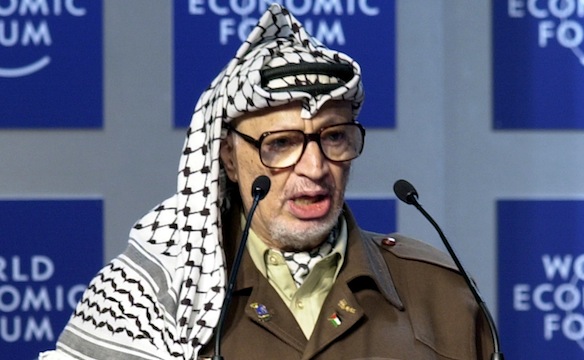
Yasser Arafat died on November 11, 2004, of a mysterious ailment. His enemies spread the rumor he had AIDS: David Frum, with typical classiness, claimed he had contracted AIDS as a consequence of having sex with his bodyguards. Now, however, it has been revealed Arafat was poisoned: the cause of his death was exposure to very high levels of polonium-210 [pdf], a rare radioactive substance. An investigation conducted by Al Jazeera showed Arafat’s personal items, released to the media organization by his widow, contained several times the normal level of polonium that would normally be detected on such items. The Palestinian leader’s terminal symptoms were similar to those experienced by victims of polonium poisoning: the substance targets the gastrointestinal tract and the subject wastes away.

Arafat’s Ramallah compound had been bombed several times by the Israelis, and they had the place surrounded – yet still he persisted. They couldn’t get him out. Worse, his plight was becoming a metaphor for the condition of his people, who were – and still are – prisoners in their own land. A former adviser claimed he was poisoned by the Israelis, who detained the Palestinian ambulance used to deliver Arafat’s medications to the Ramallah compound. At the time, one tended to write this off as a purely polemical exercise: in light of the new evidence, however, the question has to be asked.

Simply by continuing to exist in the face of such a sustained assault, Arafat was defeating the Israelis every day. They had to get rid of him. Did they? We’ll never know for sure, but it is worth noting that Israeli threats to kill him preceded his untimely death by less than a year. As is well-known, Israeli intelligence has carried out numerous assassinations: it is simply another tool in their international operations, one they have never hesitated to utilize. A passport-falsification scheme involving New Zealand, Britain, France, Spain, and a number of other countries was widely believed to have been meant to equip the Mossad’s crack team of assassins, who could slip into – and out of – target areas at will.

The Israelis hated Arafat with a particular passion, for two reasons:

1) His longevity – The Palestinian movement is thick [pdf] with factions, but thin when it comes to recognizable leaders. Arafat was the principal leader, and no one since his death has achieved his stature. He was a political survivor, having lived through numerous assassination attempts, and deflected the schemes of internal enemies to displace him. Simply by sticking around for so long, he became a living symbol of the Palestinian struggle for self-determination – and that is one big reason why the Israelis got rid of him.

2) His secularism – The Israelis encouraged the growth of groups such as Hamas in the beginning, in order to split away the more religious elements from the decidedly secular Palestine Liberation Organization/Fatah, which Arafat headed. It is easy to sell the Palestinians as crazed jihadists when a group like Hamas or Islamic Jihad is the most visible champion of their cause: the secular PLO presented the Israelis with a public relations problem. There’s another reason for the Israelis to have knocked him off.

One aspect of this case is extremely odd: polonium-210 is the same poison Alexander Litvinenko was dosed with. Litvinenko, a former KGB official, converted to Islam, joined the Chechen rebels, and became an associate of Boris Berezovsky, the notorious Russian oligarch wanted on charges of embezzlement in his home country. Litvinenko and Berezovsky are the Russian version of 9/11 Truthers: they believe practically every terrorist attack on Russian cities has been “staged” by Vladimir Putin in order to keep him in power. When he became ill, Litvinenko charged the Russian spy agency with poisoning him – although that seems highly unlikely.

Polonium-210 isn’t something you can buy off the shelf at your local Walmart. It isn’t even something a mad scientist might cook up in his home lab. About 100 grams are produced each year for specialized technical uses. The only entities with access to this sort of thing are state actors, or, at least, a private organization with very substantial resources at its disposal.

What’s interesting is that a diplomatic cable, dated Dec. 26, 2006 and published by WikiLeaks, details the conversation of a US diplomat with Russian spook Anatoly Safonov in which Safonov claims the Russians told the British about the importation of “nuclear materials” into London during the Litvinenko affair – and were told that the whole thing was “under control before the poisoning took place.” In the course of the same conversation, Safonov – Putin’s chief representative on terrorism-related matters – went on to describe a number of threats and their possible sources:

Safonov noted the daunting number of countries that posed particular terrorism threats, mentioning North Korea, Pakistan, South Africa, Libya, Iran, India, and Israel (sic?). He described a range of dangers, stressing the more immediate threats posed by nuclear and biological terrorism, but also acknowledging the risks of chemical terrorism.”

While the use of “sic” is meant to indicate our diplomat’s incredulity at the inclusion of Israel in this list, what we now know about how Arafat died should tear away the blinders from several sets of eyes – yes, even at the US State Department.

NOTES IN THE MARGIN

I note with sadness and a real sense of loss the departure of Scott Horton, the host of Antiwar.com Radio, from our staff. We wanted to keep him on, but we just couldn’t afford him anymore. Times are tough, but this is a big blow: Scott’s interviews with the Big Names in the foreign policy universe are always informed, and in his inimitable style he always laced his programs with humor and a keen intelligence. I can’t even begin to tell you how much he will be missed, ­ but that’s life these days, unfortunately.

SOURCE: AntiWar.com

Five ‘Stand Your Ground’ Cases You Should Know About

Five ‘Stand Your Ground’ Cases You Should Know About

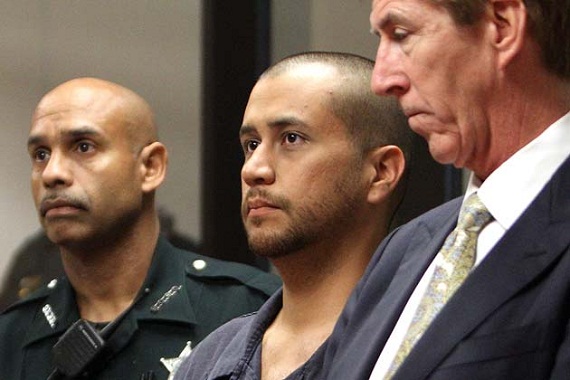
George Zimmerman, appears for a bond hearing with his attorney Mark O'Mara (R) at the John E. Polk Correctional Facility, Apr. 12, 2012 in Sanford, Fla. Zimmerman was charged with second degree murder in the fatal shooting of 17-year-old Trayvon Martin. (Photo by Gary Green/The Orlando Sentinel-Pool/Getty Images)

The Stand Your Ground law is most widely associated with the Feb. 26 shooting death of Trayvon Martin, an unarmed 17-year-old killed in Florida by George Zimmerman, a neighborhood watch captain who claimed he was acting in self-defense.

But as a recent Tampa Bay Times investigation indicates, the Martin incident is far from the only example of the law’s reach in Florida. The paper identified nearly 200 instances since 2005 where the state’s Stand Your Ground law has played a factor in prosecutors’ decisions, jury acquittals or a judge’s call to throw out the charges. (Not all the cases involved killings. Some involved assaults where the person didn’t die.)

The law removes a person’s duty to retreat before using deadly force against another in any place he has the legal right to be – so long as he reasonably believed he or someone else faced imminent death or great bodily harm. Among the Stand Your Ground cases identified by the paper, defendants went free nearly 70 percent of the time.

Although Florida was the first to enact a Stand Your Ground law, 24 other states enforce similar versions. Using the Tampa Bay findings and others, we’ve highlighted some of the most notable cases where a version of the Stand Your Ground law has led to freedom from criminal prosecution:


· In November 2007, a Houston-area man pulled out a shotgun and killed two men whom he suspected of burglarizing his neighbor’s home. Joe Horn, a 61-year-old retiree, called 911 and urged the operator to “ ‘Catch these guys, will you? Cause, I ain’t going to let them go.’ ” Despite being warned to remain inside his home, Horn stated he would shoot, telling the operator, “ ‘I have a right to protect myself too, sir. The laws have been changed in this country since September the first, and you know it.’ ”

Two months earlier, the Texas Legislature passed a Stand Your Ground law removing a citizen’s duty to retreat while in public places before using deadly force. In July 2008, a Harris County grand jury declined to indict Horn of any criminal charges.


· In Louisiana early this year, a grand jury cleared 21-year-old Byron Thomas after he fired into an SUV filled with teenagers after an alleged marijuana transaction went sour. One of the bullets struck and killed 15-year-old Jamonta Miles. Although the SUV was allegedly driving away when Thomas opened fire, Lafourche Parish Sheriff Craig Webre said to local media that as far as Thomas knew, someone could have jumped out of the vehicle with a gun. Thomas, said the sheriff, had “decided to stand his ground.”

Louisiana’s Stand Your Ground law was enacted just a year after Florida introduced its law.


· In March 2012, Bo Morrison was shot and killed by a homeowner in Wisconsin who discovered the unarmed 20-year-old on his porch early one morning. According to friends, Morrison was trying to evade police responding to a noise complaint at a neighboring underage drinking party. The homeowner, thinking Morrison was a burglar, was not charged by the local district attorney.

While Wisconsin doesn’t have a Stand Your Ground law that extends to public spaces, Gov. Scott Walker signed an “intruders bill” in December 2011 that presumes somebody who uses deadly force against a trespasser in their home, business or vehicle acted reasonably, whether or not the intruder was armed. Before the law was enacted, homeowners could only use deadly force if their own lives were at risk.


· In April, 22-year-old Cordell Jude shot and killed Daniel Adkins Jr., a pedestrian who walked in front of Jude’s car just as Jude was pulling up to the window of a Taco Bell drive-thru in Arizona. Jude claimed Adkins had waved his arms in the air, wielding what Judge thought was a metal pipe – it was actually a dog leash. Jude shot the 29-year-old Adkins, who was mentally disabled, once in the chest. As of May, an arrest had not been made in the April 3 shooting. Arizona passed a Stand Your Ground law in 2010.


· In January, a judge in Miami tossed out a second-degree murder charge against Greyston Garcia after he chased a suspected burglar for more than a block and stabbed him to death. The judge decided the stabbing was justified because the burglar had swung a bag of stolen car radios at Garcia – an object that a medical examiner at a hearing testified could cause “serious harm or death.” The judge found Garcia was “well within his rights to pursue the victim and demand the return of his property.”


SOURCE: http://www.propublica.org/article/five-stand-your-ground-cases-you-should-know-about

JFK Assassination Linked to Bush Crime Family

JFK Assassination Linked to Bush Crime Family

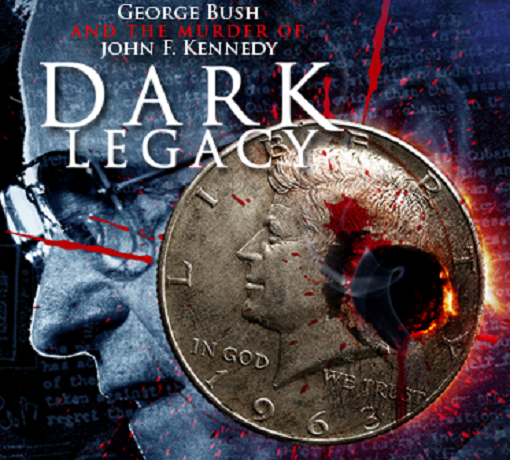
Short Version: For those too busy to follow this all the way through….  George HW Bush is ultimately responsible for the planning & execution of JFK, as sanctioned by his masters – The Federal Reserve families.  This explains his subsequent rise in power, from novice CIA spook, to CIA Director, Presidential Cabinet, Vice President, President…. to 33 Degree Iluminati Freemason..? Details to prove this conclusively are best conveyed by John Hankey. The connections back to GW Bush are absolutely astounding, and numerous enough for one to lose count.      -DCMX

ABOUT THIS DOCUMENTARY

Relying exclusively on government documents, statements from the best witnesses available, and the words from the mouths of the killers themselves, Dark Legacy produces a thoroughly substantiated criminal indictment of George Herbert Walker Bush, establishing beyond a reasonable doubt his guilt as a CIA supervisor in the conspiracy to assassinate John F. Kennedy. If we could present this evidence to a jury in Texas, he would pay with his life.

Part one presents the overwhelming mountain of evidence that President Kennedy was hit by bullets from the front and rear. Every witness in the Dallas emergency room attests, on camera, to the fact that a bullet from the right front blew a fist-sized whole in the back of the President’s head. The New York Times carried these statements on the day of the murder; and has covered them up ever since.

*************

Part two presents the on-camera testimony of the witnesses who actually handled the President’s body, the FBI report, and the photographic evidence all proving unequivocally that the President’s body was stolen from the Secret Service and the wounds altered, before the body was delivered to Bethesda Naval hospital for the autopsy. Jackie Kennedy accompanied an empty casket on the plane flight home. Who had the power to do all this without attracting public attention? It’s a short list.

************

Part three presents the Nazi-connections of the Bush family, which prompted the FBI to seize their assets during WW II, as Nazi assets. It presents the suppressed fact that Watergate burglar and CIA operative E. Howard Hunt was found by a jury to have been in Dallas and involved in the conspiracy to kill Kennedy. Hunt was a supervisor of the misguided CIA-led anti-Castro Cubans who broke into the Watergate. He is not only connected to Bush through Watergate; and through Bush’s father, Prescott; but five days after the assassination, the head of the FBI, J. Edgar Hoover, wrote a memo, titled “Assassination of President John Fitzgerald Kennedy” in which he named “George Bush of the Central Intelligence Agency” as the supervisor of what Hoover himself called the “misguided anti-Castro Cuban” killers of the President. Bush has said he doesn’t remember the events of that day, but FBI documents place him in Dallas.


It is difficult to assess the stature and significance of someone who has been dead as long as John Kennedy. His killers have also been his detractors, actively desecrating his memory, as they did his body. The movie begins with a short presentation of some of his most powerful and important speeches; including a stunning speech to the UN in which Kennedy calls for the complete abolition of the military industrial complex. These same men the military industrial complex, ripped him from us, and the darkest features of our history since that time are all directly the result of his murder.


*******  JFK ASSASSINATION EXPLAINED *******

I don’t think we are much encouraged to see History as science. Quite the opposite, actually. And of course, that’s all politics. The winners write history, and the truth be damned. Even science can have trouble trying to act like science when political issues are involved, as we see with evolution, tobacco-and-cancer, and global warming. But I think History does have a lot in common with physical science. For example, I can remember when “Continental Drift”, the idea that Africa and America were once stuck together, was very much considered “just a theory”; ridiculed by some, and regarded with amusement by many, and promulgated as likely by a tiny minority. But as time goes by, the evidence accumulates; and the meaning of old evidence begins to settle in; and ideas that were once considered outrageous gradually get worn in and start to be regarded as obvious common sense. Part of this process is the continual accumulation of new evidence. New pieces are added to the puzzle and the picture becomes more clear. And sometimes the hidden meaning of old evidence, that has been lying around for years, suddenly jumps out. Evidence of the fossils and minerals that can be found on the east coast of Africa, and on the west coast of Brazil, may have been lying around for years, before someone decided to look and see if they matched, and found that they did; and proved conclusively that west Africa and Brazil were once attached.

With regard to George HW Bush and the murder of John Kennedy, Joseph McBride found this memo in 1988.

FBI director J. Edgar Hoover wrote this memo 5 days after the assassination, naming George Bush as a CIA officer.

The last, and most crucial paragraph, is very hard to read. The following is a transcription:

“The substance of the forgoing information was orally furnished to Mr. George Bush of the Central Intelligence Agency and Captain William Edwards of the Defense Intelligence Agency on November 23, 1963, by Mr. V.T. Forsyth of this Bureau.”

When it was first released in 1978, George Bush was an obscure bureaucrat, a virtual unknown. So when the best researchers on the planet saw this memo in 1978, they didn’t pay much attention to it. When Bush became vice president two years later, no one was able to connect his now well-known name to this obscure memo. But when Joseph McBride was messing around in 1988, Bush was running for president; and when McBride saw the memo, he jumped up and shouted “Hey, this memo is about Bush! It says he was in the CIA, way back in 1963!”

And for the longest time, the focus was on this simple isolated fact: that Hoover said Bush was in the CIA in ’63. Bush said the memo must be referring to another “George Bush,” because he wasn’t in the CIA at that time. But over the years, people were able to assemble the facts from Bush’s personal life, showing his deep involvement with the CIA at that time, and with the CIA’s anti-Castro Cubans (in the memo, Hoover calls them “misguided anti-Castro Cubans”). And over time, it has become undeniable; that Hoover was referring, in his memo, to none other than George Herbert Walker Bush. And for a while, that was it. End of story.

But the title of this Hoover memo is, “Assassination of President John Fitzgerald Kennedy”. Isn’t that important? Well, you’d think so. But for the longest time, no one made much out it. Besides, Hoover scarcely mentions the assassination in the memo, instead focusing on these “misguided anti-Castro Cubans.” The body of the memo does not appear, at first, to be in any way related to the title of the memo “the assassination of President John F Kennedy”. But then Mark Lane, in his book Rush to Judgment, did the fabulous work of demonstrating, and in fact persuading a jury, that E. Howard Hunt, a major lieutenant in the CIA’s “misguided anti-Castro Cuban” program, was in Dallas and involved in the assassination. With this background, with this framework to guide the researcher, it was then possible to assemble the considerable evidence linking Bush to Hunt.

People might have taken some notice before that Bush made the unusual request, as Nixon’s ambassador to the UN, to be given an office in the White House. They may have noticed that Hunt, although he was not being paid by anyone in the White House, or answering to anyone that we know of in the White House, also had a White House office. But with the Hoover memo in hand, establishing Bush as a supervisor of the CIA’s “misguided anti-Castro Cuban” operation, it is possible to connect Bush to Hunt at the Bay of Pigs. With this memo in hand, it is possible to connect Bush and Hunt as two CIA operatives with offices inside the White House. With this memo in hand, it is possible to answer who it was that Hunt answered to inside the White House; and how he got the office in the first place. And with all that, it is possible to connect Bush to Hunt, and therefore to Dallas, to Hunt in Dallas, and to the “misguided anti-Castro Cuban” assassins of John Kennedy. Which is what Hoover did for us when he wrote the title of the memo. Little by little, the pieces start to fall into place. And pieces that in isolation meant nothing, become key parts of a whole picture.

But even so, this is not a rock-solid connection: Hunt was directly involved in the murder of JFK. And Bush supervised Hunt. But Bush probably supervised a lot of CIA people, not all of whom were directly involved in the assassination. A high-ranking officer may be connected to all of the acts of all of his troops, by reason of his being their commander. But it’s not a direct connection. It doesn’t establish that the officer knew about, or approved of, or was involved in, all the actions of those troops.

Enter FBI memo # 2:

It will come up again in a minute, so please read the first line carefully. Bush identifies himself to the FBI as an independent oil man from Houston.

This memo establishes that sort of direct connection between Bush and Hunt, in Dallas, on the day of the assassination. This memo records Bush’s phone call to the FBI, precisely an hour and fifteen minutes after the assassination. When I first encountered this memo, and when I first put it into my movie, JFK II, I simply called it “weird”. I saw it only in isolation, a weird, isolated connection between Bush and the assassination. It took me years to see it in context. That is, to see that this phone call demonstrates, clearly, that George Bush, was on duty that day.

He was staying at the Dallas Sheraton because his duty assignment was in Dallas. His phone call to the FBI cannot have been random. This James Parrott worked for Bush as a sign-painter; he was not an assassin; this phone call is not what it purports to be; Bush was fulfilling some obscure under-cover function in making this call. So the phone call has to be seen as part of his CIA assignment; which was clearly connected to the assassination. This memo then establishes that Bush was in the Dallas area, and on duty; and that his duty assignment was connected to the assassination. And if his men were in Dallas shooting the President, as they were, he was certainly on duty supervising them. If he were not supposed to be supervising them, his bosses would have assigned him to be at his home office in Houston, Texas; or on his oil rigs in the Caribbean.

But, even in context, this memo and the phone call it describes is still weird, no? I mean, how could Bush have been so stupid as to make this insanely incriminating phone call? Without this FBI memo, recording this phone call, we don’t know, or even have a good clue as to where Bush was, or what he was doing the day of the assassination. Do we? Bush has, until recently, simply said that he did not remember what he was doing the day of the assassination. But with this memo, Bush tells us where he was and what he was doing — he hands us his head on a silver platter. What could possibly have motivated him to make such a stupid error as making this phone call to the FBI? It’s a valid question. It’s not an essential question. We can still value this memo, and extract a great deal of important content from it without answering the question of why, but the question remains.

And we can make a stab at answering it. Russ Baker in his fine book, Family of Secrets suggests that Bush was attempting to establish an alibi. Now, by making this phone call, he, in fact, establishes that he was in the Dallas area, and that he was on duty, related to the assassination. So if he’s trying to establish an alibi to cover-up where he actually was and what he was actually doing, what he is trying to cover up must be some pretty bad stuff, some pretty incriminating stuff, if it’s worse than what he gives us with this alibi.

And what could be worse than what he gives us? Well, obviously, he must have actually been in Dallas. In fact, I think, this situation suggests he must have actually been in Dealey Plaza. I mean seriously. Think about it. He’s so panicked about the truth coming out, that he puts his head in a noose and hands it to us. It makes me think he must have been in Dealey Plaza, he must have been in the company of the shooters, and he must have felt that there would be evidence to prove that.

We’re just speculating at the moment. We’ll get to the evidence right now, but I’m trying to set the scene. If a guilty party is in a panic, trying to cover evidence connecting them to a crime, they may invent an explanation, or an alibi, that seems like a good idea at the time; but that in fact constitutes a very damaging admission. Anyway, stew on that while you consider this photo:

You see this tall thin man in a suit, with a receding hair line. Many people claim this is Bush, standing in front of the Texas School Book Depository. And it might be. It might be a lot of people. And perhaps, when he called the FBI and incriminated himself, Bush was concerned that he might show up in a better picture than this, where he was positively recognizable, looking towards the camera.

Personally, I don’t think this photo looks much like Bush; and in fact, I didn’t think he’d be stupid enough to just be hanging around the murder scene. I thought he was sufficiently high ranking that he’d leave such on-scene stuff to his underlings. Right? At least in my mind, if you’re an officer like Bush, you’re the coach. You plan, you train and prepare your people, and then you stand back and watch it happen. Or so I thought. Fletcher Prouty was certain that he saw pictures of Ed Lansdale, a military operative of the highest rank, signaling to the “tramps” arrested behind the grassy knoll to “be cool,” that everything was alright. Hunt was a high-ranking CIA officer, chief of the CIA’s Mexico station; and his son says he is one of the “tramps” who show up in several photos of men who were arrested behind the grassy knoll. So, some of the highest ranking members of the killers’ operation were apparently there, on the front line, to make sure that when things went wrong, as they inevitably do, these high ranking officers could be there to fix whatever the problem was. So, given that high- and low- ranking CIA officers were present, this photo of this thin man in a suit might, indeed, be Bush. It’s possible.

And now, look at this picture of the Dal-Tex building. The Dal-Tex building is across the street from the Book Depository, and many leading researchers into the assassination, including Jim Garrison, say there was certainly a team of shooters in this building:


[click for larger]

And as you can see, some imaginative individual has added some color to indicate three men in this window. Very creative, very imaginative; and at least plausible. Still, it takes way too much imagination and effort, to see Bush’s face. But now observe this link: http://www.ratical.com/ratville/JFK/WTKaP.html


Actually, You don’t have to stop and read it, because I’ll quote the relevant part. It’s a statement from Roger Craig, winner of the deputy of the year award for Dallas in 1960, and one of the most honest men working that day in Dallas. He’s an amazing and heroic fellow, worthy of all the time you could take looking into his background and character. And here, in the following passage, he is describing a conversation he had with Jim Garrison, and he says,


“Jim also asked me about the arrests made in Dealey Plaza that day. I told him I knew of twelve arrests, one in particular made by R. E. Vaughn of the Dallas Police Department. The man Vaughn arrested was coming from the Dal-Tex Building across from the Texas School Book Depository. The only thing which Vaughn knew about him was that he was an independent oil operator from Houston, Texas. The prisoner was taken from Vaughn by Dallas Police detectives and that was the last that he saw or heard of the suspect.” (emphasis added)


Holy Moe Lee! Please notice that, in speaking to Jim Garrison, Craig says “in particular”. Apparently he and Vaughn thought this was the most significant arrest made that day; pretty amazing given that E.Howard Hunt was arrested in the rail yard behind the grassy knoll. And the only thing Craig knew about this “particular” arrestee was that he had exactly the same singular CIA-cover, “an independent oil operator from Houston, Texas”, that George Bush had used that same day in his contact with the FBI.


Now. There are a very limited number of possible explanations for who this “independent oil operator” was. Let’s look at them.


It is conceivable that the CIA had two men in Dallas area that day, supervising the shooters, who both had the designated cover of being an “independent oil operator from Houston.” Bush was one, as the evidence above clearly shows; and perhaps there was another who was with the shooters in the Dal-Tex building, supervising them directly. But unless the CIA overlords were trying to set Bush up, they would not have told anyone else to use Bush’s CIA cover to identify themselves to the police. If another man was involved in the crime, and was arrested for it, and he told the cops he was an “independent oil operator from Houston,” this would tend to throw suspicion in Bush’s direction. Bush’s association with the CIA’s Cubans was already widely known. Fletcher Prouty knew and wrote of it. Fabian Escalante, the head of Cuban counter intelligence, knew and has written about it. James Files, who claims very credibly, to have been a driver for the Mafia shooters in Dallas, has spoken on-camera about it. And FBI director J. Edgar Hoover, knew about it and wrote about it in his memo. So Bush was already a suspect in Hoover’s eyes. The CIA planners, then, would not have told anyone else, “in case you get arrested, tell the cops you’re an independent oil man from Houston”. Right? They would not have done this, since it would tend to incriminate Bush, who was already in a highly visible, highly suspicious position.


Another unlikely possibility is that this “independent oil operator from Houston” was just some innocent oil operator, who somehow managed to attract suspicion, and was arrested. Do you think it’s possible that another oil man from Houston just happened to be in that corner of Dealey Plaza? I hope you think it’s possible. Because, as unlikely as it seems, if you think it was possible, then certainly Bush would have been reasonable in thinking that, as he was being arrested, there were other independent oil operators in the crowd who witnessed his arrest. You see, Bush spoke to a group of oil men in Dallas the night before the assassination*2. If it were possible that some of them were in Dealey Plaza, he would need to be terrified of the possibility that some of them might actually have seen the arrest, and would have been able to identify him as the object of that arrest.


No wonder, then, that Bush freaked out, and made this stupid incriminating phone call to the FBI. Even if it showed that he was not in Houston, or in the Caribbean, but in Dallas, at least it suggested that he was not in police custody for the murder of the President, in Dealey Plaza.


But now stop and think a minute: why was he arrested? What was he doing that drew this cop’s attention at all? What could he possibly have been doing to make this cop think that he needed to arrest Bush? Perhaps walking out of a building without attracting attention is harder than it sounds; and it reasonable to suppose that the crowd outside the Dal-Tex building had heard the shots, had heard that the President had been wounded, and they were carefully scrutinizing anyone who came out of the building. But this story shows clearly that Bush was not the sort of cold-blooded killer who could take part in the murder of a man, and then act and look like nothing was going on as he tried to leave the scene of the crime. And it turns out that as an old man, Bush continues to suffer from this character trait, of being unable to hide feelings that need to be kept secret. As you can see in this link, http://www.youtube.com/watch?v=ft3eGWZd7LE , at Gerry Ford’s funeral, Bush suddenly breaks into a wide grin while speaking of the Kennedy assassination. This is not a Mona Lisa smile. This is face-wrenching spasm of glee.


In a minute we’ll take up the question of why Bush would grin at his recollection of watching John Kennedy’s brains splatter; the point for us now is that he apparently had a similarly inappropriate, show-stopping expression on his face as he attempted to exit the Dal-Tex building; he had the look of a murderer in his eye, so clearly that it could not be missed; as this funereal-grin could not be missed. And the guilt plastered all over Bush’s face drew people’s attention. And this cop, Vaughn, arrested him.


Now remember, Roger Craig tells this story in the context of his discussions with New Orleans District Attorney Jim Garrison about the suspects who were arrested that day and who then evaporated without leaving a mugshot, interview, fingerprint, or name. Garrison spoke not only to Roger Craig, but he no-doubt spoke to Vaughn, who made the arrest. And Garrison adds the following:


“At least one man arrested immediately after the shooting had come running out of the Dal-Tex Building and offered no explanation for his presence there. Local authorities hardly could avoid arresting him because of the clamor of the onlookers. He was taken to the Sheriff’s office, where he was held for questioning. However, the Sheriff’s office made no record of the questions asked this suspect, if any were asked; nor did it have a record of his name. Later two uniformed police officers escorted him out of the building to the jeers of the waiting crowd. They put him in a police car, and he was driven away. Apparently this was his farewell to Dallas, for he simply disappeared forever.”

— On the Trail of the Assassins, p. 238 —


This vision of the panicked Bush being arrested, no-doubt terrified as he was taken to the police station, and possibly even booked (though the record of any such booking has been destroyed) provides a context that explains a number of Bush’s otherwise-mysterious actions. Certainly Bush was freaked out and panic-stricken! An angry crowd clamored for his arrest, and jeered his release.


Being a newbie in these dark affairs, Bush didn’t have confidence in the ability of the old devils at CIA to make water run uphill, to make time run backwards, to silence the witnesses, to destroy the records, and make it all go away. And so he panicked; he acted on his own, stupidly; he called the FBI, thinking that he was “cleverly” providing evidence that it wasn’t him who was arrested in front of the Dal-Tex building that day. In his panic-stricken state, this seemed like a good idea. He was unable to see that he was actually creating a permanent absolutely-positive record of his involvement.


We can now also explain the grin. He grins ridiculously at Gerry Ford’s funeral, at the mention of John Kennedy’s murder, not because he is such a ghoul that he thinks splattering the contents of Kenney’s head all over Jackie Kennedy was funny; but because mentioning the assassination causes him to recall the comedy of errors that produced his own ridiculous panic, arrest, more panic, and so on.


Garrison wrote his paragraph about Bush’s arrest in 1988. Deputy Craig’s article was written in 1971 and posted in 1992. But the significance of these paragraphs was discovered last week. There hardly was an internet in 1992 when Craig’s article was posted. And for 19 years, no one noticed that this phrase, “independent oil man from Houston”, is a very unique description of Bush. No one noticed until last month, when one of the moderators of JFKMurderSolved showed it to me. And I wrote about it to some friends, and one of them suggested I read what Jim Garrison had to say.


So the pieces continue to fall into place. Little by little, the picture is filled in, the questions get answered. And the conclusions become more incontrovertible. This is just the sort thing that happened with the theory of Evolution and the Big Bang theory; and the theory of continental drift. And someday they may start to teach history, as a science, based on evidence, in the universities. Really! It could happen! At which point, Bush’s involvement in JFK’s murder will be taught, like evolution, as the only plausible explanation of the available reliable evidence.


Final note: Until recently, Bush had nothing more to say about his whereabouts the day of the assassination than that he doesn’t remember where he was. That in itself is extraordinarily incriminating. Everyone who was alive at the time remembers where they were on 9-11, and on the day Kennedy was murdered. But, saying that he doesn’t remember, however improbable, is at least consistent with Bush’s autobiography, which mentions nothing.


Lately, however, perhaps at least partly in response to my work, Bush and Co. have concocted a story that he was speaking in Tyler, Texas to the Rotary Club. The vice-president of the Rotary Club, Aubrey Irby, says that Bush was speaking when the bellhop came over and told him, that Kennedy was dead*1. Mr. Irby passed the information on to Mr. Wendell Cherry, who passed it on to Bush; who stopped his speech. Irby says that Bush explained that he thought a political speech, under the circumstances, was inappropriate; and then he sat down. As a would-be alibi proving Bush’s innocence, there are at least three huge problems with this story.


The first is that it is inconceivable that Bush would not have remembered such an event; or that he would have left it out of his autobiography, since it shows what a fine and respectful fellow he is. If he didn’t remember it sooner, or include it in his autobiography, it’s clearly because it never happened.


The second huge problem with this story is that it couldn’t possibly have happened; that is, it is made impossible by Bush’s original alibi, his phone call to the FBI, as you’ll see:

The witness who tells this story, Aubrey Irby, says that Bush excused himself and sat down. It doesn’t say that he rushed out of the room in a frantic search for a phone. The problem is that Walter Cronkite’s announcement to the world that Kennedy was dead came at 1:38 (http://www.youtube.com/watch?v=76gl3NZAdxo). Certainly, no one was listening to Walter Cronkite in the same room in which Bush was speaking. Therefore we can be sure that this bellhop, who told Irby that Kennedy was dead, was in another room. The bellhop had to make the decision that he had heard enough of the news to leave off listening to the news. This is no small point. Texas governor Connally was severely wounded. Lyndon Johnson was reportedly wounded. There was much other news to be confirmed. At some point, then, the bellhop decided to stop listening and go make an announcement. There’s no reason to think Irby would be the first person he would tell. But at some point he went to the room where Bush was speaking and informed Mr. Irby that the president was dead. This walk to find Irby took time, of course. Mr. Irby had to receive the information, and then he had to decide to inform Mr. Wendell Cherry, the president of the Kiwanis. Mr. Cherry had to decide that he should interrupt Bush’s speech; Mr. Cherry had to then walk over to Bush and tell him the news.


Bush had to decide what to say; and he had to say it. And, according to the only witness, Mr. Irby, Bush “then sat down”. Somehow, when he was finished sitting, without attracting Mr. Irby’s attention, Bush had to seek and find a phone. This would have been a hotel phone, so he would likely have had to go through the hotel switchboard to get an outside line. Do you suppose the switchboard was busy after the announcement of the President’s death? It’s a good guess. In Washington D.C. so many people rushed to make a phone call that the phone system went down. In any case, once he got through to the hotel operator and got an outside line, Bush then had to call information and get the number of the FBI. After getting through to information, and getting the number, he then had to call the FBI; and penetrate their switchboard, which was, no doubt, very busy; and he had to locate an agent, on what must have been the busiest day in the history of the Dallas bureau. How many minutes do you suppose that would take? Twenty seems a fair guess, though it seems implausible that a civilian could even get through, given all the official police business going on at the time. We know that the Dallas FBI was all over the murder scene, confiscating camera film and intimidating witnesses; so it’s hard to imagine how Bush, an hour after the shooting, was able to reach an agent at all. Given the “sitting” that Mr. Irby observed Bush doing, for all this to have transpired in 45 minutes would be tidy work. But Bush had to do all of this, as the FBI memo states, by 1:45, seven minutes after the news of Kennedy’s death first went out; which is blatantly impossible.


The third problem is this question of why Bush would feel that it was necessary to concoct such a story at all? Why does he have to tell us this lie? Why does he have to get others, like Irby, to lie for him? The irony is that the harder he tries to make himself appear innocent, by lying, the more evidence he gives us of his guilt.


*1 Kitty Kelley, The Family: the Real Story of the Bush Dynasty, p.213; cited by Russ Baker in Family of Secrets, p.54

*2

There are some people who manage to point to this and say “ahah! That’s why Bush was in Dallas! Not to kill the President, but to speak to the other oilmen!” But as the Hoover memo shows, being an oilman was just a cover for Bush’s real occupation as a CIA supervisor of trained killers. He needed an excuse for being in Dallas. This speaking engagement provided him with one.

———————-

FROM THE DIRECTOR

George Bush killed Kennedy. Or was it the Mafia? Maybe Castro did it. Who cares? It was 40 years ago. What difference does it make?

It matters.

The day he died we lost an invaluable treasure. This video documents that we lost a man of peace, who tried to cool off the cold war, and to get the American people to see their Russian enemies, not as despicable inhuman monsters, but as people like us.

On November 22, 1963, you lost the man who saved your life on October 17, 1962. At the height of the missile crisis, Kennedy’s generals and advisors were urging him to launch a first strike attack against Cuba. They assured Kennedy that the Russian missiles in Cuba were not nuclear and were not ready; but that he and they should quietly slip away to the safety of bomb shelters anyway, just to be safe; and then launch an attack, leaving the rest of us out to die. Kennedy thought about it. And then he told them that nobody was going anywhere. If anyone died, they would be the first to go, sitting as they were in the Whitehouse, the prime target of those Russian missiles. Together they then figured out a safer plan. Robert McNamara, Secretary of Defense at the time, recently learned from the Russians that the missiles were armed, were ready, were nuclear, and that their commanders were authorized to use them in case of an attack. If you live in the northern hemisphere, the lives of your parents, and your future, were certainly saved by John Kennedy on that day. It matters that his killers be exposed.

In his farewell address, President Eisenhower had warned Kennedy, and the rest of us, of the threat posed to democracy by what Eisenhower called “the military industrial complex.” And while Kennedy famously went after the CIA, and refused to commit troops to Vietnam, I always wondered why he didn’t more openly attack this military industrial complex. And then I stumbled upon a speech he gave at the United Nations. As you will see in the video, he called upon the Russians, and United Nations, to help him to take on this military industrial complex, in order to “abolish all armies and all weapons.” But he was swept away. And in the years since, millions have died in needless wars, trillions of dollars have been wasted on “defense”, and millions more people have lived and died needlessly in poverty. It matters that we lost him.

In 2007, Bruce Willis told Vanity Fair magazine, “They still haven’t caught the guy that killed Kennedy. I’ll get killed for saying this, but I’m pretty sure those guys are still in power, in some form. The entire government of the United States was co-opted.”

Now Willis probably would not mind my suggesting that he’s no genius. At best, his observation is common sense. 80% of the American people agree with him. Indeed, this video, proving that Kennedy was brought down by the most powerful men in the world and their hired thugs, is not based on secret documents. It is all information that has merely been suppressed. Oswald allegedly shot Kennedy from behind. But the day he died, the NY Times carried the story, told by the doctors in Dallas, that Kennedy had an entrance wound in his throat, another in his right temple, and a large gaping exit wound in the back of his head. After talking to the emergency room doctors, Kennedy’s press secretary described, to the assembled press, a shot to the right temple from the right front that went “right through the head.” All of the witnesses near the right front, the grassy knoll, described hearing shots from that direction, and dozens of witnesses raced up the knoll in pursuit of the shooters. These witnesses talked to the press. But all of this information has been suppressed for the last 50 years. By whom? Who could?

You will also see in this video the overwhelming best evidence, from the best witnesses, proving beyond a reasonable dispute, that Kennedy’s body was stolen from Air Force One, and the wound to his right temple was mutilated, before the autopsy. Jackie Kennedy kept watch over an empty casket on the flight from Dallas to Bethesda Naval Hospital. Then the body was quietly taken to Bethesda for the autopsy, arriving 20 minutes before Jackie and the empty casket. Who had the power to arrange this? Who HAS the power today to suppress all this evidence?, and to continue to bombard us with ridiculous lies about a lone gunman? It’s a short list, isn’t it? It doesn’t include the mafia, or the Russians, or Castro. It does include the Bush family – or rather their masters in Big Oil; the banking elite; the backbone of the military industrial complex. These men, and their successors, carried out the attacks of 9-11. It matters.


NEW DOWNLOADABLE EXTRAS!

To compliment the DVD, here are four audio extras with increased appreciation for the events described in the film:

An In-Depth Look at Oswald

LBJ Part One – Hunt’s Deathbed Confession

LBJ Part Two – Evidence of Innocence

LBJ part Three – More Evidence of Innocence

It Never Ends – More Evidence of Bush in Dallas


CAMELOT WHISTLEBLOWER DEAD: Ed Laughrin – Kennedy Ballistics & Space Shuttle Challenger Facts Revealed

CAMELOT WHISTLEBLOWER DEAD: Ed Laughrin – Kennedy Ballistics & Space Shuttle Challenger Facts Revealed

http://youtu.be/-xa1zduo4cg

I am very sorry to report that the Camelot witness, Ed Laughrin has died suddenly of a heart attack.  Apparently, he died on May 3rd.  This has been reported to me tonight from Stew Webb who was in fairly regular communication with him.

He was contacted by Ed’s wife who said that Ed had received a threat over the phone, threatening him and his wife. and shortly after that had a massive heart attack.  She called Stew tonight to give him the news.

Stew is looking into the situation.  He said that Ed’s wife is not staying at the house at this time as she does not feel safe there.

Please join me in sending loving energy and thanks to this brave man, who toward the end of his life came forward to give evidence on the ballistics of the Kennedy assassination and was also investigating other situations that he found suspicious.

Ed was a profoundly principled man and an American patriot who dedicated his life to his country.  He had a great admiration for John Kennedy and wanted to see the truth come out about the assassination as well as many other matters.

ed laughrin

For those that would like to listen to the interview here is the link.

Thank you Ed for your service to humanity.

I will post updates to this story as they are received.

Thursday, 17 May 2012 21:43
Written by Kerry Cassidy

Ed Laughrin is a retired ex-Navy/intelligence specialist with a background in ballistics who in his spare time has thoroughly investigated the Kennedy assassination. In this recorded phone call he describes the exact trajectory of the bullets fired during the event.

This audio interview was recorded without pretense or preparation due to an impending operation Ed was about to undergo where he wanted to make sure that his testimony was taken by someone who would document for the public the areas of his research.

From that point we moved onto the Challenger disaster because as it happens, he was onboard the first Navy vessel to encounter the downed capsule when it hit the water after the crash. What he reveals here is clear evidence of supreme negligence on the part of NASA which leads to the possible conclusion that there was malice and intent in this lack of action to save our astronauts.

This testimony brings into sharp relief evidence of a organization working toward a particular agenda that does not safeguard the well being of Americans and specifically our astronauts under circumstances whereby the agenda they are working with takes precendence. This is unconscionable.

Prior evidence of the hidden mission behind NASA is well documented by Richard C. Hoagland and Mike Bara in their groundbreaking book Dark Mission. Highly recommended.

Given the rough quality of this impromptu testimony with regard to the Challenger disaster evidence of negligence obviously requires a great deal more investigation. I encourage researchers to take this testimony and investigate further. There must be others out there who were on board the Navy vessel and witnessed the events causing their ship to be turned away from attempting to rescue the astronauts at that critical juncture.

As we move into the future whistleblowers from within the Matrix who have witnessed events where the agenda of the PTB swings into play and alters the world from that point forward should begin to surface. History was made but it was also witnessed. Those witnesses are everywhere. They are your brothers, sisters, mothers, fathers… As awareness grows they will begin to come forward and the real truth behind the curtain of secrecy will be revealed provided they have the courage to realize that they have nothing to fear but fear itself.

Link to video of Challenger disaster

Kerry Cassidy
Project Camelot
November 6, 2011


Ed Laughrin – Audio Interview

Kennedy Ballistics and the Challenger Crash
October 9, 2011


Ed Laughrin (Ed): …[over] this… material, and use your own judgment, because I don’t want to put you or anybody associated with you, in trouble, [in] any danger. And also too, I was sort of taken back with your audio [interview] with Gordon Novel, because he knew a lot about this.

Kerry Cassidy (Kerry):  Right.

Ed:  And he said it was a perfect operation. Well, you might say, yes. But I would never laugh or joke about the seriousness of this. I remember when I was 11 years old, and… when it happened, and I grew up in the Mahoning Valley. And, well, in 1960, I was just a wee little kid, eight years old. And I sat on my dad’s shoulders and there’s quite a turnout in Youngstown, and we listened to John F. Kennedy’s speech. So, I was close enough that I saw him. I looked at him. I heard him loud and clear, and I was cheering like everybody else. But, anyhow, maybe that should be up to your own personal discretion. ____

Kerry:  Okay. Well, at this moment, because we are recording and because you’ve come to me, this is… what I’d like to do, is just qualify this recording and say this is Sunday, October 9th, 2011.

Ed:  Okay. [Correct.]

Kerry:  And your name… Are you coming out under your name? Do you want your name on the material or not?

Ed:  Yeah. Might as well take credit for it. And I’ve already been threatened. People know who I am. [But who…]

Kerry:  Please state your name.

Ed:  It’s Edward Gerard Laughrin.

Kerry:  Okay. And if you give a slight background as to who you are and how you got involved, before you explain what the information is.

Ed:  Well, I’m [a] retired civil service and I’m a former United States Navy sailor. And I’ve been around the world quite a bit. And I was engaged in two special operational groups, during my time in the United States Navy. Prior to that, I was involved with aviation, general aviation. And I enjoyed flying and I was into that, and I did a little stint as a skydiver. And my educational background — I hold a bachelor’s degree in human relations. Okay? And… [I got started…]

Kerry:  And how did you get involved in this… in investigating this material?

Ed:  Well, my father was a World War II Navy veteran. And he was one of the first ‘Seabees,’ and he and some of his veteran friends, on the 22nd of November, when this took place in 1953… As a kid, I’d hang out with him. I’d go places with my dad, naturally I would. And [heed] me up [when] it was a topic of conversation. And a lot of World War II veterans view the Zapruder film. And they noticed that the President, when he was hit [by] the fatal gunshot, that his head recoiled back. And any of them that were in combat and witnessed or had to take actions against our enemies through World War II… And even our G.I.s — a head shot to the front, always there’s a recoil back. It will snap your head back.

And that result is a mystery. Lee Harvey Oswald was always… was he really the one, the shooter? Because the sniper’s nest didn’t really make a lot of sense in the Texas School Book Depository. There’s a question that should be asked about that. When President Kennedy came up Houston Street, to the intersection of the Elm, that was a perfect shot, from the Texas School Book Depository — straight down, unimpeded, clear shot on Houston Street.

Another opportunity to take the shot would have been right at the intersection turn onto Elm Street. No shot was taken. There were credible witnesses that knew that Lee Harvey Oswald was standing on the corner of Houston and Elm Street. And then, after the presidential limousine passed by, he went up to the second floor break room. Now, it’s my opinion that the Texas School Book Depository was an observational platform. And… because it’s located where it could coordinate a sniper team.

So, [sighs] what I have come up with, is based on Dr. Crenshaw’s work, ‘Conspiracy of Silence,’ in my review of that book and thoroughly going over it. And also in the book, ‘Conspiracy of Silence,’ there are morgue pictures, post-mortem of President John F. Kennedy, and there are untainted. They are actual. And they denote a wound in the neck. And then also, fragments on the back of the neck in the upper shoulder midline. And also a small dime-sized entrance point above the right eyebrow, just below the hairline, on the right side. And then the catastrophic exit wound. So, that is obviously… you have gunshots in the front. Now, the wound in the front of the neck, it so happens to be a tracheotomy, because they opened that wound up, to ventilate the President. [coughs] Excuse me. [clears throat]

But I’ve worked everything out from an aerial picture. And part of my education is, I think of all the [firings in it], to give ballistic analysis, because I was trained in the Navy, and I went through course studies as an intelligence specialist, which dealt with aerial pictures. So, what I did, I blew this aerial picture up, scaled it, and worked the problem, based on [morgue] pictures from Parkland Hospital. Now, the sequence of shots are as follows. And I think I’m relatively pretty accurate on this.

When the presidential limousine came up to, up Houston and made a left-hand [a tree’s yard] turn onto Elm Street, the first shot that was fired, was from an upper floor area on the rooftop of the building, which is right adjacent on the same side of the street, on Elm Street. That bullet flew down the centerline with good elevation, good angle, unimpeded, clear line of shot, intentionally trying to hit the President in the back of the head. It missed. It passed over President Kennedy’s right shoulder and it struck Governor Connally. That’s bullet number one.

Bullet number two was fired directly in front of the limousine, and there’s a triple highway underpass bypass, and there’s railroad tracks there, right down on the center line in front of the limousine, with good elevation, clear line of shot. That’s the second bullet that was fired. It struck President Kennedy in the neck. [That’s number two.] Okay. President Kennedy raised his arms, and he looked in the direction of Mrs. Kennedy. And Mrs. Kennedy leaned in.

The third shot was fired, but it was pulled. Direct miss. Because the sniper on the grassy knoll did not want to penetrate President Kennedy’s right side of his head and have the bullet pass into Mrs. Kennedy. It missed. It struck the curb. And you can denote… you can go put your finger on the… on the nick on the curb. It corresponds.

Okay. Bullet number four penetrated to the right. [Pfizer.] And you can see it if you run it frame-by-frame, and the [Pfizer] is in the upright, right above a Secret Service agent in the limousine. Okay, that’s bullet number four.

Bullet number five is the kill shot. It strikes John F. Kennedy above the right eye, below the hairline. Those are the ballistics. Those are facts. That’s what happened. And there you have it. One, two, three, four, [and] five.

Kerry:  Okay. But, what I… if… correct me if I’m wrong here, but basically, you are telling me where you think the bullets went. You’re not telling me who shot them.

Ed:  Who shot them? I gave you positions, which just automatically, this should be strong evidence to clear the name of Lee Harvey Oswald, that he is not the sniper. Absolutely not. Now, I can’t prove this one way or another, but in my research and going over a lot of material, there’s a guy by the name of Sarti, and that’s on the internet, and he was a Corsican Sicilian. And then also, I talked to an individual. I’m not going to give you his name. And he’s 85 years old. And like your friend, Command Master Sergeant Bob Dean, he also was a command master sergeant in the United States Army. And he’s been there, and he went over this material with me. And he confirms the location of the kill shot, because he’s been there when he was in the Army, in Army Intelligence. And he’s 85, and he’s a resident of Florida. I spent three hours with him. And then also, I have, I know an individual who’s a Navy SEAL, who has gone over this material, and he agrees with it, based on ward pictures from Parkland Hospital, thanks to Dr. Crenshaw.

So, it’s pretty tight-knit here. I mean, there’s no room for sloth. But the blowback on this material and this work, is that it… I’m sorry to say this, but I absolutely cannot agree with the Warren Commission or Arlen Specter and the single-bullet [theory]. It’s just not factual. It just didn’t happen that way. Based on the entrance and the exit wounds on President Kennedy. And it was a horrific, horrific event. It’s absolute treason, even to this day, to murder a president, the President of the United States of America. But I understand, through a lot of my other work and everything… Well, this is basically my work — ballistics.

But all the factors, Kerry, that have come into play, all the enemies that John F. Kennedy happened to accumulate during his time in the White House, all came down on him, all at once. And that was in the Dealey Plaza on 22nd of November, 1963. And you can see today, currently, right now, that the American people are getting quite fed up with the Powers That Be. And basically, I think it’s time for people to try and get their country back by peaceful protest. And this, in and of itself, should be a motivator too, to bring back what our Founding Fathers intended for all of us, as Americans.

So, do you have any questions Kerry, for me, in addition to this? ___ [of mine. Go ahead.]

Kerry:  Well, first of all, are you familiar with the work of Robert Morningstar?

Ed:  The name’s familiar, but I can’t stay I’m really familiar with any of his work. No, I’m not. _____

Kerry:  Okay. Well, I did an interview with him quite some time ago. We talked in brief about the Kennedy assassination. He’s been investigating it for years and has also written books about them. There… I believe that you may have some information that might be useful to some other researchers, but to tell you the truth, you don’t really have anything, that I can tell, that is more over-the-top than what is generally known at this point. No one believes there was a lone gunman, unless they’re just part of the mainstream and they’re just so programmed, they really can’t see straight.

Ed:  Yeah. You’re right there. Yeah.

Kerry:  So, at this moment, there’s no doubt that it was a conspiracy. There’s no doubt that there was a number of individuals and organizations involved. Certainly the CIA, certainly the mob at the time. And…

Ed:  Yeah.

Kerry:  And from what I understand, there could be some other elements including the Israelis. But at this moment, what you were telling me doesn’t really constitute anything too [radical]. So, if you keep it quiet, it’s when they bother you. It’s when they’re trying to intimidate you, just to get you to shut up or just to mess with you, because they’ve got nothing better to do with themselves.

Ed:  Well, _______. The one thing that concerns me, I agree with your good advice that you’re giving me. But Phil Schneider — why in the world did they knock him off? I mean, I’ve listened to him, and I… about deep military underground bases [so on and so forth].

Kerry:  Right.

Ed:  And then [they turned around]. And then I found out that Phil Schneider was left-handed. And he died from a gunshot wound of the right temple, Kerry. And there’s no possible way that he shot himself if you’re left-handed in the right temple. It’s quite awkward.

Kerry:  I mean, look. If you’re a ballistics expert of sorts… I’m not sure if that’s…

Ed:  Of sorts. Of sorts. I’ve studied it.

Kerry:  That can be very useful at looking at evidence across the board. There are many, many people that have been suicided in various ways. And so, I… Why don’t you start a YouTube channel and start going over all the cases out there, not just the Kennedy assassination, from the point of view of ballistics.

Ed:  That would give me something to do. That would give me something to do, to pass my time as a retired civil servant. [laughs] ___________

Kerry:  Well, yeah. If you have expertise like that, it can be valuable to the mainstream.

Ed:  Well, I have a knack for things. I have a way of cutting down and being… can discern and unravel things. And look for the truth, like you do. But we all do it in a different way.

Kerry:  Sure.

Ed:  Yeah. Yeah, we do. But, anyhow, I’ve given you complete ballistics. And I have talked to the Federal Bureau of Investigation about this, and they have all this material. But if… And then the individual that I talked to, I don’t feel comfortable telling you his complete name. But…

Kerry:  That’s fine.

Ed:  He said that they were picked up, this Sarti… Lucien Sarti. He was involved with [coverup].

Kerry:  Yes. I’m familiar with the name Sarti. I’m familiar with this.

Ed:  You’re familiar with him? Okay. But, they were picked up by the Dallas Police. And there are other witnesses that saw a man in front of the limousine coming down off that highway underpass/overpass and then the railroad tracks looped around. They loop around from… in front there. And then they go past the grassy knoll onward. But I have [came across] E. Howard Hunt for his deathbed confession. This was known, according to him, as ;Operation 40,’ the Big Event. And he considers himself a benchwarmer. And, from what I understand, from the internet, which is in public domain, there were like 27 individuals involved in it. And then also, another one that’s very, very dirty, is Lyndon Baines Johnson. And that’s from testimony from his mistress, that she came out with all that.

Kerry:  Yes.

Ed:  But, they were murdering people left and right over this thing. _________

Kerry:  Right. And, I mean, you’re asking why they killed Phil Schneider. I mean, Phil Schneider came forward at a time with key information. Had he come forward at this time, when the information was already out there en masse, maybe he wouldn’t have been knocked off.

Ed:  Yeah.

Kerry:  But obviously, he came forward at a certain juncture. We’re at a different time right now, and there’s the knowledge about the things he talked about, are well known in part because of him. And so, they do knock off people. They kind of pick and choose, I guess, who they decide to do that to. I like to think that they’re not doing that quite as much anymore, because they really have little to lose, because it’s becoming pretty obvious, what’s going on.

Ed:  Right. Yeah.

Kerry:  In some ways, they are still threatening people, because I’ve been threatened, and other people I know agree, but there’s a lot more leeway at this time. And especially with regard to past events. So, in the sense of what you’re talking [about], we can put this out, as it is, as an audio recording. It’s going to be fairly rough, but it is…

Ed:  Well, what I’d like to do, I’d really like to get through this ordeal, because I’m overwhelmed with what I have to go through, to get myself back in shape. It’s not going to be very pleasant, but I’m just going to have to just do this. But I’m going to wait later on. Once I get back up to feeling right, and then I can pursue this and maybe get some help from others that are far more computer-savvy in my area than I am.

Kerry:  Okay.

Ed:  But I think maybe you should just take this raw, the way it is, because I gave you the sequence of shots, and you won’t… I’ve never heard the sequence of shots, and I have studied this and pondered it, and laid awake at night. I’ve gotten up in the middle of the night and worked on it, and gone over everything. And it’s all because that I was eight years old, I sat on my dad’s shoulders at a rally for John F. Kennedy in Youngstown, Ohio. And… I was for Kennedy. And I think that was horrific the way he just got himself destroyed in Dallas. And my opinion is, that it’s high treason and there’s no statute for the limitations on treason.

Kerry:  [laughs]

Ed:  Absolutely, yeah.

Kerry:  Okay. I hear you. All right. Well, well said. Let me say this. As far as your ballistics background, can you go into more detail as to why you’re… why you think you’re sort of a semi-expert in this field. In other words what was your exact training?

Ed:  Well, when I went in the United States Navy, I had a choice. I went through a horrific de force process, because I was a fool and an idiot to get married at the age of 22. What was I thinking? But, I… It just didn’t work out. And after a nine-year period, I was getting a little on the hot… upper end. And it all just fell apart. So, I was there alone in my apartment one night, feeling sorry for myself. And I got to thinking, there’s gotta be some adventure for me. And my first thoughts were, ‘Hey, you know the French Foreign Legion might be a good way to go. You know, on second thought, I don’t speak French, so I’d be at a disadvantage. I’d have to be an extremely fast learner.’

And my second choice, actually, was the United States Navy, because my dad always used to tell me, when I was kid growing up, and my [father] used to call me ‘Edward.’ And he said, ‘Edward, if you’re ever at loose ends, just take time out and join the Navy. Be a fleet sailor and see the world.’ So, I did. And I was 30 years old when I went in, and absolutely out of shape. And I went through Great Lakes [Navy Station]. And I was in… the ‘state flags and sailors.’ You wouldn’t know what that means. And then we had ‘Triple Threat’ with us. And I sort of represented the State of Maryland. And we were like a parade unit. We were pretty fancy-looking recruits.

But I transitioned from that and graduated from boot camp. And to my great surprise, I was in extremely good physical shape and completely focused on the Navy, completely committed. And there was our division officer. There were two of us that were selected. And there was another sailor and myself. They wanted us to go to BUD School. Are you familiar with that term, ‘BUD School,’ Kerry?

Kerry:  [chuckles] No.

Ed:  Well, they wanted to transform me into a United States Navy SEAL. Well, it so happened, before I got on the bus to leave for boot camp, I [came across] Jimmy. He’s a retired Navy SEAL. And, well anyhow, he… It was too adventurous, as far as my mother was concerned, because she was a cousin to his mother, and really worried his parents quite a bit, what Jimmy was doing, especially during the Vietnam War. Because he used to take [reaper eaters] [24:59] and go in and recon the Hai Phong harbor, and things of that nature. And I promised my mother — but I thought it was a real long shot. Why would they want me to be a Navy Seal? Really. Well, for some odd reason, they thought they… They pick you. You don’t pick them, more or less. You could put a request in for it. But I was one of these characters that was getting picked on. So I declined it.

And then I went through Gunner’s Mate ‘A’ School and did quite well in that. And then I was assigned my ship. And it was the U.S.S. Aubrey Fitch (FFG-34). And I was a member of Destroyer Squadron 8 in Mayport, Florida. And our claim-to-fame was, we were the first Navy vessel to go on-scene when the Challenger exploded. And we picked up debris down there. And we all have [night] certificates and I still have mine. Presidential commendation from Ronald Reagan. But I’ve been to El Salvador… special operations, Operation Blue Light. I’ve been involved in the Persian Gulf. And I’m a Blue Nose. I’ve been up over the Arctic Ocean or Arctic Circle, rather. And I’m also a Shellback. I’ve crossed the Equator and I sailed down through the Suez Canal. And I’ve been to Karachi, and I don’t recommend it. We were there for R&R for a week. And you have to be very careful. And you be very careful when you’re in India. The Karachi’s a heck of a lot worse, let me tell you. This [is the way it is] today.

So, as I went along, I requested another additional school in the Navy. And it was intelligence specialist. So, I went through that. And… well, anyhow, the reason why I really didn’t make a career out of the United States Navy [is] my mother, we discovered she had Parkinson’s Disease. And she really wanted me to come home, because I only got two weeks’ leave out of the year, so I carried a lot of leave. We get thirty days a year. And I went… I was a member of the Naval Reserve. And then I met my second wife. And things are fine and I settled down in… here in Warren, Pennsylvania. [chuckles, clears his throat] So, that’s my background.

Kerry:  Okay…

Ed:  But I also hold a Federal Fire Arms License too, and I’m a… I do instruct as a fire arms instructor. So, I’m familiar with weapons. I’m familiar with a variety of handguns, rifles and [because I was] in the Navy, I’m very familiar with assault weapons. ______

Kerry:  Okay. It sounds like maybe you’re a little modest in terms of calling yourself a possible expert. It sounds like you are an expert.

Ed:  Well, I’ll tell you what. With the new modern technology and everything, you can’t really miss a target with some of the advanced weapons that we have today. And computers. It’s not like old school. And… it’s just absolutely amazing, how they’ve advanced on a lot of stuff. I was watching a YouTube video the other day about this new camouflage that they have, special forces, our guys. And it actually refracts light, someway, somehow. Must be nano or something, but it actually is sort of similar to… oh, you’ve seen the Arnold Schwarzenegger movie, ‘Terminator.’ Or no, it’s not. Yeah. The first… not actually ‘Terminator.’ I’ve got my movies mixed up. ‘Predator,’ with the alien that could cause himself to be relatively invisible.

Kerry:  Right, yes. Yes.

Ed:  You have that [fight there] in Central America. And Jesse Ventura got zapped in the chest with a laser. [laughs] But it’s similar to that, but the technology is so advanced, all the way around. I mean, completely, and weaponry. And then I know another individual who states that our military now has the capability to shoot somebody with ultraviolet laser. And what that does is, it causes your heart to stop. And you’re done. And you never see it. So… And I have to take issue with a lot of this stuff. I have a problem with a lot of this weapons technology. I mean, we should only use and get involved in wars — it’s my personal belief — is if we’re really threatened, our way of life. And for defensive purposes only. We should never be out running around, looking for a war. But there again, that’s the military industrial complex.

Kerry:  Right.

Ed:  Because peace is cheaper… or not cheaper, more expensive. Excuse me. Peace is more expensive than war.

Kerry:  Yes.

Ed:  For some unknown, crazy reason.

Kerry:  Okay. So…

Ed:  [sighs]

Kerry:  Let’s get back to this… to some of the things that you’ve done. One of the questions I have is the Challenger explosion.

Ed:  Okay.

Kerry:  You said you got a piece of it. And I wonder if you ever tried to investigate whether that was a natural occurrence.

Ed:  Well, I didn’t really get a piece of the Challenger. We got quite a bit of it. It was spread out. And what we were doing on that day, we were coming up, we were on an exercise, our squadron. And other Navy ships. And we go down there, what’s called a ‘PACFIRE’ in the Caribbean. And we did a missile shoot. And at that time, we had a Mark 13 missile launcher, so we fired it, at target drones. And anti-submarine warfare. That was roughly about a week’s worth. It was a work-up of exercises and drills. And we were coming up the coast. And right at the time, we were right off of the Kennedy Space Center. And we went on-deck and we tracked the ascension of the Challenger on our surface search radar. And all of a sudden, it blew up. I mean, and that was it. And then, you have the booster rockets were out of control, but they can detonate them from the ground, to destroy them.

So we tracked all the debris, and it took us twenty minutes to pull up on the crew compartment. And we had them on our surface search. And it floated for about ten minutes. And when we pulled up on it, where we were at, the ocean was relatively pretty clear and we could see the windows in the front, because it was sinking stern-first, or the back of the compartment. And we had a couple divers on-board, and we weren’t allowed to put them over the side. But the depth there on our fathometer was 90 feet. And we pulled up on the crew compartment. They submerged about 40. And then, through the grapevine in the Navy, after they waited forty-some days and pulled the bodies out, they couldn’t bail out of that thing. And there were a couple of survivors, as we found out later from Navy divers. Because there’s a grapevine. We know. I mean, there’s like, whatever. Like… ___________

Kerry:  Okay. What are you saying? You’re saying that the seven people who died, some of them survived?

Ed:  They survived the initial impact, because the… we got the aspect. When it reached terminal velocity, when it came out, I was… its ordinance dropped. It was blown free, because that’s the compartment where the crew is at, is extremely strong. It’s like a diving bell, more or less. And it fell and it hit on the left side. And the door was sprung, but they tried to jettison the door. From what we did understand, and we did see movement when we pulled up on-scene. There was movement, because the windows were pointed up and it was sinking. The back end was going under, and then we were pinging them with sonar, to get their location. And we had a medium range sonar on my ship. And they were definitely at forty feet. And they were decompressing. We could see air escaping.

But… then we were ordered off because there was an AGI, and what an AGI is, it was Russian. And it looks like a fishing trawler, but they’re intelligence-gathering ships. And we had to an intercept on the AGI, keep them out of that restricted area. Because there was quite a lot of debris that was thrown free. And you’re talking manuals. Some… There were several manuals. And one of the gloves we picked up, that they use on their suits, when they go outside into the space environment. And we would pick up debris and we also recovered a lot of assemblies, because it’s made out of titanium. And it was amazing, because we actually recovered the right landing gear assembly. And then we would run it into the cape, and they’d offload it, photograph everything. And then we’d go back out. But the USS Aubrey Fitch (FFG‑34) was the first ship and that was the ship I served on, that was first on-scene during the Challenger accident.

Kerry:  Okay. But, there seems to be some confusion as to whether or not, what the astronauts actually died of, and also, from John Lear…

Ed:  [coughs]

Kerry:  …I recall that the Challenger situation was actually, that there is some unknown information out there about it, possibly some intended effects of actions that were taken on the ground, before the thing took off.

Ed:  Well, the thing…

Kerry:  Do you know anything about what, why the astronauts were not rescued?

Ed:  They were written off, as far as we could determine. And it was poor judgment by Mr. Truly. ______

Kerry:  Okay. They were written off by us?

Ed:  Yeah. They gave up on them. They assumed, because of the catastrophic explosion, they were dead. And then we desperately, my commanding officer, gave them all the information. ‘We think there are survivors.’ And then we were ordered off. And then a lot of the guys… ________

Kerry:  So, you were there first on… wait, wait, wait. You were there first on the scene.

Ed:  Correct.

Kerry:  In theory, you could have helped recover the bodies or help get people to safety, but you were ordered off.

Ed:  Yes, ma’am. Yeah, we were. Yeah. That’s the way it was.

Kerry:  So why, as an investigator, have you never, like, gone down this road at all?

Ed:  Well, because… I mean, you can’t really take on an error that NASA made. And that was their big blunder, because they didn’t have a real picture of the situation out there and they weren’t paying attention to a United States Navy ship.

Kerry:  Why would they not do that, though? I mean, in other words, I’m Project Camelot, right? So, I’m looking for conspiracies everywhere I turn. Some would say that’s foolish and others would say that you’d be foolish not to look for that, at this point in this juncture of our history. So, what I’m asking you is, if your ship was there, if you were first on the scene, if you were on the crew, didn’t something strike you as being wrong, and not just because of human error or foolhardy judgments, because you’ve got people in NASA who are… they’re sending astronauts out into space. They have to have good judgment to even get their jobs. So…

Ed:  I understand that, Kerry. But they didn’t have any good judgment. Their judgment flew out the window that morning at 11:35[am], roughly, or whenever. [Plus, the actual…]

Kerry:  Okay. Is it possible they were under orders? They were under orders to tell you to leave the scene?

Ed:  Well, I can only tell you how it was and we had to go chase after an AGI, a Russian trawler, and we were told to pull back. However, I have heard stories, we’ll call them, that they had an in-… an on-board computer. They do have black boxes. And the Challenger had one. And it was reported that they were actually, saw us, [some part of our] ship pulling up, and they were quite excited about rescue. And they heard us, because we did a back-down, and what that is, we threw our propeller… It’s like an umbrella. And you can shift the blades — it’s hydraulic — and you get cavitation… when you’re on forward momentum, and then you reverse the propeller, and it bites backwards. It will… [the thing] turns inside-out. All hydraulic. And you cavitate the ship, and it will vibrate.

On their flight recorders in the Challenger, they heard our cavitation. And all that stuff we sealed up and put away. But I’m getting my certificate out, and I’ll just briefly read this to you. And it… manned flight awareness certificate of appreciation is what it is for NASA, presented to Edward G. Laughrin. ‘The appreciation of your dedication to the critical task you performed in support of presidential commission investigating the Space Shuttle Challenger accident. Your valuable contribution assisted in identifying the actions required to return the national space transportation system to flight status.’ And… there you have it. They…

Kerry:  Okay. But in reality, that’s… that sounds like a ticket to be quiet.

Ed:  A ticket to be quiet? Eh, maybe, I guess. [laughs]

Kerry:  Okay. [chuckles] Uh-huh.

Ed:  I don’t…

Kerry:  No, I mean, Look, I have a commendation from some work I did as a contractor over at JPL. So, I understand how they dole these kind of things out. Look, in terms of what goes on with your being there, you said that there was an ‘AGI.’ Is that how you termed it? A Russian trawler?

Ed:  A Russian trawler. AGI. Correct.

Kerry:  Now, what was the role of the Russian trawler. Were they trying to help? Why were they there?

Ed:  No. Not at all. What they do, they would monitor our activities here at the Cape. They did have real special interest in filming the… anything that NASA would launch, from shuttles to satellites to whatever they do, whatever launch, launches they happen to have. And they were always trailing us. When we go out on deployment, we’d go out as individual ships and then we’d form up into a battle group. And they would follow us around. [laughs]

Kerry:  Okay. So, but at this point, you’re the first ship on the scene, and then there’s a Russian trawler, and you’re told to leave the scene. Does the Russian trawler follow you, or do they stay on the scene?

Ed:  We backed them off. We forced them out of the area. They were warned off. ‘Leave.’

Kerry:  So, you guys left. Who went in, when you left?

Ed:  Well, there was like a lull right there, because they had to gather their resources. And our _____

Kerry:  Why would they do that? I mean, that’s not… it doesn’t sound intelligent, if you’ve got a…

Ed:  They’re not prepared for accidents. They were caught flat-footed on this thing.

Kerry:  Right. But you were there. You were there and able to assist, but you were turned away. Why were you turned away? Did you ever not report that there was something very suspicious about… If I’m in a distressful situation, I see a ship in the vicinity, and that ship turns away and goes away, I’m going to be extremely upset.

Ed:  Well, the deal was, in the Navy, we have to follow orders.

Kerry:  Sure.

Ed:  And it’s a chain of command.

Kerry:  But you are able to question an order that is illegal or…

Ed:  Not really. Well, if you can really prove it’s illegal, you have the Unified Code of Military Justice, but you have to have witnesses. But by and large, you have to follow an order. You don’t ask why _________

Kerry:  Okay. But you were… How many people were on your ship?

Ed:  My frigate… we had roughly about 185. ______

Kerry:  So, 185 people were witnesses, right?

Ed:  Correct. Not of all them. Some of them down in the engine room are the cooks and store keepers.

Kerry:  Okay.

Ed:  They weren’t really privy, but everybody, all hands on deck, when we were recovering wreckage and debris. So everybody basically chipped in and they were aware…

Kerry:  I see.

Ed:  …after the event. _____

Kerry:  I mean, is there some danger that your ship posed to the survivors of the Challenger?

Ed:  No. None at all. No. Negative. No. Not at all.

Kerry:  Okay. So then, I don’t understand, in good conscience, if I’m captain of a ship and I… and the Challenger with these very famous astronauts is in danger, how in good conscience, do I turn my ship around and leave?

Ed:  You follow orders. Now, [that’s] orders.

Kerry:  And never question, never question, never investigate further?

Ed:  No. You don’t. You follow orders. And that’s your primary objective, serving in the armed forces. And I was an enlisted man. So, my thoughts belong to me. But… _________.

Kerry:  Okay. What about among your crewmates? Did you guys ever discuss the idea that possibly the… and the fact that you guys were turned away, that that was the last chance that those people had, to stay alive?

Ed:  Well, we’re human beings, too. And you’re correct. We did discuss it. And it was disturbing to us.

Kerry:  Wow.

Ed:  It was. It bothered a lot of us. I mean, all of us. It bothered us. It was horrific.

Kerry:  That’s incredible.

Ed:  Yes, it was. Well, you see, our Navy, the admiral up there in Mayport, turned us over to NASA, to take our orders from them. But then, our duty was to protect the scene. And there’s the North Atlantic drift, and a lot of material was drifting up from… up towards the Northeast. It started to spread out. And… I mean, it was just… I mean, the sea was just littered with debris. And then the heavier objects sunk down to 90 feet, because that was the depth on our fathometer we were pinging off the sea bed.

Kerry:  Right.

Ed:  And you know, and I don’t know if you, being from California there, you’d probably… Have you ever done scuba diving? If you have, you know you can go to 90 feet. You just have to be careful on your decompression up. ________

Kerry:  So are you saying… Maybe I don’t understand, because I have done scuba diving, but I’m… I don’t know much about it. I only tried it once, I think.

Ed:  Yeah.

Kerry:  But at any rate, not here in California. Are you saying that the Challenger landed in water that was 90 feet deep?

Ed:  Yeah, which is… They landed short of the continental drop-off…

Kerry:  Right.

Ed:  …that runs out [clears throat]. Yeah. Because we, they could not have… Well, they could have recovered them, but they was in relatively shallow water, 90 feet.

Kerry:  Well then… Okay. So… Even here again… So, there had to be some pretty significant evidence that they were able to recover, right?

Ed:  Well, we took our orders. And then they… we did what we did. We followed orders. We were [all]… Well, I’ll be honest with you. It was sort of an assumption that they were gonna, they had a search-and-rescue operation within their capability at NASA. Now, it turns out, Kerry, they do not. They did not. They had nothing going for them. They had to rely on the Navy and the Coast Guard. They had no capability, at all. Their only way was to… like, if something went snafu through the vehicle, to turn around and land. [laughs] And… ________

Kerry:  Well, I guess I’m not understanding… Maybe I just don’t get what you’re talking about. Are you saying NASA or the space shuttle itself had no capability to deal with a crashed… craft?

Ed:  Of that catastrophic event… there’s no way. I mean, they were done. I mean, they had no wings. They were blown apart except for the crew compartment, which you have an upper tier and a lower tier. I mean, that was it, in a nutshell. And they dropped and they hit the water. And they… it was the left side where the hatch apparently was at, and we had them on radar. I mean, we actually painted them, plotted them, had them right on the button. And it was through our CIC. And we were relating all this information. We were in… It’s like it was too much for them. They went into like a vapor lock. The Powers That Be, their managers and the ones… because it was a shock factor. Naturally, it caught them off-guard.

But let’s roll this back a little bit. As to what I understand, being in the United States Navy, what caused the accident? What caused the accident, from what we understood in the Navy afterwards, was that they were had a boom, and you have the external tank. Then you have the forward strut attachment point, where the Challenger attached to the forward… Well, forward strut on the external tank. They had a boom that got away from, some way, somehow. And it punctured that tank. And they did a repair job. I mean, they patched it. Whatever.

And then that morning, it was very, very cold, because we had some relatively warm jackets on, that morning. The ones that were on the rev watch. And I believe the story where the O-rings on the solid fuel rockets. I mean, they were frozen, so they contracted. It wasn’t proper seal. So on the ascension, that patch let loose, and you can see a flame if you watch the video, where it ignited and a flame shot out of the one side of the one rocket booster, igniting in a blue flame. Look for a blue flame. And it travels all the way up, right behind the front attachment point of the Challenger to the external fuel tank. And then a split-second later, you have a catastrophic explosion. And that’s how… [it wiped out].

Kerry:  Okay. Well… I’m actually on the internet, as your speaking, looking up fatal events involving NASA astronauts. And what you said was, they were unprepared, as if they had no idea that such a thing could happen. And we are saying this happened in the year 1986.

Ed:  Correct.

Kerry:  Okay? January 28th.

Ed:  Correct. _____

Kerry:  So, NASA had been operation for what? Twenty, at least twenty years at that point?

Ed:  Well, quite a while, but… _____

Kerry:  [chuckles] You know, I don’t buy it. I’m sorry. I appreciate…

Ed:  They’re all type-A personalities. [laughs]

Kerry:  Yeah. I appreciate that. But I don’t buy it. I have to say that, they have to prepared for anything and everything, under their circumstances of what they do for a living. And I…

Ed:  Well, you might be a little biased, because you worked for the… for those folks.

Kerry:  That’s right.

Ed:  So, I understand where you’re coming from. And I appreciate that. And I respect you. But, however, this event, psychologically, this was a mind-blowing experience.

Kerry:  [laughs]

Ed:  My goodness [the] shockwave… _______

Kerry:  Even so, but if… Let’s put yourself in that situation of a mind-blowing experience, and you’ve got people in NASA who are on, I guess, on the floor or on the board, whatever you call that, watching events. And at the same time, in connection, in communication with your ship, and telling your ship to back away. See, there is something very, very profound going on there. I don’t understand. As far as I’m concerned — and I know we started talking about the Kennedy assassination — but this is just one more…

Ed:  This is really transitioned, hasn’t it, Kerry? It’s a big transition. Yes, it is. Well, I’ll be… I’m being as honest and straight-up with you as I possibly could be. But you might say we critiqued NASA. I mean, we most definitely did. And… I mean, we’re trained for disasters. We look awful cute in our crackerjacks. You’ve seen sailors. I’m sure you have. Aren’t we cute. However, our business is warfare at sea. To destroy. To sink. To smash submarines. That was the mission of my ship. And that’s what we were trained to do. And we see the world differently.

And if it was a Navy operation from the get-go, you probably would have had a different end result, because NASA is actually civilians. Sure, they’re rolled into the federal government. Whatever. But they don’t have mind-set of… of the military. And I can’t really speak for the other branches, because I don’t know that much about them. But I do feel comfortable about addressing what it was like to be a member of the United States Navy. And… I don’t know why they dropped the ball.

Kerry:  Okay.

Ed:  I can only speculate. Really… I mean, it would have been a little different outcome, I think. And I guess what _______

Kerry:  Right. But dropping the ball. I’m sorry to interrupt you here, but dropping the ball and sending a rescue vessel away. And not having that investigated further. I don’t know that it’s ever been investigated. I don’t know if there are books written, investigating suspicious aspects of this event or not. I haven’t really gone down that road. It doesn’t sound as though you have either.

Ed:  Well, we’re compartmentalized. I mean, the Navy, we did our thing. We were… we would have done more, if called upon to do. And we stayed there. We finished the mission. And we finished our mission. And then we were released after several days, to go back up to Mayport and Liberty Hall, Liberty Hall. And while the married the fellas wanted to get home to their wives and their kids. And then we go about our business. What’s the next agenda for us to do? What’s our next deployment? And then we prepare for that and do our work-ups. And we’re a tight group on a Navy ship. It might be steel, aluminum, brass wires, but the soul of a ship is her crew. And… we did what we did, and we followed our orders.

And it’s actually amazing that we got into this subject, because I had no idea I was going to go over this. None whatsoever. I thought we were just going to talk about my ballistics with Jack Kennedy. But anyhow, you’re getting a bonus here. [laughs]

Kerry:  [laughs]

Ed:  [laughs]

Kerry:  Okay. Well, I appreciate that. At this time, what I would suggest is that we wrap this up. It’s been going for a while. I think that I will just put it out with the Kennedy information and that the… the sort of questions that are now raised about the Challenger. I know there will be investigators out there. I am doing a quick search on the net, to see if there are other people who have started to investigate it. And it looks like there are some. And possibly this will sort of pique some interest out there, and you may get some feedback. Do you want to give out an email address or anything like that, so people can reach you, if they have more information about either subject?

Ed:  Well… I don’t know how I’m going to be feeling, after I go through all this business I have to go through medically. And… I can give you my email address at a later date, if that’s okay with you.

Kerry:  No problem. So, if people are interested in this subject, and they want to talk to Ed Laughrin, why don’t you write to me, [email protected], and then I will forward the emails along to Ed. And then he can answer them, if and when he gets a chance.

Ed:  Yeah. The last name’s pronounced… It’s very Scotch-Irish, Kerry. I go all the way back to [Aries] Loch, and that’s 50 A.D. in Scotland.

Kerry:  Okay.

Ed:  I had… I mean, one of my cousins and then an aunt and several other ones, kept track of the family record. And it’s pronounced ‘lock,’ like the lock on your car, lock on your door. And the ‘rin’ is Irish, because we had to evacuate, along Hadrian’s Wall, because we weren’t doing very good against the Romans. And they made a tactical withdrawal to the Isle of Man in Northern Ireland. So, that’s my lineage. And ‘Aries,’ by the way, means Mars. So, what does that mean? [laughs] We can get into a whole new topic, couldn’t we? Very easily, yeah.

Kerry:  Sure. Absolutely. Okay, at this point, I’d like to wish you good luck. If you haven’t already read Richard Hoagland’s book about NASA, I highly recommend it, which is called ‘Dark Mission.’

Ed:  Oh yeah. Yeah, yeah. I’m a little bit familiar through you…

Kerry:  Uh-huh.

Ed:  …you and Project Camelot about it, and I’ve thoroughly found these very educational. And I really enjoy Bob Dean. I’ve never met him, but you… give him my respects from a former fleet sailor. [laughs]

Kerry:  Okay.

Ed:  And… Yeah. He’s pretty remarkable, but he… I’m really amazed that a retired command master sergeant has such a fantastic pigtail. How far down does that actually go down his back? Pretty darn far. But, anyhow…

Kerry:  [chuckles]

Ed:  I appreciate this. And the reason why I never really went public on any of this business about the Challenger, is because respect for the families and also, too, what used to gall us, was that they were blown to bits, on the media and national news. ‘Oh, they were blown to bits.’ And then speculation — ‘They must have been blown to bits.’ Well, they weren’t blown to bits. The fallen astronauts, the seven, were laid to rest in coffins. They were in… they had their toes and their fingers.

Kerry:  Right.

Ed:  The ones on the bottom deck, they suffered shrapnel. But Judy used up all her air, and she was on zero and she had a dry head. And… if you go on the internet, you might be able to get that up. But that was all what we heard through the grapevine in the United States Navy at that time. So, [sighs] again, I want to thank you and thank you for Project Camelot. And give my respects to Bill Ryan, who, by the way, did an interview with — you could him a friend of mine — and that is Paul Hellyer, former Minister of Defense. I know Paul. I helped him a little bit with his book, ‘Light at the End of the Tunnel,’ and I set up the interview that he did with Travis Walton. And I also know Travis.

And I’ve had the same type of experience but not so profound, back in March of ’75 with a crescent-shaped vehicle. And we have quite a bit in common, and there were… if there’s ever points where he gets down a little bit, I try to cheer him up about it, such as, ‘Well, Travis, they didn’t eat us.’ [laughs] So, I know Travis and Paul.

Kerry:  Okay.

Ed:  Yeah. So, yeah.

Kerry:  All right. Well, listen, Ed. Thank you very much for your testimony at this point. And possibly we can continue this when you return and you feel better.

Ed:  Okay.

Kerry:  And I would appreciate it, if you possibly would consider looking further into the Challenger information, if it interests you at all, simply because, if you were a ship on the scene, and you were turned away, and these astronauts could have been rescued, and some could have survived, then we have a whole different ballgame happening. And it’s just more of this sort of kind of conspiracy that has been plaguing NASA since the beginning, and that there are other very, very strong elements, even happening now. And you can… I’ll give you free access to my — if I haven’t already — to my ‘Awake and Aware Conference.’

Ed:  Okay. Thank you.

Kerry:  So you can listen. And I advise you to listen to Richard Hoagland’s presentation on Elenin and other matters, because you can see, in following his train of investigation, that there is a lot of evasion going on by NASA on a constant basis, and obviously, it didn’t start yesterday. It started many, many years ago. And this involves the secret space program, etc., etc. So, the rabbit hole goes very deep.

Ed:  Yes, it does.

Kerry:  And I appreciate the level that which you’re trying to investigate, but I think that you could go a lot farther.

Ed:  Well, thank you for that. And also, too, you did an interview with Andrew Basiago. [pronounces it BA-sa-go]

Kerry:  Basiago. [pronounces it ba-SAJ-yo]

Ed:  Basiago. ___________

Kerry:  Basiago. Yeah, we have not interviewed him. We did interview him in a TV show that is handled by truTV, and we are waiting for the release of that TV show. It is sitting on the shelf right now. They’ve gone outside of their contract and have not shown it yet. And we are still waiting for an air date.

Ed:  Well, I don’t get along with him. I’ve had conversations with him, and I have problems with the ethics, human rights violations. I… we talked about timelines — and I’ll be straight with you, Kerry — he accused of me of… a possible individual to interfere with the timeline. Now, that’s… We got into a little argument over the phone. And he vented on me pretty good. But personally, I don’t hold anything against him, but we don’t see eye-to-eye on Pegasus. And certain…

Kerry:  That’s all good. I’m sure that we could cover that at another date. I mean, it’s very important for people to compare notes and to cross-correlate information. So, if you have a different information, we’re happy to listen to it.

Ed:  Okay. yeah.

Kerry:  Whatever.

Ed:  But I believe in our autonomy as human beings. I believe that we shouldn’t be modified and we should not be enslaved. Absolutely not.

Kerry:  Right.

Ed:  And that’s my point of view. I’m very pro-human and pro-planet. And that’s just the way I’m put together. And Andy seemed to be a little obtuse. A little impersonal. And me, I take it very seriously, especially the business out there. It… what do you call it, Dulce, human experiments, bio-genetic stuff is outrageous.

Kerry:  Right.

Ed:  Yeah. It’s absolutely an abomination, in my opinion. And I’m very pro-human. And I’m going to be that way for the rest of my life. And we are royalty — I’m convinced of that — in the universe. We are very unique, our species. We’re special. [laughs]

Kerry:  I hear you, and I agree with you, Ed. Okay. Well, thank you very much. Like I said, I’m going to wrap this up, and I hope the recording came out, so it’s audible and understandable. Let’s reconvene at some point in the near future. I’ll be in India for about a little over two weeks. And I’m sure you’ll be recovering. Good luck with your surgery. If… I highly recommend natural healers rather than going through the medical establishment, if you could avoid it, but I assume you’re following your own… inner dictate[s].

Ed:  Yeah. I did have a very sore chest. So, I’m going to have to have a very good pillow if I cough.

Kerry:  Okay.

Ed:  [laughs]

Kerry:  All right. Well, you hang in there, all right?

Ed:  I’ll do that, Kerry, and you have a very safe trip.

Kerry:  Thank you very much


SOURCE: http://www.projectcamelot.org/

Trail of Death: Breitbart Coroner Turns Up Dead, Arsenic Poisoning Suspected

Trail of Death: Breitbart Coroner Turns Up Dead, Arsenic Poisoning Suspected

Veteran Los Angeles coroner forensic technican Michael Cormier had died, apparently due to arsenic poisoning. The 61 year old Cormier was discovered dead on April 20th – the same day the city officials had released their preliminary autopsy report on the death of conservative media powerhouse Andrew Breitbart.
According to early reports, Michael Cormier was “seemingly healthy,” yet “suddenly stricken” with a fatal condition – just like Andrew Breitbart.

It’s the latest twist in the case of Andrew Breitbart’s untimely death that will surely fuel increased speculation into possible foul play – in both cases. 

The sluggish release of the Breitbart autopsy follows the unorthodox, rushed announcement by city authorities at the time of Breitbart’s death that he had died of ‘natural causes’ on March 1, 2012 at the age of 43.

The timing of Breitbart’s death came on the eve of a few highly anticipated events. Firstly, he had announced that he would be releasing rare ‘game changing’, rather damning video footage of President Obama allegedly cavorting with communist activists years earlier. Some footage was released in the days after his death, but it is not believed to be material that would change the corse of the 2012 election as Breitbart had indicated beforehand. He was also due to reveal his new Breitbart.com format, and had met only one before his death with Sheriff Joe Arpaio’s Cold Case Posse team in Phoenix in relation to Obama’s forged PDF birth certificate and forged US Selective Service registration card.

The LA County Coroner’s office announced in their preliminary report that Breitbart had died of heart failure, and that a negligible amount of alcohol was found in his system. No prescription or illicit drugs were discovered at any point during the autopsy. The final, definitive medical explaination on Breitbart’s death has yet to be made public.

Coroner Michael Cormier’s mysterious death was first reported by KTLA TV reporter Elizabeth Espinosa explaining how city detectives were investigating a possible ‘arsenic poisoning’ in the case. This report was later picked up and reported in an LA Times Local blog:

“The sources, who spoke on the condition of anonymity, said that finding the presence of poison does not necessarily mean the death was a homicide, because the substance could have accidentally entered his system.”

“At this point we haven’t ruled out foul play,” said Lt. Alan Hamilton of the Los Angeles Police Department. “It is one of the things being considered. We are waiting for the coroner’s results.”

A toxicology report is expected to be released sometime between May 25th and June 1st.

WND also recounted Breitbart’s early career, by summarizing:

Matt Drudge paid tribute to his colleague and friend with a posting on the Drudge Report: “In the first decade of the DRUDGEREPORT Andrew Breitbart was a constant source of energy, passion and commitment. We shared a love of headlines, a love of the news, an excitement about what’s happening. I don’t think there was a single day during that time when we did not flash each other or laugh with each other, or challenge each other. I still see him in my mind’s eye in Venice Beach, the sunny day I met him. He was in his mid 20′s. It was all there. He had a wonderful, loving family and we all feel great sadness for them today.”


Patrick Henningsen
Infowars.com
April 30, 2012

RFK Assassination Witness Tells CNN: There Was a Second Shooter

RFK Assassination Witness Tells CNN: There Was a Second Shooter

Los Angeles (CNN) — As a federal court prepares to rule on a challenge to Sirhan Sirhan’s conviction in the Robert F. Kennedy assassination, a long overlooked witness to the murder is telling her story: She heard two guns firing during the 1968 shooting and authorities altered her account of the crime.

Nina Rhodes-Hughes wants the world to know that, despite what history says, Sirhan was not the only gunman firing shots when Kennedy was murdered a few feet away from her at a Los Angeles hotel.

“What has to come out is that there was another shooter to my right,” Rhodes-Hughes said in an exclusive interview with CNN. “The truth has got to be told. No more cover-ups.”

Her voice at times becoming emotional, Rhodes-Hughes described for CNN various details of the assassination, her long frustration with the official reporting of her account and her reasons for speaking out: “I think to assist me in healing — although you’re never 100% healed from that. But more important to bring justice.

YOU MAY ALSO LIKE… 
JFK Assassination Linked to Bush Crime Family


Nina Rhodes-Hughes: Two RFK shooters
2009: New evidence: Prusynski recording
RFK assassination witness speaks out

“For me it’s hopeful and sad that it’s only coming out now instead of before — but at least now instead of never,” Rhodes-Hughes told CNN by phone from her home near Vancouver, British Columbia.

Sirhan, the only person arrested, tried and convicted in the shooting of Kennedy and five other people, is serving a life sentence at Pleasant Valley State Prison in Coalinga, California.

The U.S. District Court in Los Angeles is set to rule on a request by the 68-year-old Sirhan that he be released, retried or granted a hearing on new evidence, including Rhodes-Hughes’ firsthand account.

At his 1969 trial, Sirhan’s original defense team never contested the prosecution’s case that Sirhan was the one and only shooter in Kennedy’s assassination. Sirhan testified at his trial that he had killed Kennedy “with 20 years of malice aforethought,” and he was convicted and sentenced to death, which was reduced to life in prison in 1972.

After the trial, Sirhan recanted his courtroom confession.

In the recent federal court filings, state prosecutors led by California Attorney General Kamala Harris argue that even if there were a second gunman involved in the Kennedy shooting, Sirhan hasn’t proven his innocence and he’s still guilty of murder under California’s vicarious liability law.

Sirhan’s new legal team disputes Harris’ assertion about that state statute.

Their current battle has prosecutors and Sirhan’s new lawyers engaging directly the merits of new evidence — as well as witness recollections such as Rhodes-Hughes’ account — never argued before a judge.

Prosecutors under the attorney general are contending that Rhodes-Hughes heard no more than eight gunshots during the assassination. In court papers filed in February, Harris and prosecutors argue that Rhodes-Hughes was among several witnesses reporting “that only eight shots were fired and that all these shots came from the same direction.”

Sirhan’s lawyers are challenging those assertions.

In a response also filed in federal court in Los Angeles, the defense team led by New York attorney William Pepper contends that the FBI misrepresented Rhodes-Hughes’ eyewitness account and that she actually had heard a total of 12 to 14 shots fired.

“She identified fifteen errors including the FBI alteration which quoted her as hearing only eight shots, which she explicitly denied was what she had told them,” Sirhan’s lawyers argued in February, citing a previously published statement from Rhodes-Hughes.

In this NBC photo taken in December 1965, TV actress Nina Roman, today known as Nina Rhodes-Hughes, left, and her \" border=
In this NBC photo taken in December 1965, TV actress Nina Roman, today known as Nina Rhodes-Hughes, left, and her “Morning Star” co-star Elizabeth Perry, right, meet Robert F. Kennedy at NBC’s Burbank studios. Two and a half years later, Rhodes-Hughes witnessed Kennedy’s assassination.

The FBI and the California attorney general’s office both declined to comment to CNN on the controversy over Rhodes-Hughes’ witness account since the matter is now being reviewed by a federal judge.

Rhodes-Hughes was a television actress in 1968 who worked as a volunteer fundraiser for Kennedy’s presidential campaign.

The FBI report indicates that Rhodes-Hughes was indeed inside the kitchen service pantry of the Ambassador Hotel during the crucial moments of the Kennedy shooting, but she contends the bureau got details of her story wrong, including her assertions about the number of shots fired and where the shots were fired from.

Rhodes-Hughes, now 78, tells CNN she informed authorities in 1968 that the number of gunshots she counted in the kitchen pantry exceeded eight — which would have been more than the maximum Sirhan could have fired — and that some of the shots came from a location in the pantry other than Sirhan’s position.

Robert Kennedy was the most seriously wounded of the six people shot inside the hotel pantry on June 5, 1968, only moments after the New York senator had claimed victory in California’s Democratic primary election. The presidential candidate died the next day; the other victims survived.

The Los Angeles County coroner determined that three bullets struck Kennedy’s body and a fourth passed harmlessly through his clothing. Police and prosecutors declared the four bullets were among eight fired by Sirhan acting alone.

Rhodes-Hughes tells CNN the FBI’s eight-shot claim is “completely false.” She says the bureau “twisted” things she told two FBI agents when they interviewed her as an assassination witness in 1968, and she says Harris and her prosecutors are simply “parroting” the bureau’s report.

“I never said eight shots. I never, never said it,” Rhodes-Hughes told CNN. “But if the attorney general is saying it then she’s going according to what the FBI chose to put into their report.”

“There were more than eight shots,” Rhodes-Hughes said by phone. She says that during the FBI interview in her Los Angeles home, one month after the assassination, she told the agents that she’d heard 12 to 14 shots. “There were at least 12, maybe 14. And I know there were because I heard the rhythm in my head,” Rhodes-Hughes said. She says she believes senior FBI officials altered statements she made to the agents to “conform with what they wanted the public to believe, period.”

“When they say only eight shots, the anger within me is so great that I practically — I get very emotional because it is so untrue. It is so untrue,” she said.

Contacted by CNN for comment, Sirhan lead attorney William Pepper called the alleged FBI alteration of Rhodes-Hughes’ story “deplorable” and “criminal” and said it “mirrors the experience of other witnesses.”

Other witnesses also mentioned more than eight shots

Law enforcement investigators have always maintained that only eight shots were fired in the RFK assassination, all of them by Sirhan. His small-caliber handgun could hold no more than eight bullets.

But released witness interview summaries show at least four other people told authorities in 1968 that they heard what could have been more than eight shots. The following four witness accounts appear not in FBI reports but in Los Angeles Police Department summaries:

— Jesse Unruh, who was speaker of the California Assembly at the time, told police that he was within 20 to 30 feet behind Kennedy when suddenly he heard a “crackle” of what he initially thought were exploding firecrackers. “I don’t really quite remember how many reports there were,” Unruh told the LAPD. “It sounded to me like somewhere between 5 and 10.”

— Frank Mankiewicz, who had been Kennedy’s campaign press secretary, told police that he was trying to catch up to the senator when he suddenly heard sounds that also seemed to him to be “a popping of firecrackers.” When an LAPD detective asked Mankiewicz how many of the sounds he’d heard, he answered: “It seemed to me I heard a lot. If indeed it had turned out to have been firecrackers, I probably would have said 10. But I’m sure it was less than that.”

— Estelyn Duffy LaHive, who had been a Kennedy supporter, told police that she was standing just outside the kitchen pantry’s west entrance when the shooting erupted. “I thought I heard at least about 10 shots,” she told the LAPD.

— Booker Griffin, another Kennedy supporter, told police that he had just entered the pantry through its east entrance and suddenly heard “two quick” shots followed by a slight pause and then what “sounded like it could have been 10 or 12” additional shots.

An analysis of a recently uncovered tape recording of the shooting detected at least 13 shot sounds erupting over a period of less than six seconds. The audiotape was recorded at the Ambassador Hotel by free-lance newspaper reporter Stanislaw Pruszynski and is the only known soundtrack of the assassination.

Audio expert Philip Van Praag told CNN that his analysis establishes the Pruszynski recording as authentic and the 13 sounds electronically detected on the recording as gunshots.

“The gunshots are established by virtue of my computer analysis of waveform patterns, which clearly distinguishes gunshots from other phenomena,” he said in an e-mail. “This would include phenomena that to human hearing are often perceived as exploding firecrackers, popping camera flashbulbs or bursting balloons.”

Van Praag’s Pruszynski recording findings are now a major point of controversy among new evidence being argued between the two sides in the Sirhan federal court case. Harris contends that his findings amount to an “interpretation or opinion” that is not universally accepted by acoustic experts.

CNN initially reported on Van Praag’s audio analysis in 2008 and then with additional details in a BackStory segment in 2009.

Shots fired from two different locations

California prosecutors have argued that witnesses heard shots coming from only one location, but Rhodes-Hughes tells CNN that while the first two or three shots she heard came from Sirhan’s position several feet in front of her, she also heard gunshots “to my right where Robert Kennedy was.”

According to the autopsy report, the coroner concluded that the senator’s body and clothing were struck from behind, at right rear, by four bullets fired at upward angles and at point-blank range. Yet witnesses said Sirhan fired somewhat downward, almost horizontally, from several feet in front of Kennedy, and witnesses did not report the senator’s back as ever being exposed to Sirhan or his gun.

In his analysis of the Pruszynski sound recording, Philip Van Praag found that five of the gunshots captured in the tape were fired opposite the direction of Sirhan’s eight shots. Van Praag also concluded that those five shots — the third, fifth, eighth, 10th and 12th gunshots within a 13-shot sequence — displayed an acoustical “frequency anomaly” indicating that the alleged second gun’s make and model were different from Sirhan’s weapon.

A chance meeting with Robert Kennedy

The path that eventually led Nina Rhodes-Hughes to the Ambassador Hotel kitchen pantry began 2½ years earlier during a chance meeting with Robert Kennedy at NBC-TV studios in Burbank, California. She was being made up for her co-starring role in the daytime drama “Morning Star” when Kennedy suddenly entered the makeup room. The actress was starstruck. “I saw Robert Kennedy and everything else disappeared from view,” she said. “There was an aura about him that was very captivating. He kind of pulled you in. His eyes were very deep set and they were very blue. And when you looked at him, you got very drawn in to him.”

As Rhodes-Hughes remembers it, the senator had arrived to pre-record an interview on “Meet the Press” and the two discussed political issues while awaiting their separate TV appearances. “Here I am, just an actress in a soap opera, and he took the time to have an in-depth conversation with me,” said Rhodes-Hughes, who was then known professionally by her screen name Nina Roman.

As impressed as Rhodes-Hughes was with Robert Kennedy, she says the senator indicated that he himself was impressed with her ability to quickly memorize many pages of TV script. She says he confided to her that he had no such talent himself but that his older brother, the assassinated President John F. Kennedy, had possessed similar skills.

“Our conversation basically was the clincher for me,” Rhodes-Hughes told CNN. “I said to him, ‘You know, I have followed your career in politics and I really believe in you and I love all the things that you did — and are trying to do, and propose to do — and so if ever you declare yourself a candidate for the presidency, I will work for you, heart and soul.’ And he smiled and said, ‘Well, I don’t know if that’s going to happen.’ And he was very humble and very sweet.”

Rhodes-Hughes says that later, in the spring of 1968, shortly after Kennedy announced his candidacy for the presidency, she helped form a campaign support group in Los Angeles called “Young Professionals for Kennedy” and assisted in raising funds for the California phase of the senator’s White House bid.

Weeks later, as he claimed victory in the California primary, addressing hundreds of supporters in the Ambassador Hotel’s Embassy Room shortly after midnight on June 5, Kennedy paid tribute to the many volunteers, like Rhodes-Hughes, who had assisted his campaign. Referring to his own role during his brother’s successful run for the presidency in 1960, Kennedy told them, “I was a campaign manager eight years ago. I know what a difference that kind of an effort and that kind of a commitment makes.”

Trying to keep Kennedy from heading to the pantry

For Rhodes-Hughes there was one more commitment to keep. She had promised Kennedy aide Pierre Salinger that following the candidate’s victory speech she would try to meet the senator as he exited the ballroom and usher him to a backstage area where Salinger had been keeping abreast of the California primary returns. She says although she and another campaign volunteer made sure to carefully position themselves to greet the candidate, the opportunity never came. According to Rhodes-Hughes, shortly after Kennedy completed his remarks in the Embassy Room, he was whisked away by others down a corridor and toward the kitchen pantry while she scurried to catch up.

“No, no, that’s the wrong way!” Rhodes-Hughes tells CNN she shouted to the senator and his escorts as she chased after them in an unsuccessful effort to turn them around. “It’s this way! Come back! You’re going the wrong way!”

Kennedy and Sirhan almost face-to-face

Rhodes-Hughes says that after she entered the kitchen pantry’s west entrance, she could see Kennedy in left profile, “greeting” well-wishers a few feet ahead of her. She says a moment later she was looking at the back of the senator’s head, as he continued onward, when suddenly the first two or three shots were fired.

“I saw his left profile. And then, very, very quickly, he was through greeting, and he turned and went into the original direction that he was being ushered to,” Rhodes-Hughes told CNN. “At that point, I saw the back of his head and part of his shoulders and back.”

“My eyes were totally on him, and all of a sudden I started hearing popping sounds, which I thought at first were flashbulbs from a camera,” she said. It was Rhodes-Hughes’ account of Kennedy’s movements in the pantry that Sirhan’s lawyer Pepper focused on in particular when CNN asked him to comment on Rhodes-Hughes’ account of the shooting.

“This observation is vital,” said Pepper. “Her clear recollection of being some short distance behind the Senator and seeing his left profile and then seeing him quickly turning so that the back of his head was in her sight at the time the shooting began — this reveals that the Senator was almost directly facing Sirhan just before he took three shots, from behind, in his back, and behind his right ear at powder burn range, making it impossible for Sirhan to have been Robert Kennedy’s shooter,” the defense attorney said in an e-mail to CNN. “It clearly evidences the existence of a second gunman who fired from below and upward at the Senator.”

Rhodes-Hughes says that while she was behind Senator Kennedy, looking at the back of his head and hearing the first two or three gunshots, Kennedy did not appear to be struck by bullets at that point.

Still believing the first shots were merely flashbulbs, she says she then took her eyes off the senator, while turning leftward, and caught her first glimpse of Sirhan standing in front of Kennedy and to the candidate’s left.

She told CNN that the 5-foot-5-inch tall Sirhan was propped up on a steam table, several feet ahead of her and slightly to her own left. Rhodes-Hughes says part of her view of Sirhan was obstructed and she could not see the gun in his hand but she says that, as soon as she caught sight of Sirhan, she then heard more shots coming from somewhere past her right side and near Kennedy. She told CNN that at that point she was hearing “much more rapid fire” than she initially had heard.

In his recent analysis of the Pruszynski recording, Philip Van Praag found that some of the tape’s 13 captured shot sounds were fired too rapidly, at intervals too close together, for all of the gunshots in the pantry to have come from Sirhan’s Iver Johnson revolver alone.

Sirhan’s lawyers report in their federal court papers that gunshot echoes have been ruled out as the cause of the Pruszynski recording’s “double shots.” Ricochets also are ruled out according to Pasadena, California, forensic audio engineers who verified Van Praag’s Pruszynski findings for the 2007 Investigation Discovery Channel television documentary “Conspiracy Test: The RFK Assassination.”

‘They’ve killed him! They’ve killed him!’

Rhodes-Hughes told CNN she heard gunshots coming from some place not far from her right side even while Sirhan was being subdued several feet in front of her. “During all of that time, there are shots coming to my right,” she said. “People are falling around me. I see a man sliding down a wall. Then I see Senator Kennedy lying on the floor on his back, bleeding. And I remember screaming, ‘Oh no! Oh, my God, no!’ And the next thing I know, I’m ducking but also in complete shock as to what’s going on.

“And then I passed out,” she said.

Rhodes-Hughes says that, moments later, while she was regaining consciousness from having fainted to the floor, she noticed that her dress was wet and that she was missing a belt and one of her shoes. It was clear to her that she had been trampled, but she was unhurt.

She then looked across the room and saw Kennedy once again, lying on the floor and bleeding, this time with his wife Ethel kneeling and trying to comfort him. Rhodes-Hughes says the sight horrified her, sending her screaming out of the pantry and back through the corridor, where she was attended to by her then-husband, the late television producer Michael Rhodes.

“I’m running out of the pantry and I’m yelling, ‘They’ve killed him! They’ve killed him! Oh, my God, he’s dead! They’ve killed him!'” Rhodes-Hughes told CNN. “Now, the reason I said, ‘they’ is because I knew there was more than one shooter involved.”

Little more than 25 hours later, Kennedy was pronounced dead at Good Samaritan Hospital in Los Angeles.

Rhodes-Hughes describes the events of early June 1968 as “the most iconoclastic experience” of her life.

“Although it was 44 years ago, I will swear that this is exactly what happened. I remember it like it was almost yesterday, because you don’t forget something like that when it totally changes your life forever,” she said. “It took a great toll on me. For a while, even the backfiring of a car would send me into tears.”

Never called to testify

Despite the fact her FBI interview summary indicates Nina Rhodes-Hughes was inside the kitchen pantry during the assassination, she was never called to testify at Sirhan’s 1969 trial or at any subsequent inquiry over the years. Rhodes-Hughes says she made a point of telling two FBI agents in 1968 that she would be willing to make herself available to appear as a witness anywhere at anytime and to testify “that there were more shots.”

“They never wrote that down,” she says of the FBI agents who conducted the interview in her Los Angeles home. She also says that when the pair of agents departed following their visit, they forgot to take along their attaché case and, minutes later, had to return to her residence and retrieve it.

Rhodes-Hughes says that, in the months following the June 5, 1968 assassination, she and some others who had been at the Ambassador Hotel refused news media interviews so as to avoid interfering with preparations for Sirhan’s trial. It wasn’t until the 1990s that Rhodes-Hughes was asked whether she would ever be willing to testify under oath — an invitation coming not from a prosecutor or law enforcement official but from author Philip H. Melanson, a chancellor professor of policy studies at the University of Massachusetts Dartmouth.

At Melanson’s request, Rhodes-Hughes reviewed her 1968 FBI interview summary for the first time and found it contained more than a dozen inaccuracies. She provided Melanson with a statement, but the professor died some years later and Rhodes-Hughes once again missed her opportunity to testify. Before his death, Melanson published Rhodes-Hughes’ statement in “Shadow Play,” a book he co-authored with William Klaber in 1997 and one of several Melanson wrote on the Robert Kennedy assassination.

Rhodes-Hughes recounted the Kennedy shooting and her initial contact with Melanson in a 1992 interview on “Contact,” a local TV program carried at the time in Vancouver by Rogers Cable.

Defense attorney William Pepper calls Rhodes-Hughes’ recollections “significant verification” of new assassination evidence that the Sirhan legal team is currently presenting. “It provides further verification of a dozen or more gunshots and mirrors the experience of other witnesses which confirms the existence of the cover-up efforts,” he told CNN.

“Along with all of the other evidence we have provided, one wonders why it has taken so long for this innocent man to be set free, a new trial to be ordered or, at least, a full investigatory hearing to be scheduled,” Pepper said. “Nothing less than the credibility and integrity of the American criminal justice system is at stake in this case.”

Sirhan Sirhan’s current legal team is doing something his original lawyers never did. They are asserting that Sirhan did not shoot Kennedy.

Sirhan’s original defenders had decided at the outset that Sirhan was the lone shooter. Because Sirhan’s initial lawyers presented a diminished capacity case in 1969, they never pursued available defenses. Evidentiary conflicts, and issues such as a possible second gun, simply were not addressed at Sirhan’s 1969 trial. Most of the original prosecution’s evidence was stipulated by the original defense team, which agreed that Sirhan had killed the presidential candidate.

Nina Rhodes-Hughes opposes freedom for Sirhan Sirhan, whom she regards as one of two gunmen firing shots inside the Ambassador Hotel kitchen pantry. “To me, he was absolutely there,” she said. “I don’t feel he should be exonerated.”

Rhodes-Hughes insists the full truth of Robert Kennedy’s murder has been suppressed for decades, and says she hopes that it will now finally come out and that the alleged second shooter will be identified and brought to justice.

“There definitely was another shooter,” said Rhodes-Hughes. “The constant cover-ups, the constant lies — this has got to stop.”

SOURCE: http://edition.cnn.com/2012/04/28/justice/california-rfk-second-gun/index.html

NAZI FlashBack: The Courage To Say No

NAZI FlashBack: The Courage To Say No

The photo was taken in Hamburg in 1936, during the celebrations for the launch of a ship, the‘Horst Wessel’. In the crowd, one person refuses to raise his arm to give the Nazi salute.

That man was August Landmesser. He had already been in trouble with the authorities, having been sentenced to two years hard labor for marrying a Jewish woman. We know little else about August Landmesser (born May 24, 1910, presumably killed February 1944), except that he had two children. By pure chance, one of his children recognized her father in this photo when it was published in a German newspaper in 1991.

http://en.wikipedia.org/wiki/August_Landmesser

RESEARCH CREDIT

CLINTON BODY COUNT: Associates that ended up DEAD

CLINTON BODY COUNT: Associates that ended up DEAD

Here is the latest body count that we have. All of these people have been connected with the Clintons in some form or another. We have not included any deaths that could not be verified or connected to the Clinton scandals. All deaths are listed chronologically by date.  Accurate to circa 2001

Susan Coleman: Rumors were circulating in Arkansas of an affair with Bill Clinton. She was found dead with a gunshot wound to the head at 7 1/2 months pregnant. Death was an apparent suicide.

Larry Guerrin: Was killed in February 1987 while investigating the INSLAW case.

Kevin Ives & Don Henry: Initial cause of death was reported to be the result of falling asleep on a railroad track in Arkansas on August 23, 1987. This ruling was reported by the State medical examiner Fahmy Malak. Later it was determined that Kevin died from a crushed skull prior to being placed on the tracks. Don had been stabbed in the back. Rumors indicate that they might have stumbled upon a Mena drug operation.

Keith Coney: Keith had information on the Ives/Henry deaths. Died in a motorcycle accident in July 1988 with unconfirmed reports of a high speed car chase.

Keith McKaskle: McKaskle has information on the Ives/Henry deaths. He was stabbed to death in November 1988.

Gregory Collins: Greg had information on the Ives/Henry deaths. He died from a gunshot wound to the face in January 1989.

Jeff Rhodes: He had information on the deaths of Ives, Henry & McKaskle. His burned body was found in a trash dump in April 1989. He died of a gunshot wound to the head and there was some body mutilation, leading to the probably speculation that he was tortured prior to being killed.

James Milam: Milam had information on the Ives & Henry deaths. He was decapitated. The state Medical examiner, Fahmy Malak, initially ruled death due to natural causes.

Richard Winters: Winters was a suspect in the deaths of Ives & Henry. He was killed in a “robbery” in July 1989 which was subsequently proven to be a setup.

Jordan Kettleson: Kettleson had information on the Ives & Henry deaths. He was found shot to death in the front seat of his pickup in June 1990.

Alan Standorf: An employee of the National Security Agency in electronic intelligence. Standorf was a source of information for Danny Casalaro who was investigating INSLAW, BCCI, etc. Standorf’s body was found in the backseat of a car at Washington National Airport on Jan 31, 1991.

Dennis Eisman: An attorney with information on INSLAW. Eisman was found shot to death on April 5, 1991.

Danny Casalaro: Danny was a free-lance reporter and writer who was investigating the “October Surprise”, INSLAW and BCCI. Danny was found dead in a bathtub in a Sheraton Hotel room in Martinsburg, West Virginia. Danny was staying at the hotel while keeping appointments in the DC area pertinent to his investigation. He was found with his wrists slashed. At least one, and possibly both of his wrists were cut 10 times. All of his research materials were missing and have never been recovered.

Victor Raiser: The National Finance Co-Chair for “Clinton for President.” He died in a airplane crash on July 30, 1992.

R. Montgomery Raiser: Also involved in the Clinton presidential campaign. He died in the same plane crash as Victor.

Paul Tully: Tulley was on the Democratic National Committee. He was found dead of unknown causes in his hotel room on September 24, 1992. No autopsy was ever allowed.

Ian Spiro: Spiro had supporting documentation for grand jury proceedings on the INSLAW case. His wife and 3 children were found murdered on November 1, 1992 in their home. They all died of gunshot wounds to the head. Ian’s body was found several days later in a parked car in the Borego Desert. Cause of death? The ingestion of cyanide. FBI report indicated that Ian had murdered his family and then committed suicide.

Paula Gober: A Clinton speech writer. She died in a car accident on December 9, 1992 with no known witnesses.

Jim Wilhite: Wilhite was an associate of Mack McClarty’s former firm. Wilhite died in a skiing accident on December 21, 1992. He also had extensive ties to Clinton with whom he visited by telephone just hours before his death.

Steve Willis, Robert Williams, Todd McKeahan & Conway LeBleu:   Died Feburary 28, 1993 by gunfire at Waco. All four were examined by a pathologist and died from identical wounds to the left temple. All four had been body guards for Bill Clinton, three while campaigning for President and when he was Governor of Arkansas.They also were the ONLY 4 BATF agents killed at Waco.

Sgt. Brian Haney, Sgt. Tim Sabel, Maj. William Barkley, Capt. Scott Reynolds: Died: May 19, 1993 – All four men died when their helicopter crashed in the woods near Quantico, Va. – Reporters were barred from the site, and the head of the fire department responding to the crash described it by saying, “Security was tight,” with “lots of Marines with guns.” A videotape made by a firefighter was seized by the Marines. All four men had escorted Clinton on his flight to the carrier Roosevelt shortly before their deaths.

John Crawford: An attorney with information on INSLAW. He died from a heart attack in Tacoma in April of 1993.

John Wilson: Found dead from an apparent hanging suicide on May 18, 1993. He was a former Washington DC council member and claimed to have info on Whitewater.

Paul Wilcher: A lawyer who was investigating drug running out of Mena, Arkansas and who also sought to expose the “October Surprise”, BCCI and INSLAW. He was found in his Washington DC apartment dead of unknown causes on June 22, 1993.

Vincent Foster: A White House deputy counsel and long-time personal friend of Bill and Hillary’s. Found on July 20, 1993, dead of a gunshot wound to the mouth — a death ruled suicide.  Was found in a park, yet was covered head to toe in carpet fibers.  Dried blood on the face had miraculously dripped upwards, against gravity. Despite having his car near the park, there were no keys to be found on, nor near his person.  The missing keys showed up in the victim’s pocket, once the body had made it back to the morgue; leading investigators to believe they simply missed it.

Jon Parnell Walker: An investigator for the RTC who was looking into the linkage between the Whitewater and Madison S&L bankruptcy. Walker “fell” from the top of the Lincoln Towers Building.

Stanley Heard & Steven Dickson: They were members of the Clinton health care advisory committee. They died in a plane crash on September 10, 1993.

Jerry Luther Parks: Parks was the Chief of Security for Clinton’s national campaign headquarters in Little Rock. Gunned down in his car on September 26, 1993 near the intersection of Chenal Parkway and Highway 10 west of Little Rock. Parks was shot through the rear window of his car. The assailant then pulled around to the driver’s side of Park’s car and shot him three more times with a 9mm pistol. His family reported that shortly before his death, they were being followed by unknown persons, and their home had been broken into (despite a top quality alarm system). Parks had been compiling a dossier on Clinton’s illicit activities. The dossier was stolen.

Ed Willey: A Clinton fundraiser. He died of a self-inflicted gunshot wound on November 30, 1993. His death came the same day his wife, Kathleen, was sexually assaulted in the White House by Bill Clinton.

Gandy Baugh: Baugh was Lasater’s attorney and committed suicide on January 8, 1994. Baugh’s partner committed suicide exactly one month later on February 8, 1994.

Herschell Friday: A member of the presidential campaign finance committee. He died in an airplane explosion on March 1, 1994.

Ronald Rogers: Rogers died on March 3, 1994 just prior to releasing sensitive information to a London newspaper. Cause of death? Undetermined.

Kathy Furguson: A 38 year old hospital worker whose ex-husband is a co- defendant in the Paula Jones sexual harassment law suit. She had information supporting Paula Jone’s allegations. She died of an apparent suicide on May 11, 1994 from a gunshot wound to the head.

Bill Shelton: Shelton was an Arkansas police officer and was found dead as an apparent suicide on kathy Ferguson’s grave (Kathy was his girl friend), on June 12, 1994. This “suicide” was the result of a gunshot wound to the back of the head.

Stanley Huggins: Huggins, 46, was a principal in a Memphis law firm which headed a 1987 investigation into the loan practices of Madison Guaranty S&L. Stanley died in Delaware in July 1994 — reported cause of death was viral pneumonia.

Paul Olson: A Federal witness in investigations to drug money corruption in Chicago politics, Paul had just finished 2 days of FBI interviews when his plane ride home crashed, killing Paul and 130 others on Sept 8 1994. The Sept. 15, 1994 Tempe Tribune newspaper reported that the FBI suspected that a bomb had brought down the airplane.

Calvin Walraven: 24 year on Walraven was a key witness against Jocelyn Elder’s son’s drug case. Walraven was found dead in his apartment with a gunshot wound to the head. Tim Hover, a Little Rock police spokesman says no foul play is suspected.

Alan G. Whicher: Oversaw Clinton’s Secret Service detail. In October 1994 Whicher was transferred to the Secret Service field office in the Murrah Building in Oklahoma City. Whatever warning was given to the BATF agents in that building did not reach Alan Whicher, who died in the bomb blast of April 19th 1995.

Duane Garrett: Died July 26, 1995-A lawyer and a talk show host for KGO-AM in San Fransisco, Duane was the campaign finance chairman for Diane Fienstien’s run for the senate, and was a friend and fundraiser for Al Gore. Garrett was under investigation for defrauding investors in Garrett’s failed sports memorabilia venture. There was talk of a deal to evade prosecution. On July 26th, Garrett canceled an afternoon meeting with his lawyer because he had to meet some people at the San Fransisco airport. Three hours later he was found floating in the bay under the Golden Gate Bridge.

Ron Brown: The Commerce Secretary died on  April 3, 1996, in an Air Force jet carrying Brown and 34 others, including 14 business executives on a trade mission to Croatia, crashed into a mountainside. The Air Force, in a 22-volume report issued in June of 1996, confirmed its initial judgment that the crash resulted from pilot errors and faulty navigation equipment At the time of Brown’s death, Independent Counsel Daniel Pearson was seeking to determine whether Brown had engaged in several sham financial transactions with longtime business partner Nolanda Hill shortly before he became secretary of commerce.

Charles Meissner: died: UNK – Following Ron Brown’s death, John Huang was placed on a Commerce Department contract that allowed him to retain his security clearance
by Charles Meissner. Shortly thereafter, Meissner died in the crash of a small plane.   He was an Assistant Secretary of Commerce for International Economic Policy.

William Colby: Retired CIA director was found dead on May 6,1996 after his wife reported him missing on April 27,1996. Apparently, Colby decided to go on a impromptu canoeing excursion and never returned. Colby who had just started writing for Strategic Investment newsletter, worried many in the intelligent community. Colby’s past history of divulging CIA secrets in the past were well known. Strategic Investor had covered the Vince Foster suicide and had hired handwriting experts to review Foster’s suicide note.

Admiral Jeremy Boorda: Died on May 16,1996 after he went home for lunch and decided to shoot himself in the chest (by one report, twice) rather than be interviewed by Newsweek magazine that afternoon. Explanations for Boorda’s suicide focused on a claim that he was embarrassed over two “Valor” pins he was not authorized to wear.

Lance Herndon: Herndon a 41 year old computer specialist and a  prominent entrepreneur who received a presidential appointment in 1995 died August 10, 1996 under suspicious circumstances. He   appeared to have died from a blow to the head. Police said no weapons were found at his  mansion, adding that Mr. Herndon had not been shot or stabbed and there was no evidence of forced entry or theft.

Neil Moody: Died -August 25, 1996 Following Vincent Foster’s murder, Lisa Foster married James Moody, a judge in Arkansas, on Jan 1, 1996. Near the time Susan McDougal first went to jail for contempt, Judge Moor’s son, Neil died in a car crash. There were other reports that Neil Moody had discovered something very unsettling among his stepmother’s private papers and was threatening to go public with it just prior to the beginning of the Democratic National Convention. He was alleged to have been talking to Bob Woodward of the Washington Post about a blockbuster story. Witnesses said they saw Neil Moody sitting in his car arguing with another person just prior to His car suddenly speeding off out of control and hitting a brick wall.

Barbara Wise: Wise a 14-year Commerce Department employee found dead and partially naked in her office following a long weekend. She worked in the same section as John Huang. Officially, she is said to have died of natural causes.

Doug Adams: Died January 7, 1997- A lawyer in Arkansas who got involved trying to help the people who were being swindled out of their life savings. Adams was found in his vehicle with a gunshot wound to his head in a Springfield Mo. hospital parking lot.

Mary C. Mahoney: 25, murdered at the Georgetown Starbuck’s coffee bar over the 4th of July ’97 weekend. She was a former White House intern who worked with John Huang. Apparently she knew Monica Lewinsky and her sexual encounters with Bill Clinton. Although not verified, it has been said that Lewinsky told Linda Tripp that she did not want to end up like Mahoney.

Ronald Miller: Suddenly took ill on October 3rd,1997 and steadily worsened until his death 9 days later. (This pattern fits Ricin poisoning.) Owing to the strangeness of the illness, doctors at the Integris Baptist Medical Center referred the matter to the Oklahoma State Medical Examiner’s Office. The Oklahoma State Medical Examiner’s Office promptly ran tests on samples of Ron Miller’s blood, but has refused to release the results or even to confirm that the tests were ever completed.

Had been investigated by authorities over the sale of his company, Gage Corp. to Dynamic Energy Resources, Inc. was the man who tape recorded Gene and Nora Lum and turned those tapes (and other records) over to congressional oversight investigators. The Lums were sentenced to prison for campaign finance violations, using “straw donors” to conceal the size of their contributions to various candidates. Indeed, Dynamic Energy Resources, Inc. had hired Ron Brown’s son Michael solely for the purpose of funneling $60,000 through him to the Commerce Secretary, according to Nolanda Hill’s testimony.

Sandy Hume: On Sunday, February 22nd, 1998, Sandy Hume, the 28 year old son of journalist Britt Hume, was reportedly found dead in his Arlington, Virginia home. Aside from the statement that this was an “apparent” suicide, there remains in place a total media blackout on this story, possibly out of concern that the actual facts will not withstand public scrutiny. Worked for Hill magazine, about Congress for Congress.

Jim McDougal: Bill and Hillary Clinton friend, banker, and political ally, sent to prison for  eighteen felony convictions. A key whitewater witness, dies of a heart attack on March, 8 1998. As of this writing allegations that he was given an injection of the diuretic lasix has not been denied or confirmed.
Died on March 8, 1998

Johnny Lawhon: 29, died March 29, 1998- The Arkansas transmission specialist who discovered a pile of Whitewater documents in the trunk of an abandoned car on his property and turned them over to Starr, was killed in a car wreck two weeks after the McDougal death.. Details of the “accident” have been sketchy — even from the local Little Rock newspaper.

Charles Wilbourne Miller: 63, was found dead of a gunshot wound to the head on November 17, 1998  in a shallow pit about 300 yards from his ranch house near Little Rock. Police found a .410 gauge shotgun near Miller’s body and a Ruger .357-caliber revolver submerged in water. Investigators concluded the Ruger was the weapon used by Miller to kill himself. Yet, two rounds in the handgun’s cylinder had been spent.

He had long served as executive vice president and member of the board of directors for a company called Alltel and was deeply involved in his own software engineering company until the day he died. Alltel is the successor to Jackson Stephens’ Systematics, the company that provided the software for the White House’s “Big Brother” data base system and that was behind the administration’s plan to develop the secret computer “Clipper” chip to bug every phone, fax and email transmission in America.

Carlos Ghigliotti: 42, was found dead in his home just outside of Washington D.C. on April 28, 2000. There was no sign of a break-in or struggle at the firm of Infrared Technology  where the badly decomposed body of Ghigliotti was found. Ghigliotti had not been seen for several weeks.

Ghigliotti, a thermal imaging analyst hired by the House Government Reform Committee to review tape of the siege, said he determined the FBI fired shots on April 19, 1993. The FBI has explained the light bursts on infrared footage as reflections of sun rays on shards of glass or other debris that littered the scene.

“I conclude this based on the groundview videotapes taken from several different angles simultaneously and based on the overhead thermal tape,” Ghigliotti told The Washington Post last October. “The gunfire from the ground is there, without a doubt.”

Ghigliotti said the tapes also confirm the Davidians fired repeatedly at FBI agents during the assault, which ended when flames raced through the compound. About 80 Branch Davidians perished that day, some from the fire, others from gunshot wounds.

Mark Corallo, a spokesman for the congressional committee chaired by Rep. Dan Burton, R-Ind., said that police found the business cards of a committee investigator in Ghigliotti’s office. Corallo said Ghigliotti’s work for the committee ended some time ago.

Tony Moser: 41, was killed as he crossed a street in Pine Bluff, Ark on on June 10, 2000. Killed 10 days after being named a columnist for the Democrat-Gazette newspaper and two days after penning a stinging indictment of political corruption in Little Rock.

Police have concluded that no charges will be filed against the unnamed driver of a 1995 Chevrolet pickup, which hit Moser as he was walking alone in the middle of unlit Rhinehart Road about 10:10 p.m

Police say they have ruled out foul play and will file no charges against the driver because he was not intoxicated and there was no sign of excessive speed.

“Published originally at EtherZone.com : republication allowed with this notice and hyperlink intact.”


Suicide Riddle of Weapons Expert Who Worked With David Kelly

Suicide Riddle of Weapons Expert Who Worked With David Kelly

  • Body of Dr Richard Holmes discovered in a field four miles from the Porton Down defence establishment
  • Police said there were no suspicious circumstances in latest case but revealed scientist was ‘under a great deal of stress’
  • He resigned from Porton Down last month, but it is unclear why

By NICK CONSTABLE and IAN GALLAGHER

PUBLISHED: 16:58 EST, 21 April 2012 | UPDATED: 17:45 EST, 21 April 2012

A weapons expert who worked with Dr David Kelly at the Government’s secret chemical warfare laboratory has been found dead in an apparent suicide.

In circumstances strongly reminiscent of Dr Kelly’s own mysterious death nine years ago, the body of Dr Richard Holmes was discovered in a field four miles from the Porton Down defence establishment in Wiltshire. It is not yet known how he died.

Mr Holmes, 48, had gone missing two days earlier after telling his wife he was going out for a walk – just as Dr Kelly did before he was found dead at an Oxfordshire beauty spot in July 2003.

Police said there were no suspicious circumstances in the latest case but revealed that Dr Holmes  had ‘recently been under a great deal of stress’.

He resigned from Porton Down last month, although the centre yesterday refused to explain why.
Inevitably, the parallels between the two cases will arouse the suspicions of conspiracy theorists.

Despite Lord Hutton’s ruling eight years ago that Dr Kelly committed suicide, many people – among them a group of doctors – believe his inquiry was insufficient and have demanded a full inquest.

Some believe Dr Kelly, who kept an office at Porton Down right up until his death, was murdered. He was outed as being the source of a BBC report that Downing Street ‘sexed up’ evidence of Iraq’s weapons of mass destruction to justify going to war.

Although it is not clear if the two scientists were close, one source told The Mail on Sunday that they were friendly when they worked at Porton Down in the Nineties.

At the time, Dr Holmes ran a project organising the installation of chemical protection equipment in RAF Sentinel spy planes, while Dr Kelly was head of microbiology and frequently toured the former Soviet Union as a weapons inspector.

After the first Gulf War, Dr Holmes is also thought to have worked on the production of chemical protection suits for troops. In 1991 he was the joint author of a scientific paper about an RAF chemical and biological protection system.

Yesterday, a Porton Down spokesman confirmed Dr Holmes had quit his job but declined to comment further. ‘It is not our policy to speak openly about any individual who works for us,’ she said.

Before finding his body, Wiltshire Police made a public appeal for information but warned people not to approach Dr Holmes for their own safety because they believed he had been ‘looking at information on the internet regarding self-harm and the use of toxic substances’.

Friends of Dr Holmes say this disclosure irritated his family, who questioned why a scientist engaged in chemical warfare research would ‘need to Google toxic substances’.

Dr Holmes’s widow, Susan, is  a chemist who also works at  Porton Down as head of business administration.

One of the Government’s most sensitive and secretive military facilities, the site has long been the focus of controversy.

Three years ago hundreds of ex-servicemen who were used as chemical warfare guinea pigs there between 1939 and 1989 were given compensation and an apology from the Ministry of Defence.

They were tested with the nerve agent sarin, but some of those involved claimed they had been  told they were taking part in cold-remedy trials.

Many suffered serious illnesses after exposure to the gas, which was developed by the Nazis during the Second World War.

An inquest into Dr Holmes’s death was opened and adjourned by Wiltshire Coroner David Ridley last week. Coroner’s officer Paul Tranter said Dr Holmes’s family had grown concerned for his wellbeing after  he failed to return from a walk on April 11.

A search party involving police and members of the other emergency services began combing waste ground close to his home in the Bishopsdown area of Salisbury.

Police discovered his body half a mile away in a field used regularly by dog-walkers and joggers in the village of Laverstock.

Mr Tranter said the results of tests carried out to establish the cause of death would not be known for several weeks.

He added: ‘Police do not consider this death to be suspicious in any way, nor do they believe there was any third-party involvement.’

Read more: http://www.dailymail.co.uk/news/article-2133201/Dr-Richard-Holmes-Suicide-riddle-weapons-expert-worked-David-Kelly.html#ixzz1t7H0ew6T


9/11: A Conspiracy Theory

9/11: A Conspiracy Theory

Everything you ever wanted to know about the 9/11 conspiracy theory in under 5 minutes.

(Watch French, German, Spanish, Italian or Portuguese translations of this video.)

TRANSCRIPT: On the morning of September 11, 2001, 19 men armed with boxcutters directed by a man on dialysis in a cave fortress halfway around the world using a satellite phone and a laptop directed the most sophisticated penetration of the most heavily-defended airspace in the world, overpowering the passengers and the military combat-trained pilots on 4 commercial aircraft before flying those planes wildly off course for over an hour without being molested by a single fighter interceptor.

These 19 hijackers, devout religious fundamentalists who liked to drink alcohol, snort cocaine, and live with pink-haired strippers, managed to knock down 3 buildings with 2 planes in New York, while in Washington a pilot who couldn’t handle a single engine Cessna was able to fly a 757 in an 8,000 foot descending 270 degree corskscrew turn to come exactly level with the ground, hitting the Pentagon in the budget analyst office where DoD staffers were working on the mystery of the 2.3 trillion dollars that Defense Secretary Donald Rumsfeld had announced “missing” from the Pentagon’s coffers in a press conference the day before, on September 10, 2001.

Luckily, the news anchors knew who did it within minutes, the pundits knew within hours, the Administration knew within the day, and the evidence literally fell into the FBI’s lap. But for some reason a bunch of crazy conspiracy theorists demanded an investigation into the greatest attack on American soil in history.

The investigation was delayed, underfunded, set up to fail, a conflict of interest and a cover up from start to finish. It was based on testimony extracted through torture, the records of which were destroyed. It failed to mention the existence of WTC7, Able Danger, Ptech, Sibel Edmonds, OBL and the CIA, and the drills of hijacked aircraft being flown into buildings that were being simulated at the precise same time that those events were actually happening. It was lied to by the Pentagon, the CIA, the Bush Administration and as for Bush and Cheney…well, no one knows what they told it because they testified in secret, off the record, not under oath and behind closed doors. It didn’t bother to look at who funded the attacks because that question is of “little practical significance“. Still, the 9/11 Commission did brilliantly, answering all of the questions the public had (except most of the victims’ family members’ questions) and pinned blame on all the people responsible (although no one so much as lost their job), determining the attacks were “a failure of imagination” because “I don’t think anyone could envision flying airplanes into buildings ” except the Pentagon and FEMA and NORAD and the NRO.

The DIA destroyed 2.5 TB of data on Able Danger, but that’s OK because it probably wasn’t important.

The SEC destroyed their records on the investigation into the insider trading before the attacks, but that’s OK because destroying the records of the largest investigation in SEC history is just part of routine record keeping.

NIST has classified the data that they used for their model of WTC7′s collapse, but that’s OK because knowing how they made their model of that collapse would “jeopardize public safety“.

The FBI has argued that all material related to their investigation of 9/11 should be kept secret from the public, but that’s OK because the FBI probably has nothing to hide.

This man never existed, nor is anything he had to say worthy of your attention, and if you say otherwise you are a paranoid conspiracy theorist and deserve to be shunned by all of humanity. Likewise him, him, him, and her. (and her and her and him).

Osama Bin Laden lived in a cave fortress in the hills of Afghanistan, but somehow got away. Then he was hiding out in Tora Bora but somehow got away. Then he lived in Abottabad for years, taunting the most comprehensive intelligence dragnet employing the most sophisticated technology in the history of the world for 10 years, releasing video after video with complete impunity (and getting younger and younger as he did so), before finally being found in a daring SEAL team raid which wasn’t recorded on video, in which he didn’t resist or use his wife as a human shield, and in which these crack special forces operatives panicked and killed this unarmed man, supposedly the best source of intelligence about those dastardly terrorists on the planet. Then they dumped his body in the ocean before telling anyone about it. Then a couple dozen of that team’s members died in a helicopter crash in Afghanistan.

This is the story of 9/11, brought to you by the media which told you the hard truths about JFK and incubator babies and mobile production facilities and the rescue of Jessica Lynch.

If you have any questions about this story…you are a batshit, paranoid, tinfoil, dog-abusing baby-hater and will be reviled by everyone. If you love your country and/or freedom, happiness, rainbows, rock and roll, puppy dogs, apple pie and your grandma, you will never ever express doubts about any part of this story to anyone. Ever.

This has been a public service announcement by: the Friends of the FBI, CIA, NSA, DIA, SEC, MSM, White House, NIST, and the 9/11 Commission. Because Ignorance is Strength.

Top 10 Witnesses Who Died Suddenly

Top 10 Witnesses Who Died Suddenly

A witness is someone who has firsthand knowledge about an event. An expert witness is a person who, by virtue of education, training or experience, is believed to have expertise in a particular area. A different type of witness is an eyewitness, who is a person that saw a specific event first hand. A witness can be extremely important for court proceedings. They are vital for news articles that expose government secrets. In some cases, investigative journalists can become an expert witness after conducting deep research into a controversial subject. This article will examine ten famous witnesses that suddenly died. In every case, the deaths are suspicious and have spawned a collection of conspiracy theories.

10 – David Wherley Jr.

Witnessed Event: U.S. Response to September 11, 2001

On September 11, 2001, David Wherley Jr. was the commander in charge of the 113th Fighter Wing at Andrews Air Force base, in Maryland. After the attack on New York City he took orders from the Secret Service to dispatch a fleet of aircraft to protect the White House and the Capitol. Wherley was an important 9/11 witness. He played a role in ordering the tactics used by the U.S. government in response to the terrorist activity. Wherley was mentioned on multiple occasions in the 9/11 Commission report. He later acted as the commanding general of the District of Columbia National Guard, from 2003 to 2008.

On June 22, 2009, David Wherley and his wife Ann boarded a Red Line Washington Metro train (#214) in Northeast Washington, D.C. While waiting for their train to leave Fort Totten station, it was struck by an oncoming Red Line train. The Wherley’s train was rear-ended at a high speed. Nine people were killed in the accident, including David Wherley and his wife. It was the deadliest crash in the history of the Washington Metro. Several survivors were trapped in the rubble for hours, and approximately 80 people were injured.

A preliminary investigation found that the accident occurred when the replacement of a track circuit component failed, which prevented certain signals from being reported. Survivors described the crash as like “hitting a concrete wall.” According to Daniel Kaniewski, a former Bush administration homeland security official, the overall emergency response to the event was “calm and ordered.” He indicated that the U.S. response “during extraordinary incidents has significantly improved” since September 11, 2001.

9 – Dwight Dixon

Witnessed Event: North Philadelphia Shooting

On April 29, 2008, a convicted drug dealer named Dwight Dixon got into an altercation with former NFL star Marvin Harrison, at a North Philadelphia car wash named Chuckie’s Garage. The two men had previously gotten into an argument when Harrison denied Dixon entry into a sports bar he owned and operated. On the day in question, Dixon and Harrison got into a fight outside the car wash. Someone pulled out a gun and started shooting. A collection of witnesses at the scene, including Dwight Dixon, said that it was Marvin Harrison who was firing with two separate weapons. Three people were injured in the gunfire. Dixon was shot in the left hand. A man named Robert Nixon was struck in his back and a child sitting in a nearby car suffered an eye injury from shattered glass.

Robert Nixon initially told police he knew nothing about what happened, but four days after the shooting he signed a statement saying he was positive that he saw Harrison with a gun in his hand at the time of the altercation. After an investigation, ballistics tests confirmed that five of the shell casings found at the crime scene had come from a high-powered Belgian handgun owned by Marvin Harrison. The gun was recovered from Harrison’s car wash.

After the story reached ESPN, Marvin Harrison’s personality was reported in a different light. For 12 NFL seasons, Marvin was one of most prolific wide receivers in the league. He was a true professional that rarely celebrated after any of his 128 touchdowns. Harrison stepped away from the game after the 2008 season.

In the spring of 2009, Dwight Dixon gave an interview to the ESPN program E:60, claiming that Harrison was the man that shot him. A few months later on July 21, 2009, Dwight Dixon was shot and killed in the Fairmount section of Philadelphia. A gunman approached the driver’s side of his Toyota Camry and fired four times through the back window and then fired three more times into the passenger side. Dwight Dixon was shot 7 times. Moments after the shooting, he told police that he believed the incident was related to the April 2008 assault. Dixon fell into a coma shortly after being shot and died a few months later. His murder remains unsolved.

In the summer of 2010, Marvin Harrison was pulled over by the police for traveling the wrong way down a one-way street. The officers claimed to have seen Harrison conceal a gun in the car. They searched his vehicle and found a 9mm weapon that was tested against three spent 9mm shell casings that were found inside the truck driven by the late Dwight Dixon at the scene of an April 2008 shooting. Since the discovery, the FBI has become involved in the investigation, with no recent news to report.

8 – Barbara Olson

Witnessed Event: American Airlines Flight 77

Barbara Olson was a lawyer, author and conservative American television commentator. In 1994, she joined the United States House of Representatives, becoming chief investigative counsel for the House Government Reform and Oversight Committee. In that position, Olson led a number of different investigations into the Clinton administration. She exposed the White House travel office scandal and the FBI files controversy. Olson published a collection of books that examine the history of Hillary Clinton and the actions of Bill Clinton in the final days of his presidency. Some of her accusations include unlawful pardons by Bill Clinton, the looting of the White House and executive orders that were sheer abuses of presidential power. On January 20, 2001, Bill Clinton pardoned 140 people in the final hours of his presidency.

In 1996, Barbara Olson married a man named Ted Olson. Ted successfully represented presidential candidate George W. Bush in the Supreme Court case of Bush v. Gore, which effectively determined the final result of the contested 2000 Presidential election. He subsequently served as United States Solicitor General in the Bush administration. On September 11, 2001, Barbara Olson boarded American Airlines Flight 77 traveling from Virginia to Los Angeles. She was visiting Los Angeles for a taping of Politically Incorrect with Bill Maher.

On September 11, 2001, Flight 77 was hijacked at 8:54. Between 9:16 and 9:26, Olson called her husband. According to him, she reported that the flight had been hijacked, and that the hijackers had knives and box-cutters. A minute into the conversation, the call was cut off. Shortly after, Barbara reached her husband again. Ted Olson asked for her location and she replied that the plane was flying over houses. Ted informed Barbara of the two previous hijackings and crashes. She didn’t display signs of panic over the phone. American Airlines Flight 77 crashed into the western side of the Pentagon at 09:37 EDT. All 64 people on board were killed, including Barbara Olson. Following her death, Politically Incorrect host, Bill Maher, left a panel seat vacant for a week.

The two phone calls Barbara Olson made from Flight 77 are an important factor to the accepted story of 9/11. They provide evidence that American 77 had been aloft after it had disappeared from FAA radar around 9:00 AM. The calls are also the only source of the widely accepted idea that the hijackers had box cutters. The story has been scrutinized by a collection of researchers, who have accused Ted Olson of changing his account. He originally indicated that Barbara used a cell phone to call him, but later said she called using an airline phone. The technology to enable cell phone calls from high-altitude flights wasn’t developed until 2004.

7 – Milton William Cooper

Witnessed Event: U.S. Naval Intelligence Gathering

After graduating from high school, William Cooper joined the U.S. Air Force and later the U.S. Navy. He served in the Vietnam War and then worked for Naval Security and Intelligence. Cooper gained notoriety after publishing a book titled Behold a Pale Horse. The text documents various UFO and paranormal activities he encountered while serving for Naval Intelligence. It examines government corruption, secret societies, and a collection of conspiracy theories. In the 1990s, William Cooper became a popular speaker on the UFO lecture circuit. He was the host of a worldwide shortwave radio show named Hour of the Time.

William Cooper was the first person to provide evidence of explosive material inside the Murrah Building in Oklahoma City on April 19, 1995. He publicly identified the type of explosives used in the Oklahoma City bombing. In his early writings, Cooper was convinced that the United States was hiding evidence of alien technology. Towards the end of his life Cooper turned his attention towards covert government programs and the militia movement. He became an outspoken critic of U.S. government abuses. William Cooper felt that the UFO phenomenon was a misinformation campaign organized to hide secret military operations. He asserted that the Internal Revenue Service (IRS) is actually the same organization as the Bureau of Alcohol, Tobacco and Firearms. Cooper felt the two organizations were involved in a broad, premeditated conspiracy to defraud the Citizens of the United States of America.

William Cooper produced several documentaries covering subjects such as the John F. Kennedy assassination and government black projects. He felt that JFK was shot and killed by his driver, a man named William Greer. In the Zapruder film Greer can be seen turning towards Kennedy the moment before he receives the fatal head wound. Following the death of her husband, Jacqueline Kennedy was bitterly critical of William Greer’s performance. William Cooper suggested that Jacqueline was attempting to get away from William Greer when she famously jumped on the back of the vehicle following the assassination. In the Zapruder film, Greer’s recorded front to back movement is extremely abnormal. The tape shows evidence of possible tampering.

In June 2001, three months before 9/11, William Cooper warned publicly about an important terrorist attack on United States, that would be blamed on Osama Bin Laden. During his June 28 broadcast, William Cooper said “I’m telling you be prepared for a major attack. But it won’t be Osama Bin Laden. It will be those behind the New World Order.” On 9/11 Cooper said “what we’re witnessing today is most probably the herald of the, at least, the redefinition of freedom, and probably its death.”

William Cooper was charged with various crimes in his lifetime, including tax evasion from 1992 to 1994, and bank fraud for giving false information on a loan application. In July and September 2001, Cooper was accused of brandishing a handgun near his home in Eagar, Arizona. On November 6, 2001, two months after September 11, William Cooper was fatally shot by a large collection of Arizona deputies who were attempting to serve him an arrest warrant. According to police accounts, Cooper, who was physically disabled, fled officers and pulled out a weapon. A gun fight ensued and William Cooper was killed. A deputy was critically injured in the incident.

6 – Kenneth Johannemann

Witnessed Event: Collapse of the Twin Towers

Kenny Johannemann worked as a part-time janitor in the World Trade Center when it was attacked and destroyed on September 11, 2001. He was in the North Tower waiting for an elevator when the first explosion occurred. The blast created a fireball that engulfed the elevator shaft. Johannemann responded by saving the life of a man that was badly burned in the event. He was in a similar position as William Rodriguez, who was also a janitor in the WTC North Tower, and who became internationally recognized for his heroic efforts on September 11. Rodriguez was the last person to leave the collapsing North Tower alive.

Following the events of September 11, 2001, Kenneth Johannemann and William Rodriguez provided a detailed account of their experience. One aspect of their stories is similar, but contradicts the official report presented by the 9/11 commission. Both men reported that they heard loud explosions in the basement of the North Tower immediately before and after the plane impacted. Kenneth Johannemann was adamant about the fact that he heard explosions not associated with the crash. William Rodriguez also claimed to have heard a massive rumble in the basement of the North Tower, seconds before the plane hit.

On August 31, 2008, Kenneth Johannemann committed suicide by way of a gunshot wound to the head. Mr Johannemann’s suicide note stated that he was depressed after being evicted from his residence. The testimony given by Kenneth Johannemann and William Rodriguez are identical in the fact that they describe large explosions in the WTC towers. Before his death, Johannemann regularly told his story to public crowds. His death was a surprise to everyone and instantly raised suspicion amongst 9/11 researchers.

5 – Gary Webb

Witnessed Event: Research into the Cocaine Trade

Gary Webb was a Pulitzer prize-winning American investigative journalist. In August of 1996, the San Jose Mercury News published Webb’s Dark Alliance, a 20,000 word, three-part investigative series which alleged that Nicaraguan drug traffickers had sold and distributed crack cocaine in Los Angeles during the 1980s. Webb alleged that drug profits were used to fund the CIA-supported Nicaraguan Contras. He never asserted that the CIA directly aided drug dealers to raise money for the Contras, but he did document that the CIA was aware of the cocaine transactions and the large shipments of cocaine into the U.S. by the Contra personnel.

According to the Columbia Journalism Review, the Dark Alliance series became “the most talked-about piece of journalism in 1996, and arguably the most famous set of articles of the decade.” Webb supported his research with documents obtained through the Freedom of Information Act. He investigated Nicaraguans linked to the CIA-backed Contras who had allegedly smuggled cocaine into the U.S. Their product was distributed as crack cocaine in Los Angeles. Webb also alleged that this influx of Nicaraguan-supplied cocaine sparked, and significantly fueled, the widespread crack cocaine epidemic that swept through many U.S. cities during the 1980s. He charged that the Reagan administration shielded inner-city drug dealers from prosecution in order to raise money for the Contras.

Gary Webb’s research generated fierce controversy around the world, and the San Jose Mercury News backed away from the story, effectively ending Webb’s career as a mainstream media journalist. On December 10, 2004, Gary Webb was found dead from two gunshot wounds to the head. The Sacramento County coroner Robert Lyons asserted that it was suicide. He said that a suicide note was found at the scene, although Lyons was unable to explain how Webb could shoot himself twice in the head with a .38 caliber pistol. Since the publication of Dark Alliance, many of Gary Webb’s accusations have been validated. Journalist George Sanchez wrote that “the CIA’s internal investigation by Inspector General Frederick Hitz vindicated much of Gary’s reporting” and observed that, despite the campaign against Webb, “the government eventually admitted to more than Gary had initially reported.”

4 – Ramin Pourandarjani

Witnessed Event: Misconduct at the Kahrizak Jail

Dr. Ramin Pourandarjani was an Iranian physician that worked at the Kahrizak detention center in southern Tehran. Following the 2009 Iranian election protests, Ramin Pourandarjani was made responsible for the medical care of several prisoners believed to have been tortured. One of his patients was Mohsen Ruholamini, a government scientist’s son, who was arrested following his participation in the post-election protests.

Mohsen Ruholamini, who was only 25-years-old, died in prison in July of 2009. His death certificate originally identified the cause of death as multiple blows to the head. A report given by the Iranian judicial authorities stated that Ruholamini died of “physical stress, the effects of being held in bad conditions, multiple blows and severe injuries to the body.”

Dr. Pourandarjani testified before a parliamentary committee investigating misconduct at the Kahrizak jail. The jail was subsequently closed by order of Ayatollah Khamenei. Presidential candidate and cleric, Mehdi Karroubi, publicly accused the Iranian police of having tortured and raped detainees in the prison. In response, the police raided Karroubi’s office, and confiscated names, addresses and testimonies of witnesses.

Following his testimony, Pourandarjani was one of the people arrested. He was interrogated by the Iranian police and released on bail. On November 10, 2009, at the age of 26, Ramin Pourandarjani died of poisoning from a salad laced with an overdose of blood pressure medication. Iranian authorities initially claimed Pourandarjani had died in a car accident, committed suicide, or died of a heart attack. They prohibited Pourandarjani’s family from performing an autopsy. The judiciary unit in Iran remains reluctant to investigate the sudden death of Dr. Ramin Pourandarjani.

3 – Lee Bowers Jr.

Witnessed Event: John F. Kennedy Assassination

Lee Bowers Jr. was a key witness to the assassination of John F. Kennedy. At the moment of the shooting he was operating the Union Terminal Company’s two-story interlocking tower, which was overlooking the parking lot just north of the grassy knoll and west of the Texas School Book Depository. Bowers had an unobstructed view of the stockade fence atop the knoll. He gave a detailed account of the assassination saying he had witnessed two unfamiliar men standing near the grassy knoll at the edge of the parking lot, within 10 or 15 feet of each other, “one man was middle-aged, fairly heavy-set, in a white shirt and dark trousers. The other was a younger man, about mid-twenties, in either a plaid shirt or a plaid coat or jacket.”

Lee Bowers also described a strange truck that was parked in the location of the assassination seven to ten minutes before Kennedy arrived. When the shots rang out, Bowers’ attention was drawn to the grassy knoll where he had witnessed the two men. He observed “some commotion” at that spot, “…something out of the ordinary, a sort of milling around…which attracted my eye for some reason, which I could not identify.” In an interview that Lee Bowers gave with attorney Mark Lane, he explained that the “commotion” that caught his eye may have been “a flash of light or smoke.”

Lee Bowers testified that immediately following the assassination a motorcycle policeman left the presidential motorcade and roared up the grassy knoll straight to where the two mysterious gentlemen were standing behind the fence. The policeman dismounted, but then climbed on his motorcycle and drove off. On the morning of August 9, 1966, Lee Bowers was driving south from Dallas on business. He was two miles from Midlothian when his brand new company car veered from the road and hit a bridge abutment. Bowers was killed in the accident. There was no autopsy performed and he was cremated soon afterward. A doctor from Midlothian, who rode in the ambulance with Bowers, noticed something peculiar about the victim. “He was in a strange state of shock. I’ve never seen anything like it.”

2 – Barry Jennings

Witnessed Event: Collapse of the Twin Towers

On the morning of September 11, 2001, Barry Jennings, who was a housing authority official in New York City, was near the World Trade Center Towers when they were attacked. Following the incident Barry reported to the city’s command center, which was located on the 23rd floor of the 7 World Trade Center structure. After reaching the office, Jennings and a man named Michael Hess realized that the room was completely empty. In an interview taped for the Loose Change film series, Jennings discussed the moment. “There was steaming coffee and sandwiches on the tables. It seemed that the room had recently been vacated.”

After getting word to evacuate, Jennings and Hess started to move down the staircase of 7 WTC. When the pair reached the 6th floor they were hit by a large explosion. The stairs underneath the men gave way and they were forced to climb over rubble to reach the 8th floor. While on the 8th floor Barry Jennings reported the sound of multiple loud explosions from below. Jennings and Hess were eventually saved by a collection of New York City firefighters and taken to an area called the “lobby.” The area was completely obliterated. While traveling through the lobby, Barry Jennings commented on dead bodies.

“And the firefighter who took us down kept saying, “Do not look down.” I kept saying, “Why?” We were stepping over people. And you know when you can feel when you are stepping over people.”

At 5:21 on the evening of September 11, 2001, the 7 World Trade Center building suffered a complete failure. The official cause of the collapse was due to damage sustained when the nearby North Tower of the WTC collapsed. The debris ignited fires, which continued to burn throughout the afternoon. The building’s internal fire suppression system lacked water pressure to fight the fires, and the building collapsed. The destruction of 7 WTC is a controversial subject among conspiracy theorists. Along with the Twin Towers, 7 WTC was the first steel building to experience a complete failure due to fire. The structure didn’t crumble as you might expect from fire damage. Instead it fell in an absolute free-fall (about 8 seconds).

Barry Jennings finished his interview for Loose Change by saying “I’m just confused about one thing, why World Trade Center 7 went down in the first place – I’m very confused about that – I know what I heard, I heard explosions.” Barry Jennings challenged the official 9/11 report. He said that while in the building he heard multiple explosions and witnessed damage not caused by fire. For this reason, many people found the testimony of Jennings contradictory to the official story of what happened on 9/11. Barry Jennings died on August 19, 2008, from an unknown cause. He passed away only a couple days before a report was to be released by the National Institute of Standards and Technology’s (NIST) on the collapse of 7 WTC.

1 – David Kelly


Witnessed Event: Biological Warfare Research in Iraq

David Kelly was a British scientist and expert on biological warfare. He was employed by the British Ministry of Defense, and served as a United Nations weapons inspector in Iraq. The Iraq War began on March 20, 2003. After the end of the initial ground attack, David Kelly was involved with a team attempting to find any trace of weapons of mass destruction in Iraq.

After analyzing photographs of two alleged mobile weapons laboratories in Iraq, Kelly was unhappy with the presented results. In response, he organized an interview with The Observer. On June 15, 2003, the newspaper published an article using Kelly as a confidential source. It said that “a British scientist and biological weapons expert who examined the trailers in Iraq said they are not mobile germ warfare laboratories. You could not use them for making biological weapons. They do not even look like them. They are exactly what the Iraqis said they were. Facilities for the production of hydrogen gas to fill balloons.”

On May 22, 2003, David Kelly met with Andrew Gilligan, a BBC journalist. A few weeks later, using information provided by Kelly, Gilligan published a series of articles about the British government’s dossier on weapons of mass destruction in Iraq. He said that the government had “sexed up” the military capabilities of Iraq in order to bolster the argument for going to war with the country. Gilligan quoted his source, David Kelly, as identifying Alastair Campbell, the former Prime Minister’s Director of Communications and Strategy, as being responsible for the suppressions. He suggested that the claim that Iraq was able to deploy biological weapons within 45 minutes was false.

On July 15, 2003, David Kelly was called before the parliamentary foreign affairs select committee. He was questioned aggressively about his actions. Two days later, on July 17, David Kelly went missing near his home in Oxfordshire. His body was discovered in area of woodlands known as Harrowdown Hill, about a mile away from his home. David Kelly had ingested up to 29 tablets of painkillers. He also slashed his left wrist with a knife. After an investigation, Kelly’s death was ruled a suicide. Since that time, a collection of medical experts have raised concerns over his cause of death.

Doctors have argued that the autopsy finding of a transected ulnar artery could not have caused a degree of blood loss that would kill someone, particularly when outside in the cold. In December 2010, The Times reported that Dr. Kelly had a rare abnormality in his arteries which could have contributed to his death. On December 5, 2009, six doctors began legal action to demand a formal inquest into the death of David Kelly, saying there was “insufficient evidence to prove beyond reasonable doubt he killed himself.” In January 2010, it was disclosed that Lord Hutton had requested that all files relating to his postmortem remain secret for 70 years. Hutton explained that he had done so to protect David Kelly’s wife and daughters from the distress of further media reports.

SOURCE:
http://listverse.com/2011/08/18/top-10-witnesses-who-died-suddenly/

By: Bryan Johnson, August 18, 2011

SEPTEMBER 11, 2001: Insider Trading 9/11 … the Facts Laid Bare

SEPTEMBER 11, 2001: Insider Trading 9/11 … the Facts Laid Bare

Is there any truth in the allegations that informed circles made substantial profits in the financial markets in connection to the terror attacks of September 11, 2001, on the United States?

Arguably, the best place to start is by examining put options, which occurred around Tuesday, September 11, 2001, to an abnormal extent, and at the beginning via software that played a key role: the Prosecutor’s Management Information System, abbreviated as PROMIS. [i]

PROMIS is a software program that seems to be fitted with almost “magical” abilities. Furthermore, it is the subject of a decades-long dispute between its inventor, Bill Hamilton, and various people/institutions associated with intelligence agencies, military and security consultancy firms. [1]

One of the “magical” capabilities of PROMIS, one has to assume, is that it is equipped with artificial intelligence and was apparently from the outset “able to simultaneously read and integrate any number of different computer programs or databases, regardless of the language in which the original programs had been written or the operating systems and platforms on which that database was then currently installed.” [2]

And then it becomes really interesting:

What would you do if you possessed software that could think, understand every major language in the world, that provided peep-holes into everyone else’s computer “dressing rooms”, that could insert data into computers without people’s knowledge, that could fill in blanks beyond human reasoning, and also predict what people do – before they did it? You would probably use it, wouldn’t you? [3]

Granted, these capabilities sound hardly believable. In fact, the whole story of PROMIS, which Mike Ruppert develops in the course of his book Crossing the Rubicon in all its bizarre facets and turns, seems as if someone had developed a novel in the style of Philip K Dick and William Gibson. However, what Ruppert has collected about PROMIS is based on reputable sources as well as on results of personal investigations, which await a jury to take a first critical look at.

This seems all the more urgent if you add to the PROMIS capabilities “that it was a given that PROMIS was used for a wide variety of purposes by intelligence agencies, including the real-time monitoring of stock transactions on all the world´s major financial markets”. [4]

We are therefore dealing with a software that
a) Infiltrates computer and communication systems without being noticed.
b) Can manipulate data.
c) Is capable to track the global stock market trade in real time.

Point c is relevant to all that happened in connection with the never completely cleared up transactions that occurred just before September 11, [5] and of which the former chairman of the Deutsche Bundesbank Ernst Weltke said “could not have been planned and carried out without a certain knowledge”. [6]

I specifically asked financial journalist Max Keiser, who for years had worked on Wall Street as a stock and options trader, about the put option trades. Keiser pointed out in this context that he “had spoken with many brokers in the towers of the World Trade Center around that time. I heard firsthand about the airline put trade from brokers at Cantor Fitzgerald days before.” He then talked with me about an explosive issue, on which Ruppert elaborated in detail in Crossing the Rubicon.

Max Keiser: There are many aspects concerning these option purchases that have not been disclosed yet. I also worked at Alex Brown & Sons (ABS). Deutsche Bank bought Alex Brown & Sons in 1999. When the attacks occurred, ABS was owned by Deutsche Bank. An important person at ABS was Buzzy Krongard. I have met him several times at the offices in Baltimore. Krongard had transferred to become executive director at the CIA. The option purchases, in which ABS was involved, occurred in the offices of ABS in Baltimore. The noise which occurred between Baltimore, New York City and Langley was interesting, as you can imagine, to say the least.

Under consideration here is the fact that Alex Brown, a subsidiary of Deutsche Bank (where many of the alleged 9/11 hijackers handled their banking transactions – for example Mohammed Atta) traded massive put options purchases on United Airlines Company UAL through the Chicago Board Option Exchange (CBOE) – “to the embarrassment of investigators”, as British newspaper The Independent reported. [7]

On September 12, the chairman of the board of Deutsche Bank Alex Brown, Mayo A Shattuck III, suddenly and quietly renounced his post, although he still had a three-year contract with an annual salary of several million US dollars. One could perceive that as somehow strange.

A few weeks later, the press spokesperson of the Central Intelligence Agency (CIA) at that time, Tom Crispell, declined all comments, when he was contacted for a report for Ruppert´s website From the Wilderness, and had being asked “whether the Treasury Department or FBI [Federal Bureau of Investigation] had questioned CIA executive director and former Deutsche Bank-Alex Brown CEO [chief executive officer], A B ‘Buzzy’ Krongard, about CIA monitoring of financial markets using PROMIS and his former position as overseer of Brown’s ‘private client’ relations.” [8]

Just before he was recruited personally by former CIA chief George Tenet for the CIA, Krongard supervised mainly private client banking at Alex Brown. [9]

In any case, after 9/11 on the first trading day, when the US stock markets were open again, the stock price of UAL declined by 43%. (The four aircraft hijacked on September 11 were American Airlines Flight 11, American Airlines Flight 77 and UAL flights 175 and 93.)

With his background as a former options trader, Keiser explained an important issue to me in that regard.

Max Keiser: Put options are, if they are employed in a speculative trade, basically bets that stock prices will drop abruptly. The purchaser, who enters a time-specific contract with a seller, does not have to own the stock at the time when the contract is purchased.

Related to the issue of insider trading via (put or call) options there is also a noteworthy definition by the Swiss economists Remo Crameri, Marc Chesney and Loriano Mancini, notably that an option trade may be “identified as informed” – but is not yet (legally) proven – “when it is characterized by an unusual large increment in open interest and volume, induces large gains, and is not hedged in the stock market”. [10]

Open interest describes contracts which have not been settled (been exercised) by the end of the trading session, but are still open. Not hedged in the stock market means that the buyer of a (put or call) option holds no shares of the underlying asset, by which he might be able to mitigate or compensate losses if his trade doesn’t work out, or phrased differently: one does not hedge, because it is unnecessary, since one knows that the bet is one, pardon, “dead sure thing.” (In this respect it is thus not really a bet, because the result is not uncertain, but a foregone conclusion.)

In this case, the vehicle of the calculation was “ridiculously cheap put options which give the holder the ‘right’ for a period of time to sell certain shares at a price which is far below the current market price – which is a highly risky bet, because you lose money if at maturity the market price is still higher than the price agreed in the option. However, when these shares fell much deeper after the terrorist attacks, these options multiplied their value several hundred times because by now the selling price specified in the option was much higher than the market price. These risky games with short options are a sure indication for investors who knew that within a few days something would happen that would drastically reduce the market price of those shares.” [11]

Software such as PROMIS in turn is used with the precise intent to monitor the stock markets in real time to track price movements that appear suspicious. Therefore, the US intelligence services must have received clear warnings from the singular, never before sighted transactions prior to 9/11.

Of great importance with regard to the track, which should lead to the perpetrators if you were seriously contemplating to go after them, is this:

Max Keiser: The Options Clearing Corporation has a duty to handle the transactions, and does so rather anonymously – whereas the bank that executes the transaction as a broker can determine the identity of both parties.

But that may have hardly ever been the intention of the regulatory authorities when the track led to, amongst others, Alvin Bernard “Buzzy” Krongard, Alex Brown & Sons and the CIA. Ruppert, however, describes this case in Crossing the Rubicon in full length as far as possible. [12]

In addition, there are also ways and means for insiders to veil their tracks. In order to be less obvious, “the insiders could trade small numbers of contracts. These could be traded under multiple accounts to avoid drawing attention to large trading volumes going through one single large account. They could also trade small volumes in each contract but trade more contracts to avoid drawing attention. As open interest increases, non-insiders may detect a perceived signal and increase their trading activity. Insiders can then come back to enter into more transactions based on a seemingly significant trade signal from the market. In this regard, it would be difficult for the CBOE to ferret out the insiders from the non-insiders, because both are trading heavily.” [13]

The matter which needs clarification here is generally judged by Keiser as follows:

Max Keiser: My thought is that many (not all) of those who died on 9/11 were financial mercenaries – and we should feel the same about them as we feel about all mercenaries who get killed. The tragedy is that these companies mixed civilians with mercenaries, and that they were also killed. So have companies on Wall Street used civilians as human shields maybe?

According to a report by Bloomberg published in early October 2001, the US Securities and Exchange Commission (SEC) began a probe into certain stock market transactions around 9/11 that included 38 companies, among them: American Airlines, United Airlines, Continental Airlines, Northwest Airlines, Southwest Airlines, Boeing, Lockheed Martin Corp., American Express Corp., American International Group, AXA SA, Bank of America Corp., Bank of New York Corp., Bear Stearns, Citigroup, Lehman Brothers Holdings Inc., Morgan Stanley, General Motors and Raytheon. [14]

So far, so good. In the same month, however, the San Francisco Chronicle newspaper reported that the SEC took the unprecedented step to deputize hundreds, if not even thousands of key stakeholders in the private sector for their investigation. In a statement that was sent to almost all listed companies in the US, the SEC asked the addressed companies to assign senior staff for the investigation, who would be aware of “the sensitive nature” of the case and could be relied on to “exercise appropriate discretion”. [15]

In essence, it was about controlling information, not about provision and disclosure of facts. Such a course of action involves compromising consequences. Ruppert:

What happens when you deputize someone in a national security or criminal investigation is that you make it illegal for them to disclose publicly what they know. Smart move. In effect, they become government agents and are controlled by government regulations rather than their own conscience. In fact, they can be thrown into jail without a hearing if they talk publicly. I have seen this implied threat time after time with federal investigators, intelligence agents, and even members of United States Congress who are bound so tightly by secrecy oaths and agreements that they are not even able to disclose criminal activities inside the government for fear of incarceration. [16]

Among the reports about suspected insider trading which are mentioned in Crossing the Rubicon/From the Wilderness is a list that was published under the heading “Black Tuesday: The World’s Largest Insider Trading Scam?” by the Israeli Herzliyya International Policy Institute for Counterterrorism on September 21, 2001:

  • Between September 6 and 7, the CBOE saw purchases of 4,744 put options on United Airlines, but only 396 call options. Assuming that 4,000 of the options were bought by people with advance knowledge of the imminent attacks, these “insiders” would have profited by almost $5 million.
  • On September 10, 4,516 put options on American Airlines were bought on the Chicago exchange, compared to only 748 calls. Again, there was no news at that point to justify this imbalance; again, assuming that 4,000 of these options trades represent “insiders”, they would represent a gain of about $4 million.
  • [The levels of put options purchased above were more than six times higher than normal.]
  • No similar trading in other airlines occurred on the Chicago exchange in the days immediately preceding Black Tuesday.
  • Morgan Stanley Dean Witter & Co, which occupied 22 floors of the World Trade Center, saw 2,157 of its October $45 put options bought in the three trading days before Black Tuesday; this compares to an average of 27 contracts per day before September 6. Morgan Stanley’s share price fell from $48.90 to $42.50 in the aftermath of the attacks. Assuming that 2,000 of these options contracts were bought based upon knowledge of the approaching attacks, their purchasers could have profited by at least $1.2 million.
  • Merrill Lynch & Co, with headquarters near the Twin Towers, saw 12,215 October $45 put options bought in the four trading days before the attacks; the previous average volume in those shares had been 252 contracts per day (a 1200% increase). When trading resumed, Merrill’s shares fell from $46.88 to $41.50; assuming that 11,000 option contracts were bought by “insiders”, their profit would have been about $5.5 million.
  • European regulators are examining trades in Germany’s Munich Re, Switzerland’s Swiss Re, and AXA of France, all major reinsurers with exposure to the Black Tuesday disaster. (Note: AXA also owns more than 25% of American Airlines stock, making the attacks a “double whammy” for them.) [17]Concerning the statements of the former chairman of the Deutsche Bundesbank Ernst Welteke, their tenor in various press reports put together is as follows:

    German central bank president Ernst Welteke later reports that a study by his bank indicates, “There are ever clearer signs that there were activities on international financial markets that must have been carried out with the necessary expert knowledge,” not only in shares of heavily affected industries such as airlines and insurance companies, but also in gold and oil. [Daily Telegraph, 9/23/2001] His researchers have found “almost irrefutable proof of insider trading”. [Miami Herald, 9/24/2001] “If you look at movements in markets before and after the attack, it makes your brow furrow. But it is extremely difficult to really verify it.” Nevertheless, he believes that “in one or the other case it will be possible to pinpoint the source”. [Fox News, 9/22/2001] Welteke reports “a fundamentally inexplicable rise” in oil prices before the attacks [Miami Herald, 9/24/2001] and then a further rise of 13 percent the day after the attacks. Gold rises nonstop for days after the attacks. [Daily Telegraph, 9/23/2001] [18]

    Related to those observations, I sent a request via e-mail to the press office of the Deutsche Bundesbank on August 1, 2011, from which I was hoping to learn:
    How did the Bundesbank deal with this information? Did US federal agencies ask to see the study? With whom did the Bundesbank share this information? And additionally:1. Can you confirm that there is such a study of the Bundesbank concerning 9/11 insider trading, which was carried out in September 2001?
    2. If Yes: what is the title?
    3. If Yes: who were the authors?
    4. If Yes: has the study ever been made available to the public?

    On August 2, I was then informed: “Your mail has been received by us and is being processed under the number 2011 / 011551.” Ultimately, however, the press office of the Deutsche Bundesbank was only available for an oral explanation on the phone. With this explanation, I then turned to the press office of the federal financial regulator in Germany, the Bundesanstalt fur Finanzdienstleistungsaufsicht, BaFin, with the following e-mail – and that because of obvious reasons:

    Yesterday, I sent a request (see end of this e-mail) to the press office of the Deutsche Bundesbank relating to insider trading connected to the terrorist attacks on September 11, 2001, and respectively relating to an alleged study carried by the Deutsche Bundesbank. The request carries the reference number 2011 / 011551.

    The press office or respectively Mr Peter Trautmann was only available for an oral explanation. I repeat this now, because it is related to your entity. This will be followed by my further questions.

    According to an oral explanation from the press office of the Deutsche Bundesbank, there has never been a detailed and official study on insider trading from the Bundesbank. Rather, there has been probably ad-hoc analysis with corresponding charts of price movements as briefings for the Bundesbank board. In addition, it would have been the duty of the Bundesfinanzaufsicht to investigate this matter. The press office of the Bundesbank was also not willing to give out any written information, not even after my hint that this alleged study by the Bundesbank has been floating around the Internet for years without any contradiction. That was the oral information from the Bundesbank press office, or respectively from Mr Peter Trautmann.

    Now my questions for you:

    1. Has the BaFin ever investigated the 9/11 insider trading?
    2. With what result? Have the results been made public?
    3. Have there not been any grounds for suspicion that would have justified an investigation, for example as damaged enterprise: Munich Re, and as buyers of put options of UAL’s United Airlines Company: Deutsche Bank/Alex Brown?
    4. Has the Deutsche Bundesbank ever enquired with BaFin what information they have regarding the 9/11 insider trading – for example for the creation of ad-hoc analysis for the Bundesbank?
    5. Have the US federal agencies ever inquired if the BaFin could cooperate with them in an investigation?
    Could you reply to me in writing, unlike the Deutsche Bundesbank, please? I would be very grateful for that!

    The next day I did indeed receive an e-mail concerning this topic from Anja Engelland, the press officer of the BaFin in which she answered my questions as follows:

    1. Yes, the former Bundesaufsichtsamt fur Wertpapierhandel, BAWe (federal supervisory for securities trading), has carried out a comprehensive analysis of the operations.
    2. As a result, no evidence of insider trading has been found. Their approach and results have been published by the BAWe or BaFin in the annual reports for the years 2001 (cf S 26/27) and 2002 (cf p 156 above first paragraph). Here are the links. [See here and here.]
    3. See annual reports 2001 and 2002. Put options on United Airlines were not traded on German stock exchanges (the first EUREX options on US equities were introduced only after the attacks on 9/11/2001); there were warrants on UAL and other US stocks, but those traded only in low volumes.
    4. I personally do not know about such a request. Furthermore, the Bundesbank itself would have to comment on this.
    5. BaFin is fundamentally entitled to the exchange of information with foreign supervisory authorities, like SEC, on the basis of written agreements, so-called memoranda of understanding (MoU). Regarding potential inquiries from foreign supervisory authorities, the BaFin can unfortunately not comment, this would be a matter of respective authority. For this I ask for understanding.

    Then I wrote another brief note to BaFin, “in order to prevent any misunderstanding: your answers refers, as far as I understand, solely to the financial markets in Germany and Frankfurt, or not?” The reply from BaFin:

    The answers refer to the German financial market as a whole and not only on the Frankfurt Stock Exchange. In terms of the assessment of foreign financial markets, the relevant authorities are the competent points of contact.

    In my inquiries, I mentioned, among other things, a scientific study by US economist Allen M Poteshman from the University of Illinois at Urbana-Champaign, which had been carried out in 2006 regarding the put option trading around 9/11 related to the two airlines involved, United Airlines and American Airlines. Poteshman came to this conclusion: “Examination of the option trading leading up to September 11 reveals that there was an unusually high level of put buying. This finding is consistent with informed investors having traded options in advance of the attacks.” [19]

    TO READ THE COMPLETE ASIAN TIMES ARTICLE CLICK HERE

    Lars Schall is a German financial journalist. This article published by the Asian Times is a slightly modified and updated excerpt from the book Mordanschlag 9/11. Eine kriminalistische Recherche zu Finanzen, Ol und Drogen (Assassination 9/11: A criminalistic research on finance, oil and drugs),published in Germany by Schild Verlag. 

SOURCE:
http://globalresearch.ca/index.php?context=va&aid=29863

By: Global Research, March 20, 2012

Afghan Massacre: Did Sgt. Bales have Help?

Afghan Massacre: Did Sgt. Bales have Help?

It’s a familiar argument in the annals of American violence: is some specific heinous deed the work of a disturbed individual acting alone? Or is it the work of unidentified conspirators? That’s the question hanging over the case of Sgt. Robert Bales, accused of killing 16 Afghan civilians last weekend. With U.S. officials releasing no information on how many soldiers are under investigation, it is premature to rule out the possibility that Bales had no accomplices.

A group of Afghan parliamentary investigators has concluded that Bales was part of a group of 15-20 soldiers. As Outlook Afghanistan reported Monday, “The team spent two days in the province, interviewing the bereaved families, tribal elders, survivors and collecting evidences at the site in Panjwai district.” One of the parliamentarians told Pajhwok Afghan News that investigators believed 15 to 20 American soldiers carried out the killings.

“I have encountered almost no Afghan who believes it could have been one person acting alone, whether they think it was a group or people back at the base somehow organizing or facilitating it,” Kate Clark of  the Afghanistan Analysts Network told the Guardian. (The AAN is funded by four Scandanavian governments, all of which have troops in Afghanistan).

By contrast, few U.S. news account question that the massacre was the work of one man acting alone. In the U.S. media accounts Bales is described as the proverbial “lone nut,” a man under pressure from former investors and foreclosing banks who may have had too many tours of duties and too many drinks. In testimony to the House Armed Services Committee today, Gen. John Allen, commander of the international forces in Afghanistan, emphasized the singular nature of Bales’ actions. “We are now investigating what appears to be the murder of 16 innocent Afghan civilians at the hands of a U.S. service member,” he said. Allen also announced a separate administrative investigation into “command relationships associated with [Bales’] involvement in that combat outpost,” which suggests the scope of the probe may be broadening.

“He just snapped,” an unnamed senior U.S. official told the New York Times. “When it all comes out, it will be a combination of stress, alcohol and domestic issues.” This official’s comments reportedly drew from “accounts of the sergeant’s state of mind from two other soldiers with whom he illicitly drank alcohol on the night of the shootings, the official said, and those soldiers face disciplinary action.”

Leave aside this official’s willingness to draw sweeping conclusions from limited evidence. The passing admission that two other soldiers face disciplinary action for drinking with Bales on the night of the massacre might cast doubt on the notion that no one else knew what Bales was going to do. Army spokeswoman Lt. Col Amy Hannah said in telephone interview that she could not confirm the Times’ account. “I am not aware of any releases of information” about other soldiers facing disciplinary action, Hannah said. If the U.S. official’s remarks to the Times were accurate, then the Army is refraining from disclosing how many soldiers are under investigation.

Then there is conflicting eyewitness testimony. In this CNN video, one man describes the actions of a group in carrying out the killings. “They took him my uncle out of the room and shot him,” he says. “They came to this room and martyred all the children.” But one boy seen on the tape says there was only a single gunman. Still other witnesses pointed out a place outside the home, where they said they found footprints of more than one U.S. soldier.

Journalists seeking to clarify the question have been thwarted. In Afghanistan, Pajhaowk Afghan News reports that Lewis Boone, the public affairs director for coalition forces, declined to answer questions about the massacre, saying that a joint Afghan-ISAF team was investigating the killings. As the Seattle Times noted yesterday, the Army has been struggling “to regulate information on the Afghanistan suspect.”

Ryan Evans, who worked with ISAF in Afghanistan and is now a research fellow at the Center for National Policy in Washington, said the thought “a cover up is very unlikely.”

“I think the most likely story is that Bales was acting on his own,” he said in an email, “but that either (a) he was using multiple weapons systems and using standard small unit tactics (basically re-positioning and moving around) which gave the illusion of a larger force or (b) the local ODA went out looking for him at some point and people saw them or (c) a mixture of the two.”

That may be, but the military’s silence is only fueling alternative theories. “An attack carried out by a group can worsen Kabul-Washington relations more than it is now,” says Washington-based Afghan journalist, Farzad Lemeh. “Secondly, it would affect all U.S. military for showing mismanagement.”

With the Obama’s Afghan war policy facing another crisis, it is understandable that the White House and the Pentagon want to control the story. But the evidence does not entirely support the narrative they’re pushing.

SOURCE:
http://www.salon.com/2012/03/21/did_sgt_bales_have_help/singleton/

By: Jefferson Morley, March 21, 2012

Nikola Tesla: Murdered by Otto Skorzeny?

Nikola Tesla: Murdered by Otto Skorzeny?

Otto Skorzeny’s  Deathbed Confession

… edited by  Sir Vojislav Milosevic,

Director, Center for Counter-terrorism & World Peace   


Nikola Tesla was one of the greatest and most gifted men ever to have walked this Earth.

A huge amount has been written about the prodigal genius of Nikola Tesla and so there may not be a great need to say more here about his life, his brilliance, his vision, and his achievements.

But in brief, Tesla was an extraordinary, intuitive, creative genius who, among a great deal else, invented alternating current (which powers the the modern world) and radio (for which Marconi is often falsely given credit).

Contemporary biographers of Tesla have deemed him “the father of physics”, “the man who invented the twentieth century”, and “the patron saint of modern electricity”.

Much of his life’s work was about providing for the world free (i.e. zero-cost) energy, which Tesla envisaged would be broadcast wirelessly through the air or through the Earth itself with no need for powerlines – but despite years of trying, he never obtained the funding to achieve this, one of his dreams.

It has long since been rumored that he invented or developed a significant number of electrical and electronic devices which were decades ahead of their time and would have been of special interest to US military and intelligence circles. Around 300 patents were issued to Tesla in 25 countries, many of them major and far-reaching in concept.

The reality of Tesla’s murder was brought home to us after listening to this Youtube presentation. Eric Bermen tells Greg Syzmanski how he discovered his former girlfriend was the daughter of ex-Nazi SS Commando Otto Skorzeny, and thereby quite by chance met the elderly Skorzeny who had been living for years in the US, working as a carpenter with a new identity supplied by the CIA after WWII.

Bermen (who sometimes uses the pseudonym Eric Orion) heard a full confession from Skorzeny, who was nearing the end of his life, and was given a shoebox full of over a hundred photographs to substantiate his claims.

Among a number of other highly significant revelations, Bermen heard from Skorzeny that he had personally suffocated Nikola Tesla on January 6, 1943, assisted by fellow-Nazi Reinhard Gehlen. Tesla was then 86 years old.

According to Skorzeny, he and Gehlen had tricked Tesla the previous day into revealing the full details of his most important discoveries. After the murder, they stole the contents of Tesla’s safe, which were delivered to Hitler. (Note, of course, that the US military would have fully repatriated this treasure trove of innovation through Project Paperclip at the end of the war.)

Otto Skorzeny was Hitler’s bodyguard & also an assassin, one of the many Nazis who ex-filtrated to the USA after WWII, as part of Project Paperclip. Many of these Nazi scientists ended up working for NASA, the CIA, and other US secret services.

Although he supposedly died in 1975 in Spain, Skorzeny resurfaced in 1999. Otto Skorzeny described how (“contrary to the CIA-written history books”) he helped Hitler escape to Austria in a plane flown by a female pilot, Hanna Reitsch.

“Hitler did not commit suicide,” Skorzeny recounted. “His double was shot between the eyes, and the dental records proved he was not Hitler. The Americans kept it a secret, worried the truth might anger the Russians.”

A Young Tesla

Despite conflicting literary and historical accounts, Nikola Tesla, a Serb, was born on July 10, 1856, in Smiljan, Lika Serbian province, Austro-Hungarian Empire of that time, or what is now modern-day Croatia. Prior to World War I, Smiljan was on the border of the Austro-Hungarian empire.

The son of a Serbian Orthodox priest who rose to the rank of Archbishop, Tesla had the opportunity to study a variety of topics contained in his father’s personal library. As a young boy, he accompanied his father on trips to Rome, where he was able to study the lesser-known works stored in the Vatican’s vast scientific repository.

Upon completing his studies in engineering and physics at the Polytechnic Institute in Graz, Austria, Tesla attended the University at Prague. He demonstrated, early on, an innate ability to solve mechanical and scientific problems, especially in the area of electricity and its applications in power production.

After working for Edison Telephone Company subsidiaries in Budapest, Paris, and other cities throughout Europe, Nikola Tesla went to America, to meet the man whose company gave him his first job, Thomas Edison.

Tesla found it difficult to work for Edison (due to Edison’s reneging on financial promises), but soon found backers to finance his research and development projects and his new inventions.

Financiers, such as John Pierpont (J.P.) Morgan, George Westinghouse and John Jacob Astor were among those who saw the potential in Tesla’s pioneering, entrepreneurial spirit to capitalize on his technological discoveries in electricity, wireless communications, and physics.

The only official documentation of Nikola Tesla’s arrival to the United States was, again, produced at the Port of New York. [9] On April 7, 1882 a 25-year old Tesla arrived via the SS Nordland, which departed from Antwerp. He had returned, on this trip to the U.S., after lecturing in Paris.

Tesla’s destination: New York. Tesla immigrated as a “laborer,” though this label hardly befit the man who would become the most prolific inventor in history, with some 700 technological patents to his credit. Previous accounts of Tesla’s association with Thomas Edison’s projects place him in the United States in the 1870s.

Tesla in Colorado Springs Lab

His many technological discoveries were certain to have drawn the attention of those hungry for world domination and superiority.

By and large, Tesla’s inventions and his career were excluded from our history books because his inventions and patents were stolen and then weaponized.

It was never intended for us to learn about the suppression of Tesla’s advanced scientific discoveries, nor about those who profited from their theft—the orchestrators of the master plan.

Though much has been written about Tesla’s successes and failures, few have detailed the behind-the-scenes financial activities which disclose a Nazi plot to acquire his technology, while research and development costs had largely been paid (unknowingly) by U.S. taxpayers.

Many of Tesla’s patents fell into Nazi hands prior to and during World Wars I and II. As a result, Tesla continuously found himself in litigation over patent rights and other issues.

Although he had succeeded in winning the majority of his patent lawsuits, his technology had been repeatedly stolen and sold to the German Nazis and other foreign governments, so he never achieved the financial success he deserved.

The embezzlement of his capitalization went unchecked throughout Tesla’s career. At the time of his death (by murder, according to Skorzeny) on January 6, 1943, Tesla died virtually penniless.

On Good Friday, Ortodox Christmas Eve, he was found in bed, dressed in solemn black suit, arms folded on his chest. They say that a great mind felt his death is coming , he put on the solemn black suit – and then died. An incredible lie and mission impossible, even for a great mind as it was Nikola Tesla.

Tesla’s Ashes are preserved in a Gilded Sphere – His Favorite Shape

This is the ultimate proof that he was murdered and his killers dressed him in a suit and left him in the bed! His killers: Otto Skorzeny and Reinhard Gehlen. Nikola Tesla’s successes in discovering new technologies did not go unnoticed by many industrial capitalists and world governments.

In fact, many of his inventions were developed through secret government programs which began soon after his discoveries in alternating current (AC), electromagnetic energy, electric motors, generators, coils, radio transmission, energy-saving devices, and wireless transmission technologies.

Since Tesla was often buried deep in research at remote labs, many of his financial and legal affairs were supervised by his closest associate, George H. Scherff.

Scherff often advised Tesla about pending patent litigation, contracts, proposals, demonstrations, and financial affairs.

As any trusty associate would, Scherff stood beside Tesla through all the ups and downs of his financial nightmares, sometimes arranging for extended credit at the Waldorf-Astoria, where Tesla often resided, or by obtaining a cash advance toward research he had been contracted to perform.

Near the end of his career, Tesla was evicted from the Waldorf for an outstanding bill which exceeded $20,000 — a rather large sum for those days.

As Tesla worked on secret U.S. government projects at Colorado Springs, Colorado, Scherff communicated to Tesla the status of his business affairs. Tesla spoke of hopeful, future financial successes, though Scherff repeatedly delivered the news of dwindling funds. Tesla had begun construction of a wireless power transmission tower (“Wardenclyffe,” Shoreham, Long Island) with funds invested by J.P. Morgan.

Tesla’s Tower

When Morgan discovered that the tower would transmit free electricity and radio waves, he cancelled the project and had the tower dismantled, then sold for scrap. Morgan was not about to allow Americans to receive free electricity, television and radio.

Tesla was devastated when he received the news, but continued on with his new inventions. The Rockefeller Connection Records show that 17 Battery Place is the Whitehall Building and was owned by Frank Rockefeller, who, with his brothers William and John D., also owned many of the companies with offices located there.

The International Longshoremen’s Association (ILA) had its world headquarters there, as well as a variety of oil, mining, and chemical companies.

Though Union Sulphur Company was run by its president, Herman Frasch, a German chemist who patented extraction methods for sulphur and petroleum, Frasch also worked for John D. Rockefeller’s Standard Oil Company (in New York, New Jersey, and Cleveland, Ohio), developing similar extraction methods.

Frank Rockefeller was also an investor of Buckeye Steel Castings in Columbus, Ohio. Buckeye manufactured automatic couplers and chassis for railroad cars owned by the Harrimans, the Rockefellers, and J.P. Morgan. Eventually, Samuel P. Bush was promoted from general manager to president of the company after producing gigantic profits.

Samuel P. Bush’s association with the Rockefellers and his subsequent position as Director of the War Industries Board afforded him the opportunity to create contracts with Remington Arms during the war, courtesy of Percy Rockefeller. Nikola Tesla’s trusted assistant (sometimes referred to as “accountant” or “secretary”) George Scherff, Sr., worked at Union Sulphur Company.

Normally, this association would not set off alarms, considering the state of Tesla’s affairs. Scherff had every right to earn a decent living in order to support his family. That was “the American Way.” But a careful examination of Union Sulphur Co. might reveal that someone was being deceived — Tesla, and Scherff was at the root of this deception.

Who was George Scherff? Who was George Scherff? Better yet, who was George H. Scherff, Sr.? There exists no legitimate record of a George H. Scherff being born in the U.S. from the late-1800s through 1925, yet, George Scherff was Nikola Tesla’s assistant/accountant.

Only one photograph in public circulation records the face of George Scherff, Sr. -at the Association of Radio Engineers banquet of 1915 (above). Tesla is seen standing tallest in the middle of the back row, while Scherff stands at the end of the same row to Tesla’s left, his hands visible at his sides.

If he was born in Germany, could his birthplace shed some light on this mystery? Probably—if they exist (it has become apparent that individuals associated with the Nazi Party commonly have all or parts of their genealogical records expunged—we will explore this further in the section of this article dealing with the “Bush” family tree).

In short, Otto Skorzeny claimed that the true identity of George H.W. Bush was “George H. Scherff, Jr., the son of Nikola Tesla’s illegal-immigrant, German-born accountant, George H. Scherff, Sr.”

Worth a thousand words: But this was not the only bombshell Otto Skorzeny delivered that day in late-1999. Skorzeny, producing a shoe box full of 60-years worth of his personal photographs, showed them to Berman, describing each one in great detail.

The collection featured a photo of a young, majestic Skorzeny in full S.S. Nazi military dress, next to his Fьhrer, Adolph Hitler. Then there were photos of Reinhard Gehlen (S.S. spy and assassin) Dr. Joseph Mengele (the “Angel of Death”) Martin Bormann (Hitler aide and S.S. assassin) .


Eric “Orion” (Berman), in a live radio interview on Republic Broadcasting Network, January 17, 2006, detailed how:

“Skorzeny died on December 31, 1999. His body was cremated, I have a copy of his death certificate, and I saw his ashes. After the war, he helped George Bush found the CIA through Operation Paperclip and ODESSA.”

Berman recounted how Skorzeny was found “not guilty” at the Nuremburg trials, and then ushered into the CIA. “Some 50,000+ S.S. Nazi war criminals, not just rocket scientists, were brought to America after the war.”

Skorzeny, about age 90 at the time, was described by Berman as “very focused and very lucid, and he was still very mobile. He was still able to walk around—he was still very impressive and he had about the biggest hands I have ever shaken. He was 6’-4”and was a giant for his day. He towered over me, and I’m 5’-8”.”

When asked why he thought Skorzeny entrusted this information to him, Berman responded,

“I was dating one of his daughters. He knew that I’m Jewish, first of all, I’m an honest guy and he thought that I would really try to do something about this and bring some justice, yeah, to these wanted Nazi war criminals.

His whole goal was…. they had screwed him over, including George Bush, they screwed him over….. and out of large sums of money over the years. This was his one last way of… you know, getting even with them.”

A biographical article about Nikola Tesla appeared in the Tesla Tech, Inc. magazine, “Extraordinary Technology,” Volume 4, Number 3, Aug., Sept., Oct., 2006. The article, written by Dustin Wallace, spoke of Tesla’s childhood, some of his inventions, and his last days. Wallace wrote (pp. 21-22), “The Yugoslav Monarchy in Exile was summoned to visit Tesla in the fall of 1942.

However, Charlotte Muzar, a secretary, paid Tesla the visit. From his condition upon her arrival she felt as though he may not live through the night. Another friend of Tesla’s, Kenneth Swezey visited him during the time and noted that he was existing on warm milk and Nabisco crackers alone.

It was apparent that Tesla was nearing the end of his time. By late December of 1942, Tesla began meeting with two U.S. government agents in order to share some of his most sensitive discoveries. These men carried away many of his documents for microfilming.”

“On January 4, 1943, Tesla’s faithful assistant, George Scherff, visited Tesla for the last time, Tesla was found deceased in his hotel room on the morning of January 8. 1943. He had passed away between those four days since Scherff’s visit.”

The article continued, “Following Tesla’s death the United States Office of Alien Property, under the instructions of the Federal Bureau of Investigation, confiscated all of Tesla’s papers and property. This was an interesting maneuver considering that Tesla was a United States citizen.”

The significance of this benign description of Tesla’s inventions and his last days has a direct relationship to the previously unknown claims of Otto Skorzeny. As Skorzeny described (to Berman) in detail his involvement with George H. W. Bush (George H. Scherff, Jr.) in organizing the CIA by absorbing Nazi S.S. agents,” he intimated that it was Reinhard Gehlen and himself who murdered Nikola Tesla on January 6, 1943 by strangulation/suffocation.

Prior to the murder, Skorzeny and Gehlen “spoke in great detail to Tesla about his most-advanced technologies and then stole the blueprints of his best, most-secret inventions.”

Were these the “two U.S. government agents” about whom Dustin Wallace wrote? The timing of George Scherff’s last visit to Nikola Tesla was suspicious, as well.

Skorzeny did not stop with these soul-cleansing disclosures. He went on to describe the aliases of himself Frank Edward P_ _ _ _ _, of south Florida (according to Berman, who claims he is trying to protect Skorzeny’s daughter), Reinhard Gehlen (Hank Janowicz, Wayne, N.J.), and Dr. Joseph Mengele (Steven Rabel).

According to Berman,

“Gehlen was tipped off by the FBI about Skorzeny’s unveiling of his identity and location, and Gehlen (Janowicz) then went into hiding. Mengele (Rabel), through a series of anti-aging hormone injections, a black hairpiece, and ‘cannibalism’ has maintained a youthful appearance.”

Having investigated some of Skorzeny’s claims, Berman had contacted the U.S. Justice Department to inform them that Nazi spies were being harbored by certain factions of the U.S. intelligence agencies, in particular, the CIA. “My thoughts were that, uh, I needed to try to bring these wanted SS Nazi war criminal, holocaust killers—terrorists, basically—to justice.

I wanted to call our government and tell ‘em, ‘Hey, that they’re still alive.’ I wanted to bring ‘em to justice. That was my whole intention. I initially had contacted, or tried to contact Eli Rosenbaum, who was the Director of the United States Justice Department, Office of Special Investigations.

Basically, they, uh, thought it was a hoax and they told me that I was mistaken, and that according to the CIA, ‘all of them were all dead and I was mistaken.’ That’s what they told me. I was wrong.“

Monday, February 13th, 2012 | Posted by


SOURCE: http://www.veteranstoday.com/2012/02/13/nikola-tesla-was-murdered-by-otto-skorzeny/

Kurt Haskell Exposes Government False Flag Operation During Underwear Bomber Sentencing

Kurt Haskell Exposes Government False Flag Operation During Underwear Bomber Sentencing

Exclusive: Personal Statement from Kurt Haskell, Delta 253 Passenger

Every victim of a crime in Michigan is entitled to make a statement in open court regarding the impact of the crime on their life. The statement is limited to the victim’s physical, emotional and financial well being as it relates to the crime. Keep that in mind as you read my statement. Below is a copy of the victim impact statement I gave today at the Underwear Bomber sentencing hearing. When reading my statement, keep in mind that I am a practicing attorney in the State of Michigan. In addition, I regularly practice in the Court the hearings are taking place at and therefore, I am somewhat limited as to what I can say. We were limited to 5 minutes each.

I wish to thank the Court for allowing me these 5 minutes to make my statement. My references to the government in this statement refer to the Federal Government excluding this Court and the prosecution. On Christmas Day 2009, my wife and I were returning from an African safari and had a connecting flight through Amsterdam. As we waited for our flight, we sat on the floor next to the boarding gate. What I witnessed while sitting there and subsequent events have changed my life forever. While I sat there, I witnessed Umar dressed in jeans and a white t-shirt, being escorted around security by a man in a tan suit who spoke perfect American English and who aided Umar in boarding without a passport. The airline gate worker initially refused Umar boarding until the man in the tan suit intervened. The event meant nothing to me at the time. Little did I know that Umar would try to kill me a few hours later as our flight approached Detroit. The final 10 minutes of our flight after the attack were the worst minutes of my life. During those 10 minutes I sat paralyzed in fear. Unfortunately, what happened next has had an even greater impact on my life and has saddened me further.

When we landed, I was shocked that our plane taxied up to the gate. I was further shocked that we were forced to sit on the plane for 20 minutes with powder from the so called bomb all over the cabin. The officers that boarded the plane did nothing to ensure our safety and did not check for accomplices or other explosive devices. Several passengers trampled through parts of the bomb as they exited the plane. We were then taken into the terminal with our unchecked carry on bags. Again, there was no concern for our safety even though Umar told the officers that there was another bomb on board as he exited the plane. I wondered why nobody was concerned about our safety, accomplices or other bombs and the lack of concern worried me greatly. I immediately told the FBI my story in order to help catch the accomplice I had seen in Amsterdam. It soon became obvious that the FBI wasn’t interested in what I had to say, which upset me further. For one month the government refused to admit the existence of the man in the tan suit before changing course and admitting his existence in an ABC News article on January 22, 2010. That was the last time the government talked about this man. The video that would prove the truth of my account has never been released. I continue to be emotionally upset that the video has not been released. The Dutch police, meanwhile, in this article (show article), also confirmed that Umar did not show his passport in Amsterdam which also meant that he didn’t go through security as both are in the same line in Amsterdam. It upsets me that the government refuses to admit this fact.

I became further saddened from this case, when Patrick Kennedy of the State Department during Congressional hearings, admitted that Umar was a known terrorist, was being followed, and the U.S. allowed him into the U.S. so that it could catch Umar’s accomplices. I was once again shocked and saddened when Michael Leiter of the National Counter terrorism Center admitted during these same hearings that intentionally letting terrorists into the U.S. was a frequent practice of the U.S. Government. I cannot fully explain my sadness, disappointment and fear when I realized that my government allowed an attack on me intentionally.

During this time, I questioned if my country intentionally put a known terrorist onto my flight with a live bomb. I had many sleepless nights over this issue. My answer came shortly thereafter. In late 2010, the FBI admitted to giving out intentionally defective bombs to the Portland Christmas Tree Bomber,the Wrigley Field Bomber and several others. Further, Mr. Chambers was quoted in the Free Press on January 11, 2011 when he indicated that the government’s own explosives experts had indicated that Umar’s bomb was impossibly defective. I wondered how that could be. Certainly, I thought, Al Qaeda wouldn’t go through all of the trouble to plan such an attack only to provide the terrorist with an impossibly defective bomb.

I attended nearly all of the pretrial hearings. At the hearing on January 28, 2011, I was greatly disappointed by the prosecution’s request to block evidence from Mr. Chambers “as it could then be able to be obtained by third parties, who could use it in a civil suit against the government”. It really bothered me that the government apparently was admitting to wrongdoing of some kind as it admitted that it was concerned it would be sued. It further upset me to know that the government was putting its own interests ahead of those of the passengers.

When I attended the jury selection hearings, I questioned why versions of the same two questions kept coming up, those being:

1. Do you think you’ll be able to tell whether something is actually a bomb? and
2. Do you realize that sometimes the media doesn’t always tell the truth?

I continued to be greatly saddened at this point as I felt the truth continued to be hidden.

When Umar listed me as his only witness, I was happy to testify, not on his behalf, but on behalf of the truth. I never expected to testify, as my eyewitness account would have been too damaging to the myth that the government and media are putting forward. A mere 5 days after I was announced as a witness, there was an inexplicable guilty plea which exasperated me as I no longer would be testifying.

In closing I will just say that regardless of how the media and government try to shape the public perception of this case, I am convinced that Umar was given an intentionally defective bomb by a U.S. Government agent and placed on our flight without showing a passport or going through security, to stage a false terrorist attack to be used to implement various government policies.

The effect this matter has had on my life has been astounding and due to this case, I will never trust the government in any matter, ever.

In regards to sentencing, nothing I’ve said excuses the fact that Umar tried to kill me. He has waived his valid claim to the entrapment defense. Umar, you are not a great Muslim martyr, you are merely a “Patsy”. I ask the court to impose the mandatory sentence.

Source: http://www.infowars.com/breaking-kurt-haskell-exposes-government-false-flag-operation-during-underwear-bomber-sentencing/

9-11 WTC Biggest Gold Heist in History: $300 Billion in Bars

9-11 WTC Biggest Gold Heist in History: $300 Billion in Bars

http://www.youtube.com/watch?v=BkPRskciqVM

Loose Change documents the true purpose of the “False Flag” 9-11 attack on America, perhaps the greatest treasonous crime in modern history. Turns out is was also likely the biggest gold heist in history… crimes which are all quite familiar to the Bush Crime/CIA Family. Including bank & S&L bailout scams…


U.S. Special Ops ‘Spy’ Plane Crashes in Africa Killing Four

U.S. Special Ops ‘Spy’ Plane Crashes in Africa Killing Four

  • NAIROBI, Kenya (The Blaze/AP) — An American reconnaissance plane crashed 6 miles (10 kilometers) from the only U.S. base in Africa, killing four service members on board, after returning from a mission in support of the war in Afghanistan, the military said Monday.The statement said that the crash occurred at about 8 p.m. Saturday in Djibouti. U.S. personnel from Camp Lemonnier in the tiny Horn of Africa nation responded to the scene. Reports don’t specify what exactly took the plane down, but Specialist Ryan Whitney of the 1st Special Operations Wing said that initial indications are that the plane did not crash because of hostile fire.

    The plane was conducting an intelligence, surveillance and reconnaissance mission, he said. A statement from U.S. Africa Command called it a “routine” flight.

    Amy Oliver, public affairs director of the Air Force 1st Special Operations Wing, said the single-engine, fixed-wing U-28A was returning from a mission in support of the Afghanistan war, specifically Operation Enduring Freedom.

    The cause of the crash is still under investigation. Camp Lemonnier lies only miles from the border with Somalia. Wired, which called the aircraft a “spy” plane, reports that military activity in this area has increased recently:

    […] special operations forces have increased their activity in east Africa significantly in recent years, particularly in Somalia, where on January 24, they pulled off a dramatic hostage rescue deep inside the country. There is another American still held hostage in Somalia, the author Michael Scott Moore, but it was unclear whether the intelligence mission the four elite airmen completed had anything to do with Moore.

    The four killed in the crash included: Capt. Ryan P. Hall, 30, of Colorado Springs, Colorado, with the 319th Special Operations Squadron; Capt. Nicholas S. Whitlock, 29, of Newnan, Georgia, with the 34th Special Operations Squadron; 1st Lt. Justin J. Wilkens, 26, of Bend, Oregon, with the 34th Special Operations Squadron; and Senior Airman Julian S. Scholten, 26, of Upper Marlboro, Maryland, with the 25th Intelligence Squadron.

    Hall was a U-28 pilot with more than 1,300 combat flight hours. He was assigned to the 319th Special Operations Squadron at Hurlburt Field, Fla.

SOURCE: http://www.theblaze.com/stories/u-s-special-ops-spy-plane-crashes-in-africa-killing-four/

Doomed Vessels: Olympic and Titanic

Doomed Vessels: Olympic and Titanic

“The perfunctory trials of the Titanic, a pale imitation of the Olympic’s, were followed by an outbreak of fire in bunker number ten. It could have been dealt with at Southampton, with all a great port’s fire-fighting facilities and without affecting sailing time; instead, an extra twelve firemen were specially signed on to deal with it at sea. The blaze, . . . was concealed from [Captain Maurice Harvey] Clarke, the Board of Trade inspector. Why did Smith not have the fire put out as soon as possible? Why did he hide it? Come to that, why did his ship consistently show a slight list to port in a calm sea before the collision, as noted by several aboard? Was there some undeclared damage to account for this—a leak in the weakened stern, for example? Why after the collision did Smith run the engines slow ahead for some minutes, as attested by witnesses, a move which would have exacerbated the flooding the forward compartments? Why was counter- flooding not attempted as a means of keeping the ship on an even keel for longer? Why did Dr. [Robert D.] Ballard find a bulkhead not on his plan of the Titanic when exploring the wreck? . . .

Neither Dr. Ballard nor anyone else who has visited the wreck for pictorial or plundering purposes has produced a single object or photograph of anything showing the name “Titanic”—except on the bow and on one luggage–tag. The name is shown on nothing else both built into the ship and recovered or recorded so far. We found this sufficiently remarkable to invite every likely source to settle the matter once and for all by furnishing proof that the wreck was the Titanic. Reactions ranged from amusement via irritation to ridicule and shock that anyone would raise such a question.

Our difficulty was that a substitution, far-fetched or no, looked like a promising explanation for so many puzzles [the author inferring that White Star’s severely damaged Olympic was marginally repaired and sent to sea as the “Titanic;” that the real Titanic, renamed “Olympic,” went on to be used in World War I; and that J. P. Morgan benefited from the wreck] . . . .

But in terms of interest and importance, J. P. Morgan, the real owner of the ill-fated ship, is the outstanding absentee, topping the unusually lengthy list of fifty-five passengers known to have cancelled their bookings at the eleventh hour [including Morgan’s business partner and the outgoing Ambassador to Paris Robert Bacon, American steel baron Henry C. Frick, railroad and shipping tycoon George W. Vanderbilt; America’s chocolate king Milton Hershey, New York finance magnate Horace J. Harding and Rev. J. Stuart Holden, rector of St. Paul’s Anglican Cathedral in London]. He was too ill to sail on the world’s most lavish liner, but well enough to reunite with his mistress in Aix-les-Bains, where he was found ‘in excellent health’ by a reporter ‘just after the ship went down.’ Asked about the disaster, he ‘indicated extreme distress.’ He had arrived at the French resort after a Nile cruise and visits to Rome and Florence [having conferred with his masters in the Vatican and Borgo Santo Spirito]; the news confirming the disaster broke on his seventy-fifth birthday, 17 April [imparting to this murderous, financial tyrant a most enjoyable birthday!]. Fortunately a large part of his art collection, kept in Europe to avoid American import duty (happily eased just as Britain introduced death duties), happened to miss the ship ‘because of last-minute hold-ups in crating.’ The ultimate owner of the lost ship was thus twice blessed: to him that hath shall be given.” {3}

Robin Gardiner & Dan van der Vat, 1995 English Maritime Historians The Titanic Conspiracy

“House Party At the Harcourts’ Nuneham Park, 1907

Seated in the center is King Edward VII (1901-1910), the Black Pope’s most
powerful Freemason over his British Empire. Standing on the stairs, fourth
from the top, is John P. Morgan, the Black Pope’s most powerful Freemason in
his “Holy Roman” Fourteenth Amendment American Empire. Both men were
beholden to the dictation of the Company, English Jesuit Bernard Vaughan being
one of several. The King and Morgan were intimate friends and mutually
ruthless; Edward (while the Prince of Wales), covering for the murders of artist
Walter Sickert (alias “Jack the Ripper”); and Morgan, having caused the four
major US financial crises from 1873 to 1893. In 1907 both men, in ruling their
national banking empires, caused America’s greatest financial panic leading to
the secret drafting of the Federal Reserve Act at Georgia’s Jekyll Island by
Morgan agent Henry P. Davison. Aware of the conspiracy to monopolize the
nation’s credit into the hand of James Cardinal Gibbons’ Morgan-ruled empire,
Jewish Freemason John Jacob Astor and others resisted the plot. The remedy
was to send Astor to his grave on the Titanic (or possibly the damaged Olympic),
the ensuing American and British investigations to serve as mere cover-ups.
Neither Edward VII nor Morgan lived to see the creation of the Order’s Federal
Reserve Bank, which, with the Pope’s Masonic Bank of England, financed WWI.

Morgan: American Financier, Jean Strouse, (New York: Random House, 1999).
“ ‘Why was the true role of J. Pierpont Morgan, the banker and tycoon who was the real owner of the Titanic, covered up at the American inquiry? How did the Attorney-General [Sir Rufus Isaacs], who dominated the British inquiry, get away with insider-trading in shares of the Marconi Company at the very moment its value was boosted by the key role of wireless in the rescue?’ . . . Were two of the surviving crewman who were on watch at or near the bridge of the Titanic when she struck her iceberg bribed by White Star to keep their mouths shut, both at the inquiries and long afterwards? What guilty secret did they share? Did the officer of the watch ignore three earlier warnings of ice from the crow’s nest?’ . . .

‘Why did Captain Smith accelerate into an exceptionally large and southerly ice field of which he had been warned repeatedly, both before and during his last voyage?’


See More ….

TITANIC: Sunk To Pave Way For Federal Reserve Approval

IBM and the Holocaust : The Strategic Alliance Between Nazi Germany and America’s Most Powerful Corporation

List Price: $21.95
Price: $16.46 & eligible for FREE Super Saver Shipping on orders over $25. Details
Deal Price:
You Save: $5.49 (25%)
o o o o o o o o o o o o o o o o o o o o o o o o o o o o o o o o o o o o o o o o o o o o o o o o o o o o o o o o o o o o o o o o
Usually ships within 1 to 3 months.
Ships from and sold by Amazon.com. Gift-wrap available.
8 new from $13.00 29 used from $7.54
Kindle Book
Print Book
Feedback | Help | Expanded View | Close
Go to “IBM and the Holocaust : The Strategic Alliance Between Nazi Germany and America’s Most Powerful Corporation” page
IBM and the Holocaust : The Strategic Allianc… (Paperback)
by Edwin Black
4.4 out of 5 stars (80)
Paperback $16.46
37 used & new from $7.54
Book sections
Front Cover
Copyright
Table of Contents
First Pages
Index
Back Cover
Surprise Me!
Search Inside This Book
Just so you know…

Front Cover
Your Browsing History
Page of
>
Customers Also Bought
Page of
Formats
Amazon Price New from Used from
Expand Collapse Kindle Edition $9.39 — —
Expand Collapse Hardcover — $8.50 $1.86
See # more hardcovers
Show fewer hardcovers
Expand Collapse Paperback $16.46 $13.00 $7.54
See # more paperbacks
Show fewer paperbacks
Expand Collapse Audio, CD, Audiobook $22.27 $15.00 $15.00
See # more audio books
Show fewer audio books
Book Description
Publication Date: April 20, 2008
Published to extraordinary praise, this provocative international bestseller details the story of IBM’s strategic alliance with Nazi Germany. IBM and the Holocaust provides a chilling investigation into corporate complicity, and the atrocities witnessed raise startling questions that throw IBM’s wartime ethics into serious doubt. Edwin Black’s monumental research exposes how IBM and its subsidiaries helped create enablling technologies for the Nazis, step-by-step, from the identification and cataloging programs of the 1930s to the selections of the 1940s.
Show More
Show Less
Frequently Bought Together
IBM and the Holocaust : The Strategic Alliance Between Nazi Germany and America’s Most Powerful Corporation + Nazi Nexus: America’s Corporate Connections to Hitler’s Holocaust + War Against the Weak: Eugenics and America’s Campaign to Create a Master Race
Price For All Three: $46.49

Some of these items ship sooner than the others. Show details
Buy the selected items together

* This item: IBM and the Holocaust : The Strategic Alliance Between Nazi Germany and America’s Most Powerful Corporation by Edwin Black Paperback $16.46

* Nazi Nexus: America’s Corporate Connections to Hitler’s Holocaust by Edwin Black Paperback $12.75

* War Against the Weak: Eugenics and America’s Campaign to Create a Master Race by Edwin Black Hardcover $17.28

Customers Who Bought This Item Also Bought
Page 1 of 20 (Start over)
Back

*
Nazi Nexus: America’s Corporate Connections to… by Edwin Black
4.1 out of 5 stars (9)
$12.75
*
War Against the Weak: Eugenics and America’s C… by Edwin Black
4.6 out of 5 stars (31)
$17.28
*
Internal Combustion: How Corporations and Governme… by Edwin Black
4.3 out of 5 stars (30)
$8.00
*
The Transfer Agreement–25th Anniversary Edition:… by Edwin Black
4.7 out of 5 stars (18)
$13.31
*
The Farhud: Roots of the Arab-Nazi Alliance in the… by Edwin Black
4.4 out of 5 stars (14)
$15.61

Next
Editorial Reviews
Amazon.com Review
Was IBM, “The Solutions Company,” partly responsible for the Final Solution? That’s the question raised by Edwin Black’s IBM and the Holocaust, the most controversial book on the subject since Daniel Jonah Goldhagen’s Hitler’s Willing Executioners. Black, a son of Holocaust survivors, is less tendentiously simplistic than Goldhagen, but his thesis is no less provocative: he argues that IBM founder Thomas Watson deserved the Merit Cross (Germany’s second-highest honor) awarded him by Hitler, his second-biggest customer on earth. “IBM, primarily through its German subsidiary, made Hitler’s program of Jewish destruction a technologic mission the company pursued with chilling success,” writes Black. “IBM had almost single-handedly brought modern warfare into the information age [and] virtually put the ‘blitz’ in the krieg.”

The crucial technology was a precursor to the computer, the IBM Hollerith punch card machine, which Black glimpsed on exhibit at the U.S. Holocaust Museum, inspiring his five-year, top-secret book project. The Hollerith was used to tabulate and alphabetize census data. Black says the Hollerith and its punch card data (“hole 3 signified homosexual … hole 8 designated a Jew”) was indispensable in rounding up prisoners, keeping the trains fully packed and on time, tallying the deaths, and organizing the entire war effort. Hitler’s regime was fantastically, suicidally chaotic; could IBM have been the cause of its sole competence: mass-murdering civilians? Better scholars than I must sift through and appraise Black’s mountainous evidence, but clearly the assessment is overdue.

The moral argument turns on one question: How much did IBM New York know about IBM Germany’s work, and when? Black documents a scary game of brinksmanship orchestrated by IBM chief Watson, who walked a fine line between enraging U.S. officials and infuriating Hitler. He shamefully delayed returning the Nazi medal until forced to–and when he did return it, the Nazis almost kicked IBM and its crucial machines out of Germany. (Hitler was prone to self-defeating decisions, as demonstrated in How Hitler Could Have Won World War II.)

Black has created a must-read work of history. But it’s also a fascinating business book examining the colliding influences of personality, morality, and cold strategic calculation. –Tim Appelo –This text refers to the Hardcover edition.
From Booklist
The publisher has ordered a print run of 100,000 copies, indicating that they expect high demand for this contentious expose. The author asserts that a collusion existed between IBM Corporation and the government of the Third Reich, wherein IBM supplied the technology enabling Nazi authorities to systematize their persecution of European Jews. Expect much discussion in the press and on the street about this very controversial book. Brad Hooper
Copyright © American Library Association. All rights reserved –This text refers to the Hardcover edition.
See all Editorial Reviews
Product Details

* Paperback: 560 pages
* Publisher: Dialog Press; 1 edition (April 20, 2008)
* Language: English
* ISBN-10: 0914153102
* ISBN-13: 978-0914153108
* Product Dimensions: 9.2 x 6 x 1.6 inches
* Shipping Weight: 1.8 pounds (View shipping rates and policies)
* Average Customer Review: 4.4 out of 5 stars See all reviews (80 customer reviews)
* Amazon Best Sellers Rank: #129,380 in Books (See Top 100 in Books)

Would you like to update product info, give feedback on images, or tell us about a lower price?

More About the Authors
Discover books, learn about writers, read author blogs, and more.
Edwin Black
Edwin Black
Edwin Black
Edwin Black

Customer Reviews
80 Reviews
5 star:
(52)
4 star:
(11)
3 star:
(12)
2 star:
(4)
1 star:
(1)

Average Customer Review
4.4 out of 5 stars (80 customer reviews)

Share your thoughts with other customers:
Create your own review
Most Helpful Customer Reviews

143 of 157 people found the following review helpful:
5.0 out of 5 stars Important Questions Unraised Before Now, March 16, 2001
By
Donald Mitchell “Jesus Loves You!” (Thanks for Providing My Reviews over 109,000 Helpful Votes Globally) – See all my reviews
(VINE VOICE) (HALL OF FAME REVIEWER) (TOP 100 REVIEWER)
This review is from: IBM and the Holocaust: The Strategic Alliance between Nazi Germany and America’s Most Powerful Corporation (Hardcover)
This book is the most important new work on the Nazi era in the last two decades. The book is even more significant for the questions it raises about what the purpose of a corporation is and should be, what role companies and governments should play in directing cutting edge technology, and the danger that misuses of advanced information technology bring to individuals.

The core of the story is how a key IBM technology, the Hollerith-based card tabulating machines, became available for the Nazi war and Holocaust efforts. Although the details are murky (and may remain so), it is fairly clear that the use of this technology was sustained during the war years in part by shipments of customized (for each end user) tabulating cards from IBM in neutral countries for everything from blitzkriegs to slave camp scheduling to transportation to the death camps. There was not enough paper capacity to make the cards in Europe (that the Nazi and IBM records show were used), and there is no evidence that Nazis created substitutes for these essential supplies.

As Mr. Black warns, “This book will be profoundly uncomfortable to read.” I agree. My sleep will not be the same for some time after experiencing this powerful story.

Mr. Black makes an even stronger statement. “So if you intend to skim, or rely on selected sections, do not read the book at all.” I took him at his word, and did not even read the book quickly. I also arranged to read it in several sittings, so I could think about what I had read in between. I recommend that you do the same.

The reason for my recommendation is that your thinking will change very fundamentally through reading the book. Having read dozens of books by fine historians about the Nazi period, and knowing a great deal about the history of data processing, I assumed that there would be little new to the story here. But the title intrigued me. By the fourth time I saw the book, I could no longer resist it.

What I found inside the book surprised, shocked, and amazed me.

First, many authors claim that it was not clear in the United States that Jews were losing their lives in Europe during the Nazi years until just before the end of the war. This book documents many articles that appeared in the New York Times that certainly seemed to be saying that this systematic killing was going on from very near the time when it began. Anyone who ignored these reports just didn’t want to know.

Second, the book makes many connections between Thomas Watson, Sr. and Nazi Germany. Many things surprised me about this. One, he was there once or twice a year until just before World War II began. The horrible human abuses were probably observed first hand by him then. Two, he had friends who were victimized by the Nazis. Three, he accepted a very prestigious medal from Hitler in 1937 (which he returned in June 1940). Four, he spoke in favor of making U.S. policy pro-German until just before the United States entered World War II. Five, it appeared that he had a lot more concern about IBM’s profits and machines in Europe than about any people there.

Third, although I was very familiar with the improvements in industrial and transportation effectiveness in Germany during the Nazi years, I did not realize that IBM’s design of Hollerith machines for card tabulation was a breakthrough technology that enabled this progress.

Fourth, I had always been amazed that the Nazis had such detailed records of the geneologies of European Jews. What I did not realize was that much of this information was provided by Jewish citizens in government censuses, and was quickly processed into records used by oppressors on Hollerith machines leased from IBM or its subsidiaries.

In France, where the use of these machines was subverted by the Resistance, the percentage rate of Jewish deaths was one-third of what occurred in Holland where this technology was well applied. It is hard to avoid the feeling that millions of people died because these machines were available and kept supplied with parts and punch cards for the Nazis.

One cannot help but draw the comparison between this historical example and the companies and countries (including, apparently, the United States) that have more recently allowed critical nuclear, rocket, and satellite technology to become available to repressive regimes. It seems that by not asking questions about IBM and the Holocaust, we may be continuing to make many of the same mistakes today.

I salute the incredible imagination and back-breaking effort that went into assembling this astonishing set of documents and perspectives. I hope that many people will read the book, that scholars will look for more information to expand our understanding, and that the fundamental questions raised by this book will be debated wherever free people live.

Remember: Your freedom is only as good as that of the least free person, who is most vulnerable.

“Ask not for whom the bell tolls. It tolls for thee.”
Help other customers find the most helpful reviews
Was this review helpful to you? Yes No
Report abuse | Permalink
Comment Comment

38 of 42 people found the following review helpful:
5.0 out of 5 stars IBM and the Holocaust, December 7, 2006
By
Nancyrae Kjelgaard (Tallahassee, FL) – See all my reviews
(REAL NAME)
This review is from: IBM and the Holocaust: The Strategic Alliance Between Nazi Germany and America’s Most Powerful Corporation (Paperback)
I did not want to read this book.

My grandfather worked for International Time Recording (ITR) in Endicott, NY before IBM was formed and Mr. Watson came on board. My father’s first job, at the age of seventeen, was caretaker of the Watson Homestead. My family has had a hand in virtually every product that issued from the IBM manufacturing effort since its inception in 1924. I have deep affection for the company my family labored to build.

I approached “IBM and the Holocaust” with a high degree of skepticism. The book sat on my nightstand for two months before I opened it. Finally picked it up for the sake of completing my 14-book IBM historical reading cycle.

This book is astounding. It is impeccably researched, artfully written, highly detailed, painstakingly documented, remarkably objective and thoroughly engaging.

“IBM and the Holocaust” has finally exposed the undeniable truth: IBM became the world’s most powerful corporation largely because it assisted in identifying, cataloging and exterminating millions of innocent people for Hitler. The evil that lurks in IBM history was not exposed previously only because IBM management was smart enough and powerful enough to “hide its tracks” in Nuremburg. No investigator has ever dug deeper into IBM history than Edwin Black.

A close reading of the book makes it absolutely clear that Mr. Watson (IBM CEO) knew the exact purpose, goal and expected outcome of the IBM solution in Europe. The book details the fact that unlike previous IBM engagements for the Third Reich that were completed by Dehomag (IBM’s German subsidiary), the engagement in Romania (1941) was conducted directly under the management of IBM New York. That engagement resulted in the swift identification, transportation and extermination of hundreds of thousands of innocent Jews. All in the name of “IBM.”

As a result of reading “IBM and the Holocaust”, I no longer view Mr. Watson as the glamorous benevolent industrial icon depicted in hollywoood newsreels. Though the affectionate “shop talk” tossed through the air when I was young still captures my imagination, Mr. Watson is no longer the focus of my unqualified admiration.

Watson, for me, now stands beside Carnegie, Rockefeller, Vanderbilt, Mellon, Jeffrey Skilling, Kenneth Lay and all the other American Industrialists throughout history who had many fine qualities yet are outrageously flawed–so good yet so very, very bad.

This book is remarkable. Have since read “Internal Combustion”, Banking on Baghdad” and “War Against the Weak.”

Edwin Black is “the bomb.”

If you have an interest in history, corporations, corruption, good, bad, evil or fine nonfiction; you will appreciate the works of Edwin Black.

NancyRae Kjelgaard
Tallahassee, FL
December 7, 2006

Help other customers find the most helpful reviews
Was this review helpful to you? Yes No
Report abuse | Permalink
Comment Comment (1)

26 of 29 people found the following review helpful:
5.0 out of 5 stars Story from the Past and a Tech Warning for the Future, September 4, 2001
By
Linda Marinus (Dartmouth College, Hanover, NH) – See all my reviews
This review is from: IBM and the Holocaust: The Strategic Alliance between Nazi Germany and America’s Most Powerful Corporation (Hardcover)
I just came upon this book this past week, but I have read research on the Holocaust for over 30 years and always wondered how the Nazis could be so efficient in rounding up people, how they could exactly know so much as they took over Poland and France, etc., etc., Now I think I know and the knowledge is most disturbing.
Reading this book made me stop and think about where technology is going today in our world where all the bits of information about everybody are carefully stored, collated, and applied to “appropriate” use. I think there is a warning from the book about having too much data about individuals. I for one will never answer census questions completely again, certainly not the petty questions that inquire into the specifics of my personal life.
A few months ago, I watched the HBO Movie Conspiracy which was an exact dramatization of the Wannesee Conference in 1942 in Berlin. The script was based on the sole transcript of that meeting found after the war and belonging to one of the attendees. As I was watching the movie and later when I poured over the actual transcript which I found on the net, I wondered, “How did they have such exact figures for each country and group? So exact that the numbers were down to the single digits. How did they find these people?” It puzzled me. In reading IBM and the Holocaust, I found my answer.
History has an ostentatous way of rationalizing what actually happened to fit current viewpoints that are acceptable to people and institutions. We don’t want to think that a company like IBM could be so dreadful for profit or that our Government refused to bomb camps or take in refugees when they knew horror was happening. There was a rationalization that there ” must have been other circumstances”, mitigating circumstances, and today simply bad historical recollection. It is much easier to go forward and forget and rationalize and look for “reasonable” solutions, that is, until it all happens again and we have to say once more, “but that simply couldn’t be possible.”
A n important and courageous book that every young person especially should read as the years pass and the witnesses of that time leave us.
http://www.amazon.com/IBM-Holocaust-Strategic-Alliance-Corporation/dp/0914153102/ref=sr_1_1?ie=UTF8&qid=1290211067&sr=8-1