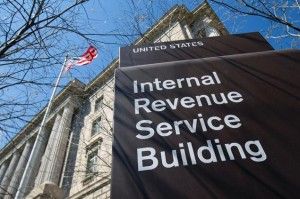
In June 2013, the Internal Revenue Service posted a federal procurement solicitation for covert surveillance equipment, including cameras hidden inside coffee trays, potted plants, and clock radios. The purchase order appeared on the government contracting website FedBizOpps with an unusually narrow response window, raising questions about both the purpose of the equipment and the urgency behind the acquisition.
What the IRS Ordered
The solicitation specified several categories of concealed monitoring devices. The order included four covert coffee tray units with concealed cameras, four remote surveillance systems equipped with built-in DVD burners and dual internal hard drives, four plant-concealed IP cameras with network servers supporting dual video streams and Power over Ethernet connectivity, four additional concealed IP cameras with audio capability, and two surveillance units disguised as clock radios.
The IRS acknowledged that the item descriptions were intentionally vague “due to the use and nature of the items.” The agency indicated it already had a preferred vendor identified, stating that if no compelling alternative bids were received, the contract would be awarded to the originally solicited corporation.
The Rushed Timeline
The procurement timeline was notably compressed. The solicitation was posted at 11:07 a.m. on Thursday, June 6, 2013, with an original response deadline of 2:00 p.m. on Monday, June 10. Counting only standard business hours, this gave potential vendors approximately 19 hours to review the solicitation and submit a response. The deadline was subsequently extended by one day to Tuesday, June 11.
The location listed for the solicitation was the IRS National Office of Procurement in Oxon Hill, Maryland, the centralized purchasing arm responsible for acquiring products and services in support of the agency’s mission.
Context of Ongoing Scandals
The surveillance equipment purchase coincided with a period of intense scrutiny for the IRS. The agency was facing multiple concurrent investigations. A report by the Treasury Inspector General for Tax Administration had revealed that IRS personnel had systematically targeted conservative groups applying for nonprofit status, particularly those with words like “patriot” or “Tea Party” in their names. Affected organizations reported being subjected to lengthy and repetitive questionnaires, with some applications delayed for more than three years.
Separately, a second Inspector General report documented nearly $50 million in wasteful spending on agency conferences, including stays at luxury hotels in Las Vegas, a $17,000 payment to a keynote speaker who painted a portrait of U2 singer Bono, and $50,000 spent producing parody videos.
No Explanation Provided
Journalists requested comment from the IRS regarding the surveillance equipment solicitation, asking the agency to explain the reasoning behind the purchase, where the equipment would be deployed, why the procurement was handled with such urgency, and whether the acquisition had any connection to the ongoing scandals. IRS spokesmen did not respond to the inquiries.
The procurement raised broader questions about the scope of surveillance capabilities within federal agencies whose primary mission is tax collection rather than law enforcement. While the IRS does maintain a Criminal Investigation division with law enforcement authority, the vague descriptions and compressed timeline of the solicitation left the purpose and deployment of the equipment opaque to public oversight.