The State Department and the online mob are both destroying “Internet freedom.”
It’s hard to deny the intellectual ambiguity of “Internet freedom” when among its staunchest defenders are idealistic hacktivists from Anonymous and hard-nosed diplomats from the U.S. State Department—two groups that otherwise disagree on everything else. Ironically, both may end up hurting the very noble cause that they seek to promote.
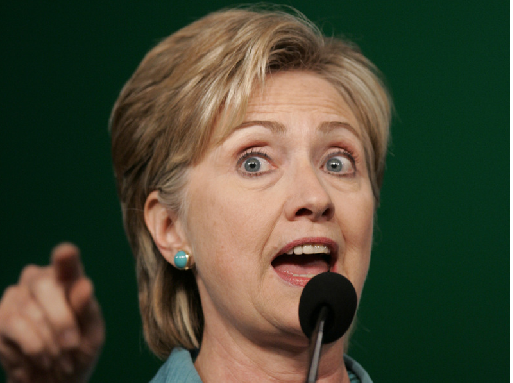
The diplomats’ problems are quite well-known by now. While Hillary Clinton likes to give speeches in which she fashions herself the world’s greatest defender of “Internet freedom,” the harsh reality is that her own government is its greatest enemy. Given the never-ending flow of draconian copyright and cybersecurity laws coming from Washington, this fact is getting harder and harder to conceal from the global public, who starts to wonder why American diplomats keep criticizing Russia or China but don’t say anything about the impressive online spying operation that the National Security Agency is building inUtah. Nor does the State Department object when America’s allies push for harsh surveillance laws; Britain, with its proposed surveillance legislation, is a case in point. America’s “Internet freedom agenda” is at best toothless and at worst counterproductive. While focusing on (and overselling) the liberating promise of social media in authoritarian regimes, it conceals a number of emerging domestic threats that have nothing to do with dictators—and everything to do with aggressive surveillance, disappearing privacy, and the astonishing greed of Silicon Valley.
The case of Anonymous is not as straightforward. This movement is so distributed, fluid, and occasionally disorganized that anyone seeking to pigeonhole it into a coherent ideological doctrine would not get too far. Still, most of its recent high-profile attacks—upon the intelligence firm Stratfor, the Central Intelligence Agency, the signatories of the Anti-Counterfeiting Trade Agreement (which, among other things, aims to thwart Internet piracy), and the Chinese government—are motivated by a desire to defend “Internet freedom.” In this lofty goal, the agendas, if not the approaches, of Anonymous and the State Department overlap.
Why these particular targets? Predictably, Anonymous hates Western governments for ushering in more surveillance and draconian piracy laws; the security industry—for satisfying the growing policing demands of those governments; the Chinese government—for being the world’s mightiest Internet censor.
Such flashy attacks are still widely discussed in the media, and that can inspire valuable broader discussion of some important Internet issues, such as the controversial Cyber Intelligence Sharing and Protection Act. But spectacles, which are bound to get boring, are not a sustainable political strategy, as the media will eventually lose interest. And Anonymous has yet to go beyond spectacle and offer a more meaningful way for its members to contribute. Cyberattacks are cheap, easy, and can attract thousands of participants without demanding much of them. In this, they can be seen as a form of “slacktivism”—they make everyone feel good but don’t necessarily advance the cause. They can be great for stunts, but one can’t change the world with stunts alone.
But—yet another parallel to the State Department—it’s not just that Anonymous’ campaigns might be toothless. They may prove counterproductive as well. The cybersecurity industry has almost certainly benefited from the buzz and fear-mongering generated by Anonymous’ attacks. Every new incursion by Anonymous must be greeted as good news in the offices of companies providing cyberdefense to both public and private sectors. Now that Anonymous has revealed that even private intelligence-gathering firms are not safe—a few months ago, it obtained the emails from Stratfor, which eventually were published by WikiLeaks—it’s a great time to be a provider of cybersecurity services!
The hacktivists keep supplying the industry with strong examples as to why more public money should be spent beefing up Internet security and surveillance while eliminating online anonymity. Take Anonymous’ recent assaults on the websites of USTelecom and Tech America, two leading technology trade associations that have lent their support to CISPA. It doesn’t take a genius to realize that a cyberattack against groups that promote legislation to combat cyberattacks only strengthens their case. It’s like shooting a bazooka in a legislative session about gun control. This was not lost on those trade associations, and they exploited this gift from Anonymous to its fullest. Thus, the president of USTelecom claimed that “by their actions Anonymous hacktivists underscore the importance of speedy action on the bipartisan [CISPA] legislation to ensure that the Internet remains an open and safe forum for all.” Regardless of what happens to this particular piece of legislation, it’s likely that lawmakers will be under growing pressure from the military-digital complex to do something about Anonymous’ attacks—and that “something” would not be conducive to any kind of “Internet freedom.”
We can expect similar developments to take place in China, where in early April a group that calls itself “Anonymous China” defaced several government websites and promised to take down its notorious censorship system. The damage caused is minimal, while the symbolic value derived from exposing the Chinese Internet censorship to the international audiences is arguably insignificant. It’s already a well-known problem. But Anonymous’ attacks do give the Chinese government good reasons to invest money into online surveillance and, perhaps, even do it with popular support: Anonymous is not above exposing credit card details of innocent victims—and China’s burgeoning middle classes will easily grasp the implications of online insecurity. If the strikes continue, Anonymous may be China’s equivalent of Stuxnet—the computer worm that disrupted Iranian nuclear facilities—only without imposing any of Stuxnet’s crippling costs. Iran’s ongoing flirtation with the idea of a “national Internet,” itself a reaction in part to Stuxnet, is a good example of how the rhetoric of cyberattacks may be invoked to justify more Internet control.
Why doesn’t Anonymous seek more effective means of cyberactivism? This is where the organization’s decentralized structure is a liability, not an asset. The movement that claims to have no leaders—well, aside from those “leaders” who happen to be working for the FBI—and that means short-term, easy objectives (often bordering on pranks) can take precedence over long-term strategic goals.
The very idea of an online campaign to defend “Internet freedom” is problematic. It’s not like an appeal to raise money for a presidential candidate or victims of a natural disaster; it takes more than a few clicks or cash donations. Moreover, the goals and priorities of such a campaign are likely to shift all the time, depending on the political context. Defending “Internet freedom” requires constant interpretation, deliberation, and discrimination between different courses of action. In contrast, online fundraising usually has fixed goals and is amenable to small-scale, granular contributions.
Without greater bureaucratization, formal mechanisms for decision-making, and, more importantly, the capacity to accept responsibility when those decisions bring unfortunate consequences, Anonymous may end up posing as great of a threat to Internet freedom as its main nemesis, the U.S. government.
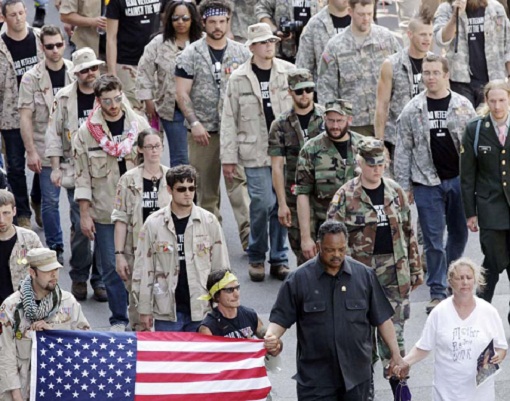
CHICAGO (Reuters) – Nearly 50 U.S. military veterans at an anti-NATO rally in Chicago threw their service medals into the street on Sunday, an action they said symbolized their rejection of the U.S.-led wars in Iraq and Afghanistan.
Some of the veterans, many wearing military uniform shirts over black anti-war t-shirts, choked back tears as they explained their actions. Others folded an American flag while a bugle played “Taps,” which is typically performed at U.S. military funerals.
“The medals are supposed to be for acts of heroism. I don’t feel like a hero. I don’t feel like I deserve them,” said Zach LaPorte, who served in Iraq in 2005 and 2006.
LaPorte, a 28-year-old mechanical engineer from Milwaukee, said he enlisted in the Army at 19 because he felt there were few other options. At the time, he could not afford to stay in college.
“I witnessed civilian casualties and civilians being arrested in what I consider an illegal occupation of a sovereign nation,” LaPorte said.
He said he was glad the United States had withdrawn its combat troops from Iraq, but said he did not believe the NATO military alliance was going to leave Afghanistan.
On Sunday, NATO Secretary-General Anders Fogh Rasmussen opened the two-day summit of the 26-member alliance saying there would be no hasty exit from Afghanistan.
A veteran from New York who only gave his name as Jerry said: “I don’t want any part of this anymore. I chose human life over war, militarism and imperialism.”
The veterans had hoped to present their medals to a NATO representative. The closest they could get was the fence ringing the McCormick Place convention center about a block from where U.S. President Barack Obama and other leaders were meeting. The veterans threw their medals toward the convention center.
Matt Howard, 29, who served in the Marines from 2001 to 2006, said the rate of suicides among veterans returning from the wars is high.
“These medals are not worth the cloth and steel they’re printed on. They’re representative of failed policies,” said Howard, a spokesman for Iraq Veterans Against the War.
Former U.S. Army Sergeant Alejandro Villatoro, 29, of Chicago, served during the Iraq 2003 invasion and in Afghanistan in 2011.
He said he suffers from post-traumatic stress syndrome and depression and gave back three medals – one “War on Terrorism” medal, one for participating in the Iraq war and a NATO medal from the Afghanistan war. He said he wants the war in Afghanistan to end.
“There’s no honor in these wars,” said Villatoro, before he threw away his medals. “There’s just shame.”
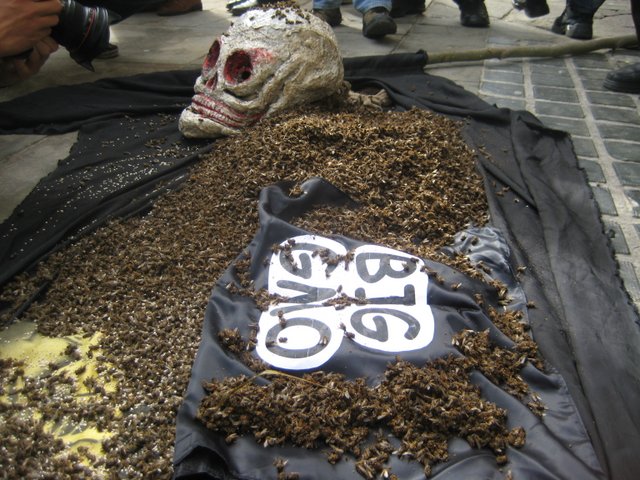
On March 15, over 1,500 beekeepers and anti-GMO protesters marched through the streets of Warsaw, depositing thousands of dead bees on the steps of the Ministry of Agriculture in protest of genetically modified foods and their pesticides which are together largely responsible for the killing off of bees, butterflies, moths and other beneficial pollinators in great numbers.
Later that day the Minister of Agriculture, Marek Sawicki, announced plans to ban MON810, which has already produced millions of hectares of pesticide resistant “superweeds” in the US.
The Polish Beekeepers Association organized the protest, joining forces with International Coalition to Protect the Polish Countryside (ICPPC) and the Coalition for a GMO Free Poland. Targeting Monsanto’s MON810 GM corn in particular, they also called for a complete ban on all genetically engineered crops as well as the pesticides found to be most damaging to the environment (and particularly to bees).
In 2008, the Polish Parliament banned GM feed, including both the planting and importing of GM crops. “Despite this progressive step,” reports Food Travels, “the European Commission has refused to accept regional bans on GMOs, keeping Polish farmers, producers, and activists on the offensive.”
Regardless, says the ICPPC, “None of the nine European Union countries that have already prohibited MON 810 did so by asking the permission of the EU.”
There was a great variety of attire as beekeepers dressed in their work bee suits and masks and ran their hive smoke guns as they marched, many wore yellow jackets with the famous Einstein quote, and many more original signs, props, and costumes. Go here for more photos.
The ICPPC is asking Polish residents to write Minister of Agriculture Marek Sawicki, demanding that he implement an immediate moratorium on GM crops, without waiting for EU approval.
One of the more extreme government abuses of the post-9/11 era targets U.S. citizens re-entering their own country, and it has received far too little attention. With no oversight or legal framework whatsoever, the Department of Homeland Security routinely singles out individuals who are suspected of no crimes, detains them and questions them at the airport, often for hours, when they return to the U.S. after an international trip, and then copies and even seizes their electronic devices (laptops, cameras, cellphones) and other papers (notebooks, journals, credit card receipts), forever storing their contents in government files. No search warrant is needed for any of this. No oversight exists. And there are no apparent constraints on what the U.S. Government can do with regard to whom it decides to target or why.
In an age of international travel — where large numbers of citizens, especially those involved in sensitive journalism and activism, frequently travel outside the country — this power renders the protections of the Fourth Amendment entirely illusory. By virtue of that amendment, if the government wants to search and seize the papers and effects of someone on U.S. soil, it must (with some exceptions) first convince a court that there is probable cause to believe that the objects to be searched relate to criminal activity and a search warrant must be obtained. But now, none of those obstacles — ones at the very heart of the design of the Constitution — hinders the U.S. government: now, they can just wait until you leave the country, and then, at will, search, seize and copy all of your electronic files on your return. That includes your emails, the websites you’ve visited, the online conversations you’ve had, the identities of those with whom you’ve communicated, your cell phone contacts, your credit card receipts, film you’ve taken, drafts of documents you’re writing, and anything else that you store electronically: which, these days, when it comes to privacy, means basically everything of worth.
This government abuse has received some recent attention in the context of WikiLeaks. Over the past couple of years, any American remotely associated with that group — or even those who have advocated on behalf of Bradley Manning — have been detained at the airport and had their laptops, cellphones and cameras seized: sometimes for months, sometimes forever. But this practice usually targets people having nothing to do with WikiLeaks.
A 2011 FOIA request from the ACLU revealed that just in the 18-month period beginning October 1, 2008, more than 6,600 people — roughly half of whom were American citizens — were subjected to electronic device searches at the border by DHS, all without a search warrant. Typifying the target of these invasive searches is Pascal Abidor, a 26-year-old dual French-American citizen and an Islamic Studies Ph.D. student who was traveling from Montreal to New York on an Amtrak train in 2011 when he was stopped at the border, questioned by DHS agents, handcuffed, taken off the train and kept in a holding cell for several hours before being released without charges; those DHS agents seized his laptop and returned it 11 days later when, the ACLU explains, “there was evidence that many of his personal files, including research, photos and chats with his girlfriend, had been searched.” That’s just one case of thousands, all without any oversight, transparency, legal checks, or any demonstration of wrongdoing.
* * * * *
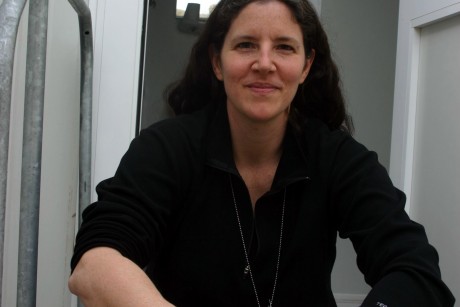
But the case of Laura Poitras, an Oscar-and Emmy-nominated filmmaker and intrepid journalist, is perhaps the most extreme. In 2004 and 2005, Poitras spent many months in Iraq filming a documentary that, as The New York Times put it in its review, “exposed the emotional toll of occupation on Iraqis and American soldiers alike.” The film, “My Country, My Country,” focused on a Sunni physician and 2005 candidate for the Iraqi Congress as he did things like protest the imprisonment of a 9-year-old boy by the U.S. military. At the time Poitras made this film, Iraqi Sunnis formed the core of the anti-American insurgency and she spent substantial time filming and reporting on the epicenter of that resistance. Poitras’ film was released in 2006 and nominated for the 2007 Academy Award for Best Documentary.
In 2010, she produced and directed “The Oath,” which chronicled the lives of two Yemenis caught up in America’s War on Terror: Salim Hamdan, the accused driver of Osama bin Laden whose years-long imprisonment at Guantanamo led to the 2006 Supreme Court case, bearing his name, that declared military commissions to be a violation of domestic and international law; and Hamdan’s brother-in-law, a former bin Laden bodyguard. The film provides incredible insight into the mindset of these two Yemenis. TheNYT feature on “The Oath” stated that, along with “My Country, My Country,” Poitras has produced ”two of the most searching documentaries of the post-9/11 era, on-the-ground chronicles that are sensitive to both the political and the human consequences of American foreign policy.” At the 2010 Sundance film festival, “The Oath” won the award for Best Cinematography.
Poitras’ intent all along with these two documentaries was to produce a trilogy of War on Terror films, and she is currently at work on the third installment. As Poitras described it to me, this next film will examine the way in which The War on Terror has been imported onto U.S. soil, with a focus on the U.S. Government’s increasing powers of domestic surveillance, its expanding covert domestic NSA activities (includingconstruction of a massive new NSA facility in Bluffdale, Utah), its attacks on whistleblowers, and the movement to foster government transparency and to safeguard Internet anonymity. In sum, Poitras produces some of the best, bravest and most important filmmaking and journalism of the past decade, often exposing truths that are adverse to U.S. government policy, concerning the most sensitive and consequential matters (a 2004 film she produced for PBS on gentrification of an Ohio town won the Peabody Award and was nominated for an Emmy).
But Poitras’ work has been hampered, and continues to be hampered, by the constant harassment, invasive searches, and intimidation tactics to which she is routinely subjected whenever she re-enters her own country. Since the 2006 release of “My Country, My Country,” Poitras has left and re-entered the U.S. roughly 40 times. Virtually every timeduring that six-year-period that she has returned to the U.S., her plane has been met by DHS agents who stand at the airplane door or tarmac and inspect the passports of every de-planing passenger until they find her (on the handful of occasions where they did not meet her at the plane, agents were called when she arrived at immigration). Each time, they detain her, and then interrogate her at length about where she went and with whom she met or spoke. They have exhibited a particular interest in finding out for whom she works.
She has had her laptop, camera and cellphone seized, and not returned for weeks, with the contents presumably copied. On several occasions, her reporter’s notebooks were seized and their contents copied, even as she objected that doing so would invade her journalist-source relationship. Her credit cards and receipts have been copied on numerous occasions. In many instances, DHS agents also detain and interrogate her in the foreign airport before her return, on one trip telling her that she would be barred from boarding her flight back home, only to let her board at the last minute. When she arrived at JFK Airport on Thanksgiving weekend of 2010, she was told by one DHS agent — after she asserted her privileges as a journalist to refuse to answer questions about the individuals with whom she met on her trip — that he “finds it very suspicious that you’re not willing to help your country by answering our questions.” They sometimes keep her detained for three to four hours (all while telling her that she will be released more quickly if she answers all their questions and consents to full searches).
Poitras is now forced to take extreme steps — ones that hamper her ability to do her work — to ensure that she can engage in her journalism and produce her films without the U.S. Government intruding into everything she is doing. She now avoids traveling with any electronic devices. She uses alternative methods to deliver the most sensitive parts of her work — raw film and interview notes — to secure locations. She spends substantial time and resources protecting her computers with encryption and password defenses. Especially when she is in the U.S., she avoids talking on the phone about her work, particularly to sources. And she simply will not edit her films at her home out of fear — obviously well-grounded — that government agents will attempt to search and seize the raw footage.
That’s the climate of fear created by the U.S. Government for an incredibly accomplished journalist and filmmaker who has never been accused, let alone convicted, of any wrongdoing whatsoever. Indeed,documents obtained from a FOIA request show that DHS has repeatedly concluded that nothing incriminating was found from its border searches and interrogations of Poitras. Nonetheless, these abuses not only continue, but escalate, after six years of constant harassment.
* * * * *
Poitras has been somewhat reluctant to speak publicly about the treatment to which she is subjected for fear that doing so would further impede her ability to do her work (the NYT feature on “The Oath” included some discussion of it). But the latest episode, among the most aggressive yet, has caused her to want to vociferously object.
On Thursday night, Poitras arrived at Newark International Airport from Britain. Prior to issuing her a boarding pass in London, the ticket agent called a Customs and Border Patrol (CBP) agent (Yost) who questioned her about whom she met and what she did. Upon arriving in Newark, DHS/CBP agents, as always, met her plane, detained her, and took her to an interrogation room. Each time this has happened in the past, Poitras has taken notes during the entire process: in order to chronicle what is being done to her, document the journalistic privileges she asserts and her express lack of consent, obtain the names of the agents involved, and just generally to cling to some level of agency.
This time, however, she was told by multiple CBP agents that she was prohibited from taking notes on the ground that her pen could be used as a weapon. After she advised them that she was a journalist and that her lawyer had advised her to keep notes of her interrogations, one of them, CBP agent Wassum, threatened to handcuff her if she did not immediately stop taking notes. A CBP Deputy Chief (Lopez) also told her she was barred from taking notes, and then accused her of “refusing to cooperate with an investigation” if she continued to refuse to answer their questions (he later clarified that there was no “investigation” per se, but only a “questioning”). Requests for comment from the CBP were not returned as of the time of publication.
Just consider the cumulative effect of this six years of harrassment and invasion. Poitras told me that it is “very traumatizing to come home to your own country and have to go through this every time,”and described the detentions, interrogations and threats as “infuriating,” “horrible” and “intimidating.” She told me that she now “hates to travel” and avoids international travel unless it is absolutely necessary for her work. And as she pointed out, she is generally more protected than most people subjected to similar treatment by virtue of the fact that she is a known journalist with both knowledge of her rights and the ability to publicize what is done to her. Most others are far less able to resist these sorts of abuses. But even for someone in Poitras’ position, this continuous unchecked government invasion is chilling in both senses of the word: it’s intimidating in its own right, and deters journalists and others from challenging government conduct.
* * * * *
As is true for so many abuses of the Surveillance State and assaults on basic liberties in the post-9/11 era, federal courts have almost completely abdicated their responsibility to serve as a check on these transgressions. Instead, federal judges have repeatedly endorsed the notion that the U.S. Government can engage in the most invasive border searches of citizens, including seizures and copying of laptops, without any reasonable suspicion of wrongdoing whatsoever, let alone probable cause.
That has happened in part because federal courts have become extremely submissive to assertions of Executive authority in the post-9/11 era, particularly when justified in the name of security. It’s also in part because anyone with a record of anti-authoritarianism or a willingness to oppose unrestrained government power, with very rare exception, can no longer get appointed to the federal bench; instead, it’s an increasingly homogeneous lot with demonstrated fealty to institutional authority. And it’s also in part because many life-tenured federal judges have been cloistered on the bench for decades, are technologically illiterate, and thus cannot apprehend the basic difference between having your suitcase searched at the airport and having the contents of your laptop and cellphone copied and stored by the U.S. Government.
One potentially important and encouraging exception to this trend was a ruling two weeks ago by U.S. District Judge Denise Casper, an Obama-appointed judge in the District of Massachusetts. As I’ve reported previously, David House, an activist who helped found the Bradley Manning Support Network, was detained by DHS when returning from a vacation in Mexico and had all of his electronic devices, including his laptop, seized; those devices were returned to him after almost two months only after he retained the ACLU of Massachusetts to demand their return. The ACLU then represented him in a lawsuit he commenced against the U.S. Government, alleging that his First and Fourth Amendment rights were violated by virtue of being targeted for his political speech and advocacy.
The DOJ demanded dismissal of the lawsuit, citing the cases approving of its power to search without suspicion, and also claimed that House was targeted not because of his political views but because of his connection to the criminal investigation of Manning and WikiLeaks. But the court refused to dismiss House’s lawsuit, holding that if he were indeed targeted by virtue of his protected activities, then his Constitutional rights have been violated:
Before even questioning House, the agents seized his electronic devices and in seizing them for forty-nine days, reviewed, retained, copied and disseminated information about the Support Network. Although the agents may not need to have any particularized suspicion for the initial search and seizure at the border for the purpose of the Fourth Amendment analysis, it does not necessarily follow that the agents, as is alleged in the complaint, may seize personal electronic devices containing expressive materials, target someone for their political association and seize his electronic devices and review the information pertinent to that association and its members and supporters simply because the initial search occurred at the border. . . .
When agents Santiago and Louck stopped House while he was en route to his connecting flight, they directed him to surrender the electronic devices he was carrying. They questioned him for an extended period of time only after seizing his devices. When the agents questioned House, they did not ask him any questions related to border control, customs, trade, immigration, or terrorism and did not suggest that House had broken the law or that his computer may contain illegal material or contraband. Rather, their questions focused solely on his association with Manning, his work for the Support Network, whether he had any connections to WikiLeaks, and whether he had contact with anyone from WikiLeaks during his trip to Mexico. Thus, the complaint alleges that House was not randomly stopped at the border; it alleges that he was stopped and questioned solelyto examine the contents of his laptop that contained expressive material and investigate his association with the Support Network and Manning. . . .
That the initial search and seizure occurred at the border does not strip House of his First Amendment rights, particularly given the allegations in the complaint that he was targeted specifically because of his association with the Support Network and the search of his laptop resulted in the disclosure of the organizations, members, supporters donors as well as internal organization communications that House alleges will deter further participation in and support of the organization. Accordingly, the Defendants’ motion to dismiss House’s First Amendment claim is DENIED. [emphasis added]
As Kevin Gosztola notes in an excellent report on this ruling, the court — although it dubiously found that “the search of House’s laptop and electronic devices is more akin to the search of a suitcase and other closed containers holding personal information travelers carry with them when they cross the border which may be routinely inspected by customs and require no particularized suspicion” – also ruled that the length of time DHS retained House’s laptop (six weeks) may render the search and seizure unreasonable in violation of the Fourth Amendment.
But thus far, very few efforts have been made to restrain this growing government power. More than a year ago, Democratic Rep. Loretta Sanchez described to me legislation she proposed just to impose someminimal rules and safeguards governing what DHS can do at the airport, but it’s gone nowhere. A much stronger bill, proposed by then-Sen. Feingold, would have barred laptop seizures entirely without a search warrant, but it suffered the same fate. Apparently, the Small Government faction calling itself the “Tea Party” has no greater interest in restraining this incredibly invasive government power than the Democratic Party which loves to boast of its commitment to individual rights.
It’s hard to overstate how oppressive it is for the U.S. Government to be able to target journalists, film-makers and activists and, without a shred of suspicion of wrongdoing, learn the most private and intimate details about them and their work: with whom they’re communicating, what is being said, what they’re reading. That’s a radical power for a government to assert in general. When it starts being applied not randomly, but to people engaged in activism and journalism adverse to the government, it becomes worse than radical: it’s the power of intimidation and deterrence against those who would challenge government conduct in any way. The ongoing, and escalating, treatment of Laura Poitras is a testament to how severe that abuse is.
If you’re not somebody who films the devastation wrought by the U.S. on the countries it attacks, or provides insight into Iraqi occupation opponents and bin Laden loyalists in Yemen, or documents expanding NSA activities on U.S. soil, then perhaps you’re unlikely to be subjected to such abuses and therefore perhaps unlikely to care much. As is true for all states that expand and abuse their own powers, that’s what the U.S. Government counts on: that it is sending the message that none of this will affect you as long as you avoid posing any meaningful challenges to what they do. In other words: you can avoid being targeted if you passively acquiesce to what they do and refrain from interfering in it. That’s precisely what makes it so pernicious, and why it’s so imperative to find a way to rein it in.
This is a guide with which even a total noob can get high class security for his system and complete anonymity online. But its not only for noobs, it contains a lot of tips most people will find pretty helpfull. It is explained so detailed even the biggest noobs can do it^^ :
=== The Ultimate Guide for Anonymous and Secure Internet Usage v1.0.1 ===
By the time you are finished reading and implementing this guide, you will be able to securely and anonymously browse any website and to do so anonymously. No one not even your ISP or a government agent will be able to see what you are doing online. If privacy and anonymity is important to you, then you owe it to yourself to follow the instructions that are presented here.
In order to prepare this guide for you, I have used a computer that is running Windows Vista. This guide will work equally well for other versions of Windows. If you use a different operating system, you may need to have someone fluent in that operating system guide you through this process. However, most parts of the process are easily duplicated in other operating systems.
I have written this guide to be as newbie friendly as possible. Every step is fully detailed and explained. I have tried to keep instructions explicit as possible. This way, so long as you patiently follow each step, you will be just fine.
In this guide from time to time you will be instructed to go to certain URLs to download files. You do NOT need TOR to get these files, and using TOR (while possible) will make these downloads very slow.
This guide may appear overwhelming. Every single step is explained thoroughly and it is just a matter of following along until you are done. Once you are finished, you will have a very secure setup and it will be well worth the effort. Even though the guide appears huge, this whole process should take at the most a few hours. You can finish it in phases over the course of several days.
It is highly recommended that you close *ALL* applications running on your computer before starting.
Leak Sites that publish leaks and accept submission of leaks, inspired by the original WikiLeaks.org concept.
WikiLeaks – WikiLeaks website – love them or hate them – no new submissions for 2 years – new submission system still not launched as promised on 28/11/2011 or 01/12/2011
BritiLeaks false start – BritiLeaks website – original false start: launched with less than no anonymity or security protection at all – see below for current site .
BritiLeaks – BritiLeaks website – new secure website launch promised soon, already has strong TLS Digital Certificate and Tor Hidden Services – still to be launched “in a few days”, but hosting mirrors of other whistleblowing websites.
MurdochLeaks – The Murdoch Leaks Project website – “will accept tips or evidence of wrong doing relating to Rupert Murdoch’s affiliated institutions such as News International and News Corporation”
OpenWatch – OpenWatch.net encourages the public to use their mobile phone software to record encounters with the police and authority, then submit them for posting online.
LectureLeaks – LectureLeaks – Use recording mobile software to record and leak university lectures. Has content already, open source.
CorruptionWatch.org.za – Corruption Watch – South Africa – Trades Union organised, anti-corruption pledge signatures, mapping of corruption hotspots, but no security or anonymity measures for contributors or informants at all except for “Leave this field empty, if you want to stay anonymous.“
Established Leak Sites
Websites which have been publishing censored or leaked material before, or independently in parallel with WikiLeaks
Public Intelligence – Public Intelligence website established 2009 – now back online in Luxembourg after server move from the Netherlands caused by “complaints” to the hosting company. Good Encryption, now no longer using Quantserve web bug tracking
FolhaLeaks – FolhaLeaks – Folha de S.Paulo, São Paulo, Brasil – no encryption, web form is not distinct from the main newspaper website so it betrays “anonymous” visitor details to FaceBook and to various banner advertisers etc.
Environmental Protection Whistle blowing sites
Leak Sites and Organization that accept reporting about environmental issues
NZ SIS – New Zealand Security Intelligence Service Public Contribution Form – no longer uses a hidden PGP key, still tracks IP address etc. and the rest of the website still tracks visitors with Google Analytics
Websites which have a specific topic, audience and editorial position and as part of their reporting have frequently published high level unpublished documents
Hints and Tips for Whistleblowers – ht4w.co.uk website – Technical Hints and Tips for protecting the anonymity of sources for Whistleblowers, Investigative Journalists, Campaign Activists and Political Bloggers etc.
Global Integrity Report Open-source metrics, indicators, and techniques for assessing transparent and accountable government. Strong whistleblowing protection law considered as an effective anti-corruption framework.
Public Concern at Work – UK Public Concern at Work NGO and legal advice centre set up in 1993 to address public interest whistleblowing: a) confidential advice to whistleblowers b) policy & campaigning c) public education (throughout UK, and to law/policy makers and all employers)
Whistle Blowing Consulting Businesses
Organization that do business related to WhistleBlowing and leaking (Consulting, Services, Press Agency middle men etc).
Charity and Profit organization that provide to public agencies and private corporation hotline services for whistleblowing in order to outsource the internal reporting service.
Public Concern at Work – UK Public Concern at Work A leading authority on making public interest whistleblowing work. Provide training, consultancy, audit support and access to advice line for organisations wanting to ensure they provide their staff a real alternative to silence.
GlobaLeaks – GlobaLeaks website – Open Source Whistleblowing Framework software project, which spawned this LeakDirectory.org wiki
Honest Appalachia – Honest Appalachia website – uses Tor Hidden Service and PGP and publishes its own Open Source documents submission website software and configuration scripts to help other similar whistleblowing projects
Whistle Blowing in Corporations
A Directory of corporations that implemented corporate transparency by implementing whistleblowing through the organization:
internalmemos.com Part of the fuckedcompany coverage of the internet bubble collapse. All of the 2002-2007 memos not behind the paywall are available from the internet archivehighlights include:
blackfridaywikileaks.com – Blackfriday wikileaks America – WordPress blog with no entries since June 2011, full of Google Analytics, Quantserve etc. visitor tracking, no encryption etc.
Encryption / Anonymity infrastructure services/ software used by some Whistleblower Sites
Tor – Tor project – encrypted anonymity router cloud – Tor Hidden Services and anonymised web browsing / web form submission (N.B. caveats)
The Workshop has been glued together with GlobaLeaks one, you can download slides here
SocialHacking LeakDirectorySocial Hacking
We will give an overview of what whistle blowing is and how it can be applied a wide array of different situations. Hopefully by the end of the workshop you will understand that whistle blowing is a fundamental tool for a democratic and transparent society.
We will focus in particular on the Leakdirectory Project, a shared crowd based initiative to represent most of the world of whistleblowing with the goal to became a reference for all the whistleblowing initiatives.
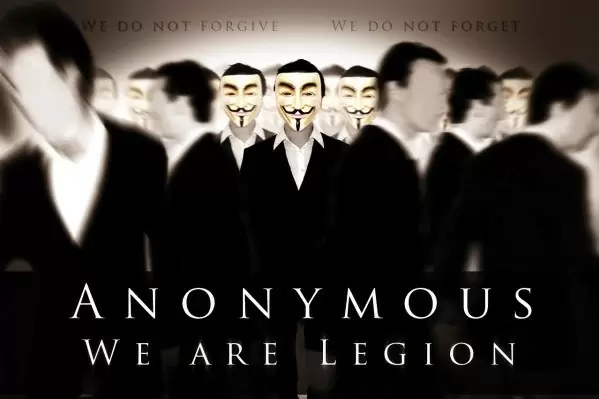
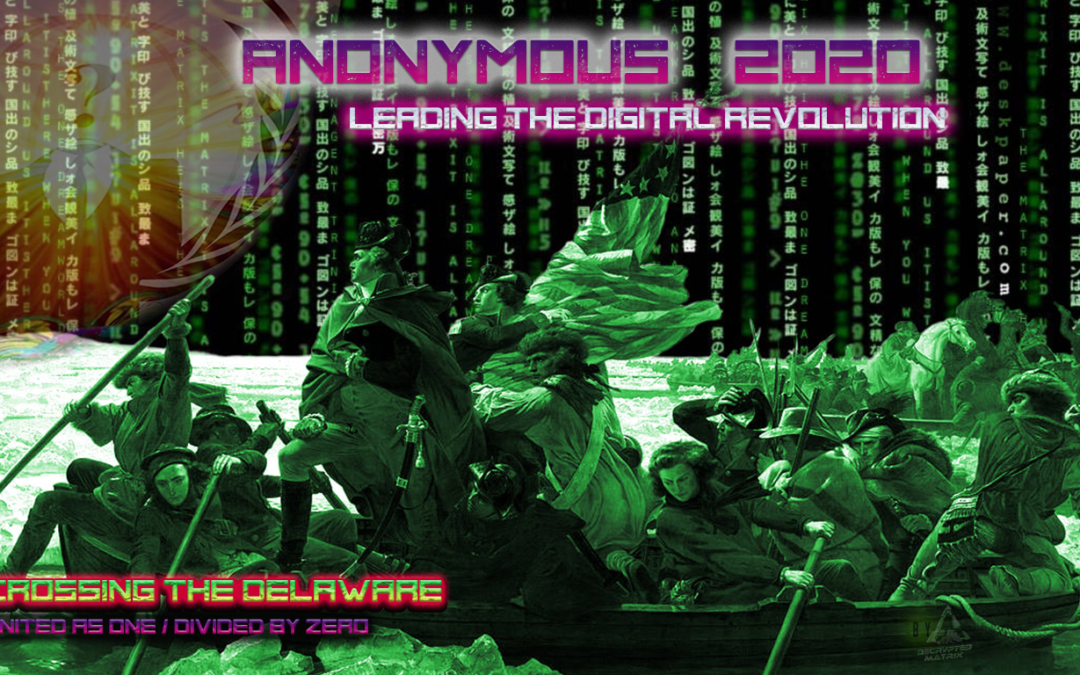
You can not join Anonymous. Nobody can join Anonymous. Anonymous is not an organization. It is not a club, a party or even a movement. There is no charter, no manifest, no membership fees. Anonymous has no leaders, no gurus, no ideologists. In fact, it does not even have a fixed ideology.
All we are is people who travel a short distance together – much like commuters who meet in a bus or tram: For a brief period of time we have the same route, share a common goal, purpose or dislike. And on this journey together, we may well change the world.
Nobody can speak for Anonymous. Nobody could say: you are in, or you are out. Do you still want to join Anonymous? Well, you are in if you want to.
How to get in contact with others? Anonymous has no centralized infrastructure. We use existing facilities of the Internet, especially social networks, and we are ready to hop on to the next one if this one seems compromised, is under attack, or starts to bore us.
At the time of this writing, Facebook, Twitter and the IRC appear to host the most active congregations. But this may change at any time. Still, these are probably the best places to get started. Look for terms like “anonymous”, “anonops” and other keywords that might be connected to our activities.
How do I recognize other Anonymous? We come from all places of society: We are students, workers, clerks, unemployed; We are young or old, we wear smart clothes or rugs, we are hedonists, ascetics, joy riders or activists. We come from all races, countries and ethnicities. We are many.
We are your neighbours, your co-workers, your hairdressers, your bus drivers and your network administrators. We are the guy on the street with the suitcase and the girl in the bar you are trying to chat up. We are anonymous. Many of us like to wear Guy Fawkes masks on demonstrations. Some of us even show them in their profile pictures in social networks. That helps to recognize each other.
Have you been infiltrated? If you talk to another Anonymous, you will never know who he is. He may be a hacker, cracker, phisher, agent, spy, provocateur – or just the guy from next door. Or his daughter. It is not illegal to be Anonymous. Nor is it illegal to wear Guy Fawkes masks. Keep that in mind. If you personally have not been involved in illegal activities, you have nothing to worry, no matter whom you talk to; If you have, it is wise not to talk about it. To no one.
How do I protect my privacy? Invent an alias, a nick, a pseudonym … call it as you will, just invent something. Then register a mail account in that name with one of the big mail providers. Use this email address to register your Twitter, Facebook, etc. accounts. Make sure to clear all cookies before you start using your new identity, or better use a different web browser for Anonymous than for your other activities.
If you have higher needs for security, ask us about encryption, steganography, TOR, etc. Many of us know how to use them.We will always respect your need for privacy. We will never ask for your personal information. If we do, we will not expect a truthful answer; And neither should you.
What is the right thing to do? The only person who can tell you what is right for you is yourself. This is also the only person you should follow. We have no leaders. You are also the only person responsible for your actions. Do what you think is right. Do not what you think is wrong.
How many Anonymous are there?
We are more than you think. We are more than anybody thinks. We are many.
A few thoughts on the “hacktivist” group Anonymous that came out of Josh Corman and Brian “Jericho” Martin’s keynote at theSOURCE security conference in Boston last week:
Hacktivist is a sloppy term. A small percentage of those who claim affiliation with the ideology, or movement, or brand, or whatever we wind up calling it, are hackers or activists (5 to 10 percent are skilled hackers or activists, while the lowest common denominators “don’t do much” and are “glorified cheerleaders, at best”, they said).
We need a better, more efficient Anonymous.
Before we explore their rationale for Anonymous 2.0, it’s worthwhile to know why Corman – director of Security Intelligence for Akamai – and Jericho – a “hacker turned security mouthpiece” – care, and why they think we all should.
Here’s how Jericho explained it:
"Most problems on the Internet don't affect us. With Anonymous—and we're using Anonymous as an example for this presentation, but it could be anybody: Anonymous or a splinter group [such as LulzSec] or the next [group] that comes along—almost everyone is involved. Vigilantes, 'good guys,' analysts ... with civilians stuck in the middle. Those whose information is doxed, those people are getting affected more than anyone. If you're affected, you're involved. … Look at [Anonymous's] influence. From analysts, to law enforcement, to former members, to the media, to organized crime, to foreign nation states. "
Nobody in technology, nor in business, for that matter, can get away from fighting Anonymous or other similar groups, whether the fight transpires in media or anywhere else, he said.
So that’s why they care, and why we must. Beyond our own, personal involvement, a broader concern is that much of what we lay at the Anonymous doorstep may be branded as such merely as a smokescreen.
As Corman noted, this amorphous thing we call “Anonymous” has become the perfect scape goat. Anonymous members continually drop in and out of affiliation with, or actions taken on behalf of, the group.
Any attack can be labelled with the Anonymous brand, regardless of whether it was sincerely done under activist principles or is simply branded that way to cover the tracks of, say, a nation state (sound familiar? “Suspicious attack. Must be China!”).
For all the mayhem they’ve caused, much of what “Anonymous” has “done” (I use quotes because there’s often [usually?] no way to determine actual perpetrators) is to simply exploit low-hanging fruit, Jericho said, thus erecting worthwhile signposts to cyber security flaws.
As Corman put it:
"Anonymous has held up a mirror to our defects. [They've done] nothing really hard. They've just showed us how insecure we are [with regards to] basic Internet hygiene. If they turned up the heat, it would be even worse."
In a nutshell, if we can’t deal with the worst the Anonymous-affiliated have to offer, “we’re f*cked,” Jericho said. If that word offends you, “you have to get out of the industry,” because sooner or later, in one fashion or another, you’ll likely have to deal with Anonymous.
Which leads to why we we should wish for, or even need, a better, more efficient Anonymous.
As it is, Jericho said, Anonymous are “a crude, blunt weapon”. Why not a better Anonymous? One that’s more efficient and that gets stuff done with less collateral damage? One that doesn’t dox the personal information of innocent people and put them and their families at risk?
The steps for creating what they call a “a straw man of ‘organized chaos'”:
Statement of belief, values, objectives, and first principles – i.e. WHY you have come together
Code of conduct and operational parameters – i.e. HOW you conduct your pursuit of your common goals
A plan for streamlining success, increasing potency, and mitigating risks – i.e. WHAT will make you more successful
Would such codification cause the group to splinter? Hopefully. The group needs to specialize, Corman and Jericho said. An Anonymous splinter devoted to free-speech issues would be a boon if it could devote itself to the task at hand, for example.
Does Anonymous agree with the proposals? Anonymous has no unified voice, the keynoters said, so it’s a moot question — it is, after all, a composite, rather than a singular, monolithic group, and there are any number of levels of allegiance and reasons for participating.
But some regular actors in the movement have agreed with the tenets – one plus of a codified Anonymous is the ability to disavow a given action that goes against the stated objectives of the group.
Jericho pointed to the recently announced MalSec (Malicious Security) group as an example of how new splinter groups might codify their beliefs. From their YouTube video:
"For many years we have watched as more unconstitutional laws are proposed and passed and as censorship, disinformation, and corruption have become the norm."
"In an attempt to bring these acts to a halt, we are targeting the very people that have attempted to do us harm. We do, however, fervently believe in free speech. Everyone should be able to express themselves freely, even if others disapprove. As such, we have decided never to remove the original data, when a website of an enemy is defaced."
That’s a start. That’s a statement of a belief – free speech – and a practice – refraining from removing original data. Thus the group can disavow fraudulently labelled MalSec actions.
Now, regarding the term hacktivist: I’ve used it. Lots of journalists have used it. I’m not going to use it anymore.
When Corman and Jericho polled the audience to ask how many thought that the law was winning in its fight against Anonymous, only one hand went up.
That only shows that Anonymous has won the media, Jericho said, whereas the law has failed to engage our attention.
The keynoters’ research has shown that some 184 Anonymous actors have been arrested and charged in 14 countries. Only one in three Anonymous-branded actions make the news, one in five make the news on tech sites, and only one in 30 make the mainstream news.
These are guestimates. The point is, law enforcement is making busts. They need to rattle their sabers more, and we journalists need to pay attention.
We also need a better term than hacktivist, which embodies the romantic type of Robin Hood image that Hollywood, journalists and the public adore.
“The Anonymous affiliated” is kludgy. But perhaps we won’t be able to come up with a better term until Anonymous itself draws its boundaries, making it possible for a given action to be rightfully branded or justifiably disavowed.
If you can think of a better term to use in the meantime, please share it in the comments section.
And kudos to Corman and Jericho for opening up such a thoughtful discussion about a topic that’s too easily simplified and romanticized.
We are Anonymous, and we do not forgive. Forgiveness requires humility, humility requires dignity. We have neither.
We are void of human restraints, such as self respect and common sense.
All those who break this pact will be eliminated without hesitation. And by elimination we will put their name on an icky photo and shit in each others’ mouths.
Those who perform reckless actions or wish to harm the Anonymous will be eliminated without hesitation. Again, elimination is our word for doing very little about it.
Failure is the basis of our existence.
Enemies of the Anonymous include anyone who can point out how many times we contradict ourselves in a single sentence.
Our enemies are to be flaccidly made fun of, using the same tired photoshopped stuff stolen from someone else.
Anonymous must “work” as one. No Anonymous knows anything.
Betrayal of Anonymous is both ironic and appropriate.
Manipulation of the weak and innocent is something that the truly weak believe indicates power, as such we do it alot. Not well but, often. Once a victim is no longer commodious, they are to be eliminated. Also, the cow was slaughtered in the abattoir.
REPRODUCE. REPRODUCE. REPRODUCE. Like cockroaches and Catholics we need to make sure our stupidity is at least backed by numbers. Quantity over quality. Loud = Funny.
No man-made or natural occurance can harm the Anonymous. Except when Mom and Dad ground us from the computer. That’s pouting time.
Under no circumstances are Anonymous human. We are beneath humans and mortality.
Anonymous are not to partake in meaningless tasks….pffft Ahhh dude I’m totally shitting ya, that’s all we do.
You are legion, for we are many. That makes it easier to defend ourselves when smart people tell us to stop acting like idiots.
Anonymous is everywhere at all times, we like to loiter. we really have nothing better to do than hang out. Yet, singular Anonymous are not permitted to know everything. Which is good, because we know very little.
All have the potential to be Anonymous until they choose to drop a bag of fertilizer on their nutsack and grow a pair. Those who are not Anonymous are to be eliminated….or photoshopped into a nasty photo which ever one requires less standing and walking. Or hack a paypal account and charge PS3’s, send massive amounts of cowardly and empty death threats or, whatever weak ass “criminal” act we think will make us appear powerful.
Anonymous has no weakness or flaw. Well, except maybe getting laid. That ain’t happening. And a whole bunch of others. But besides crippling personality flaws, body odor, lack of humor, not getting laid and relying on shock value and memes to speak for us…we have only a few more flaws and weaknesses.
Laws of Nature and Man cannot restrain the Anonymous. However, an IP ban, power outage or, a light punch to the solar plexus can drop us like a bag of bad habits.
Anonymous is Zero. Feuding and argument amongst the Anonymous is both constant and unavoidable.
Anonymous is in control at all times. We just choose to waste all of it.
Anonymous has no identity. Those who are not Anonymous yet know our presence must be eliminated. Again and, I can not stress this enough people, “eliminate” means sitting on our asses all day pretending to jerk off to Goatse, while our mothers yell at us to get jobs.
Anonymous cannot be contained by mere restraints. We are far too fat to fit any normal conveyance, handcuffs or standard size airline seats.
Anonymous are all equally stupid. No one is more retarded then Anonymous.
Anonymous must obey the Code. Those who do not are to be raped with our mighty e-peens, until supper time and homework, then an hour of Gameboy before bedtime.
Anonymous worships nothing because anonymous is nothing.
Anonymous cares for nothing, but Anonymous. Our existence is vapid, myopic and limited.
Humanity is the virus; Anonymous is the open wound that invites it in.
F.B.I. targets peaceful anti-fracking and Rising Tide activists, Washington Post reveals
Rising Tide North Texas subject of intimidation campaign by federal government
In today’s Washington Post, it was revealed that the Federal Bureau of Investigation (FBI) has been investigating peaceful climate and anti-fracking activists as a threat. In response to anonymous complaints Rising Tide North Texas, a part of the Rising Tide North America network, has been the subject of an ongoing FBI investigation. The FBI has visited and called for an interview Rising Tide organizer, University of North Texas (UNT) student and a marine veteran of the Afghan war Ben Kessler, as well as UNT philosophy professor Adam Briggle.
“If all I have done to be investigated as a threat is to peacefully express my opinions, then we are in serious trouble,” said Ben Kessler. “Activism is not terrorism. The only dangerous threat in North Texas is the threat that hydro-fracturing, or “fracking,” has on the health and lives of the residents of our communities.”
The article also revealed cooperation between the F.B.I. and local police in Moscow Idaho around repeated protests organized by Wild Idaho Rising Tide around the tar sands heavy haul truck shipments.
Here is the article:
As eco-terrorism wanes, governments still target activist groups seen as threat
By Juliet Eilperin, Updated: Saturday, March 10, 5:12 PM
Ben Kessler, a student at the University of North Texas and an environmental activist, was more than a little surprised that an FBI agent questioned his philosophy professor and acquaintances about his whereabouts and his sign-waving activities aimed at influencing local gas drilling rules.“It was scary,” said Kessler, who is a national organizer for the nonviolent environmental group Rising Tide North America. He said the agent approached him this past fall and said that the FBI had received an anonymous complaint and were looking into his opposition to hydraulic fracturing, also known as “fracking.” The bureau respected free speech, the agent told him, but was “worried about things being taken to an extreme level.”
Even as environmental and animal rights extremism in the United States is on the wane, officials at the federal, state and local level are continuing to target groups they have labeled a threat to national security, according to interviews with numerous activists, internal FBI documents and a survey of legislative initiatives across the country.
Iowa Gov. Terry Brandstad (R) signed a law this month, backed by the farm lobby, that makes it a crime to pose as an employee or use other methods of misrepresentation to get access to operations in an attempt to expose animal cruelty. Utah passed a similar bill, nicknamed an “ag-gag” law, on Wednesday. Last month, Victor VanOrden, an activist in his mid-20s, received the maximum sentence of five years in prison under a separate Iowa law for attempting to free minksfrom one of the state’s fur farms.
At the same time, though, acts that might be defined as eco-terrorism are down. In recent years, the broad definition has included arson, setting mink free at fur farms, campaigns to financially bankrupt animal testing firms and protests in front of the homes of some of those firms’ executives.
Michael Whelan, executive director of Fur Commission USA, estimated that in the 1990s “there were close to 20 attacks per year on our farmers” and that since 2003 there have been fewer than two attacks a year on American mink farms.
“Overall we’ve seen a decline in activity, in terms of violent criminal activity,” FBI intelligence analyst Erin Weller said in an interview.
FBI officials say two factors contribute to the reduced threat.
One is their successful prosecutions of several activists, in particular the 15 convictions in 2007 for members of the Earth Liberation Front. The national sweep of radical environmentalists was chronicled in the Oscar-nominated 2011 documentary “If a Tree Falls.” Not only did several ELF members get long prison sentences — Stanislas Meyerhoff got 13 years — but also many activists testified against others to get lighter punishments.
“That’s had an impact on the movement as a whole,” Weller said.
The second factor is that environmental and animal rights activists may view a Democratic administration as more sympathetic to their goals and be less inclined to take radical steps.
“Obviously if you think there is going to be support for your position, you’re going to use legal means rather than illegal means,” Weller said.
Despite the decline in activity, the level of scrutiny has continued, say several who track state and federal enforcement.“There’s been very little change under the Obama administration,” said Will Potter, author of the book “Green is the New Red: An Insider’s Account of a Movement Under Siege.” After factoring in several state initiatives on top of federal enforcement, Potter said, “The political climate as a whole has gotten a lot worse.”
One way to neutralize a potential activist is to get them to be in a group that does all the wrong things. Why?
1) The message doesn’t get out. 2) A lot of time is wasted 3) The activist is frustrated and discouraged 4) Nothing good is accomplished.
FBI and Police Informers and Infiltrators will infest any group and they have phoney activist organizations established.
Their purpose is to prevent any real movement for justice or eco-peace from developing in this country.
Agents come in small, medium or large. They can be of any ethnic background. They can be male or female.
The actual size of the group or movement being infiltrated is irrelevant. It is the potential the movement has for becoming large which brings on the spies and saboteurs.
This booklet lists tactics agents use to slow things down, foul things up, destroy the movement and keep tabs on activists.
It is the agent’s job to keep the activist from quitting such a group, thus keeping him/her under control.
In some situations, to get control, the agent will tell the activist:
“You’re dividing the movement.”
[Here, I have added the psychological reasons as to WHY this maneuver works to control people]
This invites guilty feelings. Many people can be controlled by guilt. The agents begin relationships with activists behind a well-developed mask of “dedication to the cause.” Because of their often declared dedication, (and actions designed to prove this), when they criticize the activist, he or she – being truly dedicated to the movement – becomes convinced that somehow, any issues are THEIR fault. This is because a truly dedicated person tends to believe that everyone has a conscience and that nobody would dissimulate and lie like that “on purpose.” It’s amazing how far agents can go in manipulating an activist because the activist will constantly make excuses for the agent who regularly declares their dedication to the cause. Even if they do, occasionally, suspect the agent, they will pull the wool over their own eyes by rationalizing: “they did that unconsciously… they didn’t really mean it… I can help them by being forgiving and accepting ” and so on and so forth.
The agent will tell the activist:
“You’re a leader!”
This is designed to enhance the activist’s self-esteem. His or her narcissistic admiration of his/her own activist/altruistic intentions increase as he or she identifies with and consciously admires the altruistic declarations of the agent which are deliberately set up to mirror those of the activist.
This is “malignant pseudoidentification.” It is the process by which the agent consciously imitates or simulates a certain behavior to foster the activist’s identification with him/her, thus increasing the activist’s vulnerability to exploitation. The agent will simulate the more subtle self-concepts of the activist.
Activists and those who have altruistic self-concepts are most vulnerable to malignant pseudoidentification especially during work with the agent when the interaction includes matter relating to their competency, autonomy, or knowledge.
The goal of the agent is to increase the activist’s general empathy for the agent through pseudo-identification with the activist’s self-concepts.
The most common example of this is the agent who will compliment the activist for his competency or knowledge or value to the movement. On a more subtle level, the agent will simulate affects and mannerisms of the activist which promotes identification via mirroring and feelings of “twinship”. It is not unheard of for activists, enamored by the perceived helpfulness and competence of a good agent, to find themselves considering ethical violations and perhaps, even illegal behavior, in the service of their agent/handler.
The activist’s “felt quality of perfection” [self-concept] is enhanced, and a strong empathic bond is developed with the agent through his/her imitation and simulation of the victim’s own narcissistic investments. [self-concepts] That is, if the activist knows, deep inside, their own dedication to the cause, they will project that onto the agent who is “mirroring” them.
The activist will be deluded into thinking that the agent shares this feeling of identification and bonding. In an activist/social movement setting, the adversarial roles that activists naturally play vis a vis the establishment/government, fosters ongoing processes of intrapsychic splitting so that “twinship alliances” between activist and agent may render whole sectors or reality testing unavailable to the activist. They literally “lose touch with reality.”
Activists who deny their own narcissistic investments [do not have a good idea of their own self-concepts and that they ARE concepts] and consciously perceive themselves (accurately, as it were) to be “helpers” endowed with a special amount of altruism are exceedingly vulnerable to the affective (emotional) simulation of the accomplished agent.
Empathy is fostered in the activist through the expression of quite visible affects. The presentation of tearfulness, sadness, longing, fear, remorse, and guilt, may induce in the helper-oriented activist a strong sense of compassion, while unconsciously enhancing the activist’s narcissistic investment in self as the embodiment of goodness.
The agent’s expresssion of such simulated affects may be quite compelling to the observer and difficult to distinguish from deep emotion.
It can usually be identified by two events, however:
First, the activist who has analyzed his/her own narcissistic roots and is aware of his/her own potential for being “emotionally hooked,” will be able to remain cool and unaffected by such emotional outpourings by the agent.
As a result of this unaffected, cool, attitude, the Second event will occur: The agent will recompensate much too quickly following such an affective expression leaving the activist with the impression that “the play has ended, the curtain has fallen,” and the imposture, for the moment, has finished. The agent will then move quickly to another activist/victim.
The fact is, the movement doesn’t need leaders, it needs MOVERS. “Follow the leader” is a waste of time.
A good agent will want to meet as often as possible. He or she will talk a lot and say little. One can expect an onslaught of long, unresolved discussions.
Some agents take on a pushy, arrogant, or defensive manner:
1) To disrupt the agenda
2) To side-track the discussion
3) To interrupt repeatedly
4) To feign ignorance
5) To make an unfounded accusation against a person.
Calling someone a racist, for example. This tactic is used to discredit a person in the eyes of all other group members.
Saboteurs
Some saboteurs pretend to be activists. She or he will ….
1) Write encyclopedic flyers (in the present day, websites)
2) Print flyers in English only.
3) Have demonstrations in places where no one cares.
4) Solicit funding from rich people instead of grass roots support
5) Display banners with too many words that are confusing.
6) Confuse issues.
7) Make the wrong demands.
Cool Compromise the goal.
9) Have endless discussions that waste everyone’s time. The agent may accompany the endless discussions with drinking, pot smoking or other amusement to slow down the activist’s work.
Provocateurs
1) Want to establish “leaders” to set them up for a fall in order to stop the movement.
2) Suggest doing foolish, illegal things to get the activists in trouble.
3) Encourage militancy.
4) Want to taunt the authorities.
5) Attempt to make the activist compromise their values.
6) Attempt to instigate violence. Activisim ought to always be non-violent.
7) Attempt to provoke revolt among people who are ill-prepared to deal with the reaction of the authorities to such violence.
Informants
1) Want everyone to sign up and sing in and sign everything.
2) Ask a lot of questions (gathering data).
3) Want to know what events the activist is planning to attend.
4) Attempt to make the activist defend him or herself to identify his or her beliefs, goals, and level of committment.
Recruiting
Legitimate activists do not subject people to hours of persuasive dialog. Their actions, beliefs, and goals speak for themselves.
Groups that DO recruit are missionaries, military, and fake political parties or movements set up by agents.
Surveillance
ALWAYS assume that you are under surveillance.
At this point, if you are NOT under surveillance, you are not a very good activist!
Scare Tactics
They use them.
Such tactics include slander, defamation, threats, getting close to disaffected or minimally committed fellow activists to persuade them (via psychological tactics described above) to turn against the movement and give false testimony against their former compatriots. They will plant illegal substances on the activist and set up an arrest; they will plant false information and set up “exposure,” they will send incriminating letters [emails] in the name of the activist; and more; they will do whatever society will allow.
This booklet in no way covers all the ways agents use to sabotage the lives of sincere an dedicated activists.
If an agent is “exposed,” he or she will be transferred or replaced.
COINTELPRO is still in operation today under a different code name. It is no longer placed on paper where it can be discovered through the freedom of information act.
The FBI counterintelligence program’s stated purpose: To expose, disrupt, misdirect, discredit, and otherwise neutralize individuals who the FBI categorize as opposed to the National Interests. “National Security” means the FBI’s security from the people ever finding out the vicious things it does in violation of people’s civil liberties.
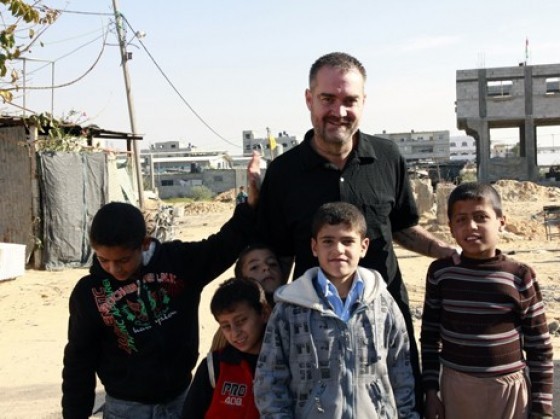
“Ken” O’Keefe (born July 21, 1969) is an Irish-American activist and former United States Marine and Gulf War veteran. He led the human shield action to Iraq and was a passenger on the MV Mavi Marmara during the Gaza flotilla raid. He said that he participated during clashes on the ship and claimed to have disarmed two Israeli commandos.
Human Shield Action to Iraq
In December 2002, O’Keefe started the human shield action to Iraq group. Intended to “make it politically impossible for them to bomb” Iraq by placing western civilians as “shields” at non-military locations, about 75 activists traveled over land from London to Bahgdad in two double-decker buses. Critics of the human shields argued that their mission would only protect Saddam Hussein. O’Keefe argued the “people of Iraq” would suffer the most from a war and publicly acknowledged Hussein as a “violent dictator”. At its height about 300 human shields were in Baghdad, but due to challenges internally, with the Iraqi dictatorship and O’Keefe’s deportation from Iraq, the numbers dwindled.
Citizenship
O’Keefe claims to have renounced his U.S. citizenship, but “… O’Keefe has tried officially to renounce his citizenship twice without success, first in Vancouver [Canada] and then in the Netherlands. His initial bid was rejected after the State Department concluded that he would return to the United States—a credible inference, as O’Keefe in fact had returned immediately. After his second attempt, O’Keefe waited seven months with no response before he tried a more sensational approach. He went back to the consulate at The Hague, retrieved his passport, walked outside, and lit it on fire. Seventeen days later, he received a letter from the State Department informing him that he was still an American, because he had not obtained the right to reside elsewhere. He had succeeded only in breaking the law, since mutilating a passport is illegal. It says so right on the passport”.
Gaza Flotilla involvement
In June 2010, O’Keefe was on board the MV Mavi Marmara. During the Gaza flotilla raid, O’Keefe was among the passengers who clashed with the Israeli military. In the course of the clash, O’Keefe claims to have been involved in providing initial first aid to a seriously wounded passenger and disarming two Israeli commandos. He claims he helped to disarm one commando of his gun and aided in subduing another, personally taking possession of a 9mm pistol from the second commando, removing the “real bullets” or live ammunition from the pistol and giving the bullets to others while hiding the weapon. He explained that it was his hope that the weapon could be used as evidence in any subsequent trial. O’Keefe said of the experience that it was like “combat but without combat weapons” and that “We had in our full possession, three completely disarmed and helpless commandos” who were “surrounded by at least 100 men”; “we could have done anything with them.” He said that “woman provided basic first aid, and ultimately they were released, battered and bruised for sure, but alive. Able to live another day.” O’Keefe was among those arrested and detained in Israel.
O’Keefe and another activist say he was beaten at the Tel Aviv airport when he resisted deportation, while still in Israeli custody. He claims that a policeman hit him on the head with a truncheon and that he was choked until he almost blacked out. He said he spent two more days in a detention facility in the airport after the incident. O’Keefe said the Irish consul general tried to convince him to agree to leave and asked him to wash the blood off his face but he refused.
A video showing his bloodied face was released upon his arrival in Istanbul. On 6 June, the Israel Defense Forces (IDF) charged that O’Keefe is an “anti-Israel extremist” and “operative of the Hamas Terror organization”. According to the IDF he was entering the Gaza Strip in order to “form and train a commando unit for the Palestinian terror organization.” He responded: “If they had a supposed terrorist in their possession, why the hell did they let me go?” He acknowledged having had meetings with Prime Minister Ismail Haniyeh and other senior Hamas officials.
Road to Hope
In October 2010, O’Keefe joined the Road to Hope humanitarian aid convoy to Gaza. Organizers were attempting to transport the convoy from the port of Derna, Libya to el-Arish, Egypt on board the private-charter roll-on/roll-off ferry M.V. Strofades IV. The ship left port unexpectedly without any of the aid after the ship’s owners and captain got into an argument with the aid workers — but seven Libyan port officials and ten of the Road to Hope team were on board.
Organisers of the convoy claimed that despite paying a shipping agent for the charter of the ship, O’Keefe and the others were “kidnapped” from the port by the owner and the captain of the ship who “went nuts”. The ship owners claimed that the activists had boarded the ship without any contract or charter. Due to a “tense atmosphere” aboard the ship, and (as he claimed) receiving no response from the Libyan authorities, the captain feared for the safety of the ship and decided to sail out of Libyan waters.
The ship eventually docked at Piraeus, Greece after being boarded by Greek commandos. All the activists were allowed to disembark after they were found to have committed no crime. The captain and owner were subsequently arrested.
Political Views and Conspiracy Theories
On Iran’s Press TV program, “The Agenda”, while speaking on the topic of “America: Is it a Civilized Nation?”, O’Keefe denied the plausibility that the 9/11 Attacks were committed by Osama bin Laden and the 19 hijackers. He claimed it was an “inside job” and that the “US government and intelligence agencies, including Mossad” were responsible. He also alleged that the United States government, including the President, had prior knowledge of the Japanese attacks on Pearl Harbor during World War II, but allowed the attacks to go ahead in order to have an excuse to enter the war.
THRIVE lifts the veil on what’s REALLY going on in our world by following the money upstream — uncovering the global consolidation of power in nearly every aspect of our lives. Weaving together breakthroughs in science, consciousness and activism, THRIVE offers real solutions, empowering us with unprecedented and bold strategies for reclaiming our lives and our future.
HELENA, Montana—Check out this new short film from the Earth First! occupation of the Montana capitol against the Tar Sands and other industrial energy infrastructure in the Northern Rockies, following the 2011 Round River Rendezvous.
Five people locked down, 20 danced on the governor’s table, 70 people occupied the office, business as usual was disrupted!
Note from the filmmaker: “Please pass this along to your friends, groups you work with, and listserves you’re a part of. Let’s build the movement and help put some money in the legal fund for people who put their bodies and freedom on the line!”
Do you know what to do when the police try to seize your server, computer, or phone? Take our quiz to see how well you know your rights when law enforcement threatens your digital data.
1) The cops have a warrant to search my computer. They’re demanding my encryption key. Do I have to give it to them?
No, there are no circumstances under which you can be forced to give up an encryption key because it violates your constitutional right to due process.
No, you don’t have to give the encryption key to the police as they seize the computer, but it’s possible a court could make you do it later.
Yes, if the police have a warrant for your computer, it includes your encryption key. If you don’t tell them, you could be charged with obstructing justice.
Yes, in fact you should always give your encryption key to the police, even if they don’t have a warrant. It could help them in an investigation.
Humanists, Autobots, Scholoars, Monks, Patriots and those playing for the Good Guys. Plenty of men and women have traveled this road before us. These secrets are not secrets anymore, and thanks to them, we have information available that would otherwise never see the light of day. Look closely at what these have to share, and you will see they are each telling a very small piece of the same overall story.
Short Version: There are other events in play on this planet, that you are not being told about. Those things would completely change the way you view yourself, and the world, if known. This is all just a dream, and reality is whatever you decide. Still hungry? Keep reading.
Disclaimer: We will be the first to admit.. a few of these could easily be ‘wolves’ disguised well, in ‘whistleblower’ clothing. but who… and why..?
This is intended to evolve into a quick and efficient resource/database/archive. Check back frequently for updates….










 A few thoughts on the “hacktivist” group Anonymous that came out of Josh Corman and Brian “Jericho” Martin’s keynote at the
 As Corman noted, this amorphous thing we call “Anonymous” has become the perfect scape goat. Anonymous members continually drop in and out of affiliation with, or actions taken on behalf of, the group.
 Does Anonymous agree with the proposals? Anonymous has no unified voice, the keynoters said, so it’s a moot question — it is, after all, a composite, rather than a singular, monolithic group, and there are any number of levels of allegiance and reasons for participating.