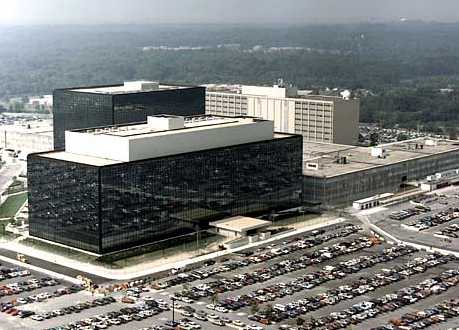
When we first learned about NSA metadata collection, we wondered how readily the biggest tech companies acquiesced to the government. Today we start to find out. This is the story of how Yahoo was coerced into PRISM, as told by court documents cited by the Washington Post today.
According to the documents, corroborated by a blog post made public today by Yahoo—the U.S. government first approached the company in 2007 asking for user metadata. The request was unprecedented: The U.S. government was no longer interested in obtaining a court review before requesting metadata on an individual target. The order simply asked for data on targets located outside of the U.S. at the time, be they foreign or U.S. citizens.
Yahoo challenged the government requests several times, citing the limits of the U.S. Constitution, but was denied in the Foreign Intelligence Court of Review, the “secret courts” that oversee surveillance requests regarding national security. The repeated denials, plus the threat of losing $250,000 a day, forced Yahoo to comply with the NSA’s PRISM program.
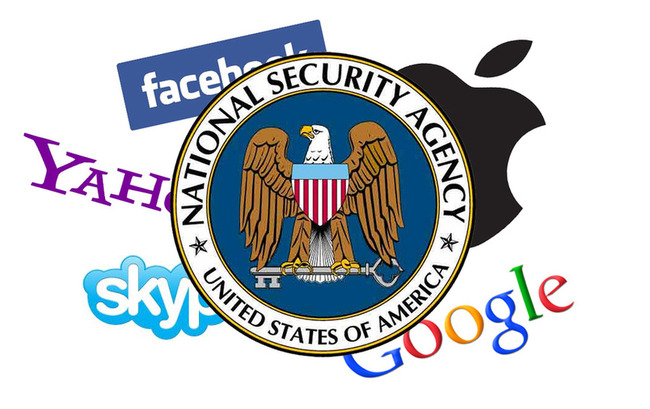
For its part, the U.S. government used Yahoo as an example to coerce other American tech giants, sharing the rulings against Yahoo with companies like Google, Facebook, and Apple.
This information comes to light today, as roughly 1,500 pages of documents pertaining to Yahoo’s failed legal battle were released by Federal Judge William C. Bryson, who presides over the Foreign Intelligence Surveillance Court of Review. Yahoo requested the unsealing of the documents, and the company’s Ron Bell says in this blog post that Yahoo is working to make these never-before-released documents available on Tumblr.
Now that the courts are unsealing documents surrounding PRISM and other national surveillance programs, it’s possible that we’ll hear about other tech companies and whether they resisted the NSA’s requests for sweeping data dumps. Judging by what we’ve learned today, Yahoo tried to stick up for its users’ privacy—until it couldn’t afford to. [The Washington Post]
Max Maverick breaks down everything we know, don’t know, and should be asking about this mainstream media ‘circus’ that has become of the Snowden NSA Leak Disclosure.
Bruce SchneierThe NSA: Capabilities and Countermeasures
Speaker: Bruce Schneier
Edward Snowden has given us an unprecedented window into the NSA’s surveillance activities. Drawing from both the Snowden documents and revelations from previous whistleblowers, I will describe the sorts of surveillance the NSA does and how it does it. The emphasis is on the technical capabilities of the NSA, not the politics of their actions. This includes how it conducts Internet surveillance on the backbone, but is primarily focused on their offensive capabilities: packet injection attacks from the Internet backbone, exploits against endpoint computers and implants to exfiltrate information, fingerprinting computers through cookies and other means, and so on.
I will then talk about what sorts of countermeasures are likely to frustrate the NSA. Basically, these are techniques to raise the cost of wholesale surveillance in favor of targeted surveillance: encryption, target hardening, dispersal, and so on.
Perhaps Edward Snowden’s hoodie should have raised suspicions.
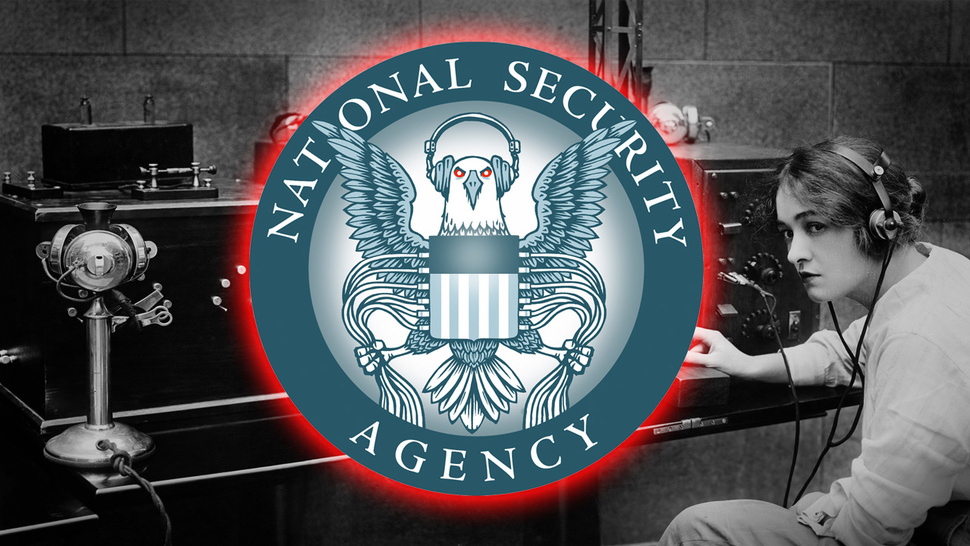
The black sweatshirt sold by the civil libertarian Electronic Frontier Foundation featured a parody of the National Security Agency’s logo, with the traditional key in an eagle’s claws replaced by a collection of AT&T cables, and eavesdropping headphones covering the menacing bird’s ears. Snowden wore it regularly to stay warm in the air-conditioned underground NSA Hawaii Kunia facility known as “the tunnel.”
His coworkers assumed it was meant ironically. And a geek as gifted as Snowden could get away with a few irregularities.
But an NSA staffer who contacted me last month and asked not to be identified–and whose claims we checked with Snowden himself via his ACLU lawyer Ben Wizner—offered me a very different, firsthand portrait of how Snowden was seen by his colleagues in the agency’s Hawaii office: A principled and ultra-competent, if somewhat eccentric employee, and one who earned the access used to pull off his leak by impressing superiors with sheer talent.
The anonymous NSA staffer’s priority in contacting me, in fact, was to refute stories that have surfaced as the NSA and the media attempt to explain how a contractor was able to obtain and leak the tens of thousands of highly classified documents that have become the biggest public disclosure of NSA secrets in history. According to the source, Snowden didn’t dupe coworkers into handing over their passwords, as one report has claimed. Nor did Snowden fabricate SSH keys to gain unauthorized access, he or she says.
Instead, there’s little mystery as to how Snowden gained his access: It was given to him.
“That kid was a genius among geniuses,” says the NSA staffer. “NSA is full of smart people, but anybody who sat in a meeting with Ed will tell you he was in a class of his own…I’ve never seen anything like it.”
When I reached out to the NSA’s public affairs office, a spokesperson declined to comment, citing the agency’s ongoing investigation into Snowden’s leaks.
But over the course of my communications with the NSA staffer, Snowden’s former colleague offered details that shed light on both how Snowden was able to obtain the NSA’s most secret files, as well as the elusive 30-year old’s character:
Before coming to NSA Hawaii, Snowden had impressed NSA officials by developing a backup system that the NSA had widely implemented in its codebreaking operations.
He also frequently reported security vulnerabilities in NSA software. Many of the bugs were never patched.
Snowden had been brought to Hawaii as a cybersecurity expert working for Dell’s services division but due to a problem with the contract was reassigned to become an administrator for the Microsoft intranet management system known as Sharepoint. Impressed with his technical abilities, Snowden’s managers decided that he was the most qualified candidate to build a new web front-end for one of its projects, despite his contractor status. As his coworker tells it, he was given full administrator privileges, with virtually unlimited access to NSA data. “Big mistake in hindsight,” says Snowden’s former colleague. “But if you had a guy who could do things nobody else could, and the only problem was that his badge was green instead of blue, what would you do?”
As further evidence that Snowden didn’t hijack his colleagues’ accounts for his leak, the NSA staffer points to an occasion when Snowden was given a manager’s password so that he could cover for him while he was on vacation. Even then, investigators found no evidence Snowden had misused that staffer’s privileges, and the source says nothing he could have uniquely accessed from the account has shown up in news reports.
Snowden’s superiors were so impressed with his skills that he was at one point offered a position on the elite team of NSA hackers known as Tailored Access Operations. He unexpectedly turned it down and instead joined Booz Allen to work at NSA’s Threat Operation Center.
Another hint of his whistleblower conscience, aside from the telltale hoodie: Snowden kept a copy of the constitution on his desk to cite when arguing against NSA activities he thought might violate it.
The source tells me Snowden also once nearly lost his job standing up for a coworker who was being disciplined by a superior.
Snowden often left small, gifts anonymously at colleagues’ desks.
Snowden’s former colleague says that he or she has slowly come to understand Snowden’s decision to leak the NSA’s files. “I was shocked and betrayed when I first learned the news, but as more time passes I’m inclined to believe he really is trying to do the right thing and it’s not out of character for him. I don’t agree with his methods, but I understand why he did it,” he or she says. “I won’t call him a hero, but he’s sure as hell no traitor.”
As part of his promises regarding better oversight of the National Security Agency, President Obama called for expert external opinion on where the lines of privacy should be drawn:
Fourth, we’re forming a high-level group of outside experts to review our entire intelligence and communications technologies. We need new thinking for a new era. We now have to unravel terrorist plots by finding a needle in the haystack of global telecommunications. And meanwhile, technology has given governments — including our own — unprecedented capability to monitor communications. – President Obama.
And yet, no. Obama’s panel is not a set of outsiders in the slightest. As some have pointed out in recent days, the group is instead a slurry of insiders, former insiders, and a previous colleague of the president’s.
Member Michael Morell is from the CIA, Richard Clarke is former national security, Cass Sunstein is ex-Obama White House, Peter Swire was part of the Clinton administration, and Geoffrey Stone is also University Chicago stock, same as the president.
Stone, at a minimum, is part of the ACLU, and thus might have a bit of a backbone on the privacy side of things. But the group is surprisingly un-outsidery, and hardly undogmatic. This has not gone unnoticed. However, something that fewer have noticed is that the group contains no technology or telecom folk.
This is almost comical, as we are arguing over digital and telephonic surveillance. PRISM, tapping of fiber-optic cables, storing the nation’s phone records, and forcing telcos to send huge swatches of the Internet to the NSA, and yet not a single voice from the industries impacted will take part.
In the age of cynicism, this must be a high point.
The group is in fact a good mix of people from the establishment who have perspectives on security, but it is utterly incomplete. To exclude from the conversation companies that are directly impacted by the NSA — bullied is probably a better word — is to silence possible dissent. And that is the opposite of open, or fair.
Not that in this discussion there has been much proffered openness of fairness, but when the president assembles a panel of “outsiders” to examine current policy, one could hope for a bit of each. In the assembled group, those in favor of curtailing the NSA’s surveillance activities couldn’t win a voice vote. That’s not so good, really.
If we are going to legally force tech and telco firms to hand over private information of regular folks, they deserve a hand in the discussion. Unless, naturally, the meetings are a sham in the hopes of quieting public outrage and dissent. In that case, a few former insiders can be tossed together for a chat that will mean little and accomplish less. Which appears to be the case.
At each stage of the NSA revelation saga, the government has obfuscuated or offered little. This is another example of the latter.
In 2008, the National Security Agency illicitly—if accidentally—intercepted a “large number” of phone calls from Washington, D.C. because an error confused Egypt’s country code—“20”—with, yes, “202.”
That fact, one of many startling ones from Barton Gellman’s new blockbuster Washington Post story based on documents given to him by Edward Snowden, is so catchy and memorable that I almost worry about it. That is, I worry people will just think of that and fail to grasp that this was actually one of the more anodyne NSA abuses revealed by these newly disclosed top-secret documents, including an internal audit. In fact, in the year preceding the May 2012 audit, there were 2,776 violations (another eye-grabber, suggestively alike the totemic 1,776).
I think more troubling is that the NSA deliberately fed international communications (which it is permitted to monitor in certain ways) through U.S. fiber-optic cables, commingling those kosher foreign emails with domestic ones—which the secret Foreign Intelligence Surveillance Court (or FISC, and it is generally a rubber stamp) ruled unconstitutional.
I also think more troubling is that last year, the NSA retained more than 3,000 files of telephone call records in defiance of an FISC order (!). How many calls involving how many people were on each file is unknown, by the way.
I think it is pretty messed up that all of this information solely concerns violations that occurred at the NSA’s headquarters in Maryland. “Three government officials, speaking on the condition of anonymity to discuss classified matters, said the number [of violations] would be substantially higher if it included other NSA operating units and regional collection centers,” Gellman reports.
Here’s the audit, for those not faint of heart or jargon (an appendix is provided).
There is a valuable, vital debate to be had over how much the federal government, in its intelligence programs, ought to be permitted to violate Americans’ privacy in an effort to protect Americans from a dangerous world that includes people who want to kill Americans. There are many different places where the important red lines can be drawn in this debate. It is a debate strewn with well-intentioned, conscientious people who would draw those lines at very different places. Let’s even be generous and stipulate that the question of whether the statutorily provided oversight of these programs is sufficient belongs, as well, to that debate.
The terrifying thing is that we are not having that debate. As these documents are the latest things to demonstrate, the various overseers as well as the public do not have access to the information that even the current rules assert they should have. That is how I can state with certainty that we are not having that vital debate: We do not have the means to have that debate with any kind of authority; therefore, no matter how much we discuss these issues, we are not having that debate.
The most important thing about the Egypt-D.C. confusion isn’t that U.S. calls were collected in violation of rules, for instance. It is that, after this violation was uncovered, it was not reported to oversight staff.
In a separate, in many ways equally important Post article, Carol D. Leonnig reports that FISC’s chief judge is hopelessly dependent on the NSA in order for it to perform its statutorily mandated oversight. “The FISC does not have the capacity to investigate issues of noncompliance,” the judge, Reggie B. Walton, told her, “and in that respect the FISC is in the same position as any other court.” Obama, Leonnig noted, has explicitly held FISC up as assurance that the programs do have strong oversight. But it should be obvious that outside oversight that depends on the purely internal machinations of the thing that is supposed to be overseen is not accountable oversight.
Lawmakers are not blameless. They may access unredacted documents, albeit in a secure room where they lack the ability to take notes. They might theoretically then, even, pull a Mike Gravel and read the results into the record on the House or Senate floor. Gellman reports that “fewer than 10 percent of lawmakers” presently have the ability actually to do this in practice. Sen. Dianne Feinstein, the Senate Intelligence Committee chairwoman, was unaware of the May 2012 audit until she was contacted for the Post story.
But mainly this is on the NSA, which is to say, on the administration. President Obama pledged last Friday to make these surveillance programs “more transparent.” He argued, “It’s not enough for me as president to have confidence in these programs. The American people need to have confidence in them, as well.”
Yet the administration did not disclose, say, the lapses Gellman reported. In fact, the NSA retroactively placed an on-the-record interview with its director of compliance off the record, according to Gellman. It did this after Obama’s speech extolling the importance of and promising transparency. In a sense, we got his wished-for transparency. We can see right through him now.
The short but profitable tale of how 483,000 private individual have “top secret” access to the nation’s most non-public information begins in 2001. “After 9/11, intelligence budgets were increased, new people needed to be hired, it was a lot easier to go to the private sector and get people off the shelf,” and sure enough firms like Booz Allen Hamilton – still two-thirds owned by the deeply-tied-to-international-governments investment firm The Carlyle Group – took full advantage of Congress’ desire to shrink federal agencies and their budgets by enabling outside consultants(already primed with their $4,000 cost ‘security clearances’) to fulfill the needs of an ever-more-encroaching-on-privacy administration.
Booz Allen (and other security consultant providing firms) trade publicly with a cloak of admitted opacity due to the secrecy of their government contracts (“you may not have important information concerning our business, which will limit your insight into a substantial portion of our business”) but the actions of Diane Feinstein who promptly denounced “treasonous” Edward Snowden, “have muddied the waters,” for the stunning 1.1 million (or 21% of the total) private consultants with access to “confidential and secret” government information.
Perhaps the situation of gross government over-spend and under-oversight is summed up best, “it’s very difficult to know what contractors are doing and what they are billing for the work — or even whether they should be performing the work at all.”
First, Diane Feinstein’s take on it all…
“I don’t look at this as being a whistleblower. I think it’s an act of treason,” the chairwoman of the Senate Intelligence Committee told reporters. The California lawmaker went on to say that Snowden had violated his oath to defend the Constitution. “He violated the oath, he violated the law. It’s treason.”
The reliance on contractors for intelligence work ballooned after the 9/11 attacks. The government scrambled to improve and expand its ability to monitor the communication and movement of people who might threaten another attack.
“After 9/11, intelligence budgets were increased, new people needed to be hired,” Augustyn said. “It was a lot easier to go to the private sector and get people off the shelf.”
The reliance on the private sector has grown since then, in part because of Congress’ efforts to limit the size of federal agencies and shrink the budget.
Which has led to what appears to be major problems.
But critics say reliance on contractors hasn’t reduced the amount the government spends on defense, intelligence or other programs.
Rather, they say it’s just shifted work to private employers and reduced transparency. It becomes harder to track the work of those employees and determine whether they should all have access to government secrets.
“It’s very difficult to know what contractors are doing and what they are billing for the work — or even whether they should be performing the work at all,”
… And to the current PRISMgate whistleblowing situation:
Of the 4.9 million people with clearance to access “confidential and secret” government information, 1.1 million, or 21 percent, work for outside contractors, according to a report from Clapper’s office.
Of the 1.4 million who have the higher “top secret” access, 483,000, or 34 percent, work for contractors.
…
Because clearances can take months or even years to acquire, government contractors often recruit workers who already have them.
Why not – it’s lucrative!!
Snowden says he accessed and downloaded the last of the documents that detailed the NSA surveillance program while working in an NSA office in Hawaii for Booz Allen, where he says he was earning $200,000 a year.
Analysts caution that any of the 1.4 million people with access to the nation’s top secrets could have leaked information about the program – whether they worked for a contractor or the government.
For individuals and firms alike.
Booz Allen has long navigated those waters well.
The firm was founded in 1914 and began serving the U.S. government in 1940, helping the Navy prepare for World War II. In 2008, it spun off the part of the firm that worked with private companies and abroad. That firm, called Booz & Co., is held privately.
Booz Allen was then acquired by the Carlyle Group, an investment firm with its own deep ties to the government. In November 2010, Booz Allen went public. The Carlyle Group still owns two-thirds of the company’s shares.
Or, a full-majority stake.
Curiously once public, The Booz Allens of the world still operate like a psuedo-private company, with extensive confidential cloaks preventing the full disclosure of financial data. But don’t worry – we should just trust them. Via Bloomberg’s Jonathan Weil.
Psst, here’s a stock tip for you. There’s a company near Washington with strong ties to the U.S. intelligence community that has been around for almost a century and has secret ways of making money — so secret that the company can’t tell you what they are. Investors who buy just need to have faith.
To skeptics, this might seem like a pitch for an investment scam. But as anyone who has been paying attention to the news might have guessed, the company is Booz Allen Hamilton Holding Corp.
…
“Because we are limited in our ability to provide information about these contracts and services,” the company said in its latest annual report, “you may not have important information concerning our business, which will limit your insight into a substantial portion of our business, and therefore may be less able to fully evaluate the risks related to that portion of our business.”
This seems like it would be a dream arrangement for some corporations: Not only is Booz Allen allowed to keep investors uninformed, it’s required to. I suppose we should give the company credit for being transparent about how opaque it is.
And while the media and popular attention is currently focused on who, if anyone else, may be the next Snowden struck by a sudden pang of conscience, perhaps a better question is what PE behemoth Carlyle, with a gargantuan $170 billion in AUM, knows, and why it rushed to purchase Booz Allen in the months after the Bear Stearns collapse, just when everyone else was batting down the hatches ahead of the biggest financial crash in modern history.
Carlyle Group, the private-equity firm run by David Rubenstein, agreed to acquire Booz Allen Hamilton Inc.’s U.S. government-consulting business for $2.54 billion, its biggest buyout since the credit markets collapsed in July.
The purchase would be Carlyle’s biggest since it agreed to buy nursing-home operator Manor Care Inc. last July for $6.3 billion. Deal-making may be rebounding from a 68 percent decline in the first quarter as investment banks begin writing new commitments for private-equity transactions. Buyouts ground to a halt last year because of a global credit freeze triggered by record U.S. subprime-mortgage defaults.
The Booz Allen government-consulting unit has more than 18,000 employees and annual sales of more than $2.7 billion. Its clients include branches of the U.S. military, the Department of Homeland Security and the World Bank.
Carlyle, based in Washington, manages $81.1 billion in assets [ZH: that was 5 years ago – the firm now boasts $170 billion in AUM]. Rubenstein founded the firm in 1987 with William Conway and Daniel D’Aniello. The trio initially focused on deals tied to government and defense.
Carlyle and closely held Booz Allen have attracted high-level officials from the government. Carlyle’s senior advisers have included former President George H.W. Bush, former British Prime Minister John Major, and Arthur Levitt, the ex-chairman of the U.S. Securities and Exchange Commission.
R. James Woolsey, who led the U.S. Central Intelligence Agency from 1993 to 1995, is a Booz Allen executive. Mike McConnell, the U.S. director of national intelligence, is a former senior vice president with the company.
…
Carlyle last year sold a minority interest in itself to Mubadala Development Co., an investment fund affiliated with the government of Abu Dhabi, capital of the United Arab Emirates.
And in addition to the UAE, who can possibly forget Carlyle’s Saudi connection. From the WSJ circa 2001:
If the U.S. boosts defense spending in its quest to stop Osama bin Laden’s alleged terrorist activities, there may be one unexpected beneficiary: Mr. bin Laden’s family.
Among its far-flung business interests, the well-heeled Saudi Arabian clan — which says it is estranged from Osama — is an investor in a fund established by Carlyle Group, a well-connected Washington merchant bank specializing in buyouts of defense and aerospace companies.
Through this investment and its ties to Saudi royalty, the bin Laden family has become acquainted with some of the biggest names in the Republican Party. In recent years, former President Bush, ex-Secretary of State James Baker and ex-Secretary of Defense Frank Carlucci have made the pilgrimage to the bin Laden family’s headquarters in Jeddah, Saudi Arabia. Mr. Bush makes speeches on behalf of Carlyle Group and is senior adviser to its Asian Partners fund, while Mr. Baker is its senior counselor. Mr. Carlucci is the group’s chairman.
Osama is one of more than 50 children of Mohammed bin Laden, who built the family’s $5 billion business, Saudi Binladin Group, largely with construction contracts from the Saudi government. Osama worked briefly in the business and is believed to have inherited as much as $50 million from his father in cash and stock, although he doesn’t have access to the shares, a family spokesman says. Because his Saudi citizenship was revoked in 1994, Mr. bin Laden is ineligible to own assets in the kingdom, the spokesman added.
…
People familiar with the family’s finances say the bin Ladens do much of their banking with National Commercial Bank in Saudi Arabia and with the London branch of Deutsche Bank AG. They also use Citigroup Inc. and ABN Amro, the people said.
“If there were ever any company closely connected to the U.S. and its presence in Saudi Arabia, it’s the Saudi Binladin Group,” says Charles Freeman, president of the Middle East Policy Council, a Washington nonprofit concern that receives tens of thousands of dollars a year from the bin Laden family. “They’re the establishment that Osama’s trying to overthrow.”
…
A Carlyle executive said the bin Laden family committed $2 million through a London investment arm in 1995 in Carlyle Partners II Fund, which raised $1.3 billion overall. The fund has purchased several aerospace companies among 29 deals. So far, the family has received $1.3 million back in completed investments and should ultimately realize a 40% annualized rate of return, the Carlyle executive said. But a foreign financier with ties to the bin Laden family says the family’s overall investment with Carlyle is considerably larger. He called the $2 million merely an initial contribution. “It’s like plowing a field,” this person said. “You seed it once. You plow it, and then you reseed it again.”
The Carlyle executive added that he would think twice before accepting any future investments by the bin Ladens. “The situation’s changed now,” he said. “I don’t want to spend my life talking to reporters.”
We can clearly see why. We can also clearly see why nobody has mentioned Carlyle so far into the Booz Allen fiasco.
A U.S. inquiry into bin Laden family business dealings could brush against some big names associated with the U.S. government. Former President Bush said through his chief of staff, Jean Becker, that he recalled only one meeting with the bin Laden family, which took place in November1998. Ms. Becker confirmed that there was a second meeting in January 2000, after being read the ex-president’s subsequent thank-you note. “President Bush does not have a relationship with the bin Laden family,” says Ms. Becker. “He’s met them twice.”
Mr. Baker visited the bin Laden family in both 1998 and 1999, according to people close to the family. In the second trip, he traveled on a family plane. Mr. Baker declined comment, as did Mr. Carlucci, a past chairman of Nortel Networks Corp., which has partnered with Saudi Binladin Group on telecommunications ventures.
As one can imagine the rabbit hole just gets deeper and deeper the more one digs. For now, we will let readers do their own diligence. We promise the results are fascinating.
Going back to the topic at hand, we will however ask just how much and what kind of confidential, classified, and or Top Secret information is shared “behind Chinese walls” between a Carlyle still majority-owned company and the private equity behemoth’s employees and advisors, among which are some of the most prominent political and business luminaries currently alive. The following is a list of both current and former employees and advisors. We have used Wiki but anyone wishing to comb through the firm’s full blown roster of over 1,000 employees and advisors, is welcome to do so at the firm’s website.
Olivier Sarkozy (half-brother of Nicolas Sarkozy, former President of France) – co-head and managing director of its recently launched global financial services division, since March 2008.
Luis Téllez Kuenzler, Mexican economist, former Secretary of Communications and Transportation under the Felipe Calderón administration and former Secretary of Energy under the Zedillo administration.
Anand Panyarachun, former Prime Minister of Thailand (twice), former member of the Carlyle Asia Advisory Board until the board was disbanded in 2004
Fidel V. Ramos, former president of the Philippines, Carlyle Asia Advisor Board Member until the board was disbanded in 2004
Peter Chung, former associate at Carlyle Group Korea, who resigned in 2001 after 2 weeks on the job after an inappropriate e-mail to friends was circulated around the world
Thaksin Shinawatra, former Prime Minister of Thailand (twice), former member of the Carlyle Asia Advisory Board until 2001 when he resigned upon being elected Prime Minister.
Media
Norman Pearlstine – editor-in-chief of Time magazine from (1995–2005), senior advisor telecommunications and media group 2006-
Perhaps Bloomberg’s Jonathan Weil sums it up best:
There’s no easy solution here, aside from the obvious point that the government keeps way too many secrets.
So what happens when one corporation, owned and controlled by the same government’s former (and in some cases current) top power brokers, potentially has access to all of the same government’s secrets?
The Obama regime which was already in the midst of three high profile scandals now has a fourth one to deal with. Top secret documents were recently leaked to the Washington Post and the London Guardian detailing a vast government surveillance program code named PRISM. According to the leaked documents, the program allows the National Security Agency (NSA) back door access to data from the servers of several leading U.S. based Internet and software companies. The documents list companies such as Google, Facebook, Yahoo, Microsoft, AOL and Apple as some of the participants in the program. There have also been other reports indicating that the NSA is able to access real-time user data from as many as 50 separate American companies. Under the program, the NSA is able to collect information ranging from e-mails, chats, videos, photographs, VoIP calls and more. Most importantly is the fact that PRISM allows the NSA to obtain this data without having to make individual requests from the service providers or without having to obtain a court order. To say that this is a violation of the Fourth Amendment which forbids unreasonable searches and seizures would be a gross understatement. This is actually much more than that. This is a program designed specifically to serve as a Big Brother like control grid and to end privacy as we know it.
The NSA is quickly building a real life version of 1984’s Big Brother.
It is now painfully obvious that James Clapper the Director of National Intelligence when testifying before the Senate this past March blatantly lied when asked by Senator Ron Wyden if the NSA was involved in collecting data from the American people. Clapper flatly denied that the NSA was engaged in these types of domestic surveillance activities. What makes the situation such a joke is that the Obama regime is not focused on the fact that Clapper lied to the Senate which in of itself is unlawful. Instead they have been more focused on determining the source of the leak that exposed these broad abuses of power. This is probably not surprising considering that this is a regime that rewards corruption by promoting people involved in all sorts of questionable activity. The promotion of Susan Rice as Obama’s new National Security Advisor is a perfect example of this considering her involvement in spreading bogus Benghazi related talking points. On the other hand, the Obama regime has severely punished a variety of whistleblowers who have dared to expose any wrong doing.
At least the Obama regime won’t have to spend much time and energy trying to identify the whistleblower as this person who leaked these documents has already come forward publically. At his own request the Guardian revealed his identity as Edward Snowden a 29-year old Information Technology specialist who has been working at the NSA for different contractors including Booz Allen Hamilton and Dell. Snowden had previously worked at an NSA office in Hawaii but boarded a flight to Hong Kong a few weeks ago where he has stayed since turning over these documents to the media. He expects that he will never set foot on U.S. soil again and may possibly seek political asylum in a country like Iceland. The Guardian interviewed Snowden over several days and has recently posted an interview transcript that provides more detail on the abuses he became aware of and why he decided to come forward as a whistleblower. In the interview Snowden confirms that the NSA has the infrastructure that allows them to intercept almost any type of data that you can imagine from phone records, e-mails to credit cards. He also reveals how the U.S. government is engaged in hacking systems everywhere around the world and how the NSA has consistently lied to Congress about their activities. There is little doubt that Snowden is thus far one of the most important whistleblowers to come along in the 21st century and he will likely face retaliation considering the vast reach and capabilities of the U.S. intelligence community.
Many individuals within the Obama regime including Obama himself have claimed that this type of widespread data collection is needed to fight terrorism and is used for national security purposes. Even if we were to assume that the war on terror is real, this claim is ridiculous and absurd on its face. It would be one thing if they were collecting information based upon a specific criteria identified by legitimate human intelligence. Instead they are collecting indiscriminate amounts of information which makes it much more difficult to analyze and target anything that might indicate a potential threat. If the NSA’s goal is really to detect and target terrorism than all they are doing is making their job more difficult by vastly increasing the noise they have to filter through. Either the people running the NSA are incredibly stupid or the goal of this program is to establish the infrastructure necessary to centrally collect data from communications everywhere around the world.
Other evidence to support this notion is the fact that the NSA is building a huge new facility in Utah that is being designed to store an enormous amount of data. A Fox News report indicates that when completed the facility will be able to store billions of terabytes worth of information. It is hard to fathom how the NSA would need this much storage space unless it was being used to collect and store any and all communications.
The Obama regime has tried to justify all of this by saying that PRISM helped stop an alleged New York City subway bomb plot back in 2009. This has been proven to be factually incorrect as regular police work and help from the British were larger factors in stopping the plot. This is assuming you even believe the official story of this terror plot to begin with. The government and more specifically the FBI have manufactured so many fake terror plots that it is difficult to determine fact from fiction at this point. So with this said, there is really no proof that PRISM has even helped to stop any so-called terror plot. They are collecting information simply for the sake of collecting information with no probable cause or reasonable justification.
At this point it is an undeniable fact that the NSA has been illegally collecting information on the American people. For years what has been dismissed as conspiracy theory is now without question a conspiracy fact. It is laughable that Obama and his assorted cronies are even trying to defend this program as a useful tool to fight terrorists. It is more likely that this program is being used to help find people domestically who dislike the government and would potentially fight back against it. A striking similarity to what is depicted in George Orwell’s dystopic novel 1984 where political dissidents are identified as thought criminals. A tool the NSA uses called Boundless Informant which counts and categorizes the information they collect shows that more data is actually gathered from domestic sources in the U.S. than from Russia. So based off of this one could argue that the NSA almost seems to view the American people as more of a threat to national security than the Russians.
The three scandals the Obama regime was dealing with prior to this new scandal are all grounds for impeachment and one could easily argue that this one is many times worse than the previous three. Obama should resign in disgrace but being that he’s a narcissist who seems unwilling to admit making any mistakes it is highly doubtful he will do this. Obama and the rest of the useful idiots in his regime who have tried to defend and justify this and other criminal programs need to be forcibly removed from office and put on trial. The criminal activity from the Obama regime is so vastly transparent it has become a complete and total joke to anyone who is even remotely paying attention.