The history of pilotless aircraft in the United States military stretches back to the days of the Wright brothers. It’s difficult to describe any good that emerges from warfare, but many modern technological advancements — computers, zippers, microwaves — can be traced back to conflicts of a bygone era. Today unmanned aerial vehicles are being used by a whole slew of people, the U.S. Department of Defense being just one primary example. While drones have been used routinely to support or undertake lethal force abroad for over a decade, their domestic applications are just now being given more serious consideration. The capabilities and contributions of UAVs have, up until recently, been propelled more or less exclusively by the defense community. UAV technology may currently be associated with what some would consider secretive and nefarious militarism, but in examining the range of practical, commercial applications we can only hope that drone technology will begin to move away from the dark side.
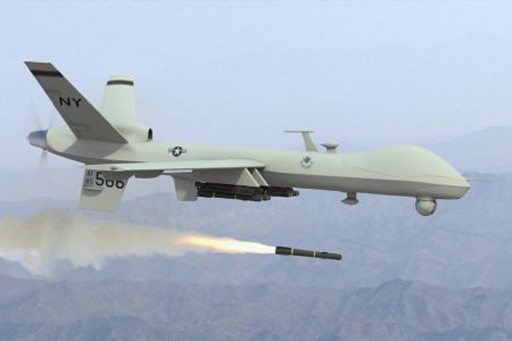
President Obama’s approach to counterterrorism has been marked by his embrace of drone technology to target terrorist operatives. But they’ve come a long way since their first strike operations: drone backpacks are now used by soldiers, and Predator drones come equipped with even more powerful warheads. U.S. DOD spending on drones increased from $284M in 2000 to $3.3B in October of 2012. Small surveillance drones, called Cicadas, are now being released from balloons to collect data on the ground in Iraq. In short, the military has a seemingly infinite range of uses for unmanned aerial vehicles, large and small. And the scope of drone missions only continues to expand, as the technology necessary to program and operate them becomes at once more commonplace and versatile. Over the next decade, the Pentagon anticipates that the number of “multirole” UAVs (those capable of both spying and striking) will nearly quadruple.
As of October 2013, the Federal Aviation Administration had issued 285 clearance certificates for drones inside the United States. Under pressure from the Unmanned Systems Caucus (or drone lobby) the Department of Homeland Security has accepted eight Predator drones for use along the U.S.-Canada and U.S.-Mexico borders. The FAA is set to further open skies to commercial drones by 2015, allowing civilians to finally explore and expand upon the uses of UAV technology. But even with the law by their side, can civilian companies ever hope to utilize drones to the extent in which they are employed by the military? Many recognize the civil potential of flying robots, but recognize that with certain valuable contributions also comes the possibility of tighter law enforcement and increased government surveillance.
The dualistic nature of drones is being explored by hobbyists and venture capitalists alike. Mark Zuckerberg of Facebook is even developing a program that will employ drones and satellite internet to deliver internet to disenfranchised communities throughout the world. While this probably speaks to Zuckerberg’s opportunism (and his desire to compete in the marketplace against Google’s Loon Project and HughesNet Internet) that isn’t to say that people in underserved communities don’t stand to benefit. The U.S. government already uses drones to protect endangered wildlife species, like the sandhill crane, and researchers in Indonesia and Malaysia are also using unmanned aerial devices to monitor the activity of similarly threatened orangutan populations. UAV systems are emerging as key tools in agricultural innovation and the monitoring of natural resources. Search and rescue missions, 3-D mapping and surveying projects, and hurricane tracking projects are also being carried out by UAVs. With unmanned aircraft, it seems the sky’s the limit for civil and commercial usage.
But the business of drones still comes with plenty of risks. The American Civil Liberties Union has warned of a “dystopian future” in which “mass, suspicionless searches of the general population” are the norm. Given the history of drones as advanced tools of the government and military, this doesn’t seem like an empty threat. And for now, the law still stands in the way of any real development on the commercial end. Despite the fact that many ideas for drones, from the delivery of Amazon parcels to Domino’s pizzas, have been suggested, the military still holds the key to their innovation from an American standpoint. Their function as a militaristic tool remains at the forefront of their continued growth, resulting in large spending increases for advanced cameras, sensors, and systems with attack capabilities. But the integration of drone technology into domestic airspace by law enforcement — and later, by corporations — seems inevitable. As technological improvements continue to catapult the UAV industry into the future, the true beneficiaries of these developments remain to be seen.
How do you make matters worse for an elusive intelligence company that has been forced to scramble for explanations about their ownership of an intricate, widespread surveillance program? Just ask Cubic, whose troubles only begin with TrapWire.
Days after the international intelligence gathering surveillance system called TrapWire was unraveled by RT, an ongoing investigation into any and all entities with ties to the technology has unturned an ever-increasing toll of creepy truths. In only the latest installment of the quickly snowballing TrapWire saga, a company that shares several of the same board members as the secret spy system has been linked to a program called Tartan, which aims to track down alleged anarchists by specifically singling out Occupy Wall Street protesters and the publically funded media — all with the aid of federal agents.
Tartan, a product of the Ntrepid Corporation, “exposes and quantifies key influencers and hidden connections in social networks using mathematical algorithms for objective, un-biased output,” its website claims. “Our analysts, mathematicians and computer scientists are continually exploring new quantification, mining and visualization techniques in order to better analyze social networks.” In order to prove as such, their official website links to the executive summary of a case study dated this year that examines social network connections among so-called anarchists, supposedly locating hidden ties within an underground movement that was anchored on political activists and even the Public Broadcasting Station [.pdf].
“Tartan was used to reveal a hidden network of relationships among anarchist leaders of seemingly unrelated movements,” the website claims. “The study exposed the affiliations within this network that facilitate the viral spread of violent and illegal tactics to the broader protest movement in the United States.”
Tartan is advertised on their site as a must-have application for the national security sector, politicians and federal law enforcement, and makes a case by claiming that “an amorphous network of anarchist and protest groups,” made up of Occupy Oakland, PBS, Citizen Radio, Crimethinc and others, relies on “influential leaders,” “modern technology” and “illegal tactics” to spread a message of anarchy across America.
“The organizers of Occupy Wall Street and Occupy DC have built Occupy networks through online communication with anarchists actively participating in the movements’ founding,” the executive summary reads. On the chart that accompanies their claim, the group lists several political activism groups and broadcast networks within a ring of alleged anarchy, which also includes an unnamed FBI informant.
Although emails uncovered in a hack last year waged at Strategic Forecasting, or Stratfor, suggested that Occupy groups had been under private surveillance, the latest discovery of publically available information implies that the extent to which the monitoring of political activists on American soil occurred may have extended what was previously imagined.
Things don’t end there, though. While the TrapWire tale is still only just beginning, the Ntrepid Corporation made headlines last year after it was discovered by the Guardian that the company was orchestrating an “online persona management” program, a clever propaganda mill that was touted as a means “to influence regional and international audiences to achieve U.S. Central Command strategic objectives,” according, at least, to the Inspector General of the US Defense Department [.pdf]. The investigation eventually revealed that the US Central Command awarded Ntrepid $2.76 million worth of taxpayer dollars to create phony Internet “sock puppets” to propagate US support.
One year later, the merits of Tartan’s analytics are now being brought into question, but so are the rest of the company’s ties. A trove of research accumulated by RT, Project PM founder Barrett Brown, PrivacySOS.org and independent researchers Justin Ferguson and Asher Wolf, among others, has linked Tartan with an even more unsettling operation.
Margaret A. Lee of Northern Virginia is listed on several websites as serving on the Ntrepid board of directors as secretary, a position she held alongside Director Richard Helms, CFO Wesley R Husted and President Michael Martinka. And although several parties are going to great lengths to deny the ties, a paper trail directly links Lee and company to Abraxas — and thus Cubic — and, of course, TrapWire, the very surveillance system that is believed to be blanketing the United States.
According to the Commonwealth of Virginia’s State Corporation Commission, TrapWire Inc. was registered to Margaret A Lee on March 7, 2009. Other publically available information reveals that, at least at one point, Wesley Husted served as chief financial officer for TrapWire, Inc., where Richard H Helms held the title of CEO.
Various sources have since claimed that Helms, a former CIA agent that once ran the agency’s European division, has severed ties with TrapWire, yet the other connections remain intact.
In RT’s earlier research in the TrapWire case, it was revealed that TrapWire’s parent company, Cubic Corporation, acquired an online identity masking tool called Anonymzer in a 2010 merger, and also controls the fare card system at some of the biggest public transportation systems in the world. According to the latest findings, Cubic’s control extends beyond just that, though. Under their Ntrepid branch, Cubic controlled an operation that spied on political activists with FBI informants and attempted to link them to crimes across America.
Whether or not the TrapWire system was implemented in such operations is unclear, and Cubic continues to maintain that they are not involved with the surveillance network.
Last week, Cubic Corporation issued a press release claiming, “Abraxas Corporation then and now has no affiliation with Abraxas Applications now known as Trapwire, Inc.”
“Abraxas Corp., a risk-mitigation technology company, has spun out a software business to focus on selling a new product,” the article reads. “The spinoff – called Abraxas Applications – will sell TrapWire, which predicts attacks on critical infrastructure by analyzing security reports and video surveillance.”
Not only does a 2007 report in the Washington Business Journal insist that the companies are practically one in the same, though, but a 2006 article in the same paper reveals that Abraxas had just acquired software maker Dauntless. Researchers at Darkernet have since linked Lee, Husted and Helms to the Abraxas Dauntless Board of Directors as well.
Justin Ferguson, the researcher who first exposed TrapWire two weeks ago, has noted that Lee, Helms and Husted were listed on Abraxas Dauntless’ filings with Virginia as recently as December 2011. They also are all present on the TrapWire filings dated September 2011 and the latest annual filing made with the Florida Department of State, Division of Corporations on behalf of Ntrepid.
Nevertheless, in a conversation this week with Project PM’s Barrett Brown, Cubic Corp. Communication Director Tim Hall dismisses this tie again.
“There is no connection at all with Abraxas Applications and Trapwire and or Ntrepid,” Hall allegedly insists, according to audio uploaded to YouTube.
Brown, on his part, says he has obtained Cubic’s 2010 tax filings that show that Ntrepd, like Abraxas, is “wholly owned” by Cubic.
Other trademark information publically available online says that the Abraxas Corporation first filed to claim the name TrapWire in 2004 and was granted a license for such in January of 2007.
TrapWire Training Courses Reveal Possible Purpose for its Creation
Although certain people reportedly playing key roles in the web-like leadership structure of TrapWire deny their involvement with the massive surveillance system, there is evidence that the engine driving this global company runs on the ambition of a common core of officers and directors.
Given the potential flood of legal challenges to its constitutionality, the corporation believed to be behind TrapWire is heading for higher ground, denying any association with the surveillance technology.
In a statement published on its website on August 13, Cubic Corporation attempted to sever the ties binding it to TrapWire. “Cubic Corporation (NYSE: CUB) acquired Abraxas Corporation on December 20, 2010. Abraxas Corporation then and now has no affiliation with Abraxas Applications now known as Trapwire, Inc. Erroneous reports have linked the company with Trapwire, Inc.,” the company insisted.
Despite such denials, many are rightly worried about any corporate connection — no matter how tenuous — between Cubic and TrapWire given the former’s access to the personal data of Americans through its other corporate interests. The synergy of such access with a massive surveillance apparatus could threaten the privacy of millions, as well as the freedom from unwarranted searches and seizures protected by the Fourth Amendment.
As for the scope and significance of TrapWire, the size of it cannot be exaggerated.
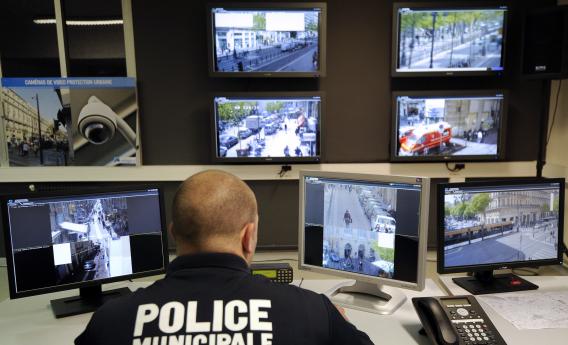
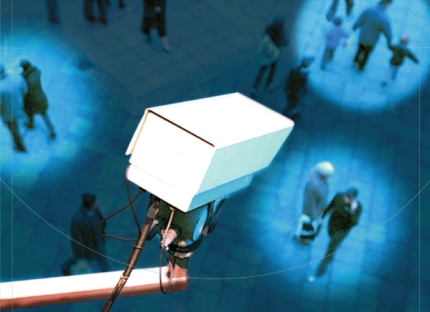
TrapWire is a massive and technologically advanced surveillance system that has the capacity to keep nearly the entire population of this country under the watchful eye of government 24 hours a day. Using this network of cameras and other surveillance tools, the federal government is rapidly constructing an impenetrable, inescapable theater of surveillance, most of which is going unnoticed by Americans and unreported by the mainstream media.
Unlike other elements of the central government’s cybersurveillance program, word about TrapWire was not leaked by Obama administration insiders. The details of this nearly unbelievable surveillance scheme were made public by WikiLeaks, the anti-secrecy group founded by Julian Assange. The TrapWire story percolated from the millions of e-mails from the Austin, Texas-based private intelligence-gathering firm Stratfor, published this year by WikiLeaks. Covering correspondence from mid-2004 to 2011, these documents expose Stratfor’s “web of informers, pay-off structure, payment-laundering techniques and psychological methods.”
This coterie of Stratfor co-conspirators is apparently angry about the leaks, considering that the WikiLeaks servers have been under near-constant Distributed Denial of Service (DDoS) attacks since the TrapWire revelations began attracting the notice of alternative journalists. Some outlets report that the cyberattacks are being carried out by agents of the American intelligence community determined to prevent the full depth of this scandal from being explored by reporters.
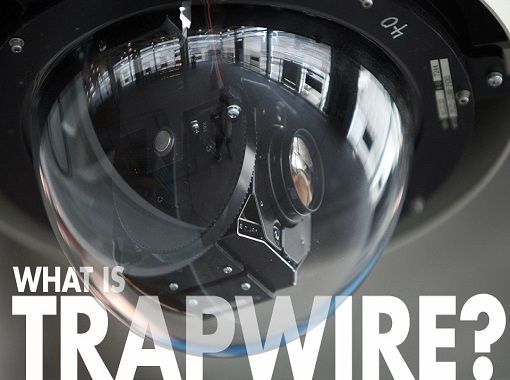
Exactly what is TrapWire? According to one description of the program, from Russia Today:
Former senior intelligence officials have created a detailed surveillance system more accurate than modern facial recognition technology — and have installed it across the US under the radar of most Americans, according to emails hacked by Anonymous.
Every few seconds, data picked up at surveillance points in major cities and landmarks across the United States are recorded digitally on the spot, then encrypted and instantaneously delivered to a fortified central database center at an undisclosed location to be aggregated with other intelligence.
Although many of the details remain undisclosed, it is known that the infrastructure of TrapWire was designed and deployed by Abraxas, an intelligence contractor based in northern Virginia headed and run by dozens of former American surveillance officers. As one article described it: “The employee roster at Abraxas reads like a who’s who of agents once with the Pentagon, CIA and other government entities according to their public LinkedIn profiles, and the corporation’s ties are assumed to go deeper than even documented.”
The network is believed to be immense. An article published by transparency advocacy group Public Intelligence claims that Stratfor e-mails suggest that TrapWire is in use by the U.S. Secret Service, the British security service MI5, the Royal Canadian Mounted Police, as well as counterterrorism divisions in both the Los Angeles and New York Police Departments and the LA fusion center. The e-mails also suggest that TrapWire is in use at military bases around the country. A July 2011 e-mail from a “Burton” to others at Stratfor describes how the U.S. Army, Marine Corps, and Pentagon have all begun using TrapWire and are “on the system now.” Burton described the Navy as the “next on the list.”
A survey of WikiLeaks e-mails containing information about TrapWire reveals another facet of this ever-expanding tool for tracking and targeting individuals.
The first course listed in the darkernet article is called the Surveillance Awareness Workshop. This class is reportedly “designed to instruct network and security personnel to use and navigate the TrapWire software system to familiarize themselves with the indicators of surveillance, terrorist surveillance methodologies, facility vulnerabilities, and the identification of probable surveillance zones that exist within each facility.”
The goal is that those with their fingers on the buttons and eyes on the consoles will learn to “view their facility the same way as would a terrorist, and then to be alert to the indicators of pre-attack surveillance.”
Pre-attack is a statist way of saying “guilty until proven innocent.” These agents — typically law enforcement or federal intelligence officers — reportedly will learn to spot suspicious behavior that points to the target’s propensity for participation in illegal activities.
This sort of advance profiling is eerily similar to the philosophy undergirding the signature strike that is becoming the go-to tactic in the Obama administration’s drone war.
A signature strike is not a strike on a particular suspect, but rather an attack on a person or group of people demonstrating behavior that is typical of those who might be associated with terror.
Perhaps the TrapWire “pre-attack surveillance” and the drone war “signature strike” are just two identifiable examples of a wider, more insidious government movement toward a society where one can be found guilty in advance of any crime based solely on one’s likelihood to act unlawfully and then be summarily executed based on that probability alone.
The second class offered by the makers of TrapWire according to the Internet investigation is designed along similar lines. It is called the Terrorist Pre-Attack Operations Course (TPOC).
Darkernet reports that participation in TPOC “will enhance overall security awareness and improve participants’ understanding of terrorist and criminal pre-attack surveillance and intelligence collection operations.”
Once again, the watchers are taught to better understand “terrorists” and what behavior they display just prior to the commission of a crime.
Unlike actual laws, these technologies and the courses improving their capabilities in the hands of users do not offer definitions of “terrorist” or “criminal.” One is left to one’s own understanding, it would seem, in the matter of conceiving of who is and is not a terrorist.
Today, the typical target might be a Muslim seen frequenting a subway station, for example. However, as the gulf separating the rulers and the ruled widens, perhaps a future TrapWire operator will target a gun-owner or attendant at a rally opposing a government policy as a potential threat and will initiate the requisite “intelligence collection operations.” The end result of those operations may be indefinite detention or death by Hellfire missile.
Finally, the last class listed in the darkernet article is called the Deception Detection and Eliciting Responses (DDER) course. This class will “teach students to detect deception and elicit responses in individuals including those which have been identified by TrapWire as having been engaged in suspicious behavior.”
So, once the target’s image pops up on one of the myriad cameras tracking the movements of every citizen (all are targets and potential terrorists, apparently) and the intelligence officers are called in to begin building a dossier on the target, the responding agents will use their newly-acquired interrogation skills to get the truth out of the target. “We have ways of making you talk,” in other words.
Given the aversion of the wizards running the surveillance state to allowing the curtain to be pulled back exposing the incredible extent of its domestic surveillance activities, it is more likely than not that TrapWire’s use in the tracking of Americans is wider and more institutional than most of us would like to believe.
A link to a complete listing of all TrapWire courses and the associated material is found here.
“Currently — as most of us know — TSA agents briefly examine government ID and boarding passes as each passenger presents their documents at a checkpoint at the end of a security line. Thom Patterson writes at CNN that under a 2008 Apple patent application that was approved in July and filed under the working title “iTravel,” a traveler’s phone would automatically send electronic identification to a TSA agent as soon as the traveler got in line and as each traveler waits in line. TSA agents would examine the electronic ID at an electronic viewing station. Next, at the X-ray stations, a traveler’s phone would confirm to security agents that the traveler’s ID had already been checked. Apple’s patent calls for the placement of special kiosks (PDF) around the airport which will automatically exchange data with your phone via a close range wireless technology called near field communication (NFC). Throughout the process, the phone photo could be displayed on a screen for comparison with the traveler. Facial recognition software could be included in the process. Several experts say a key question that must be answered is: How would you prove that the phone is yours? To get around this problem, future phones or electronic ID may require some form of biometric security function including photo, fingerprint and photo retinal scan comparisons. Of course, there is still a ways to go. If consumers, airlines, airports and the TSA don’t embrace the NFC kiosks, experts say it’s unlikely Apple’s vision would become reality. ‘First you would have to sell industry on Apple’s idea. Then you’d have to sell it to travel consumers,’ says Neil Hughes of Apple Insider. ‘It’s a chicken-and-egg problem.'”
Book Description Publication Date: May 12, 2009
For the faction controlling the Pentagon, the military industry, and the oil industry, the Cold War never ended. They engineered an incredible plan to grab total control of the planet, of land, sea, air, space, outer space and cyberspace. Continuing ‘below the radar,’ they created a global network of military bases and conflicts to advance the long-term goal of Full Spectrum Dominance. Methods included control of propaganda, use of NGOs for regime change, Color Revolutions to advance NATO eastwards, and a vast array of psychological and economic warfare techniques. They even used ‘save the gorilla’ organizations in Africa to secretly run arms in to create wars for raw materials. It was all part of a Revolution in Military Affairs, as they termed it. The events of September 11, 2001 would allow an American President to declare a worldwide War on Terror, on an enemy who was everywhere, and nowhere. 9/11 justified the Patriot Act, the very act that destroyed Americans’ Constitutional freedoms in the name of security. This book gives a disturbing look at the strategy of Full Spectrum Dominance, at what is behind a strategy that could lead us into a horrific nuclear war in the very near future, and at the very least, to a world at continuous war. Seeds of Destruction: The Hidden Agenda of… by William F. Engdahl
4.3 out of 5 stars (28)
$16.47 A Century of War: : Anglo-American Oil Poli… by F. William Engdahl
5.0 out of 5 stars (1)
$24.95 Gods of Money: Wall Street and the Death of... by F. William Engdahl
5.0 out of 5 stars (1)
$21.33 They Own It All (Including You)!: By Means o… by Ronald MacDonald
4.8 out of 5 stars (38)
$14.96 Next
——————————————————————————–
Editorial Reviews About the Author
F. William Engdahl is author of the international best-selling book on oil and geopolitics, A Century of War: Anglo-American Politics and the New World Order. He is a widely discussed analyst of current political and economic developments whose articles have appeared in numerous newspapers and magazines and well-known international websites. His book, ‘Seeds of Destruction: The Hidden Agenda Behind Genetic Manipulation,’ deals with agribusiness and the attempt to control world food supply and thereby populations. He may be reached at his website, www.engdahl.oilgeopolitics.net –This text refers to an alternate Paperback edition.
——————————————————————————–
Product Details
Paperback: 268 pages
Publisher: Third Millennium Press (May 12, 2009)
Language: English
ISBN-10: 0979560861
ISBN-13: 978-0979560866
Product Dimensions: 8.9 x 5.9 x 0.6 inches
Shipping Weight: 5.6 ounces
Average Customer Review: 4.7 out of 5 stars See all reviews (15 customer reviews)
Amazon Best Sellers Rank: #1,109,639 in Books (See Top 100 in Books)
5.0 out of 5 stars Urgent and Essential Reading, June 21, 2009
By Margot L. White “M. Lachlan White”
(REAL NAME) This review is from: Full Spectrum Dominance: Totalitarian Democracy in the New World Order (Paperback)
FULL SPECTRUM DOMINANCE is a rare and essential book — one that orients readers quickly and deeply to the world we live in, and how we arrived here. William Engdahl presents the historical background of policy making and decision analysis that explains how the United States arrived at its present “mission” in the world. The value of Engdahl’s brilliant book is not only that it familiarizes American readers with a history that is not usually revealed to us, but it also guides us through the many overt and covert tactics employed by the US for regime change– primarily via the Pentagon and its nefarious weapons contractors, but also through various think tanks and foundations with innocuous names disingenuously referring to “democracy” and “freedom.” The “full spectrum” of tactics and deceptions and tricks — both violent and non-violent — is revealed here. Needless to say, this book falls within the honorable tradition of political histories that blow the cover off America’s much vaunted pretense and propaganda about serving the cause of “freedom” and “democracy” around the world! It is the only book available today that covers ALL of this, with ample quotations and documents from the architects of US policies, in just 250 well written pages. FULL SPECTRUM DOMINANCE is unique in presenting the evolution of CIA tactics, ranging from its crude “coups” of yesteryear (as in Iran and Guatemala) to its current — and perhaps more insidious — use of “non-violent” electronically manipulated technological “crowd control” via cell phones and (as is currently evident on the streets of Tehran) Twitter. If Americans are woefully ignorant of the full range and dangerous extremes of American violence around the world, of American interventions into and manipulations of other countries’ elections and environments and economics, then there is no longer any excuse for such ignorance. FULL SPECTRUM DOMINANCE is a “must read.” To understand pipeline politics, the critical importance of Eurasia to US defense contractors, read this book. To understand how and why America has become such a rapacious and violent empire with bases all over the world and tens of thousands of agents provocateurs doing its dirty work from Tibet to Tehran, manipulating elections, staging phony “revolutions” to surround Russia with hostile Made-in-USA regimes, propping up American-trained puppets or fomenting chaos from Myanmar to Congo and from Ukraine to Iran — read this book! Help other customers find the most helpful reviews
Was this review helpful to you? Yes No Report abuse | Permalink
Comment Comment (1)
5.0 out of 5 stars Essential reading, June 1, 2009
By Lori “The Rogue Reader Mom” (Arizona) This review is from: Full Spectrum Dominance: Totalitarian Democracy in the New World Order (Paperback)
F W Engdahl has succeeded again at the difficult task of explaining the complexities of how our world really works and how we got to this frightful point in world affairs.
An exacting researcher, Mr. Engdahl, with his latest book, has taken on the task of sorting out the USA’s real intentions as it pertains to the rest of the world. In connecting the dots he takes us on a journey of clarity and comprehension regarding the aggressive path our nation is on as it builds the American Empire.
To follow Mr. Engdahl’s logical explanations of why we do what we do to the rest of the world is to come to the realization that the US may not be the ‘good guys’ we think we are and the rest of the world may have plenty of reasons to be wary of the US.
A sobering examination of our real past and current policies towards Russia, China, Europe, the Middle East and the rest of world community, ‘full spectrum dominance’, as the Pentagon calls it, is a strong-arm policy of control over the rest of the world that is leading us down a disastrous path towards a possible world war. We can’t solve our world’s problems until we properly identify them. Mr. Engdahl has done that in superb fashion.
5.0 out of 5 stars A book everyone needs to read!, July 1, 2009
By William Fetty “Kamakazi” (Sweden)
(REAL NAME) This review is from: Full Spectrum Dominance: Totalitarian Democracy in the New World Order (Paperback)
Engdahl’s books are at the very top of my list of books I recommend to people who want to know what is happening geopolitically in the world, but more importantly WHY things are happening!
Engdahl, though an academic scholar and very well educated with years of experince has once again written a book that anyone can understand and which reads like a great documentary film, much due to the fact that Engdahl is also a journalist, historian and economic researcher!
Full Spectrum Dominance picks up where his first book on the subject “A Century Of War:Anglo-American oil politics and the new world order” ends.
Engdahl once again leads us through the matrix of anglo-american foreign policy and their century old agenda of literal world domination through brute force and covert non-violent means. The evil and criminal actions of the anglo-american empire throughout the 20th century which has now spilled over in to the new millenium are presented in great detail and just like Engdahls previous books makes for a page turner. Once again I cannot recommend this book enough! Read it!
The Next Generation Identification programme will include a nationwide database of criminal faces and other biometrics
“FACE recognition is ‘now’,” declared Alessandro Acquisti of Carnegie Mellon University in Pittsburgh in a testimony before the US Senate in July.
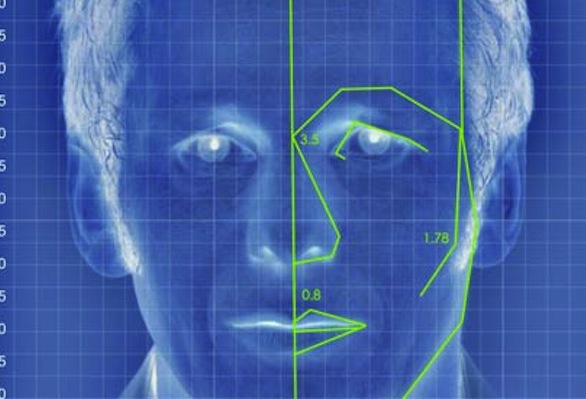
It certainly seems that way. As part of an update to the national fingerprint database, the FBI has begun rolling out facial recognition to identify criminals.
It will form part of the bureau’s long-awaited, $1 billion Next Generation Identification (NGI) programme, which will also add biometrics such as iris scans, DNA analysis and voice identification to the toolkit. A handful of states began uploading their photos as part of a pilot programme this February and it is expected to be rolled out nationwide by 2014. In addition to scanning mugshots for a match, FBI officials have indicated that they are keen to track a suspect by picking out their face in a crowd.
Another application would be the reverse: images of a person of interest from security cameras or public photos uploaded onto the internet could be compared against a national repository of images held by the FBI. An algorithm would perform an automatic search and return a list of potential hits for an officer to sort through and use as possible leads for an investigation.
Ideally, such technological advancements will allow law enforcement to identify criminals more accurately and lead to quicker arrests. But privacy advocates are worried by the broad scope of the FBI’s plans. They are concerned that people with no criminal record who are caught on camera alongside a person of interest could end up in a federal database, or be subject to unwarranted surveillance.
The FBI’s Jerome Pender told the Senate in July that the searchable photo database used in the pilot studies only includes mugshots of known criminals. But it’s unclear from the NGI’s privacy statement whether that will remain the case once the entire system is up and running or if civilian photos might be added, says attorney Jennifer Lynch of the Electronic Frontier Foundation. The FBI was unable to answer New Scientist‘s questions before the magazine went to press.
The FBI hasn’t shared details of the algorithms it is using, but its technology could be very accurate if applied to photographs taken in controlled situations such as passport photos or police shots.
Tests in 2010 showed that the best algorithms can pick someone out in a pool of 1.6 million mugshots 92 per cent of the time. It’s possible to match a mugshot to a photo of a person who isn’t looking at the camera too. Algorithms such as one developed by Marios Savvides’s lab at Carnegie Mellon can analyse features of a front and side view set of mugshots, create a 3D model of the face, rotate it as much as 70 degrees to match the angle of the face in the photo, and then match the new 2D image with a fairly high degree of accuracy. The most difficult faces to match are those in low light. Merging photos from visible and infrared spectra can sharpen these images, but infrared cameras are still very expensive.
Of course, it is easier to match up posed images and the FBI has already partnered with issuers of state drivers’ licences for photo comparison. Jay Stanley of the American Civil Liberties Union urges caution: “Once you start plugging this into the FBI database, it becomes tantamount to a national photographic database.”
For years Anonymous worked hard to protect our world and its peoples.
NOW LISTEN CAREFULLY,
This is an ALERT ABOUT SURVEILLANCE.
Privacy of the people all over the world is suffering more and more outrages. We should not tolerate it. Cameras are everywhere even in our sky, and robots are used to gather and treat information collected through Internet spying.
If Governments and corporations reach their goal to use network surveillance technologies to take control of our world, they will clear Freedom from both the real life and the Internet. That means Anonymous won’t be able to continue helping humanity.
They plan to destroy each form of protest including Anonymous. That means that Anonymous members will be tracked and neutralized if we do not unite against surveillance.
The population is not ready to understand and help us, we need to join the biggest fight ever seen on Anonymous era and use every means necessary to expose truth.
Let the HIVE begins the strongest online and offline worldwide protest ever seen in the history of humanity. They showed they had no limits, we will show our power goes well beyond.
Worldwide governments, evil corporations time of summations is over.
We are Anonymous, we are not numbers, united as one, divided by zero.
Wordwide union will shutdown BigBrother.
That fight will lead us to triumph or to perish.
This is a time trial. WE ACT OR WE FALL.
We are Anonymous,
We are Legion
We do not forgive
We do not forget
Expect us !
=======================================================
Join us on irc.anonops.pro/6697 SSL chan #OpBigBrother
In August 2012, Wikileaks revealed details about a system known as Trapwire that uses facial recognition and other techniques to track and monitor individuals captured on countless different closed-circuit cameras operated by cities and other insititutions. The software is billed as a method by which to prevent terrorism, but can of course also be used to provide unprecedented surveillance and data-mining capabilities to governments, corporations, and other insitutions, including many with a history of using new technologies to violate the rights of citizens. Trapwire is already used in New York, Los Angeles, Las Vegas, Texas, DC, London, and other locales.
The ex-CIA agents who help run the firm are old friends of Stratfor vice president Fred Burton, whom they’ve briefed on their own capabilities in e-mails obtained by Anonymous hackers and provided to Wikileaks. Stratfor has engaged in at least several surveillance operations against activists, such as those advocating for victims of the Bhopal disaster, on behalf of large U.S. corporatons; Burton himelf was revealed to have advocated “bankrupting” and “ruining the life” of activists like Julian Assange in e-mails to other friends.
Trapwire can be extremely expensive to maintain, and is usually done so at taxpayer expense; Los Angeles county spent over $1.4 million dollars on the software’s use in a single three-month period of 2007.
Although most of the regions in which Trapwire operates don’t share information with each other, all of this is set to change; as Abraxas Applications president Dan Botsch told Burton via e-mail, “I think over time the different networks will begin to unite,” noting that several networks had already begun discussions on merging their information. Abraxas itself has always had the ability to “cross-network matches” from every region at their own office. By June 2011, Washington D.C. police were engaged in a pilot project under the Departent of Homeland Security that’s likely to lead to more cities using Trapwire on a more integrated basis.
Abraxas, the firm whose spin-off Abraxas Applications developed Trapwire in 2007, has long been involved in a lesser-known practice known as persona management, which involves the use of fake online “people” to gather intelligence and/or disseminate disinformation. The firm Ntrepid, created by Abraxas owner Cubic Corporation, won a 2010 CENTCOM contract to provide such capabilities for use in foreign countries; several board members of Ntrepid also sit on Abraxas.
TrapWire®
TrapWire is a unique, predictive software system designed to detect patterns indicative of terrorist attacks or criminal operations. Utilizing a proprietary, rules-based engine, TrapWire detects, analyzes and alerts on suspicious events as they are collected over periods of time and across multiple locations. Through the systematic capture of these pre-attack indicators, terrorist or criminal surveillance and pre-attack planning operations can be identified — and appropriate law enforcement counter measures employed ahead of the attack. As such, our clients are provided with the ability to prevent the terrorist or criminal event, rather than simply mitigate damage or loss of life.
Former senior intelligence officials have created a detailed surveillance system more accurate than modern facial recognition technology — and have installed it across the US under the radar of most Americans, according to emails hacked by Anonymous.
Every few seconds, data picked up at surveillance points in major cities and landmarks across the United States are recorded digitally on the spot, then encrypted and instantaneously delivered to a fortified central database center at an undisclosed location to be aggregated with other intelligence. It’s part of a program called TrapWire and it’s the brainchild of the Abraxas, a Northern Virginia company staffed with elite from America’s intelligence community. The employee roster at Arbaxas reads like a who’s who of agents once with the Pentagon, CIA and other government entities according to their public LinkedIn profiles, and the corporation’s ties are assumed to go deeper than even documented.
The details on Abraxas and, to an even greater extent TrapWire, are scarce, however, and not without reason. For a program touted as a tool to thwart terrorism and monitor activity meant to be under wraps, its understandable that Abraxas would want the program’s public presence to be relatively limited. But thanks to last year’s hack of the Strategic Forecasting intelligence agency, or Stratfor, all of that is quickly changing.
Hacktivists aligned with the loose-knit Anonymous collective took credit for hacking Stratfor on Christmas Eve, 2011, in turn collecting what they claimed to be more than five million emails from within the company. WikiLeaks began releasing those emails as the Global Intelligence Files (GIF) earlier this year and, of those, several discussing the implementing of TrapWire in public spaces across the country were circulated on the Web this week after security researcher Justin Ferguson brought attention to the matter. At the same time, however, WikiLeaks was relentlessly assaulted by a barrage of distributed denial-of-service (DDoS) attacks, crippling the whistleblower site and its mirrors, significantly cutting short the number of people who would otherwise have unfettered access to the emails.
On Wednesday, an administrator for the WikiLeaks Twitter account wrote that the site suspected that the motivation for the attacks could be that particularly sensitive Stratfor emails were about to be exposed. A hacker group called AntiLeaks soon after took credit for the assaults on WikiLeaks and mirrors of their content, equating the offensive as a protest against editor Julian Assange, “the head of a new breed of terrorist.” As those Stratfor files on TrapWire make their rounds online, though, talk of terrorism is only just beginning.
Mr. Ferguson and others have mirrored what are believed to be most recently-released Global Intelligence Files on external sites, but the original documents uploaded to WikiLeaks have been at times unavailable this week due to the continuing DDoS attacks. Late Thursday and early Friday this week, the GIF mirrors continues to go offline due to what is presumably more DDoS assaults. Australian activist Asher Wolf wrote on Twitter that the DDoS attacks flooding the WikiLeaks server were reported to be dropping upwards of 40 gigabytes of traffic per second on the site.
According to a press release (pdf) dated June 6, 2012, TrapWire is “designed to provide a simple yet powerful means of collecting and recording suspicious activity reports.” A system of interconnected nodes spot anything considered suspect and then input it into the system to be “analyzed and compared with data entered from other areas within a network for the purpose of identifying patterns of behavior that are indicative of pre-attack planning.”
In a 2009 email included in the Anonymous leak, Stratfor Vice President for Intelligence Fred Burton is alleged to write, “TrapWire is a technology solution predicated upon behavior patterns in red zones to identify surveillance. It helps you connect the dots over time and distance.” Burton formerly served with the US Diplomatic Security Service, and Abraxas’ staff includes other security experts with experience in and out of the Armed Forces.
What is believed to be a partnering agreement included in the Stratfor files from August 13, 2009 indicates that they signed a contract with Abraxas to provide them with analysis and reports of their TrapWire system (pdf).
“Suspicious activity reports from all facilities on the TrapWire network are aggregated in a central database and run through a rules engine that searches for patterns indicative of terrorist surveillance operations and other attack preparations,” Crime and Justice International magazine explains in a 2006 article on the program, one of the few publically circulated on the Abraxas product (pdf). “Any patterns detected – links among individuals, vehicles or activities – will be reported back to each affected facility. This information can also be shared with law enforcement organizations, enabling them to begin investigations into the suspected surveillance cell.”
In a 2005 interview with The Entrepreneur Center, Abraxas founder Richard “Hollis” Helms said his signature product:
“can collect information about people and vehicles that is more accurate than facial recognition, draw patterns, and do threat assessments of areas that may be under observation from terrorists.” He calls it “a proprietary technology designed to protect critical national infrastructure from a terrorist attack by detecting the pre-attack activities of the terrorist and enabling law enforcement to investigate and engage the terrorist long before an attack is executed,” and that, “The beauty of it is that we can protect an infinite number of facilities just as efficiently as we can one and we push information out to local law authorities automatically.”
An internal email from early 2011 included in the Global Intelligence Files has Stratfor’s Burton allegedly saying the program can be used to “[walk] back and track the suspects from the get go w/facial recognition software.”
Since its inception, TrapWire has been implemented in most major American cities at selected high value targets (HVTs) and has appeared abroad as well. The iWatch monitoring system adopted by the Los Angeles Police Department (pdf) works in conjunction with TrapWire, as does the District of Columbia and the “See Something, Say Something” program conducted by law enforcement in New York City, which had 500 surveillance cameras linked to the system in 2010. Private properties including Las Vegas, Nevada casinos have subscribed to the system. The State of Texas reportedly spent half a million dollars with an additional annual licensing fee of $150,000 to employ TrapWire, and the Pentagon and other military facilities have allegedly signed on as well.
In one email from 2010 leaked by Anonymous, Stratfor’s Fred Burton allegedly writes, “God Bless America. Now they have EVERY major HVT in CONUS, the UK, Canada, Vegas, Los Angeles, NYC as clients.” Files on USASpending.gov reveal that the US Department of Homeland Security and Department of Defense together awarded Abraxas and TrapWire more than one million dollars in only the past eleven months.
News of the widespread and largely secretive installation of TrapWire comes amidst a federal witch-hunt to crack down on leaks escaping Washington and at attempt to prosecute whistleblowers. Thomas Drake, a former agent with the NSA, has recently spoken openly about the government’s Trailblazer Project that was used to monitor private communication, and was charged under the Espionage Act for coming forth. Separately, former NSA tech director William Binney and others once with the agency have made claims in recent weeks that the feds have dossiers on every American, an allegation NSA Chief Keith Alexander dismissed during a speech at Def-Con last month in Vegas.
“If you’re concerned about it, maybe there’s a reason we should be flying over you, right?” said Douglas McDonald, the company’s director of special operations and president of a local chapter of the unmanned vehicle trade group.
LAKOTA, N.D. – The use of unmanned aerial drones, whose deadly accuracy helped revolutionize modern warfare high above the battlefields of Iraq and Afghanistan, is now spreading intrigue and worry across the plains of North Dakota.
Amid 3,000 acres of corn and soybeans and miles from the closest town, a Predator drone led to the arrests of farmer Rodney Brossart and five members of his family last year after a dispute over a neighbor’s six lost cows on his property escalated into a 16-hour standoff with police.
It is one of the first reported cases in the nation where an unmanned drone was used to assist in the arrest of a U.S. citizen on his own property; and a controversial sign of how drones, in all shapes, sizes and missions, are beginning to hover over American skies.
Far from just the menacing aircraft bearing Hellfire Missiles and infrared cameras from combat, Unmanned Aerial Systems, the preferred term in the industry, now include products so small they fit in the palm of your hand and can look as innocent as remote-controlled hobby airplanes.
They can quickly scout rural areas for lost children, identify hot spots in forest fires before they get out of control, monitor field crops before they wither or allow paparazzi new ways to target celebrities. The government has predicted that as many as 30,000 drones will be flying over U.S. skies by the end of the decade.
But can drones fly in domestic airspace without crashing into an airplane? Can they be used in a way that doesn’t invade privacy? Who’s watching the drone operators — and how closely?
“All the pieces appear to be lining up for the eventual introduction of routine aerial surveillance in American life — a development that would profoundly change the character of public life in the United States,” the American Civil Liberties Union warned in a policy paper on drones last year titled, “Protecting Privacy From Aerial Surveillance.”
In the North Dakota case, fearing that the Brossarts had armed themselves, local law enforcement asked for the assist from the Predator — unarmed but otherwise identical to the ones used in combat — that’s stationed at Grand Forks Air Force Base as a SWAT team converged on the property.
It put Rodney Brossart front and center in the debate over the burgeoning use of domestic drones, and the threat they may represent when authorities are given the ability to watch everything from above.
“I’m not going to sit back and do nothing,” Brossart said recently, sitting in the shade outside his small house where farm equipment, trailers and the top half of a school bus sit in the yard in various states of disrepair. As drone use expands nationwide, he’s worried. “I don’t know what to expect because of what we’ve seen.”
Groups from the Electronic Privacy Information Center to the American Library Association have joined to raise concerns with the Federal Aviation Administration about the implications of opening up U.S. air space to drones, as have Reps. Edward Markey and Joe Barton, co-chairs of the Congressional Bi-Partisan Privacy Caucus.
But the federal government already has been quietly expanding their use in U.S. air space. Even as the wars abroad wind to an end, the military has been pleading for funding for more pilots. Drones cannot be flown now in the United States without FAA approval. But with little public scrutiny, the FAA already has issued at least 266 active testing permits for domestic drone operations, amid safety concerns. Statistics show unmanned aircraft have an accident rate seven times higher than general aviation and 353 times higher than commercial aviation.
Under political and commercial pressure, the Obama administration has ordered the FAA to develop new rules for expanding the use of small drones domestically. By 2015, drones will have access to U.S. airspace currently reserved for piloted aircraft.
“Think about it; they are inscrutable, flying, intelligent,” said Ryan Calo, the director of privacy and robotics for the Center for Internet and Society at Stanford Law School. “They are really very difficult for the human mind to cleanly characterize.”
While drone use in the rest of the country has been largely theoretical, here in eastern North Dakota it is becoming a way of life.
Drivers on Hwy. 2 near the Grand Forks base say they often see the U.S. Customs Predator B (the B indicates it is unarmed) practicing “touch and go” landings in the morning. A local sheriff’s deputy talked of looking up from writing reports in his patrol car one night to see a drone quietly hovering over him. Don “Bama” Nance, who spent 20 years in the Air Force before retiring to Emerado, now cuts the grass on the base golf course.
“They’re always overhead on the third hole,” he said.
The Grand Forks base has been flying drones sine 2005, when it switched missions from flying tankers to unmanned aerial systems. So, too, have the storied Happy Hooligans of the North Dakota Air National Guard, which has flown drone missions in Iraq and Afghanistan from its base in Fargo.
And use is growing. Predators operated by Customs and Border Patrol completed more than 30 hours of flight in 2009 and more than 55 hours in 2010, mapping the flooded Red River Valley areas of North Dakota and Minnesota. In 2011, the Predator B flew close to 250 hours in disaster relief support along the northern border.
The Grand Forks base, which now has two Predators flying, expects to have as many as 15 Northrop Grumman Global Hawks and six to eight General Atomics Predators/Reapers. That will add an additional 907 Air Force personnel to the base.
For this wide swath of eastern North Dakota, that is part of the appeal: jobs. The University of North Dakota has eagerly partnered with the military and defense contractors, and often operating behind locked doors and secrecy, university officials are working to make the area a hub of unmanned aircraft activity. The state has invested an estimated $12.5 million to make it happen. The local Economic Development Corporation has added a drone coordinator in charge of recruiting more companies to join the 16 drone-related ones that have already set up shop.
“Where aviation was in 1925, that’s where we are today with unmanned aerial vehicles,” said Al Palmer, director of UND’s Center for Unmanned Aircraft Systems Research, Education and Training. “The possibilities are endless.”
A new major
The University of North Dakota operates a fleet of seven different types of unmanned aircraft. In 2009, it became the first college in the country to offer a four-year degree in unmanned aircraft piloting. It now has 23 graduates and 84 students majoring in the program, which is open only to U.S. citizens.
It works with Northland Community College in Thief River Falls, Minn., which developed the first drone maintenance training center in the country and proudly shows off its own full-size Global Hawk.
The university also serves as an incubator for companies that might want to expand the industry. In five days, Unmanned Applications Institute International, which provides training in operating drones, can teach a cop how to use a drone the size of a bathtub toy.
“If you’re concerned about it, maybe there’s a reason we should be flying over you, right?” said Douglas McDonald, the company’s director of special operations and president of a local chapter of the unmanned vehicle trade group. “But as soon as you lose your kid, get your car stolen or have marijuana growing out at your lake place that’s not yours, you’d probably want one of those flying overhead.”
Earlier this year, the Grand Forks Sheriff’s Department was provided its own drone by the university for $1 as part of a project to develop policies and procedures for law enforcement.
“We are not out there to abuse people’s rights, but at the same time we’re out there to protect public safety,” said Grand Forks Sheriff Robert Rost. “The public perception is that Big Brother is going to be snooping on them and that is not the case at all. It will not be misused.”
Still, not everyone is enthusiastic about drones. The Air Force has proposed expanding seven additional nautical miles of restricted air space near Devils Lake to conduct laser training with drones. Of the 43 public comments on the proposal, 42 opposed it, largely out of safety concerns and fears that it would interfere with commercial and general aviation. Nevertheless, the FAA approved the airspace expansion late last month.
Between the base and Grand Forks, Arnie Sevigny flies his own silent drone protest: a raggedy kite shaped like a jet fighter whipping in the wind 100 feet in the air and tied down with a stake on his property a few miles from the base. “No camera. No invasion of privacy,” Sevigny joked. “What do you need a drone for anyhow? They use the satellites they already have to see the head of a dime in your hand.”
And for all the assurances, there is much that isn’t said or revealed. Some of the equipment used by the university can’t be seen by the public because of federal privacy rules. Although legal, anyone photographing outside the base can find themselves being questioned by county, state and Air Force law enforcement. When asked how many times U.S. Border Protection has dispatched drones at the request of local police, a spokeswoman for the agency said it does not keep those figures.
Even Brossart doesn’t know what the drone that led to his family’s arrests saw. Despite demands made in court, the Predator’s footage has not been produced to his attorneys. “They don’t want to show what happened,” he said, “because it will show exactly what they did.”
A judge is expected to rule within days on whether the charges against Brossart, who has had a number of run-ins with authorities over the years, should be dismissed, in part, because the warrantless use of the “spy plane” was part of a pattern of outrageous government conduct that violated Brossart’s Fourth Amendment rights.
With case law murky on the domestic use of drones, Brossart’s attorney, Bruce Quick, said the courts, Congress and state legislatures will likely have to address the issue. “It’s not just criminal defense attorneys. It’s just people concerned about civil liberties in general,” he said. “I don’t think a lot of us like the idea of our privacy being given away.”
Most of us don’t think much about it, but the truth is that people are being watched, tracked and monitored more today than at any other time in human history. The explosive growth of technology in recent years has given governments, spy agencies and big corporations monitoring tools that the despots and dictators of the past could only dream of.
Previous generations never had to deal with “pre-crime” surveillance cameras that use body language to spot criminals or unmanned drones watching them from far above. Previous generations would have never even dreamed that street lights and refrigerators might be spying on them. Many of the incredibly creepy surveillance technologies that you are about to read about are likely to absolutely astound you. We are rapidly heading toward a world where there will be no such thing as privacy anymore. Big Brother is becoming all-pervasive, and thousands of new technologies are currently being developed that will make it even easier to spy on you. The world is changing at a breathtaking pace, and a lot of the changes are definitely not for the better.
The following are 14 incredibly creepy surveillance technologies that Big Brother will be using to watch you….
#1 “Pre-Crime” Surveillance Cameras
A company known as BRS Labs has developed “pre-crime” surveillance cameras that can supposedly determine if you are a terrorist or a criminal even before you commit a crime.
Does that sound insane?
Well, authorities are taking this technology quite seriously. In fact, dozens of these cameras are being installed at major transportation hubs in San Francisco….
In its latest project BRS Labs is to install its devices on the transport system in San Francisco, which includes buses, trams and subways.
The company says will put them in 12 stations with up to 22 cameras in each, bringing the total number to 288.
The cameras will be able to track up to 150 people at a time in real time and will gradually build up a ‘memory’ of suspicious behaviour to work out what is suspicious.
#2 Capturing Fingerprints From 20 Feet Away
Can you imagine someone reading your fingerprints from 20 feet away without you ever knowing it?
Gaining access to your gym or office building could soon be as simple as waving a hand at the front door. A Hunsville, Ala.-based company called IDair is developing a system that can scan and identify a fingerprint from nearly 20 feet away. Coupled with other biometrics, it could soon allow security systems to grant or deny access from a distance, without requiring users to stop and scan a fingerprint, swipe an ID card, or otherwise lose a moment dealing with technology.
Currently IDair’s primary customer is the military, but the startup wants to open up commercially to any business or enterprise that wants to put a layer of security between its facilities and the larger world. A gym chain is already beta testing the system (no more using your roommate’s gym ID to get in a free workout), and IDair’s founder says that at some point his technology could enable purchases to be made biometrically, using fingerprints and irises as unique identifiers rather than credit card numbers and data embedded in magnetic strips or RFID chips.
#3 Mobile Backscatter Vans
Police all over America will soon be driving around in unmarked vans looking inside your cars and even under your clothes using the same “pornoscanner” technology currently being utilized by the TSA at U.S. airports….
American cops are set to join the US military in deploying American Science & Engineering’s Z Backscatter Vans, or mobile backscatter radiation x-rays. These are what TSA officials call “the amazing radioactive genital viewer,” now seen in airports around America, ionizing the private parts of children, the elderly, and you (yes you).
These pornoscannerwagons will look like regular anonymous vans, and will cruise America’s streets, indiscriminately peering through the cars (and clothes) of anyone in range of its mighty isotope-cannon. But don’t worry, it’s not a violation of privacy. As AS&E’s vice president of marketing Joe Reiss sez, “From a privacy standpoint, I’m hard-pressed to see what the concern or objection could be.”
You can see a YouTube video presentation about this new technology right here.
#4 Hijacking Your Mind
The U.S. military literally wants to be able to hijack your mind. The theory is that this would enable U.S. forces to non-violently convince terrorists not to be terrorists anymore. But obviously the potential for abuse with this kind of technology is extraordinary. The following is from a recent article by Dick Pelletier….
The Pentagon’s Defense Advanced Research Projects Agency (DARPA) wants to understand the science behind what makes people violent, and then find ways to hijack their minds by implanting false, but believable stories in their brains, with hopes of evoking peaceful thoughts: We’re friends, not enemies.
Critics say this raises ethical issues such as those addressed in the 1971 sci-fi movie, A Clockwork Orange, which attempted to change people’s minds so that they didn’t want to kill anymore.
Advocates, however, believe that placing new plausible narratives directly into the minds of radicals, insurgents, and terrorists, could transform enemies into kinder, gentler citizens, craving friendship.
Scientists have known for some time that narratives; an account of a sequence of events that are usually in chronological order; hold powerful sway over the human mind, shaping a person’s notion of groups and identities; even inspiring them to commit violence. See DARPA proposal request HERE.
#5 Unmanned Drones In U.S. Airspace
Law enforcement agencies all over the United States are starting to use unmanned drones to spy on us, and the Department of Homeland Security is aggressively seeking to expand the use of such drones by local authorities….
The Department of Homeland Security has launched a program to “facilitate and accelerate the adoption” of small, unmanned drones by police and other public safety agencies, an effort that an agency official admitted faces “a very big hurdle having to do with privacy.”
The $4 million Air-based Technologies Program, which will test and evaluate small, unmanned aircraft systems, is designed to be a “middleman” between drone manufacturers and first-responder agencies “before they jump into the pool,” said John Appleby, a manager in the DHS Science and Technology Directorate’s division of borders and maritime security.
The fact that very few Americans seem concerned about this development says a lot about where we are as a nation. The EPA is already using drones to spy on cattle ranchers in Nebraska and Iowa. Will we eventually get to a point where we all just consider it to be “normal” to have surveillance drones flying above our heads constantly?
#6 Law Enforcement Using Your Own Cell Phone To Spy On You
Although this is not new technology, law enforcement authorities are using our own cell phones to spy on us more extensively than ever before as a recent Wired article described….
Mobile carriers responded to a staggering 1.3 million law enforcement requests last year for subscriber information, including text messages and phone location data, according to data provided to Congress.
A single “request” can involve information about hundreds of customers. So ultimately the number of Americans affected by this could reach into “the tens of millions” each year….
The number of Americans affected each year by the growing use of mobile phone data by law enforcement could reach into the tens of millions, as a single request could ensnare dozens or even hundreds of people. Law enforcement has been asking for so-called “cell tower dumps” in which carriers disclose all phone numbers that connected to a given tower during a certain period of time.
So, for instance, if police wanted to try to find a person who broke a store window at an Occupy protest, it could get the phone numbers and identifying data of all protestors with mobile phones in the vicinity at the time — and use that data for other purposes.
Perhaps you should not be using your cell phone so much anyway. After all, there are more than 500 studies that show that cell phone radiation is harmful to humans.
#7 Biometric Databases
All over the globe, governments are developing massive biometric databases of their citizens. Just check out what is going on in India….
In the last two years, over 200 million Indian nationals have had their fingerprints and photographs taken and irises scanned, and given a unique 12-digit number that should identify them everywhere and to everyone.
This is only the beginning, and the goal is to do the same with the entire population (1.2 billion), so that poorer Indians can finally prove their existence and identity when needed for getting documents, getting help from the government, and opening bank and other accounts.
This immense task needs a database that can contain over 12 billion fingerprints, 1.2 billion photographs, and 2.4 billion iris scans, can be queried from diverse devices connected to the Internet, and can return accurate results in an extremely short time.
#8 RFID Microchips
In a previous article, I detailed how the U.S. military is seeking to develop technology that would enable it to monitor the health of our soldiers and improve their performance in battle using RFID microchips.
Most Americans don’t realize this, but RFID microchips are steadily becoming part of the very fabric of our lives. Many of your credit cards and debit cards contain them. Many Americans use security cards that contain RFID microchips at work. In some parts of the country it is now mandatory to inject an RFID microchip into your pet.
Northside Independent School District plans to track students next year on two of its campuses using technology implanted in their student identification cards in a trial that could eventually include all 112 of its schools and all of its nearly 100,000 students.
District officials said the Radio Frequency Identification System (RFID) tags would improve safety by allowing them to locate students — and count them more accurately at the beginning of the school day to help offset cuts in state funding, which is partly based on attendance.
#9 Automated License Plate Readers
In a previous article, I quoted a Washington Post piece that talked about how automated license plate readers are being used to track the movements of a vehicle from the time that it enters Washington D.C. to the time that it leaves….
More than 250 cameras in the District and its suburbs scan license plates in real time, helping police pinpoint stolen cars and fleeing killers. But the program quietly has expanded beyond what anyone had imagined even a few years ago.
With virtually no public debate, police agencies have begun storing the information from the cameras, building databases that document the travels of millions of vehicles.
Nowhere is that more prevalent than in the District, which has more than one plate-reader per square mile, the highest concentration in the nation. Police in the Washington suburbs have dozens of them as well, and local agencies plan to add many more in coming months, creating a comprehensive dragnet that will include all the approaches into the District.
#10 Face Reading Software
Can computers tell what you are thinking just by looking at your face?
Don’t laugh.
Such technology is actually being actively developed. The following is from a recent NewScientist article….
IF THE computers we stare at all day could read our faces, they would probably know us better than anyone.
That vision may not be so far off. Researchers at the Massachusetts Institute of Technology’s Media Lab are developing software that can read the feelings behind facial expressions. In some cases, the computers outperform people. The software could lead to empathetic devices and is being used to evaluate and develop better adverts.
#11 Data Mining
The government is not the only one that is spying on you. The truth is that a whole host of very large corporations are gathering every shred of information about you that they possibly can and selling that information for profit. It is called “data mining“, and it is an industry that has absolutely exploded in recent years.
One very large corporation known as Acxiom actually compiles information on more than 190 million people in the U.S. alone….
The company fits into a category called database marketing. It started in 1969 as an outfit called Demographics Inc., using phone books and other notably low-tech tools, as well as one computer, to amass information on voters and consumers for direct marketing. Almost 40 years later, Acxiom has detailed entries for more than 190 million people and 126 million households in the U.S., and about 500 million active consumers worldwide. More than 23,000 servers in Conway, just north of Little Rock, collect and analyze more than 50 trillion data ‘transactions’ a year.
#12 Street Lights Spying On Us?
Did you ever consider that street lights could be spying on you?
Well, it is actually happening. New high tech street lights that can actually watch what you do and listen to what you are saying are being installed in some major U.S. cities. The following is from a recent article by Paul Joseph Watson for Infowars.com….
Federally-funded high-tech street lights now being installed in American cities are not only set to aid the DHS in making “security announcements” and acting as talking surveillance cameras, they are also capable of “recording conversations,” bringing the potential privacy threat posed by ‘Intellistreets’ to a whole new level.
#13 Automated ISP Monitoring Of Your Internet Activity
If you download potentially copyrighted software, videos or music, your Internet service provider (ISP) has been watching, and they’re coming for you.
Specifically, they’re coming for you on Thursday, July 12.
That’s the date when the nation’s largest ISPs will all voluntarily implement a new anti-piracy plan that will engage network operators in the largest digital spying scheme in history, and see some users’ bandwidth completely cut off until they sign an agreement saying they will not download copyrighted materials.
Word of the start date has been largely kept secret since ISPs announced their plans last June. The deal was brokered by the Recording Industry Association of America (RIAA) and the Motion Picture Association of America (MPAA), and coordinated by the Obama Administration.
Spying On Us Through Our Appliances
Could the government one day use your refrigerator to spy on you?
Don’t laugh.
That is exactly what CIA Director David Petraeus says is coming….
Petraeus says that web-connected gadgets will ‘transform’ the art of spying – allowing spies to monitor people automatically without planting bugs, breaking and entering or even donning a tuxedo to infiltrate a dinner party.
‘Transformational’ is an overused word, but I do believe it properly applies to these technologies,’ said Petraeus.
‘Particularly to their effect on clandestine tradecraft. Items of interest will be located, identified, monitored, and remotely controlled through technologies such as radio-frequency identification, sensor networks, tiny embedded servers, and energy harvesters – all connected to the next-generation internet using abundant, low-cost, and high-power computing.’
Petraeus was speaking to a venture capital firm about new technologies which aim to add processors and web connections to previously ‘dumb’ home appliances such as fridges, ovens and lighting systems.
For many more ways that Big Brother is spying on you, please see these articles….
A few months back, I reposted here an article that I wrote 10 years ago, before the invasion of Iraq: a fictional scenario of how the Terror War would play out on the ground of the target nations — and in the minds of those sent to wage these campaigns. I was reminded of that piece by a story in the latest Rolling Stone.
The RS story, by Michael Hastings, depicts the drone mentality now consuming the US military-security apparatus, a process which makes the endless slaughter of the endless Terror War cheaper, easier, quieter. I didn’t anticipate the development in my proleptic piece; the first reported “kill” by American drones, in Yemen, had taken place just a few weeks before my article appeared in the Moscow Times.
(One of the victims of this historic first drawing of blood was an American citizen, by the way. Thus from the very beginning, the drone war — presented as noble shield to defend American citizens from harm — has been killing American citizens, along with the hundreds and hundreds and hundreds and hundreds of innocent men and women around the world being murdered without warning — and without any chance to defend themselves or take shelter — by cowards sitting in padded seats behind computer consoles thousands of miles away, following orders from the even greater cowards who strut around the Pentagon, CIA headquarters and the White House.)
But what brought my earlier piece to mind was a brief mention of the “military slang” now being used to designate the victims of the drones. Below are a few snippets from my 2002 post, a fictional email by an occupation soldier to a friend:
Yo, Ed! I’m looking out the window of Watchtower 19 in Force Zone Seven. They’re loading up the dead wagon. Three friendlies, two uncardeds, the usual collateral – and one bug. We zapped the market before the bug got his hard-on – another one of those Czech AK-47 knock-offs that our friendly neighborhood warlord keeps bringing in. He says he doesn’t know how the bugs get hold of them – they drop down from heaven, I guess …
… I’d just come off night patrol in Deep-City Zone, hardcore bugland, backing up some Special Ops doing a Guantanamo run on terrorperp suspects. Banging down doors, barrel in the face of some shrieking bug-woman in her black bag, children scuttling in the dark like rats, the perp calling down an airstrike from Allah on our heads. You know the drill. You know the jangle. Not even the new meds can keep you blanked out completely. So there’s always the overstep somewhere. Woman’s cheekbone cracking from a backhand, some kid stomped or booted out of the way. Some perp putting his hand in one of those damned dresses they wear, going for who knows what – Koran? Mosquito bite? Scimitar? Czech special? – and you open up. More shrieking, more screaming – and then the splatter on the wall.
In the new Rolling Stone story, Hastings tells us how America’s brave drone warriors view their victims:
For a new generation of young guns, the experience of piloting a drone is not unlike the video games they grew up on. Unlike traditional pilots, who physically fly their payloads to a target, drone operators kill at the touch of a button, without ever leaving their base – a remove that only serves to further desensitize the taking of human life. (The military slang for a man killed by a drone strike is “bug splat,” since viewing the body through a grainy-green video image gives the sense of an insect being crushed.)
“Bugs” being “splattered.” This is what Barack Obama — who has expanded the drone death squads beyond the imaginings of George W. Bush — and all of his brave button pushers and joystick riders think of the defenseless human beings they are killing (including 174 children by last count).
This has been the attitude underlying the Terror War since its beginnings. When I wrote my piece with its “bug” imagery, I was only reflecting what was already obvious and pervasive, both in the military-security war machine and in much of the general public. Anyone designated by those in power as an “enemy” — for any reason, known or unknown, or for no reason at all — is considered a subhuman, an insect, whose destruction is meaningless, without moral content, like swatting a fly on the wall. (As, for example, in this 2008 piece about a figure much lauded by progressives at the time: “Crushing the Ants.”)
There is not only a tolerance for this official program of state murder; there is an absolute enthusiasm for it. Our rulers heartily enjoy ordering people to be killed. (And to be tortured, as we noted here last week.) It makes them feel good. It makes them feel “hard,” in every sense of the word. As Hastings notes:
From the moment Obama took office, according to Washington insiders, the new commander in chief evinced a “love” of drones. “The drone program is something the executive branch is paying a lot of attention to,” says Ken Gude, vice president of the Center for American Progress. “These weapons systems have become central to Obama.” In the early days of the administration, then-chief of staff Rahm Emanuel would routinely arrive at the White House and demand, “Who did we get today?”
Here are some examples of what Rahm and his then-boss, the Nobel Peace Prize Laureate, were “getting” with their flying deaths squads:
But for every “high-value” target killed by drones, there’s a civilian or other innocent victim who has paid the price. The first major success of drones – the 2002 strike that took out the leader of Al Qaeda in Yemen – also resulted in the death of a U.S. citizen. More recently, a drone strike by U.S. forces in Afghanistan in 2010 targeted the wrong individual – killing a well-known human rights advocate named Zabet Amanullah who actually supported the U.S.-backed government. The U.S. military, it turned out, had tracked the wrong cellphone for months, mistaking Amanullah for a senior Taliban leader. A year earlier, a drone strike killed Baitullah Mehsud, the head of the Pakistani Taliban, while he was visiting his father-in-law; his wife was vaporized along with him. But the U.S. had already tried four times to assassinate Mehsud with drones, killing dozens of civilians in the failed attempts. One of the missed strikes, according to a human rights group, killed 35 people, including nine civilians, with reports that flying shrapnel killed an eight-year-old boy while he was sleeping. Another blown strike, in June 2009, took out 45 civilians, according to credible press reports.
And of course there is this, the follow-up to the “extrajudicial killing” of U.S. citizen Anwar al-Awlaki. After killing al-Awlaki — without ever charging him with a single crime — the Obama administration then murdered his 16-year-old son (as we noted here last year). Hastings writes:
In the days following the killing, Nasser and his wife received a call from Anwar’s 16-year-old son, Abdulrahman al-Awlaki, who had run away from home a few weeks earlier to try to find his now-deceased father in Yemen. “He called us and gave us his condolences,” Nasser recalls. “We told him to come back, and he promised he would. We really pressed him, me and his grandmother.”
The teenage boy never made it home. Two weeks after that final conversation, his grandparents got another phone call from a relative. Abdulrahman had been killed in a drone strike in the southern part of Yemen, his family’s tribal homeland. The boy, who had no known role in Al Qaeda or any other terrorist operation, appears to have been another victim of Obama’s drone war: Abdulrahman had been accompanying a cousin when a drone obliterated him and seven others. The suspected target of the killing – a member of Al Qaeda in the Arabian Peninsula – is reportedly still alive; it’s unclear whether he was even there when the strike took place.
The news devastated the family. “My wife weeps every day and every morning for her grandson,” says Nasser, a former high-ranking member of the Yemenite government. “He was a nice, gentle boy who liked to swim a lot. This is a boy who did nothing against America or against anything else. A boy. He is a citizen of the United States, and there are no reasons to kill him except that he is Anwar’s son.”
The boy was probably killed in a “signature strike,” where bold and brave CIA analysts sit back in their chairs and observe people going about their business in a foreign country far away. If their activities look “suspicious” according to some arbitrary, secret criteria, then they can be slaughtered instantly by a drone missile — even if the attackers have no idea whatsoever who the targets are or what they are actually doing. Plotting terrorism, or praying? Organizing jihad, or holding a wedding? Building bombs, or having lunch? The attackers don’t know — and can’t know. They simply put down their Cheetohs and fire the missile. Who cares? It’s just “bug splatter.”
And the fact is, no one does care. As Hastings notes, this hideous program of murder and terror has been fully embraced by the political elite and by society at large. And our rulers are now bringing it back home with a vengeance, putting more and more Americans under the unsleeping eye of government drones watching their every move, looking for the “signature” of “suspicious” behaviour. Hastings notes:
In the end, it appears, the administration has little reason to worry about any backlash from its decision to kill an American citizen – one who had not even been charged with a crime. A recent poll shows that most Democrats overwhelmingly support the drone program, and Congress passed a law in February that calls for the Federal Aviation Administration to “accelerate the integration of unmanned aerial systems” in the skies over America. Drones, which are already used to fight wildfires out West and keep an eye on the Mexican border, may soon be used to spy on U.S. citizens at home: Police in Miami and Houston have reportedly tested them for domestic use, and their counterparts in New York are also eager to deploy them.
History affords few if any examples of a free people — in such a powerful country, under no existential threat, undergoing no invasion, no armed insurrection, no natural disaster or epidemic or societal collapse — giving up their own freedoms so meekly, so mutely. Most Americans like to boast of their love of freedom, their rock-ribbed independence and their fiercely-held moral principles: yet they are happy to see the government claim — and use — the power to murder innocent people whenever it pleases while imposing an ever-spreading police state regimen on their lives and liberties. Sheep doped with Rohypnol would put up a stronger fight than these doughty patriots.
Hasting’s story should be read in full. In its straightforward marshalling of facts and refusal to simply parrot the spin of the powerful (something we used to call “journalism,” kids; ask your grandparents about it, they might remember), it lays out the hideous reality of our times. I am tempted to call it an important story — but I know that it will sink with scarcely a ripple into the abyss of our toxic self-regard. A few will read it and be horrified; the rest will stay riveted on the oh-so-exciting and oh-so-important race to see who will get to perpetuate this vile and murderous system for the next four years.
WRITTEN BY CHRIS FLOYD
WEDNESDAY, 18 APRIL 2012 08:37
Big Brother is watching you, though probably not in the ways most of us would imagine.
Sure, the cameras at banks or airport checkpoints may be on the lookout for robbers or would-be terrorists, using facial recognition technology to match pictures to existing ones. But private enterprise is busy as well.
Adam Harvey says the technology is intruding on your right to privacy, and he’s figured out some low-tech ways to outsmart them.
“Don’t ask me about privacy, because I tend to talk too long about it,” he said. “When we live in an environment where we’re constantly being monitored, we cherish the right just to talk to someone face-to-face.”
Harvey, a New York web designer, started a project called CV Dazzle when he was getting his master’s degree at New York University in 2010. His objective: to show people how to hide in plain sight.
If you look at the images he generated, you’ll get a sense of what he has in mind. Face-recognition software looks for key points on one’s face, such as eyes, nose, and mouth, and where they meet and the distance between them. So he suggests simple ways to block them.
A spike of hair proved to be effective if it covered the area where the eyes, forehead and nose come together. Computer-vision software often looks for that spot, said Harvey, and will not detect a face without it.
Similarly, he said, a bit of face paint will confuse a computer. Harvey said he found that black geometric shapes, painted on one’s cheeks, would prevent a machine from registering that it was looking at a face.
Of course, these are not things that most people would do to their faces — but Harvey joked that in New York, where he lives, people with eccentric hairdos or makeup wouldn’t stand out much. And they’re more effective than hoodies or baseball caps pulled over one’s face. In those cases the software is unnecessary; people simply look as if they have something to hide.
Of course, the issue of privacy is complicated, especially when you’re talking about privacy in a public place. Richard Falkenrath, a principal with the Chertoff Group of security consultants who was an advisor on homeland security in the Bush administration, said facial recognition is not widely used in the United States except at places like security checkpoints. He looked at Adam Harvey’s work and said it would be most useful in social media, not as a way to get around government security.
“There are clearly certain activities for which you have no reasonable expectation of privacy,” Falkenrath said. “When you take out the garbage, people see you. When you walk down the street, people can take pictures of you.”
Would work like Harvey’s be helpful to criminals — the very people who ought not to be able to hide? Falkenrath said he didn’t think so, and Harvey said he did not intend it that way.
“This project is not about dodging the law, it’s about adapting to living in surveillance societies,” he said.
“In the next decade we’ll have to figure out how to balance security with privacy and move on,” Harvey said. “The research I’m doing is aimed at integrating fashion, privacy and technology to make real products that people can use.”

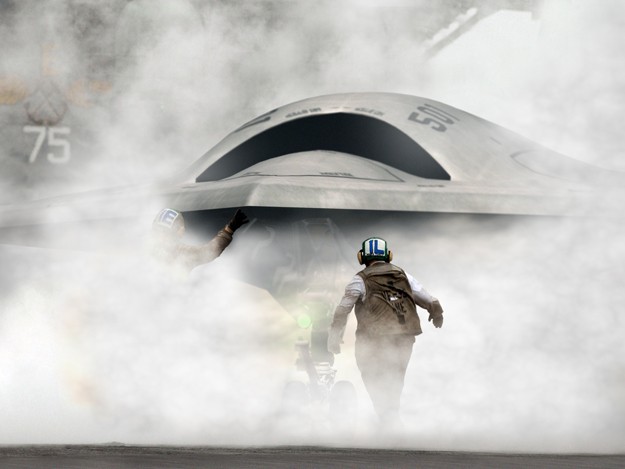
 The history of pilotless aircraft in the United States military stretches back to the days of the Wright brothers. It’s difficult to describe any good that emerges from warfare, but many modern technological advancements — computers, zippers, microwaves — can be traced back to conflicts of a bygone era. Today unmanned aerial vehicles are being used by a whole slew of people, the U.S. Department of Defense being just one primary example. While drones have been used routinely to support or undertake lethal force abroad for over a decade, their domestic applications are just now being given more serious consideration. The capabilities and contributions of UAVs have, up until recently, been propelled more or less exclusively by the defense community. UAV technology may currently be associated with what some would consider secretive and nefarious militarism, but in examining the range of practical, commercial applications we can only hope that drone technology will begin to move away from the dark side.