5G is the term used to describe the next-generation of mobile networks beyond the 4G LTE mobile networks commonly used today. 5G is intended to be the technology that allows the Internet of Things (IOT) to exist and tie all internet connected devices together.
Click here for Facts About 5G What You Need To Know
Click here for Top Resources to Take Action on 5G
5G networks will include a combination of a range and variety of frequencies and modulations. Industry is developing exactly what 5G will be as the engineering specifics are still in development. For example, 4G “small cell” networks will be the backbone of 5G as new 5G antennas will soon be mounted on poles with current 4G antennas. The new cell phones and devices will have multiple antennas that can toggle and forth between these technologies. It is assumed that 5G networks will not become commercially available until 2020 but several cities are rolling out 5G as test areas now. Verizon and Sprint have announced “test cities” for 5G which include Sacramento, Washington DC, Atlanta, Dallas, Miami and New York.
A first glance at US government websites such as the CDC and EPA could lead you to believe that this radiation is safe. Yet over 240 scientists and doctors from 41 nations who have published research in the field have appealed to the United Nations calling for urgent action to reduce these ever growing wireless exposures and they wrote the FCC for a moratorium on the roll-out of 5G citing the serious risks that to human health and the environment.
Insurance White Papers classify the rollout of 5G and Smartcities as “High Risk.”
The 2019 Swiss Re Report 5G is rated as a “high impact” emerging risk affecting property and casualty claims in more than 3 years. “Off the leash – 5G mobile networks” (p. 29)….As the biological effects of EMF in general and 5G in particular are still being debated, potential claims for health impairments may come with a long latency. Read Insurance White Papers here.
Published peer reviewed science already indicates that the current wireless technologies of 2G, 3G and 4G – in use today with our cell phones, computers and wearable tech – creates radiofrequency exposures which poses a serious health risk to humans, animals and the environment. Scientists are cautioning that before rolling out 5G, research on human health effects urgently needs to be done first to ensure the public and environment are protected.
However, instead of prudent public health measures to ensure the public’s safety, governments such as the United States are quickly rolling out 5G networks in neighborhoods and are enacting various state and federal regulations to “streamline” and fasttrack the rollout. These regulations will end the ability of communities to halt and be a part of the decision making process in this massive 5G infrastructure buildout.
Wireless company documents clearly state that 5G will increase the levels of RF radiation in the vicinity of the antennas. Many countries such as China, India, Poland, Russia, Italy and Switzerland have far more protective and stricter radiation limits which will not allow the deployment of 5G as the increased 5G radiation would exceed their limits. These countries are creating roadblocks to the 5G rollout and industry has launched large scale efforts to loosen limits.
Industry is Deeply Involved in the Science
Investigate Europe Reports: 5G The Mass Experiment (Part 1) and How Much is Safe? Finances Effect Research (Part 2) This two part investigative report in 2019 covers the 5G rollout and the history of industry influenced research on EMFS.
“At least three studies over the years have documented that there is often a link between conclusions of studies and the source of the money that paid for the research. Science funded by industry is less likely to find health risks than studies paid for by institutions or authorities….Studies which are solely financed by industry are likely to be biased” – Investigate Europe, 2019
Investigative Europe identified a group of fourteen scientists who either helped create, or defend, the EMF exposure guidelines disseminated by ICNIRP, a non- governmental organization (NGO) based in Germany. ICNIRP’s self-selected members argue that the thousands of peer-reviewed studies that have found harmful biologic or health effects from chronic exposure to non-thermal levels of EMF are insufficient to warrant stronger safety guidelines. “The ICNIRP Cartel: Who’s Who in the EMF Research World,” an interactive graphic developed by Investigate Europe (German ICNIRP Cartel). Dr. Moskowitz PDF of ICNIRP Cartel
Watch the short video by Investigative Europe on 5G below.
Published Research Establishes Harmful Effects of Wireless Radiation
5G Wireless Expansion: Public Health and Environmental Implicationsis a published research review on 5G that documents the range of reported adverse effects of RF and millimeter waves—effects which range from cancer to bacteria growth changes to DNA damage. The study concludes that “a moratorium on the deployment of 5G is warranted” and “the addition of this added high frequency 5G radiation to an already complex mix of lower frequencies, will contribute to a negative public health outcome … from both physical and mental health perspectives” (Russell 2018).
The US National Toxicology Program (NTP) Study on Cell Phone Radiation found “clear evidence” of cancer, heart damage and DNA damage in a $30-million study designed to test the basis for federal safety limits (NIEHS). The heart and brain cancers found in the NTP rats are the same cell type as tumors that researchers have found to be increased in humans who have used use cell phones for over 10 years. Thus, researchers say this animal evidence confirms the human evidence (Hardell 2019.)
The Ramazzini Institute (RI) Study on Base Station RF was another large scale rat study that also found increases in the same heart cancers as the NTP study found—yet the Ramazzini rats were exposed to much lower levels of RF than the NTP rats. In fact, all the RI Ramazzini radiation exposures were below FCC limits, as the study was specifically designed to test the safety of RF limits for cell tower/base stations (Falconi 2018.)
Tumor promotion by exposure to radiofrequency electromagnetic fields below exposure limits for humans” is a replication study that used very, very low RF exposures (lower than the Ramazzini and NTP study) and combined the RF with a known carcinogen. Researchers found elevated lymphoma and significantly higher numbers of tumors in the lungs and livers in the animals exposed to both RF and the carcinogen, leading researchers to state that previous research (Tillman 2010) was confirmed and that “our results show that electromagnetic fields obviously enhance the growth of tumors” (Lerchl 2015).
“Exposure of Insects to Radio-Frequency Electromagnetic Fields from 2 to 120 GHz” published in Scientific Reports is the first study to investigate how insects (including the Western honeybee) absorb the higher frequencies (2 GHz to 120 GHz) to be used in the 4G/5G rollout. The scientific simulations showed increases in absorbed power between 3% to 370% when the insects were exposed to the frequencies. Researchers concluded, “This could lead to changes in insect behaviour, physiology, and morphology over time….”
Two recent papers that have investigated frequencies to be used in 5G have called out the need to reevaluate current guidelines due to the unique way higher frequencies interact with human tissue. These studies are clear documentation of the reality that 5G technology is being rolled out before adequate research on human exposures. “Systematic Derivation of Safety Limits for Time-Varying 5G Radiofrequency Exposure Based on Analytical Models and Thermal Dose concludes that the “results also show that the peak-to-average ratio of 1,000 tolerated by the International Council on Non-Ionizing Radiation Protection guidelines may lead to permanent tissue damage after even short exposures, highlighting the importance of revisiting existing exposure guidelines.” “Human Exposure to RF Fields in 5G Downlink concludes “our results show that 5G downlink RF fields generate significantly higher power density (PD) and specific absorption rate (SAR) than a current cellular system. This paper also shows that SAR should also be taken into account for determining human RF exposure in the mmW downlink.”
“A review of the ecological effects of RF-EMF” reviewed 113 studies finding RF-EMF had a significant effect on birds, insects, other vertebrates, other organisms and plants in 70% of the studies (Cucurachi 2013). Development and reproduction in birds and insects were the most strongly affected. As an example of the several studies on wildlife impacts, a study focusing on RF from antennas found increased sperm abnormalities in mice exposed to RF from GSM antennas (Otitoloju 2010). Studies on bees have found behavioral effects (Kumar 2011, Favre 2011), disrupted navigation Goldsworthy 2009, Sainudeen 2011, Kimmel et al. 2007) decreasing egg laying rate (Sharma and Kumar, 2010) and reduced colony strength (Sharma and Kumar, 2010, Harst et al. 2006). Research has also found a high level of damage to trees from antenna radiation. For example, a field monitoring study spanning 9 years involving over 100 trees (Waldmann-Selsam 2016) found trees sustained more damage on the side of the tree facing the antenna.
“Towards 5G communication systems: Are there health implications?” is a research review that details how research has found that millimeter waves can alter gene expression, promote cellular proliferation and synthesis of proteins linked with oxidative stress, inflammatory and metabolic processes.” The researchers conclude, “available findings seem sufficient to demonstrate the existence of biomedical effects, to invoke the precautionary principle” (Di Ciaula 2018).
Research on People Near Cell Towers Links Exposure to Adverse Effects
“Mortality by neoplasia and cellular telephone base stations” is a 10 year study by the Belo Horizonte Brazil Health Department and several universities in Brazil that found an elevated relative risk of cancer mortality at residential distances of 500 meters or less from cell installations (Dode 2011). Shortly after this study was published, the city prosecutor sued several cell phone companies and requested that almost half of the city’s antennas be removed. Many antennas were dismantled.
A 2019 study of students in schools near cell towers found their higher RF exposure was associated with impacts on motor skills, memory and attention (Meo 2019). Examples of other effects linked to cell towers in research studies include neuropsychiatric problems, elevated diabetes, headaches, sleep problems and genetic damage. Such research continues to accumulate after the 2010 landmark review study on 56 studies that reported biological effects found at very low intensities, including impacts on reproduction, permeability of the blood-brain barrier, behavior, cellular and metabolic changes, and increases in cancer risk (Lai and Levitt 2010).
Cellular Antennas Create Measurable Increases in Radiation in the Area
A 2018 article published in The Lancet Planetary Health points to unprecedented increasing RF exposures (Bandara and Carpenter 2018). Another key finding from Zothansiama 2017 was that homes closer to antennas had measurably higher radiation levels—adding to the documentation that antennas increase RF levels. An Australian study also found that children in kindergartens with nearby antenna installations had nearly three-and-a-half times higher RF exposures than children with installations further away (more than 300 meters (Bhatt 2016).
A 2018 multi-country study that measured RF in several countries found that cell phone tower radiation is the dominant contributor to RF exposure in most outdoor areas exposure in urban areas was higher and that exposure has drastically increased. As an example, the measurements the researchers tool in Los Angeles, USA were 70 times higher than the US EPA estimate 40 years ago.
THOUSANDS OF MINI CELL TOWERS TO BE BUILT IN FRONT OF HOMES
5G will require the buildout of literally hundreds of thousands of new wireless antennas in neighborhoods, cities and towns. A cellular small cell or other transmitter will be placed every two to ten homes according to estimates. The purpose of this massive infrastructure build out of small cells, distributed antennae systems and microcells is to increase range and capacity in populated urban areas andprepare for the future 5G rollout. 5G frequencies will utilize higher frequencies that do not travel as far as the lower frequencies.
US state and federal governments are moving forth regulations which would make the right of way in front of homes as available sites for 5G transmitters – without consent of the property owners. In response, communities are protesting en mass as they do not want these transmitters built in front of their homes and communities want to be able to regulate the placement on right of ways. Some municipalities are taking the case to the courts with litigation.
5G WILL USE HIGHER ELECTROMAGNETIC FREQUENCIES
5G will utilize multiple frequencies from those currently in use for cell phones and wireless to higher millimeter frequencies.
Today’s cellular and Wi-Fi networks rely on microwaves – a type of electromagnetic radiation utilizing frequencies up to 6 gigahertz (GHz) in order to wirelessly transmit voice or data. However,5G applicationswill require unlocking of new spectrum bands in higher frequency ranges above 6 GHz to 100 GHz and beyond, utilizing submillimeter and millimeter waves – to allow ultra-high rates of data to be transmitted in the same amount of time as compared with previous deployments of microwave radiation. Each carrier will use a different set of frequencies.
What is the difference between 1G, 2G, 3G and 4G and 5G ?
1G = analog
2G = digital, voice
Examples include GSM, D-AMPS, PDC
Data, but only as analog modem (using the whole channel) at 9.6Kbps
2.5G added dedicated digital data (GPRS)
2.75G faster data (EDGE)
Data rates from 9.6Kbps (GSM) to 33Kbps (GPRS) 200Kbps or higher(2.75G)
3G = digital, supported data, but still circuit switched
UMTS / WCDMA, EvDO
Includes data but still onto circuit switched architecture
3.5G faster data, added true always-on / packet data (HSPA)
MLLIMETER AND SUBMILLIMETER WAVES ARE BIOLOGICALLY ACTIVE
Current investigations of wireless frequencies in the millimeter and submillimeter range confirm that these waves interact directly with human skin, specifically the sweat glands. Dr. Ben-Ishai of the Department of Physics, Hebrew University, Israel recently detailed how human sweat ducts act like an array of helical antennas when exposed to these wavelengths.
MECHANISM OF ACTION IS PROVEN
Research already indicates serious adverse effects from the wireless modalities in use today. Research studies from the Dielectric Spectroscopy Laboratory of the Department of Applied Physics, Hebrew University of Jerusalem, headed by Dr. Yuri Feldman, indicate that 5Gs millimeter and submillimeter waves will uniquely interact with human skin and lead to preferential layer absorption. The number of sweat ducts within human skin varies from two million to four million. Replicated peer research of these biological effects in laboratory research has been conducted internationally and scientists consider this mechanism of action well proven (See documentation further down on this webpage).
5G FREQUENCIES ARE USED IN WEAPONS
For years, the U.S., Russian and Chinesedefense agencieshave been developing weapons that rely on the capability of this electromagnetic frequency range to induce unpleasant burning sensations on the skin as a form of crowd control. Millimeter waves are utilized by the U.S. Army in crowd dispersal guns calledActive Denial Systems. Dr. Paul Ben-Ishai pointed to research that was commissioned by the U.S. Army to find out why people ran away when the beam touched them. “If you are unlucky enough to be standing there when it hits you, you will feel like your body is on fire.” The U.S. Department of Defense explains how “The sensation dissipates when the target moves out of the beam. The sensation is intense enough to cause a nearly instantaneous reflex action of the target to flee the beam.”
HUMAN SKIN WILL BE CLASSIFIED AS AN EXTREMITY ALLOWING HIGHER EXPOSURES
Our skin is our largest organ. Dariusz Leszczynski, PhD, Chief Editor of Radiation and Health has stated that the International Commission on Non-Ionizing Radiation Protection usually referred to as ICNIRP – is developing recommendations for public exposure limits of these higher frequencies is planning to classify all the skin in the human body as belonging to the limbs rather than to the head or torso. Leszczynski cautioned that, “If you classify skin as limbs – no matter where the skin is – you are permitted to expose it more than otherwise.”
We assume that in terms of US exposure limits this means that the skin will be classified as “an extremity”. Extremities are allowed to be exposed to much higher radiation levels than the brain, torso, legs and arms. In the USA extremities -in regards to wireless radiation- are specifically wrists and hands, ankles and feet and the ear.
5G DEPLOYMENT WITHOUT HEALTH EFFECT EVALUATION
5G is being developed and implemented without adequate evaluation of the effect of this technology on human health after long term exposure to these frequencies. Peer reviewed research studies have found adverse effects from the electromagnetic frequencies currently in use and that will be in use for this new technology.
There are no studies that have evaluated the impact of long term exposure to 5G technology on human health. None. We are the experiment.
“There is an urgent need to evaluate 5G health effects now before millions are exposed. We need to know if 5G increases the risk of skin diseases such as melanoma or other skin cancers,” stated Ron Melnick, the National Institutes of Health scientist, now retired, who led the design of the National Toxicology Program study on cell phone radiofrequency radiation.
In Dr. Cindy Russell’s A 5G Wireless Future: Will it give us a smart nation or contribute to an unhealthy one(Text PDF), published in the the Santa Clara Medical Association, Russell states that “3G, 4G, 5G or a combination of zapping frequencies giving us immersive connection and entertainment but at a potentially steep price.” Russell details the scientific documentation on 5G’s frequencies which include arrhythmias, heart rate variability, bacterial affects, antibiotic resistance, immune system affects, chromatin affects, teratogenic effects, altered gene expression and cataracts.
Do not proceed to roll out 5G technologies pending pre-market studies on health effects.
Reevaluate safety standards based on long term as well as short term studies on biological effects.
Rescind a portion of Section 704 of the Telecommunications Act of 1996 which preempts state and local government regulation for the placement, construction, and modification of personal wireless service facilities on the basis of the environmental effects.
Rescind portions of The Spectrum Act which was passed in 2012 as part of the Middle Class Tax Relief and Job Creation Act, which strips the ability city officials and local governments to regulate cellular communications equipment, provides no public notification or opportunity for public input and may potentially result in environmental impacts.
Create an independent multidisciplinary scientific agency tasked with developing appropriate safety regulations, premarket testing and research needs in a transparent environment with public input.
Label pertinent EMF information on devices along with appropriate precautionary warnings.
Potential Risks to Human Health Originating from Future Sub-MM Communication Systems
Expert Forum Lecture at the Israel Institute for Advanced Study at Hebrew University Medical School, January 24, 2017
Watch a lecture on submillimeter and millimeter frequencies by Paul Ben-Ishai, PhD of the Department of Physics, Ariel University, Israel,Full Bioand Yuri Feldman, PhD, Head of the Dielectric Spectroscopy Laboratory, Department of Applied Physics, Hebrew University of Jerusalem,Full Bio. Click here for aPDF of Abstract for this Presentation
“On the horizon, a new generation of even shorter high frequency 5G wavelengths is being proposed to power the Internet of Things (IoT).”
“It is argued that the addition of this added high frequency 5G radiation to an already complex mix of lower frequencies, will contribute to a negative public health outcome both from both physical and mental health perspectives.”
“Like other common toxic exposures, the effects of radiofrequency electromagnetic radiation (RF EMR) will be problematic if not impossible to sort out epidemiologically as there no longer remains an unexposed control group. This is especially important considering these effects are likely magnified by synergistic toxic exposures and other common health risk behaviors. Effects can also be non-linear. Because this is the first generation to have cradle-to-grave lifespan exposure to this level of man-made microwave (RF EMR) radiofrequencies, it will be years or decades before the true health consequences are known. Precaution in the roll out of this new technology is strongly indicated.”
“Current radiofrequency radiation wavelengths we are exposed to appear to act as a toxin to biological systems. A moratorium on the deployment of 5G is warranted, along with development of independent health and environmental advisory boards that include independent scientists who research biological effects and exposure levels of radiofrequency radiation. Sound regulatory policy regarding current and future telecommunications initiative will require more careful assessment of risks to human health, environmental health, public safety, privacy, security and social consequences. Public health regulations need to be updated to match appropriate independent science with the adoption of biologically based exposure standards prior to further deployment of 4G or 5G technology.”
Experimentally we showed that the reflectance of the human skin in the sub-THz region depends on the intensity of perspiration, i.e. sweat duct’s conductivity, and correlates with levels of human stress (physical, mental and emotional). Later on, we detected circular dichroism in the reflectance from the skin, a signature of the axial mode of a helical antenna. The full ramifications of what these findings represent in the human condition are still unclear. We also revealed correlation of electrocardiography (ECG) parameters to the sub-THz reflection coefficient of human skin. In a recent work, we developed a unique simulation tool of human skin, taking into account the skin multi-layer structure together with the helical segment of the sweat duct embedded in it. The presence of the sweat duct led to a high specific absorption rate (SAR) of the skin in extremely high frequency band. In this paper, we summarize the physical evidence for this phenomenon and consider its implication for the future exploitation of the electromagnetic spectrum by wireless communication. Starting from July 2016 the US Federal Communications Commission (FCC) has adopted new rules for wireless broadband operations above 24 GHz (5 G). This trend of exploitation is predicted to expand to higher frequencies in the sub-THz region. One must consider the implications of human immersion in the electromagnetic noise, caused by devices working at the very same frequencies as those, to which the sweat duct (as a helical antenna) is most attuned. We are raising a warning flag against the unrestricted use of sub-THz technologies for communication, before the possible consequences for public health are explored.
Our results show that 5G downlink RF fields generate significantly higher power density (PD) and specific absorption rate (SAR) than a current cellular system. This paper also shows that SAR should also be taken into account for determining human RF exposure in the mmW downlink.
This result indicates that careful consideration should be given while designing electronic and photonic devices operating in the sub-terahertz frequency region in order to avoid various effects on human health due to these waves.
In 2008, we demonstrated that the coiled portion of the sweat duct in upper skin layer could be regarded as a helical antenna in the sub-THz band. The full ramifications of what these findings represent in the human condition are still very unclear, but it is obvious that the absorption of electromagnetic energy is governed by the topology for the skin and its organelles, especially the sweat duct.
“Preliminary observations showed that MMW increase skin temperature, alter gene expression, promote cellular proliferation and synthesis of proteins linked with oxidative stress, inflammatory and metabolic processes, could generate ocular damages, affect neuro-muscular dynamics.”
“Further studies are needed to better and independently explore the health effects of RF-EMF in general and of MMW in particular. However, available findings seem sufficient to demonstrate the existence of biomedical effects, to invoke the precautionary principle, to define exposed subjects as potentially vulnerable and to revise existing limits.
Scientific Citations from the published study “Potential Risks to Human Health Originating from Future Sub-MM Communication Systems” by Paul Ben-Ishai, PhD and Yuri Feldman, PhD
On July 14, 2016, theFCC votedto approve Spectrum Frontiers, making the U.S. the first country in the world to open up higher-frequency millimeter wave spectrum for the development of 5G fifth-generation wireless cellular technology. The FCC was flooded with comments in opposition to 5G.Read full details at the EHT website on Spectrum Frontiers
The recent, rapid growth of digital technologies has produced a vast new appetite for electrical power.Internet data centers, which function as the “factories” of the digital economy, are largely responsible for this demand. Today, the Internet’s electricity demand would rank sixth in the world if it were to be considered its own country. Moreover, according to a new report by Greenpeace, Internet electricity demand will grow by half a trillion kWH a year by 2017 – much of it from streaming videos and on-demand music. Factoring in these trends alongside the ever-present warning of climate change, Internet companies must immediately begin to move away from dirty energy sources and monopoly utilities.
To have Internet infrastructure powered by “clean” energy signifies a commitment to a future based on sustainable energy from scalable sources such as solar and wind rather than the finite supplies of fossil fuels that still sit beneath the Earth’s crust. Xoom Energy has reported that the energy sector contributes about 31 percent of all greenhouse gas emissions in the United States – but the construction of new data centers means a fresh opportunity to rely on renewables from the start. The door is open to large technology companies to rapidly develop the innovative tech needed to break our dependency on oil. Time will tell who chooses to walk through it.
According toEcoWatch, Apple is now working with its Chinese suppliers to produce an eventual 2.2 GW of power for manufacturing from wind, solar and hydroelectric sources. One of Apple’s manufacturing partner, Foxconn is pledging to supply 400 MW of solar power by 2018, as much energy as its Zhengzhou factory uses to make iPhones. 40 MW of completed solar projects in Sichuan province now produce more electricity than all of Apple’s offices and retail stores in China. Apple’s Chinese operations would otherwise use electricity from coal burning plants that emit greenhouse gases into the atmosphere contributing to toxic air pollution locally, and polar ice melting, raised sea levels, and extreme weather globally.
Apple claims to use “100 percent renewable energy” to power their cloud, with large solar farms deployed in North Carolina, California, Nevada, and Arizona. Likewise, they have purchased wind power for their California and Oregon data centers as well as a micro-hydroelectric facility near their Oregon data center, and are working with the Nevada utility to power their future data center with geothermal and solar energy.
Google has kept up with Apple’s drive into building or buying renewable energy where state energy policies have permitted and has embarked on a more complicated quilt of investment, procurement, and policy advocacy elsewhere, even where it has no data centers.
Large Internet companies may declare their intentions of using 100 percent renewable energy, but the reality of their data center electrical needs is more complicated, and clean energy for Internet services and products is not uniformly within easy reach. Large data centers are located in technology friendly locations like North and South Carolina, Georgia, Taiwan, and Singapore that also are home to dirty energy monopoly utilities. Internet companies will have to engage in government policy debates to change this.
One possibility is to tie the establishment of new data centers to the availability of renewable clean energy sources. US state legislatures are aware of the conflict, and may be willing to re-examine those outdated monopolistic energy policies.
Internet companies are, by in large, agile and future-oriented in their approach to electricity and the future of power, displaying a concern for the ecological issues that matter to coming generations. But there is a lot of work ahead for the next wave of tech employees, who will be tasked with the challenge of innovation under serious carbon constraint. Internet companies would do well to push for legislative reform, and utilize their impact to in turn positively change the Earth’s environmental destiny.
There is often times a trade-off between security and convenience. With Home Hacks the more easily you can access your personal data, the easier someone else can too, making anything that you put online a potential target for hackers. A growing source of concern for many people is their home security and home automation systems.
Home automation is just starting to come into its own, with more home appliances having the capability to be networked, monitored, and controlled from your computer, phone, or other device. The collection of networked devices is commonly referred to as “the Internet of things” since we’re able to sync almost anything we’d like to the internet and, thus, each other. While home automation is not a new idea, it is only more recently that it has become mainstream and available to the masses while also having a more affordable price. This means you could be able to control many different aspects of your home from anywhere at any time. You can set your own schedules and preferences for things like lights, temperature, door locks, or a home security system.
However, along with the convenience of having all this control and information at your fingertips, there are vulnerabilities to worry about. Once your data is online, it becomes a potential target for hackers and malware. And now it isn’t just personal data there is also the threat of hackers being able to remotely shut down your home security system, or detect when you are not at home. Forbes recently reported on a series of incidents where Insteon smart home systems were installed with no password protection, allowing anyone to easily gain control of a complete stranger’s home.
Another security flaw with some of these devices, like the Mi Casa Verde MIOS VeraLite, is that once connected to a WiFi network, the device assumes anyone is an authorized user. So potential hackers need only connect to someone’s WiFi network (something even a novice could do) to gain control of the house.
These stories highlight the need to take security more seriously, both on the part of manufacturers developing more robust security features, and users taking advantage of these features. For those questioning the security of your home automation, it is important to make sure that any home automation devices are password protected (with 128-bit encryption if possible), and that your home WiFi network and router are also securely behind strong passwords. There are some companies like ADT that monitor these things for you, but if you’re using a build as you go, DIY type system like Wink, you’ll need to pay special attention to this. Make sure any firmware or software updates are installed promptly when security flaws are found and patched. Never use a default password. In fact, it is good practice to periodically change your passwords. With a bit of care, you can safely enjoy the convenience of an automated home.
Tying into the concept of a hyper-connected home, like Home Hacks, and bring some of the same concerns, is the growing technology behind smart grids and smart meters. The so-called smart meter lets consumers see how much power is being used in their homes on an hourly basis. These meters are connected to the smart grid, which allows power companies to adjust prices based on demand and supply, while the added information lets consumers adjust their consumption habits. But there are privacy concerns about utility companies collecting massive amounts of data about their customers and their habits. Similar to hacking a home automation system, if hackers obtained data from a smart meter they could potentially gather personal information as well, determine things like when the house is empty, or even run up fake charges shut down the power.
In May of 2014, the White House released a report called “Big Data: Seizing Opportunities, Preserving Values” which recognized the dangers of all this data being collected, and the need to protect privacy. Currently, the major federal legislation regarding smart grids is the Energy Independence and Security Act of 2007, which created various committees and councils to establish standards and protocols for upgrading to smart grids. Several states have passed their own laws to encourage smart grid development, including California, Maryland, and Illinois.
While smart meters have been touted as a way for consumers to save money on energy bills while helping the energy system as a whole run more efficiently, the two way communication the smart meters permit, the health risks they present, and the lack of demonstrated savings or efficiency increases for many who are using them, have some commentators speculating that smart meters are more trouble than they’re worth. On top of this there are no laws against keeping the government or utilities companies away from personal data obtained through these devices (not that laws would stop them from doing so anyway), and thus no protection for citizens. Home Hacks.
Since they’re inherently controlled by the utilities, smart meters seem highly unlikely to be a secure solution for the average homeowner. Your best bet to get the most out of a smart home and both understand and reduce your energy costs is to stay away from smart meters altogether, and use a home automation system to help control your energy usage – just make sure that it’s a system that you can harden against outside intrusion.
If twitter is any gauge, a lot of people think this article in Wired about General Keith Alexander is just all kinds of kewl:
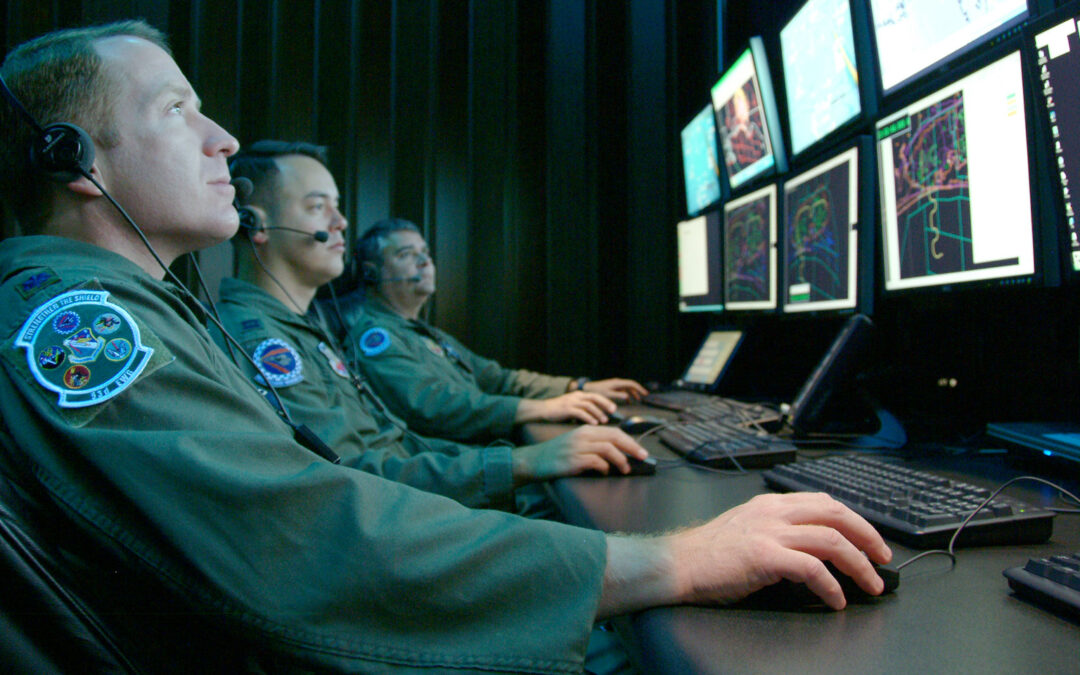
General Keith Alexander, a man few even in Washington would likely recognize. Never before has anyone in America’s intelligence sphere come close to his degree of power, the number of people under his command, the expanse of his rule, the length of his reign, or the depth of his secrecy. A four-star Army general, his authority extends across three domains: He is director of the world’s largest intelligence service, the National Security Agency; chief of the Central Security Service; and commander of the US Cyber Command. As such, he has his own secret military, presiding over the Navy’s 10th Fleet, the 24th Air Force, and the Second Army.
Alexander runs the nation’s cyberwar efforts, an empire he has built over the past eight years by insisting that the US’s inherent vulnerability to digital attacks requires him to amass more and more authority over the data zipping around the globe. In his telling, the threat is so mind-bogglingly huge that the nation has little option but to eventually put the entire civilian Internet under his protection, requiring tweets and emails to pass through his filters, and putting the kill switch under the government’s forefinger. “What we see is an increasing level of activity on the networks,” he said at a recent security conference in Canada. “I am concerned that this is going to break a threshold where the private sector can no longer handle it and the government is going to have to step in.”
In its tightly controlled public relations, the NSA has focused attention on the threat of cyberattack against the US—the vulnerability of critical infrastructure like power plants and water systems, the susceptibility of the military’s command and control structure, the dependence of the economy on the Internet’s smooth functioning. Defense against these threats was the paramount mission trumpeted by NSA brass at congressional hearings and hashed over at security conferences.
But there is a flip side to this equation that is rarely mentioned: The military has for years been developing offensive capabilities, giving it the power not just to defend the US but to assail its foes. Using so-called cyber-kinetic attacks, Alexander and his forces now have the capability to physically destroy an adversary’s equipment and infrastructure, and potentially even to kill. Alexander—who declined to be interviewed for this article—has concluded that such cyberweapons are as crucial to 21st-century warfare as nuclear arms were in the 20th.
And he and his cyberwarriors have already launched their first attack. The cyberweapon that came to be known as Stuxnet was created and built by the NSA in partnership with the CIA and Israeli intelligence in the mid-2000s. The first known piece of malware designed to destroy physical equipment, Stuxnet was aimed at Iran’s nuclear facility in Natanz. By surreptitiously taking control of an industrial control link known as a Scada (Supervisory Control and Data Acquisition) system, the sophisticated worm was able to damage about a thousand centrifuges used to enrich nuclear material.
The success of this sabotage came to light only in June 2010, when the malware spread to outside computers. It was spotted by independent security researchers, who identified telltale signs that the worm was the work of thousands of hours of professional development. Despite headlines around the globe, officials in Washington have never openly acknowledged that the US was behind the attack. It wasn’t until 2012 that anonymous sources within the Obama administration took credit for it in interviews with The New York Times.
But Stuxnet is only the beginning. Alexander’s agency has recruited thousands of computer experts, hackers, and engineering PhDs to expand US offensive capabilities in the digital realm. The Pentagon has requested $4.7 billion for “cyberspace operations,” even as the budget of the CIA and other intelligence agencies could fall by $4.4 billion. It is pouring millions into cyberdefense contractors. And more attacks may be planned.
I don’t suppose the American public have any business knowing if their government is launching such attacks. Why would we? What could possibly go wrong?
Inside the government, the general is regarded with a mixture of respect and fear, not unlike J. Edgar Hoover, another security figure whose tenure spanned multiple presidencies. “We jokingly referred to him as Emperor Alexander—with good cause, because whatever Keith wants, Keith gets,” says one former senior CIA official who agreed to speak on condition of anonymity. “We would sit back literally in awe of what he was able to get from Congress, from the White House, and at the expense of everybody else.”
Now 61, Alexander has said he plans to retire in 2014; when he does step down he will leave behind an enduring legacy—a position of far-reaching authority and potentially Strangelovian powers at a time when the distinction between cyberwarfare and conventional warfare is beginning to blur. A recent Pentagon report made that point in dramatic terms. It recommended possible deterrents to a cyberattack on the US. Among the options: launching nuclear weapons.
Like I said, what could possibly go wrong?
When the Guardian revealed this program the other day there was a spirited debate about whether this, unlike the other programs, was something we should welcome and expect. My problem with it wasn’t that the government was creating plans to defend against attacks on US cyber-infrastructure or even war plans in case such a thing happened. What I found questionable was the idea that this was conceived as 21st Century offensive war planning, and and in ways that do not necessarily fall within the traditional “national security” boundaries.
When it comes to cyber issues, I’m afraid we are seeing a confluence of commerce and security that everyone should stop and think about for a minute. How are these people defining the “national interest” and on whose behalf are they planning to launch cyberwar? What are the consequences of doing such a thing and who decides that it must be done?
And what do we think about paying huge amounts of taxpayer dollars to contractors like this?
Defense contractors have been eager to prove that they understand Alexander’s worldview. “Our Raytheon cyberwarriors play offense and defense,” says one help-wanted site. Consulting and engineering firms such as Invertix and Parsons are among dozens posting online want ads for “computer network exploitation specialists.” And many other companies, some unidentified, are seeking computer and network attackers. “Firm is seeking computer network attack specialists for long-term government contract in King George County, VA,” one recent ad read. Another, from Sunera, a Tampa, Florida, company, said it was hunting for “attack and penetration consultants.”
One of the most secretive of these contractors is Endgame Systems, a startup backed by VCs including Kleiner Perkins Caufield & Byers, Bessemer Venture Partners, and Paladin Capital Group. Established in Atlanta in 2008, Endgame is transparently antitransparent. “We’ve been very careful not to have a public face on our company,” former vice president John M. Farrell wrote to a business associate in an email that appeared in a WikiLeaks dump. “We don’t ever want to see our name in a press release,” added founder Christopher Rouland. True to form, the company declined Wired’s interview requests.
[…]
Bonesaw also contains targeting data on US allies, and it is soon to be upgraded with a new version codenamed Velocity, according to C4ISR Journal. It will allow Endgame’s clients to observe in real time as hardware and software connected to the Internet around the world is added, removed, or changed. But such access doesn’t come cheap. One leaked report indicated that annual subscriptions could run as high as $2.5 million for 25 zero-day exploits.
The buying and using of such a subscription by nation-states could be seen as an act of war. “If you are engaged in reconnaissance on an adversary’s systems, you are laying the electronic battlefield and preparing to use it,” wrote Mike Jacobs, a former NSA director for information assurance, in a McAfee report on cyberwarfare. “In my opinion, these activities constitute acts of war, or at least a prelude to future acts of war.” The question is, who else is on the secretive company’s client list? Because there is as of yet no oversight or regulation of the cyberweapons trade, companies in the cyber-industrial complex are free to sell to whomever they wish. “It should be illegal,” says the former senior intelligence official involved in cyberwarfare. “I knew about Endgame when I was in intelligence. The intelligence community didn’t like it, but they’re the largest consumer of that business.”
There are some serious implications to all of this that need to be hashed out by the American people. Of course we need to have defenses against cyber attacks. I don’t think anyone in the country thinks otherwise. But this looks like it could be a monumental financial boondoggle that is in great danger of running amok and causing some very serious problems. Frankly, this scares me much more than the threat that some would-be is going to get a hold of some beauty supplies and blow himself up.
Islamic terrorism is not and never has been an existential threat. This, I’m not so sure about. We should at least have a little chat about it before we let Cyber Buck Turgidson and his friends run wild.
First of all, download or print these instructions. Keep them with your survival gear, if you have prepared one.
SCENARIO
Your government is displeased with the communication going on in your location and pulls the plug on your internet access, most likely by telling the major ISPs to turn off service.
This is what happened in Egypt Jan. 25, 2012 prompted by citizen protests, with sources estimating that the Egyptian government cut off approximately 88 percent of the country’s internet access. What do you do without internet? Step 1: Stop crying in the corner. Then start taking steps to reconnect with your network. Here’s a list of things you can do to keep the communication flowing.
PREVENTIVE MEASURES
MAKE YOUR NETWORK TANGIBLE
Print out your contact list, so your phone numbers aren’t stuck in the cloud. Some mail services like Gmail allow you to export your online contact list in formats that are more conducive to paper, such as CSV or Vcard, and offer step-by-step guides on how to do this.
BROADCAST ON THE RADIO
CB Radio:Short for “Citizens Band” radio, these two-way radios allow communication over short distances on 40 channels. You can pick one up for about $20 to $50 at Radio Shack, and no license is required to operate it.
Ham radio:To converse over these radios, also known as “amateur radios,” you have to obtain an operator’s license from the FCC. Luckily, other Wired How-To contributors have already explained exactly what you need to do to get one and use it like a pro. However, if the President declares a State of Emergency, use of the radio could be extremely restricted or prohibited.
GMRS:The General Mobile Radio Service (GMRS) is a licensed land-mobile FM UHF radio service in the United States available for short-distance two-way communication. It is intended for use by an adult individual who possesses a valid GMRS license, as well as his or her immediate family members… They are more expensive than the walkie-talkies typically found in discount electronics stores, but are higher quality.
Family Radio Service:The Family Radio Service (FRS) is an improved walkie-talkie radio system authorized in the United States since 1996. This personal radio service uses channelized frequencies in the ultra high frequency (UHF) band. It does not suffer the interference effects found on citizens’ band (CB) at 27 MHz, or the 49 MHz band also used by cordless phones, toys, and baby monitors.
Micro-broadcasting:Micro-broadcasting is the process of broadcasting a message to a relatively small audience. This is not to be confused with low-power broadcasting. In radio terms, it is the use of low-power transmitters to broadcast a radio signal over the space of a neighborhood or small town. Similarly to pirate radio, micro-broadcasters generally operate without a license from the local regulation body, but sacrifice range in favor of using legal power limits.
Packet Radio Back to the ’90s: There do exist shortwave packet-radio modems. These are also excruciatingly slow, but may get your e-mail out. Like ham radio above it requires a ham radio license because they operate on ham radio frequencies.
TELEPHONE:
Set up a phone tree:According to the American Association of University Women, a phone tree is “a prearranged, pyramid-shaped system for activating a group of people by telephone” that can “spread a brief message quickly and efficiently to a large number of people.” Dig out that contact list you printed out to spread the message down your pyramid of contacts.
Enable Twitter via SMS:Though the thought of unleashing the Twitter fire hose in your text message inbox may seem horrifying, it would be better than not being able to connect to the outside world at all. The Twitter website has full instructions on how to redirect tweets to your phone.
Call to Tweet: A small team of engineers from Twitter, Google and SayNow, a company Google acquired recently, made this idea a reality. It’s already live and anyone can tweet by simply leaving a voicemail on one of these international phone numbers (+16504194196 or +390662207294 or +97316199855) and the service will instantly tweet the message using the hashtag #egypt. No Internet connection is required. People can listen to the messages by dialing the same phone numbers or going to the Twitter account, speak2tweet.
FAX:
If you need to quickly send and receive documents with lengthy or complex instructions, phone conversations may result in misunderstandings, and delivering the doc by foot would take forever. Brush the dust off that bulky old machine, establish a connection by phone first with the recipient to make sure his machine is hooked up, then fax away.
You may not need a fax machine to send or receive faxes if your computer has a dial-up fax application.
NON-VIRTUAL BULLETIN BOARD
Sometimes we get so wrapped up in the virtual world that we forget about resources available in the real world. Physical bulletin boards have been used for centuries to disseminate information and don’t require electricity to function. If you are fortunate enough to be getting information from some other source why not share it with your friends and neighbors with your own bulletin board? Cork, magnetic and marker bulletin boards are as close as your nearest dime store and can be mounted just about anywhere. And if push comes to shove you can easily make your own with scrap wood lying around the house.
Getting back online – While it might be relatively easy for a government to cut connections by leveraging the major ISPs, there are some places they wouldn’t get to so readily, like privately-owned networks and independent ISPs.
FIND THE PRIVATELY RUN ISPs
In densely populated areas, especially in central business districts and city suburbs there are multiple home WiFi networks overlapping each other, some secure, some not. If there is no internet, open up your WiFi by removing password protection: If enough people do this it’s feasible to create a totally private WiFi service outside government control covering the CBD, and you can use applications that run Bonjour (iChat on Mac for example) to communicate with others on the open network and send and receive documents. **needs more clarification
If you are a private ISP, it’s your time to shine. Consider allowing open access to your Wi-Fi routers to facilitate communication of people around you until the grid is back online.
RETURN TO DIAL-UP
According to an article in the BBC about old tech’s role in the Egyptian protests, “Dial-up modems are one of the most popular routes for Egyptians to get back online. Long lists of international numbers that connect to dial-up modems are circulating in Egypt thanks to net activists We Re-Build, Telecomix and others.”
Dial-up can be slow. Often, there is a lightweight mobile version of a site that you can load from your desktop browser quickly despite the limitations of dial-up. Examples: mobile.twitter.com, m.facebook.com, m.gmail.com.
AD-HOC NETWORKING
Most wireless routers, PCs, laptops, and even some ultramobile devices like cellphones have the ability to become part of an “ad hoc” network, where different “nodes” (all of the devices on the network) share the responsibility of transmitting data with one another. These networks can become quite large, and are often very easy to set up. If used properly by a tech-savvy person, such networks can be used to host temporary websites and chat rooms. There are many internet tutorials on the internet for ad hoc networking, so feel free to Google some.
Apple computers tend to have very accessible ad hoc functionality built in, including a pre-installed chat client (iChat) that will automatically set up an ad hoc “Rendezvous” chatroom among anybody on the network, without the need for an external service like AIM or Skype. Ad hoc network-hosting functionality is built in to the Wi-Fi menu.
Windows computers have several third-party ad hoc chat applications available (such as Trillian) and setting up an ad hoc Wi-Fi network is almost as simple as on a Mac.
Linux operating systems, of course, have plenty of third-party apps available, and most distros have ad hoc network-creation support built in.
BUILD LARGE BRIDGED WIRELESS NETWORK
Using popular wireless access point devices like a Linksys WRT54G, you can create a huge wireless bridged network — effectively creating a Local Area Network (LAN), or a private Internet that can be utilized by all users within range using a Wi-Fi enabled device.
You can also link multiple devices together wirelessly, extending the range of your network. Most access points will cover a 100 meter area and if your wireless device is built to support the 802.11n wireless standard, you will get almost a 500 meter coverage area for each access point.
To build a wireless bridge, check out the dd-wrt wiki, and learn how to configure Linksys WRT54G as a wireless client using this Anandtech thread.
NINTENDO DS
A used DS family device can be purchased inexpensively. In addition to wi-fi, the DS supports its own wireless protocols. Using Pictochat, it is possible to chat with nearby DS users without having any DS games. Unfortunately, the range is quite short.
Some games, such as the fourth generation Pokemon games, support mail items. Thus you can send your message under the guise of just playing a game. Mail items can be sent through the Internet if you can get on the net and you and your partner(s) have each other’s friend codes.
The original DS and the DS Lite do support the Opera web browser, but finding the game card and memory pack may be very difficult. Starting with the DSi, Opera is downloadable.
INTRANET
Your computer has the ability to set up your own INTRANET. This was done BEFORE the internet was popularized in two ways: Your computer dialed up other computers and sent them the contents of a message board, or local people people dialed into your computer. A nationwide system can be set up this way with a central location sending to many cities then each city sending out the info locally.
BECOME UNTRACEABLE
If you’re going to post government secrets on your work-around site, you may want to set up an untraceable account. Really, you only need a mail drop, an assumed name, a prepaid credit card you can get at many stores to set up service.
GET SATELLITE ACCESS
You can have very, very slow internet if you have something similar to an Iridium phone, which would allow you to do dial up at 2400 baud, which at least gives you e-mail. This will also work when your government has shut down GSM and telephone access, and will work pretty much anywhere on the planet. If you’re in the right place, get yourself KA-SAT access which is satellite broadband and will not be routed through any internet exchange that certain local governments may monitor or block (unless that government is part of EU or er … Uncle Sam.
BACK TO BASICS
Make some noise: Have an air horn or other loud instrument handy. It may just come down to being able to alert people in your local geographic area, who would otherwise be unaware of an emergency. You may also want to learn a bit about Morse code and have a cheat sheet available.
UPDATE [3:30pm PST] – “Assange asylum rumor is false,” Correa confirmed on his Twitter feed. He added that he is waiting for a Foreign Ministry report on the issue, without which a decision will not be made.
Ecuador has reportedly granted asylum to WikiLeaks founder Julian Assange, who requested it after the British Supreme Court refused to reopen his appeal against extradition to Sweden where he is wanted for questioning over alleged sex crimes.
WikiLeaks founder has been holed up in the country’s London embassy since June 19.
The asylum guarantees him safe passage from the UK to Ecuador, says Professor Donald Rothwell from the Australian National University College of Law.
In Sweden the whistleblower is wanted for questioning over accusations of sex crimes, but Assange and most of his supporters fear that once he arrived in Sweden, he would be handed over to US authorities.
Assange and his lawyers believe that the US has already lodged a sealed indictment against Assange, and that his case might outdo the one of Bradley Manning.
The whistleblower website founded by Julian Assange has leaked hundreds of thousands of classified diplomatic cables, including top secret documents from the US Department of Defense, and secret cables from the State Department.
We are Anonymous, and we do not forgive. Forgiveness requires humility, humility requires dignity. We have neither.
We are void of human restraints, such as self respect and common sense.
All those who break this pact will be eliminated without hesitation. And by elimination we will put their name on an icky photo and shit in each others’ mouths.
Those who perform reckless actions or wish to harm the Anonymous will be eliminated without hesitation. Again, elimination is our word for doing very little about it.
Failure is the basis of our existence.
Enemies of the Anonymous include anyone who can point out how many times we contradict ourselves in a single sentence.
Our enemies are to be flaccidly made fun of, using the same tired photoshopped stuff stolen from someone else.
Anonymous must “work” as one. No Anonymous knows anything.
Betrayal of Anonymous is both ironic and appropriate.
Manipulation of the weak and innocent is something that the truly weak believe indicates power, as such we do it alot. Not well but, often. Once a victim is no longer commodious, they are to be eliminated. Also, the cow was slaughtered in the abattoir.
REPRODUCE. REPRODUCE. REPRODUCE. Like cockroaches and Catholics we need to make sure our stupidity is at least backed by numbers. Quantity over quality. Loud = Funny.
No man-made or natural occurance can harm the Anonymous. Except when Mom and Dad ground us from the computer. That’s pouting time.
Under no circumstances are Anonymous human. We are beneath humans and mortality.
Anonymous are not to partake in meaningless tasks….pffft Ahhh dude I’m totally shitting ya, that’s all we do.
You are legion, for we are many. That makes it easier to defend ourselves when smart people tell us to stop acting like idiots.
Anonymous is everywhere at all times, we like to loiter. we really have nothing better to do than hang out. Yet, singular Anonymous are not permitted to know everything. Which is good, because we know very little.
All have the potential to be Anonymous until they choose to drop a bag of fertilizer on their nutsack and grow a pair. Those who are not Anonymous are to be eliminated….or photoshopped into a nasty photo which ever one requires less standing and walking. Or hack a paypal account and charge PS3’s, send massive amounts of cowardly and empty death threats or, whatever weak ass “criminal” act we think will make us appear powerful.
Anonymous has no weakness or flaw. Well, except maybe getting laid. That ain’t happening. And a whole bunch of others. But besides crippling personality flaws, body odor, lack of humor, not getting laid and relying on shock value and memes to speak for us…we have only a few more flaws and weaknesses.
Laws of Nature and Man cannot restrain the Anonymous. However, an IP ban, power outage or, a light punch to the solar plexus can drop us like a bag of bad habits.
Anonymous is Zero. Feuding and argument amongst the Anonymous is both constant and unavoidable.
Anonymous is in control at all times. We just choose to waste all of it.
Anonymous has no identity. Those who are not Anonymous yet know our presence must be eliminated. Again and, I can not stress this enough people, “eliminate” means sitting on our asses all day pretending to jerk off to Goatse, while our mothers yell at us to get jobs.
Anonymous cannot be contained by mere restraints. We are far too fat to fit any normal conveyance, handcuffs or standard size airline seats.
Anonymous are all equally stupid. No one is more retarded then Anonymous.
Anonymous must obey the Code. Those who do not are to be raped with our mighty e-peens, until supper time and homework, then an hour of Gameboy before bedtime.
Anonymous worships nothing because anonymous is nothing.
Anonymous cares for nothing, but Anonymous. Our existence is vapid, myopic and limited.
Humanity is the virus; Anonymous is the open wound that invites it in.
The Cyber Intelligence Sharing and Protection Act (CISPA) is quickly becoming the Internet’s new most-hated piece of legislation. But is it really “the new SOPA,” as critics are calling it? Here, a comprehensive rundown of what CISPA is, what it does, and why people think it’s dangerous.
The Internet has a new enemy. The Cyber Intelligence Sharing and Protection Act of 2011 (CISPA), also known as H.R. 3523, is a “cybersecurity” bill in the House of Representatives. CISPA is quickly gaining traction as “the new SOPA,” the infamous anti-piracy bill that was forced to crawl back into its hole after thousands of websites and millions of Web users protested with a massive, high-profile “blackout.” While CISPA does not focus primarily on intellectual property (though that’s in there, too), critics say the problems with the bill run just as deep. But what is CISPA, really, and will its presence on Congress’ agenda cause the same type of online revolt that SOPA and PIPA did?
What is CISPA?
Unveiled to the House by Rep. Mike Rogers (R-MI) and Rep. C.A. “Dutch” Ruppersberger (D-MD) late last year, CISPA is described as a “cybersecurity” bill. It proposes to amend the National Security Act of 1947 to allow for greater sharing of “cyber threat intelligence” between the U.S. government and the private sector, or between private companies. The bill defines “cyber threat intelligence” as any information pertaining to vulnerabilities of, or threats to, networks or systems owned and operated by the U.S. government, or U.S. companies; or efforts to “degrade, disrupt, or destroy” such systems or networks; or the theft or “misappropriation” of any private or government information, including intellectual property.
CISPA also removes any liability from private companies who collect and share qualified information with the federal government, or with each other. Finally, it directs the Privacy and Civil Liberties Oversight Board to conduct annual reviews of the sharing and use of the collected information by the U.S. government.
Read the full text of CISPA here, or the full official summary at the bottom of this page.
Who supports CISPA?
The bill currently has a whopping 106 co-sponsors in the House — more than twice the number SOPA ever had. Also unlike SOPA, CISPA has explicit support from some of the technology industry’s biggest players, including Internet service providers like AT&T and Verizon, Web companies like Facebook, and hardware companies like IBM and Intel.
See the full list of CISPA co-sponsors here. See a complete list of companies and groups that support CISPA here.
What CISPA supporters say it will do
According to Rep. Rogers, CISPA will help U.S. companies defend themselves “from advanced cyber threats, without imposing any new federal regulations or unfunded private sector mandate.” It will also create “new private sector jobs for cybersecurity professionals,” and protect “the thousands of jobs created by the American intellectual property that Chinese hackers are trying to steal every day.”
In a statement, Rep. Ruppersberger pushed his reasons for proposing the legislation, saying, “Without important, immediate changes to American cybersecurity policy, I believe our country will continue to be at risk for a catastrophic attack to our nation’s vital networks — networks that power our homes, provide our clean water or maintain the other critical services we use every day. This small but important piece of legislation is a decisive first step to tackle the cyber threats we face.”
Private companies like the bill because it removes some of the regulations that prevent them from sharing cyber threat information, or make it harder to do so. In short, they believe the bill will do exactly what its supporters in the House say it will do — help better protect them from cyber attacks.
What CISPA opponents are worried about
As with SOPA and PIPA, the first main concern about CISPA is its “broad language,” which critics fear allows the legislation to be interpreted in ways that could infringe on our civil liberties. The Center for Democracy and Technology sums up the problems with CISPA this way:
• The bill has a very broad, almost unlimited definition of the information that can be shared with government agencies notwithstanding privacy and other laws;
• The bill is likely to lead to expansion of the government’s role in the monitoring of private communications as a result of this sharing;
• It is likely to shift control of government cybersecurity efforts from civilian agencies to the military;
• Once the information is shared with the government, it wouldn’t have to be used for cybesecurity, but could instead be used for any purpose that is not specifically prohibited.
The Electronic Frontier Foundation (EFF) adds that CISPA’s definition of “cybersecurity” is so broad that “it leaves the door open to censor any speech that a company believes would ‘degrade the network.’” Moreover, the inclusion of “intellectual property” means that companies and the government would have “new powers to monitor and censor communications for copyright infringement.”
Furthermore, critics warn that CISPA gives private companies the ability to collect and share information about their customers or users with immunity — meaning we cannot sue them for doing so, and they cannot be charged with any crimes.
According to the EFF, CISPA “effectively creates a ‘cybersecurity’ exemption to all existing laws.”
“There are almost no restrictions on what can be collected and how it can be used, provided a company can claim it was motivated by ‘cybersecurity purposes,’” the EFF continues. “That means a company like Google, Facebook, Twitter, or AT&T could intercept your emails and text messages, send copies to one another and to the government, and modify those communications or prevent them from reaching their destination if it fits into their plan to stop cybersecurity threats.”
Is the Internet freaking out like it did over SOPA/PIPA?
Not yet — but it’s starting to. After TechDirt’s Mike Masnick — a widely followed and trusted source on matters of laws regarding technology, intellectual property, and how they might affect our civil rights — posted an article telling readers to “forget SOPA, you should be worried about this cybersecurity bill” earlier this week, concerned Web users have started to take notice. On Reddit, a community that is largely responsible for the push-back against SOPA/PIPA, an increasing number of posts (some accurate, some not) have popped up regarding the potential dangers of CISPA. Anonymous has also started to get in on the action, having released a “dox” on Rep. Rogers, and a video condemning the bill, earlier this week.
Will CISPA pass?
Nobody can say for sure, but at the moment, its passage looks likely. CISPA breezed through the House Intelligence Committee on December 1, 2011, with a bipartisan vote of 17-1. Also, as mentioned, the bill has broad support in the House, with 106 co-sponsors, 10 of whom are committee chairmen.
As with any piece of legislation, however, nothing is certain until the president signs the bill. And if the Internet community rises up in the same way it did against SOPA and PIPA, then you will certainly see support for CISPA crumble in Congress (it is an election year, after all). That said, whether or not the Internet will react with such force remains a big “if.”
Conclusion
Regardless of the value of CISPA, cyber threats are a real and serious problem, one that the U.S. government will address through legislative means. Civil liberty watchdogs are always going to be wary of any bill that could possibly threaten our privacy, or put us at the mercy of corporations and the federal government. However, CISPA does have all the problems critics claim it has, and Web users should be paying critical attention to the bill.
Remember: opposing this particular bill, or others with similar problems, is not the same as a disregard for our cybersecurity, or national security — which is precisely how CISPA supporters in Congress will attempt to frame the opposition, if or when it gathers steam.
The Cyber Intelligence Sharing and Protection Act (CISPA) is quickly becoming the Internet’s new most-hated piece of legislation. But is it really “the new SOPA,” as critics are calling it? Here, a comprehensive rundown of what CISPA is, what it does, and why people think it’s dangerous.
The Internet has a new enemy. The Cyber Intelligence Sharing and Protection Act of 2011 (CISPA), also known as H.R. 3523, is a “cybersecurity” bill in the House of Representatives. CISPA is quickly gaining traction as “the new SOPA,” the infamous anti-piracy bill that was forced to crawl back into its hole after thousands of websites and millions of Web users protested with a massive, high-profile “blackout.” While CISPA does not focus primarily on intellectual property (though that’s in there, too), critics say the problems with the bill run just as deep. But what is CISPA, really, and will its presence on Congress’ agenda cause the same type of online revolt that SOPA and PIPA did?
What is CISPA?
Unveiled to the House by Rep. Mike Rogers (R-MI) and Rep. C.A. “Dutch” Ruppersberger (D-MD) late last year, CISPA is described as a “cybersecurity” bill. It proposes to amend the National Security Act of 1947 to allow for greater sharing of “cyber threat intelligence” between the U.S. government and the private sector, or between private companies. The bill defines “cyber threat intelligence” as any information pertaining to vulnerabilities of, or threats to, networks or systems owned and operated by the U.S. government, or U.S. companies; or efforts to “degrade, disrupt, or destroy” such systems or networks; or the theft or “misappropriation” of any private or government information, including intellectual property.
CISPA also removes any liability from private companies who collect and share qualified information with the federal government, or with each other. Finally, it directs the Privacy and Civil Liberties Oversight Board to conduct annual reviews of the sharing and use of the collected information by the U.S. government.
Read the full text of CISPA here, or the full official summary at the bottom of this page.
Who supports CISPA?
The bill currently has a whopping 106 co-sponsors in the House — more than twice the number SOPA ever had. Also unlike SOPA, CISPA has explicit support from some of the technology industry’s biggest players, including Internet service providers like AT&T and Verizon, Web companies like Facebook, and hardware companies like IBM and Intel.
See the full list of CISPA co-sponsors here. See a complete list of companies and groups that support CISPA here.
What CISPA supporters say it will do
According to Rep. Rogers, CISPA will help U.S. companies defend themselves “from advanced cyber threats, without imposing any new federal regulations or unfunded private sector mandate.” It will also create “new private sector jobs for cybersecurity professionals,” and protect “the thousands of jobs created by the American intellectual property that Chinese hackers are trying to steal every day.”
In a statement, Rep. Ruppersberger pushed his reasons for proposing the legislation, saying, “Without important, immediate changes to American cybersecurity policy, I believe our country will continue to be at risk for a catastrophic attack to our nation’s vital networks — networks that power our homes, provide our clean water or maintain the other critical services we use every day. This small but important piece of legislation is a decisive first step to tackle the cyber threats we face.”
Private companies like the bill because it removes some of the regulations that prevent them from sharing cyber threat information, or make it harder to do so. In short, they believe the bill will do exactly what its supporters in the House say it will do — help better protect them from cyber attacks.
What CISPA opponents are worried about
As with SOPA and PIPA, the first main concern about CISPA is its “broad language,” which critics fear allows the legislation to be interpreted in ways that could infringe on our civil liberties. The Center for Democracy and Technology sums up the problems with CISPA this way:
• The bill has a very broad, almost unlimited definition of the information that can be shared with government agencies notwithstanding privacy and other laws;
• The bill is likely to lead to expansion of the government’s role in the monitoring of private communications as a result of this sharing;
• It is likely to shift control of government cybersecurity efforts from civilian agencies to the military;
• Once the information is shared with the government, it wouldn’t have to be used for cybesecurity, but could instead be used for any purpose that is not specifically prohibited.
The Electronic Frontier Foundation (EFF) adds that CISPA’s definition of “cybersecurity” is so broad that “it leaves the door open to censor any speech that a company believes would ‘degrade the network.’” Moreover, the inclusion of “intellectual property” means that companies and the government would have “new powers to monitor and censor communications for copyright infringement.”
Furthermore, critics warn that CISPA gives private companies the ability to collect and share information about their customers or users with immunity — meaning we cannot sue them for doing so, and they cannot be charged with any crimes.
According to the EFF, CISPA “effectively creates a ‘cybersecurity’ exemption to all existing laws.”
“There are almost no restrictions on what can be collected and how it can be used, provided a company can claim it was motivated by ‘cybersecurity purposes,’” the EFF continues. “That means a company like Google, Facebook, Twitter, or AT&T could intercept your emails and text messages, send copies to one another and to the government, and modify those communications or prevent them from reaching their destination if it fits into their plan to stop cybersecurity threats.”
Is the Internet freaking out like it did over SOPA/PIPA?
Not yet — but it’s starting to. After TechDirt’s Mike Masnick — a widely followed and trusted source on matters of laws regarding technology, intellectual property, and how they might affect our civil rights — posted an article telling readers to “forget SOPA, you should be worried about this cybersecurity bill” earlier this week, concerned Web users have started to take notice. On Reddit, a community that is largely responsible for the push-back against SOPA/PIPA, an increasing number of posts (some accurate, some not) have popped up regarding the potential dangers of CISPA. Anonymous has also started to get in on the action, having released a “dox” on Rep. Rogers, and a video condemning the bill, earlier this week.
Will CISPA pass?
Nobody can say for sure, but at the moment, its passage looks likely. CISPA breezed through the House Intelligence Committee on December 1, 2011, with a bipartisan vote of 17-1. Also, as mentioned, the bill has broad support in the House, with 106 co-sponsors, 10 of whom are committee chairmen.
As with any piece of legislation, however, nothing is certain until the president signs the bill. And if the Internet community rises up in the same way it did against SOPA and PIPA, then you will certainly see support for CISPA crumble in Congress (it is an election year, after all). That said, whether or not the Internet will react with such force remains a big “if.”
Conclusion
Regardless of the value of CISPA, cyber threats are a real and serious problem, one that the U.S. government will address through legislative means. Civil liberty watchdogs are always going to be wary of any bill that could possibly threaten our privacy, or put us at the mercy of corporations and the federal government. However, CISPA does have all the problems critics claim it has, and Web users should be paying critical attention to the bill.
Remember: opposing this particular bill, or others with similar problems, is not the same as a disregard for our cybersecurity, or national security — which is precisely how CISPA supporters in Congress will attempt to frame the opposition, if or when it gathers steam.