Andrew D. Basiago is a Vancouver, Washington lawyer of apparently high repute. As a side project, he runs Project Pegasus, a group dedicated to lobbying the government to release the secrets of teleportation and time travel for the benefit of mankind. Basiago also refers to himself as “the discoverer of life on Mars.” He claims to be one of two “planetary-level whistleblowers” predicted by Web bot. He’s also considered an Indigo Child.Andrew D. Basiago is a Vancouver, Washington lawyer of apparently high repute. As a side project, he runs Project Pegasus, a group dedicated to lobbying the government to release the secrets of teleportation and time travel for the benefit of mankind. Basiago also refers to himself as “the discoverer of life on Mars.” He claims to be one of two “planetary-level whistleblowers” predicted by Web bot. He’s also considered an Indigo Child.Andrew D. Basiago is a Vancouver, Washington lawyer of apparently high repute. As a side project, he runs Project Pegasus, a group dedicated to lobbying the government to release the secrets of teleportation and time travel for the benefit of mankind. Basiago also refers to himself as “the discoverer of life on Mars.” He claims to be one of two “planetary-level whistleblowers” predicted by Web bot. He’s also considered an Indigo Child.
Andrew D. Basiago is a Vancouver, Washington lawyer of apparently high repute. As a side project, he runs Project Pegasus, a group dedicated to lobbying the government to release the secrets of teleportation and time travel for the benefit of mankind. Basiago also refers to himself as “the discoverer of life on Mars.” He claims to be one of two “planetary-level whistleblowers” predicted by Web bot. He’s also considered an Indigo Child.Andrew D. Basiago is a Vancouver, Washington lawyer of apparently high repute. As a side project, he runs Project Pegasus, a group dedicated to lobbying the government to release the secrets of teleportation and time travel for the benefit of mankind. Basiago also refers to himself as “the discoverer of life on Mars.” He claims to be one of two “planetary-level whistleblowers” predicted by Web bot. He’s also considered an Indigo Child.Andrew D. Basiago is a Vancouver, Washington lawyer of apparently high repute. As a side project, he runs Project Pegasus, a group dedicated to lobbying the government to release the secrets of teleportation and time travel for the benefit of mankind. Basiago also refers to himself as “the discoverer of life on Mars.” He claims to be one of two “planetary-level whistleblowers” predicted by Web bot. He’s also considered an Indigo Child.
Mehran Tavakoli Keshe is an Iranian-born (in 1958) nuclear engineer known for his research on plasma reactors and interests in free energy applicationsand for his claim that he pioneered a space technology that was, according to some, used by Iran and resulted in the subdue and capture of a US drone in December 2011 near the Iran-Afghanistan bordeIranian-born (in 1958) nuclear engineer known for his research on plasma reactors and interests in free energy applicationsand for his claim that he pioneered a space technology that was, according to some, used by Iran and resulted in the subdue and capture of a US drone in December 2011 near the Iran-Afghanistan bordeIranian-born (in 1958) nuclear engineer known for his research on plasma reactors and interests in free energy applicationsand for his claim that he pioneered a space technology that was, according to some, used by Iran and resulted in the subdue and capture of a US drone in December 2011 near the Iran-Afghanistan border.Mehran Tavakoli Keshe is an Iranian-born (in 1958) nuclear engineer known for his research on plasma reactors and interests in free energy applicationsand for his claim that he pioneered a space technology that was, according to some, used by Iran and resulted in the subdue and capture of a US drone in December 2011 near the Iran-Afghanistan bordeIranian-born (in 1958) nuclear engineer known for his research on plasma reactors and interests in free energy applicationsand for his claim that he pioneered a space technology that was, according to some, used by Iran and resulted in the subdue and capture of a US drone in December 2011 near the Iran-Afghanistan bordeIranian-born (in 1958) nuclear engineer known for his research on plasma reactors and interests in free energy applicationsand for his claim that he pioneered a space technology that was, according to some, used by Iran and resulted in the subdue and capture of a US drone in December 2011 near the Iran-Afghanistan border.
Mehran Tavakoli Keshe is an Iranian-born (in 1958) nuclear engineer known for his research on plasma reactors and interests in free energy applicationsand for his claim that he pioneered a space technology that was, according to some, used by Iran and resulted in the subdue and capture of a US drone in December 2011 near the Iran-Afghanistan bordeIranian-born (in 1958) nuclear engineer known for his research on plasma reactors and interests in free energy applicationsand for his claim that he pioneered a space technology that was, according to some, used by Iran and resulted in the subdue and capture of a US drone in December 2011 near the Iran-Afghanistan bordeIranian-born (in 1958) nuclear engineer known for his research on plasma reactors and interests in free energy applicationsand for his claim that he pioneered a space technology that was, according to some, used by Iran and resulted in the subdue and capture of a US drone in December 2011 near the Iran-Afghanistan border.Mehran Tavakoli Keshe is an Iranian-born (in 1958) nuclear engineer known for his research on plasma reactors and interests in free energy applicationsand for his claim that he pioneered a space technology that was, according to some, used by Iran and resulted in the subdue and capture of a US drone in December 2011 near the Iran-Afghanistan bordeIranian-born (in 1958) nuclear engineer known for his research on plasma reactors and interests in free energy applicationsand for his claim that he pioneered a space technology that was, according to some, used by Iran and resulted in the subdue and capture of a US drone in December 2011 near the Iran-Afghanistan bordeIranian-born (in 1958) nuclear engineer known for his research on plasma reactors and interests in free energy applicationsand for his claim that he pioneered a space technology that was, according to some, used by Iran and resulted in the subdue and capture of a US drone in December 2011 near the Iran-Afghanistan border.
Alfred Lambremont Webre is an American author, lawyer, futurist, peace activist, environmental activist, and a space activist who promotes the ban of space weapons.
“And so I went out to meet them. And they taught me about the stars.”
The human mind is a stargate. In fact, it is probably the only real stargate there is. We don’t realize that because from the time we become aware as children, we are told that we live in a tiny box called earth. Within that tiny box the mind inhabits another even tinier box called the human body. From these two boxes, there can be no escape but death, which is not really an escape from the box, but the moment the mind and its personality enters an eternal oblivion. Many people actually believe this and some of them have the audacity to call me a buzzkill.
I used to believe what people told me. I believed my brain held my personality and kept it within the confines of my skull. I thought my heart is what kept everything alive. My soul was some nebulous thing that also existed. I just wasn’t sure where it was located. The problem I had, of course, is that throughout my life I had been receiving messages and subtle clues from people that were not like me. These people didn’t seem to always use bodies or to live by the same rules that I did. Some of these clues were unimaginably terrifying, but perhaps only because I was so grounded to the world I was told to believe in, a world whose reality has begun to fall away to some extent.
Part of my problem was that I was a a devotee of my own anger and resentment. I used these as far as I could take them as an outlet to work through the dross I had both made through my own actions as well as what I inherited from my family lines. The more I was able to pull down the veil of my inward imperfections and shortcoming, the more the light was beginning to shine through. First as a tiny glimmer and then as a blazing sun.
What I witnessed did not terrify me, but for the first time allowed a clean break with the well-ordered world I had belonged to and believed in for so long. The old world was a world of laws and scientific explanations. In that world both meaning and mystique were crowded out by endless explanations that sapped the meaning out of things. Wonder was becoming eroded by unsatisfying ideas, each one new and innovative, yet wholly dead. If we couldn’t see, hear, touch, taste, or smell a thing it didn’t exist. The newly elected priests of the modern world explained everything away with science. The sun, moon, and stars had no significance. They were dead celestial bodies floating in space. Everything had an explanation, and if it didn’t have one somebody somewhere was hard at work on one. The modern world, sadly, has travelled an outward path away from what is real and therefore science becomes increasingly superficial. Instead of giving fulfilling answers, it can only give us explanations that may or may not be true.
While the intellect taken to its logical conclusion can deliver a person to the door of the real, it cannot nudge them through it. There comes a point where reason and intellection become a curse that anchors one to the world of death’s reign. If the imagination does not take over, the journey dies utterly. But it is not enough to merely imagine, one must literally exit the unreal by entering the doorway that has always remained open for us. The difficulty of that feat depends on how much we have come to believe in the world we were told to believe in. Ultimately, the depths of the mind must be plumbed to the point of finality, which is really the beginning point of the real world.
“Things began to change. A doorway within my mind opened, so I stepped inside to see what was there.“
To open that door to the real world, the reasoning mind must be kept absolutely still, it must put the world as we believe it to death. This doesn’t come with effort, but rather in the absence of effort. It doesn’t come by struggling to create landscapes and characters in the mind. It arrives, strangely, when the mind no longer puts forth any effort whatsoever. In a word, the mind literally surrenders any idea of knowledge upon realizing that the real world doesn’t require wisdom or knowledge, but spontaneity and being. It must simply become what it was before it was forged by the experiences of life, both good and bad. The ”reality” we see everyday is only one part of a much greater world that is unseen, but always present in the eternal now.
This world beyond is really the world we live in right now, minus the box we attempt to place it in. Death, no matter how you look at it, removes that box exposing us to the real world. Those that seek to keep that box in place, the box that leads to all pain and suffering, experience the worst of the postmortem states. They attempt to retain the piece because they cannot face the whole truth of what they are. For that reason alone a kind of pseudo-physical world is often entered upon death. I have seen it many times, I have spoken to those living there, and I have seen strange things that could not possibly come from me or the use of my imagination alone. These postmortem worlds run the gamut of ugliness and beauty.
“At some point I found that even though I was a single piece, a veritable illusion, that stars were growing in my mind. Slowly my identity was expanding into a completion that had no further need of growth or evolution. This is who I really was. I was becoming all while still remaining “me.” This was death and I was very happy. This was a happiness I had never known in life. ”
The world we have been told to believe in is a lie. This is not a new age platitude or an airy-fairy state of mind I am talking about. This is the unfathomable reality we are not yet ready to face. An apocalypse is on the horizon, and this apocalypse will create a divergent path in humanity. It may be collective, it may be individual. Some will remember and others will continue to forget. That is simply the way things are.
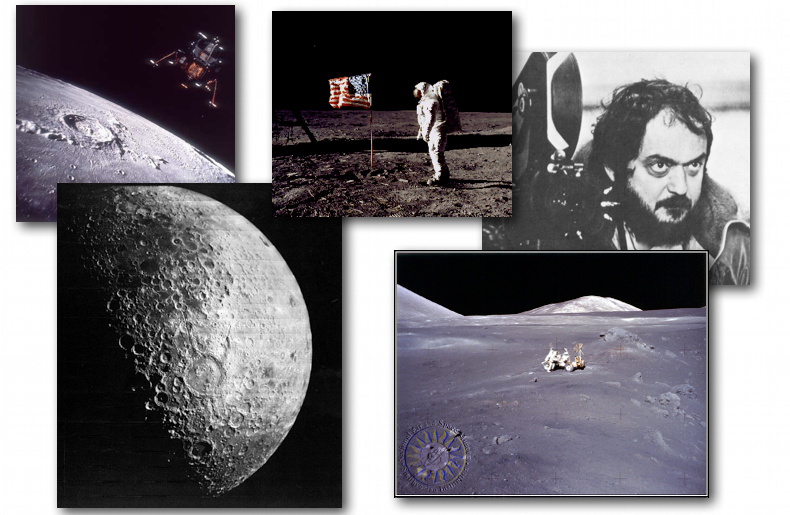
Moon Monday! After Weekend News & Highlights – Moon History Anomalies, Inconsistencies, and Crazy Facts. Historical Explanations, Scientific Observations, Research, Acoustic Testing, plus ‘Whats on the Dark-Side, and why does it have one?’
Just what we need.. Another flying death robot.. in space. -DCMX Editor
Raytheon Company (NYSE: RTN) was awarded a $636 million development and sustainment contract to provide the Exoatmospheric Kill Vehicle to The Boeing Company, which is the prime contractor for the Ground-based Midcourse Defense program. Raytheon booked the award during its second quarter.
EKV represents the centerpiece for the Missile Defense Agency’s GMD as the intercept component of the Ground Based Interceptor, also known as GBI, which is designed to engage high-speed ballistic missile warheads in space.
“When it comes to developing, testing and deploying technologies that enable the intercept of threats in space, Raytheon is a world leader,” said Dr. Taylor W. Lawrence, Raytheon Missile Systems president. “We are proud to contribute to our nation’s first line of defense against the threat of ballistic missiles.”
Under conditions of the contract, which extends through November 2018, Raytheon will provide EKV development, fielding, testing, system engineering, integration, configuration management, equipment manufacturing and refurbishment, and operation and sustainment.
About the EKV
Leveraging more than two decades of kill vehicle technology expertise, the EKV is designed to destroy incoming ballistic missile threats by colliding with them, a concept often described as “hit to kill.”
EKV has an advanced multi-color sensor that is used to detect and discriminate incoming warheads from other objects.
The EKV also has its own propulsion, communications link, discrimination algorithms, guidance and control system and computers to support target selection and intercept.
EKV is deployed and operational today.
EKV has had eight successful intercepts throughout the life of the program.
“Doubly-even self-dual linear binary error-correcting block code,” first invented by Claude Shannon in the 1940’s, has been discovered embedded WITHIN the equations of superstring theory!
Why does nature have this? What errors does it need to correct? What is an ‘error’ for nature? More importantly what is the explanation for this freakish discovery? Your guess is as good as mine.
This paper argues that at least one of the following propositions is true: (1) the human species is very likely to go extinct before reaching a “posthuman” stage; (2) any posthuman civilization is extremely unlikely to run a significant number of simulations of their evolutionary history (or variations thereof); (3) we are almost certainly living in a computer simulation. It follows that the belief that there is a significant chance that we will one day become posthumans who run ancestor-simulations is false, unless we are currently living in a simulation. A number of other consequences of this result are also discussed.
I. INTRODUCTION
Many works of science fiction as well as some forecasts by serious technologists and futurologists predict that enormous amounts of computing power will be available in the future. Let us suppose for a moment that these predictions are correct. One thing that later generations might do with their super-powerful computers is run detailed simulations of their forebears or of people like their forebears. Because their computers would be so powerful, they could run a great many such simulations. Suppose that these simulated people are conscious (as they would be if the simulations were sufficiently fine-grained and if a certain quite widely accepted position in the philosophy of mind is correct). Then it could be the case that the vast majority of minds like ours do not belong to the original race but rather to people simulated by the advanced descendants of an original race. It is then possible to argue that, if this were the case, we would be rational to think that we are likely among the simulated minds rather than among the original biological ones. Therefore, if we don’t think that we are currently living in a computer simulation, we are not entitled to believe that we will have descendants who will run lots of such simulations of their forebears. That is the basic idea. The rest of this paper will spell it out more carefully.
Apart form the interest this thesis may hold for those who are engaged in futuristic speculation, there are also more purely theoretical rewards. The argument provides a stimulus for formulating some methodological and metaphysical questions, and it suggests naturalistic analogies to certain traditional religious conceptions, which some may find amusing or thought-provoking.
The structure of the paper is as follows. First, we formulate an assumption that we need to import from the philosophy of mind in order to get the argument started. Second, we consider some empirical reasons for thinking that running vastly many simulations of human minds would be within the capability of a future civilization that has developed many of those technologies that can already be shown to be compatible with known physical laws and engineering constraints. This part is not philosophically necessary but it provides an incentive for paying attention to the rest. Then follows the core of the argument, which makes use of some simple probability theory, and a section providing support for a weak indifference principle that the argument employs. Lastly, we discuss some interpretations of the disjunction, mentioned in the abstract, that forms the conclusion of the simulation argument.
II. THE ASSUMPTION OF SUBSTRATE-INDEPENDENCE
A common assumption in the philosophy of mind is that of substrate-independence. The idea is that mental states can supervene on any of a broad class of physical substrates. Provided a system implements the right sort of computational structures and processes, it can be associated with conscious experiences. It is not an essential property of consciousness that it is implemented on carbon-based biological neural networks inside a cranium: silicon-based processors inside a computer could in principle do the trick as well.
Arguments for this thesis have been given in the literature, and although it is not entirely uncontroversial, we shall here take it as a given.
The argument we shall present does not, however, depend on any very strong version of functionalism or computationalism. For example, we need not assume that the thesis of substrate-independence is necessarily true (either analytically or metaphysically) – just that, in fact, a computer running a suitable program would be conscious. Moreover, we need not assume that in order to create a mind on a computer it would be sufficient to program it in such a way that it behaves like a human in all situations, including passing the Turing test etc. We need only the weaker assumption that it would suffice for the generation of subjective experiences that the computational processes of a human brain are structurally replicated in suitably fine-grained detail, such as on the level of individual synapses. This attenuated version of substrate-independence is quite widely accepted.
Neurotransmitters, nerve growth factors, and other chemicals that are smaller than a synapse clearly play a role in human cognition and learning. The substrate-independence thesis is not that the effects of these chemicals are small or irrelevant, but rather that they affect subjective experience only via their direct or indirect influence on computational activities. For example, if there can be no difference in subjective experience without there also being a difference in synaptic discharges, then the requisite detail of simulation is at the synaptic level (or higher).
III. THE TECHNOLOGICAL LIMITS OF COMPUTATION
At our current stage of technological development, we have neither sufficiently powerful hardware nor the requisite software to create conscious minds in computers. But persuasive arguments have been given to the effect that if technological progress continues unabated then these shortcomings will eventually be overcome. Some authors argue that this stage may be only a few decades away.[1] Yet present purposes require no assumptions about the time-scale. The simulation argument works equally well for those who think that it will take hundreds of thousands of years to reach a “posthuman” stage of civilization, where humankind has acquired most of the technological capabilities that one can currently show to be consistent with physical laws and with material and energy constraints.
Such a mature stage of technological development will make it possible to convert planets and other astronomical resources into enormously powerful computers. It is currently hard to be confident in any upper bound on the computing power that may be available to posthuman civilizations. As we are still lacking a “theory of everything”, we cannot rule out the possibility that novel physical phenomena, not allowed for in current physical theories, may be utilized to transcend those constraints[2] that in our current understanding impose theoretical limits on the information processing attainable in a given lump of matter. We can with much greater confidence establish lower bounds on posthuman computation, by assuming only mechanisms that are already understood. For example, Eric Drexler has outlined a design for a system the size of a sugar cube (excluding cooling and power supply) that would perform 1021 instructions per second.[3] Another author gives a rough estimate of 1042 operations per second for a computer with a mass on order of a large planet.[4] (If we could create quantum computers, or learn to build computers out of nuclear matter or plasma, we could push closer to the theoretical limits. Seth Lloyd calculates an upper bound for a 1 kg computer of 5*1050 logical operations per second carried out on ~1031 bits.[5] However, it suffices for our purposes to use the more conservative estimate that presupposes only currently known design-principles.)
The amount of computing power needed to emulate a human mind can likewise be roughly estimated. One estimate, based on how computationally expensive it is to replicate the functionality of a piece of nervous tissue that we have already understood and whose functionality has been replicated in silico, contrast enhancement in the retina, yields a figure of ~1014 operations per second for the entire human brain.[6] An alternative estimate, based the number of synapses in the brain and their firing frequency, gives a figure of ~1016-1017 operations per second.[7] Conceivably, even more could be required if we want to simulate in detail the internal workings of synapses and dendritic trees. However, it is likely that the human central nervous system has a high degree of redundancy on the mircoscale to compensate for the unreliability and noisiness of its neuronal components. One would therefore expect a substantial efficiency gain when using more reliable and versatile non-biological processors.
Memory seems to be a no more stringent constraint than processing power.[8] Moreover, since the maximum human sensory bandwidth is ~108 bits per second, simulating all sensory events incurs a negligible cost compared to simulating the cortical activity. We can therefore use the processing power required to simulate the central nervous system as an estimate of the total computational cost of simulating a human mind.
If the environment is included in the simulation, this will require additional computing power – how much depends on the scope and granularity of the simulation. Simulating the entire universe down to the quantum level is obviously infeasible, unless radically new physics is discovered. But in order to get a realistic simulation of human experience, much less is needed – only whatever is required to ensure that the simulated humans, interacting in normal human ways with their simulated environment, don’t notice any irregularities. The microscopic structure of the inside of the Earth can be safely omitted. Distant astronomical objects can have highly compressed representations: verisimilitude need extend to the narrow band of properties that we can observe from our planet or solar system spacecraft. On the surface of Earth, macroscopic objects in inhabited areas may need to be continuously simulated, but microscopic phenomena could likely be filled in ad hoc. What you see through an electron microscope needs to look unsuspicious, but you usually have no way of confirming its coherence with unobserved parts of the microscopic world. Exceptions arise when we deliberately design systems to harness unobserved microscopic phenomena that operate in accordance with known principles to get results that we are able to independently verify. The paradigmatic case of this is a computer. The simulation may therefore need to include a continuous representation of computers down to the level of individual logic elements. This presents no problem, since our current computing power is negligible by posthuman standards.
Moreover, a posthuman simulator would have enough computing power to keep track of the detailed belief-states in all human brains at all times. Therefore, when it saw that a human was about to make an observation of the microscopic world, it could fill in sufficient detail in the simulation in the appropriate domain on an as-needed basis. Should any error occur, the director could easily edit the states of any brains that have become aware of an anomaly before it spoils the simulation. Alternatively, the director could skip back a few seconds and rerun the simulation in a way that avoids the problem.
It thus seems plausible that the main computational cost in creating simulations that are indistinguishable from physical reality for human minds in the simulation resides in simulating organic brains down to the neuronal or sub-neuronal level.[9] While it is not possible to get a very exact estimate of the cost of a realistic simulation of human history, we can use ~1033 – 1036 operations as a rough estimate[10]. As we gain more experience with virtual reality, we will get a better grasp of the computational requirements for making such worlds appear realistic to their visitors. But in any case, even if our estimate is off by several orders of magnitude, this does not matter much for our argument. We noted that a rough approximation of the computational power of a planetary-mass computer is 1042 operations per second, and that assumes only already known nanotechnological designs, which are probably far from optimal. A single such a computer could simulate the entire mental history of humankind (call this an ancestor-simulation) by using less than one millionth of its processing power for one second. A posthuman civilization may eventually build an astronomical number of such computers. We can conclude that the computing power available to a posthuman civilization is sufficient to run a huge number of ancestor-simulations even it allocates only a minute fraction of its resources to that purpose. We can draw this conclusion even while leaving a substantial margin of error in all our estimates.
Posthuman civilizations would have enough computing power to run hugely many ancestor-simulations even while using only a tiny fraction of their resources for that purpose.
IV. THE CORE OF THE SIMULATION ARGUMENT
The basic idea of this paper can be expressed roughly as follows: If there were a substantial chance that our civilization will ever get to the posthuman stage and run many ancestor-simulations, then how come you are not living in such a simulation?
We shall develop this idea into a rigorous argument. Let us introduce the following notation:
: Fraction of all human-level technological civilizations that survive to reach a posthuman stage
: Average number of ancestor-simulations run by a posthuman civilization
: Average number of individuals that have lived in a civilization before it reaches a posthuman stage
The actual fraction of all observers with human-type experiences that live in simulations is then
Writing for the fraction of posthuman civilizations that are interested in running ancestor-simulations (or that contain at least some individuals who are interested in that and have sufficient resources to run a significant number of such simulations), and for the average number of ancestor-simulations run by such interested civilizations, we have
and thus:
(*)
Because of the immense computing power of posthuman civilizations, is extremely large, as we saw in the previous section. By inspecting (*) we can then see that at least one of the following three propositions must be true:
(1)
(2)
(3)
V. A BLAND INDIFFERENCE PRINCIPLE
We can take a further step and conclude that conditional on the truth of (3), one’s credence in the hypothesis that one is in a simulation should be close to unity. More generally, if we knew that a fraction x of all observers with human-type experiences live in simulations, and we don’t have any information that indicate that our own particular experiences are any more or less likely than other human-type experiences to have been implemented in vivo rather than in machina, then our credence that we are in a simulation should equal x:
(#)
This step is sanctioned by a very weak indifference principle. Let us distinguish two cases. The first case, which is the easiest, is where all the minds in question are like your own in the sense that they are exactly qualitatively identical to yours: they have exactly the same information and the same experiences that you have. The second case is where the minds are “like” each other only in the loose sense of being the sort of minds that are typical of human creatures, but they are qualitatively distinct from one another and each has a distinct set of experiences. I maintain that even in the latter case, where the minds are qualitatively different, the simulation argument still works, provided that you have no information that bears on the question of which of the various minds are simulated and which are implemented biologically.
A detailed defense of a stronger principle, which implies the above stance for both cases as trivial special instances, has been given in the literature.[11] Space does not permit a recapitulation of that defense here, but we can bring out one of the underlying intuitions by bringing to our attention to an analogous situation of a more familiar kind. Suppose that x% of the population has a certain genetic sequence S within the part of their DNA commonly designated as “junk DNA”. Suppose, further, that there are no manifestations of S (short of what would turn up in a gene assay) and that there are no known correlations between having S and any observable characteristic. Then, quite clearly, unless you have had your DNA sequenced, it is rational to assign a credence of x% to the hypothesis that you have S. And this is so quite irrespective of the fact that the people who have S have qualitatively different minds and experiences from the people who don’t have S. (They are different simply because all humans have different experiences from one another, not because of any known link between S and what kind of experiences one has.)
The same reasoning holds if S is not the property of having a certain genetic sequence but instead the property of being in a simulation, assuming only that we have no information that enables us to predict any differences between the experiences of simulated minds and those of the original biological minds.
It should be stressed that the bland indifference principle expressed by (#) prescribes indifference only between hypotheses about which observer you are, when you have no information about which of these observers you are. It does not in general prescribe indifference between hypotheses when you lack specific information about which of the hypotheses is true. In contrast to Laplacean and other more ambitious principles of indifference, it is therefore immune to Bertrand’s paradox and similar predicaments that tend to plague indifference principles of unrestricted scope.
Readers familiar with the Doomsday argument[12] may worry that the bland principle of indifference invoked here is the same assumption that is responsible for getting the Doomsday argument off the ground, and that the counterintuitiveness of some of the implications of the latter incriminates or casts doubt on the validity of the former. This is not so. The Doomsday argument rests on a much stronger and more controversial premiss, namely that one should reason as if one were a random sample from the set of all people who will ever have lived (past, present, and future) even though we know that we are living in the early twenty-first century rather than at some point in the distant past or the future. The bland indifference principle, by contrast, applies only to cases where we have no information about which group of people we belong to.
If betting odds provide some guidance to rational belief, it may also be worth to ponder that if everybody were to place a bet on whether they are in a simulation or not, then if people use the bland principle of indifference, and consequently place their money on being in a simulation if they know that that’s where almost all people are, then almost everyone will win their bets. If they bet on not being in a simulation, then almost everyone will lose. It seems better that the bland indifference principle be heeded.
Further, one can consider a sequence of possible situations in which an increasing fraction of all people live in simulations: 98%, 99%, 99.9%, 99.9999%, and so on. As one approaches the limiting case in which everybody is in a simulation (from which one can deductively infer that one is in a simulation oneself), it is plausible to require that the credence one assigns to being in a simulation gradually approach the limiting case of complete certainty in a matching manner.
VI. INTERPRETATION
The possibility represented by proposition (1) is fairly straightforward. If (1) is true, then humankind will almost certainly fail to reach a posthuman level; for virtually no species at our level of development become posthuman, and it is hard to see any justification for thinking that our own species will be especially privileged or protected from future disasters. Conditional on (1), therefore, we must give a high credence to DOOM, the hypothesis that humankind will go extinct before reaching a posthuman level:
One can imagine hypothetical situations were we have such evidence as would trump knowledge of . For example, if we discovered that we were about to be hit by a giant meteor, this might suggest that we had been exceptionally unlucky. We could then assign a credence to DOOM larger than our expectation of the fraction of human-level civilizations that fail to reach posthumanity. In the actual case, however, we seem to lack evidence for thinking that we are special in this regard, for better or worse.
Proposition (1) doesn’t by itself imply that we are likely to go extinct soon, only that we are unlikely to reach a posthuman stage. This possibility is compatible with us remaining at, or somewhat above, our current level of technological development for a long time before going extinct. Another way for (1) to be true is if it is likely that technological civilization will collapse. Primitive human societies might then remain on Earth indefinitely.
There are many ways in which humanity could become extinct before reaching posthumanity. Perhaps the most natural interpretation of (1) is that we are likely to go extinct as a result of the development of some powerful but dangerous technology.[13] One candidate is molecular nanotechnology, which in its mature stage would enable the construction of self-replicating nanobots capable of feeding on dirt and organic matter – a kind of mechanical bacteria. Such nanobots, designed for malicious ends, could cause the extinction of all life on our planet.[14]
The second alternative in the simulation argument’s conclusion is that the fraction of posthuman civilizations that are interested in running ancestor-simulation is negligibly small. In order for (2) to be true, there must be a strong convergence among the courses of advanced civilizations. If the number of ancestor-simulations created by the interested civilizations is extremely large, the rarity of such civilizations must be correspondingly extreme. Virtually no posthuman civilizations decide to use their resources to run large numbers of ancestor-simulations. Furthermore, virtually all posthuman civilizations lack individuals who have sufficient resources and interest to run ancestor-simulations; or else they have reliably enforced laws that prevent such individuals from acting on their desires.
What force could bring about such convergence? One can speculate that advanced civilizations all develop along a trajectory that leads to the recognition of an ethical prohibition against running ancestor-simulations because of the suffering that is inflicted on the inhabitants of the simulation. However, from our present point of view, it is not clear that creating a human race is immoral. On the contrary, we tend to view the existence of our race as constituting a great ethical value. Moreover, convergence on an ethical view of the immorality of running ancestor-simulations is not enough: it must be combined with convergence on a civilization-wide social structure that enables activities considered immoral to be effectively banned.
Another possible convergence point is that almost all individual posthumans in virtually all posthuman civilizations develop in a direction where they lose their desires to run ancestor-simulations. This would require significant changes to the motivations driving their human predecessors, for there are certainly many humans who would like to run ancestor-simulations if they could afford to do so. But perhaps many of our human desires will be regarded as silly by anyone who becomes a posthuman. Maybe the scientific value of ancestor-simulations to a posthuman civilization is negligible (which is not too implausible given its unfathomable intellectual superiority), and maybe posthumans regard recreational activities as merely a very inefficient way of getting pleasure – which can be obtained much more cheaply by direct stimulation of the brain’s reward centers. One conclusion that follows from (2) is that posthuman societies will be very different from human societies: they will not contain relatively wealthy independent agents who have the full gamut of human-like desires and are free to act on them.
The possibility expressed by alternative (3) is the conceptually most intriguing one. If we are living in a simulation, then the cosmos that we are observing is just a tiny piece of the totality of physical existence. The physics in the universe where the computer is situated that is running the simulation may or may not resemble the physics of the world that we observe. While the world we see is in some sense “real”, it is not located at the fundamental level of reality.
It may be possible for simulated civilizations to become posthuman. They may then run their own ancestor-simulations on powerful computers they build in their simulated universe. Such computers would be “virtual machines”, a familiar concept in computer science. (Java script web-applets, for instance, run on a virtual machine – a simulated computer – inside your desktop.) Virtual machines can be stacked: it’s possible to simulate a machine simulating another machine, and so on, in arbitrarily many steps of iteration. If we do go on to create our own ancestor-simulations, this would be strong evidence against (1) and (2), and we would therefore have to conclude that we live in a simulation. Moreover, we would have to suspect that the posthumans running our simulation are themselves simulated beings; and their creators, in turn, may also be simulated beings.
Reality may thus contain many levels. Even if it is necessary for the hierarchy to bottom out at some stage – the metaphysical status of this claim is somewhat obscure – there may be room for a large number of levels of reality, and the number could be increasing over time. (One consideration that counts against the multi-level hypothesis is that the computational cost for the basement-level simulators would be very great. Simulating even a single posthuman civilization might be prohibitively expensive. If so, then we should expect our simulation to be terminated when we are about to become posthuman.)
Although all the elements of such a system can be naturalistic, even physical, it is possible to draw some loose analogies with religious conceptions of the world. In some ways, the posthumans running a simulation are like gods in relation to the people inhabiting the simulation: the posthumans created the world we see; they are of superior intelligence; they are “omnipotent” in the sense that they can interfere in the workings of our world even in ways that violate its physical laws; and they are “omniscient” in the sense that they can monitor everything that happens. However, all the demigods except those at the fundamental level of reality are subject to sanctions by the more powerful gods living at lower levels.
Further rumination on these themes could climax in a naturalistic theogony that would study the structure of this hierarchy, and the constraints imposed on its inhabitants by the possibility that their actions on their own level may affect the treatment they receive from dwellers of deeper levels. For example, if nobody can be sure that they are at the basement-level, then everybody would have to consider the possibility that their actions will be rewarded or punished, based perhaps on moral criteria, by their simulators. An afterlife would be a real possibility. Because of this fundamental uncertainty, even the basement civilization may have a reason to behave ethically. The fact that it has such a reason for moral behavior would of course add to everybody else’s reason for behaving morally, and so on, in truly virtuous circle. One might get a kind of universal ethical imperative, which it would be in everybody’s self-interest to obey, as it were “from nowhere”.
In addition to ancestor-simulations, one may also consider the possibility of more selective simulations that include only a small group of humans or a single individual. The rest of humanity would then be zombies or “shadow-people” – humans simulated only at a level sufficient for the fully simulated people not to notice anything suspicious. It is not clear how much cheaper shadow-people would be to simulate than real people. It is not even obvious that it is possible for an entity to behave indistinguishably from a real human and yet lack conscious experience. Even if there are such selective simulations, you should not think that you are in one of them unless you think they are much more numerous than complete simulations. There would have to be about 100 billion times as many “me-simulations” (simulations of the life of only a single mind) as there are ancestor-simulations in order for most simulated persons to be in me-simulations.
There is also the possibility of simulators abridging certain parts of the mental lives of simulated beings and giving them false memories of the sort of experiences that they would typically have had during the omitted interval. If so, one can consider the following (farfetched) solution to the problem of evil: that there is no suffering in the world and all memories of suffering are illusions. Of course, this hypothesis can be seriously entertained only at those times when you are not currently suffering.
Supposing we live in a simulation, what are the implications for us humans? The foregoing remarks notwithstanding, the implications are not all that radical. Our best guide to how our posthuman creators have chosen to set up our world is the standard empirical study of the universe we see. The revisions to most parts of our belief networks would be rather slight and subtle – in proportion to our lack of confidence in our ability to understand the ways of posthumans. Properly understood, therefore, the truth of (3) should have no tendency to make us “go crazy” or to prevent us from going about our business and making plans and predictions for tomorrow. The chief empirical importance of (3) at the current time seems to lie in its role in the tripartite conclusion established above.[15] We may hope that (3) is true since that would decrease the probability of (1), although if computational constraints make it likely that simulators would terminate a simulation before it reaches a posthuman level, then out best hope would be that (2) is true.
If we learn more about posthuman motivations and resource constraints, maybe as a result of developing towards becoming posthumans ourselves, then the hypothesis that we are simulated will come to have a much richer set of empirical implications.
VII. CONCLUSION
A technologically mature “posthuman” civilization would have enormous computing power. Based on this empirical fact, the simulation argument shows that at least one of the following propositions is true: (1) The fraction of human-level civilizations that reach a posthuman stage is very close to zero; (2) The fraction of posthuman civilizations that are interested in running ancestor-simulations is very close to zero; (3) The fraction of all people with our kind of experiences that are living in a simulation is very close to one.
If (1) is true, then we will almost certainly go extinct before reaching posthumanity. If (2) is true, then there must be a strong convergence among the courses of advanced civilizations so that virtually none contains any relatively wealthy individuals who desire to run ancestor-simulations and are free to do so. If (3) is true, then we almost certainly live in a simulation. In the dark forest of our current ignorance, it seems sensible to apportion one’s credence roughly evenly between (1), (2), and (3).
Unless we are now living in a simulation, our descendants will almost certainly never run an ancestor-simulation.
Acknowledgements
I’m grateful to many people for comments, and especially to Amara Angelica, Robert Bradbury, Milan Cirkovic, Robin Hanson, Hal Finney, Robert A. Freitas Jr., John Leslie, Mitch Porter, Keith DeRose, Mike Treder, Mark Walker, Eliezer Yudkowsky, and several anonymous referees.
[1] See e.g. K. E. Drexler, Engines of Creation: The Coming Era of Nanotechnology, London, Forth Estate, 1985; N. Bostrom, “How Long Before Superintelligence?” International Journal of Futures Studies, vol. 2, (1998); R. Kurzweil, The Age of Spiritual Machines: When computers exceed human intelligence, New York, Viking Press, 1999; H. Moravec, Robot: Mere Machine to Transcendent Mind, Oxford University Press, 1999.
[2] Such as the Bremermann-Bekenstein bound and the black hole limit (H. J. Bremermann, “Minimum energy requirements of information transfer and computing.” International Journal of Theoretical Physics 21: 203-217 (1982); J. D. Bekenstein, “Entropy content and information flow in systems with limited energy.” Physical Review D 30: 1669-1679 (1984); A. Sandberg, “The Physics of Information Processing Superobjects: The Daily Life among the Jupiter Brains.” Journal of Evolution and Technology, vol. 5 (1999)).
[3] K. E. Drexler, Nanosystems: Molecular Machinery, Manufacturing, and Computation, New York, John Wiley & Sons, Inc., 1992.
[4] R. J. Bradbury, “Matrioshka Brains.” Working manuscript (2002), http://www.aeiveos.com/~bradbury/MatrioshkaBrains/MatrioshkaBrains.html.
[5] S. Lloyd, “Ultimate physical limits to computation.” Nature 406 (31 August): 1047-1054 (2000).
[6] H. Moravec, Mind Children, Harvard University Press (1989).
[9] As we build more and faster computers, the cost of simulating our machines might eventually come to dominate the cost of simulating nervous systems.
[10] 100 billion humans50 years/human30 million secs/year[1014, 1017] operations in each human brain per second [1033, 1036] operations.
[11] In e.g. N. Bostrom, “The Doomsday argument, Adam & Eve, UN++, and Quantum Joe.” Synthese 127(3): 359-387 (2001); and most fully in my book Anthropic Bias: Observation Selection Effects in Science and Philosophy, Routledge, New York, 2002.
[12] See e.g. J. Leslie, “Is the End of the World Nigh? ” Philosophical Quarterly 40, 158: 65-72 (1990).
[13] See my paper “Existential Risks: Analyzing Human Extinction Scenarios and Related Hazards.” Journal of Evolution and Technology, vol. 9 (2001) for a survey and analysis of the present and anticipated future threats to human survival.
[14] See e.g. Drexler (1985) op cit., and R. A. Freitas Jr., “Some Limits to Global Ecophagy by Biovorous Nanoreplicators, with Public Policy Recommendations.” Zyvex preprint April (2000), http://www.foresight.org/NanoRev/Ecophagy.html.
[15] For some reflections by another author on the consequences of (3), which were sparked by a privately circulated earlier version of this paper, see R. Hanson, “How to Live in a Simulation.” Journal of Evolution and Technology, vol. 7 (2001).
Anomalous objects tracing back to our ancient past are not exclusive to Mars. Strange, unexplained discoveries have been made in recent years throughout our Solar System. Mars by far shows the best potential for having supported an ancient civilization in the distant past. Based on the demonstrated evidence there is a strong probability that advanced life on Mars was a precursor to life here on Earth. However, growing evidence from elsewhere – on neighboring planets such as Mercury, Venus and Saturn, and even our own Moon – points to other intelligent life as also having existed in the distant past. It is quite possible that we on Earth are the final civilization to be living in our Solar System.
In March 1996 it was announced for the first time that artificial structures had been discovered on the Moon. The briefing was given by former NASA scientists, engineers and other researchers, under the title “The Mars Mission”, a grassroots space research and policy group of specialists and citizens. They stated that they were acting independently of NASA, and that their briefing had not been sanctioned by the space agency.
At the briefing in the National Press Club in Washington, D.C. it was stated that, in addition to NASA, the Soviet Union had photographic evidence proving the presence of ancient ruins on the Moon. Video films and photos made by U.S. astronauts during the Apollo program were shown at the briefing. Representatives of the media were extremely surprised as to why the materials had not been revealed to the public earlier. It was indicated that this was due to censorship by NASA and the U.S. government.
These official mission films, analyzed using scientific techniques and computer technologies unavailable to NASA 30 years ago (when the original photographs were taken), now provide compelling evidence for the presence of ancient artificial structures on the Moon.
The former manager of the Data and Photo Control Department at NASA’s Lunar Receiving Laboratory during the manned Apollo Lunar Program, Ken Johnston, has released a number of sensational statements. The specialist said that U.S. astronauts found ancient ruins of artificial origin when they landed on the Moon. He said that the U.S. government had been keeping this information a secret for 40 years.
Astronaut Buzz Aldrin (Apollo 11) in a July 21, 1969 transmission described that several alien spacecraft were located around a nearby crater on the lunar surface. Neil Armstrong, the first man to set foot on the moon (Apollo 11), described an encounter with an alien Moon city or space station and the presence of many spaceships that were far superior in size and technology to ours in his 1969 lunar expedition. According to Armstrong the extraterrestrials have an established base on the Moon and wanted us to leave and stay off the Moon. Have you ever wondered why the Moon landings stopped and why we haven’t tried building a Moon base? After all it seems a better and easier idea than constructing a floating (orbiting) Earth space station.
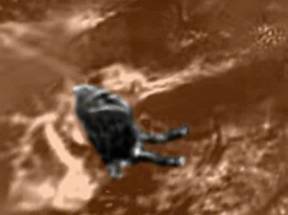
Well it appears that the final straw for NASA and the U.S. government was the Apollo 17 mission. In December of 1972 Apollo 17 astronauts Eugene Cernan and Harrison Schmitt spent about 75 hours on the lunar surface in the Taurus-Littrow Valley. During their moonwalk they discovered, among many other anomalous artifacts, the severed head of a robot (see photos below). As Cernan put it, even though he was seeing it with his own eyes, he still couldn’t quite bring himself to believe it. He dubbed the entire valley “one mysterious looking place”. Interestingly enough Cernan and Schmitt were the last astronauts to set foot on the Moon. There were no further Moon landings after Apollo 17. After this discovery isn’t it understandable why?
The list of expert testimonials is endless. I describe them in detail in my books. These are not just some geeks reading science fiction books with an over zealous imagination. They are veteran military and Air Force personnel along with astronauts, cosmonauts, scientists, intelligence officials from the CIA (Central Intelligence Agency), NSA (National Security Agency), DIA (Defense Intelligence Agency), and experienced NASA/ESA employees associated with interplanetary missions. And even NASA photo technicians who describe how it is a dedicated job to airbrush anomalous structures and UFOs from Mars and Moon photos before releasing them to the public. More and more highly reputable sources are now coming forward to help expose the truth.
There is hard visual evidence that there are artificial constructions and areas on the Moon’s surface that are being intentionally obscured from view due to image tampering by NASA and the U.S. Navy. Some of these structures have slipped through the censors net and are clearly visible on photographs taken by the Apollo missions and the Clementine satellite. It is only a matter of time now before the public at large finds out that the remnants of an ancient civilization, considerably more advanced than our own, have been discovered on the Moon.
The connection between lost ancient civilizations elsewhere in our Solar System and technology on Earth is this: if many of these structures are artificial by design then the intelligence that built them and which lived on or visited them could very well have been affiliated with Earth’s development in antiquity. Simply witness the uncanny resemblance of Martian structures and monuments to those here on Earth.
The distance between planets within our Solar System is very small compared to distances on the galactic scale. Once it is finally revealed that intelligent life did at one time exist elsewhere in our Solar System, humanoid or otherwise, then we must ask what happened to make these civilizations disappear almost without a trace? What catastrophic event devastated the entire Martian landscape? Why the need to cover-up, lie and purposely mislead the public for decades into believing that there was no life on Mars or within our Solar System? If the culture was advanced it is safe to assume that they had knowledge of or access to space travel. Therefore they could have possibly made a short interplanetary journey to Earth to re-colonize their species here.
As hard as it is to believe, humanoid life on Earth could actually have originated on Mars, or somewhere else in our Solar System. Our ancient history, or earliest beginnings, could be traced to a mass migration from within our own Solar System.
The mysterious “Face” on Mars, glass tube tunnels, forests, vegetation, monoliths, pyramids, scattered ancient artifacts, city complexes, massive towers, and crashed spacecraft are only a few of the hundreds of anomalies we have seen on the surface of Mars that cry out for further investigation. The same applies to unexplained structures on other planets in our Solar System. To dismiss their existence is totally irresponsible on behalf of NASA, the scientific community, and any government agency which has final approval for funding space exploration. Perhaps they are natural phenomena. But we won’t be certain until they are thoroughly and objectively investigated.
Unfortunately we don’t have a roving correspondent traveling throughout our Solar System who is able to report all the action to us. All we can rely on for now are the images (in many cases tampered) released from NASA and ESA, along with statements and testimonies from scientists, astronauts, and researchers associated with interplanetary missions and projects to render an opinion.
With all of the references in Hollywood films and science fiction to “little green men” from Mars the chilling truth may be that we are the real Martians!
Mainstream science would have us believe that Mars and other planets in our Solar System are completely void of life, past and present. However, nothing could be further from the truth. Based on the conclusive evidence I present these planets could very well hold the secrets to humanity’s origins.
Following are just some of the mysteries that are continually explored in my books.
In December of 1972 Apollo 17 astronauts Eugene Cernan and Harrison Schmitt spent about 75 hours on the Moon. During their lunar expedition they took the photo on the left. As incredible as it sounds it appears to be the severed head of a robot. As Cernan put it, even though he was seeing it with his own eyes, he still couldn’t quite bring himself to believe it. After overcoming his initial shock he realized that it couldn’t be a human skull. After all, it was lying in a debris field from an impact crater, which had tossed up all manner of junk and material from just below the valley floor. Something as fragile as a fossilized bone could not possibly survive such an impact. Furthermore, exposure to extreme solar and cosmic radiation would have long since reduced organic material to a fine powder. This object was unmistakably of mechanical origin. Color enhancements showed that the ‘head’ had a distinctive red stripe around the area where the upper lip should be, a feature that clearly appeared to be painted or anodized on the object. Composites of other frames showed that the ‘head’ had two eye-sockets, a forehead, brow ridges, a nose with nostrils, twin cheek bones and the upper half of the jaw. The lower jaw seemed to be missing. Cernan dubbed the area “one mysterious looking place”. Many of the rocks had highly unusual spectral qualities, reflecting light more like crystals or highly polished metallic boxes. The bottom photo is an enlargement of the severed head photographed in Shorty Crater by Cernan and Schmitt. To this day there hasn’t been a satisfactory explanation for this artifact from the scientific community – only personal attacks on the credentials or motives of those who offer it as evidence. Interestingly enough Cernan and Schmitt were the last astronauts to set foot on the Moon. There were no further Moon landings after Apollo 17. After this discovery isn’t it understandable why?
Our Moon has always been considered desolate and dead. The image on the left is taken directly from the 1994 Navy Clementine military official science data and shown above at standard official resolution demonstrating two massive left and right towering objects in the terrain. Although blur and smudge tampering applications have completely covered up these objects so that no specific details of their true structure can actually be seen, that doesn’t mean that there isn’t plenty here to interpret and learn from. We can tell that these are most likely massive, very tall vertical towering structures that dwarf by far anything else in the terrain around it. The objects wider base footprint tapering to a narrower form as it rises to a more slender top is typical of a very tall skyscraper building here on Earth. However, these on the Moon are much more massive and far taller than anything on Earth, no doubt enabled by the Moon’s much lower gravity. The middle image is another taken from the Clementine satellite. Note that the obscured angular image is still partially visible. Attempts to conceal the towers have not always been successful. As can be seen by the bottom photograph a massive tower is clearly visible on the NASA image enhanced using modern image processing technology.
This image from the Moon was taken by the Lunar Orbiter. It shows dozens of pointed spires in varying heights scattered across the surface. According to mainstream science our Moon is supposedly a lifeless body of dust, so what are these odd structures? Could these be trees, vegetation, natural geological formations or are they something else?
The image of this pyramid on the Moon was taken by the Hubble Space Telescope (HST) in December 2008. How can nature create such architectural perfection? What is the purpose of this structure? Is it related to similar pyramid constructions found on Earth and Mars?
Detailed analysis of photographs released by NASA has revealed evidence of what appear to be ruins and artificial constructions of various types on the Moon. Photographs taken from Apollo spacecraft in lunar orbit show rectangular and square shaped objects in Aristoteles Crater (photo on left). These structures are most definitely not of natural origin.
The Aristarchus Crater enigma is one of numerous so-called transient lunar phenomena (TLP). It is the brightest spot on the Moon as seen from Earth, which changes color, sometimes producing a red or bluish glow, and appears to emit gas. In 1958 Aristarchus Crater’s strange phenomena were observed by Russian astronomer Nikolai Kozyrev. They were also reported by the crew of Apollo 11. The nature of the crater phenomena has given credence to a theory that there could be some sort of a power device, possibly a fusion reactor, in the crater. On any photo published by NASA except for a Clementine image this object is shown as a bright white smudge with no definition. This structure appears to be supported by 5 or 6 arches. In the foreground is a road that leads to a brightly lit tunnel entrance.
Another lunar enigma is located at Copernicus Crater. The site appears to resemble an ancient strip mine. As there is no wind or free flowing water on the Moon erosion of the lunar terrain cannot be involved in producing a landscape which resembles a vast mining operation, with debris and rock piles and angled terraces. The topography of the Copernicus Crater, such as ridges and ramps, resembles that of strip mines seen on Earth.
This lunar image is another view from Copernicus Crater (NASA image PIA00094). Top photo shows a bright object resembling a tower seen highlighted off in the distance. The bottom photo is an enlargement and it shows that this object is hundreds, if not thousands, of feet in height and that it is clearly independently glowing.
How does NASA explain this? This white structure located in Copernicus Crater seems to have an evident artificial architecture. A horizontal half-circle shape (with a shadow on a part) terminating at the front with a curved plan (on the right) toward the left side. An overhanging ‘head’ is located at the center of the structure. On the left of the object there is a T-like building, with a spherical object above. Lunar location for this anomaly is Eastern Oceanus Procellarum, Mare Insularum.
There are many more unexplained lunar anomalies. For example, in the upper part of Rima Hadley (photo on left), not far from the place where Apollo 15 landed, a construction surrounded by a tall D-shaped wall was discovered. As is evident in this photo the structure has been deliberately obscured by airbrushing it – yet another case of blatant image tampering. What is hidden behind this smudging?
This image from the Lunar Orbiter shows a long streak or ribbon rising from the lunar surface. Could this be smoke rising from a campfire on the Moon? A smoke trail from a comet or asteroid would not end/start so abruptly in space. There would be a fading out effect present. This image shows a definite start/stop point where this streak ends or begins in space. Whatever this mysterious object is, it extends several miles into space and doesn’t have an Earthly equivalent.
Apollo 8 was the first manned spaceflight to leave Earth orbit; the first to be captured by and escape from the gravitational field of another celestial body; and the first voyage to return to planet Earth from another celestial body – Earth’s Moon. This December 1968 transcript (shown on left) references a conversation between Apollo 8 astronauts Commander Frank Borman (CDR), Command Module Pilot James Lovell (CMP), and Lunar Module Pilot William Anders (LMP). They describe bonfires spotted on the lunar surface during Day 4 of their mission. It is doubtful that astronauts, in the midst of a critical mission, would joke about something like this. The fact that the transcript was classified for more than 40 years hints that NASA certainly took this conversation very seriously.
Apollo 14 was the eighth manned mission in the Apollo program, and the third to land on the Moon. This Apollo 14 transcript (shown on left) describes mining activities observed on the Moon. Command Module Pilot Stuart Roosa (CMP) mentions this during Day 4 of their February 1971 mission. The astronauts believe they see someone mining on the Moon!
This bizarre lunar object (NASA image AS8-12-2209) was taken by Apollo 8. The bottom photo is a higher resolution version. What could it be – a giant spider, wiring harness, rope or lunar vegetation?
The two Apollo 8 lunar images on the left reveal a partially obscured structure located within the circular white ring. The lower image is an enlargement (NASA image AS08-13-2350). As you can see, especially in the magnified bottom image, there appear to be multiple height structures rising from the center area of the white ring and this structure evidence is blocking our view of the back white area of the ring. Note that the white ring appears to be of equal depth and reflective quality all the way around. This is typical of other such rings in this and other Apollo 8 images. This configuration would not be the case if this was what we would normally assume it to be which would be an impact crater depression. Normally an impact crater would contain a depression in the center of the impact area and to some degree have a raised rim on the periphery of the depression. Nor does this ring exhibit the shadow characteristics of an impact crater. In other words, we are not looking at an impact crater depression here. There are many of these rings around on the Moon in the Apollo 8 imaging, including more in this particular image, and all of them display a very dark heavily obscured mass like the one shown here, rising in height from the ring’s center area and that height blocks the view of the rear portion of the ring. The tall, dark object rising from the center cannot be a shadow. Shadows always have some transparency depth to them and as such will lighten a bit in a graphics program – but not in this situation. This is more indicative of an image tampering application. But what was someone trying to hide?
Apollo 10 astronauts took this photo (AS10-32-4822) of a one-mile long object called ‘Castle’, which casts a distinct shadow on the lunar surface. The object seems to consist of several cylindrical units and a large connecting unit.
This Apollo 10 image AS10-32-4822 shows a square crater on the lunar surface. Since when does Mother Nature carve out square craters? This crater area contains peculiar scored straight lines along the surface.
Luna 9 was an unmanned space probe of the Soviet Union’s Luna program. On February 3, 1966 Luna 9 became the first spacecraft to achieve a soft landing on any planetary body other than Earth and to transmit photographic data back to Earth from the Moon. Photo on the left is from the Luna 9 probe. It shows what appears to be a large craft or vehicle whose shape resembles that of an ocean going ship on Earth, coming to a point at one end and having an elevated section on top. A cable or tube appears to extend from the rear of the object toward the surface. Contact with Luna 9 was lost on February 6, 1966 just three days after landing.
Luna 13, also known as Lunik 13, was another Soviet probe in the Luna program. It accomplished a soft lunar landing on December 24, 1966 in the region of Oceanus Procellarum. This intriguing photo was taken before its onboard batteries went dead and transmission stopped on December 28, 1966. The image displays some type of circular disk with a thin axle running through the center and the object is partially buried in the soil. The unknown object was not part of the space probe. Bottom photo is an enlargement.
This Apollo 16 image is from King Crater on the Moon. Note the unusual structure highlighted inside the red frame. It appears to have a round top or roof.
This Lunar Orbiter image is from Zeeman Crater on the far side of the Moon. The strange structure shown here has some kind of rectangular opening and is obviously not a natural formation. It appears more like a subterranean entrance. The rectangular opening is 5 miles wide, and one mile high.
A multi-level lunar structure with openings is highlighted in the top photo on left. It is enlarged in the bottom two photos and is clearly not part of the natural landscape surrounding it, sitting all alone in the middle of a crater-filled surface.
This lunar anomaly (NASA image LO-5-125-H2A) reveals a tower and several other geometric structures. Is this a natural geological formation or something artificial?
This image is from the Lunar Orbiter. It shows an unusual structure that resembles a fortress sitting high atop a hill. The many sharp 90-degree shapes, walls, and steps make it highly unlikely that it is a natural geological formation.
This lunar anomaly shows some type of artificial structures. Could nature form such straight vertical walls with openings (doors or windows)? Some of these buildings also appear to have sloped walls and roofs. Anyone with a shred of common sense would admit that these structures cannot possibly be natural formations.
The series of five images on left are assorted lunar anomalies observed on the far side of the Moon. The strange object in the top image is some kind of structure with extensions – possibly a crashed spacecraft, or some type of mining device or equipment. Some of the protrusions appear to be attached to or penetrating the nearby lunar surface.
In the image on the left, the area at the bottom of the crater exhibits an organized pattern of perpendicular geometric shapes – an indication of artificial design. Nature is not capable of creating such geometrically precise features. There are clearly visible buildings and roadways. This image is very similar to any aerial photo taken on Earth of an urbanized area.
The photo on the left shows clear evidence of image tampering. The obvious smudging effect in this image is intended to hide a large object – possibly a building or artificial structure. The circular white rings extending from beneath the tall obscured object are likely part of the structure itself. There are several white rings in this image and the smudging is not limited to one single area but continues throughout the photo.
I have nicknamed the structure shown in the bottom two images as the “Roman Coliseum” because of its close resemblance to the famous historical landmark built in Rome, Italy. The bottom image is an enlargement and shows another series of buildings encircling the main structure. What could these separate compartments be – rooms for storage, living quarters, or something else?
As you can see from these images there is something definitely not right on the dark side of the Moon.
This lunar anomaly is tucked away neatly inside of a crater. The only official NASA description for this Apollo 11 image AS11-41-6156 is “view of area west of Crater 308 from lunar orbit”. The pink circled section is enlarged in the bottom photo and reveals a square structure (perhaps a walled compound) with at least two buildings or objects inside.
This Apollo 11 lunar image shows a series of buildings situated on either side of a roadway. Note the shadows cast by these buildings indicating (a) that they are definitely vertical structures and, (b) they are all very similar in design.
Top photo on left is official NASA image from the Moon. Bottom photo is the same photo except that the anomalous objects have been highlighted in color for clarity. Surely these objects cannot be natural rock formations.
Top photo is another official NASA image from the lunar surface. Bottom photo is the same photo except that the anomalous object has been highlighted in color for clarity. The unusual object looks almost spherical in shape and highly polished. It certainly is not part of the surrounding terrain and looks very much artificial in design.
The skeptics are hard pressed to call this object a “trick of light” or “just a typical rock”. In this Apollo 16 image you can see a round cylindrical object partially buried with a serrated but symmetrical edge. It resembles gear teeth on a shaft. In order for it to be buried so deeply in the soil it must be quite old. A piece of an Earth probe falling to the lunar surface would only have happened in the last 50 years and therefore clearly visible lying on top of the surface.
This Apollo 17 image AS17-137-20993HR shows a round object resembling a ring. Once again it is partially buried (probably one-third of the object depth) indicating that it has been there for a long time. It is very unlikely that nature can create perfectly round objects having a hole in the center.
This image is a screen capture from an Apollo 17 video taken December 12, 1972 from Tsiolkovskiy Crater on the Moon’s far side. It is a 4-minute clip with the astronaut giving a narration but no mention of the strange object located inside the crater is made. You can hear bits of a second conversation in the background, most likely talking on the other secured channel. Halfway through the video the background speaker makes some exclamation of surprise.
This image shows Reiner Crater on the Moon located just under the four lines of text. The white blurred object to the left of the crater is called Reiner Gamma. On the long tail section extending up from Reiner Gamma is a black square that has been shown for many years as a lunar anomaly on the 1994 Clementine space probe images.
This Clementine space probe image is from the lunar impact crater Tycho. The mysterious object in this photo looks to be symmetrical with two “nodes” and curved arms extending out from the central body. There appears to be some underlying support just to the left of the right-hand curved “arm”, but the central spherical “node” looks to be located above the ground, judging by the shadow beneath it. What process could account for this object forming naturally?
Other than the fact that this looks like a baseball just knocked out a bird, the markings and shape of the objects in the bottom image are intriguing. This photo is from Apollo 16. The bottom image is an enlargement of the unknown round object shown in the top photo highlighted by the lower black arrow.
This Apollo 16 image shows a rock that resembles a slab of concrete. Could such a flat piece of rock be formed naturally and positioned upright all alone? There are no other rocks similar to it located anywhere nearby.
Mercury is only 48 million miles from Earth, compared to Mars which is 35 million miles away – both virtual planetary neighbors. Several large mysterious objects were photographed by Messenger Orbiter during its Mercury flyby between January 2008-09. The top photo looks like a spacecraft sitting inside of a crater. The bottom photo shows more detail including the object’s aerodynamic shape, perhaps even the windshield and tailwing. Whatever this object is, it isn’t natural. Something this large just doesn’t take up residence in the middle of an impact crater. It obviously located itself sometime after the crater’s formation.
The two images on the left are from Mercury and were taken by the Messenger Orbiter. The top photo (image 65195) from March 29, 2011 looks to be a tall tower or geyser emerging from a circular walled building or crater. The outside walls of the structure appear a distinct bluish color compared to the other landscape features in the image, and the tower looks to cast a bluish shadow over some of the immediate surrounding terrain. This shadow could also be spillage from the spray. The bottom photo appears to be a round structure, perhaps the remains of a domed building at some point in time. Vertical walls can clearly be seen along with some type of base with a monolith standing upright on it. Note the shadows that are cast by the vertical walls.
Another Mercury anomaly is a complex structure with a giant spiral tower and bunker (top photo). The spiral tower is a complete mystery and must be miles high. It is not smoke rising from a volcano or anything on the surface because the structure remains rigid and intact and never changes its appearance or form over several minutes of photography. A billowing of smoke would change and continually move. The lower two photos show the symmetrical walls on the entrance. They appear as straight edges much like walls and a roof. These cannot be natural formations.
On October 6, 2008 Messenger Orbiter provided these strange photos in its 2.4 mile flyby of Mercury. Middle photo shows two large objects inside of a 61-mile diameter crater – one almost white in color and the other (bottom right corner of image) is a grayish color. The bottom photo shows the grayish object enlarged. It looks very much like a spacecraft of some kind.
This photo is from the Mariner 10 space probe in 1974 during its Mercury flyby. It shows a massive object inside of a crater and the shadows that are cast by the object. What is especially noteworthy is the symmetry and shape of the shadows. They appear very sharp and pointed, almost pyramidal in form. This is very rare in nature. This object could very well be some type of building.
This photo is from NASA’s Magellan space probe taken of the planet Venus. It shows what appears to be a multi-story structure. The central building has at least five levels – six if you count the small area in front. There are buildings with right angles everywhere – something that just doesn’t occur in nature. There could be a stairway leading up the various levels of the main building and a protective wall running along the right side of the area, along a ridge. The upper left area is completely artificial consisting of pyramids, domes and buildings. The extreme foreground also holds a large symmetrical building which is partially obscured. Those aren’t really shadows on the ground. Due to thick cloud cover, sunlight doesn’t reach the ground on Venus so it’s unknown what the source of this dark contrast is.
This photo is NASA/JPL (Jet Propulsion Laboratory) image PIA00102 from Eistla Regio on Venus. What is the possible explanation for the two totally flat rectangular surfaces on an otherwise hilly and mountainous terrain? What is hidden behind the intentional airbrushing/smudging in this picture? Is this another example of official NASA image tampering?
Norman Bergrun was an engineer and photographic expert who worked for NASA almost 30 years. He and a group of others were responsible for forming what they called the Voyager program. In the late 1970s astronomers and NASA had discovered some anomalous things happening within the rings of Saturn. So they put together the Voyager program and sent Voyager One to the rings of Saturn in 1980. Pictures from Voyager One were sent back to NASA and scientists were astounded by what they saw. In 1986 Bergrun decided to blow the whistle and publish these photographs. He wrote a book titled Ring-makers of Saturn. He couldn’t get his book published in the United States. American publishers wouldn’t touch him, or even talk to him. He eventually had to go to Aberdeen, Scotland to get his book published. The top photo on left shows a close-up of a self-luminous orange dot, obviously artificial in construction, and under intelligent control because it moves around inside the rings of Saturn independently. It isn’t known what this object is, but it is larger than our Moon. The bottom photo on left is from inside of the ‘A’ Ring of Saturn and the statistics on this anomaly will blow your mind. The object shown in this image is artificially constructed, according to Bergrun. NASA called it an electromagnetic vehicle. It is 2,000 miles long and over 450 miles in diameter! And here we see another self-luminous artificial object (large dot near bottom of same photo), about the size of our Moon that apparently moves about independently, wherever it chooses, under intelligent control. Consider for a moment the civilization and the technology that is capable of not only building something of this magnitude, but also of putting it into space and maneuvering it. What is the the purpose of these enormous objects?
Enceladus is one of the moons of Saturn. It is covered mostly in fresh, clean ice and reflects almost all of the sunlight that strikes it. In fact it is the most reflective object in our entire Solar System. This massive structure was photographed by the Cassini space probe during its flyby of Enceladus on October 31, 2008. It resembles a large building or perhaps a spaceship.
Iapetus is the third largest moon of Saturn and is best known for a prominent equatorial ridge (hump) that stretches halfway around the moon. Top photo on left is original NASA/ESA image P1A06170 from Cassini space probe taken of Iapetus North Pole area. The second image down is the same photo except that the anomalous structures have been highlighted in color for clarity. Note the large number of buildings and geometric structures shown in blue. Most unusual, however, is the enormous statue or monument shown inside of yellow border. Third image down is an enlargement of the statue in original grayscale. Bottom image is the same photo except that the monument has been highlighted in color for clarity. Whatever this structure is, it is incredibly large and is undoubtedly artificial in design.
Titan, the largest moon of Saturn, is also the only moon in our Solar System to have a fully developed, planet-like atmosphere. These images are from Saturn taken during a Cassini flyby in 2005. They reveal many more unusual large objects. These photos were taken from an altitude of 11 miles, therefore these objects must be huge. Top photo appears to be a spaceship or some kind of large vehicle. The middle photo shows another vehicle or structure just below it. The bottom photo reveals yet another unknown object. Titan is Saturn’s largest moon. It is larger than the planet Mercury. A
nd NASA still maintains that Saturn’s 62 moons are uninhabitable.
Tempest Milky Way won Best Overall and Audience Choice at the 2011 Chronos Film Festival. chronosfilmfestival.com
One of the challenges in making this video, was trying to get good storm with stars shots. The opportunity doesn’t come along very often, the storm has to be moving the right speed and the lightning can overexpose the long exposures. I had several opportunities this summer to get storm and star shots. In one instance, within a minute of picking up the camera and dolly, 70mph winds hit. One storm was perfect, it came straight towards the setup, then died right before it reached it.
At the 1:57 mark a Whitetail buck came in to check out the setup. It was caught on 20 frames, and was there for about 10 minutes. It was only 50 yards from the camera, dolly and light.
At the 3:24 mark, a meteor reflects on the water of the small lake, see still below in Photos. There are also quite a few other meteors in the timelapse.
This was all shot in central South Dakota from June-August.
Canon 5D Mark II for a few shots, Canon 60D and T2i
Canon 16-35, Tokina 11-16
Shot in RAW format. Manual mode, Exposure was 30 seconds on most Milky Way shots, 20-25 on some of the storm shots, ISO 1600 or 3200 F2.8.
Discover the cosmos! Each day a different image or photograph of our fascinating universe is featured, along with a brief explanation written by a professional astronomer.
2011 November 8
Jumping Sundogs Over Thunderclouds Image Credit: abrigatti, YouTube
Explanation: What’s happening above those clouds? In the past few years, videos have appeared on the web detailing an unusual but little known phenomenon: rapid light changes over clouds. Upon inspection and contemplation, a leading hypothesis for its cause has now emerged. In sum, this hypothesis holds that a lightning discharge in a thundercloud can temporarily change the electric field above the cloud where charged ice crystals were reflecting sunlight. The new electric field quickly re-orients the geometric crystals to a new orientation that reflects sunlight differently. In other words, a lightning discharge can cause a sundog to jump. Soon, the old electric field may be restored, causing the ice crystals to return to their original orientation. To help this curious phenomenon become better studied, sky enthusiasts with similar jumping or dancing sundog videos are encouraged to share them.
1. Aurora Borealis Pass over the United States at Night
2. Aurora Borealis and eastern United States at Night
3. Aurora Australis from Madagascar to southwest of Australia
4. Aurora Australis south of Australia (more…)
The powerful stellar winds of this nebula, located in the constellation of Sagittarius, generate waves 100 billion kilometers high. The waves are caused by supersonic shocks, formed when the local gas is compressed and heated in front of the rapidly expanding lobes. The atoms caught in the shock emit the spectacular radiation seen here. (more…)
Fastwalkers, reveals the truth about UFOs and Extraterrestrials that has been suppressed and hidden for centuries.
“Fastwalker” is a code word created by NORAD (North American Air Defense Command) to classify (UFOs) unidentified flying objects which approach our Earth from space and enter our atmosphere. It has been reported that from its subterranean facility deep inside Cheyenne Mountain, Colorado, USA, the Air Force NORAD facility tracks a rough average of 500 of these “Fastwalkers” each year.
For the first time, Fastwalkers in a feature length documentary form discloses information you were never meant to know. Amazing Fastwalker UFO photos and Fastwalker footage gathered from around the world that you were never meant to see. Never before has there been such a wealth of information presented by such unbiased experts who focus on providing a “World View” of what is really happening on planet Earth, rather than what “we are told is happening.”
Thomas Gold, age 84, died June 22, 2004. Austrian born Thomas Gold famous over the years for a variety of bold theories that flout conventional wisdom and reported in his 1998 book, “The Deep Hot Biosphere,” the idea challenges the accepted wisdom of how oil and natural gas are formed and, along the way, proposes a new theory of the beginnings of life on Earth and potentially on other planets. He had a long term battle with heart failure. Gold’s theory of the deep hot biosphere holds important ramifications for the possibility of life on other planets, including seemingly inhospitable planets within our own solar system. He was Professor Emeritus of Astronomy at Cornell University and was the founder (and for 20 years director) of Cornell Center for Radiophysics and Space Research. He was also involved in air accident investigations.

 Andrew D. Basiago is a Vancouver, Washington lawyer of apparently high repute. As a side project, he runs Project Pegasus, a group dedicated to lobbying the government to release the secrets of teleportation and time travel for the benefit of mankind. Basiago also refers to himself as “the discoverer of life on Mars.” He claims to be one of two “planetary-level whistleblowers” predicted by Web bot. He’s also considered an Indigo Child.Andrew D. Basiago is a Vancouver, Washington lawyer of apparently high repute. As a side project, he runs Project Pegasus, a group dedicated to lobbying the government to release the secrets of teleportation and time travel for the benefit of mankind. Basiago also refers to himself as “the discoverer of life on Mars.” He claims to be one of two “planetary-level whistleblowers” predicted by Web bot. He’s also considered an Indigo Child.Andrew D. Basiago is a Vancouver, Washington lawyer of apparently high repute. As a side project, he runs Project Pegasus, a group dedicated to lobbying the government to release the secrets of teleportation and time travel for the benefit of mankind. Basiago also refers to himself as “the discoverer of life on Mars.” He claims to be one of two “planetary-level whistleblowers” predicted by Web bot. He’s also considered an Indigo Child.