
Nov 12, 2012 | Globalist Corporations

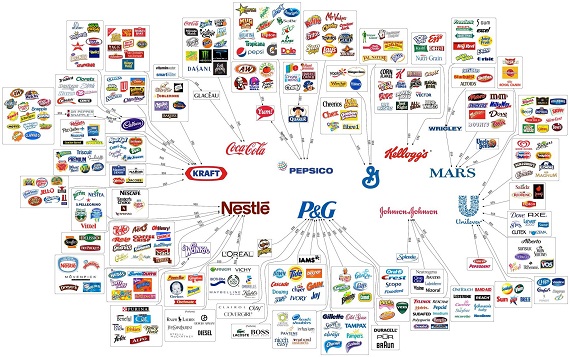
BASF, Syngenta, DuPont, Bayer, Cargill, Kellogs, Coca-Cola, Pepsico, Post, Unielver, Monsanto, TreeTop, Clorox, OceanSpray, Goya, Solae, Bunge, Campbells, Wrigleys, Mars, LandOlakes, SaraLee, Dean, Welch’s, Hormel, Godiva, Hillshire, Dole, General Mills, Sunny Delight, Del Monte, Heinz

Jun 5, 2012 | Activism, WAR: By Design
 “I’ve seen a ton on the facebooks about “thanking veterans for their service.” As a veteran let me just be very straightforward and honest with you. We didn’t “serve our country”; we don’t actually serve our brothers/sisters or our neighbors. We serve the interests of Capital. We never risked our lives or spent months on deployment away from our family and friends so they can have this abstract concept called “freedom”. We served big oil; big coal; Coca-Cola; Kellogg, Brown, and Root and all the other big Capital interests who don’t know a fucking thing about sacrifice. These people will never have to deal with the loss of a loved one or the physical and/or psychological scars that those who “serve”, and their families, have to deal with for the rest of their lives. The most patriotic thing someone can do is to tell truth to power and dedicate yourself to building power to overthrow these sociopathic assholes. I served with some of the most real and genuine people I’ve ever met. You’ll never see solidarity like the kind of solidarity you experience when your life depends on the person next to you. But most of us didn’t join for that; we joined because we were fucking poor and didn’t have many other options.” -Anonymous
May 9, 2012 | Globalist Corporations

Wholesale and distribution
A vast global transportation network is required by the food industry in order to connect its numerous parts. These include suppliers, manufacturers, warehousing, retailers and the end consumers. There are also companies that add vitamins, minerals, and other necessary requirements during processing to make up for those lost during preparation. Wholesale markets for fresh food products have tended to decline in importance in OECD countries as well as in Latin America and some Asian countries as a result of the growth of supermarkets, which procure directly from farmers or through preferred suppliers, rather than going through markets.
The constant and uninterrupted flow of product from distribution centers to store locations is a critical link in food industry operations. Distribution centers run more efficiently, throughput can be increased, costs can be lowered, and manpower better utilized if the proper steps are taken when setting up a material handling system in a warehouse. [1]
Retail
With populations around the world concentrating in urban areas,[5] food buying is increasingly removed from all aspects of food production. This is a relatively recent development, having taken place mainly over the last 50 years. The supermarket is the defining retail element of the food industry, where tens of thousands of products are gathered in one location, in continuous, year-round supply. Restaurants, Cafes, Bakeries and Mobile trucks are also ways consumers can purchase food.
Food preparation is another area where change in recent decades has been dramatic. Today, two food industry sectors are in apparent competition for the retail food dollar. The grocery industry sells fresh and largely raw products for consumers to use as ingredients in home cooking. The food service industry by contrast offers prepared food, either as finished products, or as partially prepared components for final “assembly”.
Food industry technologies
Sophisticated technologies define modern food production. They include many areas. Agricultural machinery, originally led by the tractor, has practically eliminated human labor in many areas of production. Biotechnology is driving much change, in areas as diverse as agrochemicals, plant breeding and food processing. Many other areas of technology are also involved, to the point where it is hard to find an area that does not have a direct impact on the food industry. Computer technology is also a central force, with computer networks and specialized software providing the support infrastructure to allow global movement of the myriad components involved.
Marketing
As consumers grow increasingly removed from food production, the role of product creation, advertising, and publicity become the primary vehicles for information about food. With processed food as the dominant category, marketers have almost infinite possibilities in product creation.
Media & Marketing
A key tool for FMCG marketing managers targeting the supermarket industry includes national titles like The Grocer in the U.K., Checkout in Ireland, Progressive Grocer in the U.S., and Private Label Europe for the entire of the European Union.it
http://en.wikipedia.org/wiki/Food_industry
http://www.foodprocessing.com/top100/index.html


