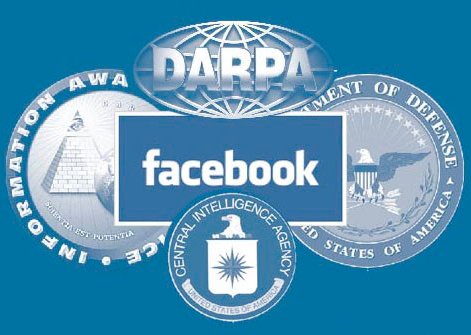
These are tense times for the friendly folks at Facebook. Mark Zuckerberg, CEO of the social media dictatorship, has steered his multi-billion dollar corporation into the stormy seas of multiple civil courtroom battles over violating user rights.
There is no question that Facebook is guilty of numerous civil rights violations. The Cambridge Analytics scandal of 2018 caused Facebook shares (FB) to plummet. Subsequent scandals have created a continuous decline in the company’s shareholder value.
But that doesn’t seem to matter to a company which seems to be fueled by higher sources, perhaps related to the federal surveillance state.
CORRECT, they don’t care. Millie Weaver – Shadowgate Documentary Exposes This as an intentional ‘Ploy’ to restructure data sharing
In a video dated March 9, 2019, PeterOfEngland spoke out in an earnest warning about “the criminal behavior of Facebook, its data collection network, and its working with the United States government – the Pentagon initially – to begin what’s called an ontological data collection point on what’s called ‘designated targets.’”
We the People of the World are the designated targets who were selected by the U.S. government, the CIA, and the Pentagon, according to Peter.
Was it a mere coincidence that on the very same day that Facebook launched – February 4, 2004 – a Pentagon civilian spy project called LifeLog shut down?
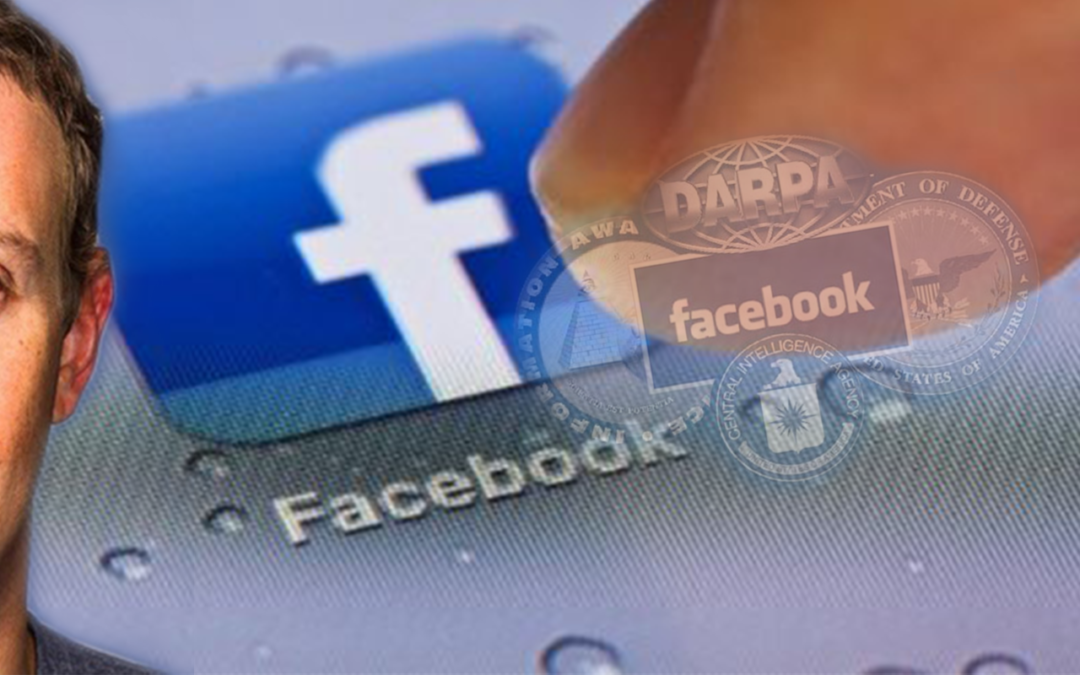
The U.S. Defense Advanced Research Projects Agency (DARPA) Pentagon-sponsored Project LifeLog was set up to collect data on all individuals. DARPA functions as the Defense Department’s research branch and is responsible for spending oodles of legally unaccountable taxpayer dollars to conduct Black Operations, secret from public scrutiny.
The data our government was interested in was – and still is – “every conceivable and imaginable platform possible,” said Peter.
LifeLog is “an ontology-based (sub)system that captures, stores, and makes accessible the flow of one person’s experience in and interactions with the world in order to support a broad spectrum of associates/assistants and other system capabilities.”
LifeLog was designed to be an all-encompassing personal data vacuuming system “aimed to gather in a single place just about everything an individual says, sees or does: the phone calls made, the TV shows watched, the magazines read, the plane tickets bought, the e-mail sent and received.”
Why bother with this massive collection of individual citizen’s personal, professional, and social activities, you ask? “Out of this seemingly endless ocean of information, computer scientists would plot distinctive routes in the data, mapping relationships, memories, events and experiences.”
Back in 2004, civil rights activists immediately opposed the surveillance scheme, raising the red flag that LifeLog could be turned against Us the People and “become the ultimate tool for profiling potential enemies of the state.”
The U.S. government responded by shutting down Project LifeLog. Or did they? In February 2004, “Researchers close to the project say they’re not sure why it was dropped late last month. Darpa hasn’t provided an explanation for LifeLog’s quiet cancellation. ‘A change in priorities’ is the only rationale agency spokeswoman Jan Walker gave to Wired News.”
Observers such as PeterOfEngland wonder if LifeLog was replaced by Facebook, which, oddly enough, launched on February 4, 2004 – the very same day DARPA announced the termination of their public surveillance Project LifeLog.
The thinking here is that the determined masterminds at DARPA realized that people might not flock to divulge their personal information to a cold, hard-hearted government agency. But Facebook was warm and inviting: “Sign up for a free account and make Friends” – thumbs up!
The public did flock to Facebook. We were told, in 2004, that the social media platform was the brainchild of a couple of Harvard students (Mark Zuckerberg and Eduardo Saverin) who wanted a face-pic-based school directory to keep in touch with classmates and other associates. The “social networking service launched as FaceMash in July 2003, but later changing to TheFacebook on February 4, 2004.”
Just look at Facebook now! Some people post every intimate detail of their daily lives as well as vital information: name, address, phone, email, web address, family names, veterinarian’s name, etc.
Harvard students made up the initial test base, followed by “other colleges in the Boston area, the Ivy League, and gradually most universities in the United States and Canada, corporations, and by September 2006, to everyone with a valid email address along with an age requirement of being 13 and older.”
Facebook’s growth and social acceptance were nothing short of phenomenal. This makes perfect sense if Facebook is actually a government-sponsored psyop (psychic operation or mind control). It appears, more and more, that this is the case, as Facebook “Community Standards” are suppressing free speech about anything anti-establishmentarian.
Not surprisingly, other world governments and the NSA also got on board with the covert agenda to ease user-friendly Facebook into the role of Global Personal Information Gatherer.
But Facebook got sloppy about user privacy and security concerns and is now staring down the barrel of lawsuits brought by large numbers of angry users whose personal information was abused by the social media spy site.
Perhaps foreshadowing the fate of Facebook, on February 1, 2019, a federal judge in San Francisco ruled that Facebook can be sued for allowing users’ private data to fall into the hands of third-parties such as Cambridge Analytics.
U.S. District Judge Vince Chhabria ruled briefly that “The injury is the disclosure of private information.”
We couldn’t agree more. But will this flagrant violation of civil rights shutter Facebook for good? Only time will tell.
There is one way to shut down Facebook for good. What if they have a social media platform and nobody came?
Definitely worth a listen! We all know that Facebook had some shady beginnings.. stolen code.. angel investment via outed CIA ‘front company’ In-Q-Tel, and it goes on.. What if Zuck really was just the chosen puppet leader of what would ultimately be the worlds largest ‘voluntary citizen dossier’? Give it a listen and decide for yourself. These statements certainly seem to ring true with plenty of background info to give reasonable merit.

Highlights:
Mark’s real name is not even Zuckerberg.
Mark was chosen ahead of time and ‘placed’ at Harvard to fit the story.
Mark did not create the Facebook brand name nor did he write any code.
Mark has ‘handlers’ that dictated (and still do) his every move.
Mark’s lack of any moral compass made him the perfect figure-head.
Mark is the just the face of a much bigger agenda at work.
Interesting ‘Top Comment’
” So, Zuckerberg’s Harvard professor, James P. Chandler, is one in the same patent attorney who stole Michael McKibben’s Leader Technology ideas that he was supposed to help get a patent and instead STOLE the information! WOW, all these deep stater’s are totally intertwined, like a huge cancer. How do you kill a cancer? STARVE IT! “
The history of pilotless aircraft in the United States military stretches back to the days of the Wright brothers. It’s difficult to describe any good that emerges from warfare, but many modern technological advancements — computers, zippers, microwaves — can be traced back to conflicts of a bygone era. Today unmanned aerial vehicles are being used by a whole slew of people, the U.S. Department of Defense being just one primary example. While drones have been used routinely to support or undertake lethal force abroad for over a decade, their domestic applications are just now being given more serious consideration. The capabilities and contributions of UAVs have, up until recently, been propelled more or less exclusively by the defense community. UAV technology may currently be associated with what some would consider secretive and nefarious militarism, but in examining the range of practical, commercial applications we can only hope that drone technology will begin to move away from the dark side.
President Obama’s approach to counterterrorism has been marked by his embrace of drone technology to target terrorist operatives. But they’ve come a long way since their first strike operations: drone backpacks are now used by soldiers, and Predator drones come equipped with even more powerful warheads. U.S. DOD spending on drones increased from $284M in 2000 to $3.3B in October of 2012. Small surveillance drones, called Cicadas, are now being released from balloons to collect data on the ground in Iraq. In short, the military has a seemingly infinite range of uses for unmanned aerial vehicles, large and small. And the scope of drone missions only continues to expand, as the technology necessary to program and operate them becomes at once more commonplace and versatile. Over the next decade, the Pentagon anticipates that the number of “multirole” UAVs (those capable of both spying and striking) will nearly quadruple.
As of October 2013, the Federal Aviation Administration had issued 285 clearance certificates for drones inside the United States. Under pressure from the Unmanned Systems Caucus (or drone lobby) the Department of Homeland Security has accepted eight Predator drones for use along the U.S.-Canada and U.S.-Mexico borders. The FAA is set to further open skies to commercial drones by 2015, allowing civilians to finally explore and expand upon the uses of UAV technology. But even with the law by their side, can civilian companies ever hope to utilize drones to the extent in which they are employed by the military? Many recognize the civil potential of flying robots, but recognize that with certain valuable contributions also comes the possibility of tighter law enforcement and increased government surveillance.
The dualistic nature of drones is being explored by hobbyists and venture capitalists alike. Mark Zuckerberg of Facebook is even developing a program that will employ drones and satellite internet to deliver internet to disenfranchised communities throughout the world. While this probably speaks to Zuckerberg’s opportunism (and his desire to compete in the marketplace against Google’s Loon Project and HughesNet Internet) that isn’t to say that people in underserved communities don’t stand to benefit. The U.S. government already uses drones to protect endangered wildlife species, like the sandhill crane, and researchers in Indonesia and Malaysia are also using unmanned aerial devices to monitor the activity of similarly threatened orangutan populations. UAV systems are emerging as key tools in agricultural innovation and the monitoring of natural resources. Search and rescue missions, 3-D mapping and surveying projects, and hurricane tracking projects are also being carried out by UAVs. With unmanned aircraft, it seems the sky’s the limit for civil and commercial usage.
But the business of drones still comes with plenty of risks. The American Civil Liberties Union has warned of a “dystopian future” in which “mass, suspicionless searches of the general population” are the norm. Given the history of drones as advanced tools of the government and military, this doesn’t seem like an empty threat. And for now, the law still stands in the way of any real development on the commercial end. Despite the fact that many ideas for drones, from the delivery of Amazon parcels to Domino’s pizzas, have been suggested, the military still holds the key to their innovation from an American standpoint. Their function as a militaristic tool remains at the forefront of their continued growth, resulting in large spending increases for advanced cameras, sensors, and systems with attack capabilities. But the integration of drone technology into domestic airspace by law enforcement — and later, by corporations — seems inevitable. As technological improvements continue to catapult the UAV industry into the future, the true beneficiaries of these developments remain to be seen.
The short but profitable tale of how 483,000 private individual have “top secret” access to the nation’s most non-public information begins in 2001. “After 9/11, intelligence budgets were increased, new people needed to be hired, it was a lot easier to go to the private sector and get people off the shelf,” and sure enough firms like Booz Allen Hamilton – still two-thirds owned by the deeply-tied-to-international-governments investment firm The Carlyle Group – took full advantage of Congress’ desire to shrink federal agencies and their budgets by enabling outside consultants(already primed with their $4,000 cost ‘security clearances’) to fulfill the needs of an ever-more-encroaching-on-privacy administration.
Booz Allen (and other security consultant providing firms) trade publicly with a cloak of admitted opacity due to the secrecy of their government contracts (“you may not have important information concerning our business, which will limit your insight into a substantial portion of our business”) but the actions of Diane Feinstein who promptly denounced “treasonous” Edward Snowden, “have muddied the waters,” for the stunning 1.1 million (or 21% of the total) private consultants with access to “confidential and secret” government information.
Perhaps the situation of gross government over-spend and under-oversight is summed up best, “it’s very difficult to know what contractors are doing and what they are billing for the work — or even whether they should be performing the work at all.”
First, Diane Feinstein’s take on it all…
“I don’t look at this as being a whistleblower. I think it’s an act of treason,” the chairwoman of the Senate Intelligence Committee told reporters. The California lawmaker went on to say that Snowden had violated his oath to defend the Constitution. “He violated the oath, he violated the law. It’s treason.”
The reliance on contractors for intelligence work ballooned after the 9/11 attacks. The government scrambled to improve and expand its ability to monitor the communication and movement of people who might threaten another attack.
“After 9/11, intelligence budgets were increased, new people needed to be hired,” Augustyn said. “It was a lot easier to go to the private sector and get people off the shelf.”
The reliance on the private sector has grown since then, in part because of Congress’ efforts to limit the size of federal agencies and shrink the budget.
Which has led to what appears to be major problems.
But critics say reliance on contractors hasn’t reduced the amount the government spends on defense, intelligence or other programs.
Rather, they say it’s just shifted work to private employers and reduced transparency. It becomes harder to track the work of those employees and determine whether they should all have access to government secrets.
“It’s very difficult to know what contractors are doing and what they are billing for the work — or even whether they should be performing the work at all,”
… And to the current PRISMgate whistleblowing situation:
Of the 4.9 million people with clearance to access “confidential and secret” government information, 1.1 million, or 21 percent, work for outside contractors, according to a report from Clapper’s office.
Of the 1.4 million who have the higher “top secret” access, 483,000, or 34 percent, work for contractors.
…
Because clearances can take months or even years to acquire, government contractors often recruit workers who already have them.
Why not – it’s lucrative!!
Snowden says he accessed and downloaded the last of the documents that detailed the NSA surveillance program while working in an NSA office in Hawaii for Booz Allen, where he says he was earning $200,000 a year.
Analysts caution that any of the 1.4 million people with access to the nation’s top secrets could have leaked information about the program – whether they worked for a contractor or the government.
For individuals and firms alike.
Booz Allen has long navigated those waters well.
The firm was founded in 1914 and began serving the U.S. government in 1940, helping the Navy prepare for World War II. In 2008, it spun off the part of the firm that worked with private companies and abroad. That firm, called Booz & Co., is held privately.
Booz Allen was then acquired by the Carlyle Group, an investment firm with its own deep ties to the government. In November 2010, Booz Allen went public. The Carlyle Group still owns two-thirds of the company’s shares.
Or, a full-majority stake.
Curiously once public, The Booz Allens of the world still operate like a psuedo-private company, with extensive confidential cloaks preventing the full disclosure of financial data. But don’t worry – we should just trust them. Via Bloomberg’s Jonathan Weil.
Psst, here’s a stock tip for you. There’s a company near Washington with strong ties to the U.S. intelligence community that has been around for almost a century and has secret ways of making money — so secret that the company can’t tell you what they are. Investors who buy just need to have faith.
To skeptics, this might seem like a pitch for an investment scam. But as anyone who has been paying attention to the news might have guessed, the company is Booz Allen Hamilton Holding Corp.
…
“Because we are limited in our ability to provide information about these contracts and services,” the company said in its latest annual report, “you may not have important information concerning our business, which will limit your insight into a substantial portion of our business, and therefore may be less able to fully evaluate the risks related to that portion of our business.”
This seems like it would be a dream arrangement for some corporations: Not only is Booz Allen allowed to keep investors uninformed, it’s required to. I suppose we should give the company credit for being transparent about how opaque it is.
And while the media and popular attention is currently focused on who, if anyone else, may be the next Snowden struck by a sudden pang of conscience, perhaps a better question is what PE behemoth Carlyle, with a gargantuan $170 billion in AUM, knows, and why it rushed to purchase Booz Allen in the months after the Bear Stearns collapse, just when everyone else was batting down the hatches ahead of the biggest financial crash in modern history.
Carlyle Group, the private-equity firm run by David Rubenstein, agreed to acquire Booz Allen Hamilton Inc.’s U.S. government-consulting business for $2.54 billion, its biggest buyout since the credit markets collapsed in July.
The purchase would be Carlyle’s biggest since it agreed to buy nursing-home operator Manor Care Inc. last July for $6.3 billion. Deal-making may be rebounding from a 68 percent decline in the first quarter as investment banks begin writing new commitments for private-equity transactions. Buyouts ground to a halt last year because of a global credit freeze triggered by record U.S. subprime-mortgage defaults.
The Booz Allen government-consulting unit has more than 18,000 employees and annual sales of more than $2.7 billion. Its clients include branches of the U.S. military, the Department of Homeland Security and the World Bank.
Carlyle, based in Washington, manages $81.1 billion in assets [ZH: that was 5 years ago – the firm now boasts $170 billion in AUM]. Rubenstein founded the firm in 1987 with William Conway and Daniel D’Aniello. The trio initially focused on deals tied to government and defense.
Carlyle and closely held Booz Allen have attracted high-level officials from the government. Carlyle’s senior advisers have included former President George H.W. Bush, former British Prime Minister John Major, and Arthur Levitt, the ex-chairman of the U.S. Securities and Exchange Commission.
R. James Woolsey, who led the U.S. Central Intelligence Agency from 1993 to 1995, is a Booz Allen executive. Mike McConnell, the U.S. director of national intelligence, is a former senior vice president with the company.
…
Carlyle last year sold a minority interest in itself to Mubadala Development Co., an investment fund affiliated with the government of Abu Dhabi, capital of the United Arab Emirates.
And in addition to the UAE, who can possibly forget Carlyle’s Saudi connection. From the WSJ circa 2001:
If the U.S. boosts defense spending in its quest to stop Osama bin Laden’s alleged terrorist activities, there may be one unexpected beneficiary: Mr. bin Laden’s family.
Among its far-flung business interests, the well-heeled Saudi Arabian clan — which says it is estranged from Osama — is an investor in a fund established by Carlyle Group, a well-connected Washington merchant bank specializing in buyouts of defense and aerospace companies.
Through this investment and its ties to Saudi royalty, the bin Laden family has become acquainted with some of the biggest names in the Republican Party. In recent years, former President Bush, ex-Secretary of State James Baker and ex-Secretary of Defense Frank Carlucci have made the pilgrimage to the bin Laden family’s headquarters in Jeddah, Saudi Arabia. Mr. Bush makes speeches on behalf of Carlyle Group and is senior adviser to its Asian Partners fund, while Mr. Baker is its senior counselor. Mr. Carlucci is the group’s chairman.
Osama is one of more than 50 children of Mohammed bin Laden, who built the family’s $5 billion business, Saudi Binladin Group, largely with construction contracts from the Saudi government. Osama worked briefly in the business and is believed to have inherited as much as $50 million from his father in cash and stock, although he doesn’t have access to the shares, a family spokesman says. Because his Saudi citizenship was revoked in 1994, Mr. bin Laden is ineligible to own assets in the kingdom, the spokesman added.
…
People familiar with the family’s finances say the bin Ladens do much of their banking with National Commercial Bank in Saudi Arabia and with the London branch of Deutsche Bank AG. They also use Citigroup Inc. and ABN Amro, the people said.
“If there were ever any company closely connected to the U.S. and its presence in Saudi Arabia, it’s the Saudi Binladin Group,” says Charles Freeman, president of the Middle East Policy Council, a Washington nonprofit concern that receives tens of thousands of dollars a year from the bin Laden family. “They’re the establishment that Osama’s trying to overthrow.”
…
A Carlyle executive said the bin Laden family committed $2 million through a London investment arm in 1995 in Carlyle Partners II Fund, which raised $1.3 billion overall. The fund has purchased several aerospace companies among 29 deals. So far, the family has received $1.3 million back in completed investments and should ultimately realize a 40% annualized rate of return, the Carlyle executive said. But a foreign financier with ties to the bin Laden family says the family’s overall investment with Carlyle is considerably larger. He called the $2 million merely an initial contribution. “It’s like plowing a field,” this person said. “You seed it once. You plow it, and then you reseed it again.”
The Carlyle executive added that he would think twice before accepting any future investments by the bin Ladens. “The situation’s changed now,” he said. “I don’t want to spend my life talking to reporters.”
We can clearly see why. We can also clearly see why nobody has mentioned Carlyle so far into the Booz Allen fiasco.
A U.S. inquiry into bin Laden family business dealings could brush against some big names associated with the U.S. government. Former President Bush said through his chief of staff, Jean Becker, that he recalled only one meeting with the bin Laden family, which took place in November1998. Ms. Becker confirmed that there was a second meeting in January 2000, after being read the ex-president’s subsequent thank-you note. “President Bush does not have a relationship with the bin Laden family,” says Ms. Becker. “He’s met them twice.”
Mr. Baker visited the bin Laden family in both 1998 and 1999, according to people close to the family. In the second trip, he traveled on a family plane. Mr. Baker declined comment, as did Mr. Carlucci, a past chairman of Nortel Networks Corp., which has partnered with Saudi Binladin Group on telecommunications ventures.
As one can imagine the rabbit hole just gets deeper and deeper the more one digs. For now, we will let readers do their own diligence. We promise the results are fascinating.
Going back to the topic at hand, we will however ask just how much and what kind of confidential, classified, and or Top Secret information is shared “behind Chinese walls” between a Carlyle still majority-owned company and the private equity behemoth’s employees and advisors, among which are some of the most prominent political and business luminaries currently alive. The following is a list of both current and former employees and advisors. We have used Wiki but anyone wishing to comb through the firm’s full blown roster of over 1,000 employees and advisors, is welcome to do so at the firm’s website.
Olivier Sarkozy (half-brother of Nicolas Sarkozy, former President of France) – co-head and managing director of its recently launched global financial services division, since March 2008.
Luis Téllez Kuenzler, Mexican economist, former Secretary of Communications and Transportation under the Felipe Calderón administration and former Secretary of Energy under the Zedillo administration.
Anand Panyarachun, former Prime Minister of Thailand (twice), former member of the Carlyle Asia Advisory Board until the board was disbanded in 2004
Fidel V. Ramos, former president of the Philippines, Carlyle Asia Advisor Board Member until the board was disbanded in 2004
Peter Chung, former associate at Carlyle Group Korea, who resigned in 2001 after 2 weeks on the job after an inappropriate e-mail to friends was circulated around the world
Thaksin Shinawatra, former Prime Minister of Thailand (twice), former member of the Carlyle Asia Advisory Board until 2001 when he resigned upon being elected Prime Minister.
Media
Norman Pearlstine – editor-in-chief of Time magazine from (1995–2005), senior advisor telecommunications and media group 2006-
Perhaps Bloomberg’s Jonathan Weil sums it up best:
There’s no easy solution here, aside from the obvious point that the government keeps way too many secrets.
So what happens when one corporation, owned and controlled by the same government’s former (and in some cases current) top power brokers, potentially has access to all of the same government’s secrets?
You will notice Decrypted Matrix no longer operates a Facebook Page. Within the last few days we have willfully resigned from the service and shut down all pages and profiles. This new information below proves that was an appropriate course of action. -Max Maverick, Editor
Facebook is purging accounts that carry pro-second amendment and pro-liberty information in a censorship purge that has accelerated over the past few hours, with innumerable pages being disappeared merely for posting legitimate political content.
NaturalNews.com’s Mike Adams contacted us to alert us to the fact that “Facebook banned our account for posting this,” with an attached image of a Gandhi quote about how the British disarmed the citizenry during their rule in India.
The following is a list of Facebook accounts operated by individuals in the alternative media that have been shut down by Facebook staff over the past 24 hours. Infowars writer Aaron Dykes and political dissident Brandon J. Raub have also had their accounts deleted. Raub was snatched by police and forcibly imprisoned in a psychiatric ward earlier this year for posting political content on Facebook. Infowars editor Kurt Nimmo also had his account suspended this morning.
Kurt Nimmo (account suspended)
Aaron Dykes (account inactive)
Amber Lyon (account suspended)
Brandon J. Raub (account inactive)
Michael F Rivero (account inactive)
Anthony J Hilder (account inactive)
William Lewis (account inactive)
Richard Gage (account inactive)
William Rodriguez (account inactive)
Infowar Artist (account inactive)
We are Change (account inactive)
Wacboston At Twitter (account inactive)
Michael Murphy Tmp (account inactive)
Robert M Bowman (account inactive)
Peter Dale Scott (account inactive)
Jason Infowars (account inactive)
Mike Skuthan (account inactive)
Packy Savvenas (account inactive)
Sean Wright (account inactive)
Katherine Albrect (account inactive)
It is important to stress that most of these accounts have not simply been temporarily suspended, they have been shut down completely. Some are now being reinstated after complaints. Accounts that have been suspended can still be seen but posting rights have been revoked.
A 24 hour suspension was also placed on the Alex Jones Facebook account due to an image that another user had posted in which Alex Jones was tagged.
One of the messages being received by users having their accounts suspended is displayed below. In most cases, users are not even being informed of why their page was suspended or deleted, with Facebook merely referring them to the company’s guidelines.
Last week, we reported on how Facebook was suspending user accounts that questioned the official narrative behind the Sandy Hook school massacre.
As we have previously highlighted, Facebook occasionally deletes images and posts that it claims violate “Facebook’s Statement of Rights and Responsibilities,” yet constitute little more than political conjecture or a healthy skepticism of official narratives on current events.
In September 2011, Infowars reporter Darrin McBreen was told by Facebook staff not to voice his political opinion on the social networking website.
Responding to comments McBreen had made about off-grid preppers being treated as criminals, the “Facebook Team” wrote, “Be careful making about making political statements on facebook,” adding, “Facebook is about building relationships not a platform for your political viewpoint. Don’t antagonize your base. Be careful and congnizat (sic) of what you are preaching.”
“Cloud Democracy”: Could Russia’s opposition movement radically change how democracy works?
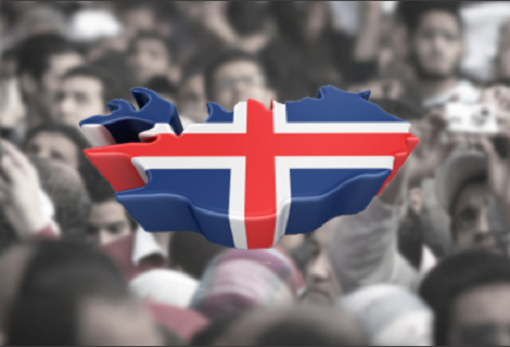
The Nordic country announced Tuesday that two-thirds of voters are backing a draft constitution based on comments from social media.
Iceland is creating a new, crowdsourced constitution in the wake of the country’s banking crisis and citizen protests, and government officials garnered feedback from users on Facebook, Twitter, YouTube, and Flickr to shape it.
The document, which went up for a non-binding vote on Saturday, was created by a panel of 25 citizens who compiled 3,600 comments and 370 suggestions from social media over the past year. Six questions appeared on the referendum, and the first two asked whether Icelanders want to adopt the user-generated constitution.
Nearly half of Iceland’s 235,000 eligible voters took part in the referendum, with 66 percent of those voting in favor. GigaOM said it makes sense that the Internet-backed option would have the most support.
“Give the people a chance to feed into the drafting, taking advantage of the internet’s convenience and low barriers, and they’ll stand behind the result,” wrote GigaOM’s David Meyer in a detailed analysis of the results.
Although the parliament is ultimately responsible for ratifying a new constitution, supporters hope the two thirds-backed constitution will be hard to ignore.
“This is a very clear conclusion for parliament,” said Thorolfur Matthiasson, an economist at the University of Iceland, to Reuters. “The majority of voters want changes in all the topics asked about in the vote.”
One of the major topics up for discussion was giving the government greater control of natural resources, including fish and geothermal energy, which are currently controlled by a handful of the island’s wealthy “sea baron” families.
It’s estimated that 320,000 Icelanders—two-thirds of Iceland’s population—are on Facebook, which was used to broadcast the 25-member panel’s weekly meetings. The gatherings aired live on Facebook so interested citizens could offer suggestions and debate along with the panel.
Parliament now has to decide if they want to turn the crowdsourced constitution into a reality. Whether they settle on this document, or a different one, something must be finalized prior to next spring’s elections.
Find Out If You Are Doing Things Which Might Be Considered Suspicious
There have been so many anti-terrorism laws passed since 9/11 that it is hard to keep up on what kinds of things might get one on a “list” of suspected bad guys.
We’ve prepared this quick checklist so you can see if you might be doing something which might get hassled.
The following actions may get an American citizen living on U.S. soil labeled as a “suspected terrorist” today:
If police officers were to file a subpoena for your Facebook information, they would receive a printout of the data from the social network. This printout would be so detailed, complete and creepy that you should strive to be a good law-abiding citizen, just to prevent it from ever existing.
We have just learned about the true nature of Facebook’s responses to subpoenas thanks to documents uncovered by the Boston Phoenix, an alternative weekly.
The data — which really did come in the form of an old-fashioned paper printout rather than as a digital file of some sort — included all of the suspect’s wall posts, photos he’d uploaded, photos he’d been tagged in, a list of his Facebook friends, and “a long table of login and IP data.” Based on a look at the actual documents, it appears the login and IP data actually lists which parts of Facebook the individual accessed — down to the photos, groups and profiles he viewed.
We work with law enforcement where appropriate and to the extent required by law to ensure the safety of the people who use Facebook. We may disclose information pursuant to subpoenas, court orders, or other requests (including criminal and civil matters) if we have a good faith belief that the response is required by law. This may include respecting requests from jurisdictions outside of the United States where we have a good faith belief that the response is required by law under the local laws in that jurisdiction, apply to users from that jurisdiction, and are consistent with generally accepted international standards.
We may also share information when we have a good faith belief it is necessary to prevent fraud or other illegal activity, to prevent imminent bodily harm, or to protect ourselves and you from people violating our Statement of Rights and Responsibilities. This may include sharing information with other companies, lawyers, courts or other government entities.
If you’d like to see how the information looks, the printout of the “Craigslist Killer” suspect, who committed suicide before the trial could reach a resolution, has been posted online by the Boston Phoenix. Both the Boston Police as well as the Boston Phoenix have redacted parts of the documents. From what we can tell, Facebook doesn’t censor any data before responding to a subpoena, but we have asked the social network for confirmation.
Want more tech news, silly puns, or amusing links? You’ll get plenty of all three if you keep up with Rosa Golijan, the writer of this post, by following her on Twitter, subscribing to her Facebook posts, or circling her on Google+.
In the future, if you tweet out a photo of a hilarious, meme-tastic kitten, it might be best not to include terms like “white powder,” “dirty bomb,” or “Death to America.”
Since late January, the Federal Bureau of Investigation has been asking the IT industry to help it develop an open-source social-media application that would provide a panoramic real-time picture of any “breaking event, crisis, activity, or natural disaster…in progress in the U.S. or globally,” according tostatements released by the agency. Essentially, the bureau wants to crowd-source software that would data-mine Twitter and other websites to scan for—and perhaps predict—mass uprisings, criminal activity, and terror plots.
To make something like what the FBI is looking for, a programmer would have to write a scriptto yank content from, say, open Facebook profiles and Twitter feeds. Once the data is obtained, it can be quickly searched for key terms. The next step is “geotagging“—tying individual posts to specific geographical locations. But the app would have to deal with more than just keywords. Ideally, the FBI wants a “threat index” that combines multiple metrics such as locations, links, and networks into one waterfall search engine. Think Klout, but souped-up for the NatSec establishment.
At first glance, the concept seems sensible enough. It’s no surprise the US government would want to use every resource possible to stay ahead of the news and intelligence curve in case a new crisis hits at home or abroad. And because the program would be aimed at monitoring open sources, it might not sound like a major civil-liberties tripwire, since tweets and online forums are usually available for anybody to view.
Still, the idea of Big Brother checking up on whom you’ve friended on Facebook or watching the embarrassing videos you’ve posted on YouTube might be off-putting, even if you’re not a die-hard civil libertarian. Such initiatives are probably legal, says Rebecca Jeschke, a digital-rights analyst at the Electronic Frontier Foundation, but they’re also “creepy.”
The FBI isn’t completely oblivious to such concerns. In statement sent to Mother Jones, a bureau spokeswoman insisted that the FBI is not looking for a program that would access private data or “focus on specific persons or protected groups.” Instead, she claims, the program would hone in on “activities constituting violations of federal criminal law or threats to national security.” The FBI also provided examples of words the application would be built to single out, including “bomb,” “suspicious package,” “white powder,” “active shoot,” and “lockdown.” “Although the FBI has always adapted to meet changes in technology,” the statement reads, “the rule of law civil liberties, and civil rights, will remain our guiding principles.” (They don’talways live up to those.)
Privacy concerns aside, the efficacy of open-source data-mining applications is, at best, questionable. “It reads almost like science fiction,” Mike German, a senior policy counsel for the ACLU’s Washington Legislative Office and former FBI agent, says. “The FBI has this unquenchable thirst for more data…Here they are in this day and age, thinking there is some easy solution to identifying threats against the country. But it’s often foolish for agents to take what they see online and treat it as intelligence. For instance, if you run a search for some of their key terms like ‘lockdown,’ ‘white powder,’ and ‘active shoot,’ you get over 345 million hits. That’s 345 million potential false tips.”
The government has tried this sort of thing before, without much success. The Department of Homeland Security already has several controversial data-mining programs. In 2007, a DHS program known as ADVISE was suspended following an internal audit by the department’s inspector general for dodging a required privacy review. And last September, the Government Accountability Office issued a report (PDF) that urged stronger executive oversight of DHS data-mining to ensure necessary privacy protections. The Defense Intelligence Agency, National Security Agency, and Central Intelligence Agency also have well-documented histories of flirting with large-scale data-mining, with mixed, secret, and often controversial results.
In 2008, a privacy and terrorism commission backed by DHS published a 376-page report titled “Protecting Individual Privacy in the Struggle Against Terrorists” that panned the logic behind post-9/11 data-mining. “Automated identification of terrorists through data mining (or any other known methodology) is neither feasible as an objective nor desirable as a goal of technology development effort,” the commissioners wrote. “Even in well-managed programs, such tools are likely to return significant rates of false positives, especially if the tools are highly automated.”
The FBI, however, is undaunted. As of Wednesday, it’s still looking for programmers.
INTERNET giant Facebook is accessing smartphone users’ personal text messages, an investigation revealed today.
Facebook admitted reading text messages belonging to smartphone users who downloaded the social-networking app and said that it was accessing the data as part of a trial to launch its own messaging service, The (London) Sunday Times reported.
Other well-known companies accessing smartphone users’ personal data – such as text messages – include photo-sharing site Flickr, dating site Badoo and Yahoo Messenger, the paper said.
It claimed that some apps even allow companies to intercept phone calls – while others, such as YouTube, are capable of remotely accessing and operating users’ smartphone cameras to take photographs or videos at any time.
Security app My Remote Lock and the app Tennis Juggling Game were among smaller companies’ apps that may intercept users’ calls, the paper said.
Emma Draper, of the Privacy International campaign group, said, “Your personal information is a precious commodity, and companies will go to great lengths to get their hands on as much of it as possible.”
More than 400,000 apps can be downloaded to Android phones, and more than 500,000 are available for iPhones – with all apps downloaded from Apple’s App Store covered by the same terms and conditions policy.
According to a YouGov poll for the newspaper, 70 per cent of smartphone users rarely or never read the terms and conditions policy when they download an app.
For most of us, our experience on Facebook is a benign – even banal – one. A status update about a colleague’s commute. A “friend” request from someone we haven’t seen for years (and hoped to avoid for several more). A picture of another friend’s baby, barely distinguishable from the dozen posted the day before.
Some four billion pieces of content are shared every day by 845 million users. And while most are harmless, it has recently come to light that the site is brimming with paedophilia, pornography, racism and violence – all moderated by outsourced, poorly vetted workers in third world countries paid just $1 an hour.
In addition to the questionable morality of a company that is about to create 1,000 millionaires when it floats paying such paltry sums, there are significant privacy concerns for the rest of us. Although this invisible army of moderators receive basic training, they work from home, do not appear to undergo criminal checks, and have worrying access to users’ personal details. In a week in which there has been an outcry over Google’s privacy policies, can we expect a wider backlash over the extent to which we trust companies with our intimate information?
Last month, 21-year-old Amine Derkaoui gave an interview to Gawker, an American media outlet. Derkaoui had spent three weeks working in Morocco for oDesk, one of the outsourcing companies used by Facebook. His job, for which he claimed he was paid around $1 an hour, involved moderating photos and posts flagged as unsuitable by other users.
“It must be the worst salary paid by Facebook,” he told The Daily Telegraph this week. “And the job itself was very upsetting – no one likes to see a human cut into pieces every day.”
Derkaoui is not exaggerating. An articulate man, he described images of animal abuse, butchered bodies and videos of fights. Other moderators, mainly young, well-educated people working in Asia, Africa and Central America, have similar stories. “Paedophilia, necrophilia, beheadings, suicides, etc,” said one. “I left [because] I value my sanity.” Another compared it to working in a sewer. “All the —- of the world flows towards you and you have to clean it up,” he said.
Who, one wonders, apart from the desperate, the unstable and the unsavoury, would be attracted to doing such an awful job in the first place?
Of course, not all of the unsuitable material on the site is so graphic. Facebook operates a fascinatingly strict set of guidelines determining what should be deleted. Pictures of naked private parts, drugs (apart from marijuana) and sexual activity (apart from foreplay) are all banned. Male nipples are OK, but naked breastfeeding is not. Photographs of bodily fluids (except semen) are allowed, but not if a human being is also shown. Photoshopped images are fine, but not if they show someone in a negative light.
Once something is reported by a user, the moderator sitting at his computer in Morocco or Mexico has three options: delete it; ignore it; or escalate it, which refers it back to a Facebook employee in California (who will, if necessary, report it to the authorities). Moderators are told always to escalate specific threats – “I’m going to stab Lisa H at the frat party” is given as the charming example – but not generic, unlikely ones, such as “I’m going to blow up the planet on New Year’s Eve.”
It is, of course, to Facebook’s credit that they are attempting to balance their mission “to make the world more open and connected” with a willingness to remove traces of the darker side of human nature. The company founded by Mark Zuckerberg in his Harvard bedroom is richer and more populated than many countries. These moderators are their police.
Neither is Facebook alone in outsourcing unpleasant work. Adam Levin, the US-based chief executive of Criterion Capital Partners and the owner of British social network Bebo, says that the process is “rampant” across Silicon Valley.
“We do it at Bebo,” he says. “Facebook has so much content flowing into its system every day that it needs hundreds of people moderating all the images and posts which are flagged. That type of workforce is best outsourced for speed, scale and cost.”
A spokesman for Twitter said that they have an internal moderation team, but refused to answer a question about outsourcing. Similarly, a Google spokesperson would not say how Google+, the search giant’s new social network, will be moderated. Neither Facebook nor oDesk were willing to comment on anything to do with outsourcing or moderation.
Levin, however, estimates that Facebook indirectly employs between 800 to 1,000 moderators via oDesk and others – nearly a third of its more handsomely remunerated full-time staff. Graham Cluley, of the internet security firm Sophos, calls Silicon Valley’s outsourcing culture its “poorly kept dirty secret”.
The biggest worry for the rest of us, however, is that the moderation process isn’t nearly secretive enough. According to Derkaoui, there are no security measures on a moderator’s computer to stop them uploading obscene material themselves. Despite coming into daily contact with such material, he was never subjected to a criminal record check. Where, then, is the oversight body for these underpaid global police? Quis custodiet ipsos custodes?
Facebook itself is guarding them, according to a previous statement to which the Telegraph was referred. “These contractors are subject to rigorous quality controls and we have implemented several layers of safeguards to protect the data of those using our service,” it read. “No user information beyond the content in question and the source of the report is shared. All decisions made by contractors are subject to extensive audits.”
And yet in the images due for moderation seen by the Telegraph, the name of anyone “tagged” in an offending post – as well as the user who uploaded it – could be clearly discerned. A Facebook spokesman said that these names are shared with the moderators to put the content in context – a context sufficient for Derkaoui to claim that he had as much information as “looking at a friend’s Facebook page”. He admits to having subsequently looked up more information online about the people he had been moderating. Cluley is worried that Facebook users could be blackmailed by disgruntled moderators – or even see pictures originally intended for a small circle of friends pasted all over the web.
Shamoon Siddiqui, chief executive of Develop.io, an American app-building firm that employs people in the developing world for a more generous $7 to $10 an hour, agrees that better security measures are needed. “It isn’t wrong for Facebook to have an Indian office,” he says. “But it is wrong for it to use an arbitrary marketplace with random people it doesn’t know in that country. This will have to change.”
In Britain, for example, all web moderators have to undergo an enhanced CRB check. eModeration, whose clients range from HSBC to The X-Factor, pays £10 an hour and never lets its staff spend too long on the gritty stuff. They wouldn’t go near the Facebook account. The job, says Tamara Littleton, its chief executive, is too big, the moderating too reactive, and they couldn’t compete on cost with the likes of oDesk.
So, if no one can undercut the likes of oDesk, could they not be undermined instead? If Mr Zuckerberg will not dig deeper into his $17.5 billion pockets to pay the street-sweepers of Facebook properly, maybe he could be persuaded by a little moral outrage?
Levin disagrees. “Perhaps a minute percentage of users will stop using Facebook when they hear about this,” he says. “But the more digital our society becomes, the less people value their privacy.”
Perhaps. But maybe disgruntled commuters, old schoolfriends and new mothers will think twice before sharing intimate information with their “friends” – only to find that two minutes later it’s being viewed by an under-vetted, unfulfilled person on a dollar an hour in an internet café in Marrakech.
In the case of both Google and Facebook, three talented students in their 20’s came out of obscurity to establish multi-billion dollar enterprises. Do you suppose they had some help?
BY SANDEEP PARWAGA
(FOR HENRYMAKOW.COM)
There used to be a saying: ”No one makes a name for himself without giving something up”
As a youngster, I was awed by people who ”made it to the top” by creating and innovating corporations, technologies, or simply establishing themselves through sports, music, entertainment, etc. thus becoming millionaires.
Now as I have grown older, I realize how illusory this paradigm really is. I came to the conclusion that if you want to reach the ”top’,’ you have to give up your soul.
Take Mark Zuckerberg for example. He is one of the most ”successful entrepreneurs” in the last decade. Having made a fortune through his Facebook empire, he reaches more than 500 million people worldwide. It seems like a fairytale. A student creates a new interface to connect the people throughout the world. Well, it sounds great doesn’t it? It would, if we were true.