What is DIVIDE AND RULE? DIVIDE AND RULE meaning & explanation
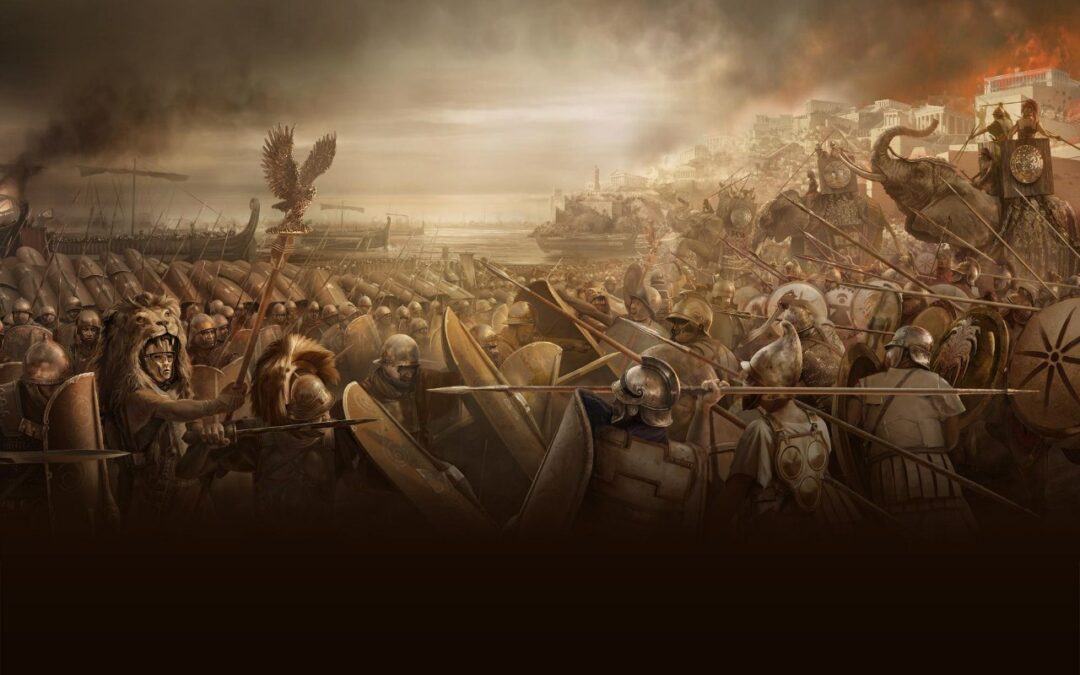
A divide and conquer strategy, also known as “divide and rule strategy” is often applied in the arenas of politics and sociology. In this strategy, one power breaks another power into smaller, more manageable pieces, and then takes control of those pieces one by one. It generally takes a very strong power to implement such a strategy. In order to successfully break up another power or government, the conqueror must have access to strong political, military, and economic machines.
Julius Caesar used a divide and conquer strategy to subdue the Celtic tribes.
Furthermore, in order to maintain power and influence, large governments will often work to keep smaller powers and governments from uniting. In fact, this use of the principles within the divide and conquer strategy is most common. It is much easier to prevent small powers from linking forces than to break them apart once they have aligned.
Nations may arm rebel groups that exist within the borders of their political rivals as part of a divide and conquer strategy.
Leaders who use a divide and conquer strategy may encourage or foster feuds between smaller powers. This kind of political maneuvering requires a great understanding of the people who are being manipulated. In order to foster feuds, for example, one must understand the political and social histories of the parties intended to take part in the feuds.
The strategy also includes methods with which to control the funds and resources of the small conquered parties. For example, a powerful leader may encourage a less powerful leader to make unwise financial decisions in order to drain the smaller power’s resources. This is often successful if the leaders of the smaller powers have inflated egos and delusions of grandeur. It is important to note that this form is only effective if the smaller power allows itself to be influenced by the larger power.
The divide and conquer strategy has been widely used throughout history. Both the Roman empire and the British empire played small tribes and groups against one another in order to control their lands and territories. It was used by the Romans when they took Britain, when the British Empire took India, and when the Anglo-Normans took Ireland. A staple political strategy, divide and conquer is still used by many countries today.
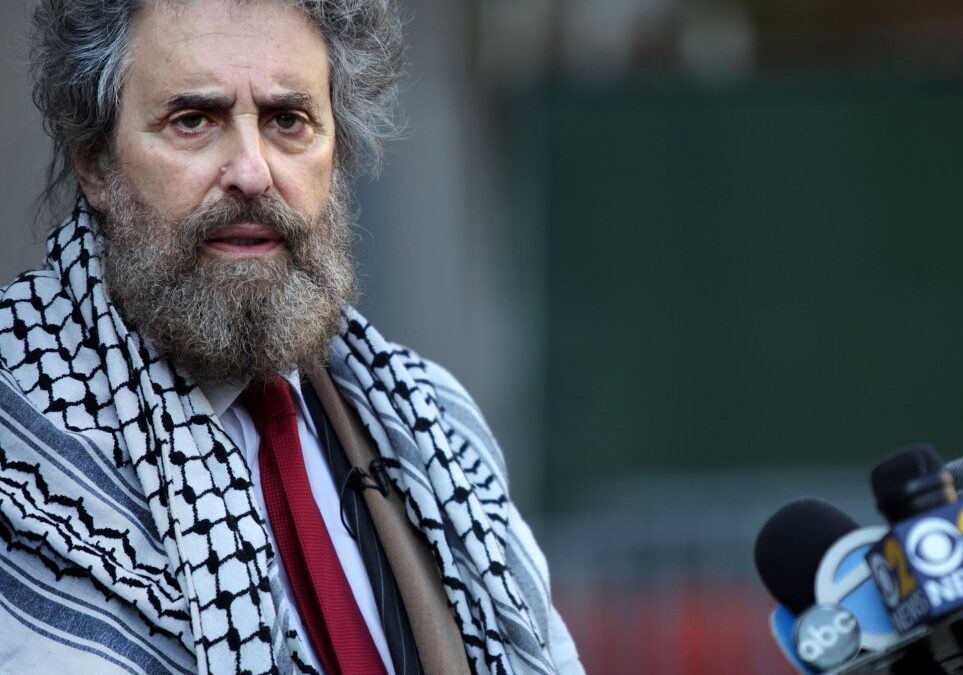
Attorney affiliated with the Center for Constitutional Rights
Has represented many radicals, revolutionaries, and Islamic extremists
“If I don’t support the politics of political clients, I don’t take the case.”
Views the United States as an intractably racist nation whose criminal-justice system routinely denies fair treatment to racial, ethnic, and religious minorities
Characterizes Israel as a “terrorist state”
BACKGROUND
Born in 1953 to parents whom he has described as “hardworking F.D.R. Democrats,” Stanley Lewis Cohen was raised in Portchester, New York. Though he attended Hebrew school and was bar mitzvahed, he has long considered himself non-religious. Cohen’s current ties to the Jewish faith are based largely on his view that it can serve as a vehicle for redistributive social justice rather than as a conduit to the divine. “I’m proud to be a Jew—very proud of it,” he says. “Not the Judaism of Ariel Sharon. Not the Judaism of the generals of the Israel Defense Forces. But the Judaism that stands with the oppressed, the disadvantaged and the disaffected.”
Cohen became active in the left-wing anti-war movement during his high-school years in the late Sixties and then attended Long Island University. After graduating from LIU, he worked as a volunteer for VISTA, an anti-poverty program initiated by President Lyndon Johnson in the mid-1960s. Cohen’s VISTA work took place on the Winnebago, Omaha, and Santee Sioux reservations (in Nebraska), where he helped establish a legal-services project.
Following his tenure with VISTA, Cohen worked as a community organizerin New York City, headed a drug program for homeless teens in Westchester County, New York, and administered a federally funded anti-poverty agency. Eventually he enrolled at Pace University Law School, where he earned a J.D. degree in 1983.
COHEN’S EARLY LEGAL CAREER
In the early 1980s, when he was still a law student, Cohen teamed upwith attorney Lynne Stewart to defend a number of far-left radicals against state prosecution in New York. In one of their more high-profile cases, the pair together represented Kathy Boudin—a Weather Underground and May 19 Communist Organization member who had participated in the deadly 1981 Brinks robbery, a heist whose purpose was to acquire the funds needed to finance a war against “Amerikka” and establish a “Republic of Black Afrika” in the United States. Cohen and Stewart would thereafter maintain an enduring, close relationship—both personally and professionally—as evidenced by Stewart’s characterization of Cohen in a 2001 interview as her “dear friend.”
After completing his legal studies, Cohen spent seven years working with the Legal Aid Society in the Bronx, where he defended a multitude of robbers, rapists, and killers. “I loved the people I represented,”says Cohen. “Poor people, people of color. People that the system was designed to beat to death.”
Also in the 1980s, Cohen became a protégé of the self-described “radical attorney” William Kunstler, with whom he jointly represented Larry Davis—a longtime violent felon suspected in the killings of several drug dealers—who had recently shot six New York City policemen. Cohen concocted a defense which maintained that Davis, an African American, had shot the officers—who were allegedly part of a rogue-cop drug operation—in self-defense. Though the claim was entirely without substance, a Bronx jury acquitted Davis in 1986.[1]
LONG CLIENT LIST OF RADICALS, REVOLUTIONARIES, & ISLAMISTS
Soon after the Davis trial, Cohen left the Legal Aid Society and went intoprivate practice where he began to compile a client list that included all manner of radicals and revolutionaries. Among these was a group of heavily armed Mohawk Indian separatists who shot a National Guardhelicopter in 1990. Cohen also:
represented the Mohawk Warrior Society during a three-month, armed stand-off with law-enforcement authorities in Quebec—and was himself charged by Canadian authorities, as a result of his participation in that standoff, with seditious conspiracy;
represented the Mohawk Warrior Society during a lengthy, armed, and ultimately deadly jurisdictional battle against state and federal law enforcement in Akwesasne, a territory that straddles the U.S. and Canadian borders;
defended several dozen Mohawk Warrior Society members who were criminally prosecuted for closing down a state highway during a protracted standoff with police; and
assisted in the case of Mohawk students who sued the Salmon River School District (in northernmost New York State) for having removed the Thanksgiving Address, a traditional Mohawk blessing, from events held at a school with a significant population of Mohawk youth.
Patrick Moloney, a Dublin-born priest and avowed Irish nationalist who conspired to hide some of the $7.4 million that was stolen in the January 5, 1993 Brink’s armored-car robbery;
Jose Ortiz, a Puerto Rican street-gang member accused of shooting a New York City police captain as “revenge” for the 1994 police killing of a Puerto Rican youth named Anthony Baez in the South Bronx; and
members of the Peru-based Maoist terror group, The Shining Path.
But it is Cohen’s so-called “Islamic practice,” through which he has defended a host of Muslim terrorists and terrorism-affiliated operatives, that has gained him more notoriety than any other aspect of his legal work.
From 1995-97, Cohen represented Moussa Mohammed Abu Marzook, a senior Hamas political leader who co-founded the Islamic Association for Palestine and the Holy Land Foundation for Relief and Development (both terror-related organizations). Specifically, Cohen worked to thwart Israel’s effort to extradite Marzook out of the U.S. and try him for the role that he and Hamas had played in a number of bombings. As the Marzook case dragged on for some 22 months, Cohen visited his incarcerated client in jail almost nightly throughout that entire period. Ultimately, Cohen was successful in helping Marzook win his freedom, evade the Israeli justice system, and resettle in Syria. Articulating his high regard for Marzook, Cohen would later refer to him as “my dear friend” and “the Gerry Adamsof Hamas.”
Other noteworthy Islamists whom Cohen has defended include the following:
a contingent of Albanian Muslim mercenaries bound for Kosovoin the 1990s
Mazin Assi, a Palestinian who tried to firebomb a Riverdale, New York synagogue on the eve of Yom Kippur in 2000
the al-Qaeda-affiliated Texas Imam, Moataz Al-Hallak
the Oregon-based Imam and terror suspect Mohamed Kariye,arrested for possessing trace explosives while boarding a plane at Portland International Airport
a Palestinian-American who was jailed for refusing to provide grand jury testimony about Hamas
Amina Farah Ali, a Minnesota Muslim woman convicted of conspiring to provide material support to the al Qaeda-affiliated, Somali terrorist organization al-Shabaab
Mohamed Aleesa (a.k.a. Mohamed Alessa), who in 2011 pledguilty to charges that he had tried to join the al Qaeda-affiliated organization al-Shabaab
Mohamed Hammoud, a North Carolina-based Hezbollah operativeconvicted in 2002 of sending $3,500 to that organization
an Iranian-American international charity and relief organizeraccused of violating Office of Foreign Assets Control sanctions against Iran
The Communist publication Revolutionary Worker has lauded Cohen as “a longtime people’s lawyer beloved by many for his uncompromising willingness to provide legal defense for the unpopular … and those [whom] U.S. imperialism may feel should be ‘tried’ with no defense at all.” Joel Blumenfeld, a New York State Supreme Court Justice who formerly worked with Cohen, once said of the latter: “[I]f this were 1941-42, he would be representing the Japanese people who were being detained.”
Notably, Cohen has explained the rationale underlying his choice of clients. “If I don’t support the politics of political clients, I don’t take the case.” “Most of my clients [are] involved with struggle, many of them armed struggle,” he notes, proudly.
Cohen’s sympathy for Islamic terrorists was further reflected in his reaction to the events of 9/11. In the immediate aftermath of the attacks, he told the Village Voice: “If Osama bin Laden arrived in the United States today and asked me to represent him, sure I’d represent him.” In fact, Cohen was reluctant even to believe that al Qaeda was responsible for the attacks, as he articulted on September 22, 2001: “I don’t think this was an Osama bin Laden job at all. But I think for a lot of reasons the government would prefer it be Osama bin Laden. Because then there’s an identifiable bogeyman.” That same day, Cohen speculated: “I fear the government is going to use this [9/11] as a pretense … to go after those people who have stood up to Israeli interests and the pro-Israel lobby in this country.” Moreover, he said he was “absolutely” certain that “this operation was assisted by ex-CIA, ex-Mossad [Israeli intelligence agency] officers.”
Cohen was also sympathetic to the plight of the so-called “American Taliban,” John Walker Lindh, who was captured as an enemy combatant in Afghanistan later in 2001. By Cohen’s reckoning, Lindh, who confessed to having taken up arms against the United States, “deserves the presumption of innocence.”
In October 2001, Cohen addressed a Muslim gathering at a Paterson, New Jersey mosque and advised those in attendance not to cooperate with FBI investigators who, in the course of 9/11-related probes, might question them regarding their activities or affiliations. “Just say no,” Cohen stated. “It’s the safest way.” When a Texas resident subsequently called Cohen and told him that it was his [Cohen’s] duty, as an American, to convince his clients to cooperate with law-enforcement, Cohen replied: “First of all, I’m not an American. Right now, I’m a lawyer’ …. The World Trade Centers, they don’t belong to the United States; they don’t belong to George Bush. They belong to New York City. I live in the country of New York City.”
Throughout his adult life, Cohen has regarded the United States as an intractably racist nation whose criminal-justice system routinely denies fair treatment to racial, ethnic, and religious minorities. Consistent with this perspective, he portrayed the U.S. government’s post-9/11 war-on-terror as little more than a pretext for depriving Muslims of their civil liberties—analogous, he said, to America’s internment of Japanese civilians during World War II: “The Germans weren’t locked up. The Italians weren’t locked up. Only the Japanese were. This tells you that ‘civil liberties’ in this country are a matter of race.”
In 2004 Cohen served as a consultant to the Lebanon-based, Hezbollah-dominated al-Manar television network, helping the latter develop a litigation strategy for challenging the U.S. government’s decision todesignate it as a terrorist entity—and thus to block and criminalize its broadcast signal. Complaining that “the U.S. has now succeeded in completely convincing Americans that Hezbollah is a terrorist organization,” Cohen cited the organization’s broad popularity in Lebanon and declared: “It is another intimidation by the U.S. administration targeting groups that are independent from Washington’s influence.”
In 2007 Cohen provided consultation to the government of Yemen vis à vis United States v. al Moyaad et. al., a case where a Yemeni tribal leader was convicted of fundraising activities on behalf of Hamas.
CONTEMPT FOR ISRAEL
Cohen’s clear affinity for Islamists finds an alternative expression in the attorney’s harsh rebukes of Israel, which he has long characterized as a “terrorist state.” Asserting that “what Israel does is far more morally repugnant than what Hamas does,” Cohen affirms the Palestinians’ “right” and “obligation” to “resist occupation … by any means necessary.” “To much of the world,” he elaborates, “Hamas is not viewed as a terrorist organization but rather a national liberation movement involved in low-intensity, asymmetric warfare.”
In July 2002 Cohen filed a federal lawsuit demanding that the U.S. government stop giving financial support to Israel’s “program of killing, torture, terror and outright theft” targeting the Palestinians. The suit named President George W. Bush, Secretary of State Colin Powell, Israeli Prime Minister Ariel Sharon, various Israeli military officials, and a number of U.S. arms manufacturers, accusing them all of “genocide.” Cohen also sought damages on behalf of Palestinian Americans who had been victimized by Israeli “war crimes” (allegedly carried out with U.S.-made weapons) in Gaza and the West Bank. Joining Cohen in a news conference announcing the lawsuit were American Muslim Council founderAbdurahman Alamoudi and Palestinian Islamic Jihad leader Sami Al-Arian.
In a related effort, Cohen was a founding member of an international group of lawyers who, on behalf of Palestinians, have filed suits against Israel in such far-flung locations as Morocco, Belgium, France, Spain, and the United Kingdom, as well as before the International Criminal Court. These suits have charged the Jewish state with war crimes, crimes against humanity, and Geneva Convention violations.
Characterizing himself as “among the few Jews in the United States capable of bridging the gap between the West and the militant politics of the Middle East,” Cohen boasts that he once “had lunch with the alleged mastermind of the Achille Lauro ship hijacking,” a 1985 incident where Palestinian terrorists stormed a cruise ship and threw an elderly, wheelchair-bound American man overboard to his death; that he once “spent a day with [Yasser] Arafat in Ramallah on the West Bank” and wastreated “like a head of state”; and that he was given a number of audiences with the late Sheik Ahmed Yassin, former spiritual leader of Hamas. According to a 2002 news report, Cohen’s office decor at that time featured a picture of himself seated alongside Yassin, as well as aphoto of Lenin and a wall poster stating, “History cannot be written with a pen. It must be written with a gun.”
RECENT CASES
Cohen represented Mercedes Haeffer, one of 14 activists affiliated with the computer-hacker group Anonymous who were prosecuted by the U.S. government for allegedly participating in a December 2010 “digital sit-in” on PayPal’s website.
Cohen also represented an activist who was charged with assaulting a police officer during an Occupy Wall Street demonstration in 2011.
In late 2012, Cohen came to the legal defense of the internationally known journalist Mona Eltahawy, an Egyptian American who (in September 2012) used a can of pink spray paint to deface a poster in a New York City subway station that she claimed bore a message offensive to Muslims. Produced by Pamela Geller’s and Robert Spencer’s American Freedom Defense Initiative, that poster read: “In any war between the civilized man and the savage, support the civilized man. Support Israel. Defeat Jihad.” While Eltahawy was busy spray painting over those words, freelance journalist Pamela Hall tried unsuccessfully to stop her. During the confrontation, Eltahawy spray-painted Ms. Hall and ruined the latter’s reading glasses, camera, and clothing. She was arrested at the scene, and Hall pressed charges. According to Cohen, Eltahawy’s act of vandalism was an exercise in free speech. For a more complete complete synopsis of this case, click here.
SCANDAL
In June 2012 a federal grand jury in Syracuse, New York indicted Cohen for failing to file individual and corporate income tax returns from 2005 through 2010, and for attempting to evade IRS detection of large cash payments he had received from two of his clients in 2008 and 2010.According to the Syracuse Post-Standard:
“The indictment against Cohen says he failed to file a report with the IRS showing his law practice had received cash from two clients for more than $10,000 each. One payment was from a client with the initials TJF for $20,000 in August 2008, and the other was from client JS for $15,000 in the summer of 2010…. Cohen made regular deposits of cash into his personal bank accounts in amounts less than $10,000 to avoid having to file a report with the IRS for deposits of that amount or higher…. Cohen also received non-money payments in exchange for legal services and failed to maintain records of those payments as income, the indictment said.”
In December 2013 a Manhattan federal court similarly indicted Cohen for wire fraud and five counts of failure to file income-tax returns (on more than $3 million in earnings) for the 2006-2010 tax years. An NBC News report stated:
“The government alleged that Cohen was paid at least $500,000 in fees each of those years but hid the money by having clients pay in cash or telling them to wire payments directly to American Express to pay his card bills.”
If convicted, Cohen could be sentenced to as much as 20 years in prison.
Isreal is Getting Away with Murder On January 28th a barrage of Israeli artillery fire struck near the South Lebanese village of Ghajar, killing United Nations peacekeeper Francisco Javier Soria. Soria, 36, was a Spanish citizen deployed with the United Nations Interim Force in Lebanon, a peacekeeping mission tasked with maintaining the ceasefire between Israel and Lebanon in the occupied Golan Heights.
His death came in the midst of a recent flare-up of violence between Israel and Hezbollah, and Spain’s ambassador to the United Nations placed blame for the incident upon the Israeli Defence Forces, citing an “escalation of violence [which] came from the Israeli side.” The exact circumstances which led to Soria’s death are still under investigation; Israeli officials expressed condolences for his death and said their forces were responding to fire in the area.
What is clear however is that Israeli forces have been killing an alarming number of United Nations personnel in the course of their recent military operations — and that UN officials have vociferously criticized the attacks, sometimes saying they appeared deliberate.
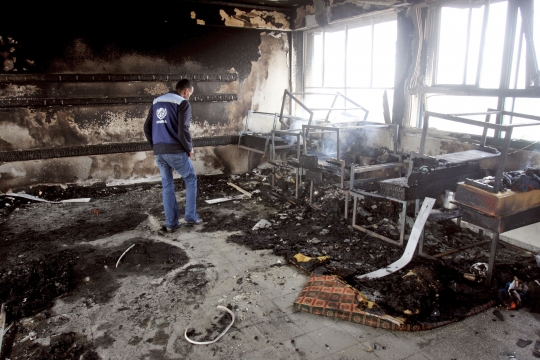
This past summer in the Gaza Strip, Israel forces attacked seven different schools run by the United Nations Relief and Works Agency, schools that had been serving as temporary shelters for the displaced population of the territory. Despite repeated warnings, condemnations and entreaties, United Nations targets were hit again and again by Israeli airstrikes and shelling during the conflict.
As many of 46 civilians are believed to have been killed in these attacks, as well as eleven UNRWA staff members. One particularly lethal strike on a UN-administered elementary school in Beit Hanoun killed 15 civilians and wounded 200 others. That attack reportedly sent shrapnel flying into crowds of families who had been awaiting transportation in the school’s playground.
In the wake of these and other bombings, UNRWA chief Chris Gunness broke down in tears during a live television interview while decrying the “[wholesale] denial” of Palestinian rights by Israeli forces during the operation.
Instead of offering contrition for these deadly incidents, Israeli officials continued to justify them with unsubstantiated, and vigorously deniedallegations that UNRWA schools were near sources of rocket fire and were thus simply caught in the crossfire. An investigation by Human Rights Watch looking at several of Israel’s attacks on these schools said that they, “did not appear to target a military objective or were otherwise unlawfully indiscriminate.”
Indeed, the idea that Israel’s repeated bombing of these schools may have simply been “mistakes” is difficult to countenance.
In one shelling incident which targeted a school in Rafah, United Nations personnel notified the IDF on 33 separate occasions that the facility was being used as a shelter for civilians. United Nations Secretary General Ban Ki-Moon publicly denounced the attack as a “moral outrage and a criminal act”, adding that “nothing is more shameful than attacking sleeping children”.
Even the United States, normally Israel’s most uncritical defender on the world stage, was moved to state that it was was “appalled” by what it described as a “disgraceful” attack on the school.
As egregious as these incidents were however, they are far from the first time in recent years in which Israel has targeted United Nations operations for shelling and airstrikes.
During the 2008-2009 Gaza War, Israeli forces targeted not only UNRWA schools (one of them pictured above) but even the compound housing the headquarters of the agency in the Gaza Strip. That attack, which involved the use of illegal white phosphorus munitions, destroyed tons of vital food aid and medical supplies which the large refugee population of the territory relied upon for basic sustenance.
Isreal is Getting Away with Murder At the time, Israeli officials claimed that they had been responding to rocket fire which had emanated from the compound, a claim which UN officials described as “total nonsense”.
In another notorious incident from Israel’s 2006 war with Lebanon, Israeli aircraft and artillery bombed a single United Nations outpost for upwards of six hours, despite receiving repeated pleas during this time from UN officials to cease fire. Four peacekeepers were killed in what then UN Secretary General Kofi Annan described as an “apparently deliberate” act.
Israel has long had a contentious relationship with United Nations agencies operating in the Middle East. Israeli officials have in past accused UN personnel of offering shelter to militants (a charge the organization strenuously denies), and has also more broadly suggested that the organization is responsible for prolonging the Israel-Palestine conflict due to its provision of refugee status and services to displaced Palestinians and their descendants.
In the wake of the most recent Gaza conflict, some Israeli political figures even called for UNRWA to formally be recognized as a “hostile organization”, an outrageous suggestion which nevertheless provides some insight into the hostility with which the UN is often viewed today in official circles.
Israel’s repeated bombing and shelling of United Nations positions in the region comes against this backdrop, with Soria’s death being only the latest incident in which Israeli forces have been responsible for killing UN personnel. To date, no one has been held legally responsible for any of these attacks.
By way of contrast, imagine the response if Hamas or Hezbollah had repeatedly and unrepentantly killed United Nations officials in the course of their conflict with Israel. Imagine if United Nations schools housing thousands of displaced civilians been struck time and again by militant groups, who in the wake of the bloodshed either denied responsibility outright or sought to justify their actions.
Furthermore, imagine if these attacks inflicted widespread civilian casualties and came despite repeated pleas and entreaties from UN officials to cease fire.
The outcry would rightly be deafening, yet this is exactly what Israel has done again and again in its conflicts in Lebanon and the Gaza Strip without consequence. As a result of this burgeoning culture of impunity, partly enabled by the unprecedented diplomatic protection offered to Israeli officials by the United States, UN personnel and facilities have increasingly been subject to deadly violence from the Israeli military.
As Pierre Krähenbühl, commissioner-general of UNRWA, stated in the aftermath of a deadly bombing against a UN-administered school in Gaza this past summer, “this [attack] is an affront to all of us, a source of universal shame. Today, the world stands disgraced.”
Kenneth O’Keefe Kenneth Nichols O’Keefe is an Irish-Palestinian citizen and activist and former United States Marine and Gulf War veteran who attempted to renounce US citizenship in 2001.is an Irish-Palestinian citizen and activist and former United States Marine and Gulf War veteran who attempted to renounce US citizenship in 2001.is an Irish-Palestinian citizen and activist and former United States Marine and Gulf War veteran who attempted to renounce US citizenship in 2001.is an Irish-Palestinian citizen and activist and former United States Marine and Gulf War veteran who attempted to renounce US citizenship in 2001.is an Irish-Palestinian citizen and activist and former United States Marine and Gulf War veteran who attempted to renounce US citizenship in 2001.Kenneth O’Keefe Kenneth Nichols O’Keefe is an Irish-Palestinian citizen and activist and former United States Marine and Gulf War veteran who attempted to renounce US citizenship in 2001.is an Irish-Palestinian citizen and activist and former United States Marine and Gulf War veteran who attempted to renounce US citizenship in 2001.is an Irish-Palestinian citizen and activist and former United States Marine and Gulf War veteran who attempted to renounce US citizenship in 2001.is an Irish-Palestinian citizen and activist and former United States Marine and Gulf War veteran who attempted to renounce US citizenship in 2001.is an Irish-Palestinian citizen and activist and former United States Marine and Gulf War veteran who attempted to renounce US citizenship in 2001.Kenneth Nichols O’Keefe is an Irish-Palestinian citizen and activist and former United States Marine and Gulf War veteran who attempted to renounce US citizenship in 2001.is an Irish-Palestinian citizen and activist and former United States Marine and Gulf War veteran who attempted to renounce US citizenship in 2001.is an Irish-Palestinian citizen and activist and former United States Marine and Gulf War veteran who attempted to renounce US citizenship in 2001.is an Irish-Palestinian citizen and activist and former United States Marine and Gulf War veteran who attempted to renounce US citizenship in 2001.is an Irish-Palestinian citizen and activist and former United States Marine and Gulf War veteran who attempted to renounce US citizenship in 2001.
Norman Finkelstein Norman Gary Finkelstein is an American political scientist, activist, professor, and author. His primary fields of research are the Israeli–Palestinian conflict and the politics of the Holocaust.Norman Gary Finkelstein is an American political scientist, activist, professor, and author. His primary fields of research are the Israeli–Palestinian conflict and the politics of the Holocaust.Norman Gary Finkelstein is an American political scientist, activist, professor, and author. His primary fields of research are the Israeli–Palestinian conflict and the politics of the Holocaust.Norman Gary Finkelstein is an American political scientist, activist, professor, and author. His primary fields of research are the Israeli–Palestinian conflict and the politics of the Holocaust.Norman Finkelstein Norman Gary Finkelstein is an American political scientist, activist, professor, and author. His primary fields of research are the Israeli–Palestinian conflict and the politics of the Holocaust.Norman Gary Finkelstein is an American political scientist, activist, professor, and author. His primary fields of research are the Israeli–Palestinian conflict and the politics of the Holocaust.Norman Gary Finkelstein is an American political scientist, activist, professor, and author. His primary fields of research are the Israeli–Palestinian conflict and the politics of the Holocaust.Norman Gary Finkelstein is an American political scientist, activist, professor, and author. His primary fields of research are the Israeli–Palestinian conflict and the politics of the Holocaust.
Avram Noam Chomsky (/ˈnoʊmˈtʃɒmski/; born December 7, 1928) is an American linguist, philosopher,[21][22]cognitive scientist,logician,[23][24][25] political commentator and activist. Sometimes described as the “father of modern linguistics”,[26][27] Chomsky is also a major figure in analytic philosophy.[21] He has spent most of his career at the Massachusetts Institute of Technology (MIT), where he is currently Professor Emeritus, and has authored over 100 books. He has been described as a prominent cultural figure, and was voted the “world’s top public intellectual” in a 2005 poll.[28]In the 1990s, Chomsky embraced political activism to a greater degree than before.[113His far-reaching criticisms of U.S. foreign policy and the legitimacy of U.S. power have raised controversy.[114][115] Chomsky has received death threats because of his criticisms of U.S. foreign policy.[116] He has often received undercover police protection at MIT and when speaking on the Middle East, although he has refused uniformed police protection.[117]The Electronic Intifada website claims that theAnti-Defamation League “spied on” Chomsky’s appearances, and quotes Chomsky as being unsurprised at that discovery or the use of what Chomsky claims is “fantasy material” provided to Alan Dershowitz for debating him. Amused, Chomsky compares the ADL’s reports to FBI files.[118]
Chomsky resides in Lexington, Massachusetts, and travels, giving lectures on politics and linguistics.
Pink Floyd are an English rock band formed in London. They achieved international acclaim with theirprogressive and psychedelic music. Distinguished by their use of philosophical lyrics, sonic experimentation, and elaborate live shows, they are one of the most commercially successful and musically influential groups in the history of popular music. Anti-War, Freedom of Expression, Pro-Palestine, Anti-Occupation.
Writing Tuesday in the New York Times, Bamford disclosed this alarming new anecdote from his Snowden debrief:
Among his most shocking discoveries, he told me, was the fact that the NSA was routinely passing along the private communications of Americans to a large and very secretive Israeli military organization known as Unit 8200. This transfer of intercepts, he said, included the contents of the communications as well as metadata such as who was calling whom.
Typically, when such sensitive information is transferred to another country, it would first be “minimized,” meaning that names and other personally identifiable information would be removed. But when sharing with Israel, the NSA evidently did not ensure that the data was modified in this way.
Mr. Snowden stressed that the transfer of intercepts to Israel contained the communications—email as well as phone calls—of countless Arab- and Palestinian-Americans whose relatives in Israel and the Palestinian territories could become targets based on the communications. “I think that’s amazing,” he told me. “It’s one of the biggest abuses we’ve seen.”
As of last week, exactly 43 ex-members of Unit 8200—many young and active reservists who could theoretically be called again to serve Israel at a moment’s notice—passionately agree.
In an act of protest that had been planned well in advance of this summer’s brutal bombing campaign in Gaza (which you may have heard killed 2,100 Palestinians and turned Gaza City into the lunar ruins of an ancient alien race), the young members of Unit 8200 drafted a long letter publicly refusing to participate in any further intelligence gathering activities against the Palestinians.
“The Palestinian population under military rule is completely exposed to espionage and surveillance by Israeli intelligence. It is used for political persecution and to create divisions within Palestinian society by recruiting collaborators,” the letter says. Adding, “In many cases, intelligence prevents defendants from receiving a fair trial in military courts, as the evidence against them is not revealed.”
“Contrary to Israeli citizens or citizens of other countries,” whose rights are protected under law, the letter points out, “there’s no oversight on methods of intelligence or tracking and the use of intelligence information against the Palestinians, regardless if they are connected to violence or not.”
London-based newspaper The Guardianinterviewed several of the unit’s conscientious objectors under the condition of anonymity—which was requested not out of fear of persecution, but out of the desire to comply with Israeli law. (Only the copies of the letter sent to their unit commander used the objectors’ full names.)
Among the personal statements, agents disclosed that the majority of Unit 8200’s operations in Palestine targeted “innocent people unconnected to any military activity.” The unit was instructed to keep any personal information potentially embarrassing or damaging to a Palestinian’s life, including sexual preferences, extramarital affairs, financial trouble, family illnesses, or anything else that could be “used to extort/blackmail the person and turn them into a collaborator.” The private “sex talk” intercepted by Palestinians (in what’s becoming a gross trend for these surveillance scandals) were allegedly passed around by certain members of the unit for titters/yucks.
One member, referred to as “D” by the Guardian, formerly a 29-year-old captain who served in the unit for eight years, told the paper that part of his decision to protest came from the dawning realization that his actions were really no different than those of any totalitarian government’s secret police.
“It was when I realized that what I was doing was the same job that the intelligence services of every undemocratic regime are doing,” he said.
There have been many precursors, both historically and more recently, to this secretive alliance between Israeli and U.S. intelligence agencies. Back in Mad Men times, the CIA’s director of counter-intelligence, legendary super-spook James Angleton, practically contracted all of the CIA’s North African operations to the Mossad along with a generous aid package, and has often been said to have helped found their agency in 1951. During the more recent disclosures regarding the NSA’s (basically illegal) surveillance program STELLAR WIND, agency whistleblowers revealed that two Israeli companies, Verint and Narus, were contracted to manage the actual bugging of America’s telecommunications network.
Apart from the Mossad’s long, aggressive history of spying on the United States, the arrangement also provoked concerns due to corruption within one of the firms; Verint’s founder and former chairman Kobi Alexander was added to the FBI “most wanted list” in 2006 regarding various forms of stock fraud and fought against extradition for many years. Some former agency employees have also reported that a mid-level NSA employee friendly with Israeli intelligence unilaterally decided to hand over advanced analytical and data mining software that the agency had developed internally for its own international eavesdropping operations. (According to a piece by James Bamford in WIRED, that software is now also in the hands of many private Israeli companies.)
In all that context, it’s true that this recent news isn’t exactly surprising or shocking—the kind of lame, bullshit “take” pundits and anonymous commenters always love trotting out to congratulate themselves for their knowledgeable cynicism. (Seriously: Good for you guys.)
What it still is—obviously and regardless of this context—is abhorrent and genuinely scandalous for a country, like Israel, that loves positioning itself as a bastion of democracy in the autocratic Middle East.
Perhaps, we should start looking for some fresh perspectives on how best to resolve this ongoing humanitarian crisis.
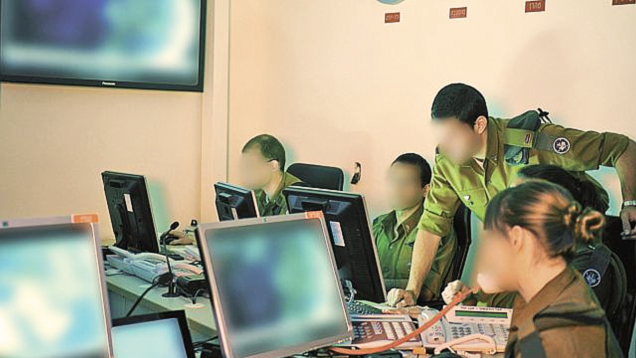
[photo of an Israeli Defense Force Situation Room—really actually already redacted like that—via the IDF Spokesman’s Office by way of Haaretz; June 2014 photo of an Israeli soldier carrying a computer tower seized during the search for three Israeli teenagers believed to be kidnapped by Palestinian militants, by Hazem Bader/AFP/Getty Images]
Israel is under an obligation to terminate its breaches of international law; it is under an obligation to cease forthwith the works of construction of the wall being built in the Occupied Palestinian Territory, including in and around East Jerusalem, to dismantle forthwith the structure therein situated, and to repeal or render ineffective forthwith all legislative and regulatory acts relating thereto, in accordance with paragraph 151 of this Opinion; -International Court of Justice in the Hague Press Release 2004/28
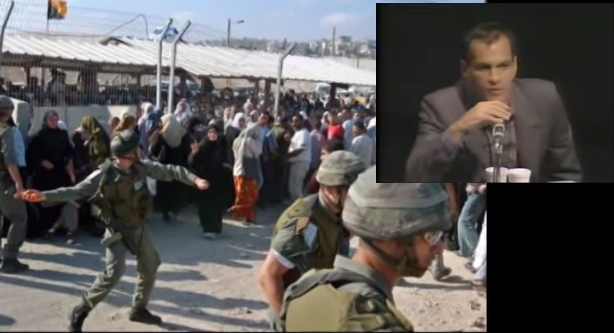
Speaking engagement :The Intifada within the American, Israeli, Islamic Triangle was a debate that took place on the 8th of November 1989 at the University of Pennsylvania .
Sponsored by The International Student Council
Co-Sponsored by: Senior VP for Research and Dean of the Graduate School, Vice Provost and Dean of Undergraduate Education, School of Communications, Middle East Studies Comittee, University Office of International Prgorams, Department of Political Science, Department of History.
Gaza (along with the West Bank and East Jerusalem) is occupied Palestinian territory under international law, determined by the vast majority of the world, as well as the highest court in the world, the UN’s International Court of Justice. Gaza cannot commit aggression against Israel, since Israel is in constant and continual commission of illegal aggression against Palestine by occupying it (illegally and sadistically blockading it and frequently committing terrorism against its civilians, including by targeting them with chemical weapons provided by US taxpayers – see “Rain of Fire” by Human Rights Watch). As documented by Amnesty Int’l, Human Rights Watch, and many others, Israel intentionally targets and murders civilians, including children, en masse.
But, even ignoring international law and that Gaza is under illegal Israeli occupation, Gaza did not initiate this current round of violence; Israel did:
Western/US/Israeli propaganda says the violence started with the kidnapping and killing of three Israeli youths on June 12th. That is a lie:
On May 20th, the Israeli government murdered 2 unarmed Palestinian teens, one on video, and wounded a third.
The firing of pathetic scrap metal rockets from impoverished Gaza, which have killed no one, were in fact launched in response to earlier Israeli bombings, killings, assassinations, and arrests of Palestinians, including children.
Since the year 2000, Israel has killed 1,500 Palestinian children, while Palestinians have killed 132 Israeli children. That means Israel has killed over 1,000% percent more Palestinian children than vice versa.
According to a landmark, comprehensive study of all of Israel’s wars, by Zeev Maoz, Professor of Political Science at the University of California, Davis, former head of the Graduate School of Government and Policy and of the Jaffee Center for Strategic Studies at Tel Aviv University, and former academic director of the M.A. Program at the Israeli Defense Forces’ National Defense College:
“. most of the wars in which Israel was involved were the result of deliberate Israeli aggressive design . None of these wars – with the possible exception of the 1948 War of independence – was what Israel refers to as Milhemet Ein Berah (war of necessity). They were all wars of choice . ” – Defending the Holy Land, pg. 35, (bold added)
“I review a number of peace-related opportunities ranging from the Zionist-Hashemite collusion in 1947 through the collapse of the Oslo Process in 2000. In all those cases I find that Israeli decision makers – who had been willing to embark upon bold and daring military adventures – were extremely reluctant to make even the smallest concessions for peace . I also find in many cases Israel was engaged in systematic violations of agreements and tacit understandings between itself and its neighbors.” – Defending the Holy Land, pg. 40
Israel has violated more UN resolutions than any other country. That includes Iraq under Hussein.
Hamas is the government elected by Gaza in elections that Jimmy Carter (and many others) observed and said were completely fair and free. Israel constantly says Hamas uses human shields. But in Israel’s biggest massacre of Gaza, the one in 2009, all the human rights organizations, including Amnesty, HRW, and the jurist Richard Goldstone, found that Hamas DID NOT use human shields. On the contrary, Israel used human shields, which is a regular practice for Israel. Israel uses civilians as human shields.
Israel forced Palestinian civilians to dig and lay naked in trenches around Israeli tanks. See here at 6:45.
XIV. THE USE OF PALESTINIAN CIVILIANS AS HUMAN SHIELDS
“The Mission received allegations that in two areas in north Gaza Israeli troops used Palestinian men as human shields… The Mission found the foregoing witnesses to be credible and reliable. It has no reason to doubt the veracity of their accounts and found that the different stories serve to support the allegation that Palestinians were used as human shields.”
Noam Chomsky: “Hamas is regularly described as ‘Iranian-backed Hamas, which is dedicated to the destruction of Israel.’ One will be hard put to find something like ‘democratically elected Hamas, which has long been calling for a two-state settlement in accord with the international consensus’—blocked for over 30 years by the US and Israel. All true, but not a useful contribution to the Party Line, hence dispensable.”
In the history of all rocket and mortar fire into Israel, 26 people, total, have been killed. And remember, Palestine breaks ceasefires far less often than Israel, as documented above.
This number of 26 is in contrast to the minimum number of 1,400 people who were murdered by Israel in a single one of its terrorist atrocities, the 2009 Gaza Massacre.
Noting that in the current massacre, zero Israelis and over 100 Palestinians have thus far been killed, and noting that Gaza is a concentration camp – Israel allows no one to enter or leave – Dan Sanchez gives a perfect description of the disparity in arms between the US/Israeli war machine and Palestinian scrap metal projectiles: “They [the Gazans] are like fish in a barrel, being blasted by a shotgun from above. It’s like some of the fish in the barrel pathetically spitting water at the gunman, and [US media calls] that a “shooting battle.”
The rhetoric and tactics of Hamas and other groups resisting Israeli occupation and colonization can be brutal (though far less so than Israel). Propagandists try to attribute this to anti-Semitism, to distract from the fact that these groups are resisting having their country stolen and their people dispossessed and annihilated. Native American resistance to European colonizers was sometimes extremely brutal, as was their rhetoric, but everyone universally recognizes that this was not because of “anti-White-ism”, or “anti-European-ism”, but because they were having their land stolen and their people massacred, the same thing that Israel is doing to the Palestinians.
Palestinians have the right under international law to resist occupation, ethnic cleansing, colonization, aggression, and annexation. Miko Peled, son of an Israeli general, recently stated that if Israel doesn’t Like rockets, they should decolonize Palestine. Dr. Norman Finkelstein notes that “The Palestinians have the right to use arms to resist an occupation . However, the fact that morally and legally they have that right doesn’t mean that it’s the most prudent strategy. In my opinion, a national Palestinian leadership committed to mobilizing nonviolent resistance can defeat the Israeli occupation if those of us living abroad lend support to it.”
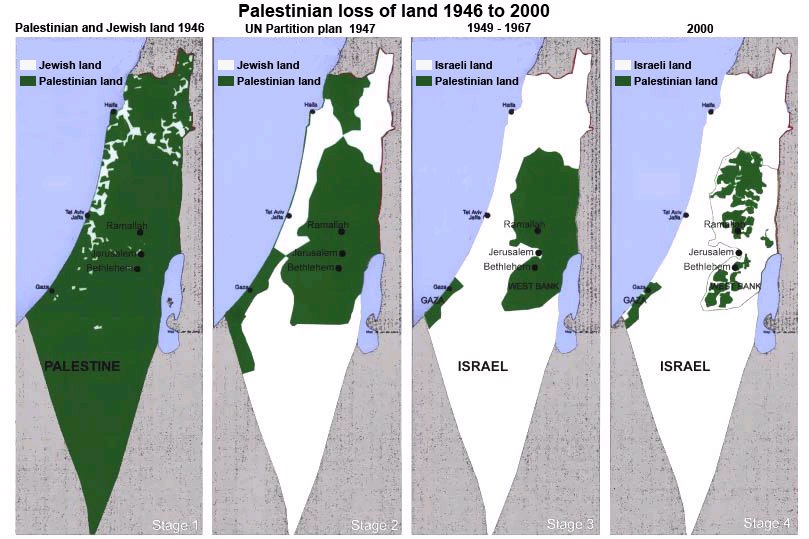
In 1948, the people who wanted to form a Jewish state carried out a massive terror and ethnic cleansing campaign against the occupants of Palestine, expelling about half of them (750,000) from their land and into concentrated areas (Gaza and West Bank). Israel has slowly continued colonizing even those areas, which were specifically reserved by the UN for Palestinians. Israel takes all the best land and resources, such as water. Here is a visualization of what has happened, and is currently happening with massive support from Obama:
Israeli settlement building in Palestine is a war crime under international law. Under Obama, Israeli settlement building is up over 130%.
For about 40 years, there has been an international consensus that Israel must stop colonizing territory outside its 1967 borders. The consensus has been blocked by the United States, in isolation from the international community (much like the USA’s isolated, strong support for South African Apartheid). Every year there is a UN vote on the issue, and every year it goes about 165 to 2, the world against the US and Israel. This continues under Obama. All human rights groups support the consensus, as does Hamas, the Arab League, Iran, the Organization of the Islamic Conference… Virtually everyone, except the US and Israel. (More details on this page.)
Hypocricy Defined
Palestinians are brutalized, repressed and impoverished by Israel. To get a quick visual understanding of the difference between Gaza and Israel, take a look at the images of people and cities being wantonly pummeled by Israeli terrorism when you search the word “Gaza“, and the images of opulence, wealth and luxury that come up when you search “Tel Aviv“.
Israel, whose government intentionally targets, tortures, and murders civilians, including children, including with chemical weapons, and whose government uses Palestinian civilians as human shields, and whose government is the last entity on Earth carrying out old-style ethnic cleansing and colonization of foreign countries, is the single biggest recipient of US aid, at over three billion dollars a year and huge amounts of lethal weaponry such as attack helicopters and white phosphorous chemical explosives.
To reiterate, Obama requested more military aid for Israel than any president ever. This is not because Obama and the USA love Jewish people. Obama was recently an accomplice in a literal neo-Nazi-led coup d’etat in Ukraine, and is currently fully supporting the junta-integrated Ukrainian government, which is staffed with several neo-Nazis in high ministries, and which uses neo-Nazi paramilitaries to carry out massacres (and possibly genocide) against people resistant to the junta. The actual reason the US supports Israel is discussed below.
As Amnesty International has noted, all aid to Israel is illegal under international (and US) law, because Israel is a consistent violator of human rights.
Amnesty International also noted that Israel’s 2009 massacre of Gaza would not have been possible without the illegal funding (money and weapons) and support Israel gets from the USA.
This is also true of the current massacre Israel is committing in Gaza.
However, in a way, that is good news.
That means US citizens can STOP the massacres.
MSM Refuses to Cover Anti-Israel War Crime Protests
If we stop our money and weapons-flow to Israel, which is illegal anyway, we stop Israeli terrorism! All we have to do is stop committing a crime, and we will stop more crimes! That’s great news.
Here is a previous example of how this has worked: When the USA cut its funding for Indonesia’s genocide against East Timor, which the USA was funding almost exclusively, Indonesia was forced to stop and withdraw. All it took was cutting off our illegal flow of money and weapons to the criminals.
The same thing would happen if we cut our illegal funding for Israel’s genocides and acts of terrorism, ethnic cleansing, colonization, and annexation against Palestine.
But since the USA is an anti-democratic country, the only way to stop US plutocrats from using our money to fund Israeli terrorism is to force it through massive, non-violent pressure.
One way it happens is when it becomes too politically costly for the plutocracy to keep funding genocide and terror, meaning the costs of their illegal support outweigh the benefits, as in Indonesia. In that case, massive publicity and indigenous resistance accomplished the goal.
But Israel is the USA’s main imperial – and nuclear – base for controlling the Middle East, which US planners, in 1945, called the greatest material prize in world history, due to the oil and gas. Thus, it might require more, as in non-violently making our country into a democracy so that people control their own institutions and money, and thus the way we operate as a society and interact with the world.
Last note: To be clear, Israel is a legal state, but only within the borders allotted to it by the United Nations – the Pre-1967 borders, which existed before Israel started eating away, through terror, ethnic cleansing, colonization, and annexation, at the areas reserved by the United Nations for Palestinians, as well as areas of other countries, such as Syria (the Golan Heights).
Per international law, US domestic law, and common sense, Israel doesn’t deserve any support until it abandons isolationism and accepts that it can’t steal other people’s countries, and stops blockading and withdraws its soldiers and settlers, all there illegally, from those countries.
Israel is, militarily, the most powerful country in the Middle East, by far. Removing our support for the Israeli government (which we are legally required to do) will not put Israelis in danger. It will pressure the Israeli government to stop doing what endangers Israelis, which is committing aggressive acts against Israel’s neighbors.
If Israel ends its status as a consistent violator of human rights, decolonizes Palestine, and respects its neighbors, it could be a pleasure – and legal – to work with and support Israel.
Germany, Japan, and South Africa went from being the most reviled countries on Earth to being some of the most admired. Maybe Israel could undergo the same transformation, but not unless we, US citizens, help by ceasing to enable Israeli terrorism and war crimes by illegally supporting them.
Today Israel carried out aerial strikes in Gaza targeting a mosque it claims was hosting rockets, a disabled care center and a geriatric urgent care hospital, where international volunteers have since rushed to shield patients.
In the deadliest strike yet, the home of Gaza’s police chief was also bombed, killing 18 members of his family.
These horrors are just the latest examples of death and destruction being wreaked amidst Israel’s five day long bombing campaign dubbed ‘Operation Protective Edge’.
Since the beginning of the offensive, at least 150 Palestinians have been killed and over 1,000 more injured. Thousands of homes have been utterly destroyed. No Israelis have yet died from a Hamas launched rocket.
Yet despite the disproportionality of the brutality, the establishment media continues to distort the truth by painting Hamas as the sole aggressor.
From FOX‘s ‘Gaza Rockets Aimed at Israel: What Would you Do with Just 15 Seconds?’ to liberal alt-news site VOX‘s ‘The Tragedy Never Ends, Palestinian Rockets Force Israeli Peace Conference to Evacuate’ to even Human Rights Watch, a human rights organization that is supposed to be unbiased in its criticism of atrocities, which leads with ‘Indiscriminate Palestinian Rocket Attacks’.
But perhaps most disturbing is the initial headline crafted by The New York Timesdescribing an Israeli missile bombing a cafe in Gaza packed with Palestinians watching the World Cup:
Missile at Beachside Gaza Cafe Finds Patrons Poised for World Cup http://t.co/t1N3tag2rf
As journalist Rania Khalek explains in an article dissecting the egregious error:
“Sawyers bald misreporting reflects either a deliberate lie by ABC news or willful ignorance so severe that Palestinian death and misery is invisible even when it’s staring ABC producers right in the face.”
The Western media routinely devalues Palestinian lives, and the dead bodies that stack up every time Israel goes on the offense remain an inconvenient truth for its narrative.
What Israel is actually doing in Gaza – MURDER
Another common misconception thanks to the media’s false depiction of Palestine is that Hamas is a rogue terrorist group, when in reality it is the democratically elected leadership of Gaza. When the IDF claims it only targets Hamas, it could mean any building affiliated with the government or social services provided to Palestinians.
As Noam Chomsky said, this isn’t war, it’s murder:
“When Israelis in the occupied territories now claim that they have to defend themselves, they are defending themselves in the sense that any military occupier has to defend itself against the population they are crushing.”
According to the White House, Israeli Prime Minister Netanyahu is acting ‘responsible’ in his defense of the rocket attacks. Yet the collective punishment of over a million people living in an open-air prison hardly seems as such.
I made a statement recently addressing Israel’s irresponsible barbarism:
Why Doesn’t the Media Care About Dead Palestinians?
Since posting this video, I have been overwhelmed at the feedback and support from thousands of Palestinians around the world. It’s already been featured on one of Turkey’s most popular news websites En Son Haber, Indonesian newspaper Liputan, translated in French on DailyMotion, posted on Arabic newspaper Alwatan Voice and has gone viral on Palestinian TV station Raya FM.
I strongly denounce deadly force on both sides, but it’s important to not frame this as a cycle of violence. One is the colonizer oppressor, the other the colonized oppressed. As IDF General’s son Miko Peled said, Palestinians living in occupied territories have two choices: the completely surrender, or resist – and resistance is what we’re seeing now.
**
Don’t miss Max Blumenthal talking about how the Israeli government hid information on the three murdered teens’ deaths in order to incite violence, racial tensions and justify a military rampage.
Why Gaza is Burning: What the Corporate Media Isn’t Telling You
**
IDF General’s son Miko Peled talks about the latest siege on Gaza and why Israel should decolonize Palestine and end the apartheid regime if it doesn’t like getting shot at with rockets.
IDF General’s Son: If Israel Doesn’t Like Rockets, Decolonize Palestine
**
Earlier this year, Secretary of State John Kerry came under fire for saying that Israel could turn into an apartheid state if reforms aren’t made. I outline five reason why it already is one.
5 Reasons Why Israel is an Apartheid State
**
When Israel launched its 2012 military offensive dubbed ‘Operation Pillar of Defense’, the IDF knowingly bombed a journalist tower in Gaza that housed RT among other foreign news networks. I responded to the war crime on Breaking the Set.
Many Americans think the clock starts with Hamas rockets every time Israel carries out a military operation, without realizing the history of the occupation and roots of the conflict. Here’s a brief breakdown.
Max Interviews guest Eric Jon Phelps on the Jesuits Part III
Topics Covered:
Jesuit Coadjutors- Alex Jones, Jesse Ventura, George Noory, Ron Paul
Iran, Palestine/Gaza Conflict & History, Jews vs Muslims, Civil Rights Movement, Malcom X, Ku Klux Klan, Muslim Immigration to Western Europe, Islam: Sunni vs Shia, ‘RECONSTRUCTION’, JFK, Jesuit control of Detroit, Demonic Fallen Angels, and more!
A short interview broadcast by CNN late last week featuring two participants – a Palestinian in Gaza and an Israeli within range of the rocket attacks – did not follow the usual script.
For once, a media outlet dropped its role as gatekeeper, there to mediate and therefore impair our understanding of what is taking place between Israel and the Palestinians, and inadvertently became a simple window on real events.
The usual aim of such “balance” interviews relating to the Israeli-Palestinian conflict is twofold: to reassure the audience that both sides of the story are being presented fairly; and to dissipate potential outrage at the deaths of Palestinian civilians by giving equal time to the suffering of Israelis.
But the deeper function of such coverage in relation to Gaza, given the media’s assumption that Israeli bombs are simply a reaction to Hamas terror, is to redirect the audience’s anger exclusively towards Hamas. In this way, Hamas is made implicitly responsible for the suffering of both Israelis and Palestinians.
The dramatic conclusion to CNN’s interview appears, however, to have otherwise trumped normal journalistic considerations.
The pre-recorded interview via Skype opened with Mohammed Sulaiman in Gaza. From what looked like a cramped room, presumably serving as a bomb shelter, he spoke of how he was too afraid to step outside his home. Throughout the interview, we could hear the muffled sound of bombs exploding in the near-distance. Mohammed occasionally glanced nervously to his side.
The other interviewee, Nissim Nahoom, an Israeli official in Ashkelon, also spoke of his family’s terror, arguing that it was no different from that of Gazans. Except in one respect, he hastened to add: things were worse for Israelis because they had to live with the knowledge that Hamas rockets were intended to harm civilians, unlike the precision missiles and bombs Israel dropped on Gaza.
The interview returned to Mohammed. As he started to speak, the bombing grew much louder. He pressed on, saying he would not be silenced by what was taking place outside. The interviewer, Isha Sesay, interrupted – seemingly unsure of what she was hearing – to inquire about the noise.
Then, with an irony that Mohammed could not have appreciated as he spoke, he began to say he refused to be drawn into a comparison about whose suffering was worse when an enormous explosion threw him from his chair and severed the internet connection. Switching back to the studio, Sesay reassured viewers that Mohammed had not been hurt.
The bombs, however, spoke more eloquently than either Mohammed or Nissim.
If Mohammed had had more time, he might have been able to challenge Nissim’s point about Israelis’ greater fears as well as pointing to another important difference between his and his Israeli interlocutor’s respective plights.
The far greater accuracy of Israel’s weaponry in no way confers peace of mind. The fact is that a Palestinian civilian in Gaza is in far more danger of being killed or injured by one of Israel’s precision armaments than an Israeli is by one of the more primitive rockets being launched out of Gaza.
In Operation Cast Lead, Israel’s attack on Gaza in winter 2008-09, three Israelis were killed by rocket attacks, and six soldiers died in fighting. In Gaza, meanwhile, nearly 1,400 Palestinians were killed, of whom at least 1,000 were not involved in hostilities, according to the Israeli group B’Tselem. Many, if not most, of those civilians were killed by so-called precision bombs and missiles.
If Israelis like Nissim really believe they have to endure greater suffering because the Palestinians lack accurate weapons, then maybe they should start lobbying Washington to distribute its military hardware more equitably, so that the Palestinians can receive the same allocations of military aid and armaments as Israel.
Or alternatively, they could lobby their own government to allow Iran and Hizbullah to bring into Gaza more sophisticated technology than can currently be smuggled in via the tunnels.
The other difference is that, unlike Nissim and his family, most people in Gaza have nowhere else to flee. And the reason that they must live under the rain of bombs in one of the most densely populated areas on earth is because Israel – and to a lesser extent Egypt – has sealed the borders to create a prison for them.
Israel has denied Gaza a port, control of its airspace and the right of its inhabitants to move to the other Palestinian territory recognised by the Oslo accords, the West Bank. It is not, as Israel’s supporters allege, that Hamas is hiding among Palestinian civilians; rather, Israel has forced Palestinian civilians to live in a tiny strip of land that Israel turned into a war zone.
So who is chiefly to blame for the escalation that currently threatens the nearly two million inhabitants of Gaza? Though Hamas’ hands are not entirely clean, there are culprits far more responsible than the Palestinian militants.
First culprit: The state of Israel
The inciting cause of the latest confrontation between Israel and Hamas has little to do with the firing of rockets, whether by Hamas or the other Palestinian factions.
The conflict predates the rockets – and even the creation of Hamas – by decades. It is the legacy of Israel’s dispossession of Palestinians in 1948, forcing many of them from their homes in what is now Israel into the tiny Gaza Strip. That original injustice has been compounded by the occupation Israel has not only failed to end but has actually intensified in recent years with its relentless siege of the small strip of territory.
Israel has been progressively choking the life out of Gaza, destroying its economy, periodically wrecking its infrastructure, denying its inhabitants freedom of movement and leaving its population immiserated.
One only needs to look at the restrictions on Gazans’ access to their own sea. Here we are not considering their right to use their own coast to leave and enter their territory, simply their right to use their own waters to feed themselves. According to one provision of the Oslo accords, Gaza was given fishing rights up to 20 miles off its shore. Israel has slowly whittled that down to just three miles, with Israeli navy vessels firing on fishing boats even inside that paltry limit.
Palestinians in Gaza are entitled to struggle for their right to live and prosper. That struggle is a form of self-defence – not aggression – against occupation, oppression, colonialism and imperialism.
Second culprit: Binyamin Netanyahu and Ehud Barak
The Israeli prime minister and defence minister have taken a direct and personal hand, above and beyond Israel’s wider role in enforcing the occupation, in escalating the violence.
Israel and its supporters always make it their first priority when Israel launches a new war of aggression to obscure the timeline of events as a way to cloud responsibility. The media willingly regurgitates such efforts at misdirection.
In reality, Israel engineered a confrontation to provide the pretext for a “retaliatory” attack, just as it did four years earlier in Operation Cast Lead. Then Israel broke a six-month ceasefire agreed with Hamas by staging a raid into Gaza that killed six Hamas members.
This time, on 8 November, Israel achieved the same end by invading Gaza again, on this occasion following a two-week lull in tensions. A 13-year-old boy out playing football was killed by an Israeli bullet.
Tit-for-tat violence over the following days resulted in the injury of eight Israelis, including four soldiers, and the deaths of five Palestinian civilians, and the wounding of dozens more in Gaza.
On November 12, as part of efforts to calm things down, the Palestinian militant factions agreed a truce that held two days – until Israel broke it by assassinating Hamas military leader Ahmed Jabari. The rockets out of Gaza that followed these various Israeli provocations have been misrepresented as the casus belli.
But if Netanyahu and Barak are responsible for creating the immediate pretext for an attack on Gaza, they are also criminally negligent for failing to pursue an opportunity to secure a much longer truce with Hamas.
We now know, thanks to Israeli peace activist Gershon Baskin, that in the period leading up to Jabari’s execution Egypt had been working to secure a long-term truce between Israel and Hamas. Jabari was apparently eager to agree to it.
Baskin, who was intimately involved in the talks, was a credible conduit between Israel and Hamas because he had played a key role last year in getting Jabari to sign off on a prisoner exchange that led to the release of Israeli soldier Gilad Shalit. Baskin noted in the Haaretz newspaper that Jabari’s assassination “killed the possibility of achieving a truce and also the Egyptian mediators’ ability to function.”
The peace activist had already met Barak to alert him to the truce, but it seems the defence minister and Netanyahu had more pressing concerns than ending the tensions between Israel and Hamas.
What could have been more important than finding a mechanism for saving lives, on both the Palestinian and Israeli sides. Baskin offers a clue: “Those who made the decision must be judged by the voters, but to my regret they will get more votes because of this.”
It seems Israel’s general election, due in January, was uppermost in the minds of Netanyahu and Barak.
A lesson learnt by Israeli leaders over recent years, as Baskin notes, is that wars are vote-winners solely for the right wing. That should be clear to no one more than Netanyahu. He has twice before become prime minister on the back of wars waged by his more “moderate” political opponents as they faced elections.
Shimon Peres, a dove by no standard except a peculiar Israeli one, launched an attack on Lebanon, Operation Grapes of Wrath, that cost him the election in 1996. And centrists Ehud Olmert and Tzipi Livni again helped Netanyahu to victory by attacking Gaza in late 2008.
Israelis, it seems, prefer a leader who does not bother to wrap a velvet glove around his iron fist.
Netanyahu was already forging ahead in the polls before he minted Operation Pillar of Defence. But the electoral fortunes of Ehud Barak, sometimes described as Netanyahu’s political Siamese twin and a military mentor to Netanyahu from their commando days together, have been looking grim indeed.
Barak desperately needed a military rather than a political campaign to boost his standing and get his renegade Independence party across the electoral threshold and into the Israeli parliament. It seems Netanyahu, thinking he had little to lose himself from an operation in Gaza, may have been willing to oblige.
Third culprit: The Israeli army
Israel’s army has become addicted to two doctrines it calls the “deterrence principle” and its “qualitative military edge”. Both are fancy ways of saying that, like some mafia heavy, the Israeli army wants to be sure it alone can “whack” its enemies. Deterrence, in Israeli parlance, does not refer to a balance of fear but Israel’s exclusive right to use terror.
The amassing of rockets by Hamas, therefore, violates the Israeli army’s own sense of propriety, just as Hizbullah’s stockpiling does further north. Israel wants its neighbouring enemies to have no ability to resist its dictates.
Doubtless the army was only too ready to back Netanyahu and Barak’s electioneering if it also provided an opportunity to clean out some of Hamas’ rocket arsenal.
But there is another strategic reason why the Israeli army has been chomping at the bit to crack down on Hamas again.
Haaretz’s two chief military correspondents explained the logic of the army’s position last week, shortly after Israel killed Jabari. They reported: “For a long time now Israel has been pursuing a policy of containment in the Gaza Strip, limiting its response to the prolonged effort on the part of Hamas to dictate new rules of the game surrounding the fence, mainly in its attempt to prevent the entry of the IDF into the ‘perimeter,’ the strip of a few hundred meters wide to the west of the fence.”
In short, Hamas has angered Israeli commanders by refusing to sit quietly while the army treats large areas of Gaza as its playground and enters at will.
Israel has created what it terms a “buffer zone” inside the fence around Gaza, often up to a kilometre wide, that Palestinians cannot enter but the Israeli army can use as a gateway for launching its “incursions”. Remote-controlled guns mounted on Israeli watch-towers around Gaza can open fire on any Palestinian who is considered to have approached too close.
Three incidents shortly before Jabari’s extra-judicial execution illustrate the struggle for control over Gaza’s interior.
On November 4, the Israeli army shot dead a young Palestinian man inside Gaza as he was reported to have approached the fence. Palestinians say he was mentally unfit and that he could have been saved by medics had ambulances not been prevented from reaching him for several hours.
On November 8, as already noted, the Israeli army made an incursion into Gaza to attack Palestinian militants and in the process shot dead a boy playing football.
And on November 10, two days later, Palestinian fighters fired an anti-tank missile that destroyed a Jeep patrolling the perimeter fence around Gaza, wounding four soldiers.
As the Haaretz reporters note, Hamas appears to be trying to demonstrate that it has as much right to defend its side of the “border fence” as Israel does on the other side.
The army’s response to this display of native impertinence has been to inflict a savage form of collective punishment on Gaza to remind Hamas who is boss.
Fourth culprit: the White House
It is near-impossible to believe that Netanyahu decided to revive Israel’s policy of extra-judicial executions of Hamas leaders – and bystanders – without at least consulting the White House. Israel clearly also held off from beginning its escalation until after the US elections, restricting itself, as it did in Cast Lead, to the “downtime” in US politics between the elections and the presidential inauguration.
That was designed to avoid overly embarrassing the US president. A fair assumption must be that Barack Obama approved Israel’s operation in advance. Certainly he has provided unstinting backing since, despite the wildly optimistic scenarios painted by some analysts that he was likely to seek revenge on Netanyahu in his second term.
Also, it should be remembered that Israel’s belligerence towards Gaza, and the easing of domestic pressure on Israel to negotiate with Hamas or reach a ceasefire, has largely been made possible because Obama forced US taxpayers to massively subsidise Israel’s rocket interception system, Iron Dome, to the tune of hundreds of millions of dollars.
Iron Dome is being used to shoot down rockets out of Gaza that might otherwise have landed in built-up areas of Israel. Israel and the White House have therefore been able to sell US munificence on the interception of rockets as a humanitarian gesture.
But the reality is that Iron Dome has swung Israel’s cost-benefit calculus sharply in favour of greater aggression because it is has increased Israel’s sense of impunity. Whatever Hamas’ ability to smuggle into Gaza more sophisticated weaponry, Israel believes it can neutralise that threat using interception systems.
Far from being a humanitarian measure, Iron Dome has simply served to ensure that Gaza will continue to suffer a far larger burden of deaths and injuries in confrontations with Israel and that such confrontations will continue to occur regularly.
Here are the four main culprits. They should be held responsible for the deaths of Palestinians and Israelis in the days and, if Israel expands its operation, weeks ahead.
Jonathan Cook won the Martha Gellhorn Special Prize for Journalism. His latest books are “Israel and the Clash of Civilisations: Iraq, Iran and the Plan to Remake the Middle East” (Pluto Press) and “Disappearing Palestine: Israel’s Experiments in Human Despair” (Zed Books). His new website is www.jonathan-cook.net.
“Disturbing, powerful and emotionally devastating, Tears of Gaza is less a conventional documentary than a record — presented with minimal gloss — of the 2008 to 2009 bombing of Gaza (dubbed ‘Operation Cast Lead’) by the Israeli military. Filmed by several Palestinian cameramen both during and after the offensive, this powerful film by director Vibeke Løkkeberg focuses on the impact of the attacks on the civilian population.
Tears of Gaza makes no overriding speeches or analyses. The situation leading up to the incursion (in which the Jewish state broke a truce unprovoked) is never mentioned. Similar events certainly occurred in Dresden, Tokyo, Baghdad and Sarajevo, but of course Gaza isn’t those places. Tears of Gaza demands that we examine the costs of war on a civilian populace.”
(Excerpt from Steve Gravestock, 2011 Toronto International Film Festival) http://tearsofgazamovie.com/
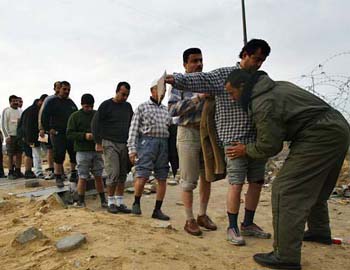
Palestinian workers line up to get checked by a Palestinian security officer before entering the Israeli controlled industrial zone in Erez area between Israel and the Gaza Strip.
A look at life under occupation.
Gaza has the look of a Third World country, with pockets of wealth surrounded by hideous poverty. It is not, however, undeveloped. Rather it is “de-developed,” and very systematically so, to borrow the term from Sara Roy, the leading academic specialist on Gaza.
Even a single night in jail is enough to give a taste of what it means to be under the total control of some external force.
And it hardly takes more than a day in Gaza to appreciate what it must be like to try to survive in the world’s largest open-air prison, where some 1.5 million people on a roughly 140-square-mile strip of land are subject to random terror and arbitrary punishment, with no purpose other than to humiliate and degrade.
Such cruelty is to ensure that Palestinian hopes for a decent future will be crushed, and that the overwhelming global support for a diplomatic settlement granting basic human rights will be nullified. The Israeli political leadership has dramatically illustrated this commitment in the past few days, warning that they will “go crazy” if Palestinian rights are given even limited recognition by the U.N.
This threat to “go crazy” (“nishtagea”)–that is, launch a tough response–is deeply rooted, stretching back to the Labor governments of the 1950s, along with the related “Samson Complex”: If crossed, we will bring down the Temple walls around us.
Thirty years ago, Israeli political leaders, including some noted hawks, submitted to Prime Minister Menachem Begin a shocking report on how settlers on the West Bank regularly committed “terrorist acts” against Arabs there, with total impunity.
Disgusted, the prominent military-political analyst Yoram Peri wrote that the Israeli army’s task, it seemed, was not to defend the state, but “to demolish the rights of innocent people just because they are Araboushim (a harsh racial epithet) living in territories that God promised to us.”
Gazans have been singled out for particularly cruel punishment. Thirty years ago, in his memoir “The Third Way,” Raja Shehadeh, a lawyer, described the hopeless task of trying to protect fundamental human rights within a legal system designed to ensure failure, and his personal experience as a Samid, “a steadfast one,” who watched his home turned into a prison by brutal occupiers and could do nothing but somehow “endure.”
Since then, the situation has become much worse. The Oslo Accords, celebrated with much pomp in 1993, determined that Gaza and the West Bank are a single territorial entity. By that time, the U.S. and Israel had already initiated their program to separate Gaza and the West Bank, so as to block a diplomatic settlement and punish the Araboushim in both territories.
Punishment of Gazans became still more severe in January 2006, when they committed a major crime: They voted the “wrong way” in the first free election in the Arab world, electing Hamas.
Displaying their “yearning for democracy,” the U.S. and Israel, backed by the timid European Union, immediately imposed a brutal siege, along with military attacks. The U.S. turned at once to its standard operating procedure when a disobedient population elects the wrong government: Prepare a military coup to restore order.
Gazans committed a still greater crime a year later by blocking the coup attempt, leading to a sharp escalation of the siege and attacks. These culminated in winter 2008-09, with Operation Cast Lead, one of the most cowardly and vicious exercises of military force in recent memory: A defenseless civilian population, trapped, was subjected to relentless attack by one of the world’s most advanced military systems, reliant on U.S. arms and protected by U.S. diplomacy.
Of course, there were pretexts–there always are. The usual one, trotted out when needed, is “security”: in this case, against homemade rockets from Gaza.
In 2008, a truce was established between Israel and Hamas. Not a single Hamas rocket was fired until Israel broke the truce under cover of the U.S. election on Nov. 4, invading Gaza for no good reason and killing half a dozen Hamas members.
The Israeli government was advised by its highest intelligence officials that the truce could be renewed by easing the criminal blockade and ending military attacks. But the government of Ehud Olmert–himself reputedly a dove–rejected these options, resorting to its huge advantage in violence: Operation Cast Lead.
The internationally respected Gazan human-rights advocate Raji Sourani analyzed the pattern of attack under Cast Lead. The bombing was concentrated in the north, targeting defenseless civilians in the most densely populated areas, with no possible military basis. The goal, Sourani suggests, may have been to drive the intimidated population to the south, near the Egyptian border. But the Samidin stayed put.
A further goal might have been to drive them beyond the border. From the earliest days of the Zionist colonization it was argued that Arabs have no real reason to be in Palestine: They can be just as happy somewhere else, and should leave–politely “transferred,” the doves suggested.
This is surely no small concern in Egypt, and perhaps a reason why Egypt doesn’t open the border freely to civilians or even to desperately needed supplies.
Sourani and other knowledgeable sources have observed that the discipline of the Samidin conceals a powder keg that might explode at any time, unexpectedly, like the first Intifada in Gaza in 1987, after years of repression.
A necessarily superficial impression after spending several days in Gaza is amazement, not only at Gazans’ ability to go on with life but also at the vibrancy and vitality among young people, particularly at the university, where I attended an international conference.
But one can detect signs that the pressure may become too hard to bear. Reports indicate that there is simmering frustration among young people–a recognition that under the U.S.-Israeli occupation the future holds nothing for them.
Gaza has the look of a Third World country, with pockets of wealth surrounded by hideous poverty. It is not, however, undeveloped. Rather it is “de-developed,” and very systematically so, to borrow the term from Sara Roy, the leading academic specialist on Gaza.
The Gaza Strip could have become a prosperous Mediterranean region, with rich agriculture and a flourishing fishing industry, marvelous beaches and, as discovered a decade ago, good prospects for extensive natural gas supplies within its territorial waters. By coincidence or not, that’s when Israel intensified its naval blockade. The favorable prospects were aborted in 1948, when the Strip had to absorb a flood of Palestinian refugees who fled in terror or were forcefully expelled from what became Israel – in some cases months after the formal cease-fire. Israel’s 1967 conquests and their aftermath administered further blows, with terrible crimes continuing to the present day.
The signs are easy to see, even on a brief visit. Sitting in a hotel near the shore, one can hear the machine-gun fire of Israeli gunboats driving fishermen out of Gaza’s territorial waters and toward land, forcing them to fish in waters that are heavily polluted because of U.S.-Israeli refusal to allow reconstruction of the sewage and power systems they destroyed.
The Oslo Accords laid plans for two desalination plants, a necessity in this arid region. One, an advanced facility, was built: in Israel. The second one is in Khan Yunis, in the south of Gaza. The engineer in charge at Khan Yunis explained that this plant was designed so that it can’t use seawater, but must rely on underground water, a cheaper process that further degrades the meager aquifer, guaranteeing severe problems in the future.
The water supply is still severely limited. The U.N. Relief and Works Agency (UNRWA), which cares for refugees but not other Gazans, recently released a report warning that damage to the aquifer may soon become “irreversible,” and that without quick remedial action, Gaza may cease to be a “livable place” by 2020.
Israel permits concrete to enter for UNRWA projects, but not for Gazans engaged in the huge reconstruction efforts. The limited heavy equipment mostly lies idle, since Israel does not permit materials for repair.
All this is part of the general program that Dov Weisglass, an adviser to Prime Minister Olmert, described after Palestinians failed to follow orders in the 2006 elections: “The idea,” he said, “is to put the Palestinians on a diet, but not to make them die of hunger.”
Recently, after several years of effort, the Israeli human rights organization Gisha succeeded in obtaining a court order for the government to release its records detailing plans for the “diet.” Jonathan Cook, a journalist based in Israel, summarizes them: “Health officials provided calculations of the minimum number of calories needed by Gaza’s 1.5 million inhabitants to avoid malnutrition. Those figures were then translated into truckloads of food Israel was supposed to allow in each day … an average of only 67 trucks–much less than half of the minimum requirement–entered Gaza daily. This compared to more than 400 trucks before the blockade began.”
The result of imposing the diet, Middle East scholar Juan Cole observes, is that “about 10 percent of Palestinian children in Gaza under age 5 have had their growth stunted by malnutrition. … In addition, anemia is widespread, affecting over two-thirds of infants, 58.6 percent of schoolchildren, and over a third of pregnant mothers.”
Sourani, the human-rights advocate, observes that “what has to be kept in mind is that the occupation and the absolute closure is an ongoing attack on the human dignity of the people in Gaza in particular and all Palestinians generally. It is systematic degradation, humiliation, isolation and fragmentation of the Palestinian people.”
This conclusion has been confirmed by many other sources. In The Lancet, a leading medical journal, Rajaie Batniji, a visiting Stanford physician, describes Gaza as “something of a laboratory for observing an absence of dignity,” a condition that has “devastating” effects on physical, mental and social well-being.
“The constant surveillance from the sky, collective punishment through blockade and isolation, the intrusion into homes and communications, and restrictions on those trying to travel, or marry, or work make it difficult to live a dignified life in Gaza,” Batniji writes. The Araboushim must be taught not to raise their heads.
There were hopes that Mohammed Morsi’s new government in Egypt, which is less in thrall to Israel than the western-backed Hosni Mubarak dictatorship was, might open the Rafah Crossing, Gaza’s sole access to the outside that is not subject to direct Israeli control. There has been a slight opening, but not much.
The journalist Laila el-Haddad writes that the reopening under Morsi “is simply a return to status quo of years past: Only Palestinians carrying an Israeli-approved Gaza ID card can use Rafah Crossing.” This excludes a great many Palestinians, including el-Haddad’s own family, where only one spouse has a card.
Furthermore, she continues, “the crossing does not lead to the West Bank, nor does it allow for the passage of goods, which are restricted to the Israeli-controlled crossings and subject to prohibitions on construction materials and export.”
The restricted Rafah Crossing doesn’t change the fact that “Gaza remains under tight maritime and aerial siege, and continues to be closed off to the Palestinians’ cultural, economic and academic capitals in the rest of the (Israeli-occupied territories), in violation of U.S.-Israeli obligations under the Oslo Accords.”
The effects are painfully evident. The director of the Khan Yunis hospital, who is also chief of surgery, describes with anger and passion how even medicines are lacking, which leaves doctors helpless and patients in agony.
One young woman reports on her late father’s illness. Though he would have been proud that she was the first woman in the refugee camp to gain an advanced degree, she says, he “passed away after six months of fighting cancer, aged 60 years.
“Israeli occupation denied him a permit to go to Israeli hospitals for treatment. I had to suspend my study, work and life and go to sit next to his bed. We all sat, including my brother the physician and my sister the pharmacist, all powerless and hopeless, watching his suffering. He died during the inhumane blockade of Gaza in summer 2006 with very little access to health service.
“I think feeling powerless and hopeless is the most killing feeling that a human can ever have. It kills the spirit and breaks the heart. You can fight occupation but you cannot fight your feeling of being powerless. You can’t even ever dissolve that feeling.”
A visitor to Gaza can’t help feeling disgust at the obscenity of the occupation, compounded with guilt, because it is within our power to bring the suffering to an end and allow the Samidin to enjoy the lives of peace and dignity that they deserve.
Noam Chomsky is Institute Professor & Professor of Linguistics (Emeritus) at the Massachusetts Institute of Technology, and the author of dozens of books on U.S. foreign policy. He writes a monthly column for The New York Times News Service/Syndicate.
Fight Back New Service is circulating the following statement from the Popular Front for the Liberation of Palestine.
On the Day of the Heroic Guerilla, we remember Che Guevara
On October 8, 2012, the Day of the Heroic Guerilla, the Popular Front for the Liberation of Palestine remembers Comandante Ernesto “Che” Guevara, revolutionary leader, fierce fighter, and principled struggler whose true commitment to internationalism and liberation lives on in the struggles of peoples around the world for freedom, justice and socialism.
Following the revolutionary victory in Cuba in 1959, Che’s commitment to international revolution did not diminish, and he joined Bolivian revolutionaries in 1966. On October 8, 1967, Che and his comrades were captured and surrounded by the US-backed Bolivian military, and executed.
Nine days later, Fidel Castro spoke, memorializing Che and commemorating October 8 as the Day of the Heroic Guerilla, saying “Che died defending no other interest, no other cause than the cause of the exploited and oppressed of this continent. Che died defending no other cause than the cause of the poor and humble of this earth … Before history, people who act as he did, people who do and give everything for the cause of the poor, grow in stature with each passing day and find a deeper place in the heart of the people with each passing day.”
In Palestine, Che’s spirit, his commitment to liberation, rises in the streets of our occupied homeland. We mourn and honor our Guevara Gaza, Mohammad al-Aswad, and the thousands of Palestinian Guevaras, the eternal martyrs, who have struggled, fought, sacrificed and died for the liberation of Palestine, and the thousands of Palestinian Guevaras still to come, to hold high the banner of the resistance until the day of victory is ours.
On the 45th anniversary of Che’s death, we remember him as one of the martyrs of Palestine, a great martyr for the freedom of the oppressed of the world. And we continue to live his words: “Let us sum up our hopes for victory: total destruction of imperialism by eliminating its firmest bulwark: the oppression exercised by the United States of America…And if we were all capable of uniting to make our blows stronger and infallible and so increase the effectiveness of all kinds of support given to the struggling people – how great and close would that future be!… Wherever death may surprise us, let it be welcome, provided that this, our battle cry, may have reached some receptive ear and another hand may be extended to wield our weapons and other men be ready to intone the funeral dirge with the staccato singing of the machine-guns and new battle cries of war and victory.”
[Intro:]
This one is dedicated to the suit-wearing arms dealers
To the champagne-sipping depleted uranium droppers[Hook:]
Keep your hand on your gun
Don’t you trust anyone
Keep your hand on your gun
Don’t you trust anyone
[Verse 1:]
First in my scope is BAE Systems
Specialize in killing people from a distance
Power is a drug and they feed the addiction
Immediate deletion of people’s existence
Who says what is and what isn’t legitimate resistance
To push these buttons you don’t need a brave heart
State of the art darts leave more than your face scarred
You might impress an A&R with your fake bars
Cause you probably think Rolls Royce only make cars
This is for the colonizers turned bomb-providers
Take this beef all the way back to Oppenheimer
They call it warfare but your wars aren’t fair
If they were there’d be suicide bombers in Arms Fairs
On a scam for the funds, they will mangle your son
If you try to speak out they will stamp on your tongue
To your land they will come till you stand up as one
It’s begun
[Hook:]
Keep your hand on your gun
Don’t you trust anyone
Keep your hand on your gun
Don’t you trust anyone
[Verse 2:]
Next in my scope is Lockheed Martin
They will tell you when the bombs need blastin’
Don’t think, just listen to the songs, keep dancin’
Do they really want us to have our own brains
Who do you think is really running Guantanamo Bay
And it might be sensitive but I’ll mention it
Who do you think has got us filling out the censuses
Who do you think is handing out the sentences
This ain’t the BBC so there’s no censorship
Heard of many mercenaries gettin’ with the clever pimp
Not a gun seller but none’s better than Erik Prince
Make money off many things, mainly it’s crime
This one is dedicated to the Raytheon 9
On a scam for the funds, they will mangle your son
If you try to speak out they will stamp on your tongue
To your land they will come till you stand up as one
It’s begun
[Hook:]
Keep your hand on your gun
Don’t you trust anyone
Keep your hand on your gun
Don’t you trust anyone
This is the official video for Lowkey’s single Tears to Laughter which has been supported by Palestine Solidarity Campaign, Stop the War Coalition, Viva Palestine and others. The song has been a huge hit amongst supporters of the Palestinian cause and Lowkey has toured extensively through Europe, Israel and Palestine to promote the song and its message.
You can now buy Lowkey’s album Soundtrack To The Struggle on double disc from www.soundtracktothestruggle.com! All profits made from the single are being donated to the DEC Gaza Appeal.
Most of the soldiers have given testimonies anonymously. One, who spoke to the Guardian, said that he had been given no guidance during his training for military service on how to deal with minors. He said children were sometimes arrested and interrogated, not because they were suspected of an offense, but to try to elicit information about older family members or neighbors.
He had given a witness statement to Breaking the Silence because: “I thought that people who don’t see this on an everyday basis should know what’s going on.” He said many Israelis were unwilling to acknowledge the reality of the military occupation in the West Bank. “It’s very easy [for the Israeli public] to be completely detached. It’s a hard thing to handle — stuff like that being done in your name.”
According to Gerard Horton, of Defense for Children International — Palestine (DCI), the testimonies reflect and confirm a pattern of behavior uncovered by his organization’s extensive research into the treatment of Palestinian children by the Israeli security forces.
DCI and other human rights organizations say Palestinian children are routinely arrested at night, handcuffed, blindfolded, mistreated and denied access to their parents or a lawyer.
He had given a witness statement to Breaking the Silence because: “I thought that people who don’t see this on an everyday basis should know what’s going on.” He said many Israelis were unwilling to acknowledge the reality of the military occupation in the West Bank. “It’s very easy [for the Israeli public] to be completely detached. It’s a hard thing to handle — stuff like that being done in your name.”
According to Gerard Horton, of Defence for Children International — Palestine (DCI), the testimonies reflect and confirm a pattern of behaviour uncovered by his organisation’s extensive research into the treatment of Palestinian children by the Israeli security forces.