Company Who Lobbied NDAA Indefinite Detention Bill Gets 23 Million Dollar Contract for Night Raid Equipment
The Intel Hub
December 20, 2011
According to reports from the Daily Kos and Russia Today, a company specializing in night raid equipment was awarded a 23 million dollar contract from the Department of Defense and subsequently went on to lobby for the NDAA which has given the government the power to indefinitely detain American citizens.
Surefire LLC openly lobbed for the House version of the NDAA, a bill many have claimed has effectively ended the Bill of Rights, months after receiving the 23 million dollar contact from the DOD.
Why would this company be receiving a contract which could outfit at least 30,000 troops with new and updated night raid equipment when the U.S. is supposedly pulling troops out of Iraq and, to a smaller extent, Afghanistan?
Why has this same company gone on to lobby for a bill that has turned the United States into a war zone?
From the Daily Kos:
So what does Surefire make? In a word, night-raid equipment, with a fresh new $23 million contract from the DoD even as we saw troops pulling out of Iraq and they are about to pull out of Afghanistan.
The product catalog main categories read things like “weapon lights, helmet lights, sound suppressors, high capacity magazines.” The equipment is relatively cheap, not big ticket items in Defense Department terms. That means this is a big contract. A $23 million contract would buy enough of these things to outfit maybe 50,000 soldiers.
If we are pulling out of Iraq and Afghanistan, what is all this stuff for? Night-raid gear? These are basically made to blind people as they awake from you busting down their door, not for open combat.
In a night firefight you don’t want any lights near you whatsoever. That gives the other guy an easy target.
Does it seem likely that the night raid gear that will be provided to the DOD under the 23 million dollar contract will be used outside the United States when the company who won the contract is lobbying for a bill that lets the military operate against American citizens inside the country?
As we have reported in the past, the plans for martial law in America have long been drawn up and the idea that either our own military, foreign military’s or a combination of both will be used against the American people has steadily gained ground as millions of people around the world have become aware of these dastardly plans.
Every week it seems more and more information is released that further proves these plans are real and already capable of becoming fully operational with 72 hours.
Whether it be Ron Paul warning about the NDAA and martial law or United Nations troops carrying out martial law drills within the US, the fact remains that the possibility of a martial law scenario in this country remains very real.
Still not convinced?
In 2008 the Pentagon openly announced their plans for a 20,000 strong military force(this is the number they admit, the actual number is sure to be much higher) set to operate within the United States. This internal force was also called for in a Rand Corporation document titled, “A Stability Police Force for the United States”
The Pentagon has an openly promoted a program(1033) that has given away close to $500 million in leftover military equipment to law enforcement in the fiscal year of 2011.
A recent document from former Halliburton subsidiary KBR outlined their need for subcontractors to be ready to provide various functions needed to establish FEMA camps in America within 72 hour notice.
Multiple cities have seen the military take part in various police work including in Florida City which had the Air Force set up a crime prevention hotline and take part in arrests at a local convenience store.
The Pentagon and Military have been actively war gaming for what they see as a looming large scale economic collapse that will lead to civil unrest.
Early this year FEMA requested information on their ability to acquire 140 million packets of food, blankets, and underwater body bags.
The examples above are no more than a small chunk of the ridiculous amount of evidence that has been released which proves that factions within our government are planning for a confrontation with the American people themselves.
Rather than live in fear, American citizens should consider preparing themselves for whatever lies ahead in the very near future.
This would include purchasing some type of storeable food,(There are many great companies that provide high quality preparedness products including Prepared.pro and Ready Made Resources) having evacuation plans ready, speaking to your friends and family about this very real possibility, and remembering that living in fear is what these tyrants WANT.
Psychologists Explain 911 Denial
Obama Signed Secret Libya Order Authorizing Support For Rebels
First Posted: 3/30/11 05:21 PM ET Updated: 5/30/11 06:12 AM ET
![]()
![]()
WASHINGTON (Reuters) – President Barack Obama has signed a secret order authorizing covert U.S. government support for rebel forces seeking to oust Libyan leader Muammar Gaddafi, government officials told Reuters on Wednesday.
(SCROLL DOWN FOR LIVE UPDATES)
Obama signed the order, known as a presidential “finding”, within the last two or three weeks, according to four U.S. government sources familiar with the matter.
Such findings are a principal form of presidential directive used to authorize secret operations by the Central Intelligence Agency. The CIA and the White House declined immediate comment.
News that Obama had given the authorization surfaced as the President and other U.S. and allied officials spoke openly about the possibility of sending arms supplies to Gaddafi’s opponents, who are fighting better-equipped government forces.
The United States is part of a coalition, with NATO members and some Arab states, which is conducting air strikes on Libyan government forces under a U.N. mandate aimed at protecting civilians opposing Gaddafi.
In interviews with American TV networks on Tuesday, Obama said the objective was for Gaddafi to “ultimately step down” from power. He spoke of applying “steady pressure, not only militarily but also through these other means” to force Gaddafi out.
Obama said the U.S. had not ruled out providing military hardware to rebels. “It’s fair to say that if we wanted to get weapons into Libya, we probably could. We’re looking at all our options at this point,” the President told ABC News anchor Diane Sawyer.
U.S. officials monitoring events in Libya say that at present, neither Gaddafi’s forces nor the rebels, who have asked the West for heavy weapons, appear able to make decisive gains.
While U.S. and allied airstrikes have seriously damaged Gaddafi’s military forces and disrupted his chain of command, officials say, rebel forces remain disorganized and unable to take full advantage of western military support.
SPECIFIC OPERATIONS
People familiar with U.S. intelligence procedures said that Presidential covert action “findings” are normally crafted to provide broad authorization for a range of potential U.S. government actions to support a particular covert objective.
In order for specific operations to be carried out under the provisions of such a broad authorization — for example the delivery of cash or weapons to anti-Gaddafi forces — the White House also would have to give additional “permission” allowing such activities to proceed.
Former officials say these follow-up authorizations are known in the intelligence world as “‘Mother may I’ findings.”
In 2009 Obama gave a similar authorization for the expansion of covert U.S. counter-terrorism actions by the CIA in Yemen. The White House does not normally confirm such orders have been issued.
Because U.S. and allied intelligence agencies still have many questions about the identities and leadership of anti-Gaddafi forces, any covert U.S. activities are likely to proceed cautiously until more information about the rebels can be collected and analyzed, officials said.
“The whole issue on (providing rebels with) training and equipment requires knowing who the rebels are,” said Bruce Riedel, a former senior CIA Middle East expert who has advised the Obama White House.
Riedel said that helping the rebels to organize themselves and training them how use weapons effectively would be more urgent then shipping them arms.
According to an article speculating on possible U.S. covert actions in Libya published early in March on the website of the Voice of America, the U.S. government’s broadcasting service, a covert action is “any U.S. government effort to change the economic, military, or political situation overseas in a hidden way.”
ARMS SUPPLIES
The article, by VOA intelligence correspondent Gary Thomas, said covert action “can encompass many things, including propaganda, covert funding, electoral manipulation, arming and training insurgents, and even encouraging a coup.”
U.S. officials also have said that Saudi Arabia and Qatar, whose leaders despise Gaddafi, have indicated a willingness to supply Libyan rebels with weapons.
Members of Congress have expressed anxiety about U.S. government activates in Libya. Some have recalled that weapons provided by the U.S. and Saudis to mujahedeen fighting Soviet occupation forces in Afghanistan in the 1980s later ended up in the hands of anti-American militants.
There are fears that the same thing could happen in Libya unless the U.S. is sure who it is dealing with. The chairman of the House intelligence committee, Rep. Mike Rogers, said on Wednesday he opposed supplying arms to the Libyan rebels fighting Gaddafi “at this time.”
“We need to understand more about the opposition before I would support passing out guns and advanced weapons to them,” Rogers said in a statement.
(Additional reporting by Susan Cornwell; Editing by David Storey)
Copyright 2011 Thomson Reuters. Click for Restrictions.
| |
@ BreakingNews : Anti-Gadhafi fighters in Misurata say 28 people had died in the city in the past three days – Al Jazeera http://bit.ly/ecR130 |
Gaddafi forces have reportedly captured the wife of Moussa Koussa, the former Foreign Minister who defected while in England. Reports the Telegraph:
The wife of the Libyan foreign minister who defected to Britain earlier this week has been seized by Colonel Gaddafi and is being interrogated by his “internal security” officials, The Daily Telegraph can disclose.She is thought to have been captured amid eyewitness reports of a fierce gunfight at Col Gaddafi’s central Tripoli compound as the regime stepped in to stop further defections.
Yesterday, local residents recalled how the most fierce firefight yet seen in central Tripoli had erupted within hours of the regime confirming that the Foreign Minister had defected.
Read the entire report here.
NBC’s Ann Curry tweets that the U.S. will move to support missions only:
| |
@ AnnCurry : NBCNews: US military will stop flying COMBAT missions over Libya, only SUPPORT missions incl reconnaissance, starting April 2. |
Channel Four correspondent Jonathan Rugman spoke with Libya’s former Prime Minister Abdul Ati al-Obeidi, who said that Gaddafi is trying to set up talks to stop the killing. During the interview, Obeidi told Rugman, “We are trying to talk to the British, the French and the Americans to stop the killing of people. We are trying to find a mutual solution.”
Watch a report from Channel Four on the Libya talks below:
Fact Check: Senate Did Approve No Fly Zone
Despite complaints to the contrary, the U.S. Senate actually did support a no-fly zone over Libya. The AP reports:
Some lawmakers are grousing loudly that President Barack Obama sent the nation’s military to Libya without Congress’ blessing. They’re ignoring a key fact: The Senate a month ago voted to support imposing a no-fly zone to protect civilians from attacks by Col. Moammar Gadhafi’s forces.
With no objections, the Senate on March 1 backed a resolution strongly condemning “the gross and systematic violations of human rights in Libya” and urging the U.N. Security Council to take action, “including the possible imposition of a no-fly zone over Libyan territory.”
There was no recorded vote. It was simply approved by unanimous consent.
Reuters reports:
| |
@ Reuters : FLASH: Libyan government rejects rebels’ conditions for ceasefire, says troops will not leave Libyan cities |
Reuters adds:
“They are asking us to withdraw from our own cities. …. If this is not mad then I don’t know what this is. We will not leave out cities,” said Mussa Ibrahim, the government spokesman.
Robert Haddick, writing at Foreign Policy, argues that the rebels need combat skills much more than they need heavy artillery. He writes:
On March 30, it was reported that CIA officers were in Libya with the rebels, making an assessment of their situation and possibly directing airstrikes in support of their fighters. We can gather from open sources much of what these intelligence officers are likely to report. As a military force, Libya’s rebels are a disorganized rabble and seem incapable of preparing and holding defensive positions or maneuvering effectively against rudimentary enemy resistance. The rebels need boot camp, fundamental infantry training, and the development of some battlefield leaders, not a new stockpile of weapons.Those Western leaders whose plan currently consists of hoping that Qaddafi will be spontaneously overthrown need to think again. Absent a Western invasion of the country, the rebel force is the only means of removing Qaddafi, and the rebels will need many months or even years of training before they are capable of defeating loyalist ground units and marching all the way to Tripoli.
Read the entire piece here.
Gunfire has been reported in Gaddafi’s compound. Reuters reports:
Sustained gunfire rang out near Libyan leader Muammar Gaddafi’s heavily fortified compound in Tripoli on Friday and residents said they saw snipers on rooftops and pools of blood on the streets.
It was not clear what triggered long bursts of machinegun and automatic gunfire that echoed around the city center for about 20 minutes and stopped before dawn.
Cars were heard speeding along central Tripoli streets, their tires screeching on the asphalt. Distant shouting or chanting also was heard.
A journalist who was picked up by Libyan security details his ordeal. Here’s an excerpt of his story from Reuters:
We sat quietly. I turned to Chris, a London-based Canadian I had worked with in Iraq. I said I thought they would kill us.
A soldier opened the lock and the rear door swung open again. We looked down at the back of a station wagon which had been opened up to reveal some blankets. I thought they would perhaps drive us away. Maybe they were going to free us?
But a closer look showed feet poking under the blankets.
Soldiers then pulled aside the coverings and hauled three handcuffed young men up and in beside us. When we were locked in again, they told us they were Libyan university students.
Later, several soldiers came in. “Who are you?” one asked me. We are Reuters journalists, I said. He is our driver. We have permission. We were invited here by your government.
The soldier shook his head. “Bad time to be a journalist in Libya.” Reporters were part of a foreign conspiracy against Libya, he said. But then he made it clear that if they decided we were not journalists but spies, that would be worse.
“If you tell us the truth, it should be fine, God willing. But if we catch you lying, oh we will show no mercy. None.”
Read the rest here.
Libyan rebels have made a deal to sell oil to Qatar. Reports the AP:
A plan to sell rebel-held oil to buy weapons and other supplies has been reached with Qatar, a rebel official said Friday, in another sign of deepening aid for Libya’s opposition by the wealthy Gulf state after sending warplanes to help confront Moammar Gadhafi’s forces.
It was not immediately clear when the possible oil sales could begin or how the arms would reach the rebel factions, but any potential revenue stream would be a significant lifeline for the militias and military defectors battling Gadhafi’s superior forces.
Gaddafi forces are attacking home in Misrata, according to rebels. Reuters reports:
Forces loyal to Libyan leader Muammar Gaddafi are mounting an intense artillery bombardment of rebel-held Misrata and pro-Gaddafi troops are attacking shops and homes in the city center, a rebel spokesman said.
Misrata is the last big rebel stronghold in western Libya but after weeks of shelling and encirclement, government forces appear to be gradually loosening the rebels’ hold on the city, despite Western air strikes on pro-Gaddafi targets there.
The Associated Press reports:
Libya’s rebels will agree to a cease-fire if Moammar Gadhafi pulls his military forces out of cities and allows peaceful protests against his regime, an opposition leader said Friday.Mustafa Abdul-Jalil, head of the opposition’s interim governing council based in Benghazi, said the rebels’ condition for a cease-fire is “that the Gadhafi brigades and forces withdraw from inside and outside Libyan cities to give freedom to the Libyan people to choose and the world will see that they will choose freedom.”
Read more here.
Libyan rebels moved towards the key oil town of Brega on Friday, as conditions drifted towards a stalemate. Reuters reports:
Libyan rebels moved heavier weaponry toward the oil town of Brega on Friday and sought to marshal rag-tag units into a more disciplined force to regain momentum against Muammar Gaddafi’s regular army.
While military action appeared to drift toward stalemate, coalition diplomatic efforts focused on breaking Gaddafi’s hold on power in Tripoli. London urged Gaddafi loyalists to abandon him, following the defection of Foreign Minister Moussa Koussa.
Rebels said neither side could claim control of Brega, one of a string of oil towns along the Mediterranean coast that have been taken and retaken several times by each side in recent weeks. The insurgents have failed to hold gains, even when helped by Western air strikes.
From Al Jazeera:
German Foreign Minister Guido Westerwelle says Libya’s crisis cannot be resolved through military means and all sides must get to work on a political resolution.Westerwelle said on a visit to China that a first step must be a cease-fire that is heeded by Gaddafi.
BBC News reports that U.S. senators are drafting legislation that would authorize the use of force in Libya. The senators include John Kerry and John McCain.
The 1973 War Powers Act says US armed forces must start to withdraw after 60 days unless explicitly authorised to fight by Congress. In the case of Libya, that mark would fall on 20 May, Mr Kerry said.
More here.
The National Journal reports that the U.S. may be on a slippery slope when it comes to the Libyan mission:
It’s an old question, but we’ve been through enough of these interventions now –from Vietnam to Kosovo to Afghanistan–to insist on asking it once again: Is the United States on a slippery slope in Libya, one that will lead to American military involvement on the ground? The evidence, on balance, is that under President Obama the U.S. presence is going to expand quickly—but covertly.
Read the full article here.
Reuters reports that Libya’s top oil official, Shokri Ghanem, has denied rumors that he left the country.
Al Jazeera television listed Ghanem as one the figures who had left Libya, but Ghanem said in a phone call, “This is not true, I am in my office and I will be on TV in a few minutes.”
More here.
London Mayor: We May Be Inadvertently ‘Entrenching Support For The Mad Colonel’
BBC News reports that London Mayor Boris Johnson, a Conservative, offers his concerns about involvement in Libya:
“I am worried that what we may be doing inadvertently is entrenching support for the mad colonel… I do worry that if we get into a stalemate, if the rebels don’t seem to be making the progress we hope they would make, then we should be brave enough to say to ourselves our policy isn’t working.”
More here.
Second Top Libyan Official Defects, Government Cracks Down To Prevent Officials From Leaving
The New York Times reports that as a second top Libyan official, Ali Abdussalam el-Treki, defects from the Gaddafi government, fears mount within the regime.
The capital of Tripoli was alive with rumored defections on Thursday, with the prime minister and the speaker of Parliament, among other top figures, said at various times to be quitting the country. None of those reports could be verified. But the authorities were taking no chances, assigning guards to senior officials to assure they cannot leave, a former Libyan official said.
More here.
BBC News reports that, according to U.S. Admiral Mike Mullen, international air strikes have been hampered by bad weather over the past few days.
According to AFP, Mullen says that they have not been able to see through the weather to identify targets. “And that has more than anything else reduced the impact… reduced the effectiveness, and has allowed the regime forces to move back to the east.”
More here.
WATCH: At Least Four Senior Figures Reportedly Plan To Defect From Gaddafi Gov’t
Al Jazeera reporter Anita McNaught discusses the defections in Libya:
“We got word from sources outside of Tripoli that there were at least four senior figures from the Gadaffi administration who were perhaps in Tunisia, or certainly outside the country and not intending to go home. These were, last night as we understood it, the current head of the Intelligence Service, the Oil Minister (and I’ll mark a question mark with that in a minute), the Secretary of the General People’s Congress, and the Deputy Foreign Minister.”
Libyan TV: Pro-Gaddafi Protestor Threatens To Become An ‘Explosive Bomb’
BBC News reports on apparent threats in London by a pro-Gaddafi protestor:
Libyan state television has broadcast footage showing a pro-Gaddafi protestor in London yanking open his jacket and vowing to turn himself an “explosive bomb”, a video on YouTube shows. The incident is said to have occurred at the protest near the Foreign Office in Whitehall on 29 March. In the clip, which has been circulated widely on social media, the man refers to anti-Gaddafi protestors as “traitors and rats”, and exhorts Libyans to “return to the Koran.”
More here.
The Guardian reports that Mohammed Ismail, a senior aide to Gaddafi’s son Saif al-Islam, has traveled to London for confidential talks with British officials.
It is suggested that the regime may be looking for an exit strategy. There is speculation that Gaddafi’s sons, namely Saif al-Islam, Saadi and Mutassim, are looking for a way out.
Although he has little public profile in either Libya or internationally, Ismail is recognised by diplomats as being a key fixer and representative for Saif al-Islam.According to cables published by WikiLeaks, Ismail has represented the Libyan government in arms purchase negotiations and acted as an interlocutor on military and political issues.
“The message that was delivered to him is that Gaddafi has to go and that there will be accountability for crimes committed at the international criminal court,” a Foreign Office spokesman told the Guardian , declining to elaborate on what else may have been discussed.
More here.
The Associated Press/Huffington Post report:
Nation of Islam Minister Louis Farrakhan continued his defense of embattled Libyan strongman Moammar Gaddafi during a press conference in Chicago Thursday, and slammed the United States’ decision to get involved in the conflict.
The 78-year-old leader of the Chicago-based organization spoke at Mosque Maryam, the Nation of Islam headquarters, according to the Chicago Tribune.
“It is a terrible thing for me to hear my brother called all these ugly and filthy names when I can’t recognize him as that,” Farrakhan said of Gaddafi, according to the Tribune. “Even though the current tide is moving against him … how can I refuse to raise my voice in his defense? Why would I back down from those who have given so much.”
Farrakhan has publicly defended Gaddafi a number of times since the Libyan uprising began. He reportedly visited the Libyan leader in the 1980s, and told attendees of a Nation of Islam convention in February that the United States should stay out of Libya’s affairs.
Full report here.
Breaking News reports on Twitter that according to the UK Independent, Britain is in talks with ten more Gaddafi officials about possible defection.
BBC News provides the account of a witness in Tripoli.
According to the witness, any anti-government dissidents who spoke out publicly were deemed by officials as mentally ill and thus detained indefinitely. Because of this, the witness is not surprised that Iman al-Obeidi was immediately described as mentally ill last week.
She is not the first case of rape we have heard of here.I have heard of two other cases in recent weeks. One of them was of a Moroccan housekeeper who was left behind by her employers as they fled to a safe house because half their family members had been detained.
The story that circulated through word-of-mouth was that security forces stormed the house she was staying in with the intention of detaining the rest of the family. Finding her alone there instead, they raped her.
Read the full account here.
Libyan Diplomat: Most High-Ranking Officials Are Trying To Defect But Struggle To Leave
A top Libyan diplomat now supporting the opposition says most high-rank Libyan officials are trying to defect but are under tight security and having difficulty leaving the country.
Ibrahim Dabbashi, Libya’s deputy U.N. ambassador, told The Associated Press on Thursday that Libya’s U.N. Mission, which now totally supports the opposition, knew two days in advance that Foreign Minister Moussa Koussa planned to defect.
“This is a big blow to the regime,” Dabbashi said.
He said the mission had been waiting for about 10 days for Ali Abdessalam Treki, a former foreign minister and U.N. General Assembly president named by Moammar Gadhafi to be the new U.N. ambassador, to defect. Treki announced his defection Thursday in Cairo.
More here.
Libya’s Transitional National Council has released a statement on counter-terrorism. The council says that it condemns and will combat all forms of terrorism.
Regarding al-Qaeda, the council states:
It emphasizes also its full commitment to the implementation of the relevant Security Council resolutions on Counter-Terrorism, including the resolutions on the Sanctions concerning al-Qaeda and Taliban, with the full commitment to all measures and sanctions concerning any individual or entity associated with al-Qaeda and Taliban as determined by the Sanctions Committee.
The council pledges to help the United Nations and cooperate with it’s counter-terrorism task forces.
Read the full statement here.
HuffPost’s Saki Knafo reports:
Earlier this week, rebel forces in Libya fought their way to the outskirts of Sirte, a seafront city about the size of Tallahassee. The day before, pushing westward along the coast from Ajdabiya, they’d recaptured the oil towns of Brega and Ras Lanuf — Sirte, experts said, was the last major obstacle standing in the rebels’ path to the capital city of Tripoli.
Sirte. Before Sunday, few outside Libya had heard of it. Now it’s being portrayed as the key to Libya’s hopes for democracy, the fulcrum on which the nation’s fate would turn. Its importance can be explained partly by location, its proximity to the capital. But it mattered for other reasons, too, reasons that reveal a lot about a conflict with complexities outsiders are only beginning to grasp.
Read the full story here.
Moussa Koussa Was Reportedly Not Offered Immunity, ICC Listed Him Second In Controlling Forces
According to The New York Times, U.K. Foreign Secretary William Hague denies that Moussa Koussa was offered any immunity to lure him to leave Gaddafi’s regime. Hague reports that he is voluntarily speaking with British officials.
The prosecutor of the International Criminal Court, Luis Moreno-Ocampo, said on March 3 that he would investigate “alleged crimes against humanity committed in Libya since 15 February, as peaceful demonstrators were attacked by security forces.” He placed Mr. Koussa second after Colonel Qaddafi on a list of “some individuals with formal or de facto authority, who commanded and had control over the forces that allegedly committed the crimes.”
http://www.huffingtonpost.com/2011/03/30/obama–secret-order-libya-signed-rebel-support_n_842734.html
Machines of War: Blackwater, Monsanto, and Bill Gates
2011 January 4
by wemustknow.koen
A report by Jeremy Scahill in The Nation (Blackwater’s Black Ops, 9/15/2010) revealed that the largest mercenary army in the world, Blackwater (now called Xe Services) clandestine intelligence services was sold to the multinational Monsanto. Blackwater was renamed in 2009 after becoming famous in the world with numerous reports of abuses in Iraq, including massacres of civilians. It remains the largest private contractor of the U.S. Department of State “security services,” that practices state terrorism by giving the government the opportunity to deny it.
Many military and former CIA officers work for Blackwater or related companies created to divert attention from their bad reputation and make more profit selling their nefarious services-ranging from information and intelligence to infiltration, political lobbying and paramilitary training – for other governments, banks and multinational corporations. According to Scahill, business with multinationals, like Monsanto, Chevron, and financial giants such as Barclays and Deutsche Bank, are channeled through two companies owned by Erik Prince, owner of Blackwater: Total Intelligence Solutions and Terrorism Research Center. These officers and directors share Blackwater.
One of them, Cofer Black, known for his brutality as one of the directors of the CIA, was the one who made contact with Monsanto in 2008 as director of Total Intelligence, entering into the contract with the company to spy on and infiltrate organizations of animal rights activists, anti-GM and other dirty activities of the biotech giant.
Contacted by Scahill, the Monsanto executive Kevin Wilson declined to comment, but later confirmed to The Nation that they had hired Total Intelligence in 2008 and 2009, according to Monsanto only to keep track of “public disclosure” of its opponents. He also said that Total Intelligence was a “totally separate entity from Blackwater.”
However, Scahill has copies of emails from Cofer Black after the meeting with Wilson for Monsanto, where he explains to other former CIA agents, using their Blackwater e-mails, that the discussion with Wilson was that Total Intelligence had become “Monsanto’s intelligence arm,” spying on activists and other actions, including “our people to legally integrate these groups.” Total Intelligence Monsanto paid $ 127,000 in 2008 and $ 105,000 in 2009.
No wonder that a company engaged in the “science of death” as Monsanto, which has been dedicated from the outset to produce toxic poisons spilling from Agent Orange to PCBs (polychlorinated biphenyls), pesticides, hormones and genetically modified seeds, is associated with another company of thugs.
Almost simultaneously with the publication of this article in The Nation, the Via Campesina reported the purchase of 500,000 shares of Monsanto, for more than $23 million by the Bill and Melinda Gates Foundation, which with this action completed the outing of the mask of “philanthropy.” Another association that is not surprising.
It is a marriage between the two most brutal monopolies in the history of industrialism: Bill Gates controls more than 90 percent of the market share of proprietary computing and Monsanto about 90 percent of the global transgenic seed market and most global commercial seed. There does not exist in any other industrial sector monopolies so vast, whose very existence is a negation of the vaunted principle of “market competition” of capitalism. Both Gates and Monsanto are very aggressive in defending their ill-gotten monopolies.
Although Bill Gates might try to say that the Foundation is not linked to his business, all it proves is the opposite: most of their donations end up favoring the commercial investments of the tycoon, not really “donating” anything, but instead of paying taxes to the state coffers, he invests his profits in where it is favorable to him economically, including propaganda from their supposed good intentions. On the contrary, their “donations” finance projects as destructive as geoengineering or replacement of natural community medicines for high-tech patented medicines in the poorest areas of the world. What a coincidence, former Secretary of Health Julio Frenk and Ernesto Zedillo are advisers of the Foundation.
Like Monsanto, Gates is also engaged in trying to destroy rural farming worldwide, mainly through the “Alliance for a Green Revolution in Africa” (AGRA). It works as a Trojan horse to deprive poor African farmers of their traditional seeds, replacing them with the seeds of their companies first, finally by genetically modified (GM). To this end, the Foundation hired Robert Horsch in 2006, the director of Monsanto. Now Gates, airing major profits, went straight to the source.
Blackwater, Monsanto and Gates are three sides of the same figure: the war machine on the planet and most people who inhabit it, are peasants, indigenous communities, people who want to share information and knowledge or any other who does not want to be in the aegis of profit and the destructiveness of capitalism.
* The author is a researcher at ETC Group
Translated from the Spanish version by:
Lisa Karpova
Pravda.Ru
The Secret History of Boeing’s Killer Drone
When the pilotless, wing-shaped warplane lifted off a runway at California’s Edwards Air Force Base for the first time on the morning of April 27, it was like the resurrection of the dead. The Boeing Phantom Ray — one of the most advanced drones ever built — came close to never flying at all.
In late 2007, according to company insiders, U.S. military officials ordered Boeing to destroy an earlier version of the Phantom Ray, the X-45C. Exactly why the feds wanted the robotic aircraft dismantled has never been fully explained.
Boeing had just lost out to rival aerospace firm Northrop Grumman in a contest to develop a so-called “Unmanned Combat Air System” for the Navy, capable of taking off from, and landing on, aircraft carriers. That contest, known by its acronym N-UCAS — “N” for “Navy” — was actually the third time in five years Boeing had gone toe-to-toe with Northrop over a government contract to build killer drones, and the second time it had lost.
With each round of competition, Boeing had made enemies.
Even so, the kill order came as a shock to the Chicago-based company. Rare if not unprecedented in the world of military contracting, the command represented the climax of a nearly decade-long drama pitting a rotating field of corporations and government agencies against each other and, bizarrely, even against themselves — all in an effort to develop a controversial, but potentially revolutionary, pilotless jet fighter.
The UCAS development story has all the trappings of a paperback technothriller: secret technology, a brilliant military scientist, scheming businessmen, and the unseen-but-decisive hand of the military’s top brass.
And the story’s not over. The X-45C barely survived the government’s alleged assassination attempt. And after three years of clandestine development, a modified version of the flying-wing ‘bot leaped into the air that day in late April, an event depicted in the video above. The Boeing drone’s first flight opened a new chapter in the ongoing struggle to build a combat-ready, jet-powered robot warplane — and to convince the military to give the new unmanned aircraft a place on the front lines of aerial warfare.
What follows is the Phantom Ray’s secret history, reconstructed from news reports, interviews with government and corporate officials, leaked documents, and a treasure trove of information from Boeing insiders who spoke to Danger Room on condition of anonymity. Officials at Northrop largely declined to answer in-depth questions about their unmanned aircraft’s development.
This isn’t a complete retelling of the competition to build the combat drone. By virtue of its subject and sources, this portrays largely Boeing’s point of view over those of its rivals and customers. And Boeing played just one role, however prominent, in the continuing drama.
With traditional manned fighters growing more expensive — and consequently rarer — by the day, unmanned warplanes are rising to take their place. Boeing isn’t alone in testing pilotless jet fighters. Northrop Grumman, Lockheed, General Atomics, European firm EADS, British BAE Systems and Swedish plane-maker Saab are also working on killer drones. Each company’s UCAS surely has its own secret history.
The future of aerial warfare is more robotic than ever. Boeing’s decade-long struggle to launch the Phantom Ray, and the drone’s ultimate takeoff, is one reason why.
Desert Storm Origins
The X-45 and other UCAS can trace their roots to the first Gulf War. In January and February 1991, a U.S.-led air armada hammered Iraqi positions in occupied Kuwait. In the course of around 100,000 sorties, 42 coalition airplanes were lost to Iraqi air defenses, and 38 aviators died.
An Air Force officer named Mike Leahy was determined to make future aerial assaults safer for pilots — by removing the pilots from the most dangerous missions. Leahy’s ambition was bound to face opposition from the Air Force establishment, symbolized by the white linen scarf worn by World War II aviators, that was determined to keep men behind the yokes of America’s warplanes.
Leahy was an unlikely pioneer. In an Air Force dominated by fighter pilots with perfect eyesight, he was a glasses-wearing, ground-bound engineer — the opposite of a white-scarfer. Leahy started his Air Force career in 1980 in a laser laboratory. He eventually published 50 academic papers and earned four degrees, including a doctorate in engineering. He was, in short, a nerd.
And a revolutionary. In the middle of his career, Leahy’s concentration shifted toward robotics, and in the late 1990s he was temporarily assigned to Defense Advanced Research Projects Agency, the Pentagon’s fringe-science wing, to continue his efforts. There, Leahy led an alphabet’s soup of programs that guided the gradual evolution of combat drones from neat idea to deadly weapon. “The father of the X-45,” is how one Boeing insider described Leahy.
On April 16, 1998, the Air Force and Darpa, under Leahy’s guidance, awarded $4 million contracts to four companies: Boeing, Northrop, Lockheed and Raytheon. Each company had 10 months to come up with a preliminary UCAS design for the “post-2010″ time frame.
Boeing produced the best studies, and in April 1999 the plane-maker was awarded a contract to continue its killer-drone work. It was a so-called “cost-share” contract, with the government ponying up $131 million. Any additional cost, Boeing would have to cover itself, to the tune of at least $300 million over the first six years.
Northrop, meanwhile, beat out Boeing in a parallel contest launched by Darpa and the Navy to produce a killer drone that could take off of, and land on, aircraft carriers. In 2001, Northrop snagged government cash to build several of its X-47A drone prototypes; Boeing said it was looking at ways of “navalizing” the X-45, likely by strengthening the landing gear for hard carrier landings.
The first of two X-45As took off on its inaugural flight on May 22, 2002, reaching an altitude of 7,500 feet and a top speed of around 200 mph. It was a modest flight for an airplane, but “a significant jump” for a combat drone, to borrow one Air Force official’s description.
At a Darpa conference in Anaheim, California, in 2002, Leahy described his strategy for developing pilotless fighters in an Air Force still proudly wearing its figurative white scarf. He directed the drone designers to optimize their robots for destroying enemy air defenses — easily the most dangerous job in all of aerial warfare. “It is a mission that doesn’t directly threaten the white scarf crowd,” Leahy said, “but enables them to better perform their primary mission of air supremacy” — that is, dogfighting.
At that point in the UCAS’ development, Leahy aimed for Boeing to build a dozen or so test drones by 2007, wring them out in a series of tough exercises, then begin manufacturing combat-ready bots around the year 2010, at a unit price lower than the roughly $100 million a typical manned fighter would cost. It was an plan: It’s rare for American warplanes to go from blueprint to flight-line in fewer than 20 years, and even rarer for per-plane price to decrease from one generation of technology to the next.
The Hive Mind
Building the robot planes themselves was relatively easy. Much tougher was writing the software needed to fly the drones. “The operating system is the part that’s hardest to deal with,” Michael Francis, Leahy’s successor, said later. Ideally, killer drones would fly in a choreographed “swarm,” swooping down to overwhelm an enemy’s defenses. But swarm behavior required a fast-reacting blend of navigation, communication, targeting and formation-flying that had never been demonstrated before.
Leahy was aware of the difficulty of pulling off what he called “multi-vehicle, coordinated control,” even using the latest data-links, GPS, sensors and algorithms. But without it, the X-45 would never match human pilots, and would go nowhere. “Demonstration of that capability will culminate in a graduation exercise” for the Boeing drone, Leahy said. He hoped that would occur sometime in 2003.
But the Pentagon had other ideas. In April 2003, before Boeing and Darpa could complete the X-45′s final graduation, the military decided what was good enough for the Air Force should work for the Navy, too. Even in the flush years following 9/11, the idea of two combat drone programs seemed a little excessive for the Pentagon. The two UCAS programs were ordered to combine into one, competitive effort, known as “Joint-UCAS.”
Blending the two initiatives essentially overturned Boeing’s and Darpa’s carefully-laid plans for the X-45. Now Boeing would have to compete again with Northrop. And there was another catch — one that planted a ticking time-bomb inside the Boeing drone team, the J-UCAS program and, arguably, the Pentagon’s entire warplane plan stretching for decades. The military required that Boeing and Northrop jointly develop common drone-control software that would be compatible with the X-45 and the X-47, pictured above.
That seemingly innocuous requirement put Boeing in an awkward position. With unmanned aircraft like the Hunter and the high-flying Global Hawk, Northrop had a proven track record as a drone-maker. Boeing, in contrast, hadn’t built many robotic planes. Their advantage lay in the software, company insiders felt.
With at least a year’s head-start on Northrop, in 2003 Boeing was in possession of a mostly complete control software, while Northrop was not. Working together basically meant Boeing handing over to its biggest rival, for free, what Leahy had described as the most important part of the drone architecture — and, by, extension the foundation of the future’s unmanned air force.
The way the Chicago company handled that awkward edict made a huge splash in the U.S. aerospace industry. The ripples are still spreading.
Strange Bedfellows
At the time of the merger, Boeing believed it was on the way to achieving Leahy’s goal of debuting swarming, combat-capable drones around 2010. The key to this progress was the company’s Distributed Information-Centralized Decision mission-control software. “Dice,” as it’s known inside Boeing, is a software suite that allows human operators on the ground to feed, via radio, mission parameters to drones in the air: Go here, do this, attack that.
Dice’s first big test was already in the works when the Navy and Air Force killer-drone programs merged in 2003. On Aug. 1 the following year, the two X-45As rolled down the runway at Edwards Air Force Base in California. The two drones took to the air and performed a series of preplanned moves, “autonomous[ly] maneuvering to hold their relative positions,” according to the company press release. A full swarm, it wasn’t — but it was the “first ever multiple air vehicle control flight demonstration,” Boeing trumpeted.
Over the next year, Boeing steadily expanded the X-45A’s autonomy and formation-flying skill. An X-45 flying solo had already dropped bombs, back in March 2004. By 2005, Boeing was flying the two X-45s simultaneously with two simulated drones that existed only in Dice’s computer brain, and doing it “over the horizon” — that is, with the drones in California and the ground-based operator sitting at a console in Seattle.
On the drones’ 50th test flight in February 2005, they orbited a simulated battlefield, scanning for “enemy” activity below. Simulated surface-to-air radars flickered on and pretend missiles arced into the sky, all merely impulses inside Dice, following a digital script prepared by Boeing engineers. The drones executed pre-programmed tactics to swoop in and drop mock satellite-guided bombs. It was the long-delayed graduation exercise that Leahy — now promoted out of the UCAS program — had hoped for years earlier.
With growing confidence in its ‘bot design — and, more importantly, in Dice — Boeing began building two larger, more powerful X-45C versions of its killer drone. They would be faster, longer-ranged, fully radar-evading like an F-117 stealth fighter and fitted with probes for in-air refueling.
As the X-45, pictured above with program officials, moved from strength to strength, the X-47 appeared to lag behind. Northrop’s diamond-shaped drone flew for the first time in January 2004, two years after the X-45′s aerial debut. Northrop’s second-generation killer drone, the X-47B, wouldn’t appear until 2007.
But because of the government’s edict that the two drones share a common operating system, Boeing was expected to help Northrop catch up. “Darpa wanted us to give Northrop all our key products,” the Boeing source said. “We felt it was criminal, but the company knew the backlash [from refusing] would have killed us.”
The U.S. military was funding a big chunk of Boeing’s killer drone work. So the sharing edict may seem perfectly reasonable. But since the Chicago company had paid for most of Dice using company funds, it could argue that all the software was proprietary until the J-UCAS program identified a clear, specific need for Boeing to share. “This led to an unusual working relationship,” the source said. “We answered questions,” but if Boeing employees saw Northrop doing something wrong with regards to its own drone, they “couldn’t say anything.”
Northrop declined to comment on the company’s work on the common operating system.
With every bit of knowledge Boeing handed over, Northrop caught up. More and more, the only major differences between the two killer drones were in the airframes themselves, as their control software — based mostly on Boeing’s Dice — converged.
Different Strokes
Though competing for the same contract according to the same requirements and with increasingly similar control systems, the X-45 and X-47 airframes could not have been more different. The X-47 originated with a Navy program; the X-45 was a response to an Air Force need. Each was optimized for its original customer.
So the X-45 was smaller, ostensibly more nimble and stealthier thanks to its thin wing and body. For long-range missions, the X-45 would rely on aerial refueling, rather than carrying lots of gas on its own. The X-47, by contrast, was built tougher to survive the brutal carrier landings. Since the Navy doesn’t have large aerial tankers of its own, to reach distant targets the X-47 had to have big fuel tanks. That increased the thickness of the Northrop drone’s wing and body, compromising its stealth.
In 2011, Navy Capt. Jaime Engdahl, the officer overseeing the X-47B, carefully described the drone as “LO-relevant.” “LO” stands for “low-observable,” or stealthy. Pressed for an explanation of the unwieldy term, Engdahl admitted that the X-47B was not actually radar-evading, per se. Rather, its design could accommodate stealthy enhancements in the future.
The X-45, by contrast, is an inherently stealthy design, Boeing officials insist — especially in its C model, pictured above. “I expect it will beat the others in that department, both heading into and away from a threat radar,” a company source said.
As long as both the Navy and Air Force were in the killer-drone business, jointly sponsoring the UCAS program, each company had reason to hope its design would win out when the two drones went head to head in a planned 2007 fly-off. As long as the two military branches were equal partners, neither bot had a clear advantage based on its origins. In principle, either could eventually be modified to satisfy — however imperfectly — the needs of the Navy and Air Force.
With the common software slowly coming together and no fewer than four war-bots buzzing around hitting test points, in 2005 Darpa decided to hand over the J-UCAS program to full Air Force and Navy control, in order to speed along the process of bringing the robots into front-line service. The transfer had unintended consequences, however, that nearly killed off the program’s original drone.
Cancelled, Once
Just a few months after Darpa bowed out of J-UCAS, the Air Force did, too. After investing a decade and several billion dollars of government money, the flying branch had changed its mind about killer drones — and just as the X-45 was proving itself ready for combat and a second generation of the drones was taking shape. J-UCAS would survive in a different form, as a Navy-only program renamed N-UCAS.
J-UCAS’ abrupt ending came as a shock to Boeing, in particular. Northrop clearly had a leg up in a Navy-only competition. Boeing had reason to fear J-UCAS’ collapse would start a domino effect that could lock the firm out of any major killer drone business for the foreseeable future.
So in March 2006, Dave Koopersmith, then Boeing’s X-45 program manager, and his boss Darryl Davis met with military officials to discuss J-UCAS’ collapse — and figure out if the company still had a future in killer drones.
The men made a powerful team. Koopersmith is tall and lean. Easygoing but inscrutable, he’s earned a reputation for technical savvy, and for being an excellent manager of engineers. Koopersmith knew his killer drones, and their makers, inside and out.
Davis is, in many ways, Koopersmith’s opposite. Small in stature, Davis is a politician and salesman more than an engineer — the kind of guy you can find forging strategic partnerships through a well-played game of golf.
The two were ready to give a pitch for the X-45, covering all possible bases, from the technical to the political. Instead, they just listened as the Air Force explained its rationale for abandoning the killer drone. To hear the Boeing employees tell it, the Air Force killed off J-UCAS to protect its new, ultra-pricey manned fighters, the F-22 and the F-35 Joint Strike Fighter, or JSF.
“The reason that was given was that we were expected to be too good in key areas and that we would have caused disruption to the efforts to ‘keep F-22 but moreover JSF sold,’” the Boeing employee said. “If we had flown and things like survivability had been assessed and Congress had gotten a hold of the data, JSF would have been in trouble.”
In other words, Leahy’s strategy had backfired. The former combat drone champion had hoped that the unmanned aircraft’s improving performance would overcome any opposition by the “white scarf crowd,” determined to preserve a human being’s place inside U.S. warplanes. Instead, the Boeing drone spooked the old guard with its advanced capabilities, provoking what seemed like an emotional, irrational backlash — one that shattered the Air Force-Navy alliance and doomed the Air Force-optimized drone.
Cancelled, Twice
Boeing made an effort to keep the X-45 viable in the Navy-run N-UCAS program, but the company knew the X-47 was the assumed winner. To beat the Northrop drone, Boeing would need to demonstrate superior technical performance and offer a lower price. “The challenger in a title fight rarely wins by decision, they must win via TKO or knock-out,” Koopersmith explained in a letter to his UCAS team.
The Navy required the winning company to launch and land its drone on an aircraft carrier no later than 2013. It’s a harder task than it sounds. Carrier decks are small and crowded by airfield standards, and constantly moving. And the airspace around a flattop teems with helicopters, fighters and resupply planes. Threading a pilot-less aircraft through this aerial tangle represents “a big challenge,” Engdahl said, as does maneuvering the bot around the carrier deck without running into anyone or anything. “Unmanned operations on the carrier: That is the big shift.”
The company prepared what it viewed as a thorough and realistic bid based on what it knew about the difficulties of perfecting drone software. The cost, according to Boeing: $1.2 billion over five years.
The answer came back from the Pentagon on August 3, 2007. It was a gut punch. Northrop had won the UCAS-N contract with a $650-million bid — just over half the price Boeing believed was realistic.
The Boeing engineers weren’t shocked that they lost, but they were shocked how they lost. How could Northrop, with what they strongly believed was inferior software, possibly pull off a robotic carrier landing cheaper than Boeing? The X-45 team was already hurt and suspicious when the Navy allegedly made their final, shocking demand. According to a company insider, the Navy ordered the company to destroy the two X-45Cs then under construction in St. Louis.
In late 2007, Koopersmith and Davis, along with corporate lawyers, went to the Pentagon, looking for an explanation.
“It got very heated,” according to a company source. When asked why the Navy had ordered the destruction of the two Boeing X-45C systems, the answer was that they didn’t “meet the mission requirements or otherwise have usefulness.” Boeing then asked: If that was true, was [Northrop’s] X-47 system developed in the same period going to be destroyed, too? A military lawyer told the Navy official not to answer.
It got worse. Just hours after the meeting, Northrop practically admitted that it had under-bid the contract. Rick Ludwig, Northrop Grumman’s director of business development, told Aviation Week that the company was still negotiating the “funding profiles.” After adding aerial refueling and other capabilities the X-45 already possessed, the cost of the X-47 carrier demonstration could, Ludwig said, rise to $1.2 billion. Exactly the price Boeing had proposed.
At Boeing, there were all kinds of threats about lawsuits in the days afterwards. But the threats never materialized. Northrop, for its part, declined to comment further on the bidding controversy.
Boeing Goes Undercover
After that, Boeing didn’t try to fight the N-UCAS award, despite the huge ramifications for an aerospace company struggling to stay in the warplane design game. To many industry insiders, it appeared Boeing had given up on killer bots, essentially surrendering the future combat drone market.
The X-45As wound up in museums. Ground equipment was placed in storage. The X-45 team disbanded and its members moved to other Boeing programs. For two years following the N-UCAS drama, not a word was heard from Boeing regarding its once record-setting killer drone.
Then in mid-2008, Boeing quietly rebuilt the X-45 team and, in May 2009, surprised everyone by announcing the UCAS’ resurrection, in the form of the bigger, smarter, more powerful X-45C, now called Phantom Ray.
The Navy never followed through on the alleged order to destroy the X-45Cs. In St. Louis, engineers were putting finishing touches on two of the enlarged killer drones. A special Boeing 747, usually used to transport the Space Shuttle, carried the first Phantom Ray on its back from St. Louis to California. First flight was slated for 2010, but some last-minute modifications delayed that to April 27 of this year.
The Dice control system was mostly unchanged. It was revolutionary in 2005, and despite Northrop’s recent advancements, remains some of the best drone-control software in the world.
In an echo of Boeing’s very first UCAS effort in the late 1990s, the revitalized killer drone was entirely company-funded, and not exclusively associated with a single government requirement. Instead of tying itself to the Air Force, Navy or Darpa for development and risk getting burned again, Boeing would refine the Phantom Ray on its own terms and at its own pace.
The approach carried a bit of a stigma; in the Pentagon’s weapons-development community, anything that’s not a military-funded “program of record” runs the risk of being seen as an ugly stepsister. But there were advantages, too. “Since we’re not a government program of record, we’re able to do some things in a rapid fashion,” Davis said. He added that the Phantom Ray would probably compete for the Navy’s follow-on program to N-UCAS and maybe the robot component of the Air Force’s next-generation bomber program.
Koopersmith had unknowingly predicted the Phantom Ray’s resurrection. “You have laid the foundation for the future of Boeing with all of the technology you developed and the aviation firsts you accomplished,” Koopersmith wrote to the drone team in 2007.
The X-45 drama has also laid the foundation of a new approach to warplane development — and to aerial warfare. Stung by the Boeing’s and Northrop’s UCAS spats and other weapons-buying disasters, the Pentagon wants more companies to pay for their own prototypes, rather than relying on the military bureaucracy to lead and fund every effort. That could have the effect of producing better weapons, faster.
With Boeing back in the UCAS game on its own terms – and with Northrop and General Atomics testing their next-generation, jet-powered drones – unmanned aircraft could be in a position to gradually gain the support that Leahy envisioned all those years ago. Drones may finally win a position in the ranks of front-line U.S. warplanes. Air combat may never be the same.
Photos, videos: Boeing, Northrop Grumman, Air Force, Darpa
http://www.wired.com/dangerroom/2011/06/killer-drone-secret-history/all/1
Fossilized Water: Libya’s Nubian Sandstone Aqufier Project
The Nubian Sandstone Aquifer System (NSAS) is the world´s largest ‘fossil’ water aquifer system meaning that the water is ancient and non-renewable, much like the mineral resources on which countries rely for their prosperity. Lying beneath the four African countries of Chad, Egypt, Libyan Arab Jamahiriya (Libya), and Sudan, it covers some two million square kilometers. Groundwater has been identified as the biggest future source of water to meet growing demands and development goals in each country. But can the NSAS meet such demand? Over-abstraction has already started, at times leading to desertification. Other major human pressures include agricultural irrigation and climate change.
For many years, the IAEA has been working with NSAS countries through national, and regional projects to try and understand the complexities of the aquifer. However, there remains a gap in understanding how the NSAS works. Improving the information base is thus the key first step. In response, the ‘IAEA/UNDP/GEF Nubian Project’ is ground-breaking, cutting-edge and challenging. Most likely, it´s also a new frontier for the world. Project partners include UNDP/GEF, IAEA, UNESCO and the four NSAS countries. Its long-term goal is to establish a rational and equitable management of the NSAS for sustainable socio-economic development and the protection of biodiversity and land resources.
Unmasking “Secret Law”: New Demand for Answers About the Government’s Hidden Take on the Patriot Act
In the days before last week’s Patriot Act reauthorization vote, members of the Senate Intelligence Committee raised concerns — see here and here — about the way that the Justice Department has interpreted and used the Patriot Act’s Section 215, which is perhaps the most controversial of the provisions that Congress reauthorized. “When the American people find out how their government has secretly interpreted the Patriot Act,” Colorado Senator Mark Udall said, “they will be stunned and they will be angry.”
Today we filed a Freedom of Information Act (FOIA) request demanding that the Justice Department release information about the government’s use and interpretation of Section 215. We anticipate litigating the request. Those of you who have followed the Patriot Act debate since 2001 will know that this isn’t the first time we’ve sought information about the government’s use of this provision. Back in 2002, we filed litigation under the Freedom of Information Act that eventually resulted in the release of a few hundred documents — including this, this, and this. But now the FBI is using Section 215 much more aggressively. It’s using it more often. And statements by Obama administration officials raise the distinct possibility that the government is using the provision to support entire surveillance programs.
The secrecy surrounding the government’s use of new surveillance powers is unwarranted and fundamentally antidemocratic. The public should know, at least in general terms, how the government interprets its surveillance authority and how that authority is being used. It’s shameful that Congress didn’t insist that the Obama administration release this information before the reauthorization vote. We’ll ask the courts to do what Congress failed to.
The bin Laden hunter: ex-CIA man had bin Laden in his sights 10 times
Terrorist hunter Michael Scheuer tells Duncan Gardham and Iain Hollingshead how he was repeatedly ordered not to stop the al-Qaeda chief.
9:00AM BST 21 May 2011
There are not many sane people who can say with confidence that, had a president of America only listened to them, they could have saved $1.3 trillion and many hundreds of thousands of lives. Michael Scheuer can.
During his 22 years in the CIA – three and a half as head of a 18-man Osama bin Laden unit – he told his bosses at Langley on 10 occasions that he had a clear opportunity to kill or capture the terrorist chief. On all 10 he was told to hold his fire.
To look at Scheuer, 59, bespectacled, bearded and apparently every inch the academic and author he has become, you would not guess at his espionage past. The unit he led between 1995 and 1999 was codenamed Alec station, after his son, but it was nicknamed the “Manson family”, after the criminal Charles Manson, for the zeal with which it approached its task.
That we know anything at all about Scheuer’s past as a terrorist hunter is down to him. Imperial Hubris: Why the West Is Losing the War on Terrorism, which was published anonymously in 2004, the same year as he left the CIA, had the dubious honour of being praised for its insight in a speech by bin Laden. He was later unmasked as the author and has written three further books under his own name, the latest a biography of the man he spent much of his life trying to capture.
At a time when half the world has become an armchair expert on the world’s previously most wanted man, Scheuer is very much the real deal.
It is a story that began back in the 1980s when he was a junior member of a CIA programme funding Afghan mujahideen against the Soviets. In those days bin Laden was known to the CIA as a “do-gooder” – one who spent his own money while acting as a “bag man”, providing funds from private individuals in the Middle East. But he eventually became something of a “combat engineer”, using his family’s wealth to build barracks, clinics and roads for fighters.
By 1986 bin Laden had emerged from the shadow of more senior figures in the mujahideen to lead his own unit of young Arabs from a hideout known as the “Lion’s Den”. “We were aware of him but he absolutely refused to talk to us because he had his own money and guns and everything he needed,” says Scheuer. “We would have liked to talk to anyone fighting the Russians but he never gave us any indication that he wanted to talk. We never had contact with him.” The CIA was also aware of his growing antipathy towards the US. “He was already saying things like, ‘First the Soviets but ultimately the Americans are just as bad’ .”
Following the withdrawal of Soviet troops from Afghanistan in 1989, bin Laden returned home to Saudi Arabia a hero. However, he was placed under house arrest by the Saudi government after speaking out against the American troops stationed in Saudi Arabia during the first Gulf war. A deal was brokered by his influential family who persuaded the authorities to return his passport, allowing him to live in exile in Sudan.
Scheuer, meanwhile, had returned from Afghanistan to the CIA Counter-Terrorism Centre at Langley, where he began analysing warring factions of Algerians, rebellious Egyptians, and a group calling itself “al-Kaidah”. It wasn’t long before bin Laden’s name cropped up again. Scheuer “didn’t know if he was hands on operationally or just another Saudi spendthrift”. The answer soon became clear. In November 1995 Scheuer was appointed to set up the bin Laden chasing unit. After digging deeper he realised that al-Qaeda was “unlike any other terrorist organisation”.
Bin Laden was by now running a soap-making factory and tannery in Khartoum, an agricultural business in eastern Sudan, and had been building a road from Khartoum to Port Sudan. Scheuer thought them all easy targets for sabotage. “We formulated operations and submitted them for approval but they would not approve any of them,” he says. “If we had been able to deal a serious economic blow it could have been a show-stopper.”
In 1996 bin Laden issued his own show-stopper: a fatwa on the US. In 1997 he moved to Tarnak, near Kandahar, living on a farm not unlike the compound in Pakistan where he was eventually found 14 years later.
It was a perfect spot for Scheuer’s men to launch a surveillance operation.
They built a unit of Afghan agents, codenamed “Trodpint”, which began to rehearse capturing bin Laden. They had two clear opportunities in the first half of 1998, but senior CIA officers were not convinced they were up to the job.
In August 1998 al-Qaeda killed 12 Americans and 200 others in bombings at two American embassies in east Africa. President Clinton ordered the CIA to dismantle al-Qaeda and, in Scheuer’s words, “take care” of bin Laden. The Pentagon launched cruise missile attacks on bin Laden’s training camps, but he had left the compound hours earlier. Scheuer estimates they had at least eight further opportunities to assassinate bin Laden in the following months.
“I’m not saying it would have been simple to take care of the problem, but it got progressively harder when we didn’t take those opportunities. One 50 cent round could have put us all out of our agony.”
In June 1999, he sent off an angry memo to senior officers asking why his men were risking their lives on someone America apparently had no interest in stopping. “I don’t know what you are doing when you talk to the President but he will not get a better opportunity than this,” he told them.
Scheuer was dismissed from his job and spent the next two years running counter-heroin operations in Pakistan and the Middle East. On September 11, 2001, he was back at CIA headquarters in Langley.
Arriving home exhausted at 11.30pm, he took a shower and crawled into bed when his phone went. It was his successor at the bin Laden unit. “We need you back,” he said.
Three months later British and American special forces were at Tora Bora, bin Laden’s heavily defended cave complex in Afghanistan, when they heard his voice over a captured radio.
It was the last time they had a fix on him for nine years. The Afghans let bin Laden walk out of Tora Bora and head for Pakistan during a ceasefire.
Scheuer continued to act as an adviser to the bin Laden unit until 2004 when he resigned in disgust at the way in which the public was being lied to over the opportunities to capture the terrorist leader.
His books have pointed out the many failings of American policy in the Middle East, not least their inability to address the other causes of western unpopularity in the region while portraying a myopic image of bin Laden as a lunatic.
He retains a sneaking regard for the quarry he hunted in vain for so long. “I respect his piety, integrity and skills,” he says. And the next generation of al-Qaeda? “They will be even more cruel and bloody-minded.”
Gaddafi’s Libya: What The West Doesn’t Want You To Know
Is it possible that Gaddafi was finally making progress towards ending conflict and unifying Africa? What if there was more to this story than THE NEWS is willing to portray? Look closely to see if there may be an agenda at work..
http://www.youtube.com/watch?v=aXQxTv3nB14
Do you think the people of Libya are truly thankful for NATO’s intervention? (more…)
WAR 2.0: Powerful Remix with Beastie Boys ft. Edwin Starr
WAR – What is it good for!?
Symbolic Irony: 9/11 Predicted by Star Trek
HALO’s Master Chief Comes to Life
Gurgaon: The country’s elite NSG has embarked on an ambitious project to prepare new-age commandos equipped with high-end weapons to undertake specialised counter- terrorism and counter-hijack operations through land, air and water. 
The force, known as the ‘black cats’, will churn out close to 2,000 commandos by 2015-16. They will be completely independent to operate in a hostile environment with the help of artificial intelligence gadgets being developed for them indigenously by DRDO and other premier organisations.
“The National Security Guard is now on the verge of a quantum jump. We have set our plans to prepare a modern commando. A five-year plan has been activated. It primarily concentrates on the commando…a commando who will be independent to operate,” NSG DG R K Medhekar said.
He was talking to reporters on the occasion of NSG’s Raising Day at Manesar garrison here.
The plan has been made keeping in mind that a commando should be independent when he operates…his weapon, his body armour, communication devices, body wearable computer. Water and food should be with him on his body. Some elements in this regard are already under trial and we hope to get the first batch of such new age commandos by 2015-16, Medhekar said. (more…)
Remember When…? British Tanks Storm Basra Jail to Free Undercover Soldiers
- The Guardian, Tuesday 20 September 2005

CLIFF NOTES: British SAS soldiers were caught red-handed by local Iraqis, in full dress-up like Iraqis, shooting up a public place and inciting EXTREME and RUTHLESS violence. By the end of the day, they were broken out by presumably British/NATO forces. Nope, nothing to see her folks….
Stratfor Intelligence disputes CIA claim of OBL killing in Abbottabad

ISLAMABAD – Globally recognised intelligence and forecast STRATFOR has rejected the US Central Intelligence Agency claim that the man killed in Abbottabad’s compound by US Naval SEALs was al-Qaeda chief Osama bin Laden. This was one of the reasons the CIA kept Pakistan’s premier intelligence agency Inter-Services Intelligence (ISI) in dark.
The STRATFOR says: “The possibility that bin Laden was already dead and in terms of his impact on terrorist operations, he effectively was. That does not mean, however, that he was not an important ideological leader or that he was not someone the United States sought to capture or kill for his role in carrying out the most devastating terrorist attack in the US history.” In its latest intelligence gathering, the STRATFOR claims that aggressive US intelligence collection efforts have come to fruition, as killing of Osama bin Laden was perhaps the top symbolic goal for the CIA and all those involved in the US covert operations. Indeed, President Obama said during his speech on May 1 that upon entering the office, he had personally instructed CIA Director Leon Panetta that killing the al-Qaeda leader was his top priority. The logistical challenges of catching a single wanted individual with Bin Laden level of resources were substantial and while 10 years, the United States was able to accomplish the objective it set out to do in October 2001.
FBI organizes almost all terror plots in the US
The Federal Bureau of Investigation employs upwards of 15,000 undercover agents today, ten times what they had on the roster back in 1975.
If you think that’s a few spies too many — spies earning as much as $100,000 per assignment — one doesn’t have to go too deep into their track record to see their accomplishments. Those agents are responsible for an overwhelming amount of terrorist stings that have stopped major domestic catastrophes in the vein of 9/11 from happening on American soil.
Another thing those agents are responsible for, however, is plotting those very schemes.
INFOGRAPHIC: Current World Illicit Trafficking
Its safe to say that more than 60% of this trafficking is Elite Sponsored.
DynCorp (children & women), CIA (Opium/Heroin) & Clinton Bush & Co (Cocaine) are just a few of the ones we know about.
C’mon, how else do you think they could pay for those Deep Underground Military Bases?
Military Spending Worldwide
Mexican Drug Lord Officially Thanks American Lawmakers for Keeping Drugs Illegal


Joaquin “El Chapo” Guzman Loera reported head of the Sinaloa cartel in Mexico, ranked 701st on Forbes’ yearly report of the wealthiest men alive, and worth an estimated $1 billion, today officially thanked United States politicians for making sure that drugs remain illegal. According to one of his closest confidants, he said, “I couldn’t have gotten so stinking rich without George Bush, George Bush Jr., Ronald Reagan, even El Presidente Obama, none of them have the cajones to stand up to all the big money that wants to keep this stuff illegal. From the bottom of my heart, I want to say, Gracias amigos, I owe my whole empire to you.”
Military Brass Sit Atop Egypt Pyramid
‘Now what is [Vice President] Omar Suleiman’s position? No one knows that he remains in his position as vice president. The government of course is going to be changed. But the top brass, all of the members of this military council, [are] all very close hand-picked generals picked by Mubarak over the years. And obviously screened by CIA. So I still have reservations, we’re just starting. We have succeeded in a very important step which is getting rid of Mubarak. But Mubarak for the past five years has not been governing this country.
He’s been sitting in Sharm el-Sheikh where he is now; he has been for five years. He hardly ever comes to Cairo. It has been run by General Omar Suleiman who was vice president until a couple of hours ago, may still be. It was run, from security point of view and from a foreign policy point of view by Omar Suleiman. He is a close friend of the Israelis and of the Americans. Nothing has changed.’
Pearl Harbor: A Successful War Lie

by David Swanson
Global Research, December 7, 2010
warisacrime.org
One type of “defensive” war is one that follows a successful provocation of aggression from the desired enemy. This method was used to begin, and repeatedly to escalate, the Vietnam War, as recorded in the Pentagon Papers. Setting aside the question of whether the United States should have entered World War II, in either Europe or the Pacific or both, the fact is that our country was unlikely to enter unless attacked. In 1928 the U.S. Senate had voted 85 to 1 to ratify the Kellogg-Briand Pact, a treaty that bound — and still binds — our nation and many others never again to engage in war.
British Prime Minister Winston Churchill’s fervent hope for years was that Japan would attack the United States. This would permit the United States (not legally, but politically) to fully enter the war in Europe, as its president wanted to do, as opposed to merely providing weaponry, as it had been doing. On April 28, 1941, Churchill wrote a secret directive to his war cabinet:
“It may be taken as almost certain that the entry of Japan into the war would be followed by the immediate entry of the United States on our side.”
9/11 WTC Hard Drives – $100 Million In Criminal Transfers Before Towers Fell
http://www.youtube.com/watch?v=tYKPeL13TxA
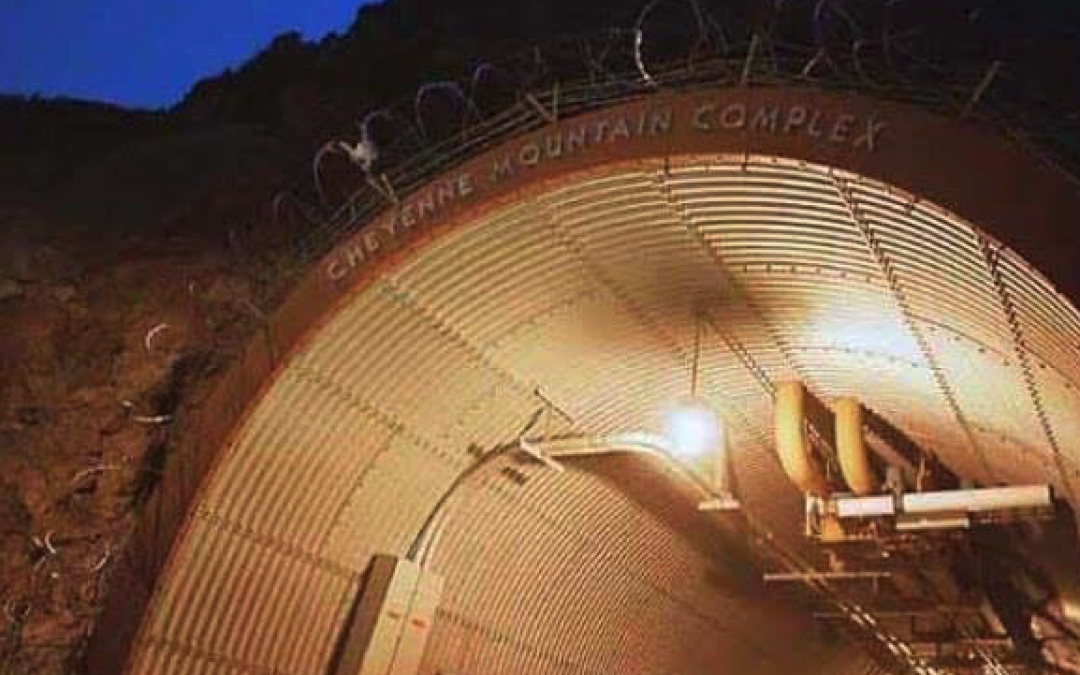
Underground Bases and Tunnels
The first section of this page was written by Phil Schneider:

Photo of United States Air Force tunnel boring machine at Little Skull Mountain, Nevada, USA, December 1982. There are many rumors of secret military tunnels in the United States. If the rumors are true, machines such as the one shown here are used to make the tunnels. (Source: U.S. Department of Energy.)

This is a $13 million tunnel boring machine (TBM) used for tunneling at the Nevada Test Site. (Remember that Area 51 is part of the test site.) Many other types of TBMs are used by many government agencies, including the ‘nuclear powered TBM’ [NTBM] that melts solid rock and leaves behind glass-like walls.

Most tunneling activity is under military installations and all information is highly restricted. Former employees of said facilities have surfaced over the years to talk of massive underground installations in places like Area 51, the Northrop facility in Antelope Valley, California (rumored to have 42 levels), and the Lockheed installation near Edwards, California.
Lockheed Martin’s “Got Their Fingers Everywhere”, Says Author
Too big to fail?
That’s been the key question asked of Wall Street’s biggest banks since the September 2008 collapse of Lehman Brothers, which sent shock waves through the global financial system and led to the worst recession this country has seen since the Great Depression.
But, there is another firm far from the circles of Wall Street for which that same question should be asked, says William Hartung, author of the new book Prophets of War. The subtitle of his book says it all: Lockheed Martin and the Making of the Military-Industrial Complex.
With $40 billion in annual revenue, Lockheed Martin is the single largest recipient of U.S. tax dollars. The company receives about $36 billion in government contracts per year. In 2008, $29 billion of that was for U.S. military contracts – a dollar figure 25% higher than its competitors Boeing Co. and Northrop Grumman.
Globalist Corporations: Re-Cap

Many will argue for Capitalism as the best type of economy. Sure that would hold true, if everyone played fair. Clearly this is not the case, as corruption runs rampant. Its time to expose those destroying and enslaving others, working only towards their own selfish interests.
Lets get back to basics, shall we?
UNITED STATES CODE
Title 28 3002 (15)
(A) (B) (C).
The UNITED STATES is a corporation
U.S. Code
3002. Definitions
(15) “United States” means- a Federal corporation;
Obama is the President of the Corporation, and the citizens are the employees of the corporation
America is a British Colony. (THE UNITED STATES IS A CORPORATION, NOT A LAND MASS AND IT EXISTED BEFORE THE REVOLUTIONARY WAR, AND THE TROOPS DID NOT LEAVE UNTIL 1796.)
Republica v. Sweers 1 Dallas 43, Treaty of Commerce 8 Stat 116, V. New Haven 8 Wheat 464, Treaty of Peace 8 Stat 80, IRS Publication 6209, Articles of Association October 20, 1774
The King of England financially Backed Both Sides fo the Revolutionary war.
(Treaty at Versailles, July 16 1782, Treaty of Peace 8 Stat 80)