The development of a Human being is a feat of engineering brilliance which goes beyond the comprehension of the average person. The blueprint for this understated and yet stunning design begins to unfold when 23 chromosomes containing DNA information carried by Male sperm unites with 23 chromosomes contained in the Female egg – it is this combination of 46 chromosomes that will prompt the primitive heart (which consists of just two basic tubes at this stage) to form in the new embryo no less than 18 days after conception, incredibly, just four days later, around day 22, this primitive heart is animated by an ‘electric’ spark and begins beating.
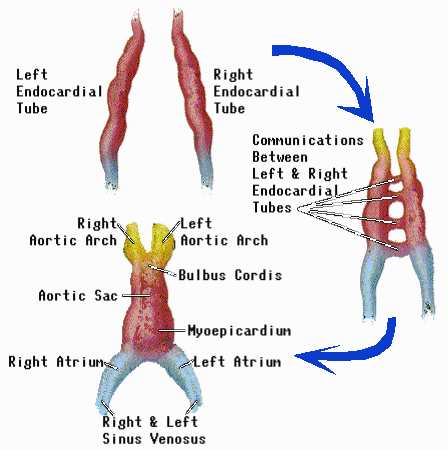
Even though this primitive heart is the first organ to develop in the body it doesn’t resemble a heart in appearance as you can see by looking at the picture above, personally, I have to wonder if the left & right endocardial tubes materialize because (sub)atomic particles are attracted to and then structure themselves around two electric currents already in existence, likewise, is the moment the heart begins beating the moment a prototype ‘consciousness’ emerges and the proto-body becomes a living but not yet (consciously aware) intelligent being that has the potential to evolve into something quite extraordinary.
At the beginning and center of this brilliance is the heart. The heart develops before the brain. Furthermore, the institutionalized belief that the Heart is merely a pump has been shown to be wrong, in fact, it can be shown to be a twin opposing vortex which embodies the physical capacity to be considered a mini-brain and it communicates with the brain and body in four ways, these are through neurological communication (nervous system), biophysical communications (pulse wave), biochemical communication (hormones) andenergetic communication through the interaction of electromagnetic fields.
It is no longer viable to argue the brain is the driving seat of consciousness or that communication between the heart and brain is a one-way process… the belief that the brain speaks and the heart does as its told has been thrown out the window.
After extensive research, one of the early pioneers in neurocardiology, Dr. J. Andrew Armour, introduced the concept of a functional “heart brain” in 1991. His work revealed that the heart has a complex intrinsic nervous system that is sufficiently sophisticated to qualify as a “little brain” in its own right. The heart’s brain is an intricate network of several types of neurons, neurotransmitters, proteins and support cells like those found in the brain proper. Its elaborate circuitry enables it to act independently of the cranial brain – to learn, remember, and even feel and sense. The recent book Neurocardiology, edited by Dr. Armour and Dr. Jeffrey Ardell, provides a comprehensive overview of the function of the heart’s intrinsic nervous system and the role of central and peripheral autonomic neurons in the regulation of cardiac function.
Although we may not have the capacity as a developing embryo or foetus or baby to understand much of anything (at least that we can remember) every single cell in our body is being enveloped by an electric (informational) field which is emanating from the Mothers heart. This field oscillates with emotions, in other words, it can change frequencies and these changes can influence those coming into contact with it. Furthermore, others that comes into close proximity with the Mothers field will generate an interaction where information can be transferred energetically. Without even realizing we are an integral part of our Mothers conscious experiences… both good and bad. The same principle applies to adults.
Something else to consider as well is the phenomenon of water memory. When you consider we are water-based right down to the molecular level one has to ponder how much of an influence thoughts and feelings of the Mother and those that interact with the Mothers heart field have on cellular development. If words or emotions projected in anger distorts water at a molecular level what kind of distortion is being manifest to water-based (sub)atomic structures?
Sound frequencies are information in that they either carry or are instructions to organize matter – we can see this in Cymatics. Different frequencies structure matter into different shapes. We decode these frequencies and hear a noise that is the frequency – we basically tune in. Frequencies are energy/force information. Beethoven’s 9th symphony for example is harmonic frequencies or oscillating energies/force. Thoughts and emotions, which define human experience contain all kinds of information depending on what we are thinking and how we are feeling. This information or knowledge is intangible even though its coherent, organized, intelligent. Love and Hate will have unique frequencies and an entire spectrum of frequencies can manifest from Love and Hate when you consider the kind of feelings we can “will” into experience.
Thoughts and feelings are not only chemical-based but they are (electrical) energy or frequency based as well.
The final two studies in this section are concerned with energetic communication by the heart, which we also refer to as cardio-electromagnetic communication. The heart is the most powerful generator of electromagnetic energy in the human body, producing the largest rhythmic electromagnetic field of any of the body’s organs. The heart’s electrical field is about 60 times greater in amplitude than the electrical activity generated by the brain. This field, measured in the form of an electrocardiogram (ECG), can be detected anywhere on the surface of the body. Furthermore, the magnetic field produced by the heart is more than 5,000 times greater in strength than the field generated by the brain, and can be detected a number of feet away from the body, in all directions, using SQUID-based magnetometers. Prompted by our findings that the cardiac field is modulated by different emotional states (described in the previous section), we performed several studies to investigate the possibility that the electromagnetic field generated by the heart may transmit information that can be received by others.
Everything that is tangible in nature has dimension. This is an inescapable fact. The length of something reveals how long that something is. This is information. The width of something determines how wide that particular something is. This is information. Likewise the depth of some-thing establishes the height of an object – all of these tangible qualities define three dimensional information.
But what dimension(s) do thoughts and emotions have if they are transmitted energetically… do thoughts and feelings have dimension in that they are imprinted on/in/around indivisible (sub)atomic particles or are they attached to or are they an integral part of the energy associated with brain waves and electric fields.
Thus, the last two studies summarized in this section explore interactions that take place between one person’s heart and anothers brain when two people touch or are in proximity. This research elucidates the intriguing finding that the electromagnetic signals generated by the heart have the capacity to affect others around us. Our data indicate that one person’s heart signal can affect anothers brainwaves, and that heart-brain synchronization can occur between two people when they interact. Finally, it appears that as individuals increase psychophysiological coherence, they become more sensitive to the subtle electromagnetic signals communicated by those around them. Taken together, these results suggest that cardioelectromagnetic communication may be a little-known source of information exchange between people, and that this exchange is influenced by our emotions.
The highlighted section of energetic communication is the most fascinating and intriguing aspect of this research. This explores (energy) information being transferred between electric fields. We experience these types of interactions when we walk into a room and are able to “sense” something is wrong. We can’t quite put our finger on it. We feel bad vibes but we don’t know why and more often than not we will dismiss the vibes even though we know we were probably the topic of conversation moments before or that a heated exchange has just taken place between two people who are now sitting with fake smiles on flustered faces. It’s easier to tow the line of ignorance and dismiss the phenomenon despite the obvious static or electrical fluctuations lingering in the air.
The concept of intelligent energy gets even fuzzier because energy is defined through theconservation of energy.
“Energy can neither be created nor destroyed it can only be transformed from one state to another”
Think about the above for a moment. If thoughts, memories and emotions which can be measured via ‘brain-waves’ and electric fields, then these electric projections can only exist as part of something that cannot be created or destroyed.
Does the fact that the Heart field is massively more powerful than the brain field confirm which organ has the influence on the body. Does the presence of electric fields confirm the presence of at least two electric currents “pinched” at points we can call nodes. The nodes being the brain and heart. Let’s not forget the human body is designed as a near-perfect conductor of electricity because it is very much water-based… it is the perfect medium (entity) for facilitating this mysterious force.
When the heart stops beating or the brain ceases to function the Human body becomes inanimate or dead. What has happened… the body is no longer being animated and electricity (and consciousness) are no longer present in the flesh. Matter becomes lifeless, there is no magnetic field, the body cannot function when the electrical forces have departed. Where does this life-giving force or Fohat go if it cannot be created or destroyed. Some suggest the events (memories) that constitute to your life becomes part of theAkashic records or the eternal library.
Thoughts manifest within an ethereal part of our-self that we call the Mind. Memories, like thoughts, are energy-based and are “seen” in the Mind and not before our eyes. They are intangible. Where does this “information” disappear too, the brain is flesh and blood, it is tissue that consists of molecules, which are atoms fused together… they are indivisible particles… pieces of matter.
There are no flesh and blood filing cabinets hidden away in that drab grey organ we call a brain.
CHICAGO — A week before Ben Breedlove died of a heart attack, the Texas teenager posted a remarkable video describing the peace and bright lights he’d found the other times his heart stopped.
Breedlove, 18, tells his story with simple note cards and the occasional smile, sitting close to the camera and stepping back just once to show the scar from when a pacemaker was implanted to help his troubled heart.
It is a remarkably hopeful video, though Breedlove also describes the fear he lived with after being born with a serious heart condition and disappointment that he could not play sports and “be the same as everyone else.”
“The first time I cheated death was when I was 4,” one of the cards said.
Breedlove had a seizure and as nurses rushed him down a hospital hallway, he told his mother of the bright light overhead.
She said she couldn’t see anything, but he felt his fear and worries washed away and couldn’t help smiling.
“I can’t even describe the peace, how peaceful it was,” he wrote. “I will NEVER forget that feeling or that day.”
Breedlove nearly died again a few months ago when his heart stopped during a routine surgery to remove his tonsils.
“It was a miracle that they brought me back,” he wrote. “I was scared to die but am SO glad I didn’t.”
Breedlove’s heart stopped again on December 6. He was at his Austin high school and sat down on a bench after feeling like he was going to faint.
He passed out and when he woke up, he couldn’t talk or move. He could only watch and listen as paramedics put shock pads on his chest.
He heard them say that his heart had stopped and that he had no pulse, which he explains by the fact that “when people’s bodies ‘die’ the brain still works for a short time.”
“I really thought to myself, this is it, I’m dying,” he wrote.
“The next thing that happened I’m not sure if it was a dream or vision. But while I was still unconscious I was in this white room. No walls, it just went on and on…”
He found himself standing with his favorite rapper, Kid Cudi, and they were both dressed in really nice suits.
“Why he was the only one there with me, I’m still trying to figure out,” Breedlove wrote.
“I had that same feeling, I couldn’t stop smiling. I then looked at myself in the mirror and I was proud of MYSELF. Of my entire life, everything I have done. IT WAS THE BEST feeling.”
Kid Cudi put his hand on his shoulder and then Breedlove’s favorite song came on, the part where Cudi raps “when will this fantasy end… when will the heaven begin?”
Cudi told him “Go now” and Breedlove woke up.
After viewing the video, the rapper said he broke down in tears watching it.
“This has really touched my heart in a way I cant describe, this is why I do what I do. Why I write my life, and why I love you all so much,” Kid Cudi wrote on his blog.
“I know Ben is at Peace, and I hope he gets a chance to sit and talk with my Dad.”
Breedlove ended his video with four final cards: “I didn’t want to leave that place. I wish I NEVER woke up. Do you believe in angels or God? I Do.”
Breedlove died at Christmas and his family said in his death notice that it was a gift from God.
“We know the Lord used the amazing life of our precious son to reach a weary world on Christmas night, just as He did over 2000 years ago with his own Son,” they wrote, and urged people to find the video that Breedlove posted on YouTube on December 18.
(NaturalNews) NaturalNews exclusive report, please credit with link. NaturalNews can now report that 65-year-old senior citizen James Stewart, a raw milk farmer with no criminal history, was nearly tortured to death in the LA County jail this past week. He survived a “week of torturous Hell” at the hands of LA County jail keepers who subjected him to starvation, sleep deprivation, hypothermia, loss of blood circulation to extremities, verbal intimidation, involuntary medical testing and even subjected him to over 30 hours of raw biological sewage filth containing dangerous pathogens.
This is from a county that has targeted and terrorized James Stewart for the supposed crime of selling fresh milk containing “dangerous pathogens.” That’s right – the only “crime” James has ever committed is being the milk man and distributing milk that is openly and honestly kept fresh and raw instead of pasteurized. So as part of his punishment of advocating raw cow’s milk, he was tortured with raw human sewage at the LA County jail.
This true story of jaw-dropping dehumanization and torture — conducted in total violation of state law as well as the Geneva Convention for prisoners of war — is told in an exclusive audio interview recorded today between Mike Adams and James Stewart.
That audio recording, which has been released by Adams into the public domain for the purpose of widespread copying and sharing, is available for download at the following links:
128kbps MP3 file (47MB, Hi-Fi, suitable for posting online):
Adams openly encourages members of the public to post these files on YouTube, Vimeo, bittorrent sites and anywhere else where they may reach the public.
“I thought I was gonna die in there…”
In this exclusive interview, you can hear James Stewart describe, in his own words, the shocking details of prisoner abuse right here in America. Among the highlights from his interview with Mike Adams:
• How James was subjected to severe food deprivation.
• How he was interrogated by deputies and accused of being a “sovereign,” then branded with a red arm band (Nazi-style) to falsely indicate that he was a danger to the general population.
• How James was shackled in long chains wrapped around his waist multiple times, then had his hands cuffed behind his back which was bound to the heavy waist chain to restrict his movement. His handcuffs were so tight he thought his wrists would break.
• James was then handcuffed to a cold bench, restricting his movement to just six inches, then left on the bench for 4-5 hours.
• James was then forcibly subjected to various medical tests, including forced chest X-rays even while he was handcuffed.
• He was placed in a cold cell wearing only a T-shirt and pants, where he soon began to suffer from hypothermia and found himself violently shivering just to stay alive.
• How he was made to suffer through total sleep deprivation all night long as other prisoners were screaming and banging on the walls.
• His cell was then flooded with raw human sewage, which flowed into his jail cell 2-3 inches deep, covering his shoes and shirt. LA County jail guards then ordered James to clean up all the raw sewage in his cell by handing him a small hand-held squeegee and demanding that he squeegee out all the raw sewage himself (which he reluctantly did).
• He was then forced to stay in the putrid raw sewage cell for over 30 hours, fighting off nausea and living in bacteriological filth that threatened his health.
• All along, the LA County prison guards gloated over their treatment of prisoners while laughing and joking about their power to subject prisoners to such abuse. This behavior openly mimics that of Gitmo guards who took pictures gloating over their torture and murder of prisoners of war.
• During this entire process, James was not allowed a single phone call nor any visit from an attorney. His right to speak to an attorney was repeatedly denied.
• At no point was James notified of what he was being charged with. He was never presented with an arrest warrant nor were any charges explained to him.
• James was mysteriously “lost” in the system and LA County officials claimed they did not know where he was. This was apparently a deliberate attempt to subject an individual to drawn-out torture without legal representation and make sure no one could locate them to check on their health or arrest status.
“Worse than torture… They’re actually torturing you mentally and physically to break you down…”
These are the actual words of James Stewart that you will hear in this interview:
• “I thought I was gonna die in there.”
• “It was worse than torture. They’re actually torturing you mentally and physically to break you down.”
• “I wrote the ‘torture’ on a piece of toilet paper to try to tell everybody what I had gone through, because I was worried they were going to mentally break me and put me in a psych ward.”
• “What I experienced in downtown LA was brutality.”
• “It’s trauma. And they create this thing where you’re not even sure what’s coming next. What has this country come to? I don’t sleep well at night right now, and I don’t think anyone would if they had been what I’ve been through.”
• “I’m shocked that this is America. Because it seems like you’re in some third world country, in a gulag, like in the movie Midnight Express, where you’re absolutely just tortured. That was the experience I had. Your mind goes, how can this be? This is America?”
NaturalNews calls on Amnesty International, ACLU to intervene
What we are witnessing here is a gross violation of civil rights and human rights, not to mention fundamental due process. The treatment unleashed upon James was not merely against the law in California, it was also a violation of federal law and a violation of the Geneva Convention and its ban on torturing prisoners of war.
“What happened to Stewart is horrendous,” health freedom attorney Jonathan Emord told NaturalNews. He’s the author of the new book “Restore the Republic” which lays out a plan to overthrow tyranny and restore a government that works on behalf of the people instead of declaring the People to be the enemy.
The bail amount set for James ($1 million) and the torture to which he was subjected clearly indicate that James Stewart is a political prisoner of the State of California, which has decided to spend millions of dollars in taxpayer money to target and incarcerate a senior citizen farmer. (By comparison, bail for alleged child rapist and sex pimp Jerry Sandusky, former Penn State sports coach, was only set at $100,000 and was unsecured!)
NaturalNews calls upon Amnesty International and the American Civil Liberties Union to intervene in this extraordinary violation of basic human rights. For the record, James Stewart has no criminal record and is a permaculture farmer and fresh food advocate. His “crime” consists entirely of arranging for the distribution of raw milk to customers who actually line up to access this nourishing food (people love it!).
NaturalNews has no financial ties to James Stewart nor Rawesome Foods and has been the leading source of free press information covering this story. The mainstream media so far refuses to cover this story, most likely out of financial loyalty to the conventional (processed) dairy industry which stands to lose tens of millions of dollars if raw milk is allowed to be openly and legally sold.
Assistance efforts for James Stewart and Sharon Palmer, the other person arrested in this case, can be emailed to:
In addition, NaturalNews has forwarded details to producers of the Alex Jones Show with the hope that Alex Jones will want to cover this for his own audience (www.InfoWars.com).
Information is also being forwarded to the Ron Paul campaign, as Ron Paul has openly spoken out against the absurdity of laws targeting raw milk producers. As Paul is extremely busy running for President, however, he is unlikely to be able to comment on this particular issue.
Tips have been forwarded to Matt Drudge for his consideration of the issue.
NaturalNews.com continues to be the breaking news source on this story with a voice of liberty and food freedom. Check NaturalNews.com for more details this weekend and all next week.
Action items:
• SHARE this story on Twitter, Facebook, LinkedIn and other social networks. You also have permission to download and share the audio files and video files of the interview. Post it on every bittorrent in the known universe…
• Contact your local newspaper editors with letters and opinion pieces to express your outrage at this vindictive arrest and torture of a California farmer.
• Write the officer of Governor Jerry Brown, who has done absolutely nothing to stop this outrageous abuse of California’s by rogue DA operatives in both LA and Ventura counties:
“Doubly-even self-dual linear binary error-correcting block code,” first invented by Claude Shannon in the 1940’s, has been discovered embedded WITHIN the equations of superstring theory!
Why does nature have this? What errors does it need to correct? What is an ‘error’ for nature? More importantly what is the explanation for this freakish discovery? Your guess is as good as mine.
This paper argues that at least one of the following propositions is true: (1) the human species is very likely to go extinct before reaching a “posthuman” stage; (2) any posthuman civilization is extremely unlikely to run a significant number of simulations of their evolutionary history (or variations thereof); (3) we are almost certainly living in a computer simulation. It follows that the belief that there is a significant chance that we will one day become posthumans who run ancestor-simulations is false, unless we are currently living in a simulation. A number of other consequences of this result are also discussed.
I. INTRODUCTION
Many works of science fiction as well as some forecasts by serious technologists and futurologists predict that enormous amounts of computing power will be available in the future. Let us suppose for a moment that these predictions are correct. One thing that later generations might do with their super-powerful computers is run detailed simulations of their forebears or of people like their forebears. Because their computers would be so powerful, they could run a great many such simulations. Suppose that these simulated people are conscious (as they would be if the simulations were sufficiently fine-grained and if a certain quite widely accepted position in the philosophy of mind is correct). Then it could be the case that the vast majority of minds like ours do not belong to the original race but rather to people simulated by the advanced descendants of an original race. It is then possible to argue that, if this were the case, we would be rational to think that we are likely among the simulated minds rather than among the original biological ones. Therefore, if we don’t think that we are currently living in a computer simulation, we are not entitled to believe that we will have descendants who will run lots of such simulations of their forebears. That is the basic idea. The rest of this paper will spell it out more carefully.
Apart form the interest this thesis may hold for those who are engaged in futuristic speculation, there are also more purely theoretical rewards. The argument provides a stimulus for formulating some methodological and metaphysical questions, and it suggests naturalistic analogies to certain traditional religious conceptions, which some may find amusing or thought-provoking.
The structure of the paper is as follows. First, we formulate an assumption that we need to import from the philosophy of mind in order to get the argument started. Second, we consider some empirical reasons for thinking that running vastly many simulations of human minds would be within the capability of a future civilization that has developed many of those technologies that can already be shown to be compatible with known physical laws and engineering constraints. This part is not philosophically necessary but it provides an incentive for paying attention to the rest. Then follows the core of the argument, which makes use of some simple probability theory, and a section providing support for a weak indifference principle that the argument employs. Lastly, we discuss some interpretations of the disjunction, mentioned in the abstract, that forms the conclusion of the simulation argument.
II. THE ASSUMPTION OF SUBSTRATE-INDEPENDENCE
A common assumption in the philosophy of mind is that of substrate-independence. The idea is that mental states can supervene on any of a broad class of physical substrates. Provided a system implements the right sort of computational structures and processes, it can be associated with conscious experiences. It is not an essential property of consciousness that it is implemented on carbon-based biological neural networks inside a cranium: silicon-based processors inside a computer could in principle do the trick as well.
Arguments for this thesis have been given in the literature, and although it is not entirely uncontroversial, we shall here take it as a given.
The argument we shall present does not, however, depend on any very strong version of functionalism or computationalism. For example, we need not assume that the thesis of substrate-independence is necessarily true (either analytically or metaphysically) – just that, in fact, a computer running a suitable program would be conscious. Moreover, we need not assume that in order to create a mind on a computer it would be sufficient to program it in such a way that it behaves like a human in all situations, including passing the Turing test etc. We need only the weaker assumption that it would suffice for the generation of subjective experiences that the computational processes of a human brain are structurally replicated in suitably fine-grained detail, such as on the level of individual synapses. This attenuated version of substrate-independence is quite widely accepted.
Neurotransmitters, nerve growth factors, and other chemicals that are smaller than a synapse clearly play a role in human cognition and learning. The substrate-independence thesis is not that the effects of these chemicals are small or irrelevant, but rather that they affect subjective experience only via their direct or indirect influence on computational activities. For example, if there can be no difference in subjective experience without there also being a difference in synaptic discharges, then the requisite detail of simulation is at the synaptic level (or higher).
III. THE TECHNOLOGICAL LIMITS OF COMPUTATION
At our current stage of technological development, we have neither sufficiently powerful hardware nor the requisite software to create conscious minds in computers. But persuasive arguments have been given to the effect that if technological progress continues unabated then these shortcomings will eventually be overcome. Some authors argue that this stage may be only a few decades away.[1] Yet present purposes require no assumptions about the time-scale. The simulation argument works equally well for those who think that it will take hundreds of thousands of years to reach a “posthuman” stage of civilization, where humankind has acquired most of the technological capabilities that one can currently show to be consistent with physical laws and with material and energy constraints.
Such a mature stage of technological development will make it possible to convert planets and other astronomical resources into enormously powerful computers. It is currently hard to be confident in any upper bound on the computing power that may be available to posthuman civilizations. As we are still lacking a “theory of everything”, we cannot rule out the possibility that novel physical phenomena, not allowed for in current physical theories, may be utilized to transcend those constraints[2] that in our current understanding impose theoretical limits on the information processing attainable in a given lump of matter. We can with much greater confidence establish lower bounds on posthuman computation, by assuming only mechanisms that are already understood. For example, Eric Drexler has outlined a design for a system the size of a sugar cube (excluding cooling and power supply) that would perform 1021 instructions per second.[3] Another author gives a rough estimate of 1042 operations per second for a computer with a mass on order of a large planet.[4] (If we could create quantum computers, or learn to build computers out of nuclear matter or plasma, we could push closer to the theoretical limits. Seth Lloyd calculates an upper bound for a 1 kg computer of 5*1050 logical operations per second carried out on ~1031 bits.[5] However, it suffices for our purposes to use the more conservative estimate that presupposes only currently known design-principles.)
The amount of computing power needed to emulate a human mind can likewise be roughly estimated. One estimate, based on how computationally expensive it is to replicate the functionality of a piece of nervous tissue that we have already understood and whose functionality has been replicated in silico, contrast enhancement in the retina, yields a figure of ~1014 operations per second for the entire human brain.[6] An alternative estimate, based the number of synapses in the brain and their firing frequency, gives a figure of ~1016-1017 operations per second.[7] Conceivably, even more could be required if we want to simulate in detail the internal workings of synapses and dendritic trees. However, it is likely that the human central nervous system has a high degree of redundancy on the mircoscale to compensate for the unreliability and noisiness of its neuronal components. One would therefore expect a substantial efficiency gain when using more reliable and versatile non-biological processors.
Memory seems to be a no more stringent constraint than processing power.[8] Moreover, since the maximum human sensory bandwidth is ~108 bits per second, simulating all sensory events incurs a negligible cost compared to simulating the cortical activity. We can therefore use the processing power required to simulate the central nervous system as an estimate of the total computational cost of simulating a human mind.
If the environment is included in the simulation, this will require additional computing power – how much depends on the scope and granularity of the simulation. Simulating the entire universe down to the quantum level is obviously infeasible, unless radically new physics is discovered. But in order to get a realistic simulation of human experience, much less is needed – only whatever is required to ensure that the simulated humans, interacting in normal human ways with their simulated environment, don’t notice any irregularities. The microscopic structure of the inside of the Earth can be safely omitted. Distant astronomical objects can have highly compressed representations: verisimilitude need extend to the narrow band of properties that we can observe from our planet or solar system spacecraft. On the surface of Earth, macroscopic objects in inhabited areas may need to be continuously simulated, but microscopic phenomena could likely be filled in ad hoc. What you see through an electron microscope needs to look unsuspicious, but you usually have no way of confirming its coherence with unobserved parts of the microscopic world. Exceptions arise when we deliberately design systems to harness unobserved microscopic phenomena that operate in accordance with known principles to get results that we are able to independently verify. The paradigmatic case of this is a computer. The simulation may therefore need to include a continuous representation of computers down to the level of individual logic elements. This presents no problem, since our current computing power is negligible by posthuman standards.
Moreover, a posthuman simulator would have enough computing power to keep track of the detailed belief-states in all human brains at all times. Therefore, when it saw that a human was about to make an observation of the microscopic world, it could fill in sufficient detail in the simulation in the appropriate domain on an as-needed basis. Should any error occur, the director could easily edit the states of any brains that have become aware of an anomaly before it spoils the simulation. Alternatively, the director could skip back a few seconds and rerun the simulation in a way that avoids the problem.
It thus seems plausible that the main computational cost in creating simulations that are indistinguishable from physical reality for human minds in the simulation resides in simulating organic brains down to the neuronal or sub-neuronal level.[9] While it is not possible to get a very exact estimate of the cost of a realistic simulation of human history, we can use ~1033 – 1036 operations as a rough estimate[10]. As we gain more experience with virtual reality, we will get a better grasp of the computational requirements for making such worlds appear realistic to their visitors. But in any case, even if our estimate is off by several orders of magnitude, this does not matter much for our argument. We noted that a rough approximation of the computational power of a planetary-mass computer is 1042 operations per second, and that assumes only already known nanotechnological designs, which are probably far from optimal. A single such a computer could simulate the entire mental history of humankind (call this an ancestor-simulation) by using less than one millionth of its processing power for one second. A posthuman civilization may eventually build an astronomical number of such computers. We can conclude that the computing power available to a posthuman civilization is sufficient to run a huge number of ancestor-simulations even it allocates only a minute fraction of its resources to that purpose. We can draw this conclusion even while leaving a substantial margin of error in all our estimates.
Posthuman civilizations would have enough computing power to run hugely many ancestor-simulations even while using only a tiny fraction of their resources for that purpose.
IV. THE CORE OF THE SIMULATION ARGUMENT
The basic idea of this paper can be expressed roughly as follows: If there were a substantial chance that our civilization will ever get to the posthuman stage and run many ancestor-simulations, then how come you are not living in such a simulation?
We shall develop this idea into a rigorous argument. Let us introduce the following notation:
: Fraction of all human-level technological civilizations that survive to reach a posthuman stage
: Average number of ancestor-simulations run by a posthuman civilization
: Average number of individuals that have lived in a civilization before it reaches a posthuman stage
The actual fraction of all observers with human-type experiences that live in simulations is then
Writing for the fraction of posthuman civilizations that are interested in running ancestor-simulations (or that contain at least some individuals who are interested in that and have sufficient resources to run a significant number of such simulations), and for the average number of ancestor-simulations run by such interested civilizations, we have
and thus:
(*)
Because of the immense computing power of posthuman civilizations, is extremely large, as we saw in the previous section. By inspecting (*) we can then see that at least one of the following three propositions must be true:
(1)
(2)
(3)
V. A BLAND INDIFFERENCE PRINCIPLE
We can take a further step and conclude that conditional on the truth of (3), one’s credence in the hypothesis that one is in a simulation should be close to unity. More generally, if we knew that a fraction x of all observers with human-type experiences live in simulations, and we don’t have any information that indicate that our own particular experiences are any more or less likely than other human-type experiences to have been implemented in vivo rather than in machina, then our credence that we are in a simulation should equal x:
(#)
This step is sanctioned by a very weak indifference principle. Let us distinguish two cases. The first case, which is the easiest, is where all the minds in question are like your own in the sense that they are exactly qualitatively identical to yours: they have exactly the same information and the same experiences that you have. The second case is where the minds are “like” each other only in the loose sense of being the sort of minds that are typical of human creatures, but they are qualitatively distinct from one another and each has a distinct set of experiences. I maintain that even in the latter case, where the minds are qualitatively different, the simulation argument still works, provided that you have no information that bears on the question of which of the various minds are simulated and which are implemented biologically.
A detailed defense of a stronger principle, which implies the above stance for both cases as trivial special instances, has been given in the literature.[11] Space does not permit a recapitulation of that defense here, but we can bring out one of the underlying intuitions by bringing to our attention to an analogous situation of a more familiar kind. Suppose that x% of the population has a certain genetic sequence S within the part of their DNA commonly designated as “junk DNA”. Suppose, further, that there are no manifestations of S (short of what would turn up in a gene assay) and that there are no known correlations between having S and any observable characteristic. Then, quite clearly, unless you have had your DNA sequenced, it is rational to assign a credence of x% to the hypothesis that you have S. And this is so quite irrespective of the fact that the people who have S have qualitatively different minds and experiences from the people who don’t have S. (They are different simply because all humans have different experiences from one another, not because of any known link between S and what kind of experiences one has.)
The same reasoning holds if S is not the property of having a certain genetic sequence but instead the property of being in a simulation, assuming only that we have no information that enables us to predict any differences between the experiences of simulated minds and those of the original biological minds.
It should be stressed that the bland indifference principle expressed by (#) prescribes indifference only between hypotheses about which observer you are, when you have no information about which of these observers you are. It does not in general prescribe indifference between hypotheses when you lack specific information about which of the hypotheses is true. In contrast to Laplacean and other more ambitious principles of indifference, it is therefore immune to Bertrand’s paradox and similar predicaments that tend to plague indifference principles of unrestricted scope.
Readers familiar with the Doomsday argument[12] may worry that the bland principle of indifference invoked here is the same assumption that is responsible for getting the Doomsday argument off the ground, and that the counterintuitiveness of some of the implications of the latter incriminates or casts doubt on the validity of the former. This is not so. The Doomsday argument rests on a much stronger and more controversial premiss, namely that one should reason as if one were a random sample from the set of all people who will ever have lived (past, present, and future) even though we know that we are living in the early twenty-first century rather than at some point in the distant past or the future. The bland indifference principle, by contrast, applies only to cases where we have no information about which group of people we belong to.
If betting odds provide some guidance to rational belief, it may also be worth to ponder that if everybody were to place a bet on whether they are in a simulation or not, then if people use the bland principle of indifference, and consequently place their money on being in a simulation if they know that that’s where almost all people are, then almost everyone will win their bets. If they bet on not being in a simulation, then almost everyone will lose. It seems better that the bland indifference principle be heeded.
Further, one can consider a sequence of possible situations in which an increasing fraction of all people live in simulations: 98%, 99%, 99.9%, 99.9999%, and so on. As one approaches the limiting case in which everybody is in a simulation (from which one can deductively infer that one is in a simulation oneself), it is plausible to require that the credence one assigns to being in a simulation gradually approach the limiting case of complete certainty in a matching manner.
VI. INTERPRETATION
The possibility represented by proposition (1) is fairly straightforward. If (1) is true, then humankind will almost certainly fail to reach a posthuman level; for virtually no species at our level of development become posthuman, and it is hard to see any justification for thinking that our own species will be especially privileged or protected from future disasters. Conditional on (1), therefore, we must give a high credence to DOOM, the hypothesis that humankind will go extinct before reaching a posthuman level:
One can imagine hypothetical situations were we have such evidence as would trump knowledge of . For example, if we discovered that we were about to be hit by a giant meteor, this might suggest that we had been exceptionally unlucky. We could then assign a credence to DOOM larger than our expectation of the fraction of human-level civilizations that fail to reach posthumanity. In the actual case, however, we seem to lack evidence for thinking that we are special in this regard, for better or worse.
Proposition (1) doesn’t by itself imply that we are likely to go extinct soon, only that we are unlikely to reach a posthuman stage. This possibility is compatible with us remaining at, or somewhat above, our current level of technological development for a long time before going extinct. Another way for (1) to be true is if it is likely that technological civilization will collapse. Primitive human societies might then remain on Earth indefinitely.
There are many ways in which humanity could become extinct before reaching posthumanity. Perhaps the most natural interpretation of (1) is that we are likely to go extinct as a result of the development of some powerful but dangerous technology.[13] One candidate is molecular nanotechnology, which in its mature stage would enable the construction of self-replicating nanobots capable of feeding on dirt and organic matter – a kind of mechanical bacteria. Such nanobots, designed for malicious ends, could cause the extinction of all life on our planet.[14]
The second alternative in the simulation argument’s conclusion is that the fraction of posthuman civilizations that are interested in running ancestor-simulation is negligibly small. In order for (2) to be true, there must be a strong convergence among the courses of advanced civilizations. If the number of ancestor-simulations created by the interested civilizations is extremely large, the rarity of such civilizations must be correspondingly extreme. Virtually no posthuman civilizations decide to use their resources to run large numbers of ancestor-simulations. Furthermore, virtually all posthuman civilizations lack individuals who have sufficient resources and interest to run ancestor-simulations; or else they have reliably enforced laws that prevent such individuals from acting on their desires.
What force could bring about such convergence? One can speculate that advanced civilizations all develop along a trajectory that leads to the recognition of an ethical prohibition against running ancestor-simulations because of the suffering that is inflicted on the inhabitants of the simulation. However, from our present point of view, it is not clear that creating a human race is immoral. On the contrary, we tend to view the existence of our race as constituting a great ethical value. Moreover, convergence on an ethical view of the immorality of running ancestor-simulations is not enough: it must be combined with convergence on a civilization-wide social structure that enables activities considered immoral to be effectively banned.
Another possible convergence point is that almost all individual posthumans in virtually all posthuman civilizations develop in a direction where they lose their desires to run ancestor-simulations. This would require significant changes to the motivations driving their human predecessors, for there are certainly many humans who would like to run ancestor-simulations if they could afford to do so. But perhaps many of our human desires will be regarded as silly by anyone who becomes a posthuman. Maybe the scientific value of ancestor-simulations to a posthuman civilization is negligible (which is not too implausible given its unfathomable intellectual superiority), and maybe posthumans regard recreational activities as merely a very inefficient way of getting pleasure – which can be obtained much more cheaply by direct stimulation of the brain’s reward centers. One conclusion that follows from (2) is that posthuman societies will be very different from human societies: they will not contain relatively wealthy independent agents who have the full gamut of human-like desires and are free to act on them.
The possibility expressed by alternative (3) is the conceptually most intriguing one. If we are living in a simulation, then the cosmos that we are observing is just a tiny piece of the totality of physical existence. The physics in the universe where the computer is situated that is running the simulation may or may not resemble the physics of the world that we observe. While the world we see is in some sense “real”, it is not located at the fundamental level of reality.
It may be possible for simulated civilizations to become posthuman. They may then run their own ancestor-simulations on powerful computers they build in their simulated universe. Such computers would be “virtual machines”, a familiar concept in computer science. (Java script web-applets, for instance, run on a virtual machine – a simulated computer – inside your desktop.) Virtual machines can be stacked: it’s possible to simulate a machine simulating another machine, and so on, in arbitrarily many steps of iteration. If we do go on to create our own ancestor-simulations, this would be strong evidence against (1) and (2), and we would therefore have to conclude that we live in a simulation. Moreover, we would have to suspect that the posthumans running our simulation are themselves simulated beings; and their creators, in turn, may also be simulated beings.
Reality may thus contain many levels. Even if it is necessary for the hierarchy to bottom out at some stage – the metaphysical status of this claim is somewhat obscure – there may be room for a large number of levels of reality, and the number could be increasing over time. (One consideration that counts against the multi-level hypothesis is that the computational cost for the basement-level simulators would be very great. Simulating even a single posthuman civilization might be prohibitively expensive. If so, then we should expect our simulation to be terminated when we are about to become posthuman.)
Although all the elements of such a system can be naturalistic, even physical, it is possible to draw some loose analogies with religious conceptions of the world. In some ways, the posthumans running a simulation are like gods in relation to the people inhabiting the simulation: the posthumans created the world we see; they are of superior intelligence; they are “omnipotent” in the sense that they can interfere in the workings of our world even in ways that violate its physical laws; and they are “omniscient” in the sense that they can monitor everything that happens. However, all the demigods except those at the fundamental level of reality are subject to sanctions by the more powerful gods living at lower levels.
Further rumination on these themes could climax in a naturalistic theogony that would study the structure of this hierarchy, and the constraints imposed on its inhabitants by the possibility that their actions on their own level may affect the treatment they receive from dwellers of deeper levels. For example, if nobody can be sure that they are at the basement-level, then everybody would have to consider the possibility that their actions will be rewarded or punished, based perhaps on moral criteria, by their simulators. An afterlife would be a real possibility. Because of this fundamental uncertainty, even the basement civilization may have a reason to behave ethically. The fact that it has such a reason for moral behavior would of course add to everybody else’s reason for behaving morally, and so on, in truly virtuous circle. One might get a kind of universal ethical imperative, which it would be in everybody’s self-interest to obey, as it were “from nowhere”.
In addition to ancestor-simulations, one may also consider the possibility of more selective simulations that include only a small group of humans or a single individual. The rest of humanity would then be zombies or “shadow-people” – humans simulated only at a level sufficient for the fully simulated people not to notice anything suspicious. It is not clear how much cheaper shadow-people would be to simulate than real people. It is not even obvious that it is possible for an entity to behave indistinguishably from a real human and yet lack conscious experience. Even if there are such selective simulations, you should not think that you are in one of them unless you think they are much more numerous than complete simulations. There would have to be about 100 billion times as many “me-simulations” (simulations of the life of only a single mind) as there are ancestor-simulations in order for most simulated persons to be in me-simulations.
There is also the possibility of simulators abridging certain parts of the mental lives of simulated beings and giving them false memories of the sort of experiences that they would typically have had during the omitted interval. If so, one can consider the following (farfetched) solution to the problem of evil: that there is no suffering in the world and all memories of suffering are illusions. Of course, this hypothesis can be seriously entertained only at those times when you are not currently suffering.
Supposing we live in a simulation, what are the implications for us humans? The foregoing remarks notwithstanding, the implications are not all that radical. Our best guide to how our posthuman creators have chosen to set up our world is the standard empirical study of the universe we see. The revisions to most parts of our belief networks would be rather slight and subtle – in proportion to our lack of confidence in our ability to understand the ways of posthumans. Properly understood, therefore, the truth of (3) should have no tendency to make us “go crazy” or to prevent us from going about our business and making plans and predictions for tomorrow. The chief empirical importance of (3) at the current time seems to lie in its role in the tripartite conclusion established above.[15] We may hope that (3) is true since that would decrease the probability of (1), although if computational constraints make it likely that simulators would terminate a simulation before it reaches a posthuman level, then out best hope would be that (2) is true.
If we learn more about posthuman motivations and resource constraints, maybe as a result of developing towards becoming posthumans ourselves, then the hypothesis that we are simulated will come to have a much richer set of empirical implications.
VII. CONCLUSION
A technologically mature “posthuman” civilization would have enormous computing power. Based on this empirical fact, the simulation argument shows that at least one of the following propositions is true: (1) The fraction of human-level civilizations that reach a posthuman stage is very close to zero; (2) The fraction of posthuman civilizations that are interested in running ancestor-simulations is very close to zero; (3) The fraction of all people with our kind of experiences that are living in a simulation is very close to one.
If (1) is true, then we will almost certainly go extinct before reaching posthumanity. If (2) is true, then there must be a strong convergence among the courses of advanced civilizations so that virtually none contains any relatively wealthy individuals who desire to run ancestor-simulations and are free to do so. If (3) is true, then we almost certainly live in a simulation. In the dark forest of our current ignorance, it seems sensible to apportion one’s credence roughly evenly between (1), (2), and (3).
Unless we are now living in a simulation, our descendants will almost certainly never run an ancestor-simulation.
Acknowledgements
I’m grateful to many people for comments, and especially to Amara Angelica, Robert Bradbury, Milan Cirkovic, Robin Hanson, Hal Finney, Robert A. Freitas Jr., John Leslie, Mitch Porter, Keith DeRose, Mike Treder, Mark Walker, Eliezer Yudkowsky, and several anonymous referees.
[1] See e.g. K. E. Drexler, Engines of Creation: The Coming Era of Nanotechnology, London, Forth Estate, 1985; N. Bostrom, “How Long Before Superintelligence?” International Journal of Futures Studies, vol. 2, (1998); R. Kurzweil, The Age of Spiritual Machines: When computers exceed human intelligence, New York, Viking Press, 1999; H. Moravec, Robot: Mere Machine to Transcendent Mind, Oxford University Press, 1999.
[2] Such as the Bremermann-Bekenstein bound and the black hole limit (H. J. Bremermann, “Minimum energy requirements of information transfer and computing.” International Journal of Theoretical Physics 21: 203-217 (1982); J. D. Bekenstein, “Entropy content and information flow in systems with limited energy.” Physical Review D 30: 1669-1679 (1984); A. Sandberg, “The Physics of Information Processing Superobjects: The Daily Life among the Jupiter Brains.” Journal of Evolution and Technology, vol. 5 (1999)).
[3] K. E. Drexler, Nanosystems: Molecular Machinery, Manufacturing, and Computation, New York, John Wiley & Sons, Inc., 1992.
[4] R. J. Bradbury, “Matrioshka Brains.” Working manuscript (2002), http://www.aeiveos.com/~bradbury/MatrioshkaBrains/MatrioshkaBrains.html.
[5] S. Lloyd, “Ultimate physical limits to computation.” Nature 406 (31 August): 1047-1054 (2000).
[6] H. Moravec, Mind Children, Harvard University Press (1989).
[9] As we build more and faster computers, the cost of simulating our machines might eventually come to dominate the cost of simulating nervous systems.
[10] 100 billion humans50 years/human30 million secs/year[1014, 1017] operations in each human brain per second [1033, 1036] operations.
[11] In e.g. N. Bostrom, “The Doomsday argument, Adam & Eve, UN++, and Quantum Joe.” Synthese 127(3): 359-387 (2001); and most fully in my book Anthropic Bias: Observation Selection Effects in Science and Philosophy, Routledge, New York, 2002.
[12] See e.g. J. Leslie, “Is the End of the World Nigh? ” Philosophical Quarterly 40, 158: 65-72 (1990).
[13] See my paper “Existential Risks: Analyzing Human Extinction Scenarios and Related Hazards.” Journal of Evolution and Technology, vol. 9 (2001) for a survey and analysis of the present and anticipated future threats to human survival.
[14] See e.g. Drexler (1985) op cit., and R. A. Freitas Jr., “Some Limits to Global Ecophagy by Biovorous Nanoreplicators, with Public Policy Recommendations.” Zyvex preprint April (2000), http://www.foresight.org/NanoRev/Ecophagy.html.
[15] For some reflections by another author on the consequences of (3), which were sparked by a privately circulated earlier version of this paper, see R. Hanson, “How to Live in a Simulation.” Journal of Evolution and Technology, vol. 7 (2001).
Why are some states simply ignoring the latest studies, and passing new laws that will hurt your teeth and harm your health?
Water fluoridation was introduced to the United States in the 1940s as a way to use waste product from the manufacture of aluminum, a waste product that was expensive to dispose of and which was harming cattle and farmland. Since then, the federal government has taken the stance that the fluoridation of drinking water, which conveniently disposed of the waste, is vitally important to help prevent tooth decay; the CDC called it one of the ten great public health achievements of the 20th century. But the the latest scientific studies have finally made the US Department of Health and Human Services (HHS) and the US Environmental Protection Agency (EPA) change their tune on how much fluoride is safe.
The data indicates that dental fluorosi – damage to the teeth from fluoride, ranging from lacy white markings or spots on the enamel to staining and pitting of the tooth surface – happens when fluoride levels are too high. Water is only one of several sources of fluoride. Other common sources include dental products such as toothpaste and mouth rinses, prescription fluoride supplements, fluoride applied by dental professionals, and exposure through our food, which is often sprayed with fluoride-based pesticides.
Today the fluoride in your water mostly comes from the phosphate fertilizer industry – but it’s still toxic waste, containing other byproducts such as arsenic, lead, cadmium, and mercury. And two studies show that fluoride increases the accumulation of lead in bone, teeth, and other calcium-rich tissues, transporting heavy metals into areas of your body they normally would not be able to go – like your brain.
Another study revealed that prolonged, high intake of fluoride can increase the risk of brittle bones, fractures, and crippling bone abnormalities. Longtime readers may recall our 2008 article on the effects of fluoride on teeth and bones (harming kidney patients worst of all); we also noted that fluoride is a known neurotoxin, and can have detrimental effects on the thyroid, which could affect intelligence.
EPA and HHS now recommend the level of fluoride in drinking water to be set “at the lowest end of the current optimal range” – that is, no more than 0.7 milligrams of fluoride per liter of water instead of the current recommended range which goes as high as 1.2 milligrams.
Despite studies so compelling that the federal government has started back-pedaling, the states of New Jersey and Vermont are attempting to mandate the fluoridation of water supply. Unfortunately, the New Jersey bill is very close to being passed. By contrast, Illinois and New Hampshire have introduced bills to prohibit fluoride in drinking water.
In New Jersey, both S959 in the Senate and A1811 in the Assembly are on red alert – they have been reported out of committee and are already on the floor, so they can be voted upon at any time. These bills mandate the fluoridation of water. At minimum, this is a freedom of choice issue – citizens should be able to choose whether they want to ingest fluoride or not. Write your legislators and ask them to oppose these bills – take action now!
In Vermont, H615 (currently in the Health Care Committee) contains many provisions to do with oral care – so we are specifically opposing section 108a, which mandates fluoridation of water. It requires that any municipality, government agency, or other entity that owns or controls a water system shall maintain fluoride in the water supply. Write your representative and request an amendment to strike out that part of the bill – take action now!
In New Hampshire: HB1529 would amend current law to say, “No fluoride, nor any chemical containing fluoride, shall be introduced into the public water supply,” as well as other specific provisions against the the use of herbicides within ten miles upgradient (that is, uphill) from a water intake of a domestic water supply. Write your representative and express your strong support for this bill – take action now!
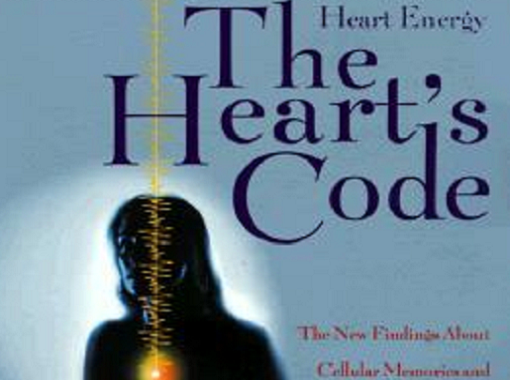
A fascinating synthesis of ancient wisdom, modern medicine, scientific research, and personal experiences that proves that the human heart, not the brain, holds the secrets that link body, mind, and spirit.You know that the heart loves and feels, but did you know that the heart also thinks, remembers, communicates with other hearts, helps regulate immunity, and contains stored information that continually pulses through your body? In The Heart’s Code, Dr. Paul Pearsall explains the theory and science behind energy cardiology, the emerging field that is uncovering one of the most significant medical, social, and spiritual discoveries of our time: The heart is more than just a pump; it conducts the cellular symphony that is the very essence of our being.
Full of amazing anecdotes and data, The Heart’s Code presents the latest research on cellular memory and the power of the heart’s energy and explores what these breakthroughs mean about how we should live our lives. By unlocking the heart’s code we can discover new ways of understanding human healing and consciousness and create a new model for living that leads to better health, happiness, and self-knowledge.
Pearsall states that we have been too brain-focused and have not listened to all the heart has to offer. We should learn to be patient, connected with others, pleasant, humble, and gentle, Pearsall says, and for those who want to find out whether they are cardiosensitive, he presents a personal inventory. Although hardly a work of completely hard science, Pearsall’s effort has much to offer thoughtful readers. William Beatty–This text refers to an out of print or unavailable edition of this title.
Book Description Publication Date: May 6, 1992
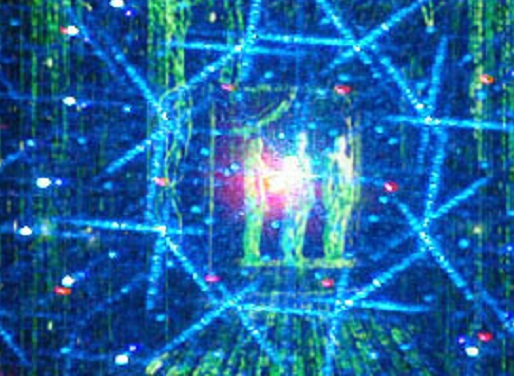
Today nearly everyone is familiar with holograms, three-dimensional images projected into space with the aid of a laser. Now, two of the world’s most eminent thinkers — University of London physicists David Bohm, a former protege of Einstein’s and one of the world’s most respected quantum physicists, and Stanford neurophysiologist Karl Pribram, one of the architects of our modern understanding of the brain — believe that the universe itself may be a giant hologram, quite literally a kind of image or construct created, at least in part, by the human mind. This remarkable new way of looking at the universe explains now only many of the unsolved puzzles of physics, but also such mysterious occurrences as telepathy, out-of-body and near death experiences, “lucid” dreams, and even religious and mystical experiences such as feelings of cosmic unity and miraculous healings.
Series: Process Self-reliance Series | Publication Date: November 1, 2006
Had enough?Whether you find the government oppressive, the economy spiraling out of control, or if you simply want adventure, you’re not alone. In increasing numbers, the idea is talked about openly: Expatriate.
Over three hundred thousand Americans emigrate each year, and more than a million go to foreign lands for lengthy stays.
But picking up and moving to another country feels like a step into the void. Where to go? How to begin? What to do?
Volume 2 of the Process Self-Reliance Series, this smartly designed two-color guidebook walks you through the world of the expat: the reasons, the rules, the resources, and the tricks of the trade, along with compelling stories and expertise from expatriate Americans on every continent.
Getting Out shows you where you can most easily gain residence, citizenship, or work permits; where can you live for a fraction of the cost of where you’re living now; and what countries would be most compatible with your lifestyle, gender, age, or political beliefs.
So if you’ve had enough of what they’re selling here and want to take your life elsewhere—well, isn’t that the American way? At any rate, it’s not illegal. Not yet, anyway.
Whether you find the government oppressive, the economy spiraling out of control, or if you simply want adventure, you’re not alone. In increasing numbers, the idea is talked about openly: Expatriate.
Over three hundred thousand Americans emigrate each year, and more than a million go to foreign lands for lengthy stays.
But picking up and moving to another country feels like a step into the void. Where to go? How to begin? What to do?
Volume 2 of the Process Self-Reliance Series, this smartly designed two-color guidebook walks you through the world of the expat: the reasons, the rules, the resources, and the tricks of the trade, along with compelling stories and expertise from expatriate Americans on every continent.
Getting Out shows you where you can most easily gain residence, citizenship, or work permits; where can you live for a fraction of the cost of where you’re living now; and what countries would be most compatible with your lifestyle, gender, age, or political beliefs.
So if you’ve had enough of what they’re selling here and want to take your life elsewhere—well, isn’t that the American way? At any rate, it’s not illegal. Not yet, anyway.
Customers Viewing This Page May Be Interested in These Sponsored Links
Mark Ehrman is a frequent traveler and freelance writer whose work regularly appears in the Los Angeles Times, Playboy, Travel and Leisure, and numerous travel magazines city guidebooks.
Product Details
Paperback: 320 pages
Publisher: Process (November 1, 2006)
Language: English
ISBN-10: 0976082276
ISBN-13: 978-0976082279
Product Dimensions: 8.9 x 5.9 x 0.9 inches
Shipping Weight: 1.2 pounds
Average Customer Review:3.8 out of 5 stars See all reviews (18 customer reviews)
This review is from: Getting Out: Your Guide to Leaving America (Process Self-reliance Series) (Paperback)
The strength of this book is that it favors breadth rather than depth.
If you are thinking about leaving the US but don’t really know where you’d like to go, or if you have a destination in mind but don’t really know what you don’t know about emigration, this book is for you. Getting Out covers the top 50 destinations for US expats, with information about the quality of health care, cost and standard of living, and social permissiveness. Also included are brief accounts of the experiences of expats living around the world. There is also good general information about the different pathways available to the potential expat.
Reading it will definately leave you with more questions than answers, since any comprehensive emigration/immigration guide to all the countries in the world would fill a small library. Getting Out will give you the basics and point you in the right direction to find more in-depth information. You won’t find anything here that will help you decide to settle in one country over another, but it will help you either narrow your list or give you reason to consider some place you otherwise would not have.
Help other customers find the most helpful reviews
This review is from: Getting Out: Your Guide to Leaving America (Process Self-reliance Series) (Paperback)
This is a great book that is a good foundation in researching the how-to’s in leaving the country. In a category where there are very few books to choose from, this book is timely and reasonable well written. If you are interested in leaving the United States and not completely sure of where to go, this is a good resource along with the CIA factbook & other well known websites.
Pros:
1) Great list of helpful websites in the back for each country.
2) Excellent group of countries considered around the globe.
3) Decent foundational info about each country considered (50 countries).
4) Very readable style.
5) Good cross section of short blurbs about various peoples rationales in leaving.
6) Fair price for the book.
Cons:
1) No specific info as to why certain countries were included and other excluded.
2) Many countries mentioned in passing (in a positive light) in various parts of text are not considered as possibilities (i.e.: not profiled).
3) No easy way to see how countries stack up against each other at a glance based on various factors.
4) Poor editing… Many typos.
5) Could have had much more specific info about each country for various factors to consider (e.g. Pet specifics for each, education system, etc…)
6) Would have been nice to have at least one person for each country cited. Although difficult to pull off, this would have been better than people telling their stories for a subset of the countries profiled.
In short, this book has very little dead weight material and is a must have if this topic is relevant to you.
Help other customers find the most helpful reviews
This review is from: Getting Out: Your Guide to Leaving America (Process Self-reliance Series) (Paperback)
This book is a fun read with lots of very useful information; it’s just as good for Americans looking to get out as it would be for non-Americans looking for someplace to go, as it profiles many countries and also has a wealth of suggestions for moving and income that are not country-specific.
On the downside, as an American living in Japan, I can say that its section on Japan is woefully incomplete. Jobs here are said to pay “the mighty yen”, but my friends and I always grimace when it’s time to send money home. It doesn’t even mention the astounding bureaucracy or the racism that often goes hand in hand with it. And it only mentions Tokyo, despite that there are foreigners living in beautiful, cheap, and friendly cities and villages all over the country.
This is a fun read but should not be your last source of information!
As any doctor, nurse practitioner or other health care professional knows, the body is an interesting system. In many ways, it’s like a machine, with many complex parts. There is a lot to learn about the body and how it works, as well as how its different systems interact to create a larger system. Here are 49 interesting YouTube videos that can help you learn about the human body:
Brain
Your brain directs the rest of the body’s functions. It is also one of the most mysterious parts of the body, with science only just beginning to unlock some of its secrets.
The nervous system brings messages from the brain to all over the body. Learn more about how this system helps your body respond to what is happening in your environment. Includes information on how your senses work.
Learn about these two important systems in the body. The circulatory system helps your blood move through the body, while respiration deals with how you breathe.
Circulatory System: Overview of how the circulatory system works to get your necessary blood throughout your body.
There are other interesting systems in the body, as well as special conditions. These videos address other systems in the body, including digestive, urinary and reproductive systems.
In movie limitless, goes about a guy , a writer who lacks creativity. What can be worser than lack of creativity for a writer. He meets the brother of his ex girlfriend. A dealer who worked himself up the social ladder. He works for pharmaceutical company. They made a pill which enables 100 % capacity of your brain, instead of common 20 procent.
Hollywood industry makes movies for some reasons. The main and obvious one is money. A second one is mind control/ deception. Everytime a movie is made about a subject, the mass thinks it must be fiction because it is a movie. Well not exactly. Every time a movie is made , they want you to think it is science fiction.
If you want to ‘really’ learn from these so called science fiction movies, begin to pay attention to details, subliminal messages.
In movie Limitless , there is a scene. In that scene there is a bottle at the background named Illuminating / Illumination and a picture of an UFO under it. So you think, so what?! Well if you think this way. It is time for you to google on worlds like Illuminati, music industry, etcetera. Keep on open mind. It helps, and it is a neccisity if you want to learn.
Watch this movie Base 7 Monarch mind control, espesicially at 54 min.
Quote from a former super soldier. “Life extension technology, Illumination, to do with the brain kind of using 100 procent of the brain. Being in a white room, everything was bright. Instant healing. In seconds. ….
Keep in mind that mind controllers use words to ‘trigger’ sleepers, aka mind-controlled victims, super soldiers.
Lucid Dreaming is the ability to become aware while you’re dreaming… to consciously “wake up” inside the dream world and control your dreams.
Most people don’t even remember their regular dreams. These dreams alone are rich inner worlds that tell us much about the subconscious mind.
And lucid dreams go one giant leap further – to a fantasy realm where everything you see, feel, taste, hear and smell can be as authentic as your waking reality.
With conscious control, you can then explore your private dreamscape as if it were a virtual reality world. Sounds cool? You have no idea!
Lucidity is brought about by having self-awareness in the dream world. These aren’t normal dreams – they’re high definition, 360-degree awareness.
Profoundly, there are no physical laws in the dream world. Anything you can conceive of comes true. You can control your dreams (if you choose) and warp The Matrix like Neo, fly over cities Superman style, travel through time, have sex with anyone, fight like a ninja, re-live childhood memories, and way more.
In fact, the possibilities of lucid dreaming are limitless.
And you can do it all with intense physical sensation and emotional awareness. A lucid dream is not merely a fantasy playground; it’s a chance to interact with your own subconscious mind via dream characters and gain psychological insights.
The Benefits of Lucid Dreaming
Once you know how to become lucid in dreams, you will discover a strange new world – an entire universe, no less – of which you are fully aware and can manipulate with the power of thought.
The most obvious benefit of lucid dreams is you can fulfil your every desire in total realism. But that’s not all.
You can also rehearse real life events (such as a first date) and re-live memories from the past (such as your favorite vacation). Perhaps most intriguing of all is the ability to communicate with your subconscious mind.
In normal dreams, the environment, characters, themes, symbols and plot are all driven by your subconscious mind, which communicates through experiential memory and conceptual form.
Now, for the first time in your life, lucid dreaming allows you to consciously ask any question of your dream (your subconscious or inner self) and receive an independent response that may surprise you.
When lucid dreaming, you can ask your dream questions like:
What is my ideal career?
Where shall I live in the world?
How can I become wealthy?
What is the purpose of my life?
The answers will be provided by another you… a deeper you… your subconscious dreaming self! The answer may be spoken directly by a dream character, written in the sky, or shown to you in conceptual form, allowing for live dream interpretation.
Yep, lucid dreaming is a strange new world… come on in :)
Is Lucid Dreaming Scientific?
In 1975, lucid dreaming was scientifically proven in the laboratory for the first time ever. The British parapsychologist Keith Hearne recorded a set of pre-determined eye movements from his volunteer, Alan Worsley, who was in a lucid dream. This proved that Worsley was conscious while dreaming.
However, their groundbreaking research slipped under the radar of mainstream science journals and it was Stephen LaBerge at Stanford University who became famous for first publishing this experiment in 1983.
Like Hearne, LaBerge also chose lucid dreaming as the subject for his doctorate thesis and created new methods that beginners could use to become lucid on a regular basis. Today, LaBerge is a leading lucid dream researcher, running intensive workshops and dream experiments out of The Lucidity Institute.
More recently, in 2009, a study by the Neurological Laboratory in Frankfurt showed people with significantly increased brain activity while lucid dreaming. An EEG machine recorded highly active frequencies up to the 40 Hz (or Gamma) range in lucid dreamers. This is far more active than the normal dream state (Theta: 4-8 Hz) and even waking (Beta: 12-38 Hz).
The German researchers also saw heightened activity in the frontal and frontolateral areas of the brain which are the seat of linguistic thought as well as other higher mental functions associated with self-awareness. Science fully accepts that lucid dreaming is a real state of being – and may offer considerable insights into the nature of human consciousness itself.
Did You Know?
Congenitally blind people (blind since birth) show little or no Rapid Eye Movement (REM) while they dream – because their “dream eyes” are not LOOKING at anything. Instead, they have intense dreams featuring their heightened perception of sounds, smells and touch.
The hit movie, Inception, has popularized lucid dreaming. It was written and directed by a real life lucid dreamer, Chris Nolan of Memento and The Dark Knight fame. Learn more about other famous lucid dreamers.
Lucid Dreaming: The Basics
The lucid dream researcher, Stephen LaBerge, says: “Everyone has, in theory, the capacity to learn to dream lucidly, because everyone dreams every night.”
As a lucid dreamer, I know there is nothing special about my brain that allows me to control my dreams. It’s simply a matter of mental training – entering the mindset required to realize when you’re dreaming (rather than sleep through it).
However, just like playing chess or learning the piano, your skills will improve over time. That’s not to say you can’t have a lucid dream tonight – but you will need to develop your ability to go lucid at will and control your dreams naturally.
To give you a taste of the training involved, here are three basic methods you’ll need to increase your self-awareness and dream recall…
Step 1. Remember Your Dreams
Good dream recall is essential for increasing your awareness in dreams. Keep a dream journal (written or voice recorder) and remember at least one dream every morning. Write, draw, or talk about it in as much detail as you can remember, and solidify the memory of the dream before you get out of bed.
A reality check increases your level of self-awareness while awake. It eventually filters through to the dream world by force of habit and triggers lucid dreaming. To do a reality check now, take two fingers from your right hand, and try to push them through your left palm. At the same time, ask yourself “Am I dreaming right now?” Perform this action a dozen times throughout your waking day.
You’ll soon perform the same action in your dream on auto-pilot. When that happens, you’ll recognize that you are in a dream world, your consciousness will kick in, and your senses will come alive! See my Top 10 Reality Checks.
Step 3. Meditation
Dream research is uncovering the extraordinary link between meditation and lucid dreaming. The more you meditate by day – and night – the easier it will be for you to start experiencing conscious dreams. Simple as that.
Here’s a quick session you can do as you fall asleep tonight.
Lay on your back and allow every muscle to melt into the bed. Relax deeply until you’re too tired to move. To help you focus, count backwards in your mind: “100. I’m dreaming. 99. I’m dreaming. 98. I’m dreaming…” and so on. Otherwise, just quiet your mind and observe your self-awareness. Imagine your body is totally invisible and light.
Quite often, this will lead you directly into the dreamstate. Your goal is to remain conscious while your body falls asleep and your mind starts dreaming! This is not always easy, so check out my Wake Induced Lucid Dreams tutorial.
The Lucid Dreaming FAQ
If you’ve just now discovered the concept of conscious dream control, you’ll probably have a lot of questions – or misconceptions. So here is a taster of my full Lucid Dreaming FAQ to get you on your feet.
A lucid dream is when you consciously wake up inside a dream. The word lucid means clear so it literally translates as clear dreaming. It is a result of heightened consciousness in the dream state, initiated by the realization that you are dreaming.
Most people will have one or two conscious dreams in their lifetime by accident. But with practice, you can learn how to have lucid dreams regularly and act out your greatest fantasies and use it for personal development. While some children can program their dreams naturally, for adults it requires practice of lucid dreaming techniques and a dedication to the concept of waking up in your dreams.
The reason so many people are drawn to lucidity is because it sets them free and allows them to do impossible things in the dream world. Once you learn to induce conscious dreams, you can control your actions, manipulate the scenery, and drive the plot as you see fit. This enables you to explore the depths of the oceans or the edge of the universe. You can travel forward in time, fly to the moon, or run like a cheetah. There are no limits in the world of lucid dreaming.
How do I know when I’m lucid dreaming?
In Dream Initiated Lucid Dreams, the moment you become lucid is the moment you suddenly realize you are dreaming.
In the movies, fictional characters often realize they’re dreaming and make funny comments about it but otherwise allow the dream to continue of it’s own accord and nothing changes.
In real life, the effect is quite different. Saying (and knowing) “This is a dream!” results in a rush of clarity of thought. Your surroundings will zoom into focus and become much more vivid. You will have far greater awareness of your body and it is more like a waking experience, seeing the dream through your own eyes and having the opportunity to move freely at will.
Lucid dreaming involves your conscious brain. So it will look and feel a lot like waking life, where the conscious brain is in charge. The more experience you gain of conscious dreaming, the better you will become at observing and controlling your dream awareness. You can focus on distant landscapes, feel the texture of the grass underfoot, and taste any food you can imagine.
However, the features of conscious dreams can spontaneously change just like a normal dream. For instance, you may manifest a group of bear cubs which later change into a pile of boxes. Of course, you can easily call the bear cubs back again. But don’t be surprised if you notice these subtle changes which seem beyond your control. This is the subconscious mind showing its influence in what is, after all, a subconsciously generated landscape. Just remember to reassert your conscious will every now and then by reminding yourself “I’m dreaming – and none of this is real.”
How can I stay lucid for longer?
If your lucid dream is coming to an end, you will notice your senses fading away – starting with vision and finishing with touch. It can happen within seconds so you need to act fast or you’ll wake up. Alternatively, you may just lose your clarity of thought and slip back into a regular dream state which is blurry and guides itself.
I recommend you increase your awareness with these Tips for Prolonging Lucid Dreams the moment you recognize that you’re dreaming. Often, beginners find their lucid dreams last only a few seconds before they get too excited and accidentally wake themselves up. With these techniques you can prolong your conscious dreams for up to an hour.
My favorite way to enhance my lucidity and ground myself into the dream is to rub my hands together, which stimulates the conscious brain and distracts me from thinking about my physical body lying in bed. I also say out loud “I’m dreaming. I’m lucid.”
How can I change the scenery?
Making the dream scene morph in front of your eyes can sometimes difficult – mainly because you simply don’t expect it to happen. This is typical of the results beginners complain about because they lack the anticipated dream control.
If you’re having problems with dream control (and I should stress that not everyone does have such issues) the best way to change things is to work WITH your subconscious dream logic. For instance, to change the scenery:
Locate a dream door (a door that stands randomly in the middle of any landscape) and step through to another world.
Pass through a mirror portal (a liquid-like mirror that leads to another dimension) and emerge in any scene you choose.
Change the channel on a TV, then jump into the screen and allow the image to become 3-dimensional around you.
Turn away from the scene, imagine a new location emerging behind you. When you turn back – lo and behold – it is there!
Spin around and imagine a new scene appearing when you stop spinning.
As you can see, there are many creative solutions to issues of dream control. The most important thing to remember is that your conscious expectation plays a major role. If you question your own ability to manifest new scenes, then your abilities will falter. But if you remain confident and learn from your experiences, you’ll soon find that absolutely anything is possible inside a lucid dream.
How can I have flying dreams?
Learning how to fly in lucid dreams is something we all want to master first.
However, it’s not like you’ve had any practice in real life, so the concept can be a little difficult on the lucid dreaming mind. While some people take to the sky like Superman, others can get stuck in power lines, bump into buildings, or waver as if there is wobbly dream gravity acting against them (which of course there isn’t!)
Think of the movie The Matrix, when Morpheus asks Neo how he beat him in a virtual reality fight. Was it because he was stronger, faster, or fitter in this simulated world? No! It was because he truly believed he was better. It’s the same concept in dreams.
Take a look at this article on How to Have Lucid Flying Dreams, which explains the rules of flying dreams and offers a three-step flight training program to work with.
Are lucid dreams tiring?
The short answer for 99% of people is no.
You dream for around 100 minutes every night, broken down into multiple different dreams occurring in different stages of sleep. The average proficient lucid dreamer can expect to do it maybe 2-4 times a week, with each session lasting 10-40 minutes. Most people don’t miss that sleep – even if it were deemed to be worthless (which it isn’t). Indeed, lucid dreaming can often leave you on a natural high for the rest of the day, which gives you more mental and physical energy.
For a very small fraction of people, lucid dreaming occurs every night. They can feel engulfed by their conscious dreams and unable to sleep deeply and properly the whole night. This can leave them feeling sleep deprived and is a very real sleep disorder once it begins to impact on their normal daily life. That’s not to say lucid dreaming is a sleep disorder – but anything in excess can have profound effects on the mind and body. People who complain of this condition have usually been lucid dreaming their whole lives and should seek expert advice.
Can I get stuck in a lucid dream?
If you are imagining getting stuck in a lucid dream that way a child gets stuck in a painting in a horror movie, then no, that’s science fiction! Often it’s the opposite problem: people find it difficult to stay in their dream, and just about all mine end before I’m done with them.
Waking yourself up while lucid dreaming is quite easy and something many lucid dreamers develop early on to stop nightmares. Simply open and shut your dream eyes in quick succession (which triggers your real eyes to open) and shout out to yourself “Wake up!”
Some people report being stuck in lucid nightmares or false awakenings against their will but in my experience this is no worse than being in a regular nightmare or dream. Eventually you either wake up naturally or you have the consciousness required to think “Hang on… this is a dream. I don’t have to do this!”
Can I talk to my subconscious in a lucid dream?
While lucid dreaming, we have easy access to our subconscious mind. It is right there, setting up the imagery and guiding the plot. So once you become lucid, you can personify your subconscious by talking to a dream figure and seeking all the information you like from your subconscious inner self. This is a whole other application for lucid dreaming and I highly recommend looking into it. Start with the article 10 Things to Ask Your Lucid Self inspired by the lucid dream author, Robert Waggoner.
Plants soak up some of the 1017 joules of solar energy that bathe Earth each second, harvesting as much as 95 percent of it from the light they absorb. The transformation of sunlight into carbohydrates takes place in one million billionths of a second, preventing much of that energy from dissipating as heat. But exactly how plants manage this nearly instantaneous trick has remained elusive. Now biophysicists at the University of California, Berkeley, have shown that plants use the basic principle of quantum computing—the exploration of a multiplicity of different answers at the same time—to achieve near-perfect efficiency.
Biophysicist Gregory Engel and his colleagues cooled a green sulfur bacterium—Chlorobium tepidum, one of the oldest photosynthesizers on the planet—to 77 kelvins [–321 degrees Fahrenheit] and then pulsed it with extremely short bursts of laser light. By manipulating these pulses, the researchers could track the flow of energy through the bacterium’s photosynthetic system. “We always thought of it as hopping through the system, the same way that you or I might run through a maze of bushes,” Engel explains. “But, instead of coming to an intersection and going left or right, it can actually go in both directions at once and explore many different paths most efficiently.”
In other words, plants are employing the basic principles of quantum mechanics to transfer energy from chromophore (photosynthetic molecule) to chromophore until it reaches the so-called reaction center where photosynthesis, as it is classically defined, takes place. The particles of energy are behaving like waves. “We see very strong evidence for a wavelike motion of energy through these photosynthetic complexes,” Engel says. The results appear in the current issue of Nature.
Employing this process allows the near-perfect efficiency of plants in harvesting energy from sunlight and is likely to be used by all of them, Engel says. It might also be copied usefully by researchers attempting to create artificial photosynthesis, such as that in photovoltaic cells for generating electricity. “This can be a much more efficient energy transfer than a classical hopping one,” Engel says. “Exactly how to implement that is a very difficult question.”
It also remains unclear exactly how a plant’s structure permits this quantum effect to take place. “[The protein structure] of the plant has to be tuned to allow transfer among chromophores but not to allow transfers into [heat],” Engel says. “How that tuning works and how it is controlled, we don’t know.” Inside every spring leaf is a system capable of performing a speedy and efficient quantum computation, and therein lies the key to much of the energy on Earth.
It’s one of life’s biggest questions: What happens when you die?
An increasing number of near death experiences, or NDEs, are being reported thanks to advances in medical science and increased resuscitations of the dead.
And several survivors have come forward to share their glimpses of what they believe is a realm beyond this life.
Scroll down for video
Life-changing: Houston therapist Mary Jo Rapini is among the group interviewed for ABC News programme Beyond Belief: Near Death Experiences
White light: Many NDE survivors report seeing tunnels of white and coloured lights as the float out of their bodies
Houston therapist Mary Jo Rapini is among the group interviewed for ABC News programme Beyond Belief: Near Death Experiences, which follows several survivors who were clinically pronounced dead or were near dead when their encounters occurred.
Ms Rapini, who says she heard God tell her to go back after she suffered a brain aneurysm in 2003, remembers being engulfed in a pinkish glow, which prompted her to write Is God Pink? Dying to Heal.
‘All of a sudden it just came over me and I was in it. I was in that light, and I came to this beautiful area.
‘It’s not human so it’s difficult to express it humanly but the room was beautiful,’ she said.
Ms Rapini rejects scientific reasoning as an explanation for her NDE.
Message to share: Reverend Don Piper of Pasadena, California believes he was sent back to spread the message that ‘heaven is a real place’
Horrific: Mr Piper said he was dead for 90 minutes after a car he was in was crushed by an 18-wheeler in a head-on crash in 1989 (pictured here)
‘I had such a sense of knowingness there everything made sense… Unlike a dream that was never clear, this was so clear,’ she continued. ‘Scientists who say it’s a dream, or – I beg to differ. It’s not that.’
But her story is not uncommon.
News anchor Bob Woodruff recalls a similar experience that occurred after he was severely injured in Iraq in 2006. After his vehicle hit an improvised explosive device, Mr Woodruff remembers seeing his body floating below and seeing a bright white light during the minute he was unconscious.
Reverend Don Piper, of Pasadena, California, was travelling in a car when it was crushed by an 18-wheeler in a head-on crash in 1989. Paramedics declared him dead.
He was without a pulse, he says, for 90 minutes before he came back to life after a passer-by began to pray and sing hymns over his body.
Out-of-body experience: News anchor Bob Woodruff recalls floating above himself after losing consciousness after he was severely injured in Iraq in 2006
‘(The) steering wheel impaled me in the chest and then the car’s roof collapsed on my head so there’s just no way you could survive this accident,’ he said.
But the experience he had before rejoining the living he says could not be explained as anything other than life after death.
He says he remembers music that was ‘beyond spectacular’ and aromas he’d never smelled before. His grandfather was there to greet him alongside several others who had died before him.
They all stood in front of a magnificent gate, with lights that were ‘pulsating with life,’ he said.
Not alone: Jane Seymour famously described her near-death experience in 2005, after an allergic reaction caused her to go into anaphylactic shock
Mr Piper, who endured dozens of surgeries to fix his bones, had to learn to walk again. He wrote about the trauma in New York Times best-seller 90 Minutes in Heaven: A True Story of Death and Life.
‘You know, if I was having a dream about it, this wouldn’t be in it,’ he said. ‘Some of these people who met me at the gates, I haven’t thought of in decades.’
WHAT IS A NEAR-DEATH EXPERIENCE?
Near death experiences (NDEs) are defined as as feelings that sometimes occur when a person is nearly dead or has been clinically declared dead.
Many survivors report out-of-body experiences, seeing flashes of light, having awareness of being dead and meeting deceased relatives, and describe an overall feeling of calmness and lack of pain.
Scientists offer different theories as to why they occur, the most popular being the ‘dying brain hypothesis’ – the idea that when the brain is under stress, it releases a flood of neuro-chemicals that create flashes of light, peace and calm.
In April 2010, researchers in Slovenia reported cardiac arrest patients who had NDEs also had much higher carbon dioxide levels than those patients who did not.
Another study conducted in 2009 by University of Kentucky researchers credited their occurrence with ‘blurring of sleeping and waking states.’
But often, survivors say their experiences cannot be explained by scientific logic.
He believes he was sent back to spread the message that ‘heaven is a real place’.
That was also the case with twelve-year-old Colton Burpo, the Nebraska boy whose near-death experience at age four is recounted in the current best-seller Heaven Is for Real; gunshot victim Erin Smith of Montgomery also talks about her experience at age 17.
Jane Seymour famously described her near-death experience during an interview with Larry King in 2005.
An allergic reaction caused Seymour to go into anaphylactic shock. Ms Seymour said she saw light and believes ‘there is some spiritual entity that’s greater than us,’ although she said she does not follow a specific religion.
Perhaps surprisingly, NDEs have a relatively frequent rate of occurrence – in one study reported by the Huffington Post, one in ten cardiac arrest survivors reported having them. Medical advances have led to an increased number of resuscitations, scientists say, contributing to a rise over recent years.
But debate continues over whether NDEs are spiritual or scientific in nature.
While many say their journeys through dark tunnels, flashes of light, awareness of being dead and meetings with deceased relatives cannot be explained by science, many researchers credit simple biological responses for the bizarre experiences.
The most common explanation is the ‘dying brain hypothesis,’ the idea that when the brain is under stress, it releases a flood of neuro-chemicals that create flashes of light, peace and calm.
In April 2010, researchers in Slovenia reported cardiac arrest patients who had NDEs also had much higher carbon dioxide levels than those patients who did not.
Another study conducted in 2009 by University of Kentucky researchers credited their occurrence with ‘blurring of sleeping and waking states.’
Still, very little is known about the mysterious phenomenon.
Dr Sam Parnia, an expert on consciousness and death, launched the world’s largest study on near death experiences in 2008 by deciding to interview nearly 1,000 survivors of cardiac arrest.
The results are expected to be released next year.
There is a connection between NDEs, quantum physics, and the holographic universe theory that is not easily explained away. Near death experiencers routinely describe their experiences in terms that can only be called “holographic” saying things like ” I literally felt like I was everywhere at the same time”, or “I felt an overwhelming feeling of oneness and connectedness,”, or “time and space didn’t seem to exist”, or “I could see 360 degrees around me at the same time”, or “I had to simply think of a time or place and I was there experiencing it.” The Life Review is a holographic experience par excellence. During the review people see their whole lives flash before their eyes in 3-D, feeling the emotions and hearing the thoughts of the people they were interacting with – so much so that they felt like they were the other person. Other interesting statements are things like “the building itself seemed to be made out of knowledge” and “there were more colors than normal.
– Art Riechert, Murfreesboro, TN USA, 05/8/2011 19:01
For years, debate has raged about the validity of IQ tests. Critics claim that these tests are subject to all sorts of biases, but research shows that IQ results are good predictors of several aspects of life, including educational achievement, success in the workplace, and even longevity. These correlations suggest that IQ tests are measuring some important quality, but it may not be restricted to intelligence. A new study in PNAS suggests that motivation is very important in IQ scores, and may actually be the driving factor in some of these associations.
IQ tests are purported to maximize the subjects’ motivation via the sequence of the questions and how the test is administered, but this probably doesn’t mean much in real life. First, the researchers conducted a meta-analysis of previous studies to determine how important incentives were to IQ test results. The studies all compared subjects’ IQ test results under two conditions: with and without material incentives for performance.
Not surprisingly, material incentives did increase self-reported motivation, by an average of 0.64 standard deviations. Interestingly, the higher the subject’s baseline IQ was, the less an incentive increased performance. When incentives are small or absent, people with higher IQs perform closer to their maximum potential than those with lower IQs do.
In the second part of the study, the researchers studied a group of 251 boys in Pittsburgh who averaged just over 12 years of age. The boys were videotaped as they took a type of IQ test (called the Wechsler Intelligence Scale for Children). A 15-minute section of each subject’s tape was coded by blind observers who judged their motivational level based on behaviors such as refusing to answer questions, quickly answering “I don’t know,” and asking when the test would be over.
The study then followed these boys for more than ten years, taking note of their achievements and major life events. Their IQ scores predicted many life outcomes, such as school performance, years of schooling, and employment history. However, once their motivation was taken into account, the amount of variance in explained by IQ scores went way down for some of these outcomes. But motivation was a much better predictor of some outcomes than others: it was highly associated with non-academic achievement (more motivated boys spent less time in jail and had better employment histories), while IQ scores were more associated with academic achievement.
Motivation may play a larger role in test results than previously thought. It seems that motivation is associated with some life events and achievement that were previously linked only to IQ scores. While this study has some limitations—such as homogeneity in the subjects’ ethnic and socioeconomic backgrounds—it is another nail in the coffin for the predictive power of traditional IQ tests.
By Chris Lee | Published 7 months ago
Tracking photons through the classic double-slit experiment
This week, an exciting new experiment has been published in Science. Funnily enough, it repeats an experiment that is over 200 years old, and I am not certain that it teaches us anything new about the world. But it puts the weirdness of quantum mechanics on display for all to see. And it allows me to get sidetracked by history and generally ignore the work in question except in passing.
A bit of history
In 1803, Thomas Young published a paper on an experiment that has not just become famous, but is, in fact, the workhorse paper of quantum mechanics. In his experiment, light was passed through two closely spaced and narrow slits. Some distance after the slits, the light hit a screen so that the resulting intensity pattern could be observed.
Instead of two fuzzy stripes, a banded pattern was observed, one that could only be explained by assuming that light had a wave nature. With light assumed to be a wave, the waves’ amplitudes could sum to provide dark bands and light bands. This publication was the final salvo in the battle between physicists who believed that light was a particle and physicists who believed that light was a wave. Shortly after the publication of Young’s paper, the “wave physicists” accepted the surrender of the “particle physicists” at a secret ceremony at Cambridge, where the losing side handed over their tables of integrals and agreed never to use calculus again.
And there the story might have ended. In fact, for many such stories in physics, it does end there. But in 1924, a young physicist called de Broglie published the results of his work on the emerging theory of quantum mechanics. In his work, he posited that all particles had a wave-like nature—and, conversely, every wave has some particle-like properties. This was a revelation, and what better way to test it than with versions of Young’s double slit experiment?
Since then, physicists have used double-slit-style experiments to observe the wave-like properties of electrons, neutrons, whole atoms, and entire conglomerates of atoms in the form of Bose Einstein condensates. Clearly, matter has both particle-like and wave-like properties. De Broglie did not celebrate—instead he gave up on quantum mechanics as we know it today in disgust. Why?
The main reason boils down to this: the interference pattern can be built up from photons that are sent through the slits one at a time. They have no chance of interfering with each other, so the only way for the pattern to build up is for each photon to interfere with itself. And the only way for that to occur is if the photon somehow passes through both slits at the same time.
Once you add in a few other considerations, like when and how an experimenter chooses to make a measurement, you are left with an unsettling degree of non-locality and a sort of spooky instantaneous propagation of the wavefunction. It was enough to make a small group of physicists turn in their slide-rules and resign themselves to watching from the sidelines.
Back to the present experiment
The current experiment can be described as a physicist hearing that the photon went through both slits, agreeing, but then saying, “No, seriously, which slit did the photon go through?” Yes, there remains a visceral and fundamental discomfort with the realities of quantum mechanics. Nevertheless, this discomfort has led to a very clever experiment that comes as close as is possible to answering this question.
Any experiment that tells you with certainty which slit the photon passed through will not allow an interference pattern to build up. Even if the experiment doesn’t absorb the photon, it modifies its properties enough that it cannot interfere with itself; because we know that it went through just one of the slits, it shouldn’t interfere with itself. But what if we made a probabilistic measurement? One that just said something along the lines of “this photon went through the left slit with 75 percent probability.”
To do this, the researchers constructed a double slit experiment, but instead of placing a screen after it, they placed a crystal that has a different refractive index depending on how the light is polarized. Depending on the angle with which the photon passes through the crystal, its polarization gets a small rotation. After that, an optical element tries to set the polarization to a particular state, and, depending on where the photon originated from, will fail to a greater or lesser extent. Following that, the photon is deflected at some angle that depends on its polarization, allowing a simultaneous measurement of part of the photon’s momentum and where it hits on a screen (which is governed by the interference pattern).
Because all of these measurements are probabilistic, you never know which photon came from where, but over time you can build statistics that tell you where photons are most likely to be found. If you do this repeatedly, with the second half of the detection apparatus moved closer to and further away from the slits, you can build up photon trajectories.
It’s important to realize that these are not the trajectories of individual photons—instead they are more like probability clouds that tell you where photons are most likely to be found. And what do you know? Half the photons appear to have gone through one slit and half go through the other.
But, in fact, this is a lie. That photon still has to have gone through both slits. It is important to realize that a measurement has to produce a result. It is always going to find that the photon is somewhere, and that tells us very little about where it came from or where it is going to.
With that knowledge, it is hard to say what this experiment tells us that we didn’t know before. The only difference is that now we have both data and theory saying the same thing, which is important. But, there was so much data from so many different experiments that would have had to have been wrong for this experiment to turn up any other result that it is hard to be surprised.
That said, this demonstrates another aspect of control. These weak measurements only give partial information and are limited to statistical inferences. But they also result in measurements that cannot otherwise be made, making them an important new tool in the development of quantum apparatus.
http://arstechnica.com/science/news/2011/06/an-experiment-that-just-keeps-on-giving.ars
One of Jung’s greatest discoveries is what he called “the reality of the
psyche,” by which he means that the psyche exists in its own right, in its
own open-ended sphere of seemingly unlimited influence.
To quote Jung, “The psychic is a phenomenal world in itself, which can be
reduced neither to the brain nor to metaphysics” (Note: “psychic” is
used throughout this article as the adjective form of “psyche” and not
with any parapsychological connotation).
Jung is using the word “psyche” in an all-inclusive sense, as he means the
totality of all psychic processes, both conscious and unconscious. Jung
says, “[i]For me, the psyche is an almost infinite phenomenon. I absolutely
don’t know what it is in itself and know only very vaguely what it is
not.”[ii]
The psyche is not an epiphenomenon of biochemical processes in the
brain, however, as it cannot be reduced to physical matter, or anything
other than itself for that matter. Instead of the matter of the brain being
the source of the psyche, to quote Jung, “We might well say, on the
contrary, that physical existence is a mere inference, since we know of
matter only in so far as we perceive psychic images.”[iii]
The psyche can’t be factored out of our experience of either matter, or
metaphysics, as it is inseparable from and connects both the seemingly
opposite physical and metaphysical realms. Any physical or metaphysical
experiences are mediated by the psyche by virtue of both of them
essentially arising out of and being experiences within the psyche.
Jung states, “Metaphysical assertions, however, are statements of the
psyche…It is the psyche which, by the divine creative power inherent in it,
makes the metaphysical assertion; it posits the distinctions between
metaphysical entities.
Not only is it the condition of all metaphysical reality, it is that reality.”[iv]…..
Fintan Dunne speaks with Thomas P. Sheridan, about how the minds of
psychopaths work and why, and what we can do to survive and thrive
and ultimately escape forever.
About the AuthorRaised in Dublin, Ireland, Thomas Sheridan is a professional artist currently
living and working in south Sligo under the shadow of the Ox Mountains.
After moving to New York in the mid 1980s, he became a musician playing with
the inl uential Lower East Side goth/post-punk three piece h e Children’s Zoo.
Upon leaving the music business in the early 1990s, Thomas studied as a graphic
designer and went on to enjoy a successful communications career with several
Wall Street investment banks.
Returning to Ireland to pursue his painting career in 1998, he began to write
poetry, satirical essays, short stories and socio-political commentaries on
subjects ranging from Irish politicians, to psychology, media manipulation
and the occult and published in journals and books worldwide.
Thomas’s paintings have been described as, ‘vibrant, contemplative, poetic and
soulful, with an underlying surrealist/symbolist nature’. His inspiration is drawn
from many sources, from the human condition within the real and emotional landscape,
to the nature of reality and relationships. Thomas’ work is in private collections
worldwide and he has been represented by numerous galleries.
“My music, art and writing have been a life-long at empt to create a dialogue
with the society and world around me and as a result, to implement a more
meaningful dialogue with myself.”
Let’s try Dr. Leary‘s perspective on these mysteries.
To understand neurological space, Dr. Leary assumes that the nervous system consists of eight potential circuits, or “gears,” or mini-brains. Four of these brains are in the usually active left lobe and are concerned with our terrestrial survival; four are extraterrestrial, reside in the “silent” or inactive right lobe, and are for use in our future evolution. This explains why the right lobe is usually inactive at this stage of our development, and why it becomes active when the person ingests psychedelics.
We will explain each of the eight “brains” briefly.
I. THE BIO-SURVIVAL CIRCUIT
This invertebrate brain was the first to evolve (2 to 3 billion years ago) and is the first activated when a human infant is born. It programs perception onto an either-or grid divided into nurturing-helpful Things (which it approaches) and noxious-dangerous Things (which it flees, or attacks). The imprinting of this circuit sets up the basic attitude of trust or suspicion which will ever after trigger approach or avoidance.
II. THE EMOTIONAL CIRCUIT
This second, more advanced bio-computer formed when vertebrates appeared and began to compete for territory (perhaps 500,000,000 B.C.). In the individual, this bigger tunnel-reality is activated when the DNA master-tape triggers the metamorphosis from crawling to walking. As every parent knows, the toddler is no longer a passive (bio-survival) infant but a mammalian politician, full of physical (and psychic) territorial demands, quick to meddle in family business and decision-making. Again the first imprint on this circuit remains constant for life (unless brainwashed) and identifies the stimuli which will automatically trigger dominant, aggressive behavior or submissive, cooperative behavior. When we say that a person is behaving emotionally, egotistically or ‘like a two-year-old,’ we mean that s/he is blindly following one of the tunnel-realities imprinted on this circuit.
III. THE DEXTERITY-SYMBOLISM CIRCUIT
This third brain was formed when hominid types began to differentiate from other primate stock (circa 4-5 million B.C.) and is activated for the linear left-lobe functions of the brain, determines our normal modes of artifact-manufacture and conceptual thought, i.e., third circuit ‘mind.’
It is no accident, then, that our logic (and our computer-design) follows either-or, binary structure of these circuits. Nor is it an accident that our geometry, until the last century, has been Euclidean. Euclid’s geometry, Aristotle’s logic and Newton’s physics are meta-programs synthesizing and generalizing first brain forward-back, second brain up-down and third brain right-left programs.
IV. THE SOCIAL-SEXUAL CIRCUIT
The fourth brain, dealing with the transmission of tribal or ethnic culture across generations, introduces the fourth dimension, time.
Since each of these tunnel-realities consists of biochemical imprints or matrices in the nervous system, each of them is specifically triggered by neuro-transmitters and other drugs.
NOTICE how drugs that stimulate the first four circuits, which are already activated, tend to be dangerously addictive, roughly ordered ascending from the first circuit. -deoxy
To activate the first braintake an opiate. Mother Opium and Sister Morphine bring you down to cellular intelligence, bio-survival passivity, the floating consciousness of the newborn. (This is why Freudians identify opiate addiction with the desire to return to infancy.)To activate the second tunnel-reality, take an abundant quantity of alcohol. Vertebrate territorial patterns and mammalian emotional politics immediately appear when the booze flows, as Thomas Nashe intuitively realized when he characterized the various alcohol states by animal labels: “ass drunk,” “goat drunk,” “swine drunk,” “bear drunk,” etc.
To activate the third circuit, try coffee or tea, a high-protein diet, speed or cocaine.
The specific neurotransmitter for circuit four has not been synthesized yet, but it is generated by the glands after pubescence and flows volcanically through the bloodstreams of adolescents.
NONE OF THESE TERRESTRIAL DRUGS CHANGE BASIC BIOCHEMICAL IMPRINTS. The behaviors which they trigger are those which were wired into the nervous system during the first stages of imprint vulnerability. The circuit II drunk exhibits the emotional games or cons learned from parents in infancy. The circuit III “mind” never gets beyond the permutations and combinations of those tunnel-realities originally imprinted, or abstractions associated with the imprints through later conditioning. And so forth.
But all this Pavlovian-Skinnerian robotism changes drastically and dramatically when we turn to the right lobe, the future circuits and extraterrestrial chemicals.
The four evolving future ‘brains’ are:
V. THE NEUROSOMATIC CIRCUIT
When this fifth “body-brain” is activated, flat Euclidean figure-ground configurations explode multi-dimensionally. Gestalts shift, in McLuhan‘s terms, from linear VISUAL SPACE to all-encompassing SENSORY SPACE.A hedonic turn-on occurs, a rapturous amusement, a detachment from the previously compulsive mechanism of the first four circuits. I turned this circuit on with pot and Tantra.
This fifth brain began to appear about 4,000 years ago in the first leisure-class civilizations and has been increasing statistically in recent centuries (even before the Drug Revolution), a fact demonstrated by the hedonic art of India, China, Rome and other affluent societies. More recently, Ornstein and his school have demonstrated with electroencephalograms that this circuit represents the first jump from the linear left lobe of the brain to the analogical right lobe.
The opening and imprinting of this circuit has been the preoccupation of “technicians of the occult”—Tantric shamans and hatha yogis. While the fifth tunnel-reality can be achieved by sensory deprivation, social isolation, physiological stress or severe shock (ceremonial terror tactics, as practiced by such rascal-gurus as Don Juan Matus or Aleister Crowley), it has traditionally been reserved to the educated aristocracy of leisure societies who have solved the four terrestrial survival problems.
About 20,000 years ago, the specific fifth brain neurotransmitter was discovered by shamans in the Caspian Sea area of Asia and quickly spread to other wizards throughout Eurasia and Africa. It is, of course, cannabis. Weed. Mother Mary Jane.
It is no accident that the pot-head generally refers to his neural state as “high” or “spaced-out.” The transcendence of gravitational, digital, linear, either-or, Aristotelian, Newtonian, Euclidean, planetary orientations (circuits I-IV) is, in evolutionary perspective, part of our neurological preparation for the inevitable migration off our home planet, now beginning. This is why so many pot-heads are STAR TREK freaks and science fiction adepts. (Berkeley, California, certainly the Cannabis Capital of the U.S., has a Federation Trading Post on Telegraph Avenue, where the well-heeled can easily spend $500 or more in a single day, buying STAR TREK novels, magazines, newsletters, bumper stickers, photographs, posters, tapes, etc., including even complete blueprints for the starship ENTERPRISE.)
The extraterrestrial meaning of being “high” is confirmed by astronauts themselves; 85% of those who have entered the free-fall zero gravity describe “mystic experiences” or rapture states typical of the neurosomatic circuit. “No photo can show how beautiful Earth looked,” raves Captain Ed Mitchell, describing his Illumination in free-fall. He sounds like any successful yogi or pot-head. No camera can show this experience because it is inside the nervous system.
FREE-FALL, AT THE PROPER EVOLUTIONARY TIME, TRIGGERS THE NEUROSOMATIC MUTATION, Leary believes. Previously this mutation has been achieved “artificially” by yogic or shamanic training or by the fifth circuit stimulant, cannabis. Surfing, skiing, skin-diving and the new sexual culture (sensuous massage, vibrators, imported Tantric arts, etc.) have evolved at the same time as part of the hedonic conquest of gravity. The Turn-On state is always described as “floating,” or, in the Zen metaphor, “one foot above the ground.”
VI. THE NEUROELECTRIC CIRCUIT
The sixth brain consists of the nervous system becoming aware of itself apart from imprinted gravitational reality-maps (circuits I-IV) and even apart from body-rapture (circuit V). Count Korzybski, the semanticist, called this state “consciousness of abstracting.” Dr. John Lilly calls it “metaprogramming,” i.e., awareness of programming one’s programming. This Einsteinian, relativistic contelligence (consciousness-intelligence) recognizes, for instance, that the Euclidean, Newtonian and Aristotelian reality-maps are just three among billions of possible programs or models for experience. I turned this circuit on with Peyote, LSD and Crowley’s “magick” metaprograms.
This level of brain-functioning seems to have been reported first around 500 B.C. among various “occult” groups connected by the Silk Route (Rome-North India). It is so far beyond the terrestrial tunnel-realities that those who have achieved it can barely communicate about it to ordinary humanity (circuits I-IV) and can hardly be understood even by fifth circuit Rapture Engineers.
The mammalian politics which monitor power struggles among terrestrial humanity are here transcended, i.e., seen as static, artificial, an elaborate charade. One is neither coercively manipulated into another’s territorial reality nor forced to struggle against it with reciprocal emotional game-playing (the usual soap-opera dramatics). One simply elects, consciously, whether or not to share the other’s reality-model.
Tactics for opening and imprinting the sixth circuit are described and rarely experienced in advanced rajah yoga, and in the hermetic (coded) manuals of the medieval-Renaissance alchemists and Illuminati.
No specific sixth circuit chemical is yet available, but strong psychedelics like mescaline (from my 1962-63 “sacred cactus,” peyotl) and psilocybin (from the Mexican “magic mushroom,” teonactl) open the nervous system to a mixed-media series of circuit V and circuit VI channels. This is appropriately called “tripping,” as distinguished from straight-forward fifth circuit “turning on” or “getting high.”
The suppression of scientific research in this area has had the unfortunate result of turning the outlaw drug culture back toward fifth circuit hedonics and pre-scientific tunnel-realities (the occult revival, solipsism, Pop Orientalism). Without scientific discipline and methodology, few can successfully decode the often-frightening (but philosophically crucial) sixth circuit metaprogramming signals. Such scientists as do continue to study this subject dare not publish their results (which are illegal) and record ever-wider tunnel-realities only in private conversations—like the scholars of the Inquisitorial era. (Voltaire announced the Age of Reason two centuries too soon. We are still in the Dark Ages.) Most underground alchemists have given up on such challenging and risky self-work and restrict their trips to fifth circuit erotic tunnels.
The evolutionary function of the sixth circuit is to enable us to communicate at Einsteinian relativities and neuro-electric accelerations, not using third circuit laryngeal-manual symbols but directly via feedback, telepathy and computer link-up. Neuro-electric signals will increasingly replace “speech” (hominid grunts) after space migration.
It is charmingly simple and obvious, once we realize that the spaced-out neural experiences really are extraterrestrial, that getting high and spacing out are accurate metaphors. Circuit V neurosomatic rapture is preparation for the next step in our evolution, migration off the planet. Circuit VI is preparation for the step after that, interspecies communication with advanced entities possessing electronic (post-verbal) tunnel-realities.
Circuit VI is the “universal translator” often imagined by science-fiction writers, already built into our brains by the DNA tape. Just as the circuits of the future butterfly are already built into the caterpillar.
VII. THE NEUROGENETIC CIRCUIT
The seventh brain kicks into action when the nervous system begins to receive signals from WITHIN THE INDIVIDUAL NEURON, from the DNA-RNA dialogue. The first to achieve this mutation spoke of “memories of past lives,” “reincarnation,” “immortality,” etc. That these adepts were recording something real is indicated by the fact that many of them (especially Hindu and Sufis) gave marvelously accurately poetic vistas of evolution 1,000 or 2,000 years before Darwin, and foresaw Superhumanity before Nietzsche.
The “akashic records” of Theosophy, the “collective unconscious” of Jung, the “phylogenetic unconscious” of Grof and Ring, are three modern metaphors for this circuit. The visions of past and future evolution described by those who have had “out-of-body” experiences during close-to-death episodes also describes the trans-time circuit VII tunnel-reality.
Specific exercises to trigger circuit VII are not to be found in yogic teaching; it usually happens, if at all, after several years of the kind of advanced rajah yoga that develops circuit VI facility.
The specific circuit VII neurotransmitter is, of course LSD. (Peyote and psilocybin produce some circuit VII experiences also.)
Circuit VII is best considered, in terms of 1977 science, as the genetic archives, activated by anti-histone proteins. The DNA memory coiling back to the dawn of life. A sense of the inevitability of immortality and interspecies symbiosis comes to all circuit VII mutants; we now see that this, also, is an evolutionary forecast, since WE STAND RIGHT NOW ON THE DOOR-STEP OF EXTENDED LONGEVITY LEADING TO IMMORTALITY.
The exact role of the right-lobe circuits and the reason for their activation in the 1960s cultural revolution now becomes clear. As sociologist F.M. Esfandiary writes in UPWINGERS, “Today when we speak of immortality and of going to another world we no longer mean these in a theological or metaphysical sense. People are now traveling to other worlds. People are now striving for immortality. Transcendence is no longer a metaphysical concept. It has become reality.”
The evolutionary function of the seventh circuit and its evolutionary, aeon-spanning tunnel-reality is to prepare us for conscious immortality and interspecies symbiosis.
VIII. THE NEURO-ATOMIC CIRCUIT
Hold on to your hats and breathe deeply—this is the farthest-out that human intelligence has yet ventured.
Consciousness probably precedes the biological unit or DNA tape-loop. “Out-of-body experiences,” “astral projection,” contact with alien (extraterrestrial?) “entities” or with a galactic Overmind, etc., such as I’ve experienced, have all been reported for thousands of years, not merely by the ignorant, the superstitious, the gullible, but often by the finest minds among us (Socrates, Giordano Bruno, Edison, Buckminster Fuller, etc.). Such experiences are reported daily to parapsychologists and have been experienced by such scientists as Dr. John Lilly and Carlos Castaneda. Dr. Kenneth Ring has attributed these phenomena to what he calls, very appropriately, “the extraterrestrial unconscious.”
Dr. Leary suggests that circuit VIII is literally neuro-atomic—infra, supra and meta-physiological—a quantum model of consciousness and/or a conscious model of quantum mechanics by the turned-on physicists discussed previously (Prof. John Archibald Wheeler, Saul-Paul Sirag, Dr. Fritjof Capra, Dr. Jack Sarfatti, etc.) indicates strongly that the “atomic consciousness” first suggested by Leary in “The Seven Tongues of God” (1962) is the explanatory link which will unite parapsychology and paraphysics into the first scientific empirical experimental theology in history.
When the nervous system is turned on to this quantum-level circuit, space-time is obliterated. Einstein’s speed-of-light barrier is transcended; in Dr. Sarfatti’s metaphor, we escape “electromagnetic chauvinism.” The contelligence within the quantum projection booth IS the entire cosmic “brain,” just as the micro-miniaturized DNA helix IS the local brain guiding planetary evolution. As Lao-tse said from his own Circuit VIII perspective, “The greatest is within the smallest.”
Circuit VIII is triggered by Ketamine, a neuro-chemical researched by Dr. John Lilly, which is also (according to a wide-spread but unconfirmed rumor) given to astronauts to prepare them for space. High doses of LSD also produce some circuit VIII quantum awareness.
This neuro-atomic contelligence is four mutations beyond terrestrial domesticity. (The current ideological struggle is between circuit IV tribal moralists-or-collectivists and circuit V hedonic individualists.) When our need for higher intelligence, richer involvement in the cosmic script, further transcendence, will no longer be satisfied by physical bodies, not even by immortal bodies hopping across space-time at Warp 9, circuit VIII will open a further frontier. New universes and realities. “Beyond theology: the science and art of Godmanship,” as Alan Watts once wrote.
It is therefore possible that the mysterious “entities” (angels and extraterrestrials) monotonously reported by circuit VIII visionaries are members or races already evolved to this level. But it is also possible, as Leary and Sarfatti more recently suggest, that They are ourselves-in-the-future.
The left-lobe terrestrial circuits contain the learned lessons of our evolutionary past (and present). The right-lobe extraterrestrial circuits are the evolutionary script for out future.
Thus far, there have been two alternative explanations of why the Drug Revolution happened. The first is presented in a sophisticated way by anthropologist Weston LaBarre, and in an ignorant, moralistic way by most anti-drug propaganda in the schools and mass media. This explanation says, in essence, that millions have turned away from the legal DOWN drugs to illegalHIGH drugs because we are living in troubled times and many are seeking escape into fantasy.
This theory, at its best, only partially explains the ugliest and most publicized aspect of the revolution—the reckless drug abuse characteristic of the immature. It says nothing about the millions of respectable doctors, lawyers, engineers, etc., who have turned away from second circuit intoxication with booze to fifth circuit rapture with weed.
Nor does it account at all for the thoughtful, philosophical sixth circuit investigations of persons of high intelligence and deep sensibility, such as Aldous Huxley, Dr. Stanley Grof, Masters-Houston, Alan W. Watts, Carlos Castaneda, Dr. John Lilly and thousands of scientific and lay researchers on consciousness.
A more plausible theory, devised by psychiatrist Norman Zinberg out of the work of Marshall McLuhan, holds that modern electronic media have so shifted the nervous system’s parameters that young people no longer enjoy “linear” drugs like alcohol and find meaning only in “non-linear” weed and psychedelics.
This is certainly part of the truth, but it is too narrow and overstresses TV and computers without sufficiently stressing the general technological picture—the ongoing Science-Fiction Revolution of which the most significant aspects are Space Migration, Increased Intelligence and Life Extension, which Leary has condensed into his SMI²LE formula.
Space Migration plus Increased Intelligence plus Life Extension means expansion of humanity into all space-time. SM + I² + LE = infinity.
Without totally endorsing Charles Fort’s technological mysticism (“It steam-engines when it comes steam-engine time”), it is obvious that the DNA metaprogram for planetary evolution is far wiser than any of our individual nervous systems—which are, in a sense, giant robots or sensors for DNA. Early science-fiction of brilliant writers like Stapledon, Clarke, Heinlein; Kubrick’s 2001—all were increasingly clear DNA signals transmitted through the intuitive right lobe of sensitive artists, preparing us for the extraterrestrial mutation.
It is scarcely coincidental that mainstream “literary” intellectuals—the heir of the Platonic-aristocratic tradition that a gentleman never uses his hands, monkeys with tools or learns a manual craft—despise both science-fiction and the dope culture. Nor is it coincidental that the WHOLE EARTH CATALOGS – created by Stewart Brand, a graduate of Ken Kesey’s Merry Pranksters—are the New Testament of the rural drop-out culture, each issue bulging with tons of eco-technological information about all the manual, dextrous, gadgety know-how that Plato and his heirs consider fit only for slaves. Not surprisingly, Brand’s latest publication, CO-EVOLUTION QUATERLY, has been devoted to publicizing Prof. Gerard O’Neill’s space-habitat, L5.
Nor is it an accident that dopers seem to prefer science-fiction to any other reading, even including the extraterrestrial-flavored Hindu scriptures and occult-shamanic circuit VI-VIII trip-poets like Crowley and Hesse.
The circuit VI drugs may have contributed much to the metaprogramming consciousness that has led to sudden awareness of “male chauvinism” (women’s liberationists), “species chauvinism” (ecology, Lilly’s dolphin studies), “type-G star chauvinism” (Carl Sagan), even “oxygen chauvinism” (the CETI conference), etc. The imprinted tunnel-realities which identify one as “white-male-American-earthian” etc. or “black-female-Cuban” etc. are no longer big enough to enclose our exploding contelligence.
As TIME magazine said on November 26, 1973, “Within ten years, according to pharmacologists, they will have perfected pills and cranial electrodes of providing life-long bliss for everyone on Earth.” The 1960s hysteria about weed and acid was just the overture to this fifth circuit break-through. Nathan S. Kline, M.D., predicts real aphrodisiacs, drugs to speed up learning, drugs to foster or terminate any behavior. … Those who were jailed or beaten by cops in the 1960s were forerunners of the Revolution of Inner Technology.
STAR TREK is a better guide to the emerging reality than anything in the NEW YORK REVIEW OF BOOKS. The life-support and defense-system engineer, Scotty (circuit I), the emotional-sentimental Dr. McCoy (circuit II), the logical science officer Mr. Spock (circuit III) and the alternately paternalistic and romantic Captain Kirk (circuit IV) are perpetually voyaging through our future neurological history and encountering circuit V, VI, VII, and VIII intelligences, however crudely presented.
In short, the various levels of consciousness and circuits we have been discussing, and illustrating, are all biochemical imprints in the evolution of the nervous system. Each imprint creates a bigger tunnel-reality. In the Sufi metaphor, the donkey on the which we ride becomes a different donkey after each imprint. The metaprogrammer continually learns more and is increasingly able to be aware of itself operating. We are thus evolving to intelligence-studying-intelligence (the nervous system studying the nervous system) and are more and more capable of accelerating our own evolution.
Leary now symbolizes intelligence-studying-intelligence by the mark, I². On the lower levels, you see with one “I”, so to speak. On the higher levels, you see with many “I”s, and space-time shifts from three Euclidean dimensions to non-Euclidean multi-dimensionality.
Many folks have a misconception about the anatomical-third-eye of Man…It is not the Pineal gland alone but consists of the pituitary, pineal and optic-thalamus gland…read ” God-Man, Word Made Flesh” for moor insight into your Brain and its functions