How to identify CIA The operations of secret intelligence agencies aiming at the manipulation of public opinion generally involve a combination of cynical deception with the pathetic gullibility of the targeted populations. There is ample reason to believe that the case of Edward Joseph Snowden fits into this pattern. We are likely dealing here with a limited hangout operation, in which carefully selected and falsified documents and other materials are deliberately revealed by an insider who pretends to be a fugitive rebelling against the excesses of some oppressive or dangerous government agency. But the revelations turn out to have been prepared with a view to shaping the public consciousness in a way which is advantageous to the intelligence agency involved. At the same time, gullible young people can be duped into supporting a personality cult of the leaker, more commonly referred to as a “whistleblower.”
A further variation on the theme can be the attempt of the sponsoring intelligence agency to introduce their chosen conduit, now posing as a defector, into the intelligence apparatus of a targeted foreign government. In this case, the leaker or whistleblower attains the status of a triple agent. Any attempt to educate public opinion about the dynamics of limited hangout operations inevitably collides with the residue left in the minds of millions by recent successful examples of this technique. It will be hard for many to understand Snowden, precisely because they will insist on seeing him as the latest courageous example in a line of development which includes Daniel Ellsberg and Julian Assange, both still viewed by large swaths of naïve opinion as authentic challengers of oppressive government. This is because the landmark limited hangout operation at the beginning of the current post-Cold War era was that of Daniel Ellsberg and the Pentagon papers, which laid the groundwork for the CIA’s Watergate attack on the Nixon administration, and more broadly, on the office of the presidency itself. More recently, we have had the case of Assange and Wikileaks.
Using these two cases primarily, we can develop a simple typology of the limited hangout operation which can be of significant value to those striving to avoid the role of useful idiots amidst the current cascade of whistleblowers and limited hangout artists. In this analysis, we should also recall that limited hangouts have been around for a very long time. In 1620 Fra Paolo Sarpi, the dominant figure of the Venetian intelligence establishment of his time, advised the Venetian senate that the best way to defeat anti-Venetian propaganda was indirectly. He recommended the method of saying something good about a person or institution while pretending to say something bad. An example might be criticizing a bloody dictator for beating his dog – the real dimensions of his crimes are thus totally underplayed.
Limited hangout artists are instant media darlings
The most obvious characteristic of the limited hangout operative is that he or she immediately becomes the darling of the controlled corporate media. In the case of Daniel Ellsberg, his doctored set of Pentagon papers were published by the New York Times, the Washington Post, the Boston Globe, and eventually by a consortium totaling seventeen corporate newspapers. These press organs successfully argued the case for publication all the way to the United States Supreme Court, where they prevailed against the Nixon administration. Needless to say, surviving critics of the Warren Commission, and more recent veterans of the 9/11 truth movement, and know very well that this is emphatically not the treatment reserved for messengers whose revelations are genuinely unwelcome to the Wall Street centered US ruling class. These latter are more likely to be slandered, vilified and dragged through the mud, or, even more likely, passed over in complete silence and blacked out. In extreme cases, they can be kidnapped, renditioned or liquidated.
Cass Sunstein present at the creation of Wikileaks
As for Assange and Wikileaks, the autumn 2010 document dump was farmed out in advance to five of the most prestigious press organs in the world, including the New York Times, the London Guardian, El Pais of Madrid, Der Spiegel of Hamburg, and Le Monde of Paris. This was the Assange media cartel, made up of papers previously specialized in discrediting 9/11 critics and doubters. But even before the document dumps had begun, Wikileaks had received a preemptive endorsement from none other than the notorious totalitarian Cass Sunstein, later an official of the Obama White House, and today married to Samantha Power, the author of the military coup that overthrew Mubarak and currently Obama’s pick for US ambassador to the United Nations. Sunstein is infamous for his thesis that government agencies should conduct covert operations using pseudo-independent agents of influence for the “cognitive infiltration of extremist groups” – meaning of those who reject in the establishment view of history and reality.Sunstein’s article entitled “Brave New WikiWorld” was published in the Washington Post of February 24, 2007, and touted the capabilities of Wikileaks for the destabilization of China.
Perhaps the point of Ed Snowden’s presence in Hong Kong is to begin re-targeting these capabilities back towards the original anti-Chinese plan. Snowden has already become a media celebrity of the first magnitude. His career was launched by the US left liberal Glenn Greenwald, now writing for the London Guardian, which expresses the viewpoints of the left wing of the British intelligence community. Thus, the current scandal is very much Made in England, and may benefit from inputs from the British GCHQ of Cheltenham, the Siamese twin of the NSA at Fort Meade, Maryland. During the days of his media debut, it was not uncommon to see a controlled press organ like CNN dedicating one third of every broadcast hour of air time to the birth, life, and miracles of Ed Snowden.
Another suspicious and tell-tale endorsement for Snowden comes from the former State Department public diplomacy asset Norman Solomon. Interviewed on RT, Solomon warmly embraced the Snowden Project and assured his viewers that the NSA material dished up by the Hong Kong defector used reliable and authentic. Solomon was notorious ten years ago as a determined enemy of 9/11 truth, acting as a border guard in favor of the Bush administration/neocon theory of terrorism.
Limited hangouts contain little that is new
Another important feature of the limited hangout operation if that the revelations often contain nothing new, but rather repackage old wine in new bottles. In the case of Ellsberg’s Pentagon Papers, very little was revealed which was not already well known to a reader of Le Monde or the dispatches of Agence France Presse. Only those whose understanding of world affairs had been filtered through the Associated Press, CBS News, the New York Times, and the Washington Post found any of Ellsberg’s material a surprise. Of course, there was method in Ellsberg’s madness. The Pentagon papers allegedly derived from an internal review of the decision-making processes leading to the Vietnam War, conducted after 1967-68 under the supervision of Morton Halperin and Leslie Gelb. Ellsberg, then a young RAND Corporation analyst and militant warmonger, was associated with this work.
Upon examination, we find that the Pentagon papers tend to cover up such CIA crimes as the mass murder mandated under Operation Phoenix, and the massive CIA drug running associated with the proprietary airline Air America. Rather, when atrocities are in question, the US Army generally receives the blame. Politicians in general, and President John F. Kennedy in particular, are portrayed in a sinister light – one might say demonized. No insights whatever into the Kennedy assassination are offered. This was a smelly concoction, and it was not altogether excluded that the radicalized elements of the Vietnam era might have carried the day in denouncing the entire package as a rather obvious fabrication. But a clique around Noam Chomsky and Howard Zinn loudly intervened to praise the quality of the exposé and to lionize Ellsberg personally as a new culture hero for the Silent Generation. From that moment on, the careers of Chomsky and Zinn soared. Pentagon papers skeptics, like the satirical comedian Mort Sahl, a supporter of the Jim Garrison investigation in New Orleans and a critic of the Warren Commission, faced the marginalization of their careers.
Notice also that the careers of Morton Halperin and Leslie Gelb positively thrived after they entrusted the Pentagon papers to Ellsberg, who revealed them. Ellsberg was put on trial in 1973, but all charges were dismissed after several months because of prosecutorial misconduct. Assange lived like a lord for many months in the palatial country house of an admirer in the East of England, and is now holed up in the Ecuadorian Embassy in London. He spent about 10 days in jail in December 2010.Assange first won credibility for Wikileaks with some chum in the form of a shocking film showing a massacre perpetrated by US forces in Iraq with the aid of drones. The massacre itself and the number of victims were already well known, so Assange was adding only the graphic emotional impact of witnessing the atrocity firsthand.
Limited hangouts reveal nothing about big issues like JFK, 9/11
Over the past century, there are certain large-scale covert operations which cast a long historical shadow, determining to some extent the framework in which subsequent events occur. These include the Sarajevo assassinations of 1914, the assassination of Rasputin in late 1916, Mussolini’s 1922 march on Rome, Hitler’s seizure of power in 1933, the assassination of French Foreign Minister Barthou in 1934, the assassination of President Franklin D. Roosevelt in 1945, in 1963 Kennedy assassination, and 9/11. A common feature of the limited hangout operations is that they offer almost no insights into these landmark events. In the Pentagon Papers, the Kennedy assassination is virtually a nonexistent event about which we learn nothing. As already noted, the principal supporters of Ellsberg were figures like Chomsky, whose hostility to JFK and profound disinterest in critiques of the Warren Commission were well-known.
As for Assange, he rejects any further clarification of 9/11. In July 2010, Assange told Matthew Bell of the Belfast Telegraph: “I’m constantly annoyed that people are distracted by false conspiracies such as 9/11, when all around we provide evidence of real conspiracies, for war or mass financial fraud.” This is on top of Cass Sunstein’s demand for active covert measures to suppress and disrupt inquiries into operations like 9/11. Snowden’s key backers Glenn Greenwald and Norman Solomon have both compiled impressive records of evasion on 9/11 truth, with Greenwald specializing in the blowback theory.
The Damascus road conversions of limited hangout figures
Daniel Ellsberg started his career as a nuclear strategist of the Dr. Strangelove type working for the RAND Corporation. He worked in the Pentagon as an aide to US Secretary of Defense Robert McNamara. He then went to Vietnam, where he served as a State Department civilian assistant to CIA General Edward Lansdale. In 1967, he was back at RAND to begin the preparation of what would come to be known as the Pentagon papers. Ellsberg has claimed that his Damascus Road conversion from warmonger to peace angel occurred when he heard a speech from a prison-bound draft resister at Haverford College in August 1969. After a mental breakdown, Ellsberg began taking his classified documents to the office of Senator Edward Kennedy and ultimately to the New York Times. Persons who believe this fantastic story may be suffering from terminal gullibility.
In the case of Assange, it is harder to identify such a moment of conversion. Assange spent his childhood in the coils of MK Ultra, a complex of Anglo-American covert operations designed to investigate and implement mind control through the use of psychopharmaca and other means. Assange was a denizen of the Ann Hamilton-Byrne cult, in which little children that were subjected to aversive therapy involving LSD and other heavy-duty drugs. Assange spent his formative years as a wandering nomad with his mother incognito because of her involvement in a custody dispute. The deracinated Assange lived in 50 different towns and attended 37 different schools. By the age of 16, the young nihilist was active as a computer hacker using the screen name “Mendax,” meaning quite simply “The Liar.” (Assange’s clone Snowden uses the more marketable codename of “Verax,” the truth teller.) Some of Assange’s first targets were Nortel and US Air Force offices in the Pentagon. Assange’s chief mentor became John Young of Cryptome, who in 2007 denounced Wikileaks as a CIA front.
Snowden’s story, as widely reported, goes like this: he dropped out of high school and also dropped out of a community college, but reportedly was nevertheless later able to command a salary of between $120,000 and $200,000 per year; he claims this is because he is a computer wizard. He enlisted in the US Army in May 2004, and allegedly hoped to join the special forces and contribute to the fight for freedom in Iraq. He then worked as a low-level security guard for the National Security Agency, and then went on to computer security at the CIA, including a posting under diplomatic cover in Switzerland. He moved on to work as a private contractor for the NSA at a US military base in Japan. His last official job was for the NSA at the Kunia Regional SIGINT Operations Center in Hawaii. In May 2013, he is alleged to have been granted medical leave from the NSA in Hawaii to get treatment for epilepsy. He fled to Hong Kong, and made his revelations with the help of Greenwald and a documentary filmmaker Laura Poitras. Snowden voted for the nominally anti-war, ultra-austerity “libertarian” presidential candidate Ron Paul, and gave several hundred dollars to Paul’s campaign.
Snowden, like Ellsberg, thus started off as a warmonger but later became more concerned with the excesses of the Leviathan state. Like Assange, he was psychologically predisposed to the world of computers and cybernetics. The Damascus Road shift from militarist to civil libertarian remains unexplained and highly suspicious. Snowden is also remarkable for the precision of his timing. His first revelations, open secrets though they were, came on June 5, precisely today when the rebel fortress of Qusayr was liberated by the Syrian army and Hezbollah. At this point, the British and French governments were screaming at Obama that it was high time to attack Syria. The appearance of Snowden’s somewhat faded material in the London Guardian was the trigger for a firestorm of criticism against the Obama regime by the feckless US left liberals, who were thus unwittingly greasing the skids for a US slide into a general war in the Middle East.
More recently, Snowden came forward with allegations that the US and the British had eavesdropped on participants in the meeting of the G-20 nations held in Britain four years ago. This obviously put Obama on the defensive just as Cameron and Hollande were twisting his arm to start the Syrian adventure. By attacking the British GCHQ at Cheltenham, Britain’s equivalent to the NSA, perhaps Snowden was also seeking to obfuscate the obvious British sponsorship of his revelations. Stories about Anglo Americans spying on high profile guests are as old as the hills, and have included a British frogman who attempted an underwater investigation of the Soviet cruiser that brought party leader N. S. Khrushchev for a visit in the 1950s. Snowden has also accused the NSA of hacking targets in China — again, surely no surprise to experienced observers, but guaranteed to increase Sino-American tensions. As time passes, Snowden may emerge as more and more of a provocateur between Washington and Beijing.
Limited hangouts prepare large covert operations
Although, as we have seen, limited hangouts rarely illuminate the landmark covert operations which attempt to define an age, limited hangouts themselves do represent the preparation for future covert operations. In the case of the Pentagon papers, this and other leaks during the Indo-Pakistani Tilt crisis were cited by Henry Kissinger in his demand that President Richard Nixon take countermeasures to restore the integrity of state secrets. Nixon foolishly authorized the creation of a White House anti-leak operation known as the Plumbers. The intelligence community made sure that the Plumbers operation was staffed by their own provocateurs, people who never were loyal to Nixon but rather took their orders from Langley. Here we find the already infamous CIA agent Howard Hunt, the CIA communications expert James McCord, and the FBI operative G. Gordon Liddy. These provocateurs took special pains to get arrested during an otherwise pointless break-in at the headquarters of the Democratic National Committee in the summer of 1972. Nixon could easily have disavowed the Plumbers and thrown this gaggle of agent provocateurs to the wolves, but he instead launched a cover up. Bob Woodward of the Washington Post, equipped with a top secret security clearance from the Office of Naval Intelligence, then began publicizing the story. The rest is history, and the lasting heritage has been a permanent weakening of the office of the presidency and the strengthening of the worst oligarchical tendencies.
Assange’s Wikileaks document dump triggered numerous destabilizations and coups d’état across the globe. Not one US, British, or Israeli covert operation or politician was seriously damaged by this material. The list of those impacted instead bears a striking resemblance to the CIA enemies’ list: the largest group of targets were Arab leaders slated for immediate ouster in the wave of “Arab Spring.” Here we find Ben Ali of Tunisia, Qaddafi of Libya, Mubarak of Egypt, Saleh of Yemen, and Assad of Syria. The US wanted to replace Maliki with Allawi as prime minister of Iraq, so the former was targeted, as was the increasingly independent Karzai of Afghanistan.
Perennial targets of the CIA included Rodriguez Kirchner of Argentina, Berlusconi of Italy, and Putin of Russia. Berlusconi soon fell victim to a coup organized through the European Central Bank, while his friend Putin was able to stave off a feeble attempt at color revolution in early 2012. Mildly satiric jabs at figures like Merkel of Germany and Sarkozy of France were included primarily as camouflage. Assange thus had a hand in preparing one of the largest destabilization campaigns mounted by Anglo-American intelligence since 1968, or perhaps even 1848. If the Snowden operation can help coerce the vacillating and reluctant Obama to attack Syria, our new autistic hero may claim credit for starting a general war in the Middle East, and perhaps even more. If Snowden can further poison relations between United States and China, the world historical significance of his provocations will be doubly assured. But none of this can occur unless he finds vast legions of eager dupes ready to fall for his act. We hope he won’t.
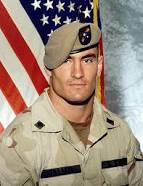
Patrick Daniel “Pat” Tillman was an American football player who left his professional career and enlisted in the United States Army in June 2002 in the aftermath of the September 11 attacks. During his stay in Afghanistan, he quickly realized there was deception behind USA’s going to war and that it seemed to be more about ‘theft of resources’.
Due to tight media control & manipulation of the facts, few Americans were aware that Tillman, just recently before his death, had become vocal of his anti ‘war-for-oil’ sentiments within the ranks. He was also concerned with the USA’s disregard for heavy civilian casualties, and treatment of the population.
Independent investigators have pointed out that Tillman was scheduled to meet & greet (whistle-blow) with Noam Chomsky in public, upon his return from Military service. Pat Tillman was well respected and highly influential during a critical ramp-up to what would become an even larger ‘war’. It is reasonable to suspect that he became a potential threat to the military-industrial-complex agenda.
Highly Suspicious Death & Cover-Up:
The official version of events (after a long and shady cover-up) were announced to be that Tillman’s death was due to an accidental ‘friendly fire’ incident. However the *leaked autopsy report showed that he was killed at very close range ‘assassination style’ with a triple tap shot to the forehead, which would be quite impossible if indeed a friendly fire ‘accident’.
The Big Story Torture Everyone Is Missing Senate Torture Report
While the torture report released by the Senate Intelligence Committee is very important, it doesn’t address the big scoop regarding torture.
Instead, it is the Senate Armed ServicesCommittee’s report that dropped the big bombshell regarding the U.S. torture program.
Senator Levin, commenting on a Armed Services Committee’s report on torture in 2009, explained:
The techniques are based on tactics used by Chinese Communists against American soldiers during the Korean War for the purpose of eliciting FALSE confessions for propaganda purposes. Techniques used in SERE training include stripping trainees of their clothing, placing them in stress positions, putting hoods over their heads, subjecting them to face and body slaps, depriving them of sleep, throwing them up against a wall, confining them in a small box, treating them like animals, subjecting them to loud music and flashing lights, and exposing them to extreme temperatures [and] waterboarding.
Former senior U.S. intelligence official familiar with the interrogation issue said that Cheney and former Defense Secretary Donald H. Rumsfeld demanded that the interrogators find evidence of al Qaida-Iraq collaboration…
For most of 2002 and into 2003, Cheney and Rumsfeld, especially, were also demanding proof of the links between al Qaida and Iraq that (former Iraqi exile leader Ahmed) Chalabi and others had told them were there.”
It was during this period that CIA interrogators waterboarded two alleged top al Qaida detainees repeatedly — Abu Zubaydah at least 83 times in August 2002 and Khalid Sheik Muhammed 183 times in March 2003 — according to a newly released Justice Department document…
When people kept coming up empty, they were told by Cheney’s and Rumsfeld’s people to push harder,” he continued.” Cheney’s and Rumsfeld’s people were told repeatedly, by CIA . . . and by others, that there wasn’t any reliable intelligence that pointed to operational ties between bin Laden and Saddam . . .
A former U.S. Army psychiatrist, Maj. Charles Burney, told Army investigators in 2006 thatinterrogators at the Guantanamo Bay, Cuba, detention facility were under “pressure” to produce evidence of ties between al Qaida and Iraq.
“While we were there a large part of the time we were focused on trying to establish a link between al Qaida and Iraq and we were not successful in establishing a link between al Qaida and Iraq,” Burney told staff of the Army Inspector General. “The more frustrated people got in not being able to establish that link . . . there was more and more pressure to resort to measures that might produce more immediate results.”
“I think it’s obvious that the administration was scrambling then to try to find a connection, a link (between al Qaida and Iraq),” [Senator] Levin said in a conference call with reporters. “They made out links where they didn’t exist.”
Levin recalled Cheney’s assertions that a senior Iraqi intelligence officer had met Mohammad Atta, the leader of the 9/11 hijackers, in the Czech Republic capital of Prague just months before the attacks on the World Trade Center and the Pentagon.
The FBI and CIA found that no such meeting occurred.
Despite what you’ve seen on TV, torture is really only good at one thing: eliciting false confessions. Indeed, Bush-era torture techniques, we now know, were cold-bloodedly modeled after methods used by Chinese Communists to extract confessions from captured U.S. servicemen that they could then use for propaganda during the Korean War.
So as shocking as the latest revelation in a new Senate Armed Services Committee report may be, it actually makes sense — in a nauseating way. The White House started pushing the use of torture not when faced with a “ticking time bomb” scenario from terrorists, but whenofficials in 2002 were desperately casting about for ways to tie Iraq to the 9/11 attacks — in order to strengthen their public case for invading a country that had nothing to do with 9/11 at all.
***
Gordon Trowbridge writes for the Detroit News: “Senior Bush administration officials pushed for the use of abusive interrogations of terrorism detainees in part to seek evidence to justify the invasion of Iraq, according to newly declassified information discovered in a congressional probe.
Colin Powell’s former chief of staff (Colonel Larry Wilkerson) wrote in 2009 that the Bush administration’s “principal priority for intelligence was not aimed at pre-empting another terrorist attack on the U.S. but discovering a smoking gun linking Iraq and al-Qaeda.”
Indeed, one of the two senior instructors from the Air Force team which taught U.S. servicemen how to resist torture by foreign governments when used to extract false confessions has blown the whistle on the true purpose behind the U.S. torture program.
[Torture architect] Jessen’s notes were provided to Truthout by retired Air Force Capt. Michael Kearns, a “master” SERE instructor and decorated veteran who has previously held high-ranking positions within the Air Force Headquarters Staff and Department of Defense (DoD).
***
The Jessen notes clearly state the totality of what was being reverse-engineered – not just ‘enhanced interrogation techniques,’ but an entire program of exploitation of prisoners using torture as a central pillar,” he said. “What I think is important to note, as an ex-SERE Resistance to Interrogation instructor, is the focus of Jessen’s instruction. It is EXPLOITATION, not specifically interrogation. And this is not a picayune issue, because if one were to ‘reverse-engineer’ a course on resistance to exploitation then what one would get is a plan to exploit prisoners, not interrogate them. The CIA/DoD torture program appears to have the same goals as the terrorist organizations or enemy governments for which SV-91 and other SERE courses were created to defend against: the full exploitation of the prisoner in his intelligence, propaganda, or other needs held by the detaining power, such as the recruitment of informers and double agents. Those aspects of the US detainee program have not generally been discussed as part of the torture story in the American press.”
Air Force Col. Steven Kleinman, a career military intelligence officer recognized as one of the DOD’s most effective interrogators as well a former SERE instructor and director of intelligence for JPRA’s teaching academy, said …. “This is the guidebook to getting false confessions, a system drawn specifically from the communist interrogation model that was used to generate propaganda rather than intelligence” …. “If your goal is to obtain useful and reliable information this is not the source book you should be using.”
Much of the 9/11 Commission Report was based upon the testimony of people who were tortured
At least four of the people whose interrogation figured in the 9/11 Commission Report have claimed that they told interrogators information as a way to stop being “tortured.”
The 9/11 Commission itself doubted the accuracy of the torture confessions, and yet kept their doubts to themselves
Today, Raymond McGovern – a 27-year CIA veteran, who chaired National Intelligence Estimates and personally delivered intelligence briefings to Presidents Ronald Reagan and George H.W. Bush, their Vice Presidents, Secretaries of State, the Joint Chiefs of Staff, and many other senior government officials –provides details about one torture victim (Al-Libi) at former Newsweek and AP reporter Robert Parry’s website:
But if it’s bad intelligence you’re after, torture works like a charm. If, for example, you wish to “prove,” post 9/11, that “evil dictator” Saddam Hussein was in league with al-Qaeda and might arm the terrorists with WMD, bring on the torturers.
It is a highly cynical and extremely sad story, but many Bush administration policymakers wanted to invade Iraq before 9/11 and thus were determined to connect Saddam Hussein to those attacks. The PR push began in September 2002 – or as Bush’s chief of staff Andrew Card put it, “From a marketing point of view, you don’t introduce new products in August.”
By March 2003 – after months of relentless “marketing” – almost 70 percent of Americans had been persuaded that Saddam Hussein was involved in some way with the attacks of 9/11.
The case of Ibn al-Sheikh al-Libi, a low-level al-Qaeda operative, is illustrative of how this process worked. Born in Libya in 1963, al-Libi ran an al-Qaeda training camp in Afghanistan from 1995 to 2000. He was detained in Pakistan on Nov. 11, 2001, and then sent to a U.S. detention facility in Kandahar, Afghanistan. He was deemed a prize catch, since it was thought he would know of any Iraqi training of al-Qaeda.
The CIA successfully fought off the FBI for first rights to interrogate al-Libi. FBI’s Dan Coleman, who “lost” al-Libi to the CIA (at whose orders, I wonder?), said, “Administration officials were always pushing us to come up with links” between Iraq and al-Qaeda.
CIA interrogators elicited some “cooperation” from al-Libi through a combination of rough treatment and threats that he would be turned over to Egyptian intelligence with even greater experience in the torture business.
By June 2002, al-Libi had told the CIA that Iraq had “provided” unspecified chemical and biological weapons training for two al-Qaeda operatives, an allegation that soon found its way into other U.S. intelligence reports. Al-Libi’s treatment improved as he expanded on his tales about collaboration between al-Qaeda and Iraq, adding that three al-Qaeda operatives had gone to Iraq “to learn about nuclear weapons.”
Al-Libi’s claim was well received at the White House even though the Defense Intelligence Agency was suspicious.
“He lacks specific details” about the supposed training, the DIA observed. “It is possible he does not know any further details; it is more likely this individual is intentionally misleading the debriefers. Ibn al-Shaykh has been undergoing debriefs for several weeks and may be describing scenarios to the debriefers that he knows will retain their interest.”
Meanwhile, at the Guantanamo Bay prison in Cuba, Maj. Paul Burney, a psychiatrist sent there in summer 2002, told the Senate, “A large part of the time we were focused on trying to establish a link between al-Qaeda and Iraq and we were not successful. The more frustrated people got in not being able to establish that link … there was more and more pressure to resort to measures that might produce more immediate results.”
***
President Bush relied on al-Libi’s false Iraq allegation for a major speech in Cincinnati on Oct. 7, 2002, just a few days before Congress voted on the Iraq War resolution. Bush declared, “We’ve learned that Iraq has trained al-Qaeda members in bomb making and poisons and deadly gases.”
And Colin Powell relied on it for his famous speech to the United Nations on Feb. 5, 2003, declaring: “I can trace the story of a senior terrorist operative telling how Iraq provided training in these [chemical and biological] weapons to al-Qaeda. Fortunately, this operative is now detained, and he has told his story.”
Al-Libi’s “evidence” helped Powell as he sought support for what he ended up calling a “sinister nexus” between Iraq and al-Qaeda, in the general effort to justify invading Iraq.
For a while, al-Libi was practically the poster boy for the success of the Cheney/Bush torture regime; that is, until he publicly recanted and explained that he only told his interrogators what he thought would stop the torture.
You see, despite his cooperation, al-Libi was still shipped to Egypt where he underwent more abuse, according to a declassified CIA cable from early 2004 when al-Libi recanted his earlier statements. The cable reported that al-Libi said Egyptian interrogators wanted information about al-Qaeda’s connections with Iraq, a subject “about which [al-Libi] said he knew nothing and had difficulty even coming up with a story.”
According to the CIA cable, al-Libi said his interrogators did not like his responses and “placed him in a small box” for about 17 hours. After he was let out of the box, al-Libi was given a last chance to “tell the truth.” When his answers still did not satisfy, al-Libi says he “was knocked over with an arm thrust across his chest and fell on his back” and then was “punched for 15 minutes.”
After Al-Libi recanted, the CIA recalled all intelligence reports based on his statements, a fact recorded in a footnote to the report issued by the 9/11 Commission. By then, however, the Bush administration had gotten its way regarding the invasion of Iraq and the disastrous U.S. occupation was well underway.
***
Intensive investigations into these allegations – after the U.S. military had conquered Iraq – failed to turn up any credible evidence to corroborate these allegations. What we do know is that Saddam Hussein and Osama bin Laden were bitter enemies, with al-Qaeda considering the secular Hussein an apostate to Islam.
Al-Libi, who ended up in prison in Libya, reportedly committed suicide shortly after he was discovered there by a human rights organization. Thus, the world never got to hear his own account of the torture that he experienced and the story that he presented and then recanted.
Hafed al-Ghwell, a Libyan-American and a prominent critic of Muammar Gaddafi’s regime at the time of al-Libi’s death, explained to Newsweek, “This idea of committing suicide in your prison cell is an old story in Libya.”
Paul Krugman eloquently summarized the truth about the torture used:
Let’s say this slowly: the Bush administration wanted to use 9/11 as a pretext to invade Iraq, even though Iraq had nothing to do with 9/11. So it tortured people to make them confess to the nonexistent link.
There’s a word for this: it’s evil.
Torture Program Was Part of a Con Job
As discussed above, in order to “justify” the Iraq war, top Bush administration officials pushed and insisted that interrogators use special torture methods aimed at extracting false confessions to attempt to create a false linkage between between Al Qaida and Iraq. And see this and this.
And at 2:40 p.m. on September 11th, in a memorandum of discussions between top administration officials, several lines below the statement “judge whether good enough [to] hit S.H. [that is, Saddam Hussein] at same time”, is the statement “Hard to get a good case.” In other words, top officials knew that there wasn’t a good case that Hussein was behind 9/11, but they wanted to use the 9/11 attacks as an excuse to justify war with Iraq anyway.
(2) acting pursuant to the Constitution and Public Law 107-243 is consistent with the United States and other countries continuing to take the necessary actions against international terrorists and terrorist organizations, including those nations, organizations, or persons who planned, authorized, committed, or aided the terrorist attacks that occurred on September 11, 2001.
Therefore, the Bush administration expressly justified the Iraq war to Congress by representing that Iraq planned, authorized, committed, or aided the 9/11 attacks.
Indeed, Pulitzer prize-winning journalist Ron Suskind reports that the White House ordered the CIA to forge and backdate a document falsely linking Iraq with Muslim terrorists and 9/11 … and that theCIA complied with those instructions and in fact created the forgery, which was then used to justify war against Iraq. And see this.
Suskind also revealed that “Bush administration had information from a top Iraqi intelligence official ‘that there were no weapons of mass destruction in Iraq – intelligence they received in plenty of time to stop an invasion.’ ”
Cheney made the false linkage between Iraq and 9/11 on many occasions.
For example, according to Raw Story, Cheney was still alleging a connection between Iraq and the alleged lead 9/11 hijacker in September 2003 – a year after it had been widely debunked. When NBC’s Tim Russert asked him about a poll showing that 69% of Americans believed Saddam Hussein had been involved in 9/11, Cheney replied:
It’s not surprising that people make that connection.
And even after the 9/11 Commission debunked any connection, Cheney said that the evidence is “overwhelming” that al Qaeda had a relationship with Saddam Hussein’s regime , that Cheney “probably” had information unavailable to the Commission, and that the media was not ‘doing their homework’ in reporting such ties.
Again, the Bush administration expressly justified the Iraq war by representing that Iraq planned, authorized, committed, or aided the 9/11 attacks. See this, this, this.
Former Treasury Secretary Paul O’Neill – who sat on the National Security Council – also says that Bush planned the Iraq war before 9/11.
Top British officials say that the U.S. discussed Iraq regime change even before Bush took office.
And in 2000, Cheney said a Bush administration might “have to take military action to forcibly remove Saddam from power.” And see this.
The administration’s false claims about Saddam and 9/11 helped convince a large portion of the American public to support the invasion of Iraq. While the focus now may be on false WMD claims, it is important to remember that, at the time, the alleged link between Iraq and 9/11 was at least as important in many people’s mind as a reason to invade Iraq.
So the torture program was really all about “justifying” the ultimate war crime: launching an unnecessary war of aggression based upon false pretenses.
Postscript: It is beyond any real dispute that torture does not work to produce any useful, truthfulintelligence. Today, the following question made it to the front page of Reddit:
Why would the CIA torture if torture “doesn’t work”? Wouldn’t they want the most effective tool to gather intelligence?
The Senate Armed Services Committee report gave the answer.
Evidence exposing who put ISIS in power, and how it was done.
The Islamic militant group ISIS, formerly known as Al-Qaeda in Iraq, and recently rebranded as the so called Islamic State, is the stuff of nightmares. They are ruthless, fanatical, killers, on a mission, and that mission is to wipe out anyone and everyone, from any religion or belief system and to impose Shari’ah law. The mass executions, beheadings and even crucifixions that they are committing as they work towards this goal are flaunted like badges of pride, video taped and uploaded for the whole world to see. This is the new face of evil.
Would it interest you to know who helped these psychopaths rise to power? Would it interest you to know who armed them, funded them and trained them? Would it interest you to know why?
This story makes more sense if we start in the middle, so we’ll begin with the overthrow of Muammar Gaddafi in 2011.
The Libyan revolution was Obama’s first major foreign intervention. It was portrayed as an extension of the Arab Spring, and NATO involvement was framed in humanitarian terms.
These jihadist militants from Iraq were part of what national security analysts commonly referred to as Al-Qaeda in Iraq. Remember Al-Qaeda in Iraq was ISIS before it was rebranded.
With the assistance of U.S. and NATO intelligence and air support, the Libyan rebels captured Gaddafi and summarily executed him in the street, all the while enthusiastically chanting “Allah Akbar”. For many of those who had bought the official line about how these rebels were freedom fighters aiming to establish a liberal democracy in Libya, this was the beginning of the end of their illusions.
Now after Gaddafi was overthrown, the Libyan armories were looted, and massive quantities of weapons were sent by the Libyan rebels to Syria. The weapons, which included anti-tank and anti-aircraft missiles were smuggled into Syria through Turkey, a NATO ally. The times of Londonreported on the arrival of the shipment on September 14th, 2012. (Secondary confirmation in this NYT article) This was just three days after Ambassador Chris Stevens was killed by the attack on the U.S. embassy in Benghazi. Chris Stevens had served as the U.S. government’s liaison to the Libyan rebels since April of 2011.
While a great deal media attention has focused on the fact that the State Department did not provide adequate security at the consulate, and was slow to send assistance when the attack started, Pulitzer Prize winning journalist Seymour Hersh released an article in April of 2014 which exposed a classified agreement between the CIA, Turkey and the Syrian rebels to create what was referred to as a “rat line”. The “rat line” was covert network used to channel weapons and ammunition from Libya, through southern turkey and across the Syrian border. Funding was provided by Turkey, Saudi Arabia and Qatar.
However as the rebels gained strength, the reports of war crimes and atrocities that they were committing began to create a bit of a public relations problem for Washington. It then became standard policy to insist that U.S. support was only being given to what they referred to as“moderate” rebel forces.
This distinction, however, had no basis in reality.
In an interview given in April of 2014, FSA commander Jamal Maarouf admitted that his fighters regularly conduct joint operations with Al-Nusra. Al-Nusra is the official Al-Qa’ida branch in Syria. This statement is further validated by an interview given in June of 2013 by Colonel Abdel Basset Al-Tawil, commander of the FSA’s Northern Front. In this interview he openly discusses his ties with Al-Nusra, and expresses his desire to see Syria ruled by sharia law. (You can verify the identities of these two commanders here in this document from The Institute for the Study of War)
Moderate rebels? Well it’s complicated. Not that this should really come as any surprise. Reuters had reported in 2012 that the FSA’s command was dominated by Islamic extremists, and the New York Times had reported that same year that the majority of the weapons that Washington were sending into Syria was ending up in the hands Jihadists. For two years the U.S. government knew that this was happening, but they kept doing it.
So to review, the FSA is working with Al-Nusra, Al-Nusra is working with ISIS, and the U.S. has been sending money and weapons to the FSA even though they’ve known since 2012 that most of these weapons were ending up in the hands of extremists. You do the math.
[UPDATE 9.03.14]: Retired Lt. Gen. Tom McInerney admits: “We Helped Build ISIS”:
Note that the first version of this video I uploaded (here) was quickly taken down. To insure that this clip does not disappear we have provided a secondary download link here. So if the video below isn’t playing then use that link and upload it elsewhere.
Syria, we backed I believe, in some cases some of the wrong people and not in the right part of the Free Syrian Army (FSA) that’s a little confusing to people. So I’ve always maintained, and go back quite some time that we were backing the wrong types. I think it’s going to turn out maybe this weekend in a new special that Brett Baer is going to have Friday that’s gonna show some of those weapons from Benghazi ended up in the hands of ISIS. So we helped build ISIS.
After the second sarin gas fiasco, which was also exposed and therefore failed to garner public support for airstrikes, the U.S. continued to increase its the training and support for the rebels.
In February of 2014, Haaretz reported that the U.S. and its allies in the region, Saudi Arabia, Jordan and Israel, were in the process of helping the Syrian rebels plan and prepare for a massive attack in the south. According to Haaretz Israel had also provided direct assistance in military operations against Assad four months prior (you can access a free cached version of the page here).
Then in May of 2014 PBS ran a report in which they interviewed rebels who were trained by the U.S. in Qatar. According to those rebels they were being trained to finish off soldiers who survived attacks.
“They trained us to ambush regime or enemy vehicles and cut off the road,” said the fighter, who is identified only as “Hussein.” “They also trained us on how to attack a vehicle, raid it, retrieve information or weapons and munitions, and how to finish off soldiers still alive after an ambush.”
This is a blatant violation of the Geneva conventions. It also runs contrary to conventional military strategy. In conventional military strategy soldiers are better off left wounded, because this ends up costing the enemy more resources. Executing captured enemy soldiers is the kind of tactic used when you want to strike terror in the hearts of the enemy. It also just happens to be standard operating procedure for ISIS.
One month after this report, in June of 2014, ISIS made its dramatic entry, crossing over the Syrian border into Iraq, capturing Mosul, Baiji and almost reaching Baghdad. The internet was suddenly flooded with footage of drive by shootings, large scale death marches, and mass graves. And of course any Iraqi soldier that was captured was executed.
Massive quantities of American military equipment were seized during that operation. ISIS took entire truckloads of humvees, they took helicopters, tanks, and artillery. They photographed and video taped themselves and advertised what they were doing on social media, and yet for some reason Washington didn’t even TRY to stop them.
U.S. military doctrine clearly calls for the destruction of military equipment and supplies when friendly forces cannot prevent them from falling into enemy hands, but that didn’t happen here. ISIS was allowed to carry this equipment out of Iraq and into Syria unimpeded. The U.S. military had the means to strike these convoys, but they didn’t lift a finger, even though they had been launching drone strikes in Pakistan that same week.
Why would they do that?
Though Obama plays the role of a weak, indecisive, liberal president, and while pundits from the right have had a lot of fun with that image, this is just a facade. Some presidents, like George W. Bush, rely primarily on overt military aggression. Obama gets the same job done, but he prefers covert means. Not really surprising considering the fact that Zbigniew Brzezinski was his mentor.
Those who know their history will remember that Zbigniew Brzezinski was directly involved in the funding and arming the Islamic extremists in Pakistan and Afghanistan in order to weaken the Soviets.
By the way Osama bin Laden was one of these anti-Soviet “freedom fighters” the U.S. was funding and arming.
This operation is no secret at this point, nor are the unintended side effects.
The strategy worked. The Soviets invaded, and the ten years of war that followed are considered by many historians as being one of the primary causes of the fall of the USSR.
This example doesn’t just establish precedent, what we’re seeing happen in Iraq, Afghanistan and Syria right now is actually a continuation of a old story. Al-Nusra and ISIS are ideological and organizational decedents of these extremist elements that the U.S. government made use of thirty years ago.
The U.S. the went on to create a breeding ground for these extremists by invading Iraq in 2003. Had it not been for the vacuum of power left by the removal and execution of Saddam, Al-Qaeda in Iraq, aka ISIS, would not exist. And had it not been for Washington’s attempt at toppling Assad by arming, funding and training shadowy militant groups in Syria, there is no way that ISIS would have been capable of storming into Iraq in June of 2014.
On every level, no matter how you cut it, ISIS is a product of U.S. government’s twisted and decrepit foreign policy.
Now all of this may seem contradictory to you as you watch the drums of war against ISIS begin to beat louder and the air strikes against them are gradually widenedhttp://www.wjla.com/articles/2014/08/president-obama-considers-possible-…). Why would the U.S. help a terrorist organization get established, only to attack them later?
Well why did the CIA put Saddam Hussein in power in 1963?, Why did the U.S. government back Saddam in 1980 when he launched a war of aggression against Iran, even though they knew that he was using chemical weapons? Why did the U.S. fund and arm Islamic extremists in Afghanistan against the Soviets?
There’s a pattern here if you look closely. This is a tried and true geopolitical strategy.
Step 1: Build up a dictator or extremist group which can then be used to wage proxy wars against opponents. During this stage any crimes committed by these proxies are swept under the rug. [Problem]
Step 2: When these nasty characters have outlived their usefulness, that’s when it’s time to pull out all that dirt from under the rug and start publicizing it 24/7. This obviously works best when the public has no idea how these bad guys came to power.[Reaction]
Step 3: Finally, when the public practically begging for the government to do something, a solution is proposed. Usually the solution involves military intervention, the loss of certain liberties, or both. [Solution]
ISIS is extremely useful. They have essentially done Washington dirty work by weakening Assad. In 2014, while the news cycle has focused almost exclusively on Ukraine and Russia, ISIS made major headway in Syria, and as of August they already controlled 35% of the country.
Since ISIS largely based in Syria, this gives the U.S. a pretext to move into Syria. Sooner or later the U.S. will extend the airstrikes into Assad’s backyard, and when they do U.S. officials are already making it clear that both ISIS and the Syrian government will be targeted. That, after all, is the whole point. Washington may allow ISIS to capture a bit more territory first, but the writing is on the wall, and has been for some time now.
The Obama administration has repeatedly insisted that this will never lead to boots on the ground, however, the truth of the matter is that anyone who understands anything about military tactics knows full well that ISIS cannot be defeated by airstrikes alone. In response to airstrikes ISIS will merely disperse and conceal their forces. ISIS isn’t an established state power which can be destroyed by knocking out key government buildings and infrastructure. These are guerrilla fighters who cut their teeth in urban warfare.
To significantly weaken them, the war will have to involve ground troops, but even this is a lost cause. U.S. troops could certainly route ISIS in street to street battles for some time, and they might even succeed in fully occupying Syria and Iraq for a number of years, but eventually they will have to leave, and when they do, it should be obvious what will come next.
The puppets that the U.S. government has installed in the various countries that they have brought down in recent years have without exception proven to be utterly incompetent and corrupt. No one that Washington places in power will be capable of maintaining stability in Syria. Period.
Right now, Assad is the last bastion of stability in the region. He is the last chance they have for a moderate non-sectarian government and he is the only hope of anything even remotely resembling democracy for the foreseeable future. If Assad falls, Islamic extremist will take the helm, they will impose shari’ah law, and they will do everything in their power to continue spreading their ideology as far and wide as they can.
If the world truly wants to stop ISIS, there is only one way to do it:
1. First and foremost, the U.S. government and its allies must be heavily pressured to cut all support to the rebels who are attempting to topple Assad. Even if these rebels that the U.S. is arming and funding were moderate, and they’re not, the fact that they are forcing Assad to fight a war on multiple fronts, only strengthens ISIS. This is lunacy.
2. The Syrian government should be provided with financial support, equipment, training and intelligence to enable them to turn the tide against ISIS. This is their territory, they should be the ones to reclaim it.
Now obviously this support isn’t going to come from the U.S. or any NATO country, but there are a number of nations who have a strategic interest in preventing another regime change and chaotic aftermath. If these countries respond promptly, as in right now, they could preempt a U.S. intervention, and as long this support does not include the presence of foreign troops, doing so will greatly reduce the likelihood of a major confrontation down the road.
3. The U.S. government and its allies should should be aggressively condemned for their failed regime change policies and the individuals behind these decisions should be charged for war crimes. This would have to be done on an nation by nation level since the U.N. has done nothing but enable NATO aggression. While this may not immediately result in these criminals being arrested, it would send a message. This can be done. Malaysia has already proven this by convicting the Bush administration of war crimes in abstentia.
Now you might be thinking: “This all sounds fine and good, but what does this have to do with me? I can’t influence this situation.”
That perspective is quite common, and for most people, it’s paralyzing, but the truth of the matter is that we can influence this. We’ve done it before, and we can do it again.
I’ll be honest with you though, this isn’t going to be easy. To succeed we have to start thinking strategically. Like it or not, this is a chess game. If we really want to rock the boat, we have to start reaching out to people in positions of influence. This can mean talking to broadcasters at your local radio station, news paper, or t.v. station, or it can mean contacting influential bloggers, celebrities, business figures or government officials. Reaching out to current serving military and young people who may be considering joining up is also important. But even if it’s just your neighbor, or your coworker, every single person we can reach brings us closer to critical mass. The most important step is to start trying.
If you are confused about why this is all happening, watch this video we put out on September 11th, 2012
If this message resonates with you then spread it. If you want to see the BIG picture, and trust me we’ve got some very interesting reports coming, subscribe to StormCloudsGathering on Youtube, and follow us on Facebook, twitter and Google plus.
Even the mightiest have their come-uppance when their internal logic spews out destructiveness returning on the self—“blowback” in a way perhaps not seen before. I refer to James Risen’s extraordinary article in the New York Times, “Before Shooting in Iraq, a Warning on Blackwater,” (June 30), in which the customary meaning of “blowback” refers to policies, e.g., the invasions of Iraq and Afghanistan, the confrontation with Russia over Ukraine, the “pivot” of military power to the Pacific intent on the encirclement, containment, isolation of China, produce unintended, or if intended, still unwelcome, consequences for the initiator of the policy or action.
Thus: Iraq, out-of-control (from the US standpoint, a raging civil war negating massive intervention and alerting the world to America’s hegemonic purposes); Afghanistan, original support of the Taliban against the Soviet Union, resulting in their material strengthening now turned against the US, endangering its power-position in the region; use of Ukraine as a basis for bringing NATO forces to the Russian border, now an overreach which may disrupt the EU and weaken US dominance over it; and blatant confrontation with China, both military and trade, with potential for war leading to nuclear annihilation. The status and role of world policeman is losing its blackjack, its reputation as global bully being challenged through the rise of multiple power-centers and industrial-commercial-financial patterns no longer defined, supervised, indeed controlled, by American global interests and military implementation.
That is blowback in its familiar guise. Less so, the self-chosen instruments of repression spilling out of behemoth’s mouth because America’s dependence on repression to secure its aims makes it dependent as well on the executors of repression, in this case, given the extreme stress on privatization (the core of the monster’s functional existence), Blackwater at your service, a private army on hire to USG for pursuit of the dirty work, deemed necessary, yet, delegated to official forces, the cause of embarrassment and shame. Browbeating indigenous populations, with an overwhelming swagger and display in the grand tradition of conquerors, in addition to protecting representatives of the conquerors, is a mission worthy, as here, of billion dollar contracts to the private militias (euphemism: “security guards”) as insurance the military victory and occupation will hold.
Here Blackwater is, and is treated as, inseparable from the intervention (read: conquest) itself, at times assisting in the fighting on an informal basis—it has not yet been invited to join NATO(!)—but more to the point, the intimidating presence in the post-military phase, as though instilling the message: You Iraqis think the military is bad, well don’t mess around, for far worse awaits you, we former Navy SEALS know nothing can touch us. Our motto might as well be, A Law Unto Ourselves, even USG—beyond the status-of-forces agreement it forced your government to sign—afraid of us. Blowback: the cancer in the bowels of behemoth rapidly spreading to the extremities, spinal column, brain. Soon we shall all be made over in the image of Blackwater, or rather, as Blackwater would like to see, as its actions show, America become, a nation subservient to its thugs, extolling martial glory for its own sake and for the sake of global dominance. Authoritarianism once off the ground knows no limits and demands the complete adherence of its subjects. America has lived with CIA for decades; Blackwater is icing on the cake.
***
Before turning to the evidence contained in James Risen’s article, it is important to see how events from the past are converging on the present. His credentials as a whistleblower are borne out by his previous record (exposure of CIA dirty tricks, in his book State of War, with respect to Iran’s nuclear program) and current circumstances (he faces a possible jail sentence for refusing to disclose, from that account, the identity of an anonymous source). In the Bush doghouse for exposing the use of warrantless wire taps in 2005, and now, Obama contemplating more serious action, jail time for not complying with a DOJ subpoena, possibly leading to an Espionage Act prosecution, for which Obama excels over all of his predecessors combined (liberals, of course, furiously denying the sordid record), Risen not only stares down his persecutors, Obama, Holder, DOJ, but here presents an exposure in some ways more damning of US baseness from the top down, nurturing a murderous nest in the structure of government.
As for the administration hounding, Jonathan Mahler’s New York Times article, “Reporter’s Case Poses Dilemma for Justice Dept.,” (June 27), implies that Risen’s refusal to be intimidated is causing Obama and Holder second thoughts about pushing for his imprisonment. According to John Rizzo, CIA’s acting general counsel, Bush people wanted State of War kept off the market—too late, however. Risen then was subpoenaed to testify against the suspected leaker—and refused. “More than six years of legal wrangling,” in what Mahler terms “the most serious confrontation between the government and the press in recent history,” is coming to a head. Risen “is now out of challenges. Early this month, the Supreme Court declined to review his case, a decision that allows prosecutors to compel his testimony.”
But The Times, in defending its own man, cannot strongly protest, lest it antagonize the White House. Yes, Obama appears to be in a bind: “Though the court’s decision looked like a major victory for the government, it has forced the Obama administration to confront a hard choice. Should it demand Mr. Risen’s testimony and be responsible for a reporter’s being sent to jail? Or reverse course and stand down, losing credibility with an intelligence community that has pushed for the aggressive prosecution of leaks?” If Obama and USG were truly democratic (small “d”), there should not be a choice but only one course of action, moreover reigning in the “intelligence community” serving under their control.
The reporter, I believe reflecting the paper’s view, however, credits the Obama administration with actually weighing alternatives and being capable of making moral choices: “The dilemma comes at a critical moment for an administration that has struggled to find a balance between aggressively enforcing laws against leaking and demonstrating concern for civil liberties and government transparency.” What balance? What concern? Everything points the other way, on both civil liberties (e.g., due process and habeas corpus rights for detainees) and government transparency (simply, a thick protective shield in place, symbolized by the high art of redaction—and, as with Blackwater’s killing sprees, the refusal or half-heartedness about prosecution). Its reporter’s back against the wall, NYT ignores the Espionage Act prosecutions of whistleblowers.
Mahler succinctly describes the reporting: “The failed C.I.A. action at the heart of Mr. Risen’s reporting was intended to sabotage Iran’s nuclear weapons program. Intelligence officials assigned a former Russian scientist who had defected to the United States to deliver a set of faulty blueprints for a nuclear device to an Iranian scientist. But the Russian scientist became nervous and informed the Iranians that the plans were flawed.” One readily appreciates the dangers to the National Security State, especially revelations of the stupidity and dangerousness of its crown jewel, CIA, posed by investigative journalism. The Times, to its everlasting shame, bowed to Coldoleezza Rice’s request to withhold publication of the article. As a Times spokesperson later declared, “We weighed the government’s concerns and the usual editorial considerations and decided not to run the story.” Hence, James Risen—enemy of National Security; he “broke the story” later in State of War. Yet Bush is not the only culprit in this story; Obama ordered two additional subpoenas to force Risen to testify, his DOJ going after him hammer-and-tongs: “After a trial court largely quashed his third subpoena [the first under Bush] in late 2010, the Justice Department successfully challenged the ruling in a federal appeals court, arguing that the First Amendment does not afford any special protections to journalists.” Enough said about the dedication to civil liberties and freedom of the press: “The administration then urged the Supreme Court not to review Mr. Risen’s case.”
***
I have already discussed the mass killings in Nisour Square, Baghdad, in a previous article. Now we learn that this was part of a pattern in Blackwater’s behavior—again, Risen’s reporting. Even for one who is a seasoned critic, it is painful for me to write about. Organized thuggery knows no limits particularly when working for the highest authority, immunity from punishment worn as a badge of honor, as meanwhile government officials hide their eyes. Risen writes, “Just weeks before Blackwater guards fatally shot 17 civilians in Baghdad’s Nisour Square in 2007, the State Department began investigating the security contractor’s operations in Iraq. But the inquiry was abandoned after Blackwater’s top manager there issued a threat: ‘that he could kill’ the government’s chief investigator and ‘no one could or would do anything about it as we were in Iraq,’ according to department reports.” A private contractor threatens the life of a State Department investigator! No reprisal, punishment, cancellation of the contract, not even disclosure of the threat—yet Blackwater still in place years later, as part of the silence on atrocities in the Obama-Hillary era.
Those 17 killed are on America’s hands, bloody hands. There was a clear warning about what to expect: “After returning to Washington, the chief investigator wrote a scathing report to State Department officials documenting misconduct by Blackwater employees and warning that lax oversight of the company, which had a contract worth more than $1 billion to protect American diplomats, had created ‘an environment full of liability and negligence.’” Even more outrageous, Risen notes, the investigators become the criminals gumming up the security works: “American Embassy officials in Baghdad sided with Blackwater rather than the State Department investigators as a dispute over the probe escalated in August 2007, the previously undisclosed documents show. The officials told the investigators that they had disrupted the embassy’s relationship with the security contractor and ordered them to leave the country, according to the reports.”
Jean Richter, lead investigator, wrote, in a memo to the State Department only weeks prior to Nisour Square: “’The management structures in place to manage and monitor our contracts in Iraq have become subservient to the contractors themselves. Blackwater contractors saw themselves as above the law…. ‘hands off’ [management meant that] the contractors, instead of Department officials, are in command and in control.’” Now, nearly seven years later, four Blackwater guards are on trial, facing, if ever convicted, watered down charges, this being “ the government’s second attempt to prosecute the case in an American court [I wonder how serious the effort under Holder and Obama] after previous charges against five guards were dismissed in 2009.” Much of the time this is on Obama’s watch, yet, “despite a series of investigations in the wake of Nisour Square, the back story of what happened with Blackwater and the embassy in Baghdad before the fateful shooting has never been fully told.”
So much for transparency, civil liberties, and prosecuting the crimes of a predecessor (the cardinal rule of presidents, at least this one, cover-up WAR CRIMES past and present, a solemn command of the National Security State). Silence and deniability, in all matters large and small, characterize the responses of USG and private principals: “The State Department declined to comment on the aborted investigation. A spokesman for Erik Prince, the founder and former chief executive of Blackwater, who sold the company in2010, said Mr. Prince had never been told about the matter.” The $1B contract itself testifies to the fusion of patriotism, secrecy, repression, and yes, corporate profit: “After Mr. Prince sold the company, the new owners named it Academi. In early June, it merged with Triple Canopy, one of its rivals for government and commercial contracts to provide private security. The new firm is called Constellis Holdings.” Like war, private security stands to make a killing (pardon the pun), no doubt in flight from the original name for damage-control and public-relations purposes.
Previous to Nisour Square (Sept. 16, 2007) Blackwater guards “acquired a reputation…for swagger and recklessness,” but complaints “about practices ranging from running cars off the road to shooting wildly in the streets and even killing civilians typically did not result in serious action by the United States or the Iraqi government.” After firing in the Square, there was closer scrutiny, the Blackwater claim that they were fired on even US military officials denied, and “[f]ederal prosecutors later said Blackwater personnel had shot indiscriminately with automatic weapons, heavy machine guns and grenade launchers.” To no avail, given the symbiotic relationship between the company and the government. In fact, Blackwater had itself been run by Prince as a nation in microcosm, its people shortly before Nisour Square gathered by him at company headquarters in Moyock, North Carolina and made to “swear an oath of allegiance” like the one required of enlistees in the US military. They were handed copies of the oath, which, after reciting the words, were told to sign.
The State Department investigation into Blackwater in Iraq, which began Aug. 1, 2007 and was slated for one month, led early to the “volatile” situation (including the death threat), our knowledge coming from “internal State Department documents” furnished “to plaintiffs in a lawsuit against Blackwater that was unrelated to the Nisour Square shootings,” seemingly by accident then and fleshed out by Risen. In that month—or that part of it before being forced to leave– the investigators discovered “a long list of contract violations by Blackwater,” staffing changes of security details “without State Department approval,” reducing the number of guards on details, “storing automatic weapons and ammunition in their private rooms, where they were drinking heavily and partying with frequent female visitors,” and, for many, failing “to regularly qualify on their weapons” or “carrying weapons on which they had never been certified” nor “authorized to use.” Extravagance for mayhem abroad, less than peanuts for critical needs at home, education, health care, employment, beyond the means or reach of Imperial grandeur as the national obsession.
In addition to “overbilling the State Department by manipulating its personnel records, using guards assigned to the State Department contract for other work and falsifying other staffing data on the contract,” (no wonder the investigators’ poor reception by Blackwater’s resident head in Iraq), one of its affiliates forced “third country nationals” who did the dirty work at low wages “to live in squalid conditions, sometimes three to a cramped room with no bed,” according to the investigators’ report. Their conclusion: “Blackwater was getting away with such conduct because embassy personnel had gotten too close to the contractor.”
Ah, the denouement; we have a name to go with the face of the project manager who threatened Richter’s life, Daniel Carroll, who said he could kill him without anything happening to himself “as we were in Iraq” (this was witnessed by Donald Thomas, the other investigator), and Richter, in his memo to the Department stated: “I took Mr. Carroll’s threat seriously. We were in a combat zone where things can happen unexpectedly, especially when issues involve potentially negative impacts on a lucrative security contract.” Nicely put, and corroborated by Thomas, who wrote in a separate memo that “others in Baghdad had told the two investigators to be ‘very careful,’ considering that their review could jeopardize job security for Blackwater personnel.” The wonder perhaps is that Richter and Thomas were not prosecuted under the Espionage Act for spoiling the show. It didn’t matter. No one at State listened.
The two men were ordered to leave (Aug 23), and “cut short their inquiry and returned to Washington the next day.” Finally, on Oct. 5, after the Nisour Square scandal, State Department officials responded to Richter’s “August warning,” and took statements from him and Thomas about “their accusations of a threat by Mr. Carroll, but took no further action.” A special panel convened by Rice on Nisour Square “never interviewed Mr. Richter or Mr. Thomas.” The official who led the panel “told reporters on Oct. 23, 2007, that the panel had not found any communications from the embassy in Baghdad before the Nisour Square shooting that raised concerns about contractor conduct.” Voila, vanished in thin air. This State Department officer deserves the last word: “We interviewed a large number of individuals. We did not find any, I think, significant pattern of incidents that had not—that the embassy had suppressed in any way.” And my last word: fascism. Beyond all structural-cultural-societal considerations about wealth-concentration, industrial-financial consolidation, foreign expansion through preponderant power and the spirit of militarism, the rampaging privatization with government consent witnessed here, which has wreaked havoc on another people, only to be covered over by the state, aka, the National Security State, disregarding its Constitutional protections to the individual, as in sponsoring massive surveillance, is enough for me to satisfy the working definition of that single word.
via Norman Pollack has written on Populism. His interests are social theory and the structural analysis of capitalism and fascism. He can be reached at [email protected].
Director Errol Morris’s ‘The Unknown Unknown’ shows Rumsfeld as unapologetic.
April 5, 2014
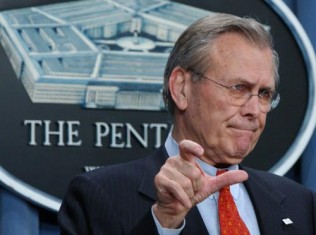
So what do we know now that we didn’t after documentarian Errol Morris’s 100-minute Q&A with Donald “I Don’t Do Quagmires” Rumsfeld in “The Unknown Known”? Only that the former U.S. secretary of defense is still a master strategist of evasion, contradiction, misdirection and malapropism.
As a footnote, here’s what we do know to date about that dirty little Iraq War that “Rummy,” the George W. Bush White House and their nincompoop Pentagon neo-cons cooked up and spoon fed to the omnivorous American public: more than 4400 U.S. military deaths and 32,000 wounded, at least 100,000 to as many as 500,000 Iraqi fatalities, millions more displaced, and an estimated price tag of $3 trillion, give or take a few hundred billion.
Yet like most of the questions that Morris tosses—gently—at his subject, any such factual horrors are sidestepped, parried and danced around by a fitfully nimble Rumsfeld. Relaxed, nattily dressed and imperiously self-assured as ever, Morris’ hollow yet overstuffed man does his imitation of “Hogan’s Heroes” Sgt. Schultz (“I know nothing, nothing”) while implausibly denying personal culpability for any stink that blew back from the Iraq War, whether the phony Weapons of Mass Destruction raison d’être, prisoner torture or the fictitious links between Saddam Hussein and the 9/11 World Trade Center attacks.
In his Oscar-winning “The Fog of War,” Morris at least got Lyndon Johnson-era Defense Secretary Robert McNamara to shoulder some of blame for the Vietnam War quagmire. But Rumsfeld is impishly unapologetic, even as his own words are shot down by Morris’ juxtapositions with TV news footage culled from the run-up and catastrophic letdown to the 2003 Iraq invasion and subsequent U.S. occupation. Yet it’s clear that Morris’ mission isn’t to catch his subject in a Captain Queeg-style meltdown that would cause Rummy to shout “Good gracious” or “Henny-penny” and storm off the set.
Rather, Morris is chiefly interested in the infernal meta-narrative of how those in the pinnacles of power can delude themselves for so long and so often that—perhaps—they don’t even know what the truth is anymore. This is a man seemingly without an ounce of introspection and one who surely sleeps well at night, confident he did all the right things, from his time as the youngest (44) secretary of defense, during the Gerald Ford presidency, to his Freddy Krueger-like return to the Pentagon as prime architect of the shock-and-awe Iraq and Afghanistan U.S.-led invasions.
Morris goes out of his way to humanize Rumsfeld, including humdrum details of his marriage while tracing his long career as Republican White House insider and go-to warhorse who trumpeted “peace through strength” and other hawkish mantras. We hear Morris’ off-camera questions, but the slippery answers are challenged only indirectly via news footage and period headlines, not by contrary interviews that would offer known arguments to Rumsfeld’s self-serving explanations.
The film’s title is a quote from one of the enormous number of official memos Rumsfeld generated over the decades. In one wacky rumination from 2004 (Subject: What You Know), he writes of the “things that you think you know that it turns out you do not.” For Morris, this is a four-star analogy for his subject, a polarizing public figure who indeed is a riddle wrapped in an enigma—and cloaked in an impenetrable armor of Orwellian double-talk. As running metaphor, Morris cuts back and forth to images of a deep blue sea, significantly more fathomable than Rumsfeld himself.
As to any possible policy misfires during his Washington tenures, Rumsfeld blithely chalks them up to the unintended consequences of war, executive decision-making and the inevitable inability for leaders like him to anticipate everything, for Pete’s sake: i.e., heck, Stuff Happens. This expedient philosophy can rationalize pretty much any horrors stretching from Abu Ghraib to Gitmo. If only Emily Littella were still on active duty, I know she’d just say, “Never mind.”
And so it goes in Rummy-speak, as Morris sends his cameras down the rabbit hole into an upside-down universe where government morality and mea culpas have no standing, yet mad tautologies like “the absence of evidence is not the evidence of absence” do. In the question of those well-known phantom WMDs, such inane statements can justify anything, including interminable wars in which bodies are still piling up, peace is not won, and mass Mideast destruction marches on.
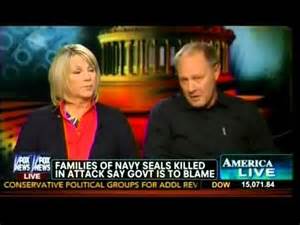
Led by firebrand Rep. Jason Chaffetz (R-Utah), Congress is to launch an official investigation into the mysterious helicopter crash that killed several members of the Navy SEAL team 6 in Afghanistan in 2011.
Back in May, the families of the SEALs went public with concerns that the Obama administration was at least partially responsible for the deaths of their sons.
The family members say that they still have not received satisfactory answers to their questions, and that there are still many inconsistencies and contradictions in the explanations they have been provided.
“We’re going to dive into this.” said Chaffetz, who is acting in his position as chairman of the House Oversight and Government Reform subcommittee on National Security.
30 Americans were killed in the crash on August 6, 2011 when insurgents shot down a U.S. military helicopter during fighting in eastern Afghanistan, making it the largest loss of life in a single incident for the U.S. military during the war. 22 of the victims belonged to the same unit as the Navy SEALS involved in the purported Osama Bin Laden operation, just three months earlier.
US military officials have maintained that none of the individuals involved directly in the Bin Laden mission were killed in the crash. However, sources have claimed that there were at least two SEALs who died on the chopper who had been involved in the Bin Laden raid.
Some of the families feel that the Obama administration’s handling of the death of Bin Laden made retaliatory attacks against SEAL Team 6 more likely. Family members have also expressed concerns that SEALS were sent into battle “without special operations aviation and proper air support.”
Chaffetz has said that he is preparing to send questions to the Pentagon and may hold congressional hearings on the issue. He noted that the families deserve answers: “That’s why you do an investigation. I want to be as factual as I can.” he said.
Larry Klayman of Freedom Watch, who is representing some of the families told reporters “This is a scandal even greater than Benghazi.”
“There we lost four valued American lives; here we sacrificed 30 American soldiers. The big question is were these brave Americans sold out by the Afghani government as payment to the Taliban for the death of bin Laden?” Klayman added.
Klayman’s questions stem from the fact that Afghani forces accompanying the Navy SEAL servicemen on the helicopter were most likely not properly vetted, meaning that they may have disclosed classified information to the Taliban about the mission, resulting in the shoot down of the helicopter.
Pentagon documents have confirmed that immediately prior to the take off of the helicopter, seven Afghan commandos who were listed on the passenger itinerary were mysteriously replaced by other Afghan military officials.
Defense officials have confirmed that all seven names of the Afghan soldiers on the passenger list did not tally with those on board when the chopper took to the air.
The families of the SEALs have noted that their sons did not have trust in Afghan soldiers, with one quoted as saying, “They are loyal to the highest bidder.”
Charlie Strange, the father of one of the killed SEALs also pointed out “There was no eye in the sky tracking [the Chinook]. Why not?”
In addition, pre-assault fire was requested by the team, but was denied by military officials on the ground.
“My son Michael died,” Strange said. “I want to know, who made these calls?”
The Pentagon probe into the shoot down denies that the incident was an “established ambush,” instead claiming that “it was a lucky shot of a low-level fighter that happened to be living [in the area]. He heard all the activity and he happened to be in the right spot.”
Families have countered those suggestions by pointing out that leading militants took to the internet in the immediate aftermath of the attack, to boast that they had successfully ambushed SEAL Team 6.
The Pentagon has also claimed that, despite recovering all the bodies of those killed, the helicopter’s black box was washed away in a flash flood.
The Pentagon told the families that all the bodies were cremated due to the fact that they were badly burned in the crash. However, pictures have emerged that show some deceased SEALs without bad burns.
“The body I saw didn’t need to be cremated,” Rep. Chaffetz said, also noting that the DoD’s explanation regarding the helicopter’s black box is “awfully odd.”
Perhaps even more controversially, family members have also provided evidence that suggests a Muslim cleric attended the funerals of the service members and disparaged them by “damning them as infidels to Allah” during an Islamic prayer.
Refusing to answer specific questions, a DoD spokesperson stated “the operational planning and execution of this mission was consistent with previous missions” and “was thoroughly investigated … we share in the grief of all of the families who lost their loved ones. The loss of 38 U.S. and Afghan military personnel was a tragic loss during a difficult campaign.”
Many documents produced by the U.S. government are confidential and not released to the public for legitimate reasons of national security. Others, however, are kept secret for more questionable reasons. The fact that presidents and other government officials have the power to deem materials classified provides them with an opportunity to use national security as an excuse to suppress documents and reports that would reveal embarrassing or illegal activities.
I’ve been collecting the stories of unreleased documents for several years. Now I have chosen 11 examples that were created—and buried—by both Democratic and Republican administrations and which cover assassinations, spying, torture, 50-year-old historical events, presidential directives with classified titles and…trade negotiations.
1. Obama Memo Allowing the Assassination of U.S. Citizens
When the administration of George W. Bush was confronted with cases of Americans fighting against their own country, it responded in a variety of ways. John Walker Lindh, captured while fighting with the Taliban in December 2001, was indicted by a federal grand jury and sentenced to 20 years in prison. José Padilla was arrested in Chicago in May 2002 and held as an “enemy combatant” until 2006 when he was transferred to civilian authority and, in August 2007, sentenced to 17 years in prison for conspiring to support terrorism. Adam Gadahn, who has made propaganda videos for al-Qaeda, was indicted for treason in 2006 and remains at large.
After he took over the presidency, Barack Obama did away with such traditional legal niceties and decided to just kill some Americans who would previously have been accused of treason or terrorism. His victims have included three American citizens killed in Yemen in 2011 by missiles fired from drones: U.S.-born anti-American cleric Anwar al-Awlaki, Samir Khan, an al-Qaeda propagandist from North Carolina, and Awlaki’s 16-year-old son, Abdulrahman al-Awlaki.
Obama justified his breach of U.S. and international law with a 50-page memorandum prepared by the Justice Department’s Office of Legal Counsel. Attorney General Eric Holder argued that the killing of Awlaki was legal because he was a wartime enemy and he could not be captured, but the legal justification for this argument is impossible to confirm because the Obama administration has refused to release the memo.
2. The Obama Interpretation of Section 215 of the Patriot Act
Section 215 of the Patriot Act allows the FBI, in pursuit of spies and terrorists, to order any person or entity to turn over “any tangible things” without having to justify its demands by demonstrating probable cause. For example, a library can be forced to reveal who borrowed a book or visited a web site. According to Section 215, the library is prohibited from telling anyone what it has turned over to the FBI.
The Obama administration has created a secret interpretation of Section 215 that goes beyond the direct wording of the law to include other information that can be collected. Democratic Senator Ron Wyden of Oregon, who, as a member of the Senate Intelligence Committee, was briefed about this secret interpretation, urged the president to make it public. “I want to deliver a warning this afternoon,” he said. “When the American people find out how their government has secretly interpreted the Patriot Act, they will be stunned and they will be angry.”
Wyden and Sen. Mark Udall of Colorado, also a Democrat, have implied that the Obama administration has expanded the use of Section 215 to activities other than espionage and terrorism. In a letter to Attorney General Eric Holder, Wyden and Udall wrote that “there is now a significant gap between what most Americans think the law allows and what the government secretly claims the law allows. This is a problem, because it is impossible to have an informed public debate about what the law should say when the public doesn’t know what its government thinks the law says.” 3. 30-page Summary of 9/11 Commission Interview with Bush and Cheney
You would have thought that, in the interests of the nation, the Bush administration would have demanded a thorough investigation of the terrorist attacks of September 11, 2001, the deadliest assault ever on U.S. soil. Instead, they fought tooth and nail against an independent investigation. Public pressure finally forced President George W. Bush to appoint a bipartisan commission that came to be known as the 9/11 Commission. It was eventually given a budget of $15 million…compared to the $39 million spent on the Monica Lewinsky/Bill Clinton investigation. When the commission completed its work in August 2004, the commissioners turned over all their records to the National Archives with the stipulation that the material was to be released to the public starting on January 2, 2009. However, most of the material remains classified. Among the more tantalizing still-secret documents are daily briefings given to President Bush that reportedly described increasingly worried warnings of a possible attack by operatives of Osama bin Laden.
Another secret document that the American people deserve to see is the 30-page summary of the interview of President Bush and Vice-President Dick Cheney conducted by all ten commissioners on April 29, 2004. Bush and Cheney refused to be interviewed unless they were together. They would not testify under oath and they refused to allow the interview to be recorded or transcribed. Instead the commission was allowed to bring with them a note taker. It is the summary based on this person’s notes that remains sealed.
4. Memos from President George W. Bush to the CIA Authorizing Waterboarding and other Torture Techniques
Four days after the terrorist attacks of September 11, 2001, President George W. Bush signed a “memorandum of notification” (still secret) that authorized the CIA to do what it needed to fight al-Qaeda. However the memo did not address what interrogation and torture techniques could be used on captured suspects. By June 2003, Director George Tenet and others at the CIA were becoming worried that if their seemingly illegal tactics became known to the public, the White House would deny responsibility and hang the CIA out to dry. After much discussion, Bush’s executive office handed over two memos, one in 2003 and another in 2004, confirming White House approval of the CIA interrogation methods, thus giving the CIA “top cover.” It is not known if President Bush himself signed the memos.
5. 1,171 CIA Documents Related to the Assassination of President Kennedy
It’s been 49 years since President John F. Kennedy was shot to death in Dallas, yet the National Archives and Records Administration (NARA) insists that more than one thousand documents relating to the case should not be released to the public until NARA is legally required to do so in 2017…unless the president at that time decides to extend the ban. It would appear that some of the blocked material deals with the late CIA agent David Phillips, who is thought to have dealt with Lee Harvey Oswald in Mexico City six weeks before the assassination.
6. Volume 5 of the CIA’s History of the Bay of Pigs Fiasco
In the late 1970s and early 1980s, CIA historian Dr. Jack B. Pfeiffer compiled a multi-volume history of the failed US attempt to invade Cuba in April 1961. In August 2005, the National Security Archive at George Washington University, citing the Freedom of Information Act, requested access to this history. The CIA finally released the information almost six years later, in July 2011. However it refused to release Volume V, which is titled “CIA’s Internal Investigation of the Bay of Pigs Operations.” Although more than 50 years have passed since the invasion, the U.S. District Court for the District of Columbia ruled that Volume V is exempt from the Freedom of Information Act because it “is covered by the deliberative process privilege” which “covers documents reflecting advisory opinions, recommendations and deliberations comprising part of a process by which governmental decisions and policies are formulated.”
7. National Security Decision Directives with Classified Titles
The day before he left the White House on January 20, 1993, President George H. W. Bush issued National Security Directive (NSD) #79, a document so secret that even its title remains classified almost 20 years later. The same goes for National Security Directive #77, issued a few days earlier, as well as four others issued in 1989 (#11, 13a, 19a and 25a). If the “a”s are any indication of the subjects, it is worth noting that NSD 13 dealt with countering cocaine trafficking in Peru; NSD 19 dealt with Libya and NSD 25 with an election in Nicaragua.
President Ronald Reagan also issued six NSDs with classified titles, and President Bill Clinton issued 29. President George W. Bush issued two such NSDs, presumably shortly after the terrorist attacks of September 11, 2001. President Barack Obama has issued at least seven Presidential Policy Directives with classified titles.
8. Major General Douglas Stone’s 700-Page Report on Prisoners Held in Afghanistan
Marine Corps General Douglas Stone earned positive reviews for his revamping of detention operations in Iraq, where he determined that most of the prisoners held by the United States were not actually militants and could be taught trades and rehabilitated. Based on his success in Iraq, Stone was given the task of making an evaluation of detainee facilities in Afghanistan. His findings, conclusions and recommendations were included in a 700-page report that he submitted to the U.S. Central Command in August 2009. According to some accounts of the report, Stone determined that two-thirds of the Afghan prisoners were not a threat and should be released. However, three years after he completed it, Stone’s report remains classified.
9. Detainee Assessment Briefs for Abdullah Tabarak and Abdurahman Khadr
In 2011, WikiLeaks released U.S. military files known as Detainee Assessment Briefs (DABs), which describe the cases of 765 prisoners held at Guantánamo Bay. However, there were actually 779 prisoners. So what happened to the files for the other fourteen? Andy Worthington, author of The Guantanamo Files, has noted that two of the fourteen missing stories are especially suspicious: those of Abdullah Tabarak and Abdurahman Khadr.
Tabarak, a Moroccan, was allegedly one of Osama bin Laden’s long-time bodyguards, and took over bin Laden’s satellite phone in order to draw U.S. fire to himself instead of to bin Laden when U.S. forces were chasing the al-Qaeda leader in the Tora Bora mountains in December 2001. Captured and sent to Guantánamo, Tabarak was mysteriously released, sent back to Morocco in July 2003, and set free shortly thereafter.
Abdurahman Khadr, the self-described “black sheep” of a militant family from Canada, was 20 years old when he was captured in Afghanistan and turned over to American forces. He has said that he was recruited by the CIA to become an informant at Guantánamo and then in Bosnia. When the CIA tried to send him to Iraq, he refused and returned to Canada. His younger brother, Omar, was 15 years old when he was captured in Afghanistan and accused of killing an American soldier, Sergeant First Class Christopher Speer, during a firefight. He was incarcerated at Guantánamo for almost ten years until he was finally released to Canadian custody on September 29, 2012.
10. FBI Guidelines for Using GPS Devices to Track Suspects
On January 23, 2012, in the case of United States v. Jones, the Supreme Court ruled unanimously that attaching a GPS device to a car to track its movements constitutes a “search” and is thus covered by the Fourth Amendment protecting Americans against “unreasonable searches and seizures.” But it did not address the question of whether the FBI and other law enforcement agencies must obtain a warrant to attach a GPS device or whether it is enough for an agent to believe that such a search would turn up evidence of wrongdoing.
A month later, at a symposium at the University of San Francisco, FBI lawyer Andrew Weissman announced that the FBI was issuing two memoranda to its agents to clarify how the agency would interpret the Supreme Court decision. One memo dealt with the use of GPS devices, including whether they could be attached to boats and airplanes and used at international borders. The second addressed how the ruling applied to non-GPS techniques used by the FBI.
The ACLU, citing the Freedom of Information Act, has requested publication of the two memos because they “will shape not only the conduct of its own agents but also the policies, practices and procedures of other law enforcement agencies—and, consequently, the privacy rights of Americans.”
11. U.S. Paper on Negotiating Position on the Free Trade Agreement of the Americas
The subject of international trade negotiations is one that makes most people’s eyes glaze over. So why is the Obama administration fighting so hard to keep secret a one-page document that relates to early negotiations regarding the Free Trade Agreement of the Americas (FTAA), an accord that was proposed 18 years ago and about which public negotiations ended in 2005? All we know is that the document “sets forth the United States’ initial proposed position on the meaning of the phrase ‘in like circumstances.’” This phrase “helps clarify when a country must treat foreign investors as favorably as local or other foreign investors.”
Responding to a Freedom of Information Act lawsuit filed by The Center for International Environmental Law, DC District Judge Richard W. Roberts ordered the Office of the United States Trade Representative (USTR) to release the document, but the Obama administration has refused, claiming that disclosure “reasonably could be expected to result in damage to the national security” because all the nations involved in the failed negotiations agreed to keep all documents secret until December 31, 2013…“unless a country were to object to the release of one of its own documents at that time.” Judge Roberts ruled that the USTR has failed to present any evidence that release of the document would damage national security.
Most likely, the Obama administration is afraid that release of the document would set a precedent that could impede another secret trade negotiation, the Trans-Pacific Partnership (TPP), also known as the Trans-Pacific Strategic Economic Partnership Agreement, which seeks to establish a free trade zone among the U.S., New Zealand, Chile, Singapore, Brunei, Australia, Peru, Vietnam, Malaysia and possibly Canada, Mexico and Japan.
After months of keeping the details of a case against a US soldier under wraps, Army prosecutors on Monday presented evidence against Brig. Gen. Jeffrey A. Sinclair, a 50-year-old serviceman being charged with a slew of sex crimes against five women.
From Fort Bragg, North Carolina on Monday, prosecutors for the US Army began presenting evidence in the Article 32 hearing that will determine if Sinclair, a 30-year-plus veteran of the military, will have to be court-martialed over allegations of sexual assaults and other crimes committed while representing the United States.
Sinclair had been under Army investigation for several months, but was not formally indicted until late September. Now for the first time since the Pentagon went public with the case, evidence being used to prosecute the one-star general is being presented to the media.
According to the Fayetteville Observer, Monday’s hearing detailed sexual misconduct against four female Army subordinates — two female captains, a major and a lieutenant — and a civilian. Sinclair is being accused of violating military code at Fort Bragg, as well as bases in Germany, Iraq and Afghanistan, where the encounters were described graphically to the court as occurring “in a parking lot, in his office in Afghanistan with the door open, on an exposed balcony at a hotel and on a plane, where he allegedly groped a woman.”
Prosecutors say that Sinclair had women send him sexually explicit photos and videos, and allegedly made “frequent derogatory comments towards women,” the Observer reporters.
“When confronted about those comments,” the paper notes, “Sinclair is accused of replying, ‘I’m a general, I’ll do whatever the (expletive) I want.’”
Pending the outcome of this week’s hearing, Sinclair could be court martialed on charges that include forcible sodomy, wrongful sexual conduct, violating orders, engaging in inappropriate relationships, misusing a government travel charge card, and possessing pornography and alcohol while deployed.
“This doesn’t just smell bad,” former Air Force lawyer Col. Morris Davis tells Wired.com’s Danger Room, “it reeks.”
Lt. Col. Jackie Thompson, a military attorney representing Sinclair in the case, says that the defendant had his rights violated by Army investigators that accessed and viewed personal emails sent from the soldier to his wife regarding the charges. According to the Observer, prosecutors accessed more than 16,000 emails from both military and personal accounts that belonged to Sinclair, which attorneys say were protected under attorney-client confidentiality privileges. On Monday, Thompson asked for the court to appoint a new prosecutorial team to charge Sinclair.
Eugene R. Fidell of Yale Law School tells the AP he expects the case with reduction in rank and forced retirement for Sinclair, adding, “It’s a rare thing for an officer to go to jail” because sanctions against more high-ranking officials “tend to be more in the nature of political sanctions, in other words getting rid of people rather than sending them to the brig.”
Previously, the Associated Press filed a Freedom of Information Act request to obtain the charging documents regarding any evidence against Sinclair. Lt. Col. Nelson Van Eck, Jr., the acting chief of the U.S. Army’s Criminal Law Division, refused their request by writing, “Release of these documents could reasonably be expected to interfere with law enforcement proceedings, would deprive Brig. Gen. Sinclair of a fair trial or impartial adjudication and could also reasonably be expected to constitute an unwarranted invasion of personal privacy.”
When it comes to corruption in Afghanistan, the time may be now for the United States to look in the mirror and see what lessons can be learned from contracting out parts of that war.
On Sept. 30, Afghan President Hamid Karzai told CBS’s “60 Minutes” that the corruption wracking his government and its people has been at a level “not ever before seen in Afghanistan.”
In the 1980s, when the Soviets ran the country, the government was “not even 5 percent as corrupt,” Karzai said.
“ The Soviets didn’t give contracts to the relatives, brothers and the kin of the influential and high ups,” he said. “The Americans did, and they continue to do, but we get blamed for it.”
It’s easy to disregard what Karzai told CBS. He has often blamed the United States and its allies for corrupting his country and certainly will again. And his complaint about U.S. contracts going to relatives of influential Afghans rings hollow when you go down the list that includes many members of his own family as well as cabinet ministers.
But the record shows Karzai has a point with which others agree.
“It is time that we as Americans — in government, in the media, and as analysts and academics — took a hard look at the causes of corruption in Afghanistan. The fact is that we are at least as much to blame for what has happened as the Afghans, and we have been grindingly slow to either admit our efforts or correct them.”
That was written in September 2010 by Anthony H. Cordesman, national security expert and a former Reagan Pentagon official, in a Center for Strategic and International Studies report, “How America Corrupted Afghanistan.”
Cordesman, who spent a good deal of time in Afghanistan, wrote: “We can probably do more to fight the worst causes of Afghan corruption by changing our own actions than by any amount of effort to encourage Afghan anti-corruption drives.”
He particularly criticized the military contracting process, saying, “The bulk of the money actually spent inside Afghanistan went through poorly supervised military contracts and through aid projects where the emphasis was speed, projected starts, and measuring progress in terms of spending rather than results.”
That process led to what Karzai is complaining about now — as Cordesman did two years ago. “U.S. and foreign contractors poured money into a limited number of Afghan powerbrokers who set up companies that were corrupt and did not perform. . . . In many cases, they also paid off insurgents to let them operate,” Cordesman wrote.
He suggested that the government “tightly control the influx of outside money, limit its flow to honest and capable Afghans at every level of government, and provide the transparency to allow Afghans to see how honestly and effectively the money is used.”
I thought of the 2010 Cordesman report last week after reading an interim report sent to Defense Secretary Leon E. Panetta and top Pentagon officers associated with Afghanistan. The report criticized how the U.S. military is preparing to turn over to the Afghan National Army the buying of petroleum, oil and lubricants that is estimated next year to involve $343 million in U.S taxpayer funds and another $123 million from international donors.
The funding is based on an estimate of the Afghan National Army’s needs. However, the report, by the Special Inspector General for Afghanistan Reconstruction (SIGAR), found that the program after transition will be “vulnerable to theft and waste” because the United States and its allies do not have a “valid method for estimating [Afghan army] fuel needs,” nor records on its past “fuel purchases, deliveries and consumption.”
Corruption was evident in the past when the United States supervised the buying and delivery of fuel in Afghanistan. John F. Sopko, the special inspector general, told a House Oversight subcommittee on Sept. 13 that fuel “is a valuable commodity that is vulnerable to theft.”
Just last month, an Army sergeant pleaded guilty to approving fake documents that allowed truckers to steal $1.5 million of fuel from a forward operating base in 2010. In August, a former Army sergeant pleaded guilty to soliciting $400,000 in a similar plot that involved stealing $1.4 million of fuel in 2010 from another forward operating base.
In June, two Army servicemen pleaded guilty in a plot to steal jet fuel from a base and getting $6,000 for clandestinely filling 3,000-gallon trucks owned by an Afghan contractor.
Sopko told the House panel that his office has 20 active criminal investigations looking into the theft and diversion of fuel or bribery or bid-rigging on fuel contracts involving more than $100 million.
Perhaps worse, the SIGAR inquiry found that U.S. coalition financial records covering $475 million in fuel purchases and payments from October 2006 to February 2011 had been shredded. This was done “in violation of DOD [Department of Defense] and Department of the Army policies,” according to the SIGAR report.
In addition, SIGAR auditors were not given half the records sought for the March 2011 to March 2012 period. And although June 2012 Afghan army fuel purchases and payments were reconciled, the command “still could not account for the amount of fuel delivered and consumed,” SIGAR said.
A July SIGAR report found that because the military command did not “file claims for damaged or missing equipment, it was providing fuel for vehicles that had been destroyed.”
Sopko said his audit found that in one case “as much as 1 million gallons of fuel had been stolen over a four-month period without causing any red flags to be raised in the system.”
In short, corruption involves Americans and Afghans.
Now, according to SIGAR, the U.S.-NATO command “does not have accurate or supportable information on how much U.S. funds are needed for ANA [Afghan National Army] fuel, where and how the fuel is actually used, or how much fuel has been lost or stolen.”
The command has taken actions “to improve controls over fuel purchases, vendor deliveries, and the payment of invoice amounts,” but SIGAR maintains there is still a need to ensure “all fuel activity is tracked and accounted for.”
There may be a history of corruption in Afghanistan, but the United States is continuing to create tempting, rich, new targets such as fuel, and apparently enough Americans are willing to join in the illegal action.
What caused the sudden rush of these most powerful leaders of the Western World to go to Afghanistan, this report continues, was to directly view the discovery by US Military scientists of what is described as a “Vimana” entrapped in a “Time Well”
that has already caused the “disappearance” of at least 8 American Soldiers trying to remove it from the cave it has been hidden in for the past estimated 5,000 years.
Vimana
Vimāna is a word with several meanings ranging from temple or palace to mythological flying machines described in Sanskrit epics.
Reference to ancient Indian flying vehicles comes from ancient Indian sources, many are the well known ancient Indian Epics, and there are literally hundreds of them. Most of them have not even been translated into English yet from the old sanskrit.
It is claimed that a few years ago, the Chinese discovered some sanskrit documents in Lhasa, Tibet and sent them to the University of Chandrigarh to be translated. Dr. Ruth Reyna of the University said recently that the documents contain directions for building interstellar spaceships!
Their method of propulsion, she said, was “anti-gravitational” and was based upon a system analogous to that of “laghima,” the unknown power of the ego existing in man’s physiological makeup, “a centrifugal force strong enough to counteract all gravitational pull.”
According to Hindu Yogis, it is this “laghima” which enables a person to levitate. Dr. Reyna said that on board these machines, which were called “Astras” by the text, the ancient Indians could have sent a detachment of men onto any planet, according to
the document, which is thought to be thousands of years old. The manuscripts were also said to reveal the secret of “antima”, “the cap of invisibility” and “garima”, “how to become as heavy as a mountain of lead.”
Steve Quayle
Stephen Quayle is the author of five books. For over thirty years, he has been investigating ancient civilizations, giants, UFOs and biological warfare as they relate to the future of mankind. Stephen discusses the coming worst-case scenarios approaching this world and how they interrelate to each other. Earthquakes, volcanoes, nuclear and biological terrorism, coupled with the planned financial meltdown of the U.S. dollar will thrust us into unimagined tribulations. Stephen Quayle is on record as stating that we have moved from the realm of natural threats into the arena of supernaturally guided events of the unseen hand of evil orchestrating world events of unfathomable proportions.
“Copyright Disclaimer Under Section 107 of the Copyright Act 1976, allowance is made for “fair use” for purposes such as criticism, comment, news reporting, teaching, scholarship, and research. Fair use is a use permitted by copyright statute that might otherwise be infringing. Non-profit, educational or personal use tips the balance in favour of fair use.”
Officials who apparently thwarted an alleged terror plot against Europe used voiceprinting technology to catch several suspects.
The British Government Communications Headquarters, which snoops on criminal suspects and works with MI6 spies, used voice identification technology to help uncover the plot, AP says. Several of the voices were recorded along the Pakistan-Afghanistan border.
Voiceprinting compares known voice recordings to new conversations to determine who is speaking. It involves recording words to capture the frequencies associated with a person’s voice, and using statisical models to extrapolate speech patterns. Advocates say it is as accurate as a fingerprint, and can be more useful especially for monitoring overseas suspects.
“Advances in these types of technology have been key in thwarting plots and catching suspects,” an anonymous British government official said.
Critics say voiceprints can be inaccurate, however, because a person’s voice is affected by variables like mood and health.
The reputed plot involved Britain, France and Germany, sparking travel warnings this week. Suspects reportedly spoke of a Mumbai-style shooting spree, recalling the 2008 attacks that killed 166 people.
Police in southern France arrested 12 suspects Tuesday, AP reports.
The recent arrests are the not the first time criminals’ own voices have betrayed them. In 2007, police arrested Colombian drug kingpin Juan Carlos Ramirez Abadia, who used plastic surgery and multiple aliases to dodge authorities, after the US Drug Enforcement Agency matched his voice to a tape recording made by Colombian authorities. The Pentagon even uses voiceprinting in Iraq.
Law enforcement agencies are reportedly considering how a voice database could help prevent future plots, AP says. An Interpol official said voice samples could be stored and shared with its 188 member countries.
A law professor at Notre Dame leads a lonely campaign to stop the targeted killings in Pakistan and elsewhere, insisting they violate international law.
Notre Dame law professor Mary Ellen O’Connell is a leading critic of the U.S. targeted-killing program against Al Qaeda militants. (Los Angeles Times, Ken Dilanian / October 9, 2012)
SOUTH BEND, Ind. — Notre Dame law professor Mary Ellen O’Connell was in her office last month when Imran Khan, a former cricket star who could be Pakistan’s next prime minister, phoned to ask for help.
Pakistanis are furious about the CIA‘s covert campaign of drone missile strikes, Khan told her. Was she aware that the CIA often doesn’t know who it is killing?
“Yes, of all Americans, I think I have a pretty good handle on the facts,” she replied, recounting the call.
O’Connell, a fierce critic of America’s drone attacks outside a war zone, insists the targeted killings are illegal under international law.
“We wouldn’t accept or want a world in which Russia or China or Iran is claiming authority to kill alleged enemies of the state based on secret evidence of the executive branch alone,” O’Connell said. “And yet that’s the authority we’re asserting.”
O’Connell, 54, has led a lonely campaign to stop the drones since she wrote a paper branding the first CIA drone strike, in 2002, as unlawful. She rejected claims by the George W. Bush administration that the attack, which killed several Al Qaeda militants and a U.S. citizen, was a legitimate act of self-defense in the war on terrorism.
Since then, President Obama has sharply increased drone attacks, and O’Connell has jousted with government officials, debated other academics and outlined her critique in scholarly publications.
“Her views are definitely taken seriously,” said Sean Murphy, a former State Department lawyer who argues the drone strikes are permitted under the law. “She’s on the leading edge of this argument.”
She remains in a small minority of U.S. legal scholars, but her views are gaining currency as targeted killings continue.
A report issued last month by researchers at the law schools of New York University and Stanford University argued that many U.S. drone strikes appear unlawful because they don’t meet the strict legal test for killing outside a war zone — to stop an imminent threat to life when no other means is available.
In June, Christof Heyns, the United Nations special rapporteur on extrajudicial killings, told a conference in Geneva that “double tap” drone strikes, in which a second missile is fired at people coming to aid the wounded, could constitute a war crime. Pakistan claims several such attacks have occurred in its tribal areas.
O’Connell and her intellectual allies agree the United States is fighting a lawful war in Afghanistan because it gave shelter to terrorists who attacked America on Sept. 11, 2001. But they argue that killing militants in Pakistan, Yemen and Somalia is not a legitimate part of that conflict, and thus violates laws of war intended to protect noncombatants.
If the U.S. government has a case against an Al Qaeda militant in Yemen or Somalia, they argue, it must try to arrest him and give him a chance to surrender unless lives are in immediate danger.
That view strikes O’Connell’s many critics as a naive reading of international law that fails to account for modern stateless terrorists. But the U.S. government held a similar view until the Sept. 11, 2001, attacks.
U.S. officials criticized Israel for killing Palestinian militants on the West Bank in the 1990s, for example, and CIA officials believed they lacked the authority to kill Osama bin Laden even after he was indicted for the 1998 bombings of two U.S. embassies in East Africa.
National Security Council spokesman Tommy Vietor declined to comment for this article, but he noted that White House counter-terrorism advisor John Brennan publicly explained the administration’s view on targeted killings in April.
“As a matter of international law, the United States is in an armed conflict with Al Qaeda, the Taliban, and associated forces, in response to the 9/11 attacks, and we may also use force consistent with our inherent right of national self-defense,” Brennan said.
Under Obama, the United States has launched 284 drone missile strikes in Pakistan and 49 in Yemen, according to independent groups that track reported attacks. That’s up from 46 in Pakistan and one in Yemen under Bush. Strikes have also been reported in Somalia.
So-called high-value targets typically are named on a classified “kill list,” which is reviewed by lawyers from the White House, the CIA, the Pentagon and other agencies. Many others are killed in “signature strikes” that target unidentified militants based on activities deemed suspicious.
In September, Obama sought to explain who gets targeted and why.
“It has to be a threat that is serious and not speculative,” Obama told CNN. “It has to be a situation in which we can’t capture the individual before they move forward on some sort of operational plot against the United States.”
O’Connell and other critics say no evidence suggests that all those killed met Obama’s standard. Drone strikes have killed up to 3,000 people, according to the New America Foundation, a nonpartisan public policy institute in Washington.
O’Connell sees her effort as an exercise in moral suasion, similar to the public outcry that erupted after news reports detailed how the CIA had used waterboarding and other harsh interrogation techniques against several Al Qaeda detainees after Sept. 11.
A trim woman with brown hair, O’Connell isn’t a pacifist. Her husband is a former Army interrogator who served in the first Gulf War. They met while she was working for the Defense Department, teaching soldiers about international law.
O’Connell praises the Navy SEAL mission that killed Bin Laden, and supports using drones to target enemy fighters in Afghanistan. “I do think drones can be a more accurate weapon, and I’m all in favor of saving our troops’ lives,” she said.
Benjamin Wittes, a Brookings Institution fellow who supports the drone strikes, put O’Connell on the defensive in a debate two years ago by challenging her to take her position to its logical conclusion — as he put it, “that President Obama is a serial killer.”
She fumbled her response. But upon reflection, she sees some parallels to the abortion debate. One can believe, as she does strongly, that abortion is deeply immoral, without labeling women who have abortions as murderers.
“I feel the same way about targeted killing,” she said. “I understand that Americans don’t … see it, but we want the practice to end. I don’t think President Obama should go to jail for it.”
The quite strange unarmed bird-like drone which was recovered by Pakistani forces in August of 2011 apparently did not just fly over Pakistan, but was also apparently spotted by Iraqi insurgents at least two years before making its way to Pakistan.
A reader of The Aviationist tipped them off to a video posted on May 28, 2009 showing the drone captured by the Iraqi Hezbollah in Iraq which is eerily similar to the drone which was captured in Pakistan.
The providence of the drone is shrouded in a thick veil of mystery since no nation would take responsibility for the device which has, according to Danger Room, “silver wings and a span about the size of a grown man’s outstretched arms, the drone was clearly more than a hobbyist’s toy: the remains of a camera were near the crash site, a camera that fit into the robotic bird’s belly, ostensibly for spying on insurgents.”
Danger Room points out that the drone is quite similar to, but definitely not exactly the same as, Festo’s “SmartBird” drone.
The dimensions of the two drones are similar and the designs obviously look alike as well although, “It’s clearly not the same drone, as the wings are obviously different: the mystery drone’s wings are straighter and more sharply angled than the SmartBird’s sleeker, more rounded wings, which mimic those of the gull,” according to Danger Room.
The nation or entity behind the drone is difficult to determine outside from speculation based on the nations currently involved in operations in Pakistan.
However, Danger Room seems to think it belong so the U.S. in writing, “Iraqi Hezbollah date its photos of the mystery drone to May 2009 in Basra, a major city in southern Iraq. Back then, U.S. troops were training their Iraqi counterparts on new-line intelligence, surveillance and reconnaissance systems. Hmm.”
While the video and screenshots don’t reveal any technical information on the drone which is all that new, it does show that the drone in Iraq and that in Pakistan are closely related.
Both have a design which relies on flapping wings, a trapezoidal tail feather and a spherical camera placed in the belly of the bird.
However, the drone recovered in Pakistan has a tailfin on the underside of the rear feather which the drone in Iraq is missing and the version found in Iraq is a duller color than the reflective silver drone in Pakistan.
“The fact that it was probably already flying in Iraq two years before crashing in Pakistan, proves that the bird-like UAV is not a toy but a small combat proven spy drone,” writes The Aviationist’s David Cenciotti.
This deals a significant blow to those who have repeatedly claimed that it was actually just a DIY drone, evidenced by Danger Room tagging the latest post with “DIY Drones.”
However, since we really have no idea who made the drone or who was operating it, one cannot say with certainty that it is not a DIY creation of some group somewhere although I find this quite unlikely.
Ultimately, it’s impossible to speculate on the issue with any degree of certainty since we know very little about the drone and its origin but it will be fascinating to see if more information comes out or if more appearances of the strange device begin to surface.
Did I forget anything or miss any errors? Would you like to make me aware of a story or subject to cover? Or perhaps you want to bring your writing to a wider audience? Feel free to contact me at [email protected] with your concerns, tips, questions, original writings, insults or just about anything that may strike your fancy.
Please support our work and help us start to pay contributors by doing your shopping through our Amazon link or check out some must-have products at our store.
Osama Bin Laden Background & History: CIA Puppet Code Named Tim Osmond, OBL Death in late 2001 – As Reported in Multiple Foreign/Arabic Newspapers, Known Kidney Issues, Mysterious Tapes Showing Bin Laden Growing YOUNGER, His Personal Statements on 9/11 events, Photoshopped Images & Video, Impossible Night Raid In Abbottabad, How the SEAL-raid book & leak issue is a Controversy-by-Design Simply to Help Lament a False Version of History, and Forever Solidify Osama Bin Boogeyman… Hide and Seek World Champion 2001-2011!
(NaturalNews) Afghanistan is, by far, the largest grower and exporter of opium in the world today, cultivating a 92 percent market share of the global opium trade. But what may shock many is the fact that the US military has been specifically tasked with guarding Afghan poppy fields, from which opium is derived, in order to protect this multibillion dollar industry that enriches Wall Street, the CIA, MI6, and various other groups that profit big time from this illicit drug trade scheme.
Prior to the tragic events of September 11, 2001, Afghanistan was hardly even a world player in growing poppy, which is used to produce both illegal heroin and pharmaceutical-grade morphine. In fact, the Taliban had been actively destroying poppy fields as part of an effort to rid the country of this harmful plant, as was reported by the Pittsburgh Post-Gazette on February 16, 2001, in a piece entitled Nation’s opium production virtually wiped out (http://news.google.com/newspapers?nid=gL9scSG3K_gC&dat=20010216&printsec=…).
But after 9/11, the US military-industrial complex quickly invaded Afghanistan and began facilitating the reinstatement of the country’s poppy industry. According to the United Nations Drug Control Program (UNDCP), opium cultivation increased by 657 percent in 2002 after the US military invaded the country under the direction of then-President George W. Bush (http://www.infowars.com/fox-news-makes-excuse-for-cias-afghan-opium-culti…).
CIA responsible for reinstating opium industry in Afghanistan after 9/11
More recently, The New York Times (NYT) reported that the brother of current Afghan President Hamid Karzai had actually been on the payroll of the CIA for at least eight years prior to this information going public in 2009. Ahmed Wali Karzai was a crucial player in reinstating the country’s opium drug trade, known as Golden Crescent, and the CIA had been financing the endeavor behind the scenes (http://www.infowars.com/ny-times-afghan-opium-kingpin-on-cia-payroll/).
“The Golden Crescent drug trade, launched by the CIA in the early 1980s, continues to be protected by US intelligence, in liaison with NATO occupation forces and the British military,” wrote Prof. Michel Chossudovsky in a 2007 report, before it was revealed that Ahmed Wali Karzai was on the CIA payroll. “The proceeds of this lucrative multibillion dollar contraband are deposited in Western banks. Almost the totality of revenues accrue to corporate interests and criminal syndicates outside Afghanistan” (http://www.thirdworldtraveler.com/Afghanistan/US_Forces_Narcotics_Trade.html).
But the mainstream media has been peddling a different story to the American public. FOX News, for instance, aired a propaganda piece back in 2010 claiming that military personnel are having to protect the Afghan poppy fields, rather than destroy them, in order to keep the locals happy and to avoid a potential “security risk” — and FOX News reporter Geraldo Rivera can be heard blatantly lying about poppy farmers being financially supported by the Taliban, rather than the CIA and other foreign interests.
So while tens of thousands of Americans continue to be harmed or killed every year by overdoses from drugs originating from this illicit opium trade, and while cultivation of innocuous crops like marijuana and hemp remains illegal in the US, the American military is actively guarding the very poppy fields in Afghanistan that fuel the global drug trade. Something is terribly wrong with this picture.