Oct 10, 2012 | Globalist Corporations
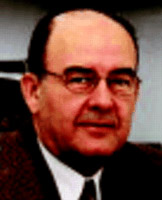
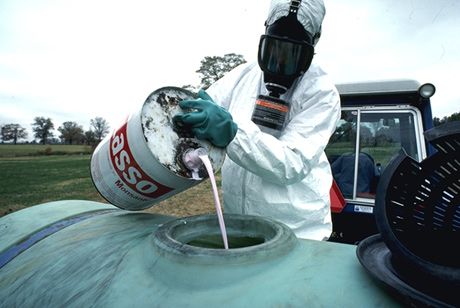
 A French farmer who can no longer perform his routine farming duties because of permanent pesticide injuries has had his day in court, literally, and the perpetrator of his injuries found guilty of chemical poisoning. The French court in Lyon ruled that Monsanto’s Lasso weedkiller formula, which contains the active ingredient alachlor, caused Paul Francois to develop lifelong neurological damage that manifests as persistent memory loss, headaches, and stuttering during speech.
Reports indicate that the 47-year-old farmer sued Monsanto back in 2004 after inhaling the Lasso product while cleaning his sprayer tank equipment. Not long after, Francois began experiencing lasting symptoms that prevented him from working, which he says were directly linked to exposure to the chemical. Since Lasso’s packaging did not bear adequate warnings about the dangers of exposure, Francois alleged at the time that Monsanto was essentially negligent in providing adequate protection for its customers.
To the surprise of many, the French court agreed with the claims and evidence presented before it, declaring earlier this year that “Monsanto is responsible for Paul Francois’ suffering after he inhaled the Lasso product … and must entirely compensate him.” The court is said to be seeking expert opinion on how to gauge Francois’ losses in order to determine precisely how much Monsanto will be required to compensate him in the case.
“It is a historic decision in so far as it is the first time that a (pesticide) maker is found guilty of such a poisoning,” said Francois Lafforgue, Paul Francois’ lawyer, to Reuters earlier in the year.
According to the U.S. Environmental Protection Agency (EPA), exposure to alachlor can cause damage to the liver, kidneys, spleen, and eyes, and may lead to the development of anemia and even cancer. The EPA apparently views alachlor as so dangerous, in fact, that the agency has set the maximum contaminant level goals (MCLG) for alachlor to zero in order to “prevent potential health problems.” (http://water.epa.gov/drink/contaminants/basicinformation/alachlor.cfm)
In 2007, France officially banned Lasso from use in the country in accordance with a European Union (EU) directive enacted in 2006 prohibiting the chemical from further use on crops in any member countries. But despite all the evidence proving that alachlor can disrupt hormonal balance, induce reproductive or developmental problems, and cause cancer, the chemical is still being used on conventional crops throughout the U.S. to this very day. (http://www.pesticideinfo.org/Detail_ChemReg.jsp?Rec_Id=PC35160)
“I am alive today, but part of the farming population is going to be sacrificed and is going to die because of (alachlor),” added Francois to Reuters.
Sources for this article include:
http://www.care2.com
http://www.google.com
http://ecowatch.org
Oct 10, 2012 | Globalist Corporations

The truth really is much stranger than fiction, especially when it comes to the open and admitted future plans of major biotechnology companies. One such case involves a biotech company known as ProdiGene, the officials from which actually faced jail time back in 2002 for contaminating the traditional food supply with ‘biopharmaceutical’ crops that were growing pharmaceuticals and vaccine components associated with AIDS, diabetes, and diarrhea.
Contaminating 500,000 bushels of soy with their biopharmaceutical corn that contained pharmaceutical and vaccine components associated with deadly diseases, the company was slapped with a minor $500,000 fine by the USDA (the same government organization that gives Monsanto’s crops special speed approval and ignores the company’s blatant disregard for its regulations). As it turns out, the pharmaceutical crops were actually mixed in with traditional crops and unknowing farmers had already been planted for human consumption. The USDA claims, however, that the crops were confiscated.
After receiving the fine and some press coverage on the subject, ProdiGene decided not to apologize but to expand their mission. The company, in combination with estimates by Dow AgroSciences, stated that they sought to reach $200 billion in biopharmaceutical crops within 10 years (as of 2004). Furthermore, they estimated that 10% of the corn in the United States will be biopharmaceutical in nature.
In other words, it could contain hidden nano-scale vaccinations, antibiotics, anti-depressants, or any form of pharmaceutical drug. One California based company has even created a spermicidal corn to be used as a mass contraceptive. In an AlterNet piece covering the issue entitled ‘Spermicidal Breakfast Cereal’, author Carmelo Ruiz-Marrero asks:
What would happen if contraceptive corn or antibiotic wheat accidentally made it to the supermarket? Nobody knows, but that isn’t stopping agribusiness from pursuing these crops.
Vaccines, Drugs, Sterilizations to be Fused into Nation’s Dinner?
The existence of such technology brings the fight against GMOs to an entirely new level. Outside of the known effects such as recent links to tumors, DNA damage, and other complications, GMO crops on your dinner table could soon contain pharmaceutical drugs like statins in an effort of ‘mass medicating’ the public. Such an effort would likely be used in conjunction with others to fight against those who choose to opt out of vaccinations, delivering the vaccine through the food supply.
It may sound absurd, and it is, but is not a new notion. Researchers previously designed a method in which mosquitoes could be ‘flying vaccine carriers’ to inject large numbers of individuals with vaccinations without their knowledge of consent. As one spokesman for a major ecology organization explained:
“One single mistake from a biotechnology company and we’ll be having someone else’s prescription medicine for breakfast in our cereal,” explained Larry Bohlen from Friends of the Earth, an international ecology organization.
The information ties in with the recent news revealing that Monsanto now owns a monumental ‘gene silencing’ technology for pharmaceutical use in humans. The king biotechnology company even forged a recent alliance with Alnylam Pharmaceuticals, Inc. to get the initiative started. After all, Monsanto would not lose an opportunity to conquer a large portion of the massive $200 billion biopharmaceutical crop market.
Other corporations are looking to get a chunk too, with the molecularfarming.com website acting a hub for farmers willing to lease their land for biopharmaceutical experiments across the globe. Touting a net worth of $80 billion in the coming years, investors are continually looking to get their hands on biopharmaceutical growing operations to churn out drug-containing GMO crops for mass consumption — and mass profits. So far, they’ve garnered contracts as far as Zimbabwe to continue their operations.
Just like regular GMOs, DDT, and cigarettes, experts are concerned that the real effects of biopharmaceutical growth may not be recognized until decades later.
“What will have to happen before the Department of Agriculture takes seriously the fact that millions of people almost ended up consuming experimental drugs and chemicals?” asks Brandon Keim, of the Council for Responsible Genetics in reference to the ProdiGene scandal. “A few sensational deaths? Maybe an increase in debilitating disorders which will only be noticeable some decades later, when it’s already too late?”
If the public grows more aware of GMO dangers with the grassroots support and potential passing of Prop 37, however, biopharmaceutical farms may never see mainstream success.
May 10, 2012 | Globalist Corporations
It’s not enough that the biotech industry — led by multinational corporations such as Monsanto, Dow, Syngenta, BAS, and Dupont — is poisoning our food and our planet. It’s also poisoning young minds.
In a blatant attempt at brainwashing, the Council for Biotechnology Information(CBI) has widely circulated what it calls a Biotechnology Basics Activity Bookfor kids, to be used by “Agriculture and Science Teachers.” The book — calledLook Closer at Biotechnology — looks like a science workbook, but reads more like a fairy tale. Available on the council’s Web site, its colorful pages are full of friendly cartoon faces, puzzles, helpful hints for teachers — and a heavy dose of outright lies about the likely effects of genetic engineering on health, the environment, world hunger and the future of farming.
CBI’s lies are designed specifically for children, and intended for use in classrooms.
At a critical time in history when our planet is veering toward a meltdown, when our youth are suffering the health consequences (obesity, diabetes, allergies) of Big Ag and Food Inc.’s over-processed, fat-and sugar-laden, chemical-, and GMO-tainted foods, a time when we should be educating tomorrow’s adults about how to reverse climate change, how to create sustainable farming communities, how to promote better nutrition, the biotech industry’s propagandists are infiltrating classrooms with misinformation in the guise of “educational” materials.
Brainwashing children. It’s a new low, even for Monsanto.
You don’t have to read beyond the first page ofLook Closer at Biotechnology to realize that this is pure propaganda:
Hi Kids! Welcome to the Biotechnology Basics Activity Book. This is an activity book for young people like you about biotechnology — a really neat topic. Why is it such a neat topic? Because biotechnology is helping to improve the health of the Earth and the people who call it home. In this book, you will take a closer look at biotechnology. You will see that biotechnology is being used to figure out how to: 1) grow more food; 2) help the environment; and 3) grow more nutritious food that improves our health. As you work through the puzzles in this book, you will learn more about biotechnology and all of the wonderful ways it can help people live better lives in a healthier world. Have fun!
Before we take a closer look at the lies laid out in Look Closer at Biotechnology — lies that are repeated over and over again, the better to imprint them on young minds — let’s take a closer look at the book’s publisher. The Council for Biotechnology Information describes itself as “a non-profit 501(c)(6) organization that communicates science-based information about the benefits and safety of agricultural biotechnology and its contributions to sustainable development.”
According to the Internal Revenue Service, a 501(c)(6) organization is a “business league” devoted to the improvement of business conditions of one or more lines of business. The mission of a 501(c)(6) organization “must focus on the advancement of the conditions of a particular trade or the interests of the community.”
The bottom line is that CBI exists to advance the interests of the corporations that it was formed to promote — in this case, the biotech industry. While it purports to communicate “science-based information,” in fact, that’s not its mission at all. Its mission is to maximize the profits of Monsanto and the biotech industry.
Not surprisingly, CBI is funded largely by the biotech, chemical, pesticide, and seed industry giants: BASF, Bayer CropScience, Dow Agro Sciences, Dupont, Monsanto, and Syngenta.
There’s nothing new about corporations lying to the public. Corporations routinely lie to their employees. They lie in advertising. They lie in the lopsided so-called studies and research projects that they self-fund in order to guarantee the outcomes that support their often false, but self-serving premises. They buy off politicians, regulatory officials, scientists, and the media.
Although here we’re focusing on the biotech industry trying to brainwash our kids, CBI certainly does not limit its propaganda to just children. CBI recently contributed $375,000 to the Coalition Against the Costly Labeling Law — a Sacramento-based industry front group working to defeat the California Right to Know Genetically Engineered Food Act of 2012. If passed in November, this citizens’ ballot Initiative will require food manufacturers and retailers to label foods containing genetically engineered ingredients, as well as ban the routine industry practice of labeling or advertising GE-tainted foods as “natural” or “all natural.” CBI, the Farm Bureau, and the Grocery Manufacturers Association are campaigning furiously to preserve their “right” to keep consumers in the dark about whether their food has been genetically engineered or not, and to preserve their “right” to mislabel gene-altered foods as “natural.”
Clearly, the Council for Biotechnology Information has little or no regard for “science-based” information. But lies aimed directly at kids — under the guise of science education? In our schools?
Let’s take a closer look at the claims made in Look Closer at Biotechnology.
Lie #1: “Biotechnology is one method being used to help farmers grow more food.” (page 7)
This statement is patently false.
In 2009, in the wake of similar studies, the Union of Concerned Scientists examined the data on genetically engineered crops, including USDA statistics. Their report — Failure to Yield — was the first major effort to evaluate in detail the overall yields of GE crops after more than 20 years of research and 13 years of commercialization in the United States. According to the definitive UCS study, “GE has done little to increase overall crop yields.” A number of studies indicate in fact that GE soybeans, for example, actually produce lower yields than non-genetically engineered varieties.
Research conducted by the India research group, Navdanya, and reported in The GMO Emperor Has No Clothes turns up the same results:
Contrary to the claim of feeding the world, genetic engineering has not increased the yield of a single crop. Navdanya’s research in India has shown that contrary to Monsanto’s claim of Bt cotton yield of 1500 kg per acre, the reality is that the yield is an average of 400-500 kg per acre. Although Monsanto’s Indian advertising campaign reports a 50-percent increase in yields for its Bollgard cotton, a survey conducted by the Research Foundation for Science, Technology and Ecology found that the yields in all trial plots were lower than what the company promised. (Page 11).
The claim that GE crops increase agricultural yields is a blatant lie. Equally untrue is the industry’s claim that it is motivated by the desire to feed the hungry of the world. As the Union of Concerned Scientists points out: “For the most part, genetic engineering techniques are being applied to crops important to the industrialized world, not crops on which the world’s hungry depend.” Where does all the genetically engineered soy and corn — two of the largest GE crops — end up? In animal feed, processed junk foods — and school lunchrooms. Precious little goes to feed the hungry in impoverished regions.
One of the sub-arguments related to increasing yields is the biotech industry’s claim that GMO crops are more resistant to pests — hence more of the crops survive. In Look Closer at Biotechnology kids are told that agricultural biotechnology is a “precise way to make seeds with special qualities. These seeds will allow farmers to grow plants that are . . . more resistant to pests . . .” In fact widespread commercialization of herbicide-resistant and Bt-spliced GE crops has engendered a growing army of superweeds and superpests, oblivious to all but the most powerful and toxic pesticides.
What we should be teaching kids in science class is what scientists have been warning for years — that any attempt to increase resistance to pests through genetic engineering will ultimately fail. Insects — and diseases — will build up a tolerance over time, and evolve into stronger and stronger strains. That’s how nature works — and even Monsanto can’t fool Mother Nature. Organic agriculture, on the other hand, utilizing crop rotation, biodiversity, natural fertilizers, and beneficial insects, reduces crop loss from pests and weeds, without the collateral damage of toxic pesticides and fertilizers.
Recently, 22 leading scientists told the US Environmental Protection Agency that it should act with “a sense of urgency” to urge farmers to stop planting Monsanto’s genetically engineered Bt corn because it will no longer protect them from the corn rootworm. Bt corn is genetically engineered with bacterial DNA that produces an insecticide in every cell of the plant, aimed at preventing corn rootworm. Except that corn rootworms have now developed resistance to these GE mutants.
Just as scientists had predicted years ago, a new generation of insect larvae has evolved, and is eating away at the roots of Monsanto’s Bt corn — a crop farmers paid a high price for on Monsanto’s promise that they would never have to worry about corn rootworm again. Scientists are now warning of massive yield loss and surging corn costs if the EPA doesn’t act quickly to drastically reduce Bt crops’ acreage and ensure that Monsanto makes non-GMO varieties of corn available to farmers.
“Massive yield loss” doesn’t sound like “more food” — whether you’re 12 years old or 112.
What we should be telling kids is what responsible scientists and farmers — experts at the United Nations — have been saying all along: Eco-farming candouble food output. According to a UN study:
- Eco-farming projects in 57 nations showed average crop yield gains of 80 percent by tapping natural methods for enhancing soil and protecting against pests.
- Projects in 20 African countries resulted in a doubling of crop yields within three to 10 years.
- Sound ecological farming can significantly boost production and in the long term be more effective than conventional farming.
Lie #2: “Biotechnology can help farmers and the environment in many ways.” (page 8)
Two lies for the price of one.
Biotechnology — specifically genetic engineering — helps neither farmers nor the environment, according to the majority of legitimate scientists and economists. In fact, the opposite is true. Genetic engineering of seeds has wreaked havoc on the environment and brought misery to hundreds of thousands of small farmers all over the world.
The majority of farmers in developing countries struggle to afford even the most basic requirements of seeds and fertilizers. Their survival depends on the age-old practice of selecting, saving and sharing seeds from one year to the next. When multinational corporations move into areas previously dominated by small farmers, they force those farmers to buy their patented seeds and fertilizers — under pretense of higher yields, and under threats of lawsuits if they save or share the seeds. Every year, they’re forced to buy more seeds and more chemicals from corporations — and when the promises of higher yields and higher incomes prove empty, farmers go bankrupt.
Compounding their corporate crimes, when Monsanto’s patented seeds contaminate the non-GMO crops of small farmers (because the seeds drift across property lines) Monsanto routinely sues farmers for growing their patented seeds illegally, even though the seeds were actually unwanted trespassers. Further, the company has ruined the livelihoods of small farmers by harassing them for illegally growing patented seeds, even in cases where no patented seeds have been grown, either knowingly or by accident.
As Monsanto and others have expanded worldwide, into India, China, Pakistan, and other countries, the effect on small farmers has been devastating. In India, for instance, after World Trade Organization policies forced the country in 1998 to open its seed sector to companies like Cargill, Monsanto and Syngenta, farmers quickly found themselves in debt to the biotech companies that forced them to buy corporate seeds and fertilizers and pesticides, destroying local economies. Hundreds of thousands of India’s cotton farmers have committed suicide.
And according to a Greenpeace report, poorer farmers in the Philippines were sold Monsanto’s Bt corn as a “practical and ecologically sustainable solution for poor corn farmers everywhere to increase their yields” only to find the opposite was true: Bt corn did not control pests and was “not ecologically sustainable.”
Which brings us to one more of the Council for Biotechnology Information’s lies to kids: That agricultural biotechnology is good for the environment.
Study after study, over more than a decade, has warned us of just the opposite. Even the pro-biotech USDA has admitted that GE crops use more pesticides, not less than non-GE varieties. Genetic engineering results in evermore pesticides being dumped into the environment, destroying soil and water, human and animal health, and threatening the biodiversity of the planet.
How about telling kids instead that numerous reports, including one from theGerman Beekeepers Association, have linked genetically engineered Bt corn to the widespread disappearance of bees, or what is now referred to as Colony Collapse Disorder? And while we’re at it, maybe we should remind kids of the Albert Einstein’s quote: “If the bee disappeared off the surface of the globe then man would only have four years of life left. No more bees, no more pollination, no more plants, no more animals, no more man.”
Maybe we should also tell them that glyphosate, the active ingredient in Monsanto’s herbicide, Roundup, the most widely used herbicide in the world, kills Monarch butterflies, fish, and frogs, destroys soil fertility, and pollutes our waterways and drinking water.
The fact is, widespread use of Monsanto’s Roundup in all agricultural and urban areas of the United States is destroying the environment, pure and simple. US Geological Survey studies released this month show that Roundup is now commonly found in rain and rivers in agricultural areas in the Mississippi River watershed, where most applications are for weed control on GE corn, soybeans and cotton. Here’s the real truth, from an article published this past week: Monsanto’s Roundup is actually threatening the crop-yielding potential of the entire biosphere. According to the article, new research published in the journalCurrent Microbiology highlights the extent to which “glyphosate is altering, and in some cases destroying, the very microorganisms upon which the health of the soil, and — amazingly — the benefits of raw and fermented foods as a whole, depend.”
Lie #3: “Scientists are using biotechnology to grow foods that could help make people healthier.” (page 11)
This is the perhaps the most outrageous lie of all. Telling kids that GE foods are more nutritious is tantamount to telling them Hostess cupcakes and Coca-Cola are health foods.
Genetic engineering — of human food and food for animals that humans eat — has been linked to a host of diseases and health issues, including auto-immune disorders, liver and kidney damage, nutritional deficiencies, allergies, accelerated aging, infertility, and birth defects.
There’s a growing and alarming body of research indicating that GMO foods are unsafe, and absolutely no research whatsoever proving that they are safe. And yet the USDA and FDA continue to approve, and just this past month even agreed tospeed up approval of these crops that scientists and physicians increasingly link to poor health.
Instead of force-feeding kids lies in bogus activity books, how about having them read some truthful articles?
The study Bt Toxin Kills Human Kidney Cells says Bt toxins are not “inert” on human cells, and may indeed be toxic, causing kidney damage and allergies observed in farmers and factory workers handling Bt crops. The article supportsprevious studies done on rats, showing that animals fed on three strains of GE corn made by Monsanto suffered signs of organ damage after only three months.
Or how about this: “19 Studies Find That GMOs Aren’t Up to Consumer Safety Protection Standards” which reports:
It is abundantly clear that both GMOs made to be resistant to herbicides (aka “Roundup Ready”) and those made to produce insecticides have damaging impacts on the health of mammals who consume them, particularly in the liver and kidneys. We already know that from the trials of 90 days and less. In looking a little deeper into the info, we found a number of issues that point to a probable increased level of toxicity when these foods are consumed over the long term, including likely multi-generational effects.
Multi-generational effects. Eating GMO foods harms not only our health, and our kids’ health — but quite possibly their kids, too — even if we stop eating them today.
In a recent report to the United Nations General Assembly Human Rights Council by Special Rapporteur on the right to food, Olivier De Schutter, Schutter outlines the case for sustainable agricultural practices (the antithesis of industrial agribusiness, with its GE crops and heavy reliance on chemical fertilizers and pesticides). He also addresses the links between health and malnutrition. In the report, Schutter shows why undernutrition, micronutrient deficiency and overnutrition are different dimensions of malnutrition that must be addressed together through a life-course approach. From the report’s summary:
Existing food systems have failed to address hunger, and at the same time encourage diets that are a source of overweight and obesity that cause even more deaths worldwide than does underweight. A transition towards sustainable diets will succeed only by supporting diverse farming systems that ensure that adequate diets are accessible to all, that simultaneously support the livelihoods of poor farmers and that are ecologically sustainable.
Corporate greed plus a complicit government have allowed for the rampant poisoning of our food and environment, and the demise of sustainable agriculture practices — practices sorely needed if we are going to feed the world’s population, and avoid a world health crisis. And we’ve exported the same misery and destruction to foreign countries far and wide.
Propaganda like the CBI’s Look Closer at Biotechnology has brainwashed many of our kids into thinking that the biotech industry has people — not profits — in its best interests. The book’s claims are laughable. But framing blatant lies as “science” for children in schools borders on criminal.
For parents and teachers out there, here’s an alternate lesson plan. Because world hunger is a concern, because saving our planet does matter, and because better health is a worthy and achievable goal, let’s ask our kids to think critically, instead of accepting at face value “information” attractively packaged by multinational corporations.
Don M. Huber, emeritus soil scientist of Purdue University puts it in terms everyone, kids included, can understand. Huber talks about a range of key factors involved in plant growth, including sunlight, water, temperature, genetics, and nutrients taken up from the soil. “Any change in any of these factors impacts all the factors,” he said. “No one element acts alone, but all are part of a system.” “When you change one thing,” he said, “everything else in the web of life changes in relationship.”
This is what we should be teaching the future stewards of our planet.
SOURCE:
http://www.alternet.org/food/154602/outrageous_lies_monsanto_and_friends_are_trying_to_pass_off_to_kids_as_science?page=entire
By: Ronnie Cummins, March 20, 2012
Jan 27, 2012 | Activism, Nature Body Mind
Lawsuit Filed To Protect Themselves from Unfair Patent Enforcement on Genetically Modified Seed
Action Would Prohibit Biotechnology Giant from Suing Organic Farmers and Seed Growers If Innocently Contaminated by Roundup Ready Genes
NEW York: On behalf of 60 family farmers, seed businesses and organic agricultural organizations, the Public Patent Foundation (PUBPAT) filed suit today against Monsanto Company challenging the chemical giant’s patents on genetically modified seed. The organic plaintiffs were forced to sue preemptively to protect themselves from being accused of patent infringement should their crops ever become contaminated by Monsanto’s genetically modified seed.
Monsanto has sued farmers in the United States and Canada, in the past, when their patented genetic material has inadvertently contaminated their crops.
A copy of the lawsuit can be found at:
(http://www.pubpat.org/assets/files/seed/OSGATA-v-Monsanto-Complaint.pdf)
The case, Organic Seed Growers & Trade Association, et al. v. Monsanto, was filed in federal district court in Manhattan and assigned to Judge Naomi Buchwald. Plaintiffs in the suit represent a broad array of family farmers, small businesses and organizations from within the organic agriculture community who are increasingly threatened by genetically modified seed contamination despite using their best efforts to avoid it. The plaintiff organizations have over 270,000 members, including thousands of certified organic family farmers.
“This case asks whether Monsanto has the right to sue organic farmers for patent infringement if Monsanto’s transgenic seed or pollen should land on their property,” said Dan Ravicher, PUBPAT’s Executive Director. “It seems quite perverse that an organic farmer contaminated by transgenic seed could be accused of patent infringement, but Monsanto has made such accusations before and is notorious for having sued hundreds of farmers for patent infringement, so we had to act to protect the interests of our clients.”
Once released into the environment, genetically modified seed can contaminate and destroy organic seed for the same crop. For example, soon after Monsanto introduced genetically modified seed for canola, organic canola became virtually impossible to grow as a result of contamination.
Organic corn, soybeans, cotton, sugar beets and alfalfa also face the same fate, as Monsanto has released genetically modified seed for each of those crops as well.
Monsanto is currently developing genetically modified seed for many other crops, thus putting the future of all food, and indeed all agriculture, at stake.
“Monsanto’s threats and abuse of family farmers stops here. Monsanto’s genetic contamination of organic seed and organic crops ends now,” stated Jim Gerritsen, a family farmer in Maine who raises organic seed and is President of lead plaintiff Organic Seed Growers and Trade Association. “Americans have the right to choice in the marketplace – to decide what kind of food they will feed their families.”
“Family-scale farmers desperately need the judiciary branch of our government to balance the power Monsanto is able to wield in the marketplace and in the courts,” said Mark A. Kastel, Senior Farm Policy Analyst for The Cornucopia Institute, one of the plaintiffs. “Monsanto, and the biotechnology industry, have made great investments in our executive and legislative branches through campaign contributions and powerful lobbyists in Washington.”
In the case, PUBPAT is asking Judge Buchwald to declare that if organic farmers are ever contaminated by Monsanto’s genetically modified seed, they need not fear also being accused of patent infringement. One reason justifying this result is that Monsanto’s patents on genetically modified seed are invalid because they don’t meet the “usefulness” requirement of patent law, according to PUBPAT’s Ravicher, the plaintiffs’ lead attorney in the case.
“Evidence cited by PUBPAT in its opening filing today proves that genetically modified seed has negative economic and health effects, while the promised benefits of genetically modified seed – increased production and decreased herbicide use – are false,” added Ravicher who is also a Lecturer of Law at Benjamin N. Cardozo School of Law in New York.
Ravicher continued, “Some say transgenic seed can coexist with organic seed, but history tells us that’s not possible, and it’s actually in Monsanto’s financial interest to eliminate organic seed so that they can have a total monopoly over our food supply,” said Ravicher. “Monsanto is the same chemical company that previously brought us Agent Orange, DDT, PCB’s and other toxins, which they said were safe, but we know are not. Now Monsanto says transgenic seed is safe, but evidence clearly shows it is not.”
The plaintiffs in the suit represented by PUBPAT are: Organic Seed Growers and Trade Association; Organic Crop Improvement Association International, Inc.; OCIA Research and Education Inc.; The Cornucopia Institute; Demeter Association, Inc.; Navdanya International; Maine Organic Farmers and Gardeners Association; Northeast Organic Farming Association/Massachusetts Chapter, Inc.; Northeast Organic Farming Association of Vermont; Rural Vermont; Ohio Ecological Food & Farm Association; Southeast Iowa Organic Association; Northern Plains Sustainable Agriculture Society; Mendocino Organic Network; Northeast Organic Dairy Producers Alliance; Canadian Organic Growers; Family Farmer Seed Cooperative; Sustainable Living Systems; Global Organic Alliance; Food Democracy Now!; Family Farm Defenders Inc.; Farm-to-Consumer Legal Defense Fund; FEDCO Seeds Inc.; Adaptive Seeds, LLC; Sow True Seed; Southern Exposure Seed Exchange; Mumm’s Sprouting Seeds; Baker Creek Heirloom Seed Co., LLC; Comstock, Ferre & Co., LLC; Seedkeepers, LLC; Siskiyou Seeds; Countryside Organics; Cuatro Puertas; Interlake Forage Seeds Ltd.; Alba Ranch; Wild Plum Farm; Gratitude Gardens; Richard Everett Farm, LLC; Philadelphia Community Farm, Inc; Genesis Farm; Chispas Farms LLC; Kirschenmann Family Farms Inc.; Midheaven Farms; Koskan Farms; California Cloverleaf Farms; North Outback Farm; Taylor Farms, Inc.; Jardin del Alma; Ron Gargasz Organic Farms; Abundant Acres; T & D Willey Farms; Quinella Ranch; Nature’s Way Farm Ltd.; Levke and Peter Eggers Farm; Frey Vineyards, Ltd.; Bryce Stephens; Chuck Noble; LaRhea Pepper; Paul Romero; and, Donald Wright Patterson, Jr.
MORE:
Dr. Carol Goland, Ph.D., Executive Director of plaintiff Ohio Ecological Food & Farm Association (OEFFA) said, “Consumers indicate, overwhelmingly, that they prefer foods made without genetically modified organisms. Organic farms, by regulation, may not use GMOs, while other farmers forego using them for other reasons. Yet the truth is that we are rapidly approaching the tipping point when we will be unable to avoid GMOs in our fields and on our plates. That is the inevitable consequence of releasing genetically engineered materials into the environment. To add injury to injury, Monsanto has a history of suing farmers whose fields have been contaminated by Monsanto’s GMOs. On behalf of farmers who must live under this cloud of uncertainty and risk, we are compelled to ask the Court to put an end to this unconscionable business practice.”
Rose Marie Burroughs of plaintiff California Cloverleaf Farms said, “The devastation caused by GMO contamination is an ecological catastrophe to our world equal to the fall out of nuclear radiation. Nature, farming and health are all being affected by GMO contamination. We must protect our world by protecting our most precious, sacred resource of seed sovereignty. People must have the right to the resources of the earth for our sustenance. We must have the freedom to farm that causes no harm to the environment or to other people. We must protect the environment, farmers’ livelihood, public health and people’s right to non GMO food contamination.”
Jim Gerritsen, a family farmer in Maine who raises organic seed and is President of lead plaintiff Organic Seed Growers and Trade Association based in Montrose, Colorado, said, “Today is Independence Day for America. Today we are seeking protection from the Court and putting Monsanto on notice. Monsanto’s threats and abuse of family farmers stops here. Monsanto’s genetic contamination of organic seed and organic crops ends now. Americans have the right to choice in the marketplace – to decide what kind of food they will feed their families
– and we are taking this action on their behalf to protect that right to choose. Organic farmers have the right to raise our organic crops for our families and our customers on our farms without the threat of invasion by Monsanto’s genetic contamination and without harassment by a reckless polluter. Beginning today, America asserts her right to justice and pure food.”
Ed Maltby, Executive Director of plaintiff Northeast Organic Dairy Producers Alliance (NODPA) said, “It’s outrageous that we find ourselves in a situation where the financial burden of GE contamination will fall on family farmers who have not asked for or contributed to the growth of GE crops. Family farmers will face contamination of their crops by GE seed which will threaten their ability to sell crops as organically certified or into the rapidly growing ‘Buy Local’ market where consumers have overwhelmingly declared they do not want any GE crops, and then family farmers may be faced by a lawsuit by Monsanto for patent infringement. We take this action to protect family farms who once again have to bear the consequences of irresponsible actions by Monsanto.”
David L. Rogers, Policy Advisor for plaintiff NOFA Vermont said, “Vermont’s farmers have worked hard to meet consumers’ growing demand for certified organic and non-GE food. It is of great concern to them that Monsanto’s continuing and irresponsible marketing of GE crops that contaminate non-GE plantings will increasingly place their local and regional markets at risk and threaten their livelihoods.”
Dewane Morgan of plaintiff Midheaven Farms in Park Rapids, Minnesota, said, “For organic certification, farmers are required to have a buffer zone around their perimeter fields. Crops harvested from this buffer zone are not eligible for certification due to potential drift from herbicide and fungicide drift. Buffer zones are useless against pollen drift. Organic, biodynamic, and conventional farmers who grow identity-preserved soybeans, wheat and open-pollinated corn often save seed for replanting the next year. It is illogical that these farmers are liable for cross-pollination contamination.”
Jill Davies, Director of plaintiff Sustainable Living Systems in Victor, Montana, said, “The building blocks of life are sacred and should be in the public domain. If scientists want to study and manipulate them for some supposed common good, fine. Then we must remove the profit motive. The private profit motive corrupts pure science and increasingly precludes democratic participation.”
David Murphy, founder and Executive Director of plaintiff Food Democracy Now! said, “None of Monsanto’s original promises regarding genetically modified seeds have come true after 15 years of wide adoption by commodity farmers. Rather than increased yields or less chemical usage, farmers are facing more crop diseases, an onslaught of herbicide-resistant superweeds, and increased costs from additional herbicide application. Even more appalling is the fact that Monsanto’s patented genes can blow onto another farmer’s fields and that farmer not only loses significant revenue in the market but is frequently exposed to legal action against them by Monsanto’s team of belligerent lawyers. Crop biotechnology has been a miserable failure economically and biologically and now threatens to undermine the basic freedoms that farmers and consumers have enjoyed in our constitutional democracy.”
Mark Kastel, Senior Farm Policy Analyst for plaintiff The Cornucopia Institute said, “We need the court system to offset this power and protect individual farmers from corporate tyranny. Farmers have saved seeds since the beginning of agriculture by our species. It is outrageous that one corporate entity, through the trespass of what they refer to as their ‘technology,’ can intimidate and run roughshod over family farmers in this country. It should be the responsibility of Monsanto, and farmers licensing their technology, to ensure that genetically engineered DNA does not trespass onto neighboring farmland. It is outrageous, that through no fault of their own, farmers are being intimidated into not saving seed for fear that they will be doggedly pursued through the court system and potentially bankrupted.”
http://www.cornucopia.org/2011/03/farmers-and-seed-producers-lunch-preemptive-strike-against-monsanto/

 A French farmer who can no longer perform his routine farming duties because of permanent pesticide injuries has had his day in court, literally, and the perpetrator of his injuries found guilty of chemical poisoning. The French court in Lyon ruled that Monsanto’s Lasso weedkiller formula, which contains the active ingredient alachlor, caused Paul Francois to develop lifelong neurological damage that manifests as persistent memory loss, headaches, and stuttering during speech.