If you were murdered today, there’s only a 60% chance of police catching the person who did it. That number drops to 3% if you’re raped. 50 years ago, that number was much higher. What happened?
Despite overwhelming disapproval from the public, the war on drugs wages on and we are witnessing the inevitable materialization of a fascist police state before us.
The irony here is that no matter how much money the state steals from us to fund themselves, and no matter how many tanks or AR-15s they acquire, they are solving far fewer crimes than before.
Police aren’t getting any closer to “winning” this ridiculous and immoral war on drugs either.
So, why aren’t police solving crimes?
The answer to that question can be found by looking at where police allocate much of their time and resources.
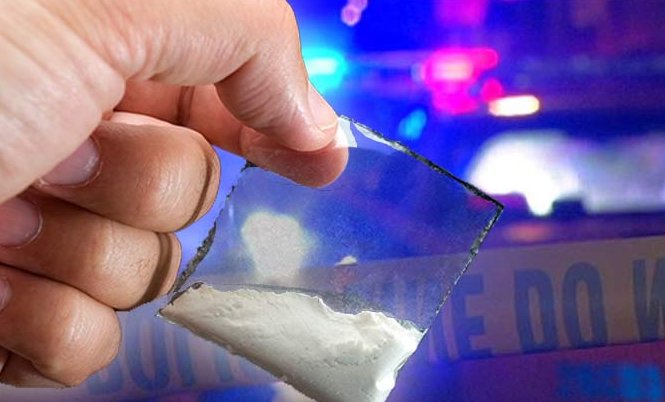
Civil asset forfeiture pays. Busting low-level drug dealers by the dozen and confiscating their drugs, guns, cars, houses, and money pays. Writing tickets for victimless crime pays. Pulling you over for window tint, seat belts, arbitrary traveling speeds, and expired license plates; these are the things that pay, not solving crimes.
In criminal justice, clearance rates are used as a measure of crimes solved by the police. The clearance rate is calculated by dividing the number of crimes that are “cleared” (a charge being laid) by the total number of crimes recorded.
In the United States, the murder clearance rate in 1965 was more than 90 percent. Since the inception of the war on drugs, the murder clearance rate has plummetted to an average of less than 65 percent per year.
Despite the near complete erosion of the constitutional protections against unlawful search and seizure, the clearance rate for murder continued its free fall. This highlights the fact that no matter how many rights are given up or freedoms diminished, police cannot guarantee your safety.
It’s not just murders that police fail to investigate, it’s rapes too.
According to the Department of Justice, there are currently over 400,000 untested rape kits collecting dust in police evidence rooms nationwide, and many other estimates suggest that this number could be as high as one million.
As a result of this horrific negligence, roughly 3% of rape cases in America are actually solved. This is in spite of the fact that many rape kits have a high chance of leading to an arrest since most rapists are career criminals who have their DNA on file.
In some cases, the victims even know who their attackers were, but they can not prosecute these criminals because the evidence has yet to be processed by police.
Arresting rapists and murderers simply falls short in the two areas police are worried about; revenue collection and keeping their inflated drug war budgets flowing.
It’s not that police are incapable of solving these crimes either; they’re just not interested in doing so.
“Take for example, homicides of police officers in the course of their duty,” University of Maryland criminologist Charles Wellfordpoints out. On paper, they’re the kind of homicide that’s hardest to solve — “they’re frequently done in communities that generally have low clearance rates … they’re stranger-to-stranger homicides, they [have] high potential of retaliation [for] witnesses.” And yet, Wellford says, they’re almost always cleared.
This is why people don’t like the police.
This lack of solving crimes coupled with the increase in shakedowns of non-violent citizens has created a rift between the rest of society and police.
“One of the consequences of the war on drugs is people have stopped looking at police as their protectors and more see them as their potential persecutors,” explains Sean Dunagan, Former DEA Senior Intelligence Specialist.
The war on drugs has driven a wedge between citizens and police. If you keep locking up millions of people for victimless crimes, eventually you’ll effect enough lives to vastly tarnish your reputation.
“The police department basically becomes the “other” to the community. Once you have that breakdown, then information stops flowing, so you don’t learn about crimes. And the only crime you become interested in is the one you can solve, which is locking up people up for using drugs,” says Ed Burns, Former Baltimore Narcotics and Homicide Detective.
Locking up drug users has proven to be quite the profitable venture.
It is much easier to walk out on the street corner and shakedown a teenager who may have an illegal plant in his pocket than it is to examine the evidence in a rape or murder case. The so-called “Private” Prisons know this and have subsequently found their niche in this immoral war on drugs.
The term Private Prison is a farce from the get-go.
A truly Private prison would not be solely funded by taxpayer dollars. These Private prisons are nothing more than a fascist mixture of state and corporate, completely dependent upon the extortion factor of the state, i.e., taxation, as a means of their corporate sustenance.
A truly Private prison would have a negative incentive to boost its population for the simple fact that it is particularly expensive to house inmates. On the contrary, these fascist, or more aptly, corporatist prisons contractually require occupancy rates of 95%-100%.
The requirement for a 95% occupancy rate creates a de facto demand for criminals. Think about that for a second; a need or demand for people to commit crimes is created by this corporatist arrangement. The implications associated with demanding people commit crimes are horrifying.
Creating a completely immoral demand for “criminals” leads to the situation in which we find ourselves today. People, who are otherwise entirely innocent, are labeled as criminals for their personal choices and thrown in cages. We are now witnessing a vicious cycle between law enforcement, who must create and arrest criminals, and the corporatist prison system which constantly demands more prisoners.
The police and prison corporations know that without the war on drugs, this windfall of money, cars, and houses — ceases to exist.
If you want to know who profits from ruining lives and throwing marijuana users in cages, we need only look at who bribes (also known as lobbies) the politicians to keep the war on drugs alive.
Below is a list of the top five industries who need you locked in a cage for possessing a plant in order to ensure their job security.
Police Unions: Coming in as the number one contributor to politicians for their votes to lock you in a cage for a plant are the police themselves. They risk taking massive pay cuts and losing all their expensive militarized toys without the war on drugs.
Private Prison Corporations: No surprise here. The corporatist prison lobby is constantly pushing for stricter laws to keep their stream of tax dollars flowing.
Pharmaceutical Corporations: The hypocrisy of marijuana remaining a Schedule 1 drug, “No Medical Use Whatsoever,” seems criminal when considering that pharmaceutical companies reproduce a chemical version of THC and are able to market and sell it as such. Ever hear of Marinol? Big pharma simply uses the force of the state to legislate out their competition; which happens to be nature.
Prison Guard Unions: The prison guard unions are another group, so scared of losing their jobs, that they would rather see thousands of non-violent and morally innocent people thrown into cages, than look for another job.
What does it say about a society who’s resolute in enacting violence against their fellow human so they can have a job to go to in the morning?
The person who wants to ingest a substance for medical or recreational reasons is not the criminal. However, the person that would kidnap, cage, or kill someone because they have a different lifestyle is a villain on many fronts.
When does this vicious cycle end?
The good news is, that the drug war’s days are numbered. Evidence of this is everywhere. States are defying the federal government and refusing to lock people in cages for marijuana. Colorado and Washington state served as a catalyst in a seemingly exponential awakening to the government’s immoral war.
Following suit were Oregon, D.C., and Alaska. Medical marijuana initiatives are becoming a constant part of legislative debates nationwide. We’ve even seen bills that would not only completely legalize marijuana, but unregulate it entirely, like corn.
As more and more states refuse to kidnap and cage marijuana users, the drug war will continue to implode. We must be resilient in this fight.
If doing drugs bothers you, don’t do drugs. When you transition from holding an opinion to using government violence to enforce your personal preference, you become the bad guy.
Palm Beach County, Florida – Journalists at the DC Post were looking through message boards that are frequented by law enforcement officers, when they found a post where one officer was causally talking about planting evidence on “mouthy drivers” and “street lawyers.”
The Post then contacted the officer and conducted an anonymous interview with him where he revealed his disturbing perspective.
The officer revealed the illegal and unethical actions that he is proud of taking on the job. The DC Post has also said that they have verified the officer’s position with the Palm Beach County Sheriff’s Office, and they have verified many of the claims that he has made.
The original post was titled “Tricks of the trade – let’s exchange!” and featured the following message:
“I have a method for getting people off the street that should not be there. Mouthy drivers, street lawyers, assholes and just anyone else trying to make my job difficult. Under my floor mat, I keep a small plastic dime baggie with Cocaine in residue. Since it’s just residue, if it is ever found during a search of my car like during an inspection, it’s easy enough to explain. It must have stuck to my foot while walking through San Castle. Anyways, no one’s going to question an empty baggie. The residue is the key because you can fully charge some asshole with possession of cocaine, heroin, or whatever just with the residue. How to get it done? “I asked Mr. DOE for his identification. And he pulled out his wallet, I observed a small plastic baggie fall out of his pocket…” You get the idea. easy, right? Best part is, those baggies can be found lots of places so you can always be ready. Don’t forget to wipe the baggie on the person’s skin after you arrest them because you want their DNA on the bag if they say you planted it or fight it in court.”
Other officers on the board responded by sharing similar stories about how they falsely arrest people who don’t adequately bow to their authority.
Later in the interview, when the officer was asked if planting evidence happened regularly within his department, he responded by saying,
“Um, yes it does, on a regular basis. Probably every day in my shift. I work nights on the Road Patrol in a rough, um, mostly black neighborhood. Planting evidence and lying in your reports are just part of the game.
Then straight from the horses mouth, the officer said that this crooked behavior was actually encouraged by the drug war. Continuing his discussion about planting evidence, the officer said,
“Yes, all the time. It is something I see a lot of, whether it was from deputies, supervisors or undercovers and even investigators. It’s almost like you have no emotion with it, that they attach the bodies to it, they’re going to be out of jail tomorrow anyway; nothing is going to happen to them anyway. One of the consequences of the war on drugs is that police officers are pressured to make large numbers of arrests, and it’s easy for some of the less honest cops to plant evidence on innocent people. The drug war inevitably leads to crooked policing — and quotas further incentivize such practices. It doesn’t help that your higherups all did the same thing when they were on the road. It’s like a neverending cycle. Like how molested children accept that as okay behavior and begin molesting children themselves.”
When asked if he would get in trouble with the police department for framing people, the officer laughed and said that this type of behavior was actually encouraged.
“Our top boss, Sheriff Ric Bradshaw, supports this behavior and has for his entire career. As with anything, it depends on who you know in our agency. Last year, we had three deputies on the TAC unit, Kevin Drummond and Jarrod Foster, get caught falsifying information for a warrant. They got a pat on the back for a job well done. Just recently, we had a deputy, I think his name was Booth. He was caught completely lying on a car crash. Back a few more years, our Sheriff was involved a massive coverup of the death of two black deputies. He hid the report for years. This is only the beginning. The Sheriff has been involved in falsification of documents and his underling, Chief Deputy Michael Gauger, has been personally involved in an overtime scandal to steal money from the Sheriff’s Office. Does our Sheriff know about this behavior? Of course he does. We have even had a judge outright accuse my agency of committing fraud upon the court in a public hearing. She was one of the ones who saw through all the lying and covering up our department does to get away with the internal crime committed by deputies on a regular basis,” he said.
Palm Beach County Sheriff’s Office is no special police department, and this officer is not just a bad apple. The problems that are discussed in this interview are systematic, and they occur in every town across the country.
Just this week, we exposed a police department in Missouri whose officers were forced to make arrests or faced losing their job. This leads to otherwise innocent people being charged on a regular basis.
Also this week, the Free Thought Project conducted a report to show what happens to cops who try to expose this corruption. Several officers within the Chicago police department were threatened with “going home in a casket” for exposing this same vile practice within their ranks. via FreeThoughtProject
Barrett Brown is an American journalist, essayist and satirist. He is often referred to as an unofficial spokesperson for the hacktivist collective Anonymous, a label he disputes. He is credited with the creation of Project PM, a research outfit and information collective determined to expose agents of the corporate military spying apparatus. Brown’s large vocabulary and quick wit often make his thoughts a joy to read.
The seven guys with whom I recently spent two months living in a small room at the Kaufman County Jail while awaiting transfer were in the distressing habit of compulsively watching local TV news, which is the lowest form of news. They would even watch more than one network’s evening news program in succession, presumably so as to get differing perspectives on the day’s suburban house fires and rush-hour lane closings rather than having to view these events through a single ideological prism.
One day, there was a report about a spate of bank robberies by a fellow the media was dubbing the Lunch Money Bandit after his habit of always striking around noon, when tellers were breaking for lunch. Later that week, there was another report on the suspect, accompanied by surveillance footage — and then, shortly afterward, he was actually brought in to our cell, having just been captured when the cops received a tip from a former accomplice who’d been picked up on unrelated charges.
Lunch Money was an affable twentysomething guy from New Orleans who’d lost his two front teeth fighting off a couple of assailants who’d tried to rob his family’s motel room after Katrina and had already done four years in federal prison for other bank robberies. He would have gladly taken a real job if he’d been able to find one, he said. Still, he conceded, “I just love robbing banks.” I couldn’t imagine what there is to love about such a career; this isn’t the old days when a bank robbery entailed brandishing a Tommy gun, dynamiting a safe, and tearing off in a stolen Model T roadster with your hard-drinking flapper girlfriend and a dozen cloth sacks adorned with dollar sign symbols. These guys today just sort of walk up to the teller and hand over a note to the effect that they have a gun (which they don’t — going armed carries a more serious charge, and there’s no point in bringing a gun to a bank that’s federally insured, even in Texas).
Drug dealers find bank robbers to be fascinating eccentrics and tend to pepper them with questions. One cocaine entrepreneur asked Lunch Money, “What if, like, when you handed her the note, the bitch just laughed in your face?”
“Man, that’d be fucked up,” he replied thoughtfully, visibly shaken by this potential revolution in human affairs.
One night, as we all lay in our bunks discussing the wicked world, Lunch Money proclaimed that Magic Johnson had never actually had HIV and that the whole thing had merely been a plot by the CIA, which had paid him handsomely to fake it so that he could later pretend to “recover” and the U.S. medical establishment could take credit for having developed such effective HIV treatments. As evidence, he noted that Johnson was inexplicably worth over a billion dollars. I debated with him about this for an hour. I’m not too bothered by my five-year prison sentence, as it will be neat to get out when it’s over and see to what extent video game graphics have improved while I was away, but I sure would like to get back the hour I spent arguing about Magic Johnson’s HIV status with the fucking Lunch Money Bandit.
***
The other day I was woken up at 4:30 am, escorted to a small, bare room, strip-searched, put in handcuffs and leg shackles, had a heavy chain wrapped around my midsection, and placed in the back of a dark and cage-lined van that looked like something from one of those Saw movies. But this was good news. It meant that, having recently gotten my ludicrous sentence, I’d now been “designated.” A crack team of specially trained federal prison picker-outers had chosen a facility for me. I was now to begin the multi-stage pilgrimage to the particular compound where I’ll be spending the next one to two years, depending on whether I get into any further trouble (so, two years).
For the majority of federal defendants, this Prisoner’s Progress, as I’m pleased to call it, entails “catching chain,” or being put on the weekly prison bus and taken to the federal inmate processing facility in Oklahoma, where the federal government has been sending its victims since the Trail of Tears. They’ll spend a week or so there before being shipped in turn to their designated prison. Prisons being far more humane than the amusingly horrid little detention centers where most inmates facing charges are kept until they inevitably give in and plea to a crime, this journey is viewed with fond anticipation by federal prisoners, who thus constitute the only population in human history among which it is common to be excited about the prospect of going to Oklahoma.
As for me, I’d rather rip off my own balls and mail them to Stratfor as restitution than set foot in a third-rate state like Oklahoma, regardless of what wonders may lie at the end of that particular rainbow, so it’s a fine thing that I was just going down the road to the Fort Worth Federal Correctional Institution, which will be my home for the next, er, two years. I know little of Fort Worth other than that it’s a lawless haven for half-caste Indian fighters and shiftless part-time cowhands looking to blow their greenbacks and Comanche scalps at one of the town’s countless Chinese-run opium dens, nor am I bothered by the possibility that what little I do know about the town may be 130 years out of date and racist. But I specifically requested that I be sent to this benighted city’s federal prison. For one thing, I’d already “toured the campus,” as it were, shortly after my arrest, when I spent two months at FCI Fort Worth’s jail unit so that the resident psychologists could subject me to a competency evaluation. (Based on their report, Judge Sam Lindsay declared me competent to participate in a trial, which is more than I can say for Judge Sam Lindsay.)
Fort Worth is also the only federal prison aside from FCI Seagoville that’s located near Dallas, and I’m pretty sure I’m still banned from that one, as noted in a prior column, and naturally I want to be close to my parents so that they can visit me with some regularity. My mom, a writer and editor and former flight attendant and South Texas beauty queen who once took me on a vacation to see a swimming pig at a place called Aquarena Springs, is a valuable fountainhead of media gossip, including which outlets are currently going down in flames (The New Republic, as it turns out), and always makes sure to let me know whether and to what extent my haircut is inadequate. Sometimes, if I happen to have a pimple, she insists on popping it right then and there in the visiting room, right in front of the other criminals. Note that I am 33 years old and, arguably, a hardened convict.
Likewise, my dad is my chief source of information regarding plot developments in what I gather to be a popular television program called The Blacklist, new episodes of which he details to me at great length at every opportunity, although I have never asked him for these reports or expressed any interest in the show whatsoever. Incidentally, when I was a kid, he took me on five different occasions to see a film called Hard Target in which the protagonist, ably portrayed by Jean Claude van Damme, finds himself hunted for sport by a wealthy fellow and his mercenary squad of professional trackers, all of whom he ends up killing in turn. My dad also gave me a promotional poster for this movie and, for years afterward, would turn to me and solemnly proclaim the film’s tagline, “Don’t hunt what you can’t kill,” which I suppose is as good advice as any.
Last time he came for a visit, he began to relate to me, apropos of nothing, the nature and potential killing power of some sort of subterranean supervolcano located at Yellowstone and the general circumstances under which it will someday explode and kill a great majority of North Americans, an event which he prophesied with obvious relish. It’s not that he’s one of those ecological mystics who despise humanity and long to see Mother Earth fight back against the ravages of industrial sentience or some such irritating thing. Quite the contrary. In my younger days, he would often drag me around East Texas and command me to assassinate deer and wild boars with rifles he would supply for the purpose, even though I had no ideological differences with any of these animals, and one time, when I was 17, he took me to East Africa to help him exploit the resident natural resources alongside a group of ex-military adventurers with whom we had somehow managed to attach ourselves (this expedition failed rather spectacularly), and lately he seems to have gotten involved in fracking. So he’s certainly no partisan of Nature. It’s just that he’s fond of power in its rawest forms, and if he smiles at the prospect of 400 million deaths, it is only because he feels that man is insufficiently reverent of this particular supervolcano, this god-made-manifest, which therefore has no choice but to lash out against us as punishment. He’s also a longtime pillar of the Dallas Safari Club and on at least one occasion of which I am aware was literally almost eaten by a lion. I could go on and on. Thankfully my parents are divorced, and so I usually only have to deal with these hyperactive Southern Gothic archetypes one at a time these days. Occasionally, though, they set aside their differences in order to come harass me together, and I eventually emerge from the visitation room looking haunted.
I wasn’t taken straight to Fort Worth from Kaufman County, as that would be too quick and easy and cost effective, the prison being less than a half-hour’s drive away; rather, I was taken to the federal courthouse in downtown Dallas to wait for another ride to the Mansfield jail, where I’d already spent much of 2013, and from which I’d eventually be taken to Fort Worth next time a U.S. Marshal happened to be going in that general direction. At the end of the day’s no doubt majestic federal court proceedings, I was placed back in the chew-your-arm-off-and-only-then-shall-I-give-you-the-key van for the ride over to Mansfield. In the rusty cage next to mine were two girls, shackled like I was, who had been to court that afternoon. One had been crying; she’d just been sentenced to eight years for conspiracy to distribute marijuana despite having originally been given reason to expect considerably less time, as she’d cooperated with the FBI. The agents had clearly found her testimony helpful, as they’d met with her a second time, but nonetheless they’d neglected to ask the judge for the sentence reduction they’d promised her in exchange. Like most drug dealers, this girl was in the habit of making and keeping bargains on the strength of her word and expected others to do likewise, but then she’d never dealt with the FBI before.
Just as she finished sobbing out her story, something rather incredible happened: the U.S. Marshal who was driving us back to the jail, having been listening to this account, apparently decided that he was sick of serving as another cog in a fascist system that literally places females in chains and ruins their lives over consensual non-crimes like selling marijuana, because he pulled over, stepped out of the van, came around the back, unlocked the girl’s cage, removed her chains and leg irons and handcuffs, gave her all the cash he had on him, kissed her on the forehead, and advised her to hitchhike to Mexico and then catch a flight to Europe, where she’d have another chance at life, far away from the all-seeing state that had sought to deprive her of her youth and freedom.
Just kidding. Actually he drove us to the jail while the girl cried in her cage.
***
Quote of the Day:
“Truth does not often escape from palaces.” —William Durant
***
Editor’s note: Barrett Brown has been incarcerated since September 2012. Go here to read earlier installments of “The Barrett Brown Review of Arts and Letters and Jail.” If you’d like to send him a book, here’s his Amazon wish list.
Barrett Brown #45047-177 FCI Fort Worth P.O. Box 15330 Fort Worth, TX 76119
John Young Architect, Cryptologist, Leak Facilitator, Cryptome.org Founder
John Young is a wise, seasoned, and ‘angry’ citizen determined to expose corruption and abhorrent secrecy. He is currently living in New York, doing architectural work for some of the most powerful members of the political establishment that he has sworn to attack. “It’s an easy way to make money in New York, to do corrupt work,” he says with a shrug.
Young on .gov tactics:
“Assassination Politics,” is what Young described as “an imaginative and sophisticated prospective for improving governmental accountability by way of a scheme for anonymous, untraceable political assassination.”
Interesting, Young disclosed the fact on Cryptome in 2000:
“My father-in-law was a longtime career officer in the Central Intelligence Agency, one of its earliest members, and chief of station in several countries…. He’s not talking to Cryptome, and that’s regrettable, for I believe such knowledgeable persons should disclose everything they know about the global culture of secret intelligence and its profound effects – to better inform citizens on the true way their governments function.”
Gary McKinnon (born 10 February 1966) is a Scottish systems administrator and hacker who was accused in 2002 of perpetrating the “biggest military computer hack of all time,”[2] although McKinnon himself – who has a diagnosis of Asperger’s Syndrome – states that he was merely looking for evidence of free energy suppression and a cover-up of UFO activity and other technologies potentially useful to the publi Scottish systems administrator and hacker who was accused in 2002 of perpetrating the “biggest military computer hack of all time,”[2] although McKinnon himself – who has a diagnosis of Asperger’s Syndrome – states that he was merely looking for evidence of free energy suppression and a cover-up of UFO activity and other technologies potentially useful to the publi Scottish systems administrator and hacker who was accused in 2002 of perpetrating the “biggest military computer hack of all time,”[2] although McKinnon himself – who has a diagnosis of Asperger’s Syndrome – states that he was merely looking for evidence of free energy suppression and a cover-up of UFO activity and other technologies potentially useful to the public.Gary McKinnon (born 10 February 1966) is a Scottish systems administrator and hacker who was accused in 2002 of perpetrating the “biggest military computer hack of all time,”[2] although McKinnon himself – who has a diagnosis of Asperger’s Syndrome – states that he was merely looking for evidence of free energy suppression and a cover-up of UFO activity and other technologies potentially useful to the publi Scottish systems administrator and hacker who was accused in 2002 of perpetrating the “biggest military computer hack of all time,”[2] although McKinnon himself – who has a diagnosis of Asperger’s Syndrome – states that he was merely looking for evidence of free energy suppression and a cover-up of UFO activity and other technologies potentially useful to the publi Scottish systems administrator and hacker who was accused in 2002 of perpetrating the “biggest military computer hack of all time,”[2] although McKinnon himself – who has a diagnosis of Asperger’s Syndrome – states that he was merely looking for evidence of free energy suppression and a cover-up of UFO activity and other technologies potentially useful to the public.
Jesselyn Radack (born December 12, 1970) is a former ethics adviser to the United States Department of Justice who came to prominence as a whistleblower after she disclosed that the Federal Bureau of Investigation (FBI) committed what she believed to be an ethics violation in their interrogation of John Walker Lindh (the “American Taliban” captured during the 2001 invasion of Afghanistan) without an attorney present, and alleged that the Department of Justice attempted to suppress that information.former ethics adviser to the United States Department of Justice who came to prominence as a whistleblower after she disclosed that the Federal Bureau of Investigation (FBI) committed what she believed to be an ethics violation in their interrogation of John Walker Lindh (the “American Taliban” captured during the 2001 invasion of Afghanistan) without an attorney present, and alleged that the Department of Justice attempted to suppress that information.former ethics adviser to the United States Department of Justice who came to prominence as a whistleblower after she disclosed that the Federal Bureau of Investigation (FBI) committed what she believed to be an ethics violation in their interrogation of John Walker Lindh (the “American Taliban” captured during the 2001 invasion of Afghanistan) without an attorney present, and alleged that the Department of Justice attempted to suppress that information.
Thomas Drake is a former senior executive of the U.S. National Security Agency, a decorated United States Air Force and United States Navy veteran, and a whistleblower.is a former senior executive of the U.S. National Security Agency, a decorated United States Air Force and United States Navy veteran, and a whistleblower.is a former senior executive of the U.S. National Security Agency, a decorated United States Air Force and United States Navy veteran, and a whistleblower.is a former senior executive of the U.S. National Security Agency, a decorated United States Air Force and United States Navy veteran, and a whistleblower.
Thomas Andrews Drake is a former senior executive of the U.S. National Security Agency, a decorated United States Air Force and United States Navy veteran, and a whistleblower.is a former senior executive of the U.S. National Security Agency, a decorated United States Air Force and United States Navy veteran, and a whistleblower.is a former senior executive of the U.S. National Security Agency, a decorated United States Air Force and United States Navy veteran, and a whistleblower.is a former senior executive of the U.S. National Security Agency, a decorated United States Air Force and United States Navy veteran, and a whistleblower.
Just a few years ago he was doing well; as a trained Intelligence Analyst in the US Air National Guard he looked forward to a stable and glamorous career at the center of action, living inside a virtual videogame and fighting America’s enemies via drones. It was a heady combination of gamer geek dreams and the aspirations of a good boy who’d grown up in a military family, following his parents’ path to public service.
Now he sits in a cell in a foreign country, far from his Indiana roots, suffering from PTSD and recovering from two apparent suicide attempts. The last one by diving headfirst onto a concrete floor from a top bunk bed. He’s struggling hard to stay in that cell, too; or at least, never to return to the land of his birth, the land he once served so proudly.
In a series of clipped, yet eloquent, emails Major Paul DeHart, Matt’s father, talked to us about the struggles his family have been through in the days since. “No prison is a good prison. Depriving any human being much less one who has grown up under western law which in theory at least values human dignity and freedom above most things is punishment enough. I will say compared to the way human beings in general and prisoners specifically are treated in any US prison system, state or federal, Canadian prisoners seem to be treated as human beings with at least the potential for rehabilitation.”
“But, the US approach to warehousing prisoners and exploiting them as resources for labour and prison-industrial-complex businesses is no different than the way the US approaches old people in nursing homes or labour in general. From a corporatist standpoint, a human resource which is no longer productive is no longer of any value. The concept of intrinsic human value seems to have been forgotten.”
On his son’s complex situation and appeal for sanctuary: “It’s simple in our book. He was tortured by the US. That is a violation of international law. Does anyone doubt any more that the US tortures people? If they have done it overseas to supposed enemies – why not to their own citizens? Why is the US Senate report in CIA torture still not released. You figure it out. Along those lines – I reference what happened to Canadian citizen [Maher] Arar.”
As Matt himself explained to the National Post, “It’s not that I’m not patriotic — I am. I voted for Bush. My family is military, pretty gung ho. But everything has changed.”
The DeHart case (as explained in the masterful five-part National Post chronicle) is neither straightforward nor at first glance tremendously sympathetic. Of his own volition he walked into the Russian Embassy in Washington, DC. What happened there depends on which version of the stories he’s told you believe. Either he was there to look for work and a new start, having lost faith in the US, or he was there to mislead them about drone technology, deliberately handing them misinformation to protect the country he loved. But what does this have to do with the child pornography charges against him, the only charges which have been filed? And if he’s wanted on child pornography charges, why did the FBI interrogate him as part of an espionage investigation, as the documentation shows?
And what does this have to do with Anonymous?
It all started with Chanology. According to statements DeHart gave Adrian Humphreys of the National Post, he participated in Project Chanology, the original “moralfag” action which pitted Anonymous against the Church of Scientology. There were many aspects to the operation, but the most famous was the adoption of the Guy Fawkes mask, since become inextricably associated with the hacktivist collective. The statements DeHart gave were corroborated by operation founder Gregg Housh, although he could not specifically identify participants, having known them only via pseudonyms.
Chanology was DeHart’s first taste of activism, and he liked it. Getting deeper into the hacktivist scene, he eventually ran a server on which some files which may or may not have been destined for WikiLeaks resided.
His American lawer Tor Ekeland told us via email, “This whole matter revolves around a file that appeared in the fall of 2009 on a TOR server Matt was a co-sys admin. People speculate that it was enroute to Wikileaks, although I have not seen any confirmation of this fact. The file was unencrypted for the first two days on the server. According to published reports, it’s an FBI investigative file of domestic criminal activity by the CIA.”
Then came the raid.
That was 2010. No malware and no such mystery file was found on DeHart’s computer equipment; he’d long since deleted the file, which had been uploaded to the server by someone else.
“I opened the door and it was the police task force. Your stomach drops and your heart beats like crazy. It takes you by surprise, even though I had nothing to hide once the server was destroyed…
I was shook up,” Matt said. “I don’t know everything they took, but I know they took everything. After they had left I looked at the search warrant which was left on the couch. It was a generic warrant from the Memphis FBI field office and it said they were searching for child pornography.”
That was when he started to lose faith. Not too long after that he visited the Russian and Venezuelan embassies, looking for the future he could no longer see himself having in the USA. He didn’t find it there and decided to take the same route once taken by escaped slaves, the Underground Railway to the free environs of Canada.
Part of the reasoning, as his father told Humphreys, was that if there was any hold-up with the passport, they’d know the child porn incident wasn’t over. There was no problem with the passport. He left, signed up for a French Immersion course which to his chagrin didn’t take, then enrolled in technical college in scenic Prince Edward Island, intending to study welding. “I figured I’d try something that had nothing to do with computers. I felt good going to Canada,” he explained to the National Post.
All was going well, but in order to start school he needed a student visa, which he had to obtain from his home country.
You see this coming, don’t you?
He bussed across the St Croix river to the American side, where he spent the night at a hotel and took care of the paperwork. Then he headed back to Canada. Presenting his passport at the border, he anticipated no issues. The guard scanned it, checked the computer, scanned it again, went into an office to check something, and suddenly all hell broke loose.
While two guards threw themselves in front of the exit, blocking it, DeHart was cuffed and plopped in a chair. Soon he was tumbled into the back of a Border Patrol vehicle which was driven by an FBI agent and taken to an ICE detention center, where he was refused a lawyer and detained.
DeHart says he was strapped into a lab chair and drugged with an IV drip, before being aggressively questioned for hours. He was shown a new criminal complaint, charging him with soliciting child pornography; it was written that very day.
His father explained some anomalies. “We have repeatedly asked in court in the US for actual transcripts of his interrogations and have been told there are no audio or video records. Yeah right. Two agents are flown out from the national security section in DC to interrogate Matt and there are no records. Hmmm.”
He was transferred from the ICE detention center to another holding facility, where he collapsed and was taken to hospital, where the doctors determined him to be in a paranoid state, claiming persecution by the FBI. His symptoms were consistent with “drug induced psychosis” according to medical personnel.
Department of Justice documents show that DeHart was not actually detained on child porn charges; he was detained relating to an issue of national security/espionage. And he remained detained for months, until a judge added up the inconsistencies in the case, found DeHart a credible witness and not a flight risk, and ordered that he be released with a monitoring bracelet and curfew.
On November 5, Guy Fawkes Day, Million Mask March day, Matt DeHart filed a motion to dismiss the charges against him.
On April 2 of the next year, he and his family fled, driving north almost a full day and night to a border station in Fort Francis, Ontario, where they claimed refugee status and requested asylum from the Canadian government. Ekeland explained, “He and his family are seeking refugee status in Canada based on the fact that Matt was tortured by the FBI and that he cannot get a fair trial in the U.S.”
Paul DeHart said, “We came to Canada to seek protection from the US under international law. We know the tremendous courage it would take any Canadian official to stand up to Canada’s closest ally and biggest trading partner. However, it has been done before. In my generation Canada welcomed war protesters who disobeyed draft laws in the US and came to Canada where tens of thousands of them were granted immigrant status and protected.” In more recent, more Conservative times, however, the Canadian government has been rounding up and repatriating (ie returning to the US) AWOL American soldiers.
The next day the Canadian government from whom they were seeking aid charged Matt with espionage against Canada.
“There are Americans who try to sneak across the Canadian border to flee US law enforcement all the time,’” said Paul DeHart. CBSA [Canada Border Services Agency] I’m sure keeps stats. We did not sneak anywhere. We reported to a CBSA office and declared ourselves as asylum seekers under the UN Convention Against Torture (CAT). Matt was not detained by Canadian officials until the following day when a US Judge issued an arrest warrant for failing to appear at a schedule court hearing.”
And this, along with the still-unresolved child pornography charges, is why Matt DeHart has spent the last year in Canadian jail cells. At one point he won limited release, and was reunited with his family, but when the family moved to a different apartment Matt notified his corrections officer of the move in an incorrect manner: by notifying the company in charge of his electronic monitor, who then notified the officer. His father explained, “Someone in the CBSA made a decision to have him rearrested on a
reporting technicality which had nothing to do with flight risk or danger to the community and forfeit the $10,000 bond we put up. Money by the way we could not afford to lose.” He remains in custody. Rallies for his release have been unsuccessful, if high-profile.
Paul DeHart told us, “You should thank God as Canadians you seem to still have a mature and unbiased judiciary. The judge who reviewed Matt’s bond release in Sept 2013, after CBSA challenged it in court, wrote a very well-supported opinion which basically said in paraphrase – in Canada someone is innocent until proven guilty. If her 13-page opinion is indicative of the quality of
Canadian judges, then I’d say at least judicially, Canadians are in good hands.”
“We are awaiting two decisions by the Immigration and Refugee Board. First, we await the admissibility decision for Matt. He is opposed by the govt for the charges in TN. The final submissions were sent in middle of August. A negative decision will start a time clock on a shortened process to have Matt sent back to the US. Actually, it’s my understanding that he would just have to be deported from Canada. Theoretically it doesn’t have to be back to the US, but where else would he be sent?”
“The other decision is whether as a family we qualify under for protection from the Canadian government. Final submission for that hearing are due this month. No telling how long either decision will take. Considering the unusual nature of our claim, we suspect the Canadian government will be sure to make a very thorough examination of each and have detailed rationale for the decisions.” This is going to involve a lot of lawyers, though, and they are not inexpensive, particularly for a couple of new immigrants who left behind established careers. “The [child porn] case in Tennessee is suspended until/unless Matt returns to the US as we understand it.”
The governments in question don’t appear to be in any rush. Major DeHart raises an interesting question: extradition. “After being in Canada since April 2013, a year and a half, there has been no extradition request from the US. Since these are relatively routine it raises the question – why not?”
We asked DeHart about the extent to which the Canadian and US governments were cooperating on the case. “Who knows?” he replied. “Clearly the questions Matt was asked by both CSIS [Canadian Security Intelligence Service, the “Canadian FBI”] and the War Crimes unit of CBSA were focused on events in the US which had nothing to do with child pornography. Questions Leann and I were asked at the admissibility hearing by CBSA hearings officers seemed to have come directly from the US. And, that makes sense since US border personnel are on Canadian soil and work closely with CBSA.”
Their old government seems content to leave the entire family in the hands of the Canadians, despite maintaining an apparent interest in watching events unfold. “We have not been contacted by anyone from the US government since we came to Canada,” Paul DeHart told us. “I will say that the day after we crossed the border in Ft. Frances we noticed at least a dozen US Homeland Security vehicles parked in that relatively small town. I do know we did not feel safe from the US there.” As a former NSA employee, DeHart is well-equipped to identify HS vehicles.
On September 12 DeHart’s US attorney Tor Ekeland created an online fundraiser to cover his legal expenses. He chose the site GoFundMe, which often works with Anonymous fundraisers.
That same day, the fundraiser was shut down.
“We got an email from GoFundMe saying we’d violated their Terms of Service, and that our account was being terminated,” Ekelund told me via email. “When we asked for explanation we got none. By the time we’d received the email the account had already been deleted.”
Paul DeHart said, “Well, you can draw your own conclusions. Supposedly the site was taken down for a violation of terms of service. But, since it was started and run by a law firm, that makes little sense.”
Not wasting any time, Ekeland immediately rebuilt the fundraiser on Canadian site Fundrazr, which also hosts Julian Assange’s personal fundraiser. “We had the Fundrazr up in an hour or two, most of the time which was spent on looking at alternatives sites. It took about 15 minutes to actually get it up and running again. It stands at $550 of a $10,000 goal.
“No money was lost. Gofundme sent us everything. I really don’t focus on fundraising, and I usually go thousands of dollars out of pocket on the cases I have that are like this. I never make money of these types of cases, and I’m certainly not doing it for the money.”
The future is uncertain, obscured in a blizzard of paperwork, allegations, missing files, and, most recently, very specific publication bans (which we are probably breaking by reporting this). There are two powerful, often collusive, governments
Ekeland explained, “As of this writing, the U.S. government has not taken any action to extradite Matt. They will not try him in absentia.”
Paul DeHart sums it up. “Unless you have spent a large part of your adult life serving in the S military you would have a hard time understanding what an absolutely gut-wrenching, traumatic experience it is to have to fill out a basis of claim form for asylum against the country you love and served. But there is no excuse for what was done to our son, and no one in the US seemed to care about that.”
“It is our intention to remain in Canada and live out the rest of our lives in peace. If we are granted status we would never be allowed to return to the country of our birth. My own mother passed away in May 2013 after we came here. I was unable to attend her funeral.”
“If we are permitted to remain in Canada and Matt is allowed free to pursue life again, then our lives will resume. We will work, live, and make a new life in Canada. We have no ambitions beyond this: to live free from the fear of the US government. Imagine knowing that your head is in the sights of a sniper some 2 miles away. You know that at any moment a trigger can be pulled sending a 50 calibre bullet into your skull and exploding it. I know that’s graphic and perhaps hyperbole, but that is what it
feels like to know that our lives are in the sights of the most powerful government on earth.”
“You wonder if this is the day someone pulls the trigger.”
NOTE: Matt’s job description has been corrected. He was originally reported to be a drone pilot, but was actually an Intelligence Analyst. His father writes, “His job in the Air National Guard was equivalent to PFC Manning’s in the Army.”
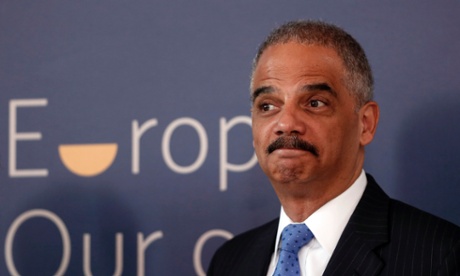
The telling sentence in NPR’s report that US attorney general Eric Holder plans to step down once a successor is confirmed came near the end of the story.
“Friends and former colleagues say Holder has made no decisions about his next professional perch,” NPR writes, “but they say it would be no surprise if he returned to the law firm Covington & Burling, where he spent years representing corporate clients.”
A large chunk of Covington & Burling’s corporate clients are mega-banks like JP Morgan Chase, Wells Fargo, Citigroup and Bank of America. Lanny Breuer, who ran the criminal division for Holder’s Justice Department, already returned to work there.
In March, Covington highlighted in marketing materials their award from the trade publication American Lawyer as “Litigation Department of the Year,” touting the law firm’s work in getting clients accused of financial fraud off with slap-on-the-wrist fines.
Covington, American Lawyer says, helps clients “get the best deal they can.”
Holder has a mixed legacy: excellent on civil and voting rights, bad on press freedom and transparency.
But if you want to understand what he did for the perpetrators of a cascade of financial fraud that blew up the nation’s economy in 2008, you only have to read that line from his former employer: he helped them “get the best deal they can.”
As for homeowners, they received a raw deal, in the form of little or no compensation for some of the greatest consumer abuses in American history.
Before Holder became Attorney General, banks fueled the housing bubble with predatory and at times, allegedly fraudulent practices.
As far back as 2004, the FBI warned of an “epidemic” of mortgage fraud, which they said would have “as much impact as the Savings & Loan crisis.”
They were wrong; it was worse.
Brian T Moynihan, chief executive officer of Bank of America Corp, one of the banks accused of extensive mortgage abuses. Very little of the money from its settlements has gone to help homeowners.Photograph: Bloomberg via Getty Images
And banks and lenders carried through that fraud to every level of the mortgage process. They committed origination fraud through faulty appraisals and undisclosed trickery.
They committed servicing fraud through illegal fees and unnecessary foreclosures.
They committed securities fraud by failing to inform investors of the poor underwriting on loans they packaged into securities.
They committed mass document fraud when they failed to follow the steps to create mortgage-backed securities, covering up with fabrications and forgeries to prove the standing to foreclose.
By the time the bubble collapsed, the recession hit and Holder took over the Justice Department, Wall Street was a target-rich environment for any federal prosecutor. Physical evidence to an untold number of crimes was available in court filings and county recording offices.
Financial audits revealed large lapses in underwriting standards as early as 2005. Provisions in the Sarbanes-Oxley Act, passed during the last set of financial scandals in 2002, could hold chief executives criminally responsible for misrepresenting their risk management controls to regulators.
Any prosecutor worth his salt could have gone up the chain of command and implicated top banking executives.
In 2009, Congress passed the Fraud Enforcement and Recovery Act, giving $165m to the Justice Department to staff the investigations necessary to bring those accountable for the financial crisis to justice.
Yet, despite the Justice Department’s claims to the contrary, not one major executive has been sent to jail for their role in the crisis.
The department has put real housewives in jail for mortgage fraud, but not real bankers, saving their firepower for people who manage to defraud banks, not for banks who manage to defraud people.
Most of the “investigations” of financial institutions over the past six years have swiftly moved to cash settlements, often without holding anyone responsible for admitting wrongdoing or providing a detailed description of what they did wrong.
The headline prices of these settlements usually bore no resemblance to the reality of what they cost the banks.
The National Mortgage Settlement, for example, was touted by Holder’s Justice Department as a $25bn deal. In reality, banks were able to pay one-quarter of that penalty with other people’s money, lowering principal balances on loans they didn’t even own.
Other penalties featured similarly inflated numbers that didn’t reflect the true cost. Banks could satisfy their obligations under the settlements through routine business practices (including some, like making loans to low-income homeowners, that make them money).
A recent series of securities fraud settlements with JP Morgan, Bank of America and Citigroup, which DoJ said cost the banks $36.65bn, actually cost them about $11.5bn. And shareholders, not executives, truly bear that cost.
Incidentally, the Wall Street Journal found last week that the Justice Department only collects around 25% of the fines they impose. So the banks may have gotten off even easier.
The Justice Department has reportedly collected only 25% of the fines it has imposed on banks.Photograph: Petros Giannakouris/AP
These settlements have actually perverted the notion of justice, turning accountability into a public relations vehicle. And Holder’s Justice Department has been guilty of cooking the books: they admitted last August to overstating the number of criminal financial fraud charges by over 80%.
The DoJ’s Inspector General criticized this in a March report, and also found that DoJ de-prioritized mortgage fraud, making it the“lowest-ranked criminal threat” from 2009-2011.
As for homeowners, the biggest victims of Wall Street misconduct, they received little relief. Victims who already lost their homes got checks in the National Mortgage Settlement for between $1,500-$2,000, compensating people wrongly foreclosed upon with barely enough money for two month’s rent.
Despite claims that 1m borrowers still in their homes would get principal reductions under the settlement, when the final numbers came in this March, just 83,000 families received such a benefit, an under-delivery of over 90%.
Considering that over five million families experienced foreclosures since the end of the crisis, that relief is a drop in the bucket.
For those still eligible for relief, thanks to the expiration of a law called the Mortgage Forgiveness Debt Relief Act, any principal forgiveness will count as earned income for tax purposes, meaning that homeowners struggling to avoid foreclosure will subsequently get hit with a tax bill they cannot afford.
The Justice Department only recognized this belatedly, creating a fund in a recent Bank of America settlement to “partially” defray tax costs.
For others without that benefit, the help the Justice Department provided will look more like harm.
More important, the settlements didn’t end the misconduct.
Homeowners today continue to lose their homes based on false documents. Because the Justice Department just put a band-aid over the fraud, and didn’t convict any of the ringleaders, the problems went unaddressed, and the root causes never got fixed.
In fact, the entire banking sector’s get-out-of-jail free card gives them confidence that they could commit the same crimes again, with little if any legal implications.
The decision to protect banks instead of homeowners should be laid at the feet of the president and his administration, not one man in the Justice Department. But Holder certainly carried out the policy, even if he didn’t devise it.
We’ll soon find out if Holder merely presided over DoJ in a pause between helping corporate clients at Covington & Burling. But the failure to prosecute during his time in office certainly makes it look like Holder’s sympathies were with those clients even while serving as attorney general.
Remember that time the Supreme Court ruled that our DNA is basically just like our fingerprints, and cops can snatch it from us subsequent to arrest? Remember the giant biometrics project the FBI has been spending at least a billion dollars of our money building (with many of the details kept secret), called ‘Next Generation Identification’? With those powers and monies combined, the FBI this week announced its plans “to accelerate the collection of DNA profiles for the government’s massive new biometric identification database.” Like with other biometrics collection schemes, the FBI aims to get local police to do the groundwork.
Various FBI divisions “are collaborating to develop and implement foundational efforts to streamline and automate law enforcement’s DNA collection processes” including at arrest, booking and conviction, according to an Aug. 19 notice about the industry briefing. The ongoing groundwork is expected to facilitate the “integration of Rapid DNA Analysis into the FBI’s Combined DNA Index (CODIS) and Next Generation Identification (NGI) systems from the booking environment.”
CODIS is the government’s central DNA database.
Rapid DNA analysis can be performed by cops in less than two hours, rather than by technicians at a scientific lab over several days. The benefit for law enforcement is that an officer can run a cheek swab on the spot or while an arrestee is in temporary custody. If there is a database match, they can then move to lock up the suspect immediately.
While current law requires DNA sent to CODIS to be examined in an accredited lab, FBI officials are looking for a “legislative tweak” to enable local law enforcement to skip that step, and send arrestees’ DNA straight to the FBI’s national database. In 2011, one out of every 25 Americans was arrested.
EFF’s Jennifer Lynch, one of the nation’s foremost experts on FBI biometrics programs, explains why the bureau’s DNA plans pose a serious threat to civil liberties.
“If you leave something behind, let’s say your trash on the sidewalk out in front of your house, then you’ve abandoned any kind of privacy interest in the trash,” she explained. “And so the cops can search through that trash without a warrant. That reasoning has been extended to DNA — if you leave your DNA behind, then the cops could get it without a warrant and test it.”
“If you consider DNA to be a form of ID, and the Supreme Court has already upheld state laws that allow officers to stop someone and ask for their ID, then this is the logical next step,” she added.
Everyone in the United States knows who gets stopped by police the most: young black and brown people. It’s therefore not hard to imagine whose DNA is going to disproportionately fill up this national database, says Lynch.
“If the cops are stopping more African Americans or Latinos and they have the ability to collect their DNA just at a stop, then it means that the DNA database is going to be even more heavily weighted with DNA from immigrant communities and different ethnic minorities,” Lynch told NextGov.
Concerned about your local police department obtaining a rapid DNA device, or sending your DNA to the FBI just because you were arrested at a protest, or for a bench warrant? Take up the matter at the local level. Tell your city government you don’t want your city or town participating in this dragnet DNA sweep.
Shortly after the Snowden leaks began exposing the NSA’s massive collection efforts, the New York Times uncovered the DEA’s direct access to AT&T telecom switches (via non-government employee “analysts” working for AT&T), from which it and other law enforcement agencies were able to gather phone call and location data.
Unlike the NSA’s bulk records programs (which are limited to holding five years worth of data), the Hemisphere database stretches back to 1987 and advertises instant access to “10 years of records.” And unlike the NSA’s program, there’s not even the slightest bit of oversight. All law enforcement needs to run a search of the Hemisphere database is an administrative subpoena — a piece of paper roughly equivalent to calling up Hemisphere analysts and asking them to run a few numbers. Administrative subpoenas are only subject to the oversight of the agency issuing them.
Unlike the documents obtained by the New York Times (possibly inadvertently), these do contain a few redactions, including some apparent success stories compiled at the end of the presentation. But like the earlier documents, the documents show that the DEA and law enforcement have unchecked access to a database that agents and officers are never allowed to talk about — not even inside a courtroom.
It is expected that all Hemisphere requests will be paralleled with a subpoena for CDRs from the official carrier for evidentiary purposes.
It’s spelled out more explicitly on a later slide, listed under “Official Reporting.”
DO NOT mention Hemisphere in any official reports or court documents.
Judging from the request date, it would appear that this version of the Hemisphere presentation possibly precedes the New York Times’ version. However, this one does not name the cooperating telco, although that appears to be a deliberate choice of the person writing the presentation, rather than due to redaction. At one point the document declares Hemisphere can access records “regardless of carrier,” but later clarifies that it will only gather info that crosses certain telecom switches — most likely AT&T’s. Additional subpoenas will be needed to gather info from other carriers, as well as to obtain subscriber information linked to searched numbers. This small limitation plays right into the DEA’s insistence that Hemisphere be “walled off” from defendants, court systems and the public.
If exigent circumstances make parallel construction difficult, Hemisphere analysts (non-government liaisons within the telco) will “continue to work with the investigator throughout the entire prosecution process in order to ensure the integrity of
Hemisphere and the case at hand.” Analysts are allowed to advise investigators on report writing, presentations to prosecutors and issues occurring during the trial phase. The word “integrity” seems out of place when it describes non-government employees assisting government agencies in hiding the origin of evidence from other government agencies.
Cross-referencing what’s been redacted in this one with the unredacted document published earlier, it appears as though the DEA is trying to (belatedly) hide the fact that its Hemisphere can also search IMSI and IMEI data (for wireless connections). Although this document states (after a long redaction) that Hemisphere does not collect subscriber information, that’s only partially true. As of July 2012, subscriber information for AT&T customers can be obtained from the database. This information may have been redacted or it may be that this presentation pre-dates this added ability.
What this shows is that the DEA has access to loads of information and a policy of “parallel construction in all things.” Tons of other government agencies, including the NSA, FBI and CIA are funneling information to the DEA and instructing it to hide the origin. The DEA then demands law enforcement agencies around the nation to do the same thing. This stacks the deck against defendants, who are “walled off” from the chain of evidence, preventing them from challenging sources, methods or the integrity of the evidence itself.
Even the mightiest have their come-uppance when their internal logic spews out destructiveness returning on the self—“blowback” in a way perhaps not seen before. I refer to James Risen’s extraordinary article in the New York Times, “Before Shooting in Iraq, a Warning on Blackwater,” (June 30), in which the customary meaning of “blowback” refers to policies, e.g., the invasions of Iraq and Afghanistan, the confrontation with Russia over Ukraine, the “pivot” of military power to the Pacific intent on the encirclement, containment, isolation of China, produce unintended, or if intended, still unwelcome, consequences for the initiator of the policy or action.
Thus: Iraq, out-of-control (from the US standpoint, a raging civil war negating massive intervention and alerting the world to America’s hegemonic purposes); Afghanistan, original support of the Taliban against the Soviet Union, resulting in their material strengthening now turned against the US, endangering its power-position in the region; use of Ukraine as a basis for bringing NATO forces to the Russian border, now an overreach which may disrupt the EU and weaken US dominance over it; and blatant confrontation with China, both military and trade, with potential for war leading to nuclear annihilation. The status and role of world policeman is losing its blackjack, its reputation as global bully being challenged through the rise of multiple power-centers and industrial-commercial-financial patterns no longer defined, supervised, indeed controlled, by American global interests and military implementation.
That is blowback in its familiar guise. Less so, the self-chosen instruments of repression spilling out of behemoth’s mouth because America’s dependence on repression to secure its aims makes it dependent as well on the executors of repression, in this case, given the extreme stress on privatization (the core of the monster’s functional existence), Blackwater at your service, a private army on hire to USG for pursuit of the dirty work, deemed necessary, yet, delegated to official forces, the cause of embarrassment and shame. Browbeating indigenous populations, with an overwhelming swagger and display in the grand tradition of conquerors, in addition to protecting representatives of the conquerors, is a mission worthy, as here, of billion dollar contracts to the private militias (euphemism: “security guards”) as insurance the military victory and occupation will hold.
Here Blackwater is, and is treated as, inseparable from the intervention (read: conquest) itself, at times assisting in the fighting on an informal basis—it has not yet been invited to join NATO(!)—but more to the point, the intimidating presence in the post-military phase, as though instilling the message: You Iraqis think the military is bad, well don’t mess around, for far worse awaits you, we former Navy SEALS know nothing can touch us. Our motto might as well be, A Law Unto Ourselves, even USG—beyond the status-of-forces agreement it forced your government to sign—afraid of us. Blowback: the cancer in the bowels of behemoth rapidly spreading to the extremities, spinal column, brain. Soon we shall all be made over in the image of Blackwater, or rather, as Blackwater would like to see, as its actions show, America become, a nation subservient to its thugs, extolling martial glory for its own sake and for the sake of global dominance. Authoritarianism once off the ground knows no limits and demands the complete adherence of its subjects. America has lived with CIA for decades; Blackwater is icing on the cake.
***
Before turning to the evidence contained in James Risen’s article, it is important to see how events from the past are converging on the present. His credentials as a whistleblower are borne out by his previous record (exposure of CIA dirty tricks, in his book State of War, with respect to Iran’s nuclear program) and current circumstances (he faces a possible jail sentence for refusing to disclose, from that account, the identity of an anonymous source). In the Bush doghouse for exposing the use of warrantless wire taps in 2005, and now, Obama contemplating more serious action, jail time for not complying with a DOJ subpoena, possibly leading to an Espionage Act prosecution, for which Obama excels over all of his predecessors combined (liberals, of course, furiously denying the sordid record), Risen not only stares down his persecutors, Obama, Holder, DOJ, but here presents an exposure in some ways more damning of US baseness from the top down, nurturing a murderous nest in the structure of government.
As for the administration hounding, Jonathan Mahler’s New York Times article, “Reporter’s Case Poses Dilemma for Justice Dept.,” (June 27), implies that Risen’s refusal to be intimidated is causing Obama and Holder second thoughts about pushing for his imprisonment. According to John Rizzo, CIA’s acting general counsel, Bush people wanted State of War kept off the market—too late, however. Risen then was subpoenaed to testify against the suspected leaker—and refused. “More than six years of legal wrangling,” in what Mahler terms “the most serious confrontation between the government and the press in recent history,” is coming to a head. Risen “is now out of challenges. Early this month, the Supreme Court declined to review his case, a decision that allows prosecutors to compel his testimony.”
But The Times, in defending its own man, cannot strongly protest, lest it antagonize the White House. Yes, Obama appears to be in a bind: “Though the court’s decision looked like a major victory for the government, it has forced the Obama administration to confront a hard choice. Should it demand Mr. Risen’s testimony and be responsible for a reporter’s being sent to jail? Or reverse course and stand down, losing credibility with an intelligence community that has pushed for the aggressive prosecution of leaks?” If Obama and USG were truly democratic (small “d”), there should not be a choice but only one course of action, moreover reigning in the “intelligence community” serving under their control.
The reporter, I believe reflecting the paper’s view, however, credits the Obama administration with actually weighing alternatives and being capable of making moral choices: “The dilemma comes at a critical moment for an administration that has struggled to find a balance between aggressively enforcing laws against leaking and demonstrating concern for civil liberties and government transparency.” What balance? What concern? Everything points the other way, on both civil liberties (e.g., due process and habeas corpus rights for detainees) and government transparency (simply, a thick protective shield in place, symbolized by the high art of redaction—and, as with Blackwater’s killing sprees, the refusal or half-heartedness about prosecution). Its reporter’s back against the wall, NYT ignores the Espionage Act prosecutions of whistleblowers.
Mahler succinctly describes the reporting: “The failed C.I.A. action at the heart of Mr. Risen’s reporting was intended to sabotage Iran’s nuclear weapons program. Intelligence officials assigned a former Russian scientist who had defected to the United States to deliver a set of faulty blueprints for a nuclear device to an Iranian scientist. But the Russian scientist became nervous and informed the Iranians that the plans were flawed.” One readily appreciates the dangers to the National Security State, especially revelations of the stupidity and dangerousness of its crown jewel, CIA, posed by investigative journalism. The Times, to its everlasting shame, bowed to Coldoleezza Rice’s request to withhold publication of the article. As a Times spokesperson later declared, “We weighed the government’s concerns and the usual editorial considerations and decided not to run the story.” Hence, James Risen—enemy of National Security; he “broke the story” later in State of War. Yet Bush is not the only culprit in this story; Obama ordered two additional subpoenas to force Risen to testify, his DOJ going after him hammer-and-tongs: “After a trial court largely quashed his third subpoena [the first under Bush] in late 2010, the Justice Department successfully challenged the ruling in a federal appeals court, arguing that the First Amendment does not afford any special protections to journalists.” Enough said about the dedication to civil liberties and freedom of the press: “The administration then urged the Supreme Court not to review Mr. Risen’s case.”
***
I have already discussed the mass killings in Nisour Square, Baghdad, in a previous article. Now we learn that this was part of a pattern in Blackwater’s behavior—again, Risen’s reporting. Even for one who is a seasoned critic, it is painful for me to write about. Organized thuggery knows no limits particularly when working for the highest authority, immunity from punishment worn as a badge of honor, as meanwhile government officials hide their eyes. Risen writes, “Just weeks before Blackwater guards fatally shot 17 civilians in Baghdad’s Nisour Square in 2007, the State Department began investigating the security contractor’s operations in Iraq. But the inquiry was abandoned after Blackwater’s top manager there issued a threat: ‘that he could kill’ the government’s chief investigator and ‘no one could or would do anything about it as we were in Iraq,’ according to department reports.” A private contractor threatens the life of a State Department investigator! No reprisal, punishment, cancellation of the contract, not even disclosure of the threat—yet Blackwater still in place years later, as part of the silence on atrocities in the Obama-Hillary era.
Those 17 killed are on America’s hands, bloody hands. There was a clear warning about what to expect: “After returning to Washington, the chief investigator wrote a scathing report to State Department officials documenting misconduct by Blackwater employees and warning that lax oversight of the company, which had a contract worth more than $1 billion to protect American diplomats, had created ‘an environment full of liability and negligence.’” Even more outrageous, Risen notes, the investigators become the criminals gumming up the security works: “American Embassy officials in Baghdad sided with Blackwater rather than the State Department investigators as a dispute over the probe escalated in August 2007, the previously undisclosed documents show. The officials told the investigators that they had disrupted the embassy’s relationship with the security contractor and ordered them to leave the country, according to the reports.”
Jean Richter, lead investigator, wrote, in a memo to the State Department only weeks prior to Nisour Square: “’The management structures in place to manage and monitor our contracts in Iraq have become subservient to the contractors themselves. Blackwater contractors saw themselves as above the law…. ‘hands off’ [management meant that] the contractors, instead of Department officials, are in command and in control.’” Now, nearly seven years later, four Blackwater guards are on trial, facing, if ever convicted, watered down charges, this being “ the government’s second attempt to prosecute the case in an American court [I wonder how serious the effort under Holder and Obama] after previous charges against five guards were dismissed in 2009.” Much of the time this is on Obama’s watch, yet, “despite a series of investigations in the wake of Nisour Square, the back story of what happened with Blackwater and the embassy in Baghdad before the fateful shooting has never been fully told.”
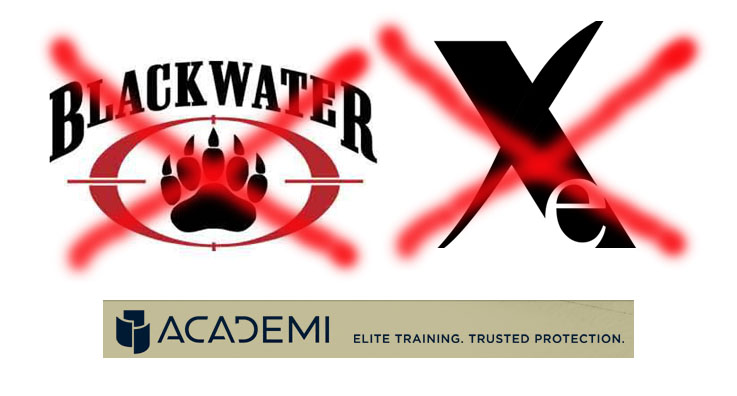
So much for transparency, civil liberties, and prosecuting the crimes of a predecessor (the cardinal rule of presidents, at least this one, cover-up WAR CRIMES past and present, a solemn command of the National Security State). Silence and deniability, in all matters large and small, characterize the responses of USG and private principals: “The State Department declined to comment on the aborted investigation. A spokesman for Erik Prince, the founder and former chief executive of Blackwater, who sold the company in2010, said Mr. Prince had never been told about the matter.” The $1B contract itself testifies to the fusion of patriotism, secrecy, repression, and yes, corporate profit: “After Mr. Prince sold the company, the new owners named it Academi. In early June, it merged with Triple Canopy, one of its rivals for government and commercial contracts to provide private security. The new firm is called Constellis Holdings.” Like war, private security stands to make a killing (pardon the pun), no doubt in flight from the original name for damage-control and public-relations purposes.
Previous to Nisour Square (Sept. 16, 2007) Blackwater guards “acquired a reputation…for swagger and recklessness,” but complaints “about practices ranging from running cars off the road to shooting wildly in the streets and even killing civilians typically did not result in serious action by the United States or the Iraqi government.” After firing in the Square, there was closer scrutiny, the Blackwater claim that they were fired on even US military officials denied, and “[f]ederal prosecutors later said Blackwater personnel had shot indiscriminately with automatic weapons, heavy machine guns and grenade launchers.” To no avail, given the symbiotic relationship between the company and the government. In fact, Blackwater had itself been run by Prince as a nation in microcosm, its people shortly before Nisour Square gathered by him at company headquarters in Moyock, North Carolina and made to “swear an oath of allegiance” like the one required of enlistees in the US military. They were handed copies of the oath, which, after reciting the words, were told to sign.
The State Department investigation into Blackwater in Iraq, which began Aug. 1, 2007 and was slated for one month, led early to the “volatile” situation (including the death threat), our knowledge coming from “internal State Department documents” furnished “to plaintiffs in a lawsuit against Blackwater that was unrelated to the Nisour Square shootings,” seemingly by accident then and fleshed out by Risen. In that month—or that part of it before being forced to leave– the investigators discovered “a long list of contract violations by Blackwater,” staffing changes of security details “without State Department approval,” reducing the number of guards on details, “storing automatic weapons and ammunition in their private rooms, where they were drinking heavily and partying with frequent female visitors,” and, for many, failing “to regularly qualify on their weapons” or “carrying weapons on which they had never been certified” nor “authorized to use.” Extravagance for mayhem abroad, less than peanuts for critical needs at home, education, health care, employment, beyond the means or reach of Imperial grandeur as the national obsession.
In addition to “overbilling the State Department by manipulating its personnel records, using guards assigned to the State Department contract for other work and falsifying other staffing data on the contract,” (no wonder the investigators’ poor reception by Blackwater’s resident head in Iraq), one of its affiliates forced “third country nationals” who did the dirty work at low wages “to live in squalid conditions, sometimes three to a cramped room with no bed,” according to the investigators’ report. Their conclusion: “Blackwater was getting away with such conduct because embassy personnel had gotten too close to the contractor.”
Ah, the denouement; we have a name to go with the face of the project manager who threatened Richter’s life, Daniel Carroll, who said he could kill him without anything happening to himself “as we were in Iraq” (this was witnessed by Donald Thomas, the other investigator), and Richter, in his memo to the Department stated: “I took Mr. Carroll’s threat seriously. We were in a combat zone where things can happen unexpectedly, especially when issues involve potentially negative impacts on a lucrative security contract.” Nicely put, and corroborated by Thomas, who wrote in a separate memo that “others in Baghdad had told the two investigators to be ‘very careful,’ considering that their review could jeopardize job security for Blackwater personnel.” The wonder perhaps is that Richter and Thomas were not prosecuted under the Espionage Act for spoiling the show. It didn’t matter. No one at State listened.
The two men were ordered to leave (Aug 23), and “cut short their inquiry and returned to Washington the next day.” Finally, on Oct. 5, after the Nisour Square scandal, State Department officials responded to Richter’s “August warning,” and took statements from him and Thomas about “their accusations of a threat by Mr. Carroll, but took no further action.” A special panel convened by Rice on Nisour Square “never interviewed Mr. Richter or Mr. Thomas.” The official who led the panel “told reporters on Oct. 23, 2007, that the panel had not found any communications from the embassy in Baghdad before the Nisour Square shooting that raised concerns about contractor conduct.” Voila, vanished in thin air. This State Department officer deserves the last word: “We interviewed a large number of individuals. We did not find any, I think, significant pattern of incidents that had not—that the embassy had suppressed in any way.” And my last word: fascism. Beyond all structural-cultural-societal considerations about wealth-concentration, industrial-financial consolidation, foreign expansion through preponderant power and the spirit of militarism, the rampaging privatization with government consent witnessed here, which has wreaked havoc on another people, only to be covered over by the state, aka, the National Security State, disregarding its Constitutional protections to the individual, as in sponsoring massive surveillance, is enough for me to satisfy the working definition of that single word.
via Norman Pollack has written on Populism. His interests are social theory and the structural analysis of capitalism and fascism. He can be reached at [email protected].
Tip of the day- for the parents: Teach your child the importance of applying their knowledge, and critical thinking abilites to solving of Social Problems
TRACK: Beast 1333 Mad World feat K-Rino, Space Age Slaves
What the FBI Doesn’t Want You To Know About Its “Secret” Surveillance Techniques
Vibration, Synchronicity, Energy Healing, Holographic Universe
Cannabis & the Pineal Gland?
Quick Headlines
It Will Take The Fed Seven Years To Deliver 300 Tons Of German Gold
Ben Fulford: Signs of cabal defeat are proliferating, What’s the ‘real’ truth?
Developer Sacked for Outsourcing His Entire Job to China
A federal appeals court has extended a temporary stay of a district court judge’s order barring the government from using an indefinite detention provision in a defense bill passed by Congress and signed by President Barack Obama late last year.
A three-judge motions panel of the U.S. Court of Appeals for the 2nd Circuit issued the order Tuesday afternoon, indicating they saw flaws with the scope and rationale for U.S. District Court Judge Katherine Forrest’s original order blocking the disputed provision of the National Defense Authorization Act of 2011.
“We conclude that the public interest weighs in favor of granting the government’s motion for a stay,” Appeals Court Judges Denny Chin, Raymond Lohier and Christopher Droney wrote in a three-page order that also expedited the appeal.
The judges continue:
First, in its memorandum of law in support of its motion, the government clarifies unequivocally that, ‘based on their stated activities,’ plaintiffs, ‘journalists and activists[,] . . . are in no danger whatsoever of ever being captured and detained by the U.S. military.’
Second, on its face, the statute does not affect the existing rights of United States citizens or other individuals arrested in the United States. See NDAA § 1021(e) (‘Nothing in this section shall be construed to affect existing law or authorities relating to the detention of United States citizens, lawful resident aliens of the United States, or any other persons who are captured or arrested in the United States.’).
Third, the language of the district court’s injunction appears to go beyond NDAA § 1021 itself and to limit the government’s authority under the Authorization for Use of Military Force…
The case will go forward now before what will likely be a different trio of judges, but the stay will likely remain in place pending resolution of the government’s appeal.
The import of the law is disputed. Proponents say it simply reinforced authority a federal appeals court in Washington had already accorded to the U.S. government, at least as far as foreigner are concerned. Critics say the measure exposes journalists and human rights activists who meet with alleged terrorists to the prospect of open-ended detention.
All three judges on the motions panel were appointed to the appeals court by President Barack Obama.
You may have noticed it last week. Anonymous claimed the scalp of yet another a major government agency.
Supporters of the the online movement of activists and internet trolls said they’d stolen 1.7 GB of data from an agency within the Department of Justice that aggregates crime data. They claimed to have nabbed “lots of shiny things such as internal emails and the entire database dump.” They branded the heist as “Monday Mail Mayhem,” said it could help people “know the corruption in their government.” They posted it on Pirate Bay as a torrent, for anyone to see — and 1.7 GB was just the size of the zipped file.
Not many people bothered to check what was actually in the huge file.
Step in Identity Finder, a software security firm. Privacy officer Aaron Titus downloaded the payload last week and sifted through it all, checking out the veracity of the claims by Anonymous.
Turned out they were overhyped.
The zipped file contained 6.5 GB of web server files and “does not appear to contain any sensitive personal information, internal documents, or internal emails,” according to Titus. A folder named “Mail” was mostly empty, though it contained two administrative email addresses. There were also no personal details (social security numbers or credit card numbers), and the worst the breach had done was reveal the site’s web server file, which could be leveraged by other hackers for future attacks.
It looked like the breach had done more to grab attention from the media and the Department of Justice than do any real damage.
Surprised? You shouldn’t be. This was another illustration of the power of Anonymous as a continuing online insurgency: not in hacking per se, but its constant ability to grab eyeballs, project power, and give followers a voice and sense of purpose unlike any they’ve experienced before. What’s important for companies and policy makers (the typical targets) to note is that it’s oftentimes more a tease than anything else.
Other examples:
1) Earlier this monthFox News reported that an online group called TheWikiBoat, aligned with Anonymous, planned to bring down the websites of 46 major companies on Friday May 25. TheWikiBoat said in a public statement that it had “no motives other then [sic] doing it for the lulz,” (ie. for shits and giggles). The FBI’s Cyber Division was concerned enough to send an email to the likes of Apple Computer, McDonald’s and ExxonMobile warning them of a potential attack — which didn’t happen.
2) Around this time last year, a single supporter of Anonymous managed to grab global headlines when he tweeted that he had a cache of bank of America emails. What he eventually released was an e-mail exchange between himself and a BofA ex-staffer who made (what admittedly looked like valid) complaints about the bank’s management. But it did nothing to the bank’s stock price, and the news agenda quickly moved on.
3) In December 2010 Anonymous claimed responsibility for taking down the websites of PayPal, MasterCard and Visa after these firms nixed online donations to WikiLeaks. How? Supporters implied it was thanks to thousands of volunteers who had become part of an cyber army by downloading a software tool called LOIC. What really happened: a couple of supporters with botnets temporarily took the sites down — but the notion that Anonymous was an international “army” of hacktivists was left floating around the Internet.
Time and again, online supporters have laid claim to the brand power of Anonymous, invoking its name, imagery such as the Guy Fawkes logo and headless, suited man surrounded by olive leaves, along with the tag line, “We are Anonymous… Expect us.” The result: news outlets and policy makers sit up and listen, more so than they would if those supporters used their real names, or were literally anonymous. The power of Anonymous is propagated by the continued use of a name wrapped in hype and disinformation, more than the occasional real hacks.
The Anonymous “brand” gets street cred from cyber attacks carried out by a minority of hackers who know how to use SQL injection techniques or who know people who control botnets. The additional hype comes from the impassioned, sometimes-threatening rhetoric of less-skilled-but-enthusiastic followers on Twitter or the imageboard 4chan.
Why do these supporters join in? Everyone has their own reasons — something to do, the engaging community of people to talk to, the thrill of being part of a secret crowd. Sources in Anonymous that I have spoken to over the last year often speak to a sense of purpose they get from Anonymous, and sometimes the justification to do the subversive, often-illegal things online that they would not otherwise do. It’s mob mentality with a twist — the activist element of protest, twinned with the culture of trolling and exaggeration that runs through image boards like 4chan.
For law enforcement, who happen to chase anarchists with particular zeal in the United States, there isn’t so much a criminal organization to rope in as the mirage of one. No system with leaders and rules, but a culture and etiquette that is changing all the time. Many of the figureheads who organized the Anonymous attacks against Scientology in 2008 have left the community to focus on college or full-time jobs, many happy to break away from the frenetic pace of operations and the constant paranoia about getting doxxed. Those who’ve been arrested are upheld as martyrs within the network, and there are many more who are joining, and who think they can do a better job of hiding from the police.
Anonymous will continue to exist for some time, taking new followers, changing tactics, and often staying one spontaneously-placed step ahead of the police. They’ll fight for the right to their anonymity, to expose other people’s information, or anything they want, and they’ll come and go from the headlines. But these chaotic actors will stick around, and their greatest power will continue to be not their skills or abilities, but the very name that they can invoke.
Nobel Peace Prize nominee PFC Bradley Manning, a 24-year-old Army intelligence analyst, is accused of releasing the Collateral Murder video, that shows the killing of unarmed civilians and two Reuters journalists, by a US Apache helicopter crew in Iraq. He is also accused of sharing the Afghan War Diary, the Iraq War Logs, and series of embarrassing US diplomatic cables. These documents were published by the anti-secrecy website WikiLeaks, and they have illuminated such issues as the true number and cause of civilian casualties in Iraq, along with a number of human rights abuses by U.S.-funded contractors and foreign militaries, and the role that spying and bribes play in international diplomacy. Given the war crimes exposed, if PFC Bradley Manning was the source for these documents, he should be given a medal of honor.
Not a single person has been harmed by the release of this information. Defense Secretary Robert M. Gates has called the effect of WikiLeaks’ releases on U.S. foreign relations “fairly modest.” Yet the Obama administration has chosen to persecute the whistle-blower rather than prosecute the war criminals who were exposed. While the prosecution has declared it does not intend to seek the death penalty, they do seek to lock PFC Bradley Manning away for life, with the most ridiculous charge of ‘aiding the enemy,’ even though chat logs attributed to Bradley by the FBI clearly show intent only to inform the public and promote “discussion, debates, and reforms.”
Soldiers are promised fair treatment and a speedy trial under the Uniform Code of Military Justice (UCMJ). However, the soldiers responsible for PFC Manning’s care took it upon themselves to abuse him by keeping him locked up in solitary confinement for the first 10 months of his incarceration. During this time, Bradley was denied meaningful exercise, social interaction, sunlight, and on a number of occasions he was forced to stay completely naked. These conditions were unique to Bradley and are illegal even under US military law, as they amount to extreme pre-trial punishment. In March 2011, chief US State Department spokesperson PJ Crowley called PFC Manning’s treatment at the Quantico, Virginia, Marine Corps brig “ridiculous and counterproductive and stupid.” He was forced to resign shortly after admitting this. Since resigning, he has stated that the prosecution’s heavy-handed persecution of PFC Manning has undermined the government’s credibility.
Bradley’s treatment sparked a probe by the United Nations special rapporteur on torture, Juan Mendez. Mr. Mendez stated that he has been “frustrated by the prevarication of the US government with regard to my attempts to visit Mr. Manning.” After having his requests to visit Bradley repeatedly blocked, and after completing a fourteen month investigation, Mr. Mendez issued a statement saying that PFC Bradley Manning’s treatment has been “cruel and inhuman.”
It only took one week in April 2011 to have over a half million people sign a petition calling on President Obama to end the isolation and torture of Bradley Manning. The Obama administration’s ongoing persecution of Bradley Manning has served as “a chilling deterrent to other potential whistleblowers committed to public integrity,” and over 300 top legal scholars have declared that Bradley’s treatment was a violation of the Eighth Amendment’s prohibition against cruel and unusual punishment, as well as a violation of the Fifth Amendment’s guarantee against punishment without trial. Among the signatories is professor Laurence Tribe, a Harvard professor who taught President Obama. Professor Tribe was, until recently, a senior advisor to the US Justice Department.
Partially in response to public outcry, on April 21, 2011, Bradley was moved from Quantico to Fort Leavenworth, KS, where his conditions greatly improved. The very day he was moved, President Obama was surprised at a breakfast fundraiser by a group of protesters. At the end of the fundraiser, a member of the Bradley Manning Support Network, Logan Price, questioned him about Bradley’s situation. The President stated that “He [Bradley Manning] broke the law.” This pretrial declaration of guilt that has caused concern among legal experts, who argue it is clearly a case of ‘undue command influence’. President Obama is the highest ranking military commander, and soldiers follow his orders and his direction. By declaring PFC Bradley Manning guilty, he set the tone and direction of the subordinate military prosecution. It is now difficult for soldiers to express support for PFC Bradley Manning, who like many soldiers who follow the lead of their commander-in-chief, assume PFC Bradley Manning is guilty. Finally, reinforcing the assumption of Manning’s guilt, no charges were filed against any of the soldiers who took it upon themselves to abuse Bradley while he was under their supervision.
Bradley Manning has a growing list of supporters who want all the charges against him dropped. Among the supporters is the famous whistle-blower, Daniel Ellsberg, who leaked the Pentagon Papers in 1971. Recognizing the valor required to tell the truth, Ellsberg calls PFC Bradley Manning a hero and a patriot. We agree. Drop all the charges, and free PFC Bradley Manning.
We hope that you will join us as well. See what you can do to support justice in this historic time.
Here are some recommended articles with more information: