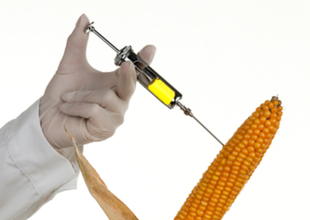
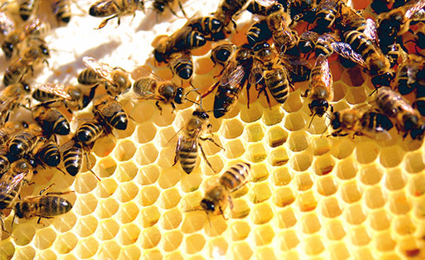
On March 15, over 1,500 beekeepers and anti-GMO protesters marched through the streets of Warsaw, depositing thousands of dead bees on the steps of the Ministry of Agriculture in protest of genetically modified foods and their pesticides which are together largely responsible for the killing off of bees, butterflies, moths and other beneficial pollinators in great numbers.
Later that day the Minister of Agriculture, Marek Sawicki, announced plans to ban MON810, which has already produced millions of hectares of pesticide resistant “superweeds” in the US.
The Polish Beekeepers Association organized the protest, joining forces with International Coalition to Protect the Polish Countryside (ICPPC) and the Coalition for a GMO Free Poland. Targeting Monsanto’s MON810 GM corn in particular, they also called for a complete ban on all genetically engineered crops as well as the pesticides found to be most damaging to the environment (and particularly to bees).
In 2008, the Polish Parliament banned GM feed, including both the planting and importing of GM crops. “Despite this progressive step,” reports Food Travels, “the European Commission has refused to accept regional bans on GMOs, keeping Polish farmers, producers, and activists on the offensive.”
Regardless, says the ICPPC, “None of the nine European Union countries that have already prohibited MON 810 did so by asking the permission of the EU.”
There was a great variety of attire as beekeepers dressed in their work bee suits and masks and ran their hive smoke guns as they marched, many wore yellow jackets with the famous Einstein quote, and many more original signs, props, and costumes. Go here for more photos.
The ICPPC is asking Polish residents to write Minister of Agriculture Marek Sawicki, demanding that he implement an immediate moratorium on GM crops, without waiting for EU approval.
It’s not enough that the biotech industry — led by multinational corporations such as Monsanto, Dow, Syngenta, BAS, and Dupont — is poisoning our food and our planet. It’s also poisoning young minds.
In a blatant attempt at brainwashing, the Council for Biotechnology Information(CBI) has widely circulated what it calls a Biotechnology Basics Activity Bookfor kids, to be used by “Agriculture and Science Teachers.” The book — calledLook Closer at Biotechnology — looks like a science workbook, but reads more like a fairy tale. Available on the council’s Web site, its colorful pages are full of friendly cartoon faces, puzzles, helpful hints for teachers — and a heavy dose of outright lies about the likely effects of genetic engineering on health, the environment, world hunger and the future of farming.
CBI’s lies are designed specifically for children, and intended for use in classrooms.
At a critical time in history when our planet is veering toward a meltdown, when our youth are suffering the health consequences (obesity, diabetes, allergies) of Big Ag and Food Inc.’s over-processed, fat-and sugar-laden, chemical-, and GMO-tainted foods, a time when we should be educating tomorrow’s adults about how to reverse climate change, how to create sustainable farming communities, how to promote better nutrition, the biotech industry’s propagandists are infiltrating classrooms with misinformation in the guise of “educational” materials.
Brainwashing children. It’s a new low, even for Monsanto.
You don’t have to read beyond the first page ofLook Closer at Biotechnology to realize that this is pure propaganda:
Hi Kids! Welcome to the Biotechnology Basics Activity Book. This is an activity book for young people like you about biotechnology — a really neat topic. Why is it such a neat topic? Because biotechnology is helping to improve the health of the Earth and the people who call it home. In this book, you will take a closer look at biotechnology. You will see that biotechnology is being used to figure out how to: 1) grow more food; 2) help the environment; and 3) grow more nutritious food that improves our health. As you work through the puzzles in this book, you will learn more about biotechnology and all of the wonderful ways it can help people live better lives in a healthier world. Have fun!
Before we take a closer look at the lies laid out in Look Closer at Biotechnology — lies that are repeated over and over again, the better to imprint them on young minds — let’s take a closer look at the book’s publisher. The Council for Biotechnology Information describes itself as “a non-profit 501(c)(6) organization that communicates science-based information about the benefits and safety of agricultural biotechnology and its contributions to sustainable development.”
According to the Internal Revenue Service, a 501(c)(6) organization is a “business league” devoted to the improvement of business conditions of one or more lines of business. The mission of a 501(c)(6) organization “must focus on the advancement of the conditions of a particular trade or the interests of the community.”
The bottom line is that CBI exists to advance the interests of the corporations that it was formed to promote — in this case, the biotech industry. While it purports to communicate “science-based information,” in fact, that’s not its mission at all. Its mission is to maximize the profits of Monsanto and the biotech industry.
Not surprisingly, CBI is funded largely by the biotech, chemical, pesticide, and seed industry giants: BASF, Bayer CropScience, Dow Agro Sciences, Dupont, Monsanto, and Syngenta.
There’s nothing new about corporations lying to the public. Corporations routinely lie to their employees. They lie in advertising. They lie in the lopsided so-called studies and research projects that they self-fund in order to guarantee the outcomes that support their often false, but self-serving premises. They buy off politicians, regulatory officials, scientists, and the media.
Although here we’re focusing on the biotech industry trying to brainwash our kids, CBI certainly does not limit its propaganda to just children. CBI recently contributed $375,000 to the Coalition Against the Costly Labeling Law — a Sacramento-based industry front group working to defeat the California Right to Know Genetically Engineered Food Act of 2012. If passed in November, this citizens’ ballot Initiative will require food manufacturers and retailers to label foods containing genetically engineered ingredients, as well as ban the routine industry practice of labeling or advertising GE-tainted foods as “natural” or “all natural.” CBI, the Farm Bureau, and the Grocery Manufacturers Association are campaigning furiously to preserve their “right” to keep consumers in the dark about whether their food has been genetically engineered or not, and to preserve their “right” to mislabel gene-altered foods as “natural.”
Clearly, the Council for Biotechnology Information has little or no regard for “science-based” information. But lies aimed directly at kids — under the guise of science education? In our schools?
Let’s take a closer look at the claims made in Look Closer at Biotechnology.
Lie #1: “Biotechnology is one method being used to help farmers grow more food.” (page 7)
This statement is patently false.
In 2009, in the wake of similar studies, the Union of Concerned Scientists examined the data on genetically engineered crops, including USDA statistics. Their report — Failure to Yield — was the first major effort to evaluate in detail the overall yields of GE crops after more than 20 years of research and 13 years of commercialization in the United States. According to the definitive UCS study, “GE has done little to increase overall crop yields.” A number of studies indicate in fact that GE soybeans, for example, actually produce lower yields than non-genetically engineered varieties.
Research conducted by the India research group, Navdanya, and reported in The GMO Emperor Has No Clothes turns up the same results:
Contrary to the claim of feeding the world, genetic engineering has not increased the yield of a single crop. Navdanya’s research in India has shown that contrary to Monsanto’s claim of Bt cotton yield of 1500 kg per acre, the reality is that the yield is an average of 400-500 kg per acre. Although Monsanto’s Indian advertising campaign reports a 50-percent increase in yields for its Bollgard cotton, a survey conducted by the Research Foundation for Science, Technology and Ecology found that the yields in all trial plots were lower than what the company promised. (Page 11).
The claim that GE crops increase agricultural yields is a blatant lie. Equally untrue is the industry’s claim that it is motivated by the desire to feed the hungry of the world. As the Union of Concerned Scientists points out: “For the most part, genetic engineering techniques are being applied to crops important to the industrialized world, not crops on which the world’s hungry depend.” Where does all the genetically engineered soy and corn — two of the largest GE crops — end up? In animal feed, processed junk foods — and school lunchrooms. Precious little goes to feed the hungry in impoverished regions.
One of the sub-arguments related to increasing yields is the biotech industry’s claim that GMO crops are more resistant to pests — hence more of the crops survive. In Look Closer at Biotechnology kids are told that agricultural biotechnology is a “precise way to make seeds with special qualities. These seeds will allow farmers to grow plants that are . . . more resistant to pests . . .” In fact widespread commercialization of herbicide-resistant and Bt-spliced GE crops has engendered a growing army of superweeds and superpests, oblivious to all but the most powerful and toxic pesticides.
What we should be teaching kids in science class is what scientists have been warning for years — that any attempt to increase resistance to pests through genetic engineering will ultimately fail. Insects — and diseases — will build up a tolerance over time, and evolve into stronger and stronger strains. That’s how nature works — and even Monsanto can’t fool Mother Nature. Organic agriculture, on the other hand, utilizing crop rotation, biodiversity, natural fertilizers, and beneficial insects, reduces crop loss from pests and weeds, without the collateral damage of toxic pesticides and fertilizers.
Recently, 22 leading scientists told the US Environmental Protection Agency that it should act with “a sense of urgency” to urge farmers to stop planting Monsanto’s genetically engineered Bt corn because it will no longer protect them from the corn rootworm. Bt corn is genetically engineered with bacterial DNA that produces an insecticide in every cell of the plant, aimed at preventing corn rootworm. Except that corn rootworms have now developed resistance to these GE mutants.
Just as scientists had predicted years ago, a new generation of insect larvae has evolved, and is eating away at the roots of Monsanto’s Bt corn — a crop farmers paid a high price for on Monsanto’s promise that they would never have to worry about corn rootworm again. Scientists are now warning of massive yield loss and surging corn costs if the EPA doesn’t act quickly to drastically reduce Bt crops’ acreage and ensure that Monsanto makes non-GMO varieties of corn available to farmers.
“Massive yield loss” doesn’t sound like “more food” — whether you’re 12 years old or 112.
What we should be telling kids is what responsible scientists and farmers — experts at the United Nations — have been saying all along: Eco-farming candouble food output. According to a UN study:
Eco-farming projects in 57 nations showed average crop yield gains of 80 percent by tapping natural methods for enhancing soil and protecting against pests.
Projects in 20 African countries resulted in a doubling of crop yields within three to 10 years.
Sound ecological farming can significantly boost production and in the long term be more effective than conventional farming.
Lie #2: “Biotechnology can help farmers and the environment in many ways.” (page 8)
Two lies for the price of one.
Biotechnology — specifically genetic engineering — helps neither farmers nor the environment, according to the majority of legitimate scientists and economists. In fact, the opposite is true. Genetic engineering of seeds has wreaked havoc on the environment and brought misery to hundreds of thousands of small farmers all over the world.
The majority of farmers in developing countries struggle to afford even the most basic requirements of seeds and fertilizers. Their survival depends on the age-old practice of selecting, saving and sharing seeds from one year to the next. When multinational corporations move into areas previously dominated by small farmers, they force those farmers to buy their patented seeds and fertilizers — under pretense of higher yields, and under threats of lawsuits if they save or share the seeds. Every year, they’re forced to buy more seeds and more chemicals from corporations — and when the promises of higher yields and higher incomes prove empty, farmers go bankrupt.
Compounding their corporate crimes, when Monsanto’s patented seeds contaminate the non-GMO crops of small farmers (because the seeds drift across property lines) Monsanto routinely sues farmers for growing their patented seeds illegally, even though the seeds were actually unwanted trespassers. Further, the company has ruined the livelihoods of small farmers by harassing them for illegally growing patented seeds, even in cases where no patented seeds have been grown, either knowingly or by accident.
As Monsanto and others have expanded worldwide, into India, China, Pakistan, and other countries, the effect on small farmers has been devastating. In India, for instance, after World Trade Organization policies forced the country in 1998 to open its seed sector to companies like Cargill, Monsanto and Syngenta, farmers quickly found themselves in debt to the biotech companies that forced them to buy corporate seeds and fertilizers and pesticides, destroying local economies. Hundreds of thousands of India’s cotton farmers have committed suicide.
And according to a Greenpeace report, poorer farmers in the Philippines were sold Monsanto’s Bt corn as a “practical and ecologically sustainable solution for poor corn farmers everywhere to increase their yields” only to find the opposite was true: Bt corn did not control pests and was “not ecologically sustainable.”
Which brings us to one more of the Council for Biotechnology Information’s lies to kids: That agricultural biotechnology is good for the environment.
Study after study, over more than a decade, has warned us of just the opposite. Even the pro-biotech USDA has admitted that GE crops use more pesticides, not less than non-GE varieties. Genetic engineering results in evermore pesticides being dumped into the environment, destroying soil and water, human and animal health, and threatening the biodiversity of the planet.
How about telling kids instead that numerous reports, including one from theGerman Beekeepers Association, have linked genetically engineered Bt corn to the widespread disappearance of bees, or what is now referred to as Colony Collapse Disorder? And while we’re at it, maybe we should remind kids of the Albert Einstein’s quote: “If the bee disappeared off the surface of the globe then man would only have four years of life left. No more bees, no more pollination, no more plants, no more animals, no more man.”
Maybe we should also tell them that glyphosate, the active ingredient in Monsanto’s herbicide, Roundup, the most widely used herbicide in the world, kills Monarch butterflies, fish, and frogs, destroys soil fertility, and pollutes our waterways and drinking water.
The fact is, widespread use of Monsanto’s Roundup in all agricultural and urban areas of the United States is destroying the environment, pure and simple. US Geological Survey studies released this month show that Roundup is now commonly found in rain and rivers in agricultural areas in the Mississippi River watershed, where most applications are for weed control on GE corn, soybeans and cotton. Here’s the real truth, from an article published this past week: Monsanto’s Roundup is actually threatening the crop-yielding potential of the entire biosphere. According to the article, new research published in the journalCurrent Microbiology highlights the extent to which “glyphosate is altering, and in some cases destroying, the very microorganisms upon which the health of the soil, and — amazingly — the benefits of raw and fermented foods as a whole, depend.”
Lie #3: “Scientists are using biotechnology to grow foods that could help make people healthier.” (page 11)
This is the perhaps the most outrageous lie of all. Telling kids that GE foods are more nutritious is tantamount to telling them Hostess cupcakes and Coca-Cola are health foods.
Genetic engineering — of human food and food for animals that humans eat — has been linked to a host of diseases and health issues, including auto-immune disorders, liver and kidney damage, nutritional deficiencies, allergies, accelerated aging, infertility, and birth defects.
There’s a growing and alarming body of research indicating that GMO foods are unsafe, and absolutely no research whatsoever proving that they are safe. And yet the USDA and FDA continue to approve, and just this past month even agreed tospeed up approval of these crops that scientists and physicians increasingly link to poor health.
Instead of force-feeding kids lies in bogus activity books, how about having them read some truthful articles?
The studyBt Toxin Kills Human Kidney Cells says Bt toxins are not “inert” on human cells, and may indeed be toxic, causing kidney damage and allergies observed in farmers and factory workers handling Bt crops. The article supportsprevious studies done on rats, showing that animals fed on three strains of GE corn made by Monsanto suffered signs of organ damage after only three months.
It is abundantly clear that both GMOs made to be resistant to herbicides (aka “Roundup Ready”) and those made to produce insecticides have damaging impacts on the health of mammals who consume them, particularly in the liver and kidneys. We already know that from the trials of 90 days and less. In looking a little deeper into the info, we found a number of issues that point to a probable increased level of toxicity when these foods are consumed over the long term, including likely multi-generational effects.
Multi-generational effects. Eating GMO foods harms not only our health, and our kids’ health — but quite possibly their kids, too — even if we stop eating them today.
In a recent report to the United Nations General Assembly Human Rights Council by Special Rapporteur on the right to food, Olivier De Schutter, Schutter outlines the case for sustainable agricultural practices (the antithesis of industrial agribusiness, with its GE crops and heavy reliance on chemical fertilizers and pesticides). He also addresses the links between health and malnutrition. In the report, Schutter shows why undernutrition, micronutrient deficiency and overnutrition are different dimensions of malnutrition that must be addressed together through a life-course approach. From the report’s summary:
Existing food systems have failed to address hunger, and at the same time encourage diets that are a source of overweight and obesity that cause even more deaths worldwide than does underweight. A transition towards sustainable diets will succeed only by supporting diverse farming systems that ensure that adequate diets are accessible to all, that simultaneously support the livelihoods of poor farmers and that are ecologically sustainable.
Corporate greed plus a complicit government have allowed for the rampant poisoning of our food and environment, and the demise of sustainable agriculture practices — practices sorely needed if we are going to feed the world’s population, and avoid a world health crisis. And we’ve exported the same misery and destruction to foreign countries far and wide.
Propaganda like the CBI’s Look Closer at Biotechnology has brainwashed many of our kids into thinking that the biotech industry has people — not profits — in its best interests. The book’s claims are laughable. But framing blatant lies as “science” for children in schools borders on criminal.
For parents and teachers out there, here’s an alternate lesson plan. Because world hunger is a concern, because saving our planet does matter, and because better health is a worthy and achievable goal, let’s ask our kids to think critically, instead of accepting at face value “information” attractively packaged by multinational corporations.
Don M. Huber, emeritus soil scientist of Purdue University puts it in terms everyone, kids included, can understand. Huber talks about a range of key factors involved in plant growth, including sunlight, water, temperature, genetics, and nutrients taken up from the soil. “Any change in any of these factors impacts all the factors,” he said. “No one element acts alone, but all are part of a system.” “When you change one thing,” he said, “everything else in the web of life changes in relationship.”
This is what we should be teaching the future stewards of our planet.
“Farmers worldwide are resisting for food sovereignty, but the rest of the world must join us.”
– Common Dreams staff
A report released today shows that worldwide opposition to the biotechnology giant Monsanto and “the agro-industrial model that it represents” is growing.
(photo: Alexis Baden-Mayer / Millions Against Monsanto)
La Via Campesina, Friends of the Earth International, and Combat Monsanto, the groups who issued the report, show that small farmers, groups and communities in every continent are rising up to resist Monsanto’s products and environmental harm. While Monsanto’s — and other giant agribusinesses’ — approach, including genetically modified crops, has been shown to hurt biodiversity, local food knowledge and the environment, the report shows that “food sovereignty is a real and feasible alternative.”
“This new report documents the intense opposition to this powerful transnational company, which peddles its genetically modified products seemingly without regard for the associated social, economic and environmental costs,” said Martin Drago, Friends of the Earth International’s Food Sovereignty programme coordinator.
“This report demonstrates that the increasingly vocal objections from social movements and civil society organisations are having an impact on the introduction of GM crops.” said Josie Riffaud from La Via Campesina.
The report notes that an “unprecedented agribusiness offensive underway, under the banner of the new ‘green economy’” positioning giant agribusiness companies like Monsanto to have even greater control. The report’s highlighting the “offensive” echoes a report issued last month on global water security from the Defense Intelligence Agency that also pushed biotechnology and agricultural exports rather than agroecology and food sovereignty.
“Who will hold Monsanto responsible for the global depletion of biodiversity, soil erosion, and violations of peasant rights wrought by the application of petroleum-based inputs required by industrial agriculture?” asked Dena Hoff of the National Family Farm Coalition / La Via Campesina North America. “Farmers worldwide are resisting for food sovereignty, but the rest of the world must join us,” she added.
* * *
Selections from the report:
France
‘Les Faucheurs Volontaires’: tactical non-violent resistance against GM
The Voluntary Reapers or ‘Faucheurs Volontaires’ are a group of self-organised non-violent French activists that have led several direct actions to ‘neutralise’ field tests set up by GM corporations and, to a lesser extent, unauthorised fields cultivated by pro-GM farmers. Jose Bové has been an important actor in the movement and a spokesman for the anti-GM activists, although this organisation does not recognise any leadership as such.
The Voluntary Reapers act openly and unmasked, and they claim responsibility for all their actions, sometimes turning themselves in to the police. They argue that civil disobedience is necessary in order to strengthen democracy and defend the common good against private interests backed by public authorities. They personally assume the civil and penal consequences of their actions in court, and use these trials to deliver their views against Monsanto and GMOs to the public.
In August 2010, 60 faucheurs volontaires and 15 farmers were sentenced to two months suspended prison sentences, after they tore up 70 GM grapevines, which were being cultivated as part of a GM trial in Colmar in Alsace, in north-eastern France.
In August 2011, energised by the success in achieving a temporary ban on Bt brinjal, farmers and activists carried out ‘Monsanto, Quit India’ protests across the country to coincide with Independence Day, drawing parallels with the anti-colonial, civil disobedience ‘Quit India’ movement that campaigned against British rule. Just as political sovereignty was demanded previously, farmers and consumers are now calling for food sovereignty. Monsanto is targeted as it is an archetypal, aggressive foreign corporation that hurts farmers and small-scale, safe domestic food producers.
The Tamil Nadu Farmers’ Association, for example, organised a day of action in Coimbatore, mobilising in solidarity with other farmers opposing the monopolisation of the Indian seed industry by corporations like Monsanto.
In Uttar Pradesh, the Bhartiya Kissan Union led a five-day long protest against GM crop trials, celebrating the agro-ecological approaches that have successfully produced high rice yields in the region. Other protests have taken place in the states of Orissa, Andhra Pradesh, Bihar, Karnataka, Maharashtra, Punjab, Madhya Pradesh and Gujarat.68
* * *
Haiti
Haitians oppose seed aid
In June 2010, more than 10,000 Haitians took to the streets under the initiative of Papaye Peasant Movement (MPP), a member of La Via Campesina, to oppose Monsanto and demand food sovereignty, including local control over native seeds. This popular opposition to Monsanto stems from its announcement, in May 2010, that it had made a shipment of over 60 tons of hybrid maize and vegetable seeds to Haiti and anticipated sending another 400 tons over the next year, with the support of USAID. But these hybrid seeds cannot be replanted from one season to another and require massive amounts of pesticides, making farmers dependent on corporate seed and chemicals producers. Monsanto stated that this decision was made at the World Economic Forum in Davos, Switzerland, and it seems that Haitian officials were not involved in the discussions.
Haitian peasant leader Chavannes Jean-Baptiste from the Peasant Movement of Papaye (MPP), part of La Via Campesina, has described Monsanto’s seed aid as the “next earthquake.” This donation sparked suspicion and anger as the local seed heritage is vanishing because of the increasing domination of multinational seed and agrochemical corporations. Globally, FAO estimates that in the last century around 75% of genetic diversity of agricultural crops has been lost. InHaiti, around 65% of the population is made up of subsistence farmers living in rural areas.
* * *
(Related video: Haitian farmers burning Monsanto’s “gift” of seeds:)
* * *
U.S.
Stopping the spread of GM crops into national wildlife refuges
According to the non-profit alliance of Public Employees for Environmental Responsibility (PEER), the US government has been collaborating with Monsanto to secure agricultural export markets, removing barriers to the spread of GM crops, including into national wildlife refuges.
However, most of these crops are modified to be resistant to Monsanto’s Roundup herbicide, which is causing an over-reliance on these toxic agricultural chemicals that have spawned an epidemic of herbicide-resistant ‘superweeds’. The spread of these superweeds within national wildlife refuges could have a devastating impact on biodiversity.
Nevertheless, in recent years farming on these refuges has been opened up to GMOs, primarily Monsanto’s Roundup resistant crops. However, legal battles led by PEER and the Centre for Food Safety (CFS) forced the US Fish & Wildlife Service (FWS) to end the planting of GM crops in 12 states.
* * *
South Africa
South African farmers reject GM maize
A solid body of scientific evidence shows that organic matter is the most important trait in making soils more resilient to drought and erratic rainfall. No such evidence exists for GM crops. Biotechnology has proved unable to develop drought-resistant seeds, which would require major changes to the plant’s metabolism; and no GM crops have yet been developed that are yield enhancing.
In October 2011, however, South African authorities approved imports of Bayer CropScience’s GM rice, LL62, which is engineered to be resistant to glufosinate ammonium. Famers and civil society organisations strongly opposed this decision on the grounds that it may contaminate non-GM rice varieties. Moreover, the herbicide glufosinate is toxic, can be harmful for reproductive health, and is therefore slated for an EU ban in the near future.
In the same month, the Lutzville Emerging Farmers Forum and the Food Sovereignty Campaign protested alongside residents of this West Coast region, to reject the GM maize experiments for drought resistance being conducted by Monsanto in collaboration with South Africa’s Agricultural Research Council (ARC). Monsanto’s engineered traits are present in an estimated 75% of all GM maize cultivated in South Africa.
* * *
Conclusions
As shown in this report, Monsanto and agribusiness in general are increasingly unwelcome wherever they operate. They ruin local agriculture and harm communities with their attempts to dominate food production systems.
As a result of Monsanto’s presence, local seeds are becoming illegal, biodiversity is disappearing, land is being contaminated, and farmers and agricultural workers are being poisoned, criminalised and displaced from their land. Local food producers aiming to feed communities have to compete with huge corporations whose sole objective is to make profits. […]
We are calling for collective action from all of those who share our vision of a sustainable world. There has never been a more important time to globalise our struggles, and globalise hope.
Monsanto only cares about bee’s so they can figure out how to make them only pollinate Monsanto GMO crops. Whistle-blower testimony and supporting evidence will confirm that Monsanto seeks ultimate agricultural world domination through most incomprehensible and nefarious means. -Anonymous
Monsanto, the massive biotechnology company being blamed for contributing to the dwindling bee population, has bought up one of the leading bee collapse research organizations. Recently banned from Poland with one of the primary reasons being that the company’s genetically modified corn may be devastating the dying bee population, it is evident that Monsanto is under serious fire for their role in the downfall of the vital insects. It is therefore quite apparent why Monsanto bought one of the largest bee research firms on the planet.
It can be found in public company reports hosted on mainstream media that Monsanto scooped up the Beeologics firm back in September 2011. During this time the correlation between Monsanto’s GM crops and the bee decline was not explored in the mainstream, and in fact it was hardly touched upon until Polish officials addressed the serious concern amid the monumental ban. Owning a major organization that focuses heavily on the bee collapse and is recognized by the USDA for their mission statement of “restoring bee health and protecting the future of insect pollination” could be very advantageous for Monsanto.
In fact, Beelogics’ company information states that the primary goal of the firm is to study the very collapse disorder that is thought to be a result — at least in part — of Monsanto’s own creations. Their website states:
While its primary goal is to control the Colony Collapse Disorder (CCD) and Israeli Acute Paralysis Virus (IAPV) infection crises, Beeologics’ mission is to become the guardian of bee health worldwide.
What’s more, Beelogics is recognized by the USDA, the USDA-ARS, the media, and ‘leading entomologists’ worldwide. The USDA, of course, has a great relationship with Monsanto. The government agency has gone to great lengths to ensure that Monsanto’s financial gains continue to soar, going as far as to give the company special speed approval for their newest genetically engineered seed varieties. It turns out that Monsanto was not getting quick enough approval for their crops, which have been linked to severe organ damage and other significant health concerns.
Steve Censky, chief executive officer of the American Soybean Association, states it quite plainly. It was a move to help Monsanto and other biotechnology giants squash competition and make profits. After all, who cares about public health?
“It is a concern from a competition standpoint,” Censky said in a telephone interview.
It appears that when Monsanto cannot answer for their environmental devastation, they buy up a company that may potentially be their ‘experts’ in denying any such link between their crops and the bee decline.
With food prices hitting record highs, people are rioting and political regimes are crumbling. We can only imagine what it will be like when the global population rises to nine billion in 2050 from just under seven billion now. More riots, more deforestation, more hunger, more revolutions? How are these people going to be fed? The unequivocal answer we so often hear: biotechnology.
Let’s ignore for the moment the cause of rising food prices, which has been attributed to everything from bad weather and poor harvests to higher oil prices that push up the cost of fertilizers, the rise of biofuels, even commodity index funds (which are bidding up futures, though I’m skeptical they are leading the parade). The thing I get hung up on is the “nine billion.” It makes a great sound bite but what’s behind the figure?
So far the vast resources of commercial biotechnology have gone to commodity crops such as corn and soybeans (and soon alfalfa). The majority ends up as animal feed, and thus meat, which is the least efficient way to produce calories. Meat also happens to be available to the richest people, not the poorest. So, we haven’t really used GMOs to “feed the world.” Instead we’ve used them bring down the cost of industrial meat production and incentivize a transition to a meat-centric diet. The loss of calories that result from feeding grains to animals instead of humans represents the annual calorie needs of more than 3.5 billion people, according to the UN Environmental Program. In short, GMOs arguably are making matters worse by fueling the production of more animal feed and food-competing biofuels.
Be that as it may, we’re still stuck with the nine billion problem. Population is like compounding interest, with small changes producing big results down the road. So the growth rate is hugely important and it doesn’t always do what’s expected.National Geographic had an interesting take on this, showing that the argument popular in the 1960s about a “population bomb” largely turned out to be a fiction. By the early 1970s, fertility rates around the world had begun dropping faster than anyone had anticipated. Since then, the population growth rate has fallen by more than 40 percent.
In industrialized countries it took generations for fertility to fall to the replacement level or below. As that same transition takes place in the rest of the world, what has astonished demographers is how much faster it is happening there. …
“The problem has become a bit passé,” Hervé Le Bras (a French demographer) says. Demographers are generally confident that by the second half of this century we will be ending one unique era in history—the population explosion—and entering another, in which population will level out or even fall.
This is why numbers are important. On that score, Andrew Revkin had an interesting exchange on the dot earth blog at the Times that showed a range of opinion on what it would take to “feed the world.” Revkin’s post noted that Douglas Southgate, an agricultural economist at Ohio State University, “argues that a low growth scenario for population, leading to just under 8 billion people by 2050, could see a 26-percent drop in food prices even with substantial rise in consumption.” This is considered the low-range for 2050, but considering how off the mark Malthusians were in the past, it shouldn’t be entirely discounted.
But, let’s say, we do get to nine billion. The impact on resources, it turns out, depends a lot on what we eat. Vaclav Smil, a University of Manitoba analyst,pointed out to Revkin “a menu of possible food lifestyles,” which for a world of nine billion meant either bountiful supplies or scarcity. Here’s the spectrum:
1) eating enough to survive with reduced lifespans (Ethiopia),
2) eating enough to have some sensible though limited choices and to live near-full lifespans when considering other (hygienic, health care) circumstances (as in the better parts of India today),
3) having more than enough of overall food energy but still a limited choice of plant foods and only a healthy minimum of animal foods and live close to or just past 70 (China of the late 1980s and 1990s),
4) not wanting more carbohydrates and shifting more crop production and imports to [livestock] feed, not food, to eat more animals products, having overall some 3,000 kcal/capita a day and living full spans (China now),
5) having gross surpluses of everything, total supply at 3,500-3,700 kcal/day, eating too much animal protein, wasting 35-40% of all food, living record life spans, getting sick (U.S. and E.U. today).
Obviously, we want to avoid option one and two, as much as possible. Option three and four would mean one billion people who lack enough food today would be better off. But Smil says, “The world eating between levels 3-4 would not know what to do with today’s food.” In other words, we have enough already. But, he also adds, “the world at 5 is impossible.” Nor is it desirable, considering the obesity crisis and health risks.
So really, the question isn’t how will we feed nine billion by 2050? The question is how many people will we really have and what will they be eating?
Poverty of course plays a big role in both these issues because, as Juergen Voegele, director, agriculture and rural development, the World Bank, pointed out to Revkin: “We already have close to one billion people who go hungry today, not because there is not enough food in the world but because they cannot afford to buy it.”
Raising incomes, or course, is a difficult nut — one that doesn’t succumb to a solution hatched in a lab. But more income means better-educated families, and even declining population growth. The flip side, though, is that rising incomes are also associated with higher meat consumption, which can get us closer to option five on Smil’s lifestyle if we are not careful. So the best case: to raise incomes and to incentivize less resource-intensive food consumption.
But we don’t need to become vegans to save the world (which would doom us even if we did because so few would go along). In many developing countries, such an approach would amount to culinary imperialism, given the importance of meat for both income generation, the result of having a cow or goat or two, and as a source of much-needed calories for children from milk and scant meat. Never mind the use of manure to grow crops. We’re not talking about factory farms here, but animals that play a central role in cultures and livelihoods.
As the Nat Geo article concluded:
… it will be a hard thing for the planet if … people are eating meat and driving gasoline-powered cars at the same rate as Americans now do. It’s too late to keep the new middle class of 2030 from being born; it’s not too late to change how they and the rest of us will produce and consume food and energy.
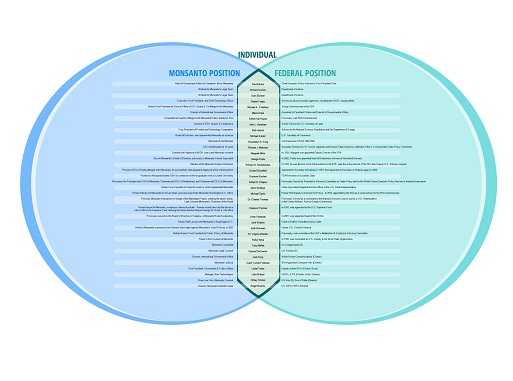
The United States is threatening nations who oppose Monsanto’s genetically modified (GM) crops with military-style trade wars, according to information obtained and released by the organization WikiLeaks. Nations like France, which have moved to ban one of Monsanto’s GM corn varieties, were requested to be ‘penalized’ by the United States for opposing Monsanto and genetically modified foods. The information reveals just how deep Monsanto’s roots have penetrated key positions within the United States government, with the cables reporting that many U.S. diplomats work directly for Monsanto.
The WikiLeaks cable reveals that in late 2007, the United States ambassador to France and business partner to George W. Bush, Craig Stapleton, requested that the European Union along with particular nations that did not support GMO crops be penalized. Stapleton, who co-owned the Dallas/Fort Worth-based Texas Rangers baseball team with Bush in the 1990s, stated:
“Country team Paris recommends that we calibrate a target retaliation list that causes some pain across the EU since this is a collective responsibility, but that also focuses in part on the worst culprits. The list should be measured rather than vicious and must be sustainable over the long term, since we should not expect an early victory. Moving to retaliation will make clear that the current path has real costs to EU interests and could help strengthen European pro-biotech voices.”
The Leaked Political Agenda Behind Monsanto’s GMO Crops
The ambassador plainly calls for ‘target retaliation’ against nations who are against using Monsanto’s genetically modified corn, admittedly linked to organ damage and environmental devastation. Amazingly, this is not an isolated case. In similar newly released cables, United States diplomats are found to have pushed GMO crops as a strategic government and commercial imperative. Furthermore, the U.S. specifically targeted advisers to the pope, due to the fact that many Catholic bishops and figureheads have openly denounced GMO crops. In fact, the Vatican has openly declared Monsanto’s GMO crops as a ‘new form of slavery’.
“A Martino deputy told us recently that the cardinal had co-operated with embassy Vatican on biotech over the past two years in part to compensate for his vocal disapproval of the Iraq war and its aftermath – to keep relations with the USG [US government] smooth. According to our source, Martino no longer feels the need to take this approach,” says the cable.
Perhaps the most shocking piece of information exposed by the cables is the fact that these U.S. diplomats are actually working directly for biotech corporations like Monsanto. The cables also highlight the relationship between the U.S. and Spain in their conquest to persuade other nations to allow for the expansion of GMO crops. Not only did the Spanish government secretly correspond with the U.S. government on the subject, but the U.S. government actually knew beforehand how Spain would vote before the Spanish biotech commission reported their decision regarding GMO crops. The cable states:
“In response to recent urgent requests by [Spanish rural affairs ministry] state secretary Josep Puxeu and Monsanto, post requests renewed US government support of Spain’s science-based agricultural biotechnology position through high-level US government intervention.”
Monsanto has undoubtedly infiltrated the United States government in order to push their health-endangering agenda, and this has been known long before the release of these WikiLeaks cables. The U.S. is the only place where Monsanto’s synthetic hormone Posilac is still used in roughly 1/3 of all cows, with 27 nations banning the substance over legitimate health concerns. Despite Monsanto’s best attempts at incognito political corruption, nothing can stop the grassroots anti-Monsanto movement that is taking over cities and nations alike.
Anthony Gucciardi is an accomplished investigative journalist with a passion for natural health. Anthony’s articles have been featured on top alternative news websites such as Infowars, NaturalNews, Rense, and many others. Anthony is the co-founder of Natural Society, a website dedicated to sharing life-saving natural health techniques. Stay in touch with Natural Society via the following sites Facebook – Twitter – Web
If you thought Monsanto’s lack of testing on their current GMO crops was bad before, prepare to now be blown away by the latest statement by the USDA. Despite links to organ damage and mutated insects, the USDA says that it is changing the rules so that genetically modified seed companies like Monsanto will get ‘speedier regulatory reviews’. With the faster reviews, there will be even less time spent on evaluating the potential dangers. Why? Because Monsanto is losing sales with longer approval terms.
The changes are expected to take full effect in March when they’re published in the Federal Register. The USDA’s goal is to cut the approval time for GMO crops in half in order to speedily implement them into the global food supply. The current USDA process takes longer than they would like due to ‘public interest, legal challenges, and the challenges associated with the advent of national organic food standards‘ says USDA deputy administrator Michael Gregoire.
According to the United States Department of Agriculture, problems like public interest (activist groups attempting to bring the dangers of GMO crops to light), legal challenges (farmers suing Monsanto over genetic contamination), and national food standards are all getting in the way of their prime goal — to helpMonsanto unleash their latest untested GMO creation. In fact, the concern is that Monsanto may be losing cash flow as nations like Brazil speed genetically modified seeds through laughable approval processes.
Steve Censky, chief executive officer of the American Soybean Association, states it quite plainly. This is a move to help Monsanto and other biotechnology giants squash competition and make profits. After all, who cares about public health?
“It is a concern from a competition standpoint,” Censky said in a telephone interview.
“If you can reduce the approval time, you get sales that much faster,” said Windau
If you can reduce the approval time, as in the time it takes to determine if these food products are safe, then you can get sales much faster. Is the USDA working for the United States consumer, or is it working for Monsanto?
Obama Food Czar Is Former Monsanto Exec, One of the Four Horsemen of the Food Apocalypse
– It’s not enough that former Monsanto executive Michael Taylor is the Food Czar in Obama`s administration. Monsanto recently purchased Xe Intelligence Services. Xe is the new name for Blackwater, the largest private mercenary military outfit in the world. Within that same time frame, Bill Gates purchased $23 million of Monsanto stock. –
He was Monsanto`s chief attorney and lobbyist. He knows his way around the FDA and USDA since he`s influenced both agencies. Monsanto Mike was the one who pushed Monsanto`s rBGH (recombinant Bovine Growth Hormone) to help poison milking cows and consumers` milk. Then he made it illegal for non-cooperating dairy farms to display “no rBGH” on their milk cartons. He made life financially miserable for those dairy farmers who didn`t play ball.
Some suspect a Food Czar link with the current raw milk raids. After all, milk is Monsanto Mike`s familiar turf, and his chief administrative duty is food safety.
Monsanto
In case you`re not sure of Monsanto`s destructive nature, here`s a short list of Monsanto`s toxic products: Agent Orange, PCBs, aspartame, rBGH, and Ready Roundup. Google them.
Monsanto developed terminator seeds, forcing farmers to buy new seeds because they cannot be recycled after first harvest. Monsanto is the world`s leading GMO producer. And they sue farmers for violating patent laws when non-GMO farms` crops are inadvertently infested by neighboring GMO crops.
Monsanto is making sure they own patents on almost all other non-GMO seeds as well. Their stated goal is to own the world`s food production. Think food mafia!
Under the guise of philanthropy, Gates is constantly funding vaccine development and distribution. This includes GM crops containing vaccines and mosquitoes to deliver vaccines. The targets of these developments are usually developing countries.
Vaccines have been exposed as carriers for sterilization agents in developing countries over the past two decades. Perhaps Bill Gates` comment on reducing the population by ten to fifteen percent with vaccines was not a slip of the tongue or taken out of context.
Gates is also funding the Alliance for a Green Revolution in Africa (AGRA). The Gates Foundation hired Robert Horsh in 2006 when he was a director at Monsanto! The AGRA is a front for stripping African farmers of their traditional seed use and force selling them GM seeds. This type of operation has had tragic results for poor cotton farmers in India.
Xe AKA Blackwater
Blackwater has a history of black ops and secret illegal activities. Their services are available to corporate as well as government operations. They changed their name to Xe because of their soiled reputation for exposed dirty deeds in Iraq. As a private mercenary army, Blackwater has been able to terrorize targets under secret contracts, while enabling their employers to claim deniability.
Through different shell company names, Xe has developed secret contracts with several multi-national corporations. Jeremy Scahill, the author of Blackwater: The Rise of the World’s Most Powerful Mercenary Army, has recently exposed Monsanto`s relationship with Xe.
According to Scahill, Cofer Black the director of Total Intelligence, one of Blackwater`s shell companies, started pitching Monsanto in 2008. Black is former CIA director with a nasty reputation. Now Total Intelligence is part of Monsanto. That division`s purpose is to covertly infiltrate anti-GMO activists and resisting farmers. This would enable splintering those groups, or even assassinating some key individuals.
We must resist the evil synergy of this alliance. Jeffrey Smith`s anti-GMO campaign with his Institute for Responsible Technology is a starting point.
(NaturalNews) The National Defense Authorization Act (NDAA) — an act which allows for the government of the United States to indefinitely imprison citizens without any access to due process — has been signed in accordance with a Congress that represents Corporate America and Big Agriculture, but not “we the people”. So now we should all consider that the FBI has nothing better to do than seek food activists as terrorists among the other activists deemed domestic terrorists.
The FBI investigated a former Chicago Tribune journalist for handing out leaflets advocating animal rights. Will Potter was arrested by Chicago police and then released. Shortly after, the FBI knocked on his door. Will was threatened with being placed on the “domestic terrorist list.”
More journalist than street activist, Will decided to dive into the rabbit hole of federal law enforcement suppressing environmental and animal rights activists. From that experience he wrote his book Green is the New Red: An Insider’s Account of a Social Movement Under Siege. What will discloses is disturbing.
Eco-terrorists, animal rights terrorists, and political prison
The war against terrorism already includes environmentalists and animal rights groups. Both groups occasionally engage in acts of vandalism, temporary occupation, and “illegally” releasing animals from lab experiment facilities.
But usually these activists conduct peaceful demonstrations and disseminate materials promoting their valid causes. If there is any vandalism, one could be charged for that and either fined or jailed according to the offense and the accused person’s previous record.
But now, two secret prisons designed for domestic terrorists have sprung up in Indiana and Illinois. And environmental and animal rights activists have been considered domestic terrorists for years. These special domestic terrorist prisons are called Communication Management Units (CMUs).
Per prison documentation, CMUs are “self-contained” housing units for prisoners who “require increased monitoring of communication” in order to “protect the public.” Current prisoners were transferred from minimal security prisons to CMUs without notice or due process.
The CMUs limit phone calls, visiting time, and mail much more than even maximum security prisons. Everything is monitored closely. Another Prison Bureau mission statement for CMUs is to keep people with “inspirational significance” from communicating with their groups or anyone in the media and public.
And now food activists are eligible for CMUs
This covers a wide spectrum of peaceful activists. Documents retrieved under the Freedom of Information Act (FIA) disclose the FBI’s intent to infiltrate food activist groups and arrest food activists as domestic terrorists.
There have been raids on the Food Not Bombs activist groups. Their activity has involved creating vegetarian buffet food stands in public parks to feed the homeless, protest marches, and investigating and communicating corrupt global food distribution. That’s a hot one!
Recently, public park feeding festivals were closed down forcefully. Members are often under surveillance. As early as 1989, military run classes in domestic training used the Food Not Bombs group as a case-study for one of “America’s most hardcore terrorist groups”.
Most of us know of other raids on raw milk distributors, family farms, private vegetable gardens and private food storage facilities. An outdoor vegetarian banquet held at someone’s ranch was even disrupted by state health officials recently.
All of these cases of local law enforcement or food agency harassment eventually make their way into FBI files. But there’s more — the FBI has urged local authorities to harass and provide information. A Food Not Bombs site reports that private security agents from large corporations, like Monsanto, are also involved with food activist surveillance and monitoring.
The “War on Terror” is the cover for all this intimidation of citizens actively concerned about the future of food quality and food freedom. A compliant media and dumbed down population allows it. (http://www.naturalnews.com/034538_N…)
Since the inception of the Petrochemical Era and the ability to efficiently and cost effectively mass produce synthetic chemicals, the misdeeds huge of corporations have increased ten fold. The United States-based multinational agricultural biotechnology giant Monsanto is a perfect example. That corporation majestically exemplifies the phrase “increase profit at any cost.” Although it would be nearly impossible to record every crime committed by this company, it appears necessary to give a brief overview of what Monsanto is really about. Specifically, the structure of the organization and the actors participating within it, several of their products produced (3 products: Roundup, Genetically engineered food and rBGH) and their affects on living organisms, and the varied indictments made against the corporation and its affiliates and subsidiaries.
“What you are seeing is not just a consolidation of seed companies, it’s really a consolidation of the entire food chain”
-Fraley R. (co-president of Monsanto’s agricultural sector) 1996
‘Dr. Roger’ died in the Summer of 2003. ‘Roger’ was a pseudonym for this genetics scientist. He was 17 and lived in Roswell, New Mexico in 1947 when the unexplained object crashed. He told a woman he worked with in 1977 named ‘Kate’ while employed by the Navy, who he helped to clean up the crash site of the 1947 UFO. He subsequently went to work for the government at this young age and ended up a geneticist working in China Lake for the Navy. Although he lived in fear and hiding soon after he told his story to Kate, he retired in late 1990s or early 2000’s and she saw him again once in early 2002 in San Diego. He told her she was in danger to talk to him and he left the store.
In 2003 she received a phone call from his ‘friend’ who said he had been executed in his retirement home in Connecticut. The body had been removed by a black government looking vehicle. The home had been cleaned up and the body removed without any public notices of his death or existence. Many disfigured and abnormal animals were found in the desert near Groom Lake during his time there and after. Kate thought he might have been doing this gruesome experimental work.

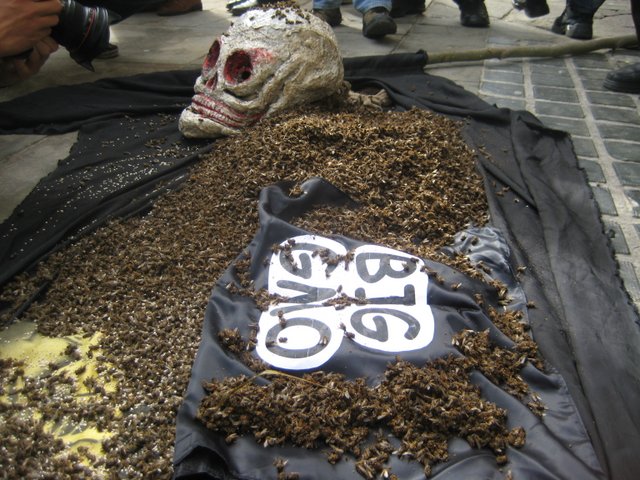
 On March 15, over 1,500 beekeepers and anti-GMO protesters marched through the streets of Warsaw, depositing thousands of dead bees on the steps of the Ministry of Agriculture in protest of genetically modified foods and their pesticides which are together largely responsible for the killing off of bees, butterflies, moths and other beneficial pollinators in great numbers.