The Covert Origins of ISIS

The Covert Origins of ISIS

Evidence exposing who put ISIS in power, and how it was done.

The Islamic militant group ISIS, formerly known as Al-Qaeda in Iraq, and recently rebranded as the so called Islamic State, is the stuff of nightmares. They are ruthless, fanatical, killers, on a mission, and that mission is to wipe out anyone and everyone, from any religion or belief system and to impose Shari’ah law. The mass executions, beheadings and even crucifixions that they are committing as they work towards this goal are flaunted like badges of pride, video taped and uploaded for the whole world to see. This is the new face of evil.

iss-money-dollar-symbolism-conspiracyWould it interest you to know who helped these psychopaths rise to power? Would it interest you to know who armed them, funded them and trained them? Would it interest you to know why?

This story makes more sense if we start in the middle, so we’ll begin with the overthrow of Muammar Gaddafi in 2011.

The Libyan revolution was Obama’s first major foreign intervention. It was portrayed as an extension of the Arab Spring, and NATO involvement was framed in humanitarian terms.

The fact that the CIA was actively working to help the Libyan rebels topple Gaddafi was no secret, nor were the airstrikes that Obama ordered against the Libyan government.However, little was said about the identity or the ideological leanings of these Libyan rebels. Not surprising, considering the fact that the leader of the Libyan rebels later admitted that his fighters included Al-Qaeda linked jihadists who fought against allied troops in Iraq.

These jihadist militants from Iraq were part of what national security analysts commonly referred to as Al-Qaeda in Iraq. Remember Al-Qaeda in Iraq was ISIS before it was rebranded.

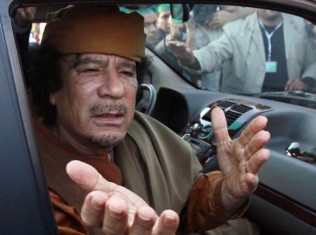
With the assistance of U.S. and NATO intelligence and air support, the Libyan rebels captured Gaddafi and summarily executed him in the street, all the while enthusiastically chanting “Allah Akbar”. For many of those who had bought the official line about how these rebels were freedom fighters aiming to establish a liberal democracy in Libya, this was the beginning of the end of their illusions.

Prior to the U.S. and NATO backed intervention, Libya had the highest standard of living of any country in Africa. This according to the U.N.’s Human Development Index rankings for 2010.However in the years following the coup, the country descended into chaos, with extremism and violence running rampant. Libya is now widely regarded as failed state (of course those who were naive enough to buy into the propaganda leading up to the war get defensive when this is said).

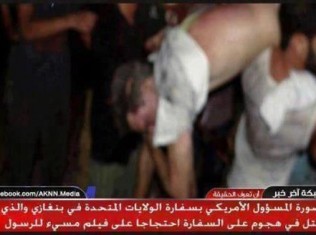
Now after Gaddafi was overthrown, the Libyan armories were looted, and massive quantities of weapons were sent by the Libyan rebels to Syria. The weapons, which included anti-tank and anti-aircraft missiles were smuggled into Syria through Turkey, a NATO ally. The times of Londonreported on the arrival of the shipment on September 14th, 2012. (Secondary confirmation in this NYT article) This was just three days after Ambassador Chris Stevens was killed by the attack on the U.S. embassy in Benghazi. Chris Stevens had served as the U.S. government’s liaison to the Libyan rebels since April of 2011.

While a great deal media attention has focused on the fact that the State Department did not provide adequate security at the consulate, and was slow to send assistance when the attack started, Pulitzer Prize winning journalist Seymour Hersh released an article in April of 2014 which exposed a classified agreement between the CIA, Turkey and the Syrian rebels to create what was referred to as a “rat line”. The “rat line” was covert network used to channel weapons and ammunition from Libya, through southern turkey and across the Syrian border. Funding was provided by Turkey, Saudi Arabia and Qatar.

With Stevens dead any direct U.S. involvement in that arms shipment was buried, and Washington would continue to claim that they had not sent heavy weaponry into Syria.

It was at this time that jihadist fighters from Libya began flooding into Syria as well. And not just low level militants. Many were experienced commanders who had fought in multiple theaters.

The U.S. and its allies were now fully focused on taking down Assad’s government in Syria. As in Libya this regime change was to be framed in terms of human rights, and now overt support began to supplement the backdoor channels. The growing jihadist presence was swept under the rug and covered up.

However as the rebels gained strength, the reports of war crimes and atrocities that they were committing began to create a bit of a public relations problem for Washington. It then became standard policy to insist that U.S. support was only being given to what they referred to as“moderate” rebel forces.

This distinction, however, had no basis in reality.

In an interview given in April of 2014, FSA commander Jamal Maarouf admitted that his fighters regularly conduct joint operations with Al-Nusra. Al-Nusra is the official Al-Qa’ida branch in Syria. This statement is further validated by an interview given in June of 2013 by Colonel Abdel Basset Al-Tawil, commander of the FSA’s Northern Front. In this interview he openly discusses his ties with Al-Nusra, and expresses his desire to see Syria ruled by sharia law. (You can verify the identities of these two commanders here in this document from The Institute for the Study of War)

Moderate rebels? Well it’s complicated. Not that this should really come as any surprise. Reuters had reported in 2012 that the FSA’s command was dominated by Islamic extremists, and the New York Times had reported that same year that the majority of the weapons that Washington were sending into Syria was ending up in the hands Jihadists. For two years the U.S. government knew that this was happening, but they kept doing it.

And the FSA’s ties to Al-Nusra are just the beginning. In June of 2014 Al-Nusra merged with ISIS at the border between Iraq and Syria.

So to review, the FSA is working with Al-Nusra, Al-Nusra is working with ISIS, and the U.S. has been sending money and weapons to the FSA even though they’ve known since 2012 that most of these weapons were ending up in the hands of extremists. You do the math.

[UPDATE 9.03.14]: Retired Lt. Gen. Tom McInerney admits: “We Helped Build ISIS”:
Note that the first version of this video I uploaded (here) was quickly taken down. To insure that this clip does not disappear we have provided a secondary download link here. So if the video below isn’t playing then use that link and upload it elsewhere.

Syria, we backed I believe, in some cases some of the wrong people and not in the right part of the Free Syrian Army (FSA) that’s a little confusing to people. So I’ve always maintained, and go back quite some time that we were backing the wrong types. I think it’s going to turn out maybe this weekend in a new special that Brett Baer is going to have Friday that’s gonna show some of those weapons from Benghazi ended up in the hands of ISIS. So we helped build ISIS.

In that context, the sarin gas attacks of 2013 which turned out to have been committed by the Syrian rebels, makes a lot more sense doesn’t it? If it wasn’t enough that U.N. investigators,Russian investigators, and Pulitzer prize winning journalist Seymour Hersh all pinned that crime on Washington’s proxies, the rebels themselves threatened the West that they would expose what really happened if they were not given more advanced weaponry within one month.

By the way, this also explains why Washington then decided to target Russia next.

This threat was made on June 10th, 2013. In what can only be described as an amazing coincidence, just nine days later, the rebels received their first official shipment of heavy weapons in Aleppo.

After the second sarin gas fiasco, which was also exposed and therefore failed to garner public support for airstrikes, the U.S. continued to increase its the training and support for the rebels.

In February of 2014, Haaretz reported that the U.S. and its allies in the region, Saudi Arabia, Jordan and Israel, were in the process of helping the Syrian rebels plan and prepare for a massive attack in the south. According to Haaretz Israel had also provided direct assistance in military operations against Assad four months prior (you can access a free cached version of the page here).

Then in May of 2014 PBS ran a report in which they interviewed rebels who were trained by the U.S. in Qatar. According to those rebels they were being trained to finish off soldiers who survived attacks.

“They trained us to ambush regime or enemy vehicles and cut off the road,” said the fighter, who is identified only as “Hussein.” “They also trained us on how to attack a vehicle, raid it, retrieve information or weapons and munitions, and how to finish off soldiers still alive after an ambush.”

This is a blatant violation of the Geneva conventions. It also runs contrary to conventional military strategy. In conventional military strategy soldiers are better off left wounded, because this ends up costing the enemy more resources. Executing captured enemy soldiers is the kind of tactic used when you want to strike terror in the hearts of the enemy. It also just happens to be standard operating procedure for ISIS.

One month after this report, in June of 2014, ISIS made its dramatic entry, crossing over the Syrian border into Iraq, capturing Mosul, Baiji and almost reaching Baghdad. The internet was suddenly flooded with footage of drive by shootings, large scale death marches, and mass graves. And of course any Iraqi soldier that was captured was executed.

Massive quantities of American military equipment were seized during that operation. ISIS took entire truckloads of humvees, they took helicopters, tanks, and artillery. They photographed and video taped themselves and advertised what they were doing on social media, and yet for some reason Washington didn’t even TRY to stop them.

U.S. military doctrine clearly calls for the destruction of military equipment and supplies when friendly forces cannot prevent them from falling into enemy hands, but that didn’t happen here. ISIS was allowed to carry this equipment out of Iraq and into Syria unimpeded. The U.S. military had the means to strike these convoys, but they didn’t lift a finger, even though they had been launching drone strikes in Pakistan that same week.

Why would they do that?

Though Obama plays the role of a weak, indecisive, liberal president, and while pundits from the right have had a lot of fun with that image, this is just a facade. Some presidents, like George W. Bush, rely primarily on overt military aggression. Obama gets the same job done, but he prefers covert means. Not really surprising considering the fact that Zbigniew Brzezinski was his mentor.

Those who know their history will remember that Zbigniew Brzezinski was directly involved in the funding and arming the Islamic extremists in Pakistan and Afghanistan in order to weaken the Soviets.

By the way Osama bin Laden was one of these anti-Soviet “freedom fighters” the U.S. was funding and arming.

This operation is no secret at this point, nor are the unintended side effects.

Officially the U.S. government’s arming and funding of the Mujahideen was a response to the Soviet invasion in December of 1979, however in his memoir entitled “From the Shadows” Robert Gates, director of the CIA under Ronald Reagan and George Bush Senior, and Secretary of Defense under both George W. Bush and Barack Obama, revealed that the U.S. actually began the covert operation 6 months prior, with the express intention of luring the Soviets into a quagmire. (You can preview the relevant text here on google books)

The strategy worked. The Soviets invaded, and the ten years of war that followed are considered by many historians as being one of the primary causes of the fall of the USSR.

This example doesn’t just establish precedent, what we’re seeing happen in Iraq, Afghanistan and Syria right now is actually a continuation of a old story. Al-Nusra and ISIS are ideological and organizational decedents of these extremist elements that the U.S. government made use of thirty years ago.

The U.S. the went on to create a breeding ground for these extremists by invading Iraq in 2003. Had it not been for the vacuum of power left by the removal and execution of Saddam, Al-Qaeda in Iraq, aka ISIS, would not exist. And had it not been for Washington’s attempt at toppling Assad by arming, funding and training shadowy militant groups in Syria, there is no way that ISIS would have been capable of storming into Iraq in June of 2014.

On every level, no matter how you cut it, ISIS is a product of U.S. government’s twisted and decrepit foreign policy.

Now all of this may seem contradictory to you as you watch the drums of war against ISIS begin to beat louder and the air strikes against them are gradually widenedhttp://www.wjla.com/articles/2014/08/president-obama-considers-possible-…). Why would the U.S. help a terrorist organization get established, only to attack them later?

Well why did the CIA put Saddam Hussein in power in 1963?, Why did the U.S. government back Saddam in 1980 when he launched a war of aggression against Iran, even though they knew that he was using chemical weapons? Why did the U.S. fund and arm Islamic extremists in Afghanistan against the Soviets?

There’s a pattern here if you look closely. This is a tried and true geopolitical strategy.

Step 1: Build up a dictator or extremist group which can then be used to wage proxy wars against opponents. During this stage any crimes committed by these proxies are swept under the rug. [Problem]

Step 2: When these nasty characters have outlived their usefulness, that’s when it’s time to pull out all that dirt from under the rug and start publicizing it 24/7. This obviously works best when the public has no idea how these bad guys came to power.[Reaction]

Step 3: Finally, when the public practically begging for the government to do something, a solution is proposed. Usually the solution involves military intervention, the loss of certain liberties, or both. [Solution]

ISIS is extremely useful. They have essentially done Washington dirty work by weakening Assad. In 2014, while the news cycle has focused almost exclusively on Ukraine and Russia, ISIS made major headway in Syria, and as of August they already controlled 35% of the country.

Since ISIS largely based in Syria, this gives the U.S. a pretext to move into Syria. Sooner or later the U.S. will extend the airstrikes into Assad’s backyard, and when they do U.S. officials are already making it clear that both ISIS and the Syrian government will be targeted. That, after all, is the whole point. Washington may allow ISIS to capture a bit more territory first, but the writing is on the wall, and has been for some time now.

The Obama administration has repeatedly insisted that this will never lead to boots on the ground, however, the truth of the matter is that anyone who understands anything about military tactics knows full well that ISIS cannot be defeated by airstrikes alone. In response to airstrikes ISIS will merely disperse and conceal their forces. ISIS isn’t an established state power which can be destroyed by knocking out key government buildings and infrastructure. These are guerrilla fighters who cut their teeth in urban warfare.

To significantly weaken them, the war will have to involve ground troops, but even this is a lost cause. U.S. troops could certainly route ISIS in street to street battles for some time, and they might even succeed in fully occupying Syria and Iraq for a number of years, but eventually they will have to leave, and when they do, it should be obvious what will come next.

The puppets that the U.S. government has installed in the various countries that they have brought down in recent years have without exception proven to be utterly incompetent and corrupt. No one that Washington places in power will be capable of maintaining stability in Syria. Period.

Right now, Assad is the last bastion of stability in the region. He is the last chance they have for a moderate non-sectarian government and he is the only hope of anything even remotely resembling democracy for the foreseeable future. If Assad falls, Islamic extremist will take the helm, they will impose shari’ah law, and they will do everything in their power to continue spreading their ideology as far and wide as they can.

If the world truly wants to stop ISIS, there is only one way to do it:

1. First and foremost, the U.S. government and its allies must be heavily pressured to cut all support to the rebels who are attempting to topple Assad. Even if these rebels that the U.S. is arming and funding were moderate, and they’re not, the fact that they are forcing Assad to fight a war on multiple fronts, only strengthens ISIS. This is lunacy.

2. The Syrian government should be provided with financial support, equipment, training and intelligence to enable them to turn the tide against ISIS. This is their territory, they should be the ones to reclaim it.

Now obviously this support isn’t going to come from the U.S. or any NATO country, but there are a number of nations who have a strategic interest in preventing another regime change and chaotic aftermath. If these countries respond promptly, as in right now, they could preempt a U.S. intervention, and as long this support does not include the presence of foreign troops, doing so will greatly reduce the likelihood of a major confrontation down the road.

3. The U.S. government and its allies should should be aggressively condemned for their failed regime change policies and the individuals behind these decisions should be charged for war crimes. This would have to be done on an nation by nation level since the U.N. has done nothing but enable NATO aggression. While this may not immediately result in these criminals being arrested, it would send a message. This can be done. Malaysia has already proven this by convicting the Bush administration of war crimes in abstentia.

Now you might be thinking: “This all sounds fine and good, but what does this have to do with me? I can’t influence this situation.”

That perspective is quite common, and for most people, it’s paralyzing, but the truth of the matter is that we can influence this. We’ve done it before, and we can do it again.

I’ll be honest with you though, this isn’t going to be easy. To succeed we have to start thinking strategically. Like it or not, this is a chess game. If we really want to rock the boat, we have to start reaching out to people in positions of influence. This can mean talking to broadcasters at your local radio station, news paper, or t.v. station, or it can mean contacting influential bloggers, celebrities, business figures or government officials. Reaching out to current serving military and young people who may be considering joining up is also important. But even if it’s just your neighbor, or your coworker, every single person we can reach brings us closer to critical mass. The most important step is to start trying.

If you are confused about why this is all happening, watch this video we put out on September 11th, 2012

If this message resonates with you then spread it. If you want to see the BIG picture, and trust me we’ve got some very interesting reports coming, subscribe to StormCloudsGathering on Youtube, and follow us on Facebook, twitter and Google plus.

BONUS ARTICLE (an interesting tangent): Were the Libyan rebels being led by a CIA plant?

via StormCloudsGathering

December 12, 2012 – Decrypted Matrix Radio: 11 Secret Docs, Manning Wins, Drone Flights, Patriot Act, NSA Spying, Photog Terrorists, CIA Trafficking, Cancer Cure, Russia’s Aliens

December 12, 2012 – Decrypted Matrix Radio: 11 Secret Docs, Manning Wins, Drone Flights, Patriot Act, NSA Spying, Photog Terrorists, CIA Trafficking, Cancer Cure, Russia’s Aliens


11 Secret Documents Americans Deserve to See

Jacintha Saldanha’s Family Says She Told Them Nothing About Hoax Call – Queen Prank Suicide

Manning wins Person of Year 2012 in landslide

Newly Released Drone Records Reveal Extensive Military Flights in U.S

US Government Agencies Will Soon Be Able To Access Foreign

Medical Dossiers Due To Patriot Act

CLIP: NSA Whistleblower William Binney: Everyone in US under virtual surveillance, all info stored, no matter the post

Public Buses Across Country Quietly Adding Microphones to

Record Passenger Conversations

Homeland Security and FBI Release Document Once Again

Labeling Photographers as Potential Terrorists

Egypt’s Army Given Power to Arrest Civilians

Did CIA and State Department Run Illegal Arms Trafficking in Benghazi?

CLIP: Cancer is finally cured in Canada but Big Pharma has no interest as won’t drive in enough PROFIT

Russian Premier Jokes about Secret Files on Aliens

12-12

Every Week Night 12-1am EST (9-10pm PST)

– Click Image to Listen LIVE –

4 More Drones! Robot Attacks Are on Deck for Obama’s Next Term

4 More Drones! Robot Attacks Are on Deck for Obama’s Next Term

When Barack Obama took office, drone strikes were a once-in-a-while thing, with an attack every week or two. Now, they’re the centerpiece of a global U.S. counterterrorism campaign. Obama institutionalized the strikes to the point where he could hand off to the next president an efficient bureaucratic process for delivering death-by-robot practically on autopilot. Only now he’s the next president. Welcome to Obama’s second-term agenda for dealing with the world. As the Ramones sang: second verse, same as the first.

Early in the first term, then-CIA director Leon Panetta observed that drones were the “only game in town” for attacking al-Qaida in Pakistan. By that he meant invading a country for the third time in a decade was a nonstarter, and the flesh-and-blood spies needed to do a traditional intelligence operation weren’t available in sufficient numbers. So the Obama administration all but crafted its counterterrorism strategy around the drones, turning their surveillance and lethal operations into a bureaucratic apparatus led by White House aides with minimal outside oversight. The CIA and the Joint Special Operations Command, elite forces that rarely operate visibly, have the lead for implementing the robot-based agenda — and augmenting it with commando raids. Backstopping them are new tools to invade and disrupt enemy data networks.

The strikes have spread from Pakistan to Yemen to Somalia. And now that Obama’s been reelected, expect them to spread to Mali, another country most Americans neither know nor understand. The northern part of the North African country has fallen into militant hands. U.S.-aligned forces are currently plotting to take it back. The coming arrival of Army Gen. David Rodriguez, the former day-to-day commander of the Afghanistan war, as leader of U.S. forces in Africa is a signal that Obama wants someone experienced at managing protracted wars on a continent where large troop footprints aren’t available. Instead, Rodriguez will have to track, check and erode the spread of al-Qaida in northern and eastern Africa using drones and commando forces, available from his expanding bases in places like Djibouti. If all of this seems routine, that’s the point.

The Obama administration is doing something similar with cyber weaponry. It’s trying to make them a normal part of everyday conflict. Gone are the days when senior officers equivocated in public about their ability to disrupt enemy data networks. Now the Air Force talks openly about spending $10 million on new tools “to destroy, deny, degrade, disrupt, deceive, corrupt, or usurp the adversaries [sic] ability to use the cyberspace domain for his advantage.” The Pentagon’s futurists at Darpa have launched a new “Plan X” to routinize the corruption of enemy networks and the exfiltration of data within normal military operations. Routinization may actually be the wrong word: Darpa wants military malware that works like “the auto-pilot function in modern aircraft.” The Stuxnet worm that messed with Iran’s centrifuges was only the beginning.

All this might seem aggressive for a president who liked to say on the campaign trail that “the tide of war is receding.” But the tide of war never actually goes out. And the wicked-hard problems facing Obama’s national security team may only be getting under way.

First, Obama’s got to help Congress avert 9.4 percent annual, automatic cuts to practically every Defense Department program for the next 10 years, as both he and his defense secretary, Leon Panetta, are on record opposing them.

Next comes Iran. Israel’s Benjamin Netanyahu has suggested that he will feel the need to strike Iran by next summer. Obama has a stronger hand with Netanyahu now that he doesn’t have to worry about reelection, but he’s still committed himself rhetorically to preventing an Iranian nuclear weapon. Even if Obama can avert a war, his clear preference, Iran will continue to consume a tremendous amount of the White House and the Pentagon’s attention. The alternative to a massive bombing campaign might not be so benign, either: the point of Stuxnet was to make the Iranians distrust the industrial controls on their nuclear program’s centrifuges.

Then comes Afghanistan, a war that Obama does not discuss candidly. He’s fond of saying, as he did in one of his final ads, that he plans on “ending the war in Afghanistan, so we can do some nation-building here at home.” His real policy is way more complex than that. Yes, Obama is committed to withdrawing most troops and ending a formal U.S. combat role by 2014. Obama plans to keep a residual troop presence in the country, even after the 2014 “withdrawal,” and negotiations with the Afghans about what shape that presence will take — and for what purpose — are supposed to begin shortly. Among the things Obama is likely to seek: Afghanistan’s permission to keep its air bases as launchpads for drone strikes into Pakistan. The charitable interpretation is to say Obama is caveating his out-of-Afghanistan pledge. The uncharitable interpretation is that he’s misleading the country on it.

The Obama administration is still grappling with the implications of its sprawling, robot-led war. Some of its top officials are just starting to question how long the strikes have to persist. But they haven’t addressed concerns about the precedent the U.S. is setting by sending robots to violate the sovereignty of nations, which are unavoidable as drone technology advances and proliferates. Micah Zenko, a scholar at the Council on Foreign Relations, sees a reckoning with the robots on the horizon.

“There is a recognition within the administration that the current trajectory of drone strikes is unsustainable,” Zenko says. “They are opposed in countries where strikes occur and globally, and that opposition could lead to losing host-nation support for current or future drone bases or over-flight rights.” In other words, tomorrow’s America diplomats may find that drones overshadow the routine geopolitical agenda they seek to advance. The trouble is, the administration’s early search for less-lethal policies to supplement or supplant the drones isn’t promising.

Obama’s broader foreign policy agenda keeps getting derailed. He barely talks about his expansive goal of eliminating global nuclear weapons anymore. Any route to an Israeli-Palestinian peace runs through Netanyahu, who only wants to talk about Iran. The much-heralded “pivot” of the U.S. defense posture toward Asia, a relatively modest goal, keeps getting deferred by the crises of the moment: the Navy’s newest and more advanced ships are going to confront Iran, not to preserve the freedom of the Pacific shipping lanes. A former Obama Pentagon official, Rosa Brooks, recently lamented the Obama team’s chronic inability to shape global events.

Civil libertarians rightly point to Obama’s reversals on expanding warrantless surveillance; the indefinite detention of terrorism suspects; military tribunals at Guantanamo Bay; prosecuting whistleblowers; and embracing an expensive definition of the war on terrorism’s executive powers. But there’s little evidence that Obama will change course. In an insightful blog post, the Brookings Institution’s Benjamin Wittes writes that Obama’s civil-liberties and national security record is best explained by a policy “consensus” in D.C., running through George W. Bush’s second term and Obama’s first, that basically agrees on a definition of executive power that civil libertarians dislike. It’s uncomfortable with torture, but basically comfortable with expansive domestic spying and detention powers.

As Obama’s second term dawns, it’s time to put away ideological illusions about his approach to foreign affairs. Liberals keep waiting for an agenda that’s less killer-robot-y. Conservatives are unable to see him as anything but a peacenik: “We’ll get to see what jimmy carter’s 2nd term would have looked like,” tweeted Jim Carafano, a defense analyst at the conservative Heritage Foundation.

But the evidence is staring everyone in the face. Obama has elevated a practice of stealthy robotic warfare to the tactic of choice for U.S. security priorities, and built around it a system that operates it practically on bureaucratic inertia. Obama has a powerful incentive of all to continue his trajectory: with the one major exception of the Benghazi consulate disaster, Obama’s handling of global affairs has been notably free of high-profile screwups. That’s the sort of thing that propels a foreign policy agenda — to borrow a term — forward.

November 7, 2012 – DCMX Radio: Corruption in Afghanistan, Obama’s Drones, Wikileaks Grand Jury, Gazan Prisoners, Rejecting the Police State & Negativity

November 7, 2012 – DCMX Radio: Corruption in Afghanistan, Obama’s Drones, Wikileaks Grand Jury, Gazan Prisoners, Rejecting the Police State & Negativity

Afghan corruption, and how the U.S. facilitates it

4 More Drones! Robot Attacks Are on Deck for Obama’s Next Term

U.S. WikiLeaks Criminal Probe ‘Ongoing,’ Judge Reveals

Gaza, The World’s Largest Open-Air Prison

How to resist the federalization and militarization of your local police

Psychic Protection: Immunize Yourself Against Negative Energy


Every Week Night 12-1am EST (9-10pm PST)

– Click Image to Listen LIVE –

Rogue U.S. General Arrested for Activating Special Forces Teams; Ignoring Libya Stand-Down Order

Rogue U.S. General Arrested for Activating Special Forces Teams; Ignoring Libya Stand-Down Order

The official story surrounding the events of September 11, 2012 in Benghazi, Libya which left four Americans dead, has now officially fallen apart.

After numerous flips and flops by the Obama administration, which originally attempted to paint the incident as a Muslim outcry over an anti-Islamic video, whistle blowers throughout the U.S. government, including within the White House, the State Department, national intelligence agencies and the U.S.military have made available stunning details that suggest not only did operational commanders have live visual and audio communications from drones overhead and intelligence assets on the ground, but that some commanders within the military were prepared to go-it-alone after being told to “stand down.”

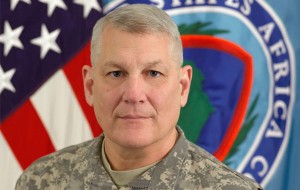
Africom commanding officer U.S. General Carter Ham, after being ordered to essentially surrender control of the situation to alleged Al Queda terrorists and let Americans on the ground die, made the unilateral decision to ignore orders from the Secretary of Defense and activated special operations teams at his disposal for immediate deployment to the area.

According to reports, once the General went rogue he was arrested within minutes by his second in command and relieved of duty.

“(The) basic principle is that you don’t deploy forces into harm’s way without knowing what’s going on; without having some real-time information about what’s taking place,” Panetta told Pentagon reporters. “And as a result of not having that kind of information, the commander who was on the ground in that area, Gen. Ham, Gen. Dempsey and I felt very strongly that we could not put forces at risk in that situation.”

The information I heard today was that General Ham as head of Africom received the same e-mails the White House received requesting help/support as the attack was taking place. General Ham immediately had a rapid response unit ready and communicated to the Pentagon that he had a unit ready.

General Ham then received the order to stand down. His response was to screw it, he was going to help anyhow. Within 30 seconds to a minute after making the move to respond, his second in command apprehended General Ham and told him that he was now relieved of his command.

The question now is whether the American people will hold to account the chain of command responsible for leaving our people behind, fabricating a politically expedient story, and continuing to sell the now defunct lie(s) even after all of their variations of the story were found to be false and misleading.

A General who made the decision to assist diplomatic and intelligence assets on the ground has been arrested and will likely be retired or worse, while those who ordered the removal of embassy security details and ordered U.S. forces to stand-down are left to go on about their business and likely risk more American lives in the future.

In some circles the actions of those at the very top of the command structure during the Bengzahi attacks would be considered traitorous.

via  The Daily Sheeple

October 29, 2012 – DCMX Radio: HAARP Hurricane ‘Sandy’ Inbound, HAARP History and Evidence Review, Rogue General Arrested, Antarctic UFO Activity

October 29, 2012 – DCMX Radio: HAARP Hurricane ‘Sandy’ Inbound, HAARP History and Evidence Review, Rogue General Arrested, Antarctic UFO Activity

Hurricane Sandy Inbound! HAARP AT WORK!? Let’s review the Evidence!

Hurricane Drill from 1997 – Named Hurricane ‘Sandy’ that devastated NE Coast!

HAARP Signatures, Coincidental Timing, Historical Reminders

Rogue U.S. General ARRESTED for Activating Special Forces Teams; Ignoring Libya Stand-Down Order

UFO War over Antarctica – Multiple outlets covering this!


Every Week Night 12-1am EST (9-10pm PST)

– Click Image to Listen LIVE –

List Of Top 10 Stories Underreported By The Mainstream Media

List Of Top 10 Stories Underreported By The Mainstream Media

“The restructuring of media in the United States is creating forms of censorship that are as potentially damaging as overt censorship.”

“Media corporations have been undergoing a massive merging process that is realigning our sources of information in America,”

The 11 largest or most influential media corporations in the United StatesGeneral Electric Company (NBC), Viacom Inc. (cable), The Walt Disney Company (ABC), Time Warner Inc.(CNN), Westinghouse Electric Corporation (CBS), The News Corporation Ltd. (Fox), Gannett Co. Inc., Knight-Ridder Inc., New York Times Co., Washington Post Co. and the Times Mirror Co. – represent the interests of corporate America, and that the media elite are the watchdogs of acceptable ideological messages, the parameters of news and information content and the general use of media resources. Your Mainstream Media is manipulating the news you are allowed to see.

Project Censored has been documenting inadequate media coverage of crucial stories since it began in 1967 at Sonoma State University.

Each year, the group considers hundreds of news stories submitted by readers, evaluating their merits. Students search Lexis Nexis and other databases to see if the stories were underreported, and if so, the stories are fact-checked by professors and experts in relevant fields.

.” Project Censored Director Mickey Huff told us the idea was to show how various undercovered stories fit together into an alternative narrative, not to say that one story was more censored than another.

Here’s Project Censored’s Top 10 list for 2013:

PCensored_art_1.jpg

1. Signs of an emerging police state

President George W. Bush is remembered largely for his role in curbing civil liberties in the name of his “war on terror.” But it’s President Obama who signed the 2012 NDAA, including its clause allowing for indefinite detention without trial for terrorism suspects.

Obama promised that “my administration will interpret them to avoid the constitutional conflict” — leaving us adrift if and when the next administration chooses to interpret them otherwise.

Another law of concern is the National Defense Resources Preparedness Executive Order that Obama issued in March 2012. That order authorizes the president, “in the event of a potential threat to the security of the United States, to take actions necessary to ensure the availability of adequate resources and production capability, including services and critical technology, for national defense requirements.”

The president is to be advised on this course of action by “the National Security Council and Homeland Security Council, in conjunction with the National Economic Council.” Journalist Chris Hedges, along with co-plaintiffs including Noam Chomsky and Daniel Ellsberg, won a case challenging the NDAA’s indefinite detention clause on Sept. 1, when a federal judge blocked its enforcement, but her ruling was overturned on Oct. 3, so the clause is back.


People who get their information exclusively from Mainstream Media sources may be surprised at the lack of enthusiasm on the left for President Barack Obama in this crucial election.

But that’s probably because they weren’t exposed to the full online furor sparked by Obama’s continuation of his predecessor’s (George Bush) overreaching approach to national security, such as Obama signing the 2012 National Defense Authorization Act, which allows the indefinite detention of those accused of supporting terrorism, even U.S. citizens.

PCensored_art_2.jpg

2. Oceans in peril

Big banks aren’t the only entities that our country has deemed “too big to fail.” But our oceans won’t be getting a bailout anytime soon, and their collapse could compromise life itself. In a haunting article highlighted by Project Censored, Mother Jones reporter Julia Whitty paints a tenuous seascape — overfished, acidified, warming — and describes how the destruction of the ocean’s complex ecosystems jeopardizes the entire planet, not just the 70 percent that is water.

Whitty compares ocean acidification, caused by global warming, to acidification that was one of the causes of the “Great Dying,” a mass extinction 252 million years ago.

Life on Earth took 30 million years to recover. In a more hopeful story, a study of 14 protected and 18 non-protected ecosystems in the Mediterranean Sea showed dangerous levels of biomass depletion.

But it also showed that the marine reserves were well-enforced, with five to 10 times larger fish populations than in unprotected areas. This encourages establishment and maintenance of more reserves.

PCensored_3.jpg

3. U.S. deaths from Fukushima

A plume of toxic fallout floated to the U.S. after Japan’s tragic Fukushima nuclear disaster on March 11, 2011. The U.S. Environmental Protection Agency found radiation levels in air, water and milk that were hundreds of times higher than normal across the United States.

One month later, the EPA announced that radiation levels had declined, and they would cease testing. But after making a Freedom of Information Act request, journalist Lucas Hixson published emails revealing that on March 24, 2011, the task of collecting nuclear data had been handed off from the U.S. Nuclear Regulatory Commission to the Nuclear Energy Institute, a nuclear industry lobbying group.

And in one study that got little attention, scientists Joseph Mangano and Jeanette Sherman found that in the period following the Fukushima meltdowns, 14,000 more deaths than average were reported in the U.S., mostly among infants. Later, Mangono and Sherman updated the number to 22,000.

PCensored_art_4.jpg

4. FBI agents responsible for terrorist plots

We know that FBI agents go into communities such as mosques, both undercover and in the guise of building relationships, quietly gathering information about individuals.

This is part of an approach to finding what the FBI now considers the most likely kind of terrorists, “lone wolves.” Its strategy: “seeking to identify those disgruntled few who might participate in a plot given the means and the opportunity. And then, in case after case, the government provides the plot, the means, and the opportunity,” writes Mother Jones journalist Trevor Aaronsen.

The publication, along with the Investigative Reporting Program at the University of California-Berkeley, examined the results of this strategy, 508 cases classified as terrorism-related that have come before the U.S. Department of Justice since the 9/11 terrorist attacks of 2001. In 243 of these cases, an informant was involved; in 49 cases, an informant actually led the plot.

And “with three exceptions, all of the high-profile domestic terror plots of the last decade were actually FBI stings.” facilitated by the F.B.I., whose undercover agents and informers posed as terrorists offering a dummy missile, fake C-4 explosives, a disarmed suicide vest and rudimentary training. Suspects naïvely played their parts until they were arrested.


PCensored_art_5.jpg

5. Federal Reserve loaned trillions to major banks

The Federal Reserve, the U.S.’s quasi-private central bank, was audited for the first time in its history this year. The audit report states, “From late 2007 through mid-2010, Reserve Banks provided more than a trillion dollars … in emergency loans to the financial sector to address strains in credit markets and to avert failures of individual institutions believed to be a threat to the stability of the financial system.” These loans had significantly less interest and fewer conditions than the high-profile TARP bailouts, and were rife with conflicts of interest. Some examples: the CEO of JP Morgan Chase served as a board member of the New York Federal Reserve at the same time that his bank received more than $390 billion in financial assistance from the Fed. William Dudley, who is now the New York Federal Reserve president, was granted a conflict of interest waiver to let him keep investments in AIG and General Electric at the same time the companies were given bailout funds. The audit was restricted to Federal Reserve lending during the financial crisis. On July 25, 2012, a bill to audit the Fed again, with fewer limitations, authored by Rep. Ron Paul, passed the House of Representatives. H.R. 459 was expected to die in the Senate, but the movement behind Paul and his calls to hold the Fed accountable, or abolish it altogether, seem to be growing.

Read More: /economy/2012/09/first-audit-in-the-federal-reserves-nearly-100-year-history-were-posted-today-the-results-are-startling-2449770.html


PCensored_6.JPG

6. Small network of corporations run the global economy

Reporting on a study by researchers from the Swiss Federal Institute in Zurich didn’t make the rounds nearly enough, according to Censored 2013. They found that, of 43,060 transnational companies, 147 control 40 percent of total global wealth. The researchers also built a model visually demonstrating how the connections between companies — what it calls the “super entity” — works. Some have criticized the study, saying control of assets doesn’t equate to ownership. True, but as we clearly saw in the 2008 financial collapse, corporations are capable of mismanaging assets in their control to the detriment of their actual owners. And a largely unregulated super entity like this is vulnerable to global collapse.


PCensored_art_7.jpg

7. The International Year of Cooperative

Can something really be censored when it’s straight from the United Nations? According to Project Censored evaluators, the corporate media underreported the U.N. declaring 2012 to be the International Year of the Cooperative, based on the co-op business model’s stunning growth. The U.N. found that, in 2012, 1 billion people worldwide are co-op member-owners, or one in five adults over age 15. The largest is Spain’s Mondragon Corporation, with more than 80,000 member-owners. The U.N. predicts that by 2025, worker-owned co-ops will be the world’s fastest growing business model. Worker-owned cooperatives provide for equitable distribution of wealth, genuine connection to the workplace, and, just maybe, a brighter future for our planet.


PCensored_art_8.jpg

8. NATO war crimes in Libya

In January 2012, the BBC “revealed” how British Special Forces agents joined and “blended in” with rebels in Libya to help topple dictator Muammar Gadaffi, a story that alternative media sources had reported a year earlier. NATO admits to bombing a pipe factory in the Libyan city of Brega that was key to the water supply system that brought tap water to 70 percent of Libyans, saying that Gadaffi was storing weapons in the factory. In Censored 2013, writer James F. Tracy makes the point that historical relations between the U.S. and Libya were left out of mainstream news coverage of the NATO campaign; “background knowledge and historical context confirming Al-Qaeda and Western involvement in the destabilization of the Gadaffi regime are also essential for making sense of corporate news narratives depicting the Libyan operation as a popular ‘uprising.’”


PCensored_art_9.jpg

9. Prison slavery in the U.S.

On its website, the UNICOR manufacturing corporation proudly proclaims that its products are “made in America.” That’s true, but they’re made in places in the U.S. where labor laws don’t apply, with workers often paid just 23 cents an hour to be exposed to toxic materials with no legal recourse. These places are U.S. prisons. Slavery conditions in prisons aren’t exactly news.

It’s literally written into the Constitution; the 13th Amendment, which abolished slavery, outlaws “slavery nor involuntary servitude, except as a punishment for crime whereof the party shall have been duly convicted.” But the articles highlighted by Project Censored this year reveal the current state of prison slavery industries, and its ties to war.

The majority of products manufactured by inmates are contracted to the Department of Defense. Inmates make complex parts for missile systems, battleship anti-aircraft guns and landmine sweepers, as well as night-vision goggles, body army and camouflage uniforms.

Of course, this is happening in the context of record high imprisonment in the U.S., where grossly disproportionate numbers of African Americans and Latinos are imprisoned, and can’t vote even after they’re freed. As psychologist Elliot D. Cohen puts it in this year’s book: “This system of slavery, like that which existed in this country before the Civil War, is also racist, as more than 60 percent of U.S. prisoners are people of color.”


PCensored_art_10.jpg

10. H.R. 347 criminalizes protest

H.R. 347, sometimes called the “criminalizing protest” or “anti-Occupy” bill, made some headlines. But concerned lawyers and other citizens worry that it could have disastrous effects for the First Amendment right to protest. Officially called the Federal Restricted Grounds Improvement Act, the law makes it a felony to “knowingly” enter a zone restricted under the law, or engage in “disorderly or disruptive” conduct in or near the zones.

The restricted zones include anywhere the Secret Service may be — places such as the White House, areas hosting events deemed “National Special Security Events,” or anywhere visited by the president, vice president and their immediate families; former presidents, vice presidents and certain family members; certain foreign dignitaries; major presidential and vice presidential candidates (within 120 days of an election); and other individuals as designated by a presidential executive order.

These people could be anywhere, and NSSEs have notoriously included the Democratic and Republican National Conventions, Super Bowls and the Academy Awards. So far, it seems the only time H.R. 347 has kicked in is with George Clooney’s high-profile arrest outside the Sudanese embassy.

Clooney ultimately was not detained without trial — information that would be almost impossible to censor — but what about the rest of us who exist outside of the mainstream media’s spotlight?


Notre Dame Law Professor Leads Lonely Campaign Against Drone Strikes

Notre Dame Law Professor Leads Lonely Campaign Against Drone Strikes

A law professor at Notre Dame leads a lonely campaign to stop the targeted killings in Pakistan and elsewhere, insisting they violate international law.

Notre Dame law professor Mary Ellen O’Connell is a leading critic of the U.S. targeted-killing program against Al Qaeda militants. (Los Angeles Times, Ken Dilanian / October 9, 2012)

SOUTH BEND, Ind. — Notre Dame law professor Mary Ellen O’Connell was in her office last month when Imran Khan, a former cricket star who could be Pakistan’s next prime minister, phoned to ask for help.

Pakistanis are furious about the CIA‘s covert campaign of drone missile strikes, Khan told her. Was she aware that the CIA often doesn’t know who it is killing?

“Yes, of all Americans, I think I have a pretty good handle on the facts,” she replied, recounting the call.

O’Connell, a fierce critic of America’s drone attacks outside a war zone, insists the targeted killings are illegal under international law.

“We wouldn’t accept or want a world in which Russia or China or Iran is claiming authority to kill alleged enemies of the state based on secret evidence of the executive branch alone,” O’Connell said. “And yet that’s the authority we’re asserting.”

O’Connell, 54, has led a lonely campaign to stop the drones since she wrote a paper branding the first CIA drone strike, in 2002, as unlawful. She rejected claims by the George W. Bush administration that the attack, which killed several Al Qaeda militants and a U.S. citizen, was a legitimate act of self-defense in the war on terrorism.

Since then, President Obama has sharply increased drone attacks, and O’Connell has jousted with government officials, debated other academics and outlined her critique in scholarly publications.

“Her views are definitely taken seriously,” said Sean Murphy, a former State Department lawyer who argues the drone strikes are permitted under the law. “She’s on the leading edge of this argument.”

She remains in a small minority of U.S. legal scholars, but her views are gaining currency as targeted killings continue.

A report issued last month by researchers at the law schools of New York University and Stanford University argued that many U.S. drone strikes appear unlawful because they don’t meet the strict legal test for killing outside a war zone — to stop an imminent threat to life when no other means is available.

In June, Christof Heyns, the United Nations special rapporteur on extrajudicial killings, told a conference in Geneva that “double tap” drone strikes, in which a second missile is fired at people coming to aid the wounded, could constitute a war crime. Pakistan claims several such attacks have occurred in its tribal areas.

O’Connell and her intellectual allies agree the United States is fighting a lawful war in Afghanistan because it gave shelter to terrorists who attacked America on Sept. 11, 2001. But they argue that killing militants in Pakistan, Yemen and Somalia is not a legitimate part of that conflict, and thus violates laws of war intended to protect noncombatants.

If the U.S. government has a case against an Al Qaeda militant in Yemen or Somalia, they argue, it must try to arrest him and give him a chance to surrender unless lives are in immediate danger.

That view strikes O’Connell’s many critics as a naive reading of international law that fails to account for modern stateless terrorists. But the U.S. government held a similar view until the Sept. 11, 2001, attacks.

U.S. officials criticized Israel for killing Palestinian militants on the West Bank in the 1990s, for example, and CIA officials believed they lacked the authority to kill Osama bin Laden even after he was indicted for the 1998 bombings of two U.S. embassies in East Africa.

National Security Council spokesman Tommy Vietor declined to comment for this article, but he noted that White House counter-terrorism advisor John Brennan publicly explained the administration’s view on targeted killings in April.

“As a matter of international law, the United States is in an armed conflict with Al Qaeda, the Taliban, and associated forces, in response to the 9/11 attacks, and we may also use force consistent with our inherent right of national self-defense,” Brennan said.

Under Obama, the United States has launched 284 drone missile strikes in Pakistan and 49 in Yemen, according to independent groups that track reported attacks. That’s up from 46 in Pakistan and one in Yemen under Bush. Strikes have also been reported in Somalia.

So-called high-value targets typically are named on a classified “kill list,” which is reviewed by lawyers from the White House, the CIA, the Pentagon and other agencies. Many others are killed in “signature strikes” that target unidentified militants based on activities deemed suspicious.

In September, Obama sought to explain who gets targeted and why.

“It has to be a threat that is serious and not speculative,” Obama told CNN. “It has to be a situation in which we can’t capture the individual before they move forward on some sort of operational plot against the United States.”

O’Connell and other critics say no evidence suggests that all those killed met Obama’s standard. Drone strikes have killed up to 3,000 people, according to the New America Foundation, a nonpartisan public policy institute in Washington.

O’Connell sees her effort as an exercise in moral suasion, similar to the public outcry that erupted after news reports detailed how the CIA had used waterboarding and other harsh interrogation techniques against several Al Qaeda detainees after Sept. 11.

A trim woman with brown hair, O’Connell isn’t a pacifist. Her husband is a former Army interrogator who served in the first Gulf War. They met while she was working for the Defense Department, teaching soldiers about international law.

O’Connell praises the Navy SEAL mission that killed Bin Laden, and supports using drones to target enemy fighters in Afghanistan. “I do think drones can be a more accurate weapon, and I’m all in favor of saving our troops’ lives,” she said.

Benjamin Wittes, a Brookings Institution fellow who supports the drone strikes, put O’Connell on the defensive in a debate two years ago by challenging her to take her position to its logical conclusion — as he put it, “that President Obama is a serial killer.”

She fumbled her response. But upon reflection, she sees some parallels to the abortion debate. One can believe, as she does strongly, that abortion is deeply immoral, without labeling women who have abortions as murderers.

“I feel the same way about targeted killing,” she said. “I understand that Americans don’t … see it, but we want the practice to end. I don’t think President Obama should go to jail for it.”

via LATimes

September 26, 2012 – DCMX Radio: Wildcard Crazy News & Events Re-Cap, Lybia False-Flag, Trapwire in AU, Romney Dirt

September 26, 2012 – DCMX Radio: Wildcard Crazy News & Events Re-Cap, Lybia False-Flag, Trapwire in AU, Romney Dirt

Wildcard Wednesday News & Events R-Cap

Trapwire in Australia

Libya CIA False-Flag Evidence

Romney’s first Assignment With Bain Capital – Protection and Re-imaging of Monsanto Inc

Breakthrough Technology? DNA Storage Discussed

Miscellaneous discussion around news/media perception vs. reality


Every Week Night 12-1am EST (9-10pm PST)

– Click Image to Listen LIVE –

Ambassador Stevens in Libya: Just Wrong (CIA) Place, Wrong Time?

Ambassador Stevens in Libya: Just Wrong (CIA) Place, Wrong Time?

A blind man in the dark with ear muffs on knows that something happened in Benghazi, Libya more than a spontaneous angry mob pissed off over a Grade Z video attacked an American Consulate and killed the US Ambassador to Libya.

I hate internet conspiracy theories, and loathe slinging a new one into the mix, but the evidence available adds up one way: the attack, well-planned, was surgical payback for CIA activity in the area. Stevens wasn’t the target at all, he was just a celebrity in the wrong place at the wrong time. The guff about the dumb Prophet movie was the first cover story for the US Government and when that fell apart like cardboard in the rain, the State Department shifted the meme to flag waving over Stevens’ death.

Let’s see what we know:

– The attack was not spontaneous. It involved a large number of men, perhaps as many as 125, fighting in a coordinated fashion, using weapons such as RPGs and mortars on multiple targets. Yes, yes, lots of people carry guns around Libya, but not RPGs and certainly not crew served weapons like mortars. It appears also that the so-called Libyan security forces assigned to protect the Consulate either conveniently disappeared on cue or saw the smack coming down and ran to save themselves. This information is widely available from media outside the US, but scare in US media sources for some reason.

– The attack did not target Stevens. Indeed, famously, his body was only pulled from the ruins of the Consulate by a secondary crowd. Whether the crowd abused the body or dragged it to a hospital, it clearly had no idea or concern for who it held. The Consulate attackers went for documents, and ignored the Ambassador. Stevens just happened to be there, wrong place, wrong time.

Half the US personnel evacuated out of Benghazi were CIA. While it is common knowledge that the CIA stations personnel abroad, it seems very unusual to have half a mission’s complement to be Agency. The New York Times reports that though the Agency has been cooperating with the new post-Qaddafi Libyan intelligence service, the size of the CIA’s presence in Benghazi apparently surprised some Libyan leaders. The deputy prime minister, Mustafa Abushagour, was quoted in The Wall Street Journal last week saying that he learned about some of the delicate American operations in Benghazi only after the attack on the mission, in large part because a surprisingly large number of Americans showed up at the Benghazi airport to be evacuated.

– In its reporting on the large number of CIA personnel in Benghazi, the New York Times agreed to withhold locations and details of Agency operations at the request of Obama administration officials, who said that disclosing such information could jeopardize future sensitive government activities and put at risk American personnel working in dangerous settings.

– The UK’s Independent noted that the Consulate attackers made off with documents listing names of Libyans who were working with Americans, and documents related to oil contracts. This strongly suggests the attack itself may have been a diversion to steal these documents and the Ambassador’s death, in U.S. terms, merely collateral damage. The organized attacking mob did not seem to be primarily interested in looting or stealing computer stuff.

– Many wondered why the media was reporting from early on the deaths of four Americans at the Benghazi Consulate, while Clinton continuously only mentioned two (Ambassador Stevens and computer person Sean Smith). Well, that’s because she did not want to tell us that the other two who lost their lives were “former” Navy SEALS now acting as State Department “contractors.” Even when Clinton finally acknowledged the SEALS’ deaths following widespread press reports, she only mentioned that one’s role was as security for the Ambassador.

Clinton pointedly did not mention what the other SEAL was doing in Libya. That is because the other deceased man was in Libya on an intel mission. The SEAL told ABC News that he was in Libya in the field tracking down and blowing up MANPADS, shoulder-fired surface-to-air missiles. The US saw its way to allowing those weapons to be used against Qaddafi and now wants to take them back so they are not used against us. Such ops are not State Department work and fall cleanly into CIA territory.

– The State Department’s curious mix up over who was providing security at the Benghazi Consulate also may point toward other US government Agencies. State Department spokeswoman Victoria Nuland initially said “at no time did we contract with a private security firm in Libya,” while federal procurement records easily Googleable showed a contract for “security guards and patrol services” on May 3 for $387,413.68. An extension option brought the tab for protecting the consulate to $783,000. The contract lists only “foreign security awardees” as its recipient. Was typically fastidious Nuland’s wrong answer simply because she was misbriefed, or was it in fact an honest answer, that the guards were not State Department contractors at all?

According to Danger Room, the State Department frequently hires security companies to protect diplomats in conflict zones. It usually is done through what’s known as the Worldwide Protective Services contract, in which a handful of approved firms compete to safeguard specific diplomatic installations.

In 2010, State selected eight firms for the most recent contract. Blue Mountain wasn’t among them, and the State Department did not explain why the Benghazi consulate contract did not go to one of those eight firms. How the State Department could have even hired a foreign firm outside that blanket contract is unclear. State’s Inspector General had criticized State’s management of personnel security firms, so unilaterally expanding the pool just for one Libyan Consulate seems off base.

– The US government has had a heck of a time getting its story straight over what happened in Benghazi, most famously in sending UN ambassador and attack dog Susan Rice around to claim the attack was purely spontaneous even as the White House backed away from the idea. We’ve already mentioned Clinton’s duplicity over the identities and roles of the two deceased American “ex-” SEALS. Even long-time State drone Patrick Kennedy, Under-Secretary at the State Department, said at one point he was convinced the assault was planned due to its extensive nature and the proliferation of weapons.

BuzzFeed sums up by saying:

The election-year focus on President Barack Obama meant that the White House had at first been catching most of the heat for the tragedy in Benghazi. It’s certainly true the explanations from White House spokesman Jay Carney and UN Ambassador Susan Rice have strained common sense — mainly, the idea that the attack could be blamed solely on an anti-Islamic video, and that there was a protest outside the consulate at 10 p.m. (there reportedly wasn’t,) among other misleading details. That initial story has crumbled, and it took Robert Gibbs to get the Obama administration back on message on the Sunday shows.


State’s later calling reporter Michael Hastings an “asshole” and telling him to “fuck off” in relation to CNN’s use of Ambassador Steven’s found diary just adds fuel to the make-it-up-as-you-go-along nature of all this.


– Of course, there is a sort of precedent for this, most famously in 1991 when the KGB used a fire in the US Embassy in Moscow as a cover to roam around the building collecting documents,


Look, if all you have to do is tell the truth, it is pretty easy. Making up a cover story on the fly requires revisions. It may not be in our lifetimes that we learn what really happened in Libya, but something more than just a protest gone wild did happen.


via WeMeantWell

UK intelligence collusion with Muammar Gaddafi’s Libya ‘exposed’

UK intelligence collusion with Muammar Gaddafi’s Libya ‘exposed’

The UK’s intelligence-sharing relationship with Muammar Gaddafi’s Libyan regime before its collapse last year has come under new scrutiny amid claims MI5 handed on defectors’ details and MI6 colluded in an operation to ensnare Islamic extremists.

According to the Mail on Sunday, agents for the British Secret Service supplied confidential information to their Libyan counterparts about people who had fled Gaddafi.

And the Sunday Telegraph claims that MI6 worked in conjunction with Libya to set up a radical mosque in a western European city to lure in al-Qaida terrorists.

Both stories are the result of previously unreleased classified documents in Libyan archives being disclosed by the new government in Tripoli.

The Home Office said it would ‘take seriously’ any allegations against the security services.

Image: Abdel Hakim Belhadj is taking legal action over his alleged illegal rendition (Picture: AP)

A spokeswoman told the BBC that parliament’s Intelligence and Security Committee was already evaluating the government’s relationship with Libya and would ‘take account of any allegations raised’.

‘We do not know the full details of this case, but we take such claims seriously,’ she said.

Last week it was revealed a former Libyan rebel who helped overthrow Gaddafi was taking legal action against former foreign secretary Jack Straw over his alleged illegal rendition.

Lawyers for Abdel Hakim Belhadj claim Mr Straw personally permitted his rendition to Libya when the former rebel sought asylum in the UK in 2004.

Source: http://www.metro.co.uk/news/896912-uk-intelligence-collusion-with-muammar-gaddafis-libya-exposed

Gaddafi’s Libya: What The West Doesn’t Want You To Know

Is it possible that Gaddafi was finally making progress towards ending conflict and unifying Africa?  What if there was more to this story than THE NEWS  is willing to portray?   Look closely to see if there may be an agenda at work..

http://www.youtube.com/watch?v=aXQxTv3nB14

Do you think the people of Libya are truly thankful for NATO’s intervention? (more…)