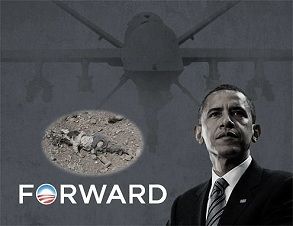
The case of Matt DeHart, a former U.S. drone pilot turned hacktivist, is as strange as it is disturbing. The 29-year-old was recently denied asylum in Canada, having fled there with his family after — he claims — he was drugged and tortured by agents of the FBI, who accused him of espionage and child pornography.
Prosecutors have shown they’re willing to say anything to convict a hacktivist, even if it means lying
Last week the Canadian Border Services Agency said he will be deported to the U.S. to stand trial “in very short order,” after a Canadian Immigration and Refugee Board ruling earlier this month denying his request for refugee status. He is being denied access to two thumb drives that he says contain evidence of illegal acts perpetrated by a U.S. government agency. Now after three unsuccessful attempts to gain political asylum, he fears that he and the files will be delivered to the very government he sought to escape.
“I cannot imagine any life in a country which has already tortured me,” Matt DeHart told reporter Adrian Humphreys, whose astonishing five-part series in Canada’s National Postdocuments the bizarre case. “Am I now to be given into the hands of my torturers?”
It’s tempting to dismiss DeHart’s claims based on their sheer outlandishness and his equally outlandish attempts to defect to Russia and Venezuela, which he now says he regrets. But given President Barack Obama’s administration’s penchant for punishing hacktivists and whistleblowers, a disturbing decades-long trend of prosecutorial misconduct and the now established fact that the U.S. has, as Obama put it, “tortured some folks,” it’s clear that the U.S. government’s claims in this case warrant even more skepticism.
Matt DeHart
According to government documents, Matt DeHart admitted during an interrogation to becoming involved with a spy ring during his time as a drone pilot, agreeing to broker the sale of military secrets for up to $100,000 per month through a Russian agent in Canada. But he claims he was being drugged and tortured and simply made the story up.
“I would have told them anything,” he told The National Post of his encounter with the FBI agents, during which he was denied a lawyer. “Information that is derived from torture — to use it against somebody is ridiculous. It’s garbage. I already said it’s not true.”
He testified that the agents admitted the child porn charges were fabricated — a ruse to enable investigation into his involvement with the nebulous hacktivist collective Anonymous. He says the investigation stems from a file he uploaded twice to a hidden website, hosted on the anonymous Tor network from a server in his parents’ house. DeHart claims it contained evidence of government wrongdoing, “an FBI investigation into the [CIA’s] practices.” Screen shots of the WikiLeaks website found on his computer suggest he intended to send the file to the whistleblowing organization.
After the asylum ruling earlier this month, three courts — two in the U.S. and one in Canada — have expressed strong doubts about the child pornography charges that triggered a search warrant onMatt DeHart’s parents’ home in the U.S. Those accusations date to 2008 and stemmed from his association with two teenagers while playing the online game “World of Warcraft,” one of whom was also involved with Anonymous; the charges were ultimately not proved.
After DeHart was arrested while crossing from Canada to the U.S. in 2010, a judge in Bangor, Maine, found it odd that prosecutors were suddenly citing the two-year-old porn accusations and that police hadn’t analyzed Matt DeHart computers for illicit files seven months after they were seized. A judge in Tennessee, where Matt DeHart ‘s family lived before moving to Canada, admitted that “the weight of the evidence is not as firm as I thought it was.” And most recently, the Canadian Immigration and Refugee Board concluded there was “no credible or trustworthy evidence” that DeHart had solicited child porn.
Prosecutorial misconduct helps the government railroad journalists, whistleblowers, hacktivists and any who dare to speak truth to power.
To be sure, Matt DeHart strange behavior throughout this ordeal doesn’t place him in a particularly flattering light. But it’s worth noting that these kinds of serious accusations are often made in cases against hacktivists and whistleblowers, helping place them in the government’s crosshairs and paint them as nefarious even when the accusations are easily disproved.
Barrett Brown, a journalist who investigated links between the U.S. government and private intelligence contractors, had all manner of ridiculous false accusations thrown at him before being sentenced last month to five and a half years in prison. He was initially charged for the innocuous act of copying and pasting a hyperlink to a public file stolen by Anonymous from one chat room into another. The charge was dropped, but the linking was still used to increase the length of his sentence, despite the fact that prosecutors had no evidence Brown had looked at the file or even known what was in it.
At one point, prosecutors claimed that Brown conspired with members of Anonymous to overthrow the U.S. government. They also accused him of participating in “SWATting,” the practice of making fake 911 calls to harass people in their homes, and even of plotting with another journalist to hack the Bahraini government. Not one of these claims was supported by the voluminous collection of chat logs that the government provided as evidence. Nor did additional logs obtained by The Daily Dot, which the prosecution had withheld under seal.
Brown was not entirely without fault in the case, having obstructed a search warrant and posted a YouTube video threatening an FBI agent in response to the seizure of his laptops. But in retrospect, it seems clear the impetus for the case was that the government saw Brown’s investigations as a threat and would say anything to guarantee his conviction, even if that meant knowingly making false statements. As Brown put it during his allocution, “This is not the rule of law … It is the rule of law enforcement.”
Close scrutiny
What can we expect from the Matt DeHart case if this is the prosecutorial legacy it follows?
As The New York Times editorial board recently noted, defendants have no recourse when police and prosecutors lie, cheat and conceal evidence in the courtroom, leading to what one federal judge has described (PDF) as a national epidemic of prosecutorial misconduct. Sometimes it leads to wrongful convictions. Other times, as in Brown’s case, it helps the government railroad journalists, whistleblowers, hacktivists and any who dare to speak truth to power.
Remember Aaron Swartz, an information activist who prosecutors pursued vigorously for the act of downloading too many academic articles from an MIT library? Much like in Brown’s case, prosecutors were accused of withholding evidence and coercing Swartz into taking a guilty plea. Swartz committed suicide in 2013 amid mounting legal costs and the possibility of up to 35 years in prison, triggering the DeHarts’ decision to flee the country.
“Aaron Swartz had very similar psychological makeup, similar age, same circumstances as Matt DeHart,” DeHart’s father, Paul DeHart, a retired U.S. Air Force major, told The National Post. “I do not want to wake up one day and find my son hanging from a rope in the garage of our house. And I have noplace to go to bring this to anyone’s attention.”
With Matt DeHart’s attempted defections and other erratic behavior, it’s admittedly difficult to determine where his true intentions lie. But the government’s actions against him have been just as sketchy, if not more so. His claims must be taken seriously, and his case should be closely scrutinized, lest another potential whistleblower fall prey to the state’s merciless war on leaks.
by Joshua Kopstein, a cyberculture journalist and researcher from New York City. His work focuses on Internet law and disorder, surveillance and government secrecy.
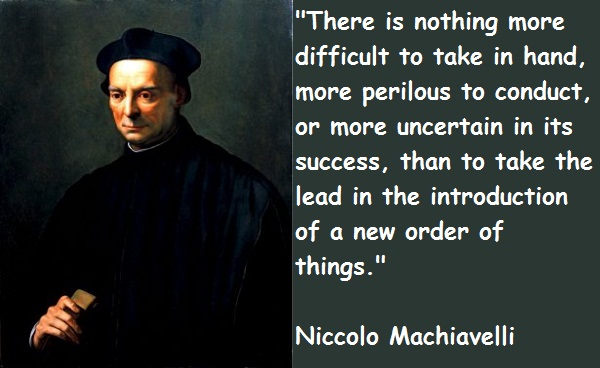
The popular views attributed to Niccolo Machiavelli are not actually his own. Having not actually read him, the assumption by many is that he is known for advocating the notion that the ends justify any means, while rulers of state must have no scruples in achieving their ends. While Machiavelli was a pragmatist in many respects, his positions place him firmly within the classical Western tradition of statecraft. As a Renaissance thinker, the desire to revive classical Greek and Roman learning was in fashion, and it is within that milieu that we must situate him. He does not advocate tyranny and abuse, and his insights on intrigue, subterfuge and conspiracy illuminate and rebuke many of the errors of our degenerate, effeminate gaggle of so-called leaders. Machiavelli’s The Prince is well-known, but few are familiar with his Art of War and The Discourses, which contain a wealth of knowledge about the workings of the state and strategic designs, and it is to all of these we must look to gain deeper insight.
In The Discourses, Machiavelli describes the cycle through which most civil states go, from oligarchy to revolution to democracy to anarchy. Revolutionaries should take note, as the “revolution” they often seek to inflame often ends up bringing an even worse tyranny to follow. Revolutionaries, unfortunately, are not historically known for a keen understanding of human nature, allowing their ideals to override the real, and as a result, the Marxist state for example, finds itself frustrated and collapsing from within. Add to this the fact that most historical revolutionaries have been the tools of foreign and economic interests, and one begins to see why the pattern persists. We can also see something akin to the future ideas of Oswald Spengler, where patterns and cycles are crucial, timeless phenomenon for historical analysis.
Machiavelli writes of the cycle of the state in The Discourses on Livy, Book I:
“Having proposed to myself to treat of the kind of government established at Rome, and of the events that led to its perfection, I must at the beginning observe that some of the writers on politics distinguished three kinds of government, viz. the monarchical, the aristocratic, and the democratic; and maintain that the legislators of a people must choose from these three the one that seems to them most suitable. Other authors, wiser according to the opinion of many, count six kinds of governments, three of which are very bad, and three good in themselves, but so liable to be corrupted that they become absolutely bad. The three good ones are those which we have just named; the three bad ones result from the degradation of the other three, and each of them resembles its corresponding original, so that the transition from the one to the other is very easy. Thus monarchy becomes tyranny; aristocracy degenerates into oligarchy; and the popular government lapses readily into licentiousness. So that a legislator who gives to a state which he founds, either of these three forms of government, constitutes it but for a brief time; for no precautions can prevent either one of the three that are reputed good, from degenerating into its opposite kind; so great are in these the attractions and resemblances between the good and the evil.”
We see here a realistic perspective inherited from the ancients. All governments are liable to corruption and tyranny, although some more than others. The pattern for degeneration is monarchy becoming a tyranny, aristocracy becoming and oligarchy, and democracy becoming anarchy. This pattern also hearkens to Aristotle, who made a similar list in his Politics. History has seen many states, but all fall into these same basic forms. While some governments are certainly better in form than others, nothing can halt a corrupt, degenerate elite and populace from collapsing when moral degeneracy and corruption reign. However, there is an important realist corrective to modernity and progressive thinking here that cannot be passed over, which is that the reason for the collapse of any state is not the form of government itself, but the rise of corruption in men’s hearts. Modern liberalism, which is still the norm among most, in praxis at least, assumes that the solution to problems arises from changes in law and government. If we can only change our political leaders and get a new crop in! If we can only change the law to get proposition 666 passed, why then we would have our freedom and progress! Nothing could be further from the truth, as the problem ultimately lies not in externals, but in man’s own heart. Corruption is rooted in, and proceeds from, individuals and their decisions, not from external forms and systems. Classical liberalism and modern liberalism are rooted in the metaphysical error of attributing the location of evil in some institution, and not in man’s own decisions.
In this regard, Machiavelli is a pessimist with respect to human nature. While the Renaissance is often lauded for its high view of human nature adopted from the Greeks, Machiavelli does not see the populace as able to govern themselves. Heavily influenced by St. Augustine, Niccolo’s negative appraisal of human nature places him in a non-democratic tradition of classical republicanism. While critical of monarchy due to its liability to fall into tyranny through its hereditary descendants, it is certainly not the worst form of government, which is democracy. Early seeds of the U.S. Constitution can also be seen here, as Machiavelli is one of the most famous proponents of republicanism of the Italian tradition, and Madison and Hamilton had clearly read and been influenced by the Florentine thinker, as The Federalist Papersappear to show. Elucidating the cycle of collapse, Machiavelli comments, with hints of the nascent social contract theory:
“Chance has given birth to these different kinds of governments amongst men; for at the beginning of the world the inhabitants were few in number, and lived for a time dispersed, like beasts. As the human race increased, the necessity for uniting themselves for defence made itself felt; the better to attain this object, they chose the strongest and most courageous from amongst themselves and placed him at their head, promising to obey him. Thence they began to know the good and the honest, and to distinguish them from the bad and vicious; for seeing a man injure his benefactor aroused at once two sentiments in every heart, hatred against the ingrate and love for the benefactor. They blamed the first, and on the contrary honored those the more who showed themselves grateful, for each felt that he in turn might be subject to a like wrong; and to prevent similar evils, they set to work to make laws, and to institute punishments for those who contravened them. Such was the origin of justice. This caused them, when they had afterwards to choose a prince, neither to look to the strongest nor bravest, but to the wisest and most just. But when they began to make sovereignty hereditary and non-elective, the children quickly degenerated from their fathers; and, so far from trying to equal their virtues, they considered that a prince had nothing else to do than to excel all the rest in luxury, indulgence, and every other variety of pleasure. The prince consequently soon drew upon himself the general hatred. An object of hatred, he naturally felt fear; fear in turn dictated to him precautions and wrongs, and thus tyranny quickly developed itself. Such were the beginning and causes of disorders, conspiracies, and plots against the sovereigns, set on foot, not by the feeble and timid, but by those citizens who, surpassing the others in grandeur of soul, in wealth, and in courage, could not submit to the outrages and excesses of their princes.
Under such powerful leaders the masses armed themselves against the tyrant, and, after having rid themselves of him, submitted to these chiefs as their liberators. These, abhorring the very name of prince, constituted themselves a new government; and at first, bearing in mind the past tyranny, they governed in strict accordance with the laws which they had established themselves; preferring public interests to their own, and to administer and protect with greatest care both public and private affairs. The children succeeded their fathers, and ignorant of the changes of fortune, having never experienced its reverses, and indisposed to remain content with this civil equality, they in turn gave themselves up to cupidity, ambition, libertinage, and violence, and soon caused the aristocratic government to degenerate into an oligarchic tyranny, regardless of all civil rights. They soon, however, experienced the same fate as the first tyrant; the people, disgusted with their government, placed themselves at the command of whoever was willing to attack them, and this disposition soon produced an avenger, who was sufficiently well seconded to destroy them.
The memory of the prince and the wrongs committed by him being still fresh in their minds, and having overthrown the oligarchy, the people were not willing to return to the government of a prince. A popular government was therefore resolved upon, and it was so organized that the authority should not again fall into the hands of a prince or a small number of nobles. And as all governments are at first looked up to with some degree of reverence, the popular state also maintained itself for a time, but which was never of long duration, and lasted generally only about as long as the generation that had established it; for it soon ran into that kind of license which inflicts injury upon public as well as private interests. Each individual only consulted his own passions, and a thousand acts of injustice were daily committed, so that, constrained by necessity, or directed by the counsels of some good man, or for the purpose of escaping from this anarchy, they returned anew to the government of a prince, and from this they generally lapsed again into anarchy, step by step, in the same manner and from the same causes as we have indicated. Such is the circle which all republics are destined to run through.”
The cycle of collapse for the republic is similar to that of other forms of government, but is all the more relevant for our present day. Since the French Revolution, the majority of the world’s states operate under the auspices of being “republics,” but there is an important distinction to be made that Machiavelli could have never foreseen: global shadow government. In fact, it is Machiavellian realism that leads one to easily understand that our world is governed by international shadow entities that utilize nation states as fronts. We are far beyond the era of the outdated nation-state going to war against rival nation-state – ours is the era of global oligarchical cartels in competition, with the Anglo-American establishment currently at the top. Cartels and empires have always existed, but the world has never seen a global secret technocratic shadow government, and in that respect, we are in a unique situation. The issues of corruption and degeneracy, are not new, but even more rampant than anything in Machiavelli’s day, precisely because there are newer, more sophisticated means of technological tyranny and evil than in any previous age. We can see from this classical perspective that conspiracies and espionage are not surprising – they are synonymous with perennial statecraft.
On conspiracies, Machiavelli explains in The Prince:
“But concerning his subjects, when affairs outside are disturbed he has only to fear that they will conspire secretly, from which a prince can easily secure himself by avoiding being hated and despised, and by keeping the people satisfied with him, which it is most necessary for him to accomplish, as I said above at length. And one of the most efficacious remedies that a prince can have against conspiracies is not to be hated and despised by the people, for he who conspires against a prince always expects to please them by his removal; but when the conspirator can only look forward to offending them, he will not have the courage to take such a course, for the difficulties that confront a conspirator are infinite. And as experience shows, many have been the conspiracies, but few have been successful; because he who conspires cannot act alone, nor can he take a companion except from those whom he believes to be malcontents, and as soon as you have opened your mind to a malcontent you have given him the material with which to content himself, for by denouncing you he can look for every advantage; so that, seeing the gain from this course to be assured, and seeing the other to be doubtful and full of dangers, he must be a very rare friend, or a thoroughly obstinate enemy of the prince, to keep faith with you.
And, to reduce the matter into a small compass, I say that, on the side of the conspirator, there is nothing but fear, jealousy, prospect of punishment to terrify him; but on the side of the prince there is the majesty of the principality, the laws, the protection of friends and the state to defend him; so that, adding to all these things the popular goodwill, it is impossible that any one should be so rash as to conspire. For whereas in general the conspirator has to fear before the execution of his plot, in this case he has also to fear the sequel to the crime; because on account of it he has the people for an enemy, and thus cannot hope for any escape….
For this reason I consider that a prince ought to reckon conspiracies of little account when his people hold him in esteem; but when it is hostile to him, and bears hatred towards him, he ought to fear everything and everybody. And well-ordered states and wise princes have taken every care not to drive the nobles to desperation, and to keep the people satisfied and contented, for this is one of the most important objects a prince can have.”
Here Niccolo expounds the heart of conspiracy from the perspective of the ruler. Conspiracy need only be feared when the ruler is hated as a result of his tyranny or sadistic cruelty. Fear is a crucial key in the arsenal of the state, but fear must be tempered by virtue and security, and the imbalance in either direction leads to sedition from others and conspiracies become successful. For the ruler, conspiracy the maintenance of goodwill among subjects is obtained through the management of public perception and genuine goodwill by the ruler. It is not a license for doing anything and everything to maintain power, as many wrongly accuse Machiavelli, but as a balance of mercy and severity, and that power is maintained by fear. Contrary to popular opinion, Machiavelli firmly rebukes the notion of immorality and devious designs, opting instead for an approach of balance, with the ruler’s reputation standing on its own through virtue. Any other imbalance leads the ruler to fall prey to his own vices and overthrown by his own self-destructive folly.
Roman Catholicism through St. Augustine and classical virtue ethics also factor into Machiavelli’s tempering of the prince as it did for medieval warfare as a whole. This comes to the fore in his lesser known Art of War that was the first treatise on modern warfare that would revolutionize the field. For ancient and medieval leaders, the state, espionage, warfare and its deceptions, and the game of politics were considered “arts” that could only be mastered through study and practice. Systematizing everything from military camps, music, flags and colors, size and ranks, Machiavelli revolutionized the medieval army to become a hierarchical standard that would be the norm for future Europe. On another level, it also contains interesting aspects relating to psychological warfare, espionage and deception that are instructive for us in our day that help to grasp the level of deception we live under. The ancient arts of statecraft and deception are not forgotten, they have been perfected and through a high-tech overlay, are beyond anything Niccolo could have imagined.
He writes:
“Birds or dust have often discovered the enemy, for where the enemy comes to meet you, he will always raise a great dust which will point out his coming to you. Thus often a Captain when he sees in a place whence he ought to pass, pigeons taking off and other birds flying about freely, circling and not setting, has recognized this to be the place of any enemy ambush, and knowing this has sent his forces forward, saving himself and injuring the enemy. As to the second case, being drawn into it ((which our men call being drawn into a trap)) you ought to look out not to believe readily those things that appear to be less reasonable than they should be: as would be (the case) if an enemy places some booty before you, you would believe that it to be (an act of) love, but would conceal deceit inside it.”
Book VI is the best section for these machinations, and in it we see the following perennial tactics:
Consult a rising enemy or possible sedition to give the impression of heeding his ideas and win him by feigned interest
Send wise men into the enemy’s camp as fake attendants of a fake dignitary to assess the enemy
Use false defectors to be spies in the enemy’s camp
Conversely, capture the enemy’s commanders to gain intelligence on the opponent
If you have suspected spies in your camp, disseminate false information to various parties to see how the enemy reacts to which
Sacrifice a town or some pawns as a gambit to give the enemy a false sense of security
Utilize religious and superstitious omens as far as your soldiers revere them or invent them
Disguise your soldiers as the enemy
Give the appearance of retreat to lead the enemy into a trap
Leave an open encampment for the enemy with fresh, albeit poisoned, supplies
Never cause an enemy to despair, since he will only fight more desperately and possibly defeat you
Use a subterfuge of a fake illness in your camp that leads the enemy to think you are weak
Communicate among your generals and men with secret ciphers and codes the enemy cannot decode
Use propaganda and stories to create a boost of morale among your men
Many more could be listed, but these are the most interesting and in our day, these tricks are used by the elite, not on foreign powers primarily, but as the bases for mass deception, with a massive surveillance state, poisoned food and water, false media reports, and countless other ruses. One might think from this list Machiavelli is immoral and devious, but for him, these are necessary facts of war with the enemy, not on the populace itself. The goal of war is not virtue for him, but simply to win at all costs. Yet winning at all costs does not mean being sadistic or cruel or a brute, it means learning the art of war to be a just ruler and by so doing, win the admiration of your soldiers and homeland. Far from corruption, Machiavelli castigated the corrupt leaders of his day and it serves as an apt warning to ours. Corruption and effeminate degeneracy among the elite does not lead to power, it leads to the loss of power. As far as one concedes to evil and vice in his own heart, especially the ruler, to that degree does he lose his power and become subservient to the passions.
He concludes:
“But let us turn to the Italians, who, because they have not wise Princes, have not produced any good army; and because they did not have the necessity that the Spaniards had, have not undertaken it by themselves, so that they remain the shame of the world. And the people are not to blame, but their Princes are, who have been castigated, and by their ignorance have received a just punishment, ignominiously losing the State, (and) without any show of virtu….
Our Italian Princes, before they tasted the blows of the ultramontane wars, believed it was enough for them to know what was written, think of a cautious reply, write a beautiful letter, show wit and promptness in his sayings and in his words, know how to weave a deception, ornament himself with gems and gold, sleep and eat with greater splendor than others, keep many lascivious persons around, conduct himself avariciously and haughtily toward his subjects, become rotten with idleness, hand out military ranks at his will, express contempt for anyone who may have demonstrated any praiseworthy manner, want their words should be the responses of oracles; nor were these little men aware that they were preparing themselves to be the prey of anyone who assaulted them.”
Avram Noam Chomsky (/ˈnoʊmˈtʃɒmski/; born December 7, 1928) is an American linguist, philosopher,[21][22]cognitive scientist,logician,[23][24][25] political commentator and activist. Sometimes described as the “father of modern linguistics”,[26][27] Chomsky is also a major figure in analytic philosophy.[21] He has spent most of his career at the Massachusetts Institute of Technology (MIT), where he is currently Professor Emeritus, and has authored over 100 books. He has been described as a prominent cultural figure, and was voted the “world’s top public intellectual” in a 2005 poll.[28]In the 1990s, Chomsky embraced political activism to a greater degree than before.[113His far-reaching criticisms of U.S. foreign policy and the legitimacy of U.S. power have raised controversy.[114][115] Chomsky has received death threats because of his criticisms of U.S. foreign policy.[116] He has often received undercover police protection at MIT and when speaking on the Middle East, although he has refused uniformed police protection.[117]The Electronic Intifada website claims that theAnti-Defamation League “spied on” Chomsky’s appearances, and quotes Chomsky as being unsurprised at that discovery or the use of what Chomsky claims is “fantasy material” provided to Alan Dershowitz for debating him. Amused, Chomsky compares the ADL’s reports to FBI files.[118]
Chomsky resides in Lexington, Massachusetts, and travels, giving lectures on politics and linguistics.
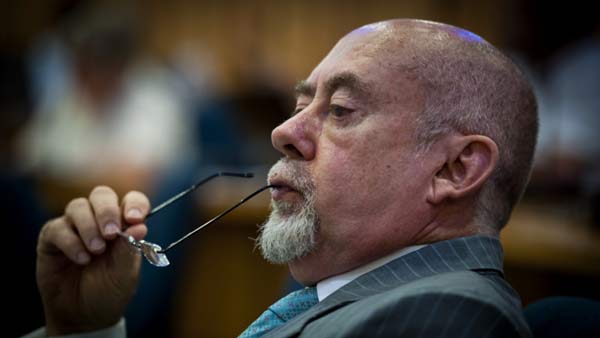
Following leads on the anthrax trail took us across four continents – filming outside the high security perimeter fences of some of the world’s most secret germ war labs (and inside a couple), tracking down and talking to experts and scientists some of whom were members of the so called “International Bio-Weapons Mafia”. None was more chilling than the face to face we got with the man they call Doctor Death – Wouter Basson, the army scientist who headed apartheid South Africa’s secret germ war program – Project Coast.
Shrouded in mystery and hidden behind front companies that used worldwide intelligence connections, the shocking activities of the program only emerged after the fall of apartheid – revealing a shockingly sophisticated operation that had 200 scientists developing germ war agents to be used against the country’s black population.
This was one of the very few interviews Doctor Death has given and for the first time he talks candidly about the help the received from the West, his relationship with David Kelly and the creation of “the Black Bomb” an agent that could sterilize blacks without their knowledge.
And then there’s his strange relationship with Larry Ford, the Mormon gynecologist to Hollywood stars who was also moonlighting for the South Africans and had CIA connections.
Some experts are wondering whether Doctor Deaths’s program provided a convenient off-shore operation for Western germ war experimentation?
Operating out of South Africa during the Apartheid era in the early 1980’s, Dr. Wouter Basson launched a secret bioweapons project called Project Coast. The goal of the project was to develop biological and chemical agents that would either kill or sterilize the black population and assassinate political enemies. Among the agents developed were Marburg and Ebola viruses.
Basson is surrounded by cloak and dagger intrigue, as he told Pretoria High court in South Africa that “The local CIA agent in Pretoria threatened me with death on the sidewalk of the American Embassy in Schoeman Street.” According to a 2001 article in The New Yorker magazine, the American Embassy in Pretoria was “terribly concerned” that Basson would reveal deep connections between Project Coast and the United States.
In 2013, Basson was found guilty of “unprofessional conduct” by the South African health council.
Bioweapons expert Jeanne Guillemin writes in her book Biological Weapons: From the Invention of State-Sponsored Programs to Contemporary Bioterrorism, “The project‘s growth years were from 1982 to 1987, when it developed a range of biological agents (such as those for anthrax, cholera, and the Marburg and Ebola viruses and for botulinum toxin)…“
Basson’s bioweapons program officially ended in 1994, but there has been no independent verification that the pathogens created were ever destroyed. The order to destroy them went directly to Dr. Basson. According to the Wall Street Journal, “The integrity of the process rested solely on Dr. Basson’s honesty.”
Basson claims to have had contact with western agencies that provided “ideological assistance” to Project Coast. Basson stated in an interview shot for the documentary Anthrax War that he met several times with Dr. David Kelly, the infamous UN weapons inspector in Iraq. Kelly was a top bioweapons expert in the United Kingdom. He was found dead near his home in Oxfordshire in 2003. While the official story claims he committed suicide, medical experts highly doubt this story.
In a 2007 article from the Mail Online, it was reported that a week prior to his death, Dr. Kelly was to be interviewed by MI5 about his ties to Dr. Basson.
Dr. Timothy Stamps, Minister of Health of Zimbabwe, suspected that his country was under biological attack during the time that Basson was operating. Stamps told PBS Frontline in 1998 that “The evidence is very clear that these were not natural events. Whether they were caused by some direct or deliberate inoculation or not, is the question we have to answer.”
Stamps specifically named the Ebola and Marburg viruses as suspect. Stamps thinks that his country was being used as a testing ground for weaponized Ebola.
“I’m talking about anthrax and cholera in particular, but also a couple of viruses that are not endemic to Zimbabwe [such as] the Ebola type virus and, we think also, the Marburg virus. We wonder whether in fact these are not associated with biological warfare against this country during the hostilities…Ebola was along the line of the Zambezi [River], and I suspect that this may have been an experiment to see if a new virus could be used to directly infect people.”
The Ghanaian Times reported in early September on the recent Ebola outbreak, noting connections between Basson and bioweapons research. The article points out that, “…there are two types of scientists in the world: those who are so concerned about the pain and death caused to humans by illness that they will even sacrifice their own lives to try and cure deadly diseases, and those who will use their scientific skill to kill humans on the orders of… government…”
Indeed, these ideas are not new. Plato wrote over 2,000 years ago in his work The Republic that a ruling elite should guide society, “…whose aim will be to preserve the average of population.” He further stated, “There are many other things which they will have to consider, such as the effects of wars and diseases and any similar agencies, in order as far as this is possible to prevent the State from becoming either too large or too small.”
As revealed by The Age, Nobel prize winning Australian microbiologist Sir Macfarlane Burnet secretly urged the Australian government in 1947 to develop bio weapons for use against the “overpopulated countries of South-East Asia.” In a 1947 meeting with the New Weapons and Equipment Development Committee, the group recommended that “the possibilities of an attack on the food supplies of S-E Asia and Indonesia using B.W. agents should be considered by a small study group.”
This information gives us an interesting perspective on the recent unprecedented Ebola outbreak. Is it an organic natural phenomenon? Did this strain of Ebola accidentally escape from a bioweapons lab? Or, was it deliberately released?
Israel is under an obligation to terminate its breaches of international law; it is under an obligation to cease forthwith the works of construction of the wall being built in the Occupied Palestinian Territory, including in and around East Jerusalem, to dismantle forthwith the structure therein situated, and to repeal or render ineffective forthwith all legislative and regulatory acts relating thereto, in accordance with paragraph 151 of this Opinion; -International Court of Justice in the Hague Press Release 2004/28
Speaking engagement :The Intifada within the American, Israeli, Islamic Triangle was a debate that took place on the 8th of November 1989 at the University of Pennsylvania .
Sponsored by The International Student Council
Co-Sponsored by: Senior VP for Research and Dean of the Graduate School, Vice Provost and Dean of Undergraduate Education, School of Communications, Middle East Studies Comittee, University Office of International Prgorams, Department of Political Science, Department of History.
We partnered with “Weird Al” to create this music video for his new album, “Mandatory Fun.” Also featuring Patton Oswalt, Tom Lennon, and Robert Ben Garant.
“Weird Al” Yankovic’s new album Mandatory Fun out now: http://smarturl.it/MandatoryFun
See more http://www.collegehumor.com
LIKE us on: http://www.facebook.com/collegehumor
FOLLOW us on: http://www.twitter.com/collegehumor
FOLLOW us on: http://www.collegehumor.tumblr.com
Cast
Cooking Show Host “Weird Al” Yankovic
Stage Manager Patton Oswalt
CIA Agent Thomas Lennon
CIA Agent Ben Garant
Cameraman 1 Will McLaughlin
Cameraman 2 Mike Still
Backup Singer Kathryn Burns
Backup Singer Elaine Carroll
Backup Singer Andree Vermuelen
Waiter Jose Perales
Stand In (Patton Oswalt) John Medrano
Boom Op Nick Mundy
Clapper David Futernick
Restaurant Patron David Chernavsky
Restaurant Patron Nicole Cleaveland
Restaurant Patron Ify Nwadiwe
Restaurant Patron Greg Stees
Restaurant Patron Kenny Sharman
Restaurant Patron Ray Timmons
Restaurant Patron Yanick Thomassaint
Crew
Position Name
Director Al Yankovic
Writer Al Yankovic
Producer Jon Wolf
Cinematography Clyde Smith
Editor Al Yankovic
Big Breakfast President of Original Content Sam Reich
Big Breakfast VP of Production/ Executive Producer Spencer Griffin
Director of Production Sam Sparks
Director of Post Production Michael Schaubach
Production Manager Sam Kirkpatrick
Casting Director Chrissy Fiorilli-Ellington
Production Designer Dan Butts
Costume Designer Leah Piehl
Lead Hair and Makeup Sean James
HMU Asst Diana Barton
HMU Asst Kaho Chan
HMU Asst Cassie Lyons-Marquez
Script Supervisor Carly Romberg
Production Coordinator Michele Santoro
1st Assistant Director Matt McKinnon
2nd Assistant Director Harrison Woliner
Art Department Coordinator Pamela Barba
Set Decorator Laura Harper
On Set Jon Boyday
Leadman Christopher Yager
Construction Matthew Berry
Art PA Jonathan Carnevale
Playback Operator JP Robelot for BoTown Sound
Visual Effects Gloo Studios
Motion Graphics Artist Bill Bergen
Assistant Motion Graphics Artist Pedro Mendoza
1st Assistant Camera Ian Jay
2nd Assistant Camera / DiT Brittany Barber
Gaffer Zack Savitz
Key Grip Chris Rauch
Best Boy Electric Tim Davis
Best Boy Grip Matt Rodgers
Electric Blake Engel
Grip Chris Rojas
Wardrobe PA Sara Kannberg
Seamstress Rosie Alvarez
Choreographer Kathryn Burns
Post Production Supervisor Evan Watkins
Post Production Coordinator Andrew Mallonee
Head Assistant Editor Phil Fox
Post Production Sound Mix Michael McAlister
Production Legal Karen Segall
Production Accountant Christine Rodriguez
1st Assistant Production Accountant Shay Parsons
2nd Assistant Production Accountant Rebecca Call
Set Photographer Robyn Von Swank
Set PA Devin Hassan
Intern Scott Gallopo
Intern Sara Reihani
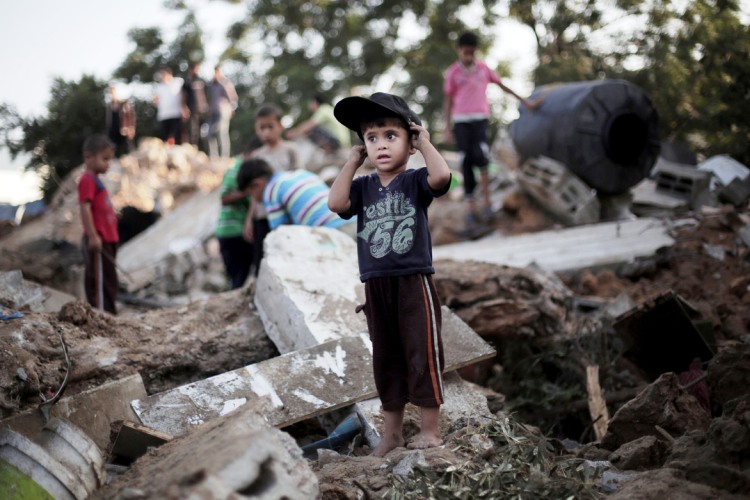
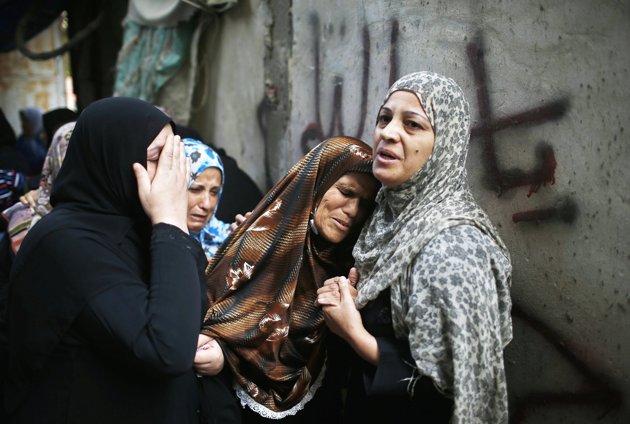
Today Israel carried out aerial strikes in Gaza targeting a mosque it claims was hosting rockets, a disabled care center and a geriatric urgent care hospital, where international volunteers have since rushed to shield patients.
In the deadliest strike yet, the home of Gaza’s police chief was also bombed, killing 18 members of his family.
These horrors are just the latest examples of death and destruction being wreaked amidst Israel’s five day long bombing campaign dubbed ‘Operation Protective Edge’.
Since the beginning of the offensive, at least 150 Palestinians have been killed and over 1,000 more injured. Thousands of homes have been utterly destroyed. No Israelis have yet died from a Hamas launched rocket.
Yet despite the disproportionality of the brutality, the establishment media continues to distort the truth by painting Hamas as the sole aggressor.
From FOX‘s ‘Gaza Rockets Aimed at Israel: What Would you Do with Just 15 Seconds?’ to liberal alt-news site VOX‘s ‘The Tragedy Never Ends, Palestinian Rockets Force Israeli Peace Conference to Evacuate’ to even Human Rights Watch, a human rights organization that is supposed to be unbiased in its criticism of atrocities, which leads with ‘Indiscriminate Palestinian Rocket Attacks’.
But perhaps most disturbing is the initial headline crafted by The New York Timesdescribing an Israeli missile bombing a cafe in Gaza packed with Palestinians watching the World Cup:
Missile at Beachside Gaza Cafe Finds Patrons Poised for World Cup http://t.co/t1N3tag2rf
As journalist Rania Khalek explains in an article dissecting the egregious error:
“Sawyers bald misreporting reflects either a deliberate lie by ABC news or willful ignorance so severe that Palestinian death and misery is invisible even when it’s staring ABC producers right in the face.”
The Western media routinely devalues Palestinian lives, and the dead bodies that stack up every time Israel goes on the offense remain an inconvenient truth for its narrative.
What Israel is actually doing in Gaza – MURDER
Another common misconception thanks to the media’s false depiction of Palestine is that Hamas is a rogue terrorist group, when in reality it is the democratically elected leadership of Gaza. When the IDF claims it only targets Hamas, it could mean any building affiliated with the government or social services provided to Palestinians.
As Noam Chomsky said, this isn’t war, it’s murder:
“When Israelis in the occupied territories now claim that they have to defend themselves, they are defending themselves in the sense that any military occupier has to defend itself against the population they are crushing.”
According to the White House, Israeli Prime Minister Netanyahu is acting ‘responsible’ in his defense of the rocket attacks. Yet the collective punishment of over a million people living in an open-air prison hardly seems as such.
I made a statement recently addressing Israel’s irresponsible barbarism:
Why Doesn’t the Media Care About Dead Palestinians?
Since posting this video, I have been overwhelmed at the feedback and support from thousands of Palestinians around the world. It’s already been featured on one of Turkey’s most popular news websites En Son Haber, Indonesian newspaper Liputan, translated in French on DailyMotion, posted on Arabic newspaper Alwatan Voice and has gone viral on Palestinian TV station Raya FM.
I strongly denounce deadly force on both sides, but it’s important to not frame this as a cycle of violence. One is the colonizer oppressor, the other the colonized oppressed. As IDF General’s son Miko Peled said, Palestinians living in occupied territories have two choices: the completely surrender, or resist – and resistance is what we’re seeing now.
**
Don’t miss Max Blumenthal talking about how the Israeli government hid information on the three murdered teens’ deaths in order to incite violence, racial tensions and justify a military rampage.
Why Gaza is Burning: What the Corporate Media Isn’t Telling You
**
IDF General’s son Miko Peled talks about the latest siege on Gaza and why Israel should decolonize Palestine and end the apartheid regime if it doesn’t like getting shot at with rockets.
IDF General’s Son: If Israel Doesn’t Like Rockets, Decolonize Palestine
**
Earlier this year, Secretary of State John Kerry came under fire for saying that Israel could turn into an apartheid state if reforms aren’t made. I outline five reason why it already is one.
5 Reasons Why Israel is an Apartheid State
**
When Israel launched its 2012 military offensive dubbed ‘Operation Pillar of Defense’, the IDF knowingly bombed a journalist tower in Gaza that housed RT among other foreign news networks. I responded to the war crime on Breaking the Set.
Many Americans think the clock starts with Hamas rockets every time Israel carries out a military operation, without realizing the history of the occupation and roots of the conflict. Here’s a brief breakdown.
Even the mightiest have their come-uppance when their internal logic spews out destructiveness returning on the self—“blowback” in a way perhaps not seen before. I refer to James Risen’s extraordinary article in the New York Times, “Before Shooting in Iraq, a Warning on Blackwater,” (June 30), in which the customary meaning of “blowback” refers to policies, e.g., the invasions of Iraq and Afghanistan, the confrontation with Russia over Ukraine, the “pivot” of military power to the Pacific intent on the encirclement, containment, isolation of China, produce unintended, or if intended, still unwelcome, consequences for the initiator of the policy or action.
Thus: Iraq, out-of-control (from the US standpoint, a raging civil war negating massive intervention and alerting the world to America’s hegemonic purposes); Afghanistan, original support of the Taliban against the Soviet Union, resulting in their material strengthening now turned against the US, endangering its power-position in the region; use of Ukraine as a basis for bringing NATO forces to the Russian border, now an overreach which may disrupt the EU and weaken US dominance over it; and blatant confrontation with China, both military and trade, with potential for war leading to nuclear annihilation. The status and role of world policeman is losing its blackjack, its reputation as global bully being challenged through the rise of multiple power-centers and industrial-commercial-financial patterns no longer defined, supervised, indeed controlled, by American global interests and military implementation.
That is blowback in its familiar guise. Less so, the self-chosen instruments of repression spilling out of behemoth’s mouth because America’s dependence on repression to secure its aims makes it dependent as well on the executors of repression, in this case, given the extreme stress on privatization (the core of the monster’s functional existence), Blackwater at your service, a private army on hire to USG for pursuit of the dirty work, deemed necessary, yet, delegated to official forces, the cause of embarrassment and shame. Browbeating indigenous populations, with an overwhelming swagger and display in the grand tradition of conquerors, in addition to protecting representatives of the conquerors, is a mission worthy, as here, of billion dollar contracts to the private militias (euphemism: “security guards”) as insurance the military victory and occupation will hold.
Here Blackwater is, and is treated as, inseparable from the intervention (read: conquest) itself, at times assisting in the fighting on an informal basis—it has not yet been invited to join NATO(!)—but more to the point, the intimidating presence in the post-military phase, as though instilling the message: You Iraqis think the military is bad, well don’t mess around, for far worse awaits you, we former Navy SEALS know nothing can touch us. Our motto might as well be, A Law Unto Ourselves, even USG—beyond the status-of-forces agreement it forced your government to sign—afraid of us. Blowback: the cancer in the bowels of behemoth rapidly spreading to the extremities, spinal column, brain. Soon we shall all be made over in the image of Blackwater, or rather, as Blackwater would like to see, as its actions show, America become, a nation subservient to its thugs, extolling martial glory for its own sake and for the sake of global dominance. Authoritarianism once off the ground knows no limits and demands the complete adherence of its subjects. America has lived with CIA for decades; Blackwater is icing on the cake.
***
Before turning to the evidence contained in James Risen’s article, it is important to see how events from the past are converging on the present. His credentials as a whistleblower are borne out by his previous record (exposure of CIA dirty tricks, in his book State of War, with respect to Iran’s nuclear program) and current circumstances (he faces a possible jail sentence for refusing to disclose, from that account, the identity of an anonymous source). In the Bush doghouse for exposing the use of warrantless wire taps in 2005, and now, Obama contemplating more serious action, jail time for not complying with a DOJ subpoena, possibly leading to an Espionage Act prosecution, for which Obama excels over all of his predecessors combined (liberals, of course, furiously denying the sordid record), Risen not only stares down his persecutors, Obama, Holder, DOJ, but here presents an exposure in some ways more damning of US baseness from the top down, nurturing a murderous nest in the structure of government.
As for the administration hounding, Jonathan Mahler’s New York Times article, “Reporter’s Case Poses Dilemma for Justice Dept.,” (June 27), implies that Risen’s refusal to be intimidated is causing Obama and Holder second thoughts about pushing for his imprisonment. According to John Rizzo, CIA’s acting general counsel, Bush people wanted State of War kept off the market—too late, however. Risen then was subpoenaed to testify against the suspected leaker—and refused. “More than six years of legal wrangling,” in what Mahler terms “the most serious confrontation between the government and the press in recent history,” is coming to a head. Risen “is now out of challenges. Early this month, the Supreme Court declined to review his case, a decision that allows prosecutors to compel his testimony.”
But The Times, in defending its own man, cannot strongly protest, lest it antagonize the White House. Yes, Obama appears to be in a bind: “Though the court’s decision looked like a major victory for the government, it has forced the Obama administration to confront a hard choice. Should it demand Mr. Risen’s testimony and be responsible for a reporter’s being sent to jail? Or reverse course and stand down, losing credibility with an intelligence community that has pushed for the aggressive prosecution of leaks?” If Obama and USG were truly democratic (small “d”), there should not be a choice but only one course of action, moreover reigning in the “intelligence community” serving under their control.
The reporter, I believe reflecting the paper’s view, however, credits the Obama administration with actually weighing alternatives and being capable of making moral choices: “The dilemma comes at a critical moment for an administration that has struggled to find a balance between aggressively enforcing laws against leaking and demonstrating concern for civil liberties and government transparency.” What balance? What concern? Everything points the other way, on both civil liberties (e.g., due process and habeas corpus rights for detainees) and government transparency (simply, a thick protective shield in place, symbolized by the high art of redaction—and, as with Blackwater’s killing sprees, the refusal or half-heartedness about prosecution). Its reporter’s back against the wall, NYT ignores the Espionage Act prosecutions of whistleblowers.
Mahler succinctly describes the reporting: “The failed C.I.A. action at the heart of Mr. Risen’s reporting was intended to sabotage Iran’s nuclear weapons program. Intelligence officials assigned a former Russian scientist who had defected to the United States to deliver a set of faulty blueprints for a nuclear device to an Iranian scientist. But the Russian scientist became nervous and informed the Iranians that the plans were flawed.” One readily appreciates the dangers to the National Security State, especially revelations of the stupidity and dangerousness of its crown jewel, CIA, posed by investigative journalism. The Times, to its everlasting shame, bowed to Coldoleezza Rice’s request to withhold publication of the article. As a Times spokesperson later declared, “We weighed the government’s concerns and the usual editorial considerations and decided not to run the story.” Hence, James Risen—enemy of National Security; he “broke the story” later in State of War. Yet Bush is not the only culprit in this story; Obama ordered two additional subpoenas to force Risen to testify, his DOJ going after him hammer-and-tongs: “After a trial court largely quashed his third subpoena [the first under Bush] in late 2010, the Justice Department successfully challenged the ruling in a federal appeals court, arguing that the First Amendment does not afford any special protections to journalists.” Enough said about the dedication to civil liberties and freedom of the press: “The administration then urged the Supreme Court not to review Mr. Risen’s case.”
***
I have already discussed the mass killings in Nisour Square, Baghdad, in a previous article. Now we learn that this was part of a pattern in Blackwater’s behavior—again, Risen’s reporting. Even for one who is a seasoned critic, it is painful for me to write about. Organized thuggery knows no limits particularly when working for the highest authority, immunity from punishment worn as a badge of honor, as meanwhile government officials hide their eyes. Risen writes, “Just weeks before Blackwater guards fatally shot 17 civilians in Baghdad’s Nisour Square in 2007, the State Department began investigating the security contractor’s operations in Iraq. But the inquiry was abandoned after Blackwater’s top manager there issued a threat: ‘that he could kill’ the government’s chief investigator and ‘no one could or would do anything about it as we were in Iraq,’ according to department reports.” A private contractor threatens the life of a State Department investigator! No reprisal, punishment, cancellation of the contract, not even disclosure of the threat—yet Blackwater still in place years later, as part of the silence on atrocities in the Obama-Hillary era.
Those 17 killed are on America’s hands, bloody hands. There was a clear warning about what to expect: “After returning to Washington, the chief investigator wrote a scathing report to State Department officials documenting misconduct by Blackwater employees and warning that lax oversight of the company, which had a contract worth more than $1 billion to protect American diplomats, had created ‘an environment full of liability and negligence.’” Even more outrageous, Risen notes, the investigators become the criminals gumming up the security works: “American Embassy officials in Baghdad sided with Blackwater rather than the State Department investigators as a dispute over the probe escalated in August 2007, the previously undisclosed documents show. The officials told the investigators that they had disrupted the embassy’s relationship with the security contractor and ordered them to leave the country, according to the reports.”
Jean Richter, lead investigator, wrote, in a memo to the State Department only weeks prior to Nisour Square: “’The management structures in place to manage and monitor our contracts in Iraq have become subservient to the contractors themselves. Blackwater contractors saw themselves as above the law…. ‘hands off’ [management meant that] the contractors, instead of Department officials, are in command and in control.’” Now, nearly seven years later, four Blackwater guards are on trial, facing, if ever convicted, watered down charges, this being “ the government’s second attempt to prosecute the case in an American court [I wonder how serious the effort under Holder and Obama] after previous charges against five guards were dismissed in 2009.” Much of the time this is on Obama’s watch, yet, “despite a series of investigations in the wake of Nisour Square, the back story of what happened with Blackwater and the embassy in Baghdad before the fateful shooting has never been fully told.”
So much for transparency, civil liberties, and prosecuting the crimes of a predecessor (the cardinal rule of presidents, at least this one, cover-up WAR CRIMES past and present, a solemn command of the National Security State). Silence and deniability, in all matters large and small, characterize the responses of USG and private principals: “The State Department declined to comment on the aborted investigation. A spokesman for Erik Prince, the founder and former chief executive of Blackwater, who sold the company in2010, said Mr. Prince had never been told about the matter.” The $1B contract itself testifies to the fusion of patriotism, secrecy, repression, and yes, corporate profit: “After Mr. Prince sold the company, the new owners named it Academi. In early June, it merged with Triple Canopy, one of its rivals for government and commercial contracts to provide private security. The new firm is called Constellis Holdings.” Like war, private security stands to make a killing (pardon the pun), no doubt in flight from the original name for damage-control and public-relations purposes.
Previous to Nisour Square (Sept. 16, 2007) Blackwater guards “acquired a reputation…for swagger and recklessness,” but complaints “about practices ranging from running cars off the road to shooting wildly in the streets and even killing civilians typically did not result in serious action by the United States or the Iraqi government.” After firing in the Square, there was closer scrutiny, the Blackwater claim that they were fired on even US military officials denied, and “[f]ederal prosecutors later said Blackwater personnel had shot indiscriminately with automatic weapons, heavy machine guns and grenade launchers.” To no avail, given the symbiotic relationship between the company and the government. In fact, Blackwater had itself been run by Prince as a nation in microcosm, its people shortly before Nisour Square gathered by him at company headquarters in Moyock, North Carolina and made to “swear an oath of allegiance” like the one required of enlistees in the US military. They were handed copies of the oath, which, after reciting the words, were told to sign.
The State Department investigation into Blackwater in Iraq, which began Aug. 1, 2007 and was slated for one month, led early to the “volatile” situation (including the death threat), our knowledge coming from “internal State Department documents” furnished “to plaintiffs in a lawsuit against Blackwater that was unrelated to the Nisour Square shootings,” seemingly by accident then and fleshed out by Risen. In that month—or that part of it before being forced to leave– the investigators discovered “a long list of contract violations by Blackwater,” staffing changes of security details “without State Department approval,” reducing the number of guards on details, “storing automatic weapons and ammunition in their private rooms, where they were drinking heavily and partying with frequent female visitors,” and, for many, failing “to regularly qualify on their weapons” or “carrying weapons on which they had never been certified” nor “authorized to use.” Extravagance for mayhem abroad, less than peanuts for critical needs at home, education, health care, employment, beyond the means or reach of Imperial grandeur as the national obsession.
In addition to “overbilling the State Department by manipulating its personnel records, using guards assigned to the State Department contract for other work and falsifying other staffing data on the contract,” (no wonder the investigators’ poor reception by Blackwater’s resident head in Iraq), one of its affiliates forced “third country nationals” who did the dirty work at low wages “to live in squalid conditions, sometimes three to a cramped room with no bed,” according to the investigators’ report. Their conclusion: “Blackwater was getting away with such conduct because embassy personnel had gotten too close to the contractor.”
Ah, the denouement; we have a name to go with the face of the project manager who threatened Richter’s life, Daniel Carroll, who said he could kill him without anything happening to himself “as we were in Iraq” (this was witnessed by Donald Thomas, the other investigator), and Richter, in his memo to the Department stated: “I took Mr. Carroll’s threat seriously. We were in a combat zone where things can happen unexpectedly, especially when issues involve potentially negative impacts on a lucrative security contract.” Nicely put, and corroborated by Thomas, who wrote in a separate memo that “others in Baghdad had told the two investigators to be ‘very careful,’ considering that their review could jeopardize job security for Blackwater personnel.” The wonder perhaps is that Richter and Thomas were not prosecuted under the Espionage Act for spoiling the show. It didn’t matter. No one at State listened.
The two men were ordered to leave (Aug 23), and “cut short their inquiry and returned to Washington the next day.” Finally, on Oct. 5, after the Nisour Square scandal, State Department officials responded to Richter’s “August warning,” and took statements from him and Thomas about “their accusations of a threat by Mr. Carroll, but took no further action.” A special panel convened by Rice on Nisour Square “never interviewed Mr. Richter or Mr. Thomas.” The official who led the panel “told reporters on Oct. 23, 2007, that the panel had not found any communications from the embassy in Baghdad before the Nisour Square shooting that raised concerns about contractor conduct.” Voila, vanished in thin air. This State Department officer deserves the last word: “We interviewed a large number of individuals. We did not find any, I think, significant pattern of incidents that had not—that the embassy had suppressed in any way.” And my last word: fascism. Beyond all structural-cultural-societal considerations about wealth-concentration, industrial-financial consolidation, foreign expansion through preponderant power and the spirit of militarism, the rampaging privatization with government consent witnessed here, which has wreaked havoc on another people, only to be covered over by the state, aka, the National Security State, disregarding its Constitutional protections to the individual, as in sponsoring massive surveillance, is enough for me to satisfy the working definition of that single word.
via Norman Pollack has written on Populism. His interests are social theory and the structural analysis of capitalism and fascism. He can be reached at [email protected].
For those who are completely new to the Palantir Platform or could simply use a refresher, this talk will start from scratch and provide a broad overview of Palantir’s origins and mission. A live demonstration of the product will help to familiarize newcomers with Palantir’s intuitive graphical interface and revolutionary analytical functionality, while highlighting the major engineering innovations that make it all possible. -Palantir
Videos have sprung on YouTube alleging that the US private security service formerly known as Blackwater is operating in the eastern Ukrainian city of Donetsk. Western press is hitting back, accusing Russia of fabricating reports to justify “aggression.”
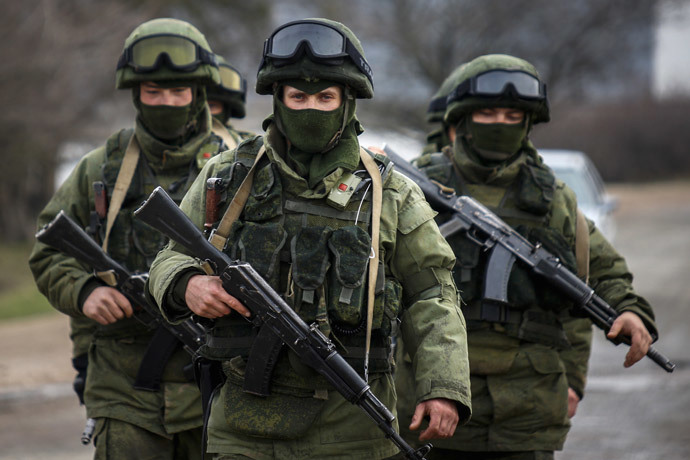
The authenticity of videos allegedly made in downtown Donetsk on March 5 is hard to verify. In the footage, unidentified armed men in military outfits equipped with Russian AK assault rifles and American М4А1 carbines are securing the protection of some pro-Kiev activists amidst anti-government popular protests.
The regional administration building in Donetsk has changed hands many times, with either pro-Russian protesters or pro-Kiev forces declaring capture of the authority headquarters. In the logic of the tape, at some point the new officials appointed by revolutionary Kiev managed to occupy the administration, but then – as the building was surrounded by angry protesters – demanded to secure a safe evacuation.
This is where the armed professionals come in. The protesters, after several moments of shock, start shouting, “Blackwater!,” and “Mercenaries!,” as well as “Faggots!,” and “Who are you going to shoot at?!” But the armed men drive off in the blink of an eye without saying a word.
Surely these men were not Blackwater – simply because such a company does not exist anymore. It has changed its name twice in recent years and is now called Academi.
The latest article on the case, published by the Daily Mail, claims that though these people did look like professional mercenaries, they conducted the operation too openly.
“On the face of it, the uniforms of the people in the videos are consistent with US mercs – they don’t look like Russian soldiers mercs. On the other hand, why run around in public making a show of it?” said DM Dr Nafeez Ahmed, a security expert with the Institute for Policy Research & Development.
“I think the question is whether the evidence available warrants at least reasonable speculation.”
Ahmed also added that “Of course the other possibility is it’s all Russian propaganda.”
Why would Russia need to make such provocation? The Daily Mail explained that “any suggestion that a US mercenary outfit like Blackwater, known now as Academi, had begun operating in east Ukraine could give Russian President Vladimir Putin the pretext for a military invasion.”
Other western media outlets are maintaining that a “Russian invasion” has already began, because the heavily armed military personnel now controlling all major infrastructure in Crimea are “obviously” Russians.
Armed men march outside an Ukrainian military base in the village of Perevalnoye near the Crimean city of Simferopol March 9, 2014.(Reuters / Thomas Peter )
The Daily Beast media outlet went even further. On the last day of February, it published an article alleging that “polite Russians” in Crimea are actually…employees of Russian security service providers.
While there are indeed several military-oriented security service providers in Russia, it however appears highly unlikely that all of them combined could provide personnel for such a wide-scale operation.
At the beginning of the week, Russian state TV reported that several hundred armed men with military-looking bags arrived to the international airport of Kiev.
It was reported that the tough guys are employees of Greystone Limited, a subsidiary of Vehicle Services Company LLC belonging to Blackwater/XE/Academi.
Greystone Limited mercenaries are part of what is called ‘America’s Secret Army,’ providing non-state military support not constrained by any interstate agreements, The Voice of Russia reported.
But they are not the only ones. A Russian national that took part in clashes in Kiev was arrested in Russia’s Bryansk region this week. He made a statement on record that he met a large number of foreigners taking active part in the fighting with police.
He claimed he saw dozens of military-clad people from Germany, Poland, and Turkey, as well as English speakers who were possibly from the US, Russkaya Gazeta reported earlier this week.
“Facts do not cease to exist because they are ignored.” — Aldous Huxley
So who really controls the world?
The Illuminati? Freemasons? The Bilderberg Group?
Or are these all red herrings to distract your prying eyes from the real global elite? The answer, like most topics worth exploring, is not quite so simple. Have no doubt, there aresecretive global powers whose only goal is to keep and grow that power. But it really may not be as secretive as you’d think. And that’s what makes it even more nefarious…
But don’t take my word for it, we have both science and insider testimony to back it up…
We’re going to break this down into three categories: Financial, Political and Media. This is a harder task than you may imagine, since they all work in concert by design.
Financial Elite
Thanks to the science of complex system theory, the answer may actually be right in front of our faces.
This scientific process sheds light on the dark corners of bank control and international finance and pulls some of the major players out from the shadows.
And it goes back to the old credo: Just follow the money…
Systems theorist James B. Glattfelder did just that.
From a massive database of 37 million companies, Glattfelder pulled out the 43,060 transnational corporations (companies that operate in more than one country) that are all connected by their shareholders.
Digging further, he constructed a model that actually displays just how connected these companies are to one another through ownership of shares and their corresponding operating revenues.
The 1318 transnational corporations that form the core of the economy.
Superconnected companies are red, very connected companies are yellow. The size of the dot represents revenue.
I’ll openly admit that this graphic almost scared me off. Complex scientific theories are not my forte, and this looks like some sort of intergalactic snow globe.
But Glattfelder has done a remarkable job of boiling these connections down to the main actors — as well as pinpointing how much power they have over the global market. These “ownership networks” can reveal who the key players are, how they are organized, and exactly how interconnected these powers are.
From New Scientist: Each of the 1318 had ties to two or more other companies, and on average they were connected to 20. What’s more, although they represented 20 per cent of global operating revenues, the 1318 appeared to collectively own through their shares the majority of the world’s large blue chip and manufacturing firms — the “real” economy — representing a further 60 per cent of global revenues.
When the team further untangled the web of ownership, it found much of it tracked back to a “super-entity” of 147 even more tightly knit companies — all of their ownership was held by other members of the super-entity — that controlled 40 per cent of the total wealth in the network.
According to his data, Glattfelder found that the top 730 shareholders control a whopping 80% of the entire revenue of transnational corporations.
And — surprise, surprise! — they are mostly financial institutions in the United States and the United Kingdom.
That is a huge amount of concentrated control in a small number of hands…
Here are the top ten transnational companies that hold the most control over the global economy (and if you are one of the millions that are convinced Big Banks run the world, you should get a creeping sense of validation from this list):
1) Barclays plc
2) Capital Group Companies Inc.
3) FMR Corporation
4) AXA
5) State Street Corporation
6) JPMorgan Chase & Co.
7) Legal & General Group plc
8) Vanguard Group Inc.
9) UBS AG
10) Merrill Lynch & Co Inc.
Some of the other usual suspects round out the top 25, including JP Morgan, UBS, Credit Suisse, and Goldman Sachs.
What you won’t find are ExxonMobil, Microsoft, or General Electric, which I found shocking. In fact, you have to scroll all the way down to China Petrochemical Group Company at number 50 to find a company that actually creates something.
The top 49 corporations are financial institutions, banks, and insurance companies — with the exception of Wal-Mart, which ranks at number 15…
The rest essentially just push money around to one another.
Here’s the interconnectedness of the top players in this international scheme:
Here’s a fun fact about the number one player, Barclays:
Barclays was a main player in the LIBOR manipulation scandal, and were found to have committed fraud and collusion with other interconnected big banks. They were fined $200 million by the Commodity Futures Trading Commission, $160 million by the United States Department of Justice and £59.5 million by the Financial Services Authority for “attempted manipulation” of the Libor and Euribor rates.
Despite their crimes, Barclays still paid $61,781,950 in bonuses earlier this year, including a whopping $27,371,750 to investment banking head Rich Ricci. And yes, that’s actually his real name…
These are the guys that run the world.
It’s essentially the “too big to fail” argument laid out in a scientific setting — only instead of just the U.S. banks, we’re talking about an international cabal of banks and financial institutions so intertwined that they pose a serious threat to global economics.
And instead of “too big to fail,” we’re looking at “too connected to fail”…
Glattfelder contends that “a high degree of interconnectivity can be bad for stability, because stress can spread through the system like an epidemic.”
Industrialist Henry Ford once quipped, “It is well enough that people of the nation do not understand our banking and money system, for if they did, I believe there would be a revolution before tomorrow morning.”
It’s one thing to have suspicions that someone is working behind the scenes to control the world’s money supply. It’s quite another to have scientific evidence that clearly supports it.
But these guys can only exist within a political system that supports their goals. And those political systems are pretty much operating in the open…
POLITCAL ELITE
For the sake of brevity, let’s cut right to the chase. Every major geopolitical decision of the last few decades has been run through one of these three organizations: the Trilateral Commission, the Council on Foreign Relations and the World Bank/International Monetary Fund (IMF).
The Trilateral Commission
In 1973, the infamous David Rockefeller created a group of the world’s power brokers to work together — outside of any official governmental or political allegiance — to bring about cooperation of North America, Western Europe and Japan.
They launched under the guise of working together to solve the world’s problems. A noble goal — but “problems” are very subjective.
Here’s the rundown of members:
The North American continent is represented by 120 members (20 Canadian, 13 Mexican and 87 U.S. citizens). The European group has reached its limit of 170 members from almost every country on the continent; the ceilings for individual countries are 20 for Germany, 18 for France, Italy and the United Kingdom, 12 for Spain and 1–6 for the rest. At first, Asia and Oceania were represented only by Japan. However, in 2000 the Japanese group of 85 members expanded itself, becoming the Pacific Asia group, composed of 117 members: 75 Japanese, 11 South Koreans, 7 Australian and New Zealand citizens, and 15 members from the ASEAN nations (Indonesia, Malaysia, Philippines, Singapore and Thailand). The Pacific Asia group also included 9 members from China, Hong Kong and Taiwan. Currently, the Trilateral Commission claims “more than 100″ Pacific Asian members.
It’s a global who’s-who of power brokers. And while the Trilateral Commission excludes anyone currently holding public office from membership, it serves as a revolving door of the rich and powerful from the financial, political and academic elite.
Most suspicions of the group began during the Jimmy Carter administration, when Carter — himself a member of the Trilateral Commission — made Zbigniew Brzezinski his National Security advisor. Brzezinski was the Trilateral Commission’s first executive director. Carter’s Vice President Walter Mondale was also a member.
And perhaps most importantly, Trilateral member Paul Volker served as Carter’s Chair of the Federal Reserve. He is still the North American Honorary Chairman.
Such a concentration of power in a U.S. president’s cabinet obviously made people nervous,
Notable recent additions include Austan Goolsbe — former chairman for Obama’s Council of Economic Advisors. I’d suggest you familiarize yourselves with the entire member list here.
You’ll be shocked at who else is part of this secretive organization.
Follow the Outsider Club for Part II of this important subject.
One Bank to Rule Them All: World Bank Whistle-blower Reveals Bank Conspiracy
If you had any doubt, we now have science and first-hand testimony to prove it.
Note: This is not some wild conspiracy theory. It’s systems theory, a serious scientific discipline, used by researcher James B. Gladfelder to prove that a small group of banks essentially control the world’s finances.
Gladfelder’s research proved that the top 730 shareholders control a whopping 80% of the entire revenue of transnational corporations.
But the truth is the global banking elite simply cannot maintain a stranglehold on the world’s power all by themselves. And so, while they run off with the money, their lackeys in the political sphere acts as gatekeepers.
Again, we’re not relying on labyrinthine explanations and vague fears of domination; we’re looking at the matter through scientific discipline and actual admissions from the power brokers themselves.
The fact is we simply cannot talk about global control without talking about the World Bank…
The World Bank represents 188 different countries from Albania to Zimbabwe. However, it is controlled by a small number of powerful countries, each with its own serious economic interests.
Since there is no voting for the leadership and chief economists at the bank, the United States and other large countries have complete control to appoint who they’d like to do their bidding — and they have appointed some highly questionable folks to run the behemoth:
Robert McNamara – JFK’s former secretary of defense and president of Ford Motor Company was chosen to lead the Bank in 1968, fresh off his disastrous handling of the Vietnam War.
Lewis T. Preston – a bank executive with J.P. Morgan. We all know J.P. Morgan doesn’t have the interest of the working poor at heart, as evidenced by years of abuse of regular folks, culminating in their record $13 billion fine this year.
Robert Zoellick – a bank executive with Goldman Sachs. Again, if the head of Goldman Sachs is at the helm, you know the bidding of the powerful will get its due… After all, you don’t earn a nickname like “The Great Vampire Squid” for your altruism.
Paul Wolfowitz – Much like McNamara, Wolfowitz was handed the reigns to the World Bank after helping orchestrate George Bush’s outrageous war on Iraq. While president of the Bank, he gave his girlfriend massive pay raises — more than double what she was entitled to! The fact that the head of the World Bank could engage in such petty corruption doesn’t bode well for the bank at large, considering the immense power they wield. Wolfowitz was eventually forced to resign.
Perhaps more alarmingly, the World Bank also receives complete immunity from any and all countries it does “business” with, so it cannot be held legally accountable for its actions.
The United States has complete veto power over the Bank’s actions as well, which it can use to block any action by the Bank that may threaten national interests — and the interests of the global financial powers that control them.
The World Bank’s stated purpose is to help poor and developing countries by providing loans.
The catch? To obtain one of these loans, you have to comply with the Bank’s draconian wish lists.
Examples of the conditions countries must meet to gain access to a loan include suppressing wages, cutting programs like education and health care, and easing limits on foreign investment.
How do the results stack up with its stated mission?
Not well. In fact, data shows most countries that have taken the World Bank’s money and agreed to its terms are no better off today then they were when they received their first loan — and many are actually worse off.
From the Heritage Foundation:
Of the 66 less-developed countries receiving money from the World Bank for more than 25 years (most for more than 30 years), 37 are no better off today than they were before they received such loans.
Of these 37 countries, most (20 in all) are actually poorer today than they were before receiving aid from the Bank.
Former less-developed countries that have prospered over the past 30 years did so by freeing up the productive forces of their economies. The best examples are Hong Kong and Singapore: Even though a country like Singapore received a small amount of money from the World Bank, the evidence shows that what most affected economic growth was not World Bank aid, but economic freedom.
What’s more, an ex-World Bank employee described something far more nefarious than ineptitude…
Karen Hudes watched first-hand as the World Bank manipulated and covered up corruption in its economic development projects.
It’s important to know Hudes wasn’t some disgruntled lackey; she served as Senior Counsel and worked for the bank for 20 years. During those two decades at the World Bank, Hudes saw systematic and widespread corruption.
“It’s a mafia,” she told the New American.
“These culprits that have grabbed all this economic power have succeeded in infiltrating both sides of the issue, so you will find people who are supposedly trying to fight corruption who are just there to spread disinformation and as a placeholder to trip up anybody who manages to get their act together. Those thugs think that if they can keep the world ignorant, they can bleed it longer.”
Hudes saw large-scale enrichment of the powerful, while the poor the Bank was supposed to be helping were getting stiffed.
“I realized we were now dealing with something known as state capture, which is where the institutions of government are co-opted by the group that’s corrupt,” she noted.
Hudes was eventually fired after she spoke out against the Bank’s attempt to cover up a botched bailout of a crooked bank in the Philippines.
Here are a few choice examples of what happens to the $2.5 billion in U.S. taxpayer money that is funneled into the World Bank each and every year, from the American Enterprise Institute:
38 countries have amassed $71 billion in unpayable multilateral loans, encouraged by the Bank’s self-serving projections of country growth, on which rich-country taxpayers must now make good.
Corruption has been exposed both within the World Bank and in its programs, and is now estimated at more than $100 billion.
Protest is rising among leading African scholars who seek to stop all aid because it serves only to entrench and enrich a series of corrupt elites. Massive anecdotal evidence of waste, ineptitude, and outright theft can no longer be ignored.
Not exactly the poverty-fighting superhero the institution makes itself out to be.
The World Bank works in conjunction with the International Monetary Fund, which operates in the same vein of enriching Wall Street and supporting dictators. We’ll pull the curtain back on the IMF next week.
Jimmy is a managing editor for Outsider Club and the Investment Director of the personal finance advisory The Crow’s Nest. You may also know him as the architect behind the wildly popular finance and investing website Wealth Wire, where he’s brought readers the stories behind the mainstream financial news each and every day. For more on Jimmy, check out his editor’s page.
As the hearing continues, our ace photographer Melina Mara reports she spotted Sen. John McCain (R-Ariz.) “passing the time by playing poker on his iPhone during the hearing.”
We eagerly await the photographic proof, but generally trust Melina’s sharp eye.
Update 5:55 p.m.: And here’s the proof:
Update 6:38 p.m.: After the photo made the rounds on Twitter, McCain tweeted the following in response:
The Illuminati were amateurs. The second huge financial scandal of the year reveals the real international conspiracy: There’s no price the big banks can’t fix
Conspiracy theorists of the world, believers in the hidden hands of the Rothschilds and the Masons and the Illuminati, we skeptics owe you an apology. You were right. The players may be a little different, but your basic premise is correct: The world is a rigged game. We found this out in recent months, when a series of related corruption stories spilled out of the financial sector, suggesting the world’s largest banks may be fixing the prices of, well, just about everything.
You may have heard of the Libor scandal, in which at least three – and perhaps as many as 16 – of the name-brand too-big-to-fail banks have been manipulating global interest rates, in the process messing around with the prices of upward of $500 trillion (that’s trillion, with a “t”) worth of financial instruments. When that sprawling con burst into public view last year, it was easily the biggest financial scandal in history – MIT professor Andrew Lo even said it “dwarfs by orders of magnitude any financial scam in the history of markets.”
That was bad enough, but now Libor may have a twin brother. Word has leaked out that the London-based firm ICAP, the world’s largest broker of interest-rate swaps, is being investigated by American authorities for behavior that sounds eerily reminiscent of the Libor mess. Regulators are looking into whether or not a small group of brokers at ICAP may have worked with up to 15 of the world’s largest banks to manipulate ISDAfix, a benchmark number used around the world to calculate the prices of interest-rate swaps.
Interest-rate swaps are a tool used by big cities, major corporations and sovereign governments to manage their debt, and the scale of their use is almost unimaginably massive. It’s about a $379 trillion market, meaning that any manipulation would affect a pile of assets about 100 times the size of the United States federal budget.
It should surprise no one that among the players implicated in this scheme to fix the prices of interest-rate swaps are the same megabanks – including Barclays, UBS, Bank of America, JPMorgan Chase and the Royal Bank of Scotland – that serve on the Libor panel that sets global interest rates. In fact, in recent years many of these banks have already paid multimillion-dollar settlements for anti-competitive manipulation of one form or another (in addition to Libor, some were caught up in an anti-competitive scheme, detailed in Rolling Stone last year, to rig municipal-debt service auctions). Though the jumble of financial acronyms sounds like gibberish to the layperson, the fact that there may now be price-fixing scandals involving both Libor and ISDAfix suggests a single, giant mushrooming conspiracy of collusion and price-fixing hovering under the ostensibly competitive veneer of Wall Street culture.
Why? Because Libor already affects the prices of interest-rate swaps, making this a manipulation-on-manipulation situation. If the allegations prove to be right, that will mean that swap customers have been paying for two different layers of price-fixing corruption. If you can imagine paying 20 bucks for a crappy PB&J because some evil cabal of agribusiness companies colluded to fix the prices of both peanuts and peanut butter, you come close to grasping the lunacy of financial markets where both interest rates and interest-rate swaps are being manipulated at the same time, often by the same banks.
“It’s a double conspiracy,” says an amazed Michael Greenberger, a former director of the trading and markets division at the Commodity Futures Trading Commission and now a professor at the University of Maryland. “It’s the height of criminality.”
The bad news didn’t stop with swaps and interest rates. In March, it also came out that two regulators – the CFTC here in the U.S. and the Madrid-based International Organization of Securities Commissions – were spurred by the Libor revelations to investigate the possibility of collusive manipulation of gold and silver prices. “Given the clubby manipulation efforts we saw in Libor benchmarks, I assume other benchmarks – many other benchmarks – are legit areas of inquiry,” CFTC Commissioner Bart Chilton said.
But the biggest shock came out of a federal courtroom at the end of March – though if you follow these matters closely, it may not have been so shocking at all – when a landmark class-action civil lawsuit against the banks for Libor-related offenses was dismissed. In that case, a federal judge accepted the banker-defendants’ incredible argument: If cities and towns and other investors lost money because of Libor manipulation, that was their own fault for ever thinking the banks were competing in the first place.
“A farce,” was one antitrust lawyer’s response to the eyebrow-raising dismissal.
“Incredible,” says Sylvia Sokol, an attorney for Constantine Cannon, a firm that specializes in antitrust cases.
All of these stories collectively pointed to the same thing: These banks, which already possess enormous power just by virtue of their financial holdings – in the United States, the top six banks, many of them the same names you see on the Libor and ISDAfix panels, own assets equivalent to 60 percent of the nation’s GDP – are beginning to realize the awesome possibilities for increased profit and political might that would come with colluding instead of competing. Moreover, it’s increasingly clear that both the criminal justice system and the civil courts may be impotent to stop them, even when they do get caught working together to game the system.
If true, that would leave us living in an era of undisguised, real-world conspiracy, in which the prices of currencies, commodities like gold and silver, even interest rates and the value of money itself, can be and may already have been dictated from above. And those who are doing it can get away with it. Forget the Illuminati – this is the real thing, and it’s no secret. You can stare right at it, anytime you want.
If you squint incredibly hard and look at the issue through a mirror, maybe while standing on your head, you can sort of see what Wise is saying. In a very theoretical, technical sense, the actual process by which banks submit Libor data – 18 geeks sending numbers to the British Bankers’ Association offices in London once every morning – is not competitive per se.
But these numbers are supposed to reflect interbank-loan prices derived in a real, competitive market. Saying the Libor submission process is not competitive is sort of like pointing out that bank robbers obeyed the speed limit on the way to the heist. It’s the silliest kind of legal sophistry.
But Wise eventually outdid even that argument, essentially saying that while the banks may have lied to or cheated their customers, they weren’t guilty of the particular crime of antitrust collusion. This is like the old joke about the lawyer who gets up in court and claims his client had to be innocent, because his client was committing a crime in a different state at the time of the offense.
“The plaintiffs, I believe, are confusing a claim of being perhaps deceived,” he said, “with a claim for harm to competition.”
Judge Buchwald swallowed this lunatic argument whole and dismissed most of the case. Libor, she said, was a “cooperative endeavor” that was “never intended to be competitive.” Her decision “does not reflect the reality of this business, where all of these banks were acting as competitors throughout the process,” said the antitrust lawyer Sokol. Buchwald made this ruling despite the fact that both the U.S. and British governments had already settled with three banks for billions of dollars for improper manipulation, manipulation that these companies admitted to in their settlements.
Michael Hausfeld of Hausfeld LLP, one of the lead lawyers for the plaintiffs in this Libor suit, declined to comment specifically on the dismissal. But he did talk about the significance of the Libor case and other manipulation cases now in the pipeline.
“It’s now evident that there is a ubiquitous culture among the banks to collude and cheat their customers as many times as they can in as many forms as they can conceive,” he said. “And that’s not just surmising. This is just based upon what they’ve been caught at.”
Greenberger says the lack of serious consequences for the Libor scandal has only made other kinds of manipulation more inevitable. “There’s no therapy like sending those who are used to wearing Gucci shoes to jail,” he says. “But when the attorney general says, ‘I don’t want to indict people,’ it’s the Wild West. There’s no law.”
The problem is, a number of markets feature the same infrastructural weakness that failed in the Libor mess. In the case of interest-rate swaps and the ISDAfix benchmark, the system is very similar to Libor, although the investigation into these markets reportedly focuses on some different types of improprieties.
Though interest-rate swaps are not widely understood outside the finance world, the root concept actually isn’t that hard. If you can imagine taking out a variable-rate mortgage and then paying a bank to make your loan payments fixed, you’ve got the basic idea of an interest-rate swap.
In practice, it might be a country like Greece or a regional government like Jefferson County, Alabama, that borrows money at a variable rate of interest, then later goes to a bank to “swap” that loan to a more predictable fixed rate. In its simplest form, the customer in a swap deal is usually paying a premium for the safety and security of fixed interest rates, while the firm selling the swap is usually betting that it knows more about future movements in interest rates than its customers.
Prices for interest-rate swaps are often based on ISDAfix, which, like Libor, is yet another of these privately calculated benchmarks. ISDAfix’s U.S. dollar rates are published every day, at 11:30 a.m. and 3:30 p.m., after a gang of the same usual-suspect megabanks (Bank of America, RBS, Deutsche, JPMorgan Chase, Barclays, etc.) submits information about bids and offers for swaps.
And here’s what we know so far: The CFTC has sent subpoenas to ICAP and to as many as 15 of those member banks, and plans to interview about a dozen ICAP employees from the company’s office in Jersey City, New Jersey. Moreover, the International Swaps and Derivatives Association, or ISDA, which works together with ICAP (for U.S. dollar transactions) and Thomson Reuters to compute the ISDAfix benchmark, has hired the consulting firm Oliver Wyman to review the process by which ISDAfix is calculated. Oliver Wyman is the same company that the British Bankers’ Association hired to review the Libor submission process after that scandal broke last year. The upshot of all of this is that it looks very much like ISDAfix could be Libor all over again.
“It’s obviously reminiscent of the Libor manipulation issue,” Darrell Duffie, a finance professor at Stanford University, told reporters. “People may have been naive that simply reporting these rates was enough to avoid manipulation.”
And just like in Libor, the potential losers in an interest-rate-swap manipulation scandal would be the same sad-sack collection of cities, towns, companies and other nonbank entities that have no way of knowing if they’re paying the real price for swaps or a price being manipulated by bank insiders for profit. Moreover, ISDAfix is not only used to calculate prices for interest-rate swaps, it’s also used to set values for about $550 billion worth of bonds tied to commercial real estate, and also affects the payouts on some state-pension annuities.
So although it’s not quite as widespread as Libor, ISDAfix is sufficiently power-jammed into the world financial infrastructure that any manipulation of the rate would be catastrophic – and a huge class of victims that could include everyone from state pensioners to big cities to wealthy investors in structured notes would have no idea they were being robbed.
“How is some municipality in Cleveland or wherever going to know if it’s getting ripped off?” asks Michael Masters of Masters Capital Management, a fund manager who has long been an advocate of greater transparency in the derivatives world. “The answer is, they won’t know.”
Worse still, the CFTC investigation apparently isn’t limited to possible manipulation of swap prices by monkeying around with ISDAfix. According to reports, the commission is also looking at whether or not employees at ICAP may have intentionally delayed publication of swap prices, which in theory could give someone (bankers, cough, cough) a chance to trade ahead of the information.
Swap prices are published when ICAP employees manually enter the data on a computer screen called “19901.” Some 6,000 customers subscribe to a service that allows them to access the data appearing on the 19901 screen.
The key here is that unlike a more transparent, regulated market like the New York Stock Exchange, where the results of stock trades are computed more or less instantly and everyone in theory can immediately see the impact of trading on the prices of stocks, in the swap market the whole world is dependent upon a handful of brokers quickly and honestly entering data about trades by hand into a computer terminal.
Any delay in entering price data would provide the banks involved in the transactions with a rare opportunity to trade ahead of the information. One way to imagine it would be to picture a racetrack where a giant curtain is pulled over the track as the horses come down the stretch – and the gallery is only told two minutes later which horse actually won. Anyone on the right side of the curtain could make a lot of smart bets before the audience saw the results of the race.
At ICAP, the interest-rate swap desk, and the 19901 screen, were reportedly controlled by a small group of 20 or so brokers, some of whom were making millions of dollars. These brokers made so much money for themselves the unit was nicknamed “Treasure Island.”
Already, there are some reports that brokers of Treasure Island did create such intentional delays. Bloomberg interviewed a former broker who claims that he watched ICAP brokers delay the reporting of swap prices. “That allows dealers to tell the brokers to delay putting trades into the system instead of in real time,” Bloomberg wrote, noting the former broker had “witnessed such activity firsthand.” An ICAP spokesman has no comment on the story, though the company has released a statement saying that it is “cooperating” with the CFTC’s inquiry and that it “maintains policies that prohibit” the improper behavior alleged in news reports.
The idea that prices in a $379 trillion market could be dependent on a desk of about 20 guys in New Jersey should tell you a lot about the absurdity of our financial infrastructure. The whole thing, in fact, has a darkly comic element to it. “It’s almost hilarious in the irony,” says David Frenk, director of research for Better Markets, a financial-reform advocacy group, “that they called it ISDAfix.”
After scandals involving libor and, perhaps, ISDAfix, the question that should have everyone freaked out is this: What other markets out there carry the same potential for manipulation? The answer to that question is far from reassuring, because the potential is almost everywhere. From gold to gas to swaps to interest rates, prices all over the world are dependent upon little private cabals of cigar-chomping insiders we’re forced to trust.
“In all the over-the-counter markets, you don’t really have pricing except by a bunch of guys getting together,” Masters notes glumly.
That includes the markets for gold (where prices are set by five banks in a Libor-ish teleconferencing process that, ironically, was created in part by N M Rothschild & Sons) and silver (whose price is set by just three banks), as well as benchmark rates in numerous other commodities – jet fuel, diesel, electric power, coal, you name it. The problem in each of these markets is the same: We all have to rely upon the honesty of companies like Barclays (already caught and fined $453 million for rigging Libor) or JPMorgan Chase (paid a $228 million settlement for rigging municipal-bond auctions) or UBS (fined a collective $1.66 billion for both muni-bond rigging and Libor manipulation) to faithfully report the real prices of things like interest rates, swaps, currencies and commodities.
All of these benchmarks based on voluntary reporting are now being looked at by regulators around the world, and God knows what they’ll find. The European Federation of Financial Services Users wrote in an official EU survey last summer that all of these systems are ripe targets for manipulation. “In general,” it wrote, “those markets which are based on non-attested, voluntary submission of data from agents whose benefits depend on such benchmarks are especially vulnerable of market abuse and distortion.”
Translation: When prices are set by companies that can profit by manipulating them, we’re fucked.
“You name it,” says Frenk. “Any of these benchmarks is a possibility for corruption.”
The only reason this problem has not received the attention it deserves is because the scale of it is so enormous that ordinary people simply cannot see it. It’s not just stealing by reaching a hand into your pocket and taking out money, but stealing in which banks can hit a few keystrokes and magically make whatever’s in your pocket worth less. This is corruption at the molecular level of the economy, Space Age stealing – and it’s only just coming into view.
A speech by 85 year old, Austrian born, American Citizen in South Dakota, Kitty Werthmann.
“What I am about to tell you is something you’ve probably never heard or read in history books,” she likes to tell audiences.
“I am a witness to history.
“I cannot tell you that Hitler took Austria by tanks and guns; it would distort history.
If you remember the plot of the Sound of Music, the Von Trapp family escaped over the Alps rather than submit to the Nazis. Kitty wasn’t so lucky. Her family chose to stay in her native Austria. She was 10 years old, but bright and aware. And she was watching.
“We elected him by a landslide – 98 percent of the vote,” she recalls.
She wasn’t old enough to vote in 1938 – approaching her 11th birthday. But she remembers.
“Everyone thinks that Hitler just rolled in with his tanks and took Austria by force.”
Not so.
Hitler is welcomed to Austria
“In 1938, Austria was in deep Depression. Nearly one-third of our workforce was unemployed. We had 25 percent inflation and 25 percent bank loan interest rates.
Farmers and business people were declaring bankruptcy daily. Young people were going from house to house begging for food. Not that they didn’t want to work; there simply weren’t any jobs.
“My mother was a Christian woman and believed in helping people in need. Every day we cooked a big kettle of soup and baked bread to feed those poor, hungry people – about 30 daily.’
“We looked to our neighbor on the north, Germany, where Hitler had been in power since 1933.” she recalls. “We had been told that they didn’t have unemployment or crime, and they had a high standard of living.
Austrian girls welcome Hitler
“Nothing was ever said about persecution of any group – Jewish or otherwise. We were led to believe that everyone in Germany was happy. We wanted the same way of life in Austria. We were promised that a vote for Hitler would mean the end of unemployment and help for the family. Hitler also said that businesses would be assisted, and farmers would get their farms back.
“Ninety-eight percent of the population voted to annex Austria to Germany and have Hitler for our ruler.
“We were overjoyed,” remembers Kitty, “and for three days we danced in the streets and had candlelight parades. The new government opened up big field kitchens and everyone was fed.
Austrians saluting
“After the election, German officials were appointed, and like a miracle, we suddenly had law and order. Three or four weeks later, everyone was employed. The government made sure that a lot of work was created through the Public Work Service.
“Hitler decided we should have equal rights for women. Before this, it was a custom that married Austrian women did not work outside the home. An able-bodied husband would be looked down on if he couldn’t support his family. Many women in the teach- ing profession were elated that they could retain the jobs they previously had been re- quired to give up for marriage.
“Then we lost religious education for kids
Poster promoting “Hitler Youth”
“Our education was nationalized. I attended a very good public school.. The population was predominantly Catholic, so we had religion in our schools. The day we elected Hitler (March 13, 1938), I walked into my schoolroom to find the crucifix replaced by Hitler’s picture hanging next to a Nazi flag. Our teacher, a very devout woman, stood up and told the class we wouldn’t pray or have religion anymore. Instead, we sang ‘Deutschland, Deutschland, Uber Alles,’ and had physical education.
“Sunday became National Youth Day with compulsory attendance. Parents were not pleased about the sudden change in curriculum. They were told that if they did not send us, they would receive a stiff letter of warning the first time. The second time they would be fined the equivalent of $300, and the third time they would be subject to jail.” And then things got worse.
“The first two hours consisted of political indoctrination. The rest of the day we had sports. As time went along, we loved it. Oh, we had so much fun and got our sports equipment free.
“We would go home and gleefully tell our parents about the wonderful time we had.
“My mother was very unhappy,” remembers Kitty. “When the next term started, she took me out of public school and put me in a convent. I told her she couldn’t do that and she told me that someday when I grew up, I would be grateful. There was a very good curriculum, but hardly any fun – no sports, and no political indoctrination.
“I hated it at first but felt I could tolerate it. Every once in a while, on holidays, I went home. I would go back to my old friends and ask what was going on and what they were doing.
A pro-Hitler rally
“Their loose lifestyle was very alarming to me. They lived without religion. By that time, unwed mothers were glorified for having a baby for Hitler.
“It seemed strange to me that our society changed so suddenly. As time went along, I realized what a great deed my mother did so that I wasn’t exposed to that kind of humanistic philosophy.
“In 1939, the war started and a food bank was established. All food was rationed and could only be purchased using food stamps. At the same time, a full-employment law was passed which meant if you didn’t work, you didn’t get a ration card, and if you didn’t have a card, you starved to death.
“Women who stayed home to raise their families didn’t have any marketable skills and often had to take jobs more suited for men.
“Soon after this, the draft was implemented.
Young Austrians
“It was compulsory for young people, male and female, to give one year to the labor corps,” remembers Kitty. “During the day, the girls worked on the farms, and at night they returned to their barracks for military training just like the boys.
“They were trained to be anti-aircraft gunners and participated in the signal corps. After the labor corps, they were not discharged but were used in the front lines.
“When I go back to Austria to visit my family and friends, most of these women are emotional cripples because they just were not equipped to handle the horrors of combat.
“Three months before I turned 18, I was severely injured in an air raid attack. I nearly had a leg amputated, so I was spared having to go into the labor corps and into military service.
“When the mothers had to go out into the work force, the government immediately established child care centers. “You could take your children ages four weeks old to school age and leave them there around-the-clock, seven days a week, under the total care of the government.
“The state raised a whole generation of children. There were no motherly women to take care of the children, just people highly trained in child psychology. By this time, no one talked about equal rights. We knew we had been had.
“Before Hitler, we had very good medical care. Many American doctors trained at the University of Vienna.. “After Hitler, health care was socialized, free for everyone. Doctors were salaried by the government. The problem was, since it was free, the people were going to the doctors for everything.
“When the good doctor arrived at his office at 8 a.m., 40 people were already waiting and, at the same time, the hospitals were full.
“If you needed elective surgery, you had to wait a year or two for your turn. There was no money for research as it was poured into socialized medicine. Research at the medical schools literally stopped, so the best doctors left Austria and emigrated to other countries.
“As for healthcare, our tax rates went up to 80 percent of our income. Newlyweds immediately received a $1,000 loan from the government to establish a household. We had big programs for families.
“All day care and education were free. High schools were taken over by the government and college tuition was subsidized. Everyone was entitled to free handouts, such as food stamps, clothing, and housing.
“We had another agency designed to monitor business. My brother-in-law owned a restaurant that had square tables. “ Government officials told him he had to replace them with round tables because people might bump themselves on the corners. Then they said he had to have additional bathroom facilities. It was just a small dairy business with a snack bar. He couldn’t meet all the demands.
“Soon, he went out of business. If the government owned the large businesses and not many small ones existed, it could be in control.
“We had consumer protection, too
Austrian kids loyal to Hitler
“We were told how to shop and what to buy. Free enterprise was essentially abolished. We had a planning agency specially designed for farmers. The agents would go to the farms, count the live-stock, and then tell the farmers what to produce, and how to produce it.
“In 1944, I was a student teacher in a small village in the Alps. The villagers were surrounded by mountain passes which, in the winter, were closed off with snow, causing people to be isolated.
“So people intermarried and offspring were sometimes retarded. When I arrived, I was told there were 15 mentally retarded adults, but they were all useful and did good manual work.
“I knew one, named Vincent, very well. He was a janitor of the school. One day I looked out the window and saw Vincent and others getting into a van.
“I asked my superior where they were going. She said to an institution where the State Health Department would teach them a trade, and to read and write. The families were required to sign papers with a little clause that they could not visit for 6 months.
“They were told visits would interfere with the program and might cause homesickness.
“As time passed, letters started to dribble back saying these people died a natural, merciful death. The villagers were not fooled. We suspected what was happening. Those people left in excellent physical health and all died within 6 months. We called this euthanasia.
“Next came gun registration. People were getting injured by guns. Hitler said that the real way to catch criminals (we still had a few) was by matching serial numbers on guns. Most citizens were law abiding and dutifully marched to the police station to register their firearms. Not long afterwards, the police said that it was best for everyone to turn in their guns. The authorities already knew who had them, so it was futile not to comply voluntarily.
“No more freedom of speech. Anyone who said something against the government was taken away. We knew many people who were arrested, not only Jews, but also priests and ministers who spoke up.
“Totalitarianism didn’t come quickly, it took 5 years from 1938 until 1943, to realize full dictatorship in Austria. Had it happened overnight, my countrymen would have fought to the last breath. Instead, we had creeping gradualism. Now, our only weapons were broom handles. The whole idea sounds almost unbelievable that the state, little by little eroded our freedom.”
“This is my eye-witness account.
“It’s true. Those of us who sailed past the Statue of Liberty came to a country of unbelievable freedom and opportunity.
“America is truly is the greatest country in the world. “Don’t let freedom slip away.
The leader of the Catholic Church, Pope Benedict XVI, has called for the establishment of World Government and a New World Order.
In a speech made at the Pontifical Council for Justice and Peace on Monday December 3 2012, the Pope called for the “construction of a world community, with a corresponding authority,” to serve the “common good of the human family”.
As a means of defending global peace and justice, the pope’s vision for the establishment of World Government and a New World Order is supposedly not to create a new superpower, but a new governing body that offers to those (politicians) who are responsible for making decisions, criteria for judgment and practical guidelines.
The pope was quoted as saying:
The proposed body (World Government) would not be a superpower, concentrated in the hands of a few, which would dominate all peoples, exploiting the weakest.
THE pope also described his vision as a “moral force” or moral authority that has the “power to influence in accordance with reason, that is, a participatory authority, limited by law in its jurisdiction.”
These latest remarks made by the Pope and the Catholic Church come as no surprise considering that in 2010 the Catholic Church sought the establishment of a new Central World Bank that would be responsible for regulating the global financial industry and the international money supply.
It was reported that the Vatican sought “a supranational authority” which would have worldwide scope and “universal jurisdiction” to guide and control global economic policies and decisions.
China’s new push for closer ties with Russia, the growing intrusions from the United Nations with regards to control of the internet and the latest remarks made by the catholic church all point to a new world order that will set in stone a path the world may not be able to recover from.
Long time radio newsman/commentator Paul Harvey created the original of this homily around 1965. It was updated as the years went by and therefore versions of it vary over time. This one is probably from about 1996. It is a warning to America about its own decay.
Max Interviews guest Eric Jon Phelps on the Jesuits Part IV
Topics Covered:
Assassinations Throughout History!
14 American Presidents
Vatican Popes
Mexican Leaders
Russian Leaders
Iranian Leaders
Ireland Leaders
Bolshevick Leaders
and other Various opponents of the Jesuits / Knights of Malta
Max Interviews guest Eric Jon Phelps on the Jesuits Part III
Topics Covered:
Jesuit Coadjutors- Alex Jones, Jesse Ventura, George Noory, Ron Paul
Iran, Palestine/Gaza Conflict & History, Jews vs Muslims, Civil Rights Movement, Malcom X, Ku Klux Klan, Muslim Immigration to Western Europe, Islam: Sunni vs Shia, ‘RECONSTRUCTION’, JFK, Jesuit control of Detroit, Demonic Fallen Angels, and more!
A short interview broadcast by CNN late last week featuring two participants – a Palestinian in Gaza and an Israeli within range of the rocket attacks – did not follow the usual script.
For once, a media outlet dropped its role as gatekeeper, there to mediate and therefore impair our understanding of what is taking place between Israel and the Palestinians, and inadvertently became a simple window on real events.
The usual aim of such “balance” interviews relating to the Israeli-Palestinian conflict is twofold: to reassure the audience that both sides of the story are being presented fairly; and to dissipate potential outrage at the deaths of Palestinian civilians by giving equal time to the suffering of Israelis.
But the deeper function of such coverage in relation to Gaza, given the media’s assumption that Israeli bombs are simply a reaction to Hamas terror, is to redirect the audience’s anger exclusively towards Hamas. In this way, Hamas is made implicitly responsible for the suffering of both Israelis and Palestinians.
The dramatic conclusion to CNN’s interview appears, however, to have otherwise trumped normal journalistic considerations.
The pre-recorded interview via Skype opened with Mohammed Sulaiman in Gaza. From what looked like a cramped room, presumably serving as a bomb shelter, he spoke of how he was too afraid to step outside his home. Throughout the interview, we could hear the muffled sound of bombs exploding in the near-distance. Mohammed occasionally glanced nervously to his side.
The other interviewee, Nissim Nahoom, an Israeli official in Ashkelon, also spoke of his family’s terror, arguing that it was no different from that of Gazans. Except in one respect, he hastened to add: things were worse for Israelis because they had to live with the knowledge that Hamas rockets were intended to harm civilians, unlike the precision missiles and bombs Israel dropped on Gaza.
The interview returned to Mohammed. As he started to speak, the bombing grew much louder. He pressed on, saying he would not be silenced by what was taking place outside. The interviewer, Isha Sesay, interrupted – seemingly unsure of what she was hearing – to inquire about the noise.
Then, with an irony that Mohammed could not have appreciated as he spoke, he began to say he refused to be drawn into a comparison about whose suffering was worse when an enormous explosion threw him from his chair and severed the internet connection. Switching back to the studio, Sesay reassured viewers that Mohammed had not been hurt.
The bombs, however, spoke more eloquently than either Mohammed or Nissim.
If Mohammed had had more time, he might have been able to challenge Nissim’s point about Israelis’ greater fears as well as pointing to another important difference between his and his Israeli interlocutor’s respective plights.
The far greater accuracy of Israel’s weaponry in no way confers peace of mind. The fact is that a Palestinian civilian in Gaza is in far more danger of being killed or injured by one of Israel’s precision armaments than an Israeli is by one of the more primitive rockets being launched out of Gaza.
In Operation Cast Lead, Israel’s attack on Gaza in winter 2008-09, three Israelis were killed by rocket attacks, and six soldiers died in fighting. In Gaza, meanwhile, nearly 1,400 Palestinians were killed, of whom at least 1,000 were not involved in hostilities, according to the Israeli group B’Tselem. Many, if not most, of those civilians were killed by so-called precision bombs and missiles.
If Israelis like Nissim really believe they have to endure greater suffering because the Palestinians lack accurate weapons, then maybe they should start lobbying Washington to distribute its military hardware more equitably, so that the Palestinians can receive the same allocations of military aid and armaments as Israel.
Or alternatively, they could lobby their own government to allow Iran and Hizbullah to bring into Gaza more sophisticated technology than can currently be smuggled in via the tunnels.
The other difference is that, unlike Nissim and his family, most people in Gaza have nowhere else to flee. And the reason that they must live under the rain of bombs in one of the most densely populated areas on earth is because Israel – and to a lesser extent Egypt – has sealed the borders to create a prison for them.
Israel has denied Gaza a port, control of its airspace and the right of its inhabitants to move to the other Palestinian territory recognised by the Oslo accords, the West Bank. It is not, as Israel’s supporters allege, that Hamas is hiding among Palestinian civilians; rather, Israel has forced Palestinian civilians to live in a tiny strip of land that Israel turned into a war zone.
So who is chiefly to blame for the escalation that currently threatens the nearly two million inhabitants of Gaza? Though Hamas’ hands are not entirely clean, there are culprits far more responsible than the Palestinian militants.
First culprit: The state of Israel
The inciting cause of the latest confrontation between Israel and Hamas has little to do with the firing of rockets, whether by Hamas or the other Palestinian factions.
The conflict predates the rockets – and even the creation of Hamas – by decades. It is the legacy of Israel’s dispossession of Palestinians in 1948, forcing many of them from their homes in what is now Israel into the tiny Gaza Strip. That original injustice has been compounded by the occupation Israel has not only failed to end but has actually intensified in recent years with its relentless siege of the small strip of territory.
Israel has been progressively choking the life out of Gaza, destroying its economy, periodically wrecking its infrastructure, denying its inhabitants freedom of movement and leaving its population immiserated.
One only needs to look at the restrictions on Gazans’ access to their own sea. Here we are not considering their right to use their own coast to leave and enter their territory, simply their right to use their own waters to feed themselves. According to one provision of the Oslo accords, Gaza was given fishing rights up to 20 miles off its shore. Israel has slowly whittled that down to just three miles, with Israeli navy vessels firing on fishing boats even inside that paltry limit.
Palestinians in Gaza are entitled to struggle for their right to live and prosper. That struggle is a form of self-defence – not aggression – against occupation, oppression, colonialism and imperialism.
Second culprit: Binyamin Netanyahu and Ehud Barak
The Israeli prime minister and defence minister have taken a direct and personal hand, above and beyond Israel’s wider role in enforcing the occupation, in escalating the violence.
Israel and its supporters always make it their first priority when Israel launches a new war of aggression to obscure the timeline of events as a way to cloud responsibility. The media willingly regurgitates such efforts at misdirection.
In reality, Israel engineered a confrontation to provide the pretext for a “retaliatory” attack, just as it did four years earlier in Operation Cast Lead. Then Israel broke a six-month ceasefire agreed with Hamas by staging a raid into Gaza that killed six Hamas members.
This time, on 8 November, Israel achieved the same end by invading Gaza again, on this occasion following a two-week lull in tensions. A 13-year-old boy out playing football was killed by an Israeli bullet.
Tit-for-tat violence over the following days resulted in the injury of eight Israelis, including four soldiers, and the deaths of five Palestinian civilians, and the wounding of dozens more in Gaza.
On November 12, as part of efforts to calm things down, the Palestinian militant factions agreed a truce that held two days – until Israel broke it by assassinating Hamas military leader Ahmed Jabari. The rockets out of Gaza that followed these various Israeli provocations have been misrepresented as the casus belli.
But if Netanyahu and Barak are responsible for creating the immediate pretext for an attack on Gaza, they are also criminally negligent for failing to pursue an opportunity to secure a much longer truce with Hamas.
We now know, thanks to Israeli peace activist Gershon Baskin, that in the period leading up to Jabari’s execution Egypt had been working to secure a long-term truce between Israel and Hamas. Jabari was apparently eager to agree to it.
Baskin, who was intimately involved in the talks, was a credible conduit between Israel and Hamas because he had played a key role last year in getting Jabari to sign off on a prisoner exchange that led to the release of Israeli soldier Gilad Shalit. Baskin noted in the Haaretz newspaper that Jabari’s assassination “killed the possibility of achieving a truce and also the Egyptian mediators’ ability to function.”
The peace activist had already met Barak to alert him to the truce, but it seems the defence minister and Netanyahu had more pressing concerns than ending the tensions between Israel and Hamas.
What could have been more important than finding a mechanism for saving lives, on both the Palestinian and Israeli sides. Baskin offers a clue: “Those who made the decision must be judged by the voters, but to my regret they will get more votes because of this.”
It seems Israel’s general election, due in January, was uppermost in the minds of Netanyahu and Barak.
A lesson learnt by Israeli leaders over recent years, as Baskin notes, is that wars are vote-winners solely for the right wing. That should be clear to no one more than Netanyahu. He has twice before become prime minister on the back of wars waged by his more “moderate” political opponents as they faced elections.
Shimon Peres, a dove by no standard except a peculiar Israeli one, launched an attack on Lebanon, Operation Grapes of Wrath, that cost him the election in 1996. And centrists Ehud Olmert and Tzipi Livni again helped Netanyahu to victory by attacking Gaza in late 2008.
Israelis, it seems, prefer a leader who does not bother to wrap a velvet glove around his iron fist.
Netanyahu was already forging ahead in the polls before he minted Operation Pillar of Defence. But the electoral fortunes of Ehud Barak, sometimes described as Netanyahu’s political Siamese twin and a military mentor to Netanyahu from their commando days together, have been looking grim indeed.
Barak desperately needed a military rather than a political campaign to boost his standing and get his renegade Independence party across the electoral threshold and into the Israeli parliament. It seems Netanyahu, thinking he had little to lose himself from an operation in Gaza, may have been willing to oblige.
Third culprit: The Israeli army
Israel’s army has become addicted to two doctrines it calls the “deterrence principle” and its “qualitative military edge”. Both are fancy ways of saying that, like some mafia heavy, the Israeli army wants to be sure it alone can “whack” its enemies. Deterrence, in Israeli parlance, does not refer to a balance of fear but Israel’s exclusive right to use terror.
The amassing of rockets by Hamas, therefore, violates the Israeli army’s own sense of propriety, just as Hizbullah’s stockpiling does further north. Israel wants its neighbouring enemies to have no ability to resist its dictates.
Doubtless the army was only too ready to back Netanyahu and Barak’s electioneering if it also provided an opportunity to clean out some of Hamas’ rocket arsenal.
But there is another strategic reason why the Israeli army has been chomping at the bit to crack down on Hamas again.
Haaretz’s two chief military correspondents explained the logic of the army’s position last week, shortly after Israel killed Jabari. They reported: “For a long time now Israel has been pursuing a policy of containment in the Gaza Strip, limiting its response to the prolonged effort on the part of Hamas to dictate new rules of the game surrounding the fence, mainly in its attempt to prevent the entry of the IDF into the ‘perimeter,’ the strip of a few hundred meters wide to the west of the fence.”
In short, Hamas has angered Israeli commanders by refusing to sit quietly while the army treats large areas of Gaza as its playground and enters at will.
Israel has created what it terms a “buffer zone” inside the fence around Gaza, often up to a kilometre wide, that Palestinians cannot enter but the Israeli army can use as a gateway for launching its “incursions”. Remote-controlled guns mounted on Israeli watch-towers around Gaza can open fire on any Palestinian who is considered to have approached too close.
Three incidents shortly before Jabari’s extra-judicial execution illustrate the struggle for control over Gaza’s interior.
On November 4, the Israeli army shot dead a young Palestinian man inside Gaza as he was reported to have approached the fence. Palestinians say he was mentally unfit and that he could have been saved by medics had ambulances not been prevented from reaching him for several hours.
On November 8, as already noted, the Israeli army made an incursion into Gaza to attack Palestinian militants and in the process shot dead a boy playing football.
And on November 10, two days later, Palestinian fighters fired an anti-tank missile that destroyed a Jeep patrolling the perimeter fence around Gaza, wounding four soldiers.
As the Haaretz reporters note, Hamas appears to be trying to demonstrate that it has as much right to defend its side of the “border fence” as Israel does on the other side.
The army’s response to this display of native impertinence has been to inflict a savage form of collective punishment on Gaza to remind Hamas who is boss.
Fourth culprit: the White House
It is near-impossible to believe that Netanyahu decided to revive Israel’s policy of extra-judicial executions of Hamas leaders – and bystanders – without at least consulting the White House. Israel clearly also held off from beginning its escalation until after the US elections, restricting itself, as it did in Cast Lead, to the “downtime” in US politics between the elections and the presidential inauguration.
That was designed to avoid overly embarrassing the US president. A fair assumption must be that Barack Obama approved Israel’s operation in advance. Certainly he has provided unstinting backing since, despite the wildly optimistic scenarios painted by some analysts that he was likely to seek revenge on Netanyahu in his second term.
Also, it should be remembered that Israel’s belligerence towards Gaza, and the easing of domestic pressure on Israel to negotiate with Hamas or reach a ceasefire, has largely been made possible because Obama forced US taxpayers to massively subsidise Israel’s rocket interception system, Iron Dome, to the tune of hundreds of millions of dollars.
Iron Dome is being used to shoot down rockets out of Gaza that might otherwise have landed in built-up areas of Israel. Israel and the White House have therefore been able to sell US munificence on the interception of rockets as a humanitarian gesture.
But the reality is that Iron Dome has swung Israel’s cost-benefit calculus sharply in favour of greater aggression because it is has increased Israel’s sense of impunity. Whatever Hamas’ ability to smuggle into Gaza more sophisticated weaponry, Israel believes it can neutralise that threat using interception systems.
Far from being a humanitarian measure, Iron Dome has simply served to ensure that Gaza will continue to suffer a far larger burden of deaths and injuries in confrontations with Israel and that such confrontations will continue to occur regularly.
Here are the four main culprits. They should be held responsible for the deaths of Palestinians and Israelis in the days and, if Israel expands its operation, weeks ahead.
Jonathan Cook won the Martha Gellhorn Special Prize for Journalism. His latest books are “Israel and the Clash of Civilisations: Iraq, Iran and the Plan to Remake the Middle East” (Pluto Press) and “Disappearing Palestine: Israel’s Experiments in Human Despair” (Zed Books). His new website is www.jonathan-cook.net.
“Disturbing, powerful and emotionally devastating, Tears of Gaza is less a conventional documentary than a record — presented with minimal gloss — of the 2008 to 2009 bombing of Gaza (dubbed ‘Operation Cast Lead’) by the Israeli military. Filmed by several Palestinian cameramen both during and after the offensive, this powerful film by director Vibeke Løkkeberg focuses on the impact of the attacks on the civilian population.
Tears of Gaza makes no overriding speeches or analyses. The situation leading up to the incursion (in which the Jewish state broke a truce unprovoked) is never mentioned. Similar events certainly occurred in Dresden, Tokyo, Baghdad and Sarajevo, but of course Gaza isn’t those places. Tears of Gaza demands that we examine the costs of war on a civilian populace.”
(Excerpt from Steve Gravestock, 2011 Toronto International Film Festival) http://tearsofgazamovie.com/
If we wish to end the Israeli/Palestinian conflict, we need to know who created Israel and why.
In 1917 British Foreign Secretary Arthur Balfour penned a letter to Zionist Second Lord Lionel Walter Rothschild in which he expressed support for a Jewish homeland on Palestinian-controlled lands in the Middle East.
This Balfour Declaration justified the brutal seizure of Palestinian lands for the post-WWII establishment of Israel.
Israel would serve, not as some high-minded “Jewish homeland”, but as lynchpin in Rothschild/Eight Families control over the world’s oil supply.
Baron Edmond de Rothschild built the first oil pipeline from the Red Sea to the Mediterranean to bring BP Iranian oil to Israel. He founded Israeli General Bank and Paz Oil and is considered the father of modern Israel.
The Rothschilds are the planet’s wealthiest clan, worth an estimated $100 trillion. They control Royal Dutch/Shell, BP, Anglo-American, BHP Billiton, Rio Tinto, Bank of America and scores of other global corporations and banks.
They are the largest shareholders in the Bank of England, the Federal Reserve and most every private central bank in the world. They needed a footprint in the Middle East to protect their new oil concessions, which they procured through Four Horsemen fronts like the Iranian Consortium, Iraqi Petroleum Company and Saudi ARAMCO.
The Brothers Rothschild
Rothschild’s Shell and BP formed these cartels with the Rockefeller half of the Four Horsemen- Exxon Mobil and Chevron Texaco. This new alliance required a “special relationship” between Great Britain and the US, which still exists today.
Rothschild and other wealthy European shareholders could now utilize the United States military as a Hessianized mercenary force, deployed to protect their oil interests and paid for by US taxpayers.
Israel would serve the same purpose in closer proximity to the oilfields. The Israeli Mossad is less a national intelligence agency than it is a Rothschild/Rockefeller family security force.
The Rothschilds exert political control through the secretive Business Roundtable, which they created in 1909 with the help of Lord Alfred Milner and Cecil Rhodes- whose Rhodes Scholarship is granted by Cambridge University, out of which oil industry propagandist Cambridge Energy Research Associates operates. Rhodes founded De Beers and Standard Chartered Bank.
The Roundtable takes its name from the legendary knight King Arthur, whose tale of the Holy Grail is synonymous with the Illuminati notion that the Eight Families possess Sangreal or holy blood- a justification for their lording over the people and resources of the planet.
According to former British Intelligence officer John Coleman, who wrote Committee of 300, “Round Tablers armed with immense wealth from gold, diamond and drug monopolies fanned out throughout the world to take control of fiscal and monetary policies and political leadership in all countries where they operated.”
John Coleman
Rhodes and Oppenheimer deployed to South Africa to launch the Anglo-American conglomerate. Kuhn and Loeb were off to re-colonize America with Morgan and Rockefeller.
Rudyard Kipling was sent to India. Schiff and Warburg manhandled Russia. Rothschild, Lazard and Israel Moses Seif pushed into the Middle East. At Princeton, the Round Table founded the Institute for Advanced Study (IAS) as partner to its All Souls College at Oxford.
IAS was funded by the Rockefeller’s General Education Board. IAS members Robert Oppenheimer, Neils Bohr and Albert Einstein created the atomic bomb.
In 1919 Rothschild’s Business Roundtable spawned the Royal Institute of International Affairs (RIIA) in London. The RIIA sponsored sister organizations around the globe, including the US Council on Foreign Relations. The RIIA is a registered charity of the Queen and, according to its annual reports, is funded largely by the Four Horsemen.
Former British Foreign Secretary and Kissinger Associates co-founder Lord Carrington is president of both the RIIA and the Bilderbergers. The inner circle at RIIA is dominated by Knights of St. John Jerusalem, Knights of Malta, Knights Templar and 33rd Degree Scottish Rite Freemasons.
The Knights of St. John were founded in 1070 and answer directly to the British House of Windsor. Their leading bloodline is the Villiers dynasty, which the Hong Kong Matheson family- owners of the HSBC opium laundry- married into. The Lytton family also married into the Villiers gang.
Edward Lytton – Bloodlines of de Rascals
Colonel Edward Bulwer-Lytton led the English Rosicrucian secret society, which Shakespeare opaquely referred to as Rosencranz, while the Freemasons were symbolized by Guildenstern.
Lytton was spiritual father of both the RIIA and Nazi fascism. In 1871 he penned a novel titled, Vril: The Power of the Coming Race. Seventy years later the Vril Society received ample mention in Adolf Hitler’s Mein Kampf.
Lytton’s son became Viceroy to India in 1876 just before opium production spiked in that country. His good friend Rudyard Kipling introduced the swastika to India and later worked under Lord Beaverbrook as Propaganda Minister, alongside Sir Charles Hambro of the Hambros banking dynasty.
Children of the Roundtable elite are members of a Dionysian cult known as Children of the Sun. Initiates include Aldous Huxley, T. S. Eliot, D. H. Lawrence and H. G. Wells. Wells headed British intelligence during WWI. His books speak of a “one-world brain” and “a police of the mind”.
William Butler Yeats, another Sun member, was a pal of Aleister Crowley. The two formed an Isis Cult based on a Madam Blavatsky manuscript, which called on the British aristocracy to organize itself into an Aryan priesthood. Blavatsky’s Theosophical Society and Bulwer-Lytton’s Rosicrucians joined forces to form the Thule Society, out of which the Nazis emerged.
Rothschild, Rockefeller and the rest of the Illuminati bankers backed the Nazis. Max and Paul Warburg sat on I. G. Farben’s board, as did H. A. Metz, who was director at the Warburg Bank of Manhattan- later Chase Manhattan. Bank of Manhattan director and Federal Reserve Board member C. E. Mitchell sat on the board of I. G. Farben’s US branch.
In 1936 Avery Rockefeller set up a combination with the German Schroeder family, who served as Hitler’s personal bankers. Time magazine called the new Schroeder, Rockefeller & Company “the economic booster of the Rome-Berlin Axis”. Morgan Guaranty Trust and Union Banking Corporation (UBC) also funded the Nazis. UBC board member Prescott Bush is W’s grandfather.
___________________________________
The WWI Veteran in the Crowd – Adolf Hitler
In 1933 at the home of banker Baron Kurt von Schroeder, a deal was cut to bring Hitler to power. Attending the meeting were brothers John Foster and Allen Dulles- Rockefeller cousins and partners at law firm Sullivan & Cromwell, which represented Schroeder Bank.
Schroeder, managing director T. C. Tiarks, was a director at the Rothschild-controlled Bank of England. In the spring of 1934 Bank of England Chairman Montagu Norman convened a meeting of London bankers who decided to covertly fund Hitler.
Royal Dutch/Shell Chairman Sir Henri Deterding helped in this effort. Even after the US went to war with Germany, Exxon Chairman Walter Teagle remained on the board of I. G. Chemical- the US I. G. Farben subsidiary. Exxon was integral in supplying the Nazis with tetraethyl lead, an important component of aviation fuel. Only Exxon, Du Pont and GM made the stuff. Teagle also supplied the Japanese with his product.
Exxon and I. G. Farben were such close business associates that by 1942 Thurman Arnold – head of the US Justice Department’s Anti-Trust Division- produced documents that showed, “Standard and Farben in Germany had literally carved up the world markets, with oil and chemical monopolies established all over the map.”
Daddy Prescott Bush had his companies seized during WWI for ‘trading with the enemy’ – but managed to get all his money back after the war, which financed the Bush political dynasty.
In 1912 railroad magnate Edward Harriman’s widow joined John D. Rockefeller in funding a eugenics research lab at Cold Spring Harbor, NY. That same year the First International Congress of Eugenicswas convened in London with Winston Churchill presiding.
In 1932 the conference was held in New York. Hamburg-Amerika Shipping Line, owned by George Walker and Prescott Bush, brought the German contingent to the gene-fest.
One member of the German delegation was Dr. Ernst Rudin of the Kaiser Wilhelm Institute for Genealogy in Berlin. He was unanimously elected president for his work in founding the German Society of Race Hygiene- a forerunner to Hitler’s race institutes.
As of 1998 there were still scores of lawsuits pending against Ford, Chase Manhattan, J.P. Morgan, Deutsche Bank, Allianz AG and several Swiss banks for their dealings with the Nazis.
At the heart of Hitler’s inner circle were the secret societies Germanordern (brothers of Yale’s Skull & Bones), the Thule Society, and Vril. The concepts “Great Masters”, “Adepts” and the “Great White Brotherhood”, which the Nazis used to justify their idea of Aryan superiority, were ancient ideas carried forth from the Egyptian Mystery Schools by the Teutonic Knights, the Illuminati, and Hebrew Cabalists.
These same concepts can be found in today’s New Age Movement, whose New Age magazine was first published by the Grand Orient Masonic Lodge of Washington, DC. Henry Kissinger was an early supporter.
Nazi occultists believed ancient German tribes were the true keepers of the Ancient Mysteries which had their origin in Atlantis, when seven races of God-men were introduced to Earth. Thule was a Teutonic Atlantis believed by the Nazis to house these long-vanquished races, who lost their godly Annunaki powers by interbreeding with humans.
At the inner core of the Thule Society were Satanists who practiced black magic. Hitler was once described as a “child of Illuminism”.
Is it time to check Hitler’s DNA?
According toDr. Walter Langer, who did a war-time psychoanalysis of Hitler for the CIA-predecessor OSS, Hitler was also a Rothschild. Langer uncovered an Austrian police report proving Hitler’s father was an illegitimate son of a peasant cook named Maria Anna Schicklgruber, who at the time of her conception was a servant in the Vienna home of Baron Rothschild.
In May 1941 Rudolf Hess parachuted into the estate of the Duke of Hamilton, saying a supernatural force told him to negotiate with the British. Hitler was ostensibly visited by this same apparition and suddenly turned vehemently against occultism.
He ordered a crackdown against Freemasons, Templars and the Theosophical Society. Suddenly the international banker crowd pulled the plug on Hitler’s finances and began to denounce him. Six months later the Hessianized US military entered WWII.
Hitler’s fate was no different than that of Saddam Hussein or Manuel Noriega. The Illuminati bankers’ modus operandi is to use men of low integrity to do their dirty work, before conveniently discarding and distancing themselves from them.
The horrific Holocaust that ensued assured sympathy for the already-planned state of Israel. Towards the end of WWII, the murderous Haganah and Stern Gangs were deployed by the Rothschild bankers to terrorize Palestinians and steal their land. Jews who escaped Hitler’s gas chambers were those of means who bought into Zionism.
For a fee of $1,000 – lots of money at that time – these right-wingers bought passage to Israel and escaped the fate of the poor Jews, Serbs, communists and gypsies. The whole bloody affair was a massive eugenics project. It had more to do with culling the herd along class lines, than it did with ethnicity or religion.
The key to this historic puzzle is to understand that the Rothschild/Rockefeller sangreal international bankers supported both the rise of the Nazis and the creation of Israel. None of this has anything to do with religion. It has everything to do with oil, arms, drugs, money and power.
The Rothschilds say they are Jewish. The Rockefellers claim to be Christian. These are irrelevant smokescreens. Any demagogue- who blames injustice a religion or race of people- is sadly misinformed. Throughout history the Illuminati Satanists have sacrificed people of all race and religion to further their agenda of total planetary control.
Israel is not a “Jewish homeland”. It is an oil monopoly lynchpin. Its citizens are being put in harms way- used by the Four Horsemen and their Eight Families-owners as geopolitical pawns in an international resource grab. No peaceful solution is possible until the stolen land is returned to its rightful Palestinian owners.
Israel is an illegal entity. Viva Palestine!
Dean Henderson is the author of four books: Big Oil & Their Bankers in the Persian Gulf: Four Horsemen, Eight Families & Their Global Intelligence, Narcotics & Terror Network, The Grateful Unrich: Revolution in 50 Countries, Das Kartell der Federal Reserve & Stickin’ it to the Matrix. You can subscribe free to his weekly Left Hook column @ www.deanhenderson.wordpress.com
When Barack Obama took office, drone strikes were a once-in-a-while thing, with an attack every week or two. Now, they’re the centerpiece of a global U.S. counterterrorism campaign. Obama institutionalized the strikes to the point where he could hand off to the next president an efficient bureaucratic process for delivering death-by-robot practically on autopilot. Only now he’s the next president. Welcome to Obama’s second-term agenda for dealing with the world. As the Ramones sang: second verse, same as the first.
Early in the first term, then-CIA director Leon Panetta observed that drones were the “only game in town” for attacking al-Qaida in Pakistan. By that he meant invading a country for the third time in a decade was a nonstarter, and the flesh-and-blood spies needed to do a traditional intelligence operation weren’t available in sufficient numbers. So the Obama administration all but crafted its counterterrorism strategy around the drones, turning their surveillance and lethal operations into a bureaucratic apparatus led by White House aides with minimal outside oversight. The CIA and the Joint Special Operations Command, elite forces that rarely operate visibly, have the lead for implementing the robot-based agenda — and augmenting it with commando raids. Backstopping them are new tools to invade and disrupt enemy data networks.
The strikes have spread from Pakistan to Yemen to Somalia. And now that Obama’s been reelected, expect them to spread to Mali, another country most Americans neither know nor understand. The northern part of the North African country has fallen into militant hands. U.S.-aligned forces are currently plotting to take it back. The coming arrival of Army Gen. David Rodriguez, the former day-to-day commander of the Afghanistan war, as leader of U.S. forces in Africa is a signal that Obama wants someone experienced at managing protracted wars on a continent where large troop footprints aren’t available. Instead, Rodriguez will have to track, check and erode the spread of al-Qaida in northern and eastern Africa using drones and commando forces, available from his expanding bases in places like Djibouti. If all of this seems routine, that’s the point.
The Obama administration is doing something similar with cyber weaponry. It’s trying to make them a normal part of everyday conflict. Gone are the days when senior officers equivocated in public about their ability to disrupt enemy data networks. Now the Air Force talks openly about spending $10 million on new tools “to destroy, deny, degrade, disrupt, deceive, corrupt, or usurp the adversaries [sic] ability to use the cyberspace domain for his advantage.” The Pentagon’s futurists at Darpa have launched a new “Plan X” to routinize the corruption of enemy networks and the exfiltration of data within normal military operations. Routinization may actually be the wrong word: Darpa wants military malware that works like “the auto-pilot function in modern aircraft.” The Stuxnet worm that messed with Iran’s centrifuges was only the beginning.
All this might seem aggressive for a president who liked to say on the campaign trail that “the tide of war is receding.” But the tide of war never actually goes out. And the wicked-hard problems facing Obama’s national security team may only be getting under way.
Next comes Iran. Israel’s Benjamin Netanyahu has suggested that he will feel the need to strike Iran by next summer. Obama has a stronger hand with Netanyahu now that he doesn’t have to worry about reelection, but he’s still committed himself rhetorically to preventing an Iranian nuclear weapon. Even if Obama can avert a war, his clear preference, Iran will continue to consume a tremendous amount of the White House and the Pentagon’s attention. The alternative to a massive bombing campaign might not be so benign, either: the point of Stuxnet was to make the Iranians distrust the industrial controls on their nuclear program’s centrifuges.
Then comes Afghanistan, a war that Obama does not discuss candidly. He’s fond of saying, as he did in one of his final ads, that he plans on “ending the war in Afghanistan, so we can do some nation-building here at home.” His real policy is way more complex than that. Yes, Obama is committed to withdrawing most troops and ending a formal U.S. combat role by 2014. Obama plans to keep a residual troop presence in the country, even after the 2014 “withdrawal,” and negotiations with the Afghans about what shape that presence will take — and for what purpose — are supposed to begin shortly. Among the things Obama is likely to seek: Afghanistan’s permission to keep its air bases as launchpads for drone strikes into Pakistan. The charitable interpretation is to say Obama is caveating his out-of-Afghanistan pledge. The uncharitable interpretation is that he’s misleading the country on it.
The Obama administration is still grappling with the implications of its sprawling, robot-led war. Some of its top officials are just starting to question how long the strikes have to persist. But they haven’t addressed concerns about the precedent the U.S. is setting by sending robots to violate the sovereignty of nations, which are unavoidable as drone technology advances and proliferates. Micah Zenko, a scholar at the Council on Foreign Relations, sees a reckoning with the robots on the horizon.
“There is a recognition within the administration that the current trajectory of drone strikes is unsustainable,” Zenko says. “They are opposed in countries where strikes occur and globally, and that opposition could lead to losing host-nation support for current or future drone bases or over-flight rights.” In other words, tomorrow’s America diplomats may find that drones overshadow the routine geopolitical agenda they seek to advance. The trouble is, the administration’s early search for less-lethal policies to supplement or supplant the drones isn’t promising.
Obama’s broader foreign policy agenda keeps getting derailed. He barely talks about his expansive goal of eliminating global nuclear weapons anymore. Any route to an Israeli-Palestinian peace runs through Netanyahu, who only wants to talk about Iran. The much-heralded “pivot” of the U.S. defense posture toward Asia, a relatively modest goal, keeps getting deferred by the crises of the moment: the Navy’s newest and more advanced ships are going to confront Iran, not to preserve the freedom of the Pacific shipping lanes. A former Obama Pentagon official, Rosa Brooks, recently lamented the Obama team’s chronic inability to shape global events.
Civil libertarians rightly point to Obama’s reversals on expanding warrantless surveillance; the indefinite detention of terrorism suspects; military tribunals at Guantanamo Bay; prosecuting whistleblowers; and embracing an expensive definition of the war on terrorism’s executive powers. But there’s little evidence that Obama will change course. In an insightful blog post, the Brookings Institution’s Benjamin Wittes writes that Obama’s civil-liberties and national security record is best explained by a policy “consensus” in D.C., running through George W. Bush’s second term and Obama’s first, that basically agrees on a definition of executive power that civil libertarians dislike. It’s uncomfortable with torture, but basically comfortable with expansive domestic spying and detention powers.
As Obama’s second term dawns, it’s time to put away ideological illusions about his approach to foreign affairs. Liberals keep waiting for an agenda that’s less killer-robot-y. Conservatives are unable to see him as anything but a peacenik: “We’ll get to see what jimmy carter’s 2nd term would have looked like,” tweeted Jim Carafano, a defense analyst at the conservative Heritage Foundation.
But the evidence is staring everyone in the face. Obama has elevated a practice of stealthy robotic warfare to the tactic of choice for U.S. security priorities, and built around it a system that operates it practically on bureaucratic inertia. Obama has a powerful incentive of all to continue his trajectory: with the one major exception of the Benghazi consulate disaster, Obama’s handling of global affairs has been notably free of high-profile screwups. That’s the sort of thing that propels a foreign policy agenda — to borrow a term — forward.