The Disappeared: Chicago police detain Americans at abuse-laden ‘black site’

The Disappeared: Chicago police detain Americans at abuse-laden ‘black site’

The Chicago police department operates an off-the-books interrogation compound, rendering Americans unable to be found by family or attorneys while locked inside what lawyers say is the domestic equivalent of a CIA black site.

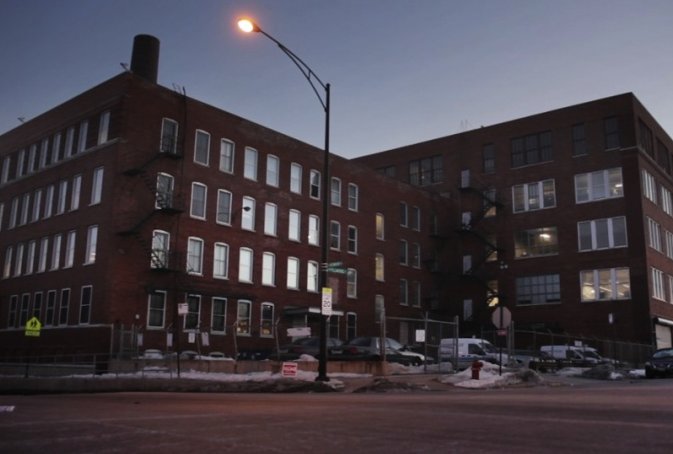
The facility, a nondescript warehouse on Chicago’s west side known as Homan Square, has long been the scene of secretive work by special police units. Interviews with local attorneys and one protester who spent the better part of a day shackled in Homan Square describe operations that deny access to basic constitutional rights.

Alleged police practices at Homan Square, according to those familiar with the facility who spoke out to the Guardian after its investigation into Chicago police abuse, include:

  • Keeping arrestees out of official booking databases.
  • Beating by police, resulting in head wounds.
  • Shackling for prolonged periods.
  • Denying attorneys access to the “secure” facility.
  • Holding people without legal counsel for between 12 and 24 hours, including people as young as 15.
  • At least one man was found unresponsive in a Homan Square “interview room” and later pronounced dead.

Brian Jacob Church, a protester known as one of the “Nato Three”, was held and questioned at Homan Square in 2012 following a police raid. Officers restrained Church for the better part of a day, denying him access to an attorney, before sending him to a nearby police station to be booked and charged.

“Homan Square is definitely an unusual place,” Church told the Guardian on Friday. “It brings to mind the interrogation facilities they use in the Middle East. The CIA calls them black sites. It’s a domestic black site. When you go in, no one knows what’s happened to you.”

The secretive warehouse is the latest example of Chicago police practices that echo the much-criticized detention abuses of the US war on terrorism. While those abuses impacted people overseas, Homan Square – said to house military-style vehicles, interrogation cells and even a cage – trains its focus on Americans, most often poor, black and brown.

Unlike a precinct, no one taken to Homan Square is said to be booked. Witnesses, suspects or other Chicagoans who end up inside do not appear to have a public, searchable record entered into a database indicating where they are, as happens when someone is booked at a precinct. Lawyers and relatives insist there is no way of finding their whereabouts. Those lawyers who have attempted to gain access to Homan Square are most often turned away, even as their clients remain in custody inside.

“It’s sort of an open secret among attorneys that regularly make police station visits, this place – if you can’t find a client in the system, odds are they’re there,” said Chicago lawyer Julia Bartmes.

Chicago civil-rights attorney Flint Taylor said Homan Square represented a routinization of a notorious practice in local police work that violates the fifth and sixth amendments of the constitution.

“This Homan Square revelation seems to me to be an institutionalization of the practice that dates back more than 40 years,” Taylor said, “of violating a suspect or witness’ rights to a lawyer and not to be physically or otherwise coerced into giving a statement.”

Much remains hidden about Homan Square. The Chicago police department did not respond to the Guardian’s questions about the facility. But after the Guardian published this story, the department provided a statement insisting, without specifics, that there is nothing untoward taking place at what it called the “sensitive” location, home to undercover units.

“CPD [Chicago police department] abides by all laws, rules and guidelines pertaining to any interviews of suspects or witnesses, at Homan Square or any other CPD facility. If lawyers have a client detained at Homan Square, just like any other facility, they are allowed to speak to and visit them. It also houses CPD’s Evidence Recovered Property Section, where the public is able to claim inventoried property,” the statement said, something numerous attorneys and one Homan Square arrestee have denied.

“There are always records of anyone who is arrested by CPD, and this is not any different at Homan Square,” it continued.

The Chicago police statement did not address how long into an arrest or detention those records are generated or their availability to the public. A department spokesperson did not respond to a detailed request for clarification.

When a Guardian reporter arrived at the warehouse on Friday, a man at the gatehouse outside refused any entrance and would not answer questions. “This is a secure facility. You’re not even supposed to be standing here,” said the man, who refused to give his name.

A former Chicago police superintendent and a more recently retired detective, both of whom have been inside Homan Square in the last few years in a post-police capacity, said the police department did not operate out of the warehouse until the late 1990s.

But in detailing episodes involving their clients over the past several years, lawyers described mad scrambles that led to the closed doors of Homan Square, a place most had never heard of previously. The facility was even unknown to Rob Warden, the founder of Northwestern University Law School’s Center on Wrongful Convictions, until the Guardian informed him of the allegations of clients who vanish into inherently coercive police custody.

“They just disappear,” said Anthony Hill, a criminal defense attorney, “until they show up at a district for charging or are just released back out on the street.”

‘They were held incommunicado for much longer than I think should be permitted in this country – anywhere – but particularly given the strong constitutional rights afforded to people who are being charged with crimes,” said Sarah Gelsomino, the lawyer for Brian Jacob Church. Photograph: Phil Batta/Guardian
Jacob Church learned about Homan Square the hard way. On May 16 2012, he and 11 others were taken there after police infiltrated their protest against the Nato summit. Church says officers cuffed him to a bench for an estimated 17 hours, intermittently interrogating him without reading his Miranda rights to remain silent. It would take another three hours – and an unusual lawyer visit through a wire cage – before he was finally charged with terrorism-related offenses at the nearby 11th district station, where he was made to sign papers, fingerprinted and photographed.

In preparation for the Nato protest, Church, who is from Florida, had written a phone number for the National Lawyers Guild on his arm as a precautionary measure. Once taken to Homan Square, Church asked explicitly to call his lawyers, and said he was denied.

“Essentially, I wasn’t allowed to make any contact with anybody,” Church told the Guardian, in contradiction of a police guidance on permitting phone calls and legal counsel to arrestees.

Church’s left wrist was cuffed to a bar behind a bench in windowless cinderblock cell, with his ankles cuffed together. He remained in those restraints for about 17 hours.

“I had essentially figured, ‘All right, well, they disappeared us and so we’re probably never going to see the light of day again,’” Church said.


The Disappeared

chicago-nato-3

Brian Church, Jared Chase and Brent Vincent Betterly, known as the ‘Nato Three’

Though the raid attracted major media attention, a team of attorneys could not find Church through 12 hours of “active searching”, Sarah Gelsomino, Church’s lawyer, recalled. No booking record existed. Only after she and others made a “major stink” with contacts in the offices of the corporation counsel and Mayor Rahm Emanuel did they even learn about Homan Square.

They sent another attorney to the facility, where he ultimately gained entry, and talked to Church through a floor-to-ceiling chain-link metal cage. Finally, hours later, police took Church and his two co-defendants to a nearby police station for booking.

After serving two and a half years in prison, Church is currently on parole after he and his co-defendants were found not guilty in 2014 of terrorism-related offenses but guilty of lesser charges of possessing an incendiary device and the misdemeanor of “mob action”.

It’s almost like they throw a black bag over your head and make you disappear for a day or two
-Brian Jacob Church

The access that Nato Three attorneys received to Homan Square was an exception to the rule, even if Jacob Church’s experience there was not.

Three attorneys interviewed by the Guardian report being personally turned away from Homan Square between 2009 and 2013 without being allowed access to their clients. Two more lawyers who hadn’t been physically denied described it as a place where police withheld information about their clients’ whereabouts. Church was the only person who had been detained at the facility who agreed to talk with the Guardian: their lawyers say others fear police retaliation.

One man in January 2013 had his name changed in the Chicago central bookings database and then taken to Homan Square without a record of his transfer being kept, according to Eliza Solowiej of Chicago’s First Defense Legal Aid. (The man, the Guardian understands, wishes to be anonymous; his current attorney declined to confirm Solowiej’s account.) She found out where he was after he was taken to the hospital with a head injury.

“He said that the officers caused his head injuries in an interrogation room at Homan Square. I had been looking for him for six to eight hours, and every department member I talked to said they had never heard of him,” Solowiej said. “He sent me a phone pic of his head injuries because I had seen him in a police station right before he was transferred to Homan Square without any.”

Bartmes, another Chicago attorney, said that in September 2013 she got a call from a mother worried that her 15-year-old son had been picked up by police before dawn. A sympathetic sergeant followed up with the mother to say her son was being questioned at Homan Square in connection to a shooting and would be released soon. When hours passed, Bartmes traveled to Homan Square, only to be refused entry for nearly an hour.

An officer told her, “Well, you can’t just stand here taking notes, this is a secure facility, there are undercover officers, and you’re making people very nervous,” Bartmes recalled. Told to leave, she said she would return in an hour if the boy was not released. He was home, and not charged, after “12, maybe 13” hours in custody.

On February 2, 2013, John Hubbard was taken to Homan Square. Hubbard never walked out. The Chicago Tribune reported that the 44-year old was found “unresponsive inside an interview room”, and pronounced dead. After publication, the Cook County medical examiner told the Guardian that the cause of death was determined to be heroin intoxication.

Homan Square is hardly concerned exclusively with terrorism. Several special units operate outside of it, including the anti-gang and anti-drug forces. If police “want money, guns, drugs”, or information on the flow of any of them onto Chicago’s streets, “they bring them there and use it as a place of interrogation off the books,” Hill said.

‘The real danger in allowing practices like Guantanamo or Abu Ghraib is the fact that they always creep into other aspects,’ criminologist Tracy Siska told the Guardian. Photograph: Chandler West/Guardian

A former Chicago detective and current private investigator, Bill Dorsch, said he had not heard of the police abuses described by Church and lawyers for other suspects who had been taken to Homan Square. He has been permitted access to the facility to visit one of its main features, an evidence locker for the police department. (“I just showed my retirement star and passed through,” Dorsch said.)

Transferring detainees through police custody to deny them access to legal counsel, would be “a career-ender,” Dorsch said. “To move just for the purpose of hiding them, I can’t see that happening,” he told the Guardian.

Richard Brzeczek, Chicago’s police superintendent from 1980 to 1983, who also said he had no first-hand knowledge of abuses at Homan Square, said it was “never justified” to deny access to attorneys.

“Homan Square should be on the same list as every other facility where you can call central booking and say: ‘Can you tell me if this person is in custody and where,’” Brzeczek said.

“If you’re going to be doing this, then you have to include Homan Square on the list of facilities that prisoners are taken into and a record made. It can’t be an exempt facility.”

Indeed, Chicago police guidelines appear to ban the sorts of practices Church and the lawyers said occur at Homan Square.

A directive titled “Processing Persons Under Department Control” instructs that “investigation or interrogation of an arrestee will not delay the booking process,” and arrestees must be allowed “a reasonable number of telephone calls” to attorneys swiftly “after their arrival at the first place of custody.” Another directive, “Arrestee and In-Custody Communications,” says police supervisors must “allow visitation by attorneys.”

Attorney Scott Finger said that the Chicago police tightened the latter directive in 2012 after quiet complaints from lawyers about their lack of access to Homan Square. Without those changes, Church’s attorneys might not have gained entry at all. But that tightening – about a week before Church’s arrest – did not prevent Church’s prolonged detention without a lawyer, nor the later cases where lawyers were unable to enter.

The combination of holding clients for long periods, while concealing their whereabouts and denying access to a lawyer, struck legal experts as a throwback to the worst excesses of Chicago police abuse, with a post-9/11 feel to it.

On a smaller scale, Homan Square is “analogous to the CIA’s black sites,” said Andrea Lyon, a former Chicago public defender and current dean of Valparaiso University Law School. When she practiced law in Chicago in the 1980s and 1990s, she said, “police used the term ‘shadow site’” to refer to the quasi-disappearances now in place at Homan Square.

I’ve never known any kind of organized, secret place where they go and hold somebody before booking for hours and hours
James Trainum, former detective, Washington DC
“Back when I first started working on torture cases and started representing criminal defendants in the early 1970s, my clients often told me they’d been taken from one police station to another before ending up at Area 2 where they were tortured,” said Taylor, the civil-rights lawyer most associated with pursuing the notoriously abusive Area 2 police commander Jon Burge. “And in that way the police prevent their family and lawyers from seeing them until they could coerce, through torture or other means, confessions from them.”

Police often have off-site facilities to have private conversations with their informants. But a retired Washington DC homicide detective, James Trainum, could not think of another circumstance nationwide where police held people incommunicado for extended periods.

“I’ve never known any kind of organized, secret place where they go and just hold somebody before booking for hours and hours and hours. That scares the hell out of me that that even exists or might exist,” said Trainum, who now studies national policing issues, to include interrogations, for the Innocence Project and the Constitution Project.

Regardless of departmental regulations, police frequently deny or elide access to lawyers even at regular police precincts, said Solowiej of First Defense Legal Aid. But she said the outright denial was exacerbated at Chicago’s secretive interrogation and holding facility: “It’s very, very rare for anyone to experience their constitutional rights in Chicago police custody, and even more so at Homan Square,” Solowiej said.

Church said that one of his more striking memories of Homan Square was the “big, big vehicles” police had inside the complex that “look like very large MRAPs that they use in the Middle East.”

Cook County, home of Chicago, has received some 1,700 pieces of military equipment from a much-criticized Pentagon program transferring military gear to local police. It includes a Humvee, according to a local ABC News report.

Tracy Siska, a criminologist and civil-rights activist with the Chicago Justice Project, said that Homan Square, as well as the unrelated case of ex-Guantánamo interrogator and retired Chicago detective Richard Zuley, showed the lines blurring between domestic law enforcement and overseas military operations.

“The real danger in allowing practices like Guantánamo or Abu Ghraib is the fact that they always creep into other aspects,” Siska said.

“They creep into domestic law enforcement, either with weaponry like with the militarization of police, or interrogation practices. That’s how we ended up with a black site in Chicago.”

via TheGuardian

Charlie Hebdo Police Investigator Turns Up Dead, ‘Suicided’

Charlie Hebdo Police Investigator Turns Up Dead, ‘Suicided’

BREAKING: INFORMANT? Paris Terror Suspect on US Watch List Met With French President Sarkozy in 2009

21st Century Wire says…

Charlie Hebdo As the dust settles from this week’s terror extravaganza in France, more loose ends are turning up (or being tied up), with this latest bizarre bombshell which is already fueling speculation as to the covert nature of theCharlie Hebdo false flag affair.

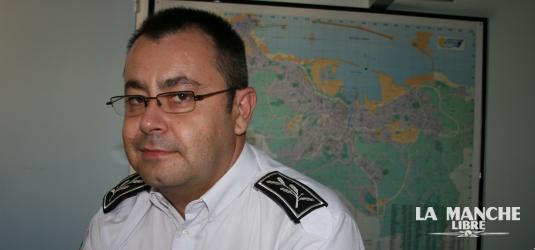
A police commissioner from Limoges, France, Helric Fredou, aged 45 (photo, below), turned up dead from a gun shot to the head on Thursday amid the Charlie Hebdo affair. A high-ranking official within the French law enforcement command-and-control structure, Fredou was also a former deputy director of the regional police service.

According France 3, his body was “found by a colleague” at approximately 1am Thursday – only hours after the initial Paris attack.

At the time of his death, police claim to have not known the reason for his alleged suicide. This was reflected in their official statements to the media: “It is unknown at this time the reasons for his actions”. However, a back story appears to have been inserted simultaneously, most likely from the very same police media liaisons, who then told the press that Fredou was ‘depressed and overworked’. For any law enforcement officer in France, it would seem rather odd that anyone would want to miss the biggest single terror event in the century, or history in the making, as it were.

Here is a link to the original report in the French media, which confirms that Commissioner Fredou was indeed working on the Charlie Hebdo case:

The Fredou Commissioner, like all agents SRPJ, worked yesterday on the case of the massacre at the headquarters of Charlie Hebdo. In particular, he was investigating the family of one of the victims. He killed himself before completing its report. A psychologicalcell’ was set up in the police station.”

Helric-Fredou-3
EDITOR’S NOTE: It is not yet known to 21WIRE exactly how the fatal gun shot occurred, but if any other past political and high-profile ‘suicided’ cases are anything to go by, authorities will claim that this victim either shot himself in the back of the head,  with his non-shooting hand. In addition, if that were the case, there would also be a lack of gun powder burns on the hands according to the autopsy.

UK-based investigative reporter Morris108, interviews ‘Phil in France’ regarding this new development:

Even more bizarrely, an almost identical event took place just over one year earlier, November 2013 in Limoges, when the number 3 ranked SRPJ officer had killed himself in similar circumstances, with his weapon in the police hotel. Allegedly, his colleague discovered his body. The prosecution ruled that case was a suicide too, and the police officer had left a suicide note to his family in which he expressed “personal reasons” for his surprising action.

Stay tuned for more updates on this story at 21WIRE.

Sputnik News

Police commissioner, who had been investigating the attack on the Charlie Hebdo magazine committed suicide with his service gun on Thursday night.

Police commissioner Helric Fredou, who had been investigating the attack on the French weekly satirical magazine Charlie Hebdo, committed suicide in his office. The incident occurred in Limoges, the administrative capital of the Limousin region in west-central France, on Thursday night, local media France 3 reports.
Helric Fredou, 45, suffered from ‘depression’ and experienced ‘burn out’ [according to the official statement]. Shortly before committing suicide, he met with the family of a victim of the Charlie Hebdo attack and killed himself preparing the report.

Fredou began his career in 1997 as a police officer at the regional office of the judicial police of Versailles. Later he returned to Limoges, his hometown. Since 2012 he had been the deputy director of the regional police service.

“We are all shocked. Nobody was ready for such developments”, a representative of the local police union told reporters.

On January 7, 2015, two gunmen burst into the editorial office of Charlie Hebdo magazine, known for issuing cartoons, ridiculing Islam. The [suspected] attackers, later identified as brothers Said and Cherif Kouachi, killed 12 people and injured 11, and escaped from the scene. Following two days of nationwide manhunt, the suspects were killed on Friday by French police some 20 miles northeast of Paris.

READ MORE PARIS SHOOTING NEWS AT: 21st Century Wire Paris Shooting Files

via 21stCenturyWire

Police Departments Retaliate Against Organized “Cop Watch” Groups Across the US

Police Departments Retaliate Against Organized “Cop Watch” Groups Across the US

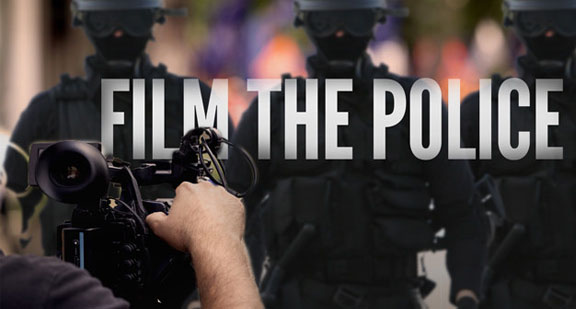
film-the-police

When communities attempt to police the police, they often get, well… policed.

In several states, organized groups that use police scanners and knowledge of checkpoints to collectively monitor police activities by legally and peacefully filming cops on duty have said they’ve experienced retaliation, including unjustified detainment and arrests as well as police intimidation.

The groups operate under many decentralized organizations, most notably CopWatch and Cop Block, and have proliferated across the United States in the last decade – and especially in the aftermath of the events that continue to unfold in Ferguson, Missouri, after officer Darren Wilson fatally shot unarmed, black teenager Michael Brown.

Many such groups have begun proactively patrolling their communities with cameras at various times during the week, rather than reactively turning on their cameras when police enter into their neighborhoods or when they happen to be around police activity.

Across the nation, local police departments are responding to organized cop watching patrols by targeting perceived leaders, making arrests, threatening arrests, yanking cameras out of hands and even labeling particular groups “domestic extremist” organizations and part of the sovereign citizens movement – the activities of which the FBI classifies as domestic terrorism.

Courts across the nation at all levels have upheld the right to film police activity. The American Civil Liberties Union (ACLU) and photographer’s associcationshave taken many similar incidents to court, consistently winning cases over the years. The Supreme Court has ruled police can’t search an individual’s cellphone data without a warrant. Police also can’t legally delete an individual’s photos or video images under any circumstances.

“Yet, a continuing stream of these incidents (often driven by police who have been fed ‘nonsense‘ about links between photography and terrorism) makes it clear that the problem is not going away,” writes Jay Stanley, a senior policy analyst at the ACLU’s Speech, Privacy & Technology Project.

Sources who have participated in various organized cop watching groups in cities such as New York; Chicago; Cleveland; Las Vegas; Oakland; Arlington, Texas; Austin and lastly Ferguson, Missouri, told Truthout they have experienced a range of police intimidation tactics, some of which have been caught on film. Cop watchers told Truthout they have been arrested in several states, including Texas, New York, Ohio and California in retaliation for their filming activity.

More recently, in September, three cop watchers were arrested while monitoring police activity during a traffic stop in Arlington, Texas. A group of about 20 people, a few of them associated with the Tarrant County Peaceful Streets Project, gathered at the intersection of South Cooper Street and Lynda Lane during a Saturday night on September 6 to film police as they conducted a traffic stop. A video of what happened next was posted at YouTube.

Arlington police charged Janie Lucero, her husband, Kory Watkins, and Joseph Tye with interference of public duties. Lucero and Watkins were charged with obstructing a highway while Tye was arrested on charges of refusing to identify himself.

Arlington police have defended the arrests of the three cop watchers, but the watchers say they weren’t interfering with police work, and were told to move 150 feet away from the officers – around the corner of a building where they couldn’t film the officers.

“When we first started [cop watching, the police] seemed kind of bothered a little bit,” Watkins told Truthout. “There was a change somewhere where [the police] started becoming a little bit more offended, and we started having more cop watchers so I guess they felt like they needed to start bringing more officers to traffic stops.”

On the night of Watkin’s arrest, his group had previously monitored two other traffic stops without any confrontation with Arlington police officers before the incident that led to the arrests.

Sometimes, though, retaliation against cop watching groups goes far beyond arresting cop watchers on patrol.

Cops Label Cop Watch Groups Domestic Terrorists

On New Year’s Day in 2012, Antonio Buehler, a West Point graduate and former military officer, witnessed two Austin police officers assaulting a woman. He pulled out his phone.

As he began photographing the officers and asking questions about their activities, the cops assaulted and arrested him. He was charged with spitting in a cop’s face – a felony crime.

However, two witness videos of the incident surfaced and neither of them showed that Buehler spit in Officer Patrick Oborski’s face. A grand jury was finally convened in March 2013 and concluded there was not enough evidence to indict Buehler on any of the crimes he was charged with.

A few months after the New Year’s Day incident, Buehler and other Austin-based activists started the Peaceful Streets Project (PSP), an all-volunteer organization dedicated to stopping police abuse. The group has held “Know Your Rights” trainings and a Police Accountability Summit. The group also regularly organizes cop watch patrols in Austin.

Since the PSP was launched, the movement has grown, with local chapters popping up in other cities and states across the United States, including Texas’ Tarrant County chapter, which the three cop watchers arrested in Arlington were affiliated with.

But as the Peaceful Streets movement spread, police retaliation against the groups, and particularly Buehler himself, also escalated.

“[The Austin Police Department (APD)] sees us as a threat primarily because we shine a spotlight on their crimes,” Buehler said.

The group recently obtained documents from the APD through a Freedom of Information Act (FOIA) request that reveal Austin police colluded to arrest Buehler and other cop watchers affiliated with the Peaceful Streets Project. Since the New Year’s Day incident, Buehler has been arrested three more times by APD officers. At least four other members of PSP have been arrested on charges of interference or failing to identify themselves during their cop watching activities.

The emails indicate APD officers monitored Buehler’s social media posts and attempted to justify arresting him for another felony crime of online impersonation over an obviously satirical post he made on Facebook, as well as reveal that some APD officers coordinated efforts to stop PSP members’ legal and peaceful activities, even suggesting reaching out to the District Attorney’s office to see if anything could be done to incarcerate members of the group.

Another internal email from APD senior officer Justin Berry identifies PSP as a “domestic extremist” organization. Berry writes that he believes police accountability groups including PSP, CopWatch and Cop Block are part of a “national domestic extremism trend.” He believes he found “mirror warning signs” in “FBI intel.” Berry makes a strange attempt to lump police accountability activists and the hacker-collective Anonymous in with sovereign citizens groups as a collective revolutionary movement.

“Sovereign citizens” groups generally believe federal, state and local governments are illegitimate and operate illegally. Some self-described sovereign citizens create fake license plates, identification and forms of currency to circumvent official government institutions. The FBI classifies the activities of sovereign citizens groups as domestic terrorism, considering the groups a growing “domestic threat” to law enforcement.

Buehler told Truthout the APD is working with a Department of Homeland Security (DHS) fusion center to attempt to identify PSP as a sovereign citizens group to associate its members with domestic terrorism with state and federal authorities. DHS fusion centers are designed to gather, analyze and promote the sharing of intelligence information between federal and state agencies.

“They have spent a fair amount of resources tracking us, spying on us and infiltrating our group, and we are just peaceful activists who are demanding accountability for the police,” Buehler told Truthout. “They have absolutely no evidence that we’ve engaged in any criminal activity or that we’ve tried to engage in criminal activity.”

APD officials did not respond to a request for comment.

“They’ve pushed us; they’ve assaulted us for filming them; they’ve used their horses against us and tried to run us into walls; they’ve driven their cars up on us; they illegally detained us and searched us; they get in our face and they yell at us; they threaten to use violent force against us,” Buehler said. “But we didn’t realize until these emails just how deep this intimidation, how deep these efforts were to harm us for trying to hold them accountable.”

Buehler also said the group has additional internal emails which have not been released yet that reveal the APD attempted to take another charge to the District Attorney against him for felony child endangerment over the activities of a teenaged member of PSP.

He said he and other members of PSP were interested in pursuing a joint civil action against the APD over their attempts to frame and arrest them for their First Amendment activities.

This is not the first time a municipal police department has labeled a local cop watching group as an extremist organization.

In 2002, internal files from the Denver Police Department’s (DPD) Intelligence Unit were leaked to the ACLU, revealing the unit had been spying on several activist groups in the city, and keeping extensive records about members of the activist groups. Many of these groups were branded as “criminal extremist” organizations in what later became a full-scale controversy widely known as the Denver police’s “spy files.” Some of the groups falsely branded as “criminal extremist” groups included three police accountability organizations: Denver CopWatch, End the Politics of Cruelty and Justice for Mena.

Again, from October 2003 through the Republican National Convention (RNC) in August 2004, intelligence digests produced by the New York City Police Department (NYPD) on dozens of activist groups, including several police accountability organizations, were made public under a federal court order. TheNYPD labeled participants of the “Operation CopWatch” effort as criminal extremists.

Those who participated in “Operation CopWatch” during the RNC hoped to identify undercover cops who might attempt to provoke violence during demonstrations and document police violence or misconduct against protesters.

Communities Benefiting From Cop Watch Patrols Resist Police Retaliation Against Watchers

In some major urban areas, rates of police harassment of individuals drop considerably after cop watchers take to the streets – and communities band together to defend cop watch patrols that experience police retaliation, say veteran cop watchers.

Veteran police accountability activist José Martín has trained and organized with several organizations that participate in cop watch activities. Martín has been detained and arrested several times while cop watching with organized patrols in New York and Chicago.

His arrests in New York are part of a widely documented problem in the city. In fact, retaliation in New York against cop watchers has been so widespread that the NYPD had to send out an official memo to remind officers that it is perfectly legal for civilians to film cops on duty.

Martín described an experience in Chicago in which he felt police unjustly retaliated against him after a local CopWatch group formed and began regularly patrolling Chicago’s Pilsen neighborhood. After the group became well-known by the Pilsen community, residents gathered around an officer who had detained Martín after a patrol one night in 2009, calling for his release. The officer let him go shortly after.

“When cop watchers are retaliated against, if the community is organized, if there is a strong relationship between cop watch patrols and the community, but most importantly, if the cop watchers are people of the community, that community has the power to push back against retaliation and prevent its escalation,” Martín said. “Retaliation doesn’t work if you stand together.”

Another veteran cop watcher, Jacob Crawford, co-founder of Oakland’s We Copwatch, is helping the community of Ferguson, Missouri, organize cop watch patrols and prepare the community for the potential of police retaliation. His group raised $6,000 to pass out 110 cameras to organizers and residents in Ferguson, and train them to monitor police activity in the aftermath of the upheavals that rocked the city after Wilson killed Brown.

“I do expect retaliation, I do expect that these things won’t be easy, but these folks are in it,” Crawford told Truthout. “This is something that makes more sense to them than not standing up for themselves.”

via TruthOut.com

Here Come the Raids: Contractors Seek to Legalize Private Police in the U.S.

Here Come the Raids: Contractors Seek to Legalize Private Police in the U.S.

mendocino-paramilitary-raid-cannabis-cropsThere are very few news stories about government overreach that shock me these days, but this week there were two — both in California. Each came and went with barely a whisper in the media, even from the “liberty” news.

Perhaps we’re so bombarded with mafia tactics by the government that some events just get lost in the chaos. And no, one of these developments is NOT the Los Angeles School District acquiring tanks and grenade launchers, although that’s probably of equal significance. Below is the first of these local stories. The second will be in a follow-up article.

This is probably the scariest development in law enforcement, ever, and I don’t say that lightly. If you thought no-knock SWAT raids to serve warrants for non-violent crimes was the epitome of tyranny, wait until you get a load of private mercenaries conducting special forces-type raids on American citizens.

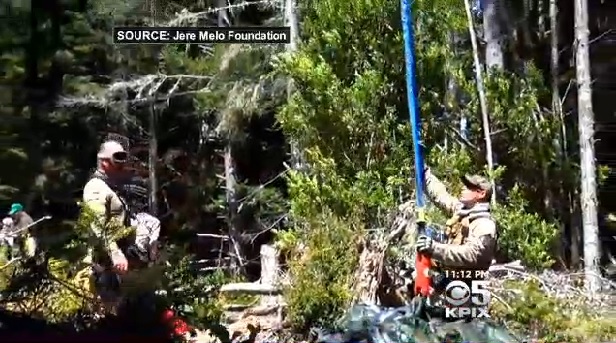
That’s right, a report out of Mendocino, California admits that Blackwater-like private “security” contractors are now being used to “police pot.” Mysterious soldiers repelled out of unmarked helicopters fully armed for war to raid legal medical cannabis gardens last month. They didn’t identify themselves or present paperwork of any kind. They just destroyed the garden and left. Other witnesses claim this invading army is also “confiscating” product.

Here’s the local CBS news report:
http://sanfrancisco.cbslocal.com/video?autoStart=true&topVideoCatNo=default&clipId=10576466

This is the ultimate “feeler” story in the unfolding Totalitarian Tip-Toe if I’ve ever seen one. A quirky local story of “mystery men” used to raise the public threshold of acceptable tyranny, a.k.a. legitimizing private-sector soldiers for law enforcement.

The war machine seems to be gauging how much terror they can inflict on peaceful Americans before they say WTF (See Ferguson) and, perhaps more importantly, to see if the public will allow this vast new market for war profiteers.

It should be a massive media story “private war profiteering at home to terrorize citizens fight crime”. Helicopters, weapons of war, and tactical gear are expensive. Who’s seeding these start-ups anyway?

The manipulation continued a day after this story was reported, when Alex Altman of TIME wrote “Californians Turn to Private Security to Police Pot Country” as if all the citizens of California have agreed to this type of policing. Subtle manipulation.

TIME writes:

Over the summer, residents claimed men in military gear had been dropping onto private property from unmarked helicopters and cutting down the medicinal pot gardens of local residents. Local law enforcement have conducted helicopter raids in the area, but some worried the culprit this time was different: a private-security firm called Lear Asset Management.

The confusion was easy to understand. In the wildlands of California’s pot country, the workings of law enforcement are hard to track, and the rules for growing pot are often contradictory. To add to the mess, the various local, county, state and federal enforcement efforts don’t always communicate with each other about their efforts. The added possibility of private mercenaries, with faceless employers, fast-roping from helicopters raised alarm bells for many farmers.

TIME legitimizes Lear Asset Management and the practice of private policing with a matter-of-fact job description:

They are hired by large land owners to do the work of clearing trespass gardens from private property, and perform forest reclamation, sometimes funded by government grant. Deep in the woods, they cut down illegal pot plants and scrub the environmental footprint produced by the backwoods drug trade. They carry AR-15 rifles, lest they meet armed watchmen bent on defending their plots.

I really don’t have a problem with securing private property from vandals, but did you catch that slip “sometimes funded by government grant”?  That’s when “private security” becomes “law enforcement.” This is the RED ALERT buried in this story. At best our tax dollars are being used to fund private armies for large land owners. At worst, when will we see these warriors policing BLM land (aka National Parks)? Wait for it…

Altman quotes official statistics about how successful Lear and law enforcement are in raiding marijuana farmers, measured in the “street value” of the forbidden crop seized at gunpoint, as if that is still acceptable behavior by society’s peace keepers in the era of legal weed. But Altman just uses it as a segue into a broader “problem” of policing environmental vandalism on large stretches of open land, including “public” land.

More recently, the trespass grow sites have migrated from public land onto the vast plots owned by private citizens and timber companies. Some of them have hired Lear to deal with the problem. The company has run about nine missions across California’s pot country this year, with more planned this fall, Trouette says. And while the company’s special-ops aspect gets much of the attention, most of the work focuses on environmental reclamation.

The public is supposed to believe Lear is merely an environmental clean-up team doing community service who just so happens to have military special ops capability. How quaint. I didn’t know litter maintenance required AR-15s. But who would be opposed protecting the environment? Smart marketing.

TIME goes for the hard close to sell this tyranny by providing legal cover for these raids without warrants, before ending the article as a sponsored post for “regulation” of Lear’s “flourishing” domestic mercenary business as the “best thing for locals.”

Reports of vigilante marijuana raids on private property may simply stem from a lack of legal clarityUnder the so-called “open fields doctrine” set forth by the U.S. Supreme Court, the Fourth Amendment does not protect undeveloped property from warrantless searches. As a result, police may be permitted to cut down private gardens without a warrant. (my emphasis because your need to read and reread every word)

In the meantime, Lear has flourished, despite the concern among some local growers. But like most people in the Emerald Triangle, Trouette thinks thebest thing for the locals would be for the feds to sort out all the confusion. “I think the federal government would do everybody a big favor,” he says, “by regulating this industry.” (my emphasis)

So let me get this straight: a criminal gang of armed thugs commits violence and theft, and the best way to solve that problem is to legalize and regulate those thugs? Sounds like ISIS.

The creepiest thing about this development is that it’s a clever, more professional repackaging of a previous attempt to introduce private police in America. Some of you liberty lovers may recall it being rolled out once before in an eerily similar manner.

In 2009, FOX News wrote U.S. Mystery ‘Police’ Force Has Small Montana City on Edge after a local news report aired showing an extremely well-funded private security contractor going by the name American Police Force (APF) rolling into the town of Hardin in black Mercedes tagged as “Harding Police Department”.

Hiring a private firm for domestic policing caused massive outrage not just locally in Montana but also around the United States. APF is now referred to as a well-funded fraud perpetuated by a petty con man and the event was swiftly dumped into the dustbin of history.

The Wikipedia entry on APF states:

American Police Force (APF), and under its revised name American Private Police Force, was a fraudulent entity claiming to be a private military company. It never possessed any legitimacy to operate in the United States. The company’s previous logo was an exact copy of the Serbian state coat of arms which caused some controversy and resulted in the Serbian government threatening legal action against APF if it did not remove or change the logo.

In September 2009, US government contract databases showed no record of the company, while security industry representatives and federal officials said they had never heard of it.

APF was registered as a corporation in California by convicted con man Michael Hilton on 2 March 2009.

Interestingly, there are absolutely no follow-up reports of “Michael Hilton” or anyone else being prosecuted or convicted in the APF case. They simply vanished. Think about that for a moment. A heavily-armed foreign force invades a small town in America on false pretenses committing dangerous fraud and the U.S. government does absolutely nothing about it. What does that tell you?

Well, we know the U.S. military uses private contractors in foreign wars, and we know the Pentagon is arming and militarizing domestic police, and we know the U.S. Army is training to enter law enforcement. It seems to me that it’s all part of the plan to keep the war machine churning and to control the population.

Now with a more polished version of private security, minus the flashy Mercedes and foreign accents, and sold to us as environmental guardians, this story has gone largely unnoticed. Yet, if these raid allegations are true, Lear’s actions already far exceed anything APF did in Montana.

Stay tuned for my next article on the second unreported tyrannical event that happened in California this past week to be released later today or early tomorrow.

Eric Blair
Activist Post
US Police Have Killed Over 5,000 Civilians Since 9/11

US Police Have Killed Over 5,000 Civilians Since 9/11

police-state-insiderStatistically speaking, Americans should be more fearful of the local cops than “terrorists.”

Though Americans commonly believe law enforcement’s role in society is to protect them and ensure peace and stability within the community, the sad reality is that police departments are often more focused on enforcing laws, making arrests and issuing citations. As a result of this as well as an increase in militarized policing techniques, Americans are eight times more likely to be killed by a police officer than by a terrorist, estimates a Washington’s Blog report based on official statistical data.

Though the U.S. government does not have a database collecting information about the total number of police involved shootings each year, it’s estimated that between 500 and 1,000 Americans are killed by police officers each year. Since 9/11, about 5,000 Americans have been killed by U.S. police officers, which is almost equivalent to the number of U.S. soldiers who have been killed in the line of duty in Iraq.

Because individual police departments are not required to submit information regarding the use of deadly force by its officers, some bloggers have taken it upon themselves to aggregate that data. Wikipedia also has a list of “justifiable homicides” in the U.S., which was created by documenting publicized deaths.

Mike Prysner, one of the local directors of the Los Angeles chapter for ANSWER — an advocacy group that asks the public to Act Now to Stop War and End Racism — told Mint Press Newsearlier this year that the “epidemic” of police harassment and violence is a nationwide issue.

He said groups like ANSWER are trying to hold officers accountable for abuse of power. “[Police brutality] has been an issue for a very long time,” Prysner said, explaining that in May, 13 people were killed in Southern California by police.

As Mint Press News previously reported, each year there are thousands of claims of police misconduct. According to the CATO Institute’s National Police Misconduct Reporting Project, in 2010 there were 4,861 unique reports of police misconduct involving 6,613 sworn officers and 6,826 alleged victims.

Most of those allegations of police brutality involved officers who punched or hit victims with batons, but about one-quarter of the reported cases involved firearms or stun guns.

Racist policing

A big element in the police killings, Prysner says, is racism. “A big majority of those killed are Latinos and Black people,” while the police officers are mostly White, he said. “It’s a badge of honor to shoot gang members so [the police] go out and shoot people who look like gang members,” Prysner argued, giving the example of 34-year-old Rigoberto Arceo, who was killed by police on May 11.

According to a report from the Los Angeles Times, Arceo, who was a biomedical technician at St. Francis Medical Center, was shot and killed after getting out of his sister’s van. The Los Angeles County Sheriff’s Department says Arceo “advanced on the deputy and attempted to take the deputy’s gun.” However, Arceo’s sister and 53-year-old Armando Garcia — who was barbecuing in his yard when the incident happened — say that Arceo had his hands above his head the entire time.

Prysner is not alone in his assertion that race is a major factor in officer-related violence. This past May, astudy from the the Malcolm X Grassroots Movement, an anti-racist activist organization, found that police officers, security guards or self-appointed vigilantes killed at least 313 Black people in 2012 — meaning one Black person was killed in the U.S. by law enforcement roughly every 28 hours.

Prysner said the relationship between police departments and community members needs to change and that when police shoot an unarmed person with their arms in the air over their head, the officer should be punished.

Culture of misconduct

“You cannot have a police force that is investigating and punishing itself,” Prysner said, adding that taxpayer money should be invested into the community instead of given to police to buy more guns, assault rifles and body armor.

Dissatisfied with police departments’ internal review policies, some citizens have formed volunteer police watch groups to prevent the so-called “Blue Code of Silence” effect and encourage police officers to speak out against misconduct occurring within their department.

As Mint Press News previously reported, a report released earlier this year found that of the 439 cases of police misconduct that then had been brought before the Minneapolis’s year-old misconduct review board, not one of the police officers involved has been disciplined.

Although the city of Minneapolis spent $14 million in payouts for alleged police misconduct between 2006 and 2012, despite the fact that the Minneapolis Police Department often concluded that the officers involved in those cases did nothing wrong.

Other departments have begun banning equipment such as Tasers, but those decisions were likely more about protecting the individual departments from lawsuits than ensuring that officers are not equipped with weapons that cause serious and sometimes fatal injuries when used.

To ensure officers are properly educated on how to use their weapons and are aware of police ethics, conflict resolution and varying cultures within a community, police departments have historically heldtraining programs for all officers. But due to tighter budgets and a shift in priorities, many departments have not provided the proper continuing education training programs for their officers.

Charles Ramsey, president of both the Major Cities Chiefs Association and the Police Executive Research Forum, called that a big mistake, explaining that it is essential officers are trained and prepared for high-stress situations:

“Not everybody is going to be able to make those kinds of good decisions under pressure, but I do think that the more reality-based training that we provide, the more we put people in stressful situations to make them respond and make them react.”

GI Joe replaces Carl Winslow

Military-Police-StateIn order to help local police officers protect themselves while fighting the largely unsuccessful War on Drugs, the federal government passed legislation in 1994 allowing the Pentagon to donate surplus military equipment from the Cold War to local police departments. Meaning that “weaponry designed for use on a foreign battlefield has been handed over for use on American streets … against American citizens.”

So while the U.S. military fights the War on Terror abroad, local police departments are fighting another war at home with some of the same equipment as U.S. troops, and protocol that largely favors officers in such tactics as no-knock raids.

Radley Balko, author of “Rise of the Warrior Cop,” wrote in the Wall Street Journal in August:

“Since the 1960s, in response to a range of perceived threats, law-enforcement agencies across the U.S., at every level of government, have been blurring the line between police officer and soldier.

“Driven by martial rhetoric and the availability of military-style equipment—from bayonets and M-16 rifles to armored personnel carriers—American police forces have often adopted a mind-set previously reserved for the battlefield. The war on drugs and, more recently, post-9/11 antiterrorism efforts have created a new figure on the U.S. scene: the warrior cop—armed to the teeth, ready to deal harshly with targeted wrongdoers, and a growing threat to familiar American liberties.”

As Mint Press News previously reported, statistics from an FBI report released in September reveal that a person is arrested on marijuana-related charges in the U.S. every 48 seconds, on average — most were for simple possession charges.

According to the FBI’s report, there were more arrests for marijuana possession than for the violent crimes of murder and nonnegligent manslaughter, forcible rape, robbery and aggravated assault — 658,231 compared with 521,196 arrests.

While groups that advocate against police brutality recognize and believe that law enforcement officials should be protected while on duty, many say that local police officers do not need to wear body armor, Kevlar helmets and tactical equipment vests — all while carrying assault weapons.

“We want the police to keep up with the latest technology. That’s critical,” American Civil Liberties Union senior counsel Kara Dansky said. “But policing should be about protection, not combat.”

According to the National Law Enforcement Officers Memorial Fund, there are more than 900,000 sworn law enforcement officers in the United States. In 2012, 120 officers were killed in the line of duty. The deadliest day in law enforcement history was reportedly Sept. 11, 2001, when 72 officers were killed.

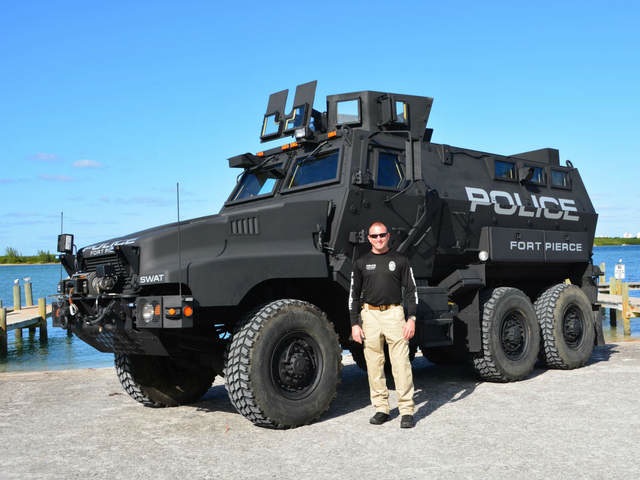
Despite far fewer officers dying in the line of duty compared with American citizens, police departments are not only increasing their use of protective and highly volatile gear, but are increasingly setting aside a portion of their budget to invest in new technology such as drones, night vision goggles, remote robots, surveillance cameras, license plate readers and armored vehicles that amount to unarmed tanks.

Though some officers are on board with the increased militarization and attend conferences such as the annual Urban Shield event, others have expressed concern with the direction the profession is heading.

For example, former Arizona police officer Jon W. McBride said police concerns about being “outgunned” were likely a “self-fulfilling prophecy.” He added that “if not expressly prohibited, police managers will continually push the arms race,” because “their professional literature is predominately [sic] based on the acquiring and use of newer weapons and more aggressive techniques to physically overwhelm the public. In many cases, however, this is the opposite of smart policing.”

“Coupled with the paramilitary design of the police bureaucracy itself, the police give in to what is already a serious problem in the ranks: the belief that the increasing use of power against a citizen is always justified no matter the violation. The police don’t understand that in many instances they are the cause of the escalation and bear more responsibility during an adverse outcome.

“The suspects I encountered as a former police officer and federal agent in nearly all cases granted permission for me to search their property when asked, often despite unconcealed contraband. Now, instead of making a simple request of a violator, many in law enforcement seem to take a more difficult and confrontational path, fearing personal risk. In many circumstances they inflame the citizens they are engaging, thereby needlessly putting themselves in real and increased jeopardy.”

Another former police officer who wished to remain anonymous agreed with McBride and told Balko,

“American policing really needs to return to a more traditional role of cops keeping the peace; getting out of police cars, talking to people, and not being prone to overreaction with the use of firearms, tasers, or pepper spray. … Don’t get me wrong, I’ve been in more than my share tussles and certainly appreciate the dangers of police work, but as Joseph Wambaugh famously said, the real danger is psychological, not physical.”

Release Us – a short film on police brutality by Charles Shaw

 MINT PRESS NEWS

Contributed by Secrets of the Fed of Secretsofthefed.com.

evolution-of-police-state

11 Shocking Facts About America’s Militarized Police Forces

11 Shocking Facts About America’s Militarized Police Forces

police-militarized

The militarization of police is harming civil liberties, impacting children, and transforming neighborhoods into war zones.

The “war on terror” has come home–and it’s wreaking havoc on innocent American lives.  The culprit is the militarization of the police.

The weapons used in the “war on terror” that destroyed Afghanistan and Iraq have made their way to local law enforcement. While police forces across the country began a process of militarization complete with SWAT teams and flash-bang grenades when President Reagan intensified the “war on drugs,” the post-9/11 “war on terror” has added fuel to the fire.

Through laws and regulations like a provision in defense budgets that authorize the Pentagon to transfer surplus military gear to police forces, local law enforcement are using weapons found on the battlefields of South Asia and the Middle East.

A recent New York Times article by Matt Apuzzoreported that in the Obama era, “police departments have received tens of thousands of machine guns; nearly 200,000 ammunition magazines; thousands of pieces of camouflage and night-vision equipment; and hundreds of silencers, armored cars and aircraft.”  The result is that police agencies around the nation possess military-grade equipment, turning officers who are supposed to fight crime and protect communities into what look like invading forces from an army. And military-style police raids have increased in recent years, with one count putting the number at 80,000 such raids last year.

In June, the American Civil Liberties Union (ACLU) brought more attention to police militarization when it issued a comprehensive, nearly 100-page (appendix and endnotes included) report titled, “War Comes Home: The Excessive Militarization of American Policing.”  Based on public records requests to more than 260 law enforcement agencies in 26 states, the ACLU concluded that “American policing has become excessively militarized through the use of weapons and tactics designed for the battlefield” and that this militarization “unfairly impacts people of color and undermines individual liberties, and it has been allowed to happen in the absence of any meaningful public discussion.”

The information contained in the ACLU report, and in other investigations into the phenomenon, is sobering. From the killing of innocent people to the lack of debate on the issue, police militarization has turned into a key issue for Americans. It is harming civil liberties, ramping up the “war on drugs,” impacting the most marginalized members of society and transforming neighborhoods into war zones.  Here are 11 important–and horrifying–things you should know about the militarization of police.

1. It harms, and sometimes kills, innocent people. When you have heavily armed police officers using flash-bang grenades and armored personnel carriers, innocent people are bound to be hurt.  The likelihood of people being killed is raised by the practice of SWAT teams busting down doors with no warning, which leads some people to think it may be a burglary, who could in turn try to defend themselves. The ACLU documented seven cases of civilians dying, and 46 people being injured.  That’s only in the cases the civil liberties group looked at, so the number is actually higher.

Take the case of Tarika Wilson, which the ACLU summarizes.  The 26-year-old biracial mother lived in Lima, Ohio.  Her boyfriend, Anthony Terry, was wanted by the police on suspicion of drug dealing.  So on January 4, 2008, a SWAT team busted down Wilson’s door and opened fire.  A SWAT officer killed Wilson and injured her one-year-old baby, Sincere Wilson. The killing sparked rage in Lima and accusations of a racist police department, but the officer who shot Wilson, Sgt. Joe Chavalia, was found not guilty on all charges.

2. Children are impacted. As the case of Wilson shows, the police busting down doors care little about whether there’s a child in the home.  Another case profiled by the ACLU shows how children are caught up the crossfire–with devastating consequences.

In May, after their Wisconsin home had burned down, the Phonesavanh family was staying with relatives in Georgia. One night, a SWAT team with assault rifles invaded the home and threw a flashbang grenade–despite the presence of kids’ toys in the front yard.  The police were looking for the father’s nephew on drug charges.  He wasn’t there.  But a 19-month-old named Bou Bou was–and the grenade landed in his crib.

Bou Bou was wounded in the chest and had third-degree burns. He was put in a medically induced coma.

Another high-profile instance of a child being killed by paramilitary police tactics occurred in 2010, when seven-year-old Aiyana Stanley-Jones was killed in Detroit.  The city’s Special Response Team (Detroit’s SWAT) was looking for Chauncey Owens, a suspect in the killing of a teenager who lived on the second floor of the apartment Jones lived in.

Officers raided the home, threw a flash-bang grenade, and fired one shot that struck Jones in the head.  The police agent who fired the fatal shot, Joseph Weekley, has so far gotten off easy: a jury trial ended in deadlock last year, though he will face charges of involuntary manslaughter in September.  As The Nation’s Mychal Denzel Smith wrote last year after Weekley was acquitted: “What happened to Aiyana is the result of the militarization of police in this country…Part of what it means to be black in America now is watching your neighborhood become the training ground for our increasingly militarized police units.”

Bou Bou and Jones aren’t the only case of children being impacted.

According to the ACLU, “of the 818 deployments studied, 14 percent involved the presence of children and 13 percent did not.”

3. The use of SWAT teams is unnecessary.  In many cases, using militarized teams of police is not needed.  The ACLU report notes that the vast majority of cases where SWAT teams are deployed are in situations where a search warrant is being executed to just look for drugs. In other words, it’s not even 100% clear whether there are drugs at the place the police are going to.  These situations are not why SWAT was created.

Furthermore, even when SWAT teams think there are weapons, they are often wrong. The ACLU report shows that in the cases where police thought weapons would be there, they were right only a third of the time.

4. The “war on terror” is fueling militarization. It was the “war on drugs” that introduced militarized policing to the U.S.  But the “war on terror” has accelerated it.

A growing number of agencies have taken advantage of the Department of Defense’s “1033” program, which is passed every year as part of the National Defense Authorization Act, the budget for the Pentagon.  The number of police agencies obtaining military equipment like mine-resistant ambush protected (MRAP) vehicles has increased since 2009,according to USA Today, which notes that this “surplus military equipment” is “left over from U.S. military campaigns in Iraq, Afghanistan and elsewhere.”  This equipment is largely cost-free for the police agencies who receive them.

In addition to the Pentagon budget provision, another agency created in the aftermath of 9/11 is helping militarize the police.  The Department of Homeland Security’s (DHS) own grants funnel military-style equipment to local police departments nationwide.  According to a 2011 Center for Investigative Reporting story published by The Daily Beast, at least $34 billion in DHS grants have gone to police agencies to buy military-style equipment.  This money has gone to purchase drones, tactical vests, bomb-disarming robots, tanks and more.

5. It’s a boon to contractor profits. The trend towards police militarization has given military contractors another lucrative market where they can shop their products.  Companies like Lockheed Martin and Blackhawk Industries are making big bucks by selling their equipment to agencies flush with Department of Homeland Security grants.

In addition to the actual selling of equipment, contractors also sponsor training events for SWAT teams, like Urban Shield, a major arms expo that has attracted increasing attention from activists in recent years.  SWAT teams, police agencies and military contractors converge on Urban Shield, which was held in California last year, to train and to promote equipment to buy.

6. Border militarization and police militarization go hand in hand. The “war on terror” and “war on drugs” aren’t the only wars helping police militarization.  There’s also the war on undocumented immigrants.

The notorious Sheriff Joe Arpaio, infamous for brutal crackdowns on undocumented immigrants, is the paradigmatic example of this trend.  According to the ACLU, Arpaio’s Maricopa County department has acquired a machine gun so powerful it could tear through buildings on multiple city blocks.  In addition, he has 120 assault rifles, five armored vehicles and ten helicopters. Other law enforcement agencies in Arizona have obtained equipment like bomb suits and night-vision goggles.

Then there’s a non-local law enforcement agency on the border: the Border Patrol, which has obtained drones and attack helicopters.  And Border Patrol agents are acting like they’re at war.  A recent Los Angeles Times investigation revealedthat law enforcement experts had found that that the Border Patrol has killed 19 people from January 2010-October 2012, including some of whom when the agents were under no lethal, direct threat.

7. Police are cracking down on dissent. In 1999, massive protests rocked Seattle during the World Trade Organization meeting.  The police cracked down hard on the demonstrators using paramilitary tactics. Police fired tear gas at protesters, causing all hell to break loose.

Norm Stamper, the Seattle police chief at the time, criticized the militarized policing he presided over in a Nation article in 2011.  “Rocks, bottles and newspaper racks went flying. Windows were smashed, stores were looted, fires lighted; and more gas filled the streets, with some cops clearly overreacting, escalating and prolonging the conflict,” wrote Stamper.

More than a decade after the Seattle protests, militarized policing to crack down on dissent returned with a vengeance during the wave of Occupy protests in 2011. Tear gas and rubber bullets were used to break up protests in Oakland.Scott Olsen, an Occupy Oakland protester and war veteran, was struck in the head by a police projectile, causing a fractured skull, broken neck vertebrae and brain swelling.

8. Asset forfeitures are funding police militarization. In June, AlterNet’s Aaron Cantuoutlined how civil asset forfeiture laws work.

“It’s a legal fiction spun up hundreds of years ago to give the state the power to convict a person’s property of a crime, or at least, implicate its involvement in the committing of a crime. When that happened, the property was to be legally seized by the state,” wrote Cantu.  He went on to explain that law enforcement justifies the seizing of property and cash as a way to break up narcotics rings’ infrastructure.  But it can also be used in cases where a person is not convicted, or even charged with, a crime.

Asset forfeitures bring in millions of dollars for police agencies, who then spend the money for their own uses.  And for some police departments, it goes to militarizing their police force.

New Yorker reporter Sarah Stillman, who penned a deeply reported piece on asset forfeitures,wrote in August 2013 that“thousands of police departments nationwide have recently acquired stun grenades, armored tanks, counterattack vehicles, and other paramilitary equipment, much of it purchased with asset-forfeiture funds.”  So SWAT teams have an incentive to conduct raids where they seize property and cash.  That money can then go into their budgets for more weapons.

9. Dubious informants are used for raids. As the New Yorker’s Stillman wrote in another piece,informants are “the foot soldiers in the government’s war on drugs. By some estimates, up to eighty per cent of all drug cases in America involve them.”  Given SWAT teams’ focus on finding drugs, it’s no surprise that informants are used to gather information that lead to military-style police raids.

A 2006 policy paper by investigative journalist Radley Balko, who has done the most reporting on militarized policing, highlighted the negative impact using informants for these raids have. Most often, informants are “people who regularly seek out drug users and dealers and tip off the police in exchange for cash rewards” and other drug dealers, who inform to gain leniency or cash from the police.  But these informants are quite unreliable–and the wrong information can lead to tragic consequences.

10. There’s been little debate and oversight.  Despite the galloping march towards militarization, there is little public debate or oversight of the trend.  The ACLU report notes that “there does not appear to be much, if any, local oversight of law enforcement agency receipt of equipment transfers.” One of the group’s recommendations to change that is for states and local municipalities to enact laws encouraging transparency and oversight of SWAT teams.

11. Communities of color bear the brunt. Across the country, communities of color are the people most targeted by police practices.  In recent years, the abuse of “stop and frisk” tactics has attracted widespread attention because of the racially discriminatory way it has been applied.

Militarized policing has also targeted communities of color. According to the ACLU report, “of all the incidents studied where the number and race of the people impacted were known, 39 percent were Black, 11 percent were Latino, 20 were white.” The majority of raids that targeted blacks and Latinos were related to drugs–another metric exposing how the “war on drugs” is racist to the core.

via Intellihub.com

July 8, 2013 – Decrypted Matrix Radio: Egypt Overthrown, Michael Hastings Crash Cover-Up, Wiretap Bounty, Police State Comandeering, Top 20 Obama Scandals

Egypt – Why The Muslim Brotherhood Was Overthrown: Cults And Democracies Don’t Mix

CLIP: Very Unusual Intense Hot Fire in Hastings Car Crash

And Now… Talking Train Window Advertisements

Average cost per ‘official’ wiretap in the United States: $50,452

Nevada Police face rare Third Amendment lawsuit for Force Comandeering Homes

Top 20 Obama Scandals: Quick List (via Intellihub)

North Carolina Police Lieutenant Warns Of Plans For Martial Law In 2013

North Carolina Police Lieutenant Warns Of Plans For Martial Law In 2013

nc-police-warning

In this broadcast of the Cybertribe News Network, a North Carolina Police Lieutenant calls in to give his first hand knowledge of preparations being made within his own department to train and prepare for martial law in the United States, possibly in the coming year.

Many similar reports are starting to trickle in from all across the country, through various independent media resources and even organizations like Oath Keepers.

The consensus is that a major economic event is expected, and that it will be used to provide cover for the institution of draconian policies being readied behind the curtain.

The exact timing of this event is not clear, but we do know the planning is being done, and that provisions are being put in place.

The following officer’s admissions are another startling indicator of just how close to the precipice we really are…

http://youtu.be/MAVGkU7_OQ4


March 25, 2013 – Decrypted Matrix Radio: NYPD goes Social, Monsanto Protectors, DHS Police State, Money Warnings, Drones InfoGraphic, Syrian Rebels, Cellphones & Toilets

March 25, 2013 – Decrypted Matrix Radio: NYPD goes Social, Monsanto Protectors, DHS Police State, Money Warnings, Drones InfoGraphic, Syrian Rebels, Cellphones & Toilets

Senate Passes Monsanto Protection Act Granting Monsanto Power Over US Govt

Are The Ammo Shortages By Design?

CONFIRMED: US/CIA Shipping weapons to Syrian Rebels

More people have access to cellphones than toilets

DHS Ammunition Stockpile: Over A Dozen Congressmen Demanding Investigation

DHS Armored Vehicles on the move! YIKES!

Russian Leader Warns, “Get All Money Out Of Western Banks Now!”

High-Tech NYPD Unit Tracks Criminals Through Facebook and Instagram Photos

AMAZING DRONES INFOGRAPHIC VISUAL
http://drones.pitchinteractive.com/

3-25

Every Week Night 12-1am EST (9-10pm PST)

– Click Image to Listen LIVE –

March 12, 2013 – Decrypted Matrix Radio: Brad Manning Audio Leak, Police State Expert Speaks, Prison Industry Profiting, GMO Vitamin Warning, Liar Cheney, Monsanto’s Bees

March 12, 2013 – Decrypted Matrix Radio: Brad Manning Audio Leak, Police State Expert Speaks, Prison Industry Profiting, GMO Vitamin Warning, Liar Cheney, Monsanto’s Bees

Bradley Manning Speaks! Leaked Audio from Trial

An Interview with Police Militarization Expert Radley Balko:How Cops Became Soldiers

Non-Violent Marijuana Arrests surpass Violent Crime Arrests- Prison  Industry Profits Running Wild!
GMO’s making it into ‘Natural’ vitamins & supplements

Monsanto (the Fox) buys Beelogics (The Henhouse). Nature in jeopardy of getting Hi-jacked!

Dick Cheney finally admits he lied on 9/11… kind of.
3-12

Every Week Night 12-1am EST (9-10pm PST)

– Click Image to Listen LIVE –

March 7, 2013 – Decrypted Matrix Radio: Rand’s Drone Filibuster, BitCoin Currency, Brennan Approved, Bill Gates Issues, ACLU Checks Police State

March 7, 2013 – Decrypted Matrix Radio: Rand’s Drone Filibuster, BitCoin Currency, Brennan Approved, Bill Gates Issues, ACLU Checks Police State

RAND PAUL DRONES FILIBUSTER!!!

Sen. Paul declares victory after Holder offers assurance on drones.. HMMMM

Sandy Hook: The Silence is Suspicious :

BitCoin: The Currency Of The Future?

Senate approves Brennan’s nomination to lead the CIA

Bill Gates: Up to NO GOOD!

ACLU Conducting Full Scale Report on Police Militarization

3-7

Every Week Night 12-1am EST (9-10pm PST)

– Click Image to Listen LIVE –

February 26, 2013 – Decrypted Matrix Radio: Expat Passport Catch, Wikileaks Manning Trial, Dodging Drones, FBI Cyber Hacks, Police State Examples

February 26, 2013 – Decrypted Matrix Radio: Expat Passport Catch, Wikileaks Manning Trial, Dodging Drones, FBI Cyber Hacks, Police State Examples

US Expat Taxes: The IRS Gets You at Passport Renewal Time

WikiLeaks: US ‘to call bin Laden raid Navy Seal to testify against Bradley Manning’
UPDATE: Judge strikes down dismiss over trial delay says ‘reasonable’

The Al-Qaida Papers – Drones

The FBI is inside Anonymous: Hacker Sabu has sentencing delayed again for helping the feds

FBI employees, entrusted with stopping computer crimes, commit them too

Obama Admin Aims Keyboard Commandos at Gun Control

Net providers begin warning of illegal downloads

A Police State ‘Example’ being set, with Raw Milk drinkers…

2-26

Every Week Night 12-1am EST (9-10pm PST)

– Click Image to Listen LIVE –

85yr old Austrian-American Describes Hitler’s Police State

85yr old Austrian-American Describes Hitler’s Police State

“If you needed elective surgery, you had to wait a year or two for your turn. There was no money for research as it was poured into socialized medicine. Research at the medical schools literally stopped, so the best doctors left Austria and emigrated to other countries. “As for healthcare, our tax rates went up to 80 percent of our income. Newlyweds immediately received a $1,000 loan from the government to establish a household. We had big programs for families.
Sandy Hook Police Audio Confirms Multiple Shooters on the Scene

Sandy Hook Police Audio Confirms Multiple Shooters on the Scene

Sandy-Hook-School-police-radio-scanner-transcript

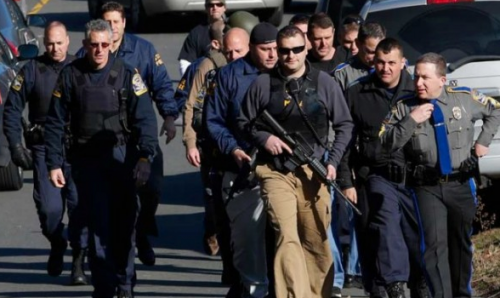
I’ve been listening to a stream of police dept. audio during the initial response to the Sandy Hook shooting.

This link has most of its action in the first four minutes:

https://www.youtube.com/watch?v=J8uVR7TifS

At roughly 2:38, a police voice says: “Party in custody.”

Then at 3:49, “We have a suspect down.”

This next link, for me, was somewhat clearer:

https://www.youtube.com/watch?v=3E-Ix_aaDhg&feature=endscreen

http://youtu.be/3E-Ix_aaDhg

Starting at roughly 3:13, there are relevant police comments:

“A teacher reports two shadows running past the building past the gym.”

“They’re shooting.” (??)

“Yeah, we got ‘em.”

“They’re coming at me down Kurt’s (sp) Way!”

“Got ‘em (?)…proned out.”

We get the distinct sense there are multiple shooters.

Whoever is proned out, whoever is in custody, whoever is “coming at me,” whoever is down…we don’t know what happened to them.

Reporters on the scene have, as far as I know, provided no information, and neither have police.

The suspects have disappeared down the memory hole.

Then we have these television interviews with families of the victims.

http://www.youtube.com/watch?v=1VizQGl8bu8&feature=youtu.be

http://www.youtube.com/watch?v=PmdXR3TtOvM&feature=endscreen

http://www.youtube.com/watch?v=ddF6UzgoPiY&feature=endscreen

It’s astounding. Parents are smiling. They’re actors from Central Casting? One thing is for sure.

They’re androids, if you measure their responses against reports of what happened in the Sandy Hook School.

And as androids, they’re only matched by the TV reporters who are interviewing them.

If you’re tempted to say the parents and family members are in shock, or they’re reacting to being on television, forget it. Their attitudes don’t match a massacre by any stretch of the imagination.

Is Sandy Hook/Newtown a Stepford Village? Are these people all programmed to be pleasant and accommodating No Matter What?

It’s about as bizarre as the purported video footage of the Aurora theater during the shootings there this summer. As people exit the lobby and come out on to the street, there is no sign of blood and no one is coughing from the reported tear gas inside the theater.

With these Sandy Hook parents, we’re looking at a level of conditioning in which Being Nice can completely overwhelm even the murder of one’s own child.

Tears? Not one person in these interviews has actual tears running down his or her face.

One of the fathers, Robbie Parker, has had his interview played and replayed all over the planet on YouTube, and you can watch him smiling and grinning, for all the world looking like he’s just been appointed CEO of a company he works for…and then he steps to a podium to make his statement, and as one poster succinctly describes it, “gets into character.”

This isn’t just an internal event. You can watch Parker huffing and puffing and pushing himself into what he thinks is a tragic and grief-stricken state of mind.

He does it so badly you wonder why no one in the room calls him on it. It’s beyond strange. Yet reporters later talked about Parker “struggling through tears and suffering to make a heartfelt statement…” The reporters are just as deranged as Parker is.

This boggling show isn’t confined to Sandy Hook. A commenter below a Deseret News article on Parker replied: “Brave young father, wise to forgive early and choose to move forward—nothing can be gained by dwelling on what cannot be changed.”

At times, watching these interviews, I wondered whether the parents had been conditioned to believe, in the face of ANYTHING, that good and nice children all take a choo-choo train to heaven and there is nothing to regret about their murders at all.

In an earlier article, I pointed out that, indeed, at 1hr:58 of The Dark Knight Rises, Gary Oldman, talking about an impending attack on “Strike Zone 1,” is pointing to the words “Sandy Hook” on a map in front of him.

These are the only legible words on the map.

By happenstance, the production designer of Dark Knight Rises, Nathan Crowley, is related to the infamous British black-magic legend, Aleister Crowley, who was sometimes called The Great Beast 666.

http://www.theartnewspaper.com

In an interview, Nathan said, “Yes, Aleister Crowley is a direct relative, he’s my grandfather’s cousin, but we were never allowed to even mention his name because we were a very Quaker family.”

Nathan is also the production designer of Lady Gaga’s video ad for her Perfume, Fame.

http://www.adweek.com

In terms of “the dark side,” the full 5:41 version of the video-ad makes Dark Knight Rises look like a Disney cartoon by comparison.

http://www.youtube.com/watch?v=az1-oLmxhHQ

But not to worry. What happened at Sandy Hook was exactly as the major media portrayed it, and nothing more. Sure. You bet.

Connecticut Police Spokesman Newtown Threatens To Prosecute Independant Journalist Whistleblowers

Connecticut Police Spokesman Newtown Threatens To Prosecute Independant Journalist Whistleblowers

http://youtu.be/N4CT4boLPrU

Maybe they should prosecute the MSM.

Posting Truth,Info,Questions or not believing official story Related to Mass Shooting In Newtown Connecticut at Sandy Hook Elementary School will result in arrests and prosecutions of perpetrators of WHISTLEBLOWING.
If you pay attention to what he says, he’s not talking about people impersonating the killer, he said “in any form” posting what he considers disinfo. This is a pathetic last ditch attempt to clamp down on info and try to salvage their official story.Will these guys prosecute themselves for violating First Amendment’s Rights Of The U.S. Contitution?
Now Come And Get Us Or Expect US.1-(800)-575-6330 Is how you can reach the offices of Lt J Paul Vance.

November 27, 2012 – DCMX Radio: Supreme Court OK’s Filming Police, TSA Opt-Out Harassment, Mexico Walmart Scandal, Bradley Manning Hero, Scahill Interview, Hypnosis History

November 27, 2012 – DCMX Radio: Supreme Court OK’s Filming Police, TSA Opt-Out Harassment, Mexico Walmart Scandal, Bradley Manning Hero, Scahill Interview, Hypnosis History

Supreme Court Rules Cops Can be Filmed

Journalists Harassed By Airport Officials For Passing Out TSA Body Scanner Opt Out Flyers – but a Sheriff Steps in to Defend rights!

BRADLEY MANNING UPDATE:Bradley Manning is being punished – and tortured – for a crime that amounts to believing one’s highest duty is to the American people and not the American government

Walmart CEOs Concealed Evidence Of Vast Bribery Scandal

Jeremy Scahill on Obama’s War Machine, American Assassinations & Journalism

A Quick-History of Hypnosis


Every Week Night 12-1am EST (9-10pm PST)

– Click Image to Listen LIVE –

November 23, 2012 – DCMX Radio:  Texas to Block NDAA/TSA, California Face Scanning, NSA Cyber Silence, Obama’s Secret Inauguration, 2025 Police Drones

November 23, 2012 – DCMX Radio: Texas to Block NDAA/TSA, California Face Scanning, NSA Cyber Silence, Obama’s Secret Inauguration, 2025 Police Drones

Texas Threatens to BLOCK the implementation of NDAA & TSA

NSA prohibits disclosure of Obama CyberSecurity effort

Facial Recognition Technology Explosion in California

Goldman Sachs CEO Lloyd Blankfein wants to raise your retirement age!

Chief Justice Roberts behind another ‘Secret Inauguration’ for President Obama 2nd Term

Manufacturer Design Competition promoting Automated Police Drones for US Highways by 2025


Every Week Night 12-1am EST (9-10pm PST)

– Click Image to Listen LIVE –

ACTIVISTS: How to Resist the Federalization and Militarization of Your Local Police

ACTIVISTS: How to Resist the Federalization and Militarization of Your Local Police

About nine months before a Senate subcommittee for investigations report blasted DHS fusion centers as colossal wastes of money, redundant bureaucracies and threats to our liberty, the Department delivered testimony to the House Permanent Select Committee on Intelligence called “Homeland Security and Intelligence:  Next Steps in Evolving the Mission.”

The testimony might as well have been called “We Are Doing Important Stuff, Seriously Guys, C’mon, Please Don’t Cut Our Budget!” It seems like every third sentence in it is an implicit acknowledgement and desperate rebuttal of the fact that DHS’ “intelligence mission” is largely redundant. There are 17 intelligence agencies in the United States at present. As the Senate subcommittee for investigations report on fusion centers observed, the “intelligence mission” DHS has spent hundreds of billions of dollars to implement is being more effectively executed by the FBI’s Joint Terrorism Task Force (JTTF) operations.
So what’s left for poor DHS? According to the January 2012 testimony: more of the same, with a (bad) twist. Read the following paragraph from the testimony keeping in mind what we learned here in Boston about the local fusion center’s spying on peaceful First Amendment protected speech and assembly. (We found that the DHS-funded Boston Regional Intelligence Center (BRIC) has been spying on peace activists and labeling them “Extremists” and “HomeSec-Domestic” threats in “intelligence reports” that could easily be shared with the federal government.)
As threat grows more localized, the prospect that a state/local partner will generate the first lead to help understand a new threat, or even an emerging cell, will grow.  And the federal government’s need to train, and even staff, local agencies, such as major city police departments, will grow. Because major cities are the focus for threat, these urban areas also will become the sources of intelligence that will help understand these threats at the national level, DHS might move toward decentralizing more of its analytic workforce to partner with state/local agencies in the collection and dissemination of intelligence from the local level.
A translation into non-beltway English: DHS is doubling down on its quest to transform local police departments into mini intelligence agencies. That’s a terrible idea and it is up to us to stop it.
Why resist police federalization? Put simply: we need police departments to respond to local issues, not serve as foot soldiers for the federal spy agencies. Fortunately, terrorism isn’t a major problem in 99% of cities in the United States. As Micah Zenko observes, if you live in the US you are as likely to be killed by your furniture as you are by a terrorist. But that fact has not stopped and will not stop DHS from showering your local police department with money and technology to enable its militarization and federalization, with terror threats as the alibi. Only we can stop this dangerous trend.
And it will likely take some serious organizing. After all, it’s highly unlikely that departments will easily give up access to the “free” federal money for surveillance gadgets and data sharing programs they’ve been raking in for the past ten years. The only way to bring some democracy to this largely shadowy process is to bring it yourself, like people in Oakland are doing right now by stirring up a storm about Alameda County’s plans to acquire surveillance drones.
How can you resist the federal government trying to turn your local police department into a mini-FBI? First you need to know what is going on. Visit your local police department’s website and see if it has posted any information about federal grants for equipment or information sharing programs. File public records requests to the department to learn how any federal monies have been spent over the past five years. (You can file public records requests quickly and easily here.) Then take what you find to the people.
After you’ve learned about what the police department is doing with federal funds, write about it for your local paper. Most local newspapers are happy to accept op-eds from people who live in town. If your area has a Patch online newspaper, write something for that. Spread the word in whatever way you can and make it clear to the local government that you are paying attention to what goes on at the police department.
Finally, bring the issue to your town or city governing body. Here in Massachusetts we have a very strong town government system (the strength of these local offices varies state by state, but it’s a good place to start no matter where you live).
So for example, if your research shows you that the local police department got lots of DHS cash for surveillance cameras and simply installed them without a public conversation on the merits of the enhanced spying, raise the issue with the governing body that controls the police department. Make it clear that you want all future federal grants to the police to be discussed and debated publicly, and that you want your elected officials to play a role in deciding policing procedures. Ask about data policies and whether the information from the cameras can be shared with outside agencies. If there’s the political will in the community, maybe you can get the cameras turned off like people did here in Cambridge, MA.
Let it be known that you want your community to retain local control over your local police. The bureaucrats at DHS will likely be sad if we can work together to reverse the troubling federalization and militarization of our local police departments — it very well might put many of them out of work — but our democracy will be much better off.
November 7, 2012 – DCMX Radio: Corruption in Afghanistan, Obama’s Drones, Wikileaks Grand Jury, Gazan Prisoners, Rejecting the Police State & Negativity

November 7, 2012 – DCMX Radio: Corruption in Afghanistan, Obama’s Drones, Wikileaks Grand Jury, Gazan Prisoners, Rejecting the Police State & Negativity

Afghan corruption, and how the U.S. facilitates it

4 More Drones! Robot Attacks Are on Deck for Obama’s Next Term

U.S. WikiLeaks Criminal Probe ‘Ongoing,’ Judge Reveals

Gaza, The World’s Largest Open-Air Prison

How to resist the federalization and militarization of your local police

Psychic Protection: Immunize Yourself Against Negative Energy


Every Week Night 12-1am EST (9-10pm PST)

– Click Image to Listen LIVE –

October 30, 2012 – DCMX Radio: After Hurricane Sandy Brings Police State, How to Party Like Goldman Sachs, The Meaning of Sacred Geometry

October 30, 2012 – DCMX Radio: After Hurricane Sandy Brings Police State, How to Party Like Goldman Sachs, The Meaning of Sacred Geometry

Hurricane Updates from the Zen Gardner – What next US Fukushima? Internet Take-Over?

National Guard Whistleblower: “Doomsday Preppers Will Be Treated As Terrorists”

How to Party Like a Goldman Sachs Banker – A Life of Excess

The Meaning of Sacred Geometry

Che Guevara Remembered in Palestine

Who Bought Your Politician? Check via Wired.com’s Embeddable Online Widget


Every Week Night 12-1am EST (9-10pm PST)

– Click Image to Listen LIVE –

Video: South Korean Riot Police Use Ancient Roman Warfare Tactics to Control Crowds

Video: South Korean Riot Police Use Ancient Roman Warfare Tactics to Control Crowds

http://youtu.be/xH8T8zaJjhU

Information about tactics can be derived from accounts of battles, but the very military manuals known to have existed and to have been used extensively by commanders, have not survived. Perhaps the greatest loss is the book of Sextus Julius Frontinus. But parts of his work were incorporated in the records of the historian Vegetius.

The importance of the choice of ground is pointed out.
There is an advantage of height over the enemy and if you are pitting infantry against cavalry, the rougher the ground the better. The sun should be behind you to dazzle the enemy. If there is strong wind it should blow away from you, giving advantage to your missiles and blinding the enemy with dust.

In the battle line, each man should have three feet of space, while the distance between the ranks is given as six feet.
Thus 10’000 men can be placed in a rectangle about 1’500 yards by twelve yards, and it was advised not to extend the line beyond that.

The normal arrangement was to place the infantry in the centre and the cavalry on the wings. The function of the latter was to prevent the centre from being outflanked and once the battle turned and the enemy started to retreat the cavalry moved forward and cut them down. – Horsemen were always a secondary force in ancient warfare, the main fighting being done by the infantry.

It was recommended that if your cavalry was weak it was to be stiffened with lightly armed foot soldiers.

Vegetius also stresses the need for adequate reserves. These could prevent an enemy from trying to envelope one’s own forces, or could fend off enemy cavalry attacking the rear of the infantry.
Alternatively, they could themselves move to the sides and perform an enveloping manoeuver against an opponent.

The position to be taken up by the commander was normally on the right wing.

The tortoise was a essentially defensive formation by which the legionaries would hold their shields overhead, except for the front rows, thereby creating a kind of shell-like armour shielding them against missiles from the front or above.

Who Stopped Police Helicopter From Pursuing Norwegian Terrorist Anders Breivik?

Who Stopped Police Helicopter From Pursuing Norwegian Terrorist Anders Breivik?

Despite having his number plate phoned in the Oslo police failed to follow Anders Breivik on 22/7 from Oslo to Utoya island. But was that a genuine error or part of a wider operation to paralyse national police reaction including spies and agents within the Norwegian security forces?

Oslo Police Department’s Operation Leader Britt Børve, Britt Borve – it appears blocked the anti-terror DELTA force pursuit of pro-Zionist, anti-Muslim ‘crusader’ terrorist Anders Breivik. Her identity has been hidden from press and public, only her initials were revealed, but looks likely according to those in the know that it was indeed her that twice blocked requests for the helicopter.

Oslo policewoman Britt Borve

Operation Leader Britt Børve at the Oslo Police Department operation HQ on 22/7 had the very highest authority and did not have to ask anyone before sounding the national alarm system, alerting the media and activating the helicopters. She denied twice the DELTA anti-terror force’s requests to use the police helicopter, she didn’t mobilise any other helicopters that could come to the AUF Labour Youth’s rescue at Utøya island, and she didn’t forward the tip from a member of the public about the Fiat Duplo van with the green registration plates and the number VH24605 to the region’s police districts, the radio, TV & newspapers. She repeatedly denied neighbouring police districts’ offers to support the Oslo PD operation, and she did not order roadblocks and control posts. All in all I find it very suspicous that the mass media protects her identity, by not naming her in piblic. Who is to say that she was NOT a part of the terror operation, when she acts in such a high degree as a supporter of Anders Breivik?

Norwegian: Operasjonsleder Britt Børve ved Oslopolitiets operasjonssentral 22/7 var altså aller høyeste myndighet og trengte ikke spørre noen om lov til å slå riksalarm, varsle mediene og sende opp helikoptrene. Hun avslo to ganger DELTA-troppens anmodning om bruk av politihelikoptret, hun mobiliserte heller ingen andre helikoptre som kunne komme AUF-erne på Utøya til unnsetning, og hun videresendte ikke publikumstipset om varebilen med de grønne skiltene merket VH24605 til Østlandets politidistrikter, radio, TV & aviser. Hun avslo flere ganger nabodistriktenes tilbud om politistøtte, og hun satte ikke opp veisperringer. Summa summarum syns jeg det er meget suspekt at massemediene beskytter hennes identitet, ved ikke å navngi henne. Hvem sier at hun IKKE var en del av terroroperasjonen, når hun i så sterk grad opptrer som støttespiller for Anders Breivik?