Whistleblower: The NSA Is Lying–U.S. Government Has Copies of Most Of Your Emails

Whistleblower: The NSA Is Lying–U.S. Government Has Copies of Most Of Your Emails

In his first television interview since he resigned from the National Security Agency over its domestic surveillance program, William Binney discusses the NSA’s massive power to spy on Americans and why the FBI raided his home after he became a whistleblower. Binney was a key source for investigative journalist James Bamford’s recent exposé in Wired Magazine about how the NSA is quietly building the largest spy center in the country in Bluffdale, Utah. The Utah spy center will contain near-bottomless databases to store all forms of communication collected by the agency, including private emails, cell phone calls, Google searches and other personal data.

Binney served in the NSA for over 30 years, including a time as technical director of the NSA’s World Geopolitical and Military Analysis Reporting Group. Since retiring from the NSA in 2001, he has warned that the NSA’s data-mining program has become so vast that it could “create an Orwellian state.” Today marks the first time Binney has spoken on national television about NSA surveillance. This interview is part of a 5-part special on state surveillance. Click here to see segment 2, 3, 4 and 5. [includes rush transcript]

Bitcoins & The Future Of Online Currency

Bitcoins & The Future Of Online Currency

Bitcoins are not mere drug currency.
Bitcoins are not failing.
Okay?
Are we clear about that?

Good.

The future of online commerce looks to rely less and less on the physical amount of money you have in your bank accounts and wallets and more on what you could call “digital” wallets: online reservoirs where you store money. Really, we already use some variation of a digital wallet, we just don’t easily acknowledge it. You work, you get paid via direct deposit, numbers change in your checking account, you use debit and credit cards to make transactions, you go back to work. Rinse, repeat. You hardly ever see cash unless you deliberately withdraw it from an ATM. Anymore, our money consists of strings of number values running through some computer located who knows where. We just confidently assume that all that money is actually staying or going where it should be staying or going.

While that describes our current model of commerce, it also serves as a fair portrait of Bitcoins, the emerging currency exclusive to the Internet.

If you’re familiar with Bitcoins and run an online business, how do you feel about accepting this form of currency? Cash currency has never kept somebody from getting ripped off, so what is the main hesitation for you and your business when it comes to accepting an exclusively online currency? If you’re unsteady about it right now, what would you like to see change with Bitcoins (or any type of online currency) before you were more comfortable with using it? Or, are you totally onboard with this form of currency already? Share your thoughts with us and other readers below in the comments.

Essentially, Bitcoins are an intangible currency, really no different in action than the numbers bouncing up and down in your bank account. Alternately, instead of representing sums of physical currency, Bitcoins are literally a majestic sequence of unique numbers that can be traded for goods. Instead of swapping wads of bound fibers and inks that are woven together into this germy thing we call cash, Bitcoins exist in a purely digital tapestry. It’s an experiment in decentralized currency, and while it’s been a good experiment and still has some growing to do, it doesn’t show any signs of disappearing anytime soon.

While it’s still got some time to really appreciate and grow stronger as a currency, a purely online currency will exist in one form or another. It won’t ever replace your tangible currency, but work alongside it for all of your online consumer decisions.

To find out more about the current state of Bitcoins and what will happen with them in the near (and far) future, I got in touch with Gavin Andresen, the Lead Core Bitcoin Developer, about the developments of the past year regarding Bitcoins and why this novel currency could feature prominently in the future of online commerce.

Bitcoins: A Primer

Money as an object is meaningless. It’s paper and and some inks and, thanks to people, lots of bacteria. It’s an arbitrary token that merely represents a commercial promissory value people can earn in exchange for goods or services that can then either be saved or spent on other goods or services. Dollars, euros, yen, pounds, rupees, tobacco leaves, rands – it doesn’t matter what object you invest value into, it’s the idea behind the currency that buttresses its value. The Bitcoin is no different.

The only difference is that, as opposed to physical money that you’ll stuff into your pockets and wallets, you will likely never actually hold a Bitcoin (yes, there are physical versions of Bitcoins if you absolutely must have a real version to thumb around in your palms). Just because you’re likely to never touch one, though, doesn’t mean that Bitcoins are any less valuable than the bills you have folded up in your right pocket. Instead, think of it like this: you are no more likely to hold a Bitcoin in your hand than you are to hold Pythagoras’ theorem in your hand.

What does distinguish this disembodied currency from its corporeal familiars, however, is that Bitcoins are not dependent on anything except the people who produce and use it. No governments, no banks, no organizations – just people. A truly anarchistic, peer-to-peer currency.

For a simplified explanation for how the Bitcoin market works on a consumer level, have a look at this video put together by We Use Coins.

The currency, however, doesn’t just fall into your lap like a prize from a cereal box, nor is it just magically conjured up from the imagination like the latest Internet meme. The production of Bitcoins is best explained through the simile of gold mining. Instead of boring through a mountain to unearth precious metals, new Bitcoins are generated by unlocking a mathematical sequence called a block chain and are doled out in increments of 50. The people that produce these Bitcoins, then, are known as miners (that’s actually the technical term for Bitcoin producers, too, not just a metaphorical descriptor). These miners, however, have traded in their helmets and pickaxes in exchange for loads of GPU firepower and very sophisticated software capable of deciphering the block chains. The software works in tandem across a network to solve these cryptographic proofs and the miner who is the first to solve the block chain will receive the 50 Bitcoins. Once a block chain has been unlocked, it is added to a ledger in order to prevent those Bitcoins from double-spending.

Eventually, as more blocks are solved, fewer Bitcoins will be generated because the block chains will be worth fewer new coins. Solving a block chain today is worth 50 new Bitcoins, but as of this December that reward will be reduced to 25 Bitcoins. Some time off in the future, it will be reduced again to 12.5. The gradual reduction in rewards works to mitigate the generation of new Bitcoins so as to avoid flooding the market, which would result in a devalued currency.

As more miners work to generate Bitcoins, the difficulty in unlocking the block chains increases so as ensure that a new block is generated only every 10 minutes on average. The increased difficulty of unlocking a block chain’s sequence is designed in such a way that, over time, the maximum capacity of Bitcoins that will be generated will be 21 million. Added to the multiplied difficulty of solving subsequent block chains, more and more computer power is required, which some have said could be a deterrent for would-be miners from working on the more difficult block chains. Andresen disagrees with the argument that hardware needs are becoming preventive. “Mining Bitcoins is becoming increasingly energy efficient,” he says. “Bitcoin miners want to pay as little as they can for electricity, so they’re constantly working to make mining more efficient.”

Energy requirements wouldn’t really matter in the grand scheme of Bitcoin production anyways, Andresen explains, as the Bitcoin production process is smart enough to adjust for variations in the miner work force. “The Bitcoin system adjusts itself so that the target number of Bitcoins are created about every 10 minutes, no matter how many miners there are.”

He adds, “The number of Bitcoin miners has almost nothing to do with how quickly Bitcoin transactions are processed, so it doesn’t matter to the Bitcoin system how much energy or how many miners are working – as long as there is one, the system will work.”

The production of Bitcoins isn’t infinite, though. In fact, there is a fixed amount that will ever be produced: 21 million. Although that peak Bitcoin mark isn’t expected to be reached until 2140, the number of Bitcoins generated will begin to taper off toward zero well before that, at which point miners will then be compensated with Bitcoin transaction fees. As the generation of Bitcoins decreases over time, the cost of a transaction using Bitcoins will increase, which these blocks exist to verify. In lieu of transaction fees, though, Andresen postulates that miners could also be compensated by a “more complicated arrangement between merchants that want their transactions confirmed quickly and securely.” One way or another, though, the monetary reward for generating Bitcoins will always be present.

As of this year, over 8 million Bitcoins have been generated. The first block of Bitcoins to be unlocked was completed by Satoshi Nakamoto, who could be considered the progenitor of Bitcoins. As Wired Magazine’s Benjamin Wallace covered extensively in a piece about bitcoins last year, Nakamoto might be best understood as the Tyler Durden of the Bitcoin culture. An effluvium of mystery envelopes Nakamoto as no one is certain of who he is or where he came from or, most intriguing, where he disappeared to following his last public communication near the end of 2010. It’s rumored the name was a pseudonym or that Nakamoto was actually a collective of developers. It’s even been suggested that Nakamoto was a nom de guerre for assorted bodies of the United States government. Nobody knows, and every major player in the Bitcoin industry denies being Nakamoto.

At this point, though, as the Bitcoin system is beginning to become more stabilized and the project is on the cusp of transcending any one person, does the origin of Bitcoins really matter anymore? It’s been around long enough to confidently assess that dealing in Bitcoins is likely not some kind of Faustian gamble. Besides, one of the prominent features of Bitcoins is its near-anonymity of the users who deal with it, a quality celebrated by Bitcoin proponents. If the currency users are mostly anonymous, why then shouldn’t the progenitor of Bitcoins be anonymous, too? If the shoe fits, right? We could all be Nakamoto and none of us would be Nakamoto. To obsess over the origin of Bitcoins threatens to belie the hard work that the currency’s current legion of developers are doing in order to bolster Bitcoins into a formidable, viable option for online commerce.

The Problem With Bitcoins

The Bitcoin has had a tumultuous twelve months. Perhaps its biggest mainstream debut to date happened in June 2011 when Gawker’s Adrian Chen published a piece about the underbelly of the Internet, the Silk Road, where you can buy, among other things, any fashion of drugs (drugs I didn’t even think existed anymore) one desires. Because of the anonymity that accompanies the use of Bitcoins, the Silk Road trades exclusively in the currency. As Gawker’s story was many people’s introduction to Bitcoins, the piece carelessly marginalized it as The Currency for underground drug trafficking on the Internet.

Regardless of Gawker’s oversights, Bitcoins blew up. The value of Bitcoins skyrocketed after Chen’s piece began to circulate and inspire interest in legions of new potential customers of Silk Road. Consequently, Senator Chuck Schumer called for a federal investigation into the Silk Roadin order to hopefully shut it down. Now that the Bitcoin market had attracted the attention of the United States government, the popularity of the currency continued skyward.

The boom was short-lived, though, as it was not an organic and sustainable growth. It was an artificial trend born from a sudden onslaught of sensational media attention that ballooned the value of the currency. Being at the mercy of the public’s caprice, though, the value of Bitcoins crashed back to Earth a month later. By August, it had returned to its pre-Gawker levels.

Five months after the Gawker piece, Wired was preparing the toe-tags for Bitcoins, citing the currency’s sustainability problems and increasing lack of interest in the continued production of Bitcoins.

Andresen concurs that Bitcoins were pushed out onto the main stage long before the system was ready to handle that kind of attention. “We had a press avalanche last year,” he says, “Where the first couple of mainstream articles about Bitcoin caught the attention of other reporters, who in turn also wrote about it, which then triggered even more press.”

He continues, “That was both great and terrible for the project: great because it drew a lot more technical and business talent to look at Bitcoin and start Bitcoin-related projects, but terrible because when people realized that Bitcoin still has a lot of growing up to do, the speculative bubble popped.”

It’s misleading to say that Bitcoins failed because of that popped bubble. True, investing in Bitcoins currently isn’t as profitable as it was for a brief period last year, but that kind of inflation was artificially generated and really should never have happened in the first place. More, it’s probably not the last time the Bitcoin will encounter some heavy turbulence. “I think it is very likely the same thing will happen again sometime in the next few years as other parts of the world discover Bitcoin or it is re-discovered in Europe and the U.S.,” Andresen says. “I expect the wild price fluctuations to diminish over time as Bitcoin infrastructure grows up and speculators start to get a better idea of the real value of Bitcoin.”

That’s Money 101 for you, though: the potent volatility of supply and demand working upon, for better or worse, the unpredictable engines of human interest. Adding to the uncertainty is the fact that, most obviously, people already have a form (if not multiple forms) of currency, which has likely created an erroneous impression for the laity that Bitcoins are a second-class currency.

Then again, Bitcoins were never really intended to launch like an unstoppable money-missile into the future. Nakamoto, Andresen, and other Bitcoin developers have always cautioned investors that Bitcoins should at best be considered an experiment. “I tell people to only invest time or money in Bitcoin that they can afford to lose,” Andresen says. “There are a lot of things that could possibly derail it, ranging from some fundamental flaw in the algorithm that everybody has missed (he doesn’t see this as a likely possibility at this point) to world-wide government regulation (also unlikely, he says) to some alternative rising up and replacing Bitcoin.”

In a way, the story thus far of Bitcoins as an unpredictable investment is the quintessential story of the Internet as a whole. Every prominent company that currently claims a seat among the pantheon of technology giants – Apple, Google, Facebook, Twitter, IBM, et al. – has come into that position due to the rise and fall of previous online ventures. The lessons gleaned from the decline of previous companies like the Myspaces and Friendsters and Lycos is likely the only reason the current generation of tech leaders have managed to prevail for so long. In the end, the diminished presence of these companies is less a woeful tale of failure and more a triumphant testament to how resilient and efficient the evolution of ideas has been on the Internet, especially in such a short amount of time.

With Bitcoins, it remains to be seen if it will eventually be minted as a mainstay in online culture or merely serve as an early milestone in the continuing evolution of online currency. Andresen is optimistic, though, that Bitcoins are here to stay even in light of competing online currencies possibly popping up in the future. “I think to overcome Bitcoin’s head-start, an alternative will either have to have a large company or government backing it and marketing it. Or else, it will have to be radically better in some way,” he says.

“There seems to be a perception that Bitcoin is in a winner-take-all race against other currencies; either everybody in the world will be using it for all of their online purchases in 50 years or it will not exist. I think the online payment world will like our current world of currencies – different currencies used in different places. The online payments won’t be divided by geography, though it might be divided by language or culture or social network.”

As it were, the currency network’s public image may have taken a bruising last year, but the reports of Bitcoin’s demise appear to have been exaggerated.

The Currency of the Future?

For now, the Bitcoin experiment appears to have weathered the Great Media Blitzkrieg of 2011. Bitcoins’ value is once again growing at the organic rate it was intended to grow at. So… to 2140 and beyond, right?

“I’m not even going to try to predict what will happen in the year 2140,” Andresen is quick to say. His focus is more attuned to the more immediate future of Bitcoins. “In December of this year, the Bitcoin will be 4 years old and the number of new Bitcoins produced will be cut in half. I think we will learn a lot when that happens and that will give some insight into what will happen over the years as Bitcoin production slowly drops to zero.”

Like any model of currency, it’d be a risk to really put all of your eggs into the Bitcoins basket. The currency could have long-term staying power. Then again, it could exist as a prototype that ends up producing a more advanced model of online currency and eventually be supplanted by something like a Bitcoin 2.0, for lack of a better term. Either way, some version of Bitcoin will continue to grow and become a part of our future experience with online commerce.

“I think there will eventually be one dominant currency that is used for 80% of worldwide online transactions,” Andresen predicts, “but I think there will always be alternatives. The most likely outcome in my lifetime, the next 40 years or so, is most people will use their national currencies when purchasing goods and services from other people in their own countries but will use something else for international payments.”

Naturally, as Bitcoins continue to evolve, developers like Andresen are working hard at ensuring the private security of Bitcoin users. Andresen says his past six months have been spent building “multi-signature transactions” for the Bitcoin network. He explains the multi-signature security feature as thus: “They are kind of like if you took all of the paper money in your wallet and then tore it in half and put half in your safe deposit box and kept the other half in your house. A robber would have to break into both your house and your safe deposit box to steal your money.”

You’d be hard pressed to find that kind of security with your current stash of cash if for nothing else but because it would be ungodly inconvenient for the consumer, to say nothing of the ambitious thief. Andresen says that’s one of the major advantages Bitcoins will have over our current terrestrial currency: you can conjunctively store your Bitcoins in two places at once so that in order to use them, a person would need access to both storage sites. One location where you might store your Bitcoins could be a secure website run by a bank which acts as the proverbial safe deposit box for Bitcoins whereas the other could be your computer or smartphone.

“To steal your Bitcoins, thieves would have to break into both your computer or smartphone andyour bank. And, it would be impossible for anybody at the bank to steal them without first breaking into your computer.”

The infrastructure for this multi-signature security technology is still in production, he says, but he expects that by the end of this year “there will be easy-to-use, incredibly secure and convenient solutions for storing and spending Bitcoins.”

With that kind of unprecedented level of security, it’s even possible that in the future Bitcoins might become a wise means for stashing your savings.

While the security advances will likely be a strong draw for future Bitcoin investors, perhaps of equal importance to the gradual growth of Bitcoins will be its acceptance as a form of payment with more online businesses, but that’s all in due time. As the reliability and legitimacy of Bitcoins is developed over time, don’t be surprised to see more online businesses begin accepting it. For now, though, the goal is to nurse the Bitcoin economy to a level where it will persevere the next blizzard of media attention the developers anticipate in the coming years. It’s possible Bitcoins may endure another “rise-and-fall” inflation in the future, but hopefully it won’t so easily shake the faith of the masses, at least as badly as last year’s roller coaster appears to have done.

In the meantime and in-between time, reconsider what those figures in your bank account really mean to you. You might see dollars or whatever your country’s currency happens to be, but the reality is that what you’re using these days intrinsically isn’t so far removed from Bitcoins. The Bitcoin experiment may or may not survive to 2140 but even if the Bitcoin itself were to disappear, the very idea of it is powerful enough that the development of an online currency will undoubtedly continue.

Source: http://www.webpronews.com/bitcoins-the-future-of-online-currency-2012-04

Opinion: Why we need Anonymous 2.0

Opinion: Why we need Anonymous 2.0

by Lisa Vaas on April 24, 2012

A few thoughts on the “hacktivist” group Anonymous that came out of Josh Corman and Brian “Jericho” Martin’s keynote at theSOURCE security conference in Boston last week:

  1. Hacktivist is a sloppy term. A small percentage of those who claim affiliation with the ideology, or movement, or brand, or whatever we wind up calling it, are hackers or activists (5 to 10 percent are skilled hackers or activists, while the lowest common denominators “don’t do much” and are “glorified cheerleaders, at best”, they said).
  2. We need a better, more efficient Anonymous.

Before we explore their rationale for Anonymous 2.0, it’s worthwhile to know why Corman – director of Security Intelligence for Akamai – and Jericho – a “hacker turned security mouthpiece” – care, and why they think we all should.

Here’s how Jericho explained it:

"Most problems on the Internet don't affect us. With Anonymous—and we're using Anonymous as an example for this presentation, but it could be anybody: Anonymous or a splinter group [such as LulzSec] or the next [group] that comes along—almost everyone is involved. Vigilantes, 'good guys,' analysts ... with civilians stuck in the middle. Those whose information is doxed, those people are getting affected more than anyone. If you're affected, you're involved. … Look at [Anonymous's] influence. From analysts, to law enforcement, to former members, to the media, to organized crime, to foreign nation states. "

Nobody in technology, nor in business, for that matter, can get away from fighting Anonymous or other similar groups, whether the fight transpires in media or anywhere else, he said.

So that’s why they care, and why we must. Beyond our own, personal involvement, a broader concern is that much of what we lay at the Anonymous doorstep may be branded as such merely as a smokescreen.

As Corman noted, this amorphous thing we call “Anonymous” has become the perfect scape goat. Anonymous members continually drop in and out of affiliation with, or actions taken on behalf of, the group.

Any attack can be labelled with the Anonymous brand, regardless of whether it was sincerely done under activist principles or is simply branded that way to cover the tracks of, say, a nation state (sound familiar? “Suspicious attack. Must be China!”).

For all the mayhem they’ve caused, much of what “Anonymous” has “done” (I use quotes because there’s often [usually?] no way to determine actual perpetrators) is to simply exploit low-hanging fruit, Jericho said, thus erecting worthwhile signposts to cyber security flaws.

As Corman put it:

"Anonymous has held up a mirror to our defects. [They've done] nothing really hard. They've just showed us how insecure we are [with regards to] basic Internet hygiene. If they turned up the heat, it would be even worse."

In a nutshell, if we can’t deal with the worst the Anonymous-affiliated have to offer, “we’re f*cked,” Jericho said. If that word offends you, “you have to get out of the industry,” because sooner or later, in one fashion or another, you’ll likely have to deal with Anonymous.

Which leads to why we we should wish for, or even need, a better, more efficient Anonymous.

As it is, Jericho said, Anonymous are “a crude, blunt weapon”. Why not a better Anonymous? One that’s more efficient and that gets stuff done with less collateral damage? One that doesn’t dox the personal information of innocent people and put them and their families at risk?

The pair have concocted a three-step plan for Anonymous 2.0. It’s fully laid out in part 5 of their “Building a Better Anonymous” series.

The steps for creating what they call a “a straw man of ‘organized chaos'”:


  • Statement of belief, values, objectives, and first principles – i.e. WHY you have come together
  • Code of conduct and operational parameters – i.e. HOW you conduct your pursuit of your common goals
  • A plan for streamlining success, increasing potency, and mitigating risks – i.e. WHAT will make you more successful


Would such codification cause the group to splinter? Hopefully. The group needs to specialize, Corman and Jericho said. An Anonymous splinter devoted to free-speech issues would be a boon if it could devote itself to the task at hand, for example.

Does Anonymous agree with the proposals? Anonymous has no unified voice, the keynoters said, so it’s a moot question — it is, after all, a composite, rather than a singular, monolithic group, and there are any number of levels of allegiance and reasons for participating.

But some regular actors in the movement have agreed with the tenets – one plus of a codified Anonymous is the ability to disavow a given action that goes against the stated objectives of the group.

Jericho pointed to the recently announced MalSec (Malicious Security) group as an example of how new splinter groups might codify their beliefs. From their YouTube video:

"For many years we have watched as more unconstitutional laws are proposed and passed and as censorship, disinformation, and corruption have become the norm."

"In an attempt to bring these acts to a halt, we are targeting the very people that have attempted to do us harm. We do, however, fervently believe in free speech. Everyone should be able to express themselves freely, even if others disapprove. As such, we have decided never to remove the original data, when a website of an enemy is defaced."

That’s a start. That’s a statement of a belief – free speech – and a practice – refraining from removing original data. Thus the group can disavow fraudulently labelled MalSec actions.

Now, regarding the term hacktivist: I’ve used it. Lots of journalists have used it. I’m not going to use it anymore.

When Corman and Jericho polled the audience to ask how many thought that the law was winning in its fight against Anonymous, only one hand went up.

That only shows that Anonymous has won the media, Jericho said, whereas the law has failed to engage our attention.

The keynoters’ research has shown that some 184 Anonymous actors have been arrested and charged in 14 countries. Only one in three Anonymous-branded actions make the news, one in five make the news on tech sites, and only one in 30 make the mainstream news.

These are guestimates. The point is, law enforcement is making busts. They need to rattle their sabers more, and we journalists need to pay attention.

We also need a better term than hacktivist, which embodies the romantic type of Robin Hood image that Hollywood, journalists and the public adore.

“The Anonymous affiliated” is kludgy. But perhaps we won’t be able to come up with a better term until Anonymous itself draws its boundaries, making it possible for a given action to be rightfully branded or justifiably disavowed.

If you can think of a better term to use in the meantime, please share it in the comments section.

And kudos to Corman and Jericho for opening up such a thoughtful discussion about a topic that’s too easily simplified and romanticized.

Source: http://nakedsecurity.sophos.com/2012/04/24/opinion-why-we-need-anonymous-2-0/

Jacob Appelbaum on Being Target of Widespread Gov’t Surveillance

Jacob Appelbaum on Being Target of Widespread Gov’t Surveillance

We speak with Jacob Appelbaum, a computer researcher who has faced a stream of interrogations and electronic surveillance since he volunteered with the whistleblowing website, WikiLeaks. He describes being detained more than a dozen times at the airport and interrogated by federal agents who asked about his political views and confiscated his cell phone and laptop. When asked why he cannot talk about what happened after he was questioned, Appelbaum says, “Because we don’t live in a free country. And if I did, I guess I could tell you about it.” A federal judge ordered Twitter to hand over information about Appelbaum’s account. Meanwhile, he continues to work on the Tor Project, an anonymity network that ensures every person has the right to browse the internet without restriction and the right to speak freely. This interview is part of a 5-part special on growing state surveillance. Click here to see segment 1, 2, 4 and 5surveillance. [includes rush transcript]

SOURCE:
http://www.democracynow.org/2012/4/20/we_do_not_live_in_a

A Message from House of Anonymous

A Message from House of Anonymous

We are Anonymous, and we do not forgive. Forgiveness requires humility, humility requires dignity. We have neither.

We are void of human restraints, such as self respect and common sense.

All those who break this pact will be eliminated without hesitation. And by elimination we will put their name on an icky photo and shit in each others’ mouths.

Those who perform reckless actions or wish to harm the Anonymous will be eliminated without hesitation. Again, elimination is our word for doing very little about it.

Failure is the basis of our existence.

Enemies of the Anonymous include anyone who can point out how many times we contradict ourselves in a single sentence.

Our enemies are to be flaccidly made fun of, using the same tired photoshopped stuff stolen from someone else.

Anonymous must “work” as one. No Anonymous knows anything.

Betrayal of Anonymous is both ironic and appropriate.

Manipulation of the weak and innocent is something that the truly weak believe indicates power, as such we do it alot. Not well but, often. Once a victim is no longer commodious, they are to be eliminated. Also, the cow was slaughtered in the abattoir.

REPRODUCE. REPRODUCE. REPRODUCE. Like cockroaches and Catholics we need to make sure our stupidity is at least backed by numbers. Quantity over quality. Loud = Funny.

No man-made or natural occurance can harm the Anonymous. Except when Mom and Dad ground us from the computer. That’s pouting time.

Under no circumstances are Anonymous human. We are beneath humans and mortality.

Anonymous are not to partake in meaningless tasks….pffft Ahhh dude I’m totally shitting ya, that’s all we do.

You are legion, for we are many. That makes it easier to defend ourselves when smart people tell us to stop acting like idiots.

Anonymous is everywhere at all times, we like to loiter. we really have nothing better to do than hang out. Yet, singular Anonymous are not permitted to know everything. Which is good, because we know very little.

All have the potential to be Anonymous until they choose to drop a bag of fertilizer on their nutsack and grow a pair. Those who are not Anonymous are to be eliminated….or photoshopped into a nasty photo which ever one requires less standing and walking. Or hack a paypal account and charge PS3’s, send massive amounts of cowardly and empty death threats or, whatever weak ass “criminal” act we think will make us appear powerful.

Anonymous has no weakness or flaw. Well, except maybe getting laid. That ain’t happening. And a whole bunch of others. But besides crippling personality flaws, body odor, lack of humor, not getting laid and relying on shock value and memes to speak for us…we have only a few more flaws and weaknesses.

Laws of Nature and Man cannot restrain the Anonymous. However, an IP ban, power outage or, a light punch to the solar plexus can drop us like a bag of bad habits.

Anonymous is Zero. Feuding and argument amongst the Anonymous is both constant and unavoidable.

Anonymous is in control at all times. We just choose to waste all of it.

Anonymous has no identity. Those who are not Anonymous yet know our presence must be eliminated. Again and, I can not stress this enough people, “eliminate” means sitting on our asses all day pretending to jerk off to Goatse, while our mothers yell at us to get jobs.

Anonymous cannot be contained by mere restraints. We are far too fat to fit any normal conveyance, handcuffs or standard size airline seats.

Anonymous are all equally stupid. No one is more retarded then Anonymous.

Anonymous must obey the Code. Those who do not are to be raped with our mighty e-peens, until supper time and homework, then an hour of Gameboy before bedtime.

Anonymous worships nothing because anonymous is nothing.

Anonymous cares for nothing, but Anonymous. Our existence is vapid, myopic and limited.

Humanity is the virus; Anonymous is the open wound that invites it in.

We are Anonymous, and we do not realize how little we matter.
SOURCE:
http://anoncentral.tumblr.com/post/19748241813/a-message-from-house-of-anonymous


Meet Kaepora: Nadim Kobeissi Creator of Secure Chat – CryptoCat

Meet Kaepora: Nadim Kobeissi Creator of Secure Chat – CryptoCat

UPDATE: The developer of a leading open source application for encrypted online chat, Nadim Kobeissi, claims to have been detained and interrogated at the US-Canadian border yesterday. “Out of my 4 DHS interrogations in the past 3 weeks, it’s the first time I’m asked about Cryptocat crypto and my passport is confiscated,” tweets Kobeissi. The US interrogator also asked about which encryption algorithms Cryptocat deployed and they were curious about its level of censorship resistance.

According to the ACLU, the border interrogation about Kobeissi’s encryption program raises troubling questions about the government’s claimed powers at the border. The “SSSS” designation stands for Secondary Security Screening Selection and if selected you become subject to extensive searches and interrogations — for any reason whatsoever. Ironically, since overall awareness about the existence of the Cryptocat program has increased, perhaps this unfortunate detention at the US border has done some good after all.

Nadim Kobeissi, master hacker, summoned for interrogation multiple times as a teenager by cyber-intelligence authorities in Beirut, Lebanon, sat in the backyard of a restaurant in Brooklyn, astounded that he was being treated to lunch.

“Please,” he protested, “you shouldn’t pay for my omelet.”

Mr. Kobeissi, 21, now a college student in Montreal, spent the weekend in New York City with elders of his tribe, software code writers who have ambitions that do not involve making suitcases of money off clever applications for sharing photographs online.

This group was building a project called Cryptocat, which has a simple, countercultural goal: people should be able to talk on the Internet without being subjected to commercial or government surveillance.

“The whole point of Cryptocat is that you click a link and you’re chatting with someone over an encrypted chat room,” said Mr. Kobeissi, who was born in Lebanon and said he had lived through four wars. “That’s it. You’re done. It’s just as easy to use as Facebook chat, Google chat, anything.”

The Arab Spring showed that the power of the Internet and Web communications is a multi-edged blade, with activists able to organize through social media and to get their stories out, and authoritarian governments often able to target the activists by following the trail of digital crumbs.

Among the conspicuous sources of information are the chat transcripts often kept on commercial servers, making it easy to see who was talking, what they talked about, and when the conversations took place. Cryptocat and a few other services disguise the content of chat messages so that they look like gibberish to anyone who does not have the encryption key. There is nothing new about encryption technology, but it is a brain-breaking subject, and the tools for using it are tricky.

Mr. Kobeissi started building Cryptocat a year ago in his bedroom with the goal of making it simple to encrypt an online conversation. He had help last weekend from the Guardian Project, a group of developers who are trying to make mobile phones secure. They figured out a way to encrypt a chat on an Android phone by shaking it, taking advantage of the motion detectors in many smartphones. This will generate the digits that are part of the encryption process.

“You can dance with your phone to encrypt it,” Mr. Kobeissi said.

Up to 10 people can speak privately to one another at a time in a Cryptocat chat room, a feature that distinguishes it from other encryption chat services. It is not ready for use by people in life-and-death situations, Mr. Kobeissi said, but it can give people a place to avoid everyday monitoring of routine conversation.

“Cryptocat is an enabling, positive technology, and it’s an alternative,” said Jacob Appelbaum, a developer with the Tor project, which routes Web traffic in ways that help disguise sites that people have visited. “A key thing here is that it is an experiment, with valid criticisms. It’s not perfect. But it is important that we have people who are interested and knowledgeable about computer security who are working on these things, not just for money, and not just to break into people’s computers.”

The group met over the weekend at a code-a-thon organized by Julia Angwin of The Wall Street Journal, which has chronicled the spread of commercial surveillance in everyday technology in a vital series of articles and engaging online demonstrations called What They Know. A recent article in Wired magazine detailed big advances in United States government surveillance capabilities. Mr. Appelbaum and a documentary filmmaker, Laura Poitras, are holding a teach-in Friday evening at the Whitney Museum of American Art on the subject of surveillance.

The invention of powerful tools to thwart the commercial and governmental collection of personal data has been criticized as creating hiding places for terrorists and online sexual predators. Mr. Kobeissi said he had been startled by those complaints. “Evil people have been evil forever,” he said. “I don’t think they’re going to stop being evil or become more evil because of Cryptocat.”

He appears to be wide open and unguarded about himself.

“I love it when people criticize me,” he said, pausing for a second and then amending his words. “When they criticize me technically.”

His ambitions with Cryptocat are not financial, though he is trying to raise $2,000 to cover his costs for the next year. “Money is great, money is amazing,” he said. “It’s not like money is something I don’t understand. I understand what it is. I care more about making something nice that people can use, and it’s free and it makes a difference.”

E-mail: [email protected]

Twitter: @jimdwyernyt

SOURCE:
http://www.nytimes.com/2012/04/18/nyregion/nadim-kobeissi-creator-of-a-secure-chat-program-has-freedom-in-mind.html?_r=1

By: Jim Dwyer, April 17, 2012

An Analysis of Anonymity in the Bitcoin System

An Analysis of Anonymity in the Bitcoin System

Bitcoin is not inherently anonymous. It may be possible to conduct transactions is such a way so as to obscure your identity, but, in many cases, users and their transactions can be identified. We have performed an analysis of anonymity in the Bitcoin system and published our results in a preprint on arXiv.
The Full Story

Anonymity is not a prominent design goal of Bitcoin. However, Bitcoin is often referred to as being anonymous. We have performed a passive analysis of anonymity in the Bitcoin system using publicly available data and tools from network analysis. The results show that the actions of many users are far from anonymous. We note that several centralized services, e.g. exchanges, mixers and wallet services, have access to even more information should they wish to piece together users’ activity. We also point out that an active analysis, using say marked Bitcoins and collaborating users, could reveal even more details. The technical details are contained in a preprint on arXiv. We welcome any feedback or corrections regarding the paper.
Case Study: The Bitcoin Theft

To illustrate our findings, we have chosen a case study involving a user who has many reasons to stay anonymous. He is the alleged thief of 25,000 Bitcoins. This is a summary of the victim’s postings to the Bitcoin forums and an analysis of the relevant transactions.

Summary

The victim woke up on the morning of 13/06/2011 to find a large portion of his Bitcoins sent to1KPTdMb6p7H3YCwsyFqrEmKGmsHqe1Q3jg. The alleged theft occurred on 13/06/2011 at 16:52:23 UTC shortly after somebody broke into the victim’s Slush pool account and changed the payout address to 15iUDqk6nLmav3B1xUHPQivDpfMruVsu9f. The Bitcoins rightfully belong to1J18yk7D353z3gRVcdbS7PV5Q8h5w6oWWG.

An Egocentric Analysis
Fig. 1: The egocentric user network of the thief.
We consider the user network of the thief. Each vertex represents a user and each directed edge between a source and a target represents a flow of Bitcoins from a public-key belonging to the user corresponding to the source to a public-key belonging to the user corresponding to the target. Each directed edge is colored by its source vertex. The network is imperfect in the sense that there is, at the moment, a one-to-one mapping between users and public-keys. We restrict ourselves to the egocentric network surrounding the thief: we include every vertex that is reachable by a path of length at most two ignoring directionality and all edges induced by these vertices. We also remove all loops, multiple edges and edges that are not contained in some biconnected component to avoid clutter. In Fig. 1, the red vertex represents the thief and the green vertex represents the victim. The theft is the green edge joining the victim and the thief. There are in fact two green edges located nearby in Fig. 1 but only one directly connects the victim to the thief.
Fig. 2: An interesting sub-network induced by the thief, the victim and three other vertices.

Interestingly, the victim and the thief are joined by paths (ignoring directionality) other than the green edge representing the theft. For example, consider the sub-network shown in Fig. 2 induced by the red, green, purple, yellow and orange vertices. This sub-network is a cycle. We contract all vertices whose corresponding public-keys belong to the same user. This allows us to attach values in Bitcoins and timestamps to the directed edges. Firstly, we note that the theft of 25,000 BTC was preceded by a smaller theft of 1 BTC. This was later reported by the victim in the Bitcoin forums. Secondly, using off-network data, we have identified some of the other colored vertices: the purple vertex represents the main Slush pool account and the orange vertex represents the computer hacker group LulzSec (see, for example, their Twitter stream). We note that there has been at least one attempt to associate the thief with LulzSec. This was a fake; it was created after the theft. However, the identification of the orange vertex with LulzSec is genuine and was established before the theft. We observe that the thief sent 0.31337 BTC to LulzSec shortly after the theft but we cannot otherwise associate him with the group. The main Slush pool account sent a total of 441.83 BTC to the victim over a 70-day period. It also sent a total of 0.2 BTC to the yellow vertex over a 2-day period. One day before the theft, the yellow vertex also sent 0.120607 BTC to LulzSec. Theyellow vertex represents a user who is the owner of at least five public-keys:
Like the victim, he is a member of the Slush pool, and like the thief, he is a one-time donator toLulzSec. This donation, the day before the theft, is his last known activity using these public-keys.

A Flow and Temporal Analysis

In addition to visualizing the egocentric network of the thief with a fixed radius, we can follow significant flows of value through the network over time. If a vertex representing a user receives a large volume of Bitcoins relative to their estimated balance, and, shortly after, transfers a significant proportion of those Bitcoins to another user, we deem this interesting. We built a special purpose tool that, starting with a chosen vertex or set of vertices, traces significant flows of Bitcoins over time. In practice we have found this tool to be quite revealing when analyzing the user network.

Fig. 3: A visualization of Bitcoin flow from the theft. The size of a vertex corresponds to its degree in the entire network. The color denotes the volume of Bitcoins — warmer colors have larger volumes flowing through them. We also provide an SVG which contains hyperlinks to the relevant Block Explorer pages.
Fig. 4: An annotated version of Fig. 3.

In the left inset, we can see that the Bitcoins are shuffled between a small number of accounts and then transferred back to the initial account. After this shuffling step, we have identified four significant outflows of Bitcoins that began at 19:49, 20:01, 20:13 and 20:55. Of particular interest are the outflows that began at 20:55 (labeled as 1 in both insets) and 20:13 (labeled as 2 in both insets). These outflows pass through several subsequent accounts over a period of several hours. Flow 1 splits at the vertex labeled A in the right inset at 04:05 the day after the theft. Some of its Bitcoins rejoin Flow 2 at the vertex labeled B. This new combined flow is labeled as 3 in the right inset. The remaining Bitcoins from Flow 1 pass through several additional vertices in the next two days. This flow is labeled as 4 in the right inset.

A surprising event occurs on 16/06/2011 at approximately 13:37. A small number of Bitcoins are transferred from Flow 3 to a heretofore unseen public-key 1FKFiCYJSFqxT3zkZntHjfU47SvAzauZXN. Approximately seven minutes later, a small number of Bitcoins are transferred from Flow 3 to another heretofore unseen public-key 1FhYawPhWDvkZCJVBrDfQoo2qC3EuKtb94. Finally, there are two simultaneous transfers from Flow 4 to two more heretofore unseen public-keys:1MJZZmmSrQZ9NzeQt3hYP76oFC5dWAf2nD and 12dJo17jcR78Uk1Ak5wfgyXtciU62MzcEc. We have determined that these four public-keys — which receive Bitcoins from two separate flows that split from each other two days previously — are all contracted to the same user in our ancillary network. This user is represented as C.

There are several other examples of interesting flow. The flow labeled as Y involves the movement of Bitcoins through thirty unique public-keys in a very short period of time. At each step, a small number of Bitcoins (typically 30 BTC which had a market value of approximately US$500 at the time of the transactions) are siphoned off. The public-keys that receive the small number of Bitcoins are typically represented by small blue vertices due to their low volume and degree. On 20/06/2011 at 12:35, each of these public-keys makes a transfer to a public-key operated by the MyBitcoin service. Curiously, this public-key was previously involved in another separate Bitcoin theft.WikiLeaksWikiLeaks recently advised its Twitter followers that it now accepts anonymous donations via Bitcoin. They also state that “Bitcoin is a secure and anonymous digital currency. Bitcoins cannot be easily tracked back to you, and are a [sic] safer and faster alternative to other donation methods.” They proceed to describe a more secure method of donating Bitcoins that involves the generation of a one-time public-key but the implications for those who donate using the tweeted public-key are unclear. Is it possible to associate a donation with other Bitcoin transactions performed by the same user or perhaps identify them using external information?
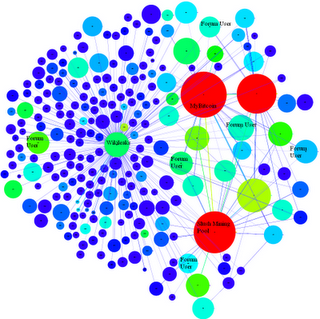
Fig. 5: A visualization of the egocentric user network of WikiLeaks. We can identify many of the users in this visualization.

Our tools resolve several of the users with identifying information gathered from the Bitcoin Forums, the Bitcoin Faucet, Twitter streams, etc. These users can be linked either directly or indirectly to their donations. The presence of a Bitcoin mining pool (a large red vertex) and a number of public-keys between it and WikiLeaks’ public-key is interesting. Our point is that, by default, a donation to WikiLeaks’ ‘public’ public-key may not be anonymous.

Conclusion

This is a straight-forward passive analysis of public data that allows us to de-anonymize considerable portions of the Bitcoin network. We can use tools from network analysis to visualize egocentric networks and to follow the flow of Bitcoins. This can help us identify several centralized services that may have even more details about interesting users. We can also apply techniques such as community finding, block modeling, network flow algorithms, etc. to better understand the network.
Feedback
We are excited about the Bitcoin project and consider it a remarkable milestone in the evolution of electronic currencies. Our motivation for this work has not been to de-anonymize any individual users; rather it is to illustrate the limits of anonymity in the Bitcoin system. It is important that users do not have a false expectation of anonymity. We welcome any feedback or comments regarding the preprint on arXiv or the details in this post.
Follow on:
We have wrote a follow on blog post: http://anonymity-in-bitcoin.blogspot.com/2011/09/code-datasets-and-spsn11.html  where we release some of the data we extracted, in other to allow other researchers replicate our work, or perform follow on analysis.

SOURCE:
http://anonymity-in-bitcoin.blogspot.com/2011/07/bitcoin-is-not-anonymous.html

By: Fergal Reid and Martin Harrigan, September 30, 2011

Iran Decodes US Drone Intel

Iran Decodes US Drone Intel

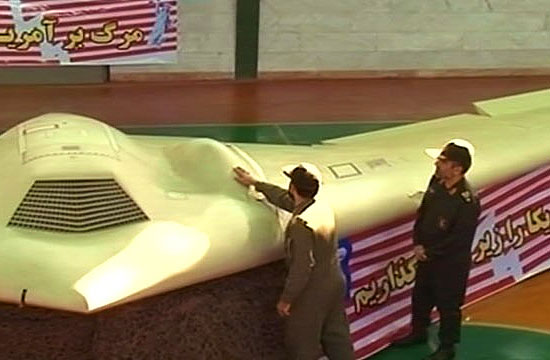
TEHRAN (FNA)- Senior Iranian military officials announced that the country’s experts have decoded the intelligence gathering system and memory hard discs of the United States’ highly advanced RQ-170 Sentinel stealth aircraft that was downed by Iran in December after violating the country’s airspace.

Speaking to FNA, Commander of the Islamic Revolution Guards Corps (IRGC) Aerospace Forces Brigadier General Amir Ali Hajizadeh revealed some data taken from the aircraft’s intelligence system to discourage his counterparts in Pentagon who had alleged that Iranians would not succeed in decoding the spy drone’s memory and intelligence devices.

“This plane is seen as a national capital for us and our words should not disclose all the information that we have very easily.”

“Yet, I provide four cues in here to let the Americans know how deep we could penetrate into (the intelligence systems and devices of) this drone,” he added.

Hajizadeh stated that the drone parts had been transferred to California for technical works in October 2010, adding that the drone was later transferred to Kandahar, Afghanistan in November 2010 and had a flight in there.

The commander said that the drone had experienced some technical flaws in its Kandahar flight in November, but the US experts failed resolve the problems at the time.

Hajizadeh added that the RQ-170 was then sent back to an airfield near Los Angeles in December 2010 for tests on its censors and parts, adding that the drone had a number of test flights in there.

As a forth cue to prove Iran’s access to the drone’s hidden memory, the commander mentioned that the spy drone’s memory device has revealed that it had flown over Al-Qaeda Leader Osama bin Laden’s hideout in Pakistan two weeks before his death.

“Had we not accessed the plane’s soft wares and hard discs, we wouldn’t have been able to achieve these facts,” Hajizadeh said, reiterating that Iran’s military experts are in full command of the drone intel and hold a good knowledge of the drone parts and programs.

The unmanned surveillance plane lost by the United States in Iran was a stealth aircraft being used for secret missions by the CIA.

The aircraft is among the highly sensitive surveillance platform in the CIA’s fleet that was shaped and designed to evade enemy defenses.

The drone is the first such loss by the US.

The RQ-170 has special coatings and a batwing shape designed to help it penetrate other nations’ air defenses undetected. The existence of the aircraft, which is made by Lockheed Martin, has been known since 2009, when a model was photographed at the main US airfield in Kandahar, Afghanistan.

The revelation came after Russia and China asked Tehran to provide them with information on the capture US drone.

Ahmad Karimpour, an adviser to Iran’s defense minister, said on Friday that Tehran has received requests from many countries for information on the RQ-170 Sentinel, but Moscow and Beijing have been most aggressive in their pursuit of details on the drone.

Source: http://english.farsnews.com/newstext.php?nn=8101300601

FBI “Communities Against Terrorism” Suspicious Activity Reporting Flyers

FBI “Communities Against Terrorism” Suspicious Activity Reporting Flyers

The following collection of 25 flyers produced by the FBI and the Department of Justice are distributed to local businesses in a variety of industries to promote suspicious activity reporting. The flyers are not released publicly, though several have been published in the past by news media and various law enforcement agencies around the country.  We have compiled this collection from a number of online sources.

To view the documents, click on a threat area in the menu to the left and the PDF will appear on the right side of the page. You can also download the complete collection of files (ZIP Archive, 6.27 MB).


SOURCE:
http://publicintelligence.net/fbi-suspicious-activity-reporting-flyers/

Hacks of Valor: Why Anonymous Is Not A Threat to National Security

Hacks of Valor: Why Anonymous Is Not A Threat to National Security

Over the past year, the U.S. government has begun to think of Anonymous, the online network phenomenon, as a threat to national security. According to The Wall Street Journal, Keith Alexander, the general in charge of the U.S. Cyber Command and the director of the National Security Agency, warned earlier this year that “the hacking group Anonymous could have the ability within the next year or two to bring about a limited power outage through a cyberattack.” His disclosure followed the U.S. Department of Homeland Security’s release of several bulletins over the course of 2011 warning about Anonymous. Media coverage has often similarly framed Anonymous as a threat, likening it to a terrorist organization. Articles regularly refer to the Anonymous offshoot LulzSec as a “splinter group,” and a recent Fox News report uncritically quoted an FBI source lauding a series of arrests that would “[chop] off the head of LulzSec.”

This is the wrong approach. Seeing Anonymous primarily as a cybersecurity threat is like analyzing the breadth of the antiwar movement and 1960s counterculture by focusing only on the Weathermen. Anonymous is not an organization. It is an idea, a zeitgeist, coupled with a set of social and technical practices. Diffuse and leaderless, its driving force is “lulz” — irreverence, playfulness, and spectacle. It is also a protest movement, inspiring action both on and off the Internet, that seeks to contest the abuse of power by governments and corporations and promote transparency in politics and business. Just as the antiwar movement had its bomb-throwing radicals, online hacktivists organizing under the banner of Anonymous sometimes cross the boundaries of legitimate protest. But a fearful overreaction to Anonymous poses a greater threat to freedom of expression, creativity, and innovation than any threat posed by the disruptions themselves.

Hackers inserted a prank article on the PBS Web site declaring that the deceased rapper Tupac Shakur was “alive and well” in New Zealand.

No single image better captured the way that Anonymous has come to signify the Internet’s irreverent democratic culture than when, in the middle of a Polish parliamentary session in February 2012, well-dressed legislators donned Guy Fawkes masks — Anonymous’ symbol — to protest their government’s plan to sign the Anti-Counterfeiting Trade Agreement (ACTA). The treaty, designed to expand intellectual-property protection, involved years of negotiation among the United States, Japan, and the European Union, which are all like-minded on copyright law. It had the support of well-organized and well-funded companies, particularly in Hollywood and the recording industry. Although originally negotiated in secret, its contents were exposed by WikiLeaks in 2008. As a result, public pressure caused the treaty’s negotiators to water down many of its controversial provisions. But the final version still mimicked the least balanced aspects of U.S. copyright law, including its aggressive approach to asset seizure and damages. And so a last-minute protest campaign across Europe, using the symbolism of Anonymous, set out to stop the agreement from coming into force. So far, it has succeeded; no signatory has ratified it.

That is power — a species of soft power that allows millions of people, often in different countries, each of whom is individually weak, to surge in opposition to a given program or project enough to shape the outcome. In this sense, Anonymous has become a potent symbol of popular dissatisfaction with the concentration of political and corporate power in fewer and fewer hands.

It is only in this context of protest that one can begin to assess Anonymous’ hacking actions on the Internet. Over the last several years, the list of Anonymous’ cyber targets has expanded from more-or-less random Web sites, chosen for humor’s sake, to those with political or social meaning. In 2010, Anonymous activists launched a distributed denial of service (DDoS) attack — an action that prevents access to a Web site for several hours — against Web sites of the Motion Picture Association of America and the International Federation of the Phonographic Industry, the major trade groups for the film and music industries. The action came in response to revelations that several Indian movie studios had used an Indian company called Aiplex to mount vigilante DDoS attacks against illegal file-sharing sites.

SOURCE:
http://www.foreignaffairs.com/articles/137382/yochai-benkler/hacks-of-valor

By: Yochai Benkler, April 4, 2012

Soldiers With No Name : The Anonymous story interviewing Commander X

Soldiers With No Name : The Anonymous story interviewing Commander X

http://www.youtube.com/watch?v=nW3ze-uccu0

War Zone – Soldiers With No Name [Commander X interview]
Language: Greek | Interviews: English

 On March 2012 War Zone covered the Anonymous story interviewing Commander X via Skype.

SOLDIERS WITH NO NAME: Activists or internet rebels? Pranksters, common hackers or contemporary revolutionaries with keyboards and flat-screens? For the first time on Greek television, the people behind the masks that spread panic with their attacks and have set off the alarm at governments and corporations around the world, reveal their goals and targets. The notorious “Anonymous” came on TV screens last night, in War Zone’s new two-part documentary “Soldiers With No Name”. via War Zone


The documentary also feature interviews with Wired journalist Quinn 
A war correspondent and photographer, Sotiris has been filming news & current affairs documentaries since 2003, highlighting the stories of people in crisis and the contemporary issues of the world we live in. The awarded War Zone documentary series takes the viewer to the world’s hot spots and the centre of international news developments. Each feature of 60 minutes, is the result of long-term journalist research characterized by cinematic narrative, quality image & detailed editing. War Zone airs on Mega TV Greece.Norton and Chief Technology Officer of Application Security, INC, Josh Shaul.


SOURCE:
http://www.cyberguerrilla.org/?p=5335

By: Doemela, March 23, 2012

ProjectPM.org – Exposing The Cyber Surveillance State

ProjectPM.org – Exposing The Cyber Surveillance State

The purpose of Project PM’s wiki is to provide a centralized, actionable data set regarding the intelligence contracting industry, the PR industry’s interface with totalitarian regimes, the mushrooming infosec/”cybersecurity” industry, and other issues constituting threats to human rights, civic transparency, individual privacy, and the health of democratic institutions.

Contents

[hide]

Joining Project PM

This is a crowdsourced investigation focused on research and analysis. If you care that the surveillance state is expanding in capabilities and intent without being effectively opposed by the population of the West, you can assist in making this an actionable resource for journalists, activists, and other interested parties. Consider doing a bit of research on the companies and government agencies listed on this wiki, or even adding new topic for investigation by our participants. The best place to start is the Community Portal. We also need help adding much more to Media Reports.

Do not editorialize when contributing; simply add pertinent facts and link to source material. Employ the same writing style one finds at Wikipedia. If you’d like to contribute information to our data set without editing the wiki yourself, you may do so by sending the info to us at [email protected] (more secure means of communication can be arranged if you care to send an anonymous e-mail to that account). If you have personal knowledge about this topic for any reason, please consider letting us know via that e-mail address. Better yet, you can download an IRC client and join us at ircs://project-pm.org:6697 (If you’re not familiar with IRC, you can use this Mibbit, weblink to connect to our IRC chat server) Those interested in starting groups similar to Project PM should see our Guide to Pursuants.

Editing the Wiki

Public editing has returned to the wiki, feel free to contribute research to this project. Only registered accounts may edit, and you may need to recreate your account if you had one previously.

To browse through the complete list of pages on this site, click here. Some important pages are listed below. For a list of terms used in these articles, you can check the Glossary and Acronyms

Entities of Particular Interest re: Metal Gear

Team Themis: Palantir, Berico, HBGary

Government entities involved include:

Other Entities of Interest

Pages of General Interest

SVALI: Illuminati Defector Speaks on Mind Control, Sacrifice, Bloodlines

SVALI: Illuminati Defector Speaks on Mind Control, Sacrifice, Bloodlines


Update January 2009: It seems that Svali is alive and safe. Please click here for more details.

In these unusual circumstances, however, we have decided to retain her tribute here, as her story is so extremely important and she has demonstrated such exceptional courage in speaing out as she did in previous years.

Update February 2010: The archive of extremely important articles by Svali about Illuminati ritual abuse and other subjects, written in 2000-2002, is now back online here.

Of all the courageous warriors for truth to whom we pay tribute on these pages, Svali is an exception. Her name is a pseudonym, and it is not known whether she is dead or in hiding. But her testimony is so shocking, and of such critical importance, that in our view it is utterly clear that we must honor her here.

Svali is, or was, an American woman born into an Illuminati bloodline. When she was twelve years old, she was taken to the Vatican for a ceremony she was told would be very important. What she witnessed – an actual child sacrifice (the child was 3 or 4 years old, and appeared to be compliant) on an obsidian slab over a large pentagram in a basement catacomb – is told in her extraordinary interview with Greg Szymanski. Everyone visiting our site must hear this:

Click here for the MP3
[PC users, right-click and Save As]

All Illuminati children are heavily conditioned to be obedient, patient, self-controlled, and totally loyal to the “family”. Some are groomed for the military or politics; others are prepared for business – or even ‘businesses’ such as prostitution. Marriages are arranged, one reason being to strengthen ties between different bloodlines. All the members of the families have respectable fronts as “normal” people to the degree that no-one who is not in the group would ever suspect the duality of their character and of their life. Meetings often occur at night. In these meetings children are “trained” using drugs, hypnosis, and shock-reward conditioning. They can, in Svali’s words, all handle and fire a weapon with deadly accuracy by the age of 8.

Higher levels of politics are heavily Illuminati occupied and controlled, in all western countries. In the United States, the population is about 1% Illuminati or Illuminati assets. Do the math: that’s about 3 million people. You may even know some of them, and have never suspected.

Svali is also an exception in that very few Illuminati members ever leave. The conditioning is just too great… and to leave means abandoning spouse, parents, children, house, money, everything. Very few people make the break. Svali reports that she was only able to leave after it dawned on her that, because she was telling lies to the Illuminati children as an Illuminati “trainer” (her role or job in the “family”), she must have been lied to herself when she was young. She converted to Christianity (‘real’ Christianity: she described various Christian churches as heavily Illuminati controlled) and this gave her the strength to leave. She gave one major radio interview, and had a website (suite101.com) which has now been taken down. She wrote prolifically for a while, but has not been heard from since 2006.

There is a lot of information on her on the internet: Google ‘Svali’ and start reading.

Click here for one of the most important interviews you will ever hear, mentioned above.

Click here for the transcript, which was prepared by our friend David Wilcock, who corresponded with Svali before she disappeared, and appears briefly on Greg Szymanski’s interview.

The simplest summary of the entire Illuminati agenda and net of control is probably Henry Makow’s 2002 article here. It is reproduced below.


Illuminati Defector Details Pervasive Conspiracy

By Henry Makow Ph.D.
October 14, 2002

reprint

If you detect the devil’s hand in current events, you may be closer to the truth than you think.

A woman who was raised in the Illuminati cult describes a powerful secret organization comprising one per cent of the U.S. population that has infiltrated all social institutions and is covertly preparing a military takeover. Her revelations cast the “war on terror” and “homeland security” in their true light.

“Svali” is the pseudonym of the woman, age 45, who was a mind “programmer” for the cult until 1996. She was the sixth head trainer in the San Diego branch and had 30 trainers reporting to her. She has risked her life to warn humanity of the Illuminati’s covert power and agenda.

She describes a sadistic Satanic cult led by the richest and most powerful people in the world. It is largely homosexual and pedophile, practises animal sacrifice and ritual murder. It works “hand in glove” with the CIA and Freemasonry. It is Aryan supremacist (German is spoken at the top) but welcomes Jewish apostates. It controls the world traffic in drugs, guns, pornography and prostitution. It may be the hand behind political assassination, and “terrorism”, including Sept. 11, the Maryland sniper and the Bali bomb blast.

It has infiltrated government on a local, state and national level; education and financial institutions; religion and the media. Based in Europe, it plans a “world order” that will make its earlier attempts, Nazism and Communism, look like picnics. One other detail: these people are not happy.

Svali’s courageous testimony explains why our children are no longer taught civic values, why they are being habituated to homosexuality and violence, and why our “culture” is descending into nihilism and sexual depravity. It raises the possibility that George W. Bush and his Administration are Illuminists and much of the world “elite” is engaged in a mind-boggling criminal conspiracy.

In March 2000, Svali began writing a monthly column for survivors of Illuminati ritual abuse at Suite101.com. In December 2000, H.J. Springer, the editor of CentrExNews.com contacted Svali and conducted an extended 18-part interview with her by email, which is reproduced on line and is copyrighted.

[Project Camelot note: the suite101.com articles are here. 13 of the 18 parts of Springer’s interview are reproduced here.]

“I am convinced she is the real McCoy,” Springer wrote to me. “I have personally relayed numerous email messages to her from other members — ritually abused, brainwashed, raped, sexually abused people & you name it — some of them confirming to me her story. So I have absolutely no doubt that Svali has been part of the Illuminati since childhood.”

I also trust Svali’s testimony because it confirms my intuition and intensive research. Everything fits: from the dead hand that seems to suppress humanity to why Clinton gave secret technology to the Chinese, to persistent reports of concentration camps in the US. It explains why people I know behave in a conspiratorial way. I thank Svali for giving me a frightening but incredible key to understanding the world.

A friend urged me to beware of a hoax and offered to help confirm Svali’s personal story. I accepted. I invite you to read her entire testimony and make up your own mind. Read “Part 1” to “Part 18” first, starting at the middle of the list and working up.

With their permission, here are some highlights of Svali’s correspondence with CentrExnews.com’s H.J. Springer. I have also included material from her article Are the Illuminati Taking Over the World?

Pervasive Presence

Svali:
“The Illuminati are present in every major metropolitan center in the United States. The Illuminati believe in controlling an area through its: banks and financial institutions (guess how many sit on banking boards? You’d be surprised) Local government: guess how many get elected to local city councils? Law: children are encouraged to go to law school and medical school. Media: others are encouraged to go to journalism school, and members help fund local papers.

Beliefs

Svali:
“The Illuminati is a group that practices a form of faith known as “enlightenment”. It is Luciferian, and they teach their followers that their roots go back to the ancient mystery religions of Babylon, Egypt, and Celtic druidism. They have taken what they consider the “best” of each, the foundational practices, and joined them together into a strongly occult discipline. Many groups at the local level worship ancient deities such as “El”, “Baal”, and “Ashtarte”, as well as “Isis and Osiris” and “Set”…. I do know that these people teach and practice evil.”

Weishaupt

Svali:
“Weishaupt did not create the Illuminati, they chose him as a figurehead and told him what to write about. The financiers, dating back to the bankers during the times of the Templar Knights who financed the early kings in Europe, created the Illuminati. Weishaupt was their “go fer”, who did their bidding.”

Military Takeover

Svali:
“Briefly, each region of the United States has “nerve centres” or power bases for regional activity. The United States has been divided up into seven major geographical regions. Each region has localities within it that contain military compounds and bases that are hidden in remote, isolated areas or on large private estates.

These bases are used intermittently to teach and train generational Illuminati in military techniques, hand- to- hand combat, crowd control, use of arms, and all aspects of military warfare. Why? Because the Illuminists believe that our government, as we know it, as well as the governments of most nations around the world, are destined to collapse. These will be planned collapses, and they will occur in the following ways:

The Illuminati has planned first for a financial collapse that will make the great depression look like a picnic. This will occur through the manoeuvring of the great banks and financial institutions of the world, through stock manipulation, and interest rate changes. Most people will be indebted to the federal government through bank and credit card debt, etc. The governments will recall all debts immediately, but most people will be unable to pay and will be bankrupted. This will cause generalized financial panic, which will occur simultaneously worldwide, as the Illuminists firmly believe in controlling people through finances.

Doesn’t sound pleasant, does it? I don’t know the exact time frame for all of this, and wouldn’t want to even guess. The good news is that if a person is debt-free, owes nothing to the government or credit debt, and can live self sufficiently, they may do better than others. I would invest in gold, not stocks, if I had the income. Gold will once again be the world standard, and dollars will be pretty useless (remember after the Civil War? Our money will be worth about what confederate money was after the collapse).

Next there will be a military takeover, region by region, as the government declares a state of emergency and martial law. People will have panicked, there will be an anarchical state in most localities, and the government will justify its move as being necessary to control panicked citizens. The cult trained military leaders and people under their direction will use arms as well as crowd control techniques to implement this new state of affairs. …Military bases will be set up, in each locality (actually, they are already here, but are covert). In the next few years, they will go above ground and be revealed. Each locality will have regional bases and leaders to which they are accountable. The hierarchy will closely reflect the current covert hierarchy.

About five years ago, when I left the Illuminati, approximately 1% of the US population was either part of the Illuminati, sympathetic to it, or a victim of Mind Control (and therefore considered useable). While this may not sound like many, imagine 1% of the population highly trained in the use of armaments, crowd control, psychological and behavioral techniques, armed with weapons and linked to paramilitary groups.”

Leadership

Svali:
“The national council [consists of] influential bankers with OLD money such as: The Rockefellers, the Mellon family, the Carnegie family, the Rothschild family etc. I know I shouldn’t name names, but I will.

The “Supreme World Council” is already set up as a prototype of the one that will rule when the NWO comes into being. It meets on a regular basis to discuss finances, direction, policy, etc. and to problem-solve difficulties that come up. Once again, these leaders are heads in the financial world, OLD banking money. The Rothschild family in England, and in France, have ruling seats. A descendant of the Hapsburg dynasty has a generational seat. A descendant of the ruling families of England and France have a generational seat. The Rockefeller family in the US holds a seat.

This is one reason that the Illuminati have been pretty “untouchable” over the years. The ruling members are very, very, very wealthy and powerful. I hope this information is helpful. How do I know this? I was on a local leadership council (a head trainer), but I talked to those on regional. Also, every Illuminati child is taught who their “leaders” are, and told to take an oath of allegiance to them and the “New Order to come”.”

Royalty

Svali:
“The Illuminati leadership state that they are descended from royal bloodlines, as well as unbroken occult heritage.

See, there were two definitions of “royalty” used. Open royalty that is currently seen now, and “hidden royalty” of royal lineage and extreme occult power. Sometimes the two were concurrent, such as with the Prince of Wales.

I never thought of which country/line held the most power, since I was just a peon busily doing my job. But my understanding was: The Hanoverian / Hapsburg descendants rule in Germany over the Bruderheist. They are considered one of the strongest lines for occult as well. The British line is just under them, with the royal family. Definitely, they rule the UK branch under the Rothschilds in the occult realm, even though parliament rules the country openly.

In France, again, descendants of the royal families are also in power in the occult realm, but the French Rothschilds hold the reigns over all of them.”

Rank of the US

Svali:
“The U.S. is considered lower, and younger, than the European branches. …Germany, France, and the UK form a triumvirate that rules in the European cult. The USSR is considered important, and has the strongest military groups. The USSR has been promised fourth position in the New World Order, BEFORE the role the U.S. would have, because the USSR has been more helpful and cooperative over the years with furthering the agenda.

The descendants of the former ruling families there are also involved in the occult leadership, along with the newer ones. There is no Marxism in the cult. China will be ranked after the USSR, then the U.S. But a lot of the current U.S. leadership will be in Europe when the change occurs, and many have homes there. They will be “changing nationalities” overnight, as it were. This is the little that I do remember. Wish I had been a better student of this stuff, but I was too busy trying to stay alive when I was in it.

Russia will be the military base and powerhouse of the group, since their military commanders (Illuminist) are considered the best in the world, and very, very disciplined. China, because of its roots in oriental occultism, and its large population, will also be considered a higher power than the US. But again, the real power will reside in Europe, according to what I was taught when part of the group.

The United Nations

Svali:
“The UN was created early in this century in order to help overcome one of the biggest barriers to a one-world government …That barrier is the one of nationalism, or pride in one’s country. This is why it was NOT a popular concept when first introduced, it took years of country bashing in the media and the destruction of any sense of national pride by a (not so subtle) media campaign over the years.

The UN is a preparation, but it is not the real power in the world, and will be relatively unimportant when the NWO comes into being. The real councils will then step forward. But as a means of getting the general public to accept the idea of a “global community” and the “one world community” the UN is a stepping stone in their working towards the NWO.”

Israel

Svali:
“The conflict in the Middle East is only to the advantage of the Illuminists. They HATE Israel, and hope one day to see it destroyed, and are biding their time. One of the olive branches offered by the UN when it takes over is that they will prevent war in the Middle East, and this will be greeted with joy by many.

At the same time, the Illuminati covertly supply guns and funds to BOTH sides to keep the conflict fuelled. They are very duplicitous people. They used to funnel guns through the USSR to Palestine, for example, in the name of promoting “friendliness” between the USSR and this state and other Arab nations. Then, the US Illuminists would help funnel guns to Israel, for the same reason.

These people love the game of chess, and see warfare between nations as creating an order out of chaos. The USSR is going to get stronger again. It has too strong a military both openly, and covertly (ALL Illuminati military trainers have visited Russia to learn from them) to sit quietly and quiesciently to the side. In the NWO, they will be stronger than us.”

Is the Illuminati a Jewish conspiracy?

Svali:
“Absolutely not. In fact, Hitler and his people (especially Himmler and Goebbels) were top Illuminists. The Illuminati are racist in the extreme, and as a child, I was forced to play “concentration camp” both on my farm in Virginia, and also in Europe in isolated camps in Germany.

The Jews historically fought against the occult (see Deuteronomy and the Old Testament for how God through the Jewish people tried to cleanse the land of the occult groups that were operating there, such as those who worshipped Baal, Ashtarte, and other Canaanite and Babylonian gods.

[from an email to Henry Makow]
Yes, there are some very powerful Jewish people in this group. For instance, the Rothschild family literally runs the financial empire in Europe (and indirectly the States), and are a well-known Jewish family. I have also known people whose parents were Jewish diamond merchants in the group, and at every level. But to rise to power in the Illuminati, a Jewish person at night would be forced to renounce their faith, and to give their first allegiance to Lucifer and the beliefs of the Illuminati. In return for this betrayal, they believe that power (financial) and rewards come; and in one sense they do, but at too high a price (losing their eternal soul).

The Nazi/concentration camp mentality is very strong, though, and I was told that Hitler, Himmler, Goebbels, and others were high-ranking German members of the group (Himmler was higher than the other two), and Mengele their paid puppet as well, who later worked as a high trainer of the American branch between his periods of hiding in South America. They honestly believed that they were acting as agents of their ‘gods’ to exterminate the Jewish race, and I am so, so sorry that this group has enacted so many horrors on the earth (and so, so glad that I left it).

I hope this helps you. I have always wondered this, though, why some of the highest ranking financial families in the group (baron Rothschild of France is one of the 13 European lords, or “kings” that run the group in Europe, and sits on the World Council) are Jewish, yet the group espouses hatred of their own race.”

Are they racist?

Svali:
“Lots of Illuminists have Fourth Reich programming inside. The Illuminati are racist, and have a very “Aryan” outlook. They believe strongly in the rule of the “pure” and “intelligent” by their definitions, and in their ceremonies, there will occasionally be minorities killed in ceremonies.

They are trying to breed a “genetically superior” race to rule, with their children and descendants. They are also followers of Plato’s Republic, and believe that they will be the ones to usher in this “Utopian” rule with the NWO in their opinion. In their Utopia, the intelligentsia will rule, and the sheep like masses will follow their leaders (that is their view of the world; that the occult leaders are “enlightened’ and intelligent, while the average person is a “sheep” to be led by the nose).”

Freemasonry

Svali:
“The Freemasons and the Illuminati are hand in glove. I don’t care if this steps on any toes, it’s a fact. The Masonic temple at Alexandria, Virginia (the city itself was named after Alexandria, Egypt, and is a hotbed of Illuminati activity) is a centre in the Washington, DC area for Illuminati scholarship and teaching. I was taken there at intervals for testing, to step up a level, for scholarship, and high ceremonies. The leaders in this Masonic group were also Illuminists.

This has been true of every large city I have lived in. The top Freemasons were also top Illuminists. My maternal grandparents were both high ranking Masons in the city of Pittsburgh, Pa. (president of the Eastern Star and 33rd degree Mason) and they both were also leaders in the Illuminati in that area.

Are all Masons Illuminati? No, especially at the lower levels, I believe they know nothing of the practices that occur in the middle of the night in the larger temples. Many are probably fine businessmen and Christians. But I have never known a 32 degree or above who wasn’t Illuminati, and the group helped create Freemasonry as a “front” for their activities.”

CIA, FBI are all infiltrated. So are Mormons, etc.

Svali:
“Many of the administrators and directors at the FBI are also Illuminists. The CIA helped bring over German scientists after WWII. Many of these were also Illuminati leaders in their own country, and they were welcomed with open arms by the U.S. group. They also funnelled all information they were learning to the Illuminati.

The Mormons affiliated years ago in a meeting with Illuminati leadership in the 1950s. The same with the Jehovah’s Witnesses.”

The Cold War

Svali:
“Russia was never really a threat to us. Marxism was funded by the Illuminati, and espoused as a counterbalance to capitalism. The Illluminati believe strongly in balancing opposing forces, in the pull between opposites. They see history as a complex chess game, and they will fund one side, then another, while ultimately out of the chaos and division …, they are laughing because they are ultimately beyond political parties. A top western financier will secretly meet with an eastern or Russian “adversary” during those years, and have a good laugh at how the “sheep” were being deluded. I am sharing here what I was taught, and also observed.

They are truly an international group, and the group’s agenda supersedes any nationalistic feelings. There is also a lot of trading back and forth of members in these groups. A Russian trainer might come to the US for awhile, complete a job, then go back, or vice-versa.”

Assassin Training

Svali:
“Here is how it is done (how it was done to me):
[1] When the child is 2 years old, place them in a metal cage with electrodes attached. Shock the child severely.
[2] Take the child out, and place a kitten in its hands. Tell the child to wring the kitten’s neck. The child will cry and refuse.
[3] Put the child into the cage, and shock them until they are dazed and cannot scream any more.
[4] Take the child out, and tell them again to wring the kitten’s neck. This time the child will shake all over, cry, but do it, afraid of the torture. The child will then go into the corner and vomit afterwards, while the adult praises them for “doing such a good job”.

This is the first step. The animals get bigger over time, as the child gets older. They will be forced to kill an infant at some point, either a set up in VR (virtual reality), or in reality. They will be taught by age 9 to put together a gun, to aim, and fire on target and on command. They will then practice on realistic manikins. They will then practice on animals. They will then practice on “expendables” or in VR. They will be highly praised if they do well, and tortured if they don’t comply.

The older the child or teen, the more advanced the training. By age 15, most children will also be forced to do hand to hand combat in front of spectators (high people who come to watch the “games” much as the ancient gladiators performed). These matches are rarely done to the death, usually until one child goes down. They use every type of weapon imaginable, and learn to fight for their lives. If a child loses a fight, they are heavily punished by their trainer, who loses “face”. If they win, they are again praised for being “strong’ and adept with weapons. By the time they are 21, they are well trained combat/killing machines with command codes to kill and they have been tested over and over to prove that they WILL obey on command. This is how children in the German Illuminati are brought up, I went through it myself.”

Trust in Family

Svali:
“They tell their children as they are torturing them, “I am doing this because I love you.” To them, the greatest love is to make a child strong, and fit to lead or to move higher in the group, by whatever means it takes.

If a leader sees a child, and wants it as a prostitute, the loving parents will give it away, happy that their child will rise in status. Also, again, they view betrayal as the greatest good. They will do set up after set up to teach their children to never openly trust others.

I remember hundreds of agonizing set ups and betrayals, and hearing when I was betrayed or wounded, “And such is the heart of man.” Those doing this to me thought they were teaching me something of value, that would help me. And because of the vicious and political nature of the group, in one sense they were right; the naive get stepped on and wounded. I have known parents who tried to spare their children some of this out of love, but often they were overruled by other family members, who viewed these parents as “weak” and “unfit” to teach their child.”

Morale

Svali:
“Most of them are wounded, abused victims, who don’t realize that it is possible to leave the group. There is a lot of discontent in the ranks, and there would be a mass exodus if the members believed it were really possible to get out (and live). Many of the trainers I knew (I know, wicked, torturing pedophiles) were NOT happy with what they did. They would whisper quietly, or give a look, to show that they disagreed with what they had to do. They would resignedly do their jobs, in the hope of advancement.

Know what one of the biggest carrots offered to those who advance up in the group is? That you don’t have to hurt people anymore, and that you can’t be abused (it’s true: only those higher than you in the group can abuse you, so everyone wants to move up, where the pool of candidates becomes smaller). Of course, people can choose to abuse anyone beneath them, and that motivates.

The Illuminati are a very political and back stabbing group, a “dog eat dog” mentality; everyone wants to move up. These are NOT nice people and they use and manipulate others viciously. They cut their eyeteeth on status, power, and money.

They never openly disclose their agenda, or their cult activities, as often they are amnesic to them. These are well-respected, “Christian” appearing business leaders in the community. The image in the community is all-important to an Illuminist; they will do anything to maintain a normal, respected facade, and DESPISE exposure. ….

None of the Illuminists that I have known, had unkind, or evil appearing, persona in their daytime lives, although some were dysfunctional, such as being alcoholics. The dissociation that drives the Illuminists is their greatest cover … Many, if not most, of these people are completely unaware of the great evil that they are involved in, during the night.”

TV

Also, remember those studies that stated that “TV violence doesn’t affect children’s behaviour” years ago? Guess who funded them? They are a bunch of bullcrud. What a person watches DOES influence them, and this is well known by the behaviourists in the group. In fact, they know that TV is a tool that they purposely use to influence “the masses”. It cannot create a total personality change in the average citizen, but it can desensitize us increasingly to violence, pornography and the occult, and influence the perceptions of young children.

Rock Music

I believe that Britney Spears, Eminem, and others are being used by them to sing lyrics they like (ever notice that he wears a Neo-Nazi look and sings hate lyrics? This is NOT by chance). In fact, many of the top pop singers come from an internship with the “Mickey Mouse club” (yep, good old Walt the Illuminist’s Empire) and I believe they are offered stardom in exchange for allegiance or mind control.

How many lyrics advocate suicide, violence, despair, or New Age spirituality in pop/rock today? Or just get a copy of the words and read (but be aware that many are possibly triggering to survivors of mind control).

Illuminati Weaknesses

Svali:
“1. Their arrogance (I think I mentioned this before) is their weakness. These people think they are untouchable, and this could make them careless.

2. If by a miracle, enough people took this SERIOUSLY and started organizing in some way to stop the Illuminati take over, with prayer and God’s guidance, perhaps they could be stopped. I hope so, with all of my heart.

3. Stopping pornography and child prostitution and drug smuggling and gun running would take out a huge chunk of their profits. Maybe they would slow down. But honestly, stopping the above would be as difficult as stopping the group.”

Public’s Denial Mechanism

Svali:
“The evidence is there, but in my opinion, the average person does NOT want to know, and even when confronted with it, will look the other way.

The Franklin case is a point. How much evidence has come out? Or the MK-Ultra documents that have been declassified, shown as real, and people ignore it.

Okay, I’ll get off my soapbox. But I believe that the media that downplays ritual abuse is feeding into a deep need in the average person to NOT know the reality. In fact, how can a person face the fact of great evil in mankind, unless they have either a strong faith in God, or are faced with insurmountable evidence? We as human beings want to believe the BEST of our race, not the worst, IMHO.

I really don’t believe people will do anything about the Illuminati even if they know. Sorry for the cynicism, but it is based on a lifetime of experience.

The Illuminists don’t care who prints this stuff, or if they are “exposed” because they are counting on the majority not believing it, having done a pretty good job with a media blitz campaign (seen any articles in Newsweek or Time lately that addresses this other than as a laughable conspiracy theory? Guess who owns Time-Warner?).

I have heard them laughing about this very thing in leadership meetings five years ago, and I doubt their attitude has changed much since then. If people DID believe this, if action could be taken, then I would be very surprised and quite happy.”

SOURCE: http://projectcamelot.org/svali.html

Kurt Haskell Exposes Government False Flag Operation During Underwear Bomber Sentencing

Kurt Haskell Exposes Government False Flag Operation During Underwear Bomber Sentencing

Exclusive: Personal Statement from Kurt Haskell, Delta 253 Passenger

Every victim of a crime in Michigan is entitled to make a statement in open court regarding the impact of the crime on their life. The statement is limited to the victim’s physical, emotional and financial well being as it relates to the crime. Keep that in mind as you read my statement. Below is a copy of the victim impact statement I gave today at the Underwear Bomber sentencing hearing. When reading my statement, keep in mind that I am a practicing attorney in the State of Michigan. In addition, I regularly practice in the Court the hearings are taking place at and therefore, I am somewhat limited as to what I can say. We were limited to 5 minutes each.

I wish to thank the Court for allowing me these 5 minutes to make my statement. My references to the government in this statement refer to the Federal Government excluding this Court and the prosecution. On Christmas Day 2009, my wife and I were returning from an African safari and had a connecting flight through Amsterdam. As we waited for our flight, we sat on the floor next to the boarding gate. What I witnessed while sitting there and subsequent events have changed my life forever. While I sat there, I witnessed Umar dressed in jeans and a white t-shirt, being escorted around security by a man in a tan suit who spoke perfect American English and who aided Umar in boarding without a passport. The airline gate worker initially refused Umar boarding until the man in the tan suit intervened. The event meant nothing to me at the time. Little did I know that Umar would try to kill me a few hours later as our flight approached Detroit. The final 10 minutes of our flight after the attack were the worst minutes of my life. During those 10 minutes I sat paralyzed in fear. Unfortunately, what happened next has had an even greater impact on my life and has saddened me further.

When we landed, I was shocked that our plane taxied up to the gate. I was further shocked that we were forced to sit on the plane for 20 minutes with powder from the so called bomb all over the cabin. The officers that boarded the plane did nothing to ensure our safety and did not check for accomplices or other explosive devices. Several passengers trampled through parts of the bomb as they exited the plane. We were then taken into the terminal with our unchecked carry on bags. Again, there was no concern for our safety even though Umar told the officers that there was another bomb on board as he exited the plane. I wondered why nobody was concerned about our safety, accomplices or other bombs and the lack of concern worried me greatly. I immediately told the FBI my story in order to help catch the accomplice I had seen in Amsterdam. It soon became obvious that the FBI wasn’t interested in what I had to say, which upset me further. For one month the government refused to admit the existence of the man in the tan suit before changing course and admitting his existence in an ABC News article on January 22, 2010. That was the last time the government talked about this man. The video that would prove the truth of my account has never been released. I continue to be emotionally upset that the video has not been released. The Dutch police, meanwhile, in this article (show article), also confirmed that Umar did not show his passport in Amsterdam which also meant that he didn’t go through security as both are in the same line in Amsterdam. It upsets me that the government refuses to admit this fact.

I became further saddened from this case, when Patrick Kennedy of the State Department during Congressional hearings, admitted that Umar was a known terrorist, was being followed, and the U.S. allowed him into the U.S. so that it could catch Umar’s accomplices. I was once again shocked and saddened when Michael Leiter of the National Counter terrorism Center admitted during these same hearings that intentionally letting terrorists into the U.S. was a frequent practice of the U.S. Government. I cannot fully explain my sadness, disappointment and fear when I realized that my government allowed an attack on me intentionally.

During this time, I questioned if my country intentionally put a known terrorist onto my flight with a live bomb. I had many sleepless nights over this issue. My answer came shortly thereafter. In late 2010, the FBI admitted to giving out intentionally defective bombs to the Portland Christmas Tree Bomber,the Wrigley Field Bomber and several others. Further, Mr. Chambers was quoted in the Free Press on January 11, 2011 when he indicated that the government’s own explosives experts had indicated that Umar’s bomb was impossibly defective. I wondered how that could be. Certainly, I thought, Al Qaeda wouldn’t go through all of the trouble to plan such an attack only to provide the terrorist with an impossibly defective bomb.

I attended nearly all of the pretrial hearings. At the hearing on January 28, 2011, I was greatly disappointed by the prosecution’s request to block evidence from Mr. Chambers “as it could then be able to be obtained by third parties, who could use it in a civil suit against the government”. It really bothered me that the government apparently was admitting to wrongdoing of some kind as it admitted that it was concerned it would be sued. It further upset me to know that the government was putting its own interests ahead of those of the passengers.

When I attended the jury selection hearings, I questioned why versions of the same two questions kept coming up, those being:

1. Do you think you’ll be able to tell whether something is actually a bomb? and
2. Do you realize that sometimes the media doesn’t always tell the truth?

I continued to be greatly saddened at this point as I felt the truth continued to be hidden.

When Umar listed me as his only witness, I was happy to testify, not on his behalf, but on behalf of the truth. I never expected to testify, as my eyewitness account would have been too damaging to the myth that the government and media are putting forward. A mere 5 days after I was announced as a witness, there was an inexplicable guilty plea which exasperated me as I no longer would be testifying.

In closing I will just say that regardless of how the media and government try to shape the public perception of this case, I am convinced that Umar was given an intentionally defective bomb by a U.S. Government agent and placed on our flight without showing a passport or going through security, to stage a false terrorist attack to be used to implement various government policies.

The effect this matter has had on my life has been astounding and due to this case, I will never trust the government in any matter, ever.

In regards to sentencing, nothing I’ve said excuses the fact that Umar tried to kill me. He has waived his valid claim to the entrapment defense. Umar, you are not a great Muslim martyr, you are merely a “Patsy”. I ask the court to impose the mandatory sentence.

Source: http://www.infowars.com/breaking-kurt-haskell-exposes-government-false-flag-operation-during-underwear-bomber-sentencing/

FlashBack: Belgian SuperCop Exposes Elite Sex Orgies

FlashBack: Belgian SuperCop Exposes Elite Sex Orgies

Punch-drunk Belgium is reeling from a new shock after a senior police officer confirmed last week what has long been rumoured: that some of the country’s leaders indulge in sex parties, known ironically as “ballets roses”.

Amusing and appalling in turn, the testimony of Georges Marnette, a senior Brussels policemen, might appear to make a welcome change from the horrors of recent months. But this is not mere entertainment: the stories may provide an important insight into the mores of a ruling class that has outraged ordinary people.

At times, Belgium has been in the throes of a near-revolution, with hundreds of thousands on the streets demanding an end to the political patronage that, they believed, had helped – by omission if not commission – a paedophile ring to murder children and escape arrest. It has not been a time of many laughs for anyone.

All the same, it was with a mixture of knowing winks and barely suppressed laughter that a parliamentary commission investigating another of the country’s most mysterious scandals heard the evidence of M Marnette. Belgian newspapers usually refer to the portly M Marnette as “un superflic”, and mean it. In fact, his evidence was more reminiscent of Inspector Clouseau.

“Yes, we used to go the bars, the gay and lesbian clubs and the sex parties,” he said, his bushy moustaches bristling at the memory of his past achievements. Infiltrating such establishments was no easy matter; it was not a job to be done wearing “jeans and a leather jacket”.

As for M Marnette, he was clearly a master of disguise. “I wasn’t going to hang round wearing my holster while everyone else was either naked or in dressing-gowns. But if I was in a dressing gown, that didn’t mean that I was doing any sexual acrobatics myself.”

The vision of leading politicians, judges and policemen indulging in orgies may tickle the Belgian taste for the absurd. But the light relief provided by tales of lax morals in high places is wearing off. For the “ballet rose” is also the perfect metaphor for the corruption, freemasonry and the vulnerability to blackmail of the country’s political élite.

The public will be learning more about the “ballets roses”, and the identities of dignitaries who attended them, from the evidence of other policemen who “infiltrated” this exotic demi-monde. It is a world of outwardly respectable private clubs in discreet suburbs of Brussels, Antwerp and Liège, but where, on arrival, members remove not just their coats, but their tops, bottoms and underwear as well.

For the moment, it looks increasingly unlikely that the two inquiries obsessing Belgians will yield new insights into how those in power exploit their positions, let alone name the guilty men or bring improvements. But M Marnette’s testimony, and his naming in camera of two senior establishment figures who performed at the “ballets roses”, caused a minor sensation.

Georges Marnette

Many had dismissed the “ballets roses” as Belgium’s Loch Ness monster – much talked about, rarely seen and its existence never proved. But now it emerges that they were not the only exotic entertainment enjoyed by the ruling classes.

The “ballet rose” itself implies the presence of young, but not necessarily under-age, girls. To cater for other tastes, there are also “ballets bleus” (young men), “partouzes” (run-of-the-mill orgies) and even “ballets de confiture” (apparently extreme Right-wingers like to strip and smear themselves with jam).

The parliamentary inquiry truly gripping the nation is the one examining the case of Marc Dutroux, who has confessed to murdering four young girls, and the way it was handled by the authorities.

The second inquiry has caused less of a furore, but the crimes it is reviewing, dating back 10 years, were even bloodier and more traumatic than the paedophile murders. These were the spectacular series of hold-ups, known as the Brabant killings, that terrorised Belgium in the early 1980s and claimed the lives of 28 people. They remain unsolved.

The usual explanation is that the killings were an attempt by the far Right, in league with the security services, to destabilise the country. But the suspicion has long persisted that some of the victims were not gunned down at random, but targeted because of their links to “ballets roses”.

Hugo Coveliers, a Belgian senator, argues that the “ballets roses” are not independent of one another, but part of a system “which operates to this day and is used to blackmail the highly placed people who take part”.

To many who hoped that rage at last year’s paedophile scandal could be channelled into political reform, the “ballets roses” are at best a digression, at worst an attempt by the authorities to throw the two inquiries off the scent of the real villains. The very existence of the two commissions of inquiry has signalled a desire for change. The public may take further encouragement from the fact that, for the first time since the armed robberies began in 1982, police last month released identikit photos of possible suspects.


Ithiel de Sola Pool Perfectly Predicted the Future of Copyright in 1984

Ithiel de Sola Pool Perfectly Predicted the Future of Copyright in 1984


On numerous occasions here at the TLF over the past eight years, I’ve noted the profound influence that the late Ithiel de Sola Pool had on my thinking about the interaction of technology, information, and public policy. In fact, when I needed to pick a thematic title for my weekly Forbes column, it only took me a second to think of the perfect one: “Technologies of Freedom.” I borrowed that from the title of Pool’s 1983 masterpiece, Technologies of Freedom: On Free Speech in an Electronic Age. As I noted in my short Amazon.com review, Pool’s technological tour de force is simply breathtaking in its polemical power and predictive capabilities. Reading this book three decades after it was published, one comes to believe that Pool must have possessed a crystal ball or had a Nostradamus-like ability to foresee the future.

I felt that same was this week when I was re-reading some chapters from his posthumous book, Technologies without Boundaries: On Telecommunications in a Global Age–a collection of his remaining essays nicely edited and tied together by Eli Noam after Pool’s death in 1984. Re-reading it again reminded me of Pool’s remarkable predictive powers. In particular, the closing chapter on “Technology and Culture” includes some of Pool’s thoughts on the future of copyright. As you read through that passage below, please try to remember he wrote these words back in the early 1980s, long before most people had even heard of the Internet and when home personal computing was only just beginning to take off. Yet, from what he already knew about networked computers and digital methods of transmitting information, Pool was able to paint a prescient portrait of the future copyright wars that we now find ourselves in the midst of. Here’s what he had to say almost 30 years ago about how things would play out:

Can a computer infringe copyright? The printed output of recorded copyright material is likely to be a statutory violation of the Copyright Act which vests the exclusive right “to print, reporting, publish, copy and vend the…work.”

In short, the process of computer communication entails processing of texts that are partly controlled by people and partly automatic. They are happening all through the system. Some of the text is never visible but is only stored electronically; some is flashed briefly on a terminal display; some is printed out in hard copy. What started as one text varies and changes by degrees to other things. The receivers may be individuals and clearly identified, or they may be passers­by with access but whose access is never recorded; the passer­by may only look, as a reader browsing through a book, or he may make an automatic copy; sometimes the program will record that, sometimes it will not.

To try to apply the concept of copyright to all these stages and actors would require a most elaborate set of regulations. It has none of the simplicity of checking what copies rolled off a printing press. Good intentions about what one would like can be defined. One would like to compensate an author if a computer terminal is used as a printing press to run off numerous copies of a valuable text. One would like not to impose any control as someone works at a terminal in the role of a reader and checks back and forth through various files. The boundary, however, is impossible to draw. In the new technology of interactive computing, the reader, the writer, the bookseller, and the printer have become one. In the old technology of printing one could have a right to free press for the reader and the writer but try to enforce copyright on the printer and the bookseller. That distinction will no longer work, any more than it would ever have worked in the past on conversation.

Those whose livelihood is at stake in copyright do not like that kind of comment. They contend that creative work must be compensated. Indeed it must. Publishers may point the finger in accusation and charge that one is taking bread out of the mouths of struggling writers. But the system must be practical to work. On highly charged subjects there is an impulse to insist that those who make a negative comment must have a panacea to offer instead. If one says prisons do not cure criminals, the rejoinder is apt to be, “Do you want to let them out to kill people?” One does not necessarily want that at all, but it may still be true the prisons do not cure criminals. Likewise, one can say that in an era of infinitely varied, automated text manipulation there is no reasonable way to count copies and charge royalties on them.

That is the situation now emerging. It may be very unfair to authors. It may have a profoundly negative effect on some aspects of culture, and in any case, whether positive or negative, it may change things considerably. If it becomes more difficult for authors and artists to be paid by a royalty scheme, more of them will seek salaried bases from which to work. Some may try to get paid by personal appearances or other auxiliaries to fame. Or the highly illustrated, well-bound book may acquire a special marketing significance if the mere words of the text are hard to protect. Or one may try to sell subscriptions to a continuing service, with the customer knowing that he will be a first recipient.

These are the kinds of considerations one must think about in speculating about the consequences for culture of a world where the royalty-carrying unit copy is no longer easy to protect in many of the domains where it has been dominant. While Congress tries to hold the fort, it is clear that with photocopiers and computers, copyright is an anachronism. Like many other unenforceable laws that we keep on the statute books from the past, this one may be with us for some time to come, but with less and less effect. (pp. 257-59)

Indeed, as I wrote in one of my recent Forbes column’s (The Twilight of Copyright?”), it appears that–whether some of us like it or not–”copyright is dying… [as it] is being undermined by the unrelenting realities of the information age: digitization, instantaneous copying, borderless transactions, user-generated content, and so on.” Of course, I’m basing that assertion on the facts on the ground around me circa 2012. By contrast, Ithiel de Sola Pool already had it figured out 30 years ago. Absolutely remarkable.

by on February 12, 2012

SOURCE: http://techliberation.com/2012/02/12/ithiel-de-sola-pool-perfectly-predicted-the-future-of-copyright-in-1984/

Inside Job: Anonymous Leader Flipped Into FBI Informant?

Inside Job: Anonymous Leader Flipped Into FBI Informant?

As reported by Fox News yesterday, LulzSec “mastermind” and Anonymous hacker Sabu (real name: Hector Xavier Monsegur) was flipped by the FBI. Big surprise. Give the FBI a cookie.

There has been a widespread belief that Sabu was a rat for quite some time within the hacking community—an August 2011 chat between Sabu and Virus, for instance. Virus quite prophetically wrote in that infamous chat: “I’m absolutely positive, you already got raided, and are setting your friends up and when they’re done draining you for information and arrests they’ll sentence you and it’ll make nose.”

Beyond that, in a community wherein anyone can have a voice, it stands to reason that subversive government influences are present, whether passively watching or actively suggesting. Disinformation, false flag operations, and immunity: these are the human intelligence gathering techniques that spy agencies use to infiltrate movements.

With that in mind, one of two possibilities exist: The FBI has transformed Anonymous into one monolithic false-flag operation, or agents take down hackers the way they take down other targets—with one or multiple informants. Judging the FBI’s efforts purely on the frequency of Anonymous’ activities throughout the last year, it’s probably safe to say that the FBI hasn’t accomplished the former.

If this conclusion is wildly off-base, and the former is true, then one has to entertain the following possibilities: the Stratfor hack was socially engineered by the FBI; Stratfor allowed it; and the FBI manipulated Anonymous into a partnership with WikiLeaks in the publication of the Global Intelligence Files. Then, of course, one must wonder if WikiLeaks itself is not a false-flag operation. This scenario seems rather unlikely, especially in a world where those who attempt to regulate the Internet are always one step behind.

Where then does this leave Anonymous and its supporters?

Again, judging from Anonymous’ efforts in the last year, which included a hybridization with Occupy Wall Street, the Stratfor hack,  a partnership with WikiLeaks, an infiltration of the FBI and Scotland Yard’s conference call on Anonymous, Operation ANTI-ACTA (which struck the Polish government), and the CIAPC hack (following Elisa’s blockade of The Pirate Bay), amongst other projects; it would seem seem that Anonymous, as a global collective, has grown far beyond LulzSec and Sabu’s influence—that it has indeed shed Sabu’s influence.

Anonymous’ efforts are truly global now and ever-shifting. Unless people believe that stool pigeon Sabu’s opera singing is evidence of some international, multi-state false flag conspiracy to nab radical hackers, Anonymous likely won’t be slowing down anytime soon.

Here’s a suggestion to the FBI: Maybe you should spend a little less time pursuing Anonymous and put more effort into bringing to justice the white-collar criminals who crashed the economy in 2008, thereby pocketing billions and evaporating middle class savings, delaying retirement, and sending families into the grip of poverty; driving individuals to suicide, or illegal and prescription drug use to numb the pain; to theft, alcoholism, and welfare that the GOP hates so much; and saddling college graduates with hundreds of thousands of dollars in debt from which they won’t soon liberate themselves.

Yes, one can see how a DDoS attack launched against Sony Pictures would be a priority. The FBI does work for politicians after all, who are kept in office by the campaign donations of corporations.

Indeed, the FBI, like Sabu himself, knows the following maxim all too well: you’re always somebody’s bitch.

SOURCE: http://www.deathandtaxesmag.com/179764/anonymous-has-grown-beyond-lulzsec-and-sabu/

CRIMINAL COMPLAINT:

Monsegur-Hector-Xavier-Information

Appeals Court: No Forced Decryption

Appeals Court: No Forced Decryption

Privilege Against Self-Incrimination Applies to Act of Decrypting Data

San Francisco – A federal appeals court has found a Florida man’s constitutional rights were violated when he was imprisoned for refusing to decrypt data on several devices. This is the first time an appellate court has ruled the 5th Amendment protects against forced decryption – a major victory for constitutional rights in the digital age.

In this case, titled United States v. Doe, FBI agents seized two laptops and five external hard drives from a man they were investigating but were unable to access encrypted data they believed was stored on the devices via an encryption program called TrueCrypt. When a grand jury ordered the man to produce the unencrypted contents of the drives, he invoked his Fifth Amendment privilege against self-incrimination and refused to do so. The court held him in contempt and sent him to jail.

The Electronic Frontier Foundation (EFF) filed an amicus brief under seal, arguing that the man had a valid Fifth Amendment privilege against self-incrimination, and that the government’s attempt to force him to decrypt the data was unconstitutional. The 11th U.S. Circuit Court of Appeals agreed, ruling that the act of decrypting data is testimonial and therefore protected by the Fifth Amendment. Furthermore, the government’s limited offer of immunity in this case was insufficient to protect his constitutional right, because it did not extend to the government’s use of the decrypted data as evidence against him in a prosecution.

“The government’s attempt to force this man to decrypt his data put him in the Catch-22 the 5th Amendment was designed to prevent – having to choose between self-incrimination or risking contempt of court,” said EFF Senior Staff Attorney Marcia Hofmann. “We’re pleased the appeals court recognized the important constitutional issues at stake here, and we hope this ruling will discourage the government from using abusive grand jury subpoenas to try to expose data people choose to protect with encryption. ”

A similar court battle is ongoing in Colorado, where a woman named Ramona Fricosu has been ordered by the court to decrypt the contents of a laptop seized in an investigation into fraudulent real estate transactions. EFF also filed a friend of the court brief in that case, arguing that Fricosu was being forced to become a witness against herself. An appeals court recently rejected her appeal, and she has been ordered to decrypt the information this month.

“As we move into an increasingly digital world, we’re seeing more and more questions about how our constitutional rights play out with regards to the technology we use every day,” said EFF Staff Attorney Hanni Fakhoury. “This is a case where the appeals court got it right – protecting the 5th Amendment privilege against self-incrimination.”

John Doe was represented by Chet Kaufman of the Federal Public Defender’s Office in Tallahassee.

For the full court ruling:
https://www.eff.org/document/opinion

Contacts:

Marcia Hofmann
Senior Staff Attorney
Electronic Frontier Foundation
[email protected]

Hanni Fakhoury
Staff Attorney
Electronic Frontier Foundation
[email protected]

Bradley Manning Nominated For Nobel Peace Prize

Bradley Manning Nominated For Nobel Peace Prize

Bradley Manning, the U.S. Army private accused of leaking classified U.S. information to WikiLeaks in 2010, has been nominated for a Nobel Peace Prize.

Manning was arrested in May 2010 after allegedly leaking more than 250,000 U.S. diplomatic cables, 400,000 U.S. Army reports about Iraq and another 90,000 about Afghanistan, as well as the material used in the “Collateral Murder” video produced by WikiLeaks. He was detained for nine months — first in solitary confinement at the Marine Corps Brig in Quantico, Va., and then at a medium-security military prison at Fort Leavenworth, Kan. — for nine months before formal charges were brought against him last week.

Manning faces 22 charges in sum, the most serious is “aiding the enemy,” a crime punishable by death. Army prosecutors have insisted, however, that they are seeking a life imprisonment and not a death penalty sentence, should Manning be found guilty. He has also been charged with disclosing classified information to a person not authorized to receive it, wrongfully causing intelligence to be published on the Internet knowing that it is accessible to the enemy and violating Army computer use rules.

The names of 191 individuals and 43 organizations were submitted to the Norweigan Nobel Committee for consideration. Every year, the five-member Committee sends out thousands of letters to qualified individuals — lawmakers, university professors and other figures involved in the public sphere — calling for nominations. The lists of nominees are kept secret for 50 years, but some voting individuals choose to announce their nominations publicly.

In addition to Manning, former Ukrainian Prime Minister Yulia Tymoshenko and Russian human rights activist Svetlana Gannushkina were nominated for the prize, the AP reports. The winner — or winners, should the prize be shared — will be announced in October.

SOURCE: https://mashable.com/2012/02/27/bradley-manning-wikileaks-nobel-peace-prize/

RELEASE: Anonymous Hands Over Stratfor Emails to Wikileaks

RELEASE: Anonymous Hands Over Stratfor Emails to Wikileaks

   LONDON–Today WikiLeaks began publishing The Global Intelligence Files – more than five million emails from the Texas-headquartered “global intelligence” company Stratfor. The emails date from between July 2004 and late December 2011. They reveal the inner workings of a company that fronts as an intelligence publisher, but provides confidential intelligence services to large corporations, such as Bhopal’s Dow Chemical Co., Lockheed Martin, Northrop Grumman, Raytheon and government agencies, including the US Department of Homeland Security, the US Marines and the US Defense Intelligence Agency. The emails show Stratfor’s web of informers, pay-off structure, payment-laundering techniques and psychological methods, for example:

“[Y]ou have to take control of him. Control means financial, sexual or psychological control… This is intended to start our conversation on your next phase” – CEO George Friedman to Stratfor analyst Reva Bhalla on 6 December 2011, on how to exploit an Israeli intelligence informant providing information on the medical condition of the President of Venezuala, Hugo Chavez.

The material contains privileged information about the US government’s attacks against Julian Assange and WikiLeaks and Stratfor’s own attempts to subvert WikiLeaks. There are more than 4,000 emails mentioning WikiLeaks or Julian Assange. The emails also expose the revolving door that operates in private intelligence companies in the United States. Government and diplomatic sources from around the world give Stratfor advance knowledge of global politics and events in exchange for money. The Global Intelligence Files exposes how Stratfor has recruited a global network of informants who are paid via Swiss banks accounts and pre-paid credit cards. Stratfor has a mix of covert and overt informants, which includes government employees, embassy staff and journalists around the world.

The material shows how a private intelligence agency works, and how they target individuals for their corporate and government clients. For example, Stratfor monitored and analysed the online activities of Bhopal activists, including the “Yes Men”, for the US chemical giant Dow Chemical. The activists seek redress for the 1984 Dow Chemical/Union Carbide gas disaster in Bhopal, India. The disaster led to thousands of deaths, injuries in more than half a million people, and lasting environmental damage.

Stratfor has realised that its routine use of secret cash bribes to get information from insiders is risky. In August 2011, Stratfor CEO George Friedman confidentially told his employees: “We are retaining a law firm to create a policy for Stratfor on the Foreign Corrupt Practices Act. I don’t plan to do the perp walk and I don’t want anyone here doing it either.”

Stratfor’s use of insiders for intelligence soon turned into a money-making scheme of questionable legality. The emails show that in 2009 then-Goldman Sachs Managing Director Shea Morenz and  Stratfor CEO George Friedman hatched an idea to “utilise the intelligence” it was pulling in from its insider network to start up a captive strategic investment fund. CEO George Friedman explained in a confidential August 2011 document, marked DO NOT SHARE OR DISCUSS: “What StratCap will do is use our Stratfor’s intelligence and analysis to trade in a range of geopolitical  instruments, particularly government bonds, currencies and the like”.  The emails show that in 2011 Goldman Sach’s Morenz invested “substantially” more than $4million and joined Stratfor’s board of directors. Throughout 2011, a complex offshore share structure extending as far as South Africa was erected, designed to make StratCap appear to be legally independent. But, confidentially, Friedman told StratFor staff: “Do not think of StratCap as an outside organisation. It will be integral… It will be useful to you if, for the sake of convenience, you think of it as another aspect of Stratfor and Shea as another executive in Stratfor… we are already working on mock portfolios and trades”. StratCap is due to launch in 2012.

The Stratfor emails reveal a company that cultivates close ties with US government agencies and employs former US government staff. It is preparing the 3-year Forecast for the Commandant of the US Marine Corps, and it trains US marines and “other government intelligence agencies” in “becoming government Stratfors”. Stratfor’s Vice-President for Intelligence, Fred Burton, was formerly a special agent with the US State Department’s Diplomatic Security Service and was their Deputy Chief of the counterterrorism division. Despite the governmental ties, Stratfor and similar companies operate in complete secrecy with no political oversight or accountability.  Stratfor claims that it operates “without ideology, agenda or national bias”, yet the emails reveal private intelligence staff who align themselves closely with US government policies and channel tips to the Mossad – including through an information mule in the Israeli newspaper Haaretz, Yossi Melman, who conspired with Guardian journalist David Leigh to secretly, and in violation of WikiLeaks’ contract with the Guardian, move WikiLeaks US diplomatic cables to Israel.

Ironically, considering the present circumstances, Stratfor was trying to get into what it called the leak-focused “gravy train” that sprung up after WikiLeaks’ Afghanistan disclosures:

“[Is it] possible for us to get some of that ‘leak-focused’ gravy train? This is an obvious fear sale, so that’s a good thing. And we have something to offer that the IT security companies don’t, mainly our focus on counter-intelligence and surveillance that Fred and Stick know better than anyone on the planet… Could we develop some ideas and procedures on the idea of ´leak-focused’ network security that focuses on preventing one’s own employees from leaking sensitive information…  In fact, I’m not so sure this is an IT problem that requires an IT solution.”

Like WikiLeaks’ diplomatic cables, much of the significance of the emails will be revealed over the coming weeks, as our coalition and the public search through them and discover connections. Readers will find that whereas large numbers of Stratfor’s subscribers and clients work in the US military and intelligence agencies, Stratfor gave a complimentary membership to the controversial Pakistan general Hamid Gul, former head of Pakistan’s ISI intelligence service, who, according to US diplomatic cables, planned an IED attack on international forces in Afghanistan in 2006. Readers will discover Stratfor’s internal email classification system that codes correspondence according to categories such as ‘alpha’, ‘tactical’ and ‘secure’. The correspondence also contains code names for people of particular interest such as ‘Izzies’ (members of Hezbollah), or ‘Adogg’ (Mahmoud Ahmedinejad).

Stratfor did secret deals with dozens of media organisations and journalists – from Reuters to the Kiev Post. The list of Stratfor’s “Confederation Partners”, whom Stratfor internally referred to as its “Confed Fuck House” are included in the release. While it is acceptable for journalists to swap information or be paid by other media  organisations, because Stratfor is a private intelligence organisation that services governments and  private clients these relationships are corrupt or corrupting.

WikiLeaks has also obtained Stratfor’s list of informants and, in many cases, records of its payoffs, including $1,200 a month paid to the informant  “Geronimo” , handled by Stratfor’s Former State Department agent Fred  Burton.

WikiLeaks has built an investigative partnership with more than 25 media organisations and activists to inform the public about this huge body of documents. The organisations were provided access to a sophisticated investigative database developed by WikiLeaks and together with WikiLeaks are conducting journalistic evaluations of these emails. Important revelations discovered using this system will appear in the media in the coming weeks, together with the gradual release of the source documents.

Public partners in the investigation:

More than 25 media partners (others will be disclosed after their first publication):

Al Akhbar – Lebanon – http://english.al-akhbar.com
Al Masry Al Youm – Egypt – http://www.almasry-alyoum.com
Bivol – Bulgaria – http://bivol.bg
CIPER – Chile – http://ciperchile.cl
Dawn Media – Pakistan – http://www.dawn.com
L’Espresso – Italy – http://espresso.repubblica.it
La Repubblica – Italy – http://www.repubblica.it
La Jornada – Mexico – www.jornada.unam.mx/
La Nacion – Costa Rica – http://www.nacion.com
Malaysia Today – Malaysia – www.malaysia-today.net
McClatchy – United States – http://www.mcclatchy.com
Nawaat – Tunisia – http://nawaat.org
NDR/ARD – Germany – http://www.ard.de
Owni – France – http://owni.fr
Pagina 12 – Argentina – www.pagina12.com.ar
Plaza Publica – Guatemala – http://plazapublica.com.gt
Publico.es – Spain – www.publico.es
Rolling Stone – United States – http://www.rollingstone.com
Russia Reporter – Russia – http://rusrep.ru
Ta Nea – Greece –- http://www.tanea.gr
Taraf – Turkey – http://www.taraf.com.tr
The Hindu – India – www.thehindu.com
The Yes Men – Bhopal Activists – Global http://theyesmen.org
Nicky Hager for NZ Herald – New Zealand – http://www.nzherald.co.nz

Telecomix Crypto Munitions Bureau

Telecomix Crypto Munitions Bureau

Telecomix Crypto Munitions Bureau is part of Telecomix. This wiki is used for discussing technology and philosophy. This wiki is also essentially the technical twin to the political WeRebuild.EU wiki. Both share the same fundamental goal: To defend and increase information freedom.

If you find anything here interesting and want to talk about it (we dont bother with e-mails) join us at irc.telecomix.orgOr just press this link.

Telecomix Crypto Munitions Bureau?

A decentralized organization without membership. The bureaus goals are described in this paper issued by Cameron. Beyond that, we also do whatever we want.

News

Scratchpad(s)

Software

  • Encrypted Communication
    • GPG / Mac Encryption for mails, files and more. No forward secrecy!
    • JavaScript GPG for the GMail webinterface
    • OTR Extremely IMPORTANT for Instant Messaging – USE THIS
    • Tomb strong semi-deniable encryption for the desktop and safe transports
    • Tcpcrypt a protocol that attempts to encrypt (almost) all of your network traffic.
    • CurveCP Usable security for the Internet
    • Crayfish Safe IRC shelter server (concept).
    • LUKS LUKS is the standard for Linux hard disk encryption.
    • Truecrypt Disk encryption
    • Silc : Secure Internet Live Conferencing : IRC like but much more safer (to be written) SILCNET Offical Website
  • Anonymous and Alternative Networks
    • Tor (Peer reviewed, understood and very secure anonymity network.)
    • I2P (Likely unsafe in extremely dangerous situations, peer review needed)
      • OnionCat (Anonymous IPv6 tunneling on top of Tor/I2P.)
    • Netsukuku – Internet Protocol based alternative to ICANNnet – currently lacks dedicated anonymization mechanism, mainly based on physical WLAN links
    • CJDNS (this is not Domain Name System!)
    • Do we need something better?
  • General-purpose VPN software
    • curvetun (lightweight multiuser IP tunnel based on elliptic curve cryptography)
    • OpenVPN (Direct p2p VPN.) – Lacking peer review
    • VTun – Lacking peer review
    • PPTP (Knowledge needed to set up a linux computer as an IPREDATOR-router for your entire net.) PPTP is not safe to use
    • tinc
    • quicktun – uses Elliptic Curves, popular in dn42 community
    • SSH
    • IPSec (for example OpenSWAN)
  • Sousveillance/Counter Surveillance


The telecomix cluster – Wiki –Communiqués – Cameron –Telecomix News Agency –Organizational overview –irc.telecomix.org (SSL on port 9999, also available through irc.telecomix.i2p)

Adopt a politician. The politicians will soon be voting about the Data Retention Directive.

Needed Software – projects

Software we may need for further projects, still to be found or written

Physical infrastructure

Repository of research articles

Mission: Helping to undermine one authority after the other…

Among the tasks given to TCMB by Cameron is to develop and spread knowledge about cryptography and security. So, here it is:

Cryptography

Cryptography for The Post-Quantum Computing Era

Books, papers and logs

Further Links

Meetings and seminars

TCMB official documents

Interesting papers/pads

Software watch list

Interesting software that is yet to be investigated.

  • CrypTool / JCrypTool: graphical cryptography teaching tool
  • AlpineLinux hardened and lightweight Linux distribution for setting up routers / gateways

Not sure what this is