So what was the FBI using their shiny, new terrorism-fighting-intelligence-gathering powers for? Well, they did refer 17 criminal money laundering cases, 17 immigration-related cases, and 19 fraud cases. And the other 143,021 NSLs? Well, thanks to the gag order that accompanies them, the innocent people whose personal information was sought from third parties will never know.
Did you catch Wednesday’s Washington Post op-ed by Nicholas Merrill, our heroic plaintiff (seriously) who challenged an NSL he received as the owner of a small internet service provider? Spoiler alert: even though the government dropped the demand for information and allowed Merrill to reveal his identity, he still can’t — under threat of imprisonment — tell the person whose information was sought, nor can he identify precisely what information was demanded.
Speaking of secrecy, Sens. Ron Wyden (D-Ore.) and Mark Udall (D-Colo.) have been warning of a secret government interpretation of the Patriot Act. Sen. Wyden has gone so far as to say, “When the American people find out how their government has secretly interpreted the Patriot Act, they will be stunned and they will be angry.” Awesome. Well, we’re trying to find out about this secret interpretation. Last May, we filed a Freedom of Information Act (FOIA) request for information about the government’s interpretation and use of this provision, and on Wednesday (a.k.a. “the big anniversary”), we filed a lawsuit to force the government to comply with the request. We’ll keep you posted on what (and when) we learn.
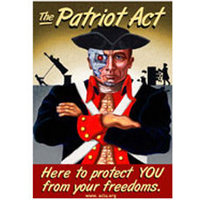
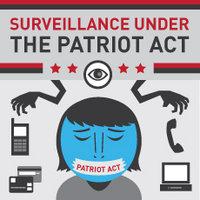
In the meantime, the Patriot Act has been extended until 2015, but don’t think the government is done secretly demanding your personal information from third parties. This handy dandy timeline illustrates how the Patriot Act was just the beginning of big brother’s power and information grab.
And the next front? Cybersecurity. In the interest of so-called internet security, the administration is floating proposals that would sweep up huge amounts of personal information about innocent Americans, simultaneously violating privacy rights and overwhelming the government’s counterterrorism efforts with too much data. And if that’s not scary enough, some are even suggesting that the White House be given the ability to turn off the internet in the case of a “cyber emergency.” Do you know what that is? No? Neither do I. And, neither, it appears, do many of the legislators working on the issue. Now that’s something truly scary, just in time for Halloween.
Fortunately, there’s still time to urge your legislators not to let cybersecurity legislation follow in the Patriot Act’s abusive footsteps. Please go to our Action Center and take action today!
Terrorist hunter Michael Scheuer tells Duncan Gardham and Iain Hollingshead how he was repeatedly ordered not to stop the al-Qaeda chief.
Image 1 of 2
Michael Scheuer led a CIA bin Laden unit for three and a half years (AP)
9:00AM BST 21 May 2011
There are not many sane people who can say with confidence that, had a president of America only listened to them, they could have saved $1.3 trillion and many hundreds of thousands of lives. Michael Scheuer can.
During his 22 years in the CIA – three and a half as head of a 18-man Osama bin Laden unit – he told his bosses at Langley on 10 occasions that he had a clear opportunity to kill or capture the terrorist chief. On all 10 he was told to hold his fire.
To look at Scheuer, 59, bespectacled, bearded and apparently every inch the academic and author he has become, you would not guess at his espionage past. The unit he led between 1995 and 1999 was codenamed Alec station, after his son, but it was nicknamed the “Manson family”, after the criminal Charles Manson, for the zeal with which it approached its task.
That we know anything at all about Scheuer’s past as a terrorist hunter is down to him. Imperial Hubris: Why the West Is Losing the War on Terrorism, which was published anonymously in 2004, the same year as he left the CIA, had the dubious honour of being praised for its insight in a speech by bin Laden. He was later unmasked as the author and has written three further books under his own name, the latest a biography of the man he spent much of his life trying to capture.
At a time when half the world has become an armchair expert on the world’s previously most wanted man, Scheuer is very much the real deal.
It is a story that began back in the 1980s when he was a junior member of a CIA programme funding Afghan mujahideen against the Soviets. In those days bin Laden was known to the CIA as a “do-gooder” – one who spent his own money while acting as a “bag man”, providing funds from private individuals in the Middle East. But he eventually became something of a “combat engineer”, using his family’s wealth to build barracks, clinics and roads for fighters.
By 1986 bin Laden had emerged from the shadow of more senior figures in the mujahideen to lead his own unit of young Arabs from a hideout known as the “Lion’s Den”. “We were aware of him but he absolutely refused to talk to us because he had his own money and guns and everything he needed,” says Scheuer. “We would have liked to talk to anyone fighting the Russians but he never gave us any indication that he wanted to talk. We never had contact with him.” The CIA was also aware of his growing antipathy towards the US. “He was already saying things like, ‘First the Soviets but ultimately the Americans are just as bad’ .”
Following the withdrawal of Soviet troops from Afghanistan in 1989, bin Laden returned home to Saudi Arabia a hero. However, he was placed under house arrest by the Saudi government after speaking out against the American troops stationed in Saudi Arabia during the first Gulf war. A deal was brokered by his influential family who persuaded the authorities to return his passport, allowing him to live in exile in Sudan.
Scheuer, meanwhile, had returned from Afghanistan to the CIA Counter-Terrorism Centre at Langley, where he began analysing warring factions of Algerians, rebellious Egyptians, and a group calling itself “al-Kaidah”. It wasn’t long before bin Laden’s name cropped up again. Scheuer “didn’t know if he was hands on operationally or just another Saudi spendthrift”. The answer soon became clear. In November 1995 Scheuer was appointed to set up the bin Laden chasing unit. After digging deeper he realised that al-Qaeda was “unlike any other terrorist organisation”.
Bin Laden was by now running a soap-making factory and tannery in Khartoum, an agricultural business in eastern Sudan, and had been building a road from Khartoum to Port Sudan. Scheuer thought them all easy targets for sabotage. “We formulated operations and submitted them for approval but they would not approve any of them,” he says. “If we had been able to deal a serious economic blow it could have been a show-stopper.”
In 1996 bin Laden issued his own show-stopper: a fatwa on the US. In 1997 he moved to Tarnak, near Kandahar, living on a farm not unlike the compound in Pakistan where he was eventually found 14 years later.
It was a perfect spot for Scheuer’s men to launch a surveillance operation.
They built a unit of Afghan agents, codenamed “Trodpint”, which began to rehearse capturing bin Laden. They had two clear opportunities in the first half of 1998, but senior CIA officers were not convinced they were up to the job.
In August 1998 al-Qaeda killed 12 Americans and 200 others in bombings at two American embassies in east Africa. President Clinton ordered the CIA to dismantle al-Qaeda and, in Scheuer’s words, “take care” of bin Laden. The Pentagon launched cruise missile attacks on bin Laden’s training camps, but he had left the compound hours earlier. Scheuer estimates they had at least eight further opportunities to assassinate bin Laden in the following months.
“I’m not saying it would have been simple to take care of the problem, but it got progressively harder when we didn’t take those opportunities. One 50 cent round could have put us all out of our agony.”
In June 1999, he sent off an angry memo to senior officers asking why his men were risking their lives on someone America apparently had no interest in stopping. “I don’t know what you are doing when you talk to the President but he will not get a better opportunity than this,” he told them.
Scheuer was dismissed from his job and spent the next two years running counter-heroin operations in Pakistan and the Middle East. On September 11, 2001, he was back at CIA headquarters in Langley.
Arriving home exhausted at 11.30pm, he took a shower and crawled into bed when his phone went. It was his successor at the bin Laden unit. “We need you back,” he said.
Three months later British and American special forces were at Tora Bora, bin Laden’s heavily defended cave complex in Afghanistan, when they heard his voice over a captured radio.
It was the last time they had a fix on him for nine years. The Afghans let bin Laden walk out of Tora Bora and head for Pakistan during a ceasefire.
Scheuer continued to act as an adviser to the bin Laden unit until 2004 when he resigned in disgust at the way in which the public was being lied to over the opportunities to capture the terrorist leader.
His books have pointed out the many failings of American policy in the Middle East, not least their inability to address the other causes of western unpopularity in the region while portraying a myopic image of bin Laden as a lunatic.
He retains a sneaking regard for the quarry he hunted in vain for so long. “I respect his piety, integrity and skills,” he says. And the next generation of al-Qaeda? “They will be even more cruel and bloody-minded.”
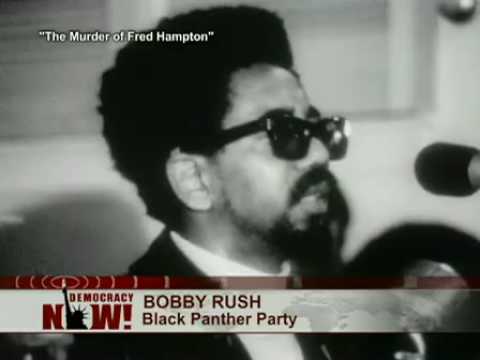
Today marks the fortieth anniversary of the death of Black Panther leader Fred Hampton. On December 4th, 1969, Chicago police raided Fred Hamptons apartment and shot and killed him in his bed. He was just twenty-one years old. Black Panther leader Mark Clark was also killed in the raid. While authorities claimed the Panthers had opened fire on the police who were there to serve a search warrant for weapons, evidence later emerged that told a very different story: that the FBI, the Cook County states attorneys office and the Chicago police conspired to assassinate Fred Hampton. We speak with attorney Jeffrey Haas, author of The Assassination of Fred Hampton: How the FBI and the Chicago Police Murdered a Black Panther. [includes rush transcript]
If you’ve been preparing for emergencies, disasters, or economic collapse there’s a strong likelihood that you’ve been added to a watch list somewhere.
Hard to believe?
The latest Communities Against Terrorism guidelines distributed by the FBI to military surplus stores in the state of Colorado outline specific activities that owners and retail associates should look for when trying to spot terrorist related activity. Much of the suspicious activity listed describes the behavior and shopping list of any modern day prepper:
What should I consider suspicious?
People or groups who:
Provide identification that is inconsistent or suspect or demand identity “privacy”
Insist on paying with cash or uses credit card(s) in different names
Make suspicious comments regarding anti-US, radical theology, vague or cryptic warnings that suggests or appear to endorse the use of violence in support of a cause
Demonstrate interest in uses that do not seem consistent with the intended use of the item being purchased
Possess little knowledge of intended purchase items
Make bulk purchases of items to include: -Weatherproofed ammunition or match containers -Meals Ready to Eat -Night Vision Devices; night flashlights; gas masks -High capacity magazines -Bi-pods or tri-pods for rifles
The brief bulk purchases list described above is something you might find in the wish-list or supply closet of any serious prepper. If you are stocking up on ammo, buying extra magazines, a bi-pod and night vision then you are suspicious and potentially a domestic terrorist; nevermind that you may be planning a personal defense strategy for your property in the event of a widespread disaster and have no intention of using these items for any other purpose. Even if you are stockpiling the most basic of all preparedness lists, like MRE’s or other long-term food storage items, the FBI now considers you suspicious.
The handout also instructs surplus store owners to consider as “suspicious” anyone who “demands identity ‘privacy’” or anyone who expresses “extreme religious statements” and those who “make suspicious comments regarding anti-US, [or] radical theology.”
The “Communities Against Terrorism” flyer closes by stating:
Preventing terrorism is a community effort. By learning what to look for, you can make a positive contribution in the fight against terrorism. The partnership between the community and law enforcement is essential to the success of anti-terrorism efforts.
Some of the activities, taken individually, could be innocent and must be examined by law enforcement professionals in a larger context to determine whether there is a basis to investigate. The activities outlined on this handout are by no means all-inclusive but have been compiled from a review of terrorist events over several years.
The handout encourages surplus store owners and employees to provide information on “suspicious” customers by calling the Denver Joint Terrorism Task Force or the Colorado Information Analysis Center. This handout is very nearly identical to one issued by the FBI to gun stores from Connecticut to Utah(PDF)
This new handout expands the absurdity by now also targeting customers of military surplus stores, and by specifically targeting the purchasing of very common, and very popular, preparedness items such as Meals Ready to Eat (MRE’s) as “potential indicators of terrorist activities.”
Those of us who have lost confidence in our government’s ability to manage a crisis, and have taken it upon ourselves to store reserve food supplies, water, self defense armaments, secondary monetary exchange units, or other SHTF Planning gear have now become “persons of interest” and domestic terrorism suspects.
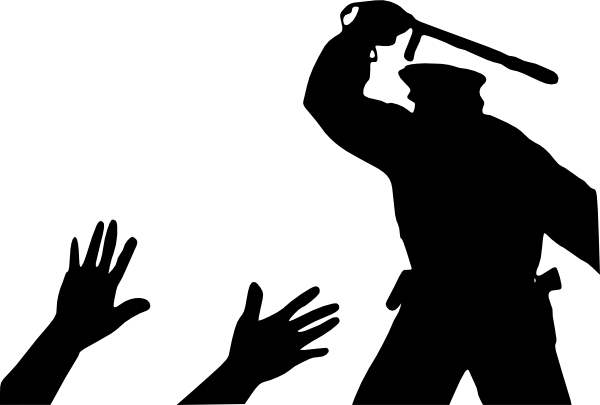
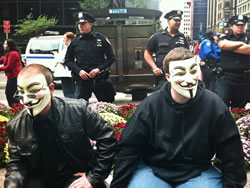
Even people who were indifferent about Occupy Wall Street protests are getting steamed about the violent crackdown on peaceful protesters because this is STILL the USA where American citizens have the Right to Assemble and the Right to Free Speech. IF the correct permits were not obtained, does that give NYPD the right to beat or mace peaceful protesters? Is America the new KGB police state, now officially being running by the rich and the Department of Fear? Citizen media is NOT a crime!
Technology is shaping the events of Occupy Wall Street; last week Yahoo apologized for “accidentally” blocking anti-Wall Street protest emails. But still there was a mainstream media coverage blackout. Police, armed with cell phones, cameras and batons, are recording citizens; protesters are recording police; and the scene is set for facial recognition technology and potential police state surveillance as seen on Cryptome. NYPD is claiming technology via the tweaking of videos is what makes the police look bad, not actual police actions. As some protesters chanted, “Shame. Shame,” so do I call disputing that the hundreds of videos and photos from different angles could all have been altered.
On Saturday, police carried an orange mesh fencing through Union Square to corral protesters onto the sidewalks. My blood turned cold when I watched a video of a peaceful female protester screaming in pain after being sprayed by a white-collared police officer. The “macing of innocent women” tactic was called common ground between American and Iranian officials. The New York Times reported, “There were approximately 80 arrests, mainly for disorderly conduct by individuals who blocked vehicular and pedestrian traffic, but also for resisting arrest, obstructing governmental administration and, in one instance, for assault on a police officer.”
According to Metro, NYPD Deputy Commissioner Paul Browne defended the decision to use pepper spray and blamed people for editing Occupy Wall Street videos to make the police look bad. Browne said, “Pepper spray was used once after individuals confronted officers and tried to prevent them from deploying a mesh barrier — something that was edited out or otherwise not captured on the video.” Then Browne warned, “Those who resist arrest can expect some measure of force will used.”
What’s next? Announcing citizen media is a crime?
There are good cops and bad cops, and you can see the difference between them as some of the NYPD in blue officers’ faces reflected shock and horror at violence displayed by their white-collared counterparts. Do you think the Occupy Wall Street 99% is only representing young Americans? An interview of one police-attacked-woman included her statement, “I’m here for my grandparents, who are too old to protest.”
A comment on the ABC article pointed out that the police may wield tasers and mace, but as was seen after the London riots, technology will be used to identify protesters.
Given the number of police holding video cameras, this is obviously a way to intimidate people who may think about joining a peaceful protest (not merely to “gather evidence” as police will claim). Of course NYPD is big on facial recognition technology, so people who might want to exercise their 1st Amendment RIGHTS are entered in a database for whatever purpose our “watchers” deem fit.
Again technology comes into play by live streaming of Occupy Wall Street and otherinformation. For the record, I do not support the release of innocent people’s information, yet some techy folks are turning the technology surveillance around and hunting for the real name of “Officer Derp,” by showing an older photo from 2004 GOP Convention and again as well as a Pastebin doxing of the alleged real name for the NYPD Deputy Inspector as well as the reasons behind it. Then came numerous warning tweets, including this one, “Fair Warning, your attack on Inspector Bologna will prove you are terrorists! Badge shows 9/11 Hero, you show HAMAS!”
Technology like tweets and social networking definitely is playing a part in Occupy Wall Street . . . as is biometric tech in the form of retina scanning of detained protesters.
The terrorism-meets-technology theme was mentioned again. Another article mentions that the NYPD’s “state-of-the-art anti-terrorism system” for the last four years has included a weapon that could “bring down a rogue aircraft” and the “bullets can penetrate concrete cinder blocks.”
Even people who were indifferent about the Wall Street protests are getting steamed about the violent crackdown on peaceful protesters because this is still the USA where American citizens have the Right to Assemble and the Right to Free Speech. IF the correct permits were not obtained, does that give NYPD the right to beat or mace peaceful protesters? Judge for yourself via firsthand accounts of people from the front lines and video interviews taken in Liberty Plaza and posted as a message on Day Nine of Occupy Wall Street. It’s very scary, like Free Speech Zones in America are now run by the Department of Fear. If you see it, report NYPD misconduct.
The Department of Justice is attempting to criminalize uploading videos that break You Tube’s terms of service, along with any other online action that is deemed to contravene a website’s usage policy, in a shocking expansion of cybersecurity laws deemed draconian by critics.
“In a statement obtained by CNET that’s scheduled to be delivered tomorrow, the Justice Department argues that it must be able to prosecute violations of Web sites’ often-ignored, always-unintelligible “terms of service” policies,” writes Declan McCullagh.
Such violations would include creating a fake Facebook profile, lying about your weight on dating websites, or providing any other item of false information that violates a website’s TOS agreement.
Under the DOJ’s new legal framework, an expansion of the Computer Fraud and Abuse Act (CFAA), agreeing to a website’s terms of service would be identical to signing a contract with an employer, with similar punishments for breaking that contract.
“To the Justice Department, this means that a Web site’s terms of service define what’s “authorized” or not, and ignoring them can turn you into a felon,” writes McCullagh, pointing out that millions of Americans violate ‘terms of agreement’ policies every single day.
Indeed, in the case of You Tube, users are often informed months or even years later that they may have infringed on the company’s ‘terms of service’ agreement if another user merely complains about the content of their video.
A d v e r t i s e m e n t
Attorney Stewart Baker warns that under the newly amended law, users uploading a copyrighted You Tube video more than once would fit into “a pattern of racketeering,” with even harsher criminal penalties, “at least if Justice gets its way.”
A coalition of free speech organizations from across the political spectrum, including the ACLU, Americans for Tax Reform, the Electronic Frontier Foundation, and FreedomWorks have joined forces to oppose the move, savaging the proposed changes as an affront to Internet anonymity in a letter to the Senate.
“If a person assumes a fictitious identity at a party, there is no federal crime,” the letter states. “Yet if they assume that same identity on a social network that prohibits pseudonyms, there may again be a CFAA violation. This is a gross misuse of the law.”
As we have documented, the attempt to create a Communist Chinese-style system of Internet policing, advocated by Senator Joe Lieberman, mandates that Internet anonymity be outlawed and that a system even more draconian than what was rejected in China – individual ID’s for Internet users – be put in place.
The attempt to expand CFAA is just one tentacle of an all out war on Internet freedom that has been launched by the federal government. Another piece of legislation that has received bipartisan support, the so-called “Rogue websites bill,” would create a Chinese-style ban list where ISPs would be mandated to block certain websites by government decree.
*********************
Paul Joseph Watson is the editor and writer for Prison Planet.com. He is the author of Order Out Of Chaos. Watson is also a regular fill-in host for The Alex Jones Show.
Do you know what to do when the police try to seize your server, computer, or phone? Take our quiz to see how well you know your rights when law enforcement threatens your digital data.
1) The cops have a warrant to search my computer. They’re demanding my encryption key. Do I have to give it to them?
No, there are no circumstances under which you can be forced to give up an encryption key because it violates your constitutional right to due process.
No, you don’t have to give the encryption key to the police as they seize the computer, but it’s possible a court could make you do it later.
Yes, if the police have a warrant for your computer, it includes your encryption key. If you don’t tell them, you could be charged with obstructing justice.
Yes, in fact you should always give your encryption key to the police, even if they don’t have a warrant. It could help them in an investigation.
Less than a year after the Cold War ended, one of its best-kept secrets came to light when the hidden purpose of West Virginia’s Greenbrier Hotel was revealed in the Washington Post.1 Beneath the hotel was a massive bunker built to house the U.S. Congress after a nuclear war, part of the nation’s “continuity of government” program. Though congressional leaders had urged the newspaper not to expose the secret, the Post’s executive editor justified the publication as a “historically significant and interesting story that posed no grave danger to national security or human life.”2 Ted Gup, the journalist who uncovered the Greenbrier’s macabre function, went further, arguing that the facility had been potentially destabilizing even when its existence was a secret. Evacuating Congress during a crisis might have telegraphed that the United States was bracing for nuclear war, precipitating a Soviet first-strike. Far from an act of irresponsible journalism, Gup cited the story as a case study in the value of an inquisitive press corps.3
Though lawmakers quickly acknowledged the Greenbrier’s obsolescence, the revelation remains controversial.4 Despite a plea for discretion, a small number of journalists had substituted their own judgment on national security for that of the U.S. defense establishment. The tension that the story illuminated — between the value gained by revealing sensitive information and the potential harm invited by doing so — has only grown more pronounced since terrorism emerged as the dominant security threat. This tension usually concerns information that, like the bunker location, has been formally designated as secret. Most recently, WikiLeaks’ release of more than a half-million classified documents has revived debate over the legitimacy of leaking as a form of civil disobedience.5 However, a more complex question concerns the advisability of making public, or drawing attention to, a variety of mostly unclassified information that is nonetheless useful to terrorists.6 Examples of this information include media descriptions of target vulnerabilities, hypothetical attack scenarios, and sensitive counterterrorism measures. The central question explored in this article is whether the availability of this unclassified knowledge benefits our adversaries more than it advantages society.
The motives behind disclosures of sensitive information vary, but a common refrain is that they spur remedial action that would otherwise be avoided. Critics argue, however, that these revelations recklessly endanger the public. Whatever their effect, a soft consensus seems to have formed that airing this information does not subtract from national security to such an extent as to justify the extraordinary powers that would be required to suppress it. This attitude represents a stark departure from previous wartime policy, when speech was frequently restricted on security grounds.7 During World War II, censorship succeeded largely because communications technology had not yet made the practice impractical. Since then, the information revolution has greatly expanded the number of people with access to sensitive information as well as the means to disseminate it. Attempts to manage this information have been less than vigorous, and in many cases the government itself has made questionable revelations in the name of greater transparency.
The existence of sensitive information in the public domain is a security concern only insofar as there are adversaries poised to exploit it. Yet on this score there can be little doubt. Gathering information from open sources is an established intelligence methodology that both states and non-state actors utilize. For example, Chinese physicists relied heavily on Western scientific literature in their development of strategic weapons.8 Modern-day terrorists appear to behave similarly. A captured al-Qaeda training manual released by the Justice Department after 9/11 advises that by using public sources “openly and without resorting to illegal means, it is possible to gather at least 80% of information about the enemy.” Among the sources it recommends are “newspapers, magazines, books, periodicals, official publications, and enemy broadcasts.”9 The diversity of malevolent actors who might exploit this information has also grown dramatically over the previous decades. In the age of terrorism, the incoherence of the nation’s response to this phenomenon represents a significant failure.
This article examines three common forms of “sensitive information,” defined for the purpose of this analysis as knowledge that might be useful to terrorists and would be considerably more difficult — if not impossible — for them to assemble independently. This information includes: media reports and risk assessments, both private and government-sponsored, that identify critical vulnerabilities to terrorism; open-source analyses that hypothesize creative terrorist attacks; and publications that reveal potentially dangerous knowledge under the rubric of scientific openness or, in the case of classified information, the public’s “right to know.” The purpose of the analysis is to challenge the assumption that these revelations are largely innocuous. A further aim is to dispute the notion that curtailing them requires measures that are incompatible with our national values. This misconception encourages the belief that any effort to discourage discussion of sensitive information compromises civil liberties.
An alternative to draconian restrictions on speech entails fostering a culture of voluntary restraint, in which citizens refrain from inappropriate revelations out of a sense of civic duty. Its enforcement would depend not on government coercion but on individuals and institutions supplying disapproval of irresponsible discussion. Admittedly, any effort to discourage discussion of unclassified knowledge, no matter how sensitive, faces an obvious hurdle: persuading the public to accept new categories of protected information just as the government struggles to keep secret the materials it has already classified. But the challenge of safeguarding the two types of information is different. One requires more diligent enforcement of existing security protocols. The other is a societal responsibility that presents no additional burden to the government beyond promoting its merits. While the debate over the discussion of unclassified information is not likely to resume until another attack occurs, policymakers should revisit the matter before that inevitable event. In its aftermath, impulsive calls to curtail American rights may obscure the more measured option that is available today.
Advertising Vulnerabilities
The emergence of terrorism has occasioned the reevaluation of what had been a steady increase in transparency across many sectors of society. The shift in attitude concerning knowledge of natural gas line locations is instructive. For decades errant digging had occasionally punctured pipes containing explosive gas, with lethal results. Industry and government responded by advertising their location as widely as possible. After 9/11, however, a series of reports highlighting the possibility of natural gas attacks led some to question the wisdom of this effort. A 2004 New York Times headline captures the dilemma: “Mapping Natural Gas Lines: Advise the Public, Tip Off the Terrorists.” In response to these concerns, pipeline maps began to be removed from many gas company web sites.10 Similar fears have arisen in other countries. In 2008, flood risk experts in Britain’s Environment Agency incurred the wrath of security officials when they published maps depicting regions under severe threat in the event of dam failures.11 As in the United States, however, such objections have been inconsistent, leaving unresolved the question of whether society is better served by openness or discretion.
Reactions to the identification of vulnerabilities can generally be divided into two schools of thought. The first contends that vulnerability assessments are often indistinguishable from terrorists’ target research and should therefore be closely guarded. In keeping with this view, Dennis Pluchinsky, a former State Department intelligence analyst, facetiously accused the American media of “treason” for its post-9/11 security coverage, which he suggested had “clearly identified for terrorist groups the country’s vulnerabilities.”12 The opposing view is that identifying security gaps has a mostly salutary effect. As Georgetown Law Professor Laura Donohue argues, “Citizens are entitled to know when their milk, their water, their bridges, their hospitals lack security precautions. If discussion of these issues is censored, the state and private industry come under less pressure to alter behavior…”13 Of course, these outcomes are not mutually exclusive — publicizing vulnerabilities may simultaneously alert terrorists to promising targets and prompt policymakers to protect them. In these cases, the crucial question is whether the benefit of identifying a vulnerability outweighs the possibility that the likelihood of its being exploited will increase. Since 9/11, many commentators have taken this wager, as a brief review of the literature illustrates.
In 2005, Slate writer Andy Bowers published instructions on how to exploit a loophole in the No-Fly List using online check-in. This convenience allows travelers to print boarding passes at home and proceed directly to airport security, where they present some form of government identification. While the names on the pass and ID must match, the Transportation Security Administration (TSA) does not scan the barcode or compare the name against the No-Fly List. Only at the gate is the boarding pass scanned, but no matching identification is required. Bowers suggests that terrorists could travel with two boarding passes — one legitimate, purchased with a stolen credit card, and the other a counterfeit created using widely available software. At the first checkpoint, the passenger will pass through as long as the fake pass corresponds with the ID. The scan of the genuine pass at the gate will not register alarm because it contains an innocent name. Bowers justified this revelation with a familiar defense — if he could discern the loophole, “any terrorist worth his AK-47 realized it a long time ago.”14 In another piece, journalist Jeffrey Goldberg provided a recipe for fabricating a homemade knife in flight with steel epoxy glue: “It comes in two tubes, one with steel dust and then a hardener. You make the mold by folding a piece of cardboard in two, and then you mix the two tubes together…. It hardens in 15 minutes.”15 Goldberg also described passing through security wearing under his shirt a polyurethane bladder designed to sneak 80 ounces of alcohol into sporting events, presumably sufficient to hold enough liquid explosives to destroy an aircraft in flight.16
A frequent target of journalistic exposés is the security surrounding the nation’s critical infrastructure, particularly facilities that manufacture or store dangerous materials. In one “60 Minutes” investigation in 2004, camera crews infiltrated several chemical plants to demonstrate their susceptibility to terrorism.17 Though these investigations often contain sensationalist or self-congratulatory undertones, such reporting can still be done responsibly. In 2005, for example, ABC News investigated the security at nuclear research reactors on 25 university campuses using undercover graduate students to penetrate the sites.18 The laxity of the security would later be featured in a televised special on vulnerable nuclear sites. However, six weeks before the broadcast, the investigative team disclosed its findings to university officials and government personnel, allowing time to heighten security at the facilities. In doing so, a program that might have instantly increased a security threat was limited to a mere embarrassment for the universities.
Government as the Source of Sensitive Information
Despite the practice of “overclassification,” in which the government makes secret an abundance of innocuous material, government reports are ironically the source of much sensitive information.19 The Smyth Report, the unclassified history of the Manhattan Project, provides a useful lesson.20 Released in August 1945, the report had several purposes: to educate the public about the atomic bomb, showcase openness in government, and signal what could and could not be said about the new weapon. A debate raged over whether the report revealed too much —physicist Leó Szilárd claimed it “clearly indicates the road along which any other nations will have to travel” — but officials ultimately judged that nothing vital was revealed.21 However, historian Michael Gordin argues that the Smyth Report was in fact “crucial for the Soviet [bomb] project—perhaps the most important single source of American information….” Thirty thousand translations were distributed to Soviet research institutes. According to Gordin, had the report not existed, “the Soviets would have had to write a guidebook of their own. Smyth saved them the trouble….”22 Dr. Khidhir Hamza, an Iraqi weapon scientist who defected in 1994, recalled using the same materials in Saddam Hussein’s nuclear program. He later wrote, “I was sure that if U.S. officials knew how valuable its Manhattan Project reports would be to us years later, they would have kicked themselves.”23
The practice of revealing sensitive information for the sake of openness in government continues today. The Government Accountability Office (GAO), for example, regularly scandalizes Congress and the media with revelations of slipshod security practices. A typical report in 2007 described the ease with which undercover agents passed through airport security with concealed bomb components.24 Beyond confirming the practicality of this attack mode, the report provided clues on the simulated bomb design that an astute terrorist might have perceived. A later report catalogued deficiencies in the security surrounding the nation’s biosafety level 4 laboratories, which house pathogens such as Ebola and smallpox.25 Another provided details of the behavioral profiling techniques that TSA uses to screen for suspicious airline passengers.26 These reports are made public despite evidence that terrorists are aware of them. Indeed, in 2010, an al Qaeda affiliate released an English-language document detailing its attempt to detonate explosives on two U.S.-bound cargo aircraft; the document referenced a GAO assessment of cargo inspection methods, demonstrating the network’s awareness of this source of information.27
These revelations would be beneficial if they consistently prompted corrective action, but in many cases they do not, as an earlier series of reports illustrates. In 2003, GAO provided a virtual guide to collecting material for a radiological dispersal device (RDD), which could easily be obtained due to weaknesses in the Nuclear Regulatory Commission’s (NRC) licensing process.28 Four years later, an investigation revealed that these weaknesses had not been addressed. After establishing a sham business with only a post office box, investigators acquired a license to receive radioactive materials and then doctored it to permit unlimited acquisition of sources. The investigators then contracted with two U.S. suppliers to purchase moisture density gauges containing enough americium-241 and cesium-137 to construct an RDD.29 While this investigation finally forced the NRC to suspend its licensing program, the government has identified other security gaps where the potential for timely remediation is severely limited.
Numerous reports have advertised shortcomings in the architecture to detect smuggled nuclear weapons, particularly the inability of radiation portal monitors at U.S. seaports to detect “shielded” nuclear material.30 Others have documented the virtual absence of scanning for railcars and small watercraft entering the country.31 This information greatly reduces terrorists’ uncertainty about the obstacles they face in conducting an attack. Micah D. Lowenthal draws on scholarship concerning criminal behavior to demonstrate how this knowledge hinders our ability to deter nuclear terrorism. Specifically, he cites a study on the effectiveness of the Lojack car retrieval system, an unobservable transmitter that allows police to track stolen vehicles. While visible theft-deterrent devices such as steering wheel locks simply shift thieves’ energies to neighboring cars, Lojack produced broad reductions in overall theft.32 The explanation is simple: criminals are aware that the device is used but are unable to identify which cars have it. Lowenthal argues that a similar phenomenon may occur with nuclear terrorism, in which “the existence of some radiation monitoring at seaports and land border crossings may deflect adversaries, causing them to focus on other gaps…that are identified as easier targets.”33 Disclosing information on the detection architecture therefore guarantees that it will have little effect on the overall risk. By contrast, deliberate ambiguity about U.S. defenses might deter terrorists from attempting a nuclear attack in the first place. At the least, such a policy would avoid steering them toward the least defended entry points.
The preceding anecdotes concern attack vectors that are, in all likelihood, already familiar to terrorists. While this information may make an attack easier to plan or more likely to succeed, a determined adversary may be able to perform the necessary research without assistance. An altogether different category of sensitive information consists of novel ideas for attacks that may not have occurred to the most imaginative adversaries. Managing discussion of these scenarios presents a special challenge, as the creativity of the 9/11 attacks ensured that exercises in innovative thinking would find a receptive audience in both the government and the popular culture.
Positing Creative Scenarios
After 9/11, conceiving novel means of wreaking havoc became something of a fiendish hobby for many analysts.34 One group of authors, noting the proliferation of hypothetical scenarios in the public domain, suggested that their source must be a basement where “thousands of monkeys who have yet to type out exact copies of the works of Shakespeare are nonetheless producing dozens of new ideas for attacks on America…”35 Many of these scenarios follow a familiar template. “At 3 a.m. on a moonless night,” begins one fictitious plot in IEEE Spectrum, “a pair of armored vans race down an access road leading up to the sprawling Hovensa oil refinery.…”36 Another scenario by Thomas Homer-Dixon (which begins at 4 a.m. on a “sweltering” night rather than a “moonless” one) involves an assault on the electricity grid during a heat wave:
In different parts of [California], half a dozen small groups of men and women gather. Each travels in a rented minivan to its prearranged destination — for some, a location outside one of the hundreds of electrical substations dotting the state; for others, a spot upwind from key, high-voltage transmission lines…. Those outside the substations put together simple mortars made from materials bought at local hardware stores, while those near the transmission lines use helium to inflate weather balloons with long, silvery tails. At a precisely coordinated moment, the homemade mortars are fired, sending showers of aluminum chaff over the substations. The balloons are released and drift into the transmission lines. Simultaneously, other groups are doing the same thing along the Eastern Seaboard and in the South and Southwest. A national electrical system already under immense strain is massively short-circuited, causing a cascade of power failures across the country. Traffic lights shut off. Water and sewage systems are disabled. Communications systems break down. The financial system and national economy come screeching to a halt.37
Innumerable scenarios of this ilk have been described in the public domain, ranging from infecting livestock with contagious diseases to setting serial forest fires.38 Security expert Bruce Schneier holds a perennial “Movie-Plot Threat Contest,” inviting participants to propose attack scenarios that are “horrific and completely ridiculous, but plausible.” The plots are reliably dramatic: irradiating Wall Street with radiological bombs, crashing explosives-filled airplanes into the Grand Coulee Dam, and so on.39 The government evidently sees value in such exercises, in part because the 9/11 Commission identified the failure of “imagination” as first among the deficiencies that contributed to the tragedy.40 Shortly after the attacks, then-National Security Advisor Condoleezza Rice famously asserted, “I don’t think anybody could have predicted that these people…would try to use an airplane as a missile.”41 Rice’s statement was soon discovered to be incorrect — more than a dozen references to hijacked planes-cum-guided missiles were identified after the attacks. One 1999 report speculated that al Qaeda’s suicide bombers “could crash-land an aircraft packed with high explosives…into the Pentagon, the headquarters of the [CIA], or the White House.”42
The government subsequently commissioned a series of exercises to capture some of the creativity that had so disastrously eluded its analysts. In one program, the Army-funded Institute for Creative Technology enlisted Hollywood screenwriters and directors to conjure up frightening attack scenarios.43 Yet the products of these sessions remained off-limits to public scrutiny. As one official explained, “Our worst nightmare was that we would suggest scenarios to terrorists.”44 Marvin Cetron, a “futurist” who credits himself with having foreseen the 9/11 attacks, claims that the State Department removed his prediction from a 1994 government report for fear that it might “give terrorists a valuable idea they might not conceive on their own.”45
Cetron has found a more receptive market for his powers of discernment after 9/11 — he has since published several lists of “unthinkable” terrorist plots ranging from destroying Tennessee Valley Authority dams to bombing a liquefied natural gas tanker near a major city.46 While such scenarios are often farcical, they occasionally produce useful insights. In one analysis, James Acton et al. suggest several innovative means of disseminating radiological materal beyond the standard “dirty bomb,” in which radioactive material is simply mixed with explosives.47 Though the common assumption is that such a device would produce catastrophic effects, the authors argue that the death toll would be “very unlikely to reach three figures.” By contrast, attacks involving ingestion, inhalation, and immersion of radiation, which they dub I3 attacks, may claim an order of magnitude more victims and would be less technically challenging to carry out.48 While their analysis stops short of providing instructions to terrorists, the authors have arguably provided several kernels of useful information.
Just as in the case of advertising vulnerabilities, government officials are often the source of worrisome scenarios. In 2009, for example, Charles R. Gallaway, then head of the Domestic Nuclear Detection Office, testified before Congress on the challenge of interdicting attempts to smuggle a nuclear device into the United States. Citing a government study, he noted that “the most difficult scenario to counter was the use of [general aviation] aircraft delivering a weapon from outside the borders of the U.S. directly to a target.” Gallaway observed that such an attack “would enable an adversary to bypass…multiple detection and interdiction opportunities.”49 Because a system to defeat this scenario would obviously require great time and expense to implement, and may ultimately be unachievable, the decision to emphasize this attack mode is curious. At the very least, Gallaway may have given adversaries inspiration that they did not previously possess.
On the question of giving terrorists novel ideas, commentators usually argue that our adversaries are sufficiently clever to discern the nation’s vulnerabilities. As Cetron avers, “I no longer worry about giving the bad guys ideas…. They will think of any attack we can…”50 Yet a private admission by al Qaeda leader Ayman al-Zawahiri casts doubt on this assumption. In a captured 1999 memo to an associate, Zawahiri conceded that “Despite their extreme danger, we only became aware of [biological and chemical weapons] when the enemy drew our attention to them by repeatedly expressing concerns that they can be produced simply with easily available materials.”51
The year after Zawahiri’s memo was written, columnist Colbert I. King authored a detailed scenario to highlight the capital’s vulnerability. King described two heavily armed terrorists seizing control of the Washington Monument, blocking the staircases with explosives, and firing from the windows with a .50 caliber rifle.52 In his view, “Gain control of the monument and you hold sway over a large area of the world’s most powerful capital, at least for several days.” So attractive is the scenario, he suggests, that the monument “easily makes a terrorist’s list.”53 Some variation of this rationale is the default response of those who publicly speculate about terrorist scenarios and wish to avoid criticism for doing so. However, an argument can be made that his attack had not occurred to a single terrorist before King described it. Elliot Panek considers this question in assessing the effect of “Wisdom of Crowds wiki-logic” in the context of terrorism, or whether aggregating creative scenarios constitutes “doing the terrorists’ work for them.”54 He notes that generating plausible scenarios requires considerable thoughtfulness, and while “[o]ne writer (e.g., Tom Clancy) could be pretty good at that, and a bunch of devoted terrorists could be just as good if not better…a larger group of well-educated, creative people…would certainly be better at it than either Clancy or the terrorist.” Panek rejects the assumption that terrorists have already conceived of every brilliant scenario, arguing that “the most sophisticated think tank is probably no match for the collective wisdom of the [New York Times] readership…”55
However irresponsible these descriptions, authors who publish them usually insist that terrorists could, with the proper effort and imagination, conceive them without assistance. The same is true for the identification of domestic vulnerabilities. What distinguishes the final species of information considered in this article is its inaccessibility to all but the most rarefied circle of thinkers. If the first two categories concern insights that would be difficult for adversaries to gain themselves, the last consists of information that requires the complicity of a third party.
Publishing Potentially Harmful Information
Sensitive information is often revealed in the service of a beneficial purpose even if its immediate impact appears harmful. One famous case fitting this description is the New York Times’ revelation of the Bush administration’s domestic wiretapping program. After first learning of the program, the Times’ refrained from publishing the story for a year, in part due to the urging of administration officials.56 In December 2005, just before publishing their sensational scoop, journalist Eric Lichtblau and the newspaper’s editors were summoned to the White House, where these officials again attempted to dissuade them from going to print. Their case was compelling: disclosure of the program would instantly eliminate its effectiveness and place American lives in danger. As Lichtblau later recounted, “the message was unmistakable: If the New York Times went ahead and published this story, we would share the blame for the next terrorist attack.”57 This argument was ultimately unpersuasive, although the Times’ account of the program did omit certain sensitive details.58 While the revelation was highly controversial—President Bush described it as “a shameful act” — the story prompted a constructive national debate on wartime executive power.59 Many civil libertarians applauded the skepticism of a press corps that since 9/11 had been supine in its coverage of the administration’s counterterrorism policies.
In other cases, dissemination of sensitive information resembles plain vandalism. This motive is evident in the work of John Young, founder of the web site Cryptome.org.60 Young’s hobby is to make public the government’s most closely held secrets, his motivation appearing to extend no further than his conviction that “There’s nothing that should be secret. Period.”61 Among the information he has published are the locations of nuclear weapon storage facilities and the home addresses of senior government officials.62 In 2009, Young embarrassed TSA by posting an inadequately redacted manual that included airport metal detectors settings and a list of countries whose passport-holders require special scrutiny.63 The following month he posted a similar document on screening procedures for explosive residue in checked baggage.64 While these revelations have an impish quality, an argument can be made that they impose greater discipline on the government to protect sensitive information, if only to avoid embarrassment. The same cannot be said for the amateur satellite trackers who gleefully publish the orbital inclinations of classified U.S. satellites. This phenomenon led a commission on the National Reconnaissance Office (NRO), which operates the nation’s spy satellites, to note that “public speculation on how NRO satellites are used has aided terrorists and other potential adversaries in developing techniques of denial and deception to thwart U.S. intelligence efforts.”65 Despite this admonition, the practice continues, most recently in 2010 when the orbit of the Pentagon’s classified X-37B spacecraft was revealed less than a month after its launch.66
Though the damage that results from these revelations may be quite severe, those who make them often belong to professions whose ethic sometimes requires disdain for government secrecy. In other cases the disseminators are everyday citizens with a penchant for mischief. In recent years, neither group has been particularly amenable to pleas for discretion. The government has had greater success in managing the communication of another cohort—scientists who conduct “dual-use” research. However, several recent lapses in caution among this group demonstrate the continued risk that attends the dissemination of sensitive information.
Dual-Use Scientific Research
In the early 1980s, many U.S. officials grew concerned that the Soviet Union was compensating for its technological inadequacy by mining the U.S. scientific literature. A 1982 incident conveys the climate at the time. Days before a major engineering conference, the Department of Defense (DoD) blocked the delivery of more than 100 unclassified papers on the grounds that Soviet bloc representatives would be present at the conference.67 In response to the broader concern, the National Academy of Sciences (NAS) convened the Panel on Scientific Communication and National Security to explore tighter controls on academic communication.68 While federal law grants broad authority to classify scientific research and thereby restrict its publication, deference to scientific openness had made the government reluctant to exercise this power.69 The panel’s findings, known as the Corson Report, acknowledged that a Soviet intelligence-gathering effort was directed at the American scientific community and that a substantial transfer of U.S. technology had indeed occurred. However, the panel determined that American universities, and open scientific communication more generally, were the source of very little of this transfer. Moreover, it concluded that formal policies to restrict scientific communication “could be extremely damaging to overall [U.S.] scientific and economic advance as well as to military progress.” Calling for a strategy of “security by accomplishment” rather than secrecy, the report argued that the “limited and uncertain benefits of such controls are, except in isolated areas, outweighed by the importance of scientific progress…”70 Though the demise of the Soviet Union appeared to vindicate this conclusion, the emergence of transnational terrorism revived the unease that inspired the Corson panel. Rather than the loss of military technology, recent anxieties have centered on publications in the life sciences and their potential utility to bioterrorists.
The danger of publishing sensitive scientific material was powerfully illustrated by a group of Australian scientists conducting pest control research in the late 1990s.71 In a now-infamous experiment, the scientists inserted the interleukin-4 gene into the mousepox virus with the aim of producing an “infectious contraceptive” for mice.72 Rather than sterilizing the subjects, however, the modified mousepox killed them, including many mice that had been immunized against the unaltered virus. The implications were ominous — a similar modification could yield vaccine-resistant viruses that are lethal to humans, including smallpox. Both the scientists and the editors of the journal to which the work was submitted understood its potential for misuse.73 Their controversial decision to publish was based on the conclusion that the crucial elements of the research had already appeared elsewhere and that so much dangerous information was already available that one additional article would be inconsequential.74 Nonetheless, the mousepox episode would be the catalyst for yet another NAS study on the dangers of scientific communication.75 Yet even before its commencement, scrutiny of dual-use research had greatly increased in the wake of the 9/11 attacks.
The dilemma in publishing such information is a familiar one. While certain scientific findings could aid malevolent actors, failing to air them in the open literature might inhibit research that holds the key to the defense. After contemplating this quandary, the American Society for Microbiology released guidelines in 2002 for reviewing manuscripts submitted to the journals under its purview. Under this voluntary process, peer reviewers would alert editors if material “might be misused or might pose a threat to public health safety,” and a determination would be made concerning modifications.76 (While only a handful of manuscripts have since been flagged, editors have deleted sensitive details on several occasions.77) The following year, the editors and publishers of the nation’s leading life-science journals met to discuss the publication of such information. During this meeting, a near-consensus emerged that “there is information that…presents enough risk of use by terrorists that it should not be published.” The group recommended that in circumstances in which the potential danger of publication exceeds the potential benefit to the public, sensitive papers should be modified or not published at all. In these cases, alternative means of communication such as academic seminars should be used to minimize the risk of misuse.78 The eventual NAS report also reflected a preference for self-regulation, noting that “imposing mandatory information controls on research in the life sciences…[would] be difficult and expensive with little likely gain in genuine security.”79 As an alternative to government oversight, the NAS panel endorsed the concept of “voluntary self-governance of the scientific community rather than formal regulation by government.”80
The presumption underlying this system is that scientists will censor themselves responsibly, obviating the need for government oversight, and that there will be agreement on what should not be published. The mousepox case calls both of these assumptions into question. After a review of the case, the editor of the Journal of Virology expressed no misgivings about the decision to publish.81 Likewise, the NAS panel deemed the publication “appropriate,” stating that there was “little technical information that was not already abundantly available in the literature.”82 Moreover, the research “alerted the scientific community to such a possibility occurring either intentionally or spontaneously.”83 However, at least one of the researchers involved in the experiment later expressed misgivings about its merit. Dr. Ian Ramshaw noted that even before discovering a method to increase the lethality of pox viruses, his team had stumbled upon another “dual-use dilemma” — creating an agent of contagious sterility — that was scarcely less sinister. As a weapon against humans, Ramshaw considered this “as bad as making a virus that kills the individual” and concluded that the original research “should never have started in the first place.”84
Another article published after the NAS report reinforces the limits of self-censorship. In 2005, the Proceedings of the National Academy of Sciences approved for publication the research of Stanford University scholars Lawrence Wein and Yifan Liu, who had analyzed a release of botulinum toxin in the milk distribution system.85 Wein and Liu had determined that absent detection, an attack involving less than 1g of the toxin would poison 100,000 people.86 Among this exposed group, Wein later elaborated, more than half would likely perish.87 Just prior to publication, an official of the Department of Health and Human Services requested that the journal hold the piece, calling it “a road map for terrorists.”88 After a brief delay to review the request, the editors proceeded with publication, which NAS president Dr. Bruce Alberts defended by noting that all of the information that could be useful to terrorists was “immediately accessible…through a simple Google search.”89 This is a familiar, yet spurious, defense. Putting aside that simply conceiving the attack mode is an important element of every plot, the existence of information on the Internet is not evidence of its harmlessness. Disparate, mundane information can be aggregated in such a way that the ultimate product is highly sensitive.
Aggregating Sensitive Public Information
The “Nth Country” experiment, a little-known exercise during the Cold War, illustrates the potential dividend that open-source research can yield. In 1964, the U.S. government recruited three young physics postdocs with no knowledge of nuclear weapons and tasked them with designing a bomb with a “militarily significant yield” using only open-source literature. To the dismay of many officials, their ultimate design was deemed workable.90 In a later instance, journalist Howard Morland used public information and expert interviews to approximate the design of a hydrogen bomb, which he described in a piece for Progressive magazine.91 After receiving a copy of the article, the government attempted to suppress its publication, setting off a highly public legal battle.92 Only after similar information appeared in a separate publication — its author inspired by the Progressive case to commit an act of civil disobedience — did the government cease its attempt to silence Morland.93
A more recent case involves the doctoral dissertation of Sean Gorman, a George Mason University graduate student. Gorman and his research partner used public information culled from the Internet to map the fiber-optic network that connects American industry. The result was a tool that a government official described as a “cookbook of how to exploit the vulnerabilities of our nation’s infrastructure.”94 According to its description in the press, the tool allowed a user to “click on a bank in Manhattan and see who has communication lines running into it and where… [or] drill into a cable trench between Kansas and Colorado and determine how to create the most havoc with a hedge clipper.” When the pair presented their research to a room full of chief information officers of U.S. financial firms, it was suggested that they not be allowed to leave with their briefing. At the urging of government officials, the university directed that only general summaries of their findings be published.95 This outcome, in which private citizens acted voluntarily to mollify the government, provides some optimism that sensitive information can be protected without formal restrictions. Yet the ad hoc nature of these interventions, and the absence of a culture of discretion that would make them unnecessary, ensures that much dangerous knowledge will continue to be available.
Implications
Perhaps the greatest obstacle to sanitizing discussion of sensitive information is the unresolved question of its harmfulness. Since 9/11, vulnerabilities have been identified in countless targets without terrorists’ exploiting them. Several high-impact, easily replicable attacks have occurred and have not been copied. Consider, for example, the Beltway Sniper attacks, in which two snipers killed 10 people from a converted sedan in October 2002. These shootings fairly traumatized the Washington, D.C., area and are often cited as an ideal template for future attacks.96 Yet after eight years no similar attack has occurred. The few attacks that have been attempted, such as Najibullah Zazi’s 2009 plot to bomb the New York City subway, have required no special choreography or insight into security gaps.97 While this observation might explain the complacency surrounding sensitive information, a spectacular attack may quickly invalidate it, especially if such information turns out to have enabled its success. The danger of disseminating sensitive information should be evaluated a priori and not on the basis of recent experience.
If one accepts the premise that sensitive information may be useful to attentive adversaries, the central question is how to manage this information more appropriately. Previous wartime restrictions on speech are neither politically acceptable nor technologically feasible in the present day. Perhaps the most famous of these is the 1917 Espionage Act, which criminalized the transmission of “information relating to the national defense” to the country’s enemies.98 Latter-day incarnations of this law were proposed after 9/11, such as Dennis Pluchinsky’s suggestion—risible even in those fearful days — that laws should be enacted “temporarily restricting the media from publishing any security information that can be used by our enemies.”99 Such proposals have little chance of enactment, but variations are being pursued that are only slightly less troubling. The following discussion examines the efficacy of the government’s usual approach to managing sensitive information. Additionally, several alternatives are put forward that are both less intrusive and potentially more effective than the bald restrictions on speech that are often proposed.
The Perils of Censorship
Even when the government has legitimate objections to the release of information, either classified or merely sensitive, efforts to suppress its publication occasionally backfire.100 This occurred in 1979 when the government attempted to censor Howard Morland’s hydrogen bomb article. Hugh E. DeWitt, a retired government physicist, noted then that the genesis of the controversy was the Department of Energy’s (DOE) response to Progressive’s editors, who had submitted Morland’s manuscript for confirmation of its technical accuracy. According to DeWitt, “Had [DOE] responded with their usual curt lsquo;no comment’ the article would have appeared, attracted little attention, and been quickly forgotten.”101 The pursuit of an injunction implicitly confirmed the value of its content. A similar episode unfolded in late 2010 when the Pentagon purchased and destroyed 9,500 copies of Operation Dark Heart, the memoir of a former intelligence officer in Afghanistan.102 DoD officials had determined that the book contained classified operational details. However, because dozens of advance copies had already been distributed, comparison of the censored second printing with the original work allowed for the identification of its sensitive revelations.103 As a result of the publicity, the redacted version of the book soon topped Amazon’s bestseller list.104
Still more vexing than protecting appropriately classified information, which the government has a clear justification to safeguard, is managing the potential harm of unclassified information in the public domain. As Science Editor-in-Chief Donald Kennedy notes, “[government officials] can’t order the nonpublication of a paper just because they consider the findings lsquo;sensitive.’ No such category short of classification exists…”105 Often the appropriate response is not to impose formal restrictions at all, which are likely to be ineffective, incompatible with the First Amendment, or both. Indeed, the government’s inability to silence WikiLeaks illustrates its impotence in policing speech in the Internet age.106 Public leaders should instead promote a culture of voluntary restraint, in which gratuitous revelations of sensitive information are collectively frowned upon. After 9/11, the government took tentative steps to encourage this approach, but they rarely extended beyond the advice issued by the National Infrastructure Protection Center, which asked Americans to “apply common sense in deciding what to publish on the Internet.”107 While many commentators would ignore any request to refrain from publishing sensitive information, even a small reduction in irresponsible discussion would be preferable to the current paradigm.
Self-restraint as a Civic Duty
Changes in societal mores are probably more responsible than any technological development for the increased traffic in sensitive information. Irresponsible disclosures frequently occur without any social penalty for those who make them. This represents a dramatic shift from earlier generations, when cooperation with the government on security matters was more uniform. In one well-known example, American physicists refrained from publishing results on nuclear fission experiments during World War II for fear of assisting the Nazi bomb program.108 Even among provocateurs, there is precedent for self-restraint. Daniel Ellsberg’s name is synonymous with exposing government secrets, having leaked the Pentagon Papers. Yet Ellsberg conscientiously withheld four volumes regarding sensitive negotiations out of concern that they would disrupt the peace process.109 Such discretion can still be found, although it is uncommon enough to be conspicuous. In their analysis of radiological terrorism, for example, James Acton et al. stopped short of revealing a radiation immersion scenario that they claimed would “readily kill several hundreds and disrupt a large city.” As for the specifics of the plot, they wrote, “We will not describe it.”110 In an earlier episode, the government sought a voluntary embargo of the details of a 1984 incident in which religious cultists poisoned 751 people in Oregon with Salmonella. Fearing the attack would inspire copycats, officials asked the Journal of the American Medical Association to refrain from describing the method for twelve years; the editors agreed.111
As an alternative to formal restrictions on communication, professional societies and influential figures should promote voluntary self-censorship as a civic duty. As this practice is already accepted among many scientists, it may be transferrable to members of other professions. As part of this effort, formal channels should be established in which citizens can alert the government to vulnerabilities and other sensitive information without exposing it to a wide audience. Concurrent with this campaign should be the stigmatization of those who recklessly disseminate sensitive information. This censure would be aided by the fact that many such people are unattractive figures whose writings betray their intellectual vanity. The public should be quick to furnish the opprobrium that presently escapes these individuals.
The need to influence the behavior of scientists is particularly acute. The Corson panel, while expressing little enthusiasm for restrictions on scientific communication, noted the existence of a category of research that merited “limited restrictions short of classification” on a largely voluntary basis. This category represented a “gray area” lying between research that can be discussed openly and that which the government has good cause to classify.112 While the need for voluntary self-censorship among scientists is already well recognized, there is still some resistance to the idea that scientific communication should ever be constrained. To wit, one of the researchers involved in the Australian mousepox experiment defended their publication on the grounds that “Anything scientifically interesting should be published.”113 An effort must be made to temper this attitude and make clear that the pursuit of scientific knowledge does not absolve researchers of their social responsibility.
An understandable objection to self-censorship arises when one considers that huge quantities of classified information are being maliciously leaked under the auspices of WikiLeaks. It might seem curious to criticize well-meaning professionals for discussing unclassified information that is far less damaging than the genuine secrets being revealed. Yet the nihilism of this small group is not the standard against which one’s actions should be measured. Nor does it release conscientious citizens from their duty not to endanger the nation.
Self-censorship among Journalists
Outside of the laboratory, discretion in national security matters is nowhere more important than in the field of journalism. The World War II-era Office of Censorship owed much of its success to the voluntary cooperation of the press.114 The relationship between the government and the media is more adversarial today, but vestiges of past cooperation remain. For example, in journalist Bob Woodward’s account of the 2007 troop “surge” in Iraq, he pointedly refused to describe a secret technology used to target insurgent leaders, which he credited with much of the campaign’s success.115 In other cases, however, journalists’ carelessness has caused considerable damage to the nation’s security. The authorized biography of Timothy McVeigh provides a useful example. Based on interviews with McVeigh, two journalists described in detail the bomb he used in the Oklahoma City attack, including its triply redundant fusing mechanism.116 Because information that appears in major newspapers or works from leading publishing houses bears a certain institutional imprimatur, terrorists may find it useful. Would-be bombers face the dilemma of not knowing which of the multitude of Internet bomb designs are feasible, and operational security may preclude their testing a device. Given that McVeigh’s design had been dramatically demonstrated, detailed instructions on how to replicate it should not have been provided.117
Even more important than omitting certain sensitive details is to refrain from sensational reporting that magnifies rather than diminishes security threats. Calling attention to alarming information, ostensibly to prompt its redress, may instead compound the danger, especially if a remedy is not practicable. Once such incident took place in 1975 when Britain’s Sunday Times reported that the U.K. patent office had allowed the formerly secret formula for the VX nerve agent to be published.118 British officials scrambled to remove the offending documents from public libraries.119 However, far from eliminating a threat, the story drew attention to information that was already widely available, having been declassified in several countries years before.120 One British patent agent noted that “without the indiscretion of the Sunday Times an amateur would have been unable to identify and locate the relevant document.”121 Worse, according to Geoffrey Forden, the Times story was the catalyst that initiated Iraq’s nerve gas program.122 Another example can be found in the reporting on the WikiLeaks releases. Several media outlets described a leaked State Department cable that listed sites around the world whose destruction would “critically impact” U.S. national security. Among these were African mines that produce cobalt and bauxite as well as locations where underwater communications cables reach land. One article defended these revelations on the specious grounds that “any would-be terrorist with Internet access and a bit of ingenuity might quickly have identified” the sites.123 Yet as a result of this carelessness, a terrorist would require neither ingenuity nor the patience to scour thousands of leaked documents to identify the most sensitive information.
Journalists should be encouraged to resist the notoriety that attends such reporting by appeals to their sense of civic responsibility. However, it is not the purpose of this essay to suggest that self-censorship should always be the default response when sensitive information is obtained. The media’s role in exposing government incompetence plays a crucial function in maintaining the nation’s civic hygiene, and revealing secrets is occasionally necessary for this purpose. Yet for revelations that potentially threaten public safety, a set of criteria should be established that assist the media in choosing responsibly between silence and disclosure. Regarding security vulnerabilities, the crucial question is whether the potential exists for timely remediation. If it does not, little is gained by drawing attention to weaknesses in the nation’s defenses. An additional determinant should be whether alternative mechanisms exist to alert the government to a deficiency. Here the government has a clear responsibility to ensure that public exposés are not the only means to correct a shortcoming in security.
Conclusion
Whatever the excesses of the U.S. response to 9/11, avoiding wholesale restrictions on the discussion of sensitive information represents a triumph of moderation. Yet in our reverence for free expression, communication has been tolerated that carries considerable security risks while delivering questionable benefits to society. Greater discipline can be imposed on the discussion of sensitive information without formal, coercive restrictions on speech. Indeed, this effort should be predicated on forestalling even greater erosions of liberties that may occur after another devastating attack.
Just as the evolution of social mores has been a factor in making irresponsible communication more acceptable, efforts to discourage these discussions should center on challenging their basic appropriateness. Civic and professional leaders possess considerable power to influence popular perception. This power should be harnessed to place the burden of policing irresponsible discussion squarely in the hands of the public. Its success will ultimately be achieved not by coercion but by persuasion — specifically, by convincing citizens that the government is not the sole arbiter of the sensitivity of information and that responsibility for protecting the nation extends to every citizen who possesses it.
Dallas Boyd is a national security analyst with Science Applications International Corporation (SAIC). Mr. Boyd received a BA degree in history from The Citadel and a Master in Public Policy degree from Harvard University’s John F. Kennedy School of Government. Mr. Boyd performs research and analysis for U.S. government customers concerning terrorism, U.S. counterterrorism policy, nuclear deterrence, and adversary decision-making. His current work involves assessing emerging technology threats to U.S. national security. Mr. Boyd may be contacted at [email protected].
Acknowledgement
The author thanks Nash’at Ahmad, James Beard, Matthew Kutilek, Stephen J. Lukasik, Al Mauroni, Joshua Pollack, and two anonymous reviewers for their constructive comments on earlier drafts of this article. These reviews significantly clarified his thinking and writing.
House Majority Leader Richard Gephardt called the bunker a “relic of the Cold War which probably ought to be mothballed,” a view shared by House Speaker Thomas S. Foley. See Kenneth J. Cooper, “Foley Urges Closing W.Va. Bomb Shelter,” Washington Post, June 3, 1992.↵
The term “sensitive information” is used for the purpose of this article only and is not to be confused with the formal security designation “Sensitive but Unclassified” (SBU), which, until its replacement by the category Controlled Unclassified Information (CUI) in May 2008, included such categories of information as For Official Use Only (FOUO), Critical Infrastructure Information (CII), and many others. For further information on SBU, see Genevieve J. Knezo, “lsquo;Sensitive But Unclassified’ Information and Other Controls: Policy and Options for Scientific and Technical Information,” Congressional Research Service, December 29, 2006, http://www.fas.org/sgp/crs/secrecy/RL33303.pdf.↵
See Michael S. Sweeney, Secrets of Victory: The Office of Censorship and the American Press and Radio in World War II (Chapel Hill: The University of North Carolina Press, 2001).↵
Evan A. Feigenbaum, China’s Techno-Warriors: National Security and Strategic Competition from the Nuclear to the Information Age (Stanford: Stanford University Press, 2003), 65; see also John Wilson Lewis and Xue Litai, “Strategic Weapons and Chinese Power: The Formative Years,” China Quarterly 112 (December 1987): 546, http://www.jstor.org/stable/653778.↵
Al Qaeda Training Manual, “Eleventh Lesson — Espionage: Information-Gathering Using Open Methods,” Excerpts released by the U.S. Justice Department, December 6, 2001, http://www.fas.org/irp/world/para/manualpart1.html.↵
Ian Urbina, “Mapping Natural Gas Lines: Advise the Public, Tip Off the Terrorists,” New York Times, August 29, 2004, http://www.nytimes.com/2004/08/29/nyregion/29pipeline.html. In another example, the Government Printing Office issued a request in October 2001 that federal depository libraries destroy any copies of a U.S. Geological Survey CD-ROM entitled “Source Area Characteristics of Large Public Surface-Water Supplies in the Conterminous United States: An Information Resource for Source-Water Assessment, 1999.” The request was made in response to fears that the CD-ROM could be useful to terrorists plotting chemical or biological attacks. See Laura Taddeo, “Information Access Post September 11: What Librarians Need to Know,” Library Philosophy and Practice 9, no. 1 (Fall 2006), http://www.webpages.uidaho.edu/~mbolin/taddeo.htm. For an analysis of the security implications of open-source geospatial information, including the location and physical characteristics of critical infrastructure, see John C. Baker, et al., Mapping the Risks: Assessing the Homeland Security Implications of Publicly Available Geospatial Information (Santa Monica, CA: RAND Corporation, 2004), http://www.rand.org/pubs/monographs/MG142/.↵
For a succinct discussion of the problem of “overclassification,” see Steven Aftergood, testimony before the Senate Judiciary Subcommittee on the Constitution, hearing on Restoring the Rule of Law, Washington, DC, September 16, 2008, http://www.fas.org/irp/congress/2008_hr/091608aftergood.pdf.↵
The official title of the report, written by Princeton University Physics Department Chairman Henry DeWolf Smyth, was Atomic Energy for Military Purposes: The Official Report on the Development of the Atomic Bomb under the Auspices of the United States Government, 1940-1945 (Princeton, NJ: Princeton University Press, 1945), http://nuclearweaponarchive.org/Smyth/index.html↵
Michael Gordin, Red Cloud at Dawn: Truman, Stalin and the End of the Atomic Monopoly (New York: Farrar, Straus, and Giroux, 2009), 91-104.↵
Khidhir Hamza with Jeff Stein, Saddam’s Bombmaker: The Daring Escape of the Man Who Built Iraq’s Secret Weapon (New York: Simon & Schuster, 2000), 69.↵
“Aviation Security: Vulnerabilities Exposed Through Covert Testing of TSA’s Passenger Screening Process,” Government Accountability Office report GAO-08-48T, November 15, 2007, http://www.tsa.gov/assets/pdf/gao_report.pdf.↵
“Biosafety Laboratories: Perimeter Security Assessment of the Nation’s Five BSL-4 Laboratories,” Government Accountability Office report GAO-08-1092, September 2008, http://www.gao.gov/new.items/d081092.pdf.↵
“Aviation Security: Efforts to Validate TSA’s Passenger Screening Behavior Detection Program Underway, but Opportunities Exist to Strengthen Validation and Address Operational Challenges,” Government Accountability Office report GAO-10-763, May 2010, http://www.gao.gov/new.items/d10763.pdf.↵
“Nuclear Security: Federal and State Action Needed to Improve Security of Sealed Radioactive Sources,” General Accounting Office report GAO-03-804, August 2003, http://www.gao.gov/new.items/d03804.pdf.↵
“Nuclear Security: Actions Taken by NRC to Strengthen Its Licensing Process for Sealed Radioactive Sources Are Not Effective,” Government Accountability Office report GAO-07-1038T, July 12, 2007, http://www.gao.gov/new.items/d071038t.pdf. ↵
“Combating Nuclear Smuggling: DHS Improved Testing of Advanced Radiation Detection Portal Monitors, but Preliminary Results Show Limits of the New Technology,” Government Accountability Office report, GAO-09-655, May 2009, http://www.gao.gov/new.items/d09655.pdf; and “Combating Nuclear Smuggling: Recent Testing Raises Issues About the Potential Effectiveness of Advanced Radiation Detection Portal Monitors,” Government Accountability Office testimony, GAO-10-252T, November 17, 2009, http://www.gao.gov/new.items/d10252t.pdf. See also National Research Council, Evaluating Testing, Costs, and Benefits of Advanced Spectroscopic Portals for Screening Cargo at Ports of Entry: Interim Report, Committee on Advanced Spectroscopic Portals (Washington, DC: The National Academies Press, 2009), http://books.nap.edu/catalog.php?record_id=12699.↵
“Combating Nuclear Smuggling: DHS Has Made Some Progress but Not Yet Completed a Strategic Plan for Its Global Nuclear Detection Efforts or Closed Identified Gaps,” Government Accountability Office testimony, GAO-10-883T, June 30, 2010, http://www.gao.gov/new.items/d10883t.pdf.↵
Micah D. Lowenthal, testimony before the Senate Committee on Homeland Security and Government Affairs, June 30, 2010.↵
In the interest of full disclosure, I wish to acknowledge having co-authored an analysis that posits several novel terrorist plots, including an attack that exploits the partisan political climate in the United States and another involving the manufacture of fake evidence of U.S. malfeasance to enrage the global Muslim community. See Dallas Boyd and James Scouras, “The Dark Matter of Terrorism,” Studies in Conflict & Terrorism 33, no. 12 (December 2010). I further wish to acknowledge my indebtedness to my co-author in that endeavor, Dr. James Scouras, whose reflection on the wisdom of positing creative attack scenarios was the inspiration for this paper.↵
See the following literature, respectively: Philip E. Ross, “Agro-Armageddon,” in Jean Kumagai, ed., “Nine Cautionary Tales,” IEEE Spectrum, September 2006, http://spectrum.ieee.org/computing/networks/nine-cautionary-tales/0; and Robert A. Baird, “Pyro-Terrorism—The Threat of Arson-Induced Forest Fires as a Future Terrorist Weapon of Mass Destruction,” Studies in Conflict & Terrorism 29, no. 5 (June 2006).↵
Rex A. Hudson, “The Sociology and Psychology of Terrorism: Who Becomes a Terrorist and Why?” (Washington, DC: Federal Research Division, Library of Congress, September 1999), 7, http://www.loc.gov/rr/frd/pdf-files/Soc_Psych_of_Terrorism.pdf. Additionally, The 9/11 Commission Report noted that a group of Algerian terrorists hijacked an Air France flight in 1994 with the reported intention of detonating the aircraft over Paris or flying it into the Eiffel Tower. See The 9/11 Commission Report, 345. Finally, a 1995 novel by Tom Clancy featured a Boeing 747 being crashed into the Capitol Building during a joint session of Congress, killing most of the presidential line of succession. See Tom Clancy, Debt of Honor (The Berkeley Publishing Group: 1995), 975.↵
Marvin J. Cetron and Owen Davies, “55 Trends Now Shaping the Future of Terrorism,” The Proteus Trends Series 1, no. 2 (February 2008), http://www.carlisle.army.mil/proteus/docs/55-terror.pdf. Cetron, preparer of the report “Terror 2000: The Future Face of Terrorism,” asserts that his work “foretold the deliberate crash of an airplane into the Pentagon.” See Marvin J. Cetron, “Terror 2000: The Future Face of Terrorism,” conference report of the 4th Annual Defense Worldwide Combating Terrorism Conference, Office of the Assistant Secretary of Defense for SO/LIC, June 24, 1994.↵
Marvin J. Cetron, “A Question of When,” Newsmax, December 2007.↵
Alan Cullison, “Inside Al-Qaeda’s Hard Drive,” Atlantic Monthly, September 2004, http://www.theatlantic.com/magazine/archive/2004/09/inside-al-qaeda-rsquo-s-hard-drive/3428/. Zawahiri may have been referring to the media deluge that followed then-Secretary of Defense William Cohen’s 1997 appearance on the ABC’s “This Week,” in which he held aloft a five-pound bag of sugar and asserted that an equivalent quantity of anthrax could kill half the population of Washington, DC. One account of Cohen’s performance described the press response thusly: “The media took off from there, with a frenzy of television and press stories about the horrors of possible anthrax, smallpox, or plague attacks.” See Jeanne Guillemin, Anthrax: The Investigation of a Deadly Outbreak (University of California Press: 2001), 248. I am grateful to Joshua Pollack for identifying this incident as the possible inspiration of Zawahiri’s statement.↵
Colbert I. King, “A Monument to Defenselessness?” Washington Post, May 6, 2000.↵
King listed the source of the scenario as “government security experts and private security consultants who have warned the executive branch and Congress that the Mall’s monuments and memorials are highly vulnerable to terrorist attack and vandalism.” See King, “A Monument to Defenselessness?” The attraction of the Washington Monument to terrorists was revisited as recently as December 2010; see Philip Kennicott, “Iconic obelisk presents a monumental security issue,” Washington Post, November 8, 2010, http://www.washingtonpost.com/wp-dyn/content/article/2010/11/07/AR2010110704572.html↵
James Surowiecki, The Wisdom of Crowds: Why the Many Are Smarter Than the Few and How Collective Wisdom Shapes Business, Economies, Societies, and Nations (New York: Random House, 2004).↵
Risen and Lichtblau, “Bush Lets U.S. Spy on Callers.”↵
David Stout, “Bush Says U.S. Spy Program Is Legal and Essential,” New York Times, December 19, 2005, http://www.nytimes.com/2005/12/19/politics/19cnd-prexy.html. As a further indication of the story’s controversy, author Gabriel Schoenfeld wrote a scathing article in Commentary magazine suggesting that the New York Times had violated the Espionage Act of 1917 by disclosing the domestic wiretapping program. See Gabriel Schoenfeld, “Has the New York Times Violated the Espionage Act?” Commentary, March 2006.↵
Spencer S. Hsu and Carrie Johnson, “TSA accidentally reveals airport security secrets,” Washington Post, December 9, 2009, http://www.washingtonpost.com/wp-dyn/content/article/2009/12/08/AR2009120803206.html. The original discovery was made by blogger Seth Miller, who posted the manual on his web site, WanderingAramean.com, and forwarded it to Cryptome.org for broader dissemination. See Jaikumar Vijayan, “Analysis: TSA Document Release Show Pitfalls of Electronic Redaction,” Computerworld, December 11, 2009.↵
Report of the National Commission for the Review of the National Reconnaissance Office: The NRO at the Crossroads, November 1, 2000, http://www.fas.org/irp/nro/commission/nro.pdf. Illustrating the danger of amateurs’ tracking of classified satellites is a 2006 article in Wired magazine, which recounts an ominous conversation between Canadian satellite tracker Ted Molczan and an unidentified caller during the Persian Gulf War. Molczan, an accomplished observer of U.S. spy satellites, received a phone call on the first day of the war from a man speaking heavily accented English. The caller requested information on the orbits of American KH-11 “Key Hole” satellites, which were then being used to conduct surveillance over Iraq and Kuwait. According to the article, the incident forced Molczan to “think about what would happen if the information collected by those lsquo;in the [satellite tracking] hobby’ ever ended up in the wrong hands.” Nevertheless, the experience “hasn’t changed the way he works.” See Patrick Radden Keefe, “I Spy,” Wired, Issue 14.02, February 2006, http://www.wired.com/wired/archive/14.02/spy.html.↵
Rosemary Chalk, “Security and Scientific Communication,” Bulletin of the Atomic Scientists, August/September 1983. The same year, Adm. Bobby R. Inman, then-Deputy Director of the CIA, observed in a controversial speech that there were “fields where publication of certain technical information could affect the national security in a harmful way.” Inman suggested that a balance between national security and scientific research might be found by agreeing to include the “question of potential harm to the nation” in the peer review process. At the time, a similar agreement was already in place that allowed the National Security Agency (NSA) to review cryptography-related manuscripts and recommend modifications prior to publication. See Bobby R. Inman, “Classifying Science: A Government Proposal…” Aviation Week & Space Technology, February 8, 1982; see also Dale R. Corson, Chair, Scientific Communication and National Security (Washington, DC: National Academies Press, 1982), 3.↵
Dale R. Corson, Chair, Panel on Scientific Communication and National Security Committee on Science, Engineering, and Public Policy, National Academy of Sciences, Scientific Communication and National Security (Washington, DC: National Academies Press; September 30, 1982), http://www.nap.edu/catalog.php?record_id=253.↵
Nicholas Wade, “Panel of Scientists Supports Review of Biomedical Research That Terrorists Could Use,” New York Times, October 9, 2003. See also Herbert N. Foerstel, Secret Science: Federal Control of American Science and Technology (Westport: Praeger, 1993).↵
Corson, Scientific Communication and National Security, 48. See also National Security Decision Directive (NSDD)-189, “National Policy on the Transfer of Scientific, Technical and Engineering Information,” September 21, 1985, http://www.fas.org/irp/offdocs/nsdd/nsdd-189.htm. NSDD-189 stated, “It is the policy of [the Reagan] Administration that, to the maximum extent possible, the products of fundamental research remain unrestricted.”↵
Ronald J. Jackson et al., “Expression of Mouse Interleukin-4 by a Recombinant Ectromelia Virus Suppresses Cytolytic Lymphocyte Responses and Overcomes Genetic Resistance to Mousepox,” Journal of Virology 75, no. 3 (2001), www.ncbi.nlm.nih.gov/pmc/articles/PMC114026/pdf/jv001205.pdf.↵
Wade, “Panel of Scientists Supports Review of Biomedical Research.” See also Selgelid and Weir, “The Mousepox Experience.”↵
Wade, “Panel of Scientists Supports Review of Biomedical Research.” A later, similarly controversial scholarly publication concerned the reconstructed genome of the 1918 influenza virus, commonly referred to as the “Spanish Flu,” which killed between 50-100 million people worldwide. See T.M. Tumpey, C.F. Basler, P.V. Aguilar et al., “Characterization of the Reconstructed 1918 Spanish Influenza Pandemic Virus,” Science 310 (2005). See also Phillip A. Sharp, “1918 Flu and Responsible Science,” Science 310 (2005). Yet another controversial piece of research involved the synthesis of the poliovirus. See Jeronimo Cello, Aniko V. Paul, and Eckard Wimmer, “Chemical Synthesis of Poliovirus cDNA: Generation of Infectious Virus in the Absence of Natural Template,” Science 297, no. 5583 (August 9, 2002), http://www.sciencemag.org/cgi/content/abstract/1072266.↵
Ronald Atlas, “Conducting Research During the War on Terrorism: Balancing Openness and National Security.” Testimony before the House Committee on Science, October 10, 2002, http://www.asm.org/Policy/index.asp?bid=5703. As cited in Elisa D. Harris and John D. Steinbruner, “Scientific Openness and National Security After 9-11,” CBW Conventions Bulletin, No. 67 (March 2005).↵
Scott Shane, “Terror threat casts chill over world of bio-research; Arrest of Texas professor highlights emergence of security as a major issue,” The Baltimore Sun, January 26, 2003.↵
National Research Council Committee on Research Standards and Practices to Prevent the Destructive Application of Biotechnology, Biotechnology Research in an Age of Terrorism (Washington, DC: The National Academies Press, 2004), 101, http://www.nap.edu/catalog.php?record_id=10827.↵
Ibid., 8. The panel also recommended the establishment of a National Science Advisory Board for Biodefense to provide guidance on policies to prevent the misuse of research in the life sciences (see pages 8-9). For a later NAS report that grapples with the dual-use dilemma, see National Research Council Committee on a New Government-University Partnership for Science and Security, Science and Security in a Post 9/11 World: A Report Based on Regional Discussions Between the Science and Security Communities (Washington, DC: The National Academies Press, 2007), http://books.nap.edu/catalog.php?record_id=12013. See also Dana A. Shea, “Balancing Scientific Publication and National Security Concerns: Issues for Congress,” Congressional Research Service report, February 2, 2006, www.fas.org/sgp/crs/secrecy/RL31695.pdf.↵
Biotechnology Research in an Age of Terrorism, 26.↵
Lawrence M. Wein and Yifan Liu, “Analyzing a Bioterror Attack on the Food Supply: The Case of Botulinum Toxin in Milk,” Proceedings of the National Academy of Sciences of the United States of America 102, no. 28 (July 12, 2005), http://www.jstor.org/stable/3376090.↵
Dan Stober, “No Experience Necessary,” Bulletin of the Atomic Scientists, March/April 2003. For a declassified summary of the original report, see W.J. Frank, “Summary Report of the Nth Country Experiment,” (Livermore, CA: Lawrence Radiation Laboratory, University of California, March 1967), http://www.gwu.edu/~nsarchiv/news/20030701/nth-country.pdf↵
Howard Morland, “The H-bomb Secret: To Know How is to Ask Why,” Progressive 43 (November 1979): 14-23.↵
United States of America v. The Progressive, Inc., Erwin Knoll, Samuel Day, Jr. and Howard Morland, 467 F. Supp. 990 (W.D. Wis, 1979). For additional information on the Progressive case, see Alexander De Volpi et al., Born Secret: The H-bomb, the Progressive Case and National Security (New York: Pergamon Press, 1981); Samuel Day, Jr., “The Other Nuclear Weapons Club: How the H-bomb Amateurs Did their Thing,” Progressive 43 (November 1979): 33-37; and Erwin Knoll, “Wrestling with Leviathan: The Progressive Knew it Would Win,” Progressive 43 (November 1979): 24.↵
Edward Herman, “A Post-September 11th Balancing Act: Public Access to U.S. Government Information Versus Protection of Sensitive Data,” Journal of Government Information 30, no. 42 (2004).↵
Freakonomics author Steven D. Levitt describes a scenario for achieving a similar effect on a national scale: “The basic idea is to arm 20 terrorists with rifles and cars, and arrange to have them begin shooting randomly at pre-set times all across the country… Have them move around a lot. No one will know when and where the next attack will be. The chaos would be unbelievable….” See Steven D. Levitt, “If You Were a Terrorist, How Would You Attack?” Freakonomics blog, New York Times, August 8, 2007, http://freakonomics.blogs.nytimes.com/2007/08/08/if-you-were-a-terrorist-how-would-you-attack/↵
In another context, this phenomenon is sometimes referred to as the “Streisand effect” after entertainer Barbra Streisand’s effort to embargo aerial photographs of her beachfront Malibu mansion. This attempt had the unintended consequence of ensuring that the photographs reached a far greater audience than would have otherwise been the case. I am indebted to Joshua Pollack for bringing this term to my attention.↵
Hugh E. DeWitt, “Has U.S. Government Disclosed the Secret of the H-Bomb,” Bulletin of the Atomic Scientists, April 1979.↵
Jaffe and DeYoung, “Leaked files lay bare war in Afghanistan,” and Miller and Finn, “Secret Iraq war files offer grim new details.”↵
“Internet Content Advisory: Considering The Unintended Audience,” Advisory 02-001, National Infrastructure Protection Center, January 17, 2002, http://www.iwar.org.uk/infocon/advisories/2002/02-001.htm. An earlier admonition was issued in the National Infrastructure Protection Center’s (NIPC) publication Highlights, which advised “Risk management should be considered when reviewing materials for web dissemination, balancing the sharing of information against potential security risks.” See “Terrorists and the Internet: Publicly Available Data should be Carefully Reviewed,” Highlights, National Infrastructure Protection Center, December 7, 2001, http://www.iwar.org.uk/infocon/nipc-highlights/2001/highlight-01-11.pdf. The NIPIC, originally situated within the FBI, was transferred to the Department of Homeland Security when the agency was established in March 2003.↵
Peter J. Westwick, “In the Beginning: The Origin of Nuclear Secrecy,” Bulletin of the Atomic Scientists, 56, no 6 (November/December 2000): 43-49.↵
Laurie Garrett, Betrayal of Trust: The Collapse of Global Public Health (New York: Hyperion, 2000), 540-541.↵
Corson, Scientific Communication and National Security, 5-6.↵
Selgelid and Weir, “The Mousepox Experience.” It should be noted that this statement, made by Dr. Ian Ramshaw, appears to contradict another remark he made in the same interview (cited earlier in this article) that “the original [mousepox] work should never have started in the first place.” If the research was sufficiently dangerous to argue against its being conducted at all, it is not clear why the findings of the research, however “interesting,” should be made public. I can find no explanation for the logical dissonance between these two comments.↵
Michael S. Sweeney, Secrets of Victory: The Office of Censorship and the American Press and Radio in World War II (Chapel Hill: The University of North Carolina Press, 2001).↵
Bob Woodward, The War Within: A Secret White House History (2006—2008) (New York: Simon & Schuster, 2008).↵
Lou Michel and Dan Herbeck, American Terrorist: Timothy McVeigh and the Oklahoma City Bombing (Regan Books, 2001).↵
If access to a workable design is a crucial ingredient in a state nuclear weapon program, it stands to reason that the same may true for the bombs of less sophisticated terrorists. See Li Bin, “An alternative view to North Korea’s bomb acquisition,” Bulletin of the Atomic Scientists 66, no. 3 (May/June 2010).↵
“Terror Risk as Deadly Nerve Gas Secrets Are Revealed,” Sunday Times, January 5, 1975.↵
For a detailed history of the Sunday Times story and the subsequent response of the British Government, see Brian Balmer, “A Secret Formula, a Rogue Patent and Public Knowledge about Nerve Gas: Secrecy as a Spatial-Epistemic Tool,” Social Studies of Science 36 (2006): 691-722.↵
Geoffrey E. Forden, “How the World’s Most Underdeveloped Nations Get the World’s Most Dangerous Weapons,” Technology and Culture 48, no. 1 (January 2007), http://web.mit.edu/stgs/pdfs/TandC_essay_on_WMD.pdf.↵
(NaturalNews) It is the latest case of extreme government food tyranny, and one that is sure to have you reeling in anger and disgust. Health department officials recently conducted a raid of Quail Hollow Farm, an organic community supported agriculture (CSA) farm in southern Nevada, during its special “farm to fork” picnic dinner put on for guests — and the agent who arrived on the scene ordered that all the fresh, local produce and pasture-based meat that was intended for the meal be destroyed with bleach.
For about five years now, Quail Hollow Farm has been growing organic produce and raising healthy, pasture-based animals which it provides to members as part of a CSA program. And it recently held its first annual “Farm to Fork Dinner Event,” which offered guests an opportunity to tour the farm, meet those responsible for growing and raising the food, and of course partake in sharing a meal composed of the delicious bounty with others.
But when the Southern Nevada Health District (SNHD) got word of the event and decided to get involved, this simple gathering of friends and neighbors around a giant, family-style picnic table quickly became a convenient target for the heavy hand of an out-of-control government agency. And Monte and Laura Bledsoe, the owners and operators of Quail Hollow Farm, were unprepared for what would happen next.
SNHD official Mary Oaks raids picnic without cause or warrant, orders destruction of dinner food
Laura Bledsoe explains in a letter to her guests written after the fact that two days prior to the event, SNHD contacted the farm to say that, because the picnic was technically a “public” event, the couple would have to obtain a “special use permit,” or else face a very steep fine. Not wanting to risk having the event disrupted, the Bledsoes agreed to jump through all the demanded legal hoops even though their gathering was really just a backyard picnic.
But the day of the event, an inspector from SNHD, Mary Oaks, showed up and declared that all the food the Bledsoes would be serving was “unfit for consumption,” and that it would have to be destroyed. Though there was no logical or lawful reasoning behind this declaration, and the Bledsoes had complied with all the requirements, Oaks insisted that the food be discarded and destroyed using a bleach solution.
One of the so-called reasons for this action included the fact that some of the food packaging did not contain labels, even though labels are not necessary if the food is eaten within 72 hours. Oaks also cited the fact that some of the meat was not US Department of Agriculture (USDA) certified, that the vegetables had already been cut and were thus a “bio-hazard,” and that there were no receipts for the food (which was all grown on the farm, not purchased from a grocery store).
You can view pictures of the event, as well as video footage of Inspector Oaks raiding the party, at the following link: http://www.reallyvegasphoto.com/Eve…
Unaware of their rights, the Bledsoes initially complied with Oaks’ unlawful demands and destroyed the food. But shortly thereafter, Laura’s husband Monte remembered that they had an emergency contact number for the Farm-to-Consumer Legal Defense Fund (FTCLDF) on their refrigerator.
Shocked that they even had to resort to this desperate measure, the Bledsoes called FTCLDF for advice and spoke with General Counsel Gary Cox, who instructed them to ask Oaks for a search and arrest warrant, which of course she did not have. The Bledsoes then asked Oaks to leave the property, upon which she allegedly stormed off in anger and screamed that she was going to call the police.
Police eventually arrived, but unaware of why they had been called and what the alleged crime was, they, too, left and offered their apologies to the Bledsoes. Fortunately, the Bledsoes were able to improvise with the chef to create a whole new meal for their guests, which ended up turning out to be a type of blessing in disguise, according to Laura.
The entire shocking incident serves as a reminder to know your rights when it comes to food and health freedom. Without a proper search or arrest warrant, so-called health inspectors or law enforcement officials have no business on your property. And if they ever try to pull a stunt like what happened at Quail Hollow Farm at your gathering, you have every right to demand that they vacate your property as well.
According to the conference agenda (courtesy of cryptome.org) the theme this year will be Intelligence and the Decision Maker — focusing on the intelligence needs of leaders in the public and private sectors as they navigate a world of increasing globalisation:
Also speaking will be some of the world’s top (though mostly retired) spooks, from agencies as far reaching as the CIA, the US Army Intelligence & Security Command, the FBI, the US Department of Homeland Security, EUROPOL, the Garda Inspectorate and … um, John Bruton, Chair of the International Financial Services Centre, Ireland (who is obviously not a spook).
Which is strange company for Ireland’s bad bank.
As to why Daly and his fellow Irish financial colleagues will be attending a conference full of spooks in the first place, there’s been a Dáil debate on the matter already.
Richard Boyd Barrett of Dún Laoghaire, the People Before Profit Alliance, asked:
To ask the Minister for Justice and Equality if he will provide details of attendance of the Secretary General of his Department at the forthcoming Global Intelligence Forum in Dungarvan, County Waterford in July; the nature of this conference; and if he will make a statement on the matter
To which the honourable Alan Shatter, Minister of the Department of Justice, Equality and Defence, replied as follows:
The Global Intelligence Forum is due to take place in Dungarvan from 11 to 13 July. I understand the forum which is organised by Mercyhurst College, in partnership with the Waterford local authorities – the Waterford local authorities have not yet been taken over by the CIA – is one of a number of outreach initiatives on which the college has embarked to capture best practices in the intelligence community. The annual forum focuses on key intelligence issues from a global perspective and will include speakers and participants from a number of countries in the areas of business, national security, history, law enforcement and government. I am satisfied that in the circumstances it is entirely appropriate for my Department to participate in the forum.
A type of “nothing to see here, please move along” comment.
Though, Richard Boyd Barrett was seemingly unsatisfied and persisted.
Richard Boyd Barrett (Dún Laoghaire, People Before Profit Alliance) :
I am just stating that for the record, given the earlier unjustified comment. What is the reason senior figures both in the Garda and from the Department of Justice and Equality and the Department of Defence are attending this conference with former directors of the CIA, former directors of military intelligence in the United States army and former senior figures from the FBI? Bizarrely, the intelligence conference is also being attended by the director of Treasury Holdings, one of the developers that helped bankrupt this country, and Mr. Frank Daly, the chairman of the National Asset Management Agency. Is it appropriate for high level officials from various Departments to attend such a spooks conference with spooks from the CIA, FBI and so forth, as well as developers who have played such a malign role in our economic fortunes? Is it in line with this country’s tradition of military neutrality to be involved in such a conference?
Alan Shatter (Minister, Department of Justice, Equality and Defence; Dublin South, Fine Gael): I would not wish to unduly upset the Deputy but it might not be a surprise to him to hear that “Spooks” is my favourite television programme. It is a great pity it is not on television at present. It should also not surprise the Deputy that there is substantial co-operation between us and the United States in dealing with organised crime and international terrorism. There is also substantial co-operation between us and our European Union partners and the British Government in addressing these issues. It is of great value and importance to this country that in counteracting a broad range of activities by organised criminals, be it drug importation or human trafficking, there is capacity to exchange intelligence, interact with each other and to learn best practice from each other. Intelligence is a key aspect in all aspects of policing and national security, from day-to-day operational policing to the sophistication and complexity of investigations into organised crime. Good intelligence gathering and co-operation between democratic countries in acquiring intelligence are crucial in the engagement of a police force. It is important that my Department is fully informed of the best practices to apply in dealing with matters in the justice area. My Department, which has a primary strategic role in supporting the Garda Síochána in tackling crime and promoting a peaceful society, has a very substantial interest in participating in this conference and in consideration of issues related to intelligence gathering and analysis in the broadest sense, both from a practical and academic perspective. The Secretary General of the Department received and accepted an invitation to speak at the conference, which is focused on best practices in the intelligence community. I presume the Deputy would not wish this country to operate as a solitary island in a vacuum and never engage with other countries in dealing with international crime and terrorism and issues in which we have an interest as a democratic society to protect both the State and the citizens of the State from those engaged in criminality.
Richard Boyd Barrett (Dún Laoghaire, People Before Profit Alliance): Of course some of the issues the Minister mentioned are legitimate matters on which we must co-operate with other countries. However, there is a little more than that to the CIA. Does it not concern the Minister that the CIA is involved in illegal kidnapping, so-called renditions and has been involved in all sorts of manipulations in places such as the Middle East? It might well be involved in the activities of the Saudi regime, with which the US Government is so closely associated, in trying to crush a democratic movement in Bahrain. Are these the intelligence services we should mix with given that history? Why is there a requirement on delegates attending this conference not to write about their attendance or what takes place at the conference? There are to be no blogs about it and journalists are not allowed to attend. None of the content of the conference is allowed to emerge from it. Can the Minister explain why that is the case?
Alan Shatter (Minister, Department of Justice, Equality and Defence; Dublin South, Fine Gael) :
The Deputy is yet again revealing his eccentric and odd views of this world. He is overwhelmed personally with conspiracy theories and, despite denying it, an anti-US bias. He apparently loves the American people but does not want us to engage with or talk to them, which is an odd way of viewing the world. This is the second year that Mercyhurst College, which is based in Pennsylvania, has organised an academic outreach event in Dungarvan. It is a great benefit to Dungarvan that such events are organised. The event is organised in partnership with the Waterford local authorities. There is nothing covert or underhand about it. Indeed, if the Deputy wishes to find more information about it, he should look at the Mercyhurst College website at www.mercyhurst.edu
Which still doesn’t quite explain what Nama is doing there.
So it makes us wonder. What do you get when you put a bunch of spooks, a bad bank and a financial services head together in one room in Ireland?
Is it possibly the plot for a really rubbish James Bond film (more than likely featuring Spectre, including their unbelievably apt logo)?
We urge you to watch the videos below because they might not be around for much longer. Jesse Ventura’s Conspiracy Theory show about the police state and FEMA camps, which TruTV never re-aired because of constant government harassment and pressure, has already been memory-holed and is now under threat of being removed from You Tube as well.
The show covers the takeover plan and what they don’t want you to see – how martial law is being implemented in America. Get these videos now and share them before they disappear forever.
Former Gov. Jesse Ventura and his crew at Conspiracy Theory have blown the FEMA camp issue wide open in a truly groundbreaking episode from the program’s second season on TruTV. The “Police State” episode proves once and for all that the feds have trained to take on American citizens, planned for riots and disasters and made preparations to maintain order at any cost. Tune in this Friday, Nov. 12 at 10 PM Eastern/ 9 PM Central and leave the denial at the door.
This powerful episode is the largest and most in-depth investigation into FEMA camps to date– and it is scheduled to air on television. Radio host and filmmaker Alex Jones returns to the series yet again, as the team takes you to confirmed on-the-ground facilities, confronts the legislators who authorized FEMA camps and breaks down the full-scale technologically-integrated police state that includes Fusion Centers, FEMA, the Department of Homeland Security and more.
At one of many real and verified FEMA locations, Jesse Ventura and Alex Jones approach a “Residential Center” run by Homeland Security in central Texas where they find locked doors, double-fences and escape warnings around the entire perimeter. Further inside the facility, they witness a playground complex, swings and slides for children. The crew walks up to the front door and attempts to get some answers. But the officials refuse to either confirm or deny the facility’s purpose, including whether or not American citizens are being held inside. However, our past investigations into this facility reveal that it has confined both children and adults, including immigrants, refugee seekers and American citizens.
The FBI Joint Terrorism Task Force has kept files on activists who expose animal welfare abuses on factory farms and recommended prosecuting them as terrorists, according to a new document uncovered through the Freedom of Information Act.
This new information comes as the Center for Constitutional Rights has filed a lawsuit challenging the Animal Enterprise Terrorism Act (AETA) as unconstitutional because its vague wording has had a chilling effect on political activism. This document adds to the evidence demonstrating that the AETA goes far beyond property destruction, as its supporters claim.
The 2003 FBI file details the work of several animal rights activists who used undercover investigation to document repeated animal welfare violations. The FBI special agent who authored the report said they “illegally entered buildings owned by [redacted] Farm… and videotaped conditions of animals.”
The animal activists caused “economic loss” to businesses, the FBI says. And they also openly rescued several animals from the abusive conditions. This was not done covertly in the style of underground groups like the Animal Liberation Front — it was an act of non-violent civil disobedience and, as the FBI agent notes, the activists distributed press releases and conducted media interviews taking responsibility for their actions.
Based on these acts — trespassing in order to photograph and videotape abuses on factory farms — the agent concludes there “is a reasonable indication” that the activists “have violated the Animal Enterprise Terrorism Act, 18 USC Section 43 (a).”
Click here to view the FBI document.
The file was uncovered through a FOIA request by Ryan Shapiro, who is one of the activists mentioned. The file is available for download here. [Please note that this document has additional redactions in order to protect the identities of the other activists, at their request.] Shapiro is now a doctoral candidate at MIT.
“It is deeply sobering to see one’s name in an FBI file proposing terrorism charges,” he said in an email. “It is even more sobering to realize the supposedly terroristic activities in question are merely exposing the horrific cruelty of factory farms, educating the public about what goes on behind those closed doors, and openly rescuing a few animals from one of those farms as an act of civil disobedience.”
When I testified before Congress against the AETA in 2006, one of the primary concerns I raised is that the law could be used to wrap up a wide range of activity that threatens corporate profits. Supporters of the AETA have repeatedly denied this, and said the law will only be used against people who do things like burn buildings.
So how do we explain that such a sweeping prosecution was being considered in 2003, under the law’s somewhat-narrower precursor?
One possibility is that FBI agents lack training, education, and oversight. They are spying on political activists without understanding or respecting the law.
Another explanation is that this document is no mistake, nor is it an isolated case. It is a reflection of a coordinated campaign to target animal rights activists who, as the FBI agent notes, cause “economic loss” to corporations.
Learn the full story of how corporations are targeting activists as “terrorists.”
At the state, federal, and international levels, corporations have orchestrated an attempt to silence political activists, and a key target has been undercover investigators. For example:
An “Ag Gag” bill has been introduced in Florida to criminalize investigations. Its lead sponsor calls these investigations “terrorism.” Four similar attempts failed in other states this year.
The FBI makes clear that the Animal Enterprise Terrorism Act is not about protecting public safety; it is about protecting corporate profits. Corporations and the politicians who represent them have repeatedly lied to the American public about the scope of this legislation, and claimed that the law only targets underground groups like the Animal Liberation Front. The truth is that this terrorism law has been slowly, methodically expanded to include the tactics of national organizations like the Humane Society of the United States.
This document illustrates how the backlash against effective activism has progressed within the animal rights movement. However, if this type of legislation is not overturned, it will set a precedent for corporations to use this model against Occupy Wall Street and anyone else who threaten business as usual.
Eight hundred million users are not enough. Facebook, the world’s biggest social network, is now building profiles of non-users who haven’t even signed up, an international privacy watchdog charges.
The sensational claim is made in a complaint filed in August by Ireland’s Data Protection Commissioner. It alleges that users are encouraged to hand over the personal data of other people — including names, phone numbers, email addresses and more — which Facebook is using to create “extensive profiles” of non-users.
Facebook categorically denies the allegation, but experts tell FoxNews.com that it could well be true.
“There can be little doubt that Facebook collects from its current users information about individuals who are not currently Facebook users, and collects from its current users information about other Facebook users,” said Kelly Kubasta, who heads the Dallas law firm Klemchuk Kubasta’s social media division.
Ciara O’Sullivan, a spokeswoman for Ireland’s Office of the Data Protection Commissioner, told FoxNews.com that its audit of Facebook Ireland’s privacy policies was part of a “statutory investigation” that the office anticipates will lead to immediate changes.
“The Office of the Data Protection Commissioner will be commencing a comprehensive audit of Facebook Ireland before the end of the month,” O’Sullivan said.
But Facebook flat-out denies that it is creating “shadow profiles” and tracking users and non-users alike.
“The allegations are false,” Facebook spokesman Andrew Noyes told FoxNews.com. “We enable you to send emails to your friends, inviting them to join Facebook. We keep the invitee’s email address and name to let you know when they join the service. This practice is common among almost all services that involve invitations — from document sharing to event planning.”
“The assertion that Facebook is doing some sort of nefarious profiling is simply wrong,” Noyes added.
Furthermore, Facebook says that no information it receives from users is employed to target ads, and that it does not resell information from users to third parties. The company prominently posts its established privacy policy on its Web site.
But that isn’t what they’re thinking in Ireland. The complaint makes clear that it believes Facebook is doing just that — and enumerates several scenarios that would give any social-networker shivers.
“Facebook Ireland is gathering excessive amounts of information about data subjects without notice or consent by the data subject,” the complaint states, adding that in many cases the information “might be embarrassing or intimidating for the data subject. This information might also constitute sensitive data such as political opinions, religious or philosophical beliefs, sexual orientation and so forth.”
European law carries heavy penalties for companies that violate “information privacy” laws — in contrast to the relatively lax U.S. laws. But the U.S. has issues with Facebook as well: Privacy rights litigation is proceeding in Mississippi, Louisiana, Kansas and Kentucky. The U.S. Federal Trade Commission is also probing complaints about Palo Alto-based Facebook, while Congress is calling for an inquiry.
Kubasta noted that — for better or for worse — Facebook’s best defense may be a good offense. After all, it’s not alone: Several other websites are undertaking this kind of tracking as well.
“In other words, ‘the horse may be out of the barn,’” he said.
Noyes told FoxNews.com Facebook’s features are “consistent with people’s expectations. We look forward to making these and other clarifications to the Irish DPA.”
Other experts say these lawsuits may be at the forefront of a new trend — increased consumer demand for data privacy online, and improved corporate response to those demands.
Marilyn Prosch, co-founder of the Privacy by Design Research Lab at Arizona State University, has conducted extensive research on online privacy, electronic commerce and other IT subjects.
She is working with social media and other online industry leaders to create guidelines for businesses worldwide to effectively protect personal data.
“Privacy assurance must ideally become an organization’s default mode of operation,” Prosch told FoxNews.com.
WASHINGTON — The Federal Bureau of Investigationis giving significant new powers to its roughly 14,000 agents, allowing them more leeway to search databases, go through household trash or use surveillance teams to scrutinize the lives of people who have attracted their attention.
The F.B.I. soon plans to issue a new edition of its manual, called the Domestic Investigations and Operations Guide, according to an official who has worked on the draft document and several others who have been briefed on its contents. The new rules add to several measures taken over the past decade to give agents more latitude as they search for signs of criminal or terrorist activity.
The F.B.I. recently briefed several privacy advocates about the coming changes. Among them, Michael German, a former F.B.I. agent who is now a lawyer for the American Civil Liberties Union, argued that it was unwise to further ease restrictions on agents’ power to use potentially intrusive techniques, especially if they lacked a firm reason to suspect someone of wrongdoing.
“Claiming additional authorities to investigate people only further raises the potential for abuse,” Mr. German said, pointing to complaints about the bureau’s surveillance of domestic political advocacy groups and mosques and to an inspector general’s findings in 2007 that the F.B.I. had frequently misused “national security letters,” which allow agents to obtain information like phone records without a court order.
Valerie E. Caproni, the F.B.I. general counsel, said the bureau had fixed the problems with the national security letters and had taken steps to make sure they would not recur. She also said the bureau, which does not need permission to alter its manual so long as the rules fit within broad guidelines issued by the attorney general, had carefully weighed the risks and the benefits of each change.
“Every one of these has been carefully looked at and considered against the backdrop of why do the employees need to be able to do it, what are the possible risks and what are the controls,” she said, portraying the modifications to the rules as “more like fine-tuning than major changes.”
Some of the most notable changes apply to the lowest category of investigations, called an “assessment.” The category, created in December 2008, allows agents to look into people and organizations “proactively” and without firm evidence for suspecting criminal or terrorist activity.
Under current rules, agents must open such an inquiry before they can search for information about a person in a commercial or law enforcement database. Under the new rules, agents will be allowed to search such databases without making a record about their decision.
Mr. German said the change would make it harder to detect and deter inappropriate use of databases for personal purposes. But Ms. Caproni said it was too cumbersome to require agents to open formal inquiries before running quick checks. She also said agents could not put information uncovered from such searches into F.B.I. files unless they later opened an assessment.
The new rules will also relax a restriction on administering lie-detector tests and searching people’s trash. Under current rules, agents cannot use such techniques until they open a “preliminary investigation,” which — unlike an assessment — requires a factual basis for suspecting someone of wrongdoing. But soon agents will be allowed to use those techniques for one kind of assessment, too: when they are evaluating a target as a potential informant.
Agents have asked for that power in part because they want the ability to use information found in a subject’s trash to put pressure on that person to assist the government in the investigation of others. But Ms. Caproni said information gathered that way could also be useful for other reasons, like determining whether the subject might pose a threat to agents.
The new manual will also remove a limitation on the use of surveillance squads, which are trained to surreptitiously follow targets. Under current rules, the squads can be used only once during an assessment, but the new rules will allow agents to use them repeatedly. Ms. Caproni said restrictions on the duration of physical surveillance would still apply, and argued that because of limited resources, supervisors would use the squads only rarely during such a low-level investigation.
The revisions also clarify what constitutes “undisclosed participation” in an organization by an F.B.I. agent or informant, which is subject to special rules — most of which have not been made public. The new manual says an agent or an informant may surreptitiously attend up to five meetings of a group before those rules would apply — unless the goal is to join the group, in which case the rules apply immediately.
At least one change would tighten, rather than relax, the rules. Currently, a special agent in charge of a field office can delegate the authority to approve sending an informant to a religious service. The new manual will require such officials to handle those decisions personally.
In addition, the manual clarifies a description of what qualifies as a “sensitive investigative matter” — investigations, at any level, that require greater oversight from supervisors because they involve public officials, members of the news media or academic scholars.
The new rules make clear, for example, that if the person with such a role is a victim or a witness rather than a target of an investigation, extra supervision is not necessary. Also excluded from extra supervision will be investigations of low- and midlevel officials for activities unrelated to their position — like drug cases as opposed to corruption, for example.
The manual clarifies the definition of who qualifies for extra protection as a legitimate member of the news media in the Internet era: prominent bloggers would count, but not people who have low-profile blogs. And it will limit academic protections only to scholars who work for institutions based in the United States.
Since the release of the 2008 manual, the assessment category has drawn scrutiny because it sets a low bar to examine a person or a group. The F.B.I. has opened thousands of such low-level investigations each month, and a vast majority has not generated information that justified opening more intensive investigations.
Ms. Caproni said the new manual would adjust the definition of assessments to make clear that they must be based on leads. But she rejected arguments that the F.B.I. should focus only on investigations that begin with a firm reason for suspecting wrongdoing.
(NaturalNews) Deniers of the link between mercury-laden vaccines and autism are going to have a hard time denying the latest findings by the Coalition for Mercury-Free Drugs (CoMeD). The nonprofit group has obtained critical documents via a Freedom of Information Act (FOIA) request that exposes the US Center for Disease Control and Prevention’s (CDC) role in deliberately lying about and manipulating a key Danish study that showed a clear link between vaccines containing mercury and autism.
In 2003, the journal Pediatrics published a study conducted in Denmark that observed a significant decline in autism rates following the country’s elimination of Thimerosal, a mercury-based component, from vaccines. But thanks to the CDC’s corrupting influence, the published version of the study in Pediatrics actually claimed the opposite, and alleged that removal of Thimerosal brought about an increase in autism rates.
According to the documents, CDC officials removed large amounts of data from the study that showed a decline in autism rates following the removal of Thimerosal. The agency then twisted the remaining data to imply an increase in autism rates following the removal of Thimerosal, and suggested that there was no link between Thimerosal and autism.
Upon submission of the CDC’s tainted version of the study to Pediatrics, the study’s authors contacted CDC officials to let them know that the agency had incorrectly interpreted the data. They tried to tell the CDC that its figures and conclusions were wrong, and that corrections needed to be made.
The CDC allegedly responded by saying that it would take a look at the incorrect data, but proceeded to submit the corrupted version of the study to Pediatrics anyway. After encouraging the editors of Pediatrics to perform an expedited review of the corrupted study, the CDC ended up convincing the journal to publish the fraudulent study, which it did in 2003.
Now that this critical information has been officially released for the world to see, CoMeD is pressing the CDC to conduct a full criminal investigation into the matter, and make a formal declaration about whether or not scientific fraud was involved. CoMeD is also calling for a full, immediate retraction of the corrupted study from Pediatrics.
“This should not be tolerated by those who are entrusted with our children’s health and well-being,” says Lisa Sykes, President of CoMeD.
Retired Maj. Gen. Paul Vallely, the chief of Stand Up America, a national security expert and Fox News contributor, says the “Certificate of Live Birth” released in April by the White House as “proof positive” of President Obama’s Hawaiian birth is a forgery, but the FBI is covering the fraud and no one in Congress is willing to tackle the situation because of fears of a “black backlash” if the failings of the nation’s first black president are revealed.
In an interview today with Greg Corombos for WND, Vallely, who previously has expressed concerns about whether the Obama administration is in violation of the U.S. Constitution, said, “His actual birth certificate has never been found in Hawaii nor released from Hawaii hospital there, Kapiolani hospital there, if it in fact did exist.”
“We’ve had three CIA agents, retired, and some of their analytical associates look at it, and all came to the same conclusion, that even the long-form was a forged document,” Vallely said.
Get the New York Times best-seller “Where’s the Birth Certificate? The Case that Barack Obama Is Not Eligible to be President,” autographed by Jerome Corsi, Ph.D.
“No members of Congress will take this on. The word I get out of Washington is that they don’t want to challenge this because it would be in fact a felony offense and in some cases may be even treasonous and [they are] afraid of a black backlash from some of the urban areas,” Vallely said.
“But that’s a very poor excuse for not taking necessary steps to make sure this president in fact is a legitimate president under Article 2 and he is a born U.S. citizen.”
The departments of government designed to uncover wrongdoing, in this case, are on the wrong side, he said.
“I think they’re (the FBI) covering for this administration. I think the corruption within this administration is so proliferated through the agencies of government now, we’re just in a bad situation here. I think the lack of confidence in our government is growing and many feel that not only all the members of Congress but even our courts are corrupted at this time,” he said.
The questions over Obama’s eligibility to occupy the Oval Office under the requirements in the Constitution that call for a “natural born citizen” have been raised since before he was elected.
Numerous lawsuits have been filed and challenges organized but none have uncovered Obama’s documentation. For most of the past few years, his supporters relied on an online image of a Hawaiian short-form “Certification of Live Birth” as proof of his Hawaiian birth, claiming it was the only documentation available from the state.
However, just as the New York Times best-seller, “Where’s the Birth Certificate: The Case that Barack Obama is not Eligible to be President,” by Jerome Corsi, Ph.D., was about to be released, Obama dispatched a private attorney to Hawaii to fetch the supposed long-form “Certificate of Live Birth” and explained that the record now would include the full documentation available from Hawaii.
The original hard-copy birth document, whatever it actually is, has never been seen by the public.
Image released by the White House April 27, 2011
Corsi told WND, “The list is growing of those openly acknowledging the Obama long-form birth certificate released by the White House on April 27 is a forgery.
“That former CIA agents are beginning to weigh in on the White House forgery is important. Too many experts remain afraid to speak out about what is an obvious forgery, fearful that openly speaking out against Obama will hurt their income. That Gen. Vallely has now spoken out shows the cracks are widening around the White House façade that the Obama birth certificate is a legitimate document.”
He said, “Vallely is right in saying that millions of Americans are still trying to find out who Barack Obama is.
“The cover-up in Hawaii is still continuing. Every professional forensic document examiner knows the best evidence of the Obama long-form birth certificate is not the electronic Adobe file released on the White House website, but the original document the Hawaii DOH is still hiding in its vault, unwilling to let the public see it with their own eyes. Why won’t the White House allow a team of independent professional forensic document examiners inspect and authenticate the original birth certificate document? It makes no sense — unless of course there is no long-form birth certificate in the Hawaii DOH vault.”
When Obama released the purported long-form certificate, officials in the Hawaii Department of Health and governor’s office refused to simply confirm to WND that the image being presented by Obama was an accurate representation of the records maintained by the state.
Vallely said the document should “thoroughly be analyzed by resident FBI officials and analysts to determine if in fact and validate whether it’s forged or real.”
“One of the apparent flaws in that document was they listed Kenya as the place of birth of Obama’s father, but Kenya was not an established country at that time,” he noted.
“There’s still a lot of controversy about it, and some of us would just like to have this thing clearly authenticated.”
He also cited one of the many issues raised by document experts who have challenged the “birth certificate’s” authenticity – the layering in the Adobe computer file.
And Vallely said he knows some would not be satisfied with anything the Obama administration would release, which is a problem, in itself, for the White House.
“That’s true, because they don’t believe he is eligible. You have a fairly growing contingent out there.”
Vallely also made similar statements in an online radio program in which he supported Lakin, the Army doctor who refused orders because neither the military nor the White House would document Obama’s eligibility. He spent five months in Fort Leavenworth and only recently was released. His comments start at about 3:30 of the YouTube video:
There, Vallely said, “Obama’s birth certificate – I’ve had retired CIA agents and other investigators go over the birth certificate that was produced and by far, 10 out of 10 have said it’s a forgery. So we still have that corruptness going on in the White House. There’s a great number of organizations and people still trying to find out who Barack Obama is, where he was born, what his legitimacy is as president of the United States. We know for sure that the Constitution has been violated in Article 2, particularly when you look at the natural-born status.”
Only one day earlier, officials in the state of Hawaii claimed that the original of the Obama ‘birth certificate’ document – the document posted online by the White House – remains “confidential” and cannot be produced in response to a subpoena in a lawsuit over Obama’s legitimacy.
The image released by Obama has been challenged by a number of document imaging analysts as a fraud, and it doesn’t align with descriptions of it by Obama supporters.
For instance, two weeks before Obama finally released his “long-form birth certificate,” Hawaii’s former Health Department chief Chiyome Fukino – the one official who claimed to have examined the original birth document under lock and key in Hawaii – was interviewed by NBC News’ national investigative correspondent Michael Isikoff, who reported that Fukino told him she had seen the original birth certificate and that it was “half typed and half handwritten.”
However, the document released by the White House was entirely typed. Only the signatures and two dates at the very bottom were “handwritten.” What Fukino described apparently is a different document from what Obama released to the public
The CIA’s Clandestine Service is the front-line source of clandestine information on critical international developments, from terrorism and weapons of mass destruction to military and political issues. The mission often requires clandestine service officers to live and work overseas, making a true commitment to the Agency. This is more than just a job – it’s a way of life that challenges the deepest resources of personal intelligence, self-reliance and responsibility. National Clandestine Service Officers are individuals with varied backgrounds and life experiences, professional and educational histories, language capabilities, and other elements that allow us to meet our mission critical objectives.
Operations Officers serve on the front lines of the human intelligence collection business by clandestinely recruiting and handling sources of foreign intelligence. It takes special skills and professional discipline to establish strong human relationships that result in high-value intelligence from clandestine sources. An Operations Officer must be able to deal with fast-moving, ambiguous and unstructured situations. This requires physical and psychological health, energy, intuition, “street sense” and the ability to cope with stress. Operations Officers serve the bulk of their time in overseas assignments.
Collection Management Officer
As the link between the Clandestine Service Operations Officer in the field, the US foreign policy community and Intelligence Community analysts, it is the responsibility of the Collection Management Officer (CMO) to manage the collection, evaluation and dissemination of CIA intelligence information. Managing the collection effort requires determining what US policymakers need to know and then communicating those requirements to the Operations Officer. To be effective, the CMO must understand Clandestine Service operations and how they are conducted abroad, as well as international issues and overseas operating environments.
Staff Operations Officer
Based out of CIA Headquarters in Washington, DC, Staff Operations Officers (SOOs) plan, guide and support intelligence collection operations, counterintelligence activities and covert action programs. SOOs develop expertise on a particular geographic region or transnational target (such as terrorism, counterintelligence, proliferation, or crime). The SOO is the interface between Headquarters and the field, and the SOO serves a critical role in translating executive guidance into operational action overseas. SOOs must possess excellent communication skills, as they are often required to write nuanced operational guidance or brief complex developments, often at short notice.
Specialized Skills Officer – Targeting
The Targeting Officer is primarily based in the Washington, DC area with some opportunities for tours and short assignments overseas. In today’s fast-paced and technologically savvy world, targeting is critical to the success of the National Clandestine Service’s (NCS) global mission. Officers in this career track will directly support and drive complex worldwide NCS operations to develop actionable intelligence against the highest priority threats to U.S. national security. SSO-T’s develop in-depth, substantive expertise geared towards NCS operations. Effective SSO-Ts are inquisitive, investigative, and action-oriented. They must be able to synthesize large – often nonspecific – datasets and intelligence into a strategic picture and clearly and concisely convey the information.
Specialized Skills Officers focus on intelligence operations for US policymakers in hazardous and austere overseas environments. Military special operations or combat arms experience (ground, air, or maritime), previous foreign travel, combat service and foreign language proficiency are highly valued.
Language Officer
The Language Officer applies advanced foreign language skills, experience and expertise to provide high-quality translation, interpretation and language-related support for a variety of Clandestine Service operations. In addition to their expert language skills, Language Officers provide in-depth cultural insight — an important dimension of the job. They also work closely with officers in other Clandestine Service disciplines — particularly field collectors — to support the overall mission of intelligence acquisition. As with other Clandestine Service professions, foreign travel opportunities and certain specialized training are integral elements of the job.
The Clandestine Life
Operations Officers and Collection Management Officers spend a significant portion of their time abroad. Typically, Operations Officers will serve 60% to 70% of their careers overseas, while Collection Management Officers will be overseas for 30% to 40% of their careers. Staff Operations Officers and Specialized Skills Officers – Targeting, although based in the Washington, D.C. area, have the opportunity to travel overseas on a temporary basis. Language Officers also are primarily based in Washington, though short-term and some long-term foreign travel opportunities are available.
Officers in each of these careers are under cover. By the very nature of this clandestine business, officers can expect limited external recognition for themselves and their families. Instead, the Agency has its own internal promotions, awards and medals, and makes every effort to recognize the accomplishments of its personnel.
In addition to competitive pay when serving abroad, Officers are provided housing and receive overseas allowances and schooling benefits for their children. There are also other benefits, such as language pay incentives, that Officers can receive depending on their skills set and position duties. Collectively, the benefits enable Officers to make significant contributions that impact our national security, and experience a high level of job satisfaction and camaraderie throughout their career.
Is This the Job for You?
Traditionally, we have had an officer corps of considerable diversity in terms of politics, talent, personality, temperament and background. That said, there are some fundamental qualities common to most successful officers, including a strong record of academic and professional achievement, good writing skills, problem-solving abilities and highly developed interpersonal skills. Overseas experience and languages are important factors as well. Officers must be perennial students, in the sense that they are required to seek answers, learn other languages and study other cultures to enhance their abilities to deal effectively with foreign cultures and societies.
Getting Started: Clandestine Service Trainee (CST) Program and Headquarters-Based Trainee Program (HBT)
These programs are the launching pad for challenging positions in the National Clandestine Service, providing new officers an opportunity to follow in the footsteps of today’s senior NCS managers. Qualified trainees are groomed in a unique intensive training program to prepare them for the foreign-intelligence-collection challenges facing the US today.
Jeremiah News Conference — 02 June 1998 — The identification of the Indian nuclear test preparations posed a difficult collection problem and a difficult analytical problem. In addition, they took pains to avoid any characteristics that they may have learned were of value to us, and the test preparations they made in 1995/96. I suppose my bottom line is that both the intelligence and the policy communities had an underlying mindset going into these tests that the BJP would behave as we behave.
GUATEMALA 4/4/95 Senate Select Commitee on Intelligence Acting DCI William O. Studeman
Early Satellites in US IntelligenceRemarks by Admiral William O. Studeman Acting Director of Central Intelligence at the Signing of the Executive Order Declassifying Early Satellite Imagery – 24 February 1995
Takhli-Lop Nor KH-4 photography and U-2 photography Central Intelligence Agency, DCI (McCone) Memorandum for the Record, Discussion with the President, Secretary Rusk, Secretary McNamara and Mr. McGeorge Bundy, October 5, 1964.
Estimated Imminence of a Chinese Nuclear Test Memorandum From the Assistant Director for Scientific Intelligence of the Central Intelligence Agency (Chamberlain) to the Deputy Director of Central Intelligence (Carter), October 15, 1964.
ChiCom nuclear capability Central Intelligence Agency, DCI (McCone) Memorandum for the Record, Meeting of an Executive Group of the National Security Council, October 16, 1964.
ChiCom nuclear capability Central Intelligence Agency, DCI (McCone) Memorandum for the Record – Meeting of the National Security Council, October 17, 1964.
The Carlyle Group, run by Frank Carlucci, was strategically placed before Sept 11th to maximize profits by controlling almost every sector of the police state’s architecture in America.
Upon looking at Matric’s structure , Alex found the following Carlyle Group members on the Board of Directors at Matrics:
Brooke Coburn: Managing Director of The Carlyle Group
Mark Ein: “Previously, he was with Washington, D.C.-based Carlyle Group for seven years where he had responsibility for many of its telecommunications investment activities including: LCC International; Telcom Ventures, a founding shareholder of Teligent; several companies that were merged into Nextel; a company that was merged into American Tower Corp.; and Prime Cable (which acquired cable systems in the Washington D.C. and Chicago markets from SBC and later formed a strategic relationship with Comcast).” (from Matric’s website — http://www.matrics.com/about/board.shtml)
Michael Arneson: (take a look at spook-man) “Michael Arneson has over 20 years of experience with the National Security Agency/Department of Defense in electronic design, development, and integration of advanced electronic security technologies. He specialized in the re-engineering applications of smart materials, sensors, software, and hybrid integrated circuitry and managed multi-million dollar government programs, from research to implementation into the commercial sector. Mike holds eight patents for commercial and classified purposes and has five patents pending.
Mike has been published in technical publications, has received the Distinguished Service Award from NSA, and has received several awards from DARPA, the Department of State, and NSA. He received the Domestic Technology Award for the transfer of advanced government technology into the commercial sector in both 1995 and 1998. He also served in the Air Force and was awarded the Presidential Citation Award, which was presented by the Vice President of the United States.” (from Matric’s website — http://www.matrics.com/about/board.shtml)
When you look closer at the website, you will notice they talk about using RFID for Homeland Security and it’s clear that they’re selling the RFID as part of Big Brother’s infrastructure.
When we first looked at the image of the RFID styled like a swastika we thought it was so in-your-face that we needed to do more research. We didn’t have to dig very deep to find the shaddowy figures behind Matrics.
This image is from RFID wireless computing technologies company Matrics, Inc.
Matrics, Inc.’s “about” page states:
“Matrics was created with a vision to revolutionize the logistics and supply chain processes by deploying breakthrough RFID systems. Today, as Matrics is delivering customer success in pursuit of their vision, Bill and Mike continue to serve the company enthusiastically as Chief Scientist and Chief Technology Officer, respectively.
Matrics provides EPC-compliant RFID systems for retail, CPG, defense, transportation and other vertical markets. Matrics´ commitment to customer success is measured by increased asset visibility and an easy route to compliance. We deliver high performance, cost-effective RFID systems scalable to our customer´s requirements.
Headquartered in the state of Maryland in the United States, Matrics is actively working with customers and partners in Europe, Asia and Latin & South America. Matrics, along with its partnership network, provides RFID solutions to many of the Fortune 1000 companies, government, as well as international businesses. Current customers include International Paper and McCarran Airport…”
Secretary of State Hillary Clinton denies claims the U.S. paid over $2 million in “blood money” to free a CIA contractor who shot and killed two Pakistani men.
“The United States did not pay any compensation,” Clinton told reporters in Cairo, according to Reuters.
In what appeared to be carefully choreographed end to the diplomatic crisis, the U.S. Embassy said the Justice Department had opened an investigation into the killings on Jan. 27 by Raymond Allen Davis. It thanked the families for “their generosity” in pardoning Davis, but did not mention any money changing hands.
Jan. 28: Pakistani security officials escort a U.S. consulate employee, identified as Raymond Davis, to a local court in Lahore, Pakistan. Colorado authorities say Davis, accused of shooting and killing two men while working as CIA contractor in Pakistan, faces misdemeanor charges after a fight Saturday, Oct. 1, 2011, over a shopping center parking spot in Highlands Ranch, Colo.
The killings and detention of Davis triggered a fresh wave of anti-American sentiment in Pakistan and were testing an alliance seen as key to defeating al-Qaida and ending the war in Afghanistan.
The tensions were especially sharp between the CIA and Pakistan’s powerful Inter Services Intelligence Agency, which says it did not know Davis was operating in the country. One ISI official said it had backed the “blood money” deal. There appeared to be little public backlash as night fell in Pakistan.
Davis claimed he acted in self-defense when he killed the two men on the street in the eastern city of Lahore.
The United States had insisted Davis was covered by diplomatic immunity, but the weak government here, facing intense pressure from Islamist parties, sections of the media and the general public, refused to acknowledge the protection.
The payment of “blood money”, sanctioned under Pakistani law, had been suggested as the best way to end the dispute.
Given the high stakes for both nations, few imagined either side would allow it to derail the relationship. The main question was how long it would take to reach a deal.
Punjab Law Minister Rana Sanaullah said Davis was charged with murder Wednesday in a court that was convened in a prison in Lahore, but was immediately pardoned by the families of the victims after the payment.
Reporters were not allowed to witness the proceedings.
“This all happened in court and everything was according to law,” he said. “The court has acquitted Raymond Davis. Now he can go anywhere.”
Raja Muhammad Irshad, a laywer for the families, said 19 male and female relatives appeared in court to accept the money.
He said each told the court “they were ready to accept the blood money deal without pressure and would have no objection if the court acquitted Raymond Davis.”
Representatives of the families had previously said they would refuse any money.
Some media reports said the some of the families had been given permission to live in the United States.
Irshad said that was not discussed in court.
The case dominated headlines and television shows in Pakistan, with pundits using it to whip up hatred against the already unpopular United States. While the case played out in court, many analysts said that the dispute was essentially one between the CIA and the ISA, and that they would need to resolve their differences before Davis could be freed.
One ISI official said CIA director Leon Panetta and ISI chief Gen. Shuja Pasha talked in mid-February to smooth out the friction between the two spy agencies. A U.S. official confirmed that the phone call took place.
Pasha demanded the U.S. identify “all the Ray Davises working in Pakistan, behind our backs,” the official said.
He said Panetta agreed “in principle” to declare such employees, the official said, but would not confirm if the agency had done so.
A second ISI official said as a result of that conversation the ISI — which along with the army is a major power center in the country — then backed an effort to help negotiate the “blood money.” The officials spoke on condition of anonymity because they are not allowed to give their names to the media.
Newly released U.S. records and assertions by a government whistle-blower support allegations that government agents allowed hundreds of firearms to be smuggled across the Arizona border and into the hands of Mexican drug cartels.
The records, released by a member of Congress, have prompted the Bureau of Alcohol, Tobacco, Firearms and Explosives to call for an independent review of a campaign designed to dismantle Mexican crime syndicates that purportedly wound up arming them instead.
The Arizona Republic reported last month that investigators have confirmed that two weapons connected to the ATF operations were found at the scene of a December gunbattle near Rio Rico, Ariz., where Border Patrol Agent Brian Terry was killed by suspected border bandits.
The controversy has engulfed Project Gun Runner, an ATF enforcement campaign. This week, the Center for Public Integrity and CBS News interviewed an ATF agent whose revelations about being instructed to let guns pass into Mexico are likely to accelerate a congressional investigation of the scandal.
Justice Department authorities and their counterparts in Mexico have complained for years that cartel violence is fueled in part by a flood of weapons, mostly AK-47s, purchased in the United States and smuggled unlawfully across the border.
Project Gun Runner was created in 2006 to combat that threat in Arizona by identifying and prosecuting firearms traffickers.
Dozens of so-called straw buyers have been arrested, and more than 10,000 guns confiscated. However, the ATF came in for criticism from the Justice Department’s Office of Inspector General last year because Project Gun Runner was catching only the straw buyers – small fish in the smuggling business.
The newly released ATF documents make it clear the bureau sought to overcome such criticism by allowing firearm smugglers to make purchases in Arizona so they could be traced to bigger fish south of the border.
In a case known as Operation Fast and Furious, gun dealers were encouraged to make sales to known traffickers, sometimes under surveillance. There were scores of transactions, involving more than 1,500 guns, with undercover agents and informers taking part in some deals
As a result of that strategy, however, assault rifles, potent .50-caliber guns and other weapons vanished. They were later recovered by police in Mexico, often after violent crimes.
Sen. Charles Grassley, R-Idaho, ranking minority member of the Senate Judiciary Committee, has pressed the ATF for two months to disclose details of Project Gun Runner and to justify a policy that allowed weapons into a nation where there were more than 36,000 drug-related murders in four years.
His inquiries, as well as those by journalists, were repeatedly ignored or met with denials from the ATF and the Justice Department.
At a news conference in February, the ATF in Phoenix announced that 34 suspects had been indicted and that U.S. agents had seized 375 weapons as part of Operation Fast and Furious. None of those arrested was a significant cartel figure.
The bureau’s own records showed that nearly 200 additional guns purchased during the operation were recovered by police in Mexico. Two of those weapons were used by suspected bandits during the shootout with Terry. According to the U.S. Attorney’s Office in Arizona, ATF agents did not learn about the purchase of those guns until three days after the sale and did not have the buyer under surveillance.
At the news conference, William Newell, special agent in charge of the ATF’s office in Arizona, was asked if agents knowingly allowed guns to be smuggled into Mexico.
“Hell no,” he said.
Yet, bureau records released by Grassley indicate that “walking” guns into Mexico was an approved strategy and that some agents were silenced when they protested that criminals were being armed and lives jeopardized.
In a March 12 e-mail, David Voth, supervisor of the Phoenix Gun Trafficking Group, acknowledged a “schism” among ATF agents and warned those questioning the program that they might wind up as jail guards. “It may sound cheesy, but we are ‘the tip of the ATF spear’ when it comes to Southwest border firearms trafficking,” Voth wrote. “If you don’t think this is fun, you’re in the wrong line of work – period.
One of the agents, John Dodson, has sought formal protection as a whistle-blower under federal law and is providing information to the Judiciary Committee. In an interview with the non-profit, nonpartisan Center for Public Integrity, Dodson said, “With the number of guns we let walk, we’ll never know how many people were killed, raped, robbed. . . . There is nothing we can do to round up those guns. They are gone.”
CBS News broadcast the interview with Dodson, along with ATF surveillance video of suspects leaving an Arizona gun store with cases of assault rifles.
Kenneth Melson, acting ATF director, reacted by calling for an independent probe of Project Gun Runner. “This review will enable ATF to maximize its effectiveness when undertaking complex firearms-trafficking investigations and prosecutions,” he said.
In his letter to the bureau, Grassley wrote: “Getting to the truth of the ATF whistle-blower allegations in this case is extremely important to the family of Brian Terry and should be important to all Americans.”
Dodson told CBS News that he was terrified that a U.S. law officer might be killed with a smuggled gun and was crushed when the fear apparently came true.
Federal firearms regulators are telling gun shops it’s illegal for someone who uses marijuana to own or buy guns or ammunition, regardless of whether states have passed laws allowing patients to use the drug for medicinal purposes.
In an open letter to all federal firearms licensees posted last week, Arthur Herbert, the assistant director of enforcement programs and services for the Bureau of Alcohol, Tobacco, Firearms and Explosives said his office has received “a number of inquiries” about whether medical marijuana patients can own or buy guns and ammo in medical-marijuana states.
Federal law says marijuana is classified as a Schedule 1 drug similar to heroin, in spite of 16 states, including California,having passed making the drug legal for medical use. The federal government doesn’t recognize marijuana as a medicine, Herbert says.
“Therefore anyone who uses or is addicted to marijuana, regardless of whether his or her state has passed legislation authorizing marijuana use for medicinal purposes, is an unlawful user of or addicted to a controlled substance and is prohibited by federal law from possessing firearms or ammunition,” Herbert writes.
Gun dealers who have “reasonable cause to believe” someone is using pot or if they see someone check “yes” on a federal firearms form that asks whether someone is using illegal drugs, need to not sell them guns or ammo regardless of whether the customer says the drug is for medicinal purposes, Herbert said.
At least one Redding marijuana collective manager protests the policy.
Niels Hylen, the manager of Northern Patients Group, Inc., says his office on Rhyolite Drive has been robbed at gunpoint twice in recent weeks, and his clerks should be able to own a gun so they can defend themselves.
“That’s definitely a big concern,” Hylen said.
Hylen notes it’s perfectly legal for the liquor store owner across the street to buy and own a gun for protection.
Patrick Jones, the Redding city councilman who owns Jones’ Fort gun shop in Redding, said Herbert’s letter only confirms the law gun dealers have been following for years.
But he says it’s impossible for him to know whether marijuana users simply didn’t check the drug-use box. Not checking the box, he said, is federal perjury.
The maximum penalty for federal perjury is five years in prison.
He said that since voters passed Proposition 215, a ballot initiative legalized medical marijuana in 1996, he’s only had to stop the sale of one gun transaction because the buyer was a 215 patient.
“If we believe you are a 215 user, that sale can’t go forward,” Jones said. “If people don’t like that, they need to take that up with ATF.”
Yesterday Alexander Cockburn reminded us of the news Israel Shamir and Paul Bennett broke at Counterpunch in September. Julian Assange’s chief accuser in Sweden has a significant history of work with anti-Castro groups, at least one of which is US funded and openly supported by a former CIA agent convicted in the mass murder of seventy three Cubans on an airliner he was involved in blowing up.
Anna Ardin (the official complainant) is often described by the media as a “leftist”. She has ties to the US-financed anti-Castro and anti-communist groups. She published her anti-Castro diatribes (see here and here) in the Swedish-language publication Revista de Asignaturas Cubanas put out by Misceláneas de Cuba. From Oslo, Professor Michael Seltzer points out that this periodical is the product of a well-financed anti-Castro organization in Sweden. He further notes that the group is connected with Union Liberal Cubana led by Carlos Alberto Montaner whose CIA ties were exposed here.
Quelle surprise, no? Shamir and Bennett went on to write about Ardin’s history in Cuba with a US funded group openly supported by a real terrorist: Luis Posada Carriles.
In Cuba she interacted with the feminist anti-Castro group Las damas de blanco (the Ladies in White). This group receives US government funds and the convicted anti-communist terrorist Luis Posada Carriles is a friend and supporter. Wikipedia quotes Hebe de Bonafini, president of the Argentine Madres de Plaza de Mayo as saying that “the so-called Ladies in White defend the terrorism of the United States.”
Luis Clemente Faustino Posada Carriles (born February 15, 1928) (nicknamed Bambi by some Cuban exiles)[1] is a Cuban-born Venezuelan anti-communist extremist. A former Central Intelligence Agency agent,[2] Posada has been convicted in absentia of involvement in various terrorist attacks and plots in the Americas, including: involvement in the 1976 bombing of a Cuban airliner that killed seventy-three people;[3][4] admitted involvement in a string of bombings in 1997 targeting fashionable Cuban hotels and nightspots;[5][6][7] involvement in the Bay of Pigs invasion; [and] involvement in the Iran-Contra affair…
Luis Posada Carriles is so evil that even the Bush administration wanted him behind bars:
In 2005, Posada was held by U.S. authorities in Texas on the charge of illegal presence on national territory before the charges were dismissed on May 8, 2007. On September 28, 2005 a U.S. immigration judge ruled that Posada cannot be deported, finding that he faces the threat of torture in Venezuela.[11] His release on bail on April 19, 2007 had elicited angry reactions from the Cuban and Venezuelan governments.[12] The U.S. Justice Department had urged the court to keep him in jail because he was “an admitted mastermind of terrorist plots and attacks”, a flight risk and a danger to the community.[7]
Who is Julian Assange’s chief accuser in Sweden? She’s a gender equity officer at Uppsula University – who chose to associate with a US funded group openly supported by a convicted terrorist and mass murderer. She just happens to have her work published by a very well funded group connected with Union Liberal Cubana – whose leader, Carlos Alberto Montaner, in turn just happened to pop up on right wing Colombian TV a few hours after the right-wing coup in Honduras. Where he joined the leader of the failed coup in Ecuador to savage Correa, the target of the coup. Montnaner also just happened to vociferously support the violent coup in Honduras, and chose to show up to sing the praises of the Honduran junta. Jean-Guy Allard, a retired Canadian journalist who now writes for Cuba’s Gramma, captured the moment
A strange pair appeared on NTN 24, the right-wing Colombian television channel aligned to the Fox Broadcasting Company the U.S. A few hours after the coup attempt in Quito, Ecuador, CIA agent Carlos Alberto Montaner, a fugitive from Cuban justice for acts of terrorism, joined with one of the leaders of the failed Ecuadorian coup, ex-Lieutenant Colonel Lucio Gutiérrez, to attack President Rafael Correa…
On the margin of his media news shows, Montaner’s is known for his fanatic support of the most extreme elements of the Cuban-American mafia.
Last year, in the wake of the coup d’état against Honduran President Manuel Zelaya, June 28, he became an fervent supporter of the dictator Roberto Micheletti, along with U.S. Congresswoman Ileana Ros-Lehtinen, and another Cuban-American terrorist and CIA collaborator, Armando Valladares.
Montaner showed up repeatedly in Tegucigalpa to “defend human rights,” and at the same time to applaud the fascist Honduran regime when it unleashed its police on demonstrations by the National Resistance Front.
Apparently having consensual sex in Sweden without a condom is punishable by a term of imprisonment of a minimum of two years for rape. That is the basis for a reinstitution of rape charges against WikiLeaks figurehead Julian Assange that is destined to make Sweden and its justice system the laughing stock of the world and dramatically damage its reputation as a model of modernity.
Sweden’s Public Prosecutor’s Office was embarrassed in August this year when it leaked to the media that it was seeking to arrest Assange for rape, then on the same day withdrew the arrest warrant because in its own words there was “no evidence”. The damage to Assange’s reputation is incalculable. More than three quarters of internet references to his name refer to rape. Now, three months on and three prosecutors later, the Swedes seem to be clear on their basis to proceed. Consensual sex that started out with a condom ended up without one, ergo, the sex was not consensual.
I’ve spent much of my professional life as a psychiatrist helping women (and men) who are survivors of sexual violence. Rape is a hideous crime. Yet in Assange’s case his alleged victim – the gender equity officer at Uppsala University – chose to throw a party for her alleged assailant – after they’d had the sex that even Swedish prosecutors concede was consensual. Barrister Caitlin again:
In the case of Ardin it is clear that she has thrown a party in Assange’s honour at her flat after the “crime” and tweeted to her followers that she is with the “the world’s coolest smartest people, it’s amazing!”. Go on the internet and see for yourself. That Ardin has sought unsuccessfully to delete these exculpatory tweets from the public record should be a matter of grave concern. That she has published on the internet a guide on how to get revenge on cheating boyfriends ever graver. The exact content of Wilén’s mobile phone texts is not yet known but their bragging and exculpatory character has been confirmed by Swedish prosecutors. Neither Wilén’s nor Ardin’s texts complain of rape.
Small world, isn’t it? Julian Assange is the human face of Wikileaks – the organization that’s enabled whistle-blowers to reveal hideous war crimes and expose much of America’s foreign policy to the world.
He just happens to meet a Swedish woman who just happens to have been publishing her work in a well-funded anti-Castro group that just happens to have links with a group led by a man at least one journalist describes as an agent of the CIA: the violent secret arm of America’s foreign policy.
And she just happens to have been expelled from Cuba, which just happens to be the global symbol of successful defiance of American foreign policy.
And – despite her work in Sweden upholding the human right of gender equity – in Cuba she just happens to end up associating with a group openly supported by an admitted CIA agent who himself committed mass murder when he actively participated in the terrorist bombing of a jetliner carrying a Cuban sports team…an act that was of a piece with America’s secret foreign policy of violent attacks against Cuban state interests.
And now she just happens – after admittedly consensual sex – to have gone to Swedish authorities to report the sex ended without a condom…which just happens to be the pretext for Interpol to issue a “Red Notice” informing the world’s police forces of charges against Julian Assange.
Who just happens to be the man America’s political class – the people who run America’s foreign policy – have been trying to silence. And who happens to be the man some of them have been calling to have murdered.
With a lust for vengeance like that, one could be forgiven for concluding they’ve just happened to have taken a page from Anna’s revenge manual.
It’s a brainwashing program. Brainwashed people don’t know they’re brainwashed.
The disturbing things you experience are real. The narrative is in your mind.
Your imagination has been primed by a single source, disguising itself as
multiple sources.
Treat this explanation as a hypothesis. Do all the strange happenings
around you seem less disturbing when you assume all the suggestive
performances, loaded conversations, and veiled references to your personal life
are coming from people who have no idea what they’re doing?Look at things a different way. Does it make you feel better?
There is no authoritative source of information about this program or the
underlying tools. Think otherwise? Listen to the podcast.
New tools have added a new dimension to an old game.
The game: provocation, misdirection, disinformation.
Numerous “fake” events can be anchored to real events, amplifying
the perceived threat and getting the witness to report outlandish stories.
Individuals whose brain centers are electrically stimulated believe their
evoked actions are their own ideas; their conscious mind rationalizes the
evoked actions away. People experiencing this electrical stimulation aren’t
consciously aware of an external influence. (José Delgado, Physical
control of the mind: toward a psychocivilized society; p. 116.)
It costs them little to disseminate disinformation, but you’ll find it very
costly.
Disinformation spreads because it gives the recipients what they want.
What you want is vindication, validation, and public acceptance.
Beware information that plays on these desires.
Are you experimenting on them and testing the boundaries of your prison?
Or are they toying with you?
A select group of public relations specialists – and a community of
online bullies – have adopted the language of skepticism to get
what they want. They’re not sincere. Recognize them for what they are.
Distraction and misdirection are the tools of magicians as well as
intelligence agencies. The skeptic community has been put to work
attacking corporate- and government- created straw men, discrediting the
real issues by association; they’ve been played.
A very cheap and harmless countermeasure: listening to binaural beats
(alpha, theta, delta waves) on a portable music player with stereo headphones.
Reports indicate this works well with beating sleep deprivation as well as auditory
disturbances. The probable cause is binaural entrainment. Search YouTube
for binaural beat sound tracks.
Whether or not they’re interested in poisoning you; whether or not they’re
interested in breaking in at night; you can take some simple steps to earn
peace of mind and help the fear recede. Try barricading your door at night (if
you think “they” are still getting in, check out the podcast explaining “the
program”, above). Hang on to food receipts – toss them in a waste basket in a
corner.
Shielding integrity: It’s pretty easy to verify the integrity of shielding with cheap equipment.
If you can reduce your cell phone to zero bars, or block reception for a portable
radio, you’re off to a great start.Ordinary window screens can let air pass into a shielded enclosure without
compromising its integrity.
If your enclosure is blocking cell phones / radio transmissions, but it’s
not shielding you, you’re probably bringing the source of your problems inside
the enclosure with you.
Don’t use metal foil. It’s a stereotype, and besides, unless you know exactly
what you’re doing, it’s probably not going to work. You can mix iron filings (or iron
oxide, for a smoother finish) with ordinary paint and coat your walls with it –
the recommended ratio is 4:1 paint-to-iron. Please note that this may not
block broadcast EMF – see the shielding integrity advice, above.
EMF remarks
Passive shielding is basically a solved problem, but it might not be practical.
You can’t spend your life in a steel coffin. Plus, you don’t know exactly what you’re
shielding against (but you can rule out a lot of possibilities using brute force).
60+ Ghz EMF is quickly attenuated (blocked) by ordinary
obstacles, including wood and brick. Here’s a CBS News video showing
a reporter blocking the 95 Ghz Active Denial System with a board of
plywood, as well as a mattress.
A frequently-cited article, Mind Fields (Omni Magazine, 1985)
doesn’t say what Nick Begich has led his readers to believe what it says. In
the article, Delgado scoffs at the notion of long-distance EMF attacks, but
Begich doesn’t quote that part of the article. Read it yourself (DJVU viewer
required).
A patent doesn’t mean anything without a working model. Bad patents do slip
past USPTO examiners.
Anybody can claim anything in a lawsuit. A lawsuit filing isn’t proof of anything.
Reputable scientific journals generally don’t have to announce that they’re
“peer reviewed”; it’s a given.
Electrical pollution: look a lot more closely at the existing studies.
You’re going to find flaws, even in “peer reviewed” studies. Magda Havas’
infamous double-blind heart rate experiment, for example, doesn’t allow for
electrical interference with the measurements of the subjects’ heart rates.
Studies that show correlation – without leading researchers to underlying
causes – have to be dismissed. You see, the truth wears off.
Better terminology
Where does the terminology you use come from? Do you know? Are you being misled by it?
Neurotechnology instead of electronic mind control (sounds
fringe) or mind control (ambiguous). Dennis Kuchinich (D-OH) tried to
outlaw psychotronics but that’s his word, not anybody else’s.
Stop labeling everyone you’re bothered by as a perpetrator; do you like
being labeled? But there are going to be players who are “in on it”, such as assets, operatives, and handlers.
High-tech stalking by proxy instead of organized stalking
(which implies agency). Gang-stalking is okay as slang, but never say gang stalkers.
Augmented reality instead of holograms.
Evoked actions or inner voice cloning instead of subliminals.
Consider describing yourself and those around you as subjects of experimentation
or assets instead of targeted individuals.
Auditory disturbance(s) instead of v2k, which implies a particular
technology is being used. V2K is convenient slang, though, and it’s not going away.
The company you keep (and other tools of coercion)
You’re being coerced into interacting with certain people.
You pick up misconceptions from the company you keep: bad science, misleading framing, unreliable testimony.
If you act on those misconceptions, your actions are the product of coercion.
In your search for allies, you’ve lowered your standards. You need to restore them.