El Chapo Guzman Didn’t Escape, He Was Released

El Chapo Guzman Didn’t Escape, He Was Released

El Chapo Guzman’s Release

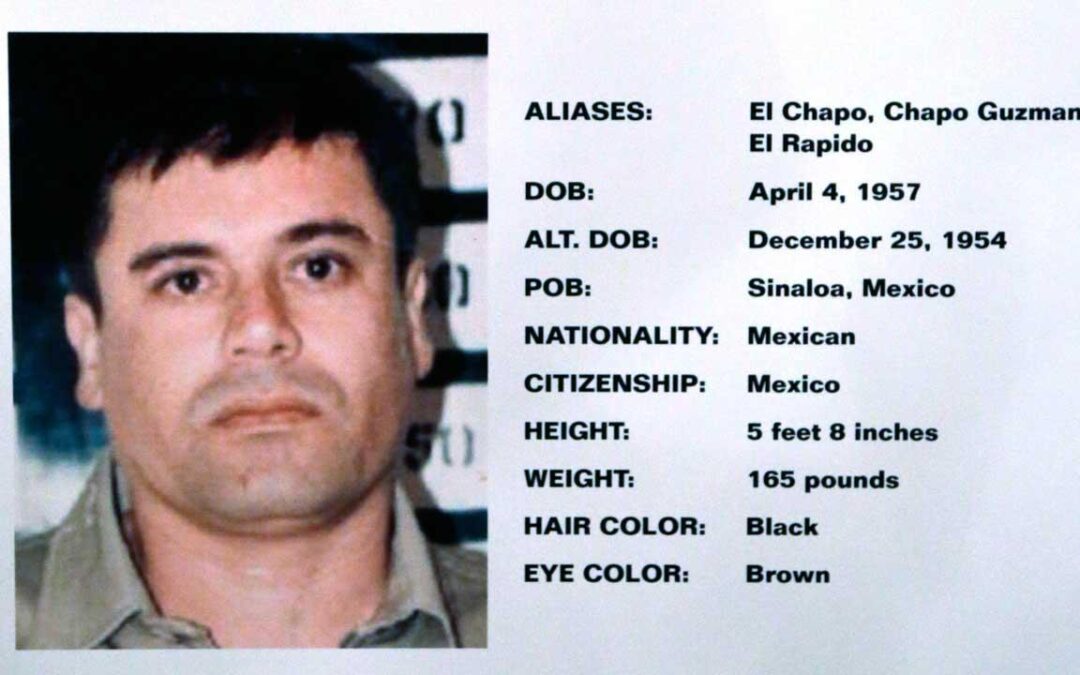
So I’m certain you’ve seen the news non stop, Chapo escaped, again. Happened on a Saturday night, he disappeared from the view of a surveillance camera in his cell and went underground into a tunnel under the Altiplano maximum security prison and wasn’t seen again. That’s the summary of the official story, and the video does appear to show that he went out through the tunnel dug where his shower was located. The story being spun is that since they couldn’t see him escape because Chapo was in a blind spot for the cameras. The authorities stated that out of respect for “human rights” they didn’t want to invade a prisoner’s privacy by placing a surveillance camera that could look into the shower area. That’s their trick up their sleeve, and the one that brings the story down.

An ex prisoner of the very same jail Chapo was doing time in said there is no respect for human rights let alone privacy rights in that prison. The authorities made it seem like they thought Chapo might have just been getting ready to shower. The ex prisoner explained that showers at night are not allowed. You can only shower once, at six in the morning. So there goes that part. He also states that there are indeed cameras that can see into the shower, even the toilet. That you’re only allowed ten minutes in the shower but really about 8 since the guards rush the prisoners to finish. He says the only blind spot in a jail cell at Altiplano is under your bed. You have to take into account that the authorities have stressed that the reason for these so called blind spots, is their concern for human rights. Okay.

If you’ve read enough about the Mexican government and their many hands, then you know that the last thing on their mind is a concern for human rights for its citizens. You can look at a photo of what police did to a young student that will verify that, Google that if you would like to but a face ripped off isn’t something I recommend you look at. The Mexican authorities aren’t concerned with human rights for its citizens let alone prisoners. The conditions at that jail and many others throughout Mexico are nightmarish. Put aside that we all know they don’t care about privacy, because don’t forget about this right here.

Secretary of the Interior Osorio Chong had repeatedly stated that the reason for the blind spots was out of respect for human rights, that turned into backlash as people began to say they looked the other way. He had to state that respecting human rights for a prisoner is not the same as helping them escape. That is true, it isn’t the same thing, but he wasn’t respecting human rights, so let’s get that straight.

It was obvious from the beginning of the story that Chapo must have had help from the inside, and you could ask any Mexican if they thought he had bought his way out and they’ll laugh and explain to you how reasoning works. It was confirmed that several prison workers including the director of Altiplano were detained for their alleged roles in Chapo’s escape. The former prisoner however stated that Chapo needed to have four departments under his control in that prison because of its maximum security status. He needed to control the federal, the prison guards, the prison officials and the special guards. So obviously he was able to do that, since he’s out of prison. Outside the prison is another link of the story of how Chapo was released.

The house at the end of the tunnel had no permit to be built. How could a maximum security prison not notice a building being built not far from its walls? You can say that Mexican authorities are very relaxed with their regulations, but a maximum security prison that houses the most wanted criminals is something else. Not only did it house Chapo, it had the leader of The Zetas Cartel, leader of the Knights Templar Cartel, “La Barbie” of the Beltran-Leyva Cartel, it is the prison of the most high profile cartel leaders. Surely they would notice a house being built about a mile from their walls, right? People familiar with the area have stated how secure that entire area is, you can’t even pick up radio signals there. With regards to how Chapo could’ve pulled this off, again, it isn’t how but why. Chapo didn’t escape if the authorities allowed all the pieces to be put into place for him to leave. He didn’t escape, he just left. He left behind a nice gift at least. That little bracelet used to monitor his location.

The bracelet that kept track of him doesn’t work outside the prison walls, pretty neat feature there for a maximum security prison. That’s another story in itself, the bracelet isn’t of importance because he removed it before going down the tunnel. How did he remove it so easily? What kind of bracelet for prisoner monitoring be so easily removable? Well, it was left behind and even if he couldn’t remove it, it would have stopped working once he was out. To be honest, he could have a huge lighthouse blaring out his location on top of his head and the authorities will still not find him, because they’re not looking for him. They released him. Well, for certain the local authorities did.

Shit rolls downhill, and so does money. This is an embarrassment for the upper echelons of power. President Enrique Peña Nieto is looking like quite the fool for being en route to France as the most prolific drug trafficker in the world just slipped out of prison on a motorcycle through a tunnel. Secretary of the Interior Osorio Chong looked like he was about to suffer an anxiety attack as he held a press conference over Chapo’s escape. They might not be happy about it, but certainly the lower level officials have quite a nice family retirement plan because of this. Sorry, us Mexicans usually think about, “I hope my family is taken care of” not, “I hope the president and the top brass is happy.” I can assure you, anyone involved in letting Chapo go aren’t worrying about the future of their family. They might go to jail, but just like those who sacrifice their being to work endlessly in the US to send money back home to ensure their families are taken care of, that’s all that matters. Speaking of money, that might be the key to the whole story.

Not going to get into specifics here, but the biggest buzz from the Left in Mexico on this story is, the bigger picture.  Yeah Chapo is the head of arguably the biggest and most powerful cartel in the world. It was that way when he was in jail, and when he wasn’t in jail. So why all the effort to find him, arrest him, jail him? Well, the biggest bit on that has to do with a general goal with the EPN administration. Privatization and more oversight from the US government over Mexico. There has been talks about the need to privatize Mexican prisons, among other neoliberal proposals such as in the education sector which has met with fierce resistance from education workers. There’s lots of quotes in US media from law enforcement agents saying this is an embarrassment for the corrupt and weak Mexican judicial system, that it needs more US assistance, and you get the idea. This of course is the US lead war on drugs, and they have the final say and if need be, final action. Loretta Lynch went as far to say that the US is ready to “help” Mexico find and capture Chapo. Anytime the US says they’re ready to help another country find “justice” well you know how that story ends. Sovereignty or any resemblance to it not only flies out the window, it leaves a bloody mess. Wow, sorry but I’m looking at this post and it is rather long and tedious to write and I’m certain it’s getting tedious to read as well so I’ll break this down to the core, just a moment.

The rumors, Chapo was allowed to walk right out the front door of the prison. Let’s say that was the truth, that the tunnel was just a prop to assist this novela like story streaming from the TV networks. Even if it wasn’t, his release, yes release, serves a powerful purpose. Either the Mexican state is weak and corrupt, it is. Or, it’s another excuse for a “soft” intervention from the US. It can be both, it most certainly feels that way. We forget the War on Drugs is an actual war, and propaganda is a tool of war. You can point to the bad guy and say that’s enough reason to go to war, but at least recognize that this is part of a war. So treat it like one. Bin Laden was sought after in the War on Terror and many innocent people died going after the bad guy. Remember that lives are a factor here, it’s war after all.

source: MexicanAnarchist.WordPress.com

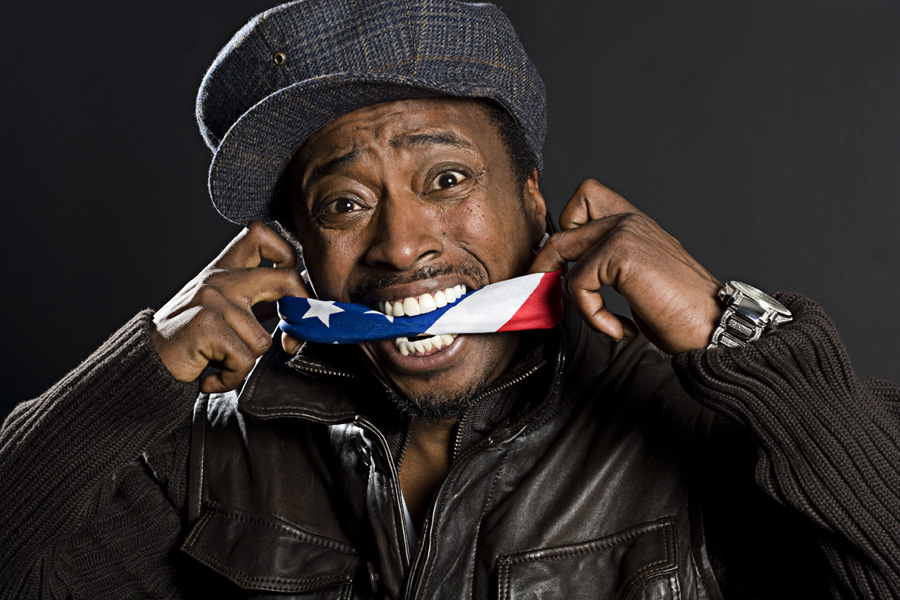
Eddie Griffin – Entertainer, Activist

Eddie Griffin – Entertainer, Activist


Comedian Eddie Griffin Talks The Truth On China & Americas Covert War Through Afghanistan’s Opium. TV ‘Programming’.

Freedom, Thinking, Control Sysmtems, Total Collapse – The Build up to World War III & The New World Order.


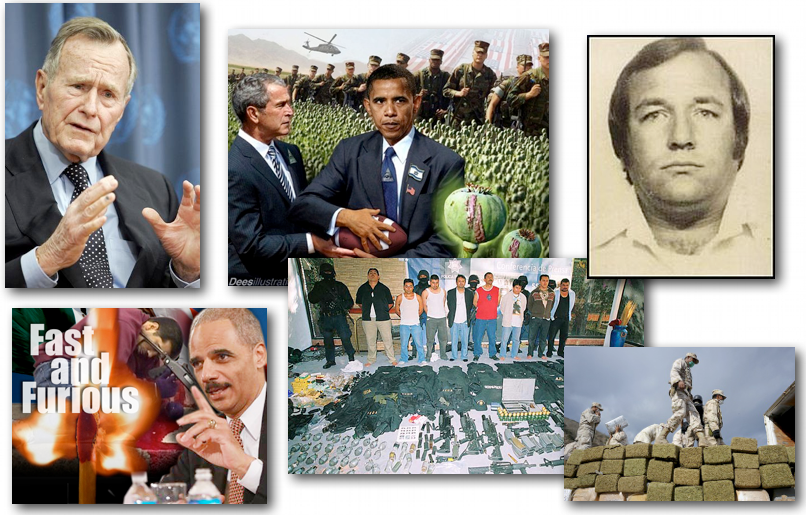
High-Ranking Mexican Drug Cartel Member makes Explosive Allegation: ‘Fast and Furious is not what you think it is’

High-Ranking Mexican Drug Cartel Member makes Explosive Allegation: ‘Fast and Furious is not what you think it is’

The Blaze  A high-ranking Mexican drug cartel operative currently in U.S. custody is making startling allegations that the failed federal gun-walking operation known as “Fast and Furious” isn’t what you think it is.

It wasn’t about tracking guns, it was about supplying them — all part of an elaborate agreement between the U.S. government and Mexico’s powerful Sinaloa Cartel to take down rival cartels.

Jesus-Vincente-Zambada-NieblaThe explosive allegations are being made by Jesus Vicente Zambada-Niebla, known as the Sinaloa Cartel’s “logistics coordinator.” He was extradited to the Chicago last year to face federal drug charges.

Zambada-Niebla claims that under a “divide and conquer” strategy, the U.S. helped finance and arm the Sinaloa Cartel through Operation Fast and Furious in exchange for information that allowed the DEA, U.S. Immigration and Customs Enforcement (ICE) and other federal agencies to take down rival drug cartels. The Sinaloa Cartel was allegedly permitted to traffic massive amounts of drugs across the U.S. border from 2004 to 2009 — during both Fast and Furious and Bush-era gunrunning operations — as long as the intel kept coming.

This pending court case against Zambada-Niebla is being closely monitored by some members of Congress, who expect potential legal ramifications if any of his claims are substantiated. The trial was delayed but is now scheduled to begin on Oct. 9.

Zambada-Niebla is reportedly a close associate of Sinaloa Cartel kingpin Joaquin “El Chapo” Guzman and the son of Ismael “Mayo” Zambada-Garcia, both of which remain fugitives, likely because of the deal made with the DEA, federal court documents allege.

Based on the alleged agreement  ”the Sinaloa Cartel under the leadership of defendant’s father, Ismael Zambada-Niebla and ‘Chapo’ Guzman, were given carte blanche to continue to smuggle tons of illicit drugs into Chicago and the rest of the United States and were also protected by the United States government from arrest and prosecution in return for providing information against rival cartels which helped Mexican and United States authorities capture or kill thousands of rival cartel members,” states a motion for discovery filed in U.S. District Court by Zambada-Niebla’s attorney in July 2011.

A source in Congress, who spoke to TheBlaze on the condition of anonymity, said that some top congressional investigators have been keeping “one eye on the case.”  Another two members of Congress, both lead Fast and Furious Congressional investigators, told TheBlaze they had never even heard of the case.

One of the Congressmen, who also spoke to TheBlaze on the condition of anonymity because criminal proceedings are still ongoing, called the allegations “disturbing.” He said Congress will likely get involved once Zambada-Niebla’s trial has concluded if any compelling information surfaces.

“Congress won’t get involved in really any criminal case until the trial is over and the smoke has cleared,” he added. “If the allegations prove to hold any truth, there will be some serious legal ramifications.”

Earlier this month, two men in Texas were sentenced to 70 and 80 months in prison after pleading guilty to attempting to export 147 assault rifles and thousands of rounds of ammunition to Mexico’s Los Zetas cartel. Compare that to the roughly 2,000 firearms reportedly “walked” in Fast and Furious, which were used in the murders of hundreds of Mexican citizens and U.S. Border Agent Brian Terry, and some U.S. officials could potentially face jail time if they knowingly armed the Sinaloa Cartel and allowed guns to cross into Mexico.


If proven in court, such an agreement between U.S. law enforcement agencies and a Mexican cartel could potentially mar both the Bush and Obama administrations. The federal government is denying all of Zambada-Niebla’s allegations and contend that no official immunity deal was agreed upon.

To be sure, Zambada-Niebla is a member of one of the most ruthless drug gangs in all of Mexico, so there is a chance that he is saying whatever it takes to reduce his sentence, which will likely be hefty. However, Congress and the media have a duty to prove without a reasonable doubt that there is no truth in his allegations. So far, that has not been achieved.

Zambada-Niebla was reportedly responsible for coordinating all of the Sinaloa Cartel’s multi-ton drug shipments from Central and South American countries, through Mexico, and into the United States. To accomplish this, he used every tool at his disposal: Boeing 747 cargo planes, narco-submarines, container ships, speed boats, fishing vessels, buses, rail cars, tractor trailers and automobiles. But Guzman and Zambada-Niebla’s overwhelming success within the Sinaloa Cartel was largely due to the arrests and dismantling of many of their competitors and their booming businesses in the U.S. from 2004 to 2009 — around the same time ATF’s gun-walking operations were in full swing. Fast and Furious reportedly began in 2009 and continued into early 2011.

According Zambada-Niebla, that was a product of the collusion between the U.S. government and the Sinaloa Cartel.

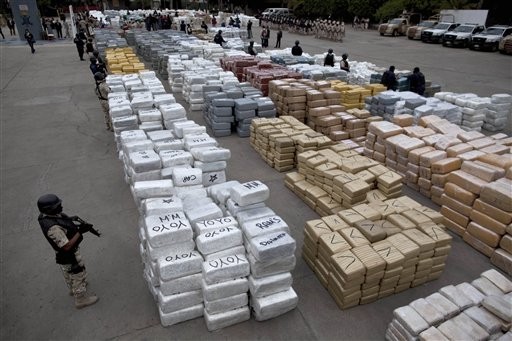
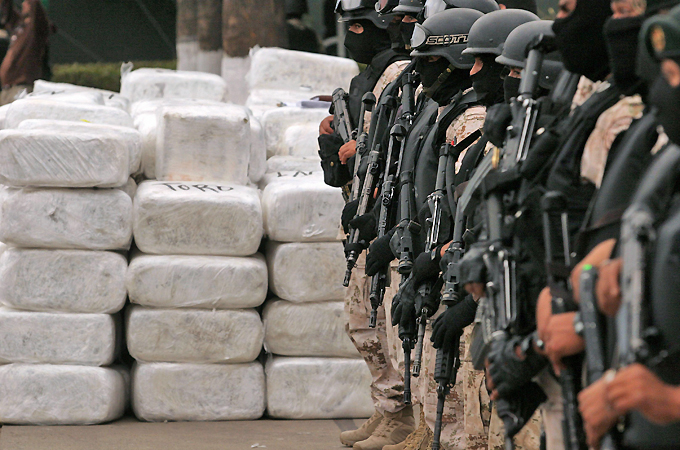
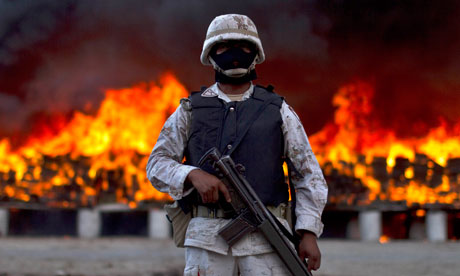
Mexico Drug WarSoldiers and police officers guard packages of seized marijuana during a presentation for the media in Tijuana, Mexico. (AP Photo/Guillermo Arias)

The claims seem to fall in line with statements made last month by Guillermo Terrazas Villanueva, a spokesman for the Chihuahua state government in northern Mexico who said U.S. agencies ”don’t fight drug traffickers,“ instead ”they try to manage the drug trade.”

Also, U.S. officials have previously acknowledged working with the Sinaloa Cartel through another informant Humberto Loya-Castro. He is also allegedly a high-ranking member of the Sinaloa Cartel as well as a close confidant and lawyer of “El Chapo” Guzman.

Loya-Castro was indicted along with Chapo and Mayo in 1995 in the Southern District of California in a massive narcotics trafficking conspiracy (Case no. 95CR0973). The case was dismissed in 2008 at the request of prosecutors after Loya became an informant for the United States government and subsequently provided information for years.

In 2005, “the CS (informant Loya-Castro) signed a cooperation agreement with the United States Attorney’s Office for the Southern District of California,” states an affidavit filed in the Zambada-Niebla case by Loya-Castro’s handler, DEA agent Manuel Castanon.

“Thereafter, I began to work with the CS. Over the years, the CS’ cooperation resulted in the seizure of several significant loads of narcotics and precursor chemicals. The CS’ cooperation also resulted in other real-time intelligence that was very useful to the United States government.”

Under the alleged agreement with U.S. agencies, “the Sinaloa Cartel, through Loya-Castro, was to provide information accumulated by Mayo, Chapo, and others, against rival Mexican Drug Trafficking Organizations to the United States government,” a motion for discovery states.

In return, the United States government allegedly agreed to dismiss the charges in the pending case against Loya-Castro (which they did), not to interfere with his drug trafficking activities and those of the Sinaloa Cartel and not actively prosecute him or the Sinaloa Cartel leadership.

Taken directly from the motion filed in federal court:

“This strategy, which he calls ‘Divide & Conquer,’ using one drug organization to help against others, is exactly what the Justice Department and its various agencies have implemented in Mexico. In this case, they entered into an agreement with the leadership of the Sinaloa Cartel through, among others, Humberto Loya-Castro, to receive their help in the United States government’s efforts to destroy other cartels.”

“Indeed, United States government agents aided the leaders of the Sinaloa Cartel.”

The government has denied this and says the deal did not go past Loya-Castro.

Zambada-Niebla was arrested by Mexican soldiers in late March of 2009 after he met with DEA agents at a Mexico City hotel in a meeting arranged by Loya-Castro, though the U.S. government was not involved in his arrest. He was extradited to Chicago to face federal drug charges on Feb. 18, 2010. He is now being held in a Michigan prison after requesting to be moved from Chicago.

“Classified Materials”

During his initial court proceedings, Zambada-Niebla continually stated that he was granted full immunity by the DEA in exchange for his cooperation. The agency, however, argues that an “official” immunity deal was never established though they admit he may have acted as an informant.

Zambada-Niebla and his legal council also requested records about Operation Fast and Furious, which permitted weapons purchased in the United States to be illegally smuggled into Mexico, sometimes by paid U.S. informants and cartel leaders. Their request was denied. From the defense motion:

“It is estimated that approximately 3,000 people were killed in Mexico as a result of ‘Operation Fast and Furious,’ including law enforcement officers in the state of Sinaloa, Mexico, the headquarters of the Sinaloa cartel. The Department of Justice’s leadership apparently saw this as an ingenious way of combating drug cartel activities.”

“It has recently been disclosed that in addition to the above-referenced problems with ‘Operation Fast & Furious,’ the DOJ, DEA, and the FBI knew that some of the people who were receiving the weapons that were being allowed to be transported to Mexico, were in fact informants working for those organizations and included some of the leaders of the cartels.”

Zambada’s attorney has filed several motions for discovery to that effect in Illinois Federal District Court, which were summarily denied by the presiding judge who claimed the defendant failed to make the case that he was actually a DEA informant.

In April, 2012, a federal judge refused to dismiss charges against him.

From a Chicago Sun Times report: “According to the government, [Zambada-Niebla] conveyed his interest and willingness to cooperate with the U.S. government, but the DEA agents told him they ‘were not authorized to meet with him, much less have substantive discussions with him,’” the judge wrote.

Sinaloa Cartel Operative Jesus Vincente Zambada Niebla Makes Explosive Allegation About Operation Fast and Furious

In this courtroom artist’s drawing Jesus Vincente Zambada-Niebla appears before U.S. District Judge Ruben Castillo Tuesday, Feb. 23, 2010, in Chicago. (AP Photo/Verna Sadock)

In their official response to Zambada-Niebla’s motion for discovery, the federal government confirmed the existence of “classified materials” regarding the case but argued they “do not support the defendant’s claim that he was promised immunity or public authority for his actions.”

Experts have expressed doubts that Zambada-Niebla had an official agreement with the U.S. government, however, agree Loya Castro probably did. Either way, the defense still wants to obtain DEA reports that detail the agency’s relationship with the Sinaloa Cartel and put the agents on the stand, under oath to testify.

The documents that detail the relationship between the federal government and the Sinaloa Cartel have still not been released or subjected to review — citing matters of national security.

via

March 13, 2013 – Decrypted Matrix Radio: Afghan Opium, Facebook Gets Creepy, FinSpy Software, DHS CyberNukes, Music Heals

March 13, 2013 – Decrypted Matrix Radio: Afghan Opium, Facebook Gets Creepy, FinSpy Software, DHS CyberNukes, Music Heals

Tons and Tons of Heroin Shipping from Afghanistan – Stopped by Russia?

Bradley Manning gets support from Afghans in Kabul!

Facebook Spying – Exposing Personal Details you don’t even share with the service!
James Holmes Trial & Gag Order ‘Update’ – Mental State Eval Pending

Gamma Group’s Fin Spy Software found round the world – now used against political activists & protestors!

DHS Threatens Hackers with Nukes

The Healing Properties of Music – good for the soul?

3-13

Every Week Night 12-1am EST (9-10pm PST)

– Click Image to Listen LIVE –

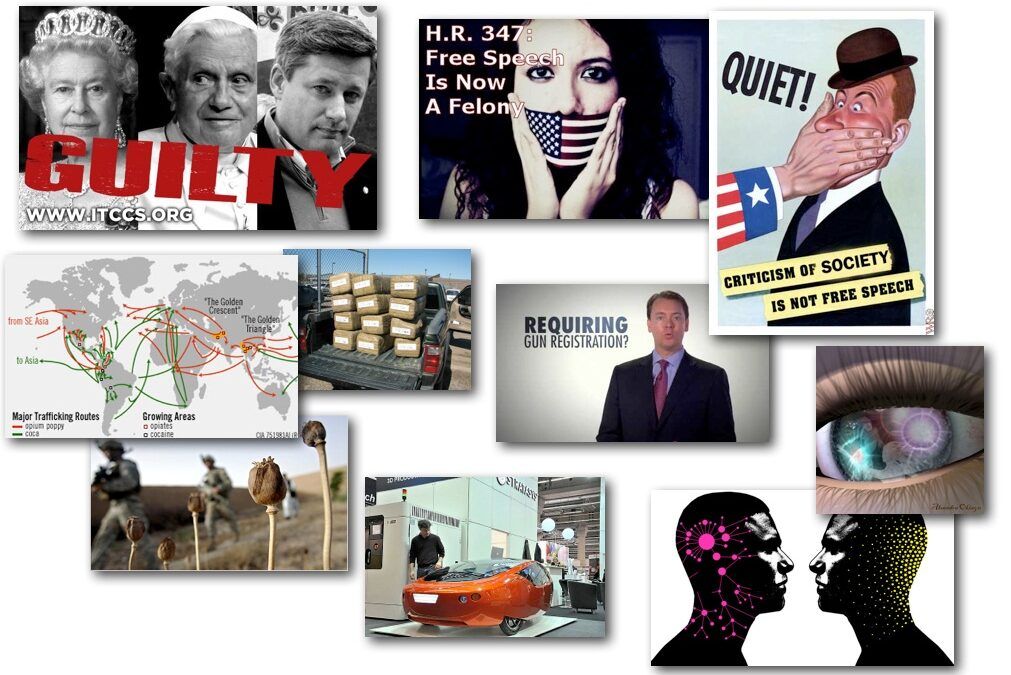
February 27, 2013 – Decrypted Matrix Radio: Pope & Queen GUILTY, Drug Routes, 3D Printed Car, NRA Outs Gun Grab, Science of Self

February 27, 2013 – Decrypted Matrix Radio: Pope & Queen GUILTY, Drug Routes, 3D Printed Car, NRA Outs Gun Grab, Science of Self

3-D Printed Cars – the future!

Top Narco-Trafficking Routes

Queen And Pope Found Guilty By International Court, 20 Year Sentences

CLIP: Obama Signed In Secrecy That Free Speech Is Now A Felony

CLIP: NRA Publishes DoJ Memo on Obama Federal Gun Grab & Confiscation Agenda

Scientific Proof of Existence of the Soul

The Grand Illusion of Self

2-27

Every Week Night 12-1am EST (9-10pm PST)

– Click Image to Listen LIVE –

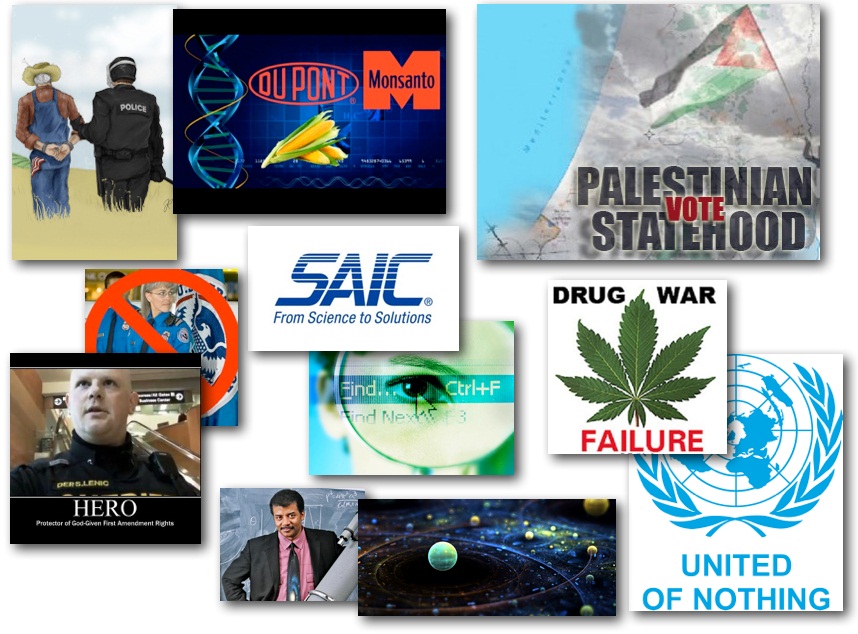
November 29, 2012 – Decrypted Matrix Radio: UN Recognizes Palestine, First Amendment Cop, GMO Giant Strong-Arm, Drug War Extension, Neil DeGrasse Cosmic Quandaries

November 29, 2012 – Decrypted Matrix Radio: UN Recognizes Palestine, First Amendment Cop, GMO Giant Strong-Arm, Drug War Extension, Neil DeGrasse Cosmic Quandaries


“The further a society drifts from truth, the more it will hate those that speak it.” —George Orwell

UN implicitly recognizes Palestinian statehood

‘First Amendment Cop’ Becomes Internet Icon

DOD Extends Contract for SAIC’s ‘Global Harvest’ Counter-terror Intelligence Program

GMO giant ‘Dupont’ hires retired cops to hunt down farmers

Head of U.N. Drug Watchdog Agency Attacks Washington and Colorado Over Marijuana Laws

Dr. Neil DeGrasse – Segment of Cosmic Quandaries..
“A fascinatingly disturbing thought”

11-29

Every Week Night 12-1am EST (9-10pm PST)

– Click Image to Listen LIVE –

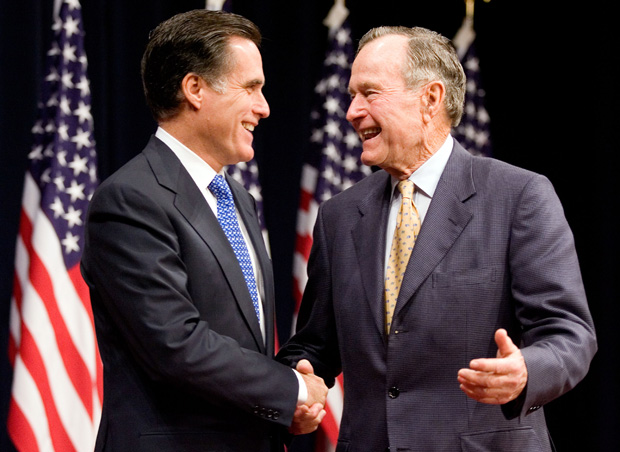
Willard “Mitt” Romney: Drug Money Launderer Extraordinaire

Willard “Mitt” Romney: Drug Money Launderer Extraordinaire

Why Has Not Only Corporate Media, but also Obama’s Opposition Research Let Romney Slide on his Criminal Associations?

Back in July, the Los Angeles Times – not VT, Infowars or Truth Jihad Radio – broke the story that Mitt Romney is a drug money launderer. How did we all miss this story? (Until John Hankey and then Gordon Duff picked it up.)

Maybe it’s because the Times story never comes right out and says “drug money laundering.” It doesn’t have to.

What the Times article does say translates directly and unambiguously as DRUG MONEY LAUNDERING, in caps, exclamation point.

According to the Los Angeles Times, Romney’s company, Bain Capital, “paid out a stunning 173% in average annual returns over a decade.” “Stunning” is not the word. “Criminal” is more like it.

Bernie Madoff was arrested and went to jail because he was paying 10% annual returns. That’s how it came to light that he was running a criminal enterprise. You just cannot possibly pay 10% returns consistently, year in and year out, with legitimate investments. Never happened, never will.

Ponzi schemes sometimes pay as high as 20% – and soon collapse, and the perps go to jail. But a 173% annual return is far beyond the range of the craziest, most short-lived ponzi scheme.

Romney wasn’t running a ponzi scheme. He was running a drug money laundry. His clients, the Times explains, were shady characters from Panama. Here’s how it works:

A druglord hands Romney, a.k.a. Bain Capital, ten million dollars in cash. Romney puts it on his books as a one million dollar investment in Bain Capital.

At 173% interest, it only takes Romney a few years (officially) to return ten million laundered dollars to the druglord.

When the druglord is asked where he got his ten million dollars, he explains that he made a lucky investment with Bain Capital. And he has the papers to prove it.

Getting caught paying out an average 173% interest over ten years is like getting caught with a hundred pounds of cocaine. If you’re busted with a hundred pounds of cocaine, the presumption is that you’re dealing. If you’re caught paying 173% interest, the presumption is that you’re laundering drug money.

Romney, you are SO BUSTED.

by  Kevin Barrett

Romney’s secrecy in business is detailed, and revealed; as well as his role as a drug money launderer for GHW Bush; his connection, through Bush, to CIA death squads in Central America; his role in 9-11; in the murder of US ambassador to Libya, Christopher Stevens; and the significance of his endorsement of and by Cheney.


October 19, 2012 – DCMX Radio: Creativity ‘Illness’, Romney Drug Money, Blood Tranfusion Fountain of Youth, Chinese Plant Kills Cancer

October 19, 2012 – DCMX Radio: Creativity ‘Illness’, Romney Drug Money, Blood Tranfusion Fountain of Youth, Chinese Plant Kills Cancer

Amazing Medical Discovery: Transfusions of Young Blood Appear to Rejuvenate the Elderly

Assad bans GMOs in food ‘to preserve the health of human beings’

Mitt Romney – Drug Money Launderer Extraordinaire

Chinese Plant Compound Wipes out Cancer in 40 Days, Says New Research

Bruce Jessen, key architect of Bush torture program, becomes new spiritual leader of a Mormon congregation

Scientists: Creativity Part of ‘Mental Illness’


Every Week Night 12-1am EST (9-10pm PST)

– Click Image to Listen LIVE –

Global Banks Are The Financial Services Wing of The Drug Cartels

Global Banks Are The Financial Services Wing of The Drug Cartels

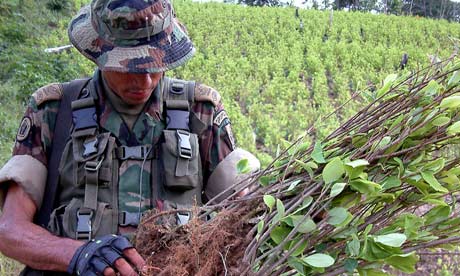
A Colombian soldier inspects the harvest of a 50-acre coca plantation: fines for laundering drugs money may seem huge, but banks pay them out of petty cash. Photograph: Efrain Patino/AP

“Steal a little,” wrote Bob Dylan, “they throw you in jail; steal a lot and they make you a king.” These days, he might recraft the line to read: deal a little dope, they throw you in jail; launder the narco billions, they’ll make you apologise to the US Senate.

Two months ago in Washington DC, a poor black man called Edward Dorsey Sr was convicted of peddling 5.5 grams of crack cocaine. Because he was charged before a recent relative amelioration in sentencing, he was given a mandatory 10 years in jail.

Last week, managers from Britain’s biggest bank, HSBC, lined up before the Senate’s permanent sub-committee on investigations – just across the Potomac river from the scene of Dorsey’s crime – to be asked questions such as: “It took three or four years to close a suspicious account. Is there any way that should be allowed to happen?”

The “suspicious account” was that of a “casa de cambio”, a currency exchange house operated in Mexico on behalf of the largest criminal syndicate in the world and one of the most savage, the Sinaloa drug-trafficking cartel. The dealings had been flagged up to HSBC bosses by an anti-money laundering officer, but to no avail – the dirty business continued. “No, senator,” came the reply from a bespectacled Brit called Paul Thurston, chief executive, retail banking and wealth management, HSBC Holdings plc.

The same casa de cambio, called Puebla, was known to be under investigation in another case involving the Wachovia bank during the time HSBC was entertaining its money. US authorities had seized $11m from Wachovia’s Miami office, on the way to securing the biggest settlement in banking history with Wachovia in March 2010, detailed in this newspaper last year.

Wachovia was fined $50m and made to surrender $110m in proven drug profits, but was shown to have inadequately monitored a staggering $376bn through the casa de cambio over four years, of which $10bn was in cash. The whistleblower in the case, an Englishman working as an anti-money laundering officer in the bank’s London office, Martin Woods, was disciplined for trying to alert his superiors, and won a settlement after bringing a claim for unfair dismissal.

No one from Wachovia went to jail – and, said Woods at the time of the settlement: “These are the proceeds of murder and misery in Mexico, and of drugs sold around the world. But no one goes to jail. What does the settlement do to fight the cartels? Nothing. It encourages the cartels and anyone who wants to make money by laundering their blood dollars.”

HSBC has been found to have handled $7bn in narco cash, “and this is the starter for 10”, Woods now says. “We’ll get the full picture over time. But what’s the sanction on these banks? What’s their risk? The cartels should renegotiate their charges with the banks. They’re being priced for a risk element that isn’t there.”

Wachovia was not the first, neither will HSBC be the last. Six years ago, a subsidiary of Barclays – Barclays Private Bank – was exposed as having been used to launder drug money from Colombia through five accounts linked to the infamous Medellín cartel. By an ironic twist, Barclays continued to entertain the funds after British police had become involved after a tip-off, from HSBC.

And the issue is wider than drug-money. It is about where banks, law enforcement officers and the regulators – and politics and society generally – want to draw the line between the criminal and supposed “legal” economies, if there is one.

Take the top-drawer bank to the elite and Her Majesty the Queen, Coutts, part of the bailed-out Royal Bank of Scotland. On 23 March, the UK Financial Services Authority issued a final notice to Coutts, fixing a penalty of £8.75m for breach of its money-laundering code.

The FSA reviewed 103 “high-risk customer files” and “identified deficiencies in 73 files”, showing “failure to conduct appropriate ongoing monitoring” over three years. In two cases, private bankers involved had “failed to identify serious criminal allegations against those customers”. Rory Tapner, chief executive of the wealth division of RBS said that “since concerns were first identified by the FSA, Coutts & Co has enhanced its client relationship management process”. The refrain was the same from HSBC last week, and every other bank after every other shameful revelation: we went awry, but we’ve fixed it.

Wouldn’t it be interesting, though, to know Coutts’s private view of Wachovia’s case – or, at least of people such as Woods who do root out criminal laundering?

As it happens, through a rare glimpse, we do. Last year, the Wachovia whistleblower was offered a job at Coutts. But the bank suddenly withdrew its job offer. An internal email sent by the interviewer to a director of Coutts’s wealth management programme explained the bank had “a very generic reason for our decision, citing the fact that we had become aware of an incident at Wachovia, one of Martin Woods’s previous employers, and that Coutts was keen to avoid any risk of reputational damage that might relate to the incident”.

The thought occurs to Woods, who is taking legal action against Coutts for mistreatment of a whistleblower, that he was too tenacious at Wachovia. Coutts declined to comment.

No one at Coutts was called to account for the FSA’s alarming findings. No one was sanctioned under criminal law last month when the ING bank was fined $619m for illegally moving billions of dollars into the US banking system, in breach of sanctions – as HSBC has done with money from North Korea and Iran. Neither were they in 2009, when Lloyds TSB – 43% owned by the British taxpayer – was fined $350m for whitewashing Iranian money into the US. The fines seem huge to us, but banks pay them from petty cash.

If there is a prosecution, it is always “deferred”, as with Wachovia, and a Californian bank called Sigue used by HSBC to receive the Mexican drug money. Be good for a year, and we’ll forget about it. Since when did the likes of Edward Dorsey of Washington enjoy that kind of leniency?

A foremost trainer of anti-money laundering officers in the US is Robert Mazur, who infiltrated the Medellín cartel during the prosecution and collapse of the BCCI bank in 1991, and who tells the Observer that “the only thing that will make the banks properly vigilant to what is happening is when they hear the rattle of handcuffs in the boardroom”.

It remains to be seen whether HSBC’s barons will, like Wachovia’s, avoid Dorsey’s fate.

“People don’t like to ask how close the banker’s finger is to the trigger of the killer’s gun,” says Woods.

But in this newspaper – when we revealed the original “cease and desist” order against HSBC – the former head of the UN Office on Drugs and Crime, Antonio Maria Costa, posited that four pillars of the international banking system are: drug-money laundering, sanctions busting, tax evasion and arms trafficking.

The response of politicians is to cower from any serious legal assault on this reality, for the simple reasons that the money is too big (plus consultancies to be had after leaving office). The British government recruits a former chairman of HSBC as trade secretary just as the drug-laundering scandal breaks.

Herein, along with Dylan’s dictum, lies the problem. We don’t think of those banking barons as the financial services wing of the Sinaloa cartel.

The stark truth is that the cartels’ best friends are those people in pin-stripes who, after a rap on the knuckles, return to their golf in Connecticut and drinks parties in Holland Park.

The notion of any dichotomy between the global criminal economy and the “legal” one is fantasy. Worse, it is a lie. They are seamless, mutually interdependent – one and the same.

SOURCE: Guardian.co.uk

Mexican Official: CIA ‘Manages’ Drug Trade

Mexican Official: CIA ‘Manages’ Drug Trade

Juarez, Mexico– The US Central Intelligence Agency and other international security forces “don’t fight drug traffickers”, a spokesman for the Chihuahua state government in northern Mexico has told Al Jazeera, instead “they try to manage the drug trade”.Allegations about official complicity in the drug business are nothing new when they come from activists, professors, campaigners or even former officials. However, an official spokesman for the authorities in one of Mexico’s most violent states – one which directly borders Texas – going on the record with such accusations is unique.

“It’s like pest control companies, they only control,” Guillermo Terrazas Villanueva, the Chihuahua spokesman, told Al Jazeera last month at his office in Juarez. “If you finish off the pests, you are out of a job. If they finish the drug business, they finish their jobs.”

A spokesman for the CIA in Washington wouldn’t comment on the accusations directly, instead he referred Al Jazeera to an official website.

Accusations are ‘baloney’

Villanueva is not a high ranking official and his views do not represent Mexico’s foreign policy establishment. Other more senior officials in Chihuahua State, including the mayor of Juarez, dismissed the claims as “baloney”.

“I think the CIA and DEA [US Drug Enforcement Agency] are on the same side as us in fighting drug gangs,” Hector Murguia, the mayor of Juarez, told Al Jazeera during an interview inside his SUV. “We have excellent collaboration with the US.”

Under the Merida Initiative, the US Congress has approved more than $1.4bn in drug war aid for Mexico, providing attack helicopters, weapons and training for police and judges.

More than 55,000 people have died in drug related violence in Mexico since December 2006. Privately, residents and officials across Mexico’s political spectrum often blame the lethal cocktail of US drug consumption and the flow of high-powered weapons smuggled south of the border for causing much of the carnage.

Drug war ‘illusions’

“The war on drugs is an illusion,” Hugo Almada Mireles, professor at the Autonomous University of Juarez and author of several books, told Al Jazeera. “It’s a reason to intervene in Latin America.”

“The CIA wants to control the population; they don’t want to stop arms trafficking to Mexico, look at [Operation] Fast and Furious,” he said, referencing a botched US exercise where automatic weapons were sold to criminals in the hope that security forces could trace where the guns ended up.

The Bureau of Alcohol Tobacco and Firearms lost track of 1,700 guns as part of the operation, including an AK-47 used in 2010 the murder of Brian Terry, a Customs and Border Protection Agent.

Blaming the gringos for Mexico’s problems has been a popular sport south of the Rio Grande ever since the Mexican-American war of the 1840s, when the US conquered most of present day California, Utah, Nevada, Arizona and New Mexico from its southern neighbour. But operations such as Fast and Furious show that reality can be stranger than fiction when it comes to the drug war and relations between the US and Mexico. If the case hadn’t been proven, the idea that US agents were actively putting weapons into the hands of Mexican gangsters would sound absurd to many.

‘Conspiracy theories’

“I think it’s easy to become cynical about American and other countries’ involvement in Latin America around drugs,” Kevin Sabet, a former senior adviser to the White House on drug control policy, told Al Jazeera. “Statements [accusing the CIA of managing the drug trade] should be backed up with evidence… I don’t put much stake in it.”

Villanueva’s accusations “might be a way to get some attention to his region, which is understandable but not productive or grounded in reality”, Sabet said. “We have sort of ‘been there done that’ with CIA conspiracy theories.”

In 1996, the San Jose Mercury News published Dark Alliance, a series of investigative reports linking CIA missions in Nicaragua with the explosion of crack cocaine consumption in America’s ghettos.

In order to fund Contra rebels fighting Nicaragua’s socialist government, the CIA partnered with Colombian cartels to move drugs into Los Angeles, sending profits back to Central America, the series alleged.

“There is no question in my mind that people affiliated with, or on the payroll of, the CIA were involved in drug trafficking,” US Senator John Kerry said at the time, in response to the series.

Other newspapers, including the Washington Post and the Los Angeles Times, slammed Dark Alliance, and the editor of the Mercury News eventually wrote that the paper had over-stated some elements in the story and made mistakes in the journalistic process, but that he stood by many of the key conclusions.

Widespread rumours

US government has neglected border corruption

“It’s true, they want to control it,” a mid-level official with the Secretariat Gobernacion in Juarez, Mexico’s equivalent to the US Department of Homeland Security, told Al Jazeera of the CIA and DEA’s policing of the drug trade. The officer, speaking on the condition of anonymity, said he knew the allegations to be correct, based on discussions he had with US officials working in Juarez.

Acceptance of these claims within some elements of Mexico’s government and security services shows the difficulty in pursuing effective international action against the drug trade.

Jesús Zambada Niebla, a leading trafficker from the Sinaloa cartel currently awaiting trial in Chicago, has said he was working for the US Drug Enforcement Agency during his days as a trafficker, and was promised immunity from prosecution.

“Under that agreement, the Sinaloa Cartel under the leadership of [Jesus Zambada’s] father, Ismael Zambada and ‘Chapo’ Guzmán were given carte blanche to continue to smuggle tonnes of illicit drugs… into… the United States, and were protected by the United States government from arrest and prosecution in return for providing information against rival cartels,” Zambada’s lawyers wrote as part of his defence. “Indeed, the Unites States government agents aided the leaders of the Sinaloa Cartel.”

The Sinaloa cartel is Mexico’s oldest and most powerful trafficking organisation, and some analysts believe security forces in the US and Mexico favour the group over its rivals.

Joaquin “El Chapo”, the cartel’s billionaire leader and one of the world’s most wanted men, escaped from a Mexican prison in 2001 by sneaking into a laundry truck – likely with collaboration from guards – further stoking rumours that leading traffickers have complicit friends in high places.

“It would be easy for the Mexican army to capture El Chapo,” Mireles said. “But this is not the objective.” He thinks the authorities on both sides of the border are happy to have El Chapo on the loose, as his cartel is easier to manage and his drug money is recycled back into the broader economy. Other analysts consider this viewpoint a conspiracy theory and blame ineptitude and low level corruption for El Chapo’s escape, rather than a broader plan from government agencies.

Political changes

In Depth
More from Mexico’s drug war
Cartels cast shadow over
Mexico polls
Dirty money thrives despite
Mexico drug war
As PRI wins, Mexico looks
forward to its past
Mexicans make beeline
for ‘bandit saint’
US-trained cartel terrorises
Mexico

After an election hit by reported irregularities, Enrique Pena Nieto from the Institutional Revolutionary Party (PRI) is set to be sworn in as Mexico’s president on December 1.

He wants to open a high-level dialogue with the US about the drug war, but has said legalisation of some drugs is not an option. Some hardliners in the US worry that Nieto will make a deal with some cartels, in order to reduce violence.

“I am hopeful that he will not return to the PRI party of the past which was corrupt and had a history of turning a blind eye to the drug cartels,” said Michael McCaul, a Republican Congressman from Texas.

Regardless of what position a new administration takes in order to calm the violence and restore order, it is likely many Mexicans – including government officials such as Chihuahua spokesman Guillermo Villanueva – will believe outside forces want the drug trade to continue.

The widespread view linking the CIA to the drug trade – whether or not the allegations are true – speaks volumes about officials’ mutual mistrust amid ongoing killings and the destruction of civic life in Mexico.

“We have good soldiers and policemen,” Villanueva said. “But you won’t resolve this problem with bullets. We need education and jobs.”

Follow Chris Arsenault on Twitter: @AJEchris

Source:


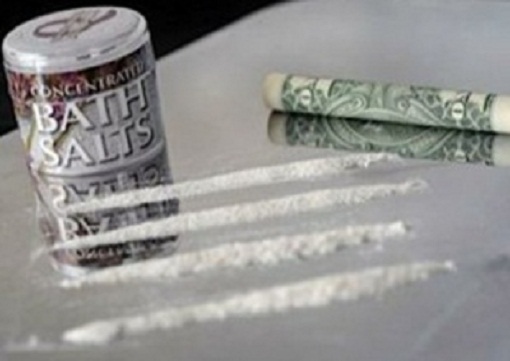
The Truth Behind the Bath Salts “Epidemic”

The Truth Behind the Bath Salts “Epidemic”

After the explosion in use comes the demonization. Then the press, despite a total lack of causal evidence, parrots the outlandish accusations.

Drug scares, like the seasons, are cyclical. Here in the US, we had media firestorms over crack in the 80’s, meth in the 90’s, and prescription painkillers in the 00’s. Right on schedule, the latest demon drug that is supposedly tearing our society apart has entered stage left: bath salts.

Bath salts really just means a drug that is a combination of two stimulants—MDPV and mephedrone. Sold online and via headshops as a cheap, legal alternative to cocaine and ecstasy, mephedrone was first synthesized in 1929 while MDPV came along in 1969. Both were rediscovered in 2003 and they were perfect drugs for the Internet age—an ideal alternative to pricy illegal drugs that could be obtained legally with nothing more than a credit card and the click of a mouse.

The exact pharmacology of bath salts can vary, as compounds are constantly tweaked by chemists to stay one step ahead of the law. “Most of these substances seem to be cathinone derivatives, and as such are central nervous system stimulants that act through interruptions of dopamine, norepinephrine and—to a more limited extent—serotonin function,” explains Dr. Adi Jaffe, an addiction specialist at UCLA. While noting that actual research on these substances is in its early stages and reports are limited, Jaffe says that “at low to moderate doses the most common effects for MDPV can be thought of as meth-like: stimulation, euphoria and alertness. Mephedrone seems to act more like MDMA than meth.”

While the chemistry may change, one thing that has remained consistent is the ballooning popularity of this sector of the drug market.

After the explosion in use, the next phase of the drug scare comes in the form of demonization, and the authorities have certainly wasted no time in making some pretty wild allegations about the supposed effects of bath salts; recently we’ve heard that these drugs can causes cannibalism, a la the infamous Miami face-eater, pedophilia and evencross-dressing goat abuse.

The third part of any good drug scare happens when the press, despite a total lack of causal evidence, parrots these outlandish accusations. In the Miami cannibal case, the link between bath salts originated from a statement made by someone with no direct involvement with the case—the president of the Miami Fraternal Order of Police, Armando Aguilar—despite the fact that an autopsy and toxicology had yet to be performed on attacker Rudy Eugene.

In the case of Shane Shuyler, the Miami man accused of exposing himself to children while “allegedly” under the influence of bath salts, the evidence was no less hazy. The police said they found something that “appeared” to be bath salts in his wallet (i.e. an unidentified white powder). And then there was this strange quote from a detective giving evidence against Shuyler: “Upon talking to him, he made some statements to me which led me to believe that he was cooling off in a fountain by the tot-lot, because he was hot, which was consistent with ingesting bath salts.” The logic being that since bath salts cause users body temperatures to rise, then cooling off by a water fountain is evidence of bath salts use. Never mind the fact that the incident took place in June, in Miami, where the average temperature is 88.1 degrees.

After the hype comes the crackdown, which means that high-profile cases like these have created a push from both the media and law enforcement for a federal ban on the sale of bath salts.

Florida Republican Rep. Sandy Adams is one of the politicians who helped push the Combating Dangerous Synthetic Stimulants Act of 2011 through the House last December. The bill would federally ban MDPV and mephedrone, the two chemicals found in bath salts, as well as outlawing dozens of other chemicals found in synthetic drugs. The reasoning? “Looking at the Miami incident, we’ve seen people do some very bizarre acts on bath salts,” Adams told the U.S. News and World Report. If he gets his way, bath salts would be categorized alongside heroin and LSD.

So can bath salts really cause ordinary normal people to cannibalize strangers, expose themselves to children, or murder goats? And if they can, why on earth would anybody take them? A drug that has been described variously as “super powered LSD” and “PCP on crack” seems like a confusing proposition. So which is it?

“The reason for the contrasting descriptions is most likely the small but very significant difference in the specific chemicals involved,” says Dr. Jaffe. “Meth and ecstasy are very close chemical cousins but obviously cause very different effects for the user; the same is true here.”

To better get a handle of what is happening here in the US, I looked toward the United Kingdom, which has recently been through a similar cycle of shock horror media coverage of the “bath salt epidemic,” followed by a rush to ban. Bath salts were known under various aliases in the UK, including M-Kat, Meow-Meow and Bubbles, so for the sake of clarity, I’m going to use their chemical name of the most common compound: mephedrone.

“The issues in the US and UK are very similar, except that, as in many things, the US hype is even more over the top than that in the UK,” says Danny Kushlick, founder of the Transform Drug Policy Foundation, a charitable think tank that attempts to draw public attention to the fact that drug prohibition is the major cause of drug-related harm. “I mean, we never got so far as cannibalism.”

Yet at its height, the mephedrone scare in the UK was still pretty lurid; according to some of the coverage, it was linked to overdose, patricide and at least one case of self scrotum tearing. Many of these stories would later be disproved (the scrotum story, unsurprisingly was revealed as a hoax) and the two deaths that started the whole media scare—that of Louis Wainwright, 18, and Nicholas Smith, 19—turned out to be totally unrelated to the use of the drug. By the time the toxicology report on Wainwright and Smith had been published, however, it was too late: the drug had been banned a month earlier by the UK parliament, after a one-hour debate and no vote on the matter.

Kushlick, who is on the council of the International Harm Reduction Association, and is a member of the British Society of Criminology’s Advisory Council, was a vocal opponent of the rush to ban mephedrone in the UK. In the months following the ban, he saw harm actually increase and not reduce because, he said, “when mephedrone was banned, the price increased and it was sold not by legitimate retailers but by non-tax paying unregulated dealers. It was also immediately replaced by a more potent compound and traded as Ivory Wave, which users had little experience with so they were more likely to get into trouble.”

These sentiments are echoed by Dr. Fiona Measham, a senior lecturer on Criminology at Lancaster University and the author of several books on drug use in young people. Her groundbreaking research into the use of mephedrone in the UK has provided some of the only hysteria-free data into mephedrone and the people who use it. Her paper, “Tweaking, Bombing, Dabbing and Stockpiling; the emergence of mephedrone and the Perversity of prohibition” (2010 Measham, et al), is the definitive account of the UK’s experience with the drug from the perspective of the people who actually use it.

“The government might claim that the ban was successful because mephedrone use and deaths have fallen,” says Measham, “but for me the question to ask is: what are users taking instead? In the UK, the rise and fall of mephedrone in 2009 and 2010 tracked the fall and now rise in the purity of cocaine, ecstasy pills and MDMA powder. [Since the ban], pills are back, big time, and the legal highs—whether now banned or not—just don’t compete for most recreational users.”

Despite the hazy evidence that it would have any effect at all on the level of drug use among young people, a federal ban is something that many in politics and law enforcement are in favor of here in the States. All it really seems guaranteed to do is drive up prices, lower purity and criminalize young people who continue to use the drug. At best, the use of the drug might be reduced as users switch over wholesale to different drugs. But in the politics of the drug war, no one ever let the truth get in the way of an expansion of hostilities. The police, Drug Enforcement Agency and court system will always welcome a new front in the war.

The big motivation, as always, is money. Local authorities want more money to “fight the war on drugs” even if they are fighting against a phantom menace. Already there are dark rumblings from the cops about needing more resources to fight against this army of bath salts crazed cannibals who are seemingly about to smash down your door and devour your children.

“The cities are deeply involved [in banning synthetic drugs] because the state can’t seem to get on top of it,” Pembroke Pines Commissioner Angelo Castillo said in an illuminating interview with Inquisitir.com. “We see cities jumping in to handle it because the state isn’t. Otherwise people die and people’s faces get chewed off.” Castillo added, “This is the next horizon in the war on drugs and we need to gear up and deal with it.”

Kushlick, who has seen firsthand the lack of effect that “gearing up to deal with it” has had on levels of use, suggests a more pragmatic approach. “The wiser move would have been to leave meph on the market and monitor its effect in order to ascertain its costs and benefits,” he tells me. “We know from experience that the Iron Law of Prohibition means that milder drugs will be replaced by more potent ones. That’s what happened under alcohol prohibition in the US as bootlegged spirits replaced beer. Conducting research on its effects and how people were using it could have been used to provide information to current and potential new users.”

The bottom line is this: more and more new users are trying bath salts, at least in part because of the attention thrust on the drug by the hysterical press coverage. When they discover that it doesn’t cause them to chew off peoples’ faces or tear off their own genitals, then they are more inclined to ignore all warnings about these drugs’ potential dangers. Kushlick’s advice to users is less likely to get the press excited but more likely to reduce harm. “As with any drug, if you are not used to using meph, you should take a small amount to assess its effects on you as an individual,” he says. “Always take new drugs with someone who is an experienced and trusted friend. Just because you have a good effect from the dose you’ve taken, do not assume that you can double the fun by doubling the dose.”

Tony O’Neill is the author of several novels, including Digging the Vein and Down and Out on Murder Mile and Sick City. He is the co-author of the New York Times bestseller Hero of the Underground (with Jason Peter) and the Los Angeles Times bestseller Neon Angel (with Cherie Currie). O’Neill has also covered Jerry Stahl and abstinence, among many other topics, for The Fix.

SOURCE: http://www.alternet.org/drugs/155995/the_truth_behind_the_bath_salts_%22epidemic%22/

How the CIA Operates the International Drug Trade and keeps Drugs Illegal in the US

How the CIA Operates the International Drug Trade and keeps Drugs Illegal in the US

What keeps the drug industry going is its huge profit margins. Processed cocaine is available in Colombia for $1500 dollars per kilo and sold on the streets of America for as much as $66,000 a kilo (retail). Heroin costs $2,600/kilo in Pakistan, but can be sold on the streets of America for $130,000/kilo (retail).


Drugs and Guns are the two most profitable industries in the world, so as long as we operate under the same rules of capitalism and materialism like we have been for so many years, nothing can or will ever change the status quo.


If the Illicit Drug Industry is the second largest industry in the world, the Anti-Drug Industry, or DEA, is the next largest. It is sometimes difficult to distinguish where one ends and the other begins.

“In my 30 year history in DEA, the major targets of my investigations almost invariably turned out to be working for the CIA.” – Dennis Dayle, Chief of an elite DEA unit in Central America.

The CIA has control of the global drug trade. Just as the British Empire was in part financed by their control of the opium trade through the British East India Company, so too has the CIA been found time after time to be at the heart of the modern international drug trade. From its very inception, the CIA has been embroiled in the murky underworld of drug trafficking.


There are billions of dollars per year to be made in keeping the drug trade going, and it has long been established that Wall Street and the major American banks rely on drug money as a ready source of liquid capital. With those kinds of funds at stake, it is unsurprising to see a media-government-banking nexus develop around the status quo of a never-ending war on drugs – aided, abetted and facilitated by the modern-day British East India Company, the CIA.

The CIA has been involved in drug trafficking long before former President George H.W. Bush served as the CIA Director, but it was while he was in charge that CIA drug trafficking was first exposed and 47 members the Reagan Staff were convicted and imprisoned.

This is our EyeOpener Report by James Corbett presenting the history, documented facts, and cases on the CIA’s involvement and operations in the underworld of drug trafficking, from the Corsican Mafia in the 1940s through the 1980s Contras to the recent Zambada Niebla Case today.


Now it’s not just the United States being bombarded with drugs. Today Russia, the CIS Countries (the Commonwealth of Independent States is a regional organization whose participating countries are former Soviet Republics, formed during the breakup of the Soviet Union) and all of Europe are under covert assault by the CIA, Mossad, and Drugs Inc.


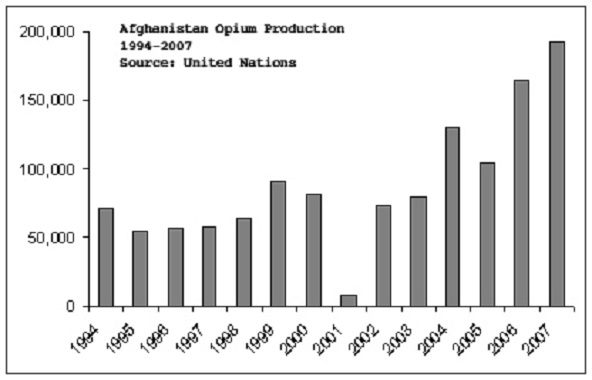
It appears that the cold war has gone into a new and deadly direction. Currently Russia, the CIS countries as well as the rest of Europe are suffering from a new drug epidemic from the vast quantities of cheap, high quality heroin from Afghanistan. Since the US occupation, the Opium production in Afghanistan has increased one hundred thousand fold.


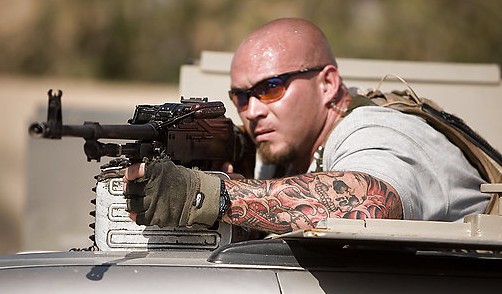
It is well documented that US soldiers and private contractors are both protecting the poppy fields and safeguarding the cultivation. And with the occupation of Afghanistan, the US controls the source of this cheap high quality heroin, managed by the CIA, being is responsible for this plague upon the people of the Eastern Asia and Europe, not to mention the vast quantities of the drug which make it back to the United States.


To see how the CIA organizes the international drug trade, we must only look as far as former CIA officer, John Millis, who served for thirteen years as a case officer supplying covert CIA aid to the heroin-trafficking guerrillas in AfghanistanÑan analogous and contemporary alliance between the CIA and known drug-traffickers (New York Times, 6/6/00). At least one of the airlines involved in the Afghan support operation, Global International Airways, was also named in connection with the Iran-Contra scandal (Los Angeles Times, 2/20/97).


During the same time as the Contras, the CIA was arming and advising heroin-trafficking guerrillas in Afghanistan. Its leader, Gulbuddin Hekmatyar, became one of the leading heroin suppliers of the world. During the last few years, the CIA has helped promote the KLA (Kosovo Liberation Army), whose leaders and arms had been financed by Kosovar drug-traffickers. Indeed, the CIA’s practice of recruiting drug-financed armies is an on-going, never-ending affair. Using Laotians, whose sole cash crop was opium, the CIA recruited an army numbering in the tens of thousands.


It is easy to see how these practices by the CIA have greatly contributed to the drug crisis worldwide, including the United States. When the first established contact was made with heroin-trafficking Afghan guerrillas in 1979, no Afghan-Pakistan heroin was known to have ever reached the United States. By 1984, according to the Reagan Administration, 54 percent of the heroin reaching this country came from the Afghan-Pakistan border. Today, it is estimated that well over 90% of the world’s heroin comes from Afghanistan!


In a typical year, Afghan farmers sell around 7,000 tons of opium, which converts into around 1,000 tons of heroin. That comes out to roughly $900 million in annual revenues for the farmers, $1.6 billion for the local traffickers within Afghanistan, and another $1.5 billion for those who smuggle heroin out of the country. You do the math.


The CIA is more or less responsible for providing the contacts, protection, transportation and required chemicals to process raw opium into heroin. Without these elements the whole multi-billion dollar operation would not be possible. Again, you do the math.


The United States Department of Agriculture is even providing agricultural advice (at US taxpayer expense), to increase the yield per acre of opium poppies. The USA is sponsoring this chemical attack upon the Russian people and their allies.


Of course, the Afghanistan heroin operation is just one of many CIA dug trafficking fronts. The same thing they are doing there with heroin they are doing in Columbia, Chile and Peru with cocaine and in Mexico, Central and South America with Marijuana (read my article, The Great American Marijuana Conspiracy and/or get The Emperor Wears no Clothes FREE marijuana conspiracy ebook, just for signing up for the FREE Conspiracy Watch Newsletter).
The proceeds of CIA drug sales now buys elected officials, judges and entire police departments and law enforcement agencies around the globe. The corruption goes from the US and Mexico, to Europe, Eurasia and even Southeast Asia. Wherever people have power, the CIA will buy them and their influence.
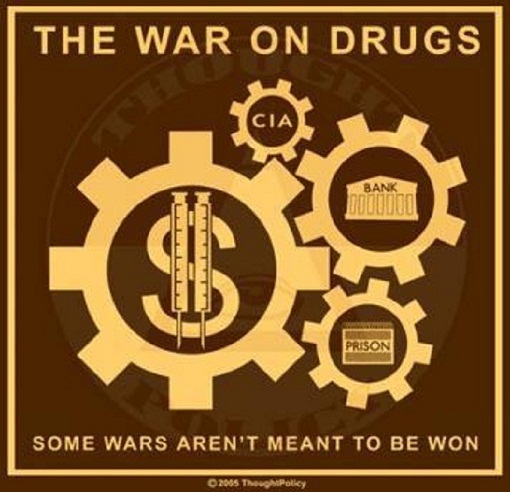
The US government has no desire to stop the drug epidemic in America, much less anywhere else, as too many American politicians and businessmen are getting very wealthy from both domestic and international illegal drug problems.
I will be bringing you more on the phony War on Drugs, here on Conspiracy Watch, as I continue to track government conspirators across the globe.


For now, I would appreciate your feedback, as you let Conspiracy Watch readers know how you feel about The War on Drugs and our government official’s involvement in keeping millions of people addicted or locked up for their own profit.

Written By: Tom Retterbuh


How a big US bank laundered billions from Mexico’s murderous drug gangs

How a big US bank laundered billions from Mexico’s murderous drug gangs

As the violence spread, billions of dollars of cartel cash began to seep into the global financial system. But a special investigation by the Observer reveals how the increasingly frantic warnings of one London whistleblower were ignored


A soldier guards marijuana that is being incinerated in Tijuana, Mexico. Photograph: Guillermo Arias/AP

On 10 April 2006, a DC-9 jet landed in the port city of Ciudad del Carmen, on the Gulf of Mexico, as the sun was setting. Mexican soldiers, waiting to intercept it, found 128 cases packed with 5.7 tons of cocaine, valued at $100m. But something else – more important and far-reaching – was discovered in the paper trail behind the purchase of the plane by the Sinaloa narco-trafficking cartel.

During a 22-month investigation by agents from the US Drug Enforcement Administration, the Internal Revenue Service and others, it emerged that the cocaine smugglers had bought the plane with money they had laundered through one of the biggest banks in the United States: Wachovia, now part of the giant Wells Fargo.

The authorities uncovered billions of dollars in wire transfers, traveller’s cheques and cash shipments through Mexican exchanges into Wachovia accounts. Wachovia was put under immediate investigation for failing to maintain an effective anti-money laundering programme. Of special significance was that the period concerned began in 2004, which coincided with the first escalation of violence along the US-Mexico border that ignited the current drugs war.

Criminal proceedings were brought against Wachovia, though not against any individual, but the case never came to court. In March 2010, Wachovia settled the biggest action brought under the US bank secrecy act, through the US district court in Miami. Now that the year’s “deferred prosecution” has expired, the bank is in effect in the clear. It paid federal authorities $110m in forfeiture, for allowing transactions later proved to be connected to drug smuggling, and incurred a $50m fine for failing to monitor cash used to ship 22 tons of cocaine.

More shocking, and more important, the bank was sanctioned for failing to apply the proper anti-laundering strictures to the transfer of $378.4bn – a sum equivalent to one-third of Mexico’s gross national product – into dollar accounts from so-called casas de cambio (CDCs) in Mexico, currency exchange houses with which the bank did business.

“Wachovia’s blatant disregard for our banking laws gave international cocaine cartels a virtual carte blanche to finance their operations,” said Jeffrey Sloman, the federal prosecutor. Yet the total fine was less than 2% of the bank’s $12.3bn profit for 2009. On 24 March 2010, Wells Fargo stock traded at $30.86 – up 1% on the week of the court settlement.

The conclusion to the case was only the tip of an iceberg, demonstrating the role of the “legal” banking sector in swilling hundreds of billions of dollars – the blood money from the murderous drug trade in Mexico and other places in the world – around their global operations, now bailed out by the taxpayer.

At the height of the 2008 banking crisis, Antonio Maria Costa, then head of the United Nations office on drugs and crime, said he had evidence to suggest the proceeds from drugs and crime were “the only liquid investment capital” available to banks on the brink of collapse. “Inter-bank loans were funded by money that originated from the drugs trade,” he said. “There were signs that some banks were rescued that way.”

Wachovia was acquired by Wells Fargo during the 2008 crash, just as Wells Fargo became a beneficiary of $25bn in taxpayers’ money. Wachovia’s prosecutors were clear, however, that there was no suggestion Wells Fargo had behaved improperly; it had co-operated fully with the investigation. Mexico is the US’s third largest international trading partner and Wachovia was understandably interested in this volume of legitimate trade.

José Luis Marmolejo, who prosecuted those running one of the casas de cambio at the Mexican end, said: “Wachovia handled all the transfers. They never reported any as suspicious.”

“As early as 2004, Wachovia understood the risk,” the bank admitted in the statement of settlement with the federal government, but, “despite these warnings, Wachovia remained in the business”. There is, of course, the legitimate use of CDCs as a way into the Hispanic market. In 2005 the World Bank said that Mexico was receiving $8.1bn in remittances.

During research into the Wachovia Mexican case, the Observer obtained documents previously provided to financial regulators. It emerged that the alarm that was ignored came from, among other places, London, as a result of the diligence of one of the most important whistleblowers of our time. A man who, in a series of interviews with the Observer, adds detail to the documents, laying bare the story of how Wachovia was at the centre of one of the world’s biggest money-laundering operations.

Martin Woods, a Liverpudlian in his mid-40s, joined the London office of Wachovia Bank in February 2005 as a senior anti-money laundering officer. He had previously served with the Metropolitan police drug squad. As a detective he joined the money-laundering investigation team of the National Crime Squad, where he worked on the British end of the Bank of New York money-laundering scandal in the late 1990s.

Woods talks like a police officer – in the best sense of the word: punctilious, exact, with a roguish humour, but moral at the core. He was an ideal appointment for any bank eager to operate a diligent and effective risk management policy against the lucrative scourge of high finance: laundering, knowing or otherwise, the vast proceeds of criminality, tax-evasion, and dealing in arms and drugs.

Woods had a police officer’s eye and a police officer’s instincts – not those of a banker. And this influenced not only his methods, but his mentality. “I think that a lot of things matter more than money – and that marks you out in a culture which appears to prevail in many of the banks in the world,” he says.

Woods was set apart by his modus operandi. His speciality, he explains, was his application of a “know your client”, or KYC, policing strategy to identifying dirty money. “KYC is a fundamental approach to anti-money laundering, going after tax evasion or counter-terrorist financing. Who are your clients? Is the documentation right? Good, responsible banking involved always knowing your customer and it still does.”

When he looked at Wachovia, the first thing Woods noticed was a deficiency in KYC information. And among his first reports to his superiors at the bank’s headquarters in Charlotte, North Carolina, were observations on a shortfall in KYC at Wachovia’s operation in London, which he set about correcting, while at the same time implementing what was known as an enhanced transaction monitoring programme, gathering more information on clients whose money came through the bank’s offices in the City, in sterling or euros. By August 2006, Woods had identified a number of suspicious transactions relating to casas de cambio customers in Mexico.

Primarily, these involved deposits of traveller’s cheques in euros. They had sequential numbers and deposited larger amounts of money than any innocent travelling person would need, with inadequate or no KYC information on them and what seemed to a trained eye to be dubious signatures. “It was basic work,” he says. “They didn’t answer the obvious questions: ‘Is the transaction real, or does it look synthetic? Does the traveller’s cheque meet the protocols? Is it all there, and if not, why not?'”

Woods discussed the matter with Wachovia’s global head of anti-money laundering for correspondent banking, who believed the cheques could signify tax evasion. He then undertook what banks call a “look back” at previous transactions and saw fit to submit a series of SARs, or suspicious activity reports, to the authorities in the UK and his superiors in Charlotte, urging the blocking of named parties and large series of sequentially numbered traveller’s cheques from Mexico. He issued a number of SARs in 2006, of which 50 related to the casas de cambio in Mexico. To his amazement, the response from Wachovia’s Miami office, the centre for Latin American business, was anything but supportive – he felt it was quite the reverse.

As it turned out, however, Woods was on the right track. Wachovia’s business in Mexico was coming under closer and closer scrutiny by US federal law enforcement. Wachovia was issued with a number of subpoenas for information on its Mexican operation. Woods has subsequently been informed that Wachovia had six or seven thousand subpoenas. He says this was “An absurd number. So at what point does someone at the highest level not get the feeling that something is very, very wrong?”

In April and May 2007, Wachovia – as a result of increasing interest and pressure from the US attorney’s office – began to close its relationship with some of the casas de cambio. But rather than launch an internal investigation into Woods’s alerts over Mexico, Woods claims Wachovia hung its own money-laundering expert out to dry. The records show that during 2007 Woods “continued to submit more SARs related to the casas de cambio“.

In July 2007, all of Wachovia’s remaining 10 Mexican casa de cambio clients operating through London suddenly stopped doing so. Later in 2007, after the investigation of Wachovia was reported in the US financial media, the bank decided to end its remaining relationships with the Mexican casas de cambio globally. By this time, Woods says, he found his personal situation within the bank untenable; while the bank acted on one level to protect itself from the federal investigation into its shortcomings, on another, it rounded on the man who had been among the first to spot them.

On 16 June Woods was told by Wachovia’s head of compliance that his latest SAR need not have been filed, that he had no legal requirement to investigate an overseas case and no right of access to documents held overseas from Britain, even if they were held by Wachovia.

Woods’s life went into freefall. He went to hospital with a prolapsed disc, reported sick and was told by the bank that he not done so in the appropriate manner, as directed by the employees’ handbook. He was off work for three weeks, returning in August 2007 to find a letter from the bank’s compliance managing director, which was unrelenting in its tone and words of warning.

The letter addressed itself to what the manager called “specific examples of your failure to perform at an acceptable standard”. Woods, on the edge of a breakdown, was put on sick leave by his GP; he was later given psychiatric treatment, enrolled on a stress management course and put on medication.

Late in 2007, Woods attended a function at Scotland Yard where colleagues from the US were being entertained. There, he sought out a representative of the Drug Enforcement Administration and told him about the casas de cambio, the SARs and his employer’s reaction. The Federal Reserve and officials of the office of comptroller of currency in Washington DC then “spent a lot of time examining the SARs” that had been sent by Woods to Charlotte from London.

“They got back in touch with me a while afterwards and we began to put the pieces of the jigsaw together,” says Woods. What they found was – as Costa says – the tip of the iceberg of what was happening to drug money in the banking industry, but at least it was visible and it had a name: Wachovia.

In June 2005, the DEA, the criminal division of the Internal Revenue Service and the US attorney’s office in southern Florida began investigating wire transfers from Mexico to the US. They were traced back to correspondent bank accounts held by casas de cambio at Wachovia. The CDC accounts were supervised and managed by a business unit of Wachovia in the bank’s Miami offices.

“Through CDCs,” said the court document, “persons in Mexico can use hard currency and … wire transfer the value of that currency to US bank accounts to purchase items in the United States or other countries. The nature of the CDC business allows money launderers the opportunity to move drug dollars that are in Mexico into CDCs and ultimately into the US banking system.

“On numerous occasions,” say the court papers, “monies were deposited into a CDC by a drug-trafficking organisation. Using false identities, the CDC then wired that money through its Wachovia correspondent bank accounts for the purchase of airplanes for drug-trafficking organisations.” The court settlement of 2010 would detail that “nearly $13m went through correspondent bank accounts at Wachovia for the purchase of aircraft to be used in the illegal narcotics trade. From these aircraft, more than 20,000kg of cocaine were seized.”

All this occurred despite the fact that Wachovia’s office was in Miami, designated by the US government as a “high-intensity money laundering and related financial crime area”, and a “high-intensity drug trafficking area”. Since the drug cartel war began in 2005, Mexico had been designated a high-risk source of money laundering.

“As early as 2004,” the court settlement would read, “Wachovia understood the risk that was associated with doing business with the Mexican CDCs. Wachovia was aware of the general industry warnings. As early as July 2005, Wachovia was aware that other large US banks were exiting the CDC business based on [anti-money laundering] concerns … despite these warnings, Wachovia remained in business.”

On 16 March 2010, Douglas Edwards, senior vice-president of Wachovia Bank, put his signature to page 10 of a 25-page settlement, in which the bank admitted its role as outlined by the prosecutors. On page 11, he signed again, as senior vice-president of Wells Fargo. The documents show Wachovia providing three services to 22 CDCs in Mexico: wire transfers, a “bulk cash service” and a “pouch deposit service”, to accept “deposit items drawn on US banks, eg cheques and traveller’s cheques”, as spotted by Woods.

“For the time period of 1 May 2004 through 31 May 2007, Wachovia processed at least $$373.6bn in CDCs, $4.7bn in bulk cash” – a total of more than $378.3bn, a sum that dwarfs the budgets debated by US state and UK local authorities to provide services to citizens.

The document gives a fascinating insight into how the laundering of drug money works. It details how investigators “found readily identifiable evidence of red flags of large-scale money laundering”. There were “structured wire transfers” whereby “it was commonplace in the CDC accounts for round-number wire transfers to be made on the same day or in close succession, by the same wire senders, for the … same account”.

Over two days, 10 wire transfers by four individuals “went though Wachovia for deposit into an aircraft broker’s account. All of the transfers were in round numbers. None of the individuals of business that wired money had any connection to the aircraft or the entity that allegedly owned the aircraft. The investigation has further revealed that the identities of the individuals who sent the money were false and that the business was a shell entity. That plane was subsequently seized with approximately 2,000kg of cocaine on board.”

Many of the sequentially numbered traveller’s cheques, of the kind dealt with by Woods, contained “unusual markings” or “lacked any legible signature”. Also, “many of the CDCs that used Wachovia’s bulk cash service sent significantly more cash to Wachovia than what Wachovia had expected. More specifically, many of the CDCs exceeded their monthly activity by at least 50%.”

Recognising these “red flags”, the US attorney’s office in Miami, the IRS and the DEA began investigating Wachovia, later joined by FinCEN, one of the US Treasury’s agencies to fight money laundering, while the office of the comptroller of the currency carried out a parallel investigation. The violations they found were, says the document, “serious and systemic and allowed certain Wachovia customers to launder millions of dollars of proceeds from the sale of illegal narcotics through Wachovia accounts over an extended time period. The investigation has identified that at least $110m in drug proceeds were funnelled through the CDC accounts held at Wachovia.”

The settlement concludes by discussing Wachovia’s “considerable co-operation and remedial actions” since the prosecution was initiated, after the bank was bought by Wells Fargo. “In consideration of Wachovia’s remedial actions,” concludes the prosecutor, “the United States shall recommend to the court … that prosecution of Wachovia on the information filed … be deferred for a period of 12 months.”

But while the federal prosecution proceeded, Woods had remained out in the cold. On Christmas Eve 2008, his lawyers filed tribunal proceedings against Wachovia for bullying and detrimental treatment of a whistleblower. The case was settled in May 2009, by which time Woods felt as though he was “the most toxic person in the bank”. Wachovia agreed to pay an undisclosed amount, in return for which Woods left the bank and said he would not make public the terms of the settlement.

After years of tribulation, Woods was finally formally vindicated, though not by Wachovia: a letter arrived from John Dugan, the comptroller of the currency in Washington DC, dated 19 March 2010 – three days after the settlement in Miami. Dugan said he was “writing to personally recognise and express my appreciation for the role you played in the actions brought against Wachovia Bank for violations of the bank secrecy act … Not only did the information that you provided facilitate our investigation, but you demonstrated great personal courage and integrity by speaking up. Without the efforts of individuals like you, actions such as the one taken against Wachovia would not be possible.”

The so-called “deferred prosecution” detailed in the Miami document is a form of probation whereby if the bank abides by the law for a year, charges are dropped. So this March the bank was in the clear. The week that the deferred prosecution expired, a spokeswoman for Wells Fargo said the parent bank had no comment to make on the documentation pertaining to Woods’s case, or his allegations. She added that there was no comment on Sloman’s remarks to the court; a provision in the settlement stipulated Wachovia was not allowed to issue public statements that contradicted it.

But the settlement leaves a sour taste in many mouths – and certainly in Woods’s. The deferred prosecution is part of this “cop-out all round”, he says. “The regulatory authorities do not have to spend any more time on it, and they don’t have to push it as far as a criminal trial. They just issue criminal proceedings, and settle. The law enforcement people do what they are supposed to do, but what’s the point? All those people dealing with all that money from drug-trafficking and murder, and no one goes to jail?”

One of the foremost figures in the training of anti-money laundering officers is Robert Mazur, lead infiltrator for US law enforcement of the Colombian Medellín cartel during the epic prosecution and collapse of the BCCI banking business in 1991 (his story was made famous by his memoir, The Infiltrator, which became a movie).

Mazur, whose firm Chase and Associates works closely with law enforcement agencies and trains officers for bank anti-money laundering, cast a keen eye over the case against Wachovia, and he says now that “the only thing that will make the banks properly vigilant to what is happening is when they hear the rattle of handcuffs in the boardroom”.

Mazur said that “a lot of the law enforcement people were disappointed to see a settlement” between the administration and Wachovia. “But I know there were external circumstances that worked to Wachovia’s benefit, not least that the US banking system was on the edge of collapse.”

What concerns Mazur is that what law enforcement agencies and politicians hope to achieve against the cartels is limited, and falls short of the obvious attack the US could make in its war on drugs: go after the money. “We’re thinking way too small,” Mazur says. “I train law enforcement officers, thousands of them every year, and they say to me that if they tried to do half of what I did, they’d be arrested. But I tell them: ‘You got to think big. The headlines you will be reading in seven years’ time will be the result of the work you begin now.’ With BCCI, we had to spend two years setting it up, two years doing undercover work, and another two years getting it to trial. If they want to do something big, like go after the money, that’s how long it takes.”

But Mazur warns: “If you look at the career ladders of law enforcement, there’s no incentive to go after the big money. People move every two to three years. The DEA is focused on drug trafficking rather than money laundering. You get a quicker result that way – they want to get the traffickers and seize their assets. But this is like treating a sick plant by cutting off a few branches – it just grows new ones. Going after the big money is cutting down the plant – it’s a harder door to knock on, it’s a longer haul, and it won’t get you the short-term riches.”


The office of the comptroller of the currency is still examining whether individuals in Wachovia are criminally liable. Sources at FinCEN say that a so-called “look-back” is in process, as directed by the settlement and agreed to by Wachovia, into the $378.4bn that was not directly associated with the aircraft purchases and cocaine hauls, but neither was it subject to the proper anti-laundering checks. A FinCEN source says that $20bn already examined appears to have “suspicious origins”. But this is just the beginning.

Antonio Maria Costa, who was executive director of the UN’s office on drugs and crime from May 2002 to August 2010, charts the history of the contamination of the global banking industry by drug and criminal money since his first initiatives to try to curb it from the European commission during the 1990s. “The connection between organised crime and financial institutions started in the late 1970s, early 1980s,” he says, “when the mafia became globalised.”

Until then, criminal money had circulated largely in cash, with the authorities making the occasional, spectacular “sting” or haul. During Costa’s time as director for economics and finance at the EC in Brussels, from 1987, inroads were made against penetration of banks by criminal laundering, and “criminal money started moving back to cash, out of the financial institutions and banks. Then two things happened: the financial crisis in Russia, after the emergence of the Russian mafia, and the crises of 2003 and 2007-08.

“With these crises,” says Costa, “the banking sector was short of liquidity, the banks exposed themselves to the criminal syndicates, who had cash in hand.”

Costa questions the readiness of governments and their regulatory structures to challenge this large-scale corruption of the global economy: “Government regulators showed what they were capable of when the issue suddenly changed to laundering money for terrorism – on that, they suddenly became serious and changed their attitude.”

Hardly surprising, then, that Wachovia does not appear to be the end of the line. In August 2010, it emerged in quarterly disclosures by HSBC that the US justice department was seeking to fine it for anti-money laundering compliance problems reported to include dealings with Mexico.


“Wachovia had my résumé, they knew who I was,” says Woods. “But they did not want to know – their attitude was, ‘Why are you doing this?’ They should have been on my side, because they were compliance people, not commercial people. But really they were commercial people all along. We’re talking about hundreds of millions of dollars. This is the biggest money-laundering scandal of our time.

“These are the proceeds of murder and misery in Mexico, and of drugs sold around the world,” he says. “All the law enforcement people wanted to see this come to trial. But no one goes to jail. “What does the settlement do to fight the cartels? Nothing – it doesn’t make the job of law enforcement easier and it encourages the cartels and anyone who wants to make money by laundering their blood dollars. Where’s the risk? There is none.

“Is it in the interest of the American people to encourage both the drug cartels and the banks in this way? Is it in the interest of the Mexican people? It’s simple: if you don’t see the correlation between the money laundering by banks and the 30,000 people killed in Mexico, you’re missing the point.”

Woods feels unable to rest on his laurels. He tours the world for a consultancy he now runs, Hermes Forensic Solutions, counselling and speaking to banks on the dangers of laundering criminal money, and how to spot and stop it. “New York and London,” says Woods, “have become the world’s two biggest laundries of criminal and drug money, and offshore tax havens. Not the Cayman Islands, not the Isle of Man or Jersey. The big laundering is right through the City of London and Wall Street.

“After the Wachovia case, no one in the regulatory community has sat down with me and asked, ‘What happened?’ or ‘What can we do to avoid this happening to other banks?’ They are not interested. They are the same people who attack the whistleblowers and this is a position the [British] Financial Services Authority at least has adopted on legal advice: it has been advised that the confidentiality of banking and bankers takes primacy over the public information disclosure act. That is how the priorities work: secrecy first, public interest second.

“Meanwhile, the drug industry has two products: money and suffering. On one hand, you have massive profits and enrichment. On the other, you have massive suffering, misery and death. You cannot separate one from the other.

“What happened at Wachovia was symptomatic of the failure of the entire regulatory system to apply the kind of proper governance and adequate risk management which would have prevented not just the laundering of blood money, but the global crisis.”

http://www.guardian.co.uk/world/2011/apr/03/us-bank-mexico-drug-gangs

Secrets of the CIA: Full Documentary

Secrets of the CIA: Full Documentary

http://youtu.be/4RXPJmqkxmI

This  documentary explains how CIA pioneered, developed, manipulated prisoner abuse, sold drugs, changed regimes and killed millions of people worldwide

Secrets of the CIA documents exactly what the title suggests it would.  With $50 Billion budget and over 25,000 people working for it, the CIA has more money and power than most developing countries and uses it to support genocidal dictators, shelter drug trafficking and cause much unnecessary bloodshed. Watch this documentary to get a good idea of what CIA does and supports. The Secrets of the CIA is based solidly on verifiable facts so you can be assured that everything the video reveals is true.

Narrated by Danny Wallace

War on Drugs “Transferred” to Private Mercenaries Including Blackwater

War on Drugs “Transferred” to Private Mercenaries Including Blackwater

Since the drug war has become so unpopular with the electorate, instead of politicians actually changing the drug laws, the Department of Defense seeks to reduce and conceal the real costs by transferring the “dirty work” to private contractors to do what “U.S. military forces are not allowed or not encouraged to do.”

The BBC (in Spanish) is reporting that the U.S. Department of Defense is delegating the war on drugs to private mercenary companies.  Of those companies, the increasingly infamous organization previously known as Blackwater is said to have received several multimillion-dollar government contracts for “providing advice, training and conducting operations in drug producing countries and those with links to so-called “narco-terrorism” including Latin America.”

The “no bid”contracts, issued under the Counter-Narcoterrorism Technology Program Office’s $15 billion dollar budget, are described as “non-specific” and are said to be “juicy” for the private contractors. The Pentagon says “the details of each cost in very general contracts do not go through bidding processes.”

An unnamed analyst says “the responsibility of the public and national security changing from a state’s duty to be a private business…has become the trend of the future.”

Although parts of the drug war have been privatized for years, the BBC reports this “transfer” of responsibilities is an attempt to placate those looking for Pentagon budget cuts in an election year.

According to Larry Birns, director of the Council on Hemispheric Affairs (COHA), “the drug war is unpopular and has no political weight except in an election year like this, so the Department of Defense wants to remove that spending from their accounts.”

“They surreptitiously want to reduce anti-drug budget by transferring it to private agencies,” said Birns.

Bruce Bagley, head of International Studies at the University of Miami, agrees with Birns that the main reason for privatizing the drug war is to sidestep “the high political cost.”

But this move is not without risk, as private mercenaries have known to operate outside of national and international laws.  ”Here we go into a vague area where the rules of engagement are not clear and there is almost zero accountability to the public or the electorate,” said Bagley.

The Pentagon maintains that it’s perfectly legal, and mercenaries must follow strict parameters.  However, Bagley points out that “few members of the Oversight Committees of the Senate and the House are aware, but they are required to keep secret, so all this flies under the radar.”

There are concerns that contractors acting independently will threaten the sovereignty of the “key countries” in which they will operate.  The Pentagon says the largest efforts will occur in Latin America including Mexico,  Central America, Caribbean, Columbia and other Andean countries.

Professor Bagley says these private armies could “generate a nationalist backlash if the public came to realize the situation” of operations in their countries.

Once again, the war on drugs creates the opportunity to place troops in countries where having American soldiers would be politically disadvantageous, or simply impossible.

Ultimately, the Pentagon claims they will save money because private contractors don’t have the bureaucracy and hierarchy involved in operations and because “if any of its employees dies, they are responsible.”

Apparently, humanity is the last concern for the Pentagon budget, which always seems to have plenty of money for advanced weapons systems (also privatized), but is consistently lacking in benefits for its veterans.  By privatizing the drug war, they no longer have to concern themselves with paying for benefits for warriors who pledge allegiance to the United States and take an oath to defend its Constitution.

As the war on drugs is increasingly viewed as a money-draining failure, it’s unlikely that this move to privatize it will succeed in anything but creating demand for more profit, thus fueling its continuance through corporate lobbying to prevent a political end to such lunacy.

Quotes are translated from Google translator, and Eric Blair speaks adequate Spanish as a second language.

This post originally appeared at Activist Post.

Eric Blair
Infowars.com
January 17, 2012

Source: http://www.infowars.com/war-on-drugs-transferred-to-private-mercenaries-including-blackwater/

WAR ON DRUGS: US military Admits Guarding, Assisting Lucrative Opium Trade In Afghanistan

WAR ON DRUGS: US military Admits Guarding, Assisting Lucrative Opium Trade In Afghanistan

(NaturalNews) Afghanistan is, by far, the largest grower and exporter of opium in the world today, cultivating a 92 percent market share of the global opium trade. But what may shock many is the fact that the US military has been specifically tasked with guarding Afghan poppy fields, from which opium is derived, in order to protect this multibillion dollar industry that enriches Wall Street, the CIA, MI6, and various other groups that profit big time from this illicit drug trade scheme.

Prior to the tragic events of September 11, 2001, Afghanistan was hardly even a world player in growing poppy, which is used to produce both illegal heroin and pharmaceutical-grade morphine. In fact, the Taliban had been actively destroying poppy fields as part of an effort to rid the country of this harmful plant, as was reported by the Pittsburgh Post-Gazette on February 16, 2001, in a piece entitled Nation’s opium production virtually wiped out (http://news.google.com/newspapers?nid=gL9scSG3K_gC&dat=20010216&printsec=…).

But after 9/11, the US military-industrial complex quickly invaded Afghanistan and began facilitating the reinstatement of the country’s poppy industry. According to the United Nations Drug Control Program (UNDCP), opium cultivation increased by 657 percent in 2002 after the US military invaded the country under the direction of then-President George W. Bush (http://www.infowars.com/fox-news-makes-excuse-for-cias-afghan-opium-culti…).

CIA responsible for reinstating opium industry in Afghanistan after 9/11

More recently, The New York Times (NYT) reported that the brother of current Afghan President Hamid Karzai had actually been on the payroll of the CIA for at least eight years prior to this information going public in 2009. Ahmed Wali Karzai was a crucial player in reinstating the country’s opium drug trade, known as Golden Crescent, and the CIA had been financing the endeavor behind the scenes (http://www.infowars.com/ny-times-afghan-opium-kingpin-on-cia-payroll/).

“The Golden Crescent drug trade, launched by the CIA in the early 1980s, continues to be protected by US intelligence, in liaison with NATO occupation forces and the British military,” wrote Prof. Michel Chossudovsky in a 2007 report, before it was revealed that Ahmed Wali Karzai was on the CIA payroll. “The proceeds of this lucrative multibillion dollar contraband are deposited in Western banks. Almost the totality of revenues accrue to corporate interests and criminal syndicates outside Afghanistan” (http://www.thirdworldtraveler.com/Afghanistan/US_Forces_Narcotics_Trade.html).

But the mainstream media has been peddling a different story to the American public. FOX News, for instance, aired a propaganda piece back in 2010 claiming that military personnel are having to protect the Afghan poppy fields, rather than destroy them, in order to keep the locals happy and to avoid a potential “security risk” — and FOX News reporter Geraldo Rivera can be heard blatantly lying about poppy farmers being financially supported by the Taliban, rather than the CIA and other foreign interests.

You can watch that clip here:
http://www.youtube.com/watch?v=aj-b3pB6M7s

So while tens of thousands of Americans continue to be harmed or killed every year by overdoses from drugs originating from this illicit opium trade, and while cultivation of innocuous crops like marijuana and hemp remains illegal in the US, the American military is actively guarding the very poppy fields in Afghanistan that fuel the global drug trade. Something is terribly wrong with this picture.

Mexican Drug Lord Officially Thanks American Lawmakers for Keeping Drugs Illegal

Joaquin “El Chapo” Guzman Loera reported head of the Sinaloa cartel in Mexico, ranked 701st on Forbes’ yearly report of the wealthiest men alive, and worth an estimated $1 billion, today officially thanked United States politicians for making sure that drugs remain illegal. According to one of his closest confidants, he said, “I couldn’t have gotten so stinking rich without George Bush, George Bush Jr., Ronald Reagan, even El Presidente Obama, none of them have the cajones to stand up to all the big money that wants to keep this stuff illegal. From the bottom of my heart, I want to say, Gracias amigos, I owe my whole empire to you.”

(more…)