Whitehouse ‘Panel’ Is Dead Before It Even Starts – Lacks Tech And Telco Execs

Whitehouse ‘Panel’ Is Dead Before It Even Starts – Lacks Tech And Telco Execs

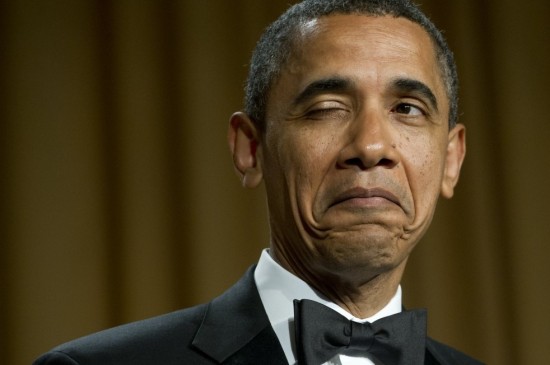
obama-nsa-panel-wink

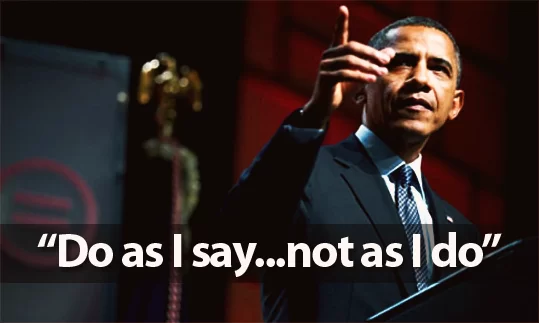
As part of his promises regarding better oversight of the National Security Agency, President Obama called for expert external opinion on where the lines of privacy should be drawn:

Fourth, we’re forming a high-level group of outside experts to review our entire intelligence and communications technologies. We need new thinking for a new era. We now have to unravel terrorist plots by finding a needle in the haystack of global telecommunications. And meanwhile, technology has given governments — including our own — unprecedented capability to monitor communications. – President Obama.

And yet, no. Obama’s panel is not a set of outsiders in the slightest. As some have pointed out in recent days, the group is instead a slurry of insiders, former insiders, and a previous colleague of the president’s.

Member Michael Morell is from the CIA, Richard Clarke is former national security, Cass Sunstein is ex-Obama White House, Peter Swire was part of the Clinton administration, and Geoffrey Stone is also University Chicago stock, same as the president.

Stone, at a minimum, is part of the ACLU, and thus might have a bit of a backbone on the privacy side of things. But the group is surprisingly un-outsidery, and hardly undogmatic. This has not gone unnoticed. However, something that fewer have noticed is that the group contains no technology or telecom folk.

This is almost comical, as we are arguing over digital and telephonic surveillance. PRISM, tapping of fiber-optic cables, storing the nation’s phone records, and forcing telcos to send huge swatches of the Internet to the NSA, and yet not a single voice from the industries impacted will take part.

In the age of cynicism, this must be a high point.

The group is in fact a good mix of people from the establishment who have perspectives on security, but it is utterly incomplete. To exclude from the conversation companies that are directly impacted by the NSA — bullied is probably a better word — is to silence possible dissent. And that is the opposite of open, or fair.

Not that in this discussion there has been much proffered openness of fairness, but when the president assembles a panel of “outsiders” to examine current policy, one could hope for a bit of each. In the assembled group, those in favor of curtailing the NSA’s surveillance activities couldn’t win a voice vote. That’s not so good, really.

If we are going to legally force tech and telco firms to hand over private information of regular folks, they deserve a hand in the discussion. Unless, naturally, the meetings are a sham in the hopes of quieting public outrage and dissent. In that case, a few former insiders can be tossed together for a chat that will mean little and accomplish less. Which appears to be the case.

At each stage of the NSA revelation saga, the government has obfuscuated or offered little. This is another example of the latter.

via TechCrunch

CENSORED: Nothing Better to Do – The NSA Goes After Parody T-Shirts

CENSORED: Nothing Better to Do – The NSA Goes After Parody T-Shirts

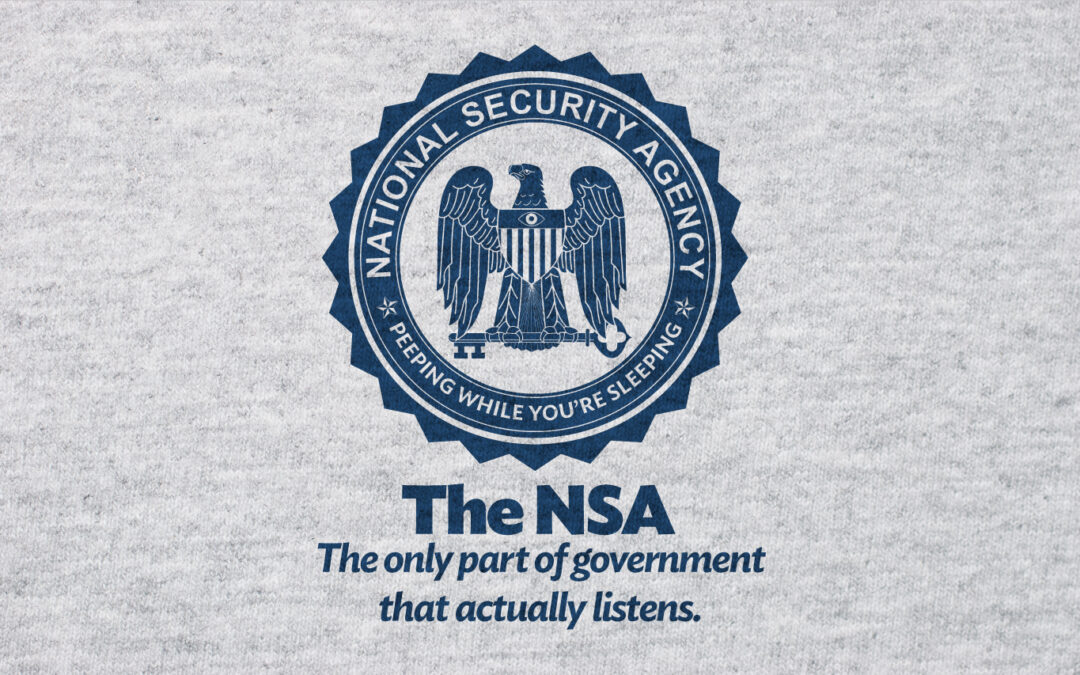
Throughout history, one of the ways in which the human spirit has overcome or dealt with the brutish forces of authoritarian regimes has been through the use of humor. As such, it is no surprise that clever Americans from sea to shining sea have figured out ways to mock the NSA while also making a dollar or two. One of these folks is Dan McCall, founder of politically themed T-shirt company Liberty Maniacs. Several days after the spy scandal erupted, Dan created a shirt that read NSA: The only part of the government that actually listens. See below:

NSA-Listens-Shirtmock

Pretty hilarious right? Well, the NSA didn’t find it particularly funny and, in fact, according to the Daily Dot this is what happened:

“Within an hour or two,” as McCall told the Daily Dot, Zazzle emailed him to say the shirt had been removed from the Zazzle site. (Zazzle didn’t respond to the Daily Dot’s request for comment, nor did the NSA.

Zazzle’s first email, which McCall forwarded to the Daily Dot, said in part:

Unfortunately, it appears that your product, The NSA, contains content that is in conflict with one or more of our acceptable content guidelines.

We will be removing this product from the Zazzle Marketplace shortly. …

Result: Not Approved

Policy Notes: Design contains an image or text that may infringe on intellectual property rights. We have been contacted by the intellectual property right holder and we will be removing your product from Zazzle’s Marketplace due to infringement claims.


McCall, who says he’d worked with Zazzle for five years, asked for an explanation, but when the company responded June 11, the distributor didn’t share much more:

Unfortunately, it appears that your product, ” the nsa”, does not meet Zazzle Acceptable Content Guidelines. Specifically, your product contained content which infringes upon the intellectual property rights of National Security Agency.

We have been contacted by legal representatives from the National Security Agency, and at their request, have removed the product from the Zazzle Marketplace.

The NSA: Protecting Americans from terrorists, nuclear war and funny t-shirts since 1952.

via DailyDot

Edward Snowden Leaks Again – And It’s a Bombshell

Edward Snowden Leaks Again – And It’s a Bombshell

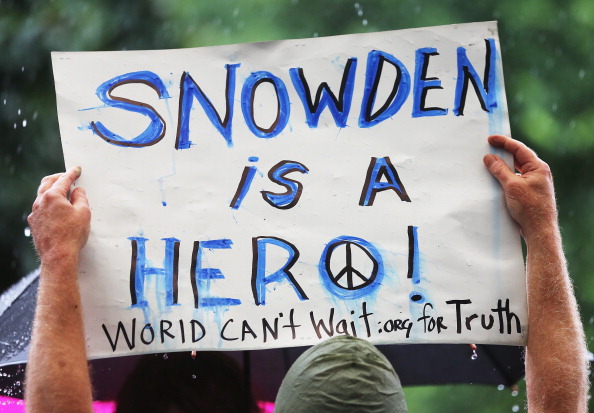
Activists Rally In New York In Support Of NSA Whistleblower Edward SnowdenIn 2008, the National Security Agency illicitly—if accidentally—intercepted a “large number” of phone calls from Washington, D.C. because an error confused Egypt’s country code—“20”—with, yes, “202.”

That fact, one of many startling ones from Barton Gellman’s new blockbuster Washington Post story based on documents given to him by Edward Snowden, is so catchy and memorable that I almost worry about it. That is, I worry people will just think of that and fail to grasp that this was actually one of the more anodyne NSA abuses revealed by these newly disclosed top-secret documents, including an internal audit. In fact, in the year preceding the May 2012 audit, there were 2,776 violations (another eye-grabber, suggestively alike the totemic 1,776).

I think more troubling is that the NSA deliberately fed international communications (which it is permitted to monitor in certain ways) through U.S. fiber-optic cables, commingling those kosher foreign emails with domestic ones—which the secret Foreign Intelligence Surveillance Court (or FISC, and it is generally a rubber stamp) ruled unconstitutional.

I also think more troubling is that last year, the NSA retained more than 3,000 files of telephone call records in defiance of an FISC order (!). How many calls involving how many people were on each file is unknown, by the way.

I think it is pretty messed up that all of this information solely concerns violations that occurred at the NSA’s headquarters in Maryland. “Three government officials, speak­ing on the condition of anonymity to discuss classified matters, said the number [of violations] would be substantially higher if it included other NSA operating units and regional collection centers,” Gellman reports.

Here’s the audit, for those not faint of heart or jargon (an appendix is provided).

There is a valuable, vital debate to be had over how much the federal government, in its intelligence programs, ought to be permitted to violate Americans’ privacy in an effort to protect Americans from a dangerous world that includes people who want to kill Americans. There are many different places where the important red lines can be drawn in this debate. It is a debate strewn with well-intentioned, conscientious people who would draw those lines at very different places. Let’s even be generous and stipulate that the question of whether the statutorily provided oversight of these programs is sufficient belongs, as well, to that debate.

The terrifying thing is that we are not having that debate. As these documents are the latest things to demonstrate, the various overseers as well as the public do not have access to the information that even the current rules assert they should have. That is how I can state with certainty that we are not having that vital debate: We do not have the means to have that debate with any kind of authority; therefore, no matter how much we discuss these issues, we are not having that debate.

The most important thing about the Egypt-D.C. confusion isn’t that U.S. calls were collected in violation of rules, for instance. It is that, after this violation was uncovered, it was not reported to oversight staff.

In a separate, in many ways equally important Post article, Carol D. Leonnig reports that FISC’s chief judge is hopelessly dependent on the NSA in order for it to perform its statutorily mandated oversight. “The FISC does not have the capacity to investigate issues of noncompliance,” the judge, Reggie B. Walton, told her, “and in that respect the FISC is in the same position as any other court.” Obama, Leonnig noted, has explicitly held FISC up as assurance that the programs do have strong oversight. But it should be obvious that outside oversight that depends on the purely internal machinations of the thing that is supposed to be overseen is not accountable oversight.

Lawmakers are not blameless. They may access unredacted documents, albeit in a secure room where they lack the ability to take notes. They might theoretically then, even, pull a Mike Gravel and read the results into the record on the House or Senate floor. Gellman reports that “fewer than 10 percent of lawmakers” presently have the ability actually to do this in practice. Sen. Dianne Feinstein, the Senate Intelligence Committee chairwoman, was unaware of the May 2012 audit until she was contacted for the Post story.

But mainly this is on the NSA, which is to say, on the administration. President Obama pledged last Friday to make these surveillance programs “more transparent.” He argued, “It’s not enough for me as president to have confidence in these programs. The American people need to have confidence in them, as well.”

Yet the administration did not disclose, say, the lapses Gellman reported. In fact, the NSA retroactively placed an on-the-record interview with its director of compliance off the record, according to Gellman. It did this after Obama’s speech extolling the importance of and promising transparency. In a sense, we got his wished-for transparency. We can see right through him now.

via NewRepublic

August 15, 2013 – Decrypted Matrix Radio: Solar Drones, Photo GPS, Mobile WiFi Security, Pornwall 451, The Body Computer, Expat Frenzy

Drones Go Green – But Don’t Get Too Excited…

Protecting your Children – GPS Coordinates Exposed in YOUR Online pics?

Simple Steps for a More Secure WiFi Experience on your Mobile

New “451” Error Would Tell Users When Govt’s are blocking Websites!

Anonymous #OpNSA – A Message to Saxby Chambliss

More Philosophy & the Matrix – The Body Computer

Simon Black, The Sovereign Man: The Expat Frenzy

August 12, 2013 – Decrypted Matrix Radio: Clapper the Fox, 18 Gun Facts, Matrix Philosophy, IRS AR-15s, Apple goes Orwellian, McCain on Snowden

CIA Director Brennan Confirmed as Reporter Michael Hastings Next Target

18 Little-Known Gun Facts That Prove That Guns Make Us Safer

IRS Refuses to Answer Congressman on AR-15s for ‘Standoff Capability’

Philosophy & the Matrix – What is Reality

John McCain: “Young Americans See Edward Snowden as Some Kind of Jason Bourne”

Apple patents new Orwellian Technology

A Fox Guards the Hen-house: James Clapper (who lied about NSA spying) set to lead NSA Investigation

July 15, 2013 – Decrypted Matrix Radio: Special Guest, Zimmerman Continued, Snowden Updates, Disruptive Technologies to Empower the Masses

Special Guest!

The Zimmerman Case : How To Create A Racial Conflict And Dupe The Course Of Justice In Favour Of The Police State

youtube.com/StormCloudsGathering

Snowden Saga Continues

‘Anti-Propaganda’ Ban Repealed, Freeing State Dept. To Direct Its Broadcasting Arm At American Citizens

Five Corporation-Crushing Disruptive Technologies That Will Empower the Masses

CLIPS: Graphene & 3D Printing Revolution

IRS Buying Spying Equipment: Covert Cameras in Coffee Trays, Plants

IRS Buying Spying Equipment: Covert Cameras in Coffee Trays, Plants

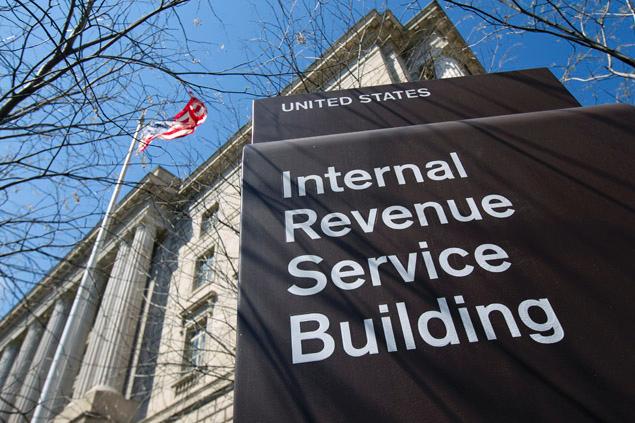
irs-spyingThe IRS, currently in the midst of scandals involving the targeting of conservative groups and lavish taxpayer-funded conferences, is ordering surveillance equipment that includes hidden cameras in coffee trays, plants and clock radios.

The IRS wants to secure the surveillance equipment quickly – it posted a solicitation on June 6 and is looking to close the deal by Monday, June 10.  The agency already has a company lined up for the order but is not commenting on the details.

“The Internal Revenue Service intends to award a Purchase Order to an undisclosed Corporation,” reads the solicitation.

“The following descriptions are vague due to the use and nature of the items,” it says.

“If you feel that you can provide the following equipment, please respond to this email no later than 4 days after the solicitation date,” the IRS said.

Among the items the agency will purchase are four “Covert Coffee tray(s) with Camera concealment,” and four “Remote surveillance system(s)” with “Built-in DVD Burner and 2 Internal HDDs, cameras.”

The IRS also is buying four cameras to hide in plants: “(QTY 4) Plant Concealment Color 700 Lines Color IP Camera Concealment with Single Channel Network Server, supports dual video stream, Poe [Power over Ethernet], software included, case included, router included.”

Finishing out the order are four “Color IP Camera Concealment with single channel network server, supports dual video stream, poe, webviewer and cms software included, audio,” and two “Concealed clock radio.”

“Responses to this notice must be received by this office within 3 business days of the date of this synopsis by 2:00 P.M. EST, June 10, 2013,” the IRS said.  Interested vendors are to contact Ricardo Carter, a Contract Specialist at the IRS.

“If no compelling responses are received, award will be made to the original solicited corporation,” the IRS said.

The original solicitation was only available to private companies for bids for 19 business hours.

The notice was posted at 11:07 a.m. on June 6 and had a deadline of 2:00 p.m. on Monday. Taking a normal 9-to-5 work week, the solicitation was open for bids for six hours on Thursday, eight hours on Friday, and five hours on Monday, for a total of 19 hours.

The response date was changed on Monday, pushed back to 2:00 p.m. on Tuesday, June 11.

The location listed for the solicitation is the IRS’s National Office of Procurement, in Oxon Hill, Md.

“The Procurement Office acquires the products and services required to support the IRS mission,” according to its website.

In recent weeks the IRS has been at the center of multiple scandals, admitting to targeting Tea Party groups and subjecting them to greater scrutiny when applying for non-profit status during the 2010 and 2012 elections.

A report by the Treasury Inspector General for Tax Administration revealed that groups with names like “patriot” in their titles were singled out, required to complete lengthy personal questionnaires (often multiple times) and having their nonprofit status delayed, sometimes for more than three years.

Last week a second Inspector General report detailed nearly $50 million in wasteful spending by the agency on conferences, in which employees stayed at luxurious Las Vegas hotels, paid a keynote speaker $17,000 to paint a picture of U2 singer Bono, and spent $50,000 on parody videos of “Star Trek.”

Requests for comment from the IRS and Mr. Carter were not returned before this story was posted.

CNSNews.com asked IRS spokesmen Dean Patterson and Anthony Burke to explain the reasoning behind the solicitation, where the surveillance equipment will be used, why the request was so urgent, and whether the request has anything to do with the recent scandals at the IRS.

CNSNews.com is not funded by the government like NPR. CNSNews.com is not funded by the government like PBS. 

CNSNews.com relies on individuals like you to help us report the news the liberal media distort and ignore. Please make a tax-deductible gift to CNSNews.com today. Your continued support will ensure that CNSNews.com is here reporting THE TRUTH, for a long time to come. It’s fast, easy and secure.

via CNSnews.com

July 3, 2013 – Decrypted Matrix Radio: Egypt Coup, Tanks & Bloodshed, 30m Bee Deaths, Ben Fulford FED Bonds, AT&T Data Slangers, Rudkowski Sting, NSA Liars Recorded

‘Full military coup’ underway in Egypt, tanks & APCs

Coup Under Way In Egypt, President Advisor Says, Warns About “Considerable Bloodshed”, “Tanks On Streets”

U.S. Postal Service Logging All Mail for Law Enforcement

U.S. Border Agency Drones might remotely ‘ZAP’ crossers into submission

Over 30 Million Bees Found Dead In Elmwood Canada

Ben Fulford Update: Trillions of dollars’ worth of bonds now in the possession of the White Dragon Society

AT&T prepping sale of customers’ anonymous location information and Web, app usage data

Students Question the NSA at Recruiting Session

Alt News Journos Beware – Attempted Set Up of Luke Rudkowski (WeAreChange.org)

NSA Document Leak Proves Conspiracy To Create Big Brother Styled World Control System

NSA Document Leak Proves Conspiracy To Create Big Brother Styled World Control System

The Obama regime which was already in the midst of three high profile scandals now has a fourth one to deal with. Top secret documents were recently leaked to the Washington Post and the London Guardian detailing a vast government surveillance program code named PRISM. According to the leaked documents, the program allows the National Security Agency (NSA) back door access to data from the servers of several leading U.S. based Internet and software companies. The documents list companies such as Google, Facebook, Yahoo, Microsoft, AOL and Apple as some of the participants in the program. There have also been other reports indicating that the NSA is able to access real-time user data from as many as 50 separate American companies. Under the program, the NSA is able to collect information ranging from e-mails, chats, videos, photographs, VoIP calls and more. Most importantly is the fact that PRISM allows the NSA to obtain this data without having to make individual requests from the service providers or without having to obtain a court order. To say that this is a violation of the Fourth Amendment which forbids unreasonable searches and seizures would be a gross understatement. This is actually much more than that. This is a program designed specifically to serve as a Big Brother like control grid and to end privacy as we know it.

ID:1218108 powered by AXP.

The NSA is quickly building a real life version of 1984’s Big Brother.

In some ways this is not really a new story. This is just confirmation of what many people involved in the alternative research community have known for years. Going as far back as the 1990s there were reports revealing how Microsoft provided the NSA with back door access to their Windows operating system. Google’s cozy relationship with the NSA has also been discussed off and on over the past decade. There have even been other whistleblowers that have come forward previously detailing a number of unconstitutional and unlawful abuses conducted by the agency. This includes revelations of how the NSA was spying on American service members stationed overseas. The only difference with this is that these newly leaked documents provide definitive details on just how wide reaching the NSA’s activities have become.

It is now painfully obvious that James Clapper the Director of National Intelligence when testifying before the Senate this past March blatantly lied when asked by Senator Ron Wyden if the NSA was involved in collecting data from the American people. Clapper flatly denied that the NSA was engaged in these types of domestic surveillance activities. What makes the situation such a joke is that the Obama regime is not focused on the fact that Clapper lied to the Senate which in of itself is unlawful. Instead they have been more focused on determining the source of the leak that exposed these broad abuses of power. This is probably not surprising considering that this is a regime that rewards corruption by promoting people involved in all sorts of questionable activity. The promotion of Susan Rice as Obama’s new National Security Advisor is a perfect example of this considering her involvement in spreading bogus Benghazi related talking points. On the other hand, the Obama regime has severely punished a variety of whistleblowers who have dared to expose any wrong doing.

At least the Obama regime won’t have to spend much time and energy trying to identify the whistleblower as this person who leaked these documents has already come forward publically. At his own request the Guardian revealed his identity as Edward Snowden a 29-year old Information Technology specialist who has been working at the NSA for different contractors including Booz Allen Hamilton and Dell. Snowden had previously worked at an NSA office in Hawaii but boarded a flight to Hong Kong a few weeks ago where he has stayed since turning over these documents to the media. He expects that he will never set foot on U.S. soil again and may possibly seek political asylum in a country like Iceland. The Guardian interviewed Snowden over several days and has recently posted an interview transcript that provides more detail on the abuses he became aware of and why he decided to come forward as a whistleblower. In the interview Snowden confirms that the NSA has the infrastructure that allows them to intercept almost any type of data that you can imagine from phone records, e-mails to credit cards. He also reveals how the U.S. government is engaged in hacking systems everywhere around the world and how the NSA has consistently lied to Congress about their activities. There is little doubt that Snowden is thus far one of the most important whistleblowers to come along in the 21st century and he will likely face retaliation considering the vast reach and capabilities of the U.S. intelligence community.

Many individuals within the Obama regime including Obama himself have claimed that this type of widespread data collection is needed to fight terrorism and is used for national security purposes. Even if we were to assume that the war on terror is real, this claim is ridiculous and absurd on its face. It would be one thing if they were collecting information based upon a specific criteria identified by legitimate human intelligence. Instead they are collecting indiscriminate amounts of information which makes it much more difficult to analyze and target anything that might indicate a potential threat. If the NSA’s goal is really to detect and target terrorism than all they are doing is making their job more difficult by vastly increasing the noise they have to filter through. Either the people running the NSA are incredibly stupid or the goal of this program is to establish the infrastructure necessary to centrally collect data from communications everywhere around the world.

Other evidence to support this notion is the fact that the NSA is building a huge new facility in Utah that is being designed to store an enormous amount of data. A Fox News report indicates that when completed the facility will be able to store billions of terabytes worth of information. It is hard to fathom how the NSA would need this much storage space unless it was being used to collect and store any and all communications.

The Obama regime has tried to justify all of this by saying that PRISM helped stop an alleged New York City subway bomb plot back in 2009. This has been proven to be factually incorrect as regular police work and help from the British were larger factors in stopping the plot. This is assuming you even believe the official story of this terror plot to begin with. The government and more specifically the FBI have manufactured so many fake terror plots that it is difficult to determine fact from fiction at this point. So with this said, there is really no proof that PRISM has even helped to stop any so-called terror plot. They are collecting information simply for the sake of collecting information with no probable cause or reasonable justification.

At this point it is an undeniable fact that the NSA has been illegally collecting information on the American people. For years what has been dismissed as conspiracy theory is now without question a conspiracy fact. It is laughable that Obama and his assorted cronies are even trying to defend this program as a useful tool to fight terrorists. It is more likely that this program is being used to help find people domestically who dislike the government and would potentially fight back against it.  A striking similarity to what is depicted in George Orwell’s dystopic novel 1984 where political dissidents are identified as thought criminals. A tool the NSA uses called Boundless Informant which counts and categorizes the information they collect shows that more data is actually gathered from domestic sources in the U.S. than from Russia. So based off of this one could argue that the NSA almost seems to view the American people as more of a threat to national security than the Russians.

The three scandals the Obama regime was dealing with prior to this new scandal are all grounds for impeachment and one could easily argue that this one is many times worse than the previous three. Obama should resign in disgrace but being that he’s a narcissist who seems unwilling to admit making any mistakes it is highly doubtful he will do this. Obama and the rest of the useful idiots in his regime who have tried to defend and justify this and other criminal programs need to be forcibly removed from office and put on trial. The criminal activity from the Obama regime is so vastly transparent it has become a complete and total joke to anyone who is even remotely paying attention.

Source: Lee Rogers, Blacklisted News

June 11, 2013 – Decrypted Matrix Radio: Alphabet Spies, Physicians Against Fluoridation, CellPhone Industry Cover-Up, Project Camelot Super Soldiers Update

IRS Buying Spying Equipment: Covert Cameras in Coffee Trays, Plants

NSA Leak Proves Conspiracy to Create Big Brother Control System

600 Physicians Come together on water Fluoridation

What the Cellphone Industry Doesn’t Want You to Know About Radiation Concerns

CLIP: Project Camelot Super Soldiers – WOW!

Every Week Night 12-1am EST (9-10pm PST)

– Click Image to Listen LIVE –

<

June 6, 2013 – Decrypted Matrix Radio: Anonymous Warns M.I. Complex, PRISM Tech Spying, UFOs in Canada, Newtown Censorship, Haunted by Drone Killings

CLIP: Anonymous – The Military Industrial Complex Threat

Two Secretive Israeli Companies May Have Bugged The US Telecommunications Grid For The NSA

New PRISM leak shows feds can access user accounts for Google, Facebook and more

CLIP: UFO Alien Disclosure By Canadian Minister Of Defense May 2013

Newtown parents ask to block release of photos, audio – Conn. Gov. Signs Bill Restricting Newtown Photos

Robo-Raven Robotic bird created by Army and University of Maryland researchers

Former drone operator says he’s haunted by his part in more than 1,600 deaths

Every Week Night 12-1am EST (9-10pm PST)

– Click Image to Listen LIVE –

<

11 Secret Documents Americans Deserve to See

11 Secret Documents Americans Deserve to See

top-secret-documents

Many documents produced by the U.S. government are confidential and not released to the public for legitimate reasons of national security.  Others, however, are kept secret for more questionable reasons.  The fact that presidents and other government officials have the power to deem materials classified provides them with an opportunity to use national security as an excuse to suppress documents and reports that would reveal embarrassing or illegal activities.


I’ve been collecting the stories of unreleased documents for several years. Now I have chosen 11 examples that were created—and buried—by both Democratic and Republican administrations and which cover assassinations, spying, torture, 50-year-old historical events, presidential directives with classified titles and…trade negotiations.


1. Obama Memo Allowing the Assassination of U.S. Citizens      

When the administration of George W. Bush was confronted with cases of Americans fighting against their own country, it responded in a variety of ways. John Walker Lindh, captured while fighting with the Taliban in December 2001, was indicted by a federal grand jury and sentenced to 20 years in prison. José Padilla was arrested in Chicago in May 2002 and held as an “enemy combatant” until 2006 when he was transferred to civilian authority and, in August 2007, sentenced to 17 years in prison for conspiring to support terrorism. Adam Gadahn, who has made propaganda videos for al-Qaeda, was indicted for treason in 2006 and remains at large.


After he took over the presidency, Barack Obama did away with such traditional legal niceties and decided to just kill some Americans who would previously have been accused of treason or terrorism. His victims have included three American citizens killed in Yemen in 2011 by missiles fired from drones: U.S.-born anti-American cleric Anwar al-Awlaki, Samir Khan, an al-Qaeda propagandist from North Carolina, and Awlaki’s 16-year-old son, Abdulrahman al-Awlaki.


Obama justified his breach of U.S. and international law with a 50-page memorandum prepared by the Justice Department’s Office of Legal Counsel.  Attorney General Eric Holder argued that the killing of Awlaki was legal because he was a wartime enemy and he could not be captured, but the legal justification for this argument is impossible to confirm because the Obama administration has refused to release the memo.


2. The Obama Interpretation of Section 215 of the Patriot Act

Section 215 of the Patriot Act allows the FBI, in pursuit of spies and terrorists, to order any person or entity to turn over “any tangible things” without having to justify its demands by demonstrating probable cause. For example, a library can be forced to reveal who borrowed a book or visited a web site. According to Section 215, the library is prohibited from telling anyone what it has turned over to the FBI.


The Obama administration has created a secret interpretation of Section 215 that goes beyond the direct wording of the law to include other information that can be collected. Democratic Senator Ron Wyden of Oregon, who, as a member of the Senate Intelligence Committee, was briefed about this secret interpretation, urged the president to make it public. “I want to deliver a warning this afternoon,” he said. “When the American people find out how their government has secretly interpreted the Patriot Act, they will be stunned and they will be angry.”


Wyden and Sen. Mark Udall of Colorado, also a Democrat, have implied that the Obama administration has expanded the use of Section 215 to activities other than espionage and terrorism. In a letter to Attorney General Eric Holder, Wyden and Udall wrote that “there is now a significant gap between what most Americans think the law allows and what the government secretly claims the law allows. This is a problem, because it is impossible to have an informed public debate about what the law should say when the public doesn’t know what its government thinks the law says.”
3. 30-page Summary of 9/11 Commission Interview with Bush and Cheney

You would have thought that, in the interests of the nation, the Bush administration would have demanded a thorough investigation of the terrorist attacks of September 11, 2001, the deadliest assault ever on U.S. soil. Instead, they fought tooth and nail against an independent investigation. Public pressure finally forced President George W. Bush to appoint a bipartisan commission that came to be known as the 9/11 Commission.  It was eventually given a budget of $15 million…compared to the $39 million spent on the Monica Lewinsky/Bill Clinton investigation. When the commission completed its work in August 2004, the commissioners turned over all their records to the National Archives with the stipulation that the material was to be released to the public starting on January 2, 2009. However, most of the material remains classified. Among the more tantalizing still-secret documents are daily briefings given to President Bush that reportedly described increasingly worried warnings of a possible attack by operatives of Osama bin Laden.


Another secret document that the American people deserve to see is the 30-page summary of the interview of President Bush and Vice-President Dick Cheney conducted by all ten commissioners on April 29, 2004.  Bush and Cheney refused to be interviewed unless they were together. They would not testify under oath and they refused to allow the interview to be recorded or transcribed.  Instead the commission was allowed to bring with them a note taker. It is the summary based on this person’s notes that remains sealed.


4. Memos from President George W. Bush to the CIA Authorizing Waterboarding and other Torture Techniques

Four days after the terrorist attacks of September 11, 2001, President George W. Bush signed a “memorandum of notification” (still secret) that authorized the CIA to do what it needed to fight al-Qaeda.  However the memo did not address what interrogation and torture techniques could be used on captured suspects. By June 2003, Director George Tenet and others at the CIA were becoming worried that if their seemingly illegal tactics became known to the public, the White House would deny responsibility and hang the CIA out to dry.  After much discussion, Bush’s executive office handed over two memos, one in 2003 and another in 2004, confirming White House approval of the CIA interrogation methods, thus giving the CIA “top cover.” It is not known if President Bush himself signed the memos.


5. 1,171 CIA Documents Related to the Assassination of President Kennedy

It’s been 49 years since President John F. Kennedy was shot to death in Dallas, yet the National Archives and Records Administration (NARA) insists that more than one thousand documents relating to the case should not be released to the public until NARA is legally required to do so in 2017…unless the president at that time decides to extend the ban.  It would appear that some of the blocked material deals with the late CIA agent David Phillips, who is thought to have dealt with Lee Harvey Oswald in Mexico City six weeks before the assassination.


6. Volume 5 of the CIA’s History of the Bay of Pigs Fiasco

In the late 1970s and early 1980s, CIA historian Dr. Jack B. Pfeiffer compiled a multi-volume history of the failed US attempt to invade Cuba in April 1961.  In August 2005, the National Security Archive at George Washington University, citing the Freedom of Information Act, requested access to this history.  The CIA finally released the information almost six years later, in July 2011. However it refused to release Volume V, which is titled “CIA’s Internal Investigation of the Bay of Pigs Operations.”  Although more than 50 years have passed since the invasion, the U.S. District Court for the District of Columbia ruled that Volume V is exempt from the Freedom of Information Act because it “is covered by the deliberative process privilege” which “covers documents reflecting advisory opinions, recommendations and deliberations comprising part of a process by which governmental decisions and policies are formulated.”


7. National Security Decision Directives with Classified Titles

The day before he left the White House on January 20, 1993, President George H. W. Bush issued National Security Directive (NSD) #79, a document so secret that even its title remains classified almost 20 years later. The same goes for National Security Directive #77, issued a few days earlier, as well as four others issued in 1989 (#11, 13a, 19a and 25a). If the “a”s are any indication of the subjects, it is worth noting that NSD 13 dealt with countering cocaine trafficking in Peru; NSD 19 dealt with Libya and NSD 25 with an election in Nicaragua.


President Ronald Reagan also issued six NSDs with classified titles, and President Bill Clinton issued 29.  President George W. Bush issued two such NSDs, presumably shortly after the terrorist attacks of September 11, 2001. President Barack Obama has issued at least seven Presidential Policy Directives with classified titles.


8. Major General Douglas Stone’s 700-Page Report on Prisoners Held in Afghanistan

Marine Corps General Douglas Stone earned positive reviews for his revamping of detention operations in Iraq, where he determined that most of the prisoners held by the United States were not actually militants and could be taught trades and rehabilitated. Based on his success in Iraq, Stone was given the task of making an evaluation of detainee facilities in Afghanistan. His findings, conclusions and recommendations were included in a 700-page report that he submitted to the U.S. Central Command in August 2009. According to some accounts of the report, Stone determined that two-thirds of the Afghan prisoners were not a threat and should be released. However, three years after he completed it, Stone’s report remains classified.


9. Detainee Assessment Briefs for Abdullah Tabarak and Abdurahman Khadr

In 2011, WikiLeaks released U.S. military files known as Detainee Assessment Briefs (DABs), which describe the cases of 765 prisoners held at Guantánamo Bay. However, there were actually 779 prisoners. So what happened to the files for the other fourteen? Andy Worthington, author of The Guantanamo Files, has noted that two of the fourteen missing stories are especially suspicious: those of Abdullah Tabarak and Abdurahman Khadr.


Tabarak, a Moroccan, was allegedly one of Osama bin Laden’s long-time bodyguards, and took over bin Laden’s satellite phone in order to draw U.S. fire to himself instead of to bin Laden when U.S. forces were chasing the al-Qaeda leader in the Tora Bora mountains in December 2001.  Captured and sent to Guantánamo, Tabarak was mysteriously released, sent back to Morocco in July 2003, and set free shortly thereafter.


Abdurahman Khadr, the self-described “black sheep” of a militant family from Canada, was 20 years old when he was captured in Afghanistan and turned over to American forces. He has said that he was recruited by the CIA to become an informant at Guantánamo and then in Bosnia. When the CIA tried to send him to Iraq, he refused and returned to Canada. His younger brother, Omar, was 15 years old when he was captured in Afghanistan and accused of killing an American soldier, Sergeant First Class Christopher Speer, during a firefight.  He was incarcerated at Guantánamo for almost ten years until he was finally released to Canadian custody on September 29, 2012.


10. FBI Guidelines for Using GPS Devices to Track Suspects

On January 23, 2012, in the case of United States v. Jones, the Supreme Court ruled unanimously that attaching a GPS device to a car to track its movements constitutes a “search” and is thus covered by the Fourth Amendment protecting Americans against “unreasonable searches and seizures.”  But it did not address the question of whether the FBI and other law enforcement agencies must obtain a warrant to attach a GPS device or whether it is enough for an agent to believe that such a search would turn up evidence of wrongdoing.


A month later, at a symposium at the University of San Francisco, FBI lawyer Andrew Weissman announced that the FBI was issuing two memoranda to its agents to clarify how the agency would interpret the Supreme Court decision. One memo dealt with the use of GPS devices, including whether they could be attached to boats and airplanes and used at international borders. The second addressed how the ruling applied to non-GPS techniques used by the FBI.


The ACLU, citing the Freedom of Information Act, has requested publication of the two memos because they “will shape not only the conduct of its own agents but also the policies, practices and procedures of other law enforcement agencies—and, consequently, the privacy rights of Americans.”


11. U.S. Paper on Negotiating Position on the Free Trade Agreement of the Americas

The subject of international trade negotiations is one that makes most people’s eyes glaze over. So why is the Obama administration fighting so hard to keep secret a one-page document that relates to early negotiations regarding the Free Trade Agreement of the Americas (FTAA), an accord that was proposed 18 years ago and about which public negotiations ended in 2005? All we know is that the document “sets forth the United States’ initial proposed position on the meaning of the phrase ‘in like circumstances.’” This phrase “helps clarify when a country must treat foreign investors as favorably as local or other foreign investors.”


Responding to a Freedom of Information Act lawsuit filed by The Center for International Environmental Law, DC District Judge Richard W. Roberts ordered the Office of the United States Trade Representative (USTR) to release the document, but the Obama administration has refused, claiming that disclosure “reasonably could be expected to result in damage to the national security” because all the nations involved in the failed negotiations agreed to keep all documents secret until December 31, 2013…“unless a country were to object to the release of one of its own documents at that time.” Judge Roberts ruled that the USTR has failed to present any evidence that release of the document would damage national security.


Most likely, the Obama administration is afraid that release of the document would set a precedent that could impede another secret trade negotiation, the Trans-Pacific Partnership (TPP), also known as the Trans-Pacific Strategic Economic Partnership Agreement, which seeks to establish a free trade zone among the U.S., New Zealand, Chile, Singapore, Brunei, Australia, Peru, Vietnam, Malaysia and possibly Canada, Mexico and Japan.

March 28, 2013 – Decrypted Matrix Radio: Robot Service, Location Data Exploited, Mind Control Parasite, Central Bank Warnings, Alien Artifacts, Raw Honey Benefits

March 28, 2013 – Decrypted Matrix Radio: Robot Service, Location Data Exploited, Mind Control Parasite, Central Bank Warnings, Alien Artifacts, Raw Honey Benefits

The Robot Reality: Service Jobs Are Next to Go

Location Data Can Uniquely Identify Cellphone Users

Scientists Claim 40% of Population is Infected with “Mind Control Parasite”

Forefathers Remembered: Central Bank Warnings

Alien Artifacts In Lost Tomb Of Alexander The Great Found In Illinois Caves

Illegal Pictures From Atop The Great Pyramid

Raw Honey: Liquid Gold In Your Pantry

3-28

Every Week Night 12-1am EST (9-10pm PST)

– Click Image to Listen LIVE –

Public Buses Across Country Quietly Adding Microphones to Record Passenger Conversations

Public Buses Across Country Quietly Adding Microphones to Record Passenger Conversations

MTA-bus-audio-recording

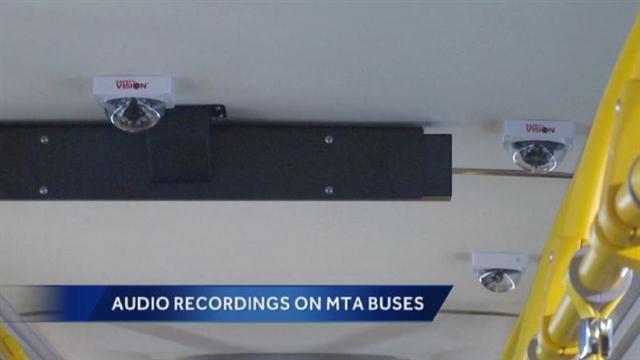
Transit authorities in cities across the country are quietly installing microphone-enabled surveillance systems on public buses that would give them the ability to record and store private conversations, according to documents obtained by a news outlet.

The systems are being installed in San Francisco, Baltimore, and other cities with funding from the Department of Homeland Security in some cases, according to the Daily, which obtained copies of contracts, procurement requests, specs and other documents.

The use of the equipment raises serious questions about eavesdropping without a warrant, particularly since recordings of passengers could be obtained and used by law enforcement agencies.

It also raises questions about security, since the IP audio-video systems can be accessed remotely via a built-in web server (.pdf), and can be combined with GPS data to track the movement of buses and passengers throughout the city.

The RoadRecorder 7000 surveillance system being marketed for use on public buses consists of a high-definition IP camera and audio recording system that can be configured remotely via built-in web server.

According to the product pamphlet for the RoadRecorder 7000 system made by SafetyVision (.pdf), “Remote connectivity to the RoadRecorder 7000 NVR can be established via the Gigabit Ethernet port or the built-in 3G modem. A robust software ecosystem including LiveTrax vehicle tracking and video streaming service combined with SafetyNet central management system allows authorized users to check health status, create custom alerts, track vehicles, automate event downloads and much more.”

The systems use cables or WiFi to pair audio conversations with camera images in order to produce synchronous recordings. Audio and video can be monitored in real-time, but are also stored onboard in blackbox-like devices, generally for 30 days, for later retrieval. Four to six cameras with mics are generally installed throughout a bus, including one near the driver and one on the exterior of the bus.

Cities that have installed the systems or have taken steps to procure them include San Francisco, California; Eugene, Oregon; Traverse City, Michigan; Columbus, Ohio; Baltimore Maryland; Hartford, Connecticut; and Athens, Georgia.

San Francisco transit authorities recently approved a $5.9 million contract to install an audio surveillance system on 357 buses and vintage trolley cars, paid for in full with a grant from DHS. The contract includes the option to expand the equipment to an additional 600 vehicles.

Concord, New Hampshire also used part of a $1.2 million economic stimulus grant to install its new video/audio surveillance system on buses, according to the Daily.

Transit officials say the systems will help improve the safety of passengers and drivers and resolve complaints from riders. But privacy and security expert Ashkan Soltani told the Daily that the audio could easily be coupled with facial recognition systems or audio recognition technology to identify passengers caught on the recordings.

In Eugene, Oregon, the Daily found, transit officials requested microphones that would be capable of “distilling clear conversations from the background noise of other voices, wind, traffic, windshields wipers and engines” and also wanted at least five audio channels spread across each bus that would be “paired with one or more camera images and recorded synchronously with the video for simultaneous playback.”

In 2009, transit officials in Baltimore, Maryland, backed down briefly from plans to install microphones in buses in that city after civil liberties groups complained that the systems would violate wiretapping laws and constitutional protections against illegal search and seizure. Transit authorities then asked the state’s attorney general to weigh-in on whether the systems violated wiretapping laws. After the attorney general indicated that signs warning passengers of the surveillance would help combat any legal challenges, transit officials pressed forward with their plans last month and announced the installation of an audio recording system on 10 public buses. The city plans to roll out the system on at least 340 additional buses.

via Wired

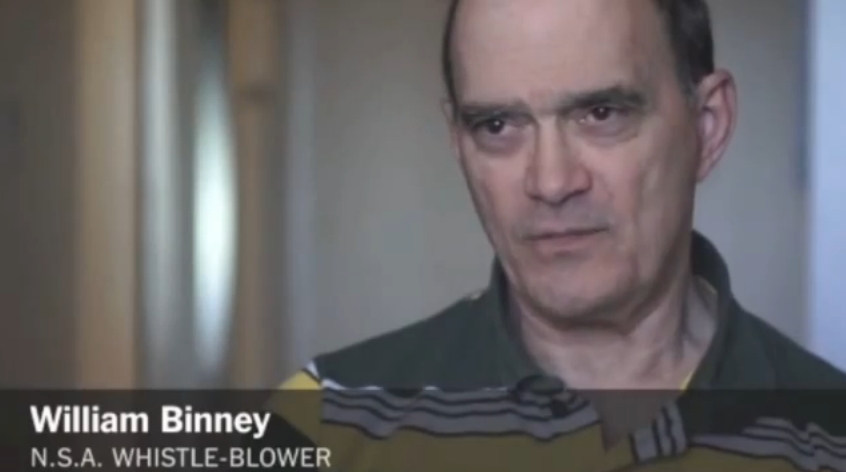
NSA Whistleblower: Everyone in US Under Virtual Surveillance, All Info Stored

NSA Whistleblower: Everyone in US Under Virtual Surveillance, All Info Stored

RT talks to William Binney, whistleblower and former NSA crypto-mathematician who served in the agency for decades. Virtual privacy in US, Petraeus affair and whistleblowers’ odds in fight against the authorities are among key topics of this exclusive interview

RT: In light of the Petraeus/Allen scandal while the public is so focused on the details of their family drama, one may argue that the real scandal in this whole story is the power, the reach of the surveillance state. I mean if we take General Allen – thousands of his personal e-mails have been sifted through private correspondence. It’s not like any of those men was planning an attack on America. Does the scandal prove the notion that there is no such thing as privacy in a surveillance state?

William Binney: Yes, that’s what I’ve been basically saying for quite some time, is that the FBI has access to the data collected, which is basically the emails of virtually everybody in the country. And the FBI has access to it. All the congressional members are on the surveillance too, no one is excluded. They are all included. So, yes, this can happen to anyone. If they become a target for whatever reason – they are targeted by the government, the government can go in, or the FBI, or other agencies of the government, they can go into their database, pull all that data collected on them over the years, and we analyze it all. So, we have to actively analyze everything they’ve done for the last 10 years at least.

RT: And it’s not just about those, who could be planning, who could be a threat to national security, but also those, who could be just…

WB: It’s everybody. The Naris device, if it takes in the entire line, so it takes in all the data. In fact they advertised they can process the lines at session rates, which means 10-gigabit lines. I forgot the name of the device (it’s not the Naris) – the other one does it at 10 gigabits. That’s why they’re building Bluffdale [database facility], because they have to have more storage, because they can’t figure out what’s important, so they are just storing everything there. So, emails are going to be stored there in the future, but right now stored in different places around the country. But it is being collected – and the FBI has access to it.

RT: You mean it’s being collected in bulk without even requesting providers?

WB: Yes.

RT: Then what about Google, you know, releasing this biannual transparency report and saying that the government’s demands for personal data is at an all-time high and for all of those requesting the US, Google says they complied with the government’s demands 90 percent of the time. But they are still saying that they are making the request, it’s not like it’s all being funneled into that storage. What do you say to that?

WB: I would assume that it’s just simply another source for the same data they are already collecting. My line is in declarations in a court about the 18-T facility in San Francisco, that documented the NSA room inside that AST&T facility, where they had Naris devices to collect data off the fiber optic lines inside the United States. So, that’s kind of a powerful device, that would collect everything it was being sent. It could collect on the order over of 100 billion 1,000-character emails a day. One device.

RT: You say they sift through billions of e-mails. I wonder how do they prioritize? How do they filter it?

WB: I don’t think they are filtering it. They are just storing it. I think it’s just a matter of selecting when they want it. So, if they want to target you, they would take your attributes, go into that database and pull out all your data.

RT: Were you on the target list?

WB: Oh, sure! I believe I’ve been on it for quite a few years. So I keep telling them everything I think of them in my email. So that when they want to read it they’ll understand what I think of them.

RT: Do you think we all should leave messages for the NSA mail box?

WB: Sure!

RT: You blew the whistle on the agency when George W. Bush was the president. With President Obama in office, in your opinion, has anything changed at the agency, in the surveillance program? In what direction is this administration moving?

WB: The change is it’s getting worse. They are doing more. He is supporting the building of the Bluffdale facility, which is over two billion dollars they are spending on storage room for data. That means that they are collecting a lot more now and need more storage for it. That facility by my calculations that I submitted to the court for the Electronic Frontiers Foundation against NSA would hold on the order of 5 zettabytes of data. Just that current storage capacity is being advertised on the web that you can buy. And that’s not talking about what they have in the near future.

RT: What are they going to do with all of that? Ok, they are storing something. Why should anybody be concerned?

WB: If you ever get on the enemies list, like Petraeus did or… for whatever reason, than you can be drained into that surveillance.

RT: Do you think they would… General Petraeus, who was idolized by the same administration? Or General Allen?

WB: There are certainly some questions, that have to be asked, like why would they target it to begin with? What law were they breaking?

RT: In case of General Petraeus one would argue that there could have been security breaches. Something like that. But with General Allen  – I don’t quite understand, because when they were looking into his private emails to this woman.

WB: That’s the whole point. I am not sure what the internal politics is… That’s part of the program. This government doesn’t want things in the public. It’s not a transparent government. Whatever the reason or the motivation was, I don’t really know, but I certainly think that there was something going on in the background that made them target those fellows. Otherwise why would they be doing it? There is no crime there.

RT: It seems that the public is divided between those, who think that the government surveillance program violates their civil liberties, and those who say, ‘I’ve nothing to hide. So, why should I care?’ What do you say to those who think that it shouldnt concern them.

WB: The problem is if they think they are not doing anything that’s wrong, they don’t get to define that. The central government does, the central government defines what is right and wrong and whether or not they target you. So, it’s not up to the individuals. Even if they think they aren’t doing something wrong, if their position on something is against what the administration has, then they could easily become a target.

RT: Tell me about the most outrageous thing that you came across during your work at the NSA.

WB: The violations of the constitution and any number of laws that existed at the time. That was the part that I could not be associated with. That’s why I left. They were building social networks on who is communicating and with whom inside this country. So that the entire social network of everybody, of every US citizen was being compiled overtime. So, they are taking from one company alone roughly 320 million records a day. That’s probably accumulated probably close to 20 trillion over the years.

The original program that we put together to handle this to be able to identify terrorists anywhere in the world and alert anyone that they were in jeopardy. We would have been able to do that by encrypting everybody’s communications except those who were targets. So, in essence you would protect their identities and the information about them until you could develop probable cause, and once you showed your probable cause, then you could do a decrypt and target them. And we could do that and isolate those people all alone. It wasn’t a problem at all. There was no difficulty in that.

RT: It sounds very difficult and very complicated. Easier to take everything in and…

WB: No. It’s easier to use the graphing techniques, if you will, for the relationships for the world to filter out data, so that you don’t have to handle all that data. And it doesn’t burden you with a lot more information to look at, than you really need to solve the problem.

RT: Do you think that the agency doesn’t have the filters now?

WB: No.

RT: You have received the Callaway award for civic courage. Congratulations! On the website and in the press release it says: “It is awarded to those, who stand out for constitutional rights and American values at great risk to their personal or professional lives.” Under the code of spy ethics I don’t know if there is such a thing your former colleagues, they probably look upon you as a traitor. How do you look back at them?

WB: That’s pretty easy. They are violating the foundation of this entire country. Why this entire government was formed? It’s founded with the Constitution and the rights were given to the people in the country under that Constitution. They are in violation of that. And under executive order 13526, section 1.7 – you can not classify information to just cover up a crime, which this is, and that was signed by President Obama. Also President Bush signed it earlier as an executive order, a very similar one. If any of this comes into Supreme Court and they rule it unconstitutional, then the entire house of cards of the government falls.

RT: What are the chances of that? What are the odds?

WB: The government is doing the best they can to try to keep it out of court. And, of course, we are trying to do the best we can to get into court. So, we decided it deserves a ruling from the Supreme Court. Ultimately the court is supposed to protect the Constitution. All these people in the government take an oath to defend the Constitution. And they are not living up to the oath of office.

January 17, 2013 – Decrypted Matrix Radio: Beast1333’s Mad World, FBI Secrets Techniques, NWO Downfall, Energy & Vibrations, Pineal Gland & Cannabis, Quick News Updates

January 17, 2013 – Decrypted Matrix Radio: Beast1333’s Mad World, FBI Secrets Techniques, NWO Downfall, Energy & Vibrations, Pineal Gland & Cannabis, Quick News Updates

Tip of the day- for the parents:
Teach your child the importance of applying their knowledge, and critical thinking abilites to solving of Social Problems

TRACK: Beast 1333 Mad World feat K-Rino, Space Age Slaves

What the FBI Doesn’t Want You To Know About Its “Secret” Surveillance Techniques

Vibration, Synchronicity, Energy Healing, Holographic Universe

Cannabis & the Pineal Gland?

Quick Headlines

It Will Take The Fed Seven Years To Deliver 300 Tons Of German Gold

Ben Fulford: Signs of cabal defeat are proliferating,  What’s the ‘real’ truth?

Developer Sacked for Outsourcing His Entire Job to China

Did you know…?
1-17

Every Week Night 12-1am EST (9-10pm PST)

– Click Image to Listen LIVE –

Pre-Planned Executive Action: The True Gun Control Agenda Behind Sandy Hook and Aurora Shootings

Pre-Planned Executive Action: The True Gun Control Agenda Behind Sandy Hook and Aurora Shootings

http://youtu.be/CeL8pt8yxIQ

obama-gun-control-agenda-executive-ordersFollowing his scripted dog and pony show with a gaggle of stage prop children, the imperial president on Wednesday signed a number of “executive actions” he claims will reduce “gun violence” (the actions do not cover violence committed with hammers and clubs which outpace violence committed with rifles).

The list includes an effort to turn doctors into stool pigeons for the state and encourages them to ask patients if they have guns at home and then ascertain if they are a threat to society. Mental health “professionals” will be obliged to rat out patients who might be suffering from paranoid delusions. So much for doctor-patient confidentiality.

Expect more on “gun safety” and mental illness as Obamacare come fully online. It will be used to take the firearms of citizens who will be designated mentally ill much the same way veterans who suffer from PTSD are now having their guns confiscated.

It is no mistake the feds are conflating “gun safety” and mental illness. In the not too distant future, the government will classify gun ownership as a “safety” issue that threatens family members and society as a whole. The establishment media is already attempting to portray the so-called “gun culture” as a form of collective mental illness requiring “common sense” (as mandated by the state). It is also actively and aggressively demonizing advocates of the Second Amendment as “nutjobs” who need hospitalization.

Here is the full laundry list of “actions” Obama plans to take without consulting Congress or the American people:

1. Issue a Presidential Memorandum to require federal agencies to make relevant data available to the federal background check system.

2. Address unnecessary legal barriers, particularly relating to the Health Insurance Portability and Accountability Act, that may prevent states from making information available to the background check system.

3. Improve incentives for states to share information with the background check system.

4. Direct the Attorney General to review categories of individuals prohibited from having a gun to make sure dangerous people are not slipping through the cracks.

5. Propose rulemaking to give law enforcement the ability to run a full background check on an individual before returning a seized gun.

6. Publish a letter from ATF to federally licensed gun dealers providing guidance on how to run background checks for private sellers.

7. Launch a national safe and responsible gun ownership campaign.

8. Review safety standards for gun locks and gun safes (Consumer Product Safety Commission).

9. Issue a Presidential Memorandum to require federal law enforcement to trace guns recovered in criminal investigations.

10. Release a DOJ report analyzing information on lost and stolen guns and make it widely available to law enforcement.

11. Nominate an ATF director.

12. Provide law enforcement, first responders, and school officials with proper

training for active shooter situations.

13. Maximize enforcement efforts to prevent gun violence and prosecute gun crime.

14. Issue a Presidential Memorandum directing the Centers for Disease Control to research the causes and prevention of gun violence.

15. Direct the Attorney General to issue a report on the availability and most effective use of new gun safety technologies and challenge the private sector to develop innovative technologies.

16. Clarify that the Affordable Care Act does not prohibit doctors asking their patients about guns in their homes.

17. Release a letter to health care providers clarifying that no federal law prohibits them from reporting threats of violence to law enforcement authorities.

18. Provide incentives for schools to hire school resource officers.

19. Develop model emergency response plans for schools, houses of worship and institutions of higher education.

20. Release a letter to state health officials clarifying the scope of mental health services that Medicaid plans must cover.

21. Finalize regulations clarifying essential health benefits and parity requirements within ACA exchanges.

22. Commit to finalizing mental health parity regulations.

23. Launch a national dialogue led by Secretaries Sebelius and Duncan on mental health.

White House Gun Proposals

DHS Insider Part 2: Gun Confiscation, Assassination, Timeline & End Of The Constitution

DHS Insider Part 2: Gun Confiscation, Assassination, Timeline & End Of The Constitution

fema_camp_DHS_gun_confiscation_insider

The latest from “DHS Insider” (Part II)

By Douglas J. Hagmann

DH: Wait, this sounds way, way over the top. Are you telling me… [Interrupts]

RB: [Over talk/Unintelligible] …know who was selected or elected twice now. You know who his associates are. And you are saying this is way over the top? Don’t forget what Ayers said – you talked to Larry Grathwohl. This guy is a revolutionary. He does not want to transform our country in the traditional sense. He will destroy it. And he’s not working alone. He’s not working for himself, either. He has his handlers. So don’t think this is going to be a walk in the park, with some type of attempt to rescue the country. Cloward-Piven. Alinsky. Marx. All rolled into one. And he won’t need the rest of his four years to do it.

DH: I need you to be clear. Let’s go back again, I mean, to those who speak out about what’s happening.

RB: [Edit note: Obviously irritated] How much clearer do you want it? The Second Amendment will be gone, along with the first, at least practically or operationally. The Constitution will be gone, suspended, at least in an operational sense. Maybe they won’t actually say that they are suspending it, but will do it. Like saying the sky is purple when it’s actually blue. How many people will look a the sky and say yeah, it’s purple? They see what they want to see.
So the DHS, working with other law enforcement organizations, especially the TSA as it stands right now, will oversee the confiscation of assault weapons, which includes all semi-automatic weapons following a period of so-called amnesty. It also includes shotguns that hold multiple rounds, or have pistol grips. They will go after the high capacity magazines, anything over, say 5 rounds.
They will also go after the ammunition, especially at the manufacturer’s level. They will require a special license for certain weapons, and make it impossible to own anything. More draconian than England. This is a global thing too. Want to hunt? What gives you the right to hunt their animals? Sound strange? I hope so, but they believe they own the animals. Do you understand now, how sick and twisted this is? Their mentality?
The obvious intent is to disarm American citizens. They will say that we’ll still be able to defend ourselves and go hunting, but even that will be severely regulated. This is the part that they are still working out, though. While the plans were made years ago, there is some argument over the exact details. I know that Napalitano, even with her support of the agenda, would like to see this take place outside of an E.O. [Executive Order] in favor of legislative action and even with UN involvement.

DH: But UN involvement would still require legislative approval.

RB: Yes, but your still thinking normal – in normal terms. Stop thinking about a normal situation. The country is divided, which is exactly where Obama wants us to be. We are as ideologically divided as we were during the Civil War and that rift is growing every day. Add in a crisis – and economic crisis – where ATM and EBT cards will stop working. Where bank accounts will contain nothing but air. They are anticipating a revolution and a civil war rolled into one (emphasis added by this author).
Imagine when talk show hosts or Bloggers or some other malcontent gets on the air or starts writing about the injustice of it all, and about how Obama is the anti-Christ or something. They will outlaw such talk or writing as inciting the situation – they will make it illegal by saying that it is causing people to die. The Republicans will go along with everything as it’s – we have – a one party system. Two parties is an illusion. It’s all so surreal to talk about but you see where this is headed, right?

DH: Well, what about the lists?

RB: Back to that again, okay. Why do you think the NSA has surveillance of all communications? To identify and stop terrorism? Okay, to be fair, that is part of it, but not the main reason. The federal agencies have identified people who present a danger to them and their agendas. I don’t know if they are color coded like you mentioned, red blue purple or peach mango or whatever, but they exist. In fact, each agency has their own. You know, why is it so [deleted] hard for people to get their heads around the existence of lists with names of people who pose a threat to their plans? The media made a big deal about Nixon’s enemies list and everyone nodded and said yeah, that [deleted], but today? They’ve been around for years and years.

DH: I think it’s because of the nature of the lists today. What do they plan to do with their enemies?

RB: Go back to what Ayers said when, in the late 60’s? 70’s? I forget. Anyway, he was serious. But to some extent, the same thing that happened before. They – the people on some of these lists – are under surveillance, or at least some, and when necessary, some are approached and made an offer. Others, well, they can be made to undergo certain training. Let’s call it sensitivity training, except on a much different level. Others, most that are the most visible and mainstream are safe for the most part. And do you want to know why? It’s because they are in the pockets of the very people we are talking about, but they might or might not know it. Corporate sponsorship – follow the money. You know the drill. You saw it happen before, with the birth certificate.
It’s people that are just under the national radar but are effective. They have to worry. Those who have been publicly marginalized already but continue to talk or write or post, they are in trouble. It’s people who won’t sell out, who think that they can make a difference. Those are the people who have to worry.
Think about recent deaths that everybody believes were natural or suicides. Were they? People are too busy working their [butts] off to put food on the table to give a damn about some guy somewhere who vapor locks because of too many doughnuts and coffee and late nights. And it seems plausible enough to happen. This time, when everything collapses, do you think they will care if it is a bullet or a heart attack that takes out the opposition? [Deleted] no.

DH: That’s disturbing. Do you… [interrupts]

RB: Think about the Oklahoma City bombing in ’95. Remember how Clinton blamed that on talk radio, or at least in part. Take what happened then and put it in context of today. Then multiply the damnation by 100, and you will begin to understand where this is going. People like Rush and Hannity have a narrow focus of political theater. They’ll still be up and running during all of this to allow for the appearance of normal. Stay within the script, comrade.
But as far as the others, they have certain plans. And these plans are becoming more transparent. They are getting bolder. They are pushing lies, and the bigger the lie, the easier it is to sell to the people. They will even try to sell a sense of normalcy as things go absolutely crazy and break down. It will be surreal. And some will believe it, think that it’s only happening in certain places, and we can draw everything back once the dust settles. But when it does, this place will not be the same.

DH: Will there be resistance within the ranks of law enforcement? You know, will some say they won’t go along with the plan, like the Oath Keepers?

RB: Absolutely. But they will not only be outnumbered, but outgunned – literally. The whole objective is to bring in outside forces to deal with the civil unrest that will happen in America. And where does their allegiance lie? Certainly not to Sheriff Bob. Or you or me.
During all of this, and you’ve got to remember that the dollar collapse is a big part of this, our country is going to have to be redone. I’ve seen – personally – a map of North America without borders. Done this year. The number 2015 was written across the top, and I believe that was meant as a year. Along with this map – in the same area where this was – was another map showing the United States cut up into sectors. I’m not talking about what people have seen on the internet, but something entirely different. Zones. And a big star on the city of Denver.
Sound like conspiracy stuff on the Internet? Yup. But maybe they were right. It sure looks that way. It will read that way if you decide to write about this. Good luck with that. Anyway, the country seemed to be split into sectors, but not the kind shown on the internet. Different.

DH: What is the context of that?

RB: Across the bottom of this was written economic sectors. It looked like a work in progress, so I can’t tell you any more than that. From the context I think it has to do with the collapse of the dollar.

DH: Why would DHS have this? I mean, it seems almost contrived, doesn’t it?

RB: Not really, when you consider the bigger picture. But wait before we go off into that part. I need to tell you about Obamacare, you know, the new health care coming up. It plays a big part – a huge [deleted] part in the immediate reshaping of things.

DH: How so?

RB: It creates a mechanism of centralized control over people. That’s the intent of this monster of a bill, not affordable health care. And it will be used to identify gun owners. Think your health records are private? Have you been to the doctor lately? Asked about owning a gun? Why do you think they ask, do you think they care about your safety? Say yes to owning a gun and your information is shared with another agency, and ultimately, you will be identified as a security risk. The records will be matched with other agencies.
You think that they are simply relying on gun registration forms? This is part of data collection that people don’t get. Oh, and don’t even think about getting a script for some mood enhancement drug and being able to own a gun.
Ayers and Dohrn are having the times of their lives seeing things they’ve worked for all of their adult lives actually coming to pass. Oh, before I forget, look at the recent White House visitor logs.

DH: Why? Where did that come from?

RB: Unless they are redacted, you will see the influence of Ayers. Right now. The Weather Underground has been reborn. So has their agenda.

DH: Eugenics? Population control?

RB: Yup. And re-education camps. But trust me, you write about this, you’ll be called a kook. It’s up to you, it’s your reputation, not mine. And speaking about that, you do know that this crew is using the internet to ruin people, right? They are paying people to infiltrate discussion sites and forums to call people like you idiots. Show me the proof they say. Why doesn’t you source come forward? If he knows so much, why not go to Fox or the media? To them, if it’s not broadcast on CNN, it’s not real. Well, they’ve got it backwards. Very little on the news is real. The stock market, the economy, the last presidential polls, very little is real.
But this crew is really internet savvy. They’ve got a lot of people they pay to divert issues on forums, to mock people, to marginalize them. They know what they’re doing. People think they’ll take sites down – hack them. Why do that when they are more effective to infiltrate the discussion? Think about the birth certificate, I mean the eligibility problem of Obama. Perfect example.

DH: How soon do you see things taking place?

RB: They already are in motion. If you’re looking for a date I can’t tell you. Remember, the objectives are the same, but plans, well, they adapt. They exploit. Watch how this fiscal cliff thing plays out. This is the run-up to the next beg economic event. I can’t give you a date. I can tell you to watch things this spring. Start with the inauguration and go from there. Watch the metals, when they dip. It will be a good indication that things are about to happen. I got that little tidbit from my friend at [REDACTED].

NOTE: At this point, my contact asked me to reserve further disclosures until after the inauguration.

via SteveQuayle

10 Outrageous Tactics Cops Get Away With

10 Outrageous Tactics Cops Get Away With

Talk to someone who has never dealt with the cops about police behaving badly, and he or she will inevitably say, “But they can’t do that! Can they?” The question of what the cops can or can’t do is natural enough for someone who never deals with cops, especially if their inexperience is due to class and/or race privilege. But a public defender would describe that question as naïve. In short, the cops can do almost anything they want, and often the most maddening tactics are actually completely legal.

There are many reasons for this, but three historical developments stand out: the war on drugs provided the template for social control based on race; 9/11 gave federal and local officials the opportunity to ensnare Muslims (and activists) in the ever-increasing surveillance and incarceration state; and a lack of concern from the public at large means these tactics can be applied, often controversy-free, to anyone who resists them.

What follows are 10 of the innumerable tactics the police can use against a population often incapable of constraining their behavior.

1. Infiltration, informants and monitoring. The NYPD’s Demographics Unit has engaged in a massive surveillance program directed at Muslims throughout the entire Northeast region, ignoring any jurisdictional limitations and acting as a secret police and intelligence gathering agency – a regional FBI of sorts. The AP’s award-winning reports [3] on the Demographics Unit helped bring some information about the program to light, including the revelation that its efforts have resulted in exactly zero terrorism leads. [4]

Although a lawsuit from 1971, the Handschu case, [4] “resulted in federal guidelines that prohibit the NYPD from collecting information about political speech unless it is related to potential terrorism,” legal experts worry that privacy rights have been so diminished that Muslims who are spied on may not be able to seek recourse. The AP quoted [5] Donna Lieberman in November 2011, who said, “It’s really not clear that people can do anything if they’ve been subjected to unlawful surveillance anymore.”

Muslims are not the only group that has been targeted. The AP reported [6] that the NYPD has also infiltrated liberal groups and protest organizers. Other cases of entrapment of activists, such as the NATO 5 [7] and the Cleveland 5, are also troubling. [8]

2. Warrantless home surveillance. Just in case you still think there must be some limit on how the authorities can surveil you, there’s this — a federal agency, not the police, but the larger point stands. The Ninth Circuit Court of Appeals recently ruled that it is legal for a law enforcement agent [9] to enter your house and videotape you without your consent. The case, United States v. Wahchumwah, revolved around a U.S. Fish and Wildlife undercover agent who recorded Wahchumwah without a warrant. The Ninth Circuit found the search to be “voluntary,” which led the EFF to write on its Web site: “The sad truth is that as technology continues to advance, surveillance becomes ‘voluntary’ only by virtue of the fact we live in a modern society where technology is becoming cheaper, easier and more invasive.”

The Ninth Circuit isn’t the only one who thinks warrantless video surveillance is perfectly OK. [10]

“CNET has learned that U.S. District Judge William Griesbach [11] ruled that it was reasonable for Drug Enforcement Administration agents to enter rural property without permission — and without a warrant — to install multiple ‘covert digital surveillance cameras’ in hopes of uncovering evidence that 30 to 40 marijuana plants were being grown.”

During the Bush years, Congress had to grant retroactive immunity to giant telecoms that engaged in warrantless wiretapping. It seems, the judicial branch wants to save Congress the trouble.

3. Preemptive visits and harassment. One of the favorite tactics of police departments is targeting activists a day before a large event. We saw this on May Day in New York City, as cops descended on several activists’ apartments before the day of action, [12] and in Chicago before the massive No NATO protests. [13] The Cleveland 5 were also arrested before May Day, and back in 2008 the RNC8 were also preemptively arrested. [7]

4. Creating call logs from stolen phones. If you lose your phone in NYC and report it to the police, they’ll help you find it. So far, so good. Where the agreement turns pear-shaped, however, is what they do with your call logs. The NYPD subpoenas your call log from the day it was stolen onward, under the logic that the records could help find your phone.

But — and here’s the kicker — they get info for the calls you made on the day it was swiped, and possibly even info from your new cell phone if you keep your number. The information is added to a database called the Enterprise Case Management System, and the numbers are hyperlinked for cross-referencing. The call logs, all obtained without a court order and often without the victim’s permission or knowledge, could “conceivably be used for any investigative purpose,” according to the New York Times. [14]

5. Consent searches. Sometimes a cop gives you a command, but phrases it as a question, like, “Would you open your bag so I can look inside?” If you’re anything like the vast majority of people in the United States, you have no idea that you’re under no lawful obligation to answer in the affirmative. You can, legally speaking, ask if you are being detained, and if the answer is no, you are free to walk away. Or at the very least, not open your bag.

Cops are aware that they can intimidate someone they decide to search, and once they obtain “consent” – e.g. “Yes, man with a gun who is towering over me, you can look in my bag” – any evidence of criminality they find can be used in court. This method of searching people was developed, like several other tactics on this list, during the early 1980s when the Reagan administration ramped up the so-called war on drugs.

Many critics argue that the very idea of a “consensual” interaction between police and the public is impossible, if the police initiate contact. As Justin Peters writes [15], “[Police] know the average person doesn’t feel they’re in a position to decline a conversation with a cop.” A common tactic [16] is for officers to say they’ll let someone off with a warning, then proceed to ask a bunch of questions, even though the person is technically free to go.

6. Stop and frisk. You’ve probably heard about stop and frisk by now, but for years this odious tactic – and close cousin to consent searches – went woefully underreported in establishment media. The NYCLU released staggering statistics for the year 2011 detailing the massive size of the program in New York City. One particularly memorable figure was that the NYPD stopped more young men of color than there are men of color in NYC. [17] (More information at stopmassincarceration.org [18].)

7. Pretext stops (Operation Pipeline). The Supreme Court has repeatedly ruled that cops are free to use minor traffic violations as a pretext to pull over people they suspect of committing drug crimes. Once pulled over, the police obtain “consent” – “Would you get out of the car and empty your pockets?” – and can go on fishing expeditions.

In the Supreme Court’s ruling in Ohio v. Robinette, “The Court made clear to all lower courts that, from now on, the Fourth Amendment should place no meaningful constraints on the police in the War on Drugs,” writes Michelle Alexander in The New Jim Crow. The Court determined [19] that cops don’t have to tell motorists they’re free to leave before getting “permission” to search their car.

In the mid-1980s, the DEA rolled out Operation Pipeline, a federal program that trained city cops in the shady art of leveraging pretext stops into consent searches. The discretionary nature of many of these searches resulted in massive amounts of racial profiling, so much so that some officials say [20] “the reason racial profiling is a national problem is that it was initiated, and in many ways encouraged, by the federal government’s war on drugs.”

8. Police dogs. Don’t consent to cops searching your bag? If you’re in a car or an airport, police can bring in the dogs to smell your stuff, and if the dog responds, they have probable cause to search you without your consent. “The Supreme Court has ruled that walking a drug-sniffing dog around someone’s vehicle (or someone’s luggage) does not constitute a ‘search,’ and therefore does not trigger Fourth Amendment scrutiny,” Michelle Alexander writes.

But if a dog barks or sits, shouldn’t we be comfortable with that triggering probable cause? Radley Balko has reported on the phenomenon of drug dogs giving false positives after reading cues from their handlers [16]:

The problem isn’t that the dogs aren’t capable of picking up the scent; it’s that dogs have been bred to please and interact with humans. A dog can easily be manipulated to alert whenever needed. But even with conscientious cops, a dog without the proper training may pick up on its handler’s body language and alert whenever it detects its handler is suspicious.

This is called the “Clever Hans effect,” [21] named after the horse who could do arithmetic by tapping his hoof. In reality, the horse could recognize the shift in his owner’s body language when he had arrived at the right number.

9. Surveillance drones. The drones are coming, and the few illusions of privacy we cling to will soon disappear. The domestic market for drones in the next decade is estimated in the billions, [22] and police departments are chomping at the bit to implement this new technology. Drones already patrol the US-Mexico border, [23] and cities such as Seattle are moving toward using surveillance drones [24]. In August, a North Dakota court ruled [25] that the first-ever drone-assisted arrest was perfectly legal.

In our ever more authoritarian society, [26] expect politicians and the lobbyists who fund their campaigns to justify increased incursions into privacy in the name of security. The short-term incentives to value privacy have been all but forgotten, as “if you’re not doing anything wrong you’ve got nothing to fear” has gone from self-evidently absurd cliché to national motto.

10. Enlist the private sector. The comedian Chris Laker says of privatization: “You can’t privatize everything. Learned that from RoboCop.” But it seems police departments haven’t learned that lesson. In Arizona, police enlisted the help of the Corrections Corporation of America, a private, for-profit prison corporation, in a drug sweep of a public school. PRWatch reports: [27]

“To invite for-profit prison guards to conduct law enforcement actions in a high school is perhaps the most direct expression of the ‘schools-to-prison pipeline’ I’ve ever seen,” said Caroline Isaacs, program director of the Tucson office of the American Friends Service Committee (AFSC), a Quaker social justice organization that advocates for criminal justice reform.

The privatization of nearly all aspects of public life, from education to law enforcement, is a trend we should all find disturbing, not least of all when a company that profits from locking humans in cages is directly involved in the arrest process.

The larger point here is obvious. In the last decade, the Bill of Rights has been shredded at the federal level and the local level. There are few constraints on police, FBI, NSA, and private intelligence companies when it comes to surveillance of the public. That many of these programs and tactics are discretionary exacerbates and magnifies conscious and subconscious racist and classist attitudes among those who carry them out.

Editor’s note: a formatting error which has since been corrected erased a block quote from the text of this article, leading to inadvertently  incorrect attribution of a quote. 

See more stories tagged with:

police [28],
rights [29],

Links:
[1] http://www.alternet.org
[2] http://www.alternet.org/authors/john-knefel
[3] http://www.ap.org/media-center/nypd/investigation
[4] http://www.ap.org/Content/AP-In-The-News/2012/NYPD-Muslim-spying-led-to-no-leads-terror-cases
[5] http://www.ap.org/Content/AP-In-The-News/2011/Law-may-not-be-on-Muslims-side-in-NYPD-intel-case
[6] http://www.ap.org/Content/AP-In-The-News/2012/Documents-NY-police-infiltrated-liberal-groups
[7] http://dissenter.firedoglake.com/2012/05/21/the-preemptive-prosecution-of-the-nato-5/
[8] http://www.rollingstone.com/culture/news/the-plot-against-occupy-20120926
[9] https://www.eff.org/deeplinks/2012/11/ninth-circuit-gives-ok-warrantless-home-video-surveillance
[10] http://news.cnet.com/8301-13578_3-57542510-38/court-oks-warrantless-use-of-hidden-surveillance-cameras/
[11] http://www.wied.uscourts.gov/index.php?option=com_contxtd&amp;task=view&amp;contact_id=6&amp;Itemid=85
[12] http://gawker.com/5906500/
[13] http://dissenter.firedoglake.com/2012/05/17/police-preemptively-raid-apartment-arrest-activists-ahead-of-nato-summit/
[14] http://www.nytimes.com/2012/11/27/nyregion/new-york-city-police-amassing-a-trove-of-cellphone-logs.html?hpw
[15] http://www.slate.com/blogs/crime/2012/11/30/stop_and_frisk_florida_is_there_such_thing_as_a_consensual_police_encounter.html
[16] http://www.huffingtonpost.com/2012/03/31/drug-search-trekies-stopped-searched-illinois_n_1364087.html
[17] http://thinkprogress.org/justice/2012/05/10/481589/nypd-stop-and-frisk-young-black-men/?mobile=nc
[18] http://stopmassincarceration.org/
[19] http://www.law.cornell.edu/supct/search/display.html?terms=drugs&amp;url=/supct/html/95-891.ZS.html
[20] http://www.nytimes.com/2000/11/29/nyregion/new-jersey-argues-that-the-us-wrote-the-book-on-race-profiling.html
[21] http://reason.com/archives/2011/02/21/the-mind-of-a-police-dog
[22] http://www.sfgate.com/nation/article/Push-to-step-up-domestic-use-of-drones-4064482.php#page-2
[23] http://www.washingtonpost.com/world/more-predator-drones-fly-us-mexico-border/2011/12/01/gIQANSZz8O_story.html
[24] http://rt.com/usa/news/seattle-police-drone-surveillance-341/
[25] http://www.usnews.com/news/articles/2012/08/02/court-upholds-domestic-drone-use-in-arrest-of-american-citizen
[26] http://www.nytimes.com/roomfordebate/2012/02/20/civilian-drones-in-the-united-states/curbing-police-surveillance-with-drones
[27] http://www.prwatch.org/news/2012/11/11876/corrections-corporation-america-used-drug-sweeps-public-school-students
[28] http://www.alternet.org/tags/police-0
[29] http://www.alternet.org/tags/rights-0
[30] http://www.alternet.org/tags/liberties
[31] http://www.alternet.org/%2Bnew_src%2B

4 More Drones! Robot Attacks Are on Deck for Obama’s Next Term

4 More Drones! Robot Attacks Are on Deck for Obama’s Next Term

When Barack Obama took office, drone strikes were a once-in-a-while thing, with an attack every week or two. Now, they’re the centerpiece of a global U.S. counterterrorism campaign. Obama institutionalized the strikes to the point where he could hand off to the next president an efficient bureaucratic process for delivering death-by-robot practically on autopilot. Only now he’s the next president. Welcome to Obama’s second-term agenda for dealing with the world. As the Ramones sang: second verse, same as the first.

Early in the first term, then-CIA director Leon Panetta observed that drones were the “only game in town” for attacking al-Qaida in Pakistan. By that he meant invading a country for the third time in a decade was a nonstarter, and the flesh-and-blood spies needed to do a traditional intelligence operation weren’t available in sufficient numbers. So the Obama administration all but crafted its counterterrorism strategy around the drones, turning their surveillance and lethal operations into a bureaucratic apparatus led by White House aides with minimal outside oversight. The CIA and the Joint Special Operations Command, elite forces that rarely operate visibly, have the lead for implementing the robot-based agenda — and augmenting it with commando raids. Backstopping them are new tools to invade and disrupt enemy data networks.

The strikes have spread from Pakistan to Yemen to Somalia. And now that Obama’s been reelected, expect them to spread to Mali, another country most Americans neither know nor understand. The northern part of the North African country has fallen into militant hands. U.S.-aligned forces are currently plotting to take it back. The coming arrival of Army Gen. David Rodriguez, the former day-to-day commander of the Afghanistan war, as leader of U.S. forces in Africa is a signal that Obama wants someone experienced at managing protracted wars on a continent where large troop footprints aren’t available. Instead, Rodriguez will have to track, check and erode the spread of al-Qaida in northern and eastern Africa using drones and commando forces, available from his expanding bases in places like Djibouti. If all of this seems routine, that’s the point.

The Obama administration is doing something similar with cyber weaponry. It’s trying to make them a normal part of everyday conflict. Gone are the days when senior officers equivocated in public about their ability to disrupt enemy data networks. Now the Air Force talks openly about spending $10 million on new tools “to destroy, deny, degrade, disrupt, deceive, corrupt, or usurp the adversaries [sic] ability to use the cyberspace domain for his advantage.” The Pentagon’s futurists at Darpa have launched a new “Plan X” to routinize the corruption of enemy networks and the exfiltration of data within normal military operations. Routinization may actually be the wrong word: Darpa wants military malware that works like “the auto-pilot function in modern aircraft.” The Stuxnet worm that messed with Iran’s centrifuges was only the beginning.

All this might seem aggressive for a president who liked to say on the campaign trail that “the tide of war is receding.” But the tide of war never actually goes out. And the wicked-hard problems facing Obama’s national security team may only be getting under way.

First, Obama’s got to help Congress avert 9.4 percent annual, automatic cuts to practically every Defense Department program for the next 10 years, as both he and his defense secretary, Leon Panetta, are on record opposing them.

Next comes Iran. Israel’s Benjamin Netanyahu has suggested that he will feel the need to strike Iran by next summer. Obama has a stronger hand with Netanyahu now that he doesn’t have to worry about reelection, but he’s still committed himself rhetorically to preventing an Iranian nuclear weapon. Even if Obama can avert a war, his clear preference, Iran will continue to consume a tremendous amount of the White House and the Pentagon’s attention. The alternative to a massive bombing campaign might not be so benign, either: the point of Stuxnet was to make the Iranians distrust the industrial controls on their nuclear program’s centrifuges.

Then comes Afghanistan, a war that Obama does not discuss candidly. He’s fond of saying, as he did in one of his final ads, that he plans on “ending the war in Afghanistan, so we can do some nation-building here at home.” His real policy is way more complex than that. Yes, Obama is committed to withdrawing most troops and ending a formal U.S. combat role by 2014. Obama plans to keep a residual troop presence in the country, even after the 2014 “withdrawal,” and negotiations with the Afghans about what shape that presence will take — and for what purpose — are supposed to begin shortly. Among the things Obama is likely to seek: Afghanistan’s permission to keep its air bases as launchpads for drone strikes into Pakistan. The charitable interpretation is to say Obama is caveating his out-of-Afghanistan pledge. The uncharitable interpretation is that he’s misleading the country on it.

The Obama administration is still grappling with the implications of its sprawling, robot-led war. Some of its top officials are just starting to question how long the strikes have to persist. But they haven’t addressed concerns about the precedent the U.S. is setting by sending robots to violate the sovereignty of nations, which are unavoidable as drone technology advances and proliferates. Micah Zenko, a scholar at the Council on Foreign Relations, sees a reckoning with the robots on the horizon.

“There is a recognition within the administration that the current trajectory of drone strikes is unsustainable,” Zenko says. “They are opposed in countries where strikes occur and globally, and that opposition could lead to losing host-nation support for current or future drone bases or over-flight rights.” In other words, tomorrow’s America diplomats may find that drones overshadow the routine geopolitical agenda they seek to advance. The trouble is, the administration’s early search for less-lethal policies to supplement or supplant the drones isn’t promising.

Obama’s broader foreign policy agenda keeps getting derailed. He barely talks about his expansive goal of eliminating global nuclear weapons anymore. Any route to an Israeli-Palestinian peace runs through Netanyahu, who only wants to talk about Iran. The much-heralded “pivot” of the U.S. defense posture toward Asia, a relatively modest goal, keeps getting deferred by the crises of the moment: the Navy’s newest and more advanced ships are going to confront Iran, not to preserve the freedom of the Pacific shipping lanes. A former Obama Pentagon official, Rosa Brooks, recently lamented the Obama team’s chronic inability to shape global events.

Civil libertarians rightly point to Obama’s reversals on expanding warrantless surveillance; the indefinite detention of terrorism suspects; military tribunals at Guantanamo Bay; prosecuting whistleblowers; and embracing an expensive definition of the war on terrorism’s executive powers. But there’s little evidence that Obama will change course. In an insightful blog post, the Brookings Institution’s Benjamin Wittes writes that Obama’s civil-liberties and national security record is best explained by a policy “consensus” in D.C., running through George W. Bush’s second term and Obama’s first, that basically agrees on a definition of executive power that civil libertarians dislike. It’s uncomfortable with torture, but basically comfortable with expansive domestic spying and detention powers.

As Obama’s second term dawns, it’s time to put away ideological illusions about his approach to foreign affairs. Liberals keep waiting for an agenda that’s less killer-robot-y. Conservatives are unable to see him as anything but a peacenik: “We’ll get to see what jimmy carter’s 2nd term would have looked like,” tweeted Jim Carafano, a defense analyst at the conservative Heritage Foundation.

But the evidence is staring everyone in the face. Obama has elevated a practice of stealthy robotic warfare to the tactic of choice for U.S. security priorities, and built around it a system that operates it practically on bureaucratic inertia. Obama has a powerful incentive of all to continue his trajectory: with the one major exception of the Benghazi consulate disaster, Obama’s handling of global affairs has been notably free of high-profile screwups. That’s the sort of thing that propels a foreign policy agenda — to borrow a term — forward.

November 6, 2012 – DCMX Radio: Election 2012, Sea Shepard Operations, Bunk Vaccines, DARPA Robots, Baltimore’s Audio Spies

November 6, 2012 – DCMX Radio: Election 2012, Sea Shepard Operations, Bunk Vaccines, DARPA Robots, Baltimore’s Audio Spies

Sea Shepard Launches Operation Zero Tolerance

SHOCKER: Vaccines found to be absolutely useless, manipulated ‘research’ explored

Election 2012 Updates – Obama Wins?

Colorado’s Voters approve Recreational Marijuana

DARPA Robots get nimble – Skynet beefs up

Baltimore Rolls out 24/7 Audio Spying on Public Transit to ‘combat crime’


Every Week Night 12-1am EST (9-10pm PST)

– Click Image to Listen LIVE –

Apple Has Quietly Started Tracking iPhone Users Again, And It’s Tricky To Opt Out

Apple Has Quietly Started Tracking iPhone Users Again, And It’s Tricky To Opt Out

Apple’s launch of the iPhone 5 in September came with a bunch of new commercialsto promote the device.

But Apple didn’t shout quite so loud about an enhancement to its new mobile operating system, iOS 6, which also occurred in September: The company has started tracking users so that advertisers can target them again, through a new tracking technology called IFA or IDFA.

Previously, Apple had all but disabled tracking of iPhone users by advertisers when it stopped app developers from utilizing Apple mobile device data via UDID, the unique, permanent, non-deletable serial number that previously identified every Apple device.

For the last few months, iPhone users have enjoyed an unusual environment in which advertisers have been largely unable to track and target them in any meaningful way.

In iOS 6, however, tracking is most definitely back on, and it’s more effective than ever, multiple mobile advertising executives familiar with IFA tell us. (Note that Apple doesn’t mention IFA in its iOS 6 launch page).

Users can switch off that targeting, but it’s tricky, as we discovered a couple of days ago. Although at least iOS 6 users are able to turn off tracking, which they weren’t before.

Here’s how it works.

IFA or IDFA stands for “identifier for advertisers.” It’s a random, anonymous number that is assigned to a user and their device. It is temporary and can be blocked, like a cookie.

When you look at an app, or browse the web, your presence generates a call for an ad. The publisher’s site that you’re looking at then passes the IFA to the ad server. The advertiser is then able to know that a specific iPhone user is looking at a specific publication and can serve an ad targeting that user. IFA becomes particularly useful, for instance, if an ad server notices that a particular IFA is looking at a lot of different car sites. Perhaps that user is interested in buying a new car. They’ll likely start seeing a lot of car ads on their iPhone.

More importantly, IFA will allow advertisers to track the user all the way to “conversion” — which for most advertisers consists of an app download. Previously, advertisers had no idea whether their ads actually drove people to download apps or buy things. Now IFA will tell them.

The IFA does not identify you personally — it merely provides a bunch of aggregate audience data that advertisers can target with ads.

iPhone Screengrab

Tracking is on by default

The new iPhone operating system comes with three things that make tracking easier for advertisers and reduce the likelihood that you’ll opt out.

  • iOS 6 comes in a default “tracking on” position. You have to affirmatively switch it off if you do not want advertisers to see what you’re up to.
  • The tracking control in iPhone’s settings is NOT contained where you might expect it, under the “Privacy” menu. Instead, it’s found under “General,” then “About,” and then the “Advertising” section of the Settings menu.
  • The tracking control is titled “Limit Ad Tracking,” and must be turned to ON, not OFF, in order to work. That’s slightly confusing — “ON” means ads are off! — so a large number of people will likely get this wrong.

Those three factors combined mean that a huge proportion of iPhone users are unlikely to ever opt out of tracking.

“It’s a really pretty elegant, simple solution,” says Mobile Theory CEO Scott Swanson. “The biggest thing we’re excited about is that it’s on by default, so we expect most people will leave it on.”

(His take on IFA’s capabilities was confirmed by two other mobile ad execs at rival companies.)

Again, IFA doesn’t identify you as a person to advertisers. What it does do, however, is provide advertisers with “a really meaningful inference of behavior,” Swanson says. “We haven’t had access to that information before.”

iPhone Privacy: How To Stop Apple And Advertisers From Tracking You On iOS 6

iPhone Privacy: How To Stop Apple And Advertisers From Tracking You On iOS 6

Your iPhone, I’m sad to say, is not like Las Vegas: What happens there often does not stay there.

Much of your iPhone activity — including your web browsing, app store downloads and more — is transmitted to advertisers through various channels so that they can serve up relevant advertisements and offers for you. Although these services have mechanisms in place to ensure that you can’t be identified, you still might be a little uneasy about all of that information getting sent off to unclear dimensions (regardless of whether you’re doing anything — ahem — naughty on your iPhone).

Luckily for you and your privacy concerns, Apple has provided users with several ways, especially on iOS 6, to limit the amount of information that gets transmitted to third parties. Unluckily, they are buried deep within the bowels of the iPhone, opaquely worded, and not located where you might think they are.

Consider this, then, to be your privacy itinerary. Here are three settings you should tweak if you want to limit the activity tracking that occurs by default on your iPhone. While the settings won’t completely eliminate the transmission of your iPhone data to often-mysterious parties, they will greatly reduce it.

1. Limit Ad Tracking

The subject of a brief controversy stirred up by Business Insider, Apple recently changed the way it identifies your device, starting with iOS 6, for advertisers that serve you well-aimed ads. To which you might reasonably reply: “Wait a minute — Apple is identifying my advice for advertisers so that they can serve me well-aimed ads?!?!”

Welcome to 2012, where pretty much everything with a battery is tracking you, and every site that prompts you to enter a login and password is trying to provide you with relevant ads.

Though Apple insists the Advertising Identifier is non-permanent and cannot be used to determine your identity — and by all indications, the new system is far better than the old one, which really did identify you to an odd extent — it still allows you to opt out of the program. To do so, go into Settings, then General, then About, then Advertising. You want to turn Limit Ad Tracking to the “On” position.

(Which is a little confusing, by the way: In order to turn ad tracking off, you have to flick the switch to “On”? How about, next time, if you want to shut something off, you select “Off”? If I want to mute my phone, I don’t have to switch “Turn Volume Off” to the “On” position, do I? Who’s on first?)

No matter: Turn “Limit Ad Tracking” on. You will still see ads on your phone, but they won’t be “targeted” to you based on your activity.

2. Opt Out Of Targeted iAds

To more thoroughly block targeted ads, you can specifically prevent Apple’s own iAd system from tracking your behavior and presenting ads based on that activity.

To do so, open Safari on your iPhone and visit http://oo.apple.com. There you’ll see a screen asking if you want to opt out of Interest Based iAds. If you flip the switch to “Off,” the ads you see will not be based on your history. Instead, they will be general, non-targeted advertisements. (See? Flip the switch to “Off” when you want to turn something off. How hard was that?)

And, as our friends at TUAW helpfully point out, this is not a final decision: If you find yourself yearning for targeted ads, you can bring them back any time you please, by clicking to the site above and turning them back on. Thomas Wolfe was wrong: You can go home again! (If by “home” you mean “digital advertisements conjured by an automated analysis of your smartphone activity.”)

While you’re tweaking your iAds, you might also shut off location-based iAds, or advertisements based on your current location. Go into Settings, then Privacy, then Location Services, then System Settings (at the bottom), then switch “Location-Based iAds” to the “Off” position.

3. Do Not Track

With the Safari browser in iOS 6, Apple also introduces a “Do Not Track” feature, which denies websites you visit the ability to track you both on their page and on other websites you visit when you leave.

I know, I know, it’s a radical concept: Once you leave a website, that website no longer tracks your behavior. It’s like, when I leave my friend’s apartment, do I expect him to secretly embed a spy camera on my backpack so that he can keep an eye on my every movement outside of his home?

Well, maybe. There’s no “Off” switch for my creepy friend William.

Unlike William’s creepiness, however, there is an “Off” switch for website tracking! To enable Do Not Track on your iPhone, you need to turn on “Private Browsing.” Open up Settings, and then go into the Settings for Safari. Switch Private Browsing to “On” and your phone will start sending a Do Not Track message to any website you visit.

You can learn more about the Do Not Track movement by visiting the official website (which will also tell you whether you have Do Not Track enabled on your browser).
These three tips should put your mind at ease about the extent to which your iPhone behavior is being tracked. Again, it’s not a wholesale solution to your iPhone-tracking concerns, but it will greatly reduce the more suspect, easily-preventable data-collecting activity.

Now, if you’ll excuse me, I have to go check my backpack for spy cameras.

via HuffPo