Adam Bennett Anon

Adam Bennett Anon

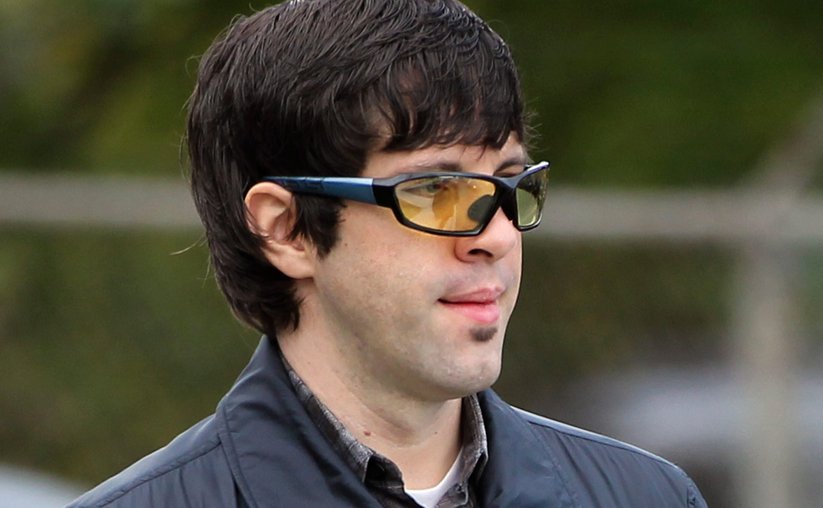
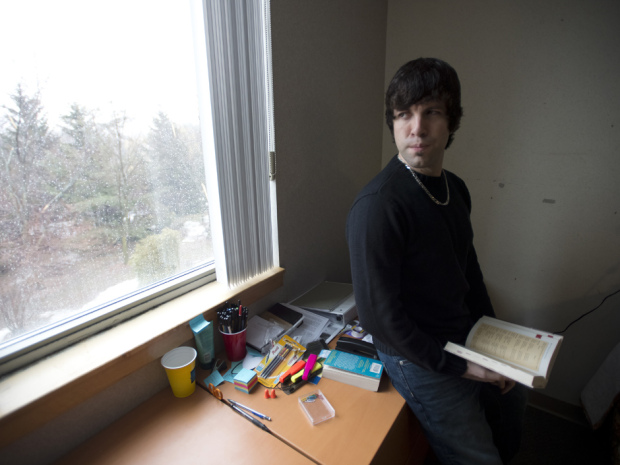
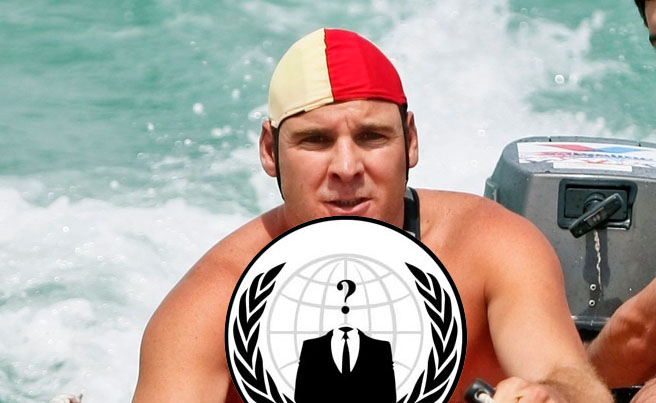
Anonymous radio host know as Lorax aka Adam Bennett Anon was arrested (full article).

Everybody who has known Adam ‘Lorax’ Bennett aka Adam Bennett Anon knows he’s an awesome anon. Furthermore, the article now let us know he was also involved in his local community as an experienced life saver and a fundraising manager for Cancer Support. This kind of person doesn’t belong in jail! He belong to it’s people. The people he give each day of is life to protect.

If you’ve know Lorax, or Adam John Bennett, now is the time to get involved and help!

https://twitter.com/Loraxlive/status/467566452015251456

Take action

Read the #FreeAnons press Releases : We are All Lorax
Read tweets and tweet with the #FreeLorax hash tag
Read this PasteBin
Keep posted for more information!

Articles about the arrest

Surf champ accused of hacking
“Anonymous” hackers charged for targeting Australia, Indonesia
‘Anonymous hacker’ in court in Perth
Hackers charged for targeting Australia, Indonesia
Two Australian Anonymous members arrested for hacking Australian and international websites
AFP arrests two alleged ‘Anonymous’ members

Was The Lorax Setup?

The lifesaving Lorax’s tale took an interesting turn the last few nights, as the internets and ircs were ablaze with controversy, flame wars, and a little good-ole-fashioned ‘he-said she-said.’ What was already looking like a classic tale of governmental overreach and the suppression of Adam John Bennett’s Civil-Rights is turning into a dark tale of deception, duplicity, and police-led treachery. While there was much argument among the anons present, one thing was very clear, the Australian government had tricked and deceived a minor in an unsuccessful attempt to lure the Lorax into a hacking scheme. Having failed in that they have continued to attempt to argue that the research work that he did at his job for a Cancer fighting charity that showed a clear problem with the same security protocol that the Australian Government was proposing using with it’s upcoming, Telecommunications (Interception and Access) Amendment (Data Retention) Bill 2014, plan for telecoms to keep their customer’s e-mail and phone metadata for two years.

Soon after Bennett began criticizing the plan there was an alleged hack into AATP (third-largest telecom in Australia) and the Indonesian government, Anonymous was blamed. The Government initially charged the Lorax and two hackers with the breach. After nearly a year of delays and continuations, the court announced that all of the charges for hacking by Bennett would be dropped, but replaced with obscure sounding charges like, “aiding and harassment.” It has become ever more clear that there wasn’t ever much of a case and the government is using Bennett’s bail restrictions to keep his LoraxLive show off of the air.

This dark tale really begins in 2011, even before the government started suggesting an ill-conceived data retention scheme, before anyone hacked AATP and the Indonesian government. Back in the heyday of lulzsec a 15 year-old hacker who we’ll call Hacker-Z (not his real hacker handle) was caught up in the glamour and prestige of the lulzsec-style direct-action hacking. Hacker-Z was like almost nearly ever teenage boy he wanted to listen to loud music and raise a little hell. That sounds anti-social perhaps, but when you see that the things that young hacktivists want to break are things like evil autocratic governments like Libya or Tunisia, or on-line bullying groups, that anti-social streak can begin to turn an odd shade of heroic on a young person. Apparently, according to general consent, it wasn’t hard for the same sort of Five Eyes investigators–who were at that same time acting as the nefarious Sabu’s puppet masters, in a separate scheme to entrap Anons–to get a hold of this inspired, if naive teenager.

Having entrapped the would-be activist with an illegal hacking scheme, they first terrified the lad and his mother with the prospect of nearly life in prison for his unsuccessful attempt, while being directed by undercover government agents, to hack government and military websites; according to some in the chatroom. Having scared his mother as best they could it was easy for the police to convince her to give consent for them to use their son as a mole to keep an eye on on-line hacktivists. Any mother if, confronted with the prospect of sending her only child to prison, for probably, the rest of his life would almost surely make the same decision. Having Hacker-Z as a mole worked well for the police apparently, he was generally reported to be a friendly, helpful, and affable young man. No one on this side of things is sure how much information he really got in his few years, probably, working for the police, but needless to say when he was arrested with the Lorax, many a hard drive was wiped, just in case.

It seems the feds kept Hacker-Z on ice until the day they needed him. That day came, apparently, during the summer of 2012, when the Australian Government first proposed the current anti-privacy legislation that they are quietly pushing through the legislature right now. When The Lorax caught wind of the Government’s plan he immediately saw the obvious problems with warehousing the entire Australian population’s personal web data. Even if the government could show an actual need for all of this personal, which they can’t, Bennett honed in on the first and most obvious problem, security. Eventually Bennett showed, at his workplace, while testing their server, that recent flaws found in OpenSSL, the so called “Heartbleed Bug” could eventually lead to losses of citizen’s personal data to criminals or terrorists, if the government continued with their data retention plan.

Seeing the problem the Lorax did what the Lorax does when the community is in danger; he warned people through his popular show, Lorax Live, whose archives, that haven’t been seized by the government, can be heard here and here. Obviously, the leaders and politicians backed by corporatism and fully vested in the telecom industry, couldn’t afford to have a lot people aware of or critical of their massive transfer of both citizen’s data and the nation’s wealth, in the form of fees paid by taxes, to the nation’s telecoms. No, classically, power becomes annoyed when confronted by truth, this story is no different.

By the Winter of 2012, as far as the Australian government and the Australian Federal Police were concerned; the Lorax had to be silenced. Later when they learned that, while at his job testing his employer’s server’s security, Bennett had discovered a way that the “Heartbleed Bug” might be used to access encrypted files on a server, the very sort of thing that privacy advocates had been screaming about ever since the government first suggested the data retention program, government agents hatched a plan to silence the Lorax.

The police knew that they would never convince a reputable, white-hat security researcher like Adam John Bennett to participate in a criminal attack on the internet’s infrastructure. It is rumored that the police devised a plan to implicate the Lorax without needing him to take part in any illegal activity. To do this, they gathered up their friendly young, unfortunate mole, Hacker-Z and sent him into an irc chat with the Lorax and had him plead with Bennett to give him, Hacker-Z, Bennett’s note’s from his research work on OpenSSL. The authorities, it seems, hoped that by obtaining information on how one might be able to attack encryption from the researcher they could implicate him in a crime and, at least, keep his radio show off the Internet until they got their data retention plans passed into law.

Perhaps more despicable than the government’s attempt frame and implicate a man are its motives, of depriving a citizen of his civil-rights, and its methods of abusing the criminal justice system through the attempted entrapment of an innocent man, and misuse of a citizen’s right to bail in order to silence a benign, but vocal critic of governmental corruption and malfeasance. This is not Syria or Zimbabwe where a critic can simply be tossed in a hole or executed by despots, in “free” societies, like Australia, you must design administrative and judicial straps with which to bind their tongues and hands to things like restrictive bail requirements or plea agreements, to trumped up or false charges. The critic is silenced, the powers-that-be have no blood on their hands, the media calls the former hero-of-the-people a villain, and whatever danger the critic was fighting against is forgotten. It’s all very civilized.

If the police were unaware of who they were dealing with or simply unfamiliar with the world of white-hats is unclear. Bennett did not give their mole any help or information, and not because he believed he was a mole. (As a white-hat researcher Bennett was well aware of cyber-crime and the need for enforcement in the field, it can assuredly be assumed then that he supports law-enforcement and legitimate undercover operations, but any thinking adult would have to wonder about the wisdom of using children as moles to bait and entrap adult criminals.) No, it is rumored that Bennett refused to help the boy, not because he believed he was working with police, rather he believed that the youth might be an impassioned young hacktivist who could possibly do something unwise or damaging with the information, something that might hurt others as well as get the lad in trouble with the law. Most likely, in Bennett’s mind, the young Hacker-Z would be better off waiting until the bugs in OpenSSL were fixed to get a look at the Lorax’s research notes.

Blown off course, but not sunk by the Adam John Bennett’s integrity, the Australian Government tried a new, indirect tack to get their entrapment scheme back on course. They would have Hacker-Z engage an intermediary, another White Hat researcher, someone the Lorax would trust. They found him in a passionate young researcher we’ll call Hacker-X. Hacker-X was known as a knowledgeable and helpful security expert. He had long been very helpful getting newbloods on the right track on-line and helping others secure their computer systems. Like a lot of hacker culture Hacker-X believes in education and the open-sharing of information, not to cause damage but to protect from damage.

Imagine you bought a lock for your front door, it’s a common lock, and there are many like it in your neighborhood. If there was a flaw in that lock that could allow criminals to enter your home then you would like to know about it, wouldn’t you? Of course you would, and it would be good for you to know so you could find a way to fix it or replace it, so the burglars can’t come in. Certainly, you wouldn’t want burglars to know about the flaw, but luckily the vast majority of humans aren’t burglars, likewise very few people interested in computer security are criminals. So, for a researcher such as Hacker-X to want to share something that could easily be used to help secure a network, is understandable and legal. It’s not clear if he already had possession of the notes from Lorax’s research into OpenSSL, or if he actually obtained them on behalf of Hacker-Z, regardless, sharing information about a weakness in an encryption protocol is not illegal, as the Australian Government’s delays and recent charge droppings indicate.

Whether the police were directly involved in or only supervising the alleged hacks on AATP and the Indonesian government isn’t clear, but it has become very clear that they never had any evidence against Adam John Bennett, the Lorax. In an extraordinary judicial move they have dropped all of the charges against Bennett, but have come up with ten new charges that, they claim they will commit to at his next hearing in June. While on one hand it is great to think that the Lorax may end up getting the justice he deserves in a dismissal of all charges at his next hearing, what is maddening is the obvious and bald faced way in which the Australian Government is misusing the criminal justice system to keep him Bennett on the restrictive bail terms that prevent him from broadcasting his show, LoraxLive and his protest about the government’s data retention plan.

Matt DeHart – Military, Programmer, Activist

Matt DeHart – Military, Programmer, Activist

The case of Matt DeHart, a former U.S. drone pilot turned hacktivist, is as strange as it is disturbing. The 29-year-old was recently denied asylum in Canada, having fled there with his family after — he claims — he was drugged and tortured by agents of the FBI, who accused him of espionage and child pornography.

Prosecutors have shown they’re willing to say anything to convict a hacktivist, even if it means lying

Last week the Canadian Border Services Agency said he will be deported to the U.S. to stand trial “in very short order,” after a Canadian Immigration and Refugee Board ruling earlier this month denying his request for refugee status. He is being denied access to two thumb drives that he says contain evidence of illegal acts perpetrated by a U.S. government agency. Now after three unsuccessful attempts to gain political asylum, he fears that he and the files will be delivered to the very government he sought to escape.

“I cannot imagine any life in a country which has already tortured me,” Matt DeHart told reporter Adrian Humphreys, whose astonishing five-part series in Canada’s National Post documents the bizarre case. “Am I now to be given into the hands of my torturers?”

It’s tempting to dismiss DeHart’s claims based on their sheer outlandishness and his equally outlandish attempts to defect to Russia and Venezuela, which he now says he regrets. But given President Barack Obama’s administration’s penchant for punishing hacktivists and whistleblowers, a disturbing decades-long trend of prosecutorial misconduct and the now established fact that the U.S. has, as Obama put it, “tortured some folks,” it’s clear that the U.S. government’s claims in this case warrant even more skepticism.

Matt DeHart

According to government documents, Matt DeHart admitted during an interrogation to becoming involved with a spy ring during his time as a drone pilot, agreeing to broker the sale of military secrets for up to $100,000 per month through a Russian agent in Canada. But he claims he was being drugged and tortured and simply made the story up.

“I would have told them anything,” he told The National Post of his encounter with the FBI agents, during which he was denied a lawyer. “Information that is derived from torture — to use it against somebody is ridiculous. It’s garbage. I already said it’s not true.”

He testified that the agents admitted the child porn charges were fabricated — a ruse to enable investigation into his involvement with the nebulous hacktivist collective Anonymous. He says the investigation stems from a file he uploaded twice to a hidden website, hosted on the anonymous Tor network from a server in his parents’ house. DeHart claims it contained evidence of government wrongdoing, “an FBI investigation into the [CIA’s] practices.” Screen shots of the WikiLeaks website found on his computer suggest he intended to send the file to the whistleblowing organization.

After the asylum ruling earlier this month, three courts — two in the U.S. and one in Canada — have expressed strong doubts about the child pornography charges that triggered a search warrant onMatt DeHart’s parents’ home in the U.S. Those accusations date to 2008 and stemmed from his association with two teenagers while playing the online game “World of Warcraft,” one of whom was also involved with Anonymous; the charges were ultimately not proved.

After DeHart was arrested while crossing from Canada to the U.S. in 2010, a judge in Bangor, Maine, found it odd that prosecutors were suddenly citing the two-year-old porn accusations and that police hadn’t analyzed Matt DeHart computers for illicit files seven months after they were seized. A judge in Tennessee, where Matt DeHart ‘s family lived before moving to Canada, admitted that “the weight of the evidence is not as firm as I thought it was.” And most recently, the Canadian Immigration and Refugee Board concluded there was “no credible or trustworthy evidence” that DeHart had solicited child porn.

Prosecutorial misconduct helps the government railroad journalists, whistleblowers, hacktivists and any who dare to speak truth to power.

To be sure, Matt DeHart strange behavior throughout this ordeal doesn’t place him in a particularly flattering light. But it’s worth noting that these kinds of serious accusations are often made in cases against hacktivists and whistleblowers, helping place them in the government’s crosshairs and paint them as nefarious even when the accusations are easily disproved.

Barrett Brown, a journalist who investigated links between the U.S. government and private intelligence contractors, had all manner of ridiculous false accusations thrown at him before being sentenced last month to five and a half years in prison. He was initially charged for the innocuous act of copying and pasting a hyperlink to a public file stolen by Anonymous from one chat room into another. The charge was dropped, but the linking was still used to increase the length of his sentence, despite the fact that prosecutors had no evidence Brown had looked at the file or even known what was in it.

At one point, prosecutors claimed that Brown conspired with members of Anonymous to overthrow the U.S. government. They also accused him of participating in “SWATting,” the practice of making fake 911 calls to harass people in their homes, and even of plotting with another journalist to hack the Bahraini government. Not one of these claims was supported by the voluminous collection of chat logs that the government provided as evidence. Nor did additional logs obtained by The Daily Dot, which the prosecution had withheld under seal.

Brown was not entirely without fault in the case, having obstructed a search warrant and posted a YouTube video threatening an FBI agent in response to the seizure of his laptops. But in retrospect, it seems clear the impetus for the case was that the government saw Brown’s investigations as a threat and would say anything to guarantee his conviction, even if that meant knowingly making false statements. As Brown put it during his allocution, “This is not the rule of law … It is the rule of law enforcement.”

Close scrutiny

What can we expect from the Matt DeHart case if this is the prosecutorial legacy it follows?

As The New York Times editorial board recently noted, defendants have no recourse when police and prosecutors lie, cheat and conceal evidence in the courtroom, leading to what one federal judge has described (PDF) as a national epidemic of prosecutorial misconduct. Sometimes it leads to wrongful convictions. Other times, as in Brown’s case, it helps the government railroad journalists, whistleblowers, hacktivists and any who dare to speak truth to power.

Remember Aaron Swartz, an information activist who prosecutors pursued vigorously for the act of downloading too many academic articles from an MIT library? Much like in Brown’s case, prosecutors were accused of withholding evidence and coercing Swartz into taking a guilty plea. Swartz committed suicide in 2013 amid mounting legal costs and the possibility of up to 35 years in prison, triggering the DeHarts’ decision to flee the country.

“Aaron Swartz had very similar psychological makeup, similar age, same circumstances as Matt DeHart,” DeHart’s father, Paul DeHart, a retired U.S. Air Force major, told The National Post. “I do not want to wake up one day and find my son hanging from a rope in the garage of our house. And I have noplace to go to bring this to anyone’s attention.”

With Matt DeHart’s attempted defections and other erratic behavior, it’s admittedly difficult to determine where his true intentions lie. But the government’s actions against him have been just as sketchy, if not more so. His claims must be taken seriously, and his case should be closely scrutinized, lest another potential whistleblower fall prey to the state’s merciless war on leaks.

by Joshua Kopstein, a cyberculture journalist and researcher from New York City. His work focuses on Internet law and disorder, surveillance and government secrecy.


The Paypal 14 – Activists

The Paypal 14 – Activists

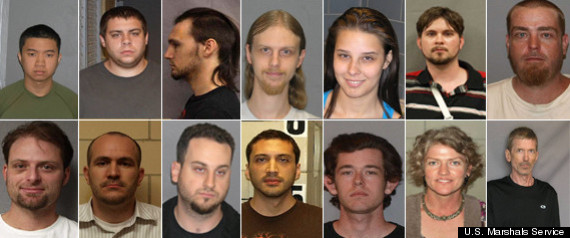
The-Paypal-14The PayPal 14 are a group of defendants allegedly connected with the hacktivist group Anonymous, thirteen of whom pled guilty in a San Jose court in California, United States in December 2013, to charges of conspiring to disrupt access to the PayPal payment service.are a group of defendants allegedly connected with the hacktivist group Anonymous, thirteen of whom pled guilty in a San Jose court in California, United States in December 2013, to charges of conspiring to disrupt access to the PayPal payment service.are a group of defendants allegedly connected with the hacktivist group Anonymous, thirteen of whom pled guilty in a San Jose court in California, United States in December 2013, to charges of conspiring to disrupt access to the PayPal payment service.are a group of defendants allegedly connected with the hacktivist group Anonymous, thirteen of whom pled guilty in a San Jose court in California, United States in December 2013, to charges of conspiring to disrupt access to the PayPal payment service.The-Paypal-14The PayPal 14 are a group of defendants allegedly connected with the hacktivist group Anonymous, thirteen of whom pled guilty in a San Jose court in California, United States in December 2013, to charges of conspiring to disrupt access to the PayPal payment service.are a group of defendants allegedly connected with the hacktivist group Anonymous, thirteen of whom pled guilty in a San Jose court in California, United States in December 2013, to charges of conspiring to disrupt access to the PayPal payment service.are a group of defendants allegedly connected with the hacktivist group Anonymous, thirteen of whom pled guilty in a San Jose court in California, United States in December 2013, to charges of conspiring to disrupt access to the PayPal payment service.are a group of defendants allegedly connected with the hacktivist group Anonymous, thirteen of whom pled guilty in a San Jose court in California, United States in December 2013, to charges of conspiring to disrupt access to the PayPal payment service.

Christopher Doyon – Hacker

Christopher Doyon – Hacker

Christopher-DoyonChristopher Doyon Chris Doyon (alias “Commander X”), a self-described leader ‘within’ Anonymous, was arrested in September 2011 for a cyberattack on the website of Santa Cruz County, California. He jumped bail in February 2012 and fled across the border into Canada.(alias “Commander X”), a self-described leader ‘within’ Anonymous, was arrested in September 2011 for a cyberattack on the website of Santa Cruz County, California. He jumped bail in February 2012 and fled across the border into Canada.(alias “Commander X”), a self-described leader ‘within’ Anonymous, was arrested in September 2011 for a cyberattack on the website of Santa Cruz County, California. He jumped bail in February 2012 and fled across the border into Canada.(alias “Commander X”), a self-described leader ‘within’ Anonymous, was arrested in September 2011 for a cyberattack on the website of Santa Cruz County, California. He jumped bail in February 2012 and fled across the border into Canada.(alias “Commander X”), a self-described leader ‘within’ Anonymous, was arrested in September 2011 for a cyberattack on the website of Santa Cruz County, California. He jumped bail in February 2012 and fled across the border into Canada.Chris Doyon (alias “Commander X”), a self-described leader ‘within’ Anonymous, was arrested in September 2011 for a cyberattack on the website of Santa Cruz County, California. He jumped bail in February 2012 and fled across the border into Canada.(alias “Commander X”), a self-described leader ‘within’ Anonymous, was arrested in September 2011 for a cyberattack on the website of Santa Cruz County, California. He jumped bail in February 2012 and fled across the border into Canada.(alias “Commander X”), a self-described leader ‘within’ Anonymous, was arrested in September 2011 for a cyberattack on the website of Santa Cruz County, California. He jumped bail in February 2012 and fled across the border into Canada.(alias “Commander X”), a self-described leader ‘within’ Anonymous, was arrested in September 2011 for a cyberattack on the website of Santa Cruz County, California. He jumped bail in February 2012 and fled across the border into Canada.(alias “Commander X”), a self-described leader ‘within’ Anonymous, was arrested in September 2011 for a cyberattack on the website of Santa Cruz County, California. He jumped bail in February 2012 and fled across the border into Canada.

Jake Davis – Hacker

Jake Davis – Hacker

Jake-DavisJake Davis Topiary, real name Jake Leslie Davis, born October 27, 1992, is a former hacker. He has worked with Anonymous, LulzSec, and similar hacktivist groups.Topiary, real name Jake Leslie Davis, born October 27, 1992, is a former hacker. He has worked with Anonymous, LulzSec, and similar hacktivist groups.Topiary, real name Jake Leslie Davis, born October 27, 1992, is a former hacker. Jake Davis He has worked with AnonyJake-DavisJake Davis Topiary, real name Jake Leslie Davis, born October 27, 1992, is a former hacker. He has worked with Anonymous, LulzSec, and similar hacktivist groups.Topiary, real name Jake Leslie Davis, born October 27, 1992, is a former hacker. He has worked with Anonymous, LulzSec, and similar hacktivist groups.Topiary, real name Jake Leslie Davis, born October 27, 1992, is a former hacker. He has worked with Anonymous, LulzSec, and similar hacktivist groups.Topiary, real name Jake Leslie Davis, born October 27, 1992, is a former hacker. He has worked with Anonymous, LulzSec, and similar hacktivist groups. Jake DavisJake Davis Topiary, real name Jake Leslie Davis, born October 27, 1992, is a former hacker. He has worked with Anonymous, LulzSec, and similar hacktivist groups.Topiary, real name Jake Leslie Davis, born October 27, 1992, is a former hacker. He has worked with Anonymous, LulzSec, and similar hacktivist groups.Topiary, real name Jake Leslie Davis, born October 27, 1992, is a former hacker. He has worked with Anonymous, LulzSec, and similar hacktivist groups.Topiary, real name Jake Leslie Davis, born October 27, 1992, is a former hacker. He has worked with Anonymous, LulzSec, and similar hacktivist groups. Jake DavisJake Davis Topiary, real name Jake Leslie Davis, born October 27, 1992, is a former hacker. He has worked with Anonymous, LulzSec, and similar hacktivist groups.Topiary, real name Jake Leslie Davis, born October 27, 1992, is a former hacker. He has worked with Anonymous, LulzSec, and similar hacktivist groups.Topiary, real name Jake Leslie Davis, born October 27, 1992, is a former hacker. He has worked with Anonymous, LulzSec, and similar hacktivist groups.Topiary, real name Jake Leslie Davis, born October 27, 1992, is a former hacker. He has worked with Anonymous, LulzSec, and similar hacktivist groups. Jake Davis

Jeremy Hammond – Hacker, Activst

Jeremy Hammond – Hacker, Activst

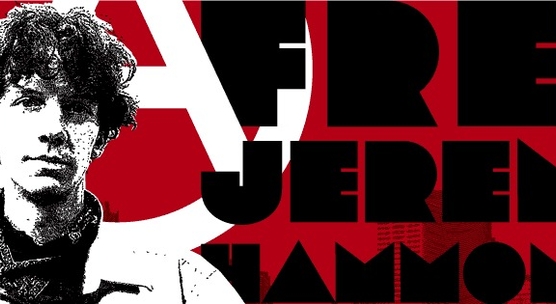
Jeremy-HammondJeremy Hammond is a political activist and computer hacker from Chicago. He was convicted and sentenced in November 2013 to 10 years in US Federal Prison for hacking the private intelligence firm Stratfor and releasing the leaks through the whistleblowing website WikiLeaks. political activist and computer hacker from Chicago. He was convicted and sentenced in November 2013 to 10 years in US Federal Prison for hacking the private intelligence firm Stratfor and releasing the leaks through the whistleblowing website WikiLeaks. political activist and computer hacker from Chicago. He was convicted and sentenced in November 2013 to 10 years in US Federal Prison for hacking the private intelligence firm Stratfor and releasing the leaks through the whistleblowing website WikiLeaks.Jeremy-HammondJeremy Hammond is a political activist and computer hacker from Chicago. He was convicted and sentenced in November 2013 to 10 years in US Federal Prison for hacking the private intelligence firm Stratfor and releasing the leaks through the whistleblowing website WikiLeaks. political activist and computer hacker from Chicago. He was convicted and sentenced in November 2013 to 10 years in US Federal Prison for hacking the private intelligence firm Stratfor and releasing the leaks through the whistleblowing website WikiLeaks. political activist and computer hacker from Chicago. He was convicted and sentenced in November 2013 to 10 years in US Federal Prison for hacking the private intelligence firm Stratfor and releasing the leaks through the whistleblowing website WikiLeaks.Jeremy-HammondJeremy Hammond is a political activist and computer hacker from Chicago. He was convicted and sentenced in November 2013 to 10 years in US Federal Prison for hacking the private intelligence firm Stratfor and releasing the leaks through the whistleblowing website WikiLeaks. political activist and computer hacker from Chicago. He was convicted and sentenced in November 2013 to 10 years in US Federal Prison for hacking the private intelligence firm Stratfor and releasing the leaks through the whistleblowing website WikiLeaks. political activist and computer hacker from Chicago. He was convicted and sentenced in November 2013 to 10 years in US Federal Prison for hacking the private intelligence firm Stratfor and releasing the leaks through the whistleblowing website WikiLeaks.

Recommendations for the Hacktivist Community

Recommendations for the Hacktivist Community

Statement of Purpose

I have been observing the hacker and hacktivist communities, at times very
closely, for many years. The exact definition of “hacker” and “hacktivist”
varies from author to author, so I shall make my interpretation of these words
very clear. Let us define a “hacker” as someone who utilizes their knowledge of
computers and of computer networks to make money via illegitimate means. Let us
define a “hacktivist” as someone who utilizes their knowledge of computers and
of computer networks to do justice when justice is not done by the state. I
have found that these two communities are inextricably linked, yet remain
completely separate entities. Many hackers double as hacktivists in their spare
time, although most hacktivists do not fancy themselves hackers.

Although hackers turned hacktivists have the very best of intentions, and their
input and expertise is of great value to the hacktivist community, they have
inadvertently suppressed the potential of the very community they are trying to
aid. The get-in-get-the-goods-get-out methodology of the stolen credit card
driven hacker community that has been transfered to the hacktivist community
via ideological osmosis has tragically affixed blinders to it. It has caused
the hacktivist community to think linearly and strive to do nothing more than
to blindly infiltrate target organizations and immediately leak whatever data
they happen to stumble across. This must change. Stealing and leaking data
makes a point, but it is sometimes necessary to do more than just make a point,
to inflict real, measurable damage. In certain, extreme cases an organization’s
disregard for human rights warrants its immediate and complete obliteration.

In this essay, I will discuss a multitude of ideological, operational, and
technical changes that ought to be made to the hacktivist community. These
proposed changes have been derived from my personal observations. Some will
find the ideas contained within this document to be the product of common
sense. I have found these people to be few in number. If the community accepts
my suggestions it will not only become more effective, but the risks associated
with participating in it will be drastically lowered. My intent in writing this
is not to aid criminals, but rather to aid people who wish to do battle with
governments and corporations that have become criminals. If freedom is to
remain on this earth, its people must be willing and able to take arms to
defend it, both physical and digital.

faceless-men


Personal Security

Sound operational security is the foundation from which all effective
cyber-offensives are launched. You should, at all times, put your own, personal
security above the success of your operations and interests. The security
precautions taken by most hacktivists I have met are mediocre at best, and
needlessly so. Maintaining sound personal security is by no means difficult. It
requires much caution but very little skill. I have devised a series of
security precautions that hactivists should take and divided them up into six
main categories: environmental, hardware, software, mental, pattern related,
and archaeological. We shall examine each individually.

(1) Environmental:

There are but two places you can work: at home or in public. Some people insist
that working at home is best and others insist that working in public is best.
The proper working environment debate has been raging on in the hacker
community for quite some time now, and has great relevance to the hacktivist
community, as most governments view hackers and hacktivists as one in the same.
Proponents of the “work in public” argument claim that by always working at a
different public location, you significantly lower your chances of being
apprehended. They argue that even if the authorities are able to trace many of
the cyber-attacks you took part in back to the public places where you took
part in them from, that does not bring them any closer to finding you. Most
retail stores and coffee shops do not keep surveillance footage for more than a
year at the most, and even if the authorities are able to get a photo of you
from some security camera, that does not necessarily lead them directly to your
front door, especially if you wore a hoody the entire time you where working
and the camera never got a clear shot of your face. On the other hand,
proponents of the “work at home” argument argue that the risk of being seen and
reported, or merely recorded while working in a public place far outweighs the
benefits of the significantly large increase in anonymity that working in
public provides. Both sides have legitimate points, and I urge you to consider
both of them.

If you decide to work in public, the number one threat you face is other
people. Numerous large criminal investigations have been solved using the
observations of average everyday citizens who just happened to remember seeing
something suspicious. If people sense that you are trying to hide something,
they will watch you more closely than they would otherwise. It is important to
always “keep your cool” as the old saying goes. Always try to sit in such a way
that your screen is facing away from the majority of the people in the room you
are sitting in. Corners are your friend. Try to blend in with the crowd. Dress
in plain cloths. Draw no attention. If you are in a coffee shop, sip some
coffee while you work. If you are in a burger joint, buy a burger. If you are
in a library or book store, set a few books beside your laptop. Also, be very
aware of security cameras, both inside the establishment you are working in as
well as on the street near it. Being captured on film is alright as long as the
camera can not see what is on your screen. Some store cameras are watched by
actual people who will undoubtedly report you if they find out what you are
doing. More and more governments are starting to place very high quality CCTV
cameras on their streets to monitor their citizens, and these devices can be a
problem if they are peering over your shoulder through a window you are sitting
beside. When working in public, it is possible that you may have to confront a
law enforcement officer face to face. Law enforcement officers can smell
uneasiness from a mile away, and if you look like you are up to no good it is
possible that a cop will come and talk to you. Always have some sort of cover
story made up before you leave home to explain why you are where you are. If
you are forced to confront a law enforcement officer you should be able to talk
your way out of the situation.

If you decide to work at home, the number one threat you face is your own ego.
Just because you are at home does not mean that your working environment is
secure. Be aware of windows in close proximity to your computer as well as your
security-illiterate or gossipy family members. Security issues in relation to
network configuration begin to come into play when you work at home. If your
computer were to somehow get compromised while you are working at home,
perhaps by your government, it would be nearly impossible for the person or
group of people rummaging around inside of your system to get your actual IP
address (provided that you adhere to the software security guidelines that we
will discuss later). However, if your wi-fi password (or the name of your
printer, or the name of another computer on the network) contains your actual
last name and part of your address, tracking you down becomes very easy. A lot
of people name their network devices and structure their network passwords in
this way.

It is also possible that if an attacker that has infiltrated your computer
notices other machines on your network they can pivot to them (infect them with
malware using your computer as a spring board of sorts) and use them to get
your IP address. A lot of Internet enabled household devices have cameras on
them (your smart TV, your Xbox, and your high tech baby monitor to name a few)
and said cameras can potentially be leveraged against you. It is in your best
interest to not have any other machines running on your home network while you
are working. Also, change your wi-fi password every once in awhile and make
sure that the password on the administrative interface of your router is
something other than the out-of-the-box default. If your computer gets
compromised, logging into your router using username “admin” and password
“admin” is elementary for a moderately skilled attacker. Most modern routers
list their WAN IP address on their control panels.

Regardless of where you decide to work, be aware of mirrors and glass picture
frames near your workplace. In the right light, both of these items have the
potential to reflect crystal clear images of your screen to onlookers across
the room. In addition to this, understand that modern cell phones are your
worst enemy. Not only are they always going to be the weakest link in your
security setup, but if they are somehow compromised they are equipped with a
camera and microphone. Recent studies suggest that it is possible for smart
phones to listen to the high pitched noise your CPU makes and deduce your PGP
private key. Furthermore, the metadata collected by your phone coupled with
pattern analysis techniques could potentially allow your government to link
your real life and online personas together after some time. We will discuss
this in depth later. Leave your phones at home and if possible keep all phones,
yours or otherwise, far away from your computer. Other portable devices such as
iPods and tablets potentially pose the same risk that phones do and should be
treated the same.

(2) Hardware:

Modern computers come equipped with microphones, speakers (which can be used as
microphones under the right circumstances), and cameras. All of these features
can potentially be leveraged to identify you if your computer is compromised.
To mitigate these risks, these features should be physically removed. Your
computer’s microphone and speakers should be ripped out of it, but you should
not rip out your web cam, as it will alter the outward appearance of your
computer and potentially draw attention to you. Instead, open your computer’s
screen and snip the wires that connect to your web cam. Wrap the ends of the
wires in electrical tape so sparks do not jump in between them. If you must
listen to an audio file while working, use headphones. Only keep your
headphones plugged into your computer when you are using them. The computer you
use for your hacktivist activities also should not contain a hard drive, as
they are unnecessary for our purposes.

(3) Software:

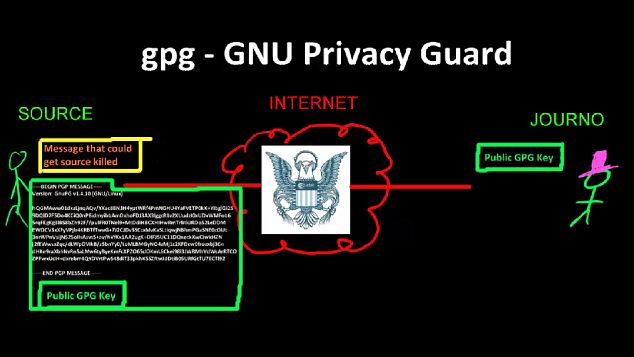
Always use a TOR enabled Linux live system when working. At the present moment,
Tails (The Amnesiac Incognito Live System) is by far the best live distribution
for your purposes. You can read more about TOR at www.torproject.org and you
can read more about acquiring, setting up, and using Tails at tails.boum.org.
The Tails operating system lives on a USB flash drive. Every time you start up
your computer, you must first insert your Tails flash drive into it. The Tails
website will guide you through making said flash drive. Tails will
automatically direct all of your outgoing traffic into the TOR network in an
effort to hide your IP address. If you use Tails you will be completely
anonymous and be able to work with impunity provided that:

* You keep your Tails USB up to date. New versions of the Tails
operating system are released every few months.

* You do not login into your “real world” accounts while using Tails.
Do not check your Twitter feed while you are working.

* You do not use Tails to create an account with an alias that you have
used before. If you have been “0pwn” for the past seven years, now
is a good time to stop being 0pwn.

* You do not alter Tails’ default security settings. They are the way
they are for a reason.

* You do not use Tails to create an online account with a password that
you have used before. Doing this only makes deanonymizing you easier.

* You do not install and use random packages that “look cool”; they
could be miscellaneous. Only use packages and scripts that you trust.
Tails is not bullet proof.

* If you decide to set a sudo password when starting up Tails, make
sure that it is very strong.

* You stay conscious of metadata analysis techniques. We will discuss
these later.

* You switch exit nodes every ten to fifteen minutes. This can be done
by double clicking the little green onion in the upper right hand
corner of your Tails desktop and hitting the “Use a New Identity”
button.

* You follow the communication guidelines laid out later in this
document.

More information can be found on the Tails warning page: https://tails.boum.org/
doc/about/warning/index.en.html. Be aware that it is very easy for your ISP
(which is probably working closely with your government) to tell that you are
using both TOR and Tails. It is probably in your best interest to use something
called “TOR bridge mode”. You can read more about how to configure Tails to
use TOR bridges here: https://tails.boum.org/doc/first_steps/startup_options/
bridge_mode/index.en.html.

Tails is unique in that it has a special feature that wipes your computer’s
memory before it shuts down. This is done in order to mitigate risks associated
with the dreaded “cold boot attack” (a forensics method in which a suspects RAM
is ripped out of his or her computer and then thrown into a vat of liquid
nitrogen to preserve its contents for later analysis). This feature is also
triggered if you pull your Tails flash drive out of your computer while you are
working. If while you are working you ever feel that the authorities are about
to move in on you, even if you have a seemingly irrational gut feeling, yank
your Tails flash drive out of your computer. Tails also has a feature that
allows it to disguises itself as a Windows desktop. Using this feature in
public will reduce your risk of capture significantly.

(4) Mental:

A skilled attacker is well disciplined and knows that he must keep his actions
and skills a secret in order to remain safe from harm. Do not flaunt the fact
that you are dissatisfied with your government, a foreign government, or a
particular corporation. Do not attend protests. Do not publicly advertise the
fact that you have an above average aptitude for computer security offensive or
otherwise. And whatever you do, do not tell anyone, even someone you think you
can trust, that you are planning to launch an organized cyber-attack on any
organization, big or small. If you draw attention to yourself no amount of
security precautions will keep you safe. Keep your “real” life mentally
isolated from your “hacktivist” life. One lapse in operational security could
end you.

Be alert and focused. Remain mentally strong. Come to terms with the illegality
of your actions and what will happen to you if you are apprehended. As a wise
man once said, “A warrior considers himself already dead, so there is nothing
to lose. The worst has already happened to him, therefore he’s clear and calm;
judging him by his acts or by his words, one would never suspect that he has
witnessed everything.” It is perfectly acceptable to be paranoid, but do not
let that paranoia consume you and slow your work. Even if you are extremely
cautious and follow this document’s advice to the letter, you still may be
hunted down and incarcerated, tortured, or killed. Some countries do not take
kindly to hacktivists. It is best that you be honest with yourself from the
beginning. In order to operate effectively you must be able to think clearly
and see the world as it actually is.

(5) Pattern Related:

When your online persona is active your real life persona ceases to exist, and
an observant adversary can use this to their advantage. If your ISP, bank, and
mobile phone provider are “cooperating” with your government and allowing them
to browse through all of their records (a fair assumption in this day and age)
then, eventually, they will be able to deduce your real identity by comparing
everyone’s data to information about your online persona. If the government
looks backs on all of the records they have collected in the past year and
notice that you never make a credit card purchase, watch Netflix, go on your
Facebook, Google, or Twitter account, or change your physical location while
1337Hax0r64 is online on some anti-government forum on the deep web, they will
assume that you are 1337Hax0r64. Even information about your home network’s
bandwidth usage can give away your real identity.

Luckily, performing the type of metadata analysis attack described above takes
time, usually many months. It is very important that you change aliases often,
preferably every three or four months. Shed your old names like a snake sheds
its skin. When you do change your online name, make sure your new identity
can not be tied back to your old one.

DO NOT not launch cyber-attacks from your own computer. Launch attacks only
from hacked servers, servers purchased with washed bitcoins, or free shell
accounts. Certain types of cyber-attacks produce a large amount of traffic over
a short amount of time. If the bandwidth usage of your home network spikes at
the same instant that a government or corporate server is attacked, the time it
takes to deanonymize you is reduced significantly. This is especially true if
you launch multiple attacks on multiple occasions. Launching attacks in this
way can be mentally exhausting. Configuring a new attack server with your tool
set every time your old attack server is banned (an inevitable occurrence) can
be a tedious task indeed. I personally recommend creating a bash script to
automatically install your favorite tools to make this transition process
easier. Most hackers and offensive security professionals use under thirty
non-standard tools to do their job, so configuring a new server with everything
you need should not take very long if you know what you are doing. Consider
equipping your server with TOR and a VNC server (for tools that require GUIs
such as most popular intercepting proxies) as well.

(6) Archaeological:

You must insure that there is no forensics evidence of your actions, digital or
otherwise. If the government breaks into your house and rummages through your
things, they should find nothing interesting. Make sure that you never make any
physical notes pertaining to your hacktivist activities. Never keep any
computer files pertaining to your hacktivist activities in your home. Keep all
of your compromising files, notes, scripts, and unusual attack tools (the ones
that can not be installed with apt-get or the like), and stolen information in
the cloud. It is recommended that you keep all of your files backed up on
multiple free cloud storage providers so that in the event that one of the
providers bans your account you still have all of your data. Do not name your
cloud accounts in such a way that they can be connected back to your online
persona. Never, under any circumstances, mention the names or locations of your
cloud accounts to the people you work with. Always hit the “Use New Identity”
button on your TOR control panel after accessing your cloud storage solutions.
Every time you shed your old alias, shed your old cloud accounts.

Security of Communications

The majority of hacktivists I have met communicate via public IRC. Using IRC is
fine for meeting other hacktivists, but as soon as you muster a team of other
hacktivists who wish to attack the same target as you, move to another more
secure form of communication. Some means of communication are more secure than
others, but completely secure communication does not exist. The following
guidelines are meant to work in conjunction with the personal security
guidelines that where discussed in the previous section. If proper personal
security measures are implemented effectively, compromised communication will
result in operational failure at worst and not complete deanonymization. Since
operational failure may very well set you and your cause back several months,
it is in your best interest to attempt to communicate securely:

* Remember that any of the people you meet on the clearnet, deep web,
or public IRC channels who claim to be on your side could actually
be government agents trying to sabotage your operations.

* If possible, communicate mainly via privacy friendly email accounts
(not Gmail, Yahoo, AT&T, etc.) and encrypt all of your messages with
PGP. When a cyber-attack is being carried out it is often necessary
to be able to communicate with your accomplices instantaneously.
Since encrypting, sending, receiving, and decrypting messages by hand
takes time, using PGP in time sensitive situations like this is not
feasible. If you have to confer in an IM environment, use a program
like TorChat that uses its own form of asymmetric encryption to send
and receive messages instantly.

* Use strong passwords for all of your online accounts. The best way to
make a strong password is to pick eight or nine random words and
string them together. Passwords like this are easy to remember but
hard to guess.

* Never give away any personal information (such as country, interests,
hobbies, health, etc.) or give insight into your feelings or
emotions. Your fellow hacktivists are not your friends and should
never be talked to as such. Giving away this sort of information will
make tracking you easier.

* When you receive messages, do not retain them, even if they are
encrypted. Read them, make note of any hard to remember details
(like long server passwords for example), and then delete them.
Having a mile long digital paper trail can not lead to anything good.
In some cases deleted messages on email serves can be recovered via
computer forensics, but deleting messages quickly may reduce the odds
that they can be.

* When typing messages, do so in a word processor on your computer.
Never write your message inside of a communication program (such as
an online email client, forum PM box, etc.). People have been known
to accidentally send unencrypted messages before. The effects of such
an error can be devastating.

* If you find yourself writing large swaths of text intended for public
release (like essays or manifestos) use a tool like Anonymouth to
obscure your writing style. Your writing style is as unique as a
finger print and can be used to identify you.

* Never, under any circumstances, execute a file on your computer or on
your server that has been given to you by a fellow hacktivist. You
should never run into a situation where doing this is necessary.

* Do not disclose information about your involvement in previous
hacktivist operations to people who where not also part of the same
operation.

* If one of the people that you are working with gets captured, assume
that the people who have captured them know everything that they do.

Philosophy of Attacking

The hacktivist community, like every community, has its own unique set of
philosophical musings, taboos, and dogmas. While I do not advocate the severe
alteration of the principles and philosophies on which the community was built,
I do wish to point out a number of flaws in certain aspects of their
composition. These flaws serve only to hold back the community and should be
openly discussed.

(1) When hacktivists target an organization, their goal is more often than not
to force said organization to stop functioning permanently, or at least for the
longest time possible, in an effort to stall unjust actions from being carried
out or to seek retribution for unjust actions done in the past. Leaking
databases, DoXing influential individuals, defacing websites, and launching
massive DDoS campaigns, four of the modern hacktivist community’s favorite
activities, accomplish this goal – to an extent. Infiltrating a target
organization and sowing discord within its ranks is magnitudes more effective
than leaking credit card numbers or putting a CEO’s social security number on
Pastebin, yet it is rarely, if ever, considered to be a viable course of
action. Subtly and silently fostering suspicion and distrust inside of your
target will have a longer lasting impact than simply pointing out that its
security policy has some weak points.

(2) Hacktivists crave publicity, yet they are the most effective when they
operate undetected. Stay hidden. Although it may seem tempting at times, do not
destroy large amounts of information on your target’s computers or servers.
Doing so will announce your arrival inside of your target’s network rather
loudly. Flashy, public displays of power have no place in the hacktivist
community. Just because you are hiding behind TOR does not mean that you should
not make an effort to cover your tracks. Conceal your attack not to mask your
identity, but to convince your target that no attack was carried out in the
first place.

(3) Once your hacktivist collective has decided to attack an organization,
strike fast and strike hard. Overwhelm your target. A well disciplined and well
organized team of attackers can penetrate most networks within a few hours.
Far too often I have seen hacktivist collectives declare all out war on someone
and then attack them slowly and gain entry into their network days, sometimes
even weeks later. By attacking slowly, you give your target time to react and
strengthen their defenses. Detecting an attack from a large hacktivist
collective is a trivial task, but as history has shown detecting the presence
of one inside of a network, especially a large network, can be tricky.

(4) Cyber-attacks seldom go as planned. If you are attempting to do anything
that involves the coordination of more than two people, keep this in mind. It
is not uncommon for tools to stop working in the middle of an attack. It is not
uncommon for reverse shells to die unexpectedly. It is not uncommon for
seemingly simple actions to take hours to perform. You must be ready to think
on your feet and quickly adjust your attack plan to accommodate the ever
changing conditions within the network you are attacking. Predefined
contingency plans are mostly useless.

(5) Remember that no system is impenetrable. On more than one occasion I have
seen hacktivists give up on trying to infiltrate a target network because their
Nessus scan did not yield any useful results. As a hacktivist, you are not
bound by the typical constraints of a pentester. If you can not successfully
attack a website, try attacking its hosting provider. Try attacking the
administrator’s email account. Try going after random social accounts belonging
to the administrator’s family. Try planting iframes in websites you suspect the
administrator frequents in an effort to infect him. If you cause extensive
collateral damage, who cares? It is not your problem. Sometimes the ends
justify the means. Be creative.

(6) Many hacktivists possess unrealistic, self-constructed mental images of the
ideal cyber-attack. In the majority of these movie-induced delusions, the ideal
attack utilizes numerous 0days, an arsenal of home made tools, and highly
advanced, unimaginably complex network intrusion techniques. In reality, this
type of thinking is incredibly dangerous and causes some hacktivists to attempt
to perform convoluted, elaborate attacks to gain the respect of their peers.
When breaking into highly secured networks, such attacks only draw unnecessary
attention. The best attacks are the ones that work. They are usually simple and
take little time to execute. Using sqlmap to spawn a shell on your target’s
server by exploiting a flaw in their website’s search feature is a viable if
not ideal attack. It allows you to access the inside of your target’s network.
Exploiting a vulnerable FTP daemon on one of your target’s servers using public
exploit code is a viable if not ideal attack. It allows you to access the
inside of your target’s network. Using Metasploit in conjunction with a fresh
Gmail account to launch a phishing campaign against your target’s employees is
a viable if not ideal attack. It allows you to access the inside of your
target’s network. The media hates it when hacktivists use open source software
to do their work. Whenever a hacker or hacktivist is arrested for doing
something that involved using “someone else’s” tools, they are publicly
shammed. “Anyone could have done that” they say. “He’s just an unskilled script
kiddie” they say. Claiming that someone is less of a hacker solely because they
partially depend on someone else’s code borders on absurd. It amounts to
claiming that Picasso is a bad artist because he did not carve his own brushes,
synthesize his own paints, and weave his own canvas. Do not shy away from using
open source tools and publicly available information to accomplish your goals.
Hacking is an art, and nmap is your brush.

Organization and Formation

Most of the hacker and hacktivist groups I have observed are unorganized and
undisciplined. They claim to perform actions as a collective, yet when it comes
time to actually launch an attack they attempt to infiltrate their targets as
individuals, each member launching attacks of their own without making the
faintest attempt to coordinate their actions with others. Here I shall describe
a schema that could be easily adopted by any hacktivist collective to allow it
to facilitate highly coordinated attacks involving large numbers of attackers
with great ease. It will be presented as a series of steps.

Step One: Organize yourselves into multiple small groups. These groups shall be
referred to as strike teams. The ideal strike team is composed of three parts
attack specialists, two parts social engineering specialists. Attack
specialists should at least be able to identify and competently exploit
potential vulnerabilities in websites and be able to exploit vulnerable or
misconfigured services. Social engineering specialists should have at least
some real world experience before participating in a strike team. Attack
specialists should only concern themselves with launching attacks and social
engineering specialists should only concern themselves with social engineering.
Well-defined roles are the key to a strike team’s success. This configuration
will often create an abundance of social engineering specialists, and that is
perfectly acceptable. Having the capability to immediately launch multiple well
planned social engineering campaigns is crucial. The size of a strike team
will be determined by the skill of its members. Highly skilled individuals
should work in very small strike teams (five member teams are acceptable)
whereas unskilled individuals should work in larger strike teams (up to a few
dozen). The organization of strike teams should be coordinated as a collective.
No one person should be given the authority to sort people themselves. Strike
teams should function as “sub collectives” and be autonomous. Hacktivist
collectives are composed of people around the world, most of whom can not be
online all the time. This means that all strike teams should set themselves up
knowing that their members will pop on and offline and that it is possible new
members will have to be annexed at a later time.

Step Two: Within each strike team, agree upon a stratagem; a broad, realistic,
nonspecific plan of action that aims to accomplishes one, very specific goal.
Strike teams should only execute one stratagem at a time. Multiple strike teams
within the same hacktivist collective can execute different stratagems at the
same time in an effort to accomplish some sort of final goal (perhaps to
destabilize an organization or to acquire trade secrets). The next section of
this essay is devoted solely to exploring the concept of stratagems and how to
best form and use them. Strike teams should be allowed to do what they want,
but their initial stratagem should be approved by the collective so that no two
strike teams attempt to do the same thing at the same time.

Step Three: As a strike team, map your target’s attack surface. If multiple
strike teams are all attacking the same network, they should share information
very closely in this step. It is very possible that multiple strike teams
working together to accomplish the same goal could actually be attacking
different networks, in which case mapping should be done within individual
strike teams. Each member of a given strike team should attempt to map the
target network themselves, and then members should compare information. It is
very unlikely that anything will be overlooked by every single member of the
team.

Step Four: Divide your target network up into manageable chunks and assign
certain individuals within your team to each one of those chunks. Efficient
devision of labor is key to launching speedy attacks. Here is an example
involving a network composed of four servers (two SQL servers, a DNS server,
and a web server hosting a feature rich corporate site) and a strike team
composed of six attack specialists and four social engineering specialists:

* Have one attack specialist attack the SQL and DNS servers.

* Have one attack specialist attack the website’s multistage user
registration mechanism and login mechanism.

* Have one attack specialist attack the contact and session management
mechanism.

* Have one attack specialist attack any forms not assigned to other
attack specialists as well as any other potentially exploitable
scripts, pages, or mechanisms.

* Have one attack specialist and two social engineering specialists
attempt to launch some sort of phishing champaign against the
company’s employees.

* Have one attack specialist and two social engineering specialists
attempt to convince the company’s hosting provider that they are the
rightful owners of the company’s four servers and have been locked
out of their email account.

Step Five: Drill yourselves. This step is optional but highly recommended.
Procure a server with a large amount of RAM and multiple processors. Have one
member of your strike team set up a virtual network on it that, to the best of
your knowledge, mimics the network you are planning to attack. This one team
member should not participate in the drills themselves, and they should not
give other team members details pertaining to the virtual network. If you are
planning on attacking a large cooperation, set up the virtual network like a
large cooperate network with a labyrinth of firewalls, routers, switches, and
domain controllers. If you are planning on attacking a small cooperation or
home business, set up your network accordingly. You should never have to
visualize more than 12 workstations, even if your team is doing a complex
pivoting exercise. As a group, attempt to break into your virtual network and
execute your stratagem. The virtual network should be deliberately
misconfigured so that there is a way for your team to infiltrate it and
accomplish their simulated goal, but the misconfigurations should be extremely
subtle. The team should have to work very hard to find them. Run multiple
drills. After each drill, the misconfigurations in the network, and potentially
the layout of the network itself, should be altered to force your team to
attack it in a different way or to exercise a different skill. The purpose of
these drills are two fold. Firstly, they allow your team members to get
accustomed to working together. Secondly, they will prepare your team for the
day when they actually go up against your real target network.

Step Six: Execute your stratagem on your target network. Your strike team
should attack methodically and silently. Every member should know what they
need to do and how they need to do it. No mistakes should be made. Every tool
you use should be well honed and function flawlessly. Not a second should be
wasted. Use time to your advantage. Your target organization will be the most
unprepared for an attack in the middle of the night when all of its IT staff
are at home sound asleep. If your stratagem calls for being embedded in your
target network for a long period of time, tread very lightly once you
infiltrate it.

Interlocking Stratagems in Theory

In this section I will give multiple examples of stratagems that an actual
strike team could make use of. You should combine multiple stratagems to
accomplish your ultimate goal. Individual stratagems are like pieces of a
jigsaw puzzle, and are intended to be pieced together. A strike team should
execute multiple stratagems in succession, possibly in cooperation with other
strike teams in an effort to accomplish a common goal. This section is not
intended to be a play book. I encourage you to build off of my stratagems or,
better yet, devise your own. Some stratagems are:

(1) Collect information on individuals within the target organization. Mount a
phishing campaign against the organization and gain access to as many
workstations as possible. Once you have breached its network, do not pivot.
Attempt to locate any useful information on the workstations you have
compromised, and then remain in the network for as long as possible doing
nothing more than idly gathering intelligence.

(2) Take complete or partial control over the target organization’s main means
of communication (usually email). Review a few of their messages and learn how
they are structured and formatted. Then, send a number of blatantly false
messages to one or more members of the organization using the credentials of
another member of the organization. Multiple false messages should be sent over
some period of time. When members of the organization begin to receive false
messages from their colleagues, distrust will begin to take root.

(3) Take complete or partial control over the target organization’s main means
of communication (usually email). Review a few of their messages and learn how
they are structured and formatted. Then, devise some way to intercept and
inspect or modify messages in transit within the target organization
(essentially, perform a man in the middle attack). Every once in awhile, alter
a message in a subtle but disruptive way. Perhaps change a date or a time so
certain individuals do not arrive at their meetings on time or do not arrive at
all. Once you have reason to believe that your modifications have taken their
toll (i.e. the person you targeted missed their meeting), undo the changes you
made to the message you intercepted so upon audit it appears as though the
message was never tampered with. Doing this is usually hard to detect and will
slowly cause the target organization to destabilize itself as tensions between
individuals within it begin to rise and their employees begin to question their
own sanity.

(4) Take complete or partial control over the target organization’s main means
of communication (usually email). Review a few of their messages and learn how
they are structured and formatted. Use the credentials of a high ranking
individual within the target organization to distribute a message that appears
to be from them that claims a terrible tragedy has occurred that warrants an
immediate, brash, resource intensive response from the rest of the
organization. You will most likely not be able to pull this off more than once.
This stratagem works especially well against militant groups with poorly
defined command structures but has other applications as well.

(5) Once inside of the target organization’s network, acquire a small amount of
classified data intended for the eyes of high ranking personnel only.
Strategically plant the data on the computer of one or more lower ranking
individuals. Make it look like an espionage attempt. If many key individuals
within the target organization are accused of trying to siphon out its secrets,
it will be forced to suspend a large portion of its operations while an
investigation is done.

(6) Use a DDoS attack to disrupt the target organization’s communications for a
short period of time when they are most in need of it. For a corporation, this
could be during an important international Skype call. For a government, this
could be immediately following a devastating attack from an insurgency group.
Doing this will cause panic, which will make the target organization
temporarily more susceptible to other kinds of attacks.

(7) Pose as a legitimate company selling legitimate software and befriend the
target organization. Create a piece of software with a very hard to detect
security flaw in it and sell it to them. The flaw could be as simple as a
poorly implemented encryption library or as complex as an insecure multistage
parsing algorithm. It must be incredibly subtle. So subtle that if it is
detected you will be able to write it off as unintentional. It should be
plausibly deniable. Once the target organization installs the vulnerable
software on their machines, leverage it to perform targeted attacks on key
individuals within it. Do not use it to infect entire subnets, as that will
draw to much attention.

(8) Locate a small software provider your target organization already does
business with and infiltrate their network by using other stratagems. Modify
their source code slightly so that their software becomes vulnerable to remote
attack. Do not modify just any code you come across, study the software
provider’s development process and target code that has already been checked
for bugs and is days away from being released to customers. When the target
organization installs the latest version of software from the company that you
have infiltrated, they will become vulnerable. Leverage this vulnerability to
perform targeted attacks on key individuals within the target organization. Do
not use it to infect entire subnets, as that will draw to much attention.

(9) Locate a small software provider your target organization already does
business with and infiltrate their network by using other stratagems. Most
software companies offer rewards to security researchers who find
vulnerabilities in their products. Determine how reported vulnerabilities are
managed by the company you have infiltrated and devise a way to monitor them
in real time. As soon as a security researcher reports a major vulnerability
in a product your target organization uses, use it to perform targeted attacks
on key individuals within it. Do not use it to infect entire subnets, as that
will draw to much attention.

(10) Using other stratagems, infiltrate the computers of a number of influential
individuals within the target organization. Monitor their activity constantly
and closely. If possible, listen to them through their computer’s microphone.
When you believe that one of them has left their computer, undo things they
have just done. Delete the last sentence they wrote. Hit the back button on
their web browser. Close the program they just opened. Over time, this will
lead them to question their sanity.

(11) Using other stratagems, infiltrate the computers of a number of influential
individuals within the target organization. Most modern governments and
corporations are at least partially corrupt. Find evidence of this corruption
and use it to compel one or more of these influential individuals to aid your
cause. If you are unable to find any evidence of corruption, do not be afraid
to bluff. If you make a mysterious window pop up on, say, a CFO’s computer that
alludes to some sort of dirty secret, it is very possible that the CFO will
assume that the hacker who caused the widow to appear knows something about
them that they actually do not. A lot of powerful people have skeletons in the
closet. The media has instilled a fear of hackers into the general populace,
and this fear can be used to your advantage. Most normal people, upon being
confronted by a hacker that has gained complete control of their computer, will
be inclined to believe plausible sounding white lies. Having an “inside man”
within your target organization can be extremely useful.

Interlocking Stratagems in Practice

In this section I shell present an example of a plausible situation that could
warrant the involvement of hacktivists and a corresponding attack loosely built
upon the stratagems from the last section. I have tried to make the situation
realistic, but it is very likely that if you use my writing to plan and execute
your own attack it will play out nothing like the attack depicted below. Most
actual attacks are far more complex than the one presented here. The purpose
of this example is to demonstrate the way in which multiple strike teams should
work together. Notice how at all times each team has one or more specific
goals.

Situation: A hacktivist collective has decided to attack the terrorist
organization Bina Al-ar-mal after they captured and executed a tourist in
Syria. Bina Al-ar-mal is believed to consist of over 40,000 people, has
hundreds of public Twitter feeds and Facebook accounts, and runs a small
terrorist news site hosted on a Russian server. It has three known leaders, who
we shall refer to as Head Terrorist 1, Head Terrorist 2, and Head Terrorist 3.
Twenty-seven hacktivists have joined the effort. They have been split into
three teams: team 1 consists of five of the most highly skilled hacktivists,
team 2 consists of seven moderately skilled hacktivists, and team 3 consists of
fifteen amateur hacktivists.

Time Line:

(Day 1, Hour 1) Team 1 is initially tasked by the collective with infiltrating
as many terrorist Twitter and Facebook accounts as possible. The team starts
enumerating the accounts immediately. They decide that no drill will be
executed, as breaking into Facebook and Twitter accounts is a trivial task.

(Day 1, Hour 1) Team 2 is initially tasked by the collective with infiltrating
the web hosting provider hosting the terrorist group’s website. They begin
reconnaissance.

(Day 1, Hour 1) Team 3 is initially tasked by the collective with attacking
Bina Al-ar-mal’s website directly. They begin to map the website.

(Day 1, Hour 2) Team 1 finishes enumerating the terrorist Facebook and Twitter
accounts. They begin attempting to break into them.

(Day 1, Hour 2) Team 3 finishes mapping Bina Al-ar-mal’s website and begins to
attack.

(Day 1, Hour 3) Team 1 has breached a few terrorist Facebook and Twitter
accounts. After examining their contents they determine that the terrorists
are using SpookyMail email service to communicate off of social media. A few
terrorist email accounts are identified and the team begins to try to break
into those as well.

(Day 1, Hour 3) Team 3 gains read/write access to a limited portion of the
server Bina Al-ar-mal’s website is hosted on. The other teams are alerted.
They set up a simple php based IP logger script to capture the IP addresses of
Bina Al-ar-mal members attempting to check their organization’s news feed.

(Day 1, Hour 6) Team 2’s reconnaissance ends. They have located the web hosting
provider and gathered information on said provider’s website and servers. They
begin attacking them.

(Day 1, Hour 7) Team 1 breaches their first few terrorist email accounts.

(Day 1, Hour 9) Team 2 locates a vulnerability in the the terrorist’s web
hosting provider’s website. They are not able to fully compromise any of their
servers, but they are able to get a list of customer names, domain names, and
billing addresses by exploiting a flaw in the website’s shopping cart feature.
Upon inspecting the list, they discover that the person paying Bina Al-ar-mal’s
hosting bill has a British billing address. The other teams are alerted and
Scotland Yard is notified of the terrorist threat immediately.

(Day 1, Hour 23) Team 1 is able to get Head Terrorist 1’s email address off of
the “contact” pane of one of the hacked terrorist email accounts. They make
ready for a spear phishing attack against him, but decide to wait some time to
launch it, as it is currently the middle of the night where Head Terrorist 1 is
believed to be.

(Day 2, Hour 3) Team 3 has gathered over seven thousand IP addresses of people
viewing Bina Al-ar-mal’s news feed and tries to attack them all using known
router vulnerabilities. When all is said and done they have infected
thirty-seven routers and forty-six workstations. They determine that
thirty-four of these work stations belong to active members of Bina Al-ar-mal.
They observe these workstations passively, hoping to gather information. The
other two teams are briefed on their success.

(Day 2, Hour 8) Team 1 launched a spear phishing attack against Head Terrorist
1 using the hacked email account of another terrorist.

(Day 2, Hour 9) Team 1’s spear phishing attack against Head Terrorist 1 is a
success. They now have full control over his Windows XP laptop and inform the
other two teams of their success. After searching the laptop’s hard drive and
downloading a half gigabyte of confidential documents and IM logs, the team
decides to plant a PDF of the Christian Bible on it along with some real
looking fake papers from the CIA. After gleaning Head Terrorist 2’s and Head
Terrorist 3’s email addresses from the stolen IM logs, the team sends them both
emails from the hacked email account of a lower level terrorist claiming that
Head Terrorist 1 is dirty.

(Day 2, Hour 9) Team 3 decides to take the sensitive information stolen from
Head Terrorist 1’s computer stolen by Team 1 along with other fake CIA
documents and place it on all thirty-four of the terrorist workstations they
control. They use a hacked email account belonging to an uninvolved terrorist
to inform Head Terrorist 2 and Head Terrorist 3 that Head Terrorist 1 is a
traitor an he has at least thirty-four moles inside of their organization, all
of whom they mention by name.

(Day 2, Hour 10) Head Terrorist 1’s laptop is searched by security forces under
the control of Terrorist 2. Head Terrorist 1 is determined to be part of the
CIA and is placed into a cell to be used as leverage against the United States.

(Day 2, Hour 17) Head Terrorist 2 and Head Terrorist 3 raid all thirty-four of
the suspected moles and find the planted documents. They begin to interrogate
all thirty-four of them in order to find out how deep the CIA has penetrated
their organization. None of them know anything but most of them make up real
sounding false information to make the interrogations end.

(Day 3, Hour 3) Team 1 determines that most remaining Facebook and Twitter
accounts can not be breached. Several team members leave and a few stick around
to try and finish off the remaining accounts.

(Day 6, Hour 17) Scotland Yard arrests the person allegedly paying for Bina
Al-ar-mal’s web hosting. It is later determined that the person is actually
part of a London-based Bina Al-ar-mal cell.

(Day 6, hour 20) Team 2 destroys Bina Al-ar-mal’s web site after catching word
of the Scotland Yard raid.

End Result: One of three head terrorists is being held by their own
organization as a traitor and thirty-four unrelated terrorists are being held
by their own organization and brutally interrogated about actions they did not
commit. One terrorist is in the custody of the Scotland Yard, and a British
terror cell has been exposed. Bina Al-ar-mal’s entire communication network is
compromised (but they do not know that yet), and their website has been taken
offline permanently. All members of Bina Al-ar-mal are now becoming
increasingly suspicious of their fellow members and the hacktivist collective
is now in a position to launch further attacks on Bina Al-ar-mal (using the
compromised email and social media accounts) at a later time. This has all been
accomplished in under a week.

________________________________________________________________________________

My public key is available here:

http://pastebin.com/VhW0bmAt
https://paste.ee/p/C5M3U
http://tny.cz/c9b82da0
http://hastebin.com/jikebijifu.hs
http://chopapp.com/#w04dkx06

SHA1: cb36db996bb684e569663ca7b0d93177ecc561be

Grab it while you still can.

________________________________________________________________________________
Disclaimer: All information provided in this document is for educational
purposes only. The ideas presented here are solely academic and should never be
acted upon or put into practice. The author of this document will not be held
responsible in the event any criminal or civil charges be brought against any
individuals misusing the information in this document to break the law.

—–BEGIN PGP SIGNATURE—–

iQIcBAEBCgAGBQJUWbobAAoJEDWMWw6MLtALcMgP/3FVybGLvoK2rigce8BoxlVx
I06UKO0jh8iUpWxSKFC1mI9phCed8Dhx1nb9bwuY6CWa5NPnn8+R8O98wyvzW5aX
4UVytZ8aqxn83RocLGjkRF6TaCBFaD3V81IHaNY1ODuXBGVR7IG4djS6pDw9BJda
f19L3a8zdr8yoczisdpckIWEqWfLSRgwkOcJ9xtDYG6FuDjs++4ZdncUfwCg76aw
xYJVACdXsI1VDjVtGr1Fx756DuPkFr5APQG64dor5iOxhXw+9sEVD7AnzjpSCxCK
MtaHzkuiwwnp38z9PlaSPqxwyNZ6t8F9FPsgf76x7+egqZ0/Q158NR7gGb1XqaL9
V6mopDiGeQveHePG1zpOv22YBMkrxi0KjFDDTOM/xYBw/+wZnjXjoL+eC2vegQxU
cvcntSXN8l5Wtjc+mX9GdKF+RmjQvN62TmpxB9i35ZhdR7ogk1uqPGqxbova6v/f
3VSfroFWoOo2wkx/aZLpo3Sqe6JS+lRBpZkysWsJHcbNjUfYG6BDWameXvBuIecB
Q1kdRhrQKayoaVOVrzLTmm4T+Nu9/0Vcdx9AO5FF4eShHNa93ybDVOcUaweYoO/K
CngW+eRkz2B+YOOTOeAq9JfvAlo89HUWCRj+OOvWsjJAy5eEQWYcH2X7b7CyGkZb
U4SaSVZVhGFN1kQgCIlV
=QuZa
—–END PGP SIGNATURE—–

Matt DeHart: Former Soldier Wanted by the US for Working with Anonymous

Matt DeHart: Former Soldier Wanted by the US for Working with Anonymous

matt-dehart-anonymous

Life is not easy for 30-year-old .

Just a few years ago he was doing well; as a trained Intelligence Analyst in the US Air National Guard he looked forward to a stable and glamorous career at the center of action, living inside a virtual videogame and fighting America’s enemies via drones. It was a heady combination of gamer geek dreams and the aspirations of a good boy who’d grown up in a military family, following his parents’ path to public service.

Now he sits in a cell in a foreign country, far from his Indiana roots, suffering from PTSD and recovering from two apparent suicide attempts. The last one by diving headfirst onto a concrete floor from a top bunk bed. He’s struggling hard to stay in that cell, too; or at least, never to return to the land of his birth, the land he once served so proudly.

In a series of clipped, yet eloquent, emails Major Paul DeHart, Matt’s father, talked to us about the struggles his family have been through in the days since. “No prison is a good prison. Depriving any human being much less one who has grown up under western law which in theory at least values human dignity and freedom above most things is punishment enough. I will say compared to the way human beings in general and prisoners specifically are treated in any US prison system, state or federal, Canadian prisoners seem to be treated as human beings with at least the potential for rehabilitation.”

“But, the US approach to warehousing prisoners and exploiting them as resources for labour and prison-industrial-complex businesses is no different than the way the US approaches old people in nursing homes or labour in general. From a corporatist standpoint, a human resource which is no longer productive is no longer of any value. The concept of intrinsic human value seems to have been forgotten.”

On his son’s complex situation and appeal for sanctuary: “It’s simple in our book. He was tortured by the US. That is a violation of international law. Does anyone doubt any more that the US tortures people? If they have done it overseas to supposed enemies – why not to their own citizens? Why is the US Senate report in CIA torture still not released. You figure it out. Along those lines – I reference what happened to Canadian citizen [Maher] Arar.”

As Matt himself explained to the National Post, “It’s not that I’m not patriotic — I am. I voted for Bush. My family is military, pretty gung ho. But everything has changed.”

The DeHart case (as explained in the masterful five-part National Post chronicle) is neither straightforward nor at first glance tremendously sympathetic. Of his own volition he walked into the Russian Embassy in Washington, DC. What happened there depends on which version of the stories he’s told you believe. Either he was there to look for work and a new start, having lost faith in the US, or he was there to mislead them about drone technology, deliberately handing them misinformation to protect the country he loved. But what does this have to do with the child pornography charges against him, the only charges which have been filed? And if he’s wanted on child pornography charges, why did the FBI interrogate him as part of an espionage investigation, as the documentation shows?

And what does this have to do with Anonymous?

It all started with Chanology. According to statements DeHart gave Adrian Humphreys of the National Post, he participated in Project Chanology, the original “moralfag” action which pitted Anonymous against the Church of Scientology. There were many aspects to the operation, but the most famous was the adoption of the Guy Fawkes mask, since become inextricably associated with the hacktivist collective. The statements DeHart gave were corroborated by operation founder Gregg Housh, although he could not specifically identify participants, having known them only via pseudonyms.

Chanology was DeHart’s first taste of activism, and he liked it. Getting deeper into the hacktivist scene, he eventually ran a server on which some files which may or may not have been destined for WikiLeaks resided.

His American lawer Tor Ekeland told us via email, “This whole matter revolves around a file that appeared in the fall of 2009 on a TOR server Matt was a co-sys admin. People speculate that it was enroute to Wikileaks, although I have not seen any confirmation of this fact. The file was unencrypted for the first two days on the server. According to published reports, it’s an FBI investigative file of domestic criminal activity by the CIA.”

Then came the raid.

That was 2010. No malware and no such mystery file was found on DeHart’s computer equipment; he’d long since deleted the file, which had been uploaded to the server by someone else.

I opened the door and it was the police task force. Your stomach drops and your heart beats like crazy. It takes you by surprise, even though I had nothing to hide once the server was destroyed…

I was shook up,” Matt said. “I don’t know everything they took, but I know they took everything. After they had left I looked at the search warrant which was left on the couch. It was a generic warrant from the Memphis FBI field office and it said they were searching for child pornography.”

That was when he started to lose faith. Not too long after that he visited the Russian and Venezuelan embassies, looking for the future he could no longer see himself having in the USA. He didn’t find it there and decided to take the same route once taken by escaped slaves, the Underground Railway to the free environs of Canada.

Part of the reasoning, as his father told Humphreys, was that if there was any hold-up with the passport, they’d know the child porn incident wasn’t over. There was no problem with the passport. He left, signed up for a French Immersion course which to his chagrin didn’t take, then enrolled in technical college in scenic Prince Edward Island, intending to study welding. “I figured I’d try something that had nothing to do with computers. I felt good going to Canada,” he explained to the National Post.

All was going well, but in order to start school he needed a student visa, which he had to obtain from his home country.

You see this coming, don’t you?

He bussed across the St Croix river to the American side, where he spent the night at a hotel and took care of the paperwork. Then he headed back to Canada. Presenting his passport at the border, he anticipated no issues. The guard scanned it, checked the computer, scanned it again, went into an office to check something, and suddenly all hell broke loose.

While two guards threw themselves in front of the exit, blocking it, DeHart was cuffed and plopped in a chair. Soon he was tumbled into the back of a Border Patrol vehicle which was driven by an FBI agent and taken to an ICE detention center, where he was refused a lawyer and detained.

DeHart says he was strapped into a lab chair and drugged with an IV drip, before being aggressively questioned for hours. He was shown a new criminal complaint, charging him with soliciting child pornography; it was written that very day.

His father explained some anomalies. “We have repeatedly asked in court in the US for actual transcripts of his interrogations and have been told there are no audio or video records. Yeah right. Two agents are flown out from the national security section in DC to interrogate Matt and there are no records. Hmmm.”

He was transferred from the ICE detention center to another holding facility, where he collapsed and was taken to hospital, where the doctors determined him to be in a paranoid state, claiming persecution by the FBI. His symptoms were consistent with “drug induced psychosis” according to medical personnel.

Department of Justice documents show that DeHart was not actually detained on child porn charges; he was detained relating to an issue of national security/espionage. And he remained detained for months, until a judge added up the inconsistencies in the case, found DeHart a credible witness and not a flight risk, and ordered that he be released with a monitoring bracelet and curfew.

On November 5, Guy Fawkes Day, Million Mask March day, Matt DeHart filed a motion to dismiss the charges against him.

On April 2 of the next year, he and his family fled, driving north almost a full day and night to a border station in Fort Francis, Ontario, where they claimed refugee status and requested asylum from the Canadian government. Ekeland explained, “He and his family are seeking refugee status in Canada based on the fact that Matt was tortured by the FBI and that he cannot get a fair trial in the U.S.”

Paul DeHart said, “We came to Canada to seek protection from the US under international law. We know the tremendous courage it would take any Canadian official to stand up to Canada’s closest ally and biggest trading partner. However, it has been done before. In my generation Canada welcomed war protesters who disobeyed draft laws in the US and came to Canada where tens of thousands of them were granted immigrant status and protected.” In more recent, more Conservative times, however, the Canadian government has been rounding up and repatriating (ie returning to the US) AWOL American soldiers.

The next day the Canadian government from whom they were seeking aid charged Matt with espionage against Canada.

“There are Americans who try to sneak across the Canadian border to flee US law enforcement all the time,’” said Paul DeHart. CBSA [Canada Border Services Agency] I’m sure keeps stats. We did not sneak anywhere. We reported to a CBSA office and declared ourselves as asylum seekers under the UN Convention Against Torture (CAT). Matt was not detained by Canadian officials until the following day when a US Judge issued an arrest warrant for failing to appear at a schedule court hearing.”

And this, along with the still-unresolved child pornography charges, is why Matt DeHart has spent the last year in Canadian jail cells. At one point he won limited release, and was reunited with his family, but when the family moved to a different apartment Matt notified his corrections officer of the move in an incorrect manner: by notifying the company in charge of his electronic monitor, who then notified the officer. His father explained, “Someone in the CBSA made a decision to have him rearrested on a
reporting technicality which had nothing to do with flight risk or danger to the community and forfeit the $10,000 bond we put up. Money by the way we could not afford to lose.” He remains in custody. Rallies for his release have been unsuccessful, if high-profile.

Paul DeHart told us, “You should thank God as Canadians you seem to still have a mature and unbiased judiciary. The judge who reviewed Matt’s bond release in Sept 2013, after CBSA challenged it in court, wrote a very well-supported opinion which basically said in paraphrase – in Canada someone is innocent until proven guilty. If her 13-page opinion is indicative of the quality of
Canadian judges, then I’d say at least judicially, Canadians are in good hands.”

“We are awaiting two decisions by the Immigration and Refugee Board. First, we await the admissibility decision for Matt. He is opposed by the govt for the charges in TN. The final submissions were sent in middle of August. A negative decision will start a time clock on a shortened process to have Matt sent back to the US. Actually, it’s my understanding that he would just have to be deported from Canada. Theoretically it doesn’t have to be back to the US, but where else would he be sent?”

“The other decision is whether as a family we qualify under for protection from the Canadian government. Final submission for that hearing are due this month. No telling how long either decision will take. Considering the unusual nature of our claim, we suspect the Canadian government will be sure to make a very thorough examination of each and have detailed rationale for the decisions.” This is going to involve a lot of lawyers, though, and they are not inexpensive, particularly for a couple of new immigrants who left behind established careers. “The [child porn] case in Tennessee is suspended until/unless Matt returns to the US as we understand it.”

The governments in question don’t appear to be in any rush. Major DeHart raises an interesting question: extradition. “After being in Canada since April 2013, a year and a half, there has been no extradition request from the US. Since these are relatively routine it raises the question – why not?”

We asked DeHart about the extent to which the Canadian and US governments were cooperating on the case. “Who knows?” he replied. “Clearly the questions Matt was asked by both CSIS [Canadian Security Intelligence Service, the “Canadian FBI”] and the War Crimes unit of CBSA were focused on events in the US which had nothing to do with child pornography. Questions Leann and I were asked at the admissibility hearing by CBSA hearings officers seemed to have come directly from the US. And, that makes sense since US border personnel are on Canadian soil and work closely with CBSA.”

Their old government seems content to leave the entire family in the hands of the Canadians, despite maintaining an apparent interest in watching events unfold. “We have not been contacted by anyone from the US government since we came to Canada,” Paul DeHart told us. “I will say that the day after we crossed the border in Ft. Frances we noticed at least a dozen US Homeland Security vehicles parked in that relatively small town. I do know we did not feel safe from the US there.” As a former NSA employee, DeHart is well-equipped to identify HS vehicles.

On September 12 DeHart’s US attorney Tor Ekeland created an online fundraiser to cover his legal expenses. He chose the site GoFundMe, which often works with Anonymous fundraisers.

That same day, the fundraiser was shut down.

“We got an email from GoFundMe saying we’d violated their Terms of Service, and that our account was being terminated,” Ekelund told me via email. “When we asked for explanation we got none. By the time we’d received the email the account had already been deleted.”

Paul DeHart said, “Well, you can draw your own conclusions. Supposedly the site was taken down for a violation of terms of service. But, since it was started and run by a law firm, that makes little sense.”

Not wasting any time, Ekeland immediately rebuilt the fundraiser on Canadian site Fundrazr, which also hosts Julian Assange’s personal fundraiser. “We had the Fundrazr up in an hour or two, most of the time which was spent on looking at alternatives sites. It took about 15 minutes to actually get it up and running again. It stands at $550 of a $10,000 goal.

“No money was lost. Gofundme sent us everything. I really don’t focus on fundraising, and I usually go thousands of dollars out of pocket on the cases I have that are like this. I never make money of these types of cases, and I’m certainly not doing it for the money.”

The future is uncertain, obscured in a blizzard of paperwork, allegations, missing files, and, most recently, very specific publication bans (which we are probably breaking by reporting this). There are two powerful, often collusive, governments

Ekeland explained, “As of this writing, the U.S. government has not taken any action to extradite Matt. They will not try him in absentia.”

Paul DeHart sums it up. “Unless you have spent a large part of your adult life serving in the S military you would have a hard time understanding what an absolutely gut-wrenching, traumatic experience it is to have to fill out a basis of claim form for asylum against the country you love and served. But there is no excuse for what was done to our son, and no one in the US seemed to care about that.”

“It is our intention to remain in Canada and live out the rest of our lives in peace. If we are granted status we would never be allowed to return to the country of our birth. My own mother passed away in May 2013 after we came here. I was unable to attend her funeral.”

“If we are permitted to remain in Canada and Matt is allowed free to pursue life again, then our lives will resume. We will work, live, and make a new life in Canada. We have no ambitions beyond this: to live free from the fear of the US government. Imagine knowing that your head is in the sights of a sniper some 2 miles away. You know that at any moment a trigger can be pulled sending a 50 calibre bullet into your skull and exploding it. I know that’s graphic and perhaps hyperbole, but that is what it
feels like to know that our lives are in the sights of the most powerful government on earth.”

“You wonder if this is the day someone pulls the trigger.”

Featured Image via Free Matt DeHart

NOTE: Matt’s job description has been corrected. He was originally reported to be a drone pilot, but was actually an Intelligence Analyst. His father writes, “His job in the Air National Guard was equivalent to PFC Manning’s in the Army.”

via: TheCryptoSphere.com

The Other Sabu: A Hypothesis of Non-Compliance

The Other Sabu: A Hypothesis of Non-Compliance

Sabu-informant-or-patsy

New York, NY – May 27th 2014

History was made today in a NYC courtroom with the extra-leniant sentencing of notorious Anonymous hacker turned FBI Informant ‘Sabu’ otherwise known as Hector Xavier Monsegur. But, what if things are not what they appear to be?

When considering history in hindsight, things were rarely what they seemed at the time. Cybersecurity drama and events should be held in similar regard, as the game of smoke and mirrors has never been more applicable than within the globally distributed Internet and its ‘security mechanisms’. Lets take a moment to consider the recent developments with this case and look at the sentencing from a different perspective.

Federal agents and LEAs accross the globe have been known to bend the rules, outright lie, or falsify evidence to suit their best interest. Not in pursuit of truth nor justice, but instead in pursuit of ‘winning’ at whatever cost. Another subject entirely, but it remains a fundamental pillar to this overall hypothesis.. What if Sabu never flipped, and [for reasons still unclear] they are only providing the illusion that he has?

Virtually everything known about how these ‘hacks’ unfolded has been described only by Court Documents and MSM/Fox News opinion of those documents. When considering that the messaging is one sided, it becomes even more interesting when observing how hard the MSM and FBI have pushed this message, which is that ‘Sabu turned informant on a dime’.

Judge Preska, being the wife of a hacked stratfor client, was arguably conflicted from start in Jeremy Hammond’s case, the individual who allegedly hacked Stratfor at behest of Sabu & the FBI. Today, this same judge not only provided a lenient sentence on Hector, but offered a public and glowing praise of the effectiveness of his efforts in subsequent critical takedowns. This is highly suspicious, as a ‘real’ thank you from a judge should be a sealed case, and witness protection. What the message actually sounded like was a backhanded compliment meaning ‘thanks for nothing, and good luck with the death threats’.

Love him or hate him, Sabu isn’t stupid. Certainly not, if he’s capable of doing all of these things the government claims he can do. In that assumption, one would allso assume he would outright demand protection, and probably future employment. What’s the point of flipping on multiple high value targets, if the end result is a publicly announced ‘time served’ with release back into a furious community, hated & minimum-wage forever? Finding a highly intelligent hacker that would agree to this, is incredibly unrealistic.

Taking an objective look at all the evidence, without bias, another theory can emerge. While it’s not much, there are historical Tweets and leaked IRC conversations to keep in mind, that may tell another side of the story. In a final Twitter posting, Sabu calls out the FBI for ‘being cowards, and not to give in’. Another post on the day before going dark, reminiscent of a yet-to-leak Snowden, Sabu describes invasive & illegal government spying, and hints that ‘informants & corporate compliance’ as the government’s only real tools. Some would just say he’s only playing the part. Others could say those tweets were a deliberate slap in the face, and evidence of non-compliance.

In those leaked IRC conversations, if believed are legitimate, outline some additional possibilities and variations to the actual events as we understand them.

http://cryptome.org/2014/05/sabu-m45t3rs4d0w8-2012-0330-0524.pdf

You’ll find that m45t3rs4d0w8 (aka Sanguinarious) brings up the false flag possibility, and they discuss the lies of FoxNews and how ‘anons believe anything’ and ‘dont ask the right questions’. Later in the leaked record, its discussed how the MSM lied about how he was caught. It should be noted that alledged LulSec accomplice, JoePie91 also believes there are inconsitencies with the Sabu story, and how he was nabbed, as documented on his blog March 10, 2012 shortly after Sabu’s public arrest.

http://cryto.net/~joepie91/blog/2012/03/10/something-stinks-in-the-story-of-sabu/

In what could be most telling, m45t3rs4d0w8 not Sabu that then explains “regarding those things they ‘said’ you did” he noticed some court documentation doesnt make sense, has missing dates, and possibly falsified Witness and Defendant signatures. Sabu replies, “Good things to question, sadly no one is questioning like you are”.

Other final bits to mention would be Sabu’s talk of return. “I cant wait until i’m sentenced so i can finally get the truth out”, and his disgust of LEA/FBI manipulations, “they will go through your entire life… they will find a way to blackmail your a**. I’m not even ****ing exaggerating.”

Journalism requires critical thinking in order to truly get the message across. Proposed are critical unanswered questions:

Q. If Sabu is cooperating with such efficiency, why is gov’t hanging him out to dry?

No Witness Protection Offered nor Demanded?
No Sealed Case (to Protect the Informant)?

Anyone else in Sabu’s shoes would likely have said “OK, you got me, i’ll cooperate. But you’re going to seal this case, and give me witness protection. Otherwise the public will crucify me”.

Q. Is there a chance that Sabu was apprehended, but the FBI simply used his alias to entrap Hammond / Davis / Ackroyd/ etc by themselves?

What proof do we really have that Hector himself is responsible?

Q. Could the FBI have decided that publicly promoting Sabu as a crucial Anonymous Informant was a most effective way to ‘make the FBI look good’, whether true or not?

If Sabu had not flipped, do we believe the FBI would admit this failure?
Does the FBI have the will & means to falsify this into reality?

In conclusion, opinion should still be out on whether Hector Xavier Monesgur deserves the landslide of lambasting. It would be wise to dig deeper, withhold some bias (towards the incarcerated) and keep in mind…

All warfare, is based on deception..” Sun Tzu

Who will be the first to interview Xavier, and ask these and likely more very important questions?

Max Maverick, Editor
DecryptedMatrix.com

[email protected]


EXHIBITS:

Playing the part? Or a slap in the face of federal pressure?

sabu-final-tweet

sabu-tweets-activism-anti-informant


False Flag op? Willing to cop to 12 charges?

sabu-chat-counts


Falsified Documents?

sabu-chat-stratfor


Sabu ready to speak the truth?  Feds lying about how they caught him?

sabu-chat-shells


Sabu disgusted by blackmail?

sabu-disgusted-by-blackmail


The Edward Snowden guide to encryption: Secret 12-minute homemade video

The Edward Snowden guide to encryption: Secret 12-minute homemade video

  • Snowden made video to teach reporter how to speak with him securely
  • It explains how to use Public Key Encryption to scramble online messages
  • Privacy campaigners call on ordinary people to learn how to use the method

snowdenWhistleblower: The tutorial Edward Snowden made for reporters on to avoid NSA email surveillance has been made public for the first time

Ordinary people must learn to scramble their emails, privacy campaigners said today, as an encryption how-to video made by Edward Snowden was made public for the first time.

The former NSA employee who blew the whistle on the agency’s all-pervasive online surveillance made the video to teach reporters how to communicate with him in secret.

The 12-minute clip, in which Mr Snowden has used software to distort his voiceover, explains how to use free software to scramble messages using a technique called Public Key Encryption (PKE).

The video’s description on Vimeo says: ‘By following these instructions, you’ll allow any potential source in the world to send you a powerfully encrypted message that ONLY YOU can read even if the two of you have never met or exchanged contact information.’

Mr Snowden made the video last year for Glenn Greenwald in an effort to get the then-Guardian reporter to communicate securely with him online so he could send over documents he wanted to leak.

Viewers may find the video difficult to follow. Mr Greenwald himself admitted he wasn’t able to finish it. It took him seven weeks and help from experts to finally gather the expertise to get back to Snowden.

The video’s publication comes as more and more internet users are adopting encryption techniques after the alarm caused by Mr Snowden’s revelations about communications surveillance.

He leaked documents which showed the NSA and its UK counterpart GCHQ were able to spy on virtually anybody’s communications and internet usage, monitor social network activity in real time, and track and record the locations of billions of mobile devices.

There was outrage when it emerged that, contrary to promises the NSA made to Congress, these technologies were being used to track U.S. citizens without warrants and to tap the communications of leaders of allied countries.

One answer to the risks to freedom that such surveillance pose is to scramble online communications so that government agencies can no longer eavesdrop at will.

However, the encryption technologies currently available can be difficult to use and privacy activists have called on internet companies to include them in their products at the source.

Meanwhile, the campaign to end blanket surveillance continues as experts warn encryption tools are unlikely to make their way into the mainstream while internet firms continue to make their profits on the back of users’ personal information.

Scroll down for video


How-to guide: The video begins with a basic outline of the theory behind Public Key Encryption. It is voiced over by Mr Snowden, who has disguised his voice to avoid detection by NSA or GCHQ spies

GPG For Journalists - Grabs

Detailed: The video then explains how to use a free program called GPG4Win to scramble messages using Public Key Encryption then send them over Tor, software that allows people to use the internet anonymously

In Mr Snowden’s video, he explains how traditional emails are sent as plain text – unencrypted by default – across the internet, allowing anyone able to intercept them to easily read their contents.

‘Any router you cross could be monitored by an intelligence agency or other adversary [such as] a random hacker. So could any end points on the way there, a mail server or a service provider such as Gmail.

‘If the journalist uses a web mail service personally or its provisioned by their company, the plain text could always be retrieved later on via a subpoena or some other mechanism, legal or illegal, instead of catching it during transit. So that’s doubly dangerous

‘The solution to that is to actually encrypt the message. Now one of the problems with encryption typically  is that it requires a shared secret, a form of key or password that goes between the journalist and the source.

‘But if the source sends an encypted file across the internet to the journalist and says “Hey, here’s an encrypted file. The passwork is cheesecake,” the internet is going to know the password is cheesecake.

‘But public key encryption such as GPG allows the journalist to publish a key that anyone can have based on the design of the algorithm, and it doesn’t provide any advantage to the adversary.’

The video goes on to specifically explain how to use a free program called GPG4Win to scramble messages using Public Key Encryption then send them over Tor, a piece of software that allows people to use the internet anonymously.

It’s lessons, as well as help from experts, allowed Mr Greenwald to communicate securely with Mr Snowden to publish what has since been called the most significant leak in U.S. history. It has been made public to coincide with the release of Mr Greenwald’s book, No Place To Hide, in which he tells the story of the scoop.

Privacy campaigners told MailOnline today that all internet users should be now using encryption technology to preserve their privacy and maintain freedom of speech in the face of government spying.

Javier Ruiz, director of policy at the Open Rights Group, said: ‘Emails are like postcards and encryption is a tamper-proof envelope.

‘It’s probably obvious that journalists, MPs, doctors, lawyers or anyone transmitting confidential information online should always encrypt their emails to keep that information secure.

http://youtu.be/jo0L2m6OjLA

‘But since the Snowden revelations, more and more ordinary citizens are adopting encryption software to help keep their emails private.

‘If encryption is to be used on a mass scale, it will require companies like Google, Apple and Microsoft to embed encryption in their tools.’

But TK Keanini, chief technology officer at internet security firm Lancope, said that it was unlikely that major internet companies would begin including encryption functions in their services as standard.

‘PGP and similar programs are just too complicated for the masses,’ he said. ‘Managing key pairs, understanding revocation and all that stuff is too complicated for most, and thus adoption over the past 20 years has been limited to the highly technical – the uber geeks.

‘Now, if a service like gmail.com had an option in there to perform digital signing and encryption in a way that most people could use it, that would have a huge impact; but it will never happen because Google and other ‘free’ services make their money on the fact that your data is in the clear and they can use it to market services to you.

‘People need to understand that when people offer free services, you and your information are the payment.’

‘While people can use technology to empower themselves, we must also challenge the policies of Government and intelligence agencies to end the unlawful mass surveillance of people around the world’

Mike Rispoli, a spokesman for Privacy International, echoed those sentiments, but added that there needs to be more pressure on government to stop them from snooping on the private lives of ordinary people.

‘It is critical that people use all technology at their disposal to keep their communications private and secure,’ he said.

‘We should all support the creation and widespread use of these tools. Ultimately, however, people should never have to do more or go to extra lengths to protect their rights.

‘This is why we need political, legal, as well as technological, solutions to ensure that our privacy rights are protected.

‘While people can use technology to empower themselves, we must also challenge the policies of Government and intelligence agencies to end the unlawful mass surveillance of people around the world.’

By DAMIEN GAYLE


via Dailymail.co.uk

The Fight for @YourAnonNews and the Missing $35,000

The Fight for @YourAnonNews and the Missing $35,000

youranonnews-twitter-fighting

The @YourAnonNews Twitter account has been at the centre of a major upheval in the Anonymous community in the last few days, centring on missing funds of $35,000. Twitter

“A man may die, nations may rise and fall, but an idea lives on. Ideas have endurance without death.” – John F. Kennedy

Anonymous is just such an idea.

However details about in-fighting, backstabbing and missing fundraising donations which were made public over the weekend, threaten to undermine the trust people have in the movement – and especially one of its most prominent voices.

Your Anonymous News (@YourAnonNews) is one of the best known and loudest voices within the Anonymous group of hacktivists, but the person most associated with its operation, Christopher Banks (aka Jackal) has been accused of stealing $35,000 (£20,720) from a fundraising campaign which was designed to help build a new website for the account.

The details about what has happened over the weekend and prior to the events beaming public are confusing and contradictory depending on who you talk to, so let’s first go back to the beginning.

Anonymous’ powerful voice

As I said, Anonymous is an idea rather than a specific group of people, but certain voices within the movement came to the fore in the last few years.

Chief amongst these was the Twitter account @YourAnonNews which was created in April 2011 and was run primarily by a member of Anonymous known as Jackal.

Jackal was in fact Christopher Banks who lived in Denver, and over the next three years the account grew to become the most powerful voice within Anonymous. It currently has over 1.24 million followers.

While Jackal was in charge, running the account alone became too much work and so multiple members of Anonymous were brought on board to help out. At one point up to 25 people had access to the account and it was so well organised, it even had a highly detailed style guide.

Crowd-funding anarchy

In early 2013, Jackal and a few of the other prominent people running the account decided that they wanted to build a website with the goal of creating “a weekly news show, provide embedded coverage of direct actions, and run a new website to help ignite protest and DIY journalism around the world.”

The group turned to Indiegogo, the crowd-funding website and having set out with a goal of raising just $2,000, within weeks it saw 1,307 people donating a total of $54,668.

There were questions raised at the time about the logic of donating money to a project which was so ill-defined – and over a year later those concerns look to have been validated.

Truth and reconciliation

According to a Truth and Reconciliation document published this weekend, the donations were received by Jackal minus deductions from Indiegogo (4%) and credit card fees (3%).

The money was then used to pay for the merchandise which was promised in return for donations, including t-shirts, mugs, buttons, and stickers. The money was also used to buy laptops, broadband access and server time.

The total amount of money accounted for was $19,959, meaning that $34,709 remains unaccounted for.

This was to become the crux of a dispute among those who took charge of YourAnonNews in late 2013.

In October of 2013, Dell Cameron, a reporter with the Daily Dot and someone who had been involved with the Anonymous movement since the Arab Spring, got involved with the account and quickly realised there was something wrong.

None of the merchandise had been posted and there was no sign of the remaining money.

Cameron decided that he needed to get legal advice because, as he told IBTimes UK: “I was taking ownership of an account that had been used to commit a crime.”

Creating a non-profit

Cameron along with others involved with the account including Nicole Powers, Gregg Housh and lawyer Tor Ekeland, came together to form a de facto board to try and administer the account. Their plan was to move the intellectual property into a non-profit organisation which would run the account in the future.

The first point of business was to raise money in order to send out all the merchandise, which was done by raising private donations of $9,000.

At this point Banks still had access to the @YourAnonNews account and this was something Cameron was not happy with, but he was willing to let it be while the group tried to get answers from him about the missing money.

This situation continued until last week, when Cameron – along with Dan Stuckey, a reporter for Vice who was brought on board the @YourAnonNews account – told Ekeland at a meeting in New York that they were going to take control of the account and shut everyone else out.

Ekeland was able to talk them out of making a rash decision at the time, but in the middle of the night on Friday morning, Cameron went ahead with his plan and locked Ekeland, Powers and Housh out of the account, as well as Banks – a move Cameron claims was done with the consent of seven other YourAnonNews contributors.

Imploding

What followed was the cyber equivalent of mud-slinging with wild rumour and speculation being thrown around on social media channels.

Gabriella Coleman, professor at McGill University and an expert on Anonymous, told IBTimes UK that she has never seen anything like what happened on Thursday and Friday last week, when there were so many rumours being slung around various channels online.

It led the three exiled account members to publish the Truth and Reconciliation document on Saturday in an attempt to explain the situation.

By the time the document was published however, Cameron had already relinquished control of the account, following widespread criticism of his usurping of power. Control of the account was handed over to a group of Anonymous members based in Denver, who continue to operate it.

A deal with the devil

Speaking to both Cameron and Ekeland to try and find out exactly what happened, it’s clear there is a difference in opinion.

Cameron believes that Ekeland had done a deal with Banks which would simply brush the missing $35,000 under the carpet and allow him continue using the account – though without anyone knowing this publicly. This was unacceptable to Cameron.

Ekeland admitted he was indeed talking to Banks, but that they were only at the point of negotiation, and that any deal would have been brought to the board for approval, something Ekeland says Cameron was fully aware of.

A email sent by Cameron relating to the situation was also leaked over the weekend, in which Cameron makes potentially libellous and unsubstantiated claims about where the $35,000 went.

“You’re going to f**king regret it”

Cameron says he has personally asked Banks 12 times where the money is, and each time he has refused to give an answer. So far, Banks has remained silent on Twitter about anything to do with this debacle.

Cameron claims he was threatened by Ekeland before the email was leaked, saying: “He didn’t get specific, but he said if you publish a letter like this, you’re going to f**king regret it.”

Ekeland flatly denies that he threatened Cameron adding that he is happy to be no longer involved with the account, having immediately resigned from the board once Cameron locked him out of the account on Friday morning.

Ekeland likened the in-fighting over the @YourAnonNews account to the ring in The Lord of the Rings: “It drives people crazy, they get greedy for it, everyone wants it.”

Ekeland accused Cameron of wanting control of the feed for personal gain, something the Daily Dot reporter denies, claiming he only wanted “to do good” when he joined up.

Despite being the opposite side of the argument, Cameron echoes Ekeland’s sentiments:

“At the end, this is not about Anonymous, this is about a group of people fighting over a social media account. These are grown people squabbling like kids over the equivalent of a toy in the sandbox.”

The future of @YourAnonNews?

Coleman believes that YourAnonNews was close to imploding and that while the Truth and Reconciliation statement which was published on Saturday “may not be enough to save them, it is the wedge that gives them a chance [to survive].”

Numerous Anonymous accounts have been highly critical of the group over recent months for failing to make a public statement on the matter.

In the wake of the statement being made, while there is some appeasement, others believe that the YourAnonNews brand is tarnished forever and should be let to disappear completely.

Coleman counters that the rebirth like this should be expected:

“The strength of Anonymous is to have some points of stability but to be ad hoc and reborn. And it is definitely a great period to be reborn – whether that is going to happen or not is always an open questions.”

What the long-term impact this fiasco will have on @YourAnonNews – and more widely on the Anonymous movement – isn’t clear at this point.

What is clear is that $35,000 of donor’s money is still missing and unaccounted for, and the fight for control of the hugely popular and powerful @YourAnonNews account looks to be only just beginning.

via IBTimes.co.uk

No Place to Hide: #PayPal14, Glenn Greenwald, PayPal Billionaire

No Place to Hide: #PayPal14, Glenn Greenwald, PayPal Billionaire

guillermo_jimenez-stanley_cohen

* Use the hashtag #PayPal14. Respond to tweets from @Pierre and @ggreenwald. Don’t forget Greenwald’s Facebook page: https://www.facebook.com/glenn.greenwald.5

PRESS RELEASE

The PayPal14 were arrested nearly three years ago on the front lines of the digital information war, helping put the hacktivist movement and specifically Anonymous on the map. Now the whistleblower/hacktivist culture they helped launch into the global spotlight is being co-opted by journalists and “tech bros” all over to advance their careers, most notably journalist Glenn Greenwald’s.

As Greenwald gets a book tour, the PayPal14 get sentencing hearings. He is traveling the world to promote his book about Snowden’s NSA leaks, and the 14 are struggling to raise more than $80,000 in court-ordered restitution for eBay/PayPal, companies ultimately overseen by Greenwald’s billionaire backer, Pierre Omidyar. The brand that popularized Pierre-Greenwald’s Snowden leaks is only so “edgy” and “cool” because heroes like the PayPal14 took direct action.

paypal-14


When PayPal, part of Pierre’s eBay, blocked donations to WikiLeaks, the 14 and many others saw that the company wasn’t just a means of transferring money. It was also a means of control. PayPal’s blockade attacked our ability to vote with our dollars. Bank of America, VISA, MasterCard, and Western Union also participated in the financial blockade, a blatant corporate attempt at silencing dissent and suppressing information. The blockade destroyed 95% of WikiLeaks’ revenue.

The 14 along with countless others bravely launched DDOS attacks, the digital equivalent of sit-ins, against PayPal to protest the unjust blockade. They shut down PayPal’s public website briefly without interfering with backend financial transactions or causing lasting harm, contrary to Department of “Justice” claims in court. After having their lives disrupted for years, 11 of the PayPal14 still face federal charges. Greenwald faces applause.

Sure, Greenwald and Pierre occasionally express tepid “support” for the PayPal14. But where’s the $80,000? That’s lunch money to Greenwald or Pierre. For the PayPal14, it’s a crushing financial burden. Pierre, according to Forbes, rakes in $7.8 billion per year while the PayPal14 struggle to stay afloat. Pierre started off First Look, Greenwald’s news media outlet, with $50 million in funding–tens of millions more than $80,000.

Greenwald and Pierre aren’t just riding the hacktivist movement–they’re watering it down. As a consequence, most of Snowden’s NSA leaks go unpublished. What is published is heavily redacted, preventing more aggressive, non-celebrity journalists from finding answers and pro-freedom hackers from building better defenses.

Ask yourself, Why isn’t Greenwald facing charges? Why isn’t he asking countries for asylum?

The PayPal14 put themselves on the front lines for something genuinely revolutionary. They grabbed the mainstream media’s attention and helped establish the “digital information war” culture that boosts this new kind of journalism. But the mainstream media has finished enjoying the spectacle of the PayPal14’s arrests. Now they’re watching Greenwald sign books, while the PayPal14, largely forgotten, sign plea deals.

Some rising players in the digital information war have confided that they believe we should make noise for the
PayPal14 at Greenwald’s book tour stops. But they’ve also confessed that doing so would put their financial interests in jeopardy. The tentacles of Greenwald/Pierre/First Look are spreading and snatching up people right and left. Thanks to Jeremy Hammond’s Stratfor leak, we better understand how corporate interests isolate radicals who try to create change. The “Duchin formula,” continued by the private intelligence firm Stratfor, states that opportunists “by definition … take the opportunity to side with the powerful for career gain” and bring the realists and idealists along with them, leaving the radicals exposed and unsupported.

We ask you to support the radicals and not the careerists. Your worst enemy is not the person in opposition to you. It is the person occupying the spot you would be fighting from and doing nothing.

The goal is to raise that $80,000. If we do that, we win this battle. For now, everything else is secondary. Supporting the PayPal14 doesn’t just mean one tweet and you’re done. It means constant effort.

Specifically, attend Greenwald’s book tour stops listed below. If they’re sold out–and most are NOT–still go and make noise outside (or get inside anyway!). For sold-out events, there are often stand-by lines in case extra seats become available. Take the steps below, inside or outside the event–or both!

1. This is crucial: Make sure people are equipped to record videos of the protest, including Greenwald’s responses, and upload them as soon as possible. Share them with the hashtag #PayPal14. If possible, videos should include the donation link – http://www.gofundme.com/PayPal14 – and text accompanying the video should include the link also.

2. Explain why you’re protesting the book tour, by mic-checking, passing out fliers, waving signs, or any other useful method. Get creative! “Pay Back the PayPal14” and “Obey eBay” and “Glenn Greenbacks” would make good slogans. Above all, make sure people get the donation link: http://www.gofundme.com/PayPal14 This can be done online, but it is critical that it be done in person at the book tour stops as well, making as much noise as possible. Occupy the book tour stops!

3. When are Greenwald and Pierre donating? You find out!

BOOK TOUR STOPS AND LINKS FOR ADDITIONAL INFORMATION ON THE PAYPAL14:

1. New York City, Tuesday May 13. 7:00-8:30 pm

Cooper Union’s Great Hall, in the Foundation Building
7 East 7th Street, between Third and Fourth Avenues
East Village in Manhattan
May 13, 2014 7:00 pm
Admission is free and open the public on a first-come first-served basis.
http://www.cooper.edu/events-and-exhibitions/events/authors-talk-glenn-greenwald-edward-snowden-and-nsa

2. Washington DC, Wednesday May 14. Doors at 6 pm, event at 7 pm.

Politics & Prose Bookstore
5015 Connecticut Ave. NW
Washington, DC 20008
May 14, 2014 7:00 pm
Doors and Will-call open at 6pm
1 General Admission Ticket: $17.00
http://www.brownpapertickets.com/event/639084

3. Boston, Thursday May 15. 7 pm.

First Parish Church
1446 Massachusetts Avenu
Cambridge, MA 02138
May 15, 2014 7:00 pm
Ticket costs $5, stand-by only
http://www.harvard.com/event/glenn_greenwald2/
http://www.harvard.com/about/sold_out_event_faq/

4. Amsterdam, Tuesday May 20. 20:00-21:30
Stadsschouwburg Amsterdam – Rabozaal
Leidseplein 26
1017 PT Amsterdam
May 20, 2014 20:00 – 21:30
http://www.ssba.nl/page.ocl?pageid=3&ev=56684
https://shop.ticketscript.com/channel/web2/get-dates/rid/CC235T4A/eid/210218/language/nl/format/html
Tickets range from € 18,27 to € 26,27

5. Seattle, Los Angeles, San Fransisco, and San Diego: Mid-June. (No information available yet.)

* Updated book tour information may become available here https://twitter.com/ggreenwald here https://www.facebook.com/glenn.greenwald.5 or here https://www.facebook.com/glenn.greenwald.5/posts/10152804684159112

MOST IMPORTANTLY, ask people to donate to the PayPal14 by going here:
http://www.gofundme.com/PayPal14

PayPal 14 Homepage (in progress):
http://thepaypal14.com/support.htm

Microfinancing by Pierre’s Omidyar Network is loan-sharking the world’s most vulnerable:
https://www.nsfwcorp.com/dispatch/extraordinary-pierre-omidyar/

News articles about the PayPal14:
https://medium.com/quinn-norton/66077450917e
http://www.thedailybeast.com/articles/2013/12/05/inside-the-paypal-14-trial.html

Pierre Omidyar profile on Forbes:
http://www.forbes.com/profile/pierre-omidyar/

The “Duchin formula” and Stratfor:

How To Win The Media War Against Grassroots Activists: Stratfor’s Strategies

WikiLeaks on the financial blockade:
https://wikileaks.org/Banking-Blockade.html

Pierre started off First Look with $50 million in funding:
http://omidyargroup.com/firstlookmedia/pierre-omidyar-provides-initial-funding-of-50m-to-establish-first-look-media/

SPECIAL NOTE: This press release is intended to make sure people’s voices are heard in a way that educates the public.

Anonymous Blows MH370 Mystery Wide Open!

Anonymous Blows MH370 Mystery Wide Open!

Anonymous has released the bombshell new video report below on Illuminati billionaire Jacob Rothschild’s connection to the missing Malaysia Air 370 flight that has been missing for nearly a month now. Sharing information totally classified by the mainstream media, Anonymous busts the MH370 mystery wide open.

https://www.youtube.com/watch?v=DKwXDL7loLc

Florida cop arrested for wearing ‘Anonymous’ mask warns ‘there’s a war coming’

Florida cop arrested for wearing ‘Anonymous’ mask warns ‘there’s a war coming’


ericsonThe police officer arrested for refusing to remove his “Anonymous” mask at an anti-Obamacare rally gave an interview to Red Pill Philosophy and WeAreChange in which he said that “there’s a war coming” and “it’s time to fight.”

Ericson Harrell wore the Guy Fawkes mask, he said, because it’s a “symbol of protest.”

“I always keep my mask in my truck, my cape in the truck, the flag in truck and everything,” he said. “So I put on the mask and the cape, grabbed the flag, and I stood on the corner.”

Eventually a female police officer confronted him, at which point he asserted “my right to free speech,” and tried to convince the officer that the anti-masking statute didn’t apply to him, because that statute “was not put into place for peaceful protests, not for figures just standing on the side of the road trying to express their first amendment rights.”

After her supervisor showed up, he was arrested for refusing to remove his mask or identify himself.

He stated that the officer and her supervisor thought he was part of a larger anti-Obamacare protest, but “in actual reality, I was alone at the time. I was a soldier of one.”

Harrell also claimed that he only announced himself as a police officer “after the fact, because I didn’t want to get any preferential treatment.”

The anti-masking statute, he correctly claimed, was put into place “sometime in the 1950s because of the Ku Klux Klan trying to intimidate a certain group of people — a certain race of people.” He declined to specify which “group” or “race” that was.

Harrell is currently on administrative leave, and his department will make a decision as to his permanent employment situation after the charges against him are dealt with.

Watch the complete interview with Ericson Harrell below.


Information Technology – Higher Education… or?

Information Technology – Higher Education… or?

higher-education-fraud

Information security, especially at schools that provide training on the subject, in for-profit higher education should not be a premium. It would make a really great story to send an “undercover” technician to DeVry and Rasmussen campuses to observe their incredible service delivery.

Rasmussen’s portal has long had a SQL injection vulnerability that has been published on the internet several times. It still remains uncorrected.

Rasmussen College and DeVry Institute of Technology are both HLC accredited schools with for-profit business models. Both schools often claim, “the same accreditation as Harvard” and other quality Universities. Surprisingly, the two institutions have a lot more in common. From sharing questionable leadership to providing questionable placement practices for students and even extremely questionable security policies, these institutions are the embodiment of the flaws of American education.

The curriculum, and curriculum for partner schools as mentioned later, is created by individuals that rarely have any current knowledge in the subjects. Course material is often incorrect or misunderstood by the instructors. The policy of both institutions require instructors with Masters Degrees, but because they do not invest in qualified candidates they will allow, for example, an individual with a Masters Degree in Business to teach OpenGL Programming based on course material created by an individual with no programming experience.

Rasmussen and DeVry not only share the same accreditation, but the sponsorship was provided with the same seed money. The two institutions share employees, transferring their employees back and forth. One such employee is Todd Pombert, a newly appointed Vice President of Infrastructure and Technology for Rasmussen College. Having very little professional experience when compared to individuals at similar roles, it was insisted Todd be given this role by Gerald Gagliardi. Gerald Gagliardi is on the board of directors for businesses like NetWolves and Rasmussen College itself. A shrewd investor from Boca Raton, Mr. Gagliardi is shrewd investor that has used his resources to create successful people and businesses as he decides. There is no altruism here.

Rasmussen College, Inc. itself, along with it’s sister company Deltak Innovation which is now owned by John Wiley & Sons in an attempt to break into online courseware, is reorganizing. Rasmussen Collge will be its own entity with I.T. services provided by Collegis Managed Services. These are the same employees but now with a different title. Services provided include lead generation, hosting online courses with the Angel, Blackboard and Moodle LMS systems; retaining student data and more. Customers of Collegis include Purdue University, University of Florida, Gonzaga, Benedictine, Lubbock, Anna Maria College and more – if a school’s online URL includes learntoday.info it is a Rasmussen (now Collegis) resource. Similarly, if the URL begins with “engage” then it is most likely a Collegis resource. These schools are outsourcing to Collegis hosting some of their online courses. There are no operational controls, no security officer and no practice in providing even the smallest amount of protection for the data these schools have hosted with Collegis. In particular, many colleges are Jesuit schools that are preyed upon for their association to other Jesuit colleges.

In the case of Todd Pombert this individual was promoted to a very senior role with no practical or noticeable work experience that should be required for a leader in an industry requiring critical care in student information security. A drop-out from his Master’s Degree, this individual maintains this position only because of the multi-level-marketing that DeVry and Rasmussen consider as qualifications for employment. There is no Security Officer for Rasmussen College. There is no reputable third party providing those services. Todd Pombert does not have the qualifications to adhere to industry practices that provide protection, confidentiality and integrity to managed services exposing flaws to their customers. Worse, an educational institution cannot provide and does not insist on the training required to keep students of Rasmussen and its partners safe. The lack of knowledge is so blatant that Todd Pombert keeps an archive of every email he received at DeVry to use as reference at Rasmussen. From confidential information, business plans, document templates and even financial data, much of DeVry’s history and future decisions are recorded unsecured on a “competitor” owned laptop with no disk encryption.

The school has all of the students in the same domain as contractors, faculty, staff and the board of directors. Not only does this create conflicts, but it allows any domain user (ie: student, contractor, etc) to browse the domain for information about any other user. Students are free to attempt to brute force Executive passwords giving them access to unencrypted financial information of other students and more. The network services between campus and the datacenter is the same class A network – you can reach the Chicago based datacenter from a school in Fargo from any ethernet jack. There are no standard, practical security mechanisms in place to prevent such a thing.

Students are forced to use a password convention that they often can’t change – firstname.lastname password: fl1234. This 6 character password utilizes the last four digits of the student’s social security number. None of the websites have any protection from common brute force attacks. If you know the name of a student (Joe Smith) then you know 1/3 of his password (jsXXXX) and it is trivial to use the portal, online courses or other services to continually guess 0000-9999. This exposes the student to possible fraud from someone acquiring their personal identifying information as well as allows an intruder to view the student’s grades, financial data email to the student with the same password and any academic work the student has previously submitted.

Staff manage students through a public RDP system at class.learntoday.info. There is no password policy assigned. Staff are free to use passwords including their own names and more. If an intruder gains access to the RDP system all student financial data is stored unencrypted on a Windows file share.

The wireless network for Rasmussen is WEP. WEP is a long outdated mechanism for securing a wireless network. Modern approaches to attacking WEP networks can allow an intruder to gain access within minutes. Again, financial data for students and the school itself are not encrypted in-place or in-flight. An attacker is able to gain access to any information just by being near a campus or corporate site.

There is no NAP, no RADIUS no 802.1X. The networks are completely unprotected. Coincidentally, both schools teach courses that promote the use of tools capable of easily harvesting corporate, student and financial data like Wireshark and Snort.

Even basic controls have been neglected. The printers and copiers throughout all sites run default settings with no authentication and the web interface enabled. Anyone can request a re-print of jobs including social security numbers or financial data.

The employee portal itself did not follow practical standards and did not have SSL protecting employee information from being broadcast in plain text. That includes the passwords of financial aid employees as well as C-level visitors to local campuses.

These points above may not even be considered the most critical flaws in the service provided. The practices of Rasmussen and DeVry are a blight on Higher Education as a whole. Their practices should be considered, and some are outright, criminally negligent.

Rasmussen and DeVry continue to pay their questionable leadership large amounts of money. This is a clear misappropriation. If even a fraction of Todd Pombert’s salary was spent on security reviews, operational controls or educating Todd Pombert then these schools would not be risking disastrous consequences for their students and students of large, responsible institutions like Purdue and the University of Florida.

For Rasmussen (Collegis) hosted instances of online platforms nearly all of the content has the same ACL. There is nothing protecting content from one school from being used in another school’s offering or worse – being copied by an intruder.

Finally, to add insult to injury, while these schools are raking in student tuition to pay higher amounts of money to irresponsible leadership, they are placing students with Bachelor’s degrees as minimum wage Gamestop clerks. They claim this to be “in-field” placement for Information Technology students. The subject of ballooning student loans is covered in-depth lately and there is no need to remind you that these students will never be able to pay their debt for an education they received at profit for individuals just as qualified as graduates.

-Anonymous Email Submission-

Inside Par-AnoIA: The Anonymous Intelligence Agency

Inside Par-AnoIA: The Anonymous Intelligence Agency

Paranoia is reputed to destroy you. But if you’re a whistleblower in search of a safe, neutral outlet, it just might save you instead.

Par:AnoIA, short for Potentially Alarming Research: Anonymous Intelligence Agency, is a website designed to collect leaks, allow project participants to work on them, and release them in a way that draws the attention of the public. The Releases section of the site, for example, currently features 1.9 gigs of information from American intel corporation Innodata.

The leaks site developed in part by necessity. WikiLeaks’ touted anonymous submission system has been offline for a year. OpenLeaks never materialized. And Cryptome is… Cryptome, meaning it neither edits nor markets its documents to the public at large.

Simply put, if WikiLeaks is a PR agency for documents and Cryptome is a leak dissemination site, Par:AnoIA aims to have the best of both. Launched in March after a year and a half of development, the site picks up where Anonleaks.ch, an earlier Anonymous leaks site, left off—literally. (Par:AnoIA currently hosts HBGary documents, which were inherited from Anonleaks.ch.) Following a July profile in Wired’s Threat Level blog, it’s suddenly the hottest disclosure site still up and running. More recently, Par:AnoIA published the private information of 3,900 members of the International Pharmaceutical Federation, and a pile of documents related to the Cambodian government, a move dubbed Operation The Pirate Bay.

The Daily Dot reached out on Twitter and, after some back-and-forth that included the stipulation that all chat and Twitter handles would be disguised, sat down for a Web chat with half a dozen key members of Par:AnoIA. We’ve given them letters of the alphabet instead of usernames.

Let’s establish the tone with this excerpt from their front-page manifesto:

Thou hath interrupted our tea moment and hath made us stand up with our backs against thine wall. But hear us; we shall fight back for it is the only choice we hath left. With our whole hearts we shall support this cause. We shan’t enjoy the fight but it is our only option to protect the ones that are not protected, the ones we love and for thine fairness. It is known to us thou doth not fear damage of the collateral kind and thou loveth to contain and restrict innocent peasants.

As Cryptome founder John Young pointed out, Par:AnoIA, being Anonymous, at least has a sense of humor, which differentiates it from the rest of the serious disclosure industry. As you can see from our introduction to the Web chat:

raincoaster has joined #paranoia
<raincoaster> Well, I’m in.

<A> lol
<A> in
<A> out
<A> left
<A> right
<A> up down left right right left down up a b a b a x y

So far, so typical. Anonymous may be trying to make the world a better place, but the hacktivist collective has always been in it for the lulz, too.

“[W]e’re not as srs,” C wrote in regards to Anonymous.

B wanted one thing clarified. “Let it be known that paranoia is not a hacker group.” They are a publishing group, meaning they won’t go out and create their own leaks.

The leak/disclosure community considers itself collegial, although no one else does. Quite the contrary, it can be competitive and even petty. There were no tears at WikiLeaks when rival site OpenLeaks failed to materialize. Cryptome founder John Young has taken pains to distance himself from WikiLeaks, on whose board he originally served. And, of course, whistleblowers and hackers alike are paranoid all the time, for obvious reasons.

For example, on July 12, a WikiLeaks supporter called Par:AnoIA out on Twitter for their choice of top-level domain registrar, Neustar, which Buzzfeed has called “the Keyzer Söze of surveillance,” the law enforcement’s data surveillance provider of choice. @Par:AnoIA, who at that point had fewer than 2,000 followers, said the whole thing was just another pointless flame war that distracted from the issue at hand.

One member explained, “To be honest, we are indifferent to WikiLeaks. They just should not start trying to tell people we host honeypots for feds.” In other words, WikiLeaks accused Par:AnoIA of being a front for the FBI, a sensitive subject given the arrest of former hacker turned informant Hector “Sabu” Monsegur.

“We don’t strive to be unique; why should we?” C asked.

“We just do what we think is good and right, and i think we can do it with minimal efforts, at least in a financial sense. we are not here for competition. We don’t strive to be the best. We just want to offer the best we can.”

Unlike most Anonymous projects, Par:AnoIA does ask for donations in the form of Bitcoins, an international online currency that’s difficult to trace and favored by hackers. They told us publicly that the money goes for server costs. John Young of Cryptome estimates his own server costs at around $100 per month, and he has relatively high traffic, so it’s logical to estimate their costs at less than half that.

They volunteer their time, and they volunteer a lot of it: They read each and every document that comes in. They do not edit the documents in any way, although they will not guarantee publication of every document. Archivists are philosophically split on whether their duty is owed to the documents or to the users, and Par:AnoIA clearly comes down on the side of the documents, as does Cryptome. Its redaction policy means WikiLeaks is on the other side of this prickly, barbed-wire fence.

What does that mean day-to-day? Would they refuse to release a document because it could change the world in a way they didn’t like? According to the Web chat consensus, the only leak they’d withhold would be nuclear launch codes. C explained that, “Public information is better than information in secret hands. We make spies obsolete.”

They’re not relying on the general public for the leaks but rather on people within their existing networks. B said they would never run out of sources. “You always make new connections.” C added, “Our connections extend daily.”

You don’t need an engraved invitation, though, or even a Guy Fawkes mask; the site can accept submissions from anyone. The Anons dismissed the idea of accepting links via email only, for security, context, and philosophical reasons. The point is not simply to take information in, but to take it in in the original form and to also post it in a form the public can access without going through some interstitial person or process.

“You need to have a nice working site where people can just click and read and even see a summary, see evidence that this whole shit is corrupted like fuck,” C said. “Research is another vector. We do that already on a limited basis.”

The first project Par:AnoIA tackled was the Arrest Tracker, correlating all the arrests of Anons worldwide by Anon name. You’d think this would be for PR or media purposes. You’d be wrong. The Arrest Tracker is an old-school wiki (fans of Wikipedia will recognize the aesthetics) that’s thoroughly annotated, with links to newspaper reports of court appearances and schedules. C explained: “We actually started that for ourselves so we can check wtf was going on. Real names are only mentioned if disclosed in media, of course. Everything has a source. It’s no foo, it’s facts. I hate foo.”

The members of Par:AnoIA claimed to not have plans to monetize their content, nor did they desire to market their materials like WikiLeaks does, making media partnerships and controlling the flow of information.

“We do shit when we have time, interest .. and .. meh,” C replied. “All media are the same, 14 reader blog or Fox News. I hate the idea of elitism. Eure, some initial attention is nice.. but in the end…it’s our releases that will speak.”

“I’d like see Bush & Co at the Hague…and…. something that would set Manning free,” B added, referring to alleged WikiLeaks cooperative Bradley Manning.

Knocking out private security and intel corporations like HBGary also remains a priority for the future.

C put it best, in typical chat humor: “I would like to have that document that really buttfucks the whole establishment in a bad way.

“I know it’s out there, on some server, somewhere, hand us enough leaks and we will find it!”

Photo via Par:AnoIA

via DailyDot

Anonymous Releases How-to Instructions on Fooling Facial Recognition

Anonymous Releases How-to Instructions on Fooling Facial Recognition

http://youtu.be/mxgOn8ikQuQ

New Tips and Tricks to Fool Surveillance Cameras now Known to be using advanced algorithm technology for automated Facial Recognition and profiling. With a few of the right LED lights, and a 9 volt battery on the brim of a hat, one can walk around with a veil of protection yet not stand out in public.

Statement from Jeremy Hammond, alleged Anonymous hacker, July 23 2012

Statement from Jeremy Hammond, alleged Anonymous hacker, July 23 2012

23 July 2012 – Statement from Jeremy Hammond, alleged Anonymous hacker – read in Foley Square, NYC

Thanks for everybody coming out in support! It is so good to know folks on the street got my back. Special thanks to those who have been sending books and letters, and to my amazing lawyers.

I remember maybe a few months before I was locked up I went to a few noise demonstrations a the federal jail MCC Chicago in support of all those locked up there. Prisoners moved in front of the windows, turned the lights on and off, and dropped playing cards through the cracks in the windows. I had no idea I would soon be in that same jail facing multiple trumped up computer hacking “conspiracies.”

Now at New York MCC, the other day I was playing chess when another prisoner excitedly cam e up as was like, “Yo, there are like 50 people outside the window and they are carrying banners with your name!” Sure enough, there you all were with lights, banners, and bucket drums just below our 11th floor window. Though you may not have been able to here us or see us, over one hundred of us in this unit saw you all and wanted to know who those people were, what they were about, rejuvenated knowing people on the outside got there back.

As prisoners in this police state – over 2.5 million of us – we are silenced, marginalized, exploited, forgotten, and dehumanized. First we are judged and sentenced by the “justice” system, then treated as second class citizens by mainstream society. But even the warden of MCC New York has in surprising honesty admitted that “the only difference between us officers here and you prisoners is we just haven’t been caught.”

The call us robbers and fraudsters when the big banks get billion dollar bailouts and kick us out of our homes.

They call us gun runners and drug dealers when pharmaceutical corporations and defense contractors profit from trafficking armaments and drugs on a far greater scale.

They call us “terrorists” when NATO and the US military murder millions of innocents around the world and employ drones and torture tactics.

And they call us cyber criminals when they themselves develop viruses to spy on and wage war against infrastructure and populations in other countries.

Yes, I am one of several dozen around the world accused of Anonymous-affiliated computer hacking charges.

One of many here at MCC New York facing trumped up “conspiracy” charges based on the cooperation of government informants who will say anything and sell out anyone to save themselves.

And this jail is one of several thousand other jails, prisons, and immigrant detention centers – lockups which one day will be reduced to rubble and grass will grow between the cracks of the concrete.

So don’t let fear of imprisonment deter you from speaking up and fighting back. Silencing our movement is exactly what they hope to accomplish with these targeted, politically motivated prosecutions. They can try to stop a few of us but they can never stop us all.

Thanks again for coming out.

Keep bringing the ruckus!


——-
You can write to Jeremy in prison here:


Jeremy Hammond    18729-424
Metropolitan Correctional Center
150 Park Row
New York, New York, 10007
original paste


Hacktivist’s Advocate: Meet the Lawyer Who Defends Anonymous

Hacktivist’s Advocate: Meet the Lawyer Who Defends Anonymous

As a lawyer not particularly immersed in the technology world, Jay Leiderman first became interested in the hacker collective Anonymous around December 2010. That was when Anonymous activists launched distributed denial of service attacks (DDoS) against Mastercard and PayPal, who stopped processing donations to WikiLeaks.

Since then, he has represented a number of high-profile hackers, including Commander X, who is on the run from the FBI for a DDoS attack on a county website in Santa Cruz, California, to protest a ban on public sleeping, and Raynaldo Rivera, a suspected hacker from LulzSec who is accused of stealing information from Sony computer systems. Both Commander X and Rivera could face up to 15 years in prison.

Leiderman, who represents many of his hacker clients pro bono, argues that the law should be changed on DDoS. In an interview I conducted with Leiderman recently, he told me why slapping teenaged hackers with harsh prison sentences is counterproductive.

How did you first become involved with representing Anonymous?

The politics of it spoke to me and the fact that it was a newly emerging area of law really spoke to me. My partner and I do a lot of medical marijuana law. Primary among the reasons that we do that are that it’s new and emerging so we can help shape the way that the law ultimately fits society. And because we believe in the politics behind it. And it’s the exact same with Anonymous.

We have an opportunity here to make the courts, as these cases wind their way up, understand privacy issues, emerging tech issues, against the backdrop of civil rights and through the prism of free information. And that was something that was just an amazing opportunity for me and something that still engages me as I continue to take on these cases.

You’ve said about DDoS attacks that “they are the equivalent of occupying the Woolworth’s lunch counter during the civil rights movement,” but under U.S. law DDoS attacks are illegal. Do you think the law should be changed?

Oh, absolutely. Keep in mind that I didn’t say that in an unqualified manner about DDoS. If you were knocking someone’s front page offline to ultimately rape their servers and take credit-card information and things like that, that’s not speech in the classic sense. When you look at Commander X’s DDoS, what he was accused of in Santa Cruz, or with [the] PayPal [protests], these are really perfect examples. And very rarely in law do we have perfect examples.

Take PayPal for example, just like Woolworth’s, people went to PayPal and said, I want to give a donation to WikiLeaks. In Woolworth’s they said, all I want to do is buy lunch, pay for my lunch, and then I’ll leave. People said I want to give a donation to WikiLeaks, I’ll take up my bandwidth to do that, then I’ll leave, you’ll make money, I’ll feel fulfilled, everyone’s fulfilled. PayPal will take donations for the Ku Klux Klan, other racists and questionable organizations, but they won’t process donations for WikiLeaks. All the PayPal protesters did was take up some bandwidth. In that sense, DDoS is absolutely speech, it should absolutely be recognized as such, protected as such, and the law should be changed.

But say that I had a rival law practice across town from you and I was perhaps a bigger more powerful rival with more money and perhaps I wanted to down your website every single day. Isn’t that just the equivalent of me just going outside and spray painting and taking down your sign every day and preventing customers from coming to you?

Jay-Leiderman.jpgBut both of those actions would be illegal in the abstract. Taking down my sign or vandalizing it would be a graffiti or vandalism type charge whereas repeatedly DDoSing my site would be similar in method and manner to that. It’s why you have to be careful with the speech. What you have with PayPal, it’s a pure form of speech — it was a limited and qualified thing like Woolworth’s. African-Americans went into Woolworth’s and said, I want lunch, feed me lunch, I will eat it, pay for it, and leave. Same with PayPal.

Santa Cruz perhaps provides a more compelling case on that because Santa Cruz was about literally petitioning the government for a redress of grievances. Santa Cruz wanted to essentially criminalize — or did criminalize — homeless people sleeping in public without qualification. And the city council wouldn’t listen, the police wouldn’t listen, no one would listen. People regularly die from exposure, because they can’t find safe and secure places to sleep in the community. Therefore getting your government’s attention in that manner should not be something that the U.S. government is interested in criminalizing and spending resources to prosecute. So in those regards, it’s different from the examples you gave, where I would be under perpetual DDoS.

So you’re not saying decriminalize DDoS per se, but perhaps it’s the way that DDoS is used and other legal factors would come into play there.

Here’s what we conceived in terms of the DDoS. The government and people who write about tech tend to call it a “DDoS attack” but in certain circumstances it’s not a DDoS attack, but a DDoS protest. So the law should be narrowly drawn and what needs to be excised from that are the legitimate protests. It’s really easy to tell legitimate protests, I think, and we should be broadly defining legitimate protests. The example you gave of the rival law firms, that’s not protest activities or traditional free speech activities.

The argument has been made that the problem with some of the sentences for Anonymous/LulzSec members is that a lot of them are really just foot soldiers, naive, young, vulnerable kids, who perhaps get into something over their heads. And they’re not skilled hackers who are trying to bring down the U.S. government and they don’t deserve long jail terms . Would you agree with that?

Absolutely, that’s probably one of the most often-repeated and truest things about a lot of these Anonymous members is that they’re not these ill-intentioned, misanthropes that really need to have the weight of the law come down on them. I agree with that 100 percent.

Who should the weight of the law come down on then? Should the weight of the law come down on the ringleaders who are behind these people?

Sabu‘s cooperation [aside], he would be a good example of someone who’s cruising for one of these eye-popping over-the-top sentences. He was a bit older, he had been involved in the hacking world for 10 or 15 years; he had a lot of prior Internet misdeeds. He was very skilled, or at least reasonably skilled, he had special skills. He was involved in other criminal activity, he was selling pounds of marijuana, which they didn’t charge him with. They dismissed those charges as part of his cooperation.

He was using his skills to commit credit-card fraud, without ideology, without politics behind it, without anything. He was literally stealing from people — this was not a big, nameless, faceless corporation…There was no ideology behind him stealing credit-card numbers from Mr. and Mrs. Smith…. He was recruiting people actively into LulzSec. One of the allegations in the case I’m handling [Raynaldo Rivera] is that Sabu recruited my client based upon my client’s skill, through another member of LulzSec, an intermediary.

Sabu was unquestionably the leader of LulzSec. When you read through the reports, as I have, it’s very clear that Sabu was giving orders, pressuring people to “get their hands dirty.” … It was Sony Pictures and the databases were organized via movie sweepstakes — names and password that were ultimately dumped on the Internet — and Sabu made individual people go in there and do individual databases so everyone had their hands dirty so that he could exert more control and get them to do more. He had importuned them to criminality.

… He’s looking at 124 years so that’s obviously beyond ludicrous. But if Sabu were to get a decade or something, that [could be] a sentence for someone like him with a really malignant heart. But for someone like Rivera and the typical member of Anonymous, no, those sentences simply don’t fit and for the most part I don’t believe they should be going to jail. A lot of these kids — and most of them are kids — don’t understand the criminal consequences here and could be rehabilitated; scared straight without a jail sentence. There are other things that we could do to them to make them understand that this is in fact illegal and not the way to express yourselves politically.

If we are not talking about harsh prison sentences, how should society respond to rehabilitate those hackers?

I really think this is a situation where a lot of these people are really scared of the consequences once they understand them. Usually someone like that, a criminal conviction in and of itself is a terrible black mark on someone’s record now. It becomes difficult to get a job. If you’re a person with computer skills, it becomes difficult to get computer clearances to be able to work your way up in a lot of these areas. So simply the conviction alone gets the message across, a probationary period where they’re being monitored or checked in on, some community-type service, working with the community in a productive manner. All sorts of creative punishments like those that are available and at the government’s disposal.

Do you think denying them access to the Internet is useful?

In some cases it might be useful and appropriate. You really have to look at the offense and the offender. If someone’s really unhealthy in their Internet use, it may not be a bad thing to look at them and say, a year, 18 months, two years, let’s see how you do without Internet in your life except work and school. That may well be a very good and healthy thing for some people, but you have to look at the offense and the offender before saying we should just yank this person’s Internet privileges.

You don’t think there’s a purpose to passing harsh prison sentences in that it sends a message and acts as a deterrent to any potential offenders?

I don’t necessarily think that message gets received by this population which are exclusively naive, not legally savvy, fairly young first-time offenders. That’s not a population who can really understand in a practical sense that if you do this, you’re going to get a harsh prison sentence. In some of their minds, it almost may be worse, to take away Internet use or modify their behavior in some ways as it so violently changes how their life ordinarily progresses.

Are there any Anons you wouldn’t represent?

It depends. I’ve been asked that question before and I struggle with it and here’s why. I don’t have to like or agree with the people that I represent to represent them. I have represented neo-Nazis and I’m Jewish. I’ve been assigned them when I was a public defender and it never really occurred to me until someone asked me, how do you feel about representing this skinhead and I said, you know, I didn’t think about it.

Everyone is entitled to a defense and the more reprehensible they are and maybe the more guilty they seem at the beginning of the case makes them more entitled to a vigorous and hard-hitting defense. So I don’t necessarily know that there’s someone I wouldn’t represent based upon what they did or based upon their politics. I wouldn’t go ahead and represent someone whose views I didn’t agree with pro bono. I’m not going to spend my time and energy that way. … Certainly there are many people I wouldn’t represent pro bono.

Would you represent Sabu pro bono?

No. The damage he did by turning so completely on people he used to call his brother [was considerable]. People who cooperate, throw someone else into harm’s way so they can soften the blow on themselves, I tend not to represent. For those reasons, I wouldn’t represent Sabu at all. […] He hurt a lot of people and he did it to save his own skin and he hurt a lot of people worse than they would otherwise be hurt.

via TheAtlantic

How Online Privacy Tools Are Changing Internet Security

How Online Privacy Tools Are Changing Internet Security

How online privacy tools are changing Internet security and driving the (probably quixotic) quest for anonymity in the digital age.

For many of us, the Internet is like a puppy—lovable by design and fun to play with, but prone to biting. We suspect that our digital footprint is being tracked and recorded (true), mined and sold (super true), but we tolerate these teeth marks because, for many of us, the Internet is irresistible, its rewards greater than its risks. In a 2011 Gallup poll, more than half of those surveyed said they worried about privacy issues with Google, yet 60 percent paid weekly visits to the search giant. As long as we clear our search terms, block cookies, use antivirus software and see that our social media presence isn’t too social, we’ll be OK. Right?

Increasingly, this sense of security is an illusion. “I don’t trust anything on the Internet,” says digital whistleblower John Young. “Cybersecurity is a fiction.” He would know: Young was a seminal member of WikiLeaks and runs Cryptome, a website that posts “documents prohibited by governments worldwide”—think FBI files and manuals detailing how Microsoft spies on us. He argues that the tenuous architecture of the Internet prevents it from being truly secure.

Case in point: Mat Honan, the wired.com writer whose entire digital existence was destroyed by hackers within the span of an hour last August. The cyberbaddies broke into Honan’s Gmail, accessed his Apple ID account and deleted data on his MacBook, iPhone and iPad, including photos of his family. The scariest part of this privacy breach—aside from the fact that its victim is a tech writer (ahem)—is that the hackers hijacked his online world using nothing more than his billing address and the last four digits of his credit card, information that’s relatively easy to obtain online if you know the right tricks. Honan’s story served as yet another reminder that THE INTERNET IS NOT SAFE, PEOPLE.

So is it time to go off the grid? That’s one option. Another is to ditch the puppy analogy and view the Internet the way those who demand higher than average levels of security do: as a giant tracking device that can be outsmarted. Countless tools exist to cloak your digital identity: email encryption services, “meta search engines” that promise private browsing and networks and software that offer a degree of anonymity and, in some cases, entry to previously inaccessible websites. Sounds like the stuff of spy novels, but these tools are available to anyone with an Internet connection.

Of course, the idea of online anonymity clashes with the prevailing “share everything” approach to the Internet—and the moneymaking opportunities therein—which makes it a fascinating and complicated topic. Its opponents say it fosters hate and crime (Mark Zuckerberg’s sister, Randi Zuckerberg, who used to head up marketing at Facebook, famously called for the end of online anonymity earlier this year, stating that “People behave a lot better when they have their real names down”), while privacy champions argue that anonymity grants greater security and freedom of expression. The John Youngs of the world will tell you that being truly unidentifiable online is a fairy tale. But every fairy tale has a lesson, and even if you get hives thinking about trading your identity for a more armored online existence, there’s plenty to learn from the heroes, villains and everyday secret-keepers attempting to go John Doe in the digital realm.


Photo by Richard Fleischman.

There’s a famous New Yorker cartoon from 1993 that shows two dogs in front of a computer, one saying to the other, “On the Internet, nobody knows you’re a dog.” This was a novel proposition in the Web’s early days. Liberated from our actual identity, we chatted in forums using ridiculous pseudonyms such as “beaniebabyaddict47” and posted comments as “Anonymous,” our snarky alter ego. Anonymity felt great, even if technically it was just a state of mind. But then social media arrived, and with it the idea that transparency is power. Suddenly, we decided it was important to tell the Internet our real name and what we had for breakfast.

For those who want to keep their breakfast habits a secret, the rise of transparency created new security risks. Enter the digital cloaking device. In 2002, the U.S. Naval Research Lab debuted Tor, one of the more effective “anonymizers” to date. A group of M.I.T. grads developed it with the goal of masking one’s IP address, the string of numbers that reveals a given computer’s physical location (snoops and hacks love your IP because it brings them one step closer to determining the real you).

At the heart of Tor is a concept called “onion routing,” which sends the “packets” of info needed to get from points A to B online on a winding route through a network of randomly selected servers, each one knowing only the packet’s previous and next stops in the chain, thereby hiding the user’s IP and allowing a degree of anonymous Web browsing. Confused? In the simplest terms, Tor separates the origin and destination of your online communication, essentially tunneling you through the Web.

The U.S. Navy financed this tunnel to protect government communications, but its code was released to the public because, as Karen Reilly, development director for the nonprofit Tor Project, puts it, “A Navy anonymity network wouldn’t work. The idea is to have many diverse users so that you can’t tell who somebody is just by virtue of them using Tor.” Using seed money from the Electronic Frontier Foundation, a digital rights advocacy group, the Tor Project formed a decade ago to grow Tor’s user base and maintain and improve its network. Today, Reilly estimates that Tor has about half a million daily users and 3,000 to 4,000 “nodes,” volunteer servers that hopscotch you through the network.

Tor is available as a free download on torproject.org. This software includes a Tor-enabled version of the Firefox Web browser that hides your IP address and forces an encrypted connection where available. Sounds great, but like most anonymizing tools, Tor is flawed. It slows Web browsing and, if someone decided to keep an eye on a large enough swath of the Internet, he could theoretically analyze data patterns to guess where the communication originated.

These weaknesses haven’t stopped hundreds of thousands from downloading the service. Reilly says most people use it to protect their browsing because “they think it’s creepy to be tracked. They don’t like the fact that there’s a file on them somewhere being kept by an advertiser who knows what cereal they like to eat.” And there are more weighty reasons to use Tor: Journalists and activists in oppressive regimes use it to circumvent Internet censorship. It’s been reported that Arab Spring revolutionaries tapped Tor to access Facebook and Twitter, both of which were blocked at various points by Egypt, Iran and others (incidentally, Iran has the second-highest number of Tor users; the United States has the most).

Criminals, trolls and other creeps also love Tor—no surprise given their affinity for the Internet in general. In the mood for some heroin? Silk Road is a one-stop online shop for illegal goods that uses Tor to hide its location from users and, ostensibly, law enforcement. Anonymity haters reference nasty sites like these when stating their case, but Reilly thinks this is misguided. “If Tor didn’t exist, criminals would have other options.”

Other options used by both crooks and law-abiders include virtual private networks, which are faster than Tor and sometimes less secure—and generally not free. Like Tor, VPNs provide a secure connection between computers and can be used as a gateway to websites that would otherwise be inaccessible. VPNs are all the rage in China, where government censorship of the Internet is the norm. Mara Hvistendahl, a Shanghai-based correspondent for Science magazine, has experimented with different privacy tools since moving to the city in 2004. She started with Tor, but found it too slow for regular Web browsing, so she switched to VPNs to access Gmail and Google Scholar, sites that have been blocked by Chinese censors. “Every foreign journalist I know in China uses a VPN,” she says. Another VPN user—a China-based English and journalism teacher who spoke to Sky on the condition of you know what—says she pays for a VPN called Astrill to reach Facebook.

Both women mentioned pairing VPNs with other privacy tools. Hvistendahl has heard of reporters combining VPNs, multiple SIM cards and the secure email service Hushmail to protect sources. If it’s true that no online cloaking device is totally effective, this bundling strategy might be our best bet for protecting ourselves online—though good luck trying to convince the average Web user to do it.
Most people have a difficult time with far-off risk,” says Ashkan Soltani, a former technologist with the Federal Trade Commission’s privacy division who’s currently a privacy/security researcher and consultant. “That’s why we passed seat belt laws. The likelihood of you getting in a car accident is low, but the harm that you might experience in that accident is potentially high. It’s the same online. We’re bad at figuring out how our data could be used against us in the future, so we don’t care.”

We should care, says Lee Tien, senior staff attorney for the Electronic Frontier Foundation, because data privacy laws are “not incredibly strong.” This is an understatement in countries such as China and Iran, where Web users have little or no online freedom. The US has the Wiretap Act and the Stored Communications Act, both of which address basic privacy issues such as police needing an interception order to tap emails. But these laws fail to look at how private corporations handle our digital footprint, and as a result, we’re at the mercy of, say, Facebook’s data policy or Google’s data policy, and we all know that they have our best interests in mind . . . .

But here’s the real stinger: Let’s say you decide to take control of your digital footprint and start using some of the tools mentioned above. Also, you begin paying closer attention to the privacy policies on the various sites you visit, clicking “do not track” when possible and opting out of initiatives such as Google’s targeted ads program, which is based on the content of your email. Congratulations, responsible netizen, you now have more online security than most—have fun on your cumbersome, hard-to-manage, less optimized version of the Internet!

Ken Berman puts it another way: “If you want to be on Facebook, there are certain things—anonymizing tools that prevent tracking, prevent cookies, prevent identifying behavior—that make some of these social media tools difficult to work with.” Berman, an IT security expert who for years worked at the Broadcasting Board of Governors (the United States’ international broadcasting arm), sees two options for Internet users: “Either you say, ‘I give in. I enjoy the Web, so I’ll put up with walking by a store and getting a text message that says go in this store and you’ll get an immediate 10 percent coupon.’ Or you say, ‘No, I don’t want to play in that world, so I’m going to use Tor or a VPN. I’m going to clean up my session every time I log out and not leave any remnants of my behavior.’ I don’t see how there’s anything in between.”

Soltani is more optimistic. He sees a future where governments pass stronger digital privacy laws and geeks build easier-to-use privacy controls that work seamlessly with the slobbering puppy version of the Internet we all love. In the meantime, he’s doing his best to educate as many people as possible on the virtues of proper digital hygiene, whether that means using anonymity tools or simply being more aware of the fact that you leave a data trail wherever you go these days (don’t even get us started on smartphones).

“My big thing is to demystify I.T.,” says Soltani. “It doesn’t help to think of it as magic or something that’s bringing the world to an end. Tech changes the way we interact with one another and our society—and we should be cognizant of that and adjust accordingly.”

For now, it remains to be seen how these changes will affect online anonymity, a concept that begs important questions about what sort of society we want to live in: Is anonymity a right? Should we be able to engage in discourse anonymously? Should beaniebabyaddict47 be allowed to have such an obnoxious alias? Stay tuned. //
With consultation on information systems security from Matt Lange at Milwaukee Area Technical College.

via DeltaSkyMag

October 25, 2012 – DCMX Radio: Anonymous Part 2 – Jailbreaking DMCA, Hacktivist Lawyer, InfoSec Jokers, Wiki ‘Detention’ Leak, Anons Defend Humanity

October 25, 2012 – DCMX Radio: Anonymous Part 2 – Jailbreaking DMCA, Hacktivist Lawyer, InfoSec Jokers, Wiki ‘Detention’ Leak, Anons Defend Humanity

WikiLeaks to Release Over 100 Secret Documents on Detention Policies

Jailbreaking now legal under DMCA for smartphones, but not tablets

PlayStation ‘master key’ leaked online, Tiny Drones Work Together!

Jester Update: th3j35t3r ‘patriot hacker’ Promotes the Military Industrial Complex & Al-CIA-duh.  FYI, it’s a group account, one of them exposed himself to be Tom Ryan, of Provide Security. (‘Terrorist Hackers’ are good for InfoSec biz)

Hacktivists Advocate: Meet The Lawyer Who Defends Anonymous

We’re as harmless or dangerous as anyone else. Chances are that we’re less dangerous because we don’t want to screw you all over. #Anonymous


Every Week Night 12-1am EST (9-10pm PST)

– Click Image to Listen LIVE –