The Right to Anonymity is a Matter of Privacy

The Right to Anonymity is a Matter of Privacy

This January 28marks International Privacy Day. Different countries around theworld are celebrating this day with their own events. This year, we are honoring the day by calling attention to recent international privacy threats and interviewing data protection authorities, government officials, and activists to gain insight into various aspects of privacy rights and related legislation in their own respective countries.


Throughout history, there have been a number of reasons why individuals have taken to writing or producing art under a pseudonym. In the 18th century, James Madison, Alexander Hamilton, and John Jay took on the pseudonym Publius to publish The Federalist Papers. In 19th century England, pseudonyms allowed women–like the Brontë sisters, who initially published under Currer, Ellis, and Acton Bell–to be taken seriously as writers.

Today, pseudonyms continue to serve a range of individuals, and for a variety of reasons. At EFF, we view anonymity as both a matter of free speech and privacy, but in light of International Privacy Day, January 28, this piece will focus mainly on the latter, looking at the ways in which the right to anonymity–or pseudonymity–is truly a matter of privacy.

Privacy from employers

Human beings are complex creatures with multiple interests. As such, many professionals use pseudonyms online to keep their employment separate from their personal life. One example of this is the Guardian columnist GrrlScientist who, upon discovering her Google+ account had been deleted for violating their “common name” policy, penned a piece explaining her need for privacy. Another example is prominent Moroccan blogger Hisham Khribchi, who has explained his use of a pseudonym, stating:

When I first started blogging I wanted my identity to remain secret because I didn’t want my online activity to interfere with my professional life. I wanted to keep both as separate as possible. I also wanted to use a fake name because I wrote about politics and I was critical of my own government. A pseudonym would shield me and my family from personal attacks. I wanted to have a comfortable space to express myself freely without having to worry about the police when I visit my family back in Morocco.

Though Khribchi’s reasoning is two-fold, his primary concern–even stronger than his need for protection from his government–was keeping his online life separate from his employment.

Even Wael Ghonim–the now-famous Egyptian who helped launch a revolution–conducted his activism under a pseudonym…not to protect himself from the Egyptian government, but rather because he was an employee of Google and wanted to maintain an air of neutrality.

Privacy from the political scene

In 2008, an Alaskan blogger known as “Alaska Muckraker” (or AKM) rose to fame for her vocal criticism of fellow Alaskan and then-McCain-running-mate Sarah Palin. Later, after inveighing against a rude email sent to constituents by Alaska State Representative Mike Doogan, AKM was outed–by Doogan–who wrote that his “own theory about the public process is you can say what you want, as long as you are willing to stand behind it using your real name.”

AKM, a blogger decidedly committing an act of journalism, could have had any number of reasons to remain anonymous. As she later wrote:

I might be a state employee. I might not want my children to get grief at school. I might be fleeing from an ex-partner who was abusive and would rather he not know where I am. My family might not want to talk to me anymore. I might alienate my best friend. Maybe I don’t feel like having a brick thrown through my window. My spouse might work for the Palin administration. Maybe I’d just rather people not know where I live or where I work. Or none of those things may be true. None of my readers, nor Mike Doogan had any idea what my personal circumstances might be.

Though Doogan claimed that AKM gave up her right to anonymity when her blog began influencing public policy, he’s wrong. In the United States, the right to anonymity is protected by the First Amendment and must remain so, to ensure both the free expression and privacy rights of citizens.

Similarly, in 2009, Ed Whelans, a former official with the Department of Justice, outed anonymous blogger John Blevins–a professor at the South Texas College of Law–in the National Review, calling him “irresponsible”, and a “coward.” Blevins took the fall gracefully, later explaining why he had chosen to blog under a pseudonym. Like Khribchi, Blevins’ reasons were numerous: He feared losing tenure and legal clients, but he also feared putting the jobs of family members in the political space at risk.

Privacy from the public eye

A friend of mine–let’s call him Joe–is the sibling of a famous celebrity. But while he’s very proud of his sibling, Joe learned early on that not everyone has his best interests at heart. Therefore, Joe devised a pseudonym to use online in order to protect the privacy of himself and his family.

In Joe’s case, the threat is very real: celebrities are regularly stalked, their houses broken into. His pseudonym keeps him feeling “normal” in his online interactions, while simultaneously protecting his sibling and the rest of his family from invasions of privacy.

Achieving anonymity online

Anonymity and pseudonymity may seem increasingly difficult to achieve online. Not only do companies like Facebook restrict your right to use a pseudonym, but even when you do think you’re anonymous, you might not be–as blogger Rosemary Port found out in 2009 after Google turned over her name in response to a court order.

While we should continue to fight for our privacy under the law, the best thing we can do as users to who value our right to anonymity is to use tools like Tor. Anonymous bloggers can use Global Voices Advocacy’s online guide to blogging anonymously with WordPress and Tor. And all Internet users should educate themselves about what is–and isn’t–private on their online accounts and profiles.

SOURCE: https://www.eff.org/deeplinks/2012/01/right-anonymity-matter-privacy

Anonymous reveals Haditha massacre emails

Anonymous reveals Haditha massacre emails

Anonymous have unveiled their second major release for this week’s installment of FuckFBIFriday. Their target this time around is Frank Wuterich, the US Marine that admitted to killing Iraqi civilians — and received no jail time for his crime.

Early Friday afternoon, members of the loose-knit online collective Anonymous began circulating news that the website for Puckett and Faraj, the high-profile attorneys that represented Sgt. Frank Wuterich in his recent trial, had been hacked. Wuterich admitted to leading Marines into two civilian homes in Haditha, Iraq in 2005, massacring 24 civilians including women, children and an elderly man confined to a wheelchair.

In response, hacktivists with Anonymous have uncovered gigabytes worth of correspondence from Sgt. Wuterich’s attorneys and affiliated parties.

Last month, a military tribunal finally finished their hearing on Sgt. Wuterich, more than six years after the notorious slaughter. Insiders reported before his sentencing that he was expected to receive only 90 days behind bars. When the case ended, he was sentenced to zero.

Anonymous members have hacked into the website for Sgt. Wuterich’s attorneys and have since defaced it with a detailed message explaining how the self-proclaimed “cold-blooded killer” became their latest target.

“As part of our ongoing efforts to expose the corruption of the court systems and the brutality of US imperialism, we want to bring attention to USMC SSgt Frank Wuterich who along with his squad murdered dozens of unarmed civilians during the Iraqi Occupation,” reads a message now on the homepage of his attorney’s website. “Can you believe this scumbag had his charges reduced to involuntary manslaughter and got away with only a pay cut?”

“Meanwhile,” adds the Anonymous-penned message, “Bradley Manning who was brave enough to risk his life and freedom to expose the truth about government corruption is threatened with life imprisonment.”

“When justice cannot be found within the confines of their crooked court systems, we must seek revenge on the streets and on the internet – and dealing out swift retaliation is something we are particularly good at. Worry not comrades, it’s time to deliver some epic ownage.”

In addition to defacing the website of his attorneys, nearly 3 gigabytes of email correspondence belonging to his attorneys have been leaked online.

Anonymous reveals Haditha massacre emails“And to add a few layers of icing to this delicious caek, we got the usual boatloads of embarrassing personal information. How do you think the world will react when they find out Neal Puckett and his marine buddies have been making crude jokes about the incident where marines have been caught on video pissing on dead bodies in Afghanistan? Or that he regularly corresponds with and receives funding from former marine Don Greenlaw who runs the racist blog http://snooper.wordpress.com? We believe it is time to release all of their private information and court evidence to the world and conduct a People’s trial of our own,” writes Anonymous

The announcement this afternoon comes only hours after Anonymous operatives posted a recorded phone message that they intercepted from the FBI and Scotland Yard. Hours later, The Associated Press reports that the FBI confirmed the interception and says it is going after the parties responsible.


SOURCE:  http://rt.com/usa/news/anonymous-time-wuterich-attorneys-463/

Getting Out: Your Guide to Leaving America (Process Self-reliance Series)

Getting Out: Your Guide to Leaving America (Process Self-reliance Series)

Book Description

Series: Process Self-reliance Series | Publication Date: November 1, 2006

Had enough?Whether you find the government oppressive, the economy spiraling out of control, or if you simply want adventure, you’re not alone. In increasing numbers, the idea is talked about openly: Expatriate.

Over three hundred thousand Americans emigrate each year, and more than a million go to foreign lands for lengthy stays.

But picking up and moving to another country feels like a step into the void. Where to go? How to begin? What to do?

Volume 2 of the Process Self-Reliance Series, this smartly designed two-color guidebook walks you through the world of the expat: the reasons, the rules, the resources, and the tricks of the trade, along with compelling stories and expertise from expatriate Americans on every continent.

Getting Out shows you where you can most easily gain residence, citizenship, or work permits; where can you live for a fraction of the cost of where you’re living now; and what countries would be most compatible with your lifestyle, gender, age, or political beliefs.

So if you’ve had enough of what they’re selling here and want to take your life elsewhere—well, isn’t that the American way? At any rate, it’s not illegal. Not yet, anyway.

Had enough?

Whether you find the government oppressive, the economy spiraling out of control, or if you simply want adventure, you’re not alone. In increasing numbers, the idea is talked about openly: Expatriate.

Over three hundred thousand Americans emigrate each year, and more than a million go to foreign lands for lengthy stays.

But picking up and moving to another country feels like a step into the void. Where to go? How to begin? What to do?

Volume 2 of the Process Self-Reliance Series, this smartly designed two-color guidebook walks you through the world of the expat: the reasons, the rules, the resources, and the tricks of the trade, along with compelling stories and expertise from expatriate Americans on every continent.

Getting Out shows you where you can most easily gain residence, citizenship, or work permits; where can you live for a fraction of the cost of where you’re living now; and what countries would be most compatible with your lifestyle, gender, age, or political beliefs.

So if you’ve had enough of what they’re selling here and want to take your life elsewhere—well, isn’t that the American way? At any rate, it’s not illegal. Not yet, anyway.


Customers Viewing This Page May Be Interested in These Sponsored Links

(What’s this?)

  –
Learn, Live and Lead BIG Your source for on-line learning
  –
Find Leaving America on Facebook. Sign Up Free Now!

Editorial Reviews

From Publishers Weekly

Taking a decidedly pessimistic view of the current American moment, Ehrman’s well-designed, all-encompassing guidebook provides detailed instructions for fleeing “before America comes crashing down upon you.” Ehrman includes a large number of first-person stories from folks who did just that, starting new lives in China, Australia, Slovakia and Israel, among other destinations. The majority of these voices come from 20 to 30-year-olds, and some of the advice here skews to a younger sensibility, listing, for example, how each country prosecutes pot possession. However, there is valuable and comprehensive information here for a wide range of readers, including a globe-spanning country-by-country guide on how to immigrate-including Old Europe standbys as well as a number of countries in Latin America, Africa and Eastern Europe-with helpful sections on visa and residency requirements, acclimating to foreign culture and how to earn a living, as well as a handy list of online resources. Though the negative tone of the book might prove off-putting for readers planning an overseas move for reasons unrelated to politics, the wealth of information it carries-as well as its wide range of expatriate perspectives-will prove valuable. Illustrations.
Copyright © Reed Business Information, a division of Reed Elsevier Inc. All rights reserved.

About the Author

Mark Ehrman is a frequent traveler and freelance writer whose work regularly appears in the Los Angeles Times, Playboy, Travel and Leisure, and numerous travel magazines city guidebooks.


Product Details

    • Paperback: 320 pages
    • Publisher: Process (November 1, 2006)
    • Language: English
    • ISBN-10: 0976082276
    • ISBN-13: 978-0976082279
    • Product Dimensions: 8.9 x 5.9 x 0.9 inches
    • Shipping Weight: 1.2 pounds
    • Average Customer Review: 3.8 out of 5 stars  See all reviews (18 customer reviews)
    • Amazon Best Sellers Rank: #374,004 in Books (See Top 100 in Books)

More About the Author

Mark Ehrman

Biography

See www.gettingoutofamerica.com.or on facebook:

http://www.facebook.com/?ref=logo#!/?sk=2361831622

You can “like” the page at

http://www.facebook.com/pages/Getting-Out/365774971266?sk=info

twitter @getting_out


Customer Reviews

18 Reviews
5 star:  (8)
4 star:  (3)
3 star:  (4)
2 star:  (2)
1 star:  (1)
Average Customer Review
3.8 out of 5 stars (18 customer reviews)
Share your thoughts with other customers:
Most Helpful Customer Reviews

96 of 97 people found the following review helpful:
4.0 out of 5 stars A good place to start,January 24, 2007
By
Amazon Verified Purchase(What’s this?)
This review is from: Getting Out: Your Guide to Leaving America (Process Self-reliance Series) (Paperback)

The strength of this book is that it favors breadth rather than depth.

If you are thinking about leaving the US but don’t really know where you’d like to go, or if you have a destination in mind but don’t really know what you don’t know about emigration, this book is for you. Getting Out covers the top 50 destinations for US expats, with information about the quality of health care, cost and standard of living, and social permissiveness. Also included are brief accounts of the experiences of expats living around the world. There is also good general information about the different pathways available to the potential expat.

Reading it will definately leave you with more questions than answers, since any comprehensive emigration/immigration guide to all the countries in the world would fill a small library. Getting Out will give you the basics and point you in the right direction to find more in-depth information. You won’t find anything here that will help you decide to settle in one country over another, but it will help you either narrow your list or give you reason to consider some place you otherwise would not have.

Help other customers find the most helpful reviews
Was this review helpful to you? Yes No

82 of 84 people found the following review helpful:
4.0 out of 5 stars Excellent book with no peers,November 30, 2006
By
W. Webber (Austin, Texas United States) – See all my reviews
(REAL NAME)
This review is from: Getting Out: Your Guide to Leaving America (Process Self-reliance Series) (Paperback)

This is a great book that is a good foundation in researching the how-to’s in leaving the country. In a category where there are very few books to choose from, this book is timely and reasonable well written. If you are interested in leaving the United States and not completely sure of where to go, this is a good resource along with the CIA factbook & other well known websites.

Pros:
1) Great list of helpful websites in the back for each country.
2) Excellent group of countries considered around the globe.
3) Decent foundational info about each country considered (50 countries).
4) Very readable style.
5) Good cross section of short blurbs about various peoples rationales in leaving.
6) Fair price for the book.

Cons:
1) No specific info as to why certain countries were included and other excluded.
2) Many countries mentioned in passing (in a positive light) in various parts of text are not considered as possibilities (i.e.: not profiled).
3) No easy way to see how countries stack up against each other at a glance based on various factors.
4) Poor editing… Many typos.
5) Could have had much more specific info about each country for various factors to consider (e.g. Pet specifics for each, education system, etc…)
6) Would have been nice to have at least one person for each country cited. Although difficult to pull off, this would have been better than people telling their stories for a subset of the countries profiled.

In short, this book has very little dead weight material and is a must have if this topic is relevant to you.

Help other customers find the most helpful reviews
Was this review helpful to you? Yes No

46 of 46 people found the following review helpful:
3.0 out of 5 stars Fascinating and almost complete,January 14, 2007
By
This review is from: Getting Out: Your Guide to Leaving America (Process Self-reliance Series) (Paperback)

This book is a fun read with lots of very useful information; it’s just as good for Americans looking to get out as it would be for non-Americans looking for someplace to go, as it profiles many countries and also has a wealth of suggestions for moving and income that are not country-specific.

On the downside, as an American living in Japan, I can say that its section on Japan is woefully incomplete. Jobs here are said to pay “the mighty yen”, but my friends and I always grimace when it’s time to send money home. It doesn’t even mention the astounding bureaucracy or the racism that often goes hand in hand with it. And it only mentions Tokyo, despite that there are foreigners living in beautiful, cheap, and friendly cities and villages all over the country.

This is a fun read but should not be your last source of information!

http://www.amazon.com/Getting-Out-Leaving-America-Self-reliance/dp/0976082276

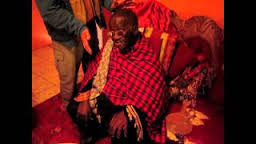
You are about to see a ‘miracle’ happen to Credo Mutwa – but it is only reality as it really should be

You are about to see a ‘miracle’ happen to Credo Mutwa – but it is only reality as it really should be

Wednesday, 03 August 2011 11:48

Share

I met a fantastic healer – and I mean fantastic – called Andreas and his friend and associate, Mike, in Germany when I spoke there in April and I immediately thought of my great friend and soul mate, Credo Mutwa, who had lost the use of his left hand and the whole left side of his body after a stroke.

I arranged for Andreas and Mike to visit Credo for a week and for Andreas to perform his magical (the real laws of physics) healing on the great man.

You are about to see Credo regain the use of his left hand for the first time since his stroke several months ago. If you can watch this without crying I will be surprised – I can’t for sure.

After a few days of treatment this stricken man who could hardly walk is back to the Credo Mutwa that I have long known as if no stroke had ever happened. It is extraordinary on one level, but I knew this would happen after seeing Andreas at work in Germany. I told Credo as he was in despair from the effects of the stroke – ‘I have someone coming to see you, mate, and he will fix you, I know he will.’

As you watch this, remember that days earlier Credo had no use of the left side of his body because of the stroke and could hardly move. He said to me on the phone before this: ‘Mr David, I am now a useless wreck’.

Not anymore, mate. Not anymore.

How absolutely wonderful.

This is Credo walking again with Mike.

This is Credo painting again with his left hand.

And this is Credo back to the man I know …

http://www.davidicke.com/headlines/51650-you-are-about-to-see-a-miracle-happen-to-credo-mutwa-but-it-is-only-reality-as-it-really-should-be

Short Life Expectancy for BP Whistleblowers?

Short Life Expectancy for BP Whistleblowers?

By Pat Shannan

The investigation, if it can properly be so called, of the unsolved murder of the former high ranking Pentagon official and presidential advisor John P. Wheeler III, who was also an expert on chemical and biological weapons, may be taking a turn in the direction of the Gulf of Mexico oil spill.

Wheeler, 67, a West Point grad, was beaten and thrown into a garbage dumpster. His body was discovered in a Wilmington, Del. landfill last New Year’s weekend. Both police detectives and news commentators described it as “an apparent hit,” but little else was ever learned, and no suspects have surfaced.

There was great speculation by many at the time that Wheeler had begun to blow the whistle on the mysterious bird and fish deaths in Arkansas and Texas, and was about to expose the facts tying this to the chemtrails seen in our skies over the past decade.

Now the speculation may be reverting to British Petroleum and the gulf spill because a number of other BP whistle blowing scientists, before and since the Wheeler murder, have also died mysteriously, been jailed on questionable charges or disappeared without a trace.

Matthew Simmons, 67, a former energy advisor to President George W. Bush and admired among survivalist groups for his dire warnings on the upcoming commodity and fuel shortages about to hit this nation, died in his hot tub in Maine last August. Simmons had been gaining popularity as a whistle blower for blaming BP for its covered-up responsibility in defacing and vandalizing the Gulf of Mexico while hiding the truth from the general public.

Only four days later, Ted Stevens, the 87-year-old defrocked senator from Alaska, said to have received communications regarding BP’s faulty blowout preventer, perished in a plane crash. British Petroleum had donated $1 million to the University of Alaska to catalog the papers from Stevens’s long political career.

Roger Grooters began a cross country bike ride in Oceanside, Calif. on Sept. 10 to draw attention to the Gulf Coast oil disaster. On Oct. 6, in front of the horrified eyes of his wife, who was trailing in a support vehicle, Grooters was struck by a truck and killed instantly in Panama City, Fla.

banner_newsletter

Only a month later, Dr. Geoffrey Gardner of Lakeland, Fla. disappeared. He was investigating the unexplained bird deaths near Sarasota that are suspected to have been caused by the BP oil disaster. No one has heard from or spoken with him since.

On Nov. 15, Chitra Chaunhan was found dead of  cyanide poisoning in a Temple Terrace, Fla. hotel. It was officially ruled a suicide. She worked in the Center for Biological Defense and Global Health Infectious Disease Research and left behind a husband and five-year-old child.

The following week, James Patrick Black, director of operations for BP’s restoration organization for the oil spill, died near Destin, Fla. in a small plane crash.

Dr. Thomas B. Manton was one of the first to warn the public that far more oil than what BP had reported was gushing into the gulf every day and that the massive, toxic oil and chemical plumes would travel up the eastern seaboard, contaminating beaches and wildlife all the way.

“Once the winds change, it will come eastward and pollute the beaches of the west coast of Florida, and the ‘loop current’ could carry this oil spill right around Florida, through the Florida Keys and pollute the east coast of Florida as well,” Manton wrote on May 28, 2010.

Dr. Tom Termotto, national coordinator of the Gulf Oil Spill Remediation Conference, says Manton was murdered in prison. Manton had been sentenced to 15 years last August on a phony child pornography charge. Termotto and others say evidence was planted on his computer.

It is not known whether or not Anthony Nicholas Tremonte, 31, posed any threat to BP, but he too was arrested in January and charged with one count of possession of child pornography. Was this charge also faked? As an officer with the Mississippi Department of Marine Resources on the Gulf Coast, he may have known enough to qualify him for membership in this exclusive series of coincidences. He faces up to 40 years in prison if convicted.

Pat Shannan is a contributing editor of American Free Press. He is also the author of several videos and books including One in a Million: An IRS Travesty, I Rode With Tupper and  Everything They Ever Told Me Was a Lie. All of Pat’s books are available from FIRST AMENDMENT BOOKS. Call 2025475585 for availability and pricing.

Subscribe to American Free Press. Online subscriptions: One year of weekly editions—$15 plus you get a BONUS ELECTRONIC BOOK – HIGH PRIESTS OF WAR – By Michael Piper.


http://www.americanfreepress.net/html/whistleblowers_266.html

A plan that will change the world

A plan that will change the world

“Until one is committed, there is hesitancy, the chance to draw back. Concerning all acts of initiative (and creation), there is one elementary truth, the ignorance of which kills countless ideas and splendid plans: that the moment one definitely commits oneself, then Providence moves too. All sorts of things occur to help one that would never otherwise have occurred. A whole stream of events issues from the decision, raising in one’s favor all manner of unforeseen incidents and meetings and material assistance, which no man could have dreamed would have come his way. Whatever you can do, or dream you can do, begin it. Boldness has genius, power, and magic in it. Begin it now.” – William Hutchinson Murray

Support The Samouni Family Project In Gaza

If You Would Like To Be Volunteer For The TJP Project, Please Fill Out This Form


http://1tjp.net/

The Story of James Casbolt & Project Mannequin

The Story of James Casbolt & Project Mannequin

James Casbolt has written one of the most revealing exposes to date on secret government operations and the ultra secret NSA mind control operation called Project Mannequin. While he reviews known specifics of government involvement with aliens, much of his information is new, especially with regards to U.K. underground covert operations. Subjected to mind control programming from earliest childhood, he began to recover his memories about two years ago and continues de-programming therapy to the present day. He first appeared on the Internet in 2007, trying to get out his story, but as is often the case with high level whistle blowers, he was besieged and verbally assaulted by the usual gaggle of conspiracy bloggers and blow hards who are ready to denigrate and dismiss anyone who has new and startling information. I saw the same thing happen to Brice Taylor when she first came out with her book, Thanks for The Memories, in May of 1999. It’s a combination of blogger-idiots and government disinfo/smear artists who always reserve their most vicious attacks for those who come closest to the mark.

Brice put up with the crap from the idiot sector for about a year and then gave up talking at conferences altogether. She hasn’t done any public speaking about her book since late 1999. I don’t blame her at all as the Illuminati makes you-and your family members- suffer when you spill the beans of their dark and dirty secrets. The more you talk, the more they put the screws to you. Today, with psychotronic harassment and torture technology, it’s a wonder that anyone is still talking.

James has published five chapters so far of his on-line book, Agent Buried Alive, The Autobiography of Commander James Casbolt. I’ve read all five chapters and I find his information to be right on target and in agreement with that which I’ve gained over the years from many other sources. I won’t be so arrogant that I’ll say that I’m sure that my perception of the NWO, their mind control operations, and their alien overlords are totally accurate, but I’m reasonably confidant that I have the story straight-and it agrees with James Casbolt’s rendition almost 100%. For my money, this guy is right on the mark and any moron-blogger who tries to tell you otherwise, does not know what he’s talking about.

Books written by high level victims of government mind control operations are not altogether pleasant reading. Much of the information they present is shocking and completely outside of our normal, everyday frame of reference. There are at least 133 Deep Underground Military Bases in America alone and well over 400 worldwide. Hundreds of thousands of men, women and small children are brutalized, tortured, programmed, experimented upon, and killed in many of those underground facilities (and taken by aliens) which often are shared with incredibly malevolent alien beings who literally eat human beings.

People simply don’t understand just how technologically advanced the NWO is compared to the civilian sector. We aren’t talking about fifty years ahead, we’re talking about one thousand years ahead. Cloning, total mind control, invisibility, anti-gravity, free energy, age regression, soul transfers, extended life spans, time travel, space portals, ability to cure any disease, time machines, etc. are already in the hands of the NWO and their military lap dogs. We are living in a make-believe world of pretend democracy while being lied to by pretend representatives, pretend media, and pretend leaders, of which a large percentage are working on behalf of the NWO to destroy this country and usher in the satanic One World government . .

In reading these chapters, you will see that James Casbolt restates many of the same themes that I’ve been reviewing at this web site since its inception:

1. The New World Order is run by alien overlords. Humans aren’t calling the shots, Dracos reptilian aliens are calling the shots. Most “human” representatives of the Illuminati, puppet politicians, and military leaders are human/alien hybrids or 100% reptilian shape-shifters (Chimeras) or CLONES of the original person. The current Secretary of the Treasury, for instance, Henry Paulson, is likely a clone of the original Paulson who was killed last December according to Britain’s Christopher Story.

2. The NWO/alien agenda includes eliminating about 85% of the world’s population (wars, chemtrails, vaccines, engineered diseases, engineered hurricanes and earthquakes, etc) so there won’t be enough humans left on the planet to offer any meaningful resistance when the Dracos invasion is in full swing.

3. The “God” of the NWO and their alien cohorts is Lucifer and they intend to convert this planet into a Hell on Earth- obedient to Lucifer. They are attempting to eliminate all expression of spirituality, morality, honor, integrity, and allegiance to God and the teachings of Jesus Christ. That’s why their Illuminated minions are working so hard to destroy the Christian religion (the Catholic church is the prime target) and try to convince you that Jesus Christ never even existed.

However, they still need the public’s continued ignorance and willful neglect of the warning signs in order to complete their takeover mission. In order to thwart this diabolical agenda, we must KNOW the real story and take appropriate counter action. To that end, you should carefully examine the information being presented by James Casbolt.

Ken Adachi

Chapters Index from Agent Buried Alive, The Autobiography of Commander James Casbolt (2008).

James Casbolt < [email protected]>
www.jamescasbolt.com

Chapter 1, Project Mannequin
http://educate-yourself.org/mc/casboltagent1chap.shtml

Chapter 2 , The Return of The Watchers
http://educate-yourself.org/mc/casboltagent2chap.shtml

Chapter 3, The Modern History of Behaviour Modification
http://educate-yourself.org/mc/casboltagent3chap.shtml

Chapter 4, The River of Love
http://educate-yourself.org/mc/casboltagent4chap.shtml

Chapter 5, Born into the Project
http://educate-yourself.org/mc/casboltagent5chap.shtml

Chapter 6, The Sublime View *
http://educate-yourself.org/mc/casboltagent6chap.shtml

Chapter 7, Convergence of the Star Children **New, added Oct 20, 2008**
http://educate-yourself.org/mc/casboltagent7chap.shtml

Audio and Video Files of James Casbolt

I’ll be posting all of the video and audio interviews available from James Casbolt in formats that will be easy to view, listen to, and download. I’ll start with MP3 audio conversions that I made from a four part video interview that James did in Truro, Cornwall England in October of 2007. I’m just beginning to learn how to use the MP3 encoding software, so for the time being, I’ll post four MP3 downloads, each segment about 9 minutes long-same as the video presentation. Eventually, I’ll figure out how to string the audio together into one single interview of approximately 36 minutes.

James is being interviewed by Miles Johnson of Underground Video, UK in an open area of the conference center where people are milling about and talking, so the background chatter makes the listening less than ideal, although you can hear everything being said. Americans will have a little bit of trouble understanding every word due to James’ British accent, however I’m hoping to find volunteers who will type out a transcript of the interview segments so that it could be easily read in English and other languages (if you’re interested in providing a transcript of any of these audio files, please let me know; they are only 9 minutes each –.Ken Adachireplace the word “(at)” with the symbol and no spaces. Type “volunteer transcriber” in the Subject line) .

The information in these interview is sobering and intended for adult listeners. It’s always shocking for new readers to grasp the depth, depravity, and gravity of the New World Order enslavement agenda. Horrific crimes are being perpetrated upon hundreds of thousands of abducted children and adults in underground bases in the UK, America, Australia, and other locations. In order to stop it, we must first come to grips with the scope of the problem and not shrink from facing the facts because doing so will only ensure the success of the evil forces who are behind it. Ignorance is not bliss and in this case, wilful ignorance will insure catastrophy for 85-90% of the planet’s population. The only thing to fear, is fear itself. We can stop this if enough become aware –in time. We must face this menace squarely for the sake of our children and the future of the human race.

Ken Adachi

James Casbolt Interview at Cornwall UFO Conference October, 2007 Part 1 (MP3) 9 minutes
http://educate-yourself.org/jc/JamesCasbolt2007CornwallConfA.mp3 Transcript of Part 1

James Casbolt Interview at Cornwall UFO Conference October, 2007 Part 2 (MP3) 9 minutes
http://educate-yourself.org/jc/JamesCasbolt2007CornwallConfB.mp3 Transcript of Part 2

James Casbolt Interview at Cornwall UFO Conference October, 2007 Part 3 (MP3) 9 minutes
http://educate-yourself.org/jc/JamesCasbolt2007CornwallConfC.mp3 Transcript of Part 3

James Casbolt Interview at Cornwall UFO Conference October, 2007 Part 4 (MP3) 9 minutes
http://educate-yourself.org/jc/JamesCasbolt2007CornwallConfD.mp3 Transcript of Part 4

***

Audio interview between Daniel Ott and James Casbolt on August 5, 2006

This is an excellent show. James covers a lot of important ground and it should be listened to carefully.

(source: http://www.theedgeam.com/interviews/James_Casbolt_08.05.06_2nd.mp3)

Audio interview between John Kuhles (Netherlands) and David Goth on Oct. 6, 2007

Audio interview between John Kuhles (Netherlands) and James Casbolt on Sep 23, 2007
http://need2know.whynotnews.eu/?p=1863

(click the “play” arrow on the lower left of the video box. The intro takes 4 or 5 minutes, be patient)

Notes by James Casbolt

The interview above gives details regarding the New World Order Program to take control of the UK before 2012. This program is called Project Mannequin which I was directly involved in and is being run by the NSA from various Underground Bases cantered around London and Berkshire such as the AL/499 base 200ft below the town of Peasemore in Berkshire, the CLC-1 base under Westminster in London and connected to the a large base under Parliament, the MONSOON-1 facility under RAF Lakenheath 90 miles north of London and the underground facility below the Porton Down Bio-Warfare Facility in Wiltshire as well as other facilities around the UK. The details about Project Mannequin and connected sub-projects are on the interview but I have just been given new intelligence regarding this agenda from a very reliable source who I trust completely. The information is very disturbing and I make no apologies and pull no punches as you need to know this for your future.

Kidnapped Children and Underground Bases

The huge child trafficking and Satanic ritual murder networks in the UK is heavily connected to Project Mannequin and very evil factions in the intelligence commuuinity centred around the NSA, CIA and British Intelligence. We know have over 25,000 children disseapring without a trace in the UK every year and are never seen or heard of again. This are classified figures and the intelligence commuyinity controlled mainstream media suppresses these facts by not giving a voice to the parents of these children and focusing massively on cases of one or two missing children a year, thereby taking the focus off the larger picture. Just last year I was in Truro college and there posters up off missing youngsters on the walls. These individuals had not even been mentioned on any news channels in the UK.

My contact has revealed to me that children who are now being kidnapped and taken to underground facilities such as the AL/499, are being murdered in horrific ways and their brainwaves are being recorded into computers at the time of death via a digital links through high-tech cranial implants installed into the children’s brains. As brain-waves and radio-waves are basically the same thing, this horrific energy recorded by super-computers is then being broadcast and sent out through televisions, radios, mobile phones and masts across the country and is affecting the whole population through increased levels of crime, sexual and child abuse, drug and alcohol abuse and a general lowering of people’s morals as very human has kind of telepathic receiver which is the pineal gland in the brain. I personally witnessed children being murdered during my time in the AL/499 facility and in recent times children’s throats are being cut and the digital broadcast sent out from the recorded brainwaves at the time of death which is stopping people in this country talking to each and sharing on a intimate level. Children’s hands are being cut off at some of these underground facilities and the frequencies being sent out are stopping people performing day to day tasks as effectively and maintaining discipline in their lives. You may what to recoil from this and deny it is happening but this is a fact and it is time to wake up.

Barry King who is a close freind and was a Wackenhut Security Officer in 1979 at the AL/499 NASH Berkshire base in 1979 told me that the NSA plan to have every person in the UK microchipped with craniel implants during Military Abductions (MILABS) before 2009. Satanic factions in the NSA are working overtime with military in this country with military abductions every night using the black triangle ‘Firefly’ aircrafts which have been seen tested at Area 51 in the US and are discussed in detail in the interview. I have just found out today that the anologue signals in televisions is being switched off in 2009 and televisions will only work with a digital connection. OFF COURSE IT IS!! The NSA want everyone to be in ‘tune’ with their digital pulses and connected up to the their super computers like ‘The Beast’ computer located at Pine Gap in Australia through thier craniel implants by 2009. Last year around 1 in 25 people were implanted through various means discussed in the interview. Now the figure is somewhere between 1 in 17 and increasing. The murder frequncies are being recorded behind popular music, film and televions in a ELF tone that sounds like a buzzing to phychics. When decoded this is actually a screaming sound! Recorded brainwaves can even be stored on a small box like device in a super concentrated form and worn on the belts or held by secret service assassins. The box can be aimed at a person and a radio wave fired out that people can not see. This energy is totally alien to most peoples nervous systems and the target will go into shock as the nervous system shuts down and usaully die.

These groups are using thse desperate tactics to bloack the huge frequencies of of love and enlightement that increases by the day as our planet moves closer to the galactic centre as we appraoch 2012.

We live in dangerous and exciting times and need to come together in groups in compassion and commuinication through such events as the Probe International conference in Blackpool to brake up these frequencies. In the crop circle below that appeared in the UK a few years, the following message was encoded in the circle in digital binary code-

“Beware the bearers of FALSE gifts and their BROKEN PROMISES. Much PAIN but still time. There is GOOD out there. We OPpose DECEPTION. Conduit CLOSING ( BELL SOUND )”

The dark factions in the secret socitties are trying to close the close the conduit to this higher frequincy love energy through their digital signals. Are you going to let them by believing the lies we are spoon fed by the mainstream or are you going to wake up through the many alternative quility medias such as those on the internet and organisations such as Probe International?

In truth

James Casbolt, St Ives, Cornwall, 9th October 2007

wikipedia.org/wiki/MI6

The Secret Intelligence Service (SIS), colloquially known as MI6[1] is the United Kingdom’s external intelligence agency, part of the country’s intelligence community. Under the direction of the Joint Intelligence Committee (JIC), it works alongside the Security Service (MI5), Government Communications Headquarters (GCHQ) and the Defence Intelligence Staff (DIS). Within the civil service community the service is colloquially referred to as ‘Box 850′, which comes from its old post office box number.[2][3][4]

Since 1995, the Secret Intelligence Service has had its headquarters at Vauxhall Cross on the South Bank of the Thames.

http://educate-yourself.org/mc/casboltintro08sep08.shtml

The inhumane conditions of Bradley Manning’s detention

The inhumane conditions of Bradley Manning’s detention

By Glenn Greenwald
Topics:

(updated below – Update II)

Bradley Manning, the 22-year-old U.S. Army Private accused of leaking classified documents to WikiLeaks, has never been convicted of that crime, nor of any other crime.  Despite that, he has been detained at the U.S. Marine brig in Quantico, Virginia for five months — and for two months before that in a military jail in Kuwait — under conditions that constitute cruel and inhumane treatment and, by the standards of many nations, even torture.  Interviews with several people directly familiar with the conditions of Manning’s detention, ultimately including a Quantico brig official (Lt. Brian Villiard) who confirmed much of what they conveyed, establishes that the accused leaker is subjected to detention conditions likely to create long-term psychological injuries.

Since his arrest in May, Manning has been a model detainee, without any episodes of violence or disciplinary problems.  He nonetheless was declared from the start to be a “Maximum Custody Detainee,” the highest and most repressive level of military detention, which then became the basis for the series of inhumane measures imposed on him.

From the beginning of his detention, Manning has been held in intensive solitary confinement.  For 23 out of 24 hours every day — for seven straight months and counting — he sits completely alone in his cell.  Even inside his cell, his activities are heavily restricted; he’s barred even from exercising and is under constant surveillance to enforce those restrictions.  For reasons that appear completely punitive, he’s being denied many of the most basic attributes of civilized imprisonment, including even a pillow or sheets for his bed (he is not and never has been on suicide watch).  For the one hour per day when he is freed from this isolation, he is barred from accessing any news or current events programs.  Lt. Villiard protested that the conditions are not “like jail movies where someone gets thrown into the hole,” but confirmed that he is in solitary confinement, entirely alone in his cell except for the one hour per day he is taken out.

In sum, Manning has been subjected for many months without pause to inhumane, personality-erasing, soul-destroying, insanity-inducing conditions of isolation similar to those perfected at America’s Supermax prison in Florence, Colorado:  all without so much as having been convicted of anything.  And as is true of many prisoners subjected to warped treatment of this sort, the brig’s medical personnel now administer regular doses of anti-depressants to Manning to prevent his brain from snapping from the effects of this isolation.

Just by itself, the type of prolonged solitary confinement to which Manning has been subjected for many months is widely viewed around the world as highly injurious, inhumane, punitive, and arguably even a form of torture.  In his widely praised March, 2009 New Yorker article — entitled “Is Long-Term Solitary Confinement Torture?” — the surgeon and journalist Atul Gawande assembled expert opinion and personal anecdotes to demonstrate that, as he put it, “all human beings experience isolation as torture.”  By itself, prolonged solitary confinement routinely destroys a person’s mind and drives them into insanity.  A March, 2010 article in The Journal of the American Academy of Psychiatry and the Law explains that “solitary confinement is recognized as difficult to withstand; indeed, psychological stressors such as isolation can be as clinically distressing as physical torture.”

For that reason, many Western nations — and even some non-Western nations notorious for human rights abuses — refuse to employ prolonged solitary confinement except in the most extreme cases of prisoner violence.  “It’s an awful thing, solitary,” John McCain wrote of his experience in isolated confinement in Vietnam. “It crushes your spirit.”  As Gawande documented: “A U.S. military study of almost a hundred and fifty naval aviators returned from imprisonment in Vietnam . . . reported that they found social isolation to be as torturous and agonizing as any physical abuse they suffered.”  Gawande explained that America’s application of this form of torture to its own citizens is what spawned the torture regime which President Obama vowed to end:

This past year, both the Republican and the Democratic Presidential candidates came out firmly for banning torture and closing the facility in Guantánamo Bay, where hundreds of prisoners have been held in years-long isolation. Neither Barack Obama nor John McCain, however, addressed the question of whether prolonged solitary confinement is torture. . . .

This is the dark side of American exceptionalism. . . . Our willingness to discard these standards for American prisoners made it easy to discard the Geneva Conventions prohibiting similar treatment of foreign prisoners of war, to the detriment of America’s moral stature in the world.  In much the same way that a previous generation of Americans countenanced legalized segregation, ours has countenanced legalized torture. And there is no clearer manifestation of this than our routine use of solitary confinement . . . .

It’s one thing to impose such punitive, barbaric measures on convicts who have proven to be violent when around other prisoners; at the Supermax in Florence, inmates convicted of the most heinous crimes and who pose a threat to prison order and the safety of others are subjected to worse treatment than what Manning experiences.  But it’s another thing entirely to impose such conditions on individuals, like Manning, who have been convicted of nothing and have never demonstrated an iota of physical threat or disorder.

In 2006, a bipartisan National Commission on America’s Prisons was created and it called for the elimination of prolonged solitary confinement.  Its Report documented that conditions whereby “prisoners end up locked in their cells 23 hours a day, every day. . . is so severe that people end up completely isolated, living in what can only be described as torturous conditions.”  The Report documented numerous psychiatric studies of individuals held in prolonged isolation which demonstrate “a constellation of symptoms that includes overwhelming anxiety, confusion and hallucination, and sudden violent and self-destructive outbursts.”  The above-referenced article from the Journal of the American Academy of Psychiatry and the Law states:  ”Psychological effects can include anxiety, depression, anger, cognitive disturbances, perceptual distortions, obsessive thoughts, paranoia, and psychosis.”

When one exacerbates the harms of prolonged isolation with the other deprivations to which Manning is being subjected, long-term psychiatric and even physical impairment is likely.  Gawande documents that “EEG studies going back to the nineteen-sixties have shown diffuse slowing of brain waves in prisoners after a week or more of solitary confinement.”  Medical tests conducted in 1992 on Yugoslavian prisoners subjected to an average of six months of isolation — roughly the amount to which Manning has now been subjected — “revealed brain abnormalities months afterward; the most severe were found in prisoners who had endured either head trauma sufficient to render them unconscious or, yes, solitary confinement.  Without sustained social interaction, the human brain may become as impaired as one that has incurred a traumatic injury.”  Gawande’s article is filled with horrifying stories of individuals subjected to isolation similar to or even less enduring than Manning’s who have succumbed to extreme long-term psychological breakdown.

Manning is barred from communicating with any reporters, even indirectly, so nothing he has said can be quoted here.  But David House, a 23-year-old MIT researcher who befriended Manning after his detention (and then had his laptops, camera and cellphone seized by Homeland Security when entering the U.S.) is one of the few people to have visited Manning several times at Quantico.  He describes palpable changes in Manning’s physical appearance and behavior just over the course of the several months that he’s been visiting him.  Like most individuals held in severe isolation, Manning sleeps much of the day, is particularly frustrated by the petty, vindictive denial of a pillow or sheets, and suffers from less and less outdoor time as part of his one-hour daily removal from his cage.

This is why the conditions under which Manning is being detained were once recognized in the U.S. — and are still recognized in many Western nations — as not only cruel and inhumane, but torture.  More than a century ago, U.S. courts understood that solitary confinement was a barbaric punishment that severely harmed the mental and physical health of those subjected to it.  The Supreme Court’s 1890 decision in In re Medley noted that as a result of solitary confinement as practiced in the early days of the United States, many “prisoners fell, after even a short confinement, into a semi-fatuous condition . . . and others became violently insane; others still, committed suicide; while those who stood the ordeal better . . . [often] did not recover sufficient mental activity to be of any subsequent service to the community.”  And in its 1940 decision in Chambers v. Florida, the Court characterized prolonged solitary confinement as “torture” and compared it to “[t]he rack, the thumbscrew, [and] the wheel.”

The inhumane treatment of Manning may have international implications as well.  There are multiple proceedings now pending in the European Union Human Rights Court, brought by “War on Terror” detainees contesting their extradition to the U.S. on the ground that the conditions under which they likely will be held — particularly prolonged solitary confinement — violate the European Convention on Human Rights, which (along with the Convention Against Torture) bars EU states from extraditing anyone to any nation where there is a real risk of inhumane and degrading treatment.  The European Court of Human Rights has in the past found detention conditions violative of those rights (in Bulgaria) where “the [detainee] spent 23 hours a day alone in his cell; had limited interaction with other prisoners; and was only allowed two visits per month.”  From the Journal article referenced above:

International treaty bodies and human rights experts, including the Human Rights Committee, the Committee against Torture, and the U.N. Special Rapporteur on Torture, have concluded that solitary confinement may amount to cruel, inhuman, or degrading treatment in violation of the International Covenant on Civil and Political Rights and the Convention against Torture and other Cruel, Inhuman, and Degrading Treatment or Punishment.  They have specifically criticized supermax confinement in the United States because of the mental suffering it inflicts.

Subjecting a detainee like Manning to this level of prolonged cruel and inhumane detention can thus jeopardize the ability of the U.S. to secure extradition for other prisoners, as these conditions are viewed in much of the civilized world as barbaric.  Moreover, because Manning holds dual American and U.K. citizenship (his mother is British), it is possible for British agencies and human rights organizations to assert his consular rights against these oppressive conditions.  At least some preliminary efforts are underway in Britain to explore that mechanism as a means of securing more humane treatment for Manning.  Whatever else is true, all of this illustrates what a profound departure from international norms is the treatment to which the U.S. Government is subjecting him.

* * * * *

The plight of Manning has largely been overshadowed by the intense media fixation on WikiLeaks, so it’s worth underscoring what it is that he’s accused of doing and what he said in his own reputed words about these acts.  If one believes the authenticity of the highly edited chat logs of Manning’s online conversations with Adrian Lamo that have been released by Wired (that magazine inexcusably continues to conceal large portions of those logs), Manning clearly believed that he was a whistle-blower acting with the noblest of motives, and probably was exactly that.  If, for instance, he really is the leaker of the Apache helicopter attack video — a video which sparked very rare and much-needed realization about the visceral truth of what American wars actually entail — as well as the war and diplomatic cables revealing substantial government deceit, brutality, illegality and corruption, then he’s quite similar to Daniel Ellsberg.  Indeed, Ellsberg himself said the very same thing about Manning in June on Democracy Now in explaining why he considers the Army Private to be a “hero”:

The fact is that what Lamo reports Manning is saying has a very familiar and persuasive ring to me.  He reports Manning as having said that what he had read and what he was passing on were horrible — evidence of horrible machinations by the US backdoor dealings throughout the Middle East and, in many cases, as he put it, almost crimes. And let me guess that — he’s not a lawyer, but I’ll guess that what looked to him like crimes are crimes, that he was putting out. We know that he put out, or at least it’s very plausible that he put out, the videos that he claimed to Lamo.  And that’s enough to go on to get them interested in pursuing both him and the other.

And so, what it comes down, to me, is — and I say throwing caution to the winds here — is that what I’ve heard so far of Assange and Manning — and I haven’t met either of them — is that they are two new heroes of mine.

To see why that’s so, just recall some of what Manning purportedly said about why he chose to leak, at least as reflected in the edited chat logs published by Wired:

Lamo: what’s your endgame plan, then?. . .

Manning: well, it was forwarded to [WikiLeaks] – and god knows what happens now – hopefully worldwide discussion, debates, and reforms – if not, than [sic] we’re doomed – as a species – i will officially give up on the society we have if nothing happens – the reaction to the video gave me immense hope; CNN’s iReport was overwhelmed; Twitter exploded – people who saw, knew there was something wrong . . . Washington Post sat on the video… David Finkel acquired a copy while embedded out here. . . . – i want people to see the truth… regardless of who they are… because without information, you cannot make informed decisions as a public.

if i knew then, what i knew now – kind of thing, or maybe im just young, naive, and stupid . . . im hoping for the former – it cant be the latter – because if it is… were fucking screwed (as a society) – and i dont want to believe that we’re screwed.

Manning described the incident which first made him seriously question the U.S. Government: when he was instructed to work on the case of Iraqi “insurgents” who had been detained for distributing so-called “insurgent” literature which, when Manning had it translated, turned out to be nothing more than “a scholarly critique against PM Maliki”:

i had an interpreter read it for me… and when i found out that it was a benign political critique titled “Where did the money go?” and following the corruption trail within the PM’s cabinet… i immediately took that information and *ran* to the officer to explain what was going on… he didn’t want to hear any of it… he told me to shut up and explain how we could assist the FPs in finding *MORE* detainees…

i had always questioned the things worked, and investigated to find the truth… but that was a point where i was a *part* of something… i was actively involved in something that i was completely against…

And Manning explained why he never considered the thought of selling this classified information to a foreign nation for substantial profit or even just secretly transmitting it to foreign powers, as he easily could have done:

Manning: i mean what if i were someone more malicious- i could’ve sold to russia or china, and made bank?

Lamo: why didn’t you?

Manning: because it’s public data

Lamo: i mean, the cables

Manning: it belongs in the public domain -information should be free – it belongs in the public domain – because another state would just take advantage of the information… try and get some edge – if its out in the open… it should be a public good.

That’s a whistleblower in the purest and most noble form:  discovering government secrets of criminal and corrupt acts and then publicizing them to the world not for profit, not to give other nations an edge, but to trigger “worldwide discussion, debates, and reforms.”  Given how much Manning has been demonized — at the same time that he’s been rendered silent by the ban on his communication with any media — it’s worthwhile to keep all of that in mind.

But ultimately, what one thinks of Manning’s alleged acts is irrelevant to the issue here.  The U.S. ought at least to abide by minimal standards of humane treatment in how it detains him.  That’s true for every prisoner, at all times.  But departures from such standards are particularly egregious where, as here, the detainee has merely been accused, but never convicted, of wrongdoing.  These inhumane conditions make a mockery of Barack Obama’s repeated pledge to end detainee abuse and torture, as prolonged isolation — exacerbated by these other deprivations — is at least as damaging, as violative of international legal standards, and almost as reviled around the world, as the waterboard, hypothermia and other Bush-era tactics that caused so much controversy.

What all of this achieves is clear.  Having it known that the U.S. could and would disappear people at will to “black sites,” assassinate them with unseen drones, imprison them for years without a shred of due process even while knowing they were innocent, torture them mercilessly, and in general acts as a lawless and rogue imperial power created a climate of severe intimidation and fear.  Who would want to challenge the U.S. Government in any way — even in legitimate ways — knowing that it could and would engage in such lawless, violent conduct without any restraints or repercussions?

That is plainly what is going on here.  Anyone remotely affiliated with WikiLeaks, including American citizens (and plenty of other government critics), has their property seized and communications stored at the border without so much as a warrant.  Julian Assange — despite never having been charged with, let alone convicted of, any crime — has now spent more than a week in solitary confinement with severe restrictions under what his lawyer calls “Dickensian conditions.”  But Bradley Manning has suffered much worse, and not for a week, but for seven months, with no end in sight.  If you became aware of secret information revealing serious wrongdoing, deceit and/or criminality on the part of the U.S. Government, would you — knowing that you could and likely would be imprisoned under these kinds of repressive, torturous conditions for months on end without so much as a trial:  just locked away by yourself 23 hours a day without recourse — be willing to expose it?  That’s the climate of fear and intimidation which these inhumane detention conditions are intended to create.

* * * * *

Those wishing to contribute to Bradley Manning’s defense fund can do so here.  All of those means are reputable, but everyone should carefully read the various options presented in order to decide which one seems best.


UPDATE:  I was contacted by Lt. Villiard, who claims there is one factual inaccuracy in what I wrote:  specifically, he claims that Manning is not restricted from accessing news or current events during the prescribed time he is permitted to watch television.  That is squarely inconsistent with reports from those with first-hand knowledge of Manning’s detention, but it’s a fairly minor dispute in the scheme of things.


UPDATE II: On MSNBC, Keith Olbermann did a segment on the conditions of Manning’s incarceration, with FBI whistleblower Colleen Rowley.  At least on its website, CBS News also reported on the story.  And I was on Democracy Now Thursday morning elaborating on my Manning article yesterday, as well as discussing Savage’s article this morning and the imminent release of Assange from prison (the transcript is here):


How Bradley Manning’s fate will be decided

The soldier accused of giving files to WikiLeaks will likely face a court-martial — we explain how it works

By Justin Elliott

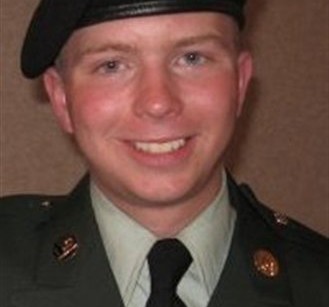
Photo: Army Pfc. Bradley Manning is escorted by military police from the courthouse after the sixth day of his Article 32 hearing at Fort Meade, Maryland, December 21, 2011.  (Credit: Benjamin Myers / Reuters)

Topics:

This week, Bradley Manning came one step closer to being tried for allegedly leaking a trove of secret American cables to WikiLeaks when a military officer made the formal recommendation that Manning should face a court-martial on 22 criminal charges.

One of the counts, aiding the enemy, carries the possibility of the death penalty, but prosecutors have already said they will not seek it in Manning’s case.

The recommendation this week was made to Maj. Gen. Michael Linnington, commander of the Military District of Washington, who is what is known as the convening authority in the case. The military justice system has important differences from the civilian system, so I spoke to Eugene R. Fidell, who teaches military justice at Yale Law School, to explain the basics.

We’ve now had the investigating officer as well as another officer this week recommend a court-martial to the Military District of Washington commander. What’s the next step?

A convening authority, which is a general officer, will decide whether to refer the case to a court-martial. There’s no designated time frame for this, but I think it will be in the next couple of weeks. A court-martial is a military criminal court that will have serious punishment powers. There will be a military judge presiding over it, who is a uniformed lawyer. There’s a prosecutor. There’s defense counsel. Unless Manning waives the jury, there will be a jury of at least five people.

Who makes up the jury?

The jury is selected by the convening authority. It’s not random selection. The general will select the members; it’s supposed to be a blue ribbon group. They are supposed to be the best qualified people with respect to education, experience, judicial temperament and so on. Because Manning is an enlisted man, he has a right to enlisted representation on the court. That means that at least one-third of the jury would have to be enlisted men or women.

In the civilian trial setting, there’s usually a lot of argument over who sits on the jury. How does that work in a court-martial?

The same thing happens. There’s an opportunity for the lawyers on both sides to question the jurors — who are actually called “members” in a court-martial — to determine whether they are capable of acting impartially. Each side has a right to challenge a member not only for cause, but also peremptorily, in other words for no reason.

To convict a defendant in a non-capital case requires only a two-thirds vote of the members. How the vote breaks down depends on how many members there are. The minimum is five, but there’s something called the numbers game that the lawyers on both sides are aware of. That is, that you want to use your right to challenge a member in order to manipulate the size of the court to maximize the chances of either conviction or acquittal, depending on your perspective. The number slightly tweaks the percentage. Two-thirds of five members is four, meaning the government would need 80 percent to convict. Two-thirds of six members is also four, which means the government would need only 66 percent to convict.

What about the judge — how is he or she different than a judge in a civilian case?

Once the case is referred to a court-martial, and a judge is assigned, the convening authority’s power becomes subject to review, and a judge sort of takes charge of the case. Until that happens — until the case is referred to trial — the convening authority really rules the roost.

The big difference as compared to a civilian federal judge is that a military judge doesn’t have life tenure. The judge in an Army court-martial is guaranteed tenure for only three years, which in my opinion is inadequate. Individually the judges may be perfectly independent, but in terms of the structural protections, the U.S. system is highly deficient in this area.

So the concern is that these judges might be worried about their later career and that affects how they hear cases?

Yeah, that’s the theory. Three years is shorter than any comparable criminal court in this country.

Turning to the trial itself, are the rules different than in a civilian court?

No, the rules are essentially the same as a federal district court. The rules of evidence are a virtual carbon copy, the rules of how people conduct themselves, and so on. Courts-martial are also open to the public, except to the extent that classified information is involved. Even then, only the bare minimum needed to protect the information is closed to the public.

If Manning is ultimately found guilty, how does the sentencing work? 

If there is a jury, the jury will do sentencing. Remember, he can waive the jury. But he can’t waive only on sentencing; he would have to waive it on guilt-or-innocence and sentencing together. If he waives the jury, the judge will decide both guilt or innocence and determine the sentence. If Manning goes with a jury, the sentence is determined by the jury. And anything in excess of 10 years has to be decided by a three-fourths vote. If it were a capital case — which it’s not — there would have to be 12 members of the jury and they would have to be unanimous.

What about appeals — can he appeal if he is found guilty?

The first level of review after a case is tried and there is a sentence is to the convening authority. He or she can disapprove the conviction, can cut the sentence and so forth. He or she can overturn the result of the trial. After the convening authority acts, it goes automatically to the Army Court of Criminal Appeals, which is made up of military officers who sit in northern Virginia. There are lawyers on both sides, and briefs are filed, and there may be oral argument. Then they will issue a decision. From there, assuming the case is affirmed, Manning would have the right to petition for discretionary review by the U.S. Court of Appeals for the Armed Forces. That’s a civilian court of five judges who sit in Washington, D.C., with proceedings open to the public. If they granted review, there would be an oral argument, and the case would result in a decision. If that court grants review, then the case becomes eligible for review by the Supreme Court. The Supreme Court can refuse to hear it, but at least Manning would have the right to ask the Supreme Court for review.


Manning, Washington’s favorite scapegoat

The only civilian casualties D.C.’s warmongers ever talk about are the hypothetical ones “caused” by WikiLeaks

By Chase Madar

Photo: Army Pfc. Bradley Manning is escorted from a security vehicle to a courthouse in Fort Meade, Md., Monday, Dec. 19, 2011, for a military hearing  (Credit: AP/Patrick Semansky)
This originally appeared on TomDispatch.

Who in their right mind wants to talk about, think about or read a short essay about… civilian war casualties? What a bummer, this topic, especially since our Afghan Iraq and other ongoing wars were advertised as uplifting acts of philanthropy: wars to spread security, freedom, democracy, human rights, gender equality, the rule of law, etc.

A couple hundred thousand dead civilians have a way of making such noble ideals seem like dollar-store tinsel. And so, throughout our decade-long foreign policy debacle in the Greater Middle East, we in the U.S. have generally agreed that no one shall commit the gaucherie of dwelling on (and “dwelling on” = fleetingly mentioned) civilian casualties. Washington elites may squabble over some things, but as for foreigners killed by our numerous wars, our Beltway crew adheres to a sullen code of omertà.

Club rules do, however, permit one loophole: Washington officials may bemoan the nightmare of civilian casualties — but only if they can be pinned on a 24-year-old Army private first class named Bradley Manning.

Pfc. Manning, you will remember, is the young soldier who is soon to be court-martialed for passing some 750,000 military and diplomatic documents, a large chunk of them classified, to the website WikiLeaks. Among those leaks, there was indeed some serious stuff about how Americans dealt with civilians in invaded countries. For instance, the documents revealed that the U.S. military, then the occupying force in Iraq, did little or nothing to prevent Iraqi authorities from torturing prisoners in a variety of gruesome ways, sometimes to death.

Then there was that gun-sight video — unclassified but buried in classified material — of an American Apache helicopter opening fire on a crowd on a Baghdad street, gunning down a dozen men, including two Reuters employees, and injuring more, including children. There were also those field reports about how jumpy American soldiers repeatedly shot down civilians at roadside checkpoints; about night raids gone wrong both in Iraq and Afghanistan; and a count of thousands of dead Iraqi civilians, a tally whose existence the U.S. military had previously denied possessing.

Together, these leaks and many others offered a composite portrait of military and political debacles in Iraq and Afghanistan whose grinding theme has been civilian casualties, a fact not much noted here in the U.S. A tiny number of low-ranking American soldiers have been held to account for rare instances of premeditated murder of civilians, but most of the troops who kill civilians in the midst of the chaos of war are not tried, much less convicted. We don’t talk about these cases a lot either. On the other hand, officials of all types make free with lusty condemnations of Bradley Manning, whose leaks are luridly credited with potential (though not actual) deaths.

Putting Lives in Danger

“[WikiLeaks] might already have on their hands the blood of some young soldier or that of an Afghan family,” said Admiral Mike Mullen, then Chairman of the Joint Chiefs of Staff, on the release of the Afghan War Logs in July 2010. This was, of course, the same Admiral Mullen who had endorsed a major escalation of the war in Afghanistan, which would lead to a tremendous “surge” in casualties among civilians and soldiers alike.  Here are counts — undoubtedly undercounts, in fact — of real Afghan corpses that, at least in part, resulted from the policy he supported: 2,412 in 2009, 2,777 in 2010, 1,462 in the first half 2011, according to the U.N. Assistance Mission to Afghanistan.  As far as anyone knows, here are the corpses that resulted from the release of those WikiLeaks documents: 0. (And don’t forget, the stalemate war with the Taliban has not budged in the period since that surge.)  Who, then, has blood on his hands, Pfc. Manning — or Admiral Mullen?

Of course the admiral is hardly alone. In fact, whole tabernacle choirs have joined in the condemnation of Manning and WikiLeaks for “causing” carnage, thanks to their disclosures.

Robert Gates, who served as secretary of defense under George W. Bush and then Barack Obama, also spoke sternly of Manning’s leaks, accusing him of “moral culpability.” He added, “And that’s where I think the verdict is ‘guilty’ on WikiLeaks. They have put this out without any regard whatsoever for the consequences.”

This was, of course, the same Robert Gates who pushed for escalation in Afghanistan in 2009 and, in March 2011, flew to the Kingdom of Bahrain to offer his own personal “reassurance of support” to a ruling monarchy already busy shooting and torturing nonviolent civilian protesters. So again, when it comes to blood and indifference to consequences, Bradley Manning — or Robert Gates?

Nor have such attitudes been confined to the military. Secretary of State Hillary Clinton accused Manning’s (alleged) leak of 250,000 diplomatic cables of being “an attack on the international community” that “puts people’s lives in danger, threatens our national security, and undermines our efforts to work with other countries to solve shared problems.”

As a senator, of course, she supported the invasion of Iraq in flagrant contravention of the U.N. Charter. She was subsequently a leading hawk when it came to escalating and expanding the Afghan War, and is now responsible for disbursing an annual $1.3 billion in military aid to Egypt’s ruling junta whose forces have repeatedly opened fire on nonviolent civilian protesters.  So who’s been attacking the international community and putting lives in danger, Bradley Manning — or Hillary Clinton?

Harold Koh, former Yale Law School dean, liberal lion and currently the State Department’s top legal adviser, has announced that the same leaked diplomatic cables “could place at risk the lives of countless innocent individuals — from journalists to human rights activists and bloggers to soldiers to individuals providing information to further peace and security.”

This is the same Harold Koh who, in March 2010, provided a tortured legal rationale for the Obama administration’s drone strikes in Pakistan, Yemenand Somalia, despite the inevitable and well-documented civilian casualties they cause.  So who is risking the lives of countless innocent individuals, Bradley Manning — or Harold Koh?

Much of the media have clambered aboard the bandwagon, blaming WikiLeaks and Manning for damage done by wars they once energetically cheered on.

In early 2011, to pick just one example from the ranks of journalism, New Yorker writer George Packer professed his horror that WikiLeaks had released a memo marked “secret/noforn” listing spots throughout the world of vital strategic or economic interest to the United States. Asked by radio host Brian Lehrer whether this disclosure had crossed a new line by making a gratuitous gift to terrorists, Packer replied with an appalled yes.

Now, among the “secrets” contained in this document are the facts that the Strait of Gibraltar is a vital shipping lane and that the Democratic Republic of the Congo is rich in minerals. Have we Americans become so infantilized that factoids of basic geography must be considered state secrets? (Maybe best not to answer that question.)  The “threat” of this document’s release has since been roundly debunked by various military intellectuals.

Nevertheless, Packer’s response was instructive.  Here was a typical liberal hawk, who had can-canned to the post-9/11 drumbeat of war as a therapeutic wake-up call from “the bland comforts of peace,” now affronted by WikiLeaks’ supposed recklessness.  Civilian casualties do not seem to have been on Packer’s mind when he supported the invasion of Iraq, nor has he written much about them since.

In an enthusiastic 2006 New Yorker essay on counterinsurgency warfare, for example, the very words “civilian casualties” never come up, despite their centrality to COIN theory, practice and history.  It is a fact that, as Operation Enduring Freedom shifted to counterinsurgency tactics in 2009, civilian casualties in Afghanistan skyrocketed.  So, for that matter, have American military casualties.  (More than half of U.S. military deaths in Afghanistan occurred in the past three years.)

Liberal hawks like Packer may consider WikiLeaks out of bounds, but really, who in these last years has been the most reckless, Bradley Manning — or George Packer and some of his pro-war colleagues at the New Yorker like Jeffrey Goldberg (who has since left for the Atlantic Monthly, where he’s been busily clearing a path for war with Iran) and editor David Remnick?

Centrist and liberal nonprofit think tanks have been no less selectively blind when it comes to civilian carnage. Liza Goitein, a lawyer at the liberal-minded Brennan Center at NYU Law School, has also taken out after Bradley Manning.  In the midst of an otherwise deft diagnosis of Washington’s compulsive urge to over-classify everything — the federal government classifies an amazing 77 million documents a year — she pauses just long enough to accuse Manning of “criminal recklessness” for putting civilians named in the Afghan War logs in peril — “a disclosure,” as she puts it, “that surely endangers their safety.”

It’s worth noting that, until the moment Goitein made this charge, not a single report or press release issued by the Brennan Center has ever so much as uttered a mention of civilian casualties caused by the U.S. military. The absence of civilian casualties is almost palpable in the work of the Brennan Center’s program in  “Liberty and National Security.” For example, this program’s 2011 report “Rethinking Radicalization,” which explored effective, lawful ways to prevent American Muslims from turning terrorist, makes not a single reference to the tens of thousands of well-documented civilian casualties caused by American military force in the Muslim world, which according to many scholars is the prime mover of terrorist blowback.  The report on how to combat the threat of Muslim terrorists, written by Pakistan-born Faiza Patel, does not, in fact, even contain the words “Iraq,” “Afghanistan,” “drone strike,” “Pakistan” or “civilian casualties.”

This is almost incredible, because terrorists themselves have freely confessed that what motivated their acts of wanton violence has been the damage done by foreign military occupation back home or simply in the Muslim world.  Asked by a federal judge why he tried to blow up Times Square with a car bomb in May 2010, Pakistani-American Faisal Shahzad answered that he was motivated by the civilian carnage the U.S. had caused in Iraq, Afghanistan and Pakistan. How could any report about “rethinking radicalization” fail to mention this?  Although the Brennan Center does much valuable work, Goitein’s selective finger-pointing on civilian casualties is emblematic of a blindness to war’s consequences widespread among American institutions.

American Military Whistleblowers

Knowledge may indeed have its risks, but how many civilian deaths can actually be traced to the WikiLeaks revelations?  How many military deaths?  To the best of anyone’s knowledge, not a single one.  After much huffing and puffing, the Pentagon has quietly denied — and then denied again — that there is any evidence at all of the Taliban targeting the Afghan civilians named in the leaked war logs.

In the end, the “grave risks” involved in the publication of the War Logs and of those State Department documents have been wildly exaggerated.  Embarrassment, yes. A look inside two grim wars and the workings of imperial diplomacy, yes. Blood, no.

On the other hand, the grave risks that were hidden in those leaked documents, as well as in all the other government distortions, cover-ups and lies of the past decade, have been graphically illustrated in aortal red. The civilian carnage caused by our rush to war in Iraq and by our deeply entrenched stalemate of a war in Afghanistan (and the Pakistani tribal borderlands) is not speculative or theoretical but all-too real.

And yet no one anywhere has been held to much account: not in the political class, not in the military, not in the think tanks, not among the scholars, nor the media.  Only one individual, it seems, will pay, even if he actually spilled none of the blood. Our foreign policy elites seem to think Bradley Manning is well-cast for the role of fall guy and scapegoat. This is an injustice.

Someday, it will be clearer to Americans that Pfc. Manning has joined the ranks of great American military whistleblowers like Dan Ellsberg (who was first in his class at Marine officer training school); Vietnam War infantryman Ron Ridenhour, who blew the whistle on the My Lai massacre; and the sailors and marines who, in 1777, reported the torture of British captives by their politically connected commanding officer. These servicemen, too, were vilified in their times. Today, we honor them, as someday Pfc. Manning will be honored.


The Army is reading your Bradley Manning tweets

Military public affairs officials in WikiLeaks case use software that specializes in tracking Twitter

Photo: A sketch of Private Bradley Manning during his Army Article 32 hearing.  (Credit: Reuters)

(UPDATED BELOW)

Politico’s Josh Gerstein reports on the extent to which the Army’s public affairs office is interested in public and media opinion of the Bradley Manning case, noting that P.R. staffers prepared daily summaries of the coverage of the ongoing legal proceedings. This bit jumped out at me:

The Army used a commercial service called VOCUS to track traditional and social media coverage of Manning’s hearing. The Pentagon pays close attention to the volume of tweets about the U.S. military during high-profile incidents, like the Air Force One flyover that distressed New York City residents in 2009 …

Here (.pdf), via Gerstein, is the Public Affairs Office media coverage summary that refers to “1,045 social media conversations about the hearing.” It also notes that “the VOCUS media site listed most of the coverage of Manning as negative, the majority of the coverage about the hearing remains balanced and factual.”

VOCUS, which is based in a Maryland suburb of Washington, offers its customers the ability to “monitor social conversations, mentions and trends,” and:

  • Identify influencers. Rank top tweeters and bloggers by the number of followers, retweets, blog comments, and activity volume, so you can see who you need to be talking to.
  • Cover more blog posts. Vocus monitors more than 20 million of the most influential blogs. Best of all, we filter out aggregator sites, so you don’t get false or duplicated results.
  • Track sentiment and tone. Mentions are analyzed to gauge the feelings of bloggers, tweeters and readers – giving you insight far beyond the lead story.
  • Monitor Twitter in near-real time. Find out what people are saying and analyze all the chatter so you can engage within minutes. Vocus makes it easy to track retweets and identify the originating tweet.

Here are a couple sample screenshots of VOCUS software centering on Twitter. I’ve asked the Army how exactly it uses VOCUS and I will update this post if I hear back.

UPDATE 1/11/12: The Army send along this statement in response to my inquiry, which does not shed much light on how it uses VOCUS:

The Army employs traditional and contemporary public relations methods with which to communicate with its varied publics. Our news-gathering and assessment tools are in keeping with modern practices, and are used to determine the level at which we engage with the public to inform our vast constituencies. The Politico report reflects the Army’s connection with the public, and our transparency in such matters.


Manning is charged with aiding terrorists

Pre-trial hearing for the WikiLeaks suspect reveals the government’s prosecution strategy

Photo: Army Pfc. Bradley Manning on trial (Credit: AP/Patrick Semansky)

(This piece was originally posted at Firedoglake.)

The pre-trial hearing for Pfc. Bradley Manning, accused of releasing classified information to WikiLeaks, concluded with the government revealing in its closing argument for the first time the enemy, which they believe Manning’s actions aided: the terrorists.

Calling what Manning did a “six month-long enterprise of indiscriminately harvesting information,” Capt. Ashden Fein stated in the prosecution’s closing argument that Manning had actual knowledge that what he gave to WikiLeaks would end up in the hands of the enemy and that enemy was Al Qaeda, Al Qaeda in the Arabian Peninsula (AQAP) and similar enemies.

An Al Qaeda propaganda video was shown. The video, with subtitles, featured a figurehead of the organization discussing the released information, like the State Department cables. The figurehead said the cables revealed “foreign dependencies.” He said something about relying on Allah for actions against the United States and then said before taking actions jihadists should rely on the “wide range of resources on the Internet” now.

Fein asserted that AQAP is “urging followers to collect and archive WikiLeaks information.” Manning “knowingly gave intelligence through WikiLeaks to the enemy.” He “wantonly caused the release of this information.” It was “not just good for declared enemies” but also accessible to “all other enemies with Internet access.”

Manning, Fein added, released over 700,000 documents that were on SIPRnet “during a time of war and while deployed.” He was “never authorized to make classification decisions to affect the national security of the United States.” He was given “unfettered access” to the information and “multiple enemies received” this information.

Now, it is clear: the effect of Manning’s prosecution has the potential to criminalize national security journalism. Not only would successfully putting Manning in prison for life without parole make an example for other soldiers to deter any others from responding to their moral conscience if they came across files that contained evidence of possible war crimes, but this would make it possible for the government to go after journalists who cover documents from the military or security industrial-complex.

This also cements the fact that WikiLeaks is viewed as a terrorist organization by the US government (or at least one that aids terrorist organizations through the publication of classified information). Anyone who releases information to WikiLeaks can count on being pursued by the government and, when caught, charged with “aiding the enemy”—terrorists, because they have access to the Internet and could read material that was once-secret.

Unsurprisingly, the defense’s closing argument given by David Coombs sharply contrasted with this rather incendiary condemnation of Manning. Coombs presented Manning as a “young and idealistic” man with a “strong moral compass.”

“Obviously, in your early twenties, you believe you can change the world,” Coombs stated. “In your early twenties, you believe you can make a difference and that’s a good thing. In your early twenties, when your president says, ‘Yes We Can,’ you actually believe that.”

He wholly condemned the government’s overreaction to the release of documents by WikiLeaks and their insistence that the documents have done “extreme harm” and so Manning must pay with his life.

“What was the result of these leaks?” Coombs asked. It would be possible to know if the original classification authorities (OCAs) had been in court to testify. They were not. They instead submitted “unsworn statements” indicating “relevant information could cause harm.”

Coombs said the OCAs were reinforcing the “Chicken Little response of the US government” that began with Pentagon spokesperson Geoff Morrell going around saying, “The sky is falling, the sky is falling,” and continues most recently with Secretary of State Hillary Clinton saying “the sky is falling, the sky is falling.”

“The sky is not falling and the sky will not fall,” declared Coombs.

Moments before calling out the OCAs, he spoke of the profound suffering Manning had been experiencing as a member of the military who had gender identity disorder. He cited an email to Sgt. Paul Adkins, who escaped testifying during the hearing by invoking his right to not incriminate himself.

All throughout the hearing this email was frequently referenced because it included a photo of Manning dressed up as a woman. For the first time, Coombs read what Manning had written to Adkins.

“This is my problem. I’ve had signs of it for a very long time. I’ve been trying very, very hard to get rid of it.” It is not going away. It is haunting me more and more as I get older. Now the consequences are getting harder. “I am not sure what to do with it. It’s destroying my ties with family. It is preventing me from developing as a person. It’s the cause of my pain and confusion. It makes the most basic things in my life very difficult. He said the only help that seems available is severe punishment. “I have a fear of getting caught” and have gone to “great lengths to conceal my disorder.”

The email continued: “It is difficult to sleep and impossible to have conversations. It makes “my entire life feel like a bad dream that won’t end. “I don’t know what to do. I don’t know what will happen to me. But at this point I feel like I am not here anymore. Signed, Bradley Manning.”

Coombs appropriately concluded by paraphrasing a quote many attribute to the late Justice Louis Brandeis, “Sunlight has always been the best disinfectant.”

He quoted Martin Luther King Jr., a flourish that surely pleased supporters of Manning:

An individual who breaks a law that conscience tells him is unjust, and who willingly accepts the penalty of imprisonment in order to arouse the conscience of the community over its injustice, is in reality expressing the highest respect for the law.

“[A] hallmark of our democracy is the ability of our government to be open with its public,” Coombs stated. “History will ultimately judge my client.”

This was the first clear instance during the entire hearing that Coombs conceded that Manning had, in fact, released the information to WikiLeaks, but the government should not get away with prosecuting Manning because he was simply doing what he thought to be just. And there is no justification for persecuting someone, who sought to raise the public’s awareness of gross injustices, and move the government to effectively resolve and end an era of corruption and lawlessness under President George W. Bush’s administration.


Manning’s punishment before verdict

Are the proceedings against the Wikileaks suspect designed to send a message to would-be leakers?

Photo: Bradley Manning, suspected Wikileaks source, has endured harsh treatment. (Credit: AP)

(UPDATED BELOW)

Will the harsh treatment of Bradley Manning dissuade would-be leakers in the military from releasing information that may be of public interest?

Supporters of Manning as well as outside observers of the case say the extraordinary conditions of his confinement as well as the length of time that Manning has been held without being convicted of anything could weigh heavily on any person mulling a conscience-driven leak.

“Bradley’s treatment has been extreme. There was no reason for it other than to tell other soldiers, ‘If you do something like this, we’re going to ruin you.’” says Jeff Paterson, co-founder of the Bradley Manning Support Network, which is helping Manning as he fights charges of leaking a trove of classified materials to WikiLeaks.


http://www.salon.com/2010/12/15/manning_3/

News of the World phone-hacking whistleblower found dead

News of the World phone-hacking whistleblower found dead

Death of Sean Hoare – who was first named journalist to allege Andy Coulson knew of hacking – not being treated as suspicious.

Hoare first made his claims in a New York Times investigation into the phone-hacking allegations at the News of the World. Photograph: Hazel Thompson/Eyevine

Sean Hoare, the former News of the World showbusiness reporter who was the first named journalist to allege that Andy Coulson was aware of phone hacking by his staff, has been found dead .

Hoare, who worked on the Sun and the News of the World with Coulson before being dismissed for drink and drugs problems, was said to have been found at his Watford home.

Hertfordshire police would not confirm his identity, but said in a statement: “At 10.40am today [Monday 18 July] police were called to Langley Road, Watford, following the concerns for the welfare of a man who lives at an address on the street. Upon police and ambulance arrival at a property, the body of a man was found. The man was pronounced dead at the scene shortly after.

“The death is currently being treated as unexplained but not thought to be suspicious. Police investigations into this incident are ongoing.”

There was an unexplained delay in the arrival of forensics officers at the scene.

Neighbours said three police cars and two ambulances arrived at the property shortly before 11am. They left around four hours later, around 3pm, shortly after a man and a woman, believed to be grieving relatives, arrived at the premises. There was no police presence at the scene at all for several hours.

The curtains were drawn at the first-floor apartment in a new-build block of flats.

At about 9.15pm, three hours after the Guardian revealed Hoare had been found dead a police van marked “Scientific Services Unit” pulled up at the address, where a police car was already parked. Two officers emerged carrying evidence bags, clipboards, torches and laptop-style bags and entered the building. Three officers carrying cameras and wearing white forensic suits went into the flat at around 9.30pm.

Hoare was in his mid-40s. He first made his claims in a New York Times investigation into the phone-hacking allegations at the News of the World. He told the newspaper that not only did Coulson know of the hacking, but he also actively encouraged his staff to intercept the calls of celebrities in the pursuit of exclusives.

In a subsequent interview with the BBC he alleged he was personally asked by his editor at the time, Coulson, to tap into phones. In an interview with the PM programme he said Coulson’s insistence he did not know of the practice was “a lie, it is simply a lie”. At the time a Downing Street spokeswoman said Coulson totally and utterly denied the allegations; he had “never condoned the use of phone hacking and nor do I have any recollection of incidences where hacking took place”.

Hoare said he was once a close friend of Coulson’s, and told the New York Times the two first worked together at the Sun, where, Hoare said, he played recordings of hacked messages for Coulson. At the News of the World, Hoare said, he continued to inform Coulson of his activities. He “actively encouraged me to do it”, Hoare said. In September last year he was interviewed under caution by police over his claim the former Tory communications chief asked him to hack into phones when editor of the paper, but declined to make any comment.

Hoare returned to the spotlight last week, after he told the New York Times that reporters at the NoW were able to use police technology to locate people using their mobile phone signals, in exchange for payments to police officers. He said journalists were able to use “pinging”, which measured the distance between a mobile handset and a number of phone masts to pinpoint its location.

Hoare gave further details about “pinging” to the Guardian last week. He described how reporters would ask a news desk executive to obtain the location of a target: “Within 15 to 30 minutes someone on the news desk would come back and say ‘Right, that’s where they are.'”

He said: “You’d just go to the news desk and they’d come back to you. You don’t ask any questions. You’d consider it a job done.

“The chain of command is one of absolute discipline, and that’s why I never bought into it, like with Andy saying he wasn’t aware of it and all that. That’s bollocks.”

He said he stood by everything he told the New York Times of “pinging”. “I don’t know how often it happened. That would be wrong of me. But if I had access, as a humble reporter … ”

He admitted he had had problems with drink and drugs, and had been in rehab. “But that’s irrelevant,” he said. “There’s more to come. This is not going to go away.”

Hoare named a private investigator who he said had links with the News of the World, adding: “He may want to talk now, because I think what you’ll find now is a lot of people are going to want to cover their arse.” Speaking to another Guardian journalist last week, Hoare repeatedly expressed the hope that the hacking scandal would lead to journalism in general being cleaned up, and said he had decided to blow the whistle on the activities of some of his former NoW colleagues with that aim in mind.

He also said he had been injured the previous weekend while taking down a marquee erected for a children’s party. He said he broke his nose and badly injured his foot when a relative accidentally struck him with a pole from the marquee. Hoare also emphasised that he was not making any money from telling his story.

Having been treated for drug and alcohol problems, Hoare reminisced about his partying with former pop stars and said that he missed the days when he was able to go out on the town.

On Monday evening the curtains were drawn at his home, a first-floor apartment in a new-build block of flats.

A neighbour living opposite, Nicky Dormer, said three police cars and two ambulances arrived at the property at 11am; police left at 3pm, shortly after a man and a woman, believed to be grieving relatives, arrived at the premises.

She and another neighbour described Hoare as a jovial man who would often sit on his balcony, overlooking the block entrance, and talk to residents. They said he lived in the block with his partner, a woman called Jo, who they believed had been away on holiday. Neither had seen Hoare for a few days.

Paul Pritchard, 30, another neighbour, said Sean Hoare was “the most sociable” resident, and they would regularly see him watering the communal front lawn.

“It is just such a shock. About a month ago he said he felt unwell and he said he went to the doctors for a checkup. Then I saw him again and he seemed well.”


http://www.guardian.co.uk/media/2011/jul/18/news-of-the-world-sean-hoare

Mordechai Vanunu

Mordechai Vanunu


Mordechai Vanunu

Mordechai Vanunu in 2009.
Born Mordechai Vanunu
October 14, 1954 (1954-10-14) (age 57)
Marrakesh, Morocco
Nationality Israeli
Other names John Crossman
Ethnicity Sephardi Jew
Known for Nuclear whistleblower
Religion Christianity
Denomination Anglican Church of Australia[1]

Mordechai Vanunu (Hebrew: מרדכי ואנונו‎); (born 14 October 1954) is a former Israeli nuclear technician who, citing his opposition to weapons of mass destruction, revealed details of Israel’s nuclear weapons program to the British press in 1986.[2][3] He was subsequently lured to Italy by a Mossad agent, where he was drugged and kidnapped by Israeli intelligence agents.[2] He was transported to Israel and ultimately convicted in a trial that was held behind closed doors.[2]

Vanunu spent 18 years in prison, including more than 11 in solitary confinement. Released from prison in 2004, he became subject to a broad array of restrictions on his speech and movement. Since then he has been arrested several times for violations of those restrictions, including giving various interviews to foreign journalists and attempting to leave Israel. He says he suffered “cruel and barbaric treatment” at the hands of Israeli authorities while imprisoned, and suggests that his treatment would have been different if he were Jewish (Vanunu is a Christian convert from Judaism).[4]

In 2007, Vanunu was sentenced to six months in prison for violating terms of his parole. The sentence was considered unusual even by the prosecution who expected a suspended sentence. In response, Amnesty International issued a press release on 2 July 2007, stating that “The organisation considers Mordechai Vanunu to be a prisoner of conscience and calls for his immediate and unconditional release.”[5] In May 2010, Vanunu was arrested and sentenced to three months in jail on suspicion that he met foreigners in violation of conditions of his 2004 release from jail.

Vanunu has been characterized internationally as a whistleblower[6][7] and by Israel as a traitor.[8][9][10][11] Daniel Ellsberg has referred to him as “the preeminent hero of the nuclear era”.[12] In 2010, the British artist Richard Hamilton completed a painting based on the famous press photograph of Vanunu in transit after his kidnapping, with the information concerning his capture in Rome scrawled on his hand for the press outside.

Contents

[edit] Early and educational life

Vanunu was born in Marrakech, Morocco, to a Sephardi Jewish family; his father was a rabbi. In 1963, Vanunu’s family emigrated to Israel under the Law of Return, fleeing widespread antisemitism in Morocco. Vanunu was nine years old at the time, and had four brothers and sisters. His parents had six more children in Israel. The family settled in Beersheba, where Vanunu studied in an Ultra-Orthodox elementary school, and attended but did not finish a Bnei Akiva yeshiva high school.[13][14] Vanunu was conscripted into the Israel Defense Forces in 1971, where he served as a sapper in the Combat Engineering Corps with the rank of First Sergeant. Vanunu was stationed on the Golan Heights, and saw action during the 1973 Yom Kippur War. Vanunu was honorably discharged in 1974, and began studying physics at Tel Aviv University. After failing two exams at the end of his first year, he left the university.[15]

[edit] Negev Nuclear Research Center


Vanunu’s photograph of a Negev Nuclear Research Center glove box containing nuclear materials in a model bomb assembly, one of about 60 photographs he later gave to the British press.

In 1976, Vanunu applied for a job at the Negev Nuclear Research Center, an Israeli facility used to develop and manufacture nuclear weapons[13][16] located in the Negev Desert south of Dimona. Most worldwide intelligence agencies estimate that Israel developed nuclear weapons as early as the 1960s, but the country has intentionally maintained a “policy of deliberate ambiguity“, neither acknowledging nor denying that it possesses nuclear weapons. Vanunu was responding to an advertisement for trainee technicians to work at the facility. After a lengthy interview with the facility’s security officer, he was accepted for training, and was put through an intensive course in physics, chemistry, mathematics, and English. He did sufficiently well to be accepted, and was employed as a nuclear plant technician and shift manager in February 1977.[15]

In 1979, he became a part-time geography and philosophy student at Ben-Gurion University of the Negev in Beersheba.[13] At that time he became critical of many policies of the Israeli government, forming a group called “Campus” with five Arab and four Jewish students. Vanunu was also affiliated with a group called “Movement for the Advancement of Peace”. He opposed the 1982 Lebanon War, and campaigned for equal rights for Israeli-Arabs.[17] In his security file at the Negev Nuclear Research Center, it was noted that he had displayed “left-wing and pro-Arab beliefs”.[15] Vanunu graduated from Ben-Gurion University in 1985 with a BA in philosophy and geography.[18]

In early 1985, Vanunu lost his job following a mass layoff of workers due to government cutbacks, but his labor union won him his job back. After getting his job back, Vanunu smuggled a camera into the facility and secretly took 57 photographs. He was subsequently fired after he participated in a pro-Arab rally and called for the creation of a Palestinian state.[17]

[edit] Disclosure, abduction and publication


On 5 October 1986, the British newspaper The Sunday Times ran the story on its front page under the headline: “Revealed: the secrets of Israel’s nuclear arsenal.”

In late 1985, Vanunu took a backpacking trip through the Far East, eventually settling in Australia and becoming a taxi driver in Sydney. He renounced Judaism and converted to Christianity, joining the Anglican Church of Australia.[1][17][19] In June 1985, he met Oscar Guerrero, a freelance journalist from Colombia. Guerrero persuaded Vanunu to sell his story, claiming that his story and photographs were worth up to $1 million. After failing to interest Newsweek, Guerrero approached the British Sunday Times, and within a few days, Vanunu was interviewed by Sunday Times journalist Peter Hounam. In early September 1986, Vanunu flew to London with Hounam, and in violation of his non-disclosure agreement, revealed to the Sunday Times his knowledge of the Israeli nuclear programme, including photographs he had secretly taken at the Dimona site.

The Sunday Times was wary of being duped after having previously been embarrassed by the Hitler Diaries hoax. As a result, the newspaper insisted on verifying Vanunu’s story with leading nuclear weapon experts, including former U.S. nuclear weapons designer Theodore Taylor and former British AWE engineer Frank Barnaby,[20] who agreed that Vanunu’s story was factual and correct. Vanunu gave detailed descriptions of lithium-6 separation required for the production of tritium, an essential ingredient of fusion-boosted fission bombs. While both experts concluded that Israel might be making such single-stage boosted bombs, Vanunu, whose work experience was limited to material (not component) production, gave no specific evidence that Israel was making two-stage thermonuclear bombs, such as neutron bombs. Vanunu described the plutonium processing used, giving a production rate of about 30 kg per year, and stated that Israel used about 4 kg per weapon.[21][22] From this information it was possible to estimate that Israel had sufficient plutonium for about 150 nuclear weapons.[20]

Vanunu states in his letters that he intended to share the money received from the newspaper (for the information) with the Anglican Church of Australia. Apparently, frustrated by the delay while Hounam was completing his research, Vanunu approached a rival newspaper, the tabloid Sunday Mirror, whose owner was Robert Maxwell. In 1991, a self-described former Mossad officer or government translator named Ari Ben-Menashe alleged that Maxwell had tipped off the Mossad, possibly through British secret services, about Vanunu. It is also possible that they were alerted by enquiries made to Israelis or to the Israeli Embassy in London by Sunday Mirror journalists.

The Israeli government decided to capture Vanunu, but determined to avoid harming its good relationship with Prime Minister Margaret Thatcher, and not wanting risk confrontation with British intelligence, determined Vanunu should be persuaded to leave British territory under his own volition. Through constant surveillance, the Mossad found that Vanunu had become lonely and eager for female companionship. Masquerading as an American tourist called “Cindy”, Israeli Mossad agent Cheryl Bentov befriended Vanunu, and on 30 September persuaded him to fly to Rome with her on a holiday.[23] This relation has been perceived as a classic honey trap operation whereby an intelligence agent employs seduction to gain the target’s trust—a practice which has been officially sanctioned in Israel.[24][25][26] On the day Bentov met Vanunu, the Israeli Navy electronic surveillance ship INS Noga was ordered to the Italian coast. The Noga, disguised as a merchant ship, was fitted with electronic surveillance equipment and satellite communications gear in its superstructure, and was primarily used to intercept communications traffic in Arab ports. As the ship was heading from Antalya in Turkey back to Haifa, the captain was instructed to change course for Italy and anchor off the coast in an encrypted message. The Noga arrived off the Italian port city of La Spezia and anchored in international waters, just outside Italian waters.

Once in Rome, the Vanunu and Bentov took a taxi to an apartment in the old quarter of the city, where three waiting Mossad operatives overpowered Vanunu and injected him with a paralyzing drug. Later that night, a white van hired by the Israeli embassy arrived, and Vanunu was carried to it on a stretcher. The ambulance drove out of Rome, down the coast to a pre-arranged point. Vanunu was transferred to a waiting speedboat, which then rendezvoused with the waiting Noga anchored off the coast. Vanunu was brought onto the Noga in total secrecy. The crew were told to assemble in the ship’s common room and lock the door as Vanunu and the Mossad agents were taken aboard. The ship then set sail for Israel. During the journey, Vanunu was kept in a cabin, with Mossad agents taking turns guarding him. None of the Noga’s crew were allowed to look at the prisoner. On 6 October, the ship anchored off the coast of Israel between Tel Aviv and Haifa, where it was met by a smaller vessel which Vanunu was transferred to. The vessel then took Vanunu to Israel.[23][27][28]

On 5 October, the Sunday Times published the information it had revealed, and estimated that Israel had produced more than 100 nuclear warheads.[29]

In July 2004 Vanunu claimed in the London-based Al-Hayat newspaper that the State of Israel was complicit in the assassination of John F. Kennedy. He claimed there were “near-certain indications” that Kennedy was assassinated in response to “pressure he exerted on Israel’s then head of government, David Ben-Gurion, to shed light on Dimona’s nuclear reactor”.[30][31][32][33]

[edit] Imprisonment

Vanunu revealed details of his detention by writing on his hand: “Vanunu M was hijacked in Rome. ITL. 30.9.86, 21:00. Came to Rome by fly BA504.”

Vanunu was put on trial in Israel on charges of treason and espionage. The trial, held in secret, took place in the Jerusalem District Court before Chief Justice Eliahu Noam and Judges Zvi Tal and Shalom Brener. Vanunu was represented by Avigdor Feldman, an Israeli civil and human rights lawyer. He was not permitted contact with the media but he wrote the details of his abduction (or “hijacking”, as he put it) on the palm of his hand, and while being transported he held his hand against the van’s window so that waiting journalists could get the information.

On 27 February 1988, the court sentenced him to eighteen years of imprisonment from the date of his capture. The Israeli government refused to release the transcript of the court case until, after the threat of legal action, it agreed to let censored extracts be published in Yedioth Ahronoth, an Israeli newspaper, in late 1999.

The death penalty in Israel is restricted to special circumstances. In 2004, former Mossad director Shabtai Shavit told Reuters that the option of extrajudicial execution was considered in 1986, but rejected because “Jews don’t do that to other Jews.”[34]

Vanunu served his eighteen-year sentence at Shikma Prison in Ashkelon.[19] He spent more than eleven years of his sentence in solitary confinement, allegedly out of concern that he might reveal more Israeli nuclear secrets and because he was still bound by the contract that swore him to secrecy on the subject. While in prison, Vanunu took part in small acts of non-submission, such as refusing psychiatric treatment, refusing to talk with the guards, reading only English-language newspapers, and watching only BBC television. “He is the most stubborn, principled, and tough person I have ever met,” said his lawyer, Avigdor Feldman.

In 1998, Vanunu appealed to the Supreme Court for his Israeli citizenship to be revoked. The Interior Minister denied Vanunu’s request on grounds that he did not have another citizenship.[35]

Many critics argue that Vanunu had no additional information that would pose a real security threat to Israel, and that the Israeli government’s real motivation is a desire to avoid political embarrassment and financial complications for itself and allies such as the United States. By not acknowledging possession of nuclear weapons, Israel avoids a US legal prohibition on funding countries which proliferate weapons of mass destruction. Such an admission would prevent Israel from receiving over $3 billion each year in military and other aid from Washington.[36]

Ray Kidder, then a senior American nuclear scientist at Lawrence Livermore National Laboratory, has said:

On the basis of this research and my own professional experience, I am ready to challenge any official assertion that Mr. Vanunu possesses any technical nuclear information not already made public.[37]

His last appeal against his conviction, to the Supreme Court of Israel in 1990, failed.

[edit] Release, liberties restrictions and asylum applications

Vanunu was released from prison on 21 April 2004. Surrounded by dozens of journalists and flanked by two of his brothers, he held an impromptu press conference, but refused to answer questions in Hebrew because of the suffering he said he sustained at the hands of the State of Israel. Vanunu said Israel’s Mossad spy agency and the Shin Bet security services tried to rob him of his sanity by keeping him in solitary confinement. “You didn’t succeed to break me, you didn’t succeed to make me crazy,” he said. Vanunu also called for Israel’s nuclear disarmament, and for its dismantlement as a Jewish state. Around 200 supporters and a smaller number of counter-demonstrators attended the conference.[19] He indicated a desire to completely dissociate himself from Israel, initially refusing to speak in Hebrew, and planning to move to Europe or the United States[38] as soon as the Israeli government would permit him to do so. Shortly before his scheduled release, Vanunu remained defiant under interrogation by the security service, Shin Bet. In recordings of the interview made public after his release, he is heard saying “I am neither a traitor nor a spy, I only wanted the world to know what was happening.” He also said, “We don’t need a Jewish state. There needs to be a Palestinian state. Jews can, and have lived anywhere, so a Jewish State is not necessary.”[39] “Vanunu is a difficult and complex person. He remains stubbornly, admirably uncompromisingly true to his principles, is willing to pay the price”, said Ha’aretz newspaper in 2008.[40]

A number of prohibitions were placed upon Vanunu after his release from jail and are still in force, in particular:

  • he shall not be able to have contacts with citizens of other countries but Israel
  • he shall not use phones
  • he shall not own cellullar phones
  • he shall not have access to the Internet
  • he shall not approach or enter embassies and consulates
  • he shall not come within 500 metres of any international border crossing
  • he shall not visit any port of entry and airport
  • he shall not leave the State of Israel

Israeli authorities state that their reason of these forbiddances and liberties restrictions is fear of his spreading further state secrets and that he is still bound by his non-disclosure agreement. These stipulate that he must inform the authorities in advance about his place of residence, his movements between cities, and whom he intends to meet.[41] While a court found in 2005 that he should be free to go to the Gaza Strip and West Bank, a year later further restrictions explicitly forbade him to visit either, reversing the court’s initial decision.

Vanunu says that his knowledge is now outdated and he has nothing more he could possibly reveal that is not already widely known. Despite the stated restrictions Vanunu has given interviews to the foreign press since his release, including a live phone interview to BBC Radio Scotland.

On 22 April 2004, Vanunu asked the government of Norway for a Norwegian passport and asylum in Norway for “humanitarian reasons,” according to Norwegian media. He also sent applications to other countries, and stated that he would accept asylum in any country because he fears for his life. Former conservative Norwegian Prime Minister Kåre Willoch asked the conservative government to give Vanunu asylum, and the University of Tromsø offered him a job. On 9 April 2008, it was revealed that Vanunu’s request for asylum in Norway was rejected in 2004 by Erna Solberg, Minister of Local Government in the liberal coalition government led by then Norwegian Prime Minister Kjell Magne Bondevik. While the Norwegian foreigner directorate (State Department) (UDI) had been prepared to grant Vanunu asylum, it was suddenly decided that the application could not be accepted because Vanunu had applied for it from outside of the borders of Norway. An unclassified document revealed that Solberg and the government considered that extracting Vanunu from Israel might be seen as an action against Israel and thereby unfitting the Norwegian government’s tradition role as a friend of Israel and as a political player in the Middle East. Since the information has been revealed, Solberg has rejected criticism and defended her decision.[42][43][44]

Vanunu’s application for asylum in Sweden has also been rejected on the grounds that Sweden, like Norway does not accept absentee asylum applications. He also unsuccessfully requested asylum in Ireland, which would require him to first be allowed to leave Israel. He has not applied for asylum in his native Morocco.

In 2006, Amnesty International‘s British branch chief, Keith Allen, wrote that Microsoft handed over the details of Vanunu’s Hotmail email account by alluding that he was being investigated for espionage. This happened before a court order had been obtained.[45]

International calls for his freedom of movement and freedom of speech made by organizations supporting Vanunu have been either ignored or rejected by Israel.

On 15 May 2008, the “Norwegian Lawyer’s Petition for Vanunu” was released, signed by 24 Norwegian attorneys. It calls on the Norwegian government to urgently implement a three-point action plan “within the framework of international and Norwegian law” and allow Vanunu to travel to, live and work in Norway.

On 11 October 2010, Vanunu’s appeal to rescind the restrictions and allow him to leave Israel and speak to foreigners was denied by the Israeli Supreme Court.[46]

[edit] Arrests and hearings

Yossi Melman, an Israeli journalist, wrote in the Israeli newspaper Haaretz “Vanunu’s harassment by the Israeli government is unprecedented and represents a distortion of every accepted legal norm.”[40] Vanunu was denied parole at a hearing in May 1998.[47] Five years later, parole was again refused. At this parole hearing, Vanunu’s lawyer Avigdor Feldman maintained that his client had no more secrets and should be freed. But the prosecution argued that the imminent war with Iraq would preclude his release. After the hearing, Feldman said, “The prosecutor said that if Vanunu were released, the Americans would probably leave Iraq and go after Israel and Israel’s nuclear weapons – which I found extremely ridiculous.” The real force blocking Vanunu’s release, who had been known only as “Y”, was exposed in 2001 as Yehiyel Horev, the head of Mossad‘s nuclear and military secrets branch.[48] Following his release in 2004, Vanunu appeared in Israeli courts on numerous occasions on charges of having violated the terms of his release. He was arrested and detained for attempting to go to Bethlehem, on at least one occasion his room in St. George’s Cathedral was raided by policemen and his belongings were confiscated.[49]

Yehiel Horev, the strictest of all the security chiefs in Israel, especially in regard to the protection of institutions such as the Dimona facility and the Biological Institute, is apprehensive that if Vanunu goes abroad, he will continue to be a nuisance by stimulating the public debate over Israel’s nuclear policy and the nuclear weapons he says Israel possesses. This is the secret that has not yet been told in the affair: the story of the security fiasco that made it possible for Vanunu to do what he did, and the story of subsequent attempts to cover-up, whitewash and protect senior figures in the defense establishment, who were bent on divesting themselves of responsibility for the failure.[50]

  • On 11 November 2004, Vanunu was arrested by the International Investigations Unit of the Israel Police at around 9am while eating breakfast. The arrest stemmed from an ongoing probe examining suspicions of leaking national secrets and violating legal rulings since his release from prison. Police officers wearing bulletproof vests and carrying machine guns entered the walled compound of St. George’s Anglican Cathedral, where Vanunu had been living since his release. Police removed papers and a computer from his room. After a few hours’ detention, Vanunu was put under house arrest, which was to last seven days.[51]
  • On 24 December 2004 in a vehicle marked as belonging to the foreign press, Vanunu was arrested by Israeli Police while he was attempting to enter the West Bank in violation of his release restrictions (see above), allegedly to attend mass at the Church of the Nativity in Bethlehem. After posting bail of 50,000 NIS, he was released into five-day house arrest.[52]
  • On 26 January 2005 the BBC reported that its Jerusalem deputy bureau chief, Simon Wilson, was banned from Israel after he refused to submit interview material made with Vanunu to Israeli censors.[53] Vanunu gave the interview in violation of court orders. Wilson was allowed to return to Israel on 12 March 2005 after signing an apology letter acknowledging that he defied the law.[54]
  • On 17 March 2005 Vanunu was charged with 21 counts of “contravening a lawful direction” (maximum penalty two years’ imprisonment per count) and one count of “attempting to contravene a lawful direction.”
  • On 18 November 2005 Vanunu was arrested at the al-Ram checkpoint north of Jerusalem as he was returning by bus from the West Bank. The Israeli authorities claimed Vanunu’s travel ban includes visits to the Palestinian territories.[55][56]
  • On 13 April 2007 Vanunu was informed that the Israeli government has continued his house arrest in Jerusalem and renewed all the restrictions against him, for the fourth time and third year of detention in east Jerusalem.
  • On 30 April 2007 Vanunu was convicted of violating the order barring foreign contacts and traveling outside Jerusalem.[57]
  • In July 2007, Vanunu was sentenced to a further six months imprisonment for speaking to foreigners and traveling to Bethlehem.[58] The court’s sentence was unexpected, and even the prosecution expected the court to hand down a suspended sentence, meant solely as a deterrent.[59] Following his sentence, Vanunu commented that his conviction proved that Israel was still ruled, in effect, by the British Mandate because the law under which he was convicted is from that era. “Maybe I need to turn to the Queen or to Tony Blair in order to grant me justice,” he said.[60]
  • While having dinner at the American Colony Hotel in East Jerusalem with a foreigner, Vanunu was arrested for the second time on a Christmas Eve.[61]
  • On 7 January 2008, the day before his appeal against the above sentence was to begin, Vanunu was re-sentenced to six months of community service.[62]
  • On 7 April 2008 Vanunu learned that Israel had renewed the restrictions against him for the fifth time. On 9 April 2008 it was reported that Norway had joined Sweden, Canada and Denmark in refusing asylum to Vanunu.[63]
  • On 9 April 2008 unclassified documents revealed that the former Norwegian coalition government led by former Prime Minister Kjell Magne Bondevik denied Vanunu asylum in 2004 as a supportive gesture to Israel.[42]
  • On 13 May 2008 Vanunu wrote that although three judges attempted to convince the Government Lawyer to offer community service in East Jerusalem, it was denied. Vanunu’s appeal against his six months jail sentence was set to resume on 8 July 2008[64]
  • On 15 May 2008 the Norwegian Lawyer’s Petition called upon the Norwegian government to urgently implement a three-point action plan within the framework of international and Norwegian law, to grant Vanunu asylum and permission to work and stay in Norway.
  • On 23 September 2008 the Jerusalem District Court announced: “In light of (Vanunu’s) ailing health and the absence of claims that his actions put the country’s security in jeopardy, we believe his sentence should be reduced.” Vanunu said his health is fine and that, “The issue is about my right to be free, my right to speak and my right to leave the state.”
  • In October 2008, Scottish First Minister Alex Salmond called for Vanunu’s release, saying, “The Scottish Government is well aware of the campaign by the Scottish Palestine Solidarity Campaign and supports the lifting of all restrictions imposed on Mr Mordechai Vanunu.”[65]
  • On 26 November 2008, “Vanunu’s Supreme Court appeal fighting a three month jail sentence [reduced from six] for speaking to foreigners – who happened to be media – in 2004, is scheduled to be heard in the New Year.”[66]
  • On 14 June 2009, Vanunu stated, “The Central Commander of the General Army testified in court that it is OK if I speak in public as long as I do not talk about nuclear weapons… They renewed the restrictions to not speak to foreigners until November. The appeal [against three months in jail for speaking to foreign media in 2004] was scheduled for January, then May 6th and June 18th. Now I am waiting for a new court date.”[67]
  • On 6 July 2009, Vanunu’s “attorney Avigdor Feldman…and the state agreed that after six months, pending a review of his conduct, Vanunu will be able to ask for the restrictions to be lifted and be allowed to travel abroad.”
  • On 28 December 2009, Vanunu was arrested by Jerusalem Police in a hotel following an alleged meeting with his girlfriend.[68]
  • On 29 December 2009, Russian media reported that a search of Vanunu’s belongings uncovered a letter from an American causing Israeli officials to be concerned that “he could be orchestrating something.” On 1 January 2010, it was revealed that Vanunu has known his Norwegian girlfriend, Dr. Kristin Joachimsen, a scholar and an associate professor of Biblical Studies for two years.
  • On 7 January 2010, Vanunu published his video message to the Media regarding his most recent arrest and Israel’s “impotent” nuclear ambiguity.
  • On 14 April 2010, Vanunu reported that the restrictions denying him the right to leave Israel were renewed for another year.
  • On 11 May 2010, the Israeli Supreme Court ruled that Mordechai Vanunu, will “serve a three-month jail sentence handed to him by Jerusalem District Court and not community service” which will begin on May 23, 2010. Vanunu had been sentenced to community service, but had stated his refusal to perform community service in west Jerusalem, claiming that he would be in danger of being assaulted by a member of the Israeli public, but offered to do community service in east Jerusalem. The Court refused Vanunu’s offer.[69][70] Eleven days earlier, Amnesty International had released a press release following the announcement of this sentence: “If Mordechai Vanunu is imprisoned again, Amnesty International will declare him to be a prisoner of conscience and call for his immediate and unconditional release.”[71]
  • On 24 May 2010, Vanunu began serving his three-month prison sentence.[72] On June 18, it was reported that Vanunu had been placed in solitary confinement.[73]
  • On 8 August 2010, Vanunu was released from prison.[74]
  • On 14 July 2011, Vanunu appealed to the Israeli Supreme Court to instruct Interior Minister Eli Yishai to revoke his Israeli citizenship, claiming that “the Israeli street” and media were treating him belligerently, and that he could “no longer find his place in Israeli society”, and that despite his release from prison, “the State of Israel continues to penalize him by imposing various restrictions on his person and travels”. Vanunu’s appeal noted an amendment to the Citizenship Act which allowed the Interior Minister to revoke his citizenship even if he did not hold another one, and claimed that revocation of his Israeli citizenship would allow him to seek citizenship or permanent residency in a European country.[75]
  • On 31 August 2011, Vanunu wrote: “The court hearing about the restrictions, not to speak to foreigners, not to leave Israel will be on Oct’ 3 [it is possible the date can be changed]. About canceling my Israel citizenship, we are waiting to hear from Interior minister or we will have one more court hearing.”[76]

[edit] Awards and honours

Vanunu wrote the poem “I’m Your Spy” early during the first eleven and a half years he was held in strict isolation.[77]

Amnesty International described his treatment as constituting “cruel, inhuman or degrading treatment […] such as is prohibited by international law.”[citation needed]

Vanunu received the Right Livelihood Award in 1987. He was given an honorary doctorate by the University of Tromsø in 2001.

Vanunu was nominated by Joseph Rotblat for the Nobel Peace Prize every year from 1988 to 2004.[citation needed]

In March 2009 Vanunu wrote to the Nobel Peace Prize Committee in Oslo:

I am asking the committee to remove my name from the list for this year’s list of nominations. I cannot be part of a list of laureates that includes Shimon Peres, the President of Israel. He is the man who was behind all the Israeli atomic policy. Peres established and developed the atomic weapon program in Dimona in Israel..Peres was the man who ordered the kidnapping of me in Italy Rome, Sept. 30, 1986, and for the secret trial and sentencing of me as a spy and traitor for 18 years in isolation in prison in Israel. Until now he continues to oppose my freedom and release, in spite of my serving full sentence 18 years. From all these reasons I don’t want be nominated and will not accept this nomination. I say No to any nomination as long as I am not free, that is, as long as I am still forced to be in Israel. What I want is freedom and only freedom.[78]

In September 2004, artist and musician Yoko Ono gave Mordechai Vanunu a peace prize founded in memory of John Lennon, her late husband.

In December 2004, he was elected by the students of the University of Glasgow to serve for three years as Rector.[79] On 22 April 2005 he was formally installed in the post,[80] but could not carry out any of its functions as he was still confined to Israel. The Herald newspaper launched a campaign for his release.

In 2005 he received the Peace Prize of the Norwegian People (Folkets fredspris).[81] Previous recipients of this prize include Vytautas Landsbergis (1991), Alva Myrdal (1982), Mairead Maguire and Betty Williams.

On 24 February 2010, the Nobel Institute Director, Geir Lundestad, announced that for the second year in a row, Mordechai Vanunu had declined the honour of being nominated for the Nobel Peace Prize. Vanunu wrote, “What I want now, I need now, is freedom, passport, [not] awards.”[citation needed]

On 21 September 2010, the Teach Peace Foundation recognized Mordechai Vanunu for his courageous actions to halt the development and proliferation of weapons of mass destruction by the Israeli government.[82]

On 4 October 2010, the International League for Human Rights announced that Vanunu was awarded the Carl-von-Ossietzky-Medal for 2010.[83]

On 16 November 2010, the International League for Human Rights released their letter to Israeli Prime Minister Benjamin Netanyahu, Israeli Defence Minister Ehud Barak and Israeli Interior Minister Eli Yishai, seeking Vanunu’s free departure out of Israel to allow him to receive this years Carl-von-Ossietzky-Medal at the Award Ceremony in Berlin on 12 December 2010.[84]

The 12 December 2010, Carl von Ossietzky Medal Ceremony in Berlin was renamed a protest and also for nuclear disarmament. On this occasion a music-composition[85] for Vanunu was released and had the first performance.[86] Pravda reported that Nobel Laureate Mairead Corrigan-Maguire, called the enforced absence of Vanunu ‘shameful’ and that the International League of Human Rights never received a response from their letter to Prime Minister Netanyahu, Defence Minister Barak and Interior Minister Yishai.[87]

[edit] See also

[edit] References

  1. ^ a b Sarah J. Diehl and James Clay Moltz (2008). Nuclear Weapons and Nonproliferation: A Reference Handbook (ABC-CLIO, ISBN 9781598840711) p. 208.
  2. ^ a b c Myre, Greg (21 April 2004). “Israeli Who Revealed Nuclear Secrets Is Freed”. The New York Times. http://www.nytimes.com/2004/04/21/international/middleeast/21CND-NUCL.html?scp=1&sq=Vanunu%20drugged&st=cse. Retrieved 13 May 2010.
  3. ^ “Suffered in Israeli jail, says Christian convert”. Christian Century. 2004-05-18. Archived from the original on April 25, 2005. http://web.archive.org/web/20050425180953/http://findarticles.com/p/articles/mi_m1058/is_10_121/ai_n6159160. Retrieved 12 February 2009.
  4. ^ “Israeli nuclear spy released”. CNN. 2004-04-21. http://www.cnn.com/2004/WORLD/meast/04/21/israel.vanunu/. Retrieved 12 February 2009.
  5. ^ “Israel: Israel: Mordechai Vanunu sentence clear violation of human rights”. Amnesty International. 2 July 2007. http://news.amnesty.org/index/ENGMDE150442007.
  6. ^ “Correspondent: Israel’s Secret Weapon (transcript)”. BBC. 17 March 2003. http://news.bbc.co.uk/nol/shared/spl/hi/programmes/correspondent/transcripts/17_03_2003.txt.
  7. ^ “Capturing nuclear whistle-blower was ‘a lucky stroke,’ agents recall”. Ha’aretz. 12 November 2006. http://www.haaretz.com/hasen/pages/ShArt.jhtml?itemNo=%20417663&contrassID=2&subContrassID=1&sbSubContrassID=0&listSrc=Y.
  8. ^ “The meaning of Vanunu”. Jewish World Review. 26 April 2004. http://www.jewishworldreview.com/0404/stephens_vanunu.php3.
  9. ^ “Vanunu: traitor or prisoner of conscience?”. The Sydney Morning Herald. 22 April 2004. http://www.smh.com.au/articles/2004/04/21/1082530235940.html?from=storyrhs.
  10. ^ “Vanunu: Hero or traitor?”. j.. 23 April 2004. http://www.jewishsf.com/content/2-0-/module/displaystory/story_id/22200/edition_id/448/format/html/displaystory.html.
  11. ^ “Vanunu ‘wanted to avert holocaust'”. BBC. 29 May 2004. http://news.bbc.co.uk/2/hi/middle_east/3758693.stm.
  12. ^ “Commondreams.org”. Commondreams.org. 2004-04-21. http://www.commondreams.org/views04/0421-06.htm. Retrieved 2010-11-20.
  13. ^ a b c Yossi Melman (25 April 2004). “Who’s afraid of Mordechai Vanunu?”. Haaretz. http://www.haaretz.com/hasen/pages/ShArt.jhtml?itemNo=406179&contrassID=2&subContrassID=1&sbSubContrassID=0&listSrc=Y. Retrieved 2008-03-04. [dead link]
  14. ^ Fisk, Robert (26–28 March 2004). “The Ordeal of Mordechai Vanunu”. counterpunch (The Independent). http://www.counterpunch.org/2004/03/26/the-ordeal-of-mordechai-vanunu/. Retrieved 5 November 2011.
  15. ^ a b c Thomas, Gordon: Gideon’s Spies: The Secret History of the Mossad
  16. ^ “Israel: Plutonium Production”. The Risk Report (Wisconsin Project On Nuclear Arms Control) 2 (4). July–August 1996. http://www.wisconsinproject.org/countries/israel/plut.html. Retrieved 2006-12-19.
  17. ^ a b c “The apprenticeship of Mordechai Vanunu”. The Sydney Morning Herald. 17 June 2002. http://www.smh.com.au/articles/2002/06/16/1023864379443.html.
  18. ^ Fleming, Eileen (5 February 2007). Third Intifada/Uprising: NONVIOLENT But With Words Sharper Than A Two-Edged Sword – Memoirs of a Nice Irish American ‘Girl’s’ Life in Occupied Territory. Outskirts Press. p. 104. ISBN 1432702548.
  19. ^ a b c Guardian.co.uk, “Vanunu released after 18 years”, 21 April 2004. Retrieved on 28 July 2009.
  20. ^ a b Frank Barnaby (14 June 2004). “Expert opinion of Frank Charles Barnaby in the matter of Mordechai Vanunu”. http://www.fas.org/nuke/guide/israel/barnaby.pdf. Retrieved 2007-12-16
  21. ^ Elliott, Francis; Haynes, Deborah (25 April 2004). “Focus: The secrets that shocked the world”. London: The Sunday Times. http://www.timesonline.co.uk/article/0,,2089-1086956_1,00.html. Retrieved 13 May 2010.
  22. ^ Frank Barnaby (Autumn, 1987). “The Nuclear Arsenal in the Middle East” (PDF). Journal of Palestine Studies 17 (1): 97–106. doi:10.1525/jps.1987.17.1.00p0146h. Archived from the original on November 5, 2006. http://web.archive.org/web/20061105132638/http://armscontrolwonk.com/Barnaby.pdf. Retrieved 2006-12-28.
  23. ^ a b Yossi Melman (21 April 2004). “Capturing nuclear whistle-blower was ‘a lucky stroke,’ agents recall”. Haaretz. http://www.haaretz.com/hasen/pages/ShArt.jhtml?itemNo=%20417663&contrassID=2&subContrassID=1&sbSubContrassID=0&listSrc=Y[dead link]
  24. ^ Kalman, Matthew (October 4, 2010). “Mossad’s Seductive ‘Honey Trap’ Is Kosher, Rabbi Finds”. AOL News. http://www.aolnews.com/2010/10/04/mossads-seductive-honey-trap-is-kosher-rabbi-finds/. Retrieved December 30, 2010.
  25. ^ Beam, Christopher (December 9, 2010). “The Spy Who Said She Loved Me. Are “honey traps” real?”. Slate. http://www.slate.com/id/2277407/. Retrieved December 30, 2010.
  26. ^ “Sex Condoned for Female Mossad Agents”. Darkgovernment.com. ABC News. October 13, 2010. http://www.darkgovernment.com/news/sex-condoned-for-female-mossad-agents/. Retrieved December 30, 2010.
  27. ^ Hounam, Peter: The woman from Mossad: The story of Mordechai Vanunu & the Israeli nuclear program
  28. ^ Thomas, Gordon: Gideon’s Spies: The Secret History of the Mossad (2002)
  29. ^ Mordechai Vanunu: The Sunday Times articles[dead link]
  30. ^ O’Sullivan, Arieh (26 July 2004). “PQASB.pqarchiver.com”. PQASB.pqarchiver.com. http://pqasb.pqarchiver.com/jpost/access/670504501.html?dids=670504501:670504501&FMT=ABS&FMTS=ABS:FT&type=current&date=Jul+26%2C+2004&author=ARIEH+O%27SULLIVAN&pub=Jerusalem+Post&edition=&startpage=02&desc=Vanunu+claims+Israel+was+behind+JFK%27s+assassination. Retrieved 2010-11-20.
  31. ^ “Arabnews.com”. Arabnews.com. 2004-07-26. http://www.arabnews.com/?page=4&section=0&article=48899&d=26&m=7&y=2004&pix=world.jpg&category=World. Retrieved 2010-11-20.
  32. ^ “English.Pravda.ru”. English.Pravda.ru. http://english.pravda.ru/main/18/90/362/13559_vanunu.html. Retrieved 2010-11-20.
  33. ^ “WND.com”. WND.com. http://www.wnd.com/news/article.asp?ARTICLE_ID=39715. Retrieved 2010-11-20.
  34. ^ “Israeli nuclear whistleblower due to be released from jail (transcript from AM radio)”. Australian Broadcasting Corporation. 12 February 2004. http://www.abc.net.au/am/content/2004/s1043340.htm.
  35. ^ http://www.jpost.com/NationalNews/Article.aspx?id=229406
  36. ^ Harding, Luke (13 December 2006). “Calls for Olmert to resign after nuclear gaffe”. London: The Guardian. http://www.guardian.co.uk/frontpage/story/0,,1970963,00.html. Retrieved 13 May 2010.
  37. ^ “U.S. Expert: It’s Safe to Release Vanunu”. Nonviolence.org (from Ha’aretz). 26 January 2000. http://www.nonviolence.org/vanunu/archive2/jan26.html.
  38. ^ “Discussion with a Friend from JAKARTA (letter from Vanunu)”. The Mordechai Vanunu Website. 13 January 2006. http://www.serve.com/vanunu/20060113jakarta.html.
  39. ^ “Vanunu defiant ahead of release”. BBC. 2004-04-19. http://news.bbc.co.uk/1/hi/world/middle_east/3640989.stm. Retrieved 2007-10-03.
  40. ^ a b Haaretz “It is time to free Vanunu.” by Yossi Melman. 16 April 2008.
  41. ^ “Israel extends Vanunu travel ban”. BBC. 19 April 2005. http://news.bbc.co.uk/2/hi/middle_east/4459371.stm.
  42. ^ a b “Erna Solberg hindret Vanunu i å få asyl – VG Nett”. Vg.no. http://www.vg.no/nyheter/innenriks/norsk-politikk/artikkel.php?artid=531398. Retrieved 2010-11-20.
  43. ^ “Vanunu: – Håper Norge angrer asyl-avslaget – VG Nett”. Vg.no. http://www.vg.no/nyheter/utenriks/midtosten/artikkel.php?artid=531446. Retrieved 2010-11-20.
  44. ^ “Vanunu-venner i harnisk – VG Nett”. Vg.no. http://www.vg.no/nyheter/utenriks/midtosten/artikkel.php?artid=531497. Retrieved 2010-11-20.
  45. ^ Allen, Kate (28 May 2006). “Today, our chance to fight a new hi-tech tyranny”. London: The Observer. http://observer.guardian.co.uk/amnesty/story/0,,1784718,00.html. Retrieved 13 May 2010.
  46. ^ “Israel Denies Vanunu’s Freedom Again”. Salem-News.Com. http://www.salem-news.com/articles/october112010/beyond-nuclear.php. Retrieved 2010-11-20.
  47. ^ “Vanunu denied parole”. BBC. 4 May 1998. http://news.bbc.co.uk/1/hi/world/middle_east/87850.stm. Retrieved 2008-10-05.
  48. ^ Frenkiel, Olenka (16 March 2003). “Israeli nuclear ‘power’ exposed”. BBC. http://news.bbc.co.uk/1/hi/programmes/correspondent/2841377.stm. Retrieved 2008-10-05.
  49. ^ Sharrock, David (12 November 2004). “Israelis seize Vanunu inside cathedral”. London: timesonline. http://www.timesonline.co.uk/tol/news/world/article390133.ece. Retrieved 2008-10-05.
  50. ^ “All Things Nuclear Must Pass: US, Israel and Iran”. Salem-News.Com. http://www.salem-news.com/articles/november052010/all-things-nuclear-ef.php. Retrieved 2010-11-20.
  51. ^ “Bishop angry over Vanunu arrest”. BBC. 11 November 2004. http://news.bbc.co.uk/1/hi/world/middle_east/4003869.stm.
  52. ^ “Police keep Vanunu in Jerusalem”. BBC. 25 December 2004. http://news.bbc.co.uk/1/hi/world/middle_east/4124597.stm.
  53. ^ “Israel bars senior BBC producer”. BBC. 26 January 2005. http://news.bbc.co.uk/1/hi/world/middle_east/4208619.stm.
  54. ^ McGreal, Chris (12 March 2005). “BBC says sorry to Israel”. London: The Guardian. http://www.guardian.co.uk/international/story/0,,1435915,00.html. Retrieved 13 May 2010.
  55. ^ “Vanunu held after West Bank visit”. BBC. 18 November 2005. http://news.bbc.co.uk/2/hi/middle_east/4450004.stm.
  56. ^ “Vanunu – update 26-Dec-2005 Mordechai Vanunu – update”. Mfa.gov.il. http://www.mfa.gov.il/MFA/Government/Law/Legal+Issues+and+Rulings/Mordechai. Retrieved 2010-11-20.
  57. ^ Vanunu convicted of violating order barring foreign contacts, Nir Hasson, Haaretz, 30 April 2007 . Retrieved 30 April 2007.
  58. ^ Urquhart, Conal (3 July 2007). “Vanunu jailed again after talks with foreigners”. London: The Guardian. http://www.guardian.co.uk/israel/Story/0,,2117087,00.html. Retrieved 13 May 2010.
  59. ^ “Vanunu to return to prison for violating the terms of his parole”. Haaretz. 7 February 2007. http://www.haaretz.com/hasen/spages/877367.html.
  60. ^ Vanunu to return to prison for violating the terms of his parole, Nir Hasson, Haaretz, 2 July 2007 . Retrieved 2 July 2007.
  61. ^ “Christmas Eve arrest”. Informationclearinghouse.info. http://www.informationclearinghouse.info/article18957.htm. Retrieved 2010-11-20.
  62. ^ “The Vanunu Saga: 2008 By Eileen Fleming”. Countercurrents.org. http://www.countercurrents.org/fleming220108.htm. Retrieved 2010-11-20.
  63. ^ “Vanunu’s Fifth Year of Restrictions Begins and Norway Caves”. OpEdNews. http://www.opednews.com/maxwrite/link.php?id=56615. Retrieved 2010-11-20.
  64. ^ “On 13 May 2008 Vanunu wrote”. Opednews.com. http://www.opednews.com/maxwrite/diarypage.php?did=7383. Retrieved 2010-11-20.
  65. ^ “Scottish government backs call to free Israeli nukes whistleblower”. Mathaba News Network. 3 October 2008. http://www.mathaba.net/rss/?x=607806. Retrieved 2008-10-05.
  66. ^ The Ongoing NAKBA And Vanunu by Eileen Fleming
  67. ^ A Sunday with Vanunu The Palestine Telegraph by Eileen Fleming June 16, 2009
  68. ^ December 29, 2009 (2009-12-29). “JTA.org”. JTA.org. http://jta.org/news/article/2009/12/29/1009933/vanunu-arrested-for-meeting-foreigner. Retrieved 2010-11-20.
  69. ^ McCarthy, R. (2010-05-23). “Mordechai Vanunu jailed by Israeli court for unauthorised meetings”. London: guardian.co.uk World news Web. http://www.guardian.co.uk/world/2010/may/23/israeli-nuclear-whistleblower-prison-sentence. “Mordechai Vanunu…was sent back to prison today for a new three-month sentence.”
  70. ^ “Eye Witness Reporting on Israel Palestine”. We Are Wide Awake.org. http://www.wearewideawake.org/index.php?option=com_content&task=view&id=1723&Itemid=233. Retrieved 2010-11-20.
  71. ^ “Israeli government urged not to jail nuclear whistleblower again”. Amnesty International. 2010-05-10. http://www.amnesty.org/en/for-media/press-releases/israeli-government-urged-not-jail-nuclear-whistleblower-again-2010-05-12.
  72. ^ Israeli nuclear technician Mordechai Vanunu jailed, BBC World News, 24 May 2010
  73. ^ “Israeli nuclear whistleblower returned to solitary confinement | Amnesty International”. Amnesty.org. 2010-06-17. http://www.amnesty.org/en/news-and-updates/israeli-nuclear-whistleblower-returned-solitary-confinement-2010-06-18. Retrieved 2010-11-20.
  74. ^ “Vanunu Mordechai J.C. – I Am Your Spy”. Vanunu.com. http://www.vanunu.com/. Retrieved 2010-11-20.
  75. ^ http://www.ynetnews.com/articles/0,7340,L-4095539,00.html
  76. ^ http://www.youtube.com/user/vanunuvmjc
  77. ^ Vanunu.org. Fighting for a Secure Israel and a World Free of Nuclear Weapons. Retrieved 28 July 2009.
  78. ^ “Vanunu Writes to the Nobel Peace Prize Committee: ‘I cannot be part of a list of laureates that includes Shimon Peres'”. thepeoplesvoice.org. 2 March 2009. http://www.thepeoplesvoice.org/TPV3/Voices.php/2009/03/02/vanunu-writes-to-the-nobel-peace-prize-c.
  79. ^ “Vanunu elected university rector”. BBC. 16 December 2004. http://news.bbc.co.uk/2/hi/uk_news/scotland/4100119.stm.
  80. ^ “Formal installation of Mr Mordechai Vanunu as the 119th Rector of the University of Glasgow”. University of Glasgow. 22 April 2005. http://www.gla.ac.uk:443/newsdesk/events/details.cfm?Event_Number=2146.
  81. ^ “News – Norwegian Peace Prize for Mordechai Vanunu”. The Peace People. 5 April 2005. http://www.peacepeople.com/2005/norwegian.html. Retrieved 26 February 2011. “Mordechai Vanunu has been awarded the Norwegian People’s Peace Prize for 2005 for his courageous action of protecting the people in Israel, the Middle East and the world against destruction in a nuclear holocaust.”
  82. ^ Teach Peace Foundation. “Mordechai Vanunu wins 2010 Teach Peace Foundation Award”. Teach Peace. http://www.teachpeace.com/awards10.htm. Retrieved 2010-09-21.
  83. ^ Eileen Fleming. “Mordechai Vanunu and the 2010 Carl-von-Ossietzky-Medal”. Arabisto. http://www.arabisto.com/article/Blogs/Eileen_Fleming/Mordechai_Vanunus_Press_Release/84207. Retrieved 2010-11-20.
  84. ^ Eileen Fleming. “Open Letter to Israel from International League For Human Rights RE: FREE Vanunu Now”. Arabisto. http://arabisto.com/article/Blogs/Eileen_Fleming/Open_Letter_to_Israel_from_International_League_For_Human_Rights_RE_FREE_Vanunu_Now/89383. Retrieved 2010-11-20.
  85. ^ Online
  86. ^ video online
  87. ^ Arabisto.com

[edit] Further reading

  • Black, Ian. Israel’s Secret Wars: A History of Israel’s Intelligence Services, Grove Press, 1992, ISBN 0-8021-3286-3
  • Cohen, Avner. Israel and the Bomb, New York: Columbia University Press (1999), ISBN 0-231-10483-9
  • Cohen, Yoel. The Whistleblower of Dimona: Israel, Dimona & the Bomb.ISBN 0-8419-1432-X
  • Fleming, Eileen. Memoirs of a Nice Irish American ‘Girl’s’ Life in Occupied Territory. [2007], ISBN 1432702548.
  • Fleming, Eileen. “Beyond Nuclear: Mordechai Vanunu’s Freedom of Speech Trial and My Life as a Muckraker”. [2010], ISBN 978-0-615-40282-6.
  • Gaffney, Mark. Dimona: The Third Temple? The Story Behind the Vanunu Revelation.ISBN 0-915597-77-2
  • Gilling, Tom and John McKnight. Trial and Error — Mordechai Vanunu and Israel’s Nuclear Bomb. 1991 Monarch Publications. ISBN 1-85424-129-X
  • Hounam, Peter. The Woman from Mossad: The Torment of Mordechai Vanunu.ISBN 1-58394-005-7 paperback edition title: The Woman from Mossad: The Story of Mordechai Vanunu & the Israeli Nuclear Program
  • Toscano, Louis. Triple Cross. 1990 Birch Lane Press ISBN 1-55972-028-X
  • Spiro, Gideon. Vanunu and the Israeli Bomb.

http://en.wikipedia.org/wiki/Mordechai_Vanunu

Kenneth O’Keefe: Humanist, Activist, Hero

Kenneth O’Keefe: Humanist, Activist, Hero

Kenneth Nichols

“Ken” O’Keefe (born July 21, 1969) is an Irish-American activist and former United States Marine and Gulf War veteran. He led the human shield action to Iraq and was a passenger on the MV Mavi Marmara during the Gaza flotilla raid. He said that he participated during clashes on the ship and claimed to have disarmed two Israeli commandos.

Human Shield Action to Iraq

In December 2002, O’Keefe started the human shield action to Iraq group. Intended to “make it politically impossible for them to bomb” Iraq by placing western civilians as “shields” at non-military locations, about 75 activists traveled over land from London to Bahgdad in two double-decker buses. Critics of the human shields argued that their mission would only protect Saddam Hussein. O’Keefe argued the “people of Iraq” would suffer the most from a war and publicly acknowledged Hussein as a “violent dictator”. At its height about 300 human shields were in Baghdad, but due to challenges internally, with the Iraqi dictatorship and O’Keefe’s deportation from Iraq, the numbers dwindled.

Citizenship

O’Keefe claims to have renounced his U.S. citizenship, but “… O’Keefe has tried officially to renounce his citizenship twice without success, first in Vancouver [Canada] and then in the Netherlands. His initial bid was rejected after the State Department concluded that he would return to the United States—a credible inference, as O’Keefe in fact had returned immediately. After his second attempt, O’Keefe waited seven months with no response before he tried a more sensational approach. He went back to the consulate at The Hague, retrieved his passport, walked outside, and lit it on fire. Seventeen days later, he received a letter from the State Department informing him that he was still an American, because he had not obtained the right to reside elsewhere. He had succeeded only in breaking the law, since mutilating a passport is illegal. It says so right on the passport”.

Gaza Flotilla involvement

In June 2010, O’Keefe was on board the MV Mavi Marmara. During the Gaza flotilla raid, O’Keefe was among the passengers who clashed with the Israeli military. In the course of the clash, O’Keefe claims to have been involved in providing initial first aid to a seriously wounded passenger and disarming two Israeli commandos. He claims he helped to disarm one commando of his gun and aided in subduing another, personally taking possession of a 9mm pistol from the second commando, removing the “real bullets” or live ammunition from the pistol and giving the bullets to others while hiding the weapon. He explained that it was his hope that the weapon could be used as evidence in any subsequent trial. O’Keefe said of the experience that it was like “combat but without combat weapons” and that “We had in our full possession, three completely disarmed and helpless commandos” who were “surrounded by at least 100 men”; “we could have done anything with them.” He said that “woman provided basic first aid, and ultimately they were released, battered and bruised for sure, but alive. Able to live another day.” O’Keefe was among those arrested and detained in Israel.

O’Keefe and another activist say he was beaten at the Tel Aviv airport when he resisted deportation, while still in Israeli custody. He claims that a policeman hit him on the head with a truncheon and that he was choked until he almost blacked out. He said he spent two more days in a detention facility in the airport after the incident. O’Keefe said the Irish consul general tried to convince him to agree to leave and asked him to wash the blood off his face but he refused.

A video showing his bloodied face was released upon his arrival in Istanbul. On 6 June, the Israel Defense Forces (IDF) charged that O’Keefe is an “anti-Israel extremist” and “operative of the Hamas Terror organization”. According to the IDF he was entering the Gaza Strip in order to “form and train a commando unit for the Palestinian terror organization.” He responded: “If they had a supposed terrorist in their possession, why the hell did they let me go?” He acknowledged having had meetings with Prime Minister Ismail Haniyeh and other senior Hamas officials.

Road to Hope

In October 2010, O’Keefe joined the Road to Hope humanitarian aid convoy to Gaza. Organizers were attempting to transport the convoy from the port of Derna, Libya to el-Arish, Egypt on board the private-charter roll-on/roll-off ferry M.V. Strofades IV. The ship left port unexpectedly without any of the aid after the ship’s owners and captain got into an argument with the aid workers — but seven Libyan port officials and ten of the Road to Hope team were on board.

Organisers of the convoy claimed that despite paying a shipping agent for the charter of the ship, O’Keefe and the others were “kidnapped” from the port by the owner and the captain of the ship who “went nuts”. The ship owners claimed that the activists had boarded the ship without any contract or charter. Due to a “tense atmosphere” aboard the ship, and (as he claimed) receiving no response from the Libyan authorities, the captain feared for the safety of the ship and decided to sail out of Libyan waters.

The ship eventually docked at Piraeus, Greece after being boarded by Greek commandos. All the activists were allowed to disembark after they were found to have committed no crime. The captain and owner were subsequently arrested.

Political Views and Conspiracy Theories

On Iran’s Press TV program, “The Agenda”, while speaking on the topic of “America: Is it a Civilized Nation?”, O’Keefe denied the plausibility that the 9/11 Attacks were committed by Osama bin Laden and the 19 hijackers. He claimed it was an “inside job” and that the “US government and intelligence agencies, including Mossad” were responsible. He also alleged that the United States government, including the President, had prior knowledge of the Japanese attacks on Pearl Harbor during World War II, but allowed the attacks to go ahead in order to have an excuse to enter the war.

http://en.wikipedia.org/wiki/Kenneth_O%27Keefe

Jury Says Blogger Has To Pay For His Words Even Though He Did Not Lie

Jury Says Blogger Has To Pay For His Words Even Though He Did Not Lie

David Makarewicz, Contributing Writer
Activist Post
March 14th, 2011

On Friday, a Minnesota jury found that a blogger must pay $60,000 in damages because of statements he published in his blog about a public figure who was subsequently fired from his job.  Internet publishers and free speech advocates should pay close attention to this case if it is appealed because the blogger was found liable even though the jury did not find that the blogger’s statements were false.

This decision is the latest example of the law’s apparent struggle to apply basic constitutional protections to internet publishers.  If the Minnesota ruling holds up, it will mean that bloggers will have to worry they will be forced to pay for true statements that they publish that cause a person damages.

In June 2009, Jerry Moore was fired from the University of Minnesota after blogger John Hoff a/k/a Johnny Northside wrote a blog post criticizing the college for hiring Moore.  In the post, Hoff criticized Moore’s previous work as Executive Director of a community organization and linked Moore to a real estate scandal.  In the post, Hoff stated, “Repeated and specific evidence in Hennepin County District Court shows Jerry Moore was involved with a high-profile fraudulent mortgage at 1564 Hillside Ave N.

Following his firing, Moore brought a lawsuit in Minnesota state court (copy of complaint), claiming Hoff was liable for defamation and intentional interference with his contract with the school.  The case went to trial last week and on Friday, the jury returned its verdict in favor of Hoff on the defamation claim but against him on the intentional interference with contract count.

The jury found Hoff was not liable for defamation because they were not convinced that the blogger’s statements about Moore were false.  The jury returned the following interrogatory (answer in bold):

1.  Was the statement “Repeated and specific evidence in Hennepin County District Court shows that Jerry Moore was involved with a high-profile fraudulent mortgage at 1564 Hillside Ave. N.” false? No

Although it has been reported elsewhere that the jury found that Hoff’s statement was true, that is not precisely correct.  The jury found that Moore did not prove that Hoff’s statement was false, not that the statement was true.

Since the publishing of a false statement is a basic element of a defamation claim, that finding was enough to defeat the defamation count.  Although the judge had previously ruled that Moore was a limited public figure, which would have also required the jury to find actual malice in order to prove defamation, the jury stopped at the first question and did not make a finding on actual malice.

Moore’s failure to prove a false statement seemingly should have been the end of the entire case against Hoff, but it was not.  Even without a false statement, the court allowed the jury to find against the blogger on the intentional interference with contract claim and awarded Moore $35,000 in damages for lost wages and $25,000 for emotional distress.

Generally, intentional interference with contract occurs when someone knows about a contractual relationship and intentionally induces one of the parties to breach the contract.  If the other party to the contract suffers damages, he can sometimes sue to recover his losses.

In the absence of First Amendment protections, this case might be a reasonable example of an intentional interference with contract.  Hoff’s blog posts give the impression that he knew about Moore’s contract with the college and that his posts were at least partially intended to convince the college to fire Moore, which they did.  However, Constitutional free speech protections should not permit a plaintiff such as Moore to fail to make a defamation case against a publisher, but still be able to backdoor his damages through another claim.

The Minnesota case reminds me of the famous 1988 Hustler Magazine v. Falwell case, in which a jury found that Hustler publisher Larry Flynt was not liable for defamation, but found him liable for intentionally inflicting emotional distress on Reverend Falwell.  Unlike the Minnesota case, the Falwell case specifically focused on a publisher’s right to publish satire of a public figure rather than the right to publish direct factual claims, but in both cases, a jury found against a publisher even though they found the publisher was not liable for defamation.

Flynt appealed the case to the United States Supreme Court, who overturned the jury finding in favor of Falwell because the First Amendment demands that the proper action against a public figure is a defamation suit, not a suit for intentional infliction of emotional distress.  The Court reasoned that criticism of public figures, such as Falwell or Moore, is sometimes going to cause unfortunate damages, but this important form of speech must be protected by “a constitutional rule that allows public figures to recover for libel or defamation only when they can prove both that the statement was false and that the statement was made with the requisite level of culpability.”

This does not mean that a publisher is free to say anything about a public figure, whether true or false, without repercussions.  The Court explained that the First Amendment does not allow unfettered speech without any limits and culpability because of the particularly insidious nature of false statements.  The Court stated that a defamation claim, which requires a showing of a false statement, is the appropriate action to bring against a publisher because:

False statements of fact are particularly valueless; they interfere with the truthseeking function of the marketplace of ideas, and they cause damage to an individual’s reputation that cannot easily be repaired by counterspeech, however persuasive or effective.

The same analysis should be applied to the Minnesota case.  Even if Hoff’s statements damaged Moore, who was deemed a public figure, if those statements were not false and did not reach the level of defamation, the First Amendment should protect Hoff from having to pay damages.  Allowing Moore to recover for intentional interference with contract is not very different from allowing Jerry Falwell to recover damages for intentional infliction of emotional distress.  In both cases, a jury has ruled that the publisher’s speech was not defamatory, yet the plaintiff is awarded the damages caused by that speech.

Legal commentator Eugene Volokh believes that the ruling against Hoff will be ruled unconstitutional if the case is appealed.  He also astutely adds that most states have a rule of intentional interference with contract that states that “One who intentionally causes a third person not to perform a contract or not to enter into a prospective contractual relation with another does not interfere improperly with the other’s contractual relation, by giving the third person … truthful information.”

Hoff’s attorneys have stated they plan to appeal the decision and they should.  If a decision like this is allowed to stand, it could have a chilling effect on bloggers’ ability to do the important work of making true factual accusations against politicians and other public figures.

Bloggers and other publishers must be free to expose these true facts, even if those facts bring a public figure down without fear that they will have to compensate the public figure for the fall.  Otherwise, would we find ourselves in a country where Woodward and Bernstein would have to had to pay Richard Nixon for the losses caused by his impeachment and loss of job as President even if they were telling the truth about Watergate?

David Makarewicz is an attorney practicing internet law concerning privacy rights and copyright defense for websites and blogs.  Visit Dave at Sites and Blogs to keep up with breaking Internet news.


http://theintelhub.com/2011/03/14/jury-says-blogger-has-to-pay-for-his-words-even-though-he-did-not-lie/

Camelot Whistleblower John Doe: Off World Colonies, ETs, and Underground Bases

Camelot Whistleblower John Doe: Off World Colonies, ETs, and Underground Bases

The following is an overview of information given to me a few days ago by a source I have named John Doe.

Most, if not all, of this information covers previously released info however, this can be seen as up-to-date verification of much of that testimony gathered from various other whistleblowers and researchers. John Doe was recruited into the CIA at a young age and has been involved in many operations including Iran Contra.

He first described being taken to one of the underground bases in Colorado – dumb (deep underground military base). Says it allows for 100,000 people, has high ceilings massive rooms, something like a Mall. He said these bases are built for cataclysmic events coming anytime up to 6 years in the future. He said that people like him are told “you are going to have ticket” … not true. Most of them are being misled to believe that. He said the problem they are having now is that they realize that many facilities they have built won’t survive.. so they are hard at work retrofitting them and trying to bring them up to speed. He says he has been in 4 ..there are dozens.

While down in one of the bases he was introduced to a human looking ET — (the description best fits those known as Nordics- my label – Kerry). He says these human-looking visitors are all over the Pentagon and CIA… He describes them as being very handsome, around 6’3″ with very striking eyes. His impression is that they are not overly friendly with no obvious sense of humor. The one he met looked to be in his 30s.

This individual said that they are using and sharing technology with us that has been around for thousands of years. There’s life everywhere in the universe. However, the earth is one of a only a handful of planets that has everything… an extremely interesting and desirable planet. He said the diversity here is rare but not unique.

He said that real intel comes from the mid-level guys…. And this is where ‘information flows’. Interestingly, he said that the mid-level guys are not convinced these guys (the Nordics) are only here to help…He said they are in essence, intergalactic capitalists. They have been here for thousands of years… And that they never give without taking something.

The secret government is on a crash program to finish the facilities and to get the them up to snuff before the Earth changes. He said they had to escalate their work and correspondingly the influx of cash… To that end they have been using the drug trade to fund their endeavors and when they run out there they had to steal money off the people in order to complete the work in time.

He stressed there is a lot of mistrust on the mid-level who are not as convinced as those on the higher levels of management that the Nordics can be trusted… and also that their supervisors are telling them the truth… about anything.

John Doe talked about the technology we have received from the ETs and said, what people don’t realize is that along with what we have received, you also have to use terrestrial materials to make it work. And that there’s a lot of problems with converting the technology to get it to work here in this dimension and on Earth. You need to do a great deal of R&D to convert the technologies to get them to work here. When things don’t work, this adds to the mistrust.

In regard to the military/secret government, he said, that these guys have worked for 50 years in order to be prepared and to save a semblance of civilization.

Cataclysmic changes could happen anytime but not on a specific date like December 21, 2012… He said there will be an escalating of severity and will take from now up to the next 6 years. This, he said, is fairly agreed upon among the ranks.

There is a known object entering our solar system that is on an orbit coming through, that and the line-up of planets next year will cause massive disruptions and eventually, a polar shift. It’s in essence the Apocalypse like Bible speaks of… This incoming planet or actually star (dark star) is also stimulating the high activity of the sun. Things are ratcheting up every year and he can can only guess on the exact time frame.

In general, he talked about the recent revolutions and uprisings in the Middle East and said specifically that Tunesia was not spontaneous event.. He points to the placards in English as evidence of prior planning.

Referring to the Earth changes he said “this is going to be a bloodbath” with approximately a 25-30% survival rate worldwide. The changes will be a process that builds.

He said, while, given access to seeing and hearing about the secret projects they are involved in, that from his point of view they were aimed at destructive technologies and they seemed to have no compunction or conscience over the ultimate aim of the projects. Such as what human in their right mind would want to mess with the upper atmosphere and create destructive weapons… he said he can’t understand it.

He said he is sure that Obama has lost his ticket (to the underground bases) and that he is uninformed or doesn’t get it. He said Clinton however, has his ticket because most of the drug traffic went right through his state… and that he has
ingratiated himself with the CIA from the beginning. He said Pamela Harriman helped get him into office….

Reason for Coming Forward

Paraphrasing… he said, “I would love to get on top of my house and scream it but everybody’s going through their lives and they have got no idea. I want to protect my children and I can’t. I like to believe I have a soul. I would like to get forgiveness.” – John Doe

Note: this information is free to post around the net, all I ask is that you credit Project Camelot Productions. Thank you.


http://projectcamelotproductions.com/interviews/john_doe%20whistleblower/john_doe.html

He Served the Empire Abroad; The Regime Killed Him in His Home

He Served the Empire Abroad; The Regime Killed Him in His Home

Posted by William Grigg on May 11, 2011 01:16 PM

Jose Guerena survived two combat tours of Iraq, only to become a casualty of the Regime’s longest war — the one waged against its domestic subjects in the name of drug prohibition. The former Marine was slaughtered by a SWAT team during a May 5 assault on his home in Arizona.

Guerena’s wife, Vanessa, heard a noise outside the couple’s home near Tucson at about 9 a.m. Jose, who had just gone to bed after pulling a 12-hour shift at the Asarco Mine, suspected — correctly, as it turned out — that his family was threatened by an armed criminal gang. Grabbing his AR-15, Guerena instructed his wife and four-year-old son to hide in the closet while he confronted the intruders. According to Mrs. Guerena, the stormtroopers from the Pima County Regional SWAT team never identified themselves as police; they simply stormed into the home and started shooting.

“I saw this guy pointing me at the window, Vanessa recalled in a television interview. “So, I got scared.  And, I got like, ‘Please don’t shoot, I have a baby.’ I put my baby [down]. [And I] put bag in window. And, I yell ‘Jose! Jose! Wake up!'”

“A deputy’s bullet struck the side of the doorway, causing chips of wood to fall on his shield,” recounts the Arizona Daily Star, paraphrasing an account provided by Pima County Sheriff’s Office (PCSO) functionary Michael O’Connor. “That prompted some members of the team to think the deputy had been shot.” Guerna never fired a shot; the marauders who invaded his home fired no fewer than seventy-one. As is standard procedure in such events, the invaders claimed that Guerna had fired on the officers, as he had every moral and legal right to.


Neither Jose nor his wife had a criminal history of any kind. The attack on their home was described as a narcotics enforcement operation, but there are no reports that narcotics were found at the residence – – even though the invaders reportedly “seized” (that is, stole) something that belonged to the victim.

“Tucson is notorious for home invasions and we didn’t want it to look like that,” insisted PCSO spokesman O’Connor, exhibiting the dull-witted refusal to acknowledge the obvious that typifies tax-feeders of his station. He also maintained that the death squad “went lights and sirens and we absolutely did not do a `no-knock’ warrant,” a claim refuted by the only surviving witness, Vanessa Guerena. Such details are morally inconsequential, since there was no reason — apart from the institutional vanity of the PCSO and the indecent eagerness of the armored adolescents who compose its SWAT team — to conduct a paramilitary raid to serve a routine search warrant.

“I never imagined I would lose him like that, he was badly injured but I never thought he could be killed by police after he served his country,” lamented the wife of the murdered ex-Marine, who died on his feet, a rifle in his hand, and  his face to an unexpected enemy.  The grim but unavoidable truth is this: We shouldn’t be at all  surprised that a Regime capable of sending Americans abroad to terrorize Iraqis in their homes would employ the same state terrorism against Americans here at home.

http://www.lewrockwell.com/blog/lewrw/archives/87886.html

EXCLUSIVE: Fired Army Whistleblower Receives $970K for Exposing Halliburton No-Bid Contract in Iraq

EXCLUSIVE: Fired Army Whistleblower Receives $970K for Exposing Halliburton No-Bid Contract in Iraq

Bunnatine “Bunny” Greenhouse, the former chief oversight official of contracts at the Army Corps of Engineers, has reached a $970,000 settlement six years after she was demoted for publicly criticizing a multi-billion-dollar, no-bid contract to Halliburton—the company formerly headed by then-Vice President Dick Cheney. Greenhouse had accused the Pentagon of unfairly awarding the contract to Halliburton subsidiary Kellogg Brown & Root. Testifying before Congress in June 2005, she called the contract the worst case of government abuse she had ever witnessed in her 20-year career. Just two months after that testimony, Greenhouse was demoted at the Pentagon, ostensibly for “poor performance.” She had overseen government contracts for 20 years and had drawn high praise in her rise to become the senior civilian oversight official at the Army Corps of Engineers. With the help of the National Whistleblowers Center, Greenhouse filed a lawsuit challenging her demotion. In a Democracy Now! broadcast exclusive, Greenhouse announces that a settlement has been reached in what is seen as a major victory for government whistleblowers. We’re also joined by Greenhouse’s attorney, Michael Kohn, and by Stephen Kohn, executive director of the National Whistleblowers Center. [includes rush transcript]

AMY GOODMAN: Today, a Democracy Now! exclusive, as we turn to the resolution of one of the most significant U.S. government whistleblower cases to result from the Iraq war. The former chief oversight official of contracts at the Army Corps of Engineers has reached a settlement six years after she was demoted for publicly criticizing a multi-billion-dollar, no-bid contract to Halliburton. That’s the company that was formerly headed by, well, then-Vice President Dick Cheney. The official, Bunnatine Greenhouse, known as Bunny Greenhouse, had accused the Pentagon of unfairly awarding the contract to Halliburton subsidiary Kellogg Brown & Root, KBR. Testifying before Congress in June 2005, Bunny Greenhouse called the contract the worst case of government abuse she had ever witnessed in her 20-year career.

BUNNATINE GREENHOUSE: My name is Bunnatine H. Greenhouse. I have agreed to voluntarily appear at this hearing in my personal capacity, because I have exhausted all internal avenues to correct contracting abuse I observed while serving this great nation as the United States Army Corps of Engineers senior procurement executive. In order to remain true to my oath of office, I must disclose to appropriate members of Congress serious and ongoing contract abuse I cannot address internally. I can unequivocally state that the abuse related to contracts awarded to KBR represents the most blatant and improper contract abuse I have witnessed during the course of my professional career.

AMY GOODMAN: Just two months after that testimony, Bunny Greenhouse was demoted at the Pentagon, ostensibly for “poor performance.” She had overseen government contracts for 20 years, had drawn high praise in her rise to become the senior civilian oversight official at the U.S. Army Corps of Engineers. With the help of the National Whistleblower Center, Bunny Greenhouse filed a lawsuit challenging her demotion.

In this Democracy Now! exclusive, she joins us today from her home to announce that a settlement has been reached in what’s seen as a major victory for government whistleblowers.

Bunny Greenhouse, welcome to Democracy Now! Thank you for joining us on the line from Virginia. We’re also joined on the phone by her attorney, Michael Kohn, president of the National Whistleblowers Association, and here in New York by Stephen Kohn, executive director of the National Whistleblowers Association. So welcome, all. Bunny Greenhouse, first, your feelings today?

BUNNATINE GREENHOUSE: Well, it’s a mixture of happiness, to be able to go on with the rest of my life and be a contributory American citizen, and it’s a bit of sadness, because I was postured, you know, to go on with the court case, you know, that it would be a victory, as well. But, you know, when I was faced a year ago with an attempt to physically harm me, I knew then that it was time to get out of such a hostile environment.

AMY GOODMAN: What do you mean? What was—what happened to you last year?

BUNNATINE GREENHOUSE: Well, the day before my 66th birthday, I was directed to be at my desk for the final day of a fact finding on another EEO case that I had. And not knowing—being so focused on getting that done, I didn’t notice that a trap had been set up for me to fall. And it was a long white cord that was stretched across, with a big loop on the end. And after that fact-finding session, I got up, unnoticing this, and had—was so doubly looped under my file cabinet, I tripped on this. And now the kneecap on the left side doesn’t move at all. And so, I knew then to ask my commander to either work from home or from a telework, official telework site, or move to another agency. And they refused to do that, saying that I had to settle my global case rather than that. So, that’s the sad part of it, that I had to, you know, stop the venture of going before a jury, because my physical welfare had finally come into jeopardy.

AMY GOODMAN: So after this six-year battle, Bunny Greenhouse, you have been awarded $970,000, representing full restitution for lost wages, compensatory damages, attorney fees. Talk about what it was that you exposed during the Iraq war. It was during the Bush administration—President Bush, Vice President Cheney. Vice President Cheney had been the head of Halliburton. What had you exposed?

BUNNATINE GREENHOUSE: Well, I had taken an oath of office that said that I was going to conduct the business of procurement and contracting in the Corps impartially, beyond reproach, with the highest degree of integrity, and with preferential treatment toward none. That was federal law, and one that I respected.

I noticed that when they sent in the sole-source, no-bid contract justification, it had in there only government-imposed uniquenesses of the company—you know, KBR—not their own uniquenesses, such as a contingency plan, that the winner had to be familiar with a contingency plan. That was a plan that they had—the government had developed under another—out of scope, under another contract, which is like an economic analysis, that determines all of the budgeting, all of the actions and movements that were going on in the prosecution of that war. Halliburton had been granted that privilege to do that at $2 million. I felt that that was a conflict of interest for any follow-on contracts resulting out of that contingency plan. They also had to know—the winner had to know the day-to-day operations of CENTCOM. Halliburton also had been awarded the LOGCAP contract, you know, which also was a government-imposed uniqueness on them. So they were the only one who knew the day-to-day operations. So, these were kinds of things that I felt that that was unfair. It was a conflict of interest. And those conflicts of interest had been mitigated.

Also, they were asking for a five-year contract for compelling emergency. There is no compelling emergency in the world that people sitting back in Washington would not have an effect upon after a one-year time period, you know, to change or to continue if it was needed for the same contractor, you know, for that venture. Five years just could not be tolerated. They immediately changed it to a two-year base and three-year options, when it came to me as the final signatory. When I found out that General Strock had been the person who said that it was going to—the five years were going to stay, I had no choice because the war was imminent, but to write my objections above my name to let them know that we possibly would be misunderstood, you know, with a contract for five years, even though it was two years and three one-year options. But had I not done that, that five years would never have been revisited, and that would certainly hurt the industrial base, where this contract was supposed to be a bridge.

AMY GOODMAN: We only have a few—we only have a few—

BUNNATINE GREENHOUSE: My two cents was, if it’s going to be a bridge, let it look like a bridge.

AMY GOODMAN: We only have a few minutes.

BUNNATINE GREENHOUSE: Yes.

AMY GOODMAN: And I wanted to quickly ask, who was in charge of awarding this contract? Was it unusual? You work for the Army Corps of Engineers, but wasn’t this under the purview of the Secretary of Defense, of Donald Rumsfeld, at the time? Is that who decided this?

BUNNATINE GREENHOUSE: The contract was—the whole operation was under the Department of Defense. And Department of Defense had chosen the Army as the executive agency, and then it flowed down to the U.S. Army Corps of Engineers to do the execution under this contract. But yes, the Department of Defense was totally responsible, you know, for getting this done.

AMY GOODMAN: And you bravely testified in Congress about what you saw as wrong, even as you were employed by the Army Corps of Engineers and when you were blowing the whistle.

BUNNATINE GREENHOUSE: Yes. I had no choice. I was not willing to compromise my values, because I believe that integrity in government is not an option, that it’s an obligation by all of those who have—who are employed, you know, by the government—

AMY GOODMAN: You were demoted afterwards?

BUNNATINE GREENHOUSE: —regardless of what the consequences would be.

AMY GOODMAN: You were demoted afterwards?

BUNNATINE GREENHOUSE: Yes, I was.

AMY GOODMAN: Stephen Kohn, the significance of this case?

STEPHEN KOHN: Well, federal employees have a very, very hard time blowing the whistle. So whenever the government is forced to pay full damages for all back pay, all compensatory damages, all attorneys’ fees, that’s a major victory. I hope it’s a turning point. The case was hard-fought. It should never have had to been filed. Bunny did the right thing.

I also want to point out that public support was critical for this case. Thousands upon thousands of Americans wrote emails, voiced their support for Bunny. And that, I think, had a major impact on the government.

AMY GOODMAN: And legally—on the phone with us also, Michael Kohn—the significance of this case and for whistleblowers today, very much, under—very much being pursued in the Obama administration?

MICHAEL KOHN: Well, the one bad thing about this case is we tried very hard to get her whistleblower case in federal court, but the courts wouldn’t allow it in. So we had to separate her whistleblower claim from her EEO claim, her discrimination claim. And the bad thing is, on the discrimination claim, you get, you know, compensatory damages, $300,000 cap. But on the whistleblower claim, you’re not entitled to it under federal law, which really forced us to stay in federal court on her discrimination claim and not be able to litigate much of her whistleblower allegations, which is a real setback in—for whistleblower rights. Now, the Obama administration—

AMY GOODMAN: We have five seconds.

MICHAEL KOHN: Everyone should be calling their representatives and telling them they want federal employees to have better laws protecting whistleblowers.

AMY GOODMAN: Well, we’re going to leave it there. We want to thank Michael and Stephen Kohn for being with us, as well as Bunny Greenhouse, the whistleblower who has won.


http://www.democracynow.org/2011/7/26/exclusive_fired_army_whistleblower_receives_970k

Secrets, As Described by John Young of Cryptome.org

Secrets, As Described by John Young of Cryptome.org

To: “Whalen, Jeanne” <Jeanne.Whalen[at]wsj.com>
From: John Young <jya[at]pipeline.com>
Date: Sun, 22 Aug 2010 12:45 +0600
Subject: RE: from the WSJ

Jeanne,

Following up our telephone exchange on Friday:

1. You said the WSJ editor turned down the use of Rupert Murdoch’s
penthouse for an inteview because editorial and business are kept
separate and Murdoch is business. That is hoarily disingenuous for
no media keeps editorial and business separate, the two are
inseparable with business always in control.

2. I said there is no need for me to comment further on Wikileaks,
the story is now a churn of publicity stunts by Wikileaks, its
supporters and detractors.

3. You said there was interest in reporting on Cryptome in addition
to Wikileaks. I said that is another story, not related to Wikileaks.

To amplify 3, Cryptome shares with Wikileaks and many others
older and newer, the aim of reducing secrecy in government,
business, organizations, institutions and individuals.

Pervasive secrecy corrupts as an essential protector of those who
want control and manipulate the citzenry and subjects. Those who
advocate secrecy always justify it by claims of threats that require
secrecy to prevent or fight.

In truth, secrecy protects and empowers those who use it and
weakens those for whom it is invoked to protect.

Secrecy hides privilege, incompetence and deception of
those who depend on it and who would be disempowered
without it.

The very few legitimate uses of secrecy have served as the
seed for unjustified expanded and illegitimate uses.

A vast global enterprise of governments, institutions, organizations,
businesses and individuals dependent up the secrecy of abuse
of secrecy has evolved into an immensely valuable practice whose
cost to the public and benefits to its practitioners are concealed
by secrecy.

Secrecy has led to a very large undergournd criminal enterprise
dealing with stolen, forged, faked, and planted “secret” information
involving governments, businesses, NGOs, institutions and
individuals. Its value likely exceeds that of the drug trade, with
which it works in concert to hide assets, procedures and operators
that is keep the secrets in emulation of the secretkeepers.

Ex-secretkeepers are involved in this undergroung enterprise
as beneficiares, informants, facilitators of exchanges with
the agoveground secretkeepers and as spies for hire.

Secrecy is the single most threatening practice against democracy
and democratic procedures such that it is highly likely that there is
no democracy or democratic institutions unsullied by secrecy.

Secrecy poses the greatest threat to the United States because
it divides the poplulation into two groups, those with access to
secret information and those without. This asymmetrial access
to information vital to the United States as a democracy will
eventually turn it into an autocracy run by those with access
to secret informaton, protected by laws written to legitimate
this privileged access and to punish those who violate these
laws.

Those with access to secret information cannot honestly
partake in public discourse due to the requirement to lie
and dissumlate about what is secret information. They can
only speak to one another never in public. Similarly those
without access to secret information cannot fully
debate the issues which affect the nation, including
alleged threats promulagsted by secretkeepers who
are forbidden by law to disclose what they know.

Senator Patrick Moynihan, among others, has explored
the damaging consequences of excessive secrecy. Attempts
to debate these consequences have been suppressed
or distorted by secrecy practices and laws.

Efforts, governmental and private, to diminish secrecy
have had modest effects, and the amount of secret information
continues to grow virtually unchecked and concealed by
the very means questioned, secrecy itself.

These secrecy-reduction efforts are continually being attacked
by the secrets enterprise by secrecy-wielding oveseers, including
presidents, legislators and the courts.

While some of the privileged media challenge these practices,
most do not and thereby reinforce the unsavory.

It should not be surprising that this leads to an increase in
efforts to challenge secrecy practices by those excluded,
including such initiatives as, among many others around
the globe, Cryptome and Wikileaks.

Cryptome disagrees with the use of secrecy by Wikileaks
and its monetization of secret information which mimics
those it ostensibly opposes, say, Rupert Murdoch, among
untold others.

John

UPDATE: Wiretapping Fundraiser – One Week Mark

UPDATE: Wiretapping Fundraiser – One Week Mark

To Serve or Not to Serve.

To Serve or Not to Serve.

I’m submitting my story because I feel it’s one a lot of people need to hear. I have been getting some negative feedback on CopBlock’s Facebook page from the cops that visit it, so here we go. I was a member of the united states marine corps for 14 years, I joined in 1996 and […]

Report describes investigation of abusive UMass Lowell officer

This article was cross-posted at Massachusetts Cop Block In October of last year, UMass Lowell student Brendan Brown was threatened by a campus police officer for video-recording a group of police officers who were responding to a fight that had taken place outside an apartment. Brown was approached by UMass Lowell Police Officer Noberto Melendez […]

Buy a Ladies shirt, 50% of proceeds go to Ademo’s legal defense

If you’ve been following Copblock closely, you know that Ademo has (ridiculously) been charged with felony wiretapping, while merely seeking to place pressure upon police for their lack of accountability. For more details, please read more here. He will require substantial funds for a defense, particularly if he chooses to seek counsel (which I have […]

Actually yes, ignorance of the law is an excuse

There are countless laws. Literally. Maybe not in the mathematical sense – it is technically possible to count the laws in existence, but based on a colloquial and general use of the term “countless” it is not really feasible for someone to count every law. Just this year, 40,000 laws were passed and are set […]

Reconstructing Leviathan: Academics Outline Harm of Growing Security State

There is no (direct) total war but rather the never ending ‘wars’ on crime, terrorism, illegal immigrants and anti-social behaviour. There is no formal abolition of civil rights, just their hollowing out. In short, there is a need for a new politics of law and order. The old problematic of how to perfect and refine […]

UPDATE: Just Say “NO!!” 4th & 14th Amendments

UPDATE: Just Say “NO!!” 4th & 14th Amendments

30 January 2012

This post is an update to “Just Say “NO!!” 4th & 14th Amendments.” These are links about Peter Cloutier violating my civil rights on January 18, 2012 in Augusta Maine. The first link is the raw mp3 of the violation. The second link is the raw mp3 of my meeting with the internal investigator, Sgt. […]

Read the full story

Posted in Update0 Comments

CopBlocking Grows in the “Shire”

CopBlocking Grows in the “Shire”

30 January 2012

One of the most common statements I hear about CopBlocking (monitoring the police) is, “we don’t have enough people.” If that is the case where you live, considering moving to the Shire (aka New Hampshire). Liberty minded folks are moving here daily to live better lives, one where the government isn’t always sticking its nose in […]

Read the full story

Posted in Allies, Educational5 Comments

FACT: Police Will Violate Your Rights and Lie/Omit to Cover It Up

30 January 2012

On 07/02/11 I crossed from Nogales, Mexico into Nogales, AZ and when I did I, as usual, I refused to answer questions unrelated to a legally required customs and citizenship declaration. The result was my being manhandled into the back room, yelled at, threatened, arrested, handcuffed, and placed in a cell. I remained in the […]

Read the full story

Posted in Articles, Educational8 Comments

Denver Police Tourist Trap

Denver Police Tourist Trap

28 January 2012

http://www.youtube.com/watch?v=hDU5rvYNfGo (Sorry, the first part is pretty shaky) I was dropping off a rental car 1/19/11 in Denver. There are thousands of rental cars in a section of Denver airport. This thug in a blacked out unmarked pickup was targeting visitors and tourists dropping off rental cars. The roads around the area are quite confusing […]

Read the full story

Posted in Guest Posts3 Comments

Police Refuse To Charge Assault Caught On Film

Police Refuse To Charge Assault Caught On Film

28 January 2012

Liberty activist Adam Kokesh was in New Hampshire covering the primaries when he was confronted and assaulted by a Gingrich security guard. After catching this on film and attempting to report the assault, the police said they “don’t care” and only after multiple requests did they even agree to “take down information,” while still refusing […]

Read the full story

Posted in Allies, Guest Posts8 Comments

Just Say “NO!!” 4th & 14th Amendments

28 January 2012

Patrol Officer Peter Cloutier of Augusta, Maine Police Department knowingly, willfully, and intentionally violated my civil and common law rights as guaranteed by the 4th and 14th Amendments, as well as criminally trespassing on my private home through the use of intimidation, force, coercion and threat of kidnapping and bodily injury. After Officer Cloutier and […]

Read the full story

Posted in Guest Posts35 Comments

My Squirt Gun Almost Got Me Shot

My Squirt Gun Almost Got Me Shot

27 January 2012

This story takes place when I was still a teenager. At the time I worked at the local Pizza Hut. I had just left work, literally having just turned out of the parking lot, when the lights and sirens of a police car appear behind me. I diligently pulled over and waited for the officer […]

Read the full story

Posted in Guest Posts, Quick Hits12 Comments

Don’t Stop Recording: Meet James Brown

Don’t Stop Recording: Meet James Brown

27 January 2012

By Ian Freeman, blogger at FreeKeene.com: Back in 2010, on a visit to the NH Attorney Genital’s office, we met “investigator” Dick Tracy. More recently, Copblock’s Ademo and I were in the area so we dropped in again with some more questions, this time meeting “investigator” James Brown. Neither man was interested in speaking on the record and […]

Read the full story

Posted in Allies, Articles4 Comments


http://www.copblock.org/

Christopher Soghoian: Online Privacy Ninja

Christopher Soghoian: Online Privacy Ninja

Christopher Soghoian

[email protected]
PGP key
blog   twitter
biography   publications
consulting   financial disclosure

Christopher Soghoian is a Washington, DC based Open Society Fellow, supported by the Open Society Foundations.

He is also a Graduate Fellow at the Center for Applied Cybersecurity Research, and a Ph.D. Candidate in the School of Informatics and Computing at Indiana University.

His research is generally focused on the topic of online privacy. This includes both consumer issues (such as online tracking) as well as government surveillance. His Ph.D dissertation is focused on the role that companies play in either resisting or facilitating surveillance of their customers.

He has used the Freedom of Information Act and several other investigative techniques to shed light on the scale of and the methods by which the US government spies on Internet communications and mobile telephones. This work has been cited by (pdf) the 9th Circuit Court of Appeals, and featured on the Colbert Report.

He was the first ever in-house technologist at the Federal Trade Commission (FTC)’s Division of Privacy and Identity Protection. Prior to his year in government, he created a privacy enhancing browser add-on that was downloaded more than 700,000 times in its first year before he sold it to Abine, Inc.

He has worked at or interned with the Berkman Center for Internet & Society at Harvard University, the American Civil Liberties Union (ACLU) of Northern California, NTT DoCoMo Euro Labs, Google, Apple and IBM Research Zurich.

Publications

http://www.dubfire.net/

Thomas Drake – The Secret Sharer

Thomas Drake – The Secret Sharer

Is Thomas Drake an enemy of the state?
by Jane Mayer May 23, 2011

Drake, a former senior executive at the National Security Agency, faces some of the gravest charges that can be brought against an American citizen. Photograph by Martin Schoeller.


On June 13th, a fifty-four-year-old former government employee named Thomas Drake is scheduled to appear in a courtroom in Baltimore, where he will face some of the gravest charges that can be brought against an American citizen. A former senior executive at the National Security Agency, the government’s electronic-espionage service, he is accused, in essence, of being an enemy of the state. According to a ten-count indictment delivered against him in April, 2010, Drake violated the Espionage Act—the 1917 statute that was used to convict Aldrich Ames, the C.I.A. officer who, in the eighties and nineties, sold U.S. intelligence to the K.G.B., enabling the Kremlin to assassinate informants. In 2007, the indictment says, Drake willfully retained top-secret defense documents that he had sworn an oath to protect, sneaking them out of the intelligence agency’s headquarters, at Fort Meade, Maryland, and taking them home, for the purpose of “unauthorized disclosure.” The aim of this scheme, the indictment says, was to leak government secrets to an unnamed newspaper reporter, who is identifiable as Siobhan Gorman, of the Baltimore Sun. Gorman wrote a prize-winning series of articles for the Sun about financial waste, bureaucratic dysfunction, and dubious legal practices in N.S.A. counterterrorism programs. Drake is also charged with obstructing justice and lying to federal law-enforcement agents. If he is convicted on all counts, he could receive a prison term of thirty-five years.

The government argues that Drake recklessly endangered the lives of American servicemen. “This is not an issue of benign documents,” William M. Welch II, the senior litigation counsel who is prosecuting the case, argued at a hearing in March, 2010. The N.S.A., he went on, collects “intelligence for the soldier in the field. So when individuals go out and they harm that ability, our intelligence goes dark and our soldier in the field gets harmed.”

Top officials at the Justice Department describe such leak prosecutions as almost obligatory. Lanny Breuer, the Assistant Attorney General who supervises the department’s criminal division, told me, “You don’t get to break the law and disclose classified information just because you want to.” He added, “Politics should play no role in it whatsoever.”

When President Barack Obama took office, in 2009, he championed the cause of government transparency, and spoke admiringly of whistle-blowers, whom he described as “often the best source of information about waste, fraud, and abuse in government.” But the Obama Administration has pursued leak prosecutions with a surprising relentlessness. Including the Drake case, it has been using the Espionage Act to press criminal charges in five alleged instances of national-security leaks—more such prosecutions than have occurred in all previous Administrations combined. The Drake case is one of two that Obama’s Justice Department has carried over from the Bush years.

Gabriel Schoenfeld, a conservative political scientist at the Hudson Institute, who, in his book “Necessary Secrets” (2010), argues for more stringent protection of classified information, says, “Ironically, Obama has presided over the most draconian crackdown on leaks in our history—even more so than Nixon.”

One afternoon in January, Drake met with me, giving his first public interview about this case. He is tall, with thinning sandy hair framing a domed forehead, and he has the erect bearing of a member of the Air Force, where he served before joining the N.S.A., in 2001. Obsessive, dramatic, and emotional, he has an unwavering belief in his own rectitude. Sitting at a Formica table at the Tastee Diner, in Bethesda, Drake—who is a registered Republican—groaned and thrust his head into his hands. “I actually had hopes for Obama,” he said. He had not only expected the President to roll back the prosecutions launched by the Bush Administration; he had thought that Bush Administration officials would be investigated for overstepping the law in the “war on terror.”

“But power is incredibly destructive,” Drake said. “It’s a weird, pathological thing. I also think the intelligence community coöpted Obama, because he’s rather naïve about national security. He’s accepted the fear and secrecy. We’re in a scary space in this country.”

The Justice Department’s indictment narrows the frame around Drake’s actions, focussing almost exclusively on his handling of what it claims are five classified documents. But Drake sees his story as a larger tale of political reprisal, one that he fears the government will never allow him to air fully in court. “I’m a target,” he said. “I’ve got a bull’s-eye on my back.” He continued, “I did not tell secrets. I am facing prison for having raised an alarm, period. I went to a reporter with a few key things: fraud, waste, and abuse, and the fact that there were legal alternatives to the Bush Administration’s ‘dark side’ ”—in particular, warrantless domestic spying by the N.S.A.

The indictment portrays him not as a hero but as a treacherous man who violated “the government trust.” Drake said of the prosecutors, “They can say what they want. But the F.B.I. can find something on anyone.”

Steven Aftergood, the director of the Project on Government Secrecy at the Federation of American Scientists, says of the Drake case, “The government wants this to be about unlawfully retained information. The defense, meanwhile, is painting a picture of a public-interested whistle-blower who struggled to bring attention to what he saw as multibillion-dollar mismanagement.” Because Drake is not a spy, Aftergood says, the case will “test whether intelligence officers can be convicted of violating the Espionage Act even if their intent is pure.” He believes that the trial may also test whether the nation’s expanding secret intelligence bureaucracy is beyond meaningful accountability. “It’s a much larger debate than whether a piece of paper was at a certain place at a certain time,” he says.

Jack Balkin, a liberal law professor at Yale, agrees that the increase in leak prosecutions is part of a larger transformation. “We are witnessing the bipartisan normalization and legitimization of a national-surveillance state,” he says. In his view, zealous leak prosecutions are consonant with other political shifts since 9/11: the emergence of a vast new security bureaucracy, in which at least two and a half million people hold confidential, secret, or top-secret clearances; huge expenditures on electronic monitoring, along with a reinterpretation of the law in order to sanction it; and corporate partnerships with the government that have transformed the counterterrorism industry into a powerful lobbying force. Obama, Balkin says, has “systematically adopted policies consistent with the second term of the Bush Administration.”

On March 28th, Obama held a meeting in the White House with five advocates for greater transparency in government. During the discussion, the President drew a sharp distinction between whistle-blowers who exclusively reveal wrongdoing and those who jeopardize national security. The importance of maintaining secrecy about the impending raid on Osama bin Laden’s compound was likely on Obama’s mind. The White House has been particularly bedevilled by the ongoing release of classified documents by WikiLeaks, the group led by Julian Assange. Last year, WikiLeaks began releasing a vast trove of sensitive government documents allegedly leaked by a U.S. soldier, Bradley Manning; the documents included references to a courier for bin Laden who had moved his family to Abbottabad—the town where bin Laden was hiding out. Manning has been charged with “aiding the enemy.”

Danielle Brian, the executive director of the Project on Government Oversight, attended the meeting, and said that Obama’s tone was generally supportive of transparency. But when the subject of national-security leaks came up, Brian said, “the President shifted in his seat and leaned forward. He said this may be where we have some differences. He said he doesn’t want to protect the people who leak to the media war plans that could impact the troops.” Though Brian was impressed with Obama’s over-all stance on transparency, she felt that he might be misinformed about some of the current leak cases. She warned Obama that prosecuting whistle-blowers would undermine his legacy. Brian had been told by the White House to avoid any “ask”s on specific issues, but she told the President that, according to his own logic, Drake was exactly the kind of whistle-blower who deserved protection.

As Drake tells it, his problems began on September 11, 2001. “The next seven weeks were crucial,” he said. “It’s foundational to why I am a criminal defendant today.”

The morning that Al Qaeda attacked the U.S. was, coincidentally, Drake’s first full day of work as a civilian employee at the N.S.A.—an agency that James Bamford, the author of “The Shadow Factory” (2008), calls “the largest, most costly, and most technologically sophisticated spy organization the world has ever known.” Drake, a linguist and a computer expert with a background in military crypto-electronics, had worked for twelve years as an outside contractor at the N.S.A. Under a program code-named Jackpot, he focussed on finding and fixing weaknesses in the agency’s software programs. But, after going through interviews and background checks, he began working full time for Maureen Baginski, the chief of the Signals Intelligence Directorate at the N.S.A., and the agency’s third-highest-ranking official.

Even in an age in which computerized feats are commonplace, the N.S.A.’s capabilities are breathtaking. The agency reportedly has the capacity to intercept and download, every six hours, electronic communications equivalent to the contents of the Library of Congress. Three times the size of the C.I.A., and with a third of the U.S.’s entire intelligence budget, the N.S.A. has a five-thousand-acre campus at Fort Meade protected by iris scanners and facial-recognition devices. The electric bill there is said to surpass seventy million dollars a year.

Nevertheless, when Drake took up his post the agency was undergoing an identity crisis. With the Cold War over, the agency’s mission was no longer clear. As Drake puts it, “Without the Soviet Union, it didn’t know what to do.” Moreover, its technology had failed to keep pace with the shift in communications to cellular phones, fibre-optic cable, and the Internet. Two assessments commissioned by General Michael Hayden, who took over the agency in 1999, had drawn devastating conclusions. One described the N.S.A. as “an agency mired in bureaucratic conflict” and “suffering from poor leadership.” In January, 2000, the agency’s computer system crashed for three and a half days, causing a virtual intelligence blackout.

Agency leaders decided to “stir up the gene pool,” Drake says. Although his hiring was meant to signal fresh thinking, he was given a clumsy bureaucratic title: Senior Change Leader/Chief, Change Leadership & Communications Office, Signals Intelligence Directorate.

The 9/11 attacks caught the U.S.’s national-security apparatus by surprise. N.S.A. officials were humiliated to learn that the Al Qaeda hijackers had spent their final days, undetected, in a motel in Laurel, Maryland—a few miles outside the N.S.A.’s fortified gates. They had bought a folding knife at a Target on Fort Meade Road. Only after the attacks did agency officials notice that, on September 10th, their surveillance systems had intercepted conversations in Afghanistan and Saudi Arabia warning that “the match begins tomorrow” and “tomorrow is Zero Hour.”

Drake, hoping to help fight back against Al Qaeda, immediately thought of a tantalizing secret project he had come across while working on Jackpot. Code-named ThinThread, it had been developed by technological wizards in a kind of Skunk Works on the N.S.A. campus. Formally, the project was supervised by the agency’s Signals Intelligence Automation Research Center, or SARC.

While most of the N.S.A. was reeling on September 11th, inside SARC the horror unfolded “almost like an ‘I-told-you-so’ moment,” according to J. Kirk Wiebe, an intelligence analyst who worked there. “We knew we weren’t keeping up.” SARC was led by a crypto-mathematician named Bill Binney, whom Wiebe describes as “one of the best analysts in history.” Binney and a team of some twenty others believed that they had pinpointed the N.S.A.’s biggest problem—data overload—and then solved it. But the agency’s management hadn’t agreed.

Binney, who is six feet three, is a bespectacled sixty-seven-year-old man with wisps of dark hair; he has the quiet, tense air of a preoccupied intellectual. Now retired and suffering gravely from diabetes, which has already claimed his left leg, he agreed recently to speak publicly for the first time about the Drake case. When we met, at a restaurant near N.S.A. headquarters, he leaned crutches against an extra chair. “This is too serious not to talk about,” he said.

Binney expressed terrible remorse over the way some of his algorithms were used after 9/11. ThinThread, the “little program” that he invented to track enemies outside the U.S., “got twisted,” and was used for both foreign and domestic spying: “I should apologize to the American people. It’s violated everyone’s rights. It can be used to eavesdrop on the whole world.” According to Binney, Drake took his side against the N.S.A.’s management and, as a result, became a political target within the agency.

Binney spent most of his career at the agency. In 1997, he became the technical director of the World Geopolitical and Military Analysis Reporting Group, a division of six thousand employees which focusses on analyzing signals intelligence. By the late nineties, the N.S.A. had become overwhelmed by the amount of digital data it was collecting. Binney and his team began developing codes aimed at streamlining the process, allowing the agency to isolate useful intelligence. This was the beginning of ThinThread.

In the late nineties, Binney estimated that there were some two and a half billion phones in the world and one and a half billion I.P. addresses. Approximately twenty terabytes of unique information passed around the world every minute. Binney started assembling a system that could trap and map all of it. “I wanted to graph the world,” Binney said. “People said, ‘You can’t do this—the possibilities are infinite.’ ” But he argued that “at any given point in time the number of atoms in the universe is big, but it’s finite.”

As Binney imagined it, ThinThread would correlate data from financial transactions, travel records, Web searches, G.P.S. equipment, and any other “attributes” that an analyst might find useful in pinpointing “the bad guys.” By 2000, Binney, using fibre optics, had set up a computer network that could chart relationships among people in real time. It also turned the N.S.A.’s data-collection paradigm upside down. Instead of vacuuming up information around the world and then sending it all back to headquarters for analysis, ThinThread processed information as it was collected—discarding useless information on the spot and avoiding the overload problem that plagued centralized systems. Binney says, “The beauty of it is that it was open-ended, so it could keep expanding.”

Pilot tests of ThinThread proved almost too successful, according to a former intelligence expert who analyzed it. “It was nearly perfect,” the official says. “But it processed such a large amount of data that it picked up more Americans than the other systems.” Though ThinThread was intended to intercept foreign communications, it continued documenting signals when a trail crossed into the U.S. This was a big problem: federal law forbade the monitoring of domestic communications without a court warrant. And a warrant couldn’t be issued without probable cause and a known suspect. In order to comply with the law, Binney installed privacy controls and added an “anonymizing feature,” so that all American communications would be encrypted until a warrant was issued. The system would indicate when a pattern looked suspicious enough to justify a warrant.

But this was before 9/11, and the N.S.A.’s lawyers deemed ThinThread too invasive of Americans’ privacy. In addition, concerns were raised about whether the system would function on a huge scale, although preliminary tests had suggested that it would. In the fall of 2000, Hayden decided not to use ThinThread, largely because of his legal advisers’ concerns. Instead, he funded a rival approach, called Trailblazer, and he turned to private defense contractors to build it. Matthew Aid, the author of a heralded 2009 history of the agency, “The Secret Sentry,” says, “The resistance to ThinThread was just standard bureaucratic politics. ThinThread was small, cost-effective, easy to understand, and protected the identity of Americans. But it wasn’t what the higher-ups wanted. They wanted a big machine that could make Martinis, too.”

The N.S.A.’s failure to stop the 9/11 plot infuriated Binney: he believed that ThinThread had been ready to deploy nine months earlier. Working with N.S.A. counterterrorism experts, he had planned to set up his system at sites where foreign terrorism was prevalent, including Afghanistan and Pakistan. “Those bits of conversations they found too late?” Binney said. “That would have never happened. I had it managed in a way that would send out automatic alerts. It would have been, Bang!”

Meanwhile, there was nothing to show for Trailblazer, other than mounting bills. As the system stalled at the level of schematic drawings, top executives kept shuttling between jobs at the agency and jobs with the high-paying contractors. For a time, both Hayden’s deputy director and his chief of signals-intelligence programs worked at SAIC, a company that won several hundred million dollars in Trailblazer contracts. In 2006, Trailblazer was abandoned as a $1.2-billion flop.

Soon after 9/11, Drake says, he prepared a short, classified summary explaining how ThinThread “could be put into the fight,” and gave it to Baginski, his boss. But he says that she “wouldn’t respond electronically. She just wrote in a black felt marker, ‘They’ve found a different solution.’ ” When he asked her what it was, she responded, “I can’t tell you.” Baginski, who now works for a private defense contractor, recalls her interactions with Drake differently, but she declined to comment specifically.

In the weeks after the attacks, rumors began circulating inside the N.S.A. that the agency, with the approval of the Bush White House, was violating the Foreign Intelligence Surveillance Act—the 1978 law, known as FISA, that bars domestic surveillance without a warrant. Years later, the rumors were proved correct. In nearly total secrecy, and under pressure from the White House, Hayden sanctioned warrantless domestic surveillance. The new policy, which lawyers in the Justice Department justified by citing President Bush’s executive authority as Commander-in-Chief, contravened a century of constitutional case law. Yet, on October 4, 2001, Bush authorized the policy, and it became operational by October 6th. Bamford, in “The Shadow Factory,” suggests that Hayden, having been overcautious about privacy before 9/11, swung to the opposite extreme after the attacks. Hayden, who now works for a security-consulting firm, declined to respond to detailed questions about the surveillance program.

When Binney heard the rumors, he was convinced that the new domestic-surveillance program employed components of ThinThread: a bastardized version, stripped of privacy controls. “It was my brainchild,” he said. “But they removed the protections, the anonymization process. When you remove that, you can target anyone.” He said that although he was not “read in” to the new secret surveillance program, “my people were brought in, and they told me, ‘Can you believe they’re doing this? They’re getting billing records on U.S. citizens! They’re putting pen registers’ ”—logs of dialled phone numbers—“ ‘on everyone in the country!’ ”

Drake recalled that, after the October 4th directive, “strange things were happening. Equipment was being moved. People were coming to me and saying, ‘We’re now targeting our own country!’ ” Drake says that N.S.A. officials who helped the agency obtain FISA warrants were suddenly reassigned, a tipoff that the conventional process was being circumvented. He added, “I was concerned that it was illegal, and none of it was necessary.” In his view, domestic data mining “could have been done legally” if the N.S.A. had maintained privacy protections. “But they didn’t want an accountable system.”

Aid, the author of the N.S.A. history, suggests that ThinThread’s privacy protections interfered with top officials’ secret objective—to pick American targets by name. “They wanted selection, not just collection,” he says.

A former N.S.A. official expressed skepticism that Drake cared deeply about the constitutional privacy issues raised by the agency’s surveillance policies. The official characterizes him as a bureaucrat driven by resentment of a rival project—Trailblazer—and calls his story “revisionist history.” But Drake says that, in the fall of 2001, he told Baginski he feared that the agency was breaking the law. He says that to some extent she shared his views, and later told him she feared that the agency would be “haunted” by the surveillance program. In 2003, she left the agency for the F.B.I., in part because of her discomfort with the surveillance program. Drake says that, at one point, Baginski told him that if he had concerns he should talk to the N.S.A.’s general counsel. Drake claims that he did, and that the agency’s top lawyer, Vito Potenza, told him, “Don’t worry about it. We’re the executive agent for the White House. It’s all been scrubbed. It’s legal.” When he pressed further, Potenza told him, “It’s none of your business.” (Potenza, who is now retired, declined to comment.)

Drake says, “I feared for the future. If Pandora’s box was opened, what would the government become?” He was not about to drop the matter. Matthew Aid, who describes Drake as “brilliant,” says that “he has sort of a Jesus complex—only he can see the way things are. Everyone else is mentally deficient, or in someone’s pocket.” Drake’s history of whistle-blowing stretches back to high school, in Manchester, Vermont, where his father, a retired Air Force officer, taught. When drugs infested the school, Drake became a police informant. And Watergate, which occurred while he was a student, taught him “that no one is above the law.”

Drake says that in the Air Force, where he learned to capture electronic signals, the FISA law “was drilled into us.” He recalls, “If you accidentally intercepted U.S. persons, there were special procedures to expunge it.” The procedures had been devised to prevent the recurrence of past abuses, such as Nixon’s use of the N.S.A. to spy on his political enemies.

Drake didn’t know the precise details, but he sensed that domestic spying “was now being done on a vast level.” He was dismayed to hear from N.S.A. colleagues that “arrangements” were being made with telecom and credit-card companies. He added, “The mantra was ‘Get the data!’ ” The transformation of the N.S.A., he says, was so radical that “it wasn’t just that the brakes came off after 9/11—we were in a whole different vehicle.”

Few people have a precise knowledge of the size or scope of the N.S.A.’s domestic-surveillance powers. An agency spokesman declined to comment on how the agency “performs its mission,” but said that its activities are constitutional and subject to “comprehensive and rigorous” oversight. But Susan Landau, a former engineer at Sun Microsystems, and the author of a new book, “Surveillance or Security?,” notes that, in 2003, the government placed equipment capable of copying electronic communications at locations across America. These installations were made, she says, at “switching offices” that not only connect foreign and domestic communications but also handle purely domestic traffic. As a result, she surmises, the U.S. now has the capability to monitor domestic traffic on a huge scale. “Why was it done this way?” she asks. “One can come up with all sorts of nefarious reasons, but one doesn’t want to think that way about our government.”

Binney, for his part, believes that the agency now stores copies of all e-mails transmitted in America, in case the government wants to retrieve the details later. In the past few years, the N.S.A. has built enormous electronic-storage facilities in Texas and Utah. Binney says that an N.S.A. e-mail database can be searched with “dictionary selection,” in the manner of Google. After 9/11, he says, “General Hayden reassured everyone that the N.S.A. didn’t put out dragnets, and that was true. It had no need—it was getting every fish in the sea.”

Binney considers himself a conservative, and, as an opponent of big government, he worries that the N.S.A.’s data-mining program is so extensive that it could help “create an Orwellian state.” Whereas wiretap surveillance requires trained human operators, data mining is automated, meaning that the entire country can be watched. Conceivably, U.S. officials could “monitor the Tea Party, or reporters, whatever group or organization you want to target,” he says. “It’s exactly what the Founding Fathers never wanted.”

On October 31, 2001, soon after Binney concluded that the N.S.A. was headed in an unethical direction, he retired. He had served for thirty-six years. His wife worked there, too. Wiebe, the analyst, and Ed Loomis, a computer scientist at SARC, also left. Binney said of his decision, “I couldn’t be an accessory to subverting the Constitution.”

Not long after Binney quit the N.S.A., he says, he confided his concerns about the secret surveillance program to Diane Roark, a staff member on the House Permanent Select Committee on Intelligence, which oversees the agency. Roark, who has flowing gray hair and large, wide-set eyes, looks like a waifish poet. But in her intelligence-committee job, which she held for seventeen years, she modelled herself on Machiavelli’s maxim that it is better to be feared than loved. Within the N.S.A.’s upper ranks she was widely resented. A former top N.S.A. official says of her, “In meetings, she would just say, ‘You’re lying.’ ”

Roark agrees that she distrusted the N.S.A.’s managers. “I asked very tough questions, because they were trying to hide stuff,” she says. “For instance, I wasn’t supposed to know about the warrantless surveillance. They were all determined that no one else was going to tell them what to do.”

Like Drake and Binney, Roark was a registered Republican, skeptical about bureaucracy but strong on national defense. She had a knack for recruiting sources at the N.S.A. One of them was Drake, who introduced himself to her in 2000, after she visited N.S.A. headquarters and gave a stinging talk on the agency’s failings; she also established relationships with Binney and Wiebe. Hayden was furious about this back channel. After learning that Binney had attended a meeting with Roark at which N.S.A. employees complained about Trailblazer, Hayden dressed down the critics. He then sent out an agency-wide memo, in which he warned that several “individuals, in a session with our congressional overseers, took a position in direct opposition to one that we had corporately decided to follow. . . . Actions contrary to our decisions will have a serious adverse effect on our efforts to transform N.S.A., and I cannot tolerate them.” Roark says of the memo, “Hayden brooked no opposition to his favorite people and programs.”

Roark, who had substantial influence over N.S.A. budget appropriations, was an early champion of Binney’s ThinThread project. She was dismayed, she says, to hear that it had evolved into a means of domestic surveillance, and felt personally responsible. Her oversight committee had been created after Watergate specifically to curb such abuses. “It was my duty to oppose it,” she told me. “That is why oversight existed, so that these things didn’t happen again. I’m not an attorney, but I thought that there was no way it was constitutional.” Roark recalls thinking that, if N.S.A. officials were breaking the law, she was “going to fry them.”

She soon learned that she was practically alone in her outrage. Very few congressional leaders had been briefed on the program, and some were apparently going along with it, even if they had reservations. Starting in February, 2002, Roark says, she wrote a series of memos warning of potential illegalities and privacy breaches and handed them to the staffers for Porter Goss, the chairman of her committee, and Nancy Pelosi, its ranking Democrat. But nothing changed. (Pelosi’s spokesman denied that she received such memos, and pointed out that a year earlier Pelosi had written to Hayden and expressed grave concerns about the N.S.A.’s electronic surveillance.)

Roark, feeling powerless, retired. Before leaving Washington, though, she learned that Hayden, who knew of her strong opposition to the surveillance program, wanted to talk to her. They met at N.S.A. headquarters on July 15, 2002. According to notes that she made after the meeting, Hayden pleaded with her to stop agitating against the program. He conceded that the policy would leak at some point, and told her that when it did she could “yell and scream” as much as she wished. Meanwhile, he wanted to give the program more time. She asked Hayden why the N.S.A. had chosen not to include privacy protections for Americans. She says that he “kept not answering. Finally, he mumbled, and looked down, and said, ‘We didn’t need them. We had the power.’ He didn’t even look me in the eye. I was flabbergasted.” She asked him directly if the government was getting warrants for domestic surveillance, and he admitted that it was not.

In an e-mail, Hayden confirmed that the meeting took place, but said that he recalled only its “broad outlines.” He noted that Roark was not “cleared to know about the expanded surveillance program, so I did not go into great detail.” He added, “I assured her that I firmly believed that what N.S.A. was doing was effective, appropriate, and lawful. I also reminded her that the program’s success depended on it remaining secret, that it was appropriately classified, and that any public discussion of it would have to await a later day.”

During the meeting, Roark says, she warned Hayden that no court would uphold the program. Curiously, Hayden responded that he had already been assured by unspecified individuals that he could count on a majority of “the nine votes”—an apparent reference to the Supreme Court. According to Roark’s notes, Hayden told her that such a vote might even be 7–2 in his favor.

Roark couldn’t believe that the Supreme Court had been adequately informed of the N.S.A.’s transgressions, and she decided to alert Chief Justice William H. Rehnquist, sending a message through a family friend. Once again, there was no response. She also tried to contact a judge on the FISA court, in Washington, which adjudicates requests for warrants sanctioning domestic surveillance of suspected foreign agents. But the judge had her assistant refer the call to the Department of Justice, which had approved the secret program in the first place. Roark says that she even tried to reach David Addington, the legal counsel to Vice-President Dick Cheney, who had once been her congressional colleague. He never called back, and Addington was eventually revealed to be one of the prime advocates for the surveillance program.

“This was such a Catch-22,” Roark says. “There was no one to go to.” In October, 2003, feeling “profoundly depressed,” she left Washington and moved to a small town in Oregon.

Drake was still working at the N.S.A., but he was secretly informing on the agency to Congress. In addition to briefing Roark, he had become an anonymous source for the congressional committees investigating intelligence failures related to 9/11. He provided Congress with top-secret documents chronicling the N.S.A.’s shortcomings. Drake believed that the agency had failed to feed other intelligence agencies critical information that it had collected before the attacks. Congressional investigators corroborated these criticisms, though they found greater lapses at the C.I.A. and the F.B.I.

Around this time, Drake recalls, Baginski warned him, “Be careful, Tom—they’re looking for leakers.” He found this extraordinary, and asked himself, “Telling the truth to congressional oversight committees is leaking?” But the N.S.A. has a rule requiring employees to clear any contact with Congress, and in the spring of 2002 Baginski told Drake, “It’s time for you to find another job.” He soon switched to a less sensitive post at the agency, the first of several.

As for Binney, he remained frustrated even in retirement about what he considered the misuse of ThinThread. In September, 2002, he, Wiebe, Loomis, and Roark filed what they thought was a confidential complaint with the Pentagon’s Inspector General, extolling the virtues of the original ThinThread project and accusing the N.S.A. of wasting money on Trailblazer. Drake did not put his name on the complaint, because he was still an N.S.A. employee. But he soon became involved in helping the others, who had become friends. He obtained documents aimed at proving waste, fraud, and abuse in the Trailblazer program.

The Inspector General’s report, which was completed in 2005, was classified as secret, so only a few insiders could read what Drake describes as a scathing document. Possibly the only impact of the probe was to hasten the end of Trailblazer, whose budget overruns had become indisputably staggering. Though Hayden acknowledged to a Senate committee that the costs of the Trailblazer project “were greater than anticipated, to the tune of, I would say, hundreds of millions,” most of the scandal’s details remained hidden from the public.

In December, 2005, the N.S.A.’s culture of secrecy was breached by a stunning leak. The Times reporters James Risen and Eric Lichtblau revealed that the N.S.A. was running a warrantless wiretapping program inside the United States. The paper’s editors had held onto the scoop for more than a year, weighing the propriety of publishing it. According to Bill Keller, the executive editor of the Times, President Bush pleaded with the paper’s editors to not publish the story; Keller told New York that “the basic message was: You’ll have blood on your hands.” After the paper defied the Administration, Bush called the leak “a shameful act.” At his command, federal agents launched a criminal investigation to identify the paper’s source.

The Times story shocked the country. Democrats, including then Senator Obama, denounced the program as illegal and demanded congressional hearings. A FISA court judge resigned in protest. In March, 2006, Mark Klein, a retired A.T. & T. employee, gave a sworn statement to the Electronic Frontier Foundation, which was filing a lawsuit against the company, describing a secret room in San Francisco where powerful Narus computers appeared to be sorting and copying all of the telecom’s Internet traffic—both foreign and domestic. A high-capacity fibre-optic cable seemed to be forwarding this data to a centralized location, which, Klein surmised, was N.S.A. headquarters. Soon, USA Today reported that A.T. & T., Verizon, and BellSouth had secretly opened their electronic records to the government, in violation of communications laws. Legal experts said that each instance of spying without a warrant was a serious crime, and that there appeared to be hundreds of thousands of infractions.

President Bush and Administration officials assured the American public that the surveillance program was legal, although new legislation was eventually required to bring it more in line with the law. They insisted that the traditional method of getting warrants was too slow for the urgent threats posed by international terrorism. And they implied that the only domestic surveillance taking place involved tapping phone calls in which one speaker was outside the U.S.

Drake says of Bush Administration officials, “They were lying through their teeth. They had chosen to go an illegal route, and it wasn’t because they had no other choice.” He also believed that the Administration was covering up the full extent of the program. “The phone calls were the tip of the iceberg. The really sensitive stuff was the data mining.” He says, “I was faced with a crisis of conscience. What do I do—remain silent, and complicit, or go to the press?”

Drake has a wife and five sons, the youngest of whom has serious health problems, and so he agonized over the decision. He researched the relevant legal statutes and concluded that if he spoke to a reporter about unclassified matters the only risk he ran was losing his job. N.S.A. policy forbids initiating contact with the press. “I get that it’s grounds for ‘We have to let you go,’ ” he says. But he decided that he was willing to lose his job. “This was a violation of everything I knew and believed as an American. We were making the Nixon Administration look like pikers.”

Drake got in touch with Gorman, who covered the N.S.A. for the Baltimore Sun. He had admired an article of hers and knew that Roark had spoken to her previously, though not about anything classified. He got Gorman’s contact information from Roark, who warned him to be careful. She knew that in the past the N.S.A. had dealt harshly with people who embarrassed it.

Drake set up a secure Hushmail e-mail account and began sending Gorman anonymous tips. Half in jest, he chose the pseudonym The Shadow Knows. He says that he insisted on three ground rules with Gorman: neither he nor she would reveal his identity; he wouldn’t be the sole source for any story; he would not supply her with classified information. But a year into the arrangement, in February, 2007, Drake decided to blow his cover, surprising Gorman by showing up at the newspaper and introducing himself as The Shadow Knows. He ended up meeting with Gorman half a dozen times. But, he says, “I never gave her anything classified.” Gorman has not been charged with wrongdoing, and declined, through her lawyer, Laura Handman, to comment, citing the pending trial.

Starting on January 29, 2006, Gorman, who now works at the Wall Street Journal, published a series of articles about problems at the N.S.A., including a story describing Trailblazer as an expensive fiasco. On May 18, 2006, the day that Hayden faced Senate confirmation hearings for a new post—the head of the C.I.A.—the Sun published Gorman’s exposé on ThinThread, which accused the N.S.A. of rejecting an approach that protected Americans’ privacy. Hayden, evidently peeved, testified that intelligence officers deserved “not to have every action analyzed, second-guessed, and criticized on the front pages of the newspapers.”

At the time, the government did not complain that the Sun had crossed a legal line. It did not contact the paper’s editors or try to restrain the paper from publishing Gorman’s work. A former N.S.A. colleague of Drake’s says he believes that the Sun stories revealed government secrets. Others disagree. Steven Aftergood, the secrecy expert, says that the articles “did not damage national security.”

Matthew Aid argues that the material Drake provided to the Sun should not have been highly classified—if it was—and in any case only highlighted that “the N.S.A. was a management nightmare, which wasn’t a secret in Washington.” In his view, Drake “was just saying, ‘We’re not doing our job, and it’s having a deleterious effect on mission performance.’ He was right, by the way.” The Sun series, Aid says, was “embarrassing to N.S.A. management, but embarrassment to the U.S. government is not a criminal offense in this country.” (Aid has a stake in this debate. In 1984, when he was in the Air Force, he spent several months in the stockade for having stored classified documents in a private locker. The experience, he says, sensitized him to issues of government secrecy.)

While the Sun was publishing its series, twenty-five federal agents and five prosecutors were struggling to identify the Times’ source. The team had targeted some two hundred possible suspects, but had found no culprits. The Sun series attracted the attention of the investigators, who theorized that its source might also have talked to the Times. This turned out not to be true. Nevertheless, the investigators quickly homed in on the Trailblazer critics. “It’s sad,” an intelligence expert says. “I think they were aiming at the Times leak and found this instead.”

Roark was an obvious suspect for the Times leak. Everyone from Hayden on down knew that she had opposed the surveillance program. After the article appeared, she says, “I was waiting for the shoe to drop.” The F.B.I. eventually contacted her, and in February, 2007, she and her attorney met with the prosecutor then in charge, Steven Tyrrell, who was the head of the fraud section at the Justice Department. Roark signed an affidavit saying that she was not a source for the Times story or for “State of War,” a related book that James Risen wrote. She also swore that she had no idea who the source was. She says of the experience, “It was an interrogation, not an interview. They treated me like a target.”

Roark recalls that the F.B.I. agents tried to force her to divulge the identity of her old N.S.A. informants. They already seemed to know about Drake, Binney, and Wiebe—perhaps from the Inspector General’s report. She refused to coöperate, arguing that it was improper for agents of the executive branch to threaten a congressional overseer about her sources. “I had the sense that N.S.A. was egging the F.B.I. on,” she says. “I’d gotten the N.S.A. so many times—they were going to get me. The N.S.A. hated me.” (The N.S.A. and the Justice Department declined to comment on the investigations.)

In the months that followed, Roark heard nothing. Finally, her lawyer placed the case in her “dead file.”

On July 26, 2007, at 9 A.M. Eastern Standard Time, armed federal agents simultaneously raided the houses of Binney, Wiebe, and Roark. (At Roark’s house, in Oregon, it was six o’clock.) Binney was in the shower when agents arrived, and recalls, “They went right upstairs to the bathroom and held guns on me and my wife, right between the eyes.” The agents took computer equipment, a copy of the Inspector General complaint and a copy of a commercial pitch that Binney had written with Wiebe, Loomis, and Roark. In 2001, the N.S.A. indicated to Binney that he could pursue commercial projects based on ThinThread. He and the others thought that aspects of the software could be used to help detect Medicare fraud.

Binney professed his innocence, and he says that the agents told him, “We think you’re lying. You need to implicate someone. ” He believed that they were trying to get him to name Roark as the Times’ source. He suggested that if they were looking for criminal conspirators they should focus on Bush and Hayden for allowing warrantless surveillance. Binney recalls an agent responding that such brazen spying didn’t happen in America. Looking over the rims of his owlish glasses, Binney replied, “Oh, really?”

Roark was sleeping when the agents arrived, and didn’t hear them until “it sounded as if they were going to pull the house down, they were rattling it so badly.” They took computers and a copy of the same commercial pitch. Her son had been interested in collaborating on the venture, and he, too, became a potential target. “They believed everybody was conspiring,” Roark says. “For years, I couldn’t talk to my own son without worrying that they’d say I was trying to influence his testimony.” Although she has been fighting cancer, she has spoken with him only sparingly since the raid.

The agents seemed to think that the commercial pitch contained classified information. Roark was shaken: she and the others thought they had edited it scrupulously to insure that it did not. Agents also informed her that a few scattered papers in her old office files were classified. After the raid, she called her lawyer and asked, “If there’s a disagreement on classification, does intent mean anything?” The question goes to the heart of the Drake case.

Roark, who always considered herself “a law-and-order person,” said of the raid, “This changed my faith.” Eventually, the prosecution offered her a plea bargain, under which she would plead guilty to perjury, for ostensibly lying to the F.B.I. about press leaks. The prosecutors also wanted her to testify against Drake. Roark refused. “I’m not going to plead guilty to deliberately doing anything wrong,” she told them. “And I can’t testify against Tom because I don’t know that he did anything wrong. Whatever Tom revealed, I am sure that he did not think it was classified.” She says, “I didn’t think the system was perfect, but I thought they’d play fair with me. They didn’t. I felt it was retribution.”

Wiebe, the retired analyst, was the most surprised by the raid—he had not yet been contacted in connection with the investigation. He recalls that agents locked his two Pembroke Welsh corgis in a bathroom and commanded his daughter and his mother-in-law, who was in her bathrobe, to stay on a couch while they searched his house. He says, “I feel I’m living in the very country I worked for years to defeat: the Soviet Union. We’re turning into a police state.” Like Roark, he says of the raid, “It was retribution for our filing the Inspector General complaint.”

Under the law, such complaints are confidential, and employees who file them are supposed to be protected from retaliation. It’s unclear if the Trailblazer complaint tipped off authorities, but all four people who signed it became targets. Jesselyn Radack, of the Government Accountability Project, a whistle-blower advocacy group that has provided legal support to Drake, says of his case, “It’s the most severe form of whistle-blower retaliation I have ever seen.”

A few days after the raid, Drake met Binney and Wiebe for lunch, at a tavern in Glenelg, Maryland. “I had a pretty good idea I was next,” Drake says. But it wasn’t until the morning of November 28, 2007, that he saw armed agents streaming across his lawn. Though Drake was informed of his right to remain silent, he viewed the raid as a fresh opportunity to blow the whistle. He spent the day at his kitchen table, without a lawyer, talking. He brought up Trailblazer, but found that the investigators weren’t interested in the details of a defunct computer system, or in cost overruns, or in the constitutional conflicts posed by warrantless surveillance. Their focus was on the Times leak. He assured them that he wasn’t the source, but he confirmed his contact with the Sun, insisting that he had not relayed any classified information. He also disclosed his computer password. The agents bagged documents, computers, and books, and removed eight or ten boxes of office files from his basement. “I felt incredibly violated,” he says.

For four months, Drake continued coöperating. He admitted that he had given Gorman information that he had cut and pasted from secret documents, but stressed that he had not included anything classified. He acknowledged sending Gorman hundreds of e-mails. Then, in April, 2008, the F.B.I. told him that someone important wanted to meet with him, at a secure building in Calverton, Maryland. Drake agreed to the appointment. Soon after he showed up, he says, Steven Tyrrell, the prosecutor, walked in and told him, “You’re screwed, Mr. Drake. We have enough evidence to put you away for most of the rest of your natural life.”

Prosecutors informed Drake that they had found classified documents in the boxes in his basement—the indictment cites three—and discovered two more in his e-mail archive. They also accused him of shredding other documents, and of deleting e-mails in the months before he was raided, in an attempt to obstruct justice. Further, they said that he had lied when he told federal agents that he hadn’t given Gorman classified information.

“They had made me into an enemy of the state just by saying I was,” Drake says. The boxes in his basement contained copies of some of the less sensitive material that he had procured for the Inspector General’s Trailblazer investigation. The Inspector General’s Web site directs complainants to keep copies. Drake says that if the boxes did, in fact, contain classified documents he didn’t realize it. (The indictment emphasizes that he “willfully” retained documents.) The two documents that the government says it extracted from his e-mail archive were even less sensitive, Drake says. Both pertained to a successor to Trailblazer, code-named Turbulence. One document listed a schedule of meetings about Turbulence. It was marked “unclassified/for official use only” and posted on the N.S.A.’s internal Web site. The government has since argued that the schedule should have been classified, and that Drake should have known this. The other document, which touted the success of Turbulence, was officially declassified in July, 2010, three months after Drake was indicted. “After charging him with having this ostensibly serious classified document, the government waved a wand and decided it wasn’t so classified after all,” Radack says.

Clearly, the intelligence community hopes that the Drake case will send a message about the gravity of exposing government secrets. But Drake’s lawyer, a federal public defender named James Wyda, argued in court last spring that “there have never been two documents so benign that are the subject of this kind of prosecution against a client whose motives are as salutary as Tom’s.”

Drake insists, too, that the only computer files he destroyed were routine trash: “I held then, and I hold now, I had nothing to destroy.” Drake, who left the N.S.A. in 2008, and now works at an Apple Store outside Washington, asks, “Why didn’t I erase everything on my computer, then? I know how to do it. They found what they found.”

Not everyone familiar with Drake’s case is moved by his plight. A former federal official knowledgeable about the case says, “To his credit, he tried to raise these issues, and, to an extent, they were dealt with. But who died and left him in charge?”

In May, 2009, Tyrrell proposed a plea bargain: if Drake pleaded guilty to one count of conspiring to violate the Espionage Act and agreed to coöperate against the others, he would get a maximum of five years in prison. “They wanted me to reveal a conspiracy that didn’t exist,” Drake says. “It was all about the Times, but I had no knowledge of the leak.” Drake says that he told prosecutors, “I refuse to plea-bargain with the truth.”

That June, Drake learned that Tyrrell was leaving the government. Tyrrell was a Republican, and Drake was hopeful that a prosecutor appointed by the Obama Administration would have a different approach. But Drake was dismayed to learn that Tyrrell’s replacement, William Welch, had just been transferred from the top spot in the Justice Department’s public-integrity section, after an overzealous prosecution of Ted Stevens, the Alaska senator. A judge had thrown out Stevens’s conviction, and, at one point, had held Welch in contempt of court. (Welch declined to comment.)

In April, 2010, Welch indicted Drake, shattering his hope for a reprieve from the Obama Administration. But the prosecution’s case had shrunk dramatically from the grand conspiracy initially laid out by Tyrrell. (Welch accidentally sent the defense team an early draft of the indictment, revealing how the case had changed.) Drake was no longer charged with leaking classified documents, or with being part of a conspiracy. He is still charged with violating the Espionage Act, but now merely because of unauthorized “willful retention” of the five documents. Drake says that when he learned that, even with the reduced charges, he still faced up to thirty-five years in prison, he “was completely aghast.”

Morton Halperin, of the Open Society Institute, says that the reduced charges make the prosecution even more outlandish: “If Drake is convicted, it means the Espionage Law is an Official Secrets Act.” Because reporters often retain unauthorized defense documents, Drake’s conviction would establish a legal precedent making it possible to prosecute journalists as spies. “It poses a grave threat to the mechanism by which we learn most of what the government does,” Halperin says.

The Espionage Act has rarely been used to prosecute leakers and whistle-blowers. Drake’s case is only the fourth in which the act has been used to indict someone for mishandling classified material. “It was meant to deal with classic espionage, not publication,” Stephen Vladeck, a law professor at American University who is an expert on the statute, says.

The first attempt to apply the law to leakers was the aborted prosecution, in 1973, of Daniel Ellsberg, a researcher at the RAND Corporation who was charged with disclosing the Pentagon Papers—a damning secret history of the Vietnam War. But the case was dropped, owing, in large part, to prosecutorial misconduct. The second such effort was the case of Samuel L. Morison, a naval intelligence officer who, in 1985, was convicted for providing U.S. photographs of a Soviet ship to Jane’s Defence Weekly. Morison was later pardoned by Bill Clinton. The third case was the prosecution, in 2005, of a Defense Department official, Lawrence Franklin, and two lobbyists for the American-Israel Public Affairs Committee. Franklin pleaded guilty to a lesser charge, and the case against the lobbyists collapsed after the presiding judge insisted that prosecutors establish criminal intent. Unable to prove this, the Justice Department abandoned the case, amid criticism that the government had overreached.

Drake’s case also raises questions about double standards. In recent years, several top officials accused of similar misdeeds have not faced such serious charges. John Deutch, the former C.I.A. director, and Alberto Gonzales, the former Attorney General, both faced much less stringent punishment after taking classified documents home without authorization. In 2003, Sandy Berger, Clinton’s national-security adviser, smuggled classified documents out of a federal building, reportedly by hiding them in his pants. It was treated as a misdemeanor. His defense lawyer was Lanny Breuer—the official overseeing the prosecution of Drake.

Jack Goldsmith, a Harvard law professor who served in the Bush Justice Department, laments the lack of consistency in leak prosecutions. He notes that no investigations have been launched into the sourcing of Bob Woodward’s four most recent books, even though “they are filled with classified information that he could only have received from the top of the government.” Gabriel Schoenfeld, of the Hudson Institute, says, “The selectivity of the prosecutions here is nightmarish. It’s a broken system.”

Mark Feldstein, a professor of media and public affairs at George Washington University, warns that, if whistle-blowers and other dissenters are singled out for prosecution, “this has gigantic repercussions. You choke off the information that the public needs to judge policy.”

Few people are more disturbed about Drake’s prosecution than the others who spoke out against the N.S.A. surveillance program. In 2008, Thomas Tamm, a Justice Department lawyer, revealed that he was one of the people who leaked to the Times. He says of Obama, “It’s so disappointing from someone who was a constitutional-law professor, and who made all those campaign promises.” The Justice Department recently confirmed that it won’t pursue charges against Tamm. Speaking before Congress, Attorney General Holder explained that “there is a balancing that has to be done . . . between what our national-security interests are and what might be gained by prosecuting a particular individual.” The decision provoked strong criticism from Republicans, underscoring the political pressures that the Justice Department faces when it backs off such prosecutions. Still, Tamm questions why the Drake case is proceeding, given that Drake never revealed anything as sensitive as what appeared in the Times. “The program he talked to the Baltimore Sun about was a failure and wasted billions of dollars,” Tamm says. “It’s embarrassing to the N.S.A., but it’s not giving aid and comfort to the enemy.”

Mark Klein, the former A.T. & T. employee who exposed the telecom-company wiretaps, is also dismayed by the Drake case. “I think it’s outrageous,” he says. “The Bush people have been let off. The telecom companies got immunity. The only people Obama has prosecuted are the whistle-blowers.” ♦

http://www.newyorker.com/reporting/2011/05/23/110523fa_fact_mayer?currentPage=all


God’s Name Is “Jealous”

God’s Name Is “Jealous”

Posted by Russ Kick on March 4, 2011

The following is another chapter from my disinformation book, 50 Things You’re Not Supposed to Know: Volume 2, published in 2004. For more on me go to The Memory Hole or follow me @RussKick on Twitter.

There’s an old joke that says God’s name is Harold, as in: “Our Father, who art in Heaven, Harold be thy name…”

The strange thing is, that’s not too much off the mark, only the truth is even weirder. The Lord does indeed have a name, kind of like Andrew or Beth or José.

It’s right there in the Bible, at Exodus 34:14. Moses has trudged up Mount Sinai with a second pair of stone tablets, on which God will write the Ten Commandments. Moses and the Big G engage in some repartee, then God says:

“For thou shalt worship no other god: for the lord, whose name is Jealous, is a jealous God”

This is straight out of the King James Version. God reveals…

3 Comments

George Washington Embezzled Government Funds

Posted by Russ Kick on February 24, 2011

The following is another chapter from my disinformation book, 50 Things You’re Not Supposed to Know: Volume 2, published in 2004. For more on me go to The Memory Hole or follow me @RussKick on Twitter.

We typically imagine George Washington to be as pure as driven snow, a demigod who won the Revolutionary War, then assumed the mantle of President to flawlessly lead a fledgling country.

The reality is vastly different. Besides being borderline incompetent on the battlefield (during the first four years of the Revolution, he lost every major engagement), the man who could not tell a lie started the tradition of presidential corruption.

The whistle was blown by the Clerk of Congress — writing under the nom de plume “A Calm Observer” — in the Philadelphia Aurora, a muckraking anti-federalist newspaper founded, edited, and published by Benjamin Franklin’s grandson. In 1795, the Aurora published the Clerk’s detailed breakdown of how much loot Washington had taken from…

3 Comments

One Out Of Ten People Weren’t Fathered By The Man They Believe Is Dad

Posted by Russ Kick on February 22, 2011

The following is the second chapter from my disinformation book, 50 Things You’re Not Supposed to Know: Volume 2, published in 2004. For more on me go to The Memory Hole or follow me @RussKick on Twitter.

Geneticists, disease researchers, and evolutionary psychologists have known it for a while, but the statistic hasn’t gotten much air outside of the ivory tower. Consistently, they find that one in ten of us wasn’t fathered by the man we think is our biological dad.

Naturally, adoptees and stepchildren realize their paternal situation. What we’re talking about here is people who have taken it as a given, for their entire lives, that dear old Dad is the one who contributed his sperm to the process. Even Dad himself may be under this impression. And Mom, knowing it’s not a sure thing, just keeps quiet.

Genetic testing companies report that almost one-third of the time, samples sent to them show that the man…

22 Comments

Men Have Clitorises

Posted by Russ Kick on December 27, 2010

Here’s a chapter from my Disinformation-published book titled 50 Things You’re Not Supposed To Know: Volume 2 (2004):

________________________________

It’s long been noted that all of us start in the womb as sexless little blobs. We each had the same undifferentiated external equipment (a bud of tissue), plus two sets of internal ducts.

Depending on whether an embryo has a Y sex chromosome or two X’s, during week seven it starts developing into a boy or a girl. That little mound of tissue (the genital tubercle) either opens to form two sets of labia and a clitoris, or it closes to make a penis and testicles. When viewed this way, the similarities between guys’ and dolls’ private parts is obvious and has drawn comments since ancient Greek times.

But there’s a whole lot more overlap than you might suspect. Women aren’t the only ones who have a clitoris. Men do, too.

To fully understand this, it helps…

5 Comments

The Bayer Company Made Heroin

Posted by Russ Kick on March 24, 2010

Another chapter from my book, 50 Things You’re Not Supposed to Know, published in 2003, by Disinfo.

For more on me, please check out The Memory Hole.

_____________________________________

Aspirin isn’t the only “wonder drug that works wonders” that Bayer made. The German pharmaceutical giant also introduced heroin to the world.

The company was looking for a cough suppressant that didn’t have problematic side effects, mainly addiction, like morphine and codeine. And if it could relieve pain better than morphine, that  was a welcome bonus.

When one of Bayer’s chemists approached the head of the pharmacological lab with ASA — to be sold under the name “aspirin” — he was waved away. The boss was more interested in something else the chemists had cooked up — diacetylmorphine. (This narcotic had been created in 1874 by a British chemist, who had never done anything with it.)

Using the tradename “Heroin” — because early testers said it made them feel…

8 Comments

Work Kills More People Than War

Posted by Russ Kick on March 19, 2010

Another chapter from my book, 50 Things You’re Not Supposed to Know, published in 2003, by Disinfo.

For more on me, please check out The Memory Hole.

_____________________________________

The United Nations’ International Labor Organization has revealed some horrifying stats:

The ILO estimates that approximately two million workers lose their lives annually due to occupational injuries and illnesses, with accidents causing at least 350,000 deaths a year. For every fatal accident, there are an estimated 1,000 non-fatal injuries, many of which result in lost earnings, permanent disability and poverty.

The death toll at work, much of which is attributable to unsafe working practices, is the equivalent of 5,000 workers dying each day, three persons every minute. This is more than double the figure for deaths from warfare (650,000 deaths per year). According to the ILO’s SafeWork programme, work kills more people than alcohol and drugs together and the resulting loss in Gross Domestic Product is 20 times…

11 Comments

Genetically-Engineered Human Have Already Been Born

Posted by Russ Kick on March 14, 2010

Here is another chapter from Russ Kick’s classic bite-size Disinformation book 50 Things You’re Not Supposed to Know, published in 2003.

For more on Russ Kick, check out his website, The Memory Hole.

_____________________________________

The earthshaking news appeared in the medical journal Human Reproduction under the impenetrable headline: “Mitochondria in Human Offspring Derived From Ooplasmic Transplantation.”

The media put the story in heavy rotation for one day, then forgot about it. We all forgot about it.

But the fact remains that the world is now populated by dozens of children who were genetically
engineered. It still sounds like science fiction, yet it’s true.

5 Comments

The Government Can Take Your House and Land, Then Sell Them to Private Corporations

Posted by Russ Kick on March 11, 2010

Another chapter from my book, 50 Things You’re Not Supposed to Know, published in 2003, by Disinfo.

For more on me, please check out The Memory Hole.

_____________________________________

It’s not an issue that gets much attention, but the government has the right to seize your house, business, and/or land, forcing you into the street. This mighty power, called “eminent domain,” is enshrined in the U.S. Constitution’s Fifth Amendment: “… nor shall private property be taken for public use without just compensation.” Every single state constitution also stipulates that a person whose property is taken must be justly compensated and that the property must be put to public use. This should mean that if your house is smack-dab in the middle of a proposed highway, the government can take it, pay you market value, and build the highway.

Whether or not this is a power the government should have is very much open to question, but…

11 Comments

Juries Are Allowed To Judge The Law, Not Just The Facts

Posted by Russ Kick on March 8, 2010

Here is another chapter from Russ Kick’s classic bite-size Disinformation book 50 Things You’re Not Supposed to Know, published in 2003.

For more on Russ Kick, check out his website, The Memory Hole.

_____________________________________

In order to guard citizens against the whims of the King, the right to a trial by jury was established by the Magna Carta in 1215, and it has become one of the most sacrosanct legal aspects of British and American societies. We tend to believe that the duty of a jury is solely to determine whether someone broke the law. In fact, it’s not unusual for judges to instruct juries that they are to judge only the facts in a case, while the judge will sit in judgment of the law itself. Nonsense.

Juries are the last line of defense against the power abuses of the authorities. They have the right to judge the law. Even if a defendant committed a crime, a jury can refuse to render a guilty verdict. Among the main reasons why this might happen, according to attorney Clay S. Conrad:

When the defendant has already suffered enough, when it would be unfair or against the public interest for the defendant to be convicted, when the jury disagrees with the law itself, when the prosecution or the arresting authorities have gone “too far” in the single-minded quest to arrest and convict a particular defendant, when the punishments to be imposed are excessive or when the jury suspects that the charges have been brought for political reasons or to make an unfair example of the hapless defendant …

33 Comments

The Police Aren’t Legally Obligated To Protect You

Posted by Russ Kick on March 5, 2010

Here is another chapter from Russ Kick’s classic bite-size Disinformation book 50 Things You’re Not Supposed to Know, published in 2003.

For more on Russ Kick, check out his website, The Memory Hole.

_____________________________________

Without even thinking about it, we take it as a given that the police must protect each of us. That’s their whole reason for existence, right?

While this might be true in a few jurisdictions in the U.S. and Canada, it is actually the exception, not the rule. In general, court decisions and state laws have held that cops don’t have to do a damn thing to help you when you’re in danger.

In the only book devoted exclusively to the subject, Dial 911 and Die, attorney Richard W. Stevens writes:

It was the most shocking thing I learned in law school. I was studying Torts in my first year at the University of San Diego School of Law, when I came upon the case of Hartzler v. City of San Jose. In that case I discovered the secret truth: the government owes no duty to protect individual citizens from criminal attack. Not only did the California courts hold to that rule, the California legislature had enacted a statute to make sure the courts couldn’t change the rule.

16 Comments

The Supreme Court Has Ruled That You’re Allowed to Ingest Any Drug, Especially If You’re An Addict

Posted by Russ Kick on March 3, 2010

Another chapter from my book 50 Things You’re Not Supposed to Know, published in 2003.

For more on me, check out: The Memory Hole.

_____________________________________

In the early 1920s, Dr. Linder was convicted of selling one morphine tablet and three cocaine tablets to a patient who was addicted to narcotics. The Supreme Court overturned the conviction, declaring that providing an addicted patient with a fairly small amount of drugs is an acceptable medical practice “when designed temporarily to alleviate an addict’s pains.” (Linder v. United States.)

In 1962, the Court heard the case of a man who had been sent to the clink under a California state law that made being an addict a criminal offense. Once again, the verdict was tossed out, with the Supremes saying that punishing an addict for being an addict is cruel and unusual and, thus, unconstitutional. (Robinson v. California.)

Six years later, the Supreme Court reaffirmed these principles in Powell…

8 Comments

The Virginia Colonists at Jamestown Practiced Cannibalism

Posted by Russ Kick on February 25, 2010

Another chapter from my book 50 Things You’re Not Supposed to Know, inspired by historian Howard Zinn, who passed away earlier this year.

For more me, check out: The Memory Hole.

_____________________________________________________

During the harsh winter of 1609–1610, British subjects in the famous colony of Jamestown, Virginia, ate their dead and their shit. This fact doesn’t make it into very many U.S. history textbooks, and the state’s official website apparently forgot to mention it in their history section.

When you think about it rationally, this fact should be a part of mainstream history. After all, it demonstrates the strong will to survive among the colonists. It shows the mind-boggling hardships they endured and overcame. Yet the taboo against eating these two items is so overpowering that this episode can’t be mentioned in conventional history.

Luckily, an unconventional historian, Howard Zinn, revealed this fact in his classic, A People’s History of the United States. Food was so…

9 Comments

The Tattoo Used in Auschwitz Was Originally An IBM Code Number

Posted by Russ Kick on February 24, 2010

Here is another (controversial) chapter from my book 50 Things You’re Not Supposed to Know, published in 2003.

For more on me, look at The Memory Hole.

_____________________________________

IBM in Auschwitz Phone BookThe tattooed numbers on the forearms of people held and killed in Nazi concentration camps have become a chilling symbol of hatred. Victims were stamped with the indelible number in a dehumanizing effort to keep track of them like widgets in the supply chain.

These numbers obviously weren’t chosen at random. They were part of a coded system, with each number tracked as the unlucky person who bore it was moved through the system.

Edwin Black made headlines in 2001 when his painstakingly researched book, IBM and the Holocaust, showed that IBM machines were used to automate the “Final Solution” and the jackbooted takeover of Europe. Worse, he showed that the top levels of the company either knew or willfully turned a blind eye.

A year and a half after that book gave Big Blue…

8 Comments

The U.S. and Soviet Union Considered Detonating Nuclear Bombs on the Moon

Posted by Russ Kick on February 23, 2010

With all the hubub about NASA blowing up the Moon last October, I thought disinfo.com readers would like to know the U.S. (and the Commies!) had it in mind all along.

Here’s another chapter from my book 50 Things You’re Not Supposed to Know, published in 2003.

For more on me, check out: The Memory Hole.

_____________________________________

You’d be forgiven for thinking that this is an unused scene from Dr. Strangelove, but the United States and the Soviet Union have seriously considered exploding atomic bombs on the Moon.

It was the late 1950s, and the Cold War was extremely chilly. Someone in the US government got the bright idea of nuking the Moon, and in 1958 the Air Force Special Weapons Center spearheaded the project (labeled A119, “A Study of Lunar Research Flights”).

The idea was to shock and awe the Soviet Union, and everybody else, with a massive display of American nuclear might. What better demonstration than…

2 Comments

One of the Popes Wrote an Erotic Book

Posted by Russ Kick on February 20, 2010

The following is the second chapter from my book 50 Things You’re Not Supposed to Know, published in 2003.

For more on me: go to The Memory Hole.

_____________________________________

Before he was Pope Pius II, Aeneas Sylvius Piccolomini was a poet, scholar, diplomat, and rakehell. And an author. In fact, he wrote a bestseller. People in fifteenth-century Europe couldn’t get enough of his Latin novella Historia de duobus amantibus. An article in a scholarly publication on literature claims that Historia “was undoubtedly one of the most read stories of the whole Renaissance.” The Oxford edition gives a Cliff Notes version of the storyline: “The Goodli History tells of the illicit love of Euralius, a high official in the retinue of the [German] Emperor Sigismund, and Lucres, a married lady from Siena [Italy].”

It was probably written in 1444, but the earliest known printing is from Antwerp in 1488. By the turn of the century, 37 editions…

40 Comments

The Ten Commandments We Always See, Aren’t The Ten Commandments

Posted by Russ Kick on February 18, 2010

The following is the first chapter from my bite-size Disinformation book 50 Things You’re Not Supposed to Know, published in 2003.

For more on me, check out this website, The Memory Hole.

_____________________________________


First Amendment battles continue to rage across the US over the posting of the Ten Commandments in public places — courthouses, schools, parks, and pretty much anywhere else you can imagine.

Christians argue that they’re a part of our Western heritage that should be displayed as ubiquitously as traffic signs. Congressman Bob Barr hilariously suggested that the Columbine massacre wouldn’t have happened if the Ten Commandments (also called the Decalogue) had been posted in the high school, and some government officials have directly, purposely disobeyed court rulings against the display of these ten directives supposedly handed down from on high.

Too bad they’re all talking about the wrong rules. Every Decalogue you see — from the 5,000-pound granite behemoth inside the Alabama State…


http://www.disinfo.com/tag/50-things/

WikiLeaks: Texas Company Helped Pimp Little Boys To Stoned Afghan Cops

WikiLeaks: Texas Company Helped Pimp Little Boys To Stoned Afghan Cops

Another international conflict, another horrific taxpayer-funded sex scandal for DynCorp, the private security contractor tasked with training the Afghan police.

While the company is officially based in the DC area, most of its business is managed on a satellite campus at Alliance Airport north of Fort Worth. And if one of the diplomatic cables from the WikiLeaks archive is to be believed, boy howdy, are their doings in Afghanistan shady.

The Afghanistan cable (dated June 24, 2009) discusses a meeting between Afghan Interior Minister Hanif Atmar and US assistant ambassador Joseph Mussomeli. Prime among Atmar’s concerns was a party partially thrown by DynCorp for Afghan police recruits in Kunduz Province.

Many of DynCorp’s employees are ex-Green Berets and veterans of other elite units, and the company was commissioned by the US government to provide training for the Afghani police. According to most reports, over 95 percent of its $2 billion annual revenue comes from US taxpayers.

And in Kunduz province, according to the leaked cable, that money was flowing to drug dealers and pimps. Pimps of children, to be more precise. (The exact type of drug was never specified.)

Since this is Afghanistan, you probably already knew this wasn’t a kegger. Instead, this DynCorp soiree was a bacha bazi (“boy-play”) party, much like the ones uncovered earlier this year by Frontline.

For those that can’t or won’t click the link, bacha bazi is a pre-Islamic Afghan tradition that was banned by the Taliban. Bacha boys are eight- to 15-years-old. They put on make-up, tie bells to their feet and slip into scanty women’s clothing, and then, to the whine of a harmonium and wailing vocals, they dance seductively to smoky roomfuls of leering older men.

After the show is over, their services are auctioned off to the highest bidder, who will sometimes purchase a boy outright. And by services, we mean anal sex: The State Department has called bacha bazi a “widespread, culturally accepted form of male rape.” (While it may be culturally accepted, it violates both Sharia law and Afghan civil code.)

For Pashtuns in the South of Afghanistan, there is no shame in having a little boy lover; on the contrary, it is a matter of pride. Those who can afford the most attractive boy are the players in their world, the OG’s of places like Kandahar and Khost. On the Frontline video, ridiculously macho warrior guys brag about their young boyfriends utterly without shame.

So perhaps in the evil world of Realpolitik, in which there is apparently no moral compass US private contractors won’t smash to smithereens, it made sense for DynCorp to drug up some Pashtun police recruits and turn them loose on a bunch of little boys. But according to the leaked document, Atmar, the Afghani interior minister, was terrified this story would catch a reporter’s ear.

He urged the US State Department to shut down a reporter he heard was snooping around, and was horrified that a rumored videotape of the party might surface. He predicted that any story about the party would “endanger lives.” He said that his government had arrested two Afghan police and nine Afghan civilians on charges of “purchasing a service from a child” in connection with the party, but that he was worried about the image of their “foreign mentors,” by which he apparently meant DynCorp. American diplomats told him to chill. They apparently had a better handle on our media than Atmar, because when a report of the party finally did emerge, it was neutered to the point of near-falsehood.

The UK Guardian picks up the tale:

US diplomats cautioned against an “overreaction” and said that approaching the journalist involved would only make the story worse.”A widely-anticipated newspaper article on the Kunduz scandal has not appeared but, if there is too much noise that may prompt the journalist to publish,” the cable said.
The strategy appeared to work when an article was published in July by the Washington Post about the incident, which made little of the affair, saying it was an incident of “questionable management oversight” in which foreign DynCorp workers “hired a teenage boy to perform a tribal dance at a company farewell party”.

A tribal dance? Could illegal strip clubs stateside possibly try that one out? “Naw, those are not full-contact lap-dances, Mr. Vice Cop. Krystal and Lexxis are just performing an ancient Cherokee fertility dance. See those buck-skin thongs on and those feathers in their hair?”

As we mentioned, this isn’t DynCorp’s first brush with the sex-slavery game. Back in Bosnia in 1999, US policewoman Kathryn Bolkovac was fired from DynCorp after blowing the whistle on a sex-slave ring operating on one of our bases there. DynCorp’s employees were accused of raping and peddling girls as young as 12 from countries like Ukraine, Moldova and Romania. The company was forced to settle lawsuits against Bolkovac (whose story was recently told in the feature film The Whistleblower) and another man who informed authorities about DynCorp’s sex ring.

There’s your tax dollars at work, Joe Six-Pack. Maybe now you won’t get so worked up about the fact that KPFT gets about ten percent of its funding from the government and uses some of it to air Al-Jazeera.


http://blogs.houstonpress.com/hairballs/2010/12/wikileaks_texas_company_helped.php

Stratfor disputes OBL killing in Abbottabad

Stratfor disputes OBL killing in Abbottabad

ISLAMABAD – Globally recognised intelligence and forecast STRATFOR has rejected the US Central Intelligence Agency claim that the man killed in Abbottabads compound by US Naval SEALs was al-Qaeda chief Osama bin Laden. This was one of the reasons the CIA kept Pakistans premier intelligence agency Inter-Services Intelligence (ISI) in dark.

The STRATFOR says: The possibility that bin Laden was already dead and in terms of his impact on terrorist operations, he effectively was. That does not mean, however, that he was not an important ideological leader or that he was not someone the United States sought to capture or kill for his role in carrying out the most devastating terrorist attack in the US history. In its latest intelligence gathering, the STRATFOR claims that aggressive US intelligence collection efforts have come to fruition, as killing of Osama bin Laden was perhaps the top symbolic goal for the CIA and all those involved in the US covert operations. Indeed, President Obama said during his speech on May 1 that upon entering the office, he had personally instructed CIA Director Leon Panetta that killing the al-Qaeda leader was his top priority. The logistical challenges of catching a single wanted individual with Bin Laden level of resources were substantial and while 10 years, the United States was able to accomplish the objective it set out to do in October 2001.

Because of bin Ladens communications limitations, since October 2001 when he fled Tora Bora after the US invasion of Afghanistan, he has been relegated to a largely symbolic and ideological role in al-Qaeda. Accordingly, he issued audiotapes on a little more than a yearly basis, whereas before 2007 he was able to issue videotapes.

The growing infrequency and decreasing quality of his recorded messages was the most notable when al-Qaeda did not release a message marking the anniversary of 9/11 in September 2010 but later followed up with a tape on January 21, 2011.

The bottom line is that from an operational point of view, the threat posed by al-Qaeda – and the wider jihadist movement – is no different operationally after his death.

The killing of al-Qaeda leader Osama bin Laden represents possibly the biggest clandestine operations success for the United States since the capture of Khalid Sheikh Mohammed in 2003, it claimed.

The confirmation of his death is an emotional victory for the United States and could have wider effects on the geopolitics of the region, but bin Ladens death is irrelevant for al-Qaeda and the wider jihadist movement from an operational perspective.

The operation that led to bin Ladens death at a compound deep in Pakistan is among the most significant operational successes for the US intelligence in the past decade.

An important local source told this scribe: If it was not the case why all the evidences leading to the confirmation of Ladens death were eliminated. His was never subjected to postmortem. Neither the DNA was collected nor it was matched.

Another important source conceded: How come one of the wives of bin Laden, Hamal, who remained in the custody of Iranian Intelligence and hidden mole of US intelligence community made her way to Abbottabad. Hamal never appeared in public.

Hamal has deep US connections. When she traveled from Iran to Pakistan her movements were under watch and the watchers had decided Hamal to end her journey in Abbottabad, the sources added.

Senior intelligence analysts in Islamabad argue: A three trillion worth manhunt concluded very discreetly. Dead body of the ‘man killed by SEALs had no media mention as was done by the US authorities in case of Iraqs President Saddam.

After receiving this vital information, this scribe phoned a senior Pakistani journalist in Washington DC early Thursday. He did not rule out latest findings on this subject saying: Why the CIA was in hurry to remove all possible evidences of the bin Ladens killing who dominated world politics for over a decade?

The Washinton-based journalist termed the crash of US Armys Chinook helicopter and killings of over 36 US Naval SEALs as a part of the effort to finish left over evidence which could lead to facts of May 2 US action in Abbottabad.

The STRATFOR further states the primary threat is now posed by al-Qaeda franchise which can attempt to stage an attack in the United States or elsewhere in retribution for bin Ladens death, but they do not have training or capabilities for high-casualty transnational attacks.

Pakistans former spymaster Lt Gen (r) Hamid Gul told TheNation they never challenged credence of the STRATFOR. I agree with the latest intelligence gathering about May 2 operations follow up. This remains one of the reasons the CIA never informed its Pakistan counterpart ISI when it decided to kill a fake bin Laden, he said.

Revealed: The spy masters at the LSE with links to the Gaddafi regime

Revealed: The spy masters at the LSE with links to the Gaddafi regime

The board of a study centre at the London School of Economics with links to the Gaddafi regime in Libya includes no fewer than four men who have served at the highest levels of the British Intelligence community.

As well as Sir Mark Allen, former head of MI6’s Middle East desk, there are two ex-chairmen and one former member of the Joint Intelligence Committee – the top-secret Cabinet Office body which coordinates all national security assessment for ministers.

Gordon Barrass, visiting professor at the centre – known as LSE Ideas – was a member of the JIC in the last years of the Cold War and is a Soviet expert. Sir Colin Budd was chairman of the JIC in 1996-97. And between 2005 and 2007 Sir Richard Mottram was Cabinet Office permanent secretary for intelligence, security and resilience, and chairman of the JIC.


LSE Ideas is at the centre of a storm over the university’s decision to help Colonel Gaddafi seek international acceptance before the Libyan uprising and to accept enormous amounts of cash from his son Saif. Its chairman, formerly one of Tony Blair’s most senior political aides, sought yesterday to distance himself from the scandal.

Sir David Manning is the ex-ambassador to Washington who was Mr Blair’s confidant throughout the run-up to the Iraq war.

He claimed to have no more than a ‘very small association’ with the LSE, which controversially accepted a £1.5million donation from Saif a year after awarding him a questionable PhD. Asked if the LSE should have taken Saif’s cash, Sir David said: ‘It wasn’t a huge sum of money. It’s a pity probably it happened, but if you were trying to draw Libyans into the mainstream of international life then I suspect that was the motivation.’

Angry students are demanding a full-scale inquiry into the Libyan funding controversy which has heaped embarrassment on the LSE as more links emerge between the Ideas centre, the Blair government, security services and big business.

Formed three years ago, the Ideas centre had an income of just over £2.5million between 2008 and 2010, with 94 per cent coming from ‘external sources’. The LSE claims the centre – whose stated aim is ‘understanding how today’s world came into being and how it may be changed’ – has received no money from Libya.

Aside from Sir David, the Ideas advisory board members include Mr Blair’s ex-chief of staff Jonathan Powell, former Foreign Office Minister Baroness Symons – forced to stand down from Libya’s National Economic Development Board this week – and Sir Mark Allen, a former MI6 spy who played a pivotal role in bringing Blair and Colonel Gaddafi together and lobbied ministers to secure the release of the Lockerbie bomber.

Bush Insider: ‘911 Was An Inside Job’

Bush Insider: ‘911 Was An Inside Job’

Morgan O. Reynolds was a professor emeritus at Texas A&M University and former director of the Criminal Justice Center at the National Center for Policy Analysis headquartered in Dallas, TX.
He served as chief economist for the United States Department of Labor during 2001–2002, George W. Bush’s first term. In 2005, he gained public attention as the first prominent government official to publicly claim that 9/11 was an inside job, and is a member of Scholars for 9/11 Truth.
Glad to see these kind of people speaking out!

Hat tip Ats